Home Blog Page 943

WESM rates fall in June as decline in demand outweighs supply drop

BW FILE PHOTO

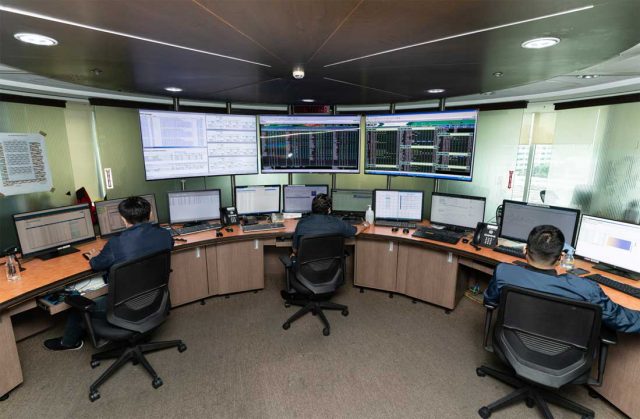
THE average price of power on the Wholesale Electricity Spot Market (WESM) declined 3.9% in June, the Independent Electricity Market Operator of the Philippines (IEMOP) said on Thursday.

IEMOP reported a WESM system-wide average of  P3.86 per kilowatt-hour (kWh) in June, against P4.01 per kWh a month earlier.

Between May 26 and June 25, the available supply decreased 3.5% month on month to 21,432 MW. Demand declined 4.1% to 14,545 MW.

On Luzon, the average power rate slipped 7.5% month on month to P3.91 per kWh, with supply going falling 3.5% to 15,076 MW. Demand declined 5.4% to 10,400 MW.

IEMOP said that WESM rates in the Visayas increased 4.3% to P3.93 per kWh a month earlier.

Supply decreased 1.1% to 2,635 MW while demand dropped 2.2% to 2,003 MW.

Power prices in Mindanao rose 13.2% to P3.54 per kWh from P3.11 per kWh a month earlier.

The grid’s available supply slipped 5.4% to 3,721 MW. Demand grew 0.7% to 2,112 MW.

IEMOP operates the WESM, where energy companies can purchase power when their long-term contracted power supply is insufficient for customer needs. — Sheldeen Joy Talavera

Navotas project taps Korean aid

PHILSTAR FILE PHOTO

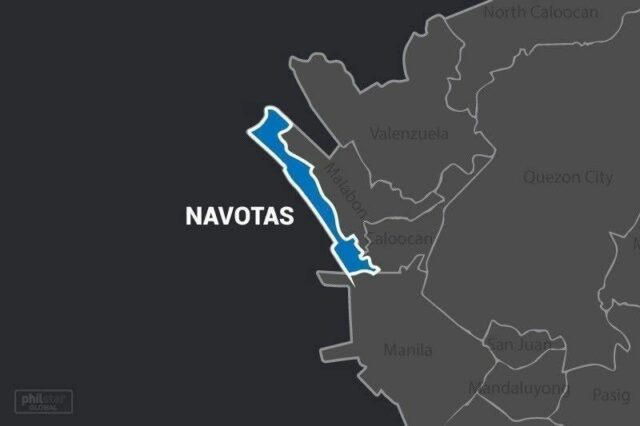
SOUTH KOREA will fund a $10-million circular-economy project for Navotas focused on a network of upcycling and recycling facilities penetrating to the barangay level.

The proposed project, which runs from 2026 to 2031, will tap Korean aid in creating materials recovery facilities, Yoo Ji-young, the Korea International Cooperation Agency (KOICA) Philippine Office deputy director, said at a forum hosted by the ASEAN-Korea Centre on Thursday.

The project hopes to encourage the development of upcycling and recycling startups, she added.

KOICA approved the project proposal in March after a preliminary review in January.

The Korean government’s final approval is expected by the third quarter.

An implementation survey is scheduled for the third or fourth quarter of 2025.

South Korea is also set to turn over a marine clean-up vessel to the Philippine government in February. — Kyle Aristophere T. Atienza

Mindanao infra projects backed by ADB on track

BW FILE PHOTO

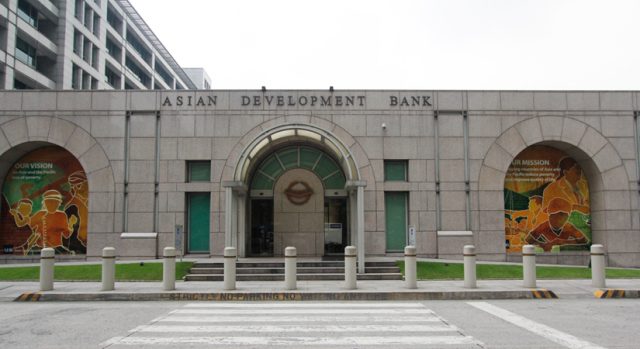
THE Department of Finance (DoF) said on Thursday that the Asian Development Bank (ADB)-funded road and bridge projects in Mindanao are on track to be completed on schedule.

In a statement, the DoF said it found that the Improving Growth Corridors in Mindanao Road Sector Project (IGCMRSP) to be on schedule following an inspection conducted with the Department of Public Works and Highways and the ADB.

The $491.32-million project aims to expand the capacity of the Brunei Darussalam–Indonesia–Malaysia–Philippines East ASEAN Growth Area road network.

This is expected to the unlock economic potential of Mindanao, it said.

The DoF said the ADB provided $380 million for the project, alongside government counterpart spending of  $111.32 million.

The IGCMRSP includes the R.T. Lim–Siocon Road that traverses Zamboanga Sibugay and Zamboanga del Norte.

The 4.6-kilometer road project is currently 95% complete and is scheduled to be opened by September.

“The DoF also visited the Nalil-Sikkiat Bridge No. 1, another subproject, in Tawi-Tawi Province, which spans 380.8 meters with a 160-meter approach road. The bridge has a total length of 541 meters,” it said.

Nalil-Sikkiat No. 1 will link Bongao Island to Sanga-Sanga Island and ease the transport of goods, services, and people.

The bridge is 96% complete and is scheduled to be opened to the public next month. — Aubrey Rose A. Inosante

PHL stocks rebound before June inflation report

BW FILE PHOTO

PHILIPPINE STOCKS climbed on Thursday amid expectations that domestic inflation remained below target last month despite an expected uptick due to the Iran-Israel conflict.

The Philippine Stock Exchange index (PSEi) jumped by 0.77% or 49.93 points to close at 6,468.98, while the broader all shares index climbed by 0.16% or 6.42 points to 3,803.33.

“The local market bounced back this Thursday on optimistic expectations that inflation last June had remained tepid despite certain upside risks, thereby giving the Bangko Sentral ng Pilipinas (BSP) leeway to continue their policy easing,” Philstocks Financial Inc. Research Manager Japhet Louis O. Tantiangco said in a Viber message.

The Philippine Statistics Authority is scheduled to release June inflation data on July 4 (Friday). A BusinessWorld poll of 17 analysts yielded a median estimate of 1.5% for the June consumer price index, faster than 1.3% in May but below the BSP’s 2-4% annual target, as the spike in fuel costs due to the Middle East conflict may have been offset by steady food prices.

“Local shares edged higher ahead of the June inflation report, with sentiment lifted by optimism over a new US-Vietnam trade deal,” Regina Capital Development Corp. Head of Sales Luis A. Limlingan said in a Viber message.

The United States will place a lower-than-promised 20% tariff on many Vietnamese exports, Donald J. Trump said on Wednesday, cooling tensions with its tenth-biggest trading partner days before the US president could raise levies on most imports, Reuters reported.

Vietnamese goods would face a 20% tariff and trans-shipments from third countries through Vietnam will face a 40% levy, he said. Vietnam could import US products with a zero percent tariff, he added.

Mr. Trump’s announcement comes just days before a July 9 deadline before he ramps up tariffs on most imports. Under that plan, announced in April, US importers of Vietnamese goods would have had to pay a 46% tariff.

Most sectoral indices closed in the green on Thursday. Holding firms went up by 1.25% or 70.63 points to 5,688.88; financials increased by 0.95% or 21.38 points to 2,268.24; property rose by 0.4% or 9.99 points to 2,464.66; and mining and oil climbed by 0.1% or 9.97 points to 9,523.39.

Meanwhile, services dropped by 0.59% or 12.81 points to 2,142.12 and industrials retreated by 0.33% or 30.72 points to 9,076.59.

“GT Capital Holdings, Inc. continues to lead the index, this day rising by 3.15% to P655. Bloomberry Resorts Corp. was at the tail end, plunging 6% to P4.70,” Mr. Tantiangco said.

Value turnover increased to P10.23 billion on Thursday with 1.77 billion shares traded from the P7.77 billion with 792.46 million issues exchanged on Wednesday.

Decliners outnumbered advancers, 126 versus 84, while 60 names were unchanged.

Net foreign buying surged to P1.11 billion on Thursday from P258.04 million on Wednesday. — R.M.D. Ochave with Reuters

Peso rises to near 3-week high as US data bolster Fed cut bets

BW FILE PHOTO

THE PESO climbed to a near three-week high against the dollar on Thursday amid weak US data that bolstered bets of further US Federal Reserve cuts.

The local unit closed at P56.25 per dollar, jumping by 11.5 centavos from its P56.365 finish on Wednesday, Bankers Association of the Philippines data showed.

This was the peso’s strongest close in nearly three weeks or since it finished at P56.21 on June 13, or the start of the 12-day Israel-Iran conflict.

The peso opened Thursday’s session slightly stronger at P56.33 against the dollar. It traded better than Wednesday’s close the entire day as its worst showing was at just P56.34, while its intraday best was at P56.21 versus the greenback.

Dollars exchanged went down to $1.46 billion on Thursday from $1.59 billion on Wednesday.

“The dollar-peso closed lower following the release of softer private payrolls and ADP data, fueling bets of another Fed cut. Expectations for nonfarm payrolls tonight are also lower, which resulted in dollar selling,” a trader said in a phone interview on Thursday.

The peso was also supported by easing trade tensions after US President Donald J. Trump announced a trade deal with Vietnam, Rizal Commercial Banking Corp. Chief Economist Michael L. Ricafort said in a Viber message.

For Friday, the trader expects the peso to move between P56.10 and P56.40 per dollar, while Mr. Ricafort sees it ranging from P56.15 to P56.35.

The dollar remained close to this week’s 3-1/2-year lows on Thursday ahead of a key jobs report, and as a US-Vietnam trade accord fanned expectations for other potential deals ahead of July 9 when US tariffs take effect, Reuters reported.

The pound edged higher by 0.2% and last fetched $1.3665, while the euro was muted at $1.180, still near the September 2021 top it hit earlier this week. The yen was a tad weaker at 143.80 per dollar.

The US dollar index, which measures the greenback against six other currencies, was flat at 96.748, remaining close to the 3-1/2-year lows it has been rooted to this week. The index is on course for a 0.5% drop for the week.

All eyes are on the US Labor department’s comprehensive employment report for June, due for release on Thursday ahead of the July 4 holiday, which is expected to show that unemployment edged up to a more than a 3-1/2-year high of 4.3%, according to economists polled by Reuters.

Wednesday’s private survey painted a grim picture of the labor market, pushing traders to shift expectations of when the Federal Reserve will lower interest rates. Traders are pricing in a 25% chance of a cut in July versus 19% a day earlier, data compiled by LSEG showed.

Meanwhile, ahead of the July 9 tariff deadline, Mr. Trump said the United States had struck a deal with Vietnam and that he could push other countries to reach similar agreements.

Although details were scant, Mr. Trump said Vietnamese goods would face a 20% tariff and trans-shipments from third countries through Vietnam will face a 40% levy.

The Vietnamese dong slid to a record low, with UBS analysts suggesting the passing of tariff costs to exporters will likely be mitigated by the central bank through the allowance of a steady depreciation of the dong.

Progress on other deals has been slow. Japan has invoked national interests as talks with the US struggled, while South Korea’s President Lee Jae Myung on Thursday said negotiations were looking difficult and that he could not say whether talks would conclude by next Tuesday. — A.M.C. Sy with Reuters

Landslide, flood alert raised in eight Metro Manila cities and 24 provinces

A SATELLITE photo of the low-pressure area that is causing heavy rains in the Philippines. — DOST/PAGASA

By Katherine K. Chan and Adrian H. Halili, Reporter

THE MINES and Geosciences Bureau (MGB) on Thursday urged communities and local governments in Luzon and Mindanao to stay on high alert for rain-induced landslides and flash floods as a low-pressure area (LPA) strengthens the southwest monsoon.

In an advisory posted on Facebook, the bureau under the Environment department warned at least eight cities in Metro Manila and 24 provinces of landslides, floods or flash floods, and debris flows starting Thursday until Sunday.

Some provinces not on the MGB list and mentioned in the weather bureau’s separate advisories should activate the appropriate preparedness measures and monitor for future geohazard advisories, should there be any sudden changes in the rainfall forecast or weather conditions, it added.

Several local government units suspended classes on July 3 due to heavy rains.

The MGB said moderate to very high flooding and moderate landslides might hit 412 villages in Manila, Marikina, Pasig, Quezon City, Caloocan, Malabon, Navotas and Valenzuela in the National Capital Region.

Meanwhile, at least 3,358 other villages in Calabarzon, Mimaropa, Cagayan Valley, Central Luzon, Cordillera Administrative Region, the Ilocos Region, Caraga Region, and Northern Mindanao might encounter moderate to very high flooding, moderate to very high landslides and debris flow.

Moderate floods are 0.5 to one meter high that could last for as long as three days. High floods reach one to two meters, while very high floods are more than two meters, both lasting over three days.

“The threshold values were lowered in Metro Manila due to the nature of flooding in highly urbanized areas, wherein the rains are not readily absorbed by the land,” the MGB said.

“This leads to increased surface runoff that overwhelms the drainage system and causes flooding in low-lying areas, as well as those proximal to waterways,” it added.

The MGB urged local governments, local disaster risk reduction and management councils and communities to be vigilant.

The bureau also asked mining companies, particularly those in hazard areas, to have their emergency response and preparedness teams on standby and coordinate with local government units (LGU).

Meanwhile, the state weather bureau said the low-pressure areas had a “medium potential” to develop into a tropical depression in the next 24 hours.

If it intensifies, it will be the second tropical depression in the country this year and will be named Bising, the Philippine Atmospheric, Geophysical, and Astronomical Services Administration (PAGASA) said in a separate weather bulletin.

As of 3 p.m. on Thursday, the low-pressure area, which entered the Philippine Area of Responsibility (PAR) on Sunday evening, was spotted over the coastal waters of Sabtang, Batanes in northern Philippines.

It was expected to bring cloudy skies with scattered rains and thunderstorms in the Ilocos Region, Cordillera Administrative Region, Cagayan Valley and Aurora.

Meanwhile, the southwest monsoon could cause occasional rains over Metro Manila, Pangasinan, Zambales, Bataan, Cavite, Batangas, and Occidental Mindoro, and cloudy skies with scattered rains and thunderstorms in Western Visayas and the rest of Luzon.

The rest of the country might see partly cloudy to cloudy skies with isolated rain showers or thunderstorms, it added.

PAGASA was also monitoring another tropical storm outside the Philippine area of responsibility.

FLOOD MITIGATION
The Philippines lies along the typhoon belt in the Pacific and experiences about 20 storms each year. It also lies in the so-called Pacific Ring of Fire, a belt of volcanoes around the Pacific Ocean where most of the world’s earthquakes strike.

The country often experiences unavoidable losses and damage equivalent to 0.5% of its annual economic output mainly due to an increasingly unpredictable climate, according to the Finance department.

Also on Thursday, the palace said President Ferdinand R. Marcos, Jr. would study the Interior and Local Government department’s request to give it the authority to suspend classes during typhoons.

The present system, where mayors decide whether to suspend classes, would remain in place, Palace Press Officer Clarissa A. Castro told a news briefing.

She said the President had ordered agencies to step up flood mitigation efforts during the typhoon season.

“The President has ordered the immediate cleaning of drainages because this will help prevent rapid flooding, especially here in Metro Manila,” she said.

Last month, the state weather bureau declared the onset of the southwest monsoon,  which could increase the chances of tropical cyclone activity in the next few months.

Ms. Castro said the Metropolitan Manila Development Authority (MMDA) has identified 23 priority estuaries in Metro Manila for clean-up. Displaced workers would be tapped in the clean-up drive, she added.

The Department of Interior and Local Government was also ordered to strengthen the disaster preparedness measures of LGUs.

The agency is also intensifying the activation of emergency operation centers, evacuation preparedness, updated contingency plans, community drills and exercises and the enforcement of no-build zones, she added.

“Local disaster offices need to be prepared as first responders in these types of situations,” she said.


Marcos on final stretch of reform push, may woo voters to back successor

PRESIDENT FERDINAND R. MARCOS, JR. FACEBOOK PAGE

By Kenneth Christiane L. Basilio, Reporter

PRESIDENT Ferdinand R. Marcos, Jr. is expected to shift his focus to grassroots reforms to improve the lot of Filipinos, as he seeks to cement his legacy in the second half of his six-year term, political analysts said on Thursday.

The government would likely recalibrate its priorities to tackle gut issues such as rising food and healthcare prices, as the President woos voters to back his anointed successor, they added.

Mr. Marcos is limited by law to a single six-year term.

“It is only logical that the Marcos administration and its allies will pursue new measures that will have a tremendous impact on the people,” Arjan P. Aguirre, who teaches political science at the Ateneo de Manila University, said in a Facebook Messenger chat. “This is oriented towards shaping what could be President Marcos’s legacy when he steps down in 2028.

“The target is to make sure that those programs will have a direct and immediate impact on the lives of the common folk,” he added.

Leyte Rep. Ferdinand Martin G. Romualdez, the President’s cousin, served as Speaker in the 19th Congress, and his initial measures then were focused on economic recovery, establishing a credible national defense posture and pursuing e-governance reforms, according to analysts.

Lawmakers elected to the 20th Congress began their terms on Monday, and Mr. Romualdez’s first few bills were centered on food security and healthcare.

“What this change of emphasis suggests is that the current administration might shift from focusing on macroeconomic management that the public can barely feel on a daily basis, to more microeconomic concerns,” Anthony Lawrence A. Borja, an associate political science professor at De La Salle University, said in a Messenger chat.

But the move would unlikely mark a “dramatic shift” in policy focus because it is only meant to appease Filipinos by aligning the government’s agenda with their needs, Ederson DT. Tapia, a public administration professor at the University of Makati, said via Messenger chat. “It’s only a recalibration of the agenda.”

Mr. Romualdez filed the first House bill, which seeks to reform the National Food Authority (NFA) as part of efforts to bring down rice prices by allowing it to intervene in the rice market during price spikes.

He also filed a measure proposing broader crop insurance coverage to encourage more farmers to protect their harvests and machinery.

In a statement on Thursday, Mr. Romualdez said the chamber is ready to provide legislative support to the presidential palace, describing himself as a “staunch ally” of the administration.

Another Romualdez bill seeks to exempt overseas Filipino workers (OFW) from premium contributions to the Philippine Health Insurance Corp. (PhilHealth). Under the measure, any premium hikes must undergo an actuarial review and require congressional approval.

“They are focusing on the basic needs that directly affect the welfare and well-being of ordinary Filipinos,” said Mr. Aguirre, adding that the proposals, if successful, could bolster support for the government.

Congress should swiftly pass reforms to build public support and foster long-term public appreciation, Mr. Borja said, noting that swift legislative action could help shape a lasting image for the administration.

Lawmakers won’t start hearing bills until July 28, when Congress resumes sessions and Mr. Marcos delivers his fourth annual state of the nation address.

Filipinos would likely welcome the reforms being pursued by Mr. Romualdez since they “strike into the heart of the concerns” faced by ordinary citizens, Mr. Tapia said.

Eight of 10 Filipinos want newly elected officials to focus on policies that would deliver better healthcare and bolster food security, the Social Weather Stations said in May.

Senate bill seeks P250 wage hike for private workers

PHILIPPINE STAR/ANDY ZAPATA JR.

A PHILIPPINE senator on Wednesday filed a bill for a P250 across-the-board pay increase for private sector workers, in a push to revive the wage hike lobby that failed in the previous Congress.

The pay hike could “bridge the gap in the decreasing purchase value of the take-home pay of workers and the rising cost of living,” Senator Joseph Victor “JV” G. Ejercito said in the explanatory note of Senate Bill No. 6.

He said a P50 hike approved for workers in Metro Manila for July is commendable but falls short of most Filipinos’ financial needs.

His proposed pay hike will also cover contractual or subcontractual workers, and workers in agricultural and nonagricultural fields.

The measure imposes a penalty of up to P100,000 or imprisonment on company executives that violate it.

“Across the Philippines, the daily minimum wage of workers falls short of their financial needs,” Mr. Ejercito said. “It cannot cover their expenses for rent, electricity, transportation, healthcare, education for their children and perhaps, most importantly, food.”

He also said war in the Middle East has led to rising oil prices, causing a “domino effect” on the prices of basic goods.

“Consequently, the take-home pay of a worker becomes smaller and its purchasing value less,” he said. “When the purchase value of a salary decreases, this would mean that workers are being asked to do more than what they are being paid for.”

On Monday, several other senators filed separate bills seeking a wage increase for private sector workers.

Senator Ana Theresia N. Hontiveros-Baraquel’s bill seeks a P200 wage hike, similar to the version approved by the House of Representatives in the 19th Congress.

Senator Robinhood “Robin” C. Padilla sought a P150 pay hike, while Senator Christopher Lawrence “Bong” T. Go proposed a P100 across-the-board pay rise, similar to the Senate’s version.

Last month, several labor groups called on Congress to pass a legislated wage increase for all workers in the country.

Lawmakers adjourned last month without meeting to reconcile disagreeing provisions of their bills at a bicameral conference committee after economic managers warned that the measure would have “dangerous repercussions” on the Philippine economy. — Adrian H. Halili

EU poll observers call for reforms in PHL elections

PHILIPPINE STAR/MIGUEL DE GUZMAN

THE European Union’s (EU) election observation mission called on the Philippines to address electoral violence, vote buying, political dynasties, and gaps in the electoral legal framework which remained a challenge during the 2025 midterm elections last May.

“These shortcomings call for reforms and for a comprehensive review of the electoral legal framework and for reforms, which have also been advocated by many Filipino politicians, authorities, and the civil society,” Marta Temido, chief observer of the EU Election Observation Mission to the Philippines, told a news briefing on Thursday.

In its final report, EU observers said that key issues like the comprehensive regulation of political parties and provisions to curb the dominance of political families remain unaddressed.

The May election was pivotal to two of the country’s most powerful political families, the Marcoses and the Dutertes, whose feud has worsened since the impeachment of the Vice-President Sara Duterte-Carpio and the arrest of her father upon order of the International Criminal Court.

EU observers also recommend the improvement of polling places and booths to ensure voter secrecy, as well as the training of poll watchers on the importance of voter secrecy.

“We believe this is one of the most effective means to address vote-buying,” Ms. Temido added.

She added that these measures could include improving the layout of polling precincts, enhancing the training of electoral votes, and strengthening voter education “by explaining why the secrecy of voting is important.”

It also recommended the removal of “discrepancies and inconsistencies” in the country’s election framework by consolidating existing election laws.

The mission observed that most of the provisions of the 1985 Omnibus Election Code are outdated, causing local electoral laws to be “scattered and unharmonized.”

She said that local election laws should include the right of access to polling receipts for all duly accredited local and international election observers and party representatives.

Local laws should also eliminate limitations on the ability of convicted imprisoned citizens to vote and participate in elections after serving their sentences.

EU observers also recommended having clearer language in the electoral code on sanctions given for cases of civil defamation.

“Sanctions should be strictly proportionate to the harm caused,” it added.

Decisions on the rejection of registration of candidates should be based on objective criteria and should be spelled out in a legal framework, the EU observers recommended.

“The authority to reject nuisance candidates based on a subjective assessment of their credibility poses challenges for newcomers, reinforcing public perceptions that elections are dominated by elites, limiting political pluralism, and establishing an uneven playing field,” Ms. Temido said.

The European observers also suggested providing incentives for political parties to promote more gender inclusion for elected officials.

“I am confident that the Philippines will continue their reform journey. Core principles such as transparency, inclusivity, secrecy of the vote, and freedom of expression are central to the success of these reforms,” Ms. Temido added.

She said that the EU remains ready to support local authorities to implement the recommendations.

Millions of Filipinos voted during the May 12 national and local elections, where 12 senators, more than 300 congressmen, and thousands of local officials in every province, city, and town were proclaimed. — Adrian H. Halili

DSWD to build command center

BAGUIO CITY — The Department of Social Welfare and Development (DSWD) will establish a new Regional Disaster Response Command and Logistics Center for Central Luzon provinces within the Clark Civil Aviation Complex.

Clark International Airport Corporation (CIAC) President Joseph P. Alcazar expressed full support for the DSWD facility, highlighting its critical role in strengthening disaster response across Central Luzon.

“It will serve as a strategic storage and distribution point for relief goods and supplies, ensuring faster and more effective DSWD operations during emergencies in Central Luzon. This is part of CIAC’s contribution to national disaster preparedness,” Mr. Alcazar said.

Officials led by DSWD Secretary Rexlon T. Gatchalian, Undersecretary Diana Rose S. Cajipe, Assistant Secretary Irene B. Dumlao, and Clark Development Corp. Director Nicolette Henson-Hizon visited the one-hectare site on Wednesday with Pampanga Gov. Lilia G. Pineda, Provincial Government Environment and Natural Resources Office Chief Art Punsalan, and CIAC Director Rommel Santiago.

It is located within the CIAC-managed Clark Civil Aviation Complex that will be designed to enable the rapid deployment of relief and response operations when disasters strike.

According to the CIAC, the center forms part of CIAC’s broader strategy to transform the Clark Civil Aviation Complex into a premier logistics hub.

Earlier initiatives have already paved the way for logistics facilities of other agencies, such as the Philippine Charity Sweepstakes Office, the Bureau of Fire Protection, and Philippine Pharma Procurement, Inc.

In addition to the upcoming DSWD center, Clark is also home to key national disaster management facilities, including the Philippine Disaster Recovery Foundation, the National Government Administrative Center, and the Integrated Operations Center for Disaster Response Management — underscoring Clark’s disaster-resilient features and strategic proximity to an international airport, seaport, and major road network. — Artemio A. Dumlao

Three more terrorists surrender in Maguindanao del Norte

COTABATO CITY — Three more local terrorists, well-versed in fabrication of improvised explosive devices, surrendered to the military on Tuesday.

The three men, who are members of both the Dawlah Islamiya and the Bangsamoro Islamic Freedom Fighters (BIFF), agreed to renounce their membership through the joint intercession of the officials of the Marine Battalion Landing Team-2 (MBLT-2) of the 1st Marine Brigade and local executives in Barira town in Maguindanao del Norte.

The now apparently weakened Dawlah Islamiya and BIFF are both tagged in bombings in Central Mindanao since 2014 of buses and commercial establishments after owners refused to pay “protection money” on a periodic basis.

The two groups also have a reputation for fomenting hatred for non-Muslims, which Islamic preachers detest as contrary to their religion’s extensive teachings on interfaith solidarity.

Brig. Gen. Romulo D. Quemado, commander of the 1st Marine Brigade, and Army Major Gen. Donald M. Gumiran of the 6th Infantry Division, who has operational control over Marine units in Maguindanao del Norte, separately told reporters on Thursday that they are thankful to local leaders for helping the MBLT-2 work out the surrender of the three terrorists.

They first turned over to Lt. Col. John A. Dela Cruz, commanding officer of the MBLT-2, two 60-millimeter mortars, a B-40 rocket launcher and explosives during a simple rite in Parang, Maguindanao del Norte in the Bangsamoro region.

More than 700 Dawlah Islamiya and BIFF members had surrendered to units of the 6th ID, the 1st Marine Brigade and the Police Regional Office-Bangsamoro Autonomous Region since 2022, all reintroduced to mainstream society with the help of different agencies under the Bangsamoro regional government and in Administrative Region XII. — John Felix M. Unson

House probe of PrimeWater sought

PHILIPPINE STAR/EDD GUMBAN

A RESOLUTION calling for a congressional probe into the Villar-led PrimeWater Infrastructure Corp. and its joint venture agreements with local water districts was filed at the House of Representatives, following persistent complaints over service quality.

Filed on Thursday, House Resolution No. 22 seeks an investigation into PrimeWater’s agreements with local water districts over alleged issues affecting water access, with the end view of establishing a regulatory framework to ensure transparency and accountability among water providers.

“Water is life, not just a business,” Zambales Rep. Jefferson F. Khonghun, who authored the resolution, said in a statement in Filipino. “Access to safe, clean, and affordable water is not a privilege, but a fundamental human right.”

Mavic Chavez Ching, head of public relations at Prime Asset Ventures, Inc., the parent firm of PrimeWater, said the water company has yet to issue an official statement.

President Ferdinand R. Marcos, Jr. in late April ordered the Local Water Utilities Administration (LWUA) to investigate PrimeWater following complaints of service disruptions, including inconsistent water access. Malacañang will release LWUA’s report on Friday, Presidential Communications Office Undersecretary Claire B. Castro said on Wednesday.

PrimeWater oversees and operates water services for over 1.7 million households, providing about 500 million liters of water per day to its more than 100 districts nationwide. — Kenneth Christiane L. Basilio