SURPRISED by the decision of big man Greg Slaughter to “take a break” from the Philippine Basketball Association after helping the Barangay Ginebra San Miguel Kings to the Governors’ Cup title early this year, Coach Tim Cone said the team is still in steady form and that they are confident of the talents they have on hand when the league resumes from the forced hiatus because of the coronavirus disease 2019 (COVID-19) pandemic.
Recently graced Tiebreaker Vods’ Coaches Unfiltered podcast, the PBA’s winningest coach said the decision of Mr. Slaughter to leave the team would have an impact on how the team positions its attack come league resumption but they nonetheless believe they could make the necessary adjustments.
“You know, we still have a lot of weapons,” said Mr. Cone when asked how things would be with the future of Mr. Slaughter, 31, with the team uncertain.
The Barangay Ginebra big man in February announced that he was to take a break. With his contract having expired at the end of last season, he said he would grab the opportunity to step back and work on different aspects of himself.
Interestingly, Mr. Slaughter’s decision came amid talks that he was to be shipped to the Northport Batang Pier for Christian Standhardinger.
“Gregzilla” is currently in the United States where he is reportedly working on his game in the hopes of landing a spot in the NBA G League.
Without Mr. Slaughter, the Kings would turn to its core of veteran players to lead the way with ample support from its young guys, Mr. Cone said.
“We have Japeth (Aguilar), we have Stanley (Pringle), Stanley is somebody who is still very much exploring how to best use his talent and where he fits. We only have him for a conference and a half so there’s a lot still to find out about him, and, of course, LA (Tenorio) and Joe (Devance), you know the whole crew is there,” he said.
“We feel very good about our young guys, some of our younger veterans in Aljon Mariano because he’s just going to continue to improve and be an impact player for us eventually. Of course Art Dela Cruz as well and then our young rookies, we have a lot of fate in Arvin Tolentino, I really like Arvin’s game, me personally. It’s just a matter of whether we could get him to our culture and get him turned on playing how we wanted him to play… We have other options,” Mr. Cone added of his team, which also has Scottie Thompson, Jared Dillinger, Jeff Chan and Mark Caguioa in the roster.
The last time the Kings were seen on the PBA floor they were celebrating their 12th PBA title after defeating the Meralco Bolts, 4-1, in their best-of-seven Governors’ Cup final series.
And winning championships is something the team wants to continue experiencing, along with showing steady improvement collectively, Mr. Cone said.
“Number one it’s never about winning a championship, especially in the PBA where you have the next conference coming quickly. It’s not about winning a championship, so we never talk about winning a championship, it’s always about winning championships with us,” he said.
Adding, “We want to get better from the beginning of the year to the end of the year, if that means we win the All-Filipino at that point, then we’re good. But we’re looking to get better throughout the whole year, not just win each conference I guess that’s why maybe we hold the record for most wins in the third conference ‘cause that’s the philosophy that we take. It’s until you get better.”
The PBA is still shut following its decision to suspend the season on March 11 because of COVID-19. It recently got a break when the Inter-Agency Task Force for the Management of Emerging Infectious Diseases allowed it to resume doing team practices.
FOLLOWING the decision of the Inter-Agency Task Force for the Management of Emerging Infectious Diseases (IATF-EID) last week to allow it to resume some activities, particularly the holding of team practices, the Philippines Football League (PFL) is now working on its next moves to take.
In an announcement made on July 3, the IATF approved the administrative order allowing the conduct of health-enhancing physical activities and sports amid the COVID-19 pandemic as recommended by pertinent government agencies.
The decision paved the way for the return to some activities of sports organizations like the PFL and Philippine Basketball Association.
Prior to the decision, the Philippine Football Federation (PFF), which oversees the affairs of the PFL, made representations to the Games and Amusement Board (GAB) for guidance to convince the IATF, the lead body in the country’s fight against COVID-19, to allow sports to return gradually, first with practices and then for matches to resume in different leagues.
Back in May, the PFF submitted the 26-page “PFF Operations Protocol for the Philippines Football League,” which prescribed the steps and protocols for the resumption of training, and eventually playing of matches, following guidelines that can be obtained from issuances of FIFA, the World Health Organization (WHO), and the IATF.
Among those included in the protocol is that training sessions must be conducted with a maximum of 10 people per session with a 30-minute interval in between sessions.
“We thank both IATF and GAB, headed by Chairman Abraham Mitra, for their approval in ensuring that professional sports may push through despite the ongoing pandemic,” said PFF president Mariano Araneta, Jr. in a statement. “The next step now is to ensure the health and safety of the players, as we prepare for the eventual start of training of PFL teams.”
The PFL said the next move is meeting with all the clubs about the approved protocols which need to be observed by all stakeholders.
The league was supposed to start its new season in March but the COVID-19 pandemic pushed it back to a still-to-be-determined date.
In an earlier interview with BusinessWorld, PFL Commissioner Coco Torre shared that they are confident of successfully staging a fourth season of the league despite the pandemic forcing them to adjust here and there. — Michael Angelo S. Murillo
FOUND to have violated government quarantine rules, the Philippine Basketball Association (PBA) fined veteran Japeth Aguilar and rookie Adrian Wong P20,000 each and told them to take a swab test.
The two players were summoned by the league office on Monday over a viral video that showed them engaging in a 5-on-5 scrimmage along with others in a popular basketball facility in San Juan City, clearly breaking general community quarantine rules, particularly that prohibiting the conduct of team sports, currently in effect in the metro because of the coronavirus disease 2019 (COVID-19) pandemic.
The PBA, through Commissioner Willie Marcial, first heard the side of Messrs. Aguilar and Wong, who play for Barangay Ginebra and Rain or Shine, respectively, on the incident before handing down the penalty, which also includes the players needing to go undergo a 14-day quarantine before taking another swab test as a confirmatory procedure and serving 30 hours of community service.
Mr. Marcial said Messrs. Aguilar and Wong were apologetic for what they had done and promised to exercise better judgment in the future.
A third player, Isaac Go, selected first by Columbia Dyip in a special draft for Gilas Pilipinas last year, was spared any penalties since he is on loan to the national team. But Mr. Marcial still advised him to be mindful of his actions so as to avoid similar instances from happening again.
Monday’s meeting was also attended by Deputy Commissioner Eric Castro and PBA legal consultant Atty. Melvin Mendoza.
Apart from league officials, Messrs. Aguilar and Wong also met Games and Amusement Board officials composed of Commissioner Eduardo Trinidad, Pro basketball and Other Pro Games Division Chief Dioscoro Bautista and GAB official Rodil Manaog.
The PBA, shut since March 11 because of COVID-19, recently got a break in its push to resume its season after the Inter-Agency Task Force for the Management of Emerging Infectious Diseases (IATF-EID), the lead body in the country’s fight against COVID-19, gave its nod to the league’s request for a resumption of team practices albeit under strict health and safety protocols. – Michael Angelo S. Murillo
SIDETRACKED after one of the protagonists in its headlining fight was rendered a no-go after testing positive for COVID-19, “UFC 251” is once again on track with Jorge “Gamebred” Masvidal stepping in just six days’ notice to challenge reigning Ultimate Fighting Championship champ Kamaru Usman for the welterweight title.
A landmark event happening on the “UFC Fight Land” in Abu Dhabi, United Arab Emirates, on July 12 (Manila time), UFC 251 was supposedly between Mr. Kamaru (16-1) and Brazilian Gilbert Burns. But the latter tested for COVID-19 last week, derailing his quest for the title.
In came Mr. Masvidal (35-13) who did not make it a secret that he was eyeing the welterweight belt.
Mr. Masvidal, 35, enters the title fight on a three-contest winning streak, the last one over Nate Diaz (TKO/doctor stoppage) in November last year. He is out to seize the welterweight title from Mr. Kamaru, 33, and end the latter’s 11-fight winning streak in the UFC.
“The Nigerian Nightmare” captured the welterweight title in March 2019 by defeating erstwhile champion Tyron Woodley. He successfully defended his belt for the first time against Colby Covington last December by way of TKO (punches) in the fifth round.
Also part of UFC 251 is the featherweight title clash between champion Alexander Volkanovski and Max Holloway, bantamweight Petr Yan against Jose Aldo, women’s strawweight Jessica Andrade versus Rose Namajunas, and women’s flyweight Amanda Ribas versus Paige VanZant.
UFC 251 will be broadcast on FOX Sports. — Michael Angelo S. Murillo
AS THE National Basketball Association begins welcoming teams to ESPN Wide of Sports Complex near Orlando this week for the resumption of the 2019–20 season, the league has reportedly set the protocols for players unable to travel with the rest of their team.
Citing a memo sent to teams from the league, ESPN on Sunday reported that players must arrange for their own travel to the Orlando area if a) they miss a scheduled coronavirus test in the two days prior to their team’s scheduled departure date, or b) have “extenuating circumstances” previously disclosed to the league.
According to the memo, ESPN reported that a player can travel on a charter flight at their own expense, travel by car or fly commercial. If the player chooses to fly privately or drive, they must have two negative coronavirus tests before resuming basketball activities. If they fly commercial, they must test negative three consecutive times before rejoining their teammates.
There are also several players who have already tested positive for COVID-19, and according to ESPN, any players who tested positive in the last week will likely be unable to travel with their teams. Players who do test positive must self-isolate and pass at least two consecutive tests, according to the NBA’s health and safety guidelines, ESPN reported.
The NBA announced last Thursday that 25 players tested positive for the coronavirus in the first eight days of testing. Among the teams with players who have reportedly tested positive are the Los Angeles Clippers, Denver Nuggets, Brooklyn Nets and Miami Heat.
The 22 teams taking part in the resumption of the NBA season are scheduled to arrive in Florida between Tuesday and Thursday. Beginning July 22, each team will compete in three inter-squad scrimmages at the ESPN complex before the regular season resumes July 30.
The NBA suspended its season after Utah center Rudy Gobert tested positive on March 11. — Reuters
CLEVELAND INDIANS manager Terry Francona said Sunday that he is in favor of the team changing its name.
“I think it’s time to move forward,” Francona said during a Zoom call on Sunday, two days after the team issued a statement saying that the organization is “committed to engaging our community and appropriate stakeholders to determine the best path forward with regard to our team name.”
Francona, 61, admitted that the topic of the team’s name and the Chief Wahoo logo has been on his mind for quite some time, however he has sidestepped it in previous years.
“I’ve been thinking about it and been thinking about it before we put out that statement,” Francona said. “I know in the past, when I’ve been asked about, whether it’s our name or the Chief Wahoo, I think I would usually answer and say, ‘I know that we’re never trying to be disrespectful.’
“And I still feel that way. But I don’t think that’s a good enough answer today. I think it’s time to move forward. It’s a very difficult subject. It’s also delicate.”
The Indians were a charter member of the American League in 1901 and originally named the Blues, according to the Encyclopedia of Cleveland History from Case Western Reserve University in the city. The team briefly was called the Broncos, and between 1903–11, was called the Naps in honor of player-manager Nap Lajoie.
For the next two years, while the team officially was known as the Molly McGuires, locals still referred to the team as the Naps. When Lajoie was traded after the 1914 season, the team was renamed the Indians in 1915 on the suggestion of sportswriters.
Both the Indians and the National Football League’s Washington Redskins long have faced criticism for maintaining their Native American-themed nicknames.
After the 2018 season, the Indians stopped wearing the smiling, red-faced Chief Wahoo emblem on their hats and jerseys, though they still sell products with that image.
Other sports teams with Native American nicknames have toned down the related imageries over the years.
The Kansas City Chiefs retired their horse mascot ridden by a man in a feathered headdress, and the Atlanta Braves retired mascot Chief Noc-A-Homa in the 1980s.
Universities including Stanford, Arkansas State, William & Mary and Louisiana-Monroe have dropped the Indians nickname. — Reuters
SYDNEY — Australian officials are closing the border between Australia’s two most populous states from Tuesday for an indefinite period as they scramble to contain an outbreak of the coronavirus in the city of Melbourne.
The decision announced on Monday marks the first time the border between Victoria and New South Wales has been shut in 100 years. Officials last blocked movement between the two states in 1919 during the Spanish flu pandemic.
The number of COVID-19 (coronavirus disease 2019) cases in Melbourne, Victoria’s capital, has surged in recent days, prompting authorities to enforce strict social-distancing orders in 30 suburbs and put nine public housing towers into complete lockdown.
The state reported 127 new COVID-19 infections overnight, its biggest one-day spike since the pandemic began. It also reported one death, the first nationally in more than two weeks, taking the country’s total tally to 105.
“It is the smart call, the right call at this time, given the significant challenges we face in containing this virus,” Victoria Premier Daniel Andrews told reporters in Melbourne as he announced the border closure, effective from 11:59 p.m. local time on Tuesday.
The move will, however, likely be a blow to Australia’s economic recovery as it heads into its first recession in nearly three decades. Victoria’s only other internal border, with South Australia state, is already closed.
NSW Premier Gladys Berejiklian said there was no timetable for reopening the border, which will be patrolled by the military to prevent illegal crossings.
The state line is highly porous, with 55 roads, wilderness parks and rivers. Some businesses straddle both sides and several workers commute daily.
Lyn McKenzie, who runs a paddle steamer business along the Murray River from Mildura, a border city of 30,000 people, is waiting for more detail to gauge the full impact on her business.
Ms. McKenzie lives on the NSW side of the river, the boats pick up passengers from the Victoria side and the river itself is classified as part of NSW.
“The Mildura wharf… is where we pick people up from (but) they’ve got to cross the border technically to go on the boat,” Ms. McKenzie said by telephone. “I’m seeing this as possibly needing to shut down again, but it’s a bit early for me, not knowing the exact details.”
Berejiklian said people would be able to apply for daily permits to cross the border, but added there would be delays of around three days in issuing the passes.
NSW Police Commissioner Mick Fuller said he has requested military assistance to enforce the order.
“There will be aerial and other surveillance 24/7 right across the border,” Mr. Fuller told reporters in Sydney.
Australia has fared better than many countries in the coronavirus pandemic, with just short of 8,500 cases so far, but the Melbourne outbreak has raised alarm bells.
The country has reported an average of 109 cases daily over the past week, compared with an average of just 9 cases daily over the first week of June.
Although authorities have said the border closure will prevent the latest outbreak from spreading interstate, Melbourne locals are concerned that renewed social distancing measures have not been implemented uniformly across the city.
“Without a full Melbourne lockdown, I am not super confident this is going to be contained,” Jack Bell, a lifeguard who lives in the Victorian suburb of Kensington, told Reuters.
Kensington is one of the 30 suburbs that have reimposed social distancing measures. The nine public housing blocks that have been subjected to a complete lockdown, Australia’s first, are in neighboring North Melbourne and Flemington.
“I think people have very much forgotten about social distancing,” Mr. Bell said. — Reuters
BEIJING — Authorities in a city in the Chinese region of Inner Mongolia issued a warning on Sunday, one day after a hospital reported a case of suspected bubonic plague.
The health committee of the city of Bayan Nur issued the third-level alert, the second lowest in a four-level system.
The alert forbids the hunting and eating of animals that could carry plague and asks the public to report any suspected cases of plague or fever with no clear causes, and to report any sick or dead marmots.
Sunday’s warning follows four reported cases of plague in people from Inner Mongolia last November, including two of pneumonic plague, a deadlier variant of plague.
The bubonic plague, known as the “Black Death” in the Middle Ages, is a highly infectious and often fatal disease that is spread mostly by rodents.
Plague cases are not uncommon in China, but outbreaks have become increasingly rare. From 2009 to 2018, China reported 26 cases and 11 deaths. — Reuters
The EU ordered Google to stop bundling its search and browser apps with Android. Google reacted by charging phone manufacturers to license Android. It also opted to appease regulators by offering choice to users—but only on new Android phones from March 1 and only via a “choice screen” of three alternative search apps shown once when people switch on the handsets for the first time. Image via Reuters.
As US authorities ready the biggest antitrust case of the new century, there are lessons to be learned from Europe’s attempt to inject more competition into search, one of the most lucrative digital markets.
Two years after a record fine and an order to give Europeans more choice, Alphabet Inc.’s Google retains a vice-like grip on this business. In May 2018, just before the European Commission acted, Google had 97% of the mobile search market in the region, according to StatCounter. Its share for May this year was even higher.
“We don’t want them to copy the current EU model because it’s fundamentally flawed,” said Gabriel Weinberg, chief executive officer of rival search service DuckDuckGo, referring to the Justice Department and state regulators. The firm spoke recently with those authorities about Google’s dominance.
How US regulators proceed, and whether they learn from Europe’s experience, will help determine the fate of what is likely to be the most important antitrust case since the DOJ sued Microsoft Corp. more than two decades ago. With more than $100 billion in cash, and quarterly profit exceeding $6 billion, big fines have little impact on Google. So regulators are increasingly looking to remedies that may change the company’s behavior and offer consumers more choice. The DOJ reached out to at least one European company, Ecosia, to discuss versions of Google’s remedy in the EU case, the German search engine has said.
In 2018, Europe’s antitrust authorities focused on the subtle but important factors that solidified Google’s grip on the region’s mobile search market. Getting a service pre-installed on smartphones often leads to big user gains, as does appearing on the home screens of handsets. Google has used deals tied to its popular Android mobile operating system to ensure its search engine gets such prized placements, leaving little room for rivals.
The EU ordered Google to stop bundling its search and browser apps with Android. Google reacted by charging phone manufacturers to license Android. It also opted to appease regulators by offering choice to users—but only on new Android phones from March 1 and only via a “choice screen” of three alternative search apps shown once when people switch on the handsets for the first time.
There’s a precedent for approaches like this working. In 2017, Russia’s antitrust watchdog ordered Google to let competing search engines and other apps be pre-installed on Android smartphones in the country. The company also had to create a “choice window” for devices already in the market, so users could choose their default search engine when they next updated the software on their devices. Since that ruling, Russia’s Yandex NV has grown its search market share in the country by 20 percentage points to 58%, according to Bernstein Research estimates.
Europe’s choice screen has failed to produce similar results so far. In March and April, rivals DuckDuckGo, Givero, and Seznam.cz AS won slots to appear but got no new downloads for their search apps. DuckDuckGo was offered to customers across Europe while Givero bid to appear only in Denmark and Seznam in the Czech Republic and Slovakia.
In May, Seznam said it got fewer than 1,000 downloads. Two other search providers said the choice screen has brought them no new customers. They asked not to be identified, citing a non-disclosure agreement with Google. Another search app, PrivacyWall, saw “no major market share shifts,” according to CEO Jonathan Wu. Microsoft’s Bing, a well-financed and capable challenger to Google, has barely appeared on the choice screen, winning just one slot in the UK from May to June. Microsoft and other search companies declined to comment.
Bernstein analysts have already concluded that the choice screen is “unlikely to be a major disrupter to Google in its current form,” according to a June 18 research note.
Google declined to give details on how many times the choice screen has been shown to European consumers. Android “provides people with unprecedented choice in deciding which applications they install, use and set as default on their devices,” the company said. “In developing the Choice Screen for Europe, we carefully balanced providing users with yet more choice while ensuring that we can continue to invest in developing and maintaining the open-source Android platform for the long-term.”
The internet giant may be maintaining its lead in Europe because consumers think it has the best search engine. Google invests billions of dollars a year to provide quick, accurate answers to queries. Wall Street analysts often say users would switch back to Google after using alternatives, and they’ve been right before. However, the case of Yandex suggests otherwise. Many Android phone owners in Russia have been using Yandex’s search engine for at least a year and the market share data indicate there’s been no big switch back to Google.
It isn’t the European Commission’s job to force Google to be smaller or less dominant. Instead, the antitrust authority tries to set up mechanisms to trigger more choice and remove roadblocks. That means even if the choice screen is seen billions of times by consumers in the region, Google’s market share could remain at 97%.
“The European Union probably did the best job they could with the rules that they had,” said Aitor Ortiz, an analyst with Bloomberg Intelligence. “The problem is maybe the rules were not fit for the purpose.”
The real reason the European choice screen has flopped so far is that the remedy was designed poorly, according to Google rivals in the region.
While Russia ordered Google to show consumers search alternatives on Android phones, the EU merely asked Google to choose how it could remedy alleged bad behavior and a lack of competition.
Google mimicked a pop-up menu first used in 2009 by Microsoft to resolve an EU antitrust probe into web browsers. Showing users other browser options even helped Google’s Chrome gain ground against Microsoft’s Internet Explorer.
Microsoft didn’t charge rivals to appear in this browser choice screen and showed as many as 12 rivals. In contrast, Google is using a paid auction to pick rival apps for each country. The highest bidders appear in three slots on the Android choice screen alongside Google. The company only gets paid when another app is downloaded, but it also gets valuable data on rivals’ business strategies.
The approach “lets the fox watch the hens,” said Brian Schildt Laursen, owner of Denmark-based Givero. Apps “have to tell Google what markets are important to us, and what we are willing to pay to get into these markets.”
“A general misunderstanding was that EU citizens from March 1 had a free choice of search engine on Android,” he added. “This was not the case.”
Successful bidders are supposed to get monthly invoices from Google showing how many of their apps have been downloaded. That data should help rivals tweak their bidding strategies. But DuckDuckGo’s Mr. Weinberg said these reports have been pretty useless so far. “We’ve gotten two that are just flat zero,” he said. “We have not seen any real activations or any evidence that any real user has seen the preference menu.”
DuckDuckGo has proposed changes that include scrapping the auction and replacing it with a non-pay-to-play model that includes far more than four search options for consumers.
Mr. Weinberg and Mr. Schildt Laursen also blame another part of the process for delaying new Android phones that come with the choice screen. Unlike the Russian order, which applied to existing handsets, the EU remedy gives consumers a one-time prompt that will only pop up on new phones.
Android phone manufacturers must update their software and get Google to sign off on the new versions before shipping the latest devices. This means few smartphones even have the choice screen yet. The COVID-19 pandemic has also curbed purchases of new handsets and disrupted some production, adding to delays.
Mr. Schildt Laursen said no new Android phones with the choice screen have come out in Denmark. DuckDuckGo and PrivacyWall said the only phone that has been approved and shipped to Europe recently is the Xiaomi Mi 10, which is relatively pricey and not widely available.
The problems with the Android auction echo another EU antitrust order for Google’s shopping search that critics say enriches Google without delivering much real traffic to competing product search firms. While the EU hasn’t weighed in on whether these remedies are effective, it is preparing a legal pathway that would let it demand fast changes to anticompetitive behavior instead of big fines.
Margrethe Vestager, the EU’s top antitrust official, has voiced frustration about her inability to increase competition in tech markets. During a recent webinar, she blamed the pandemic for the initial poor results of the choice screen remedy, saying “very few Android phones have been shipped due to the COVID crisis.”
More phones and more time may give a clearer picture on whether users will pick another search app when they are given the choice, she argued.
For DuckDuckGo’s Mr. Weinberg, though, there’s already one clear lesson for the US: Do it differently. A choice screen done right “could actually work,” he said. — Bloomberg
Emerging-market investors are getting selective even after bonds, stocks and currencies kicked off the second half of the year on a high note.
Money managers are questioning whether the developing world’s economic troubles will be short-lived as massive central-bank stimulus bolsters demand for risky assets. Emerging-market dollar bonds posted their longest weekly winning streak since February in the five days through Friday, while stocks and currencies had their best performance in a month.
Inflation data in at least 10 developing economies, including Russia and Mexico, will provide clues on how much more room there is for policymakers to reduce interest rates, with many already at record lows. Malaysia’s central bank will likely cut borrowing costs this week, while Peru and Israel will probably remain on hold.
“We are mainly focused on tracking mobility data to gather how different the pace of recovery is from country to country as we believe this will influence the level of attractiveness of the individual currencies,” said Anders Faergemann, a London-based portfolio manager at PineBridge, which manages about $96 billion. “We expect some central banks will continue to cut interest rates, but the bulk of rate cuts are behind us.”
The majority of developing-nation central banks will maintain “an exceptionally easy monetary policy” for some time, Goldman Sachs Group Inc. analysts, including Andrew Tilton and Kamakshya Trivedi, wrote in a report. While growth will bounce back relatively sharply toward the end of this year and into 2021 as developing economies emerge from lockdowns, the crisis will leave a lasting effect on the level of their gross domestic product, they said.
While BNP Paribas Asset Management continues to favor emerging-market credit and is increasingly positive on currencies, it isn’t as optimistic on local rates.
“The shape of the recovery could be problematic as markets are increasingly pricing in a V-shaped recovery, with still accommodative policies,” said Jean-Charles Sambor, the London-based head of emerging-market debt at the firm, which oversees the equivalent of about $460 billion. Emerging-market “gains will not be as strong as in the second quarter.”
Here’s what investors will be watching this week:
Rate Decisions
Bank Negara Malaysia will probably cut its overnight policy rate by 25 basis points on Tuesday, according to economists’ median estimate
The nation’s benchmark 10-year government bond yield traded around 2.8% last week after briefly spiking above 3% in mid-June
On Friday, Malaysia is expected to report a smaller decline in industrial production in May compared with April. It will also release manufacturing sales data
Read: Mahathir Risk Looms for Malaysian Bonds After Outlook Cut
Peruvian policymakers will probably hold interest rates steady on Thursday and reiterate plans to keep them low, according to Bloomberg Economics. The sol was one of the worst-performing currencies in emerging markets last week
All of the economists surveyed by Bloomberg expect Israel to keep its benchmark rate at 0.1%
The Bank of Israel wants a primarily fiscal response to the Covid-19 crisis, and will provide support including expanding a record bond-purchasing commitment if needed to keep borrowing costs low, Governor Amir Yaron said in June
Sri Lanka, Serbia and Mauritius will also decide on interest rates this week
Croatia Votes
Croatia’s ruling party scored a surprise victory in Sunday’s general election, defying predictions for a tight race and putting it within touching distance of a majority in parliament
The yield on the nation’s EUR2 billion 11-year bond, which it sold in June, reached an all-time low on Friday
Economic Data
Continued signs of recovery in China may help support risk assets as the largest developing economy is forecast to see continued credit growth in June
The nation will announce inflation data for June on Thursday that is forecast to show an uptick in consumer prices for the first time in four months. The pace of declines in factory prices is seen slowing due to a rebound in commodity prices, according to Bloomberg Economics
China will also release credit data between Friday and next Wednesday that’s expected to show continued growth amid supportive measures by the People’s Bank of China. PBOC Governor Yi Gang said in June that he expects 20 trillion yuan ($2.8 billion) of new yuan loans this year
Better-than-expected numbers could help propel Chinese stocks higher, after the CSI 300 Index surged to a five-year high last week
India will announce May industrial production on Friday. While economists forecast another substantial slump, signs of a rebound in demand are emerging in June data. A falling jobless rate and improving factory outlook has helped the S&P BSE Sensex Index rally for the third consecutive week in the five days through Friday
Taiwan will release foreign reserves on Monday followed by trade and inflation data on Tuesday. Exports are seen falling more than the previous month, narrowing the country’s trade balance. The pace in decline in consumer inflation is expected to ease
The benchmark Taiex Index erased year-to-date losses Monday after rallying for the past three weeks
Foreign reserves and inflation data for the Philippines are due Tuesday while the country will announce its trade balance on Friday
Inflation in Russia likely accelerated in June, while remaining well below the central bank’s 4% target
“That may reflect one-time markups relating to the reopening of the economy, rather than the start of a trend,” Bloomberg Economics said in a report. “Further ahead, soft demand is likely to weigh on inflation, which creates space for a bit more monetary easing”
While Brazilian inflation probably ticked up in June, Bloomberg Economics expects it to remain well below the target when figures are released on Wednesday
Retail sales data for May due to be released on the same day will show the impact of the rapidly-spreading coronavirus on consumer behavior
Mexico will post June inflation figures on Thursday and May industrial production data on Friday, which will also flag the effects of the virus and measures to contain it
Minutes from the central bank’s June meeting, expected on Thursday, will provide context for the decision to cut the interest rate by 50 basis points — Bloomberg
In the heart of Banawe, Quezon City,is all set to do PCR testing in its Molecular Diagnostic Laboratory. The said PCR laboratory is DOH, WHO and RITM certified, run by highly-trained and experienced doctors and staff. It is a collaboration project of Mount Grace Hospitals, Inc. and UNILAB, Inc., the country’s leading pharmaceutical and health care company, to help the country expand its testing capacity for COVID-19. FDMMC is the designated COVID-Accepting Hospital (COVAH) of Mt. Grace Hospitals, Inc., which is a member of the United Laboratories Group.
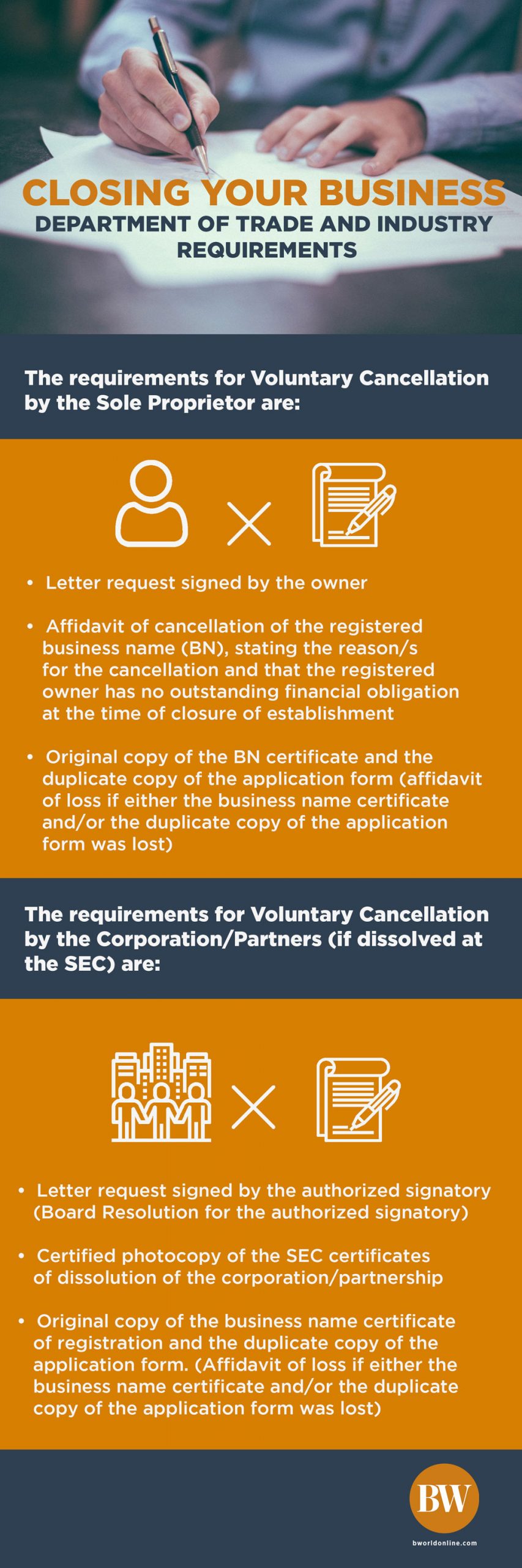
Closing a business may prove to be more expensive than opening one. That was what Andrew Pasaporte, co-founder of on-demand spa mobile app Sparadic, found out last month when he and his partner, Cha Rapadas, decided to close shop. Spararadic and the spa services in its roster are in the same boat as the 200 permanent business closures tallied by the Department of Labor and Employment during the COVID-19 pandemic.
‘THE FOODPANDA OF SPAS’
“There were several things that we didn’t anticipate,” Mr. Pasaporte shared. “As first-time app creators, we had a high burn rate. By the middle of 2019, we had to slow down our operations and turned our focus on development. Impacted by the pandemic, many of our partner providers have closed due to the lack of business. Spa services are not essential at this time, and our company relies only on these providers.”
Sparadic was founded in 2017 to meet the need for on-demand spa services. Officially launched the following year, its main goal was to become the “Foodpanda of spas” and give users a choice of spa providers to service them on-demand.
“In hindsight, if it weren’t necessary, we would’ve chosen not to register the business immediately. We were excited about the new company that we didn’t think of the eventuality of closing,” Mr. Pasaporte added. “From the start, we should’ve done some research on business closure, a rookie mistake.”
LIKE BEING KICKED WHILE YOU’RE DOWN
Negative cash flow was the reason for permanently closing Sparadic, a non-essential business. “The core of our business is wellness—and physical interaction is required. It is our responsibility to make sure we do not put our users and providers at risk. To put it bluntly, we do not want to promote virus transmission.”
Continued Mr. Pasaporte: “Closing the business has been challenging. It’s like being kicked while you’re down. You suffer twice. First, from your business closing, that’s a given. Then you have to go through all the unnecessary stress of dealing with different offices. The process is similar to registering a business but more tedious. Factor in the pandemic, government offices are not working at full capacity. Also, penalties that you’re not aware of may suddenly appear.”
An additional challenge is the fact that while Sparadic is registered in Metro Manila, the founders are currently in other parts of the country and are thus unable to fix things in the barangay and city where the business is registered.
A CONSIDERABLE AMOUNT OF LEGWORK AND RESOURCES
Closing a business requires a considerable amount of legwork and consumes a lot of resources.
“We spoke to two companies who offer legwork for business registrations, and asked if they also do closures,” Mr. Pasaporte said. “One was a virtual office, and the other one’s main business was just to assist people with government offices. The quoted fees were between P25,000 and P30,000: too expensive for a business that’s closing. Ideally (if this was pre-pandemic and we were in Metro Manila), we should be able to bring the costs down to maybe a quarter by doing the government queues ourselves.”
“There’s also the BIR, and you might be slapped with penalties you were not expecting. You can appeal your case, but it still can be a stressful ordeal. We can only dream that one day our government offices go fully online, and we don’t have to go through all the bureaucracy. It’s a unique time and everything seems more difficult.”
ADVICE FOR THOSE IN THE SAME BOAT
Among the pieces of advice Sparadic’s founders gave included saving up for closure and a lot of patience with the process, as closing a company officially may take years.
Mentioned too was the wisdom of seeking advice from peers and mentors: “We’ve received a lot of support from members of the Startup PH Facebook group. LegalTree, one of the startups in the group, reached out and gave us great advice. If anyone else wants to extend a hand, we’d really appreciate it.”
As Mr. Pasaporte reflected, “While we had to close, the business journey has been a great learning experience overall. It has inspired us to adapt and venture out to other businesses.”