Home Blog Page 9010

Give burgers a perfect sear with Ina Garten’s unconventional method

By Kate Krader

WHO would argue against Ina Garten as the most trusted name in the food world these days? She’s the oracle of East Hampton, NY — the culinary world’s Warren Buffett.

When she highlights a recipe, it becomes a sensation: A video of her making a supersized cosmo during lockdown went viral and brought the maligned cocktail attention it hasn’t enjoyed since Sex & the City.

The cosmo recipe is not featured in Ms. Garten’s 12th cookbook, the forthcoming Modern Comfort Food: A Barefoot Contessa Cookbook (Penguin Random House; $35). But Ms. Garten, who has an estimated net worth of $50 million, thanks to her popular TV show Barefoot Contessa and the 12 million-plus books she has in print, does offer a selection of alcoholic beverages. It’s as if she anticipated how much people would need a drink in these increasingly anxious times.

“Comfort is so key right now,” says Ms. Garten in a phone interview about the timeliness of her book’s title. She started planning it in 2018, well before events such as the pandemic were on the horizon. “I knew it was going to be a stressful election, no matter which side of the aisle you’re on.” She adds: “I knew I wanted to provide foods that make people feel better — but modern, with fresher ingredients. Not a plain old Mac and cheese.”

Ms. Garten’s culinary superpower is to take a familiar recipe and tweak it so that it seems refreshed but is still delicious. Among the 85 dishes featured in her book are Brussels sprouts pizza carbonara, beef stew made with short ribs, and chicken pot pie soup. Her Mac and cheese is enhanced with truffle butter and cream sherry.

In Modern Comfort Food, she also turns her attention to hamburgers. “Could there possibly be a new way to make hamburgers that I didn’t know about?” asks Ms. Garten in the headnote. “As it turns out, there is!”

The secret to her smashed burgers, which are topped with a mountain of caramelized onions and Gruyère cheese, is simple: She freezes the meat for exactly 15 minutes before putting the burgers in a searing-hot skillet. Ms. Garten’s recipes are so impeccable that when she says 15 minutes, set your timer.

The result is an interior that stays juicy because of the temporary chill, while the crust on the burger becomes further caramelized. Ms. Garten also adds a pinch of dry mustard powder to the ground beef along with salt and pepper seasoning, which adds an underlying sharpness; it’s excellent with the melted Gruyère.

“When I’m stressed, cooking for people I love makes me feel better. It helps me to make my friends feel taken care of — and certainly, my husband Jeffrey,” says Ms. Garten. “And it helps to make something familiar, like smash burgers that taste better than you expect.”

In the summer, Ms. Garten says, you can pair the burger with her cosmo. “The key to the cosmo is fresh lime juice. It wakes up all the other flavors,” she notes.

In cooler, fall weather, Ms. Garten recommends a whiskey sour. (Her recipe for that is in a previous cookbook, Barefoot Contessa at Home.) Her newest book does have one for hot, spiced apple cider enhanced with a shot or two of bourbon. She recommends it as a drink to serve before sitting down to the burger, though for people who need a double dose of comfort right now, it’s a fine pairing.

The following recipe is from Modern Comfort Food: A Barefoot Contessa Cookbook, by Ina Garten.

SMASHED HAMBURGERS WITH CARAMELIZED ONIONS

Makes 4 hamburgers

Canola or grapeseed oil

2 medium red onions, sliced ¼ inch thick (4 cups)

1 tsp. sugar

1 tbsp. good red wine vinegar

1½ tsp. dry mustard powder, such as Colman’s

Kosher salt and freshly ground black pepper

1¼ pounds ground beef with 20% fat

1¼ cups grated Gruyère cheese (4 oz.)

4 sandwich potato rolls, such as Martin’s

Ketchup, for serving

Heat two tablespoons oil in a large sauté pan over medium heat. Add the onions, and cook for eight to 10 minutes, stirring occasionally, until the onions are tender and starting to brown. Add the sugar, reduce the heat to low, and cook for 10 to 15 minutes, stirring occasionally, until browned and caramelized. Add the vinegar and cook for 30 seconds to deglaze the pan.

Meanwhile, combine the dry mustard, 1½ teaspoons salt, and ½ teaspoon pepper. Place the ground beef in a medium bowl and sprinkle on the mustard mixture. With your fingers, lightly work the mustard into the beef and shape into four one-inch-thick patties. Place them on a plate and freeze for exactly 15 minutes.

Heat a large cast-iron skillet over medium-high heat and add 1½ tablespoons oil. From the freezer, place the burgers directly in the hot skillet. With a large, metal spatula, firmly press each burger into the pan. Cook the burgers for 2½ to 3 minutes without moving them, so the bottoms get browned and crusty.

Flip the burgers, then spoon on the onions and sprinkle the Gruyère on top. Place a lid on the skillet and cook the burgers for 1½ to 2 minutes, until the cheese is melted and the burgers are medium-rare inside. Place one burger on each roll and serve hot, with ketchup on the side. — Bloomberg


Southeast Asia to reap dividends from expansion of digital space: ADB

SOUTHEAST ASIA is among the regions seen to gain the most in the expected surge in the digital space, the Asian Development Bank (ADB) said, but this would require huge investments and good management of risks.

James P. Villafuerte, a senior economist at the ADB Economic Research and Regional Cooperation Department, said in a webinar on Tuesday that their estimates showed a 20% growth in the digital sector from the 2020 baseline, which could boost Southeast Asia’s gross domestic product (GDP) by $378.2 billion in 2025 and by $853.2 billion in 2030. These are equivalent to 11.1% and 25.1% of the current regional output, respectively.

“The Pacific Central Asia and Southeast Asia are actually the sub-regions experiencing a large impact on GDP. Mainly, this reflects the fact that digital connectivity is actually a very effective means of managing some of these geographical challenges. They also reflect the increasing role of digital productivity in pushing services exports, as well as the large impact of the introduction of a greater digital sector on productivity for economies with very low income,” Mr. Villafuerte said.

His presentation showed tech’s GDP impact for Central Asia is at $133.7 billion in 2025 to $241.3 billion in 2030, or 9.4% and 19.5% of its GDP, respectively.

Mr. Villafuerte said the study measures the economic impact of the expected surge in the digital space if the sector will grow faster after the pandemic as demand grows to minimize physical contact.

The estimates were based on two scenarios: in the medium-term, if digital platforms will grow 20% higher than expected between 2020 and 2025; and over the long term, if the sector will post a growth of 25% higher than expected starting 2025 to 2030.

In Asia and the Pacific, he said the output will increase by $2.7 trillion in 2025 and by $5.6 trillion in 2030 (9.4% and 19.5% of GDP, respectively).

“However, there’s a huge investment requirement to realize this digital transformation dividend,” Mr. Villafuerte said.

“It will not come automatically. Many countries in the region probably (need to) increase that not necessarily double but increase their investment in telecommunications and ICT sector quite significantly,” he added.

Southeast Asian countries will have to invest a combined $89.2 billion until 2025 or $169.8 billion by 2030 to realize the projected gains. Meanwhile, the broader Asia and the Pacific region might need to invest $472 billion in the next five years and $856.5 billion in a decade.

The study also looked at the sector’s role in boosting employment, with jobs in Southeast Asia seen to increase by 13.6 million in 2025 and 26.3 million in 2030.

The digital expansion could also push global trade, with that of the region seen rising by $263.4 billion in trade value in the next five years and by $581 billion by 2030.

“In Southeast Asian economies, I can see the opportunities because the market is there, the population is there so automatically to invest in some of the Southeast Asian economies but somehow we need basic infrastructure and here where the role of the government [comes in],” said Muhamad Chatib Basri, chairman of PT Bank Mandiri Tbk and PT XL-Axiata Tbk, who was one of the panelists in the webinar.

Mr. Villafuerte said the projected expansion of the digital sector also entails risks and challenges that will have to be mitigated, such as the high concentration in digital industries that may result in a single big winner, as well as concerns on data security.

He added online jobs are only temporary and are barely covered by social security protection measures, cybercrime and identity theft instances could surge while inequality can widen because of the widespread digital divide. Countries will also have to be prepared for digital penetration.

“Another concern, especially for the government, is that despite the huge profit generated by these technological companies, there is a practice of base erosion and profit shifting, which is affecting the fiscal sustainability of many governments, considering that they are actually spending a lot of money in terms of macroeconomic fiscal stimulus,” he added.

“While we presented a huge economic dividend from digital transformation, these are actually not automatic, there’s so many institutional policies and infrastructure improvements that need to happen so that these aggregated levels of impact can be realized. What we wanted to show in this analysis is that if we are able to make this improve governance and infrastructure and invest in our skills, there’s a huge dividend that can be realized and shared in the members of society,” Mr. Villafuerte said.

The study is part of ADB’s upcoming report “Making Digital Platforms Work for Asia and the Pacific” that will be published in February 2021. — B.M. Laforga

Avon buyers now prefer personal care products over make-up 

By Jenina P. Ibañez, Reporter

AVON PHILIPPINES has seen a shift in the demand for its offerings to personal care products from make-up and fragrances, officials of the direct-selling company said, pointing to the pandemic lockdown as the reason for the switch.

Avon Director for Channel Management Christine Eugenio said antibacterial products, rubbing alcohol, and body wash as well as intimate apparel and kitchen goods continued to see demand during the lockdown.

“Hopefully, people still pick up eye make-up,” she said in a press roundtable on Wednesday, noting that lipstick has been “taking a backseat” as more people wear face masks.

The company has continued selling during the pandemic by offering online product ordering options to its sales representatives while stores are shut.

Avon General Manager Razvan Diratian said the company is adjusting to a decrease in make-up demand but noted that the brand remained the direct-selling market leader in the country.

“We are keeping our market share, so I think we are following the trends in the market. In some of the categories we are actually driving better performance than expected,” he said, referring to home essentials demand.

Avon Head of E-commerce and Digital Kevin Dayleg added that vitamin products have been bestsellers.

“Actually, the direct selling business model is unaffected by lower foot traffic in the malls. It allows us to minimize lockdown impact,” he said.

According to Ms. Eugenio, the company has been training its sales representatives or “Avon ladies” for digital sales. Avon also added rubbing alcohol and hand gel products to its portfolio.

Mr. Diratian said that there is no plan to increase local manufacturing capacity “because it is not needed.”

“Expansion at this moment? Not really, because we didn’t reach the full capacity,” he said, adding that manufacturing is not working at full capacity at this time.

Google Maps now shows info on COVID cases

GOOGLE MAPS now has a feature that shows information about coronavirus cases in an area.

Tech giant Google LLC said in an emailed statement on Monday that the new tool is aimed at helping users ”make more informed decisions about where to go and what to do” amid the coronavirus pandemic crisis.

Google said the new feature shows a seven-day average of new coronavirus cases per 100,000 people for the area of the map.

“It includes a label that indicates whether the cases are trending up or down. Color coding also helps easily distinguish the density of new cases in an area. Trending case data is visible at the country level for all 220 countries and territories that Google Maps supports including the Philippines, along with province and city-level data where available,” the tech company said.

The Google Maps features data from “multiple authoritative sources, including Johns Hopkins and the New York Times,” Google said.

“These sources get data from public health organizations like the World Health Organization, government health departments, along with local health agencies and hospitals,” it added.

The coronavirus has sickened 33.3 million and killed more than a million people worldwide, according to the Worldometers website, citing various sources including data from the World Health Organization. — A.L. Balinbin

FCDU loans decline on reduced need for capital

FOREIGN CURRENCY loans disbursed by local banks fell in the second quarter as capital needs dropped due to slower economic activity due to the coronavirus pandemic.

Outstanding loans disbursed by foreign currency deposit units (FCDU) of banks stood at $17.968 billion as of June, down 1.7% from the $18.271-billion level seen at end-March, the Bangko Sentral ng Pilipinas (BSP) said in a statement on Wednesday.

“The slowdown in FCDU lending may be due to lower customer inventory financing needs and working capital requirements as the ongoing health crisis continued to constrain domestic economic activity,” the BSP said.

On the other hand, loans granted by these banking units rose 2.8% year on year from the $17.482 billion seen as of June 2019.

FCDUs are central bank-approved bank units which perform transactions involving foreign currencies, mainly by accepting deposits and handing out loans.

BSP data showed 64.3% or $11.55 billion of FCDU loans went to Philippine residents, with 61.3% or $11.023 billion going to private entities.

Power generation firms (18.4%) cornered the largest chunk of the borrowings, followed by merchandise and service exporters (15.1%); public utility (7.3%); management/holding and stock brokerage (5.8%); and towing, tanker, trucking, forwarding, personal and other industries (5.6%).

On the other hand, more than a third (35.7%) or $6.418 billion were disbursed to non-residents.

By source, local banks disbursed 87.4% or $15.719 billion of the credit line. The remaining 12.5 or $2.249 billion were sourced from foreign lenders.

For the April to June period, gross credit disbursed by FCDUs declined 21.3% to $11.2 billion on the back of lower funding requirements for units of foreign lenders.

Meanwhile, deposit liabilities of FCDUs inched up 1% to $43.6 billion as of end-June from the $43.1 billion seen as of end-March. It also rose 5.3% from the $41.3 billion seen a year ago.

“The bulk of these deposits (98.2%) continue to be owned by residents, essentially constituting an additional buffer to the country’s gross international reserves,” the BSP said.

The overall loans-to-deposits ratio stood at 41.3% in the second quarter, down from the 42.4% seen as of the first quarter and the 42.3% seen at end-June 2019. — L.W.T. Noble

COVID-19 forces Periwinkle to close its boutiques

CHILDREN’S clothing brand Periwinkle is the latest casualty of the pandemic with the 14-year-old company closing its boutiques permanently although it will continue to sell in select department stores and its online store for now.

“The COVID-19 pandemic has affected every person beyond what anyone could have ever imagined…[while] we are a hundred percent in support of the [health and safety] precautions as safety and security of our customers’ families should always come first… the same measures have also led to circumstances that no longer allow our boutique operations to be sustainable in the foreseeable future, and is something that we, unfortunately, have to face and accept,” the company said in a statement posted on its website and Facebook page on Sept. 28.

Known for hand-smocked dresses and special occasion attire, the upscale children’s clothing brand announced that all its standalone boutiques will be closed although it will still continue to offer its clothes in select Rustans and SM Department stores “until further notice,” as it moves more of its operations online via the website www.myperiwinkle.com.

Periwinkle has boutiques in Shangri-La Plaza Mall, TriNoma, Marquee Mall, Alabang Town Center, Eastwood Mall, SM Mall of Asia, SM Megamall, SM North (The Block), SM City Clark, SM City Pampanga, SM City Lipa, Robinsons Manila (Midtown), Robinsons Galleria (East Wing), Harbor Point, Robinsons Magnolia, SM Aura, and Ayala Fairview Terraces.

“Our heartfelt thanks to all of you for your unending encouragement and support throughout the years. It breaks our hearts to close our stores, but the memories shall live on and keep us inspired as we move on towards whatever the future brings,” the company said.

“Let us pray for better days to come. For now, we hope to see you, online!” it added. — ZBC

Going hand in hand on the journey towards a brighter future for China and the Philippines

This year marks the 71st anniversary of the founding of the People’s Republic of China. For the past 71 years, China has grown into the world’s second-largest economy — a manufacturing giant equipped with a complete range of industries and a major country with a permanent seat at the UN Security Council. In the face of the COVID-19, China has fought a fierce war against the pandemic and effectively curbed the spread of the virus, creating a remarkable feat in humankind’s struggle against diseases. China is slated to complete the building of a moderately prosperous society in all respects this year and will eliminate absolute poverty for the first time in its history.

China owes its development achievements, first and foremost, to the strong leadership of the Communist Party of China (CPC), and to Chinese people’s hard work and wisdom. It has also benefited from mutual respect and win-win cooperation with the rest of the world. Therefore, China will always be a builder of world peace, contributor to global development, and defender of the international order while focusing on its own development.

China has stayed committed to peaceful development, contributing positive energy towards world peace. Peace, harmony and wishing your neighbors and loved ones well have long been deeply rooted in the mindset of Chinese. China’s commitment to peaceful development has been ingrained into China’s and CPC’s Constitution. China has respected the right of other people to choose their own development path and upheld the Five Principles of Peaceful Coexistence. Over the past seven decades, China has neither provoked a war or conflict nor occupied an inch of others’ land. China has made significant contributions to the settlement of major international and regional hot spot issues, and world security and stability. Today, China is the second-largest contributor to the UN regular budget and the peacekeeping budget and has sent nearly 40,000 peacekeepers to UN missions, over 10 of whom lost their lives when serving their duty to safeguard world peace.

China has stayed committed to win-win cooperation, bringing driving force to world development. In the past four decades, since reform and opening up, more than 800 million Chinese people were lifted out of poverty, contributing over 70% to global poverty reduction. China has provided approximately RMB400 billion in aid to other countries and international organizations, and dispatched over 600,000 people to support other developing countries to implement the Millennium Development Goals and the 2030 Agenda for Sustainable Development. China has always been sharing development opportunities with all other countries and fostering a better balance between the North and the South. Contributing over 30% to global growth for the past 10-plus years, China has been the top trading partner for more than 130 countries and regions. Under the framework of the Belt and Road Initiative, China has signed cooperation documents with 138 countries. The trade-in goods with partner countries have exceeded $7.8 trillion and direct investment surpassed $110 billion.

China has stayed committed to fairness and justice, providing stability for an international order. As a Chinese saying goes, “The noblest ideal is to create a world truly shared by all.” China has resolutely upheld the international system centered around the UN and the international order based on international law. China has joined almost all the universal inter-governmental organizations and acceded to more than 500 international conventions. Facing the undertows of unilateralism and protectionism, China has firmly pursued the multilateral trading regime with concrete actions to make economic globalization more inclusive and beneficial for all. China has also been actively sharing its vision and approaches with the world by putting forward the vision of creating a new type of international relations and community of shared future for mankind and advocating to build an open, inclusive, clean and beautiful world that enjoys lasting peace, universal security, and common prosperity.

In a world of increasing interconnection and interdependence, China has always been welcoming the Philippines and other countries to get on board the express train of its development to realize common development and prosperity. China is now the Philippines’ top trading partner, the largest source of imports, and the third-largest export market. In 2019, our bilateral trade volume reached $60.95 billion, with a 9.5% year-on-year increase. More and more Philippine tropical fruits have been on the dining tables of Chinese people. In 2019, China imported $600 million worth of bananas from the Philippines, bringing tangible benefits for the Filipinos.

China and the Philippines are not only natural partners benefiting each other in economic development, but also close friends helping each other through difficulties. In the face of the common challenge of the COVID-19, our two governments and two peoples have stood together and helped each other overcome trying times. The Philippines provided valuable support and assistance to China at the height of its battle with the virus, which we will always be grateful for and hold dear to our hearts. In light of the pandemic situation in the Philippines, we feel keenly for the Philippine people amid the trying times. China has extended every help and support to the Philippines to the best of its ability, promptly providing well-needed medical supplies, dispatching an anti-pandemic medical expert team, sharing anti-pandemic experience and technologies without any reservation. The Goodwill Flight transporting medical supplies urgently needed by the Philippines secured the life channel by air between our two countries. The Friendship Bags containing food and daily necessities to Filipino families in need across the country conveyed the profound friendship that we shared. All these efforts have written splendid chapters in the history of China-Philippines relations and demonstrated a closer partnership in the new era.

The profound China-Philippines relations could not be achieved and maintained without President Xi Jinping and President Rodrigo R. Duterte’s strategic guidance and their commitment and hard work. These hard-won achievements deserve to be cherished. In the context of our thousand-year friendly interactions, our differences on the South China Sea issue are just brief interludes and a small part of our relationship, while our cooperation is the only main theme. Allowing such disagreements to hijack the overall relations between our countries is nothing but inadvisable. Given the shifting geopolitical landscape and the escalating pandemic, our two countries should focus on combating the pandemic, promoting economic recovery, and safeguarding the peace and stability in the region to meet both of our fundamental interests.

Our two countries should firmly deepen our partnership for the fight against the pandemic. The key to COVID-19 response at the current stage is the development, production and distribution of vaccines. China will consider giving priority to the needs of the Philippines once China successfully develops the vaccine. China is also discussing with the Philippines to establish a “fast lane” for the movement of people and a “green corridor” for the flow of goods between our two countries to contribute to the resumption of work and production as well as the stable functioning of industrial and supply chains.

Our two countries should firmly deepen our partnership for development. China will work with the Philippines to enhance the synergy of the Belt and Road Initiative and the Build, Build, Build Program, and strengthen practical cooperation across the board to benefit our peoples. China would also like to further tap into its mega-sized domestic market and demand and share more of its development dividends with the Philippines to accelerate the Philippines’ economic recovery in the post-COVID-19 era.

Our two countries should firmly deepen our partnership for peace. As the old saying goes, “A neighbor near is better than a relative far away.” China and the Philippines are close neighbors that could not move away from each other. As countries in the region, we benefit the most from regional peace and stability. The troubled South China Sea only serves the geo-political interests of non-regional country while countries in the region have to bear the costs. We should learn the lessons from the unrest in West Asia and North Africa caused by external interference and prevent our region from being trapped in the same situation. China is ready to work with the Philippines to safeguard regional peace and stability to secure a sound external environment conducive to our two countries’ development.

At a time of major changes rarely seen in a century, we are at a crossroads and our choices define our future. We should make concerted efforts to stand on the right side of history. China is committed to the path of peaceful development and will make every effort to meet its people’s aspiration for a better life through safeguarding their right to development. China will also contribute to world peace and development through its own development, and work with the Philippines and other countries to jointly address common challenges and build a community of shared future for mankind.

Phoenix partners with gov’t on retail stores for farm produce

PHOENIX Petroleum Philippines, Inc. has partnered with the the Agriculture and Energy departments in initiatives that aim to mitigate the effects of the coronavirus disease 2019 (COVID-19) pandemic to the farm sector.

In a disclosure to the stock exchange on Wednesday, the Dennis A. Uy-led oil company said it would provide spaces in its retail stations in South and Central Luzon that farmers and fisherfolk can use to sell their produce.

Participating Phoenix retail branches will allow the selling of agricultural products from 6:00 a.m. to 2:00 p.m. daily until Dec. 31 as long as health protocols are observed, such as social distancing and the wearing of face masks and face shields.

“With this initiative, we will be able to help farmers and fisherfolk by giving them a new channel to offer their products, and additional support that will alleviate their fuel expenses, and ultimately help soften the blow of the pandemic to their livelihood,” Phoenix Senior Vice President Alan Raymond T. Zorrilla said.

Phoenix will also offer fuel discounts of up to P4 until the end of the year to registered beneficiaries that may be availed in selected retail stations in Luzon.

It will also establish a dedicated fleet program for participating farmers and fisherfolk with fuel needs of at least 2,000 liters per month.

Qualified applicants under the program will enjoy features such as cashless transactions, additional payment terms, and comprehensive reports.

In addition, Phoenix will also donate P50,000 worth of fuel, which will be given through the Department of Agriculture.

“Due to the COVID-19 pandemic and the subsequent quarantine measures imposed in different cities nationwide, the distribution of agricultural goods have been affected, leaving farmers and fishermen with limited livelihood opportunities. We recognize these challenges that have been brought upon Filipinos, including those in the agriculture sector,” said Ericson S. Inocencio, Phoenix general manager for retail sales. — Revin Mikhael D. Ochave

Dining In/Out (10/01/20)

Tefal comes out with new cookware set

FOR OVER 60 years, Tefal has been making homelife easy with innovative products that started with the world’s first non-stick cookware. The iconic brand recently launched the Tefal Ingenio line, which makes cooking and storage easier for smaller spaces such as today’s condominium units. Busy foodies can cook from the hob, move to the oven, serve a dish directly from the pot or pan, and store leftovers in the fridge with the ultra-practical Tefal Ingenio cookware set. It features a 100% safe removable handle that can be switched from one pan to another in a single click and a space-saving, stackable design that ensures easy storage in limited cupboard spaces, for added convenience. Ingenio is crafted with the patented Tefal Titanium Excellence, which is a thick and sturdy titanium base with long lasting non-stick coating that has been tested to withstand 48,00 abrasion cycles. The handle features a smart ergonomic design for comfort, while it securely fastens to the pan with a three-point fixation system. This ingenious handle can carry up to 10kgs and it comes with a Tefal 10-year guarantee. What’s more, the Thermo-Spot thermal indicator on the Tefal pans tells you when to start cooking to guarantee perfect texture, color and taste. The Tefal Ingenio is currently available in Ingenio 3pc Set Blue Salt, Ingenio 4pc Surprise Red and Ingenio 5pc Set Velvet Purple. Tefal Ingenio, Tefal Natura, Day By Day, So Chef and other cookware collections are now available in Birch Registry. Tefal Cookware is exclusively distributed by Rustan Marketing Corp. and available in leading department stores nationwide and at Birch Registry.

M&S launches 2 new lines of wines

MARKS & SPENCER (M&S) is helping customers take a trip around some of the world’s most famous  wine regions with the launch of its new wine range, Classics. This specially curated collection has been created in partnership with expert winemakers across the globe and features some of the best examples of the most popular wine styles and regions. The new Classics range includes Claret from Bordeaux, France; Pinot Grigio from northern Italy, and Riesling from Germany. The initial collection boasts nine wines to choose from, predominantly from Old World regions. They are priced between P595 and P895. To create the range, M&S’s award-winning in-house winemakers Belinda Kleinig and Sue Daniels worked closely with expert regional winemakers and wineries around the world. The Classics wine range includes No.10 Classics Barossa Chardonnay, 2019, P795; No.11 Classics Corbières, 2019, P750; No.15 Classics Picpoul de Pinet, 2019, P750. These are available at BGC Central Square, Glorietta 4, Greenbelt 5, Rockwell Powerplant, Mall of Asia, SM Megamall, Robinson’s Place, Shangri-la Plaza Mall, Ayala Cebu, Trinoma, Alabang Town Center and SM Aura. M&S is also unveiling 15 new wines this month with the launch of its This Is range. From spicy reds, to blushing rosés, tropical whites and more, these top-value wines are available in store with prices ranging from P450-P495 per bottle. Created by M&S winemakers, the new wines showcase popular styles and grape varieties, with bright, helpful labels showing customers exactly what kind of wine is on the inside. Ideal for new wine-lovers who might otherwise find the wine aisle intimidating, the range is designed to offer guidance on taste, styles and grape varieties to help customers begin their wine journey.  The full This Is wine range includes: This Is French White, 2019, P450; This Is Pinot Grigio, 2019, P475; This Is Italian Red, 2019, P450; This Is Fruity White, 2019,, P450; This Is Spanish Red, 2019, P450; This Is Cabernet Sauvignon, 2019, P475; This Is Merlot, 2019, P475; This Is Shiraz, 2019, P475; and This Is Italian Sparkling Rosé, NV, P495. The new This Is range of wines is available in all Marks & Spencer stores nationwide except Limketkai Center, CDO. Both the Classics and This Is ranges can also be purchased online at marksandspencer.com.ph or via our Viber Community at tinyurl.com/MNSPH-VC.

Chooks-to-Go goes digital

BOUNTY Agro Ventures, Inc. (BAVI), home of Chooks-to-Go, tapped Globe Business to provide customers with contactless access to food products. The leading chicken rotisserie company and one of the largest poultry integrators in the Philippines teamed up with Globe and its digital marketing subsidiary, AdSpark, to build a chatbot ordering platform hosted on Facebook Messenger. The new chatbot-enabled platform, which was built from the ground up, makes it possible for fans of Chooks-to-Go to view the list of products available in their locations, input their order quantity, and submit orders for processing and delivery. Once products are delivered, customers can make payments  via cash or the GCash QR codes provided by delivery riders. There are more than 1,200 Chooks-to-Go outlets.

Get a free dish with new Kuya J Salo-Salo bundle

KUYA J’s new Salo-Salo offering comes with a free dish. The Salo-Salo options include the Crispy Pata Salo, Pochero Bulalo Salo, or the Kare-Kare Salo. Each Salo-Salo bundle comes with a main dish, sides, and rice. Now every order of any Salo-Salo bundle entitles the customer to one extra free dish: Sizzling Tofu with the Crispy Pata Salo,  Grilled Scallops with the Pochero Bulalo Salo, and Lumpia Prito with the Kare-Kare Salo. This special offer is available until Oct. 31 for dine in and takeout at all operating Kuya J stores nationwide. Salo-Salo bundles are also available for delivery and pick up via www.centraldelivery.ph. Customers can also get the latest updates and exclusive deals by downloadng the Central Delivery app on the Google Play Store or the Apple App Store. 

The Empress Dining Palace offers traditional mooncakes

THE EMPRESS Dining Palace unveils two classic mooncakes — White Lotus with Double Egg Yolk and Plain White Lotus — for this year’s Mid-Autumn Festival which falls on Oct. 1.  The Empress Dining Palace, now celebrating its first anniversary, chooses to stick to the Cantonese rendition of this Mid-Autumn pastry, elegant in appearance and generously filled with the iconic White Lotus paste made from fresh lotus seeds. Encased in a box are four  mooncakes, with two of each flavor, retailing at P2,088. As this time-honored pastry is meant to be gifted to family, friends and colleagues, bulk orders in six and above are priced at P1,888 per box. Orders may be placed in advance by calling 8292-0807 or 0915-543-1862 and are available for pickup and delivery. Delivery may be arranged via The Empress Express, The Empress Dining Palace’s official delivery brand and service, or through the guest’s chosen courier. Safely feast at The Empress Dining Palace located at 7th Avenue, Bonifacio High Street, BGC, Taguig City. It is open daily from 11 a.m. to 8:30 p.m. Orders for pick-up and delivery may also be done via Foodpanda and GrabFood. For reservations and inquiries about The Empress Dining Palace’s latest promos, visit its official Facebook page https://www.facebook.com/empressdiningpalace/ or Instagram https://www.instagram.com/empressdiningpalace/.

UFC launches ready-to-eat Gravy Sa Sarap

NUTRIASIA has just come out with UFC Gravy Sa Sarap, a ready-to-eat gravy product that tastes like people’s favorite restaurant gravy. UFC Gravy Sa Sarap is handy and convenient as there is no need to prepare or cook before enjoying it. Not just for fried chicken, it can be paired with different viands.

New show busts cooking myths

BELIEFS are passed down through generations, and some of them pertain to preparing and cooking meals. One popular example is that cutting onions will make you cry — but what if someone showed you a way to prepare a meal with onions without risking getting your tears in the mix? Join Sarah Huang Benjamin on Asian Myths, AFN’s latest webseries that debunks some of the most popular cooking myths across Asia every Wednesday until Oct. 28. Every week, benjamin will be showing viewers how to prepare familiar dishes without falling for false beliefs or compromising the most important aspect — taste. Some recipes will also take audiences through traditional steps like leaving larger chunks in a banana cake to add texture to have that nostalgic quality akin to having your grandma prepare it. Among the dishes she will be preparing are banana cake, beef brisket stew, and tendon (tempura don). New episodes will be uploaded every Wednesday on the AFN Facebook Page and on AFN’s official website.

Celebrating the 71st Anniversary of the Founding of the People’s Republic of China

This October, billions of people will celebrate the 71st anniversary of the founding of the People’s Republic of China, to coincide with the traditional Chinese Mid-Autumn Festival held every year. The year also marks the 45th anniversary of the establishment of diplomatic relations between China and the Philippines.

However, the celebrations this year will be different, marred by the fact that for the first time in modern history the world is left in chaos due to the ongoing COVID-19 pandemic.

China, as one of the world’s biggest superpowers, has been leading the world in technology and innovation. With the likes of the Alibaba Group, as well as the many Chinese multibillion-dollar megacorporations spanning all industries, the country is well-suited towards tackling the problems associated with the virus and has actually succeeded in many ways.

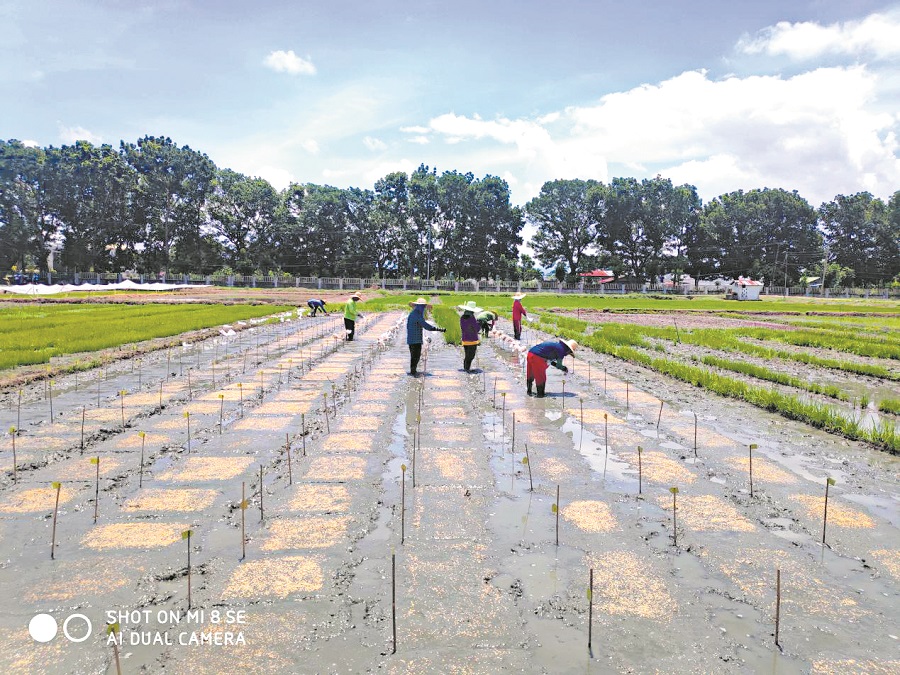
Since May 5, 2020, the Chico River Irrigation Project has resumed building by following the instructions of the local government and learning from the Chinese experiences

For one, at present, China has virtually blocked local transmission of the virus, allowing its national economy to breathe and continue its growth unimpeded. The Chinese economy has continued to recover steadily with a positive outlook, with gross domestic product growing by 3.2% in the second quarter.

This is a major victory against a virus that has wreaked havoc in many of the world’s economies. With the economy on a steady and upward trend and normalcy returning to production activities and daily life, China has become the first major economy that resumes positive growth after the pandemic broke out, marking a turning point in the world’s fight against COVID-19.

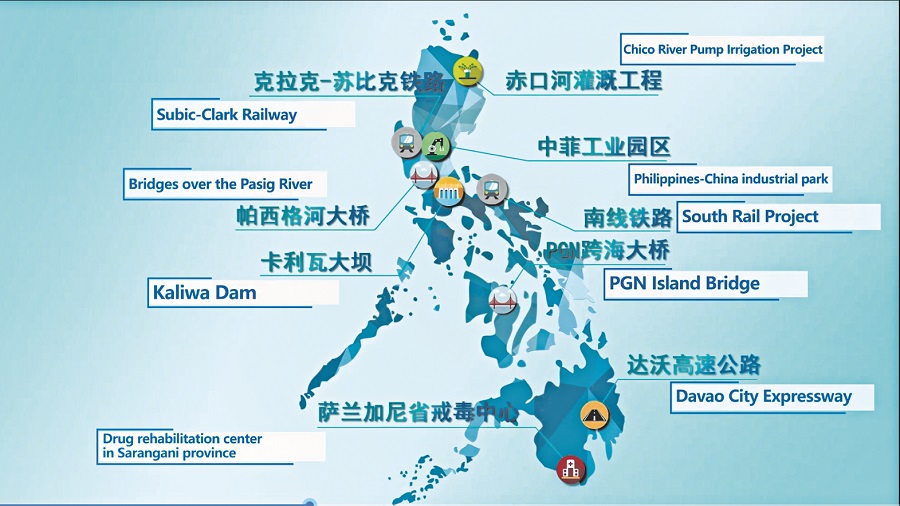
As the Philippines lowered the COVID-19 response level and adjusted control measures in May, the Chinese enterprises in the Philippines have been gradually resuming the China-aid bridge project over the Pasig River.

“While restoring its own economy, China will unswervingly expand its efforts towards opening up and working hand in hand with other countries in the world to jointly promote global trade and revival of the world’s economy,” Chinese Ambassador to the Philippines Huang Xilian said in a statement.

Mr. Huang pointed out that the decline experienced by the service sector in the first quarter of the year has narrowed in the April-June period, with modern service industries now showing robust growth, with the added value of the tertiary industry going up 1.9% in the second quarter and overcoming a 5.2% tumble from January through to March.

Market sales of consumer goods, meanwhile, gradually improved in the first six months and reached 17.2 trillion yuan, down by 11.4% year over year, or 7.6 percentage points lower than the decline in the first quarter. Fixed-asset investment fell 3.1% in the first half of the year, narrowing remarkably from a 6.3% decline in the first five months of the year. Investment in high-tech industries went up by 6.3%, while that in the first three months went down by 12.1%.

The Philippine-Sino Center for Agricultural Technology-Technical Cooperation Program (Phase III) has resumed 90% capacity with no positive COVID-19 case.

“China and the Philippines are highly complementary in economy, and will continue to strengthen the synergies between the Belt and Road initiative and the Build, Build, Build program. Now the two sides are working closely to establish a ‘fast lane’ for the movement of the key personnel and trying our utmost to help the projects resume its full capacity,” Mr. Huang noted.

As China recovers, the ambassador emphasized its commitment towards helping allies like the Philippines bounce back from the impact of COVID-19, whether it would be through joint economic initiatives or sharing technological innovation.

“New industries and business models have been engendered in the course of the global response to COVID-19, such as virtual offices, online education and telehealth. Their value to the economy and society has emerged. China is willing to strengthen cooperation with the Philippines in 5G, big data and artificial intelligence, and push forward the building of the digital Silk Road as well as green Silk Road to advance high-quality development altogether,” he said.

Huang Xilian, China’s Ambassador to the Philippines

Currently, the government-to-government cooperation projects between China and the Philippines have begun operations and are being implemented smoothly. Major projects have resumed operation at over 80% capacity. The in-depth synergies of China’s Belt and Road initiative and the “Build, Build, Build” program have achieved “fruitful results,” according to government reports, contributing to the recovery of the Philippine economy and bringing more and more benefits to the peoples of the two countries.

Since May 5, 2020, the Chico River Irrigation Project has resumed building by following the instructions of the local government and learning from the Chinese experiences. The Philippine-Sino Center for Agricultural Technology-Technical Cooperation Program (Phase III) has also resumed operations at 90% capacity with no positive COVID-19 case.

“A friend in need is a friend indeed. To face the pandemic, China and the Philippines have supported each other and overcome the difficulties in solidarity,” Ambassador Huang said.

“In a post-epidemic era, it is hoped that the two countries will continue to strengthen cooperation, strive to overcome the epidemic as early as possible, and open a new chapter of win-win cooperation. Lastly, I would like to express my wishes for the prosperity and long-lasting friendship of our two countries, as well as good health and fortune of our two people.” — Bjorn Biel M. Beltran


Philippines among countries at risk of remote desktop protocol ‘brute-force’ cyberattacks

Philippines among countries at risk of remote desktop protocol ‘brute-force’ cyberattacks

Pandemic spurs Africa’s mobile telcos to ramp up banking bid

JOHANNESBURG/ABIDJAN — When coronavirus disease 2019 (COVID-19) hit Ivory Coast, Bonaventure Kra, who works at an import-export business, began to worry. Handling hard cash all day was a risk. Queuing in crowded bank branches exposed him to infection.

Then, in the midst of the pandemic, French telecommunications giant Orange launched an entirely digital bank — its first full banking venture in Africa.

“Going back to cash would be like travelling back in time,” Kra said in the country’s commercial capital, Abidjan. “I intend to use it permanently.”

Africa’s mobile phone operators are ramping up plans to bring banking to millions of Africans, in some cases for the first time, after the coronavirus crisis caused a surge in use of digital financial services.

Orange, MTN, Telkom and Vodacom are lowering fees, rolling out new lending services ahead of schedule, and expanding mobile payment networks with the aim of finally denting the so-far unshakeable dominance of cash.

“It’s one of those industries that we consider to be ripe for disruption,” Sibusiso Ngwenya, financial services managing executive at South Africa’s Telkom, told Reuters.

With their revenue under threat as governments cap data prices and customers abandon voice phone services for free messaging apps, telcos have sought to leverage their reach into remote villages and urban shanty towns in a pivot to banking.

The global health crisis has been an unexpected catalyst, with some African governments releasing COVID-19 stimulus grants via mobile money platforms and central banks easing regulations, including limits on mobile transactions.

Orange added over five million new customers for its mobile money services in April and May alone. MTN hit one million South African users in June, when it had expected half of this, and recorded a 28% jump in mobile money transactions per minute across all its African markets in the first half of the year.

TAKING ON THE CASH KING
Cash is still king in Africa.

It accounts for around 99% of transactions in Nigeria, the continent’s most populous country, and dominates even in South Africa (90-95%) where banking penetration is relatively high, according to a 2017 estimate from consulting firm McKinsey.

World Bank figures indicate just under 43% of sub-Saharan Africans over the age of 15 had a bank account in 2017. The region’s total population stood around 1.1 billion last year.

That compared with 55% in Latin America and the Caribbean, almost 70% in South Asia and around 74% in East Asia and the Pacific.

That presents a huge opportunity, said Francois Jurd de Girancourt, head of McKinsey’s financial institutions practice Africa. Prior to the crisis, it rated the continent as the world’s No. 2 market in terms of growth and profitability potential with banking revenues set to hit $129 billion by 2023.

Telcos are well-positioned to secure a piece of that pie.

By last year, sub-Saharan Africa boasted 469 million mobile money accounts — more than any other region in the world — according to industry body GSMA.

Mobile phone penetration outstrips access to banks. Operators’ distribution models are low-cost. And telcos possess a wealth of customer data they can use to assess lending risk, a big advantage in a region where most markets lack credit bureaus.

Vodacom, the African unit of Britain’s Vodafone, is now moving to expand lending, insurance, and payment businesses currently available only in South Africa to other markets.

It has advanced by months launches of initiatives like overdrafts for the mobile money agents that work on its behalf, helping customers open accounts and withdraw and deposit cash.

It has also accelerated plans for cash advances to merchants at registered pay points, its financial services CEO Mariam Cassim told Reuters.

Orange has Mali, Burkina Faso, and Senegal in its sights as expansion markets for Orange Bank Africa, with the timetable dependent upon local regulatory approval.

Both MTN and Telkom, meanwhile, are preparing to offer micro-loans in South Africa, the companies said.

MTN, Africa’s largest operator, will roll out a mobile money offering for businesses, which is currently being piloted in Rwanda, to other markets by the end of the year. It will also pilot an initiative to digitise cash-heavy small businesses in South Africa, namely small shops known as spazas and often located in townships, executives told Reuters.

And after growing the number of vendors accepting payment via its platform by 100,000 in the first half of the year, it has now doubled an end-2021 target to 1 million.

“We are… using the opportunity that the crisis is offering us to really accelerate,” said Serigne Dioum, who heads MTN’s mobile financial services division.

‘NO LOSERS’
Mobile operators still have a long way to go to overtake traditional lenders.

Banking revenue pools in sub-Saharan Africa stood around $70 billion in 2019, according to a McKinsey estimate, while the main mobile operators earned less than $3 billion from financial services.

Some regulators remain wary of mobile money, and many informal businesses still don’t accept digital payments.

Such factors mean mobile money adoption varies wildly across the continent. Cash use actually rose in some countries during the pandemic.

M-Pesa, run by Vodacom unit Safaricom, dominates the financial system in Kenya. But both MTN and M-Pesa have in the past been forced to drop mobile money initiatives in South Africa after struggling to attract customers.

“You need a massive market share to be making a lot of money just from payments,” said McKinsey’s Jurd de Girancourt, adding that telcos will need customers to use other services too.

“It’s fine if you are M-Pesa. But we’re probably not going to see that,” he said.

Big banks, historically deterred by low incomes and poor infrastructure, are also fighting back and pushing into underserved segments.

They are agreeing partnerships with fintech firms, building their own networks of agents to distribute banking services and launching rival offerings.

They also partner with telcos, marrying their vast balance sheets with the mobile firms’ wide customer bases.

South African lender Absa is set to launch partnerships with mobile operators in Tanzania and Uganda, its head of retail banking in Africa Vimal Kumar told Reuters.

Absa is also expanding its Kenyan digital offering to cover full-service banking with roll-outs in Zambia, Botswana and Mauritius set for later this year and the rest of its markets in 2021.

“There is no loser,” Kumar said. “The opportunity is so large that no one player is going to be able to dominate.” — Reuters

ADVERTISEMENT
ADVERTISEMENT