Home Blog Page 9001

Braves ride late homers to Game 1 win over Dodgers

AUSTIN RILEY and Ozzie Albies hit ninth-inning home runs and the Atlanta Braves opened the National League Championship Series with a 5-1 victory over the Los Angeles Dodgers on Monday at Arlington, Texas.

On a night when runs were hard to come by, Riley got into a 1-2 sinker from Dodgers right-hander Blake Treinen to break a 1-1 tie in the ninth with a leadoff shot to left-center. It was the first home run of the postseason for the Braves’ No. 9 hitter after he hit eight in the regular season.

The Braves jumped in front 3-1 on a Ronald Acuna double and a Marcell Ozuna RBI single to knock out Treinen (0-1). Two batters later, Albies hit a two-run shot off Dodgers left-hander Jake McGee, his first of the postseason.

The runs came in the top of the ninth with the Dodgers serving as the home team by finishing the regular season with the best record in the National League.

In a battle of teams that entered with perfect 5-0 records in the playoffs, the Braves once again leaned on their pitching while getting home runs from Freddie Freeman in the first inning in addition to the late Riley and Albies blasts.

Atlanta left-hander Will Smith (1-0) pitched a scoreless inning to pick up the victory. Braves starter Max Fried gave up one run on four hits over six innings with two walks and nine strikeouts. Atlanta pitching entered with four shutouts in the club’s first five postseason games.

The Dodgers received a home run from Enrique Hernandez while starter Walker Buehler gave up one run on three hits over five-plus innings with five walks and seven strikeouts.

In a ballpark not known for giving up an abundance of home runs, the Braves took a 1-0 lead two batters and five pitches into the game when Freeman took a 97 mph fastball from Buehler over the wall in right-center. It was his first home run of the postseason after he hit 13 in the regular season.

Fried was getting the better of the starting-pitcher matchup against Buehler until Hernandez went deep to left field to tie the score 1-1 in the fifth inning. Hernandez was making his first start of the postseason.

Buehler gave up singles to Travis d’Arnaud and Albies to open the sixth before he was replaced by hard-throwing right-hander Brusdar Graterol, who prevented any further damage. Atlanta also loaded the bases in the eighth but failed to score.

Braves left fielder Adam Duvall left the game in the second inning when he injured his left side after hitting a foul ball. He was replaced during the at-bat by Cristian Pache. — Reuters

After successful bubble, NBA grapples with uncertain future

LOS ANGELES — As the National Basketball Association (NBA) bursts its bubble following the completion of the Finals on Sunday, the league now faces tough questions about when next season will begin and what it will look like.

The league’s three-month stay at Walt Disney World in Orlando was a huge success, with no players and coaches testing positive for COVID-19 after the virus derailed the season in March for four months.

LeBron James and the Los Angeles Lakers defeated the Miami Heat to win the championship and cap a thrilling playoffs on Sunday.

But even though the environment was safe, living on the campus required major sacrifices, and there is little appetite to return anytime soon.

“I think you wouldn’t be human if you didn’t have ups and downs in the bubble,” James told reporters on Sunday night.

“At times, I was questioning myself, should I be here? Is this worth sacrificing my family? I’ve never been without my family this long,” he said, noting that he missed his son’s 16th birthday.

The 2020-21 campaign was slated to tip off in December, but few expect that to happen given the league just wrapped up the longest season in its history and financial agreements still need to be hammered out.

The NBA has already pushed back the draft from Oct. 16 to Nov. 18 and Commissioner Adam Silver has said he doesn’t expect the season to begin this year, with January or possibly February a more likely target.

Silver, however, said he hopes to play a full 82-game season and playoffs in home arenas with fans despite the still raging pandemic, which has killed more than 214,000 people in the United States.

“Nothing has really changed with this virus,” Silver told reporters last month.

“In fact, I think the majority of states right now, cases are ticking back up again.”

He said he hopes advancements in rapid testing could make a big difference in terms of the league’s ability to potentially get fans into arenas.

“I think everybody understands just like in the country, there’s public health considerations, but the economy is a public health issue as well, so we’re working and trying to strike that right balance,” he said.

“Part of my job is to study what’s happening in other industries, what other leagues are doing, including international soccer leagues.

“So all of that’s on the table right now.” — Reuters

Coaching the Heat

Erik Spoelstra struggled, and failed, to hold back his tears as he began his post-Finals presser the other day. The Heat head coach needed the better part of a minute to contain his emotions, in large measure, because he failed to lead his charges to a championship he firmly believed they deserve. It didn’t matter that they were vast underdogs, beset by injuries to vital cogs. Forget that, heading into Game Six of the National Basketball Association title series, they faced the Sisyphean task of winning two more matches in order to see his vision through. From his vantage point, they were ready, willing, and able to buck the odds — just as they did in Games Three and Five. And, to their credit, they continued to give their all until the final buzzer. Early on, though, it became clear that their all would be nowhere near enough.

And so Spoelstra gave in to the hurt, and the fatigue, before composing himself for the unwanted chore of dissecting a gut-wrenching experience. He was still raw from the pain, and it showed even as he remained his erudite self in front of the assembled media. He was likewise thankful; for all his disappointment, he understood the gravity of what the Heat accomplished counter to conventional wisdom. They weren’t supposed to make the playoffs despite the arrival of All-Star Jimmy Butler — but they did, and as the fifth seed. They weren’t supposed to overcome the league-leading Bucks — but they did, and in runaway fashion. They weren’t supposed to upend the highly rated Celtics — but they did, and without question. They weren’t supposed to mount a challenge against the powerhouse Lakers — but they did, and how.

“We didn’t get the final result that we wanted,” Spoelstra noted wistfully. And, no doubt, he’d like to take back some decisions hindsight has exposed to have been wanting. That said, there was simply no glossing over the unfortunate hand fate dealt the Heat. He couldn’t have prepped for Goran Dragic, the Heat’s leading scorer, and Bam Adebayo, their defensive anchor, getting injured on the very first game of the Finals. In fact, the development showed yet again his brilliance as a strategist. The handicaps notwithstanding, he compelled the Lakers to treat them as equals. On offense, he devised complex sets that enabled Butler to post performances worthy of mention alongside those of the sport’s pantheon in the grandest stage. On defense, he kept the whole greater than the sum of its parts. Where others would have succumbed to the crisis, he saw opportunity, and he thrived accordingly.

Given the obstacles the Heat needed to surmount en route, Spoelstra was, perhaps, destined to fall short of his prognoses. He was left with no choice but to ride a seven-strong rotation hard after Game One, and while they competed extremely well in the intervening matches, they were running on fumes by the time the clincher rolled around. Butler was especially gassed after having expended extraordinary energy absorbing haymaker after haymaker from the Lakers — and particularly from the otherworldly LeBron James — in Game Five. And sensing the encumbrance, the series favorites pounced; the set-to was all but over at halftime.

It’s fair to argue that the Heat would have done better with extra rest. And given their tight substitution patterns, they may well have benefited from the usual gaps between Finals matches. Inside the bubble, the every-other-day-save-for-the-middle-of-the-week schedule told on their endurance. That said, resorting to what ifs necessarily requires a thorough look at the big picture: the same arrangement worked to their advantage in the previous rounds. Under the circumstances, all and sundry are right to ignore the whimper in which the Heat finished their campaign. It’s certainly not how their run will be remembered. The lasting impression of Butler will be that of a warrior emptying the tank and outplaying James (and twice!), not that of a player so weary as to prove repeatedly unable to stay ahead of the otherwise-points-starved Rajon Rondo with the season on the line. And the lasting impression of Spoelstra will be that of a champion who made no excuses as he unfailingly coaxed the best out of the Heat.

All told, Spoelstra has cause to hold his head high. He saw the end of a special season with special players, and truth to tell, he requires no hardware to validate their singular achievement. As he argued, “we’re going to remember this year, this season, this experience and that locker room brotherhood for the rest of our lives… I’m just thrilled to be able to have an opportunity to coach Jimmy and have a relationship with him and move forward chasing this dream. It’s not going to stop. We’re all wired the same.” Amen.


Anthony L. Cuaycong has been writing Courtside since BusinessWorld introduced a Sports section in 1994. He is a consultant on strategic planning, operations and Human Resources management, corporate communications, and business development.

Technology as a catalyst for budget transparency and accountability

As the country ushers in the dawn of the new normal, its leader’s actions in anticipation of health, economic, and social concerns will be essential to advancing fast and equitable solutions. With the 2021 national budget in mind, transparent and inclusive fiscal management will be crucial for our nation’s recovery moving forward.

Inasmuch as the budget process directly illustrates which sectors in society get the funding for their programs and projects, it is inherently political. For this reason, Filipinos must have access to reliable information on how public funds are allocated and spent and have ample opportunity to contribute to policy decisions that affect their future.

In this respect, digitalization is vital in making the process less political insofar as it can increase transparency and accountability.

The Stratbase ADR Institute, in partnership with the International Budget Partnership (IBP) and the La Salle Institute of Governance, recently hosted a virtual town hall discussion that tackled the 2019 Open Budget Survey results. During the discussion, Secretary Wendel Avisado of the Department of Budget and Management (DBM) highlighted the agency’s improvements, which enabled fiscal transparency in the Philippines. It was further stated that the country had been a champion of fiscal transparency as recognized by the Global Initiative for Fiscal Transparency (GIFT) and the Open Government Partnership (OGP) that both promote the same values espoused by the Open Budget Survey.

Of primary importance were the programs about accelerating digital transformation and process refinement within their ranks, as these endeavors ensure proper utilization of finances during the pandemic. Moving forward, the DBM has put its hopes on two marquee bills, which are the Budget Modernization bill and the People’s Participation in the National Budget Process bill that will institutionalize civil participation in the budget process.

Michael Aguinaldo, Chairperson of the Commission on Audit (CoA), also further reiterated the importance of reinforcing the Open Budget Survey’s ideals by advancing transparency and accountability measures that focus on accelerating IT digitalization and support to enhance quality assurance and service delivery. Strategic plans of action were laid out in the town hall meeting by the CoA chair to rationalize internal policies and structure while bolstering the organization’s inclusivity agenda by bridging strategic partnerships with civil society and other stakeholders.

Senate Committee on Finance Chairperson Sonny Angara also mentioned that the Philippines had shown relative improvement across the three pillars of transparency, public participation, and budget oversight and has scored higher than the global average in all categories. Senator Angara also added that the Senate has tried to do its part in furthering transparency by making budget deliberations available live online, while budget documents are made available to the public for download. It is through initiatives such as these done by the Philippine Senate that public institutions can harness technology to increase transparency and accountability.

The next step perhaps is to further increase collaboration with the public in the budget process. Doing so will allow the government to finetune budget allocation in direct accordance with citizens’ needs. However, to truly open the budget discussion demands streamlining internal processes and including civil society’s diverse voices requires further technological transformation. Hence, digitalization should be one of our top priorities towards recovery as a nation.

While the country is still in the grip of the COVID-19 pandemic, inequity has shown in various facets of society that prevent the public from full immersion and inclusion in government processes and services. Budgeting is one of the primary functions of government that has long been overlooked. However, as we now step into a new era of governance in a post-pandemic society, it will play a significant role.

In this sense, technology serves as the bridge that will link the government, civil society, and the general public to the budget management discourse. Technology is already being used to give stakeholders access to critical information. Through social media, we’ve seen how it has become a platform to strengthen citizens’ voices. Blockchain technology, on the other, promises to provide stakeholders with transparent and tamper-proof records, essential in the fight against corruption.

The Philippines’ good performance in the latest Open Budget Survey should serve as the foundation upon which transparency mechanisms should be institutionalized and anti-corruption innovations should be built. The government should institutionalize public participation mechanisms through legislation and policies that ensure that citizens and civil society groups can contribute to the policy process free of political interference.

Furthermore, the government should prioritize its digital transformation because these tools can bring even more openness to the budget process. More than that, however, it will also allow civil society and the general public to be harnessed as proactive stewards of good governance, improving democratic governance as a whole.


Victor Andres “Dindo” C. Manhit is the President of Stratbase ADR Institute.

IMF meetings to highlight policy puzzle for economists

THE bombardment of commentaries about the economic outlook and policy implications from this week’s annual meetings of the International Monetary Fund (IMF) and World Bank will most likely coalesce around three big themes. Although none of them are likely to move the needle for markets, they will highlight critical longer-term challenges that, as yet, lack good theoretical or practical solutions.

The first is the uncertain and unstable outlook for the global economy, which will be underscored by the new IMF projections. On paper, the forecasts are most likely to be marginally better than the last set. But the commentary that accompanies them will emphasize the risks involved, not only those related to further COVID-19 (coronavirus disease 2019) restrictions on economic activity, particularly in some parts of Europe, but also the cautious behavior of households linked to “human counterparty risk” —  that is, the inability of many people to ascertain with a sufficient degree of confidence the risk they take in the face-to-face interactions that are critical for economic activity, particularly in the service sector. Indeed, I would go one step further and suggest that were the IMF projections reworked again today, they would end up with fewer upward revisions.

The second theme is that of broad-based agreement on the need for an overdue transition from excessive reliance on unconventional monetary policy to a more balanced mix anchored by responsive fiscal policy and pro-growth structural reforms. Yet implementing it is far from certain. In some countries, such as the United States, there is insufficient political cohesion. In many emerging economies, it can be attributed to limited policy space and a lack of financial resilience.

The third theme is the urgency to support the most vulnerable countries, which need to spend more on health and other social sectors. It will stress both the importance of expanding and extending the debt-payment holidays provided by many G-20 governments to the poorest developing countries and the need for the private sector to participate. Yet there are few, if any, agile top-down tools for enticing burden sharing on the parts of banks, bondholders and other private creditors.

The combined result will emphasize four longer-term challenges that theoretical and practical economists, in both public and private sectors, need to address urgently:

How to revamp global growth dynamics that, in many cases, may well require a fundamental recasting of models that relied on globalization to supplement internal drivers and to facilitate productivity reforms.

How to deal with national and international inequalities that, because of COVID-19, have jumped in a worrisome way from income and wealth to also include an increasing and potentially devastating dispersion in opportunities.

How to assess the longer-term risks posed to effective monetary policy and financial stability arising from over-reliance on central banks and the lack of policy handoffs.

How to make the international debt architecture more agile in a global system that, at least in the short term, is more likely to face further fragmentation pressures rather than renewed cooperation and coordination.

Some economists have already demonstrated innovation amid multifaceted COVID-19 adversity, such as the use of more micro, high-frequency “big data,” like mobility statistics and credit card payments, to provide more timely indicators of economic activity. The hope is that this week’s annual meetings will act as an additional catalyst for avoiding a repeat of the big policy shortfall of the global financial crisis: that of winning the war against a global depression but failing to secure a peace of durable, inclusive and sustainable growth.

Through more timely theoretical and practical responses to the underlying challenges that will be highlighted by this week’s feast of projections and policy commentary, economists can do much more to both limit the immediate and longer-term damage to well-being and help put in place stronger national and global foundations for longer-term prosperity and genuine financial stability that have eluded too many for too long.

BLOOMBERG OPINION

Working from home is here to stay, so let’s get it right

THE COVID-19 (coronavirus disease 2019) pandemic has crushed the economy, sent joblessness soaring, and killed over a million people worldwide. But there are a few ways in which the pandemic may prompt society to improve, and one is remote work. Though it was initially necessary to keep employees from getting sick, remote work promises to make people more productive and happier while helping the environment and preserving infrastructure.

When the coronavirus struck, those who could do their jobs remotely often did. The number has gradually declined as our understanding of safety measures increased, but it’s still substantial:

And while many people will go back to the office after the pandemic is over, part of the shift will probably be permanent. A recent survey shows a substantial increase in the number of workers who say they won’t go back to the office full time:

There are certainly drawbacks to the remote trend. Those working from home are far more likely to be in higher-income, professional occupations, such as engineers, lawyers, financiers, or consultants. Most lower-income jobs can’t be done remotely, such as in food service and brick-and-mortar retail. That’s created inequality in terms of both unemployment and exposure to COVID-19. And when high-income workers become accustomed to staying home and ordering online instead of going out to eat and shop, it’s lower-earning local service workers who bear the brunt of the shift in demand.

The trend has also taken a psychological toll. People who work remotely often end up putting in more hours than when they go into the office. With the boundary between job and home life blurred, there’s no obvious signal that it’s OK to stop working, which can make it hard to relax. As any graduate student or entrepreneur can attest, the nagging anxiety of whether you should be working more can easily lead to burnout.

But there are good reasons to think that these negative effects will be mostly transitory. As countries that have dealt successfully with COVID-19 show, engineers and lawyers will go back to restaurants and shop at stores when the pandemic is over. While a few industries such as movie theaters may suffer permanent decline, home delivery is not a true substitute for most retail experiences.

Psychological stress will probably also ebb as the coronavirus threat eases. People who work remotely will develop strategies to segment their jobs from their personal lives, and budget their time in ways that leave them less anxious. Professors, writers and other people whose jobs have always been semi-remote show that this can be done. And most workers will eventually alternate between home and the office.

This kind of part-time remote work promises to bring substantial benefits to society. Flexibility will add to work-life balance: If a working parent needs to stay home to take care of a sick child or supervise home repairs, they’ll be able to do that without sacrificing income or productivity. Vacations will be easier, too. Remote work could even increase productivity, by reducing the number of hours wasted by people trying to look busy for their bosses.

Remote work will also benefit American society economically. Fewer days in the office means less time spent commuting. A recent blog post by the Federal Reserve Bank of St. Louis looked at falling commute times in three suburban counties and calculated that about 1 million to 1.5 million hours were probably saved in each county between April and July. Going forward, the amount saved will be less, but still substantial.

Long commutes are associated with unhappiness, so more days spent working at home will make for an emotionally healthier populace. It will also save workers money and reduce wear and tear on the nation’s crumbling road infrastructure. Reduced greenhouse emissions will be yet another plus.

To maximize the benefits from the shift to remote work, government policy should aim to ease the transition. Since more people will be toiling out of their houses instead of an office building, cities should change zoning codes to facilitate conversion of commercial real estate to residential. Government can also subsidize service workers to move to new neighborhoods to follow high-income jobs, since that’s where the new demand will be. It can also help retrain people displaced by long-term shifts in demand (such as the decline of movie theaters). And it can gather information from big companies that successfully managed a shift to partial remote work, and share those strategies with small businesses that might otherwise have a tougher time managing the transition.

In the long run, especially with smart policies, more flexible work arrangements will be a good thing. COVID-19 has wreaked terrible damage on society, but in this small way it will end up moving things in a healthier direction. 

BLOOMBERG OPINION

More synchronized action needed to tackle economic crisis — IMF

WASHINGTON/LONDON — The international community must do more to tackle the economic fallout of the coronavirus disease 2019 (COVID-19) crisis, the head of the International Monetary Fund (IMF) said on Monday, publicly calling on the World Bank (WB) to accelerate its lending to hard-hit African countries.

Some of the key events of the virtual and elongated annual meetings of the IMF and World Bank take place this week, with the most pressing issue how to support struggling countries.

“We are going to continue to push to do even more,” IMF Managing Director Kristalina Georgieva said during an online FT Africa summit.

“I would also beg for more grants for African countries. The World Bank has grant-giving capacity. Perhaps you can do even more… and bilateral donors can do more in that regard,” Ms. Georgieva said in an unusual public display of discord between the two major international financial institutions. No immediate comment was available from the Bank.

Ms. Georgieva last week said the IMF had provided $26 billion in fast-track support to African states since the start of the crisis, but a dearth of private lending meant the region faced a financing gap of $345 billion through 2023.

The pandemic, a collapse in commodity prices and a plague of locusts have hit Africa particularly hard, putting 43 million more people at risk of extreme poverty, according to World Bank estimates. African states have reported more than 1 million coronavirus cases and some 23,000 deaths.

G20 (Group of 20) governments are expected to extend for six months their Debt Service Suspension Initiative (DSSI) which has so far frozen around $5 billion of poorer countries’ debt payments, but pressure is on the main development banks and private creditors to provide relief too.

Ms. Georgieva said the Fund was also pushing richer member countries to loan more of their existing Special Drawing Rights (SDR), the IMF’s currency, to countries that needed support most, and was “very committed” to finding a way forward for countries like Zambia now needing to restructure their debts.

The United States has blocked Ms. Georgieva’s early call for issuance of more SDRs, arguing that it would benefit mostly richer nations, not the developing countries that need it most.

Pledges to the Fund’s Poverty Reduction and Growth Trust, which supports low-income countries, have totaled $21 billion to date, including $14 billion in existing SDR holdings, but more resources were urgently needed, an IMF spokeswoman said.

The IMF chief dodged calls by civil society groups for the IMF to sell off some of its extensive gold reserves, saying the Fund viewed them as an important “financial buffer.”

Profit from selling less than 7% of the IMF’s gold could fund cancelation of all debt payments by the poorest countries to the IMF and World Bank for the next 15 months, the UK-based Jubilee Debt Campaign said in a new report issued Monday.

The IMF said its gold reserve of about 90.5 million ounces (2,814.1 metric tons) was worth about $137.8 billion at the end of December, compared to its historical cost of $4.4 billion.

Ms. Georgieva said countries in serious trouble must restructure their debts as soon as possible.

“This is the message for all countries in debt distress… If debt is not sustainable, please move towards restructuring, the sooner the better,” she said.

Ms. Georgieva said transparency in lending was critical for all parties, and welcomed what she called “encouraging” statements by China to move toward a more consolidated view of the debts held by the Chinese government and other institutions.

“I believe that now is the moment in this crisis, to make … transparency paramount and mandated to the extent possible everywhere,” she said. — Reuters

Active enforcement against foreign bribery down sharply since 2018

WASHINGTON — Active enforcement against foreign bribery has dropped sharply since 2018, and three places — China, Hong Kong and India — did not open a single foreign bribery investigation from 2016 to 2019, a new report by watchdog Transparency International found.

The report, released Tuesday, said the share of global exports from countries that actively enforce legislation against foreign bribery and money laundering is down by more than a third.

Only four of 47 leading exporters — the United States, Britain, Switzerland and Israel, which account for 16.5% of global exports — actively enforced legislation against foreign bribery in 2019, it said. That is down from seven countries accounting for 27% of global exports in 2018.

China, the world’s largest exporter, Japan, the Netherlands, South Korea, Hong Kong, Canada, India and Mexico had the worst track records, the group said.

“Too many governments choose to turn a blind eye when their companies use bribery to win business in foreign markets,” said Delia Ferreira Rubio, chair of the group.

But no country was immune.

Germany, the world’s third-largest exporter, pursued fewer investigations in 2019, and closed fewer cases against graft overseas, while Italy and Norway also showed declines.

Transparency International urged Group of 20 (G20) major economies to step up enforcement, noting money lost to foreign bribery was not available to be spent on critical needs such as healthcare.

To address the problem, Transparency International said all countries that signed the OECD Anti-Bribery Convention and other major economies, should end secrecy in ownership of companies, make case outcomes public, and explore increased liability of parent companies for the actions of their subsidiaries.  Reuters

Singapore Air’s A380 restaurant tickets sold in 30 minutes

Singapore Airlines Ltd. said all seats on its Airbus SE A380 jetliner pop-up restaurants were reserved within 30 minutes of bookings opening Monday.

With flights largely grounded by the coronavirus pandemic, Singapore Airlines is trying novel ways to raise money, including using two of the superjumbos parked at Changi Airport as temporary eateries.

A meal in a suite costs S$642 ($474), while seats in business class are going for S$321, dropping to S$96.30 for premium economy and S$53.50 for economy. Customers can also pay with frequent-flyer miles.

After lunch on the initial dates of Saturday and Sunday, Oct. 24 and 25, sold out, Singapore Airlines said it will extend the offer for a further two days the following weekend and also add a dinner option on all four days.

About half the seats in each aircraft will be used for dining, in line with restaurant guidelines on group limits and distancing, the carrier said in a statement. In normal flying service, the carrier’s A380s can seat as many as 471 people, according to its website.

Singapore Airlines, which suffered a record S$1.12 billion ($827 million) net loss in the quarter through June and is laying off about 20% of its workforce, is also selling a range of first- and business-class meals and offering a service whereby a private chef reheats, plates and serves customers in their homes.

Meanwhile, demand is soaring for spots on two cruise ships that will start sailing from Singapore next month on round-trip journeys as the city-state aims to give residents an outlet for their wanderlust.

Operator Genting Cruise Lines has received more than 6,000 bookings in 5 days, while competitor Royal Caribbean International said bookings are up 500% compared with the past two weeks, reported the Straits Times. The boats will sail at a reduced capacity of 50% and the journeys are only open to residents of Singapore. — Kyunghee Park/Bloomberg

Peru opens Machu Picchu for a single Japanese tourist after almost 7-month wait

LIMA — Peru opened the ruins of Machu Picchu for a single Japanese tourist after he waited almost seven months to enter the Inca citadel, while trapped in the Andean country during the coronavirus outbreak.

Jesse Takayama’s entry into the ruins came thanks to a special request he submitted while stranded since mid-March in the town of Aguas Calientes, on the slopes of the mountains near the site, said Minister of Culture Alejandro Neyra on Monday.

“He had come to Peru with the dream of being able to enter,” Mr. Neyra said in a virtual press conference. “The Japanese citizen has entered together with our head of the park so that he can do this before returning to his country.”

Mr. Takayama, his entry ticket on hand since March, entered the ruins of the citadel built more than 500 years ago on Saturday, and became the first visitor in seven months to be able to walk through the world heritage site. His original plan had been to spend only a few days in Peru to take in Machu Picchu.

“This is so amazing! Thank you!” said Mr. Takayama in a video recorded on the top of Machu Picchu mountain.

Minister Neyra said that in November the stone ruins of Machu Picchu will be reopened for national and foreign tourists, without specifying the date. The site will permit 30% of its normal capacity of 675 people per day.

“We are still in the middle of a pandemic,” Mr. Neyra said. “It will be done with all the necessary care.” — Reuters

COVID-19 antibodies last at least 3 months; so do symptoms for many

The following is a roundup of some of the latest scientific studies on the novel coronavirus and efforts to find treatments and vaccines for COVID-19, the illness caused by the virus.

COVID-19 antibodies last at least three months

People infected with COVID-19 develop antibodies targeting the new coronavirus that last for at least three months, according to two reports published on Thursday in Science Immunology

The two studies, together involving nearly 750 patients, both point to immunoglobulin G (IgG) antibodies, which start showing up well after an infection begins, as the longest-lasting. 

Researchers found IgG antibodies with two targets—a spike protein on the virus that helps it infect cells, and a part of the spike called the receptor binding domain (RBD)—lasted more than 100 days. 

While the protective effect of COVID-19 antibodies is not completely clear, Jen Gommerman of the University of Toronto, coauthor of the study, said her team also found levels of so-called neutralizing antibodies, which inactivate the virus, “appeared to be very stable.” 

The other study, from Harvard Medical School, reported similar findings. This means that a properly designed vaccine “should elicit a durable antibody response that has the potential to neutralize the virus,” Ms. Gommerman said. Her group also found that antibodies in saliva correlated with antibodies in blood, but at this point the saliva tests are not sensitive enough to replace blood tests. 

COVID-19 symptoms linger for months for many

Three months after becoming ill, many COVID-19 patients still have symptoms, two studies confirm, and the more severe the initial infections, the higher the odds of persistent problems. 

In Spain, doctors checked back with 108 patients, including 44 who had been severely ill. At 12 weeks after diagnosis, 76% still reported after-effects, with 40% reporting three or more coronavirus-related health issues, doctors said in a paper posted on Thursday on medRxiv ahead of peer review. 

The most common complaints were shortness of breath, physical weakness, cough, chest pain, palpitations, and psychological and cognitive disorders. 

In a similar study of 233 US COVID-19 patients—eight of whom had been severely ill—one in four still had symptoms 90 days after first feeling ill. Rates were higher for patients who had been sicker: 59.4% at 30 days and 40.6% at 90 days. 

“But even for very mild and initially asymptomatic cases, 14.3% have complications persist for 30 days or longer,” the authors reported on Sunday on medRxiv. 

In the US study, the most common persistent symptoms were impaired smell and taste, difficulty concentrating, shortness of breath, memory loss, confusion, headache, heart palpitations, chest pain, pain with deep breaths, dizziness, and rapid heartbeat. 

Remdesivir cut COVID-19 recovery time by 5 days

Final data from a large study of Gilead Sciences Inc.’s antiviral drug remdesivir showed the treatment cut COVID-19 recovery time by five days among hospitalized patients, one day faster than preliminary data had indicated, researchers reported on Thursday in The New England Journal of Medicine

The 1,062-patient study compared up to up to 10 days of therapy with remdesivir—now sold in some markets as Veklury—to a placebo. The average recovery time was 10 days among those who got the Gilead drug versus 15 days in the placebo group. Among patients requiring oxygen at the start, those taking remdesivir continued to need oxygen for an average of 13 days, compared to 21 days for patients who got a placebo. 

In a separate analysis looking just at patients who received oxygen, the drug appeared to reduce the risk of death over the next month by 70%. “We now have data suggesting that giving remdesivir to patients on oxygen may significantly reduce their chances of death compared to other subgroups,” Dr. Andre Kalil, an infectious disease expert at the University of Nebraska Medical Center and the study’s lead investigator, said in a news release.

Coronavirus rarely travels from mother to newborn

Transmission of the new coronavirus from mothers to newborns is rare, doctors from New York-Presbyterian/Columbia University Irving Medical Center reported on Monday in JAMA Pediatrics

They studied 101 babies born to 100 mothers with COVID-19, including 10 whose mothers had been severely ill. Almost all of the babies tested negative for the virus, while tests in two newborns had indeterminate results. If these two indeterminate results are considered positive, the overall incidence of transmission was 2.0%. 

Even with a 2% transmission rate, “none of our babies exhibited clinical symptoms of COVID-19, either during their newborn nursery stay or during … the first few weeks of life,” coauthor Dr. Dani Dumitriu told Reuters Health by e-mail. 

Roughly 90% of the newborns were breastfed at least partially. “As the country heads into what looks like a second wave of the COVID-19 pandemic, it is important to know that separation of affected mothers from their newborns may not be warranted, and direct breastfeeding appears to be safe,” study coauthor Dr. Melissa Stockwell said. — Nancy Lapid/Reuters


Surge in natural disasters takes heavy human and economic toll — UN

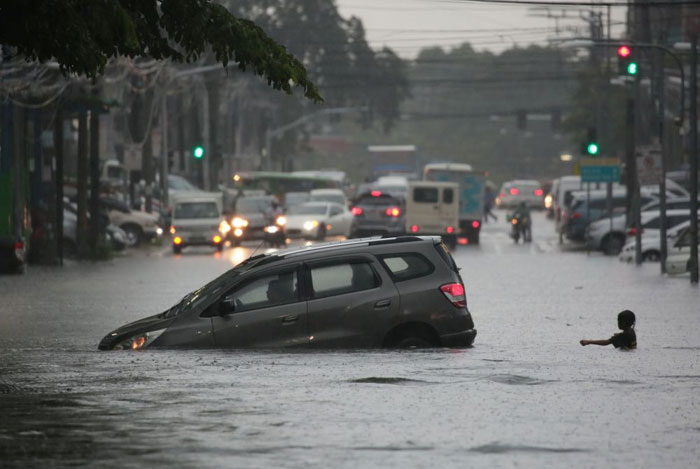
Philippines among countries with highest number of disaster events

An SUV gets caught in a flood on Timog corner Scout Tobias in Quezon City after a sudden downpour of rain on October 12, 2020. The Philippines recorded 304 disaster events from 2000 to 2019, landing it among the top 10 countries to report extreme weather events. — Photo via PhilStar/Michael Varcas

GENEVA — Extreme weather events have increased dramatically in the past 20 years, taking a heavy human and economic toll worldwide, and are likely to wreak further havoc, the United Nations (UN) said on Monday.

Heatwaves and droughts will pose the greatest threat in the next decade, as temperatures continue to rise due to heat-trapping gases, experts said.

Image via Global Water Partnership CC BY-NC-SA 2.0

China (577) and the United States (467) recorded the highest number of disaster events from 2000 to 2019, followed by India (321), the Philippines (304), and Indonesia (278), the UN said in a report issued the day before the International Day for Disaster Risk Reduction. Eight of the top 10 countries are in Asia.

Some 7,348 major disaster events were recorded globally, claiming 1.23 million lives, affecting 4.2 billion people and causing $2.97 trillion in economic losses during the two-decade period.

Drought, floods, earthquakes, tsunamis, wildfires, and extreme temperature events caused major damage.

“The good news is that more lives have been saved but the bad news is that more people are being affected by the expanding climate emergency,” Mami Mizutori, the UN Secretary-General’s Special Representative for Disaster Risk Reduction, told a news briefing.

She called for governments to invest in early warning systems and implement disaster risk reduction strategies.

Debarati Guha-Sapir of the Centre for Research on the Epidemiology of Disasters at the University of Louvain, Belgium, which provided data for the report, said: “If this level of growth in extreme weather events continues over the next twenty years, the future of mankind looks very bleak indeed.

“Heatwaves are going to be our biggest challenge in the next 10 years, especially in the poor countries,” she said.

Last month was the world’s hottest September on record, with unusually high temperatures recorded off Siberia, in the Middle East, and in parts of South America and Australia, the European Union’s Copernicus Climate Change Service said.

Global temperatures will continue to warm over the next five years, and may even temporarily rise to more than 1.5 degrees Celsius above pre-industrial levels, the World Meteorological Organization (WMO) said in July. Scientists have set 1.5C as the ceiling for avoiding catastrophic climate change. — Stephanie Nebehay/Reuters