

Home Blog Page 8948

Countries turn to rapid antigen tests to contain second wave of COVID-19

ZURICH/BERLIN — Countries straining to contain a second wave of COVID-19 (coronavirus disease 2019) are turning to faster, cheaper but less accurate tests to avoid the delays and shortages that have plagued efforts to diagnose and trace those infected quickly.

Germany, where infections jumped by 4,122 on Tuesday to 329,453 total, has secured 9 million so-called antigen tests per month that can deliver a result in minutes and cost about 5 euros ($5.90) each. That would, in theory, cover more than 10% of the population.

The United States and Canada are also buying millions of tests, as is Italy, whose recent tender for 5 million tests attracted offers from 35 companies.

Germany’s Robert Koch Institute (RKI) now recommends antigen tests to complement existing molecular PCR tests, which have become the standard for assessing active infections but which have also suffered shortages as the pandemic overwhelmed laboratories and outstripped manufacturers’ production capacity.

PCR tests detect genetic material in the virus while antigen tests detect proteins on the virus’s surface, though both are meant to pick up active infections. Another type of test, for antibodies the body produces in response to an infection, can help tell if somebody has had COVID-19 in the past.

Like PCR (polymerase chain reaction) tests, antigen tests require an uncomfortable nasal swab. They can also produce more “false negatives,” prompting some experts to recommend they only be used in a pinch. Still, the alarming rise in new infections globally has health officials desperately pursuing more options as the winter influenza season looms.

The World Health Organization (WHO) reported more than 2 million new cases last week, bringing the total worldwide to 37 million, with more than 1 million deaths from COVID-19.

“These point-of-care tests could make a big difference,” said Gerard Krause, epidemiology department director at Germany’s Helmholtz Centre for Infection Research.

NO TEST NO FLIGHT
Mr. Krause said low-priority patients — those without symptoms — could initially be screened with antigen tests, leaving the more accurate PCR tests for those showing signs of the disease.

Antigen tests have already gained traction in the travel industry. Italian airline Alitalia offers Rome-Milan flights exclusively for passengers with negative tests and Germany’s Lufthansa has announced similar testing plans.

But pandemic’s vast scale has strained the ability of countries to test all of their citizens, making it difficult to track the twisting paths of infection comprehensively and prevent a resurgence.

In the United States, for example, reliance on automated PCR machinery over the summer left many patients frustrated as they waited for a week or more for results. Testing in Europe has also suffered glitches.

France does over a million tests a week but its free-for-all testing policy has led to long queues and delays in results, prompting French researchers to come up with a test they say can produce results in 40 minutes, without using a swab.

Italy does between 800,000 and 840,000 tests a week, more than double April’s levels, according to the Ministry of Health. But a government adviser, University of Padua microbiology professor Andrea Crisanti, said the country needs 2 million tests a week to really get on top of the virus.

In the Netherlands, where infection rates are among Europe’s highest, the government has been scrambling to expand weekly testing and lab capacity to 385,000 by next week from 280,000 now. The target is nearly half a million tests a week by December and just under 600,000 by February.

But people have been waiting days for a test. The authorities blame the overwhelming demand from those without clear symptoms for clogging up the system.

In response, the authorities have restricted rapid antigen tests to health workers and teachers, while others go on a waiting list.

‘GOLD STANDARD’
The various hitches highlight a conundrum for governments: how to get people back to work while tracing the virus within the population quickly — without running out of supplies.

Swiss diagnostics maker Roche, announced plans on Tuesday to launch a new antigen test by the end of the year that can be processed on lab machines at up to 300 tests per hour, not counting collection time.

Rivals including Siemens Healthineers, Abbott Laboratories and Becton Dickinson also offer numerous COVID-19 diagnostic tests.

Roche said the test could be deployed in places such as nursing homes or hospitals, where speedy results could thwart a potentially lethal outbreak.

By early 2021, the Basel-based company said it could make some 50 million of the new tests a month, on top of the rapid point-of-care tests it already sells.

“The primary use case is the testing of symptomatic patients,” a Roche spokeswoman said. “The secondary use case is the testing of individuals suspected of infection … which could also include asymptomatic patients.”

Expert opinion, however, on just how to use antigen tests is evolving and remains the subject of debate.

Switzerland, where new infections have spiked to about 1,500 a day from as low as three in June after schools reopened, is only now validating the accuracy of the rapid tests.

“Deployment of the rapid tests — where it makes sense — will be integrated into our testing strategy,” a spokesman for the Swiss federal health ministry said. “We’ll update our testing recommendations in November.”

Sandra Ciesek, director of the Institute of Medical Virology at the University Clinic in Frankfurt, Germany said rapid antigen tests could be an option for asymptomatic patients planning to visit elderly patients at nursing homes.

But people should refrain from using them as a definitive substitute to judge their infection status.

“The PCR test remains the gold standard,” Ciesek said. “An antigen test should only be used as an alternative if PCR is not possible in a timely manner.” — Reuters

Japan to sign agreement allowing arms exports to Vietnam

TOKYO — Japan plans to sign an agreement with Vietnam to allow it to export defence equipment and technology to the country, part of a move to strengthen defence capabilities of Indo-Pacific nations to counter Chinese maritime advances, the Nikkei newspaper reported on Wednesday.

Japanese Prime Minister Yoshihide Suga on Tuesday told his ruling Liberal Democratic Party that he will visit Vietnam and Indonesia next week, the newspaper said, adding he was expected to sign the Vietnam deal during the trip.

Japan ended a decades-old ban on overseas arms sales in 2014 to help beef up the nation’s military and lower the unit cost of home-built military equipment but has so far struggled to strike export deals for finished products.

Japan’s only export deal for a finished product has been one signed with the Philippines in August for the export of a warning and control radar system developed by Mitsubishi Electric, the Nikkei said.

Tokyo is also negotiating with Indonesia and Thailand to sign an agreement regarding defence equipment transfers as it seeks to draw on Southeast Asian demand, it added.

Mr. Suga’s visit to the two countries would be his first overseas trip since taking office last month following Shinzo Abe’s resignation due to ill health. — Reuters

Eli Lilly pauses trial of antibody drug Trump touted as COVID-19 ‘cure’ over safety concern

Eli Lilly and Co. said on Tuesday that the government-sponsored clinical trial of its COVID-19 antibody treatment similar to one taken by US President Donald J. Trump has been paused because of a safety concern.

Mr. Trump touted the Lilly drug, along with the antibody treatment from Regeneron Pharmaceuticals Inc that he received for his COVID-19, as tantamount to a cure in a video he posted last week.

The announcement comes one day after Johnson & Johnson said it was forced to pause a large high-profile trial of its experimental coronavirus vaccine because a volunteer fell ill. J&J said it does not yet know if that person was given the vaccine or a placebo.

AstraZeneca Plc’s US trial for its experimental COVID-19 vaccine has also been on hold for over a month after a volunteer in its UK study fell ill. Trials of that vaccine resumed in other regions after a brief halt.

Lilly said earlier this month it was applying for emergency use authorization (EUA) for the antibody drug, LY-CoV555, for patients with mild to moderate COVID-19 based on data from another clinical trial.

It is not uncommon to pause drug trials to investigate safety concerns, and such actions do not necessarily indicate a serious problem. Because of the urgent need for drugs and vaccines to tackle a pandemic that has claimed over 1 million lives worldwide—and the speed with which they are being developed – these trials have come under intense scrutiny.

“Out of an abundance of caution, the ACTIV-3 independent data safety monitoring board (DSMB) has recommended a pause in enrollment,” Lilly spokeswoman Molly McCully said in an e-mailed statement. “Lilly is supportive of the decision by the independent DSMB to cautiously ensure the safety of the patients participating in this study.”

The Indianapolis-based drugmaker did not comment on the implications for the paused trial, called ACTIV-3, which is testing the treatment on COVID-19 patients who require hospitalization, or on its other ongoing trials. It is also testing the drug in nursing homes to see if it can prevent staff and residents from getting infected.

The US Food and Drug Administration and the National Institutes of Health did not immediately reply to requests for comment.

Lilly began its ACTIV-3 trial in August and is aiming to recruit 10,000 patients primarily in the United States.

The trial compares patients who receive its antibody drug plus Gilead Sciences Inc’s antiviral drug remdesivir with those who receive remdesivir alone.

Lilly sought the EUA from US regulators after publishing data in September showing LY-CoV555 helped cut hospitalization and emergency room visits for COVID-19 patients. The treatment is being developed with Canadian biotech AbCellera.

Lilly shares closed nearly 3%. — Michael Erman and Carl O’Donnell/Reuters

Meralco guarantees safe, adequate and reliable power to Marikina City’s new COVID-19 facilities

Advancing its commitment to support government efforts in the fight against COVID-19, Meralco powers up two of Marikina City’s new quarantine and treatment centers – the Marikina Disaster Risk Reduction Management Office’s quarantine treatment facility and the Department of Public Works and Highways (DPWH) – funded isolation facility. The energization of these projects involves the installation of metering facilities, forty (40) meters of secondary service wires, and four (4) distribution transformers. Completion of these priority projects assures the front liners, patients and the medical staff of stable and uninterrupted supply of electricity to the new centers.

Globe wins Asia’s Best CEO, CFO, CSR at Corporate Governance Awards

Globe CEO Ernest Cu is Asia’s Best CEO, and Rizza Maniego-Eala is Asia’s Best CFO (Investor Relations) at the Corporate Governance Asia Awards’ 10th Asia Excellence, with the theme, “Communicating through the Fog of Uncertainty: The story of the Asian Corporation response during the pandemic.” Globe is likewise named Asia’s Best CSR, Best Investor Relations Company (Philippines) and Best Investor Relations Professional (Philippines, Jose Mari Fajardo) at the 2020 Asian Excellence Award which recognizes environmental, ethics, sustainability, social and Asian values of corporate governance.

“I would like to thank the Asian Excellence Award for this recognition. We at Globe take pride in being able to rise above the challenges of an unprecedented pandemic, as a digital-ready, agile and collaborative company. This is a testament that Globe leads the way in connectivity, service, communication and sustainability,” said Cu.

For her part, Maniego-Eala said, “We welcome the commendation of the esteemed Corporate Governance Asia group of Globe’s transparency in our financial performance and prospects which is our commitment to our stakeholders.” On being Asia’s Best CSR, Globe’s Chief Sustainability Officer Yoly Crisanto said, “We thank the group for recognizing our service to the community through programs that uphold diversity, inclusivity, and humanity. We are fully committed to our purpose of doing a #GlobeOfGood.”

Aldrin Monsod, Founder, Managing Director and Publisher of Corporate Governance Asia shared his congratulatory message to Globe, “This year has been devastating for so many of us but we are grateful to God for still allowing us to continue our small mission in Asia despite the pandemic. We also would like to commend your amazing contribution to the Filipino people during these times of crisis. Your support is truly remarkable and a source of inspiration to us and to so many.”

Emerging as a true leader amid the health crisis, Globe released over P1.3 billion in combined services and assistance packages for COVID-19, consisting of support for Globe employees and vendor partners, services and promos, external fund-raising efforts, and monetary and in-kind donations. The award also commended the impressive scale and speed of Globe’s shift to work-from-home adaptability as well as its arrangements to safeguard the health of its employees. “This is an important part of this award which we hope to inspire the next generation of corporate leaders in Asia,” said Monsod.

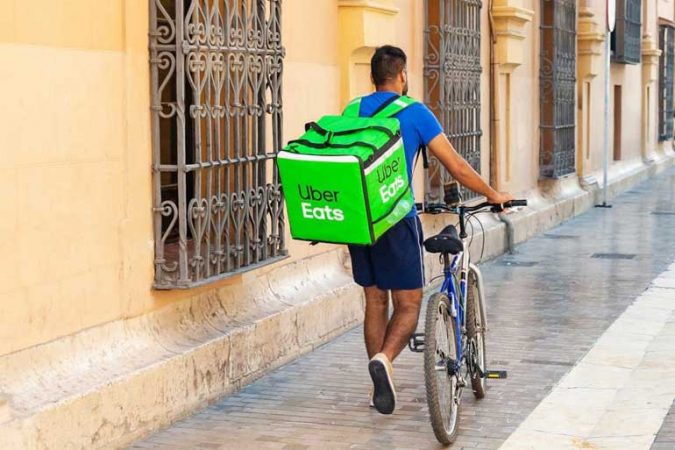
Seoul’s angels: South Korea food delivery giants rev up rider race amid coronavirus boom

SEOUL — In South Korea, some of the world’s biggest food delivery firms are scrambling to surf an estimated $4 billion wave of new orders, contracting thousands of new riders in a boom triggered by the scourge of the global economy—the coronavirus pandemic.

Koreans had already developed such an appetite for meal deliveries that the country ranked third in the world last year for food order services, according to consultancy Euromonitor. Now, tough social distancing rules and work-from-home policies to counter the pandemic have fuelled explosive growth.

South Korea’s food delivery market is expected to jump 40% this year to around $15.4 billion from $11 billion in 2019, Euromonitor data showed, topped only by China and the United States.

Surging coronavirus-era consumer demand has stoked orders, supported meal pricing and made the prospect of a career as a self-employed rider—earning more per hour than many other part-time jobs—an attractive option for many after the pandemic drove Korea’s jobless rate to a 10-year high earlier this year.

Contractor jobs like delivery riders will keep growing in number amid the pandemic, predicted Kim Sung-hee, professor of labor studies at Korea University, highlighting the need for government scrutiny of “non-regular work.”

“A lot of the contractor jobs, including riders, have minimal access to labor rights,” Kim said, “they have no access to occupational health and safety insurance and no employment safety net.”

Responding to the demand surge, Woowa Brothers, the operator of leading food delivery service Baedal Minjok, said it expanded its pool of motorbike delivery riders this summer by nearly 50% from 2,100 previously. Smaller peer Barogo, which like Woowa Brothers doesn’t disclose details of its financial performance—said it is recruiting 5,000 more, creating openings for some otherwise unlikely riders.

Among those is Chey Young-ah, a 37-year-old former art teacher in Seongnam, 20 km south of Seoul. After the pandemic forced classes at her day job to shut, she saw brisk delivery orders at a fried chicken restaurant where she worked part-time, opted to become a rider herself instead in mid-August.

“I feel lucky I found this field at a time when deliveries are booming,” she said. “One of the merits of this job is that the entry barrier is low. They don’t care whether you’re a man or a woman, you don’t need a job interview.”

Ms. Chey, who already owned a motorbike, says she earned around 1.8 million won ($1,565.22) last month while working six to eight hours a day, seven days a week—already nine times the pay as an art instructor.

COMPETITIVE PAY
Ms. Chey rides for Baedal Minjok and Coupang Eats, operated by SoftBank-backed e-commerce firm Coupang. Like other services, delivery jobs are offered to riders on call via an app, with riders selecting which jobs to take depending on distance and payment terms.

Riders say most orders earn them around 3,300 won per delivery—the minimum rate—with the influx of new riders creating greater competition even to secure those deliveries, and to get the job done faster.

“The competition is getting fiercer … Some (riders) violate traffic rules to make one more delivery, putting their safety at risk,” said Ms. Chey, who herself has already been involved in a minor accident.

Delivery companies are also offering bonuses hoping to secure faster riders. Coupang Eats said riders can earn up to 15,000 won per order, depending on order volume and weather conditions.

Data from Rider Union, a labor union representing the new dispatch workers, showed one of its members earned as much as 585,700 won—comparable to 68 hours of work by minimum wage—on a single day in August.

Numbers like this are a magnet in an otherwise depressed jobs market.

You Young-sik, a 28-year-old Seoul Internet cafe worker who has seen his pay halved since the coronavirus hit and now fears losing his job, recently signed up for motorbike lessons to get his licence.

“As I was looking for new openings, I figured delivery business is in vogue these days,” said Mr. You, who currently makes below 1 million won a month. “Riders’ salary looks way higher than what I get paid now.” — Joori Roh and Sangmi Cha/Reuters

Coronavirus boosts cloud kitchens as foodie Asians order in

With data as the key to success, ride-hailing and delivery apps such as Uber, Grab, and Gojek are partnering with dark kitchen operators. “Dark,” “cloud” or “ghost” kitchens have no physical presence, and offer delivery-only services from a centralized location through a mobile app.

BANGKOK — Singapore’s Ebb & Flow Group took an unusual route to creating one of its most popular food items: analyzing more than 200,000 data points to predict customer preference and potential demand.

The result, launched shortly before the coronavirus sent the city into lockdown, was Wrap Bstrd— wraps with fillings such as chicken satay rice and beef bulgogi, borne from the insight that customers preferred Asian flavors in a fuss-free fashion.

“We were able to combine advanced behavioral data capabilities and pattern analyses with the expertise of our chefs to create a brand and menu that was specifically tailored for our customers,” said chief executive Lim Kian Chun.

“It is Singapore’s first food and beverage brand that is driven entirely by insights derived from artificial intelligence,” he told the Thomson Reuters Foundation.

Ebb & Flow Group is one of a growing number of companies operating restaurant kitchens known as “dark,” “cloud,” or “ghost” kitchens, which have no physical presence, and offer delivery-only services from a centralized location through a mobile app.

Often operating out of warehouses and semi-industrial buildings on the outskirts of cities, dark kitchens allow for burgers and biryanis to be made in the same location, and delivered directly to consumers ordering online.

While food delivery was already on the rise in recent years with aggregators such as Zomato, Uber Eats, and foodpanda, coronavirus lockdowns and concerns about eating out have precipitated a boom in these services lately, analysts say.

“The cloud kitchen model was already gaining momentum, now it is at a tipping point for the model to be fully utilized because of the shift to at-home consumption,” said Ali Potia, a partner at consulting firm McKinsey.

“We are now starting to see data-driven menu design and pricing for greater personalization. It is the future,” he said.

ROBOT CHEFS
The coronavirus has upended how people live, work and experience leisure, with urban experts predicting that cities will look very different as more people work and shop from home.

The cloud kitchen market is seen as one of the biggest beneficiaries of this trend, with Allied Market Research in India estimating that the global industry could be worth about $71 billion by 2027 compared to $43 billion last year.

Autonomous vehicles and drones that can lower delivery costs will fuel the industry’s growth, the research firm said in a recent report.

Swiss bank UBS, in a 2018 report, had forecast that deliveries would make up 10% of the global food services market by 2030, or more than $350 billion, helped by dark kitchens, robot chefs, cheaper deliveries, and younger people who do not cook.

But with coronavirus, “food delivery has become a necessity rather than a luxury” for even older people, said Phuminant Tantiprasongchai, co-founder of Singapore-based TiffinLabs, which aims to have 1,000 cloud kitchens in cities worldwide.

The company has created nine brands so far in Singapore—from pasta to “mind blowing” fries— with each brand based on analytics of consumers in the delivery zones of its kitchens.

“Data touches every aspect of our business—right from conceptualizing restaurants, to testing and creating menus that match consumer preferences, to even identifying the right locations for our kitchens,” Mr. Phuminant said.

“We also use analytics to predict demand—as a result we’ve seen little waste in our kitchens,” he added, as a counter to the argument that cloud kitchens are fuelling an explosion in plastic waste.

With data as the key to success, ride-hailing and delivery apps such as Uber, Grab, and Gojek are partnering with dark kitchen operators. Gojek has tied up with Indian virtual kitchen company Rebel Foods to create 100 cloud kitchens in Indonesia.

Uber Eats invites restaurants to launch “delivery-focused concepts” from their current kitchen, based on its data that can identify dishes and cuisines that customers are searching for.

The data—which will need to be “stored safely and managed effectively”—can also be used in other ways, said Mr. Potia.

“Can you pay a lower insurance premium if you order healthy food often, for example? Smart operators will find ways to use the data optimally,” he said.

HYPER LOCAL
The coronavirus has forced the food service industry to adapt: restaurants got on to delivery platforms, and added tables on pavements and in parking lots.

Still, the National Restaurant Association of India predicts up to 40% of restaurants in the country may close, with big cities hit the hardest. The Indonesia Hotel and Restaurants Association said up to 30% of restaurants in Jakarta may shut.

Not everyone sees delivery services as a panacea.

Restaurants had been complaining about the high fee charged by aggregators, with labor rights groups also opposed to the low wages paid to gig workers who are mostly hired on contract.

Some also worry about the social cohesion and sense of community if restaurants are forced out by cloud kitchens.

Anurag Katriar, president of the National Restaurant Association of India, an industry group, pointed to aggregators’ “high commissions, the heavy discounting on the platforms, the opaque nature of the algorithms and their control of the data.”

“But I don’t see deliveries replacing restaurants—eating out is still a special experience, a little celebration with family and friends that cannot be replicated by ordering in,” he said.

But cloud kitchens can also help small brands compete, revitalise abandoned properties and neighbourhoods, and bring about innovations with data, analysts say.

“The market will sort itself out,” said Mr. Potia.

“Places that have something unique to offer will survive, and there is always going to be room for neighborhood dining—particularly now, as people go hyper local,” he said.

Indeed, the pandemic has given an unexpected boost to street food, said Chawadee Nualkhair, a food blogger in Bangkok.

“Go to Chinatown at night or the Old Town at lunchtime, and they are absolutely packed,” she said, referring to neighbourhoods that are typically frequented by tourists, but are seeing more locals now.

“So while Bangkok’s fine dining scene seems to be holding its breath at the moment, street food seems to be experiencing something of a rebirth.” — Rina Chandran/Thomson Reuters Foundation

Almost like being there: Making the most of virtual conferences

NEW YORK — When Diane Leonard checked in to a conference the other day, the routine was familiar: Watching keynote speakers, interacting with other attendees, bumping into friends.

One key difference: The grant writer was at home in Clayton, New York, with her favorite black coffee, treadmill desk, and mini goldendoodle, Ollie.

Like many gatherings this year, the tech conference for nonprofit professionals by Blackbaud, a cloud computing provider, was fully virtual.

“I’d say I have been to more than 40 of these over the last six months,” Ms. Leonard said. “It’s become a way of life.”

In Meeting Professionals International’s summer survey, 86% of respondents foresaw declining attendance for live events over the coming year, while 87% projected an increase for virtual ones.

“In six months of running virtual events, I’ve found that they are about 20% different from real-life conferences—but it’s a critical 20%,” said Sree Sreenivasan, co-founder of digital consultancy Digimentors, which produces TV-quality virtual events.

This new normal is more challenging, but in some ways it is easier. It requires an entirely new playbook—for how you interact with people, access meaningful content, and maximize what you get out of the experience.

“Virtual events require more preparation and action from attendees,” said Leslie Marshall, head of experiential marketing for Chicago-based investment research firm Morningstar. Ms. Marshall ran a September online conference for almost 3,000 US participants and is rolling out other global events.

Virtual will absolutely be the norm for now. According to education consultancy Tagoras, 92% of those who have held virtual conferences plan to do so again.

So how can conference attendees thrive in a virtual world? A few tips:

USE TECH TOOLS TO YOUR ADVANTAGE
Virtual conference organizers have gone to a lot of trouble to create tech tools for networking and interactivity, so you might as well use them.

During keynote speeches, chatboxes allow participants to share insights or provide queries for Q&A sessions. “Breakout” areas offer chatrooms for specific interests, or places for one-on-one dialogues.

Morningstar even experimented with virtual reality. At its September conference a few dozen attendees received Oculus gaming headsets, with goggles that create 3D images, so they would feel like they were there in person.

PREP BEFOREHAND
In-person interactions tend to be a lot looser: Running into someone you know, having a drink at a hotel bar, making last-minute dinner arrangements. Online, you have to be much more deliberate and strategic about who you want to meet.

That means scouring over attendee lists, researching which exhibitors or sponsors to contact, and connecting with speakers and presenters.

By doing your homework and publicizing the takeaways on social media channels like Twitter or LinkedIn, you are setting the table for relationships which could endure beyond the event itself.

MINIMIZE DISTRACTIONS
Conferencing from the comfort of your own kitchen has many positives: No travel, no health risks, lower costs. “When you’re at a conference in-person, it allows you to get away from everything and really focus,” said Ms. Marshall.

“At home, it’s more challenging to put away all the distractions. So turn off your mobile occasionally and don’t try to multitask all the time.”

Interruptions are inevitable—dogs, kids, work e-mails—but if you do get pulled away, an online event allows you to go back and access that content later.

FOCUS ON THE BENEFITS
Price is another benefit. Almost 70% of such meetings cost less than before, often “significantly” so, according to Tagoras.

“Think of it as an opportunity to do things you couldn’t do before,” said Mr. Sreenivasan. “Before, these events took place behind closed doors, with high ticket prices, in faraway places.

Now, every day, dozens of fascinating people around the world are available to talk about issues of great importance. You can tour the world and listen to interesting people all day long.” — Chris Taylor/Reuters

IMF sees less severe global contraction but worsening outlook for many emerging markets

WASHINGTON — The International Monetary Fund (IMF) on Tuesday said forecasts for the global economy were “somewhat less dire” as wealthy countries and China rebounded more quickly than expected from coronavirus lockdowns but warned that the outlook was worsening for many emerging markets.

The IMF forecast a 2020 global contraction of 4.4% in its latest World Economic Outlook, an improvement over a 5.2% contraction predicted in June, when business closures reached their peak. It is still the worst economic crisis since the 1930s Great Depression, the Fund said.

The global economy will return to growth of 5.2% in 2021, the IMF said, but the rebound will be slightly weaker than forecast in June, partly due to the extreme difficulties for many emerging markets and slowing reopening momentum as the virus continues to spread.

The forecasts reflect revised foreign exchange weightings for purchasing power parity that slightly increase the influence of advanced economies on global output.

IMF chief economist Gita Gopinath said some $12 trillion in fiscal support and unprecedented monetary easing from governments and central banks helped to limit the damage, but employment remains well below pre-pandemic levels, with low-income workers, youth, and women hardest hit.

“The poor are getting poorer with close to 90 million people expected to fall into extreme deprivation this year,” Ms. Gopinath said in a blog posting. “The ascent out of this calamity is likely to be long, uneven, and highly uncertain. It is essential that fiscal and monetary policy support are not prematurely withdrawn.”

The IMF said that the United States will see a 4.3% contraction in GDP during 2020, considerably less severe than the 8% contraction forecast in June.

But the US rebound in 2021 will be somewhat smaller at 3.1%—a forecast that assumes no additional federal aid beyond around $3 trillion approved by Congress in March.

The euro zone’s economy will shrink by 8.3% in 2020, an improvement from a 10.2% contraction predicted in June, but there is wide divergence within the group. Export powerhouse Germany will see a contraction of 6.0% in 2020, while Spain’s economy, more dependent on tourism, will contract 12.8%. The Eurozone will resume growth of 5.2% in 2021, the IMF said.

China, which saw a strong early reopening and rebound from the pandemic, will be the only economy to show positive growth in 2020, of 1.9%—nearly double the rate predicted in June—and reach 8.2% growth in 2021, its highest rate in nearly a decade, the IMF said.

China had reopened most of its economy by April and has seen strong demand for exports of its medical supplies and technology products needed to aid remote working, the IMF said.

But emerging markets other than China will see a 2020 contraction of 5.7%, worse than the 5.0% predicted in June. The IMF said the virus was continuing to spread in large countries including India and Indonesia, and these economies are far more dependent on hard-hit sectors including tourism and commodities as well as on remittances and other sources of external finance.

The IMF also warned that economic “scarring” from job loss, bankruptcies, debt problems and lost schooling will hold back medium-term global growth after 2021 to about 3.5%, with a cumulative loss in output of up to $28 trillion from 2020 to 2025 compared to pre-pandemic growth paths. — Reuters

PLDT Global takes lead in Carrier Collaboration, teams up with UK’s Capacity Media

PLDT Global Corporation, the international arm of the country’s largest and only integrated telco PLDT, is teaming up with London-based Capacity Media for a special series of webinars on carrier resiliency and future-proofing networks. This is part of PLDT Global’s initiative to provide other carriers and international enterprises with relevant insights for achieving business sustainability amid the challenges faced in 2020.

Under this partnership, PLDT Global will host virtual sessions under Capacity Media’s Wholesale Wednesdays series, where business leaders and representatives from interested organizations can join and learn from industry experts.

The first seminar, which will happen on October 14, 2020, will focus on “Carrier Resiliency in Times of Crisis.” PLDT Global Vice President and Head of Carrier Business Edith Gomez; Editor-at-Large of Capacity Media and Data Economy Alan Burkitt-Gray; and Cambridge Management Consulting Ltd, and Partner Eric Green will share their key learnings in managing a telecommunications business amid the COVID-19 pandemic.

“This is a welcome opportunity for us to share our experience, and at the same time, learn from global industry leaders at a time when we are all learning to do business in the next normal,” said Gomez.

“Several months under quarantine have challenged us to think of better ways to serve our customers. As part of the Philippines’ largest and only integrated telco, we understand the growing demand of our customers for data connectivity and digital services, as the world shifts to doing things online,” Gomez added.

“The last few months have tested the resilience of the global telecoms industry hard. Without carriers such as PLDT Global, life would have been even more challenging than it has been,” said Alan Burkitt-Gray, who will be introducing the session.

Participants will also be able to join the breakout sessions to network and build partnerships during the virtual event.

The second installment of this thought leadership series will happen in November 2020, and will feature speakers who will share their insights on how to prepare networks for 2021.

To register for FREE, visit https://us02web.zoom.us/meeting/register/tZ0qfuGqqTMjHdO5Baj41SpWf0L-9l6_REYi. For more information, visit www.pldtglobalcorp.com.

An insightful week at the Digicon Omni 2020

PHL’s biggest virtual conference tackled the post-digital world

By Adrian Paul B. Conoza, Special Features Writer

The world is now entering a post-digital age wherein digital becomes an inevitable part of our reality. For businesses, this means that digital is now an essential component of core strategies of organizations. The recently-held Digicon Omni 2020, themed “Navigating the Post Digital Age,” was packed with insights and discussions on how organizations as well as individuals can optimize their digital capabilities.

The five-day Digicon Omni, held from Oct. 5 to 9, featured esteemed leaders, founders, creatives, designers, marketers, and developers in the country and overseas who shared their expertise befitting the tracks of the virtual conference. Aside from the speakers at the main stage, there were also in-depth talks under ‘Deep Dives,’ as well as roundtables with speakers on various topics.

Mindsets and Skillsets

Digicon Omni kicked off with a track focused on the mindsets and skillsets necessary for digital transformation as well as for ‘new normal’ scenarios.

Jona Moore, global vice-president for tech at frog, a global design and innovation consultancy firm, shared her firm’s ‘Disruption Playbook’. This was followed up by Supriya Singh and Karen Mak of Loreal discussing “The Future of Beauty in the ‘New Normal'”. James Tan, director of product marketing at Facebook APAC, shared the recently-launched Facebook Discovery Commerce System; while Denis Gorkun, president of PMFTC, Inc., shared how their firm has been pivoting to a ‘smoke-less future’ through its innovations.

Completing the first day was the first keynote speaker, Angela Duckworth, chief executive officer and founder of Character Lab and the author of “GRIT: The Power of Passion and Perseverance”. She shared tips on how professionals can make sense and get ahead of their learning curve.

Technology and Humanity

Digicon Omni’s second day tackled striking a balance between advancing technology and valuing human input.

Dave Meeker, global chief innovation officer under the Creative & Experience division of Dentsu Aegis Network, shared a story of his digital life, one that was ever since fueled by a love for technology.

Dean Aragon, chief executive officer of Shell Brands International, shared his thoughts on humanized and data-led creativity; while Mark Miller, head of customer experience at Wunderman Thompson, discussed about CX’s shift on so-called micro-moments and how they could be harnessed for deeper connections.

Digital consumers were the focus of the following presentations, with Akshat Jain, country lead for business growth at Facebook Philippines, sharing insights from Facebook Philippines spanning several topics such as e-commerce; and Atanas Raykow, chief growth officer at Rakuten Viber, talking about consumers’ preparedness for a fast-paced future, citing the emergence of Viber bots addressing people’s concerns.

In time with the ongoing pandemic, David Hunt, chief digital officer and CEO of West at Havast Health & You, discussed the current impact of millennial health care professionals on the world.

The keynote talk was delivered by Rishad Tobaccowala, senior adviser, Publicis Group, who shared his advice on “Restoring the Soul of Business.”

The Deep Dives largely tackled one of the most prominent technologies today, artificial intelligence. Gian dela Rama, founder and CEO of Aiah, discussed how business processes can be automated through AI; while Carlo Almendral, managing director of ZeroSix, discussed the technology’s ‘dark sides.’

Platforms and Processes

The third day brought together startup founders and innovative companies behind outstanding platforms as they shared their approach to growth, leadership, customer acquisition, and operations.

In his keynote, Eric Ries, author of The Lean StartUp, shared insights and advice on how businesses should approach their plans and strategies.

Samuele Saini, head of sales-apps and e-commerce at Google, highlighted emerging e-commerce trends spotted by the most recent findings of Google Trends. Neil Trinidad, CMO for Philippines at Lazada, presented how the e-commerce platform has been elevated beyond online shopping into what he calls ‘shoppertainment’. Hugh Fletcher, head of thought leadership EMEA at Wunderman Thompson, shared timely data and insights on commerce that was accelerated by the pandemic.

Furthermore, Karl Mak, co-founder of Hepmil Media, took a look into “The New Kings and Queens of Social,” super-apps like Facebook, YouTube, and TikTok that have changed users’ lives and generated different types of creators. Ronald Robins, founder and CEO of Mineski Global, discussed the booming and expanding eSports ecosystem, especially as it gets more brands involved.

Pierre Robinet, managing director for Southeast Asia at Ogilvy Consulting, shared how companies can explore and find their pathway towards transformation.

The roundtables, meanwhile, had leaders from Klook, Angkas, Philstar Media Group, and Talino Venture Labs share their pivot stories.

Design and Culture

Designing better solutions and delightful experiences was the focus of the fourth day.

Jacob Wright, head of strategy at BBH Asia Pacific, talked about aesthetic strategy that can drive purchases. Sea Yen Ong, regional head of sales for Southeast Asia at Spotify, shared fascinating insights on current listening trends gathered by the streaming platform.

Maria Garrido, global chief insights officer of Havas Group and senior vice-president for brand marketing of Vivendi, presented about how content and culture correlate, and how brands can make sense of this. Andres Ortola, country general manager at Microsoft, took delegates inside the family’s culture transformation into characterized by growth and innovation.

Anna Driz, head of advertising sales at WeTV iflix, talked about the evolution of over-the-top media, as mobile and digital have become more instilled among Filipino consumers.

For his keynote, John Maeda, chief experience officer at Publicis Sapient, talked about making life count by making the most out of its four quarters.

Aside from the discussions, Roland Ros, founder of Kumu, gave a livestreaming masterclass, while Denise Haak, chief experience officer at Quiddity, conducted an inclusive design workshop.

Another highlight of the fourth day was the roundtable on the new breed of influencers during the pandemic, with content creators Jim Guzman, Erwan Heusaff, Carlo Ople, Wil Dasovich, Inka Magnaye, and Jako de Leon in the panel.

Vision and Change

The final day of Digicon Omni 2020 brought visionaries and changemakers who have transformed and are seeking to transform the way we live and run our businesses.

Blums Pineda, partner at Prophet, shared his thoughts about the ‘mindset and muscle’ needed in disruption. In a fireside chat, Stephen Li, CEO APAC at Omnicom Media Group, talked about the future of media and the emergence of a new media landscape.

Pei Ling Ho of Unskippable Labs and Google talked about the ‘halo-halo effect’ in content creation, which arises from the signals sent by online audiences. Tay Guan Hin, chief creative officer of BBDO Singapore, taught about making creative vertical brand experiences through vertical visual content; while Stephen Ku, CEO of Eventscape, talked about the future of brand activations.

A notable talk from the Deep Dives was about technology’s place in mental health and wellness, with Cat Trivino of MindNation, Rudi Ramin of InfinitCare, and Roy Dahildahil of Mental Health PH in the panel.

Completing the webinar on a very good note, Seth Godin, founder of Squidoo and Yoyodyne, talked about figuring out innovative strategies and gave timely advice in marketing out of real-life anecdotes.

IMF further downgrades economic outlook for the Philippines, projects a deeper 8.3% decline in 2020

THE PHILIPPINES is likely to see the worst economic slide among Southeast Asian countries this year, after the International Monetary Fund (IMF) once again downgraded its contraction forecast for the country’s gross domestic product (GDP) to 8.3%. Read the full story.

IMF further downgrades economic outlook for the Philippines, projects a deeper 8.3% decline in 2020