THIS YEAR’S Hero World Challenge in the Bahamas has been cancelled due to travel restrictions amid the coronavirus disease 2019 (COVID-19) pandemic, organisers said on Monday.
The event, hosted by Tiger Woods, was scheduled to take place at Albany, Bahamas from Dec. 3-6 and slated to bring together 18 of the top golfers in the world.
Prize money won by the players is not included in money rankings on any of the global professional tours but the event offers world ranking points.
“This decision was made with the health and well-being of all tournament constituents and the Albany community in mind.” the organisers said.
“We look forward to hosting 18 of the top players in the world and welcoming tournament guests to Albany, Bahamas next year.”
Sweden’s Henrik Stenson was the defending champion at the event, where recent winners also include world number two Jon Rahm, Rickie Fowler, Bubba Watson and Jordan Spieth. — Reuters
FILIPINO BRAVE CF FIGHTER ROLANDO DY — ALVIN S. GO
FILIPINO mixed martial arts fighter Rolando “Dy Incredible” Dy will be back in the Brave Combat Federation stage next month to take on highly touted John Brewin of New Zealand in a key lightweight division clash in Bahrain.
Last fought in the promotion in September, Mr. Dy (13-9, 1 no contest) is out to make it back-to-back wins at “Brave CF 44” on Nov. 5 and solidify his standing in the division.
In his last fight, 29-year-old Dy hacked out a split decision win over Polish Maciek Gierzewski in their three-round collision in Riffa.
The victory snapped for him a two-fight losing streak.
At Brave CF 44, he will battle Mr. Brewin (5-1), who is currently riding a two-fight winning streak which has earned him the promotion’s breakout fighter of the year award for 2019.
He, too, defeated Mr. Gierzewski in his last fight in November last year by way of submission (armbar).
Brave CF 44 is headlined by the lightweight world title fight between defending champion Cleiton “Predator” Silva and top contender Amin “Fierceness” Ayoub. In the co-main event, top welterweights in former champion Abdoul Abdouraguimov and Louis “Spartacus” Glismann collide.
Founded in 2016, Brave, under the patronage of His Highness Sheikh Khalid bin Hamad Al Khalifa, has made headways in bringing top-class MMA action in different parts of the globe. — Michael Angelo S. Murillo
KYLER Murray passed for two touchdowns and ran for another to help the Arizona Cardinals record a 38-10 victory over the Dallas Cowboys on Monday night at Arlington, Texas.
Christian Kirk caught two touchdown passes — including an 80-yarder — and Kenyan Drake rushed for 164 yards and two touchdowns on 20 carries for the Cardinals (4-2). Murray completed 9 of 24 passes for 188 yards and also rushed for 74 yards on 10 carries. Arizona’s Budda Baker and Dre Kirkpatrick intercepted passes.
The Cowboys played their first game without star quarterback Dak Prescott, who is out for the season after sustaining a severe ankle injury. Andy Dalton completed 34 of 54 passes for 266 yards, one touchdown and two interceptions for Dallas (2-4), which committed four turnovers.
Dallas running back Ezekiel Elliott rushed for 49 yards on 12 carries and lost two fumbles — one as a runner, one as a receiver. He has fumbled five times this season, losing a career-worst four.
Murray played at AT&T Stadium for the first time as a pro and improved to 7-0 in the facility, counting his high school and college careers. He won three state titles in the building while playing for Allen High, located about 25 miles north of Dallas.
The game was played in front of 25,174, a count limited by COVID-19 protocols.
Arizona held a 438-344 edge in total offense while beating Dallas for the fifth time in the past six meetings.
After a scoreless first quarter, the Cardinals scored 21 points in the second to take control.
The first touchdown occurred shortly after Elliott’s first lost fumble. Kirk came across in motion and received a forward flip from Murray and raced toward the right side of the end zone for a 6-yard score with 12:58 left in the half.
Elliott lost another fumble to give the Cardinals a short field, and Drake scored from the 1 to cap a five-play, 27-yard drive to make it 14-0 with 10:31 left.
Arizona forced a punt later in the stanza, and Murray and Kirk teamed up on the 80-yard touchdown on the first play. Kirk stretched out his arms to make a fingertip grab at the Dallas 35-yard line and raced for the score with 4:43 left in the half.
Greg Zuerlein kicked a 34-yard field goal with 10 seconds left to leave Dallas trailing 21-3.
Kirkpatrick intercepted Dalton — the two were teammates in Cincinnati for the past eight seasons — early in the third quarter. The Cardinals cashed in with Murray’s 1-yard run with 7:53 left in the period.
Zane Gonzalez booted a 26-yard field goal to give the Cardinals a 31-3 lead with 8:54 left before Dalton threw a 1-yard scoring pass to Amari Cooper with 2:48 remaining. Drake tacked on a 69-yard touchdown run with 1:49 left. — Reuters
The Dodgers are back in the World Series, and while the development may seem familiar to all and sundry, it proved far from a certainty given their complicated journey. Their stacked roster and status as favorites notwithstanding, they had to come from behind in the National League Championship Series; in fact, they even had to overcome a deficit in the low-scoring rubber match to claim the pennant. And for all their Game Seven heroics, they still required the Braves to suffer from fundamental base-running miscues in order to survive.
The Dodgers don’t care, though. Despite their evident underachievement in recent memory, they believe they’re due. No, scratch that; they believe they’re overdue. If nothing else, they deserve the breaks to be going their way for once in the face of the Astros’ broad-daylight snatching of the Commissioner’s Trophy in 2017. And in forging just the eighth comeback from a one-three LCS deficit in the annals of Major League Baseball, they needed everything to go right for them in the last three outings.
The do-or-die set-to the other day was particularly nerve-racking. The Dodgers fell behind early off a creaky showing by opener Dustin May on the mound. They then appeared to be en route to yet another disappointing finish when the Braves had two runners in scoring position with no outs in the fourth inning — that is, until they managed to luck into a 5-2-5-2-5-6 double play that dramatically shifted momentum to their side. After the fortunate turn of events, they banked on such notables as Cody Bellinger, Mookie Betts, Kenley Jansen, and Kike Hernandez, to turn seemingly imminent defeat to victory.
The Dodgers celebrated Bellinger’s home run on the seventh, so much so that he dislocated his shoulder in so doing. With a lot of baseball still left to play, it could have wound up hurting them. That it didn’t was due in large measure to Jansen’s outstanding mastery of mechanics. And with the Braves unable to find an answer, the moment was finally theirs. The World Series is up next, and they’re confident the third time’s the charm.
Anthony L. Cuaycong has been writing Courtside since BusinessWorld introduced a Sports section in 1994. He is a consultant on strategic planning, operations and Human Resources management, corporate communications, and business development.
Health tech is expected to grow in five key areas post-COVID: telemedicine; the Internet of Medical Things; virtual reality; robotics; and quantum computing. All of these will combine in a medical ecosystem estimated to reach hundreds of billions by 2026, said Kei Shimada, leader of IBM Japan’s Digital Maker Lab.
“Telemedicine itself is not the entire solution,” said Mr. Shimada in his keynote presentation at the Ignite 2020 Cyber conference. “It has to have, for example, patients wearing devices that produce data doctors need to address symptoms over remote sessions. In order to keep distance, robots need (to be used). Quantum computing is also necessary to break down the data. It’s everything in combination.”
He strongly recommended that governments provide subsidies so that everyone can benefit from tailwinds COVID-19 is creating in the health tech sphere. Aside from providing fiscal support, countries must fast-track innovation.
“We’re all lucky to be in the healthcare space from an acceleration perspective due to COVID-19,” said Farouk Meralli, CEO of online pharmacy network mClinica. “Anyone placed in tech solving a real need will see an acceleration.”
Among the notable health innovations mentioned at the Ignite conference were Zipline, an on-demand drone delivery service for medical supplies; and ELXR, a mobile app that provides customized fitness training programs based on one’s DNA (deoxyribonucleic acid) type.
ENABLING ENVIRONMENT In Southeast Asia, Singapore is a model in terms of having an enabling environment for capital and infrastructure, said Mr. Meralli, in a panel discussion at the same conference. “Each country is at a different stage in innovation, and each market has its own benefit based on our experience.” Initially based in the Philippines, his company has since moved to Indonesia, where 92% of pharmacies are independent mom-and-pop shops.
Johanna Weise, head of global expansion for fermata, Inc., shared that the femtech company took the lessons it learned in community-building in Japan to Singapore. “Instead of looking for communities, why don’t we create communities that stimulate this sort of environment?,” she said.
In the Philippines, Republic Act 11293, or the Philippine Innovation Act, was signed into law last year to boost innovation and help promote growth and national competitiveness of micro, small and medium-sized enterprises. The National Economic and Development Authority (NEDA) had to return the P300 million innovation fund for it, however, because of the pandemic. Senator Joel Villanueva, during last month’s virtual hearing on the proposed 2021 NEDA budget, urged the government to fund Republic Act No. 11293, “because as many experts claim, now is the best time for innovations.”
Today, we continue to witness how the on-going pandemic disrupted the business landscape and pushed organizations to pivot and adopt new business models. To do that, they must accelerate their digital transformation approach and enforce remote working overnight.
With the constant innovation in technology and the development of business models over the years, workplaces are now built and designed with a wide variety of enabling and complex technologies. Hence, it highlighted the value and importance of technology in today’s disrupted business world as businesses seek technology entrepreneurs and advisors to help them navigate and address the gap to execute remote working and IT complexities.
“I have seen how fast the demand for mobile devices increased since the ECQ happened due to the quick adjustments of companies to the new normal and enforcement of work-from-home. It became immediate needs for businesses to equip their workforce to operate efficiently and remotely,” said Allxyon Cua, president of AMTI, one of the most diversified ICT companies in the Philippines and a Digital Transformation enabler. “Surprisingly, the upsurge demand led to a shortage of supply globally,” he added. The augmented and acceleration of IT requirements today overwhelmed the management and workload of one’s IT Team.
Now, enter Managed Device Services (MDS). More than ever, the availability and benefit of MDS today became essential for business resilience. “The quick procurement of mobility devices of companies that enforced work-from-home revealed instead of the advantage of acquiring devices preconfigured with the necessary software, business applications, and security was an integral factor to support and quickly enable a remote workforce for a streamlined and continued business operations,” said Bong Paloma, AMTI EVP for Technology, Sales and Marketing.
When companies adapt to MDS, it reduces the burden of in-house IT teams to manage and support end-users and upgrade or acquire new devices to replace outdated ones. This allows businesses to focus more on other financial plans, innovations, and other strategic methods to sustain their business and profitability. To understand the value of MDS, here are other benefits:
Lessens financial burdens or other expenditures
Technology is imperative for businesses to operate efficiently. Companies incur several costs and invest in maintaining their equipment, software, and people to manage their operations. MDS is a consumption-based model allowing businesses to invest in operating expenditures (OPEX) to keep down expenses and allocate it to other business development plans.
Maintenance and Technical Support (On-site and Remote)
MDS is an all-inclusive solution with a dedicated team of IT solutions experts and engineers that can help provide innovative-customized software and devices that fit the different employee personas. They also help alleviate the trouble of resolving technical concerns an end-user experience during work. With their strong knack and experiences in the industry, they can provide innovative-customized solutions that fit one’s business, get the maximum benefit, and ensure that everything operates and runs smoothly. It helps preserve the time of the in-house IT Team and attend to other tasks to improve one’s company.
Strengthened Security
The breakthrough of remote working continues to unfold as we experience the new normal. However, this also presents intruders’ opportunity to exploit vulnerabilities and malicious attempts to steal valuable information and data within one’s distributed workforce’s IT environment. MDS ensures that all distributed devices have a full range of security information (data protection, threat monitoring, intrusion prevention systems, firewall, and other security systems) to allow companies to operate and work at ease.MDS also includes asset removal or data wipeout after utilization to guarantee confidentially and protect a company’s data and information.
Rather than being caught up with IT challenges today to enable a remote workforce, MDS helps mitigate those hurdles in the long term and allows leaders to focus more on the core aspects of business operations, drive their business forward and take it to new heights. “It is not merely providing cost-efficient services, devices, and IT requirements for companies and their end-users. It creates opportunities for innovation and delivers added value to businesses to get the maximum benefit of their investment,” said Cua.
The work environment people accustomed to before the pandemic might not return to the way it once was. With the on-going pandemic, the word “transformation” is seen anywhere-in business and technology. It seems like the concept is overused but to continue doing business and survive the disrupted business landscape in the post-pandemic period, business leaders and owners must seek solutions and rebuild their business models.
AMTI, a Digital Transformation enabler, and champion, together with Dell Technologies, helps businesses with Managed Device Services provide custom or tailor-fit devices, optimize IT investments, increase financial flexibility, and innovate the all-inclusive workflow solution.
Talk to AMTI now to help you analyze your current workforce situation and remote work readiness to come up with recommendations and solutions tailored for your business. Send your inquiries at https://amti.com.ph/contact-us/or email us at inquiries@amti.com.ph.
Follow AMTI on Facebook and LinkedIn for more technology updates.
Ninety-three percent of marketers focused on marketing efficiency and return of investment (ROI) within the last year, according to Marketing Intelligence Report Asia-Pacific 2020 by customer relationship management (CRM) firm Salesforce.
In the old days, marketing centered on “building a big, creative ad; running a big TV ad; and getting a celebrity,” said Chris Jordan, regional head of data, personalization, and marketing intelligence at Salesforce, during the report’s launch on October 14. If sales went up, marketers attributed the bump to what they did. “That is just not reality anymore,” he said.
ROI is defined differently by each company, depending on their priorities and the scope of their country’s market. According to the report, 54% are focusing on long-term goals, which covers building brand equity, brand loyalty, and brand value. Eleven percent are focusing on short-term goals, which includes an immediate increase in sales and customer acquisition and retention. Thirty-five percent are focusing on a mix of both short- and long-term goals.
However, they are faced with barriers such as misalignment across teams on measurement and reporting, inefficient use of budget, lack of a unified view of performance, and lack of real-time insights. Cross-channel data integration, or the harmonizing of data across various channels, is also a challenge. Sixty-four percent of marketers spend a week or more each month on the task.
The average marketer uses 7.4 marketing channels, including websites, e-mail, and digital display advertising, leading 33% to feel challenged by their ability to connect and unify these data. “Overwhelmingly, marketers in APAC agree that a complete view of cross-channel marketing is important, but with growing volumes of data generated from a growing number of platforms, this is increasingly difficult to achieve,” said Salesforce in their report.
Adding to the challenge is the lack of automated data integration, with 71% still collecting, cleansing, mapping, and transforming data manually to some degree. This is both prone to human error and highly inefficient, taking up time that could be spent on higher value activities that drive strategy, insight, and innovation.
In the meantime, marketers continue to push for data-driven culture and technology to support their shift to marketing-led growth. Majority agree that accurate, validated data; the ability to connect marketing and sales data; and technical skills and expertise are required for success. Thus the calls on higher management to adopt new tools and recognize the value of having a data-driven mindset.
“Stakeholder management can be really challenging with all teams having different KPIs [key performance indicators] … so it is always about bringing it back to the data, what story is the data telling us? It is important to get back to the business’ goals—what is the business trying to achieve? Does the data help us get there? If not, what data do we need and how do we need to make it work for us?” said a digital agency lead from Australia and New Zealand in the report.
Marketing Intelligence Report Asia-Pacific 2020 analyzed data from May 25 to July 23 of this year. Over 1,000 marketers from Australia, New Zealand, Hong Kong, Singapore, Thailand, the Philippines, and India were interviewed, with 14% coming from the Philippines. — Mariel Alison L. Aguinaldo
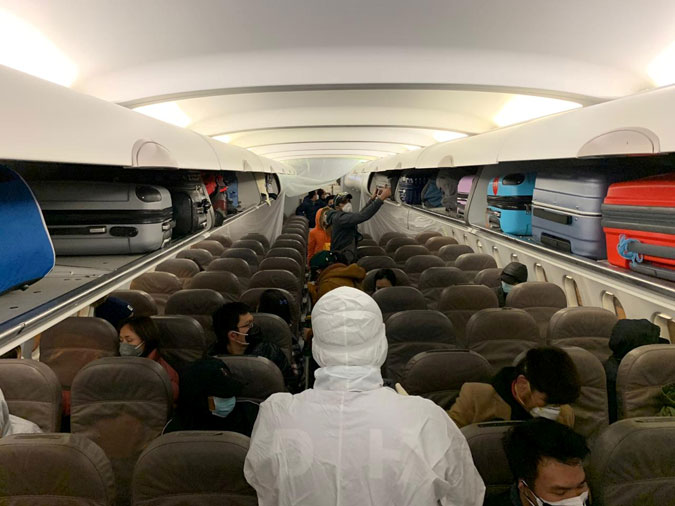
A US infectious diseases specialist is questioning a key assertion made by airlines about the improbability of catching COVID-19 on planes. Image via Reuters/File Photo
PARIS — A campaign by coronavirus-stricken aviation giants to persuade the world it’s safe to fly has been questioned by one of the scientists whose research it draws upon.
Dr. David Freedman, a US infectious diseases specialist, said he declined to take part in a recent presentation by global airline body IATA with planemakers Airbus, Boeing, and Embraer that cited his work.
While he welcomed some industry findings as “encouraging”, Dr. Freedman said a key assertion about the improbability of catching COVID-19 on planes was based on “bad math.”
Airlines and planemakers are anxious to restart international travel, even as a second wave of infections and restrictions take hold in many countries.
The Oct. 8 media presentation listed in-flight infections reported in scientific studies or by IATA airlines, and compared the tally with total passenger journeys this year.
“With only 44 identified potential cases of flight-related transmission among 1.2 billion travelers, that’s one case for every 27 million,” IATA medical adviser Dr. David Powell said in a news release, echoed in comments during the event.
IATA said its findings “align with the low numbers reported in a recently published peer-reviewed study by Freedman and Wilder-Smith.”
But Dr. Freedman, who co-authored the paper in the Journal of Travel Medicine, said he took issue with IATA’s risk calculation because the reported count bore no direct relation to the unknown real number of infections.
“They wanted me at that press conference to present the stuff, but honestly I objected to the title they had put on it,” the University of Alabama academic told Reuters.
“It was bad math. 1.2 billion passengers during 2020 is not a fair denominator because hardly anybody was tested. How do you know how many people really got infected?” he said. “The absence of evidence is not evidence of absence.”
IATA maintains that its calculation is a “relevant and credible” sign of low risk, a spokesman said in response to requests for comment from the organization and its top medic Dr. Powell.
“We’ve not claimed it’s a definitive and absolute number.”
The head of British Airways directly invoked the 1-in-27 million ratio to press for a lifting of quarantines on Monday.
“We know public safety is key for the government, so it should be reassured by IATA’s new figures,” Chief Executive Sean Doyle told a UK aviation conference.
Dr. Freedman’s research partner Dr. Annelies Wilder-Smith of the London School of Hygiene and Tropical Medicine could not immediately be reached for comment.
CLOSING RANKS
While the pandemic has seen some carriers leave middle seats empty to reassure customers, the industry has opposed making such measures mandatory.
Plane cabins are considered lower-risk than many indoor spaces because of their powerful ventilation and their layout, with forward-facing passengers separated by seat rows. Ceiling-to-floor airflows sweep pathogens into high-grade filters.
That understanding is supported by simulations and tests run by the aircraft makers as well as a US Defense Department study released on Thursday.
The joint presentation with all three manufacturers signaled a rare closing of ranks among industrial arch-rivals, behind a message designed to reassure.
Sitting beside an infected economy passenger is comparable to seven-foot distancing in an office, Boeing tests concluded, posing an acceptably low risk with masks. Standard health advice often recommends a six-foot separation.
Airbus showed similar findings, while Embraer tested droplet dispersal from a cough. Some 0.13% by mass ended up in an adjacent passenger’s facial area, falling to 0.02% with masks.
Dr. Henry Wu, associate professor at Atlanta’s Emory School of Medicine, said the findings were inconclusive on their own because the minimum infective dose remains unknown, and risks increase in step with exposure time.
“It’s simply additive,” said Dr. Wu, who would prefer middle seats to be left empty. “A 10-hour flight will be 10 times riskier than a one-hour flight.”
Nonetheless, a commercial jet cabin is “probably one of the safer public settings you can be in,” he added. “Sitting at a crowded bar for a few hours is going to be much riskier.”
‘SUPERSPREADER EVENTS’
Scientists are poring over dozens of on-board infection cases, as well as flights with contagious passengers but no known transmission.
In March, 11 infectious passengers on a five-hour Sydney-Perth flight passed the virus to 11 others, according to a paper in the Emerging Infectious Diseases journal.
Among those infected, two were seated three rows away from a contagious passenger and one was six rows away, suggesting that typical two-row contact-tracing might have missed them.
One sufferer on a 10-hour London-Hanoi flight the same month infected 16 others including 12 in her business-class cabin, according to a study by Vietnamese and Australian academics.
“Long flights … can provide conditions for superspreader events,” the study said, adding that its findings “challenge” the airlines’ assertion that on-board distancing is unnecessary.
IATA points out that many of the flights examined by scientists in published studies occurred before mask-wearing became widespread and reduced infection risks.
Its presentation did concede that the 44-case tally “may be an underestimate,” while maintaining that in-flight infections remained less likely than a lightning strike even if only 10% of actual cases had made the count.
“That’s misleading,” Emory’s Dr. Wu said. “Thinking about how hard it is to identify them, I wouldn’t be surprised if it’s far less than 1%. The only thing I’m sure of is that it’s a fantastic underestimate.” — Laurence Frost/Reuters
Lockdown rules specified that cafes and restaurants would be closed except for takeaways and that sales of alcohol, marijuana, and hashish would be banned after 8 p.m.
AMSTERDAM — The Dutch government told parliament on Monday it could sit back and relax as there are no extra rules needed to prevent people having or smoking cannabis in public places during the coronavirus pandemic.
The government ordered a partial lockdown on Oct. 13, closing restaurants except for takeaway services and forbidding the sale of alcohol and marijuana after 8 p.m.
But parliament, stressed at the prospect that the rules for weed-smokers might still be laxer than those for alcohol-drinkers, passed a motion directing the government to ensure that smoking marijuana and hashish in public would not be tolerated in public places between 8 p.m. and 7 a.m.
Justice Minister Ferd Grapperhaus told the lawmakers in a letter that they might be slightly confused by the complexities of the country’s existing laws and practices.
Under Dutch law, the possession of marijuana remains technically illegal, Mr. Grapperhaus explained in a letter to parliament. While police do not usually enforce the law against people who hold less than five grams, they always have the power to do so.
Under the country’s tolerance policy, the drug is sold openly at cafes known as “coffee shops.”
But the Oct. 13 lockdown rules had already specified that cafes and restaurants would be closed except for takeaways and that sales of alcohol, marijuana, and hashish would be banned after 8 p.m.
In addition, Mr. Grapperhaus wrote, gatherings of more than four people are temporarily banned. That ensures that police could break up an unruly marijuana-smoking mob—if one should ever form during the pandemic.
“Thus, the demands of this motion may be satisfied by making use of existing powers,” the minister explained. — Reuters
Committed to maintain high immunization rates across all age groups to protect the population and cognizant of the need to ensure public health and safety, the League of Cities of the Philippines (LCP) with the support of health care company MSD in the Philippines organized a webinar forum on September 18 dubbed “Bakunado Protektado: Restoring Vaccination Confidence Program in Cities.”
Attended by city mayors and city health officers across the Philippines, the webinar aims to discuss and share current health updates in immunization, safety guidelines, and best practices in order to continue providing immunization services to the community in the new normal.
“Vaccine confidence in the Philippines dropped from 93% to only 32%. We have a problem…
We hope that this program of restoring vaccine confidence in our communities will go beyond this webinar,” expressed LCP National President and Bacolod City Mayor Evelio “Bing” Leonardia in his opening remarks. “This [vaccine confidence effort] will be a stepping stone to solving this COVID-19 pandemic.”
Importance of vaccination
Vaccination is one of the effective forms of prevention and an integral part of public health. In fact, immunization is the cornerstone of resilient health systems and universal health coverage because of its efficacy rate and cost-effectiveness.
To emphasize the value of vaccination, Dr. Anna Ong-Lim, Professor and Chief at the Division of Infectious and Tropical Disease in Pediatrics, College of Medicine – Philippine General Hospital University of the Philippines – Manila, shared insights on the role of immunization in combatting infectious diseases.
“Vaccine is an efficient public health tool that helps healthy people to stay healthy and prevent the spread of diseases in the community,” Dr. Ong-Lim said. “Kapag infectious diseases ang pinag-uusapan pinaka efficient pa ring paraan ang pagbabakuna para mabigyan ng proteksyon ang pinakamalawak na sektor ng ating bansa.” (Vaccine is an efficient public health tool that helps healthy people to stay healthy and prevent the spread of diseases in the community. When we talk about infectious diseases, vaccination remains the most efficient way of protecting the largest sector of the country.)
Some of the immunization programs of the government through the DOH and local government units (LGUs) are protecting Filipinos against pneumonia, measles, mumps, rubella, tetanus, diphtheria, human papillomavirus (HPV), and polio among others.
Building vaccine confidence is integral in the overall success of routine immunization programs.
Best practices in LGU
In light of this COVID 19 pandemic, health care professionals underscore the importance of providing preventive health care services to the community.
“We are facing the COVID-19 pandemic, as we are aware, this fight is far from over. Our health care system is already burdened,” said Dr. Monrey Isaiah Mancilla, National Immunization and Child Health Program Manager of the Department of Health – Region V. “Hindi na natin kakayanin if magkaroon ng outbreak on top of the existing outbreak. The best way to approach this context is to make sure that all members of the community are healthy and immunization is a key component to ensure the health not only of one’s self but the whole of society.” (We are facing the COVID-19 pandemic, as we are aware, this fight is far from over. Our health care system is already burdened. We cannot afford to have another outbreak on top of the existing outbreak. The best way to approach this context is to make sure that all members of the community are healthy and immunization is a key component to ensure the health not only of one’s self but the whole society.)
Legazpi City Mayor Noel Rosal shared health care good practices that they implemented to ensure provisions of routine vaccination while mobilizing frontliners to mitigate the effects of COVID-19 in their city.
“The response of LGU Legazpi (to COVID) did not leave out the regular health programs. The importance of immunization like polio vaccine, hindi natin dapat kalimutan. Hindi pwedeng maging rason na hindi tayo pwedeng lumabas,” Mayor Rosal highlighted. “In times of trouble, the system should be in place and majority of the people will play a key role.” (The response of LGU Legazpi did not leave out the regular health programs. The importance of immunization like polio vaccine should not be left behind. The lockdown is not an excuse. In times of trouble, the system should be in place and majority of the people will play a role.)
Part of Legazpi City’s strategy was ensuring that there is enough budget allotted for health care programs. According to Mayor Rosal, prior to the pandemic, the city increased the number of health care workers from 500 to 700. At the onset of the pandemic, these health care workers were divided into two groups. One is a public health programs team devoted to providing basic health care programs to the community. Second is a COVID-19 response team assigned in isolation and quarantine areas. During the pandemic, health care workers were provided with administrative, infrastructure, and physical support in order to fulfill the provisions mandated by local and national health-related laws.
Likewise, LCP Focal for Health and Candon City Mayor Ericson Singson highlighted how Candon City initiated the vaccination of senior citizens against pneumonia as early as December 2019 through the “Bakunado si Lolo at Lola, Iwas Pulmonya” campaign. This gave protection to the elderly people who are vulnerable to COVID-19.
“I call on all of us, my fellow mayors, to be champions for health and encourage our constituents to not only protect ourselves but our communities from vaccine-preventable diseases by ensuring high acceptance and continued implementation of the DOH National Immunization Program,” Mayor Singson declared. “This investment we make for our health will truly reap the rewards for us, for the future of our families and the communities. Let us all advocate for vaccination and health programs in our respective cities– dahil ang Bakunado, Protektado!” (Let us all advocate for vaccination and health programs in our respective cities– because a person who is vaccinated is protected!”)
To watch the replay of the webinar, please visit the League of Cities of the Philippines (facebook.com/PHcities) on Facebook.
LIMA — Peruvian archaeologists have uncovered a 37-meter-long cat etching in a little-explored area of the country’s celebrated Nazca Lines UNESCO heritage site which is home to hundreds of gigantic geoglyphs dating back more than 2,000 years.
The figure, made up of a long body, striped tail and head with distinctive pointed ears, predates some of the area’s better known-figures that include a hummingbird, spider and a human, the country’s Culture Ministry said.
It is one of a number discovered in recent years by drone exploration of the protected 400-square-kilometer region that lies some 450 km south of the capital Lima between the towns of Nazca and Palpa.
Johny Isla, the ministry’s specialist for the Nazca-Pampa region, said it was estimated to be around 2,000 years old and made up of groves carved into the mountain coupled with groupings of stones.
“The figure was in the process of disappearing because it was on a slope that was subject to quite extensive erosion which resulted in it being hidden for many years,” he told Reuters Television.
The geoglyph has been painstakingly cleaned and preserved by a team of archaeologists to make it more easily visible, the ministry said in a statement, adding that the discovery was “further evidence of the rich and varied cultural legacy” of the area.
The Nazca Lines, which can only be seen from the air, include etchings of a monkey, spider, pelican, whale, dog and lizard.
The geoglyphs created by the Nazca and Paracas cultures are striking reminders of Peru’s rich pre-Columbian history and are considered archeological enigmas, as no one knows for sure why they were drawn, or so large and for so long.
The area has been closed to tourists since March because of the coronavirus pandemic but is due to reopen on Nov. 10. — Carlos Valdez/Reuters
LONDON — Young people are less satisfied with democracy and more disillusioned than at any other time in the past century, especially in Europe, North America, Africa, and Australia, a study by the University of Cambridge has found.
Millennials, or those born between 1981 and 1996, are more disillusioned than Generation X, those born between 1965 and 1981, or Baby Boomers born between 1944 and 1964 and the Interwar Generation of 1918–1943.
“Across the world, younger generations are not only more dissatisfied with democratic performance than the old, but also more discontented than previous generations at similar life stages,” the Cambridge study found.
The picture is bad in the United States, Brazil, Mexico, South Africa, France, Australia, and the United Kingdom.
But satisfaction has increased in Germany, South Korea, and many of the post-Communist countries of Central and Eastern Europe.
The main reason behind the disillusion with democracy among young people was inequality of wealth and income, the report said, citing figures showing that Millennials make up around a quarter of the US population but hold just 3% of the wealth. Baby Boomers held 21% of the wealth at the same age.
The study suggested that the populist challenge to mainstream, “establishment” politics could actually help improve democratic engagement by shocking moderate parties and leaders into reversing the decay.





 To emphasize the value of vaccination, Dr. Anna Ong-Lim, Professor and Chief at the Division of Infectious and Tropical Disease in Pediatrics, College of Medicine – Philippine General Hospital University of the Philippines – Manila, shared insights on the role of immunization in combatting infectious diseases.
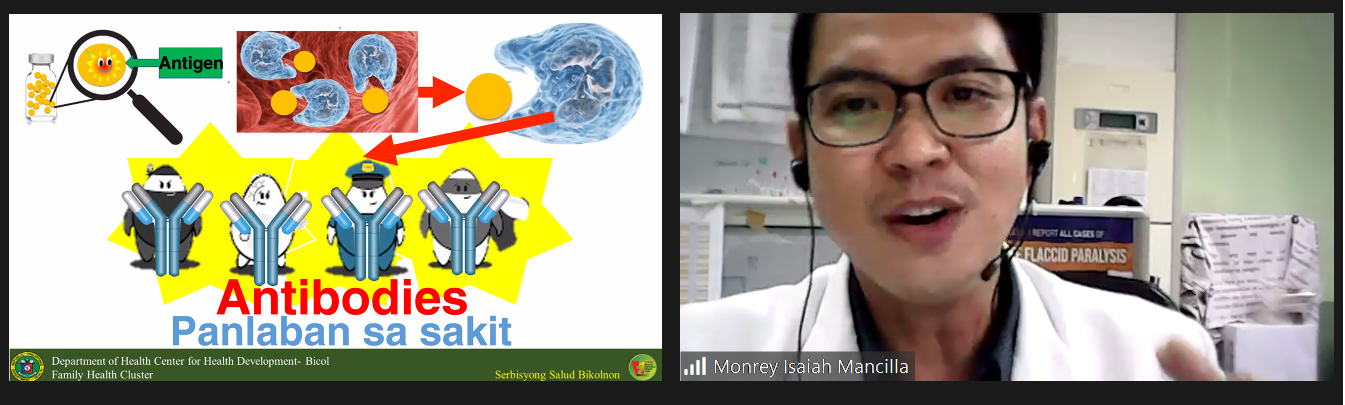 “We are facing the COVID-19 pandemic, as we are aware, this fight is far from over. Our health care system is already burdened,” said Dr. Monrey Isaiah Mancilla, National Immunization and Child Health Program Manager of the Department of Health – Region V. “Hindi na natin kakayanin if magkaroon ng outbreak on top of the existing outbreak. The best way to approach this context is to make sure that all members of the community are healthy and immunization is a key component to ensure the health not only of one’s self but the whole of society.” (We are facing the COVID-19 pandemic, as we are aware, this fight is far from over. Our health care system is already burdened. We cannot afford to have another outbreak on top of the existing outbreak. The best way to approach this context is to make sure that all members of the community are healthy and immunization is a key component to ensure the health not only of one’s self but the whole society.)
 “The response of LGU Legazpi (to COVID) did not leave out the regular health programs. The importance of immunization like polio vaccine, hindi natin dapat kalimutan. Hindi pwedeng maging rason na hindi tayo pwedeng lumabas,” Mayor Rosal highlighted. “In times of trouble, the system should be in place and majority of the people will play a key role.” (The response of LGU Legazpi did not leave out the regular health programs. The importance of immunization like polio vaccine should not be left behind. The lockdown is not an excuse. In times of trouble, the system should be in place and majority of the people will play a role.)
 Likewise, LCP Focal for Health and Candon City Mayor Ericson Singson highlighted how Candon City initiated the vaccination of senior citizens against pneumonia as early as December 2019 through the “Bakunado si Lolo at Lola, Iwas Pulmonya” campaign. This gave protection to the elderly people who are vulnerable to COVID-19.