Home Blog Page 8916

Blood of recovered COVID-19 patients shows little benefit as treatment

LONDON — Using blood of recovered COVID-19 patients—or so-called convalescent plasma—as a potential treatment is of little benefit in helping hospitalized patients fight off the infection, according to results of a clinical trial in India.

Published in the BMJ (British Medical Journal) on Friday, the results show that convalescent plasma, which delivers antibodies from COVID-19 survivors to infected people, failed to reduce death rates or halt progression to severe disease.

The findings, from a study of more than 400 hospitalized COVID-19 patients, are a setback for a treatment that US President Donald J. Trump touted in August as a “historic breakthrough.” The United States and India have authorised convalescent plasma for emergency use.

Other countries, including Britain, are collecting donated plasma so that it could be widely rolled out if shown to be effective.

“The … trial was able to show a small effect on the rate at which patients were able rid themselves of the virus, but this was not enough to improve their recovery from the disease,” said Simon Clarke, an expert cellular microbiology at the University of Reading.

“In simple terms, there were no clinical benefits to the patients.”

The Indian researchers enrolled 464 adults with confirmed moderate COVID-19 who were admitted to hospitals across India between April and July. They were randomly split into two groups—with one group receiving two transfusions of convalescent plasma, 24 hours apart, alongside best standard care, and the control group best standard care only.

After seven days, use of convalescent plasma seemed to improve some symptoms, such as shortness of breath and fatigue, the researchers said, and led to higher rates of something known as “negative conversion”—a sign that the virus is being neutralised by antibodies.

But this did not translate into a reduction in deaths or progression to severe disease by 28 days.

“The poor performance of convalescent plasma in this trial is disappointing but not entirely surprising,” said Ian Jones, a professor of virology, also at Reading University.

He said the plasma is more likely to work if given very swiftly after someone is contracts COVID-19.

He urged these and other researchers to continue to conduct trials of convalescent plasma as a potential COVID-19 treatment, but to do so in newly diagnosed patients.

“We still do not have enough treatments for the early stage of disease to prevent severe disease and until this becomes an option, avoiding being infected with the virus remains the key message,” he said. — Kate Kelland/Reuters

Adidas plans to sell ailing Reebok business within months — manager magazin

FRANKFURT/MUNICH — German sportswear company Adidas is planning to sell its Reebok division, Germany’s manager magazin reported on Thursday, as the group seeks to put an end to its ill-fated investment in the US-focused brand.

Adidas Chief Executive Kasper Rorsted plans to complete the sale by March 2021, the magazine said, without citing where it obtained the information.

Manager magazin said US apparel maker VF Corp. and China’s Anta Sports were among the interested parties, without citing sources.

Adidas declined to comment.

VF Corp. did not immediately respond to a request for comment, while Anta Sports could not be immediately reached for comment outside office hours in China.

Shares in Adidas jumped as much as 3.5% on the report, reflecting hopes for a sale following repeated calls to dispose of Reebok from investors who criticized a lack of progress in turning around the business.

The German company bought Boston-based Reebok for $3.8 billion in 2005 under Mr. Rorsted’s predecessor Herbert Hainer, aiming to take on US arch rival Nike on its home turf.

Last year, however, Adidas wrote down Reebok’s book value by nearly half compared with 2018, to 842 million euros ($995 million). The unit’s sales fell 44% in the second quarter of 2020 to 228 million euros, leading to its parent taking impairment charges in the period.

Mr. Rorsted had flagged in March that Reebok’s role within the group would be decided as part of Adidas’ new strategy, to be unveiled next year. — Reuters

China and Germany heading for superpower status as US influence wanes, says Putin

MOSCOW — The era when the United States and Russia decided the world’s most important questions is in the past, President Vladimir Putin said on Thursday, saying China and Germany were now heading for superpower status.

Addressing a meeting of the Valdai Discussion Club, Mr. Putin suggested that the role of the United States had waned, along with that of Britain and France, while Beijing and Berlin—in terms of political and economic weight—were heading for superpower status.

If Washington was not prepared to discuss global problems with Moscow, Russia stood ready to have that discussion with other nations, said Mr. Putin, who was speaking via video link.

He said Washington could no longer lay claim to exceptionalism and questioned why it would want to.

Ahead of the US presidential election on Nov. 3, Mr. Putin said he hoped the new administration would be ready for dialogue on security and nuclear arms control.

Washington last week rejected a Russian proposal for an unconditional one-year extension of the last treaty limiting US and Russian strategic nuclear weapons deployment, calling the suggestion “a non-starter.”

The New START (Strategic Arms Reduction Treaty) accord, signed in 2010 is due to expire in February. It restricts the numbers of strategic nuclear warheads that Russia and the United States can deploy as well as the missiles and bombers that carry them.

Despite their differences, Moscow and Washington appear to be moving closer to a deal on New START. — Reuters

COVID crisis strengthens US dollar’s role in global economy

Philippine and Indonesian companies have each sold more dollar bonds in 2020 than in any past full year.

Overseas borrowers have flocked to the dollar this year at a record pace, with sovereigns from Indonesia to Colombia and companies from Nissan Motor Co. to Manila’s water utility racking up sales of $1.29 trillion.

It’s a key economic takeaway from the COVID-19 crisis: just as happened in the wake of the global financial meltdown of 2008, the dollar is cementing its role as the world’s dominant currency even as unilateralist policies from President Donald J. Trump rile allies and rivals alike.

“Whenever there is a crisis, companies and countries rush to make sure they have all the funding they need,” said Jim O’Neill, the former Goldman Sachs Group Inc. chief economist who coined the BRIC acronym.

“The dollar markets are the only real source available, so the whole situation builds on itself,” according to Mr. O’Neill, who is chair of the international policy group Chatham House.

The ease of borrowing in dollars across the globe has been key in preventing the health and economic crisis from spiraling into a financial one by providing companies and governments cheap access to funds. But it may also be sowing seeds for the next crisis: If the greenback sees a sustained appreciation trend, it will drive up debt-servicing costs, potentially creating, for some, repayment difficulties down the road.

That’s a particular risk for emerging markets, where external debt including dollar borrowing is climbing at the fastest pace on record, with full-year issuance on track to eclipse $750 billion, according to Bloomberg Intelligence strategist Damian Sassower.

A lack of global alternatives helps explain some of the dollar’s role. The euro’s status as a reserve currency remains limited, and China’s currency is still subject to capital controls.

It’s also a function of cost. With the Federal Reserve unleashing massive liquidity, and now expected to keep interest rates near zero for years to come, the greenback is all the more attractive as a funding source.

Easier Fed policy helped the Philippines sell sovereign dollar debt at its lowest interest rate ever back in April. The dollar is the “universal currency” and the unit of global trade, according to Rosalia de Leon, treasurer of the Philippines, who says her country will continue to rely on the greenback to help fund its budget deficit.

Philippine and Indonesian companies have each sold more dollar bonds in 2020 than in any past full year.

“The domestic financial market is not yet deep” in Indonesia, said Deni Ridwan, director of sovereign bonds at the nation’s Finance Ministry. By selling debt in dollars, Indonesia’s government can avoid crowding out local rupiah issuers, he explained.

For Nissan, the Japanese carmaker struggling to bounce back from both corporate scandals and the COVID crisis, the broad base of international investors was appealing when it turned to the dollar debt market for the first time in decades. It priced an $8 billion dollar offering in September, one of the largest corporate issues in Asia on record, as well as a 2 billion euro deal ($2.4 billion).

The total issuance of $1.29 trillion from non-US borrowers this year is up 21% from the same period of 2019, according to data compiled by Bloomberg.

The record boom in offshore dollar bond sales has been echoed on the US domestic front. Behind it all: the Fed not only cut its policy rate near zero in March, it introduced corporate-debt purchase programs that helped ensure the flow of credit even as coronavirus lockdowns walloped the economy.

The Fed also enlarged and expanded swap lines with monetary authorities around the world to address a sudden shortage of dollars abroad.

The critical role of the US currency also has a downside, however—it leaves emerging markets reliant on American policy settings. While it seems distant now, Fed tightening down the road could spur dollar appreciation.

“The extensive dependence on the dollar leaves the international financial system hostage to the whims of US policies, especially those of the Federal Reserve,” said Eswar Prasad, who once led the International Monetary Fund’s China team, and is now at Cornell University. “For emerging market economies, in particular, it can create whiplash effects on capital flows and exchange rates.”

While other major bond markets are seeing a bumper year too—Europe’s primary bond market has surpassed 1.5 trillion euros of annual sales for the first time—when issuers do go offshore to borrow, it’s still likely to be in dollars.

Even as the share of dollar funding relative to the size of the global economy remains below its peak of a decade ago, its slice of international borrowing has climbed to a two-decade high, Bank for International Settlements (BIS) data show. “It is clearly the dominant international funding currency,” the BIS wrote in a June report. — Enda Curran and Finbarr Flynn/Bloomberg

UnionBank bags 2 major honors at IDC 2020 Asia Pacific Digital Transformation Awards

IDC Asia/Pacific revealed today 11 winners at the 2020 Asia/Pacific IDC Digital Transformation Awards (DXa) led by Union Bank of the Philippines as the Regional Digital Trailblazer. UnionBank president and CEO Edwin R. Bautista was also named as the 2020 Asia/Pacific DX CEO.

Now on its fourth year, IDC’s DX Awards celebrates the tech-enabled resilience of enterprises as they reimagine their business in the new normal. 

On UnionBank’s 2020 Asia/Pacific Trailblazer award, IDC said, “UnionBank embraces the future of banking and is committed to be the Philippines’ leading digital bank to best serve the growing needs of Filipinos everywhere. The bank has always been among the first to embrace technological innovations to empower its customers. UnionBank’s digital transformation (DX) strategy reinforced its commitment to deliver a superior customer experience (CX) and promote inclusive prosperity in the Philippines.”

With this distinct recognition, UnionBank joins the ranks of previous regional winners renowned Changi Airport in Singapore and Ovo, Indonesia’s leading payment and financial services platform.

On Bautista’s regional recognition as 2020 DX CEO, IDC said, “Edwin R. Bautista is among the few leaders in the Philippines bold enough to transform the organization immediately. When he started as CEO, he made a promise to not leave anyone behind while delivering superior financial results, which is backed by the bank’s two years of record income. He has led the bank’s transformation and shared its success story across Asia. Meanwhile, he is a strong advocate of the use of digital technologies in the country as a key to inclusive prosperity through supporting government initiatives and working with partner organizations. UnionBank’s transformation led by Mr. Bautista has permeated the organization as UnionBankers remain committed to the organization’s purpose, predicated on the fact that the world will continue to evolve and transform to leave no one behind.”

All the winning digital transformation projects were selected as part of almost 1300 high-quality entries received from more than 640 end-user organizations across Asia/Pacific. Country winners were then pitted against other country winners for the same category to ultimately determine the region’s best of the best.

What makes a community a safe place to live in times of crisis?

By HANNAH MALLORCA 

Our home is considered a sanctuary for many in times of crisis. But at the same time, feeling secure depends on the community that we live in. 

The lack of face-to-face interactions has made human connections and community building difficult. As a result, it’s no surprise that finding a home in a safe place is now a priority for aspiring homeowners. 

For homeseekers, here are the qualities of a safe and peaceful community — which can be found in Lancaster New City in Cavite. 

Prioritizes safety and emotional well-being 

We can only remain in the quarters of our own during this time. With this, it’s important to live in a healthy and high-quality environment. 

Families don’t have to worry about Lancaster New City’s environment since it’s free from pollution, noise, and chaos. For Julie Nicolas, a 38-year-old financial advisor who recently moved in, it’s the community of her dreams since it’s a place where her family can be safe. 

Ganun sila katutok talaga sa community itself, hindi lang sa mismong bahay, parang ‘yung comfortability ng mga tao, which is bihira ngayon, ‘yung nagkakaroon ng ganyang service sa subdivision na may bus talaga,” she shares. 

Homeseekers can be ensured with the safety of Lancaster New City’s environment as well. The entrance and exit areas of the community are well-managed, with guards stationed at every corner. At the same time, cars with official stickers are only allowed to enter. 

The community also makes health a priority for its homeowners as we live in times of crisis. Since the start of the pandemic, Lancaster remains committed to conducting temperature checks, regular disinfection, and social distancing measures. It also includes a well-trained disaster response team for emergencies. 

Healthy and high-quality environment 

A family-friendly community makes sure that no one gets left behind when it comes to safety and convenience. For Julie, her family can live safely and achieve their goals in Lancaster New City since jobs, groceries and retail stores, urban amenities, learning opportunities, a worship place, and a reliable transport system are found in one area.  

“The area na pinanggalingan ko talaga, sobrang dikit-dikit talaga ‘yung mga bahay. Dito kasi sa Lancaster, ang nagustuhan ay talagang dedicated siya for living. Nandito na lahat ng hinahanap namin. Meron na ring school, nandiyan din yung church so kumpleto na siya,” Julie says. 

Lancaster New City features key township offers that can help your family in living the life of their dreams. It includes work opportunities, easy access to medicine and financial services, educational institutions, community centers, a place of worship, and areas fit for outdoor activities.  

One of its unique landmarks in Lancaster’s township is The Square, a lifestyle community mall that features all-around retail, dining, and fun experience for your family.

 Another key feature of Lancaster New City is the LNC Grounds — a community center located within its residential area. It has an activity area, swimming pool, function hall that can accommodate 120 guests, a mini commercial area with convenience stores, laundry shop, medical clinics and a water refilling station. 

Promotes healthy social relationships 

A safe and peaceful community starts with the people. Not everyone living in the same community will be close friends. However, it’s important to show respect among your peers and extend a helping hand for those in need. 

In Lancaster New City, the bayanihan spirit shines through with volunteer activities and community collaboration amidst the health crisis. 

Lucky Repelar, another Lancaster homeowner, extended support to community frontliners such as making face masks and face shields and sharing food with store personnel, guards, and street cleaners. 

To help its community with its everyday needs, the Lancaster community organized Tienda Buyani — an online platform where homeowners can order freshly farm-produced vegetables and fruits and have it developed right at their doorstep. 

PasaBUY is another collaborative effort of the Lancaster community. Homeowners created group chats to share their scheduled trips to the supermarket, drugstore, and retail stores. With this, homeowners can get their essentials without leaving their homes — a big help to the children and senior citizens. 

As we live in times of crisis, you and your family can find a community that feels like home in Lancaster New City. 

For more details on Lancaster New City, you may visit www.lancasternewcity.com.ph or its official Facebook and YouTube pages.

Digital solutions for small business in the new normal

By Karrie Ilagan, Managing Director of Cisco Philippines

As businesses are reopening in the new normal and beginning to bounce back from the COVID-19 pandemic’s impact, technology is seen to play key roles. One of these key roles involves maintaining connectivity and productivity for work-from-home staff, as many employees will likely continue remote work.

In the latest global survey commissioned by Cisco with Dimension Research, 58% indicated that they will be working from home at least eight days more each month. Moreover, 95% of workers are still fearful of returning to the office due to the possibility of contracting COVID-19.

Consequently, the need to enhance security in this emerging hybrid work environment rises. In fact, before the pandemic, a survey by IT security firm Netwrix highlighted that 74% of organizations named data security as their top IT priority for this year.

In our continuing commitment to address the digital needs of our small and medium enterprises (SMEs), which account for 99.5% of businesses in the country, we at Cisco Philippines are bringing the technology leader’s newest products and solutions that will greatly help small businesses. Our newest offerings under the Cisco Designed portfolio are designed to support SMEs towards safe, secure, and efficient hybrid work environments.

As small businesses struggle with data protection and mobile management, security is seen to mainly constrain them from accelerating remote work adoption. The updated Cisco Designed portfolio of small business-focused solutions directly addresses these needs — enabling secure workplaces, better collaboration, simplified manageability, and organizational productivity empowerment among these organizations at prices they can afford.

Modern collaboration tools have become a must-have in the new normal, making it possible for professionals to stay connected and be productive anywhere. With Cisco’s Webex Work, a cloud collaboration solution that combines calling, meeting, and messaging services in a single subscription, businesses can be more assured that work moves forward wherever employees are.

Another solution in our portfolio is the new version of Cisco Business Dashboard, with a streamlined user interface to manage the entire network with integrated lifecycle management and automated alerting. With zero-touch plug and play deployment and hosted in the cloud or on-premises, Cisco Business Dashboard allows organizations to set up, monitor, and operate network devices from a simple interface on any device.

As businesses will reevaluate their office footprint in the new normal, the new Business Switches in the Cisco Designed portfolio provides flexible, effortless, and secure connectivity for businesses who are connecting remote and in-office workforces. These new series of switches provide essential functionality along with advanced security options.

Further enabling businesses to manage their network in the cloud, Cisco Meraki Health and Meraki Insight allow customers to monitor all aspects of the network and applications from their Meraki Dashboard and API, as well as to detect and fix issues in a matter of minutes. This new addition to the Cisco Designed portfolio will help small businesses easily monitor and troubleshoot their network infrastructure in the cloud.

Lastly, with e-mail remaining the number one threat vector for all businesses, Cisco is also offering solutions for enhancing email security.

Customers have enjoyed the benefits of the newly released solutions under the Cisco Designed portfolio. For a drone delivery company, for instance, our Cisco Meraki has allowed them to leverage on enterprise-level internet infrastructure with minimal IT staff and management. Another business, meanwhile, was able to move its entire company to remote in two days with the help of Cisco’s secure collaboration technology.

In addition to securely enabling a remote workforce, Cisco and our partners are also committed to supporting small businesses in terms of enabling secure meetings and collaborations between employees and customers, as well as safeguarding from identity theft, hackers, and internet attacks. We also commit to providing easy installation and reliable IT services using cloud technology; enabling safe and real-time workplace monitoring; and improving productivity and security at shared physical workspaces.

Supporting SMEs financially

As we roll out these new solutions, we at Cisco Philippines have been doing our part in lightening the burden of SMEs through our 0% Financing Programme, which seeks to equip them with the necessary tools and solutions to accelerate their business in the new digital era.

Furthermore, the 0% Financing Programme provides SMEs access to necessary technological enablers from Cisco without breaking their budget. These include tools for virtual meetings and collaboration, cybersecurity solutions, and networking equipment. SMEs will enjoy a three-year, full payout lease plan where they pay equal 36-month payments on their Cisco purchases that costs between USD20,000 to USD300,000. Another perk for SMEs is that they can fully own the equipment at the end of the contract period.

With Cisco’s latest services and products, SMEs can be more equipped and empowered to bounce back and thrive in the new normal. Find out more about the new Cisco Designed portfolio on https://www.cisco.com/c/en/us/solutions/small-business.html.

Explore Cisco’s hybrid workplace blueprint at https://www.cisco.com/c/en/us/solutions/collaboration/hybrid-workplace.html.

A commitment to the transition towards a better and more sustainable energy future

The coronavirus pandemic has become the biggest global crisis in recent history. Yet, even when the world overcomes this, there are still others far greater looming in the horizon.

The World Bank has urged countries to accelerate and protect efforts to achieve affordable, reliable, and sustainable energy for all, in line with the Sustainable Development Goal 2030 targets. The call followed a recent report by the International Energy Agency (IEA), the International Renewable Energy Agency (IRENA), the United Nations Statistics Division (UNSD), the World Bank, and the World Health Organization (WHO).

According to the report, significant progress had been made on various aspects of the Sustainable Development Goal (SDG) 7 prior to the start of the COVID-19 crisis. This includes a notable reduction in the number of people worldwide lacking access to electricity, strong uptake of renewable energy for electricity generation, and improvements in energy efficiency. Despite these advances, global efforts remain insufficient to reach the key targets of SDG 7 by 2030.

“The energy sector has played a vital role in supporting the delivery of healthcare, remote working and many other needs. Like many other sectors, it has been strongly affected by the COVID-19 crisis,” the IEA wrote on its website.

The IEA predicts global energy demand to drop by around 6% in 2020 relative to 2019, with around 8% of the 40 million jobs directly provided by the energy sector at risk or have already been lost. Additionally, electricity from renewables could be the only energy source to grow in 2020, thanks to new capacity additions and priority dispatch.

“Attention is now turning to longer term recovery plans that seek to repair the economic damage being caused by COVID-19, minimize job losses among the 300 million jobs thought to be at risk globally, and help to create new jobs. Decisions made now will inevitably shape infrastructure and industries for decades,” the IEA added.

In the Philippines, key players in the energy industry are stepping up. One of them, Meralco PowerGen Corporation (MGen), has made a commitment to be part of a transition that will drive the country’s recovery post-pandemic.

MGen President and CEO Rogelio L. Singson

“The current situation underscores the importance of continuous, reliable, sufficient and cost-competitive electricity supply that is necessary to carry out the efforts to fight COVID-19 and help people to continue sustain their needs at the comfort of their homes,” said MGen President and CEO Rogelio L. Singson.

“As the power generation unit of Meralco, MGen’s core values and business strategy are aligned with One Meralco Group’s Sustainability Agenda which involves plans in the context of the United Nations Sustainable Development Goals with focus on Power, Planet, People and Prosperity,” he added.

The One Meralco Sustainability Agenda sets the direction in achieving business objectives while at the same time transforming the company’s operations, improving customer service, protecting the environment, and empowering its communities.

MGen’s role will focus on sustainable energy for the country’s future through the implementation of the energy transition plan that involves an environmentally conscious and diversified power generation portfolio that will utilize high efficiency, low emissions (HELE) technology and renewable energy (RE).

The company already laid the groundwork for this energy transition plan in 2019 with the its first operating HELE plant and its first solar investment.

In September 2019, the company started commercial operations of San Buenaventura Power Ltd. Co.’s (SBPL) 455-megawatt (MW) HELE coal-fired power plant. This supercritical power station is the first of its kind in the Philippines and the most advanced and most efficient operating coal plant in the country to date.

“We also hope to move forward with the construction of the bigger Atimonan power plant to provide 24/7 HELE baseload power; and as we raise the bar of operating efficient coal plants in the Philippines even higher, we will also be more aggressive on ‘greening’ our portfolio,” Mr. Singson said.

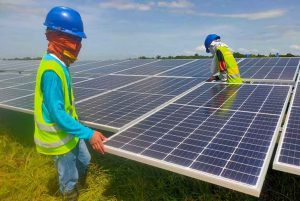
Ongoing construction of MGen’s 50-MWac solar farm in San Miguel, Bulacan

MGen is making serious strides on the RE front. In June 2019, the company incorporated MGen Renewable Energy, Inc. (MGreen) which serves as the platform for the company’s strategic push for the development of utility-scale solar, wind and hydro projects.

Through MGreen, the company targets about 1,000 MW of RE projects over the next five to seven years. The company’s first solar investment is a 50-MWac solar farm in Bulacan, which is currently ongoing construction and is expected to be completed in late 2020.

“We will develop more renewable projects and at the same time be conscious of our need to generate lowest cost electricity to reach the farthest communities in the country,” Mr. Singson promised.

“At MGen, we believe that we need a balanced and well-thought-out energy transition strategy. It will not happen overnight, but we are committed to make it happen,” he concluded.

Virus struggle to impede PHL recovery

THE Philippines’ struggle to control the coronavirus disease 2019 (COVID-19) pandemic will likely impede the economy’s recovery, S&P Ratings said.

“The Philippines has struggled to control the virus, leading to a sharp drop in domestic demand and employment. Though the underlying macroeconomic fundamentals remain fairly good for the medium to long term, the recovery will take a while,” S&P Sovereign Analyst Andrew Wood said in an e-mail to BusinessWorld.

However, Bangko Sentral ng Pilipinas Governor Benjamin E. Diokno said the economy is poised for a U-shaped rebound next year as the government’s infrastructure push gets under way.

“We expect a gradual U-shaped recovery in economic activity going into next year. GDP (gross domestic product) growth is expected to rebound in 2021. The projected pickup in growth will be supported by the implementation of the ‘Build, Build, Build program,’” Mr. Diokno said in a briefing on Thursday.

Economic managers expect GDP to shrink by around 6% this year, after the economy slid into a recession in the second quarter with a record 16.5% contraction. Lockdown restrictions have since been eased to boost economic activity.

The Philippines reported 1,664 new COVID-19 infections on Thursday, bringing the total to 363,888.

The International Monetary Fund (IMF) said countries have to flatten the COVID-19 curve before seeing a solid economic recovery.

“It is a prerequisite for a firm economic recovery, that the virus curve be flattened… There needs to be ongoing vigilance because, as we know, this is a marathon and not a sprint, and the virus rears its ugly head from time to time, when we do not expect it, and health policy needs to be very vigilant and proactive,” IMF Acting Director of the Asia- Pacific Department Jonathan Ostry said in a briefing on Wednesday. Mr. Ostry said fiscal support and an infrastructure push will also help countries in their recovery path. The IMF and S&P expect the Philippine economy to shrink by 8.3% and 7.3%, respectively, this year. Prior to the pandemic, the country was experiencing an annual GDP growth of around 6%.

“Despite the likelihood of high growth rates ahead due to this year’s low base, we expect economic output to remain below pre-COVID trend levels for at least a few years,” S&P Ratings’ Mr. Wood said.

However, Mr. Wood said the country’s growth prospects in the coming years may still tread higher than peers, which will help keep ratings intact.

S&P expects GDP to rise by 9.6% in 2021, a steeper pace than the 7.4% estimate by the IMF as well as the 6.5% to 7.5% growth projection by the government.

“A solid growth rate from 2021 onwards should also help the government to contain fiscal and debt risks,” Mr. Wood said. In May, S&P affirmed the country’s long-term credit rating at BBB+ with a stable outlook, citing recovery prospects by next year. However, it warned a downgrade could be possible if the economy suffers a worse-than-expected and prolonged downturn.

REMITTANCES SLIDE

At the same time, Mr. Diokno said the decline in cash remittances will only have a minimal impact on GDP.

Cash remittances slumped by 2.6% to $19.285 billion in the first eight months of 2020 from the $19.808 billion logged in the same period of 2019. The BSP expects cash remittances to decline by 2% this year before growing by 4% this year.

“The projected 2% decline in overseas Filipino remittances in 2020 is expected to have a minimal impact in GDP… The improved outlook also stems from the easing lockdown measures in some host countries and recent improvement in OFW deployment,” the BSP chief said.

Over 220,000 overseas Filipino workers have been repatriated since February, according to the Department of Foreign Affairs. — Luz Wendy T. Noble

Jobs at risk as Philippines’ garment exports slump

By Jenina P. Ibañez
Reporter

PHILIPPINE garment exports to major buyer countries fell by 39% during the coronavirus pandemic, putting hundreds of thousands of local jobs at risk, the International Labour Organization (ILO) said.

The Philippines is one of the countries that saw the largest percentage of decreases in garment exports to major buyers, along with China, India, and Sri Lanka, the ILO said in a research brief titled “The supply chain ripple effect: How COVID-19 is affecting garment workers and factories in Asia and the Pacific.”

The 39% decline is based on garment imports to the United States, European Union, and Japan in the first half of 2020, compared with the same period last year.

“While the 39% decline appears large, this is a decline from quite low levels: in 2019, garments accounted for just above 2% of Philippines’ total goods exports,” ILO said in an e-mail on Thursday.

The organization said the export decline puts its estimated 629,000 workers in the local sector at risk.

Philippine garment exporters expect to cut over 20,000 jobs, reducing a fifth of around 112,000 employed by companies under the Confederation of Wearables Exporters of the Philippines, Nikkei Asia reported.

According to ILO, major buying countries’ imports from garment exporters in Asia plunged by 70% in the first half as consumer demand fell, governments imposed lockdown measures, and raw material imports were disrupted.

Compared with its counterparts in East and South Asia, the garment sector in Southeast Asia and the Pacific is the most vulnerable to input supply chain disruptions, the ILO report said.

The disruption impacts employment in the sector, with order cancellations and suspended factory operations resulting in widespread layoffs, delayed wages, and salary cuts.

ILO reported that half of the jobs in the garment supply chain in September depend on demand from consumers in markets with strict lockdowns and declining retail sales.

“The typical garment worker in the region lost out on at least two to four weeks of work and saw only three in five of her co- workers called back to the factory when it reopened. Declines in earnings and delays in wage payments were also common among garment workers still employed in the second quarter of 2020,” ILO Regional Office for Asia and the Pacific Labour Economist Christian Viegelahn said in a press release.

ILO said that the health and safety of the workforce must be prioritized to minimize the spread of the virus.

It added the labor force must have freedom of association, noting that trade union membership remains low in the Asia- Pacific region. ILO said it had asked the Philippine government to comment on freedom of association and collective bargaining in the country. Total garment exports last year was valued at $906 million. Textile exports were valued at $197 million, footwear exports were at $131 million, and travel goods and handbags exports were at $747 million, the Philippine Statistics Authority said. Total 2019 merchandise exports were valued at $70 billion.

During the lockdown, local garment exporters shifted production to manufacture personal protective equipment (PPE). In August, firms asked the government to prioritize their products over imports.

Given the pandemic, ILO expects that the global garment industry will be restructured in the coming years, as the sector reshapes its supply chain and technology shifts production and the role of the workforce.

“It remains to be seen as to whether the post-pandemic global garment industry will undergo a fundamental restructuring to forge a new — and possibly more sustainable and resilient path — or whether it will revert back to a largely ‘business as usual’ scenario,” ILO said.

“Whichever trajectory the industry now takes, workers and enterprises will be on the frontline of its impact.”

Drop in investments to continue in second half

THE Philippines is likely to see the steepest drop in investments among six Asian economies in the second half of the year, as Metro Manila’s return to a strict lockdown for two weeks last August dented recovery prospects, the Institute of International Finance (IIF) said.

In a note titled “Macro Notes – EM Asia: Gradual Recovery in Capital Flows” published Thursday, the IIF said it expects a 41% drop, equivalent to $7 billion, in non-resident capital flows to the Philippines in the second half.

This is the biggest decline among the Asia-6 grouping, which includes India, Indonesia, South Korea, Malaysia and Thailand.

“The Philippines, where pandemic-related lockdowns were the most stringent in the region, are expected to experience the largest drop in percentage terms (-41% or -$7 billion). The country also reinstituted restrictions in August, which have led to further damage to the economy,” IIF said.

Metro Manila and nearby provinces were once again placed under a modified enhanced community quarantine from Aug. 4- 18 to curb the increasing number of coronavirus infections. Since then, Metro Manila is under a general community quarantine, with restrictions gradually being eased to revive a sluggish economy.

India is estimated to record a $38-billion decline in capital inflows, while Korea and Malaysia are seen to lose $12 billion and $5 billion, respectively.

Thailand will likely record an uptick in investments but the IIF expressed concern over the political tensions in the country.

Next year, investment flows to the Asia-6 sub-region would see a gradual recovery, driven by the expected increase in foreign direct investments (FDI) as more countries diversify their supply chains away from China.

“The Asia-6 are benefiting from better growth prospects, solid macro fundamentals, the advancement of reforms, and strong external positions. A new wave of COVID-19 (coronavirus disease 2019) infections, similar to current developments in Europe and the US, and the potential need for renewed lockdowns represents the main downside risk to the outlook,” it said.

The IIF expects FDI inflows to the region falling to $90 billion by end 2020, before rising to $119 billion in 2021 as economies recover from the COVID-19 pandemic.

FDI net inflows to the Philippines fell 11% to $3.795 billion in the January to September period.

“In the medium term, the region’s positive growth outlook and a potential diversification of global supply chains away from China will continue to drive robust increases. Turning to foreign holdings of domestic government debt, we see reductions in all except in the case of Korea,” it said.

“We expect foreign investors to continue to differentiate within the region on the basis of macroeconomic fundamentals, reform steps taken, and assessments of political stability,” it added. — Beatrice M. Laforga

Bicol’s economic growth outpaced NCR in 2019 — PSA

THE ECONOMY of the Bicol Region grew the fastest among the 17 Philippine regions last year, exceeding the growth rates posted by the capital as well as the national average, the government reported on Thursday.

Preliminary results from the Philippine Statistics Authority (PSA) Regional Accounts showed Region V or the Bicol Region expanded by 7.4% in 2019, quicker than the National Capital Region’s (NCR) 7.2% and the country’s gross domestic product (GDP) growth of 6.0%.

Aside from Bicol and NCR, four other regions posted gross regional domestic growth (GRDP) above the national average: Davao Region (7%); Ilocos Region (6.9%); Cagayan Valley (6.7%); and Western Visayas (6.4%).

On the other hand, Soccsksargen logged the slowest GRDP at 3.5%.

The results were based on a revision and rebasing of regional accounts that shifted the base year to 2018 from 2000, in line with the previous update on the national accounts earlier this year.

The overall revision and rebasing widened the coverage of the regional accounts to include emerging industries and products as well as changes in the “regional structure,” according to the PSA.

For instance, the weight of NCR was changed to 31.8% from 37.5% previously. On the other hand, significant weight increases were noted in Central Luzon (11.3% from 9.3%) and Bicol Region (2.9% from 2.1%).

With the exception of NCR, Central Visayas, Davao Region, and Soccsksargen, the weights for the other regions were either unchanged or increased.

“The updated data set gives a more accurate picture of the economy as we can see that over time, development has moved out from the NCR, to other high growth areas… We also note relatively faster growth in areas such as Ilocos and the Visayas, which is a welcome sign in terms of development,” ING Bank N.V. Manila Senior Economist Nicholas Antonio T. Mapa said in an e-mail.

Still, Metro Manila remained the biggest contributor to the economy in 2019 with a 32.2% share of the national economy. Other regions with significant shares in the country’s output were Calabarzon (14.6%) and Central Luzon’s 11.2%.

“[W]e may actually record faster GDP growth in areas outside Metro Manila in 2020 and into 2021 with much of the areas outside the NCR and its surrounding localities returning to some form of normalcy while NCR remains in partial lockdown,” Mr. Mapa said.

“However, the growth will not likely be much better (or in some cases, slowed declines) given that much of the business activity still emanates from the capital and with the NCR area knocked out or under quarantine, areas outside the capital will still likely feel the heat from the economic recession we are currently experiencing,” he added.

In terms of sectoral output, Caraga Region posted the fastest growth in services at 11% in 2019, followed by Bicol Region at 10% and Eastern Visayas and Cagayan Valley, both at 9.1%.

For industry, the Bangsamoro Autonomous Region in Muslim Mindanao (BARMM) recorded the quickest growth at 10.2%, followed by Davao Region and NCR at 9.6% and 7.5%, respectively.

In agriculture, the regional top performers were Cagayan Valley (7.2%), Mimaropa Region (4.7%), Bicol Region (4.7%), and Cordillera Administrative Region (4.2%).

In terms of per capita GRDP in 2019, NCR led all regions with P457,034, around 2.5 times the national average of P180,528 and up 5.8% from 2018.

On the other hand, BARMM had the lowest per capita GRDP of P54,020. — Marissa Mae M. Ramos

ADVERTISEMENT
ADVERTISEMENT