

Home Blog Page 8886

Mondelez Philippines and Plastic Flamingo launch partnership

Snacks Company Strengthens Commitment to Recycling

Plastic pollution is one of the most challenging environmental issues in the world. While plastic remains a valuable resource –  especially in protecting food, the underlying issue of proper waste collection and processing remains a challenge. Simply, plastic continues to end up in nature due to improper disposal and lack of recycling facilities. Mondelez Philippines, maker of Eden Cheese and Cheez Whiz has started its movement to reduce its packaging footprint as well as supporting recycling activities.

It is Mondelez Philippines’ mission to lead the future of snacking by empowering people to snack right; with the right snack, for the right moment and made the right way. The Company is focused on “Snacking Made Right” by using sustainable ingredients, by reducing its environmental impact and by making all packaging recycle ready. Their global commitments on packaging involve the usage of 100% recyclable packaging by 2025, reduction of packaging material, simplification of material choices, and working with coalitions to support improved recycling infrastructures.  

To support these goals, Mondelez Philippines locally has partnered with The Plastic Flamingo to collect and recycle plastic packaging to help reduce marine litter. 

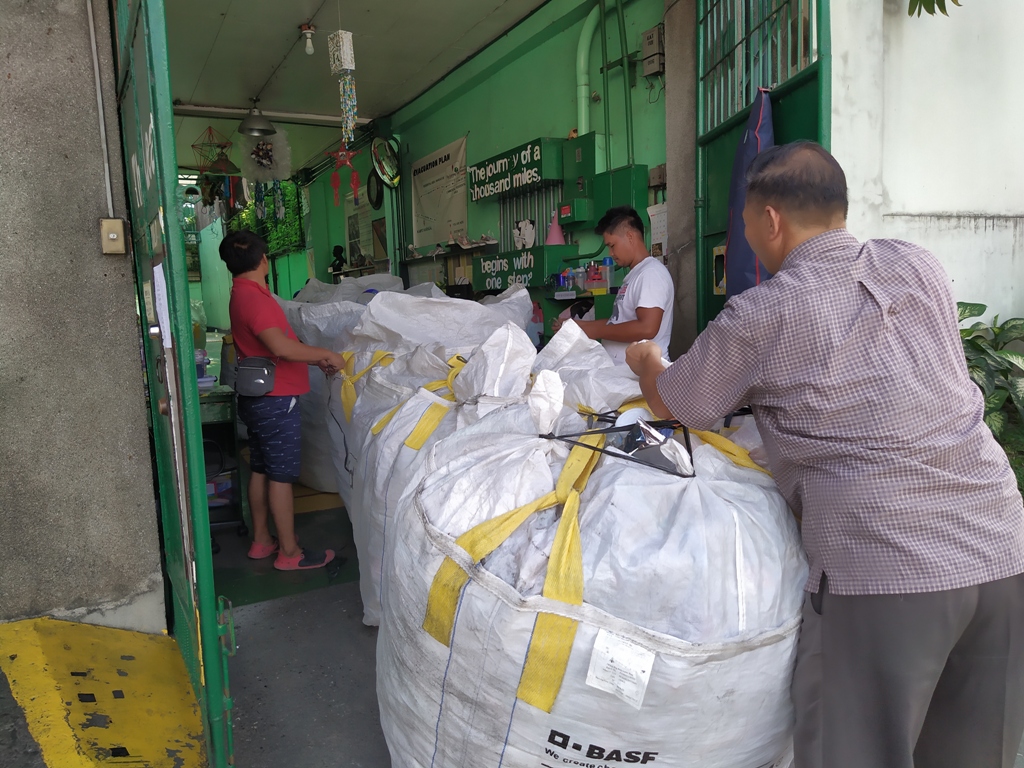
The Plastic Flamingo is a social enterprise which aims to tackle marine plastic pollution by collecting and recycling ocean-bound plastic waste in emerging countries with maximum social impact. With the help of The Plastic Flamingo, Mondelez Philippines will be collecting a total of 1 metric ton or 1,000 kilos of plastic waste in a pilot project to run for two months. These will be collected from The Plastic Flamingo’s network of collection points throughout Metro Manila, consisting of schools, villages, hotels, condominiums, offices, and more.  Mondelez Philippines has already started contributing to this goal by collecting 106 kilos of plastic through a recycling drive among its employees during its Purpose Day company celebration on October 1st. 

The plastic waste collected will then be transformed into ‘eco-planks’ which are multi-purpose in nature. These will be mostly used to make emergency shelter kits for Filipinos displaced by natural disasters. “Not only are we avoiding marine litter by recycling, but these shelters are durable because the ‘eco-planks’ will be resistant to different elements,” shares Francois Lesage, CEO of The Plastic Flamingo. “These are considered more waterproof than wood and have better thermal insulation compared to metal.” These ‘eco-planks’ may also function as piles, pontoons, boat decks, furniture, and construction material.  “We commend Mondelez Philippines for being committed to support recycling. We are all in this mission together and we must act now for the sake of our planet,” he adds. 
Leah Raquin, Safety, Security and Environment Manager of Mondelez Philippines oversees sustainability projects for the Company. She shares, “We are dedicated to producing our snacks sustainably. For our Plant this means constantly innovating to reduce our use of resources. Most recently we have shifted to 100% renewable grid energy use for our plant in Parañaque. This new pilot project to recycle post-consumer waste also compliments our internal programs to process our own waste and ensure they do not end up in nature. We are happy to share that since 2017, 100% of our plant waste is being reused and recycled, so we don’t contribute to landfill waste nor marine litter in this sense.” 

Between 2019-2020, Mondelez Philippines also launched a school-based plastic collection drive among its adopted Joy Schools. Students and parents were encouraged to create ecobricks which were then turned into four recycled plastic play areas, recycling some 1 metric ton of packaging waste. Together with the Philippine Alliance for Recycling and Materials Sustainability, Mondelez Philippines has also signed the Zero Waste to Nature pledge, which commits that by 2030 all plastic the company uses is either recycle-ready or reused.

LGBT+ employees put at a disadvantage by ‘silent biases’ amid COVID-19

By Mariel Alison L. Aguinaldo 

The COVID-19 pandemic poses unique challenges to the LGBT+ workforce, which their employers might not realize.

Gender discrimination when it comes to job security is an underlying concern for LGBT+ employees. Company leaders—instead of basing their retrenchment decisions on skill or merit—may have “silent biases,” said Ronn Astillas, chair of the Philippine LGBT Chamber of Commerce, an inter-industry organization of businesses by and for LGBT. With most companies lacking anti-discrimination policies, LGBT+ employees have nothing to lean on if they feel they have been unfairly retrenched.

LGBT+ entrepreneurs also face a similar problem. Instead of being able to confide and consult with their professional peers, discrimination adds to the already heavy burden of keeping a business afloat during the pandemic. “If I’m a gay enterprise owner and then I go to a gathering of an old boys’ club, and from there I feel that they’re not accepting, I will not talk to them about my concerns. In fact, I might protect myself by not revealing my identity,” said Mr. Astillas.

LGBT+ employees who are retained by their employers, meanwhile, also have to contend with the fact that some companies still do not allow their partners to be named as beneficiaries in their healthcare coverage plans, potentially placing them in a financial bind if their partner falls ill. This stress is magnified amid the coronavirus pandemic which has infected millions.

Lockdowns have also denied transgender and gender non-conforming (GNC) individuals from accessing transition medication. These procedures are not merely cosmetic for the community. According to Out & Equal, an organization on LGBT+ workplace equality, tranistioning decreases anxiety, depression, and suicidal behavior caused by gender dysphoria, or distress due to a conflict between one’s gender identity and birth sex.

Members of the LGBT+ community have also reported mental health problems amplified by their lack of interaction with friends. This is especially alarming considering that LGBT+ individuals are generally 1.5 to 2.5 times more prone to having anxiety or depression compared to heterosexual or cisgender individuals.  

“They need a very strong support system because of all the stigma and discrimination that they’re usually subjected to, and part of that is having a social space… where they can go to and hang out with like-minded individuals or individuals who accept them for who they are. Because of the pandemic, they have lost access to all of those social spaces. Sometimes, the virtual space does not compensate for that,” said Marla Garin-Alvarez, former diversity and inclusion lead of Thomson Reuters, a news and information services company that is supportive of the LGBT+ community.

Unfortunately, lockdowns also increase the risk of physical or psychological abuse at home. Mr. Astillas shared that an LGBT+ employee in a partner company insisted on working at the office even if they were allowed to work remotely. “Apparently, it’s a case of an unaccepting family… because of the gender identity of the person,” he said.

NO NEED TO HIDE 

Fortunately, there are companies that offer solutions to a few of the aforementioned challenges. Thomson Reuters and Unilever Philippines allow LGBT+ employees to extend their healthcare coverage plan benefits to their partners, in addition to the customary paid leave for when they must tend to sick partners, and maternity and paternity leave for taking care of a new child.

Thomson Reuters provides free online counseling for their employees to help them cope with anxiety and stress. Some companies under the Philippine LGBT Chamber of Commerce also hold fun activities once a week, such as quiz nights and film viewings, to help ease the minds of LGBT+ employees.

Mr. Astillas cited partner companies that provide accommodations for LGBT+ employees who experience abuse at home, and assistance to transgender employees who need help getting their transition medication amid the lockdown.

Efforts specifically for LGBT+ employees, while still relatively uncommon in the country, help set the right direction for businesses. By taking the initiative to be accepting—and not merely tolerant—of their LGBT+ employees, companies create a space where everyone can flourish regardless of gender.

Genuine workplace inclusion benefits not the just LGBT+ employees but the company as well. A report by the US Chamber of Commerce Foundation states that inclusive businesses attract a better job applicant pool, have higher employee retention, and enjoy an improved company brand and reputation. Workplace inclusion also increases productivity since LGBT+ employees can focus all their energy on work; they do not have to worry about hiding their identity from their colleagues or customers.

“That effort alone carries both mental and physical stigma for the person… because you have to hide yourself, you have to lie, and at times, it impacts the relationship because you’re not as forthright,” said Ms. Garin-Alvarez.

‘THE BATTLE IS NOT OVER UNTIL WE REACH THE RAINBOW’S END’

Workplace support is especially crucial considering that pro-LGBT+ government policies are sparse. 

The Anti-Discrimination Bill or SOGIE Equality Bill, has been stuck in congress since it was first filed in 2000.

On the bright side, some local government units have passed anti-discrimination ordinances protecting LGBT+ rights. The City of Manila is the latest to join that list: on Oct. 29, the local government approved an ordinance that penalizes any “distinction, exclusion, restriction, or other differential treatment” against members of the LGBT+ community. In March, the Insurance Commission clarified that LGBT+ partners can be named as insurance beneficiaries.

While the pace is slow and the path is littered with opposition, members of the LGBT+ workforce remain positive that they will someday reach the finish line with flying colors.

“What we say over at the chamber is, ‘The battle is not over until we reach the rainbow’s end…’ Hopefully we win every day, but we look at the battle as if it has not ended until we reach that end of the rainbow. That’s when we can say, true enough, that we are happy to be in a society that accepts everybody, that is inclusive, and that has a diverse composition of people expressing themselves with different identities,” said Mr. Astillas.

Meralco prepares for typhoon Rolly

Advises customers to practice electrical safety measures

The Manila Electric Company (Meralco) said today in a statement that it is gearing all efforts to prepare its systems and personnel to immediately respond to power outages that may result from Typhoon Rolly.

Meralco Spokesperson and Head of Corporate Communications Joe Zaldarriaga said, “As a 24–hour service company, we are committed to respond to these types of emergency. Our crews are on standby to attend to any trouble that may affect our facilities in areas that might be hit by the typhoon.”

Zaldarriaga added that Meralco has put in place necessary measures to mitigate the possible impact of Typhoon Rolly. The company, for example, has continued to issue advisories on the appropriate precautionary measures to take before a typhoon. “Meralco, for instance, has consistently requested billboard owners and operators to temporarily roll their billboards up to prevent these structures from being toppled by the strong winds,” Zaldarriaga said. Billboards that fall into electrical facilities are among the main reasons for power outages whenever there are strong winds.

Apart from these measures, Meralco also gave safety tips on using electrical devices and appliances in case there will be flooding.

  • Ensure that the main electrical power switch or circuit breaker is off. Be sure to be dry at all times while being in contact with any electrical facility;
  • Unplug appliances from wall sockets. Turn off permanently connected equipment and unscrew all light bulbs if possible;
  • Remove mud and dirt from service equipment or main circuit breaker/fuse and its enclosure using rubber gloves and rubber-soled shoes;
  • Make sure that all electrical wires, connectors and other wiring devices are completely dry, and;
  • When all electrical wires and accessories have dried and are clean, the wiring system of all appliances must be checked by a licensed electrician. Do not turn on flood-damaged electrical appliances.

Zaldarriaga also urged the public to keep all channels of communication open and ready. This includes charging their mobile phones, laptops, radios, and other communication gadgets. Customers may tune in to the different public service radio stations should power interruptions occur.

He added that the Meralco Call Center will be ready to accept customer concerns. Customers may get in touch via Meralco Facebook page (www.facebook.com/meralco) and Twitter account (@meralco). They may also text their concerns to 0920-9716211 (Smart), 0917-5516211 (Globe), and 0925-7716211 (Sun) or contact Meralco Call Center at 16211 and 8631-1111.

Video streaming experience is better using the Globe network   

Globe is giving consumers something to be happy about as its network upgrades are showing positive changes especially when it comes to better viewing experience of videos on mobile.

Globe’s array of content partners including premium online streaming platforms like Netflix, iflix, HBO GO; social media networks such as YouTube; online shopping sites; and mobile games usher in a whole new entertainment experience, made more relevant at this time when most Filipinos are staying at home.

The improvements in Globe’s network performance, especially to mobile video experience, is a result of its aggressive full-scale network upgrades, which includes fast tracking of cell site builds, switching to 4G/LTE in all its cell sites and towers, and rolling out fiber lines nationwide.

Independent mobile analytics firm Opensignal’s report likewise said that Globe registered a 32.7% improvement score in Mobile Video Experience on 3G and 4G network based on a year-on-year user data comparison as of end-June 2020. [1]

This is impressively higher than the worldwide average improvement of 14% among 180 telco operators worldwide. Mobile Video Experience measures the quality of real-world video streams, an important metric among Filipinos who are heavy social media users. Furthermore, Opensignal cited that Globe’s Latency Experience improved significantly by 15.8 mobile speed (ms) between Q3 2018 and the last quarter of 2019. Latency Experience measures the typical delay a user experiences when connecting across an operator’s networks.[2]

Globe has already been recognized as one of the most improved telcos in the world in terms of video experience worldwide, based on its user data comparison between the first half of 2019 and 2020[3].

“Video content consumption has been heightened because of the pandemic as people stay productive at home while seeking to be entertained.  We will continuously improve our propositions through partnerships that offer amazing content and immersive experiences for our customers, and always encourage them to only consume legal content online,” said Jil Bausa-Go, Globe VP for Get Entertained Tribe.

Globe supports the United Nations Sustainable Development Goals (UNSDG), particularly UNSDG No. 9 which highlights the roles of infrastructure and innovation as crucial drivers of economic growth and development. Globe is committed to upholding the 10 United Nations Global Compact principles and 10 UN SDGs. For more information visit www.globe.com.ph

EDC, ASUS team up to provide free laptops to SIKAT scholars

The current “new normal” brought about by the coronavirus disease (COVID-19) has shifted everyone’s life from face-to-face interaction to virtual events and interactions, including students who now need to do distance-learning for their education. 

To help its scholars adjust with the new normal of learning, Lopez-led geothermal leader Energy Development Corporation (EDC) tapped Taiwan-based multinational electronics and computer company ASUS to provide free laptops to its current 110 scholars. 

EDC Corporate Social Responsibility-Public Relations Head Atty. Allan Barcena said under the SIKAT program, its banner education program, the key priority is to provide quality education to underprivileged yet deserving students from partner communities in all sites across the country to allow them to become successful individuals, help their family break out from the cycle of poverty, and contribute to nation-building. 

“This is in line with our current thrust of forging collaborative pathways for a decarbonized and regenerative future, which will only happen if we help elevate our partner communities, including our SIKAT scholars,” Barcena said. 

“We thank ASUS for this partnership and for being enablers of a brighter future for our scholars. More than P2.86 million worth of premium laptop donations to our scholars will surely help them in their educational endeavors,” Barcena added. 

ASUS for their part also expressed gratitude to EDC for the opportunity to share their product for a cause that will not only benefit the scholars individually but also a larger number of people in their community. 

“In today’s new normal set-up for education, learning and sharing knowledge can be accomplished anytime, anywhere. We, at ASUS Philippines, with the help of Energy Development Corporation’s (EDC) team are here to provide the students and even our hardworking teachers with total education solutions through our innovative, very efficient, and 100% education-ready products, particularly our laptops, both for learning and teaching,” said George Su, ASUS Philippines Country Head. 

The laptop units will be distributed to the scholars from EDC’s different partner communities in its geothermal areas in Leyte, Negros Island, Bicol, and Kidapawan, North Cotabato as well as in Ilocos Norte where its combined wind and solar power facility is located starting on October 22. EDC eyes to complete the distribution of laptop units this November. 

To fully ensure that the scholars will be able to perform and study well in the remote learning set-up, EDC also provided each scholar with one unit of pocket wifi for their internet connection during synchronous classes and for research purposes. 

I just want to say thank you very much EDC and to ASUS for providing us with this laptop. This will help us in our studies and give us easy access to the new way of learning due to this pandemic. This will enable us  to achieve our goal — to finish our studies. Thank you so much, no words can explain how grateful I am, for having this opportunity to be one of the SIKAT scholars,” said Leah Capatoy, Batch 2018, currently taking up BS Agribusiness at the Visayas State University.

EDC generates over 40% of the Philippines’ renewable energy output and serves about 10% of the country’s overall electricity demand with its installed capacity of 1,499MW. Its over 1,200MW geothermal portfolio accounts for 62% of the country’s total installed geothermal capacity, putting the Philippines on the map as the world’s third largest geothermal power producer.

UnionBank nabs eight accolades at 11th Retail Banker International Awards

Union Bank of the Philippines (UnionBank) recently won big at the prestigious Retail Banker International (RBI) Asia Trailblazer Awards, where it was able to showcase its numerous innovations and milestones in digital banking and transformation in the past year.

Over the years, the Bank has won praise for these efforts from various local and international award-giving bodies, a testament to its accomplishments in creating
solutions that elevate lives and fulfills dreams.

For this year’s awarding ceremony, UnionBank’s 8 awards spanned over 4 major categories. “Best Remittances Initiative” award for the Bank’s Send-i2i solution. Send-i2i is a service that provides a cheaper, safer, and near real-time cross-border remittance from Singapore to anywhere in the Philippines, including far-flung communities often cut off from international payment systems. It streamlines the process for rural banks when receiving funds from overseas. From a timeframe of up to 20 days, Send-i2i rural banks will be able to receive remittances in mere seconds.

The Bank also took home the “Best ATM and Self-Service Innovation” award for Project BitBox, which introduced the first-ever virtual currency ATM in the country that is backed by the Banko Sentral ng Pilipinas (BSP), providing UnionBank customers with a secure and convenient way to convert their cash into cryptocurrency and vice versa.

For its Digital RM solution, UnionBank was awarded “Best Retail Bank – Philippines.” Through this innovation, managing a UnionBank account is now easier as customers can just reach out to their respective digital relationship managers for all concerns related to their account. It’s also one of two ways customers can open a new account online, the other option being the UnionBank Online app’s digital account opening feature.

Another winning project was the UnionBankGlobalLinker Trade Connect initiative, which was awarded “Best Social Media Marketing Campaign.” UnionBankGlobalLinker is an innovative free-to-use digital platform utilizing world-class technology that allows MSMEs to access business offers for a simpler, easier, profitable, and enjoyable experience to grow their business.  It flew out 25 Filipino Business owners to Singapore and attended Trade Connect, a cross border Global SME Meetup.

Aside from the four aforementioned awards, UnionBank also garnered commendations for four other initiatives, bringing the total number to eight accolades from the award-giving body.

Among these commendations is “Most Innovative Branch Offering” for The ARK, the country’s pioneering fully digital and paperless banking branch. UnionBank introduced the very first ARK branch back in 2017 with the goal of harnessing technology to revolutionize the way people look at banking. As of September 2020, the total number of ARK branches in the country is at 50.

The Bank also earned a “Best Staff Training and Development Programme” commendation for The ARK Ambassadors. Deployed in each ARK branch in place of tellers, the role of these ambassadors is to act as guides for customers, answering their queries and assisting them in the use of The ARK’s on-premise digital banking solutions.

UnionBank’s Machine Learning and AI in Business was commended for “Best Use of Machine Learning”. With the Bank’s strong data science/tech capabilities and rich historical data, it was able to develop and operationalize machine learning models throughout the organization.

And finally, for its agile work culture, the Bank received an “Excellence in Employee Engagement” commendation. A key component of the Bank’s digital transformation journey, the adoption of an agile mindset and corporate culture has allowed the Bank to digitize efficiently. It also continues to play a major role in the Bank’s ability to consistently deliver solutions that meet the ever-changing needs of customers.

UnionBank’s recent wins at the RBI Awards are the latest among accolades received this year alone, following the Bank’s recent naming in the BankQuality Consumer Survey on Retail Banks as the second most helpful bank in the Asia-Pacific Region during the COVID-19 pandemic in May this year.


BusinessWorld Insights: Putting the Game Plan into Action

Watch BusinessWorld Insights session with the theme, “Cancer Game Plan (CGP) 2.0: Putting the Game Plan into Action”, presented by Hope From Within.

Be part of an inclusive discussion on how we can all work together to combat cancer.

For more information about how to better navigate the cancer journey, join the Hope for Lung Cancer Facebook Group (https://bit.ly/HopeForLungGroup​).

‘Hot money’ flees for 7th straight month

Foreign portfolio investments reported a net outflow of $493.65 million in September. — REUTERS

By Luz Wendy T. Noble, Reporter

“HOT MONEY” continued to exit the Philippines for the seventh straight month in September, as investors worried over the extension of some lockdown restrictions due to the rise in coronavirus disease 2019 (COVID-19) infections.

Foreign portfolio investments (FPI) — dubbed as “hot money” due to the ease by which these funds enter and leave an economy — posted a net outflow of $493.65 million in September, data released by the Bangko Sentral ng Pilipinas (BSP) on Thursday showed.

The September tally was the biggest net outflow since the $1.006 billion posted in May. It was also more than double the $231.71-million net outflow logged in September 2019, and triple the $126.76-million net outflow seen in the previous month.

FPIs yielded a net outflow of $4.5 billion in the January to September period, surging 238.46% from the $1.3-billion net outflow logged in the first nine months of 2019.

The continued exit of hot money was mainly due to uncertainties over the pandemic and the extent of its impact on the global economy. Geopolitical tensions, extended lockdown restrictions in some parts of the Philippines, as well as corporate governance issues also clouded investor sentiment, the BSP said.

The central bank projects hot money to yield net inflows of $2.4 billion and $3.5 billion in 2020 and 2021, respectively.

For the month of September, FPI inflows plunged 54.35% to $594.02 million from $1.301 billion a year ago. It also dropped by 10.87% from the $666.51 million booked the prior month.

Meanwhile, hot money outflows reached $1.087 billion, down by 29% from the $1.533 billion a year ago. However, it was bigger by 37% from the $793.27 million in August.

Investments mainly came from Singapore, the United Kingdom, the United States, Luxembourg, and Switzerland, which accounted for 82.6% of the total, the BSP said.

A big chunk or 92.5% of the investments were channelled into securities of holding firms, property companies, food, beverage, and tobacco firms, retail, and banks. The rest went into investments in government securities.

The recent improvement in the local stock market may soothe investor concerns and boost hot money in the coming months, said Rizal Commercial Banking Corp. Chief Economist Michael L. Ricafort.

For Asian Institute of Management economist John Paolo R. Rivera, the signs of recovery in the local bourse are “not yet consistent and not yet clear” to push investors to make long-term investment decisions.

Mr. Rivera said the market will be on the lookout for “clear and timely plans from authorities to signal that the economy is moving towards the new normal with appropriate mechanisms in place to create an ecosystem conducive for investors.”

On the other hand, some investors may look to the Philippines for their short-term portfolio investments amid some domestic political tensions in neighboring countries, Mr. Rivera added.

“The Philippines is not facing any widespread demonstration like in Thailand and Hong Kong making us a prospective destination for FPI provided we can guarantee a safe and conducive environment,” he said.

Lenders expect tighter lending standards in fourth quarter

MOST BANKS remained strict in their loan standards during the third quarter, with many expected to further tighten lending criteria in the fourth quarter as the pandemic drags on, according to a survey by the Bangko Sentral ng Pilipinas (BSP).

“Banks have continued to adopt stringent lending standards in part to avoid further escalation of nonperforming loans that can threaten their financial sustainability. This has contributed to a slowdown in bank lending to businesses and households in the most recent quarters,” said BSP Governor Benjamin E. Diokno in a briefing on Thursday.

The Senior Bank Loan Officers’ Survey — which assesses banks’ lending decisions — saw answers from 48 out of 64 banks surveyed between Sept. 2 and Oct. 13, representing a response rate of 75%.

The central bank’s survey found that while most respondent banks anticipate keeping credit standards for firms, a large percentage also expect to tighten loan criteria due to “a more uncertain economic outlook along with expected deterioration in borrowers’ profiles and profitability of banks’ portfolios, including banks’ lower tolerance for risk.”

Meanwhile, lenders’ outlook for the next quarter based on both the modal and diffusion index (DI) approaches showed they are expecting stricter overall lending standards for household loans due to economic uncertainty, a likelihood of deterioration among borrowers’ profile and lower risk tolerance of banks.

Based on the DI approach, respondent banks expect loans to pick up on the back of higher working capital requirements, an uptick in customer inventory financing, and the lack of internally generated funds and other sources.

On the other hand, lenders anticipate a drop in demand for consumer loans such as housing, auto, and personal loans amid tempered consumption and housing investment.

Mr. Diokno is hopeful that loan demand will pick up in the near term as the economy gradually reopens.

“Continued reopening of the economy should incrementally boost loan demand in the next quarters, as capital requirements of businesses increase in anticipation of the economy’s sequential recovery,” he said.

In the third quarter, results showed respondent banks continued to tighten their credit standards for enterprises and households.

“So based on the modal approach, results show that the majority of respondent banks continued to report tighter overall credit standards in the third quarter although they are fewer compared to the second quarter,” Lara Romina E. Ganapin, acting deputy director of the BSP Department of Economic Research, said during the briefing.

In August, loan growth eased to 4.7%, the slowest since the 2.4% pace in June 2007 when the global financial crisis (GFC) was just starting.

To recall, the April to June period saw the majority of respondent banks reporting tighter credit standards following 44 consecutive quarters of broadly unchanged criteria. This trend was similarly observed during the first quarter of 2009 at the height of the GFC.

In the third quarter, the stricter loan criteria was imposed across firm sizes — including top corporations, large middle-market enterprises, small and medium enterprises, and microenterprises.

“In terms of specific credit standards, the net tightening of overall credit standards was manifested in terms of reduced credit line sizes; stricter collateral requirements and loan covenants; and increased use of interest rate floors,” the BSP said.

On the other hand, respondent banks also reported imposing narrower loan margins and longer loan maturities, which are forms of easing.

For consumer loans, stricter criteria was implemented across loan types such as housing, credit card, auto, and personal/salary loans. — Luz Wendy T. Noble

Budget department releases P78 billion to boost Philippines’ pandemic response

By Beatrice M. Laforga, Reporter

THE BUDGET department released more funds from the government’s second stimulus package, but economists said the sluggish disbursement so far may hamper the Philippines’ recovery.

In a statement Thursday, the DBM said it released a combined P77.98 billion to various line departments that will implement the recovery programs under Republic Act No. 11494 or the Bayanihan to Recover as One Act (Bayanihan II).

The law allocated P140 billion to aid heavily affected sectors and another P25.5 billion in standby funds in case there is excess revenue for other programs.

Bayanihan II, signed into law on Sept. 11, aims to help affected sectors recover from the pandemic through relief measures and programs. The law, however, is set to expire in less than two months, or by Dec. 19.

Asked to comment, Socioeconomic Planning Acting Secretary Karl Kendrick T. Chua stressed the need to release the funds in a timely manner to ensure economic recovery.

“Bayanihan II is part of the recovery program for 2020, so its timely implementation is important for the recovery process,” Mr. Chua said in a Viber message on Thursday.

President Rodrigo R. Duterte earlier this week gave the Budget chief the authority to approve the disbursement of Bayanihan II funds without prior approval from the Office of the President. Prior to this, there were at least P46.2 billion in funds awaiting the President’s go signal.

The implementation of recovery programs may be delayed if the release of Bayanihan II funds will remain slow, affecting recovery prospects for the second half and even up to next year, ING Bank N.V. Manila Senior Economist Nicholas Antonio T. Mapa said.

“Government spending had been the lone bright spot for GDP in the first half and the slow disbursement of an already modest fiscal stimulus plan will complicate matters in the second half of 2020 and for growth momentum well into 2021,” Mr. Mapa said in an e-mail on Thursday.

“The Philippines currently has the most austere response to the crisis despite falling the furthest after COVID-19 struck and delays in disbursement and passage of additional stimulus measures may lead to our expectation that the Philippine economy, once the fastest growing in the region, is now headed to a lower growth path,” he added.

The economy fell into a deep recession in the first half after the second-quarter gross domestic product (GDP) dropped by a record 16.5%. A softer contraction is expected in the second half as the economy reopened and the stimulus measure kicked in.

In the second quarter, the 22% uptick in government spending helped temper the 16% year-on-year slump in household spending

Economic managers hoped a boost in state spending would make up for the weak private consumption in the second half. However, latest data showed government spending fell by 15.45% to P351 billion last month.

The funds released were broken down into P20.6 billion for the Health department; P13.1 billion for the Labor department; P12.032 billion for the Agriculture department; P9 billion for the Transportation department; P6 billion for the Department of Social Welfare and Development; P2.5 billion for the Department of the Interior and Local Government for hiring of contact tracers; P2.5 billion for Professional Regulation Commission for its project to conduct a computer-based licensure examination; P8.1 billion for Small Business Corp. and  P1 billion each for state-run banks Land Bank of the Philippines and Development Bank of the Philippines for low interest loans.

Around P855 million was also released to the Office of Civil Defense for construction of isolation facilities; P820 million to the Department of Foreign Affairs for its programs to assist returning overseas Filipino workers; P461.5 million to the Bureau of the Treasury to augment the support fund of local government units; P180 million to the Philippine Sports Commission for the allowances of national athletes and coaches; P100 million to the Trade department for the Balik Probinsya program.

The DBM said it also issued P995 million to the Department of Public Works and Highways; P28.4 million to the Office of the Presidential Adviser on the Peace Process and P730 million to the Health department, separately.

“For the remaining balance of the P140-billion allocation under Bayanihan II, the DBM expects the respective implementing agencies to submit their budget requests with complete supporting documents, consistent with existing budgeting rules and regulations. The DBM likewise assures the public that all requests will be immediately evaluated and processed within 24 hours upon receipt of complete documents,” the statement read.

NG outstanding debt drops to P9.37 trillion

THE National Government’s (NG) total outstanding debt stood at P9.369 trillion at the end of September, 2.6% down from the previous month after the repayment of its short-term loan from the Bangko Sentral ng Pilipinas (BSP).

The Bureau of the Treasury (BTr) said in a report on Thursday the debt stock was P246.15 billion lower than the end-August figure. However, this was 18% higher than the P7.91 trillion logged in September last year, as the government continued to fund measures to fight the coronavirus disease 2019 (COVID-19) pandemic.

The BTr last month repaid the P300 billion it borrowed from the BSP in March through a repurchase agreement of government securities.

As of September, the National Government’s total outstanding debt consisted of 69% domestic funds and 31% external debt.

Rizal Commercial Banking Corp. Chief Economist Michael L. Ricafort attributed the month-on-month decline to a slowdown in government spending, including the disbursement of the second tranche of the stimulus under Republic Act No. 11494 or Bayanihan to Recover As One Act.

“Monthly easing of government debt may reflect 15.5% year-on-year decline in government spending for the month of September that reduced the need for more borrowings due to higher bases, as well as some low-level utilization of the Bayanihan II Law funds,” he said in an e-mail.

Domestic debt reached P6.44 trillion as of end-September, declining by 4% or P274.6 billion compared with the end-August level due to debt repayment.

However, this was 22% higher than the P5.26 trillion recorded in September 2019 due to an increase in the issuance of government securities.

External debt reached P2.93 trillion, up by 1% from P2.90 trillion in August and jumping by 11% from P2.65 trillion in September last year.

“For September, the increment to the external debt portfolio was attributed to the P33.22-billion net availment of external loans. Meanwhile, currency fluctuations on both US dollar and third-currency denominated foreign loans trimmed P3.65 billion and P1.08 billion, respectively, from the peso value equivalent,” the Treasury said.

Mr. Ricafort said the government could further tap the foreign debt market to fund other relief measures against COVID-19 if necessary.

“The Philippine external debt-to-GDP ratio is much lower at 23.7% as of the second quarter of 2020, relatively compared with similarly rated countries, thereby also giving the government greater leeway to increase foreign borrowings while managing foreign exchange risks that may entail,” he said.

Total NG guaranteed loans slightly dipped by 0.4% month on month to P445.4 billion in September, due to lower net redemption of local and external guarantees.

“Local currency appreciation further reduced the value of external guarantees by P0.27 billion, offsetting the effect of third-currency appreciation amounting to P0.42 billion,” the Treasury said.

The Development Budget Coordination Committee projected outstanding debt to balloon to a record P10.16 trillion or 53.9% of gross domestic product (GDP) by end-2020.

The government plans to borrow P3 trillion this year to plug its budget deficit, seen to hit 9.6% of GDP. — KKTJ

Startup DITO rejects ‘3rd telco’ title, seeks market dominance

DITO TELECOMMUNICATION site in San Francisco Del Monte in Quezon City, Feb 26. — PHILSTAR/MICHAEL VARCAS

TELCO STARTUP DITO Telecommunity Corp. is hoping to dominate the market, saying it will also roll out a “superior” fifth generation (5G) network to beat its competitors.

“We don’t want to remain as the third telco. That’s why we said we’re the newest telco because we want to be number one. You can’t be number one with a 5% subscriber base,” DITO Chief Technology Officer Rodolfo D. Santiago said at a virtual briefing on Thursday.

The Dennis A. Uy-led telco startup said it did four technical 5G calls this month.

The company noted it uses “stand-alone” 5G, which makes it better than the existing commercial 5G networks in the country.

Reigning telco giants Globe Telecom, Inc. and PLDT, Inc. have both introduced 5G technology in 2019 and 2020, respectively.

“Our 5G is superior to our competitors. We offer stand-alone 5G. It does not rely on the older 4G technology,” said Adel A. Tamano, DITO’s chief administrative officer.

Mr. Santiago said the telco startup now has 1,532 towers, more than enough to pass the technical audit in January next year.

During the technical audit, the government will evaluate DITO’s compliance with the requirement to cover 37% of the population nationwide with 27 megabits per second.

“We can satisfy the 37% coverage required under our deal,” Mr. Santiago said.

He said further that the company had spent more than P150 billion for its preparations this year, and it intends to spend P257 billion in the next three years.

Mr. Tamano said the company is hoping to launch its services “a little earlier” than March 2021.

“March 2021 is a tough date. There’s a lot of work needed… We hope to launch a little earlier, but we will see,” he said.

DITO also invested P1 billion in cybersecurity solutions this year supplied by 12 technology firms based in the United States.

The telco startup is 60% owned by Udenna Corp. and Chelsea Logistics and Infrastructure Holdings Corp. and 40% owned by China Telecommunications Corp. — Arjay L. Balinbin

ADVERTISEMENT
ADVERTISEMENT