Mass testing will clearly be the fulcrum of the National Basketball Association’s safety protocols moving forward. With training camp having already begun and other ancillary activities ramping up heading into the start of the 2020-21 season in two weeks, officials and players are being trusted to follow the league’s 134-page “guide” on navigating the new competitive environment. There will be no bubble protection, however — which is to say rules designed to maintain the schedule, already under pressure off a quick turnaround and compressed to address new realities, figure to be followed in the beach.
Indeed, the NBA isn’t going for zero positive results. Unlike the setup it controlled throughout the play-ins and playoffs at the Walt Disney World Resort in Florida, the league knows there are simply too many extraneous variables for it to bat 1.000. Rather, it’s hoping for manageable setbacks. It’s trying to prepare for every conceivable scenario in recognition of the complexities of running a tournament in multiple cities covered by differing, even contradictory, regulations. And, outside of logistics, it needs to deal with a bigger headache: People are people, and likely to backslide by accident or by design.
Take, for instance, the manner in which All-Star James Harden saw fit to comport himself over the last week. In his desire to force the Rockets to trade him, he decided to be a no-show at the start of training camp. Fine; it can be argued that he’s just looking out for Number One, his status as a Forty-Million-Dollar Man notwithstanding. Adding injury to insult, however, was the fact that he instead opted to attend a party in Atlanta and then while the time away in Las Vegas in violation of quarantine orders. For good measure, he also deemed himself above the supposedly unbreakable directives of keeping distance and wearing a mask.
Per the front office, Harden now has to take, and pass, no less than six tests for the virus before being cleared for practice. All things considered, his flippant attitude is not merely a Rockets problem. It’s an NBA problem — one that, in the worst-case scenario, can be compounded by 449 other players on the payroll of its franchises. Which is why the league will be navigating a logistical and public relations nightmare, and why, for all the preparations it has painstakingly made, nothing is etched in stone. It’s only as strong as its weakest link. No wonder all and sundry are crossing their fingers.
Anthony L. Cuaycong has been writing Courtside since BusinessWorld introduced a Sports section in 1994. He is a consultant on strategic planning, operations and Human Resources management, corporate communications, and business development.
Contrary to previous projections of a 20%–40% drop in remittances, WorldRemit sees the year ending at almost the same level as last year’s total, with remittances from overseas Filipino workers (OFWs) either declining or increasing by 1%–2%.
“Filipinos, regardless of where they are, will continue to send money back home,” said Earl Melivo, WorldRemit’s Philippine country director.
December is generally a peak time for remittances to the Philippines from OFWs, and WorldRemit said this trend will continue despite the COVID-19 pandemic.
“The resilience of holiday remittances to the Philippines this year can be attributed to the easing of lockdown restrictions in many countries allowing return to work for most OFWs. As well as availability of financial aid from governments in other nations,” said Mr. Melivo in a statement. “Christmas is looking optimistic, and we are foreseeing a peak at this time.”
According to a WorldRemit survey of 3,167 adults in the UK, the US, Canada, and Australia, 84% of those who have previously sent money to the Philippines are planning to send more money or about the usual amount for Christmas this year. Fifty-three percent will do so to help family and friends back home who have been financially impacted by the pandemic. More than a third (37%), meanwhile, want to make up for not being home in person this year.
The Middle East was the most affected send region to the Philippines this year, with the biggest declines in the United Arab Emirates (UAE) and the Kingdom of Saudi Arabia (KSA) because of restrictions and repatriations, followed by the seafaring industry. Both registered double-digit declines in the second quarter.
These declines were offset, however, by increasing volumes from the US, Canada, Singapore, HK, and Taiwan, said Mr. Melivo.
“We’ve already experienced the worst,” said Mr. Melivo in a roundtable discussion. “Many of the host countries are already adapting to the new norm. Given the positive prospect of us having vaccines, we only see growth by 2021.”
International remittance to the Philippines reached $33.5 billion in 2019. These remittances come from around 223 countries, with the top 10—the United States, KSA, UAE, Singapore, UK, Japan, Taiwan, Canada, Hong Kong (HK), and Qatar—making up 78% of the volume. Land-based OFWs contributed 78% of total cash remittances to the Philippines last year, while seafaring Filipinos made up the rest of the pie.
WorldRemit serves more than 50 countries. It plans to partner with financial companies to educate OFWs and their families beyond remittances. Less than 5% of fund transfers on their platform are purposely sent for investments and savings. — Patricia B. Mirasol
China’s aviation regulator is recommending cabin crew on charter flights to high-risk COVID-19 destinations wear disposable diapers and avoid using the bathroom to reduce the risk of infection.
The advice comes in a 38-page list of guidelines for airlines to prevent the spread of coronavirus. The sixth edition echoes similar instructions in previous, less lengthy versions.
The Civil Aviation Administration of China (CAAC) said the recommendation applies for charter flights to and from countries and regions where infections exceed 500 in every one million people.
The diaper advice is in a section on personal protective equipment, which also recommends the following for cabin crew:
• Medical protective masks
• Double-layer disposable medical rubber gloves
• Goggles
• Disposable caps
• Disposable protective clothing
• Disposable shoe covers
• Flight crew should wear masks and goggles, but they don’t need diapers.
Other advice for the flights includes dividing the cabin into “clean area, buffer zone, passenger sitting area and quarantine area,” separated by disposable curtains. The last three rows should be designated as an emergency quarantine area, said CAAC. CAAC declined to disclose any more details on the guidelines.
China’s aviation market was hit hard at the onset of the outbreak in Wuhan and subsequent spread around the country. But it has recovered—on the domestic front at least—to close to pre-pandemic levels, while other regions such as Europe and the US struggle to bring COVID-19 under control.
Airlines have insisted that it is safe to fly during the pandemic, partly thanks to the hospital-grade air filters on planes, but some researchers say it isn’t yet clear to conclude there’s minimal risk. Some cases have documented transmission on flights when passengers wore masks and sat far apart. — Will Davies/Bloomberg
Yannick Glemarec, head of the Green Climate Fund, said it was essential to align funding for COVID-19 recoveries, climate action, and international development so that the money could achieve the largest possible impact in terms of curbing global warming and tackling poverty. Image via PhilStar
BARCELONA — Many developing nations are under huge financial stress from the COVID-19 crisis, making it more important than ever that they receive the funding promised by rich nations to help them tackle climate change, said the head of the Green Climate Fund (GCF).
Yannick Glemarec said the poorer countries the fund supports lack the financial means to jumpstart their economies and are struggling to access capital, while their revenues from taxes, commodity exports, and remittances have plunged.
“For a number of developing countries, it’s a perfect storm,” the executive director of the multi-billion-dollar GCF told the Thomson Reuters Foundation.
As a result, it would be “dramatic” if wealthy governments backed away from providing the $100 billion a year they promised to raise from 2020 onwards to enable vulnerable nations to grow cleanly and adapt to a warming planet, he said in an interview.
That pledge is a key pillar of the 2015 Paris Agreement on climate change, and countries speaking at a summit to mark the pact’s fifth anniversary on Dec. 12 should reaffirm it and show how it will be met, he added.
“This commitment is critical to enable the most vulnerable to be able to achieve their climate ambition,” said Mr. Glemarec, a former senior United Nations development official.
The latest figures from the Organisation for Economic Co-operation and Development (OECD) show that climate finance channeled to developing states rose by 11% to $79 billion in 2018—about $20 billion short of the 2020 flagship goal.
Donor countries should also maintain broader aid to poorer nations, despite their public finances also coming under pressure because of the pandemic, Mr. Glemarec added.
Last month, the British government said it would cut its aid spending to 0.5% of gross national income in 2021, down from a legally binding target of 0.7%, although it vowed to honor a promise to double its climate finance in the coming five years.
Mr. Glemarec also urged wealthy governments to make a far bigger effort to ensure their coronavirus stimulus spending led to greener economies—which has not been the case so far, he said.
“We are still at an early stage of the recovery, so we still have time for a course correction. But the first few steps are not in the right direction,” he said, noting some countries were doing better than others.
According to the Energy Policy Tracker, compiled by a coalition of research groups, 29 major economies have so far pledged about $256 billion to fossil fuels in their pandemic recovery packages, or 53% of all public money for energy-intensive sectors, with only 35% earmarked for clean energy.
Mr. Glemarec said it was essential to align funding for COVID-19 recoveries, climate action, and international development so that the money could achieve the largest possible impact in terms of curbing global warming and tackling poverty.
A paper published in the journal Nature Climate Change in August said an economic recovery tilted towards green stimulus and reducing fossil fuel investments would make it possible to shave 0.3 degrees Celsius off future warming by 2050, he noted.
Given the accelerating pace of planetary heating, developing countries needed money now to deal with climate impacts, he added.
“Not only are we coming to a danger threshold far faster than we thought, but the danger threshold is far lower than we thought two to three decades ago—and so we have to step up effort both for (emissions) mitigation and adaptation,” he said.
LESS RISKY To that end, the GCF has set a new goal of approving $1 billion at each board meeting it holds— usually three per year—to drive projects in things like clean energy, forest protection, and making infrastructure and agriculture more resilient to climate change.
Since the pandemic hit, it has also provided grants to help developing nations plan green recoveries from the crisis.
A key GCF aim now, Mr. Glemarec said, was to use its resources to mobilize more money from the private sector for “blended finance” projects working with those most vulnerable to climate change, who are often perceived as too risky to invest in.
At its November board meeting, for example, the GCF approved $150 million for a climate fund to attract private investment into cities, states, or provinces across 42 countries in Africa, Asia, Eastern Europe, Latin America, and the Caribbean.
The money will back projects such as renewable energy, energy-efficient construction, and solid waste management at municipal and other levels underneath central governments, working with small and medium-sized companies, Mr. Glemarec said.
While 70% of climate solutions need to take place at the “subnational” level, they suffer from chronic under-funding.
By contributing a 20% stake that will assume any losses first, the GCF hopes to smooth the way for other investors to put $600 million into the fund, managed by asset management firm Pegasus Capital Advisors.
The GCF has also allocated $30 million for a debt facility—which plans to raise $100 million overall—that will provide loans for off-grid energy companies to help them ride out the pandemic downturn, organized by Acumen, an impact investment nonprofit.
“Making blended finance work for the poor was important for us before COVID-19—now it’s critical,” Mr. Glemarec said. — Megan Rowling/Thomson Reuters Foundation
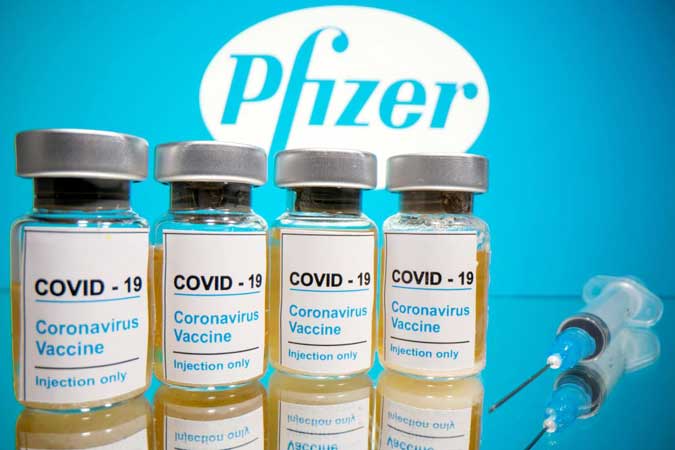
Britain’s medicines regulator has advised people with a history of significant allergies not to get the Pfizer-BioNTech COVID-19 vaccine after two people reported adverse reactions on the first day of its rollout in the UK.
Here are some questions and answers about the cases and what they might mean.
WHAT EXACTLY HAPPENED? UK officials said there have been two reports of anaphylaxis and one report of a possible allergic reaction since rollout began. Anaphylaxis can cause throat swelling, breathing trouble, and difficulty swallowing, according to the American Academy of Allergy, Asthma & Immunology. Anaphylaxis is an overreaction of the body’s immune system, which the UK National Health Service describes as severe and sometimes life-threatening.
WHO SHOULD NOT GET THE VACCINE, ACCORDING TO UK REGULATORS? British regulators initially responded by saying anyone with a history of a significant allergic reaction to a vaccine, medicine or food should not take the shot. An adviser to the group later said it was “tweaking” advice in part to say a food allergy was not a risk.
Late on Wednesday, the UK regulator said anyone with a history of anaphylaxis to a vaccine, medicine or food should not get the vaccine.
Pfizer had excluded people with a history of significant adverse reaction to vaccines or its vaccine’s ingredients from late-stage trials.
HOW DOES THIS AFFECT PROSPECTS FOR U.S. AUTHORIZATION? US regulators are expected to consider emergency authorization of the Pfizer vaccine soon after a Thursday meeting of advisers.
Moncef Slaoui, who is spearheading the US government’s vaccine development efforts, said on Wednesday he expected the British allergic reactions would be considered in the US authorization process and that people with known severe allergic reactions probably should not take the vaccine until more was understood.
WHAT DO DOCTORS SAY? Some praised UK regulators’ caution, while others said broad restrictions were not warranted by available evidence.
“For the general population, this does not mean that they would need to be anxious about receiving the vaccination,” said Stephen Evans, a professor of pharmacoepidemiology at the London School of Hygiene & Tropical Medicine.
What would be wise, he said, would be “for anyone who has known severe allergic reaction such that they need to carry an EpiPen to delay having a vaccination until the reason for the allergic reaction has been clarified.”
Mayo Clinic virologist Gregory Poland, who has advised US regulators, described Britain’s early reaction as “overdoing it,” pointing to the initial response about food allergies, which he said “have nothing to do with this.”
“I would have said, ‘If you’ve had anaphylactic-level reactions to vaccines, we want to know about that so we take extra care,’” he said. “That doesn’t mean I wouldn’t immunize you. But I would do it in a more controlled setting.”
Peter Openshaw, a professor of experimental medicine at Imperial College London, praised the way the reactions had been handled. “The fact that we know so soon about these two allergic reactions and that the regulator has acted on this to issue precautionary advice shows that the monitoring system is working well,” he said.
Mitchell Grayson, director of the division of allergy and immunology at Nationwide Children’s Hospital in Ohio, voiced concern over how the issue might reduce interest in vaccinations. “I’m worried the whole event will cause millions of people to choose not to get vaccinated because of what they heard,” he said.
HOW COMMON ARE SEVERE OR SIGNIFICANT ALLERGIES? “In the UK in 2012 there were around seven hospital admissions per 100,000 people for severe allergies. This included different triggers such as foods, drugs and insect stings,” said Louisa James, an expert in immunology at Queen Mary University of London. Fatalities remain very rare and have not increased even as hospital admissions have risen in many countries. — Reuters
The complaints on Wednesday accuse Facebook of buying up rivals, focusing specifically on its previous acquisitions of photo-sharing app Instagram for $1 billion in 2012 and messaging app WhatsApp for $19 billion in 2014.
WASHINGTON/PALO ALTO — Facebook Inc. could be forced to sell its prized assets WhatsApp and Instagram after the US Federal Trade Commission and nearly every US state filed lawsuits against the social media company, saying it used a “buy or bury” strategy to snap up rivals and keep smaller competitors at bay.
With the filing of the twin lawsuits on Wednesday, Facebook becomes the second big tech company to face a major legal challenge this year after the US Justice Department sued Alphabet Inc.’s Google in October, accusing the $1 trillion company of using its market power to fend off rivals.
The lawsuits highlight the growing bipartisan consensus to hold Big Tech accountable for its business practices and mark a rare moment of agreement between the Trump administration and Democrats, some of whom have advocated breaking up both Google and Facebook.
The complaints on Wednesday accuse Facebook of buying up rivals, focusing specifically on its previous acquisitions of photo-sharing app Instagram for $1 billion in 2012 and messaging app WhatsApp for $19 billion in 2014.
Federal and state regulators said the acquisitions should be unwound—a move that is likely to set off a long legal challenge as the deals were cleared years earlier by the FTC.
“For nearly a decade, Facebook has used its dominance and monopoly power to crush smaller rivals, snuff out competition, all at the expense of everyday users,” said New York Attorney General Letitia James on behalf of the coalition of 46 states, Washington, DC, and Guam. Alabama, Georgia, South Carolina, and South Dakota did not participate in the lawsuit.
Ms. James said the company acquired rivals before they could threaten the company’s dominance.
Facebook’s general counsel Jennifer Newstead called the lawsuits “revisionist history” and said antitrust laws do not exist to punish “successful companies.” She said WhatsApp and Instagram have succeeded after Facebook invested billions of dollars in growing the apps.
“The government now wants a do-over, sending a chilling warning to American business that no sale is ever final,” Ms. Newstead said.
Ms. Newstead also raised doubts about alleged harms caused by Facebook, arguing that consumers benefited from its decision to make WhatsApp free, and rivals like YouTube, Twitter, and WeChat did “just fine” without access to its developer platform.
In a post on Facebook’s internal discussion platform, Chief Executive Mark Zuckerberg told employees he did not anticipate “any impact on individual teams or roles” as a result of the lawsuits, which he said were “one step in a process which could take years to play out in its entirety.”
Comments were turned off for Mr. Zuckerberg’s post, as well as for other posts on the lawsuits shared by Newstead and Chief Privacy Officer for Product Michel Protti, according to copies viewed by Reuters. Newstead also warned employees not to post about the cases.
Facebook did not immediately respond to questions about the posts.
PROTRACTED FIGHT Mr. Zuckerberg told employees in July that Facebook would “go to the mat” to fight a legal challenge to break up the company, calling it an “existential” threat, according to audio of internal company meetings published by The Verge.
Although breakup remedies are rare, some antitrust experts said the case was unusually strong given damning statements by Mr. Zuckerberg plucked from Facebook’s own documents, like a 2008 email in which he said “it is better to buy than compete.”
Other experts such as Seth Bloom of Bloom Strategic Counsel said the FTC complaint was “significantly weaker” than the DOJ’s lawsuit against Google.
“We’re talking about acquisitions that are six or eight years old and it will be difficult for a court to order divestitures of many years ago,” Mr. Bloom said.
Investors echoed similar concerns.
“I do not know if the FTC or DOJ will be successful in breaking Facebook up. I’m assuming this will be dragged out in the courts as FB defends itself,” said Daniel Morgan, a portfolio manager at Synovus Trust in Atlanta, Georgia.
The lawsuits are the biggest antitrust cases in a generation, comparable to the lawsuit against Microsoft Corp. in 1998. The federal government eventually settled that case, but the yearslong court fight and extended scrutiny prevented the company from thwarting competitors and is credited with clearing the way for the explosive growth of the Internet.
Last month, Facebook said it was buying customer service start-up Kustomer, in an acquisition that the Wall Street Journal said valued Kustomer at $1 billion.
Facebook also bought Giphy, a popular website for making and sharing animated images, or GIFs, in May. That acquisition has already drawn scrutiny from the United Kingdom’s competition watchdog.
Facebook shares fell as much as 3% after the news before paring losses to close down 1.9%. — Diane Bartz, Nandita Bose, and Katie Paul/Reuters
TOKYO — Researchers in Japan found a higher incidence of COVID-19 symptoms among people who have participated in a domestic travel campaign promoted by the government, suggesting that it is contributing to the spread of the virus.
The findings will make dismal reading for Prime Minister Yoshihide Suga, who has defended the travel campaign, saying it was needed to stop many small businesses in the hospitality sector from going bust due to the lack of customers as a result of the virus scare.
High fever was reported by 4.8% of users of the Go To Travel campaign compared with 3.7% for non-users, according to a preprint of a study that examined data from an internet survey of more than 25,000 adults. Participants also had higher rates of throat pain, cough, headache, and a loss of the sense of taste or smell.
“The subsidy program may be incentivizing those who had higher risks of COVID-19 transmission to travel, leading to larger cases of infections,” according to the authors, who included researchers from the medical schools of the University of Tokyo and University of California, Los Angeles (UCLA).
The study was posted on the preprint server medRxiv in advance of peer review.
While the domestic tourism campaign began before Yoshihide Suga became prime minister following the resignation of Shinzo Abe due to ill health in September, Suga has been seen as a key backer of the initiative. Health experts had warned that encouraging domestic tourism risked spreading the infection from major cities to the countryside.
Japan is now suffering a third wave of COVID-19, with new cases reaching record levels in Tokyo and clusters that are straining the medical systems of Hokkaido in the north and Osaka in the west.
Even so, the nation has weathered the pandemic better than most major economies, with more than 165,000 cases and 2,417 fatalities. — Rocky Swift/Reuters
LONDON — US drugmaker Pfizer and its German partner BioNTech said on Wednesday that documents related to development of their COVID-19 vaccine had been “unlawfully accessed” in a cyberattack on Europe’s medicines regulator.
The European Medicines Agency (EMA), which assesses medicines and vaccines for the European Union, said hours earlier it had been targeted in a cyberattack. It gave no further details.
Pfizer and BioNTech said they did not believe any personal data of trial participants had been compromised and EMA “has assured us that the cyber attack will have no impact on the timeline for its review.”
It was not immediately clear when or how the attack took place, who was responsible, or what other information may have been compromised.
The two companies said they had been informed by the EMA “that the agency has been subject to a cyber attack and that some documents relating to the regulatory submission for Pfizer and BioNTech’s COVID-19 vaccine candidate” had been viewed.
Such documents could be extremely valuable to other countries and companies rushing to develop vaccines, experts said.
“When it comes to the data submitted to these kinds of regulatory bodies, we are talking confidential information about the vaccine and its mechanism of action, its efficiency, its risks & known possible side effects and any unique aspects such as handling guidelines,” said Marc Rogers, founder of a volunteer group fighting COVID-related breaches, CTI-League.
“It also provides detailed information on other parties involved in the supply and distribution of the vaccine and potentially significantly increases the attack surface for the vaccine,” adding more ways the formulas or production could be hacked or stolen.
The companies said “no BioNTech or Pfizer systems have been breached in connection with this incident and we are unaware that any study participants have been identified through the data being accessed.”
A spokeswoman for BioNTech declined further comment. Pfizer did not respond to a request for further comment.
The Pfizer-BioNTech vaccine is a top contender in the global race to beat back COVID-19. It is already being administered in Britain.
The EMA has said it would complete its review by Dec. 29, although its schedule may change.
The EMA statement gave few details about the attack, saying only it was investigating with help from law enforcement.
“EMA cannot provide additional details whilst the investigation is ongoing,” it said in a statement.
US law enforcement and cybersecurity officials did not respond to requests for comment.
Hacking attempts against healthcare and medical organizations have intensified during the COVID-19 pandemic as attackers ranging from state-backed spies to cybercriminals hunt for information.
Reuters has previously reported on allegations that hackers linked to North Korea, South Korea, Iran, Vietnam, China, and Russia have on separate occasions tried to steal information about the virus and potential treatments.
Reuters has documented that espionage campaigns targeted a slew of pharmaceutical and vaccine development companies including Gilead, Johnson & Johnson, Novavax, and Moderna. Regulators and international organizations such as the World Health Organization have also come under repeated attack.
“Vaccine candidates represent liquid gold to many parties, both in terms of the opportunity and the pure market value,” said Mr. Rogers, who is also vice-president at security company Okta Inc. “Information on the vaccine and access to any link in the distribution chain has significantly increased value.”
The respiratory virus, which emerged in China in late 2019, has infected more than 68 million people worldwide, according to a Reuters tally. More than 1.5 million people have died. — Jack Stubbs/Reuters
PHILIPPINE international trade performance shrank in October as imports declined for the 18th straight month while exports returned to negative territory.
Preliminary data by the PSA showed merchandise exports in October contracted by 2.2% year on year to $6.202 billion, compared with a revised 2.9% growth in September and a flat 0.5% growth in October 2019.
Meanwhile, merchandise imports shrank for the 18th straight month in October by 19.5% to $7.979 billion. This was worse compared with contractions of 15.3% and 7.6% in September 2020 and October 2019, respectively.
Trade deficit for the month stood at $1.777 billion, lower than $1.783 billion in September 2020 and $3.573 billion in October 2019.
The country’s total external trade in goods – or the sum of export and import goods – was $14.181 billion in October, down 12.8% from $16.256 billion. This brought the total trade in the 10-month period to $122.151 billion, 20.2% lower than $153.159 billion a year ago.
For the 10 months to October, exports fell by 12.5% to $52.113 billion compared with the Development Budget Coordination Committee’s (DBCC) projection of a 16% fall for the year.
Meanwhile, October imports amounted to $70.038 billion, lower by 25.2% from last year’s $93.605 billion. The decline during the period was beyond the DBCC’s revised target of a 20% contraction for 2020.
Year to date, the trade balance amounted to a $17.924-billion deficit, narrower than the $34.052-billion trade gap in 2019’s comparable ten months. – Michelle Anne P. Soliman
The aviation industry is undeniably one of the industries that has been heavily affected by the COVID-19 pandemic. Major airliners are downsizing their workforce, resulting in huge economic losses. Through all this, Cebu’s Indiana Aerospace University (IAU) believes that every crisis brings new opportunities— the opportunity to thrive and flourish in the new normal of education by designing a blended distance learning program for both the Basic Education and the College, adherent to the emergency remote teaching paradigm.
IAU sought the assistance of Globe Telecom to provide continuous online education to its students via an integrated Learning Management System (LMS) named ALTIMETER (Alternative Instructional Method Electronic Resource). Powered by Brightspace, students will meet with their teachers and classmates virtually at the ALTIMETER once or twice a week or on an arranged schedule. In the offline distance learning mode, students will learn on their own through module or course packs designed by their teachers and professors.
These self-directed instructional materials include worksheets, activity sheets, and other electronic learning resources accessible at the ALTIMETER. It requires only minimal data/internet bandwidth to run and can readily be downloaded on mobile phones, laptops, or desktop computers; hence, it is convenient and user-friendly.
“With the new landscape of education in the Philippines, Globe aims to help learning institutions like IAU digitally transform and create fun learning experiences for their students. We do this by providing the right solutions that will best cater to a school’s needs such as LMS, connectivity plans, and more,” said Globe myBusiness Strategy and Marketing Head Maridol Ylanan.
Moreover, the school guarantees that the learning content for this academic year has been simplified and designed primarily for distance education set-up, with the goal of acquiring the most essential learning competencies expected for the subject or course.
IAU President and founder Dr. Jovenal B. Toring have this to say: “May our quest for the better normal empower all of us, the Aerospacers, future aviators of this country, with a renewed commitment to life-long learning, as did the founding fathers of the aviation industry whose rulebook is to always fly the airplane no matter what.”
Through partnerships like this, Globe continues to prove itself an invaluable partner in promoting 21st Century Learning and in improving resilience in education.
Cocolife encourages Filipinos to press on amid 2020’s upsets in an original Christmas theme song
The year 2020 brought a lot of challenges in the country. Upon the first weeks of this year, Taal Volcano suddenly erupted, causing ashfalls around Batangas and nearby provinces. While many have just started recovering from this disaster, the coronavirus disease 2019 (COVID-19) pandemic put a stop and disrupted the way we live. Add to these the devastating effects of Typhoons Quinta, Rolly, Siony, and Ulysses during this last quarter.
Feliciano Punzalan and his wife, Adora, lost their house to the Taal volcano eruption and so were forced to leave their home in which they lived for more than thirty years. “We thought, ‘If we will evacuate, we had nowhere to go, and no one will even accept us as residents due to the pandemic,'” Mr. Punzalan said in Filipino.
Maria Teresita Ortiz, a mother to five children, was among many who contracted COVID-19, and so she felt how it feels to be helpless and alone when her children cannot see her while she remained confined. “At that time, I cannot even see my children. That’s hard for me,” Ms. Ortiz said.
For Jason Rodelas, a working student and breadwinner, the pandemic adds to the fear and pressure he feels in finishing his studies while providing for his family during these times. “It is very hard for me to juggle work and schooling,” he shared.
These are just some of the stories of how Filipinos are trying to handle this year’s unique mix of challenges. Yet, as Cocolife’s newest theme song for the Christmas season exhorts the Filipino, “Tuloy Pa Rin Tayo“.
As a tribute to the Filipino during the Yuletide season, Cocolife delivers an inspiring reminder that Filipinos shall rise up from 2020’s hardships, move forward, and live on.
Aside from sharing the stories of Mr. and Mrs. Punzalan, Ms. Ortiz, and Mr. Rodelas, the video accompanying the original Christmas theme song shows how Cocolife is touching their lives in simple yet very heartfelt ways. The video also features Cocolife Foundation’s relief efforts for Typhoon Ulysses victims.
It also shows Cocolife Retail Distribution Chief Senior Vice-President Joseph Mark Ronquillo motivating his fellow teammates in the firm, reminding them that they are much more needed during these times.
Moreover, Cocolife President and CEO Atty. Jose Martin A. Loon and Cocolife Brand Ambassador Kiefer Ravena reflected on the Filipino’s strength amid the year’s several upsets. “This year, we have seen the endurance of the Filipino, that we can bear whatever life may bring,” Mr. Loon observed.
As a leading Filipino-owned stock life insurance company, Cocolife continues to believe in the Filipino, confident of how he or she stands strong amid life’s uncertainties. With its complete array of life insurance, non-life insurance, healthcare, and mutual fund products, Cocolife is ready to help clients achieve their goals, whatever circumstances might get in their way, like the pandemic.
When planning for your future, have someone who believes in your dreams. Explore Cocolife’s insurance and investment. Visit https://www.cocolife.com/ to get more info.
The automotive industry is one of the deeply affected industries amid the ongoing global pandemic but has remained strong and resilient. In line with the new normal, there has been a rise in alternative sales efforts such as virtual showrooms, and remote financial consultations for automobile purchases. A lot of car events have pivoted to the online space.
In fact, the most anticipated motoring and driving event in the country is shifting gears virtually. This 2020, the Manila International Auto show or widely known as MIAS is taking a detour to the digital realm as it introduces the premiere edition of MIAS WIRED.
Happening this Dec. 16 to 20, MIAS WIRED is a virtual event that will bring together the biggest automobile brands and car enthusiasts to showcase the latest updates in the automotive industry. In the event, participants will have the opportunity to check the latest car models which will conquer the road soon as well as get an insider’s access to various car showrooms at the comforts of their own space. The latest innovations and newest automotive trends will also be discussed in this highly anticipated event.
The leading exhibition and events management company in the Philippines, Worldbex Services International, is at the forefront of taking events beyond expositions by providing a platform for the community to create connections and nurture the automotive industry as a whole through MIAS WIRED. The event will bring all the country’s top car brands, car accessories, automotive technology, and car enthusiasts together in order to help solve the challenges of the industry in the new normal.
Aside from all these, MIAS WIRED will bring some of the annual trade show’s exciting event highlights to this accessible and dynamic channel, promising guests that it will bring the same excitement the annual MIAS delivers.
For more information, call (02) 8656-92-39 or e-mail inquire@worldbexevents.com. Interested participants can pre-register now at www.manilaautoshow.com, and follow @manilaautoshow on Facebook and Instagram.




 online education to its students via an integrated Learning Management System (LMS) named ALTIMETER (Alternative Instructional Method Electronic Resource). Powered by Brightspace, students will meet with their teachers and classmates virtually at the ALTIMETER once or twice a week or on an arranged schedule. In the offline distance learning mode, students will learn on their own through module or course packs designed by their teachers and professors.