Home Blog Page 8700

US calls Switzerland, Vietnam currency manipulators

WASHINGTON — The Trump administration labeled Switzerland and Vietnam currency manipulators on Wednesday, in another parting shot at trading partners that could complicate matters for US President-elect Joe Biden’s incoming team.

In a long-overdue report, the US Treasury also added India, Thailand and Taiwan to a list of countries it says may be deliberately devaluing their currencies against the dollar.

The COVID-19 pandemic has skewed trade flows and widened US deficits with trading partners, an irritant to outgoing President Donald Trump, who won office four years ago partly on a promise to close the US trade gap.

The Swiss National Bank (SNB) said it does not manipulate its currency and “remains willing to intervene more strongly in the foreign exchange market”.

Vietnam’s central bank said it would work with US authorities to ensure a “harmonious and fair” trade relationship.

“Vietnam’s foreign exchange rate policy has for years been managed in a way to contain inflation, ensure macro stability and not to create unfair trade advantage,” the State Bank of Vietnam said in a statement.

The manipulator labels will ramp up pressure on Mr. Biden before he takes over, Per Hammered, chief emerging markets strategist at SEB in Stockholm, said.

“You set the agenda and force him (Biden) into positions that he will have to get out of somehow,” Hammered said.

A US Treasury official said Mr. Biden’s transition team had not been briefed, adding: “They are not implicated in this.”

US Treasury Secretary nominee Janet Yellen could alter the findings in her first currency report, which is due in April.

A spokesman for Mr. Biden’s team did not respond to a request for comment.

The President-elect’s team has been critical of other moves by US Treasury Secretary Steven Mnuchin, including ending some Federal Reserve pandemic lending programs.

Mr. Mnuchin said in a statement that the Treasury “has taken a strong step today to safeguard economic growth and opportunity for American workers and businesses.”

China, labeled by Mr. Mnuchin as a currency manipulator in August 2019 at the height of trade tensions, was kept on the Treasury’s monitoring list due to its high trade surplus with the United States.

Mr. Mnuchin lifted the designation in January, two days before the world’s two largest economies signed a “Phase 1” trade deal.

TRADE ADVANTAGE
Countries must at least have a $20 billion-plus bilateral trade surplus with the United States, foreign currency intervention exceeding 2% of gross domestic product and a global current account surplus exceeding 2% of gross domestic product (GDP) to be labeled a manipulator.

Vietnam and Switzerland far exceeded these criteria, with foreign exchange interventions of 5% and 14% of GDP respectively

The report said that at least part of Vietnam’s intervention was aimed at pushing down the dong for a trade advantage, while at least part of Switzerland’s action was aimed at pushing down the Swiss franc to prevent effective balance of payments adjustments.

The Treasury said Switzerland’s foreign exchange intervention totaled 14% of GDP.

Vietnam, which has seen foreign investment by companies seeking to avoid US tariffs on Chinese goods, saw intervention of more than 5% of its GDP, it added. (See FACTBOX)

Mark Sobel, a former Treasury and International Monetary Fund (IMF) official, said the manipulator designations were “mechanistic” interpretations of the thresholds that ignored subtleties and extenuating circumstances.

These include safe-haven inflows into Switzerland’s currency due to the pandemic and a rush of foreign investment into Vietnam in 2019, fueled by US tariffs on Chinese goods.

The IMF has forecast that Vietnam’s current account surplus will fall below the 2% of GDP threshold for 2020.

“They’re missing some more obvious cases of harmful currency practices,” said Mr. Sobel, adding that Taiwan and Thailand, which narrowly missed the intervention thresholds, “have been intervening heavily for years.”

The Treasury official said the United States will seek negotiations with Switzerland and Vietnam to bring them back below the manipulation thresholds and declined to speculate on whether the process could lead to US tariffs on their goods.

Among remedies specified in US laws governing the currency report are limiting offending countries’ access to government procurement contracts and to development finance.

Vietnam could be hit with tariffs under a separate probe by the US Trade Representative’s office into the causes of an undervalued dong that could be influenced by the Treasury report. Some business leaders fear Mr. Trump could act before a late December hearing on the issue, but a source familiar with the matter said that appeared unlikely.

Taiwan will maintain stability in its foreign exchange rate, a central bank official told Reuters after the island was placed on the on US Treasury’s currency monitoring list.

The label briefly lifted the value of the Swiss franc against the dollar. Forex strategists said the move may make it slightly more difficult for the SNB to intervene, but the easing of the coronavirus pandemic would reduce upward pressure on the franc.

The Treasury also said its “monitoring list” of countries that meet some of the criteria has hit 10, with the additions of Taiwan, Thailand and India. Others remaining on the list are China, Japan, Korea, Germany, Italy, Singapore and Malaysia.

The report said that India and Singapore had intervened in the foreign exchange market in an “asymmetric manner” but did not meet other requirements to warrant a manipulator label. — Reuters

Tokyo raises COVID-19 alert level to highest

TOKYO — The Japanese capital of Tokyo said on Thursday the strain on its medical system from the COVID-19 pandemic was severe, raising its alert level to the highest of four stages as the number of cases spiked to a record daily high of 822.

A health official said it had become difficult to balance the care of COVID-19 patients with regular ones as hospital beds filled up, assigning a “red” alert for medical preparedness for the first time.

“Medical service providers have exhausted all spare resources,” Masataka Inokuchi, vice chair of the Tokyo Medical Association, told a coronavirus monitoring committee meeting attended by Tokyo Governor Yuriko Koike. “Reducing the number of (COVID-19) patients will be the only way to go.”

The metropolitan government said the number of coronavirus cases hit 822 on Thursday, surpassing the previous record of 678 reached a day earlier.

A month ago, the city raised its coronavirus alert for new infections — a separate category — to the highest level. It had kept its alert for medical preparedness at the second-highest level at the time, indicating a need to boost hospital capacity but a notch below critical conditions. — Reuters

Some vaccine doses kept too cold, Pfizer having manufacturing issues — officials

THE FIRST days of Pfizer, Inc.’s coronavirus disease 2019 (COVID-19) vaccine rollout have seen unexpected hitches including some vaccines being stored at excessively cold temperatures and Pfizer reporting potential challenges in its vaccine production, US officials said on a Wednesday press call.

At least two trays of COVID-19 vaccine doses delivered in California needed to be replaced after their storage temperatures dipped below minus 80 Celsius (minus 112 Fahrenheit), US Army General Gustave Perna said on the call. Pfizer’s vaccines, made with partner BioNTech SE, are supposed to be kept at around minus 70C.

Officials are investigating whether storing the vaccines at excessively cold temperatures poses a safety or efficacy risk, he said.

Pfizer also has reported some production issues, US Secretary of Health and Human Services Alex Azar said.

“We will ensure that by whatever mechanism, that we provide them full support to ensure that they can produce for the American people,” Mr. Azar said.

Pfizer did not immediately respond to a request for comment, but its Chief Executive Albert Bourla told CNBC earlier this week the company was asking the US government to use the Defense Production Act to relieve some “critical supply limitations,” particularly in some components. He did not provide further details.

Officials did not outline what the specific manufacturing challenges were.

Ugur Sahin, chief executive of Pfizer’s partner BioNTech, told Reuters last week that Pfizer’s initial 2020 production target of 100 million doses was halved earlier this year in part over issues with raw materials supply. He said that has since been resolved and manufacturing has begun at scale.

Officials said Wednesday they plan to allocate 2 million doses of the Pfizer vaccine next week and 5.9 million doses of Moderna, Inc.’s, assuming it receives regulatory authorization. Moderna’s vaccine is likely to be authorized as soon as Friday, they said.

The US government is in talks with Pfizer to secure 100 million additional doses, US Operation Warp Speed chief adviser Dr. Moncef Slaoui said on the call. It had previously contracted with Pfizer for the option to buy up to 500 million additional doses at an unspecified price.

Officials said on Wednesday the United States has already contracted for 300 million vaccine doses between the Pfizer/BioNTech shot and one from Moderna in the first half of next year, and 900 million doses in total from drugmakers developing COVID-19 vaccines.

Officials said logistics companies United Parcel Services, Inc. and FedEx Corp are developing contingency plans for vaccine deliveries this week in response to forecasts of severe snowstorms in some parts of the United States. — Reuters

US charges Kenyan militant with researching 9/11-style airplane hijacking

WASHINGTON — US prosecutors said on Wednesday they had charged a Kenya-born militant with terrorism-related offenses, including conspiring to hijack aircraft for a 9/11-style attack on an American target on behalf of the Somali-based al-Shabaab militant group.

Federal prosecutors in Manhattan and the US Justice Department said that Cholo Abdi Abdullah, aged 30, was arrested in the Philippines in July 2019 and transferred to the United States on Tuesday to face six federal charges related to alleged terrorism.

At a hearing held via electronic link on Wednesday morning, Abdullah told a US magistrate judge he was pleading not guilty to all of the charges. His defense lawyer agreed with the judge that Abdullah should remain in custody pending a hearing in January.

The Justice Department said Abdullah, acting at the direction of an unnamed senior al-Shabaab commander, traveled in 2016 to the Philippines to enroll in a flight school to train for a possible 9/11-style attack.

The al-Shabaab commander in question was previously responsible for planning a January 2019 attack on a hotel in Nairobi, Kenya, in which more than 20 people were killed, prosecutors said.

Prosecutors said that between 2017 and 2019, Abdullah attended the flight school on “various occasions” and ultimately completed tests to obtain a pilot’s license.

While training to be a pilot, Abdullah also researched how to hijack a commercial airlines flight, including how to breach a locked cockpit door from the cabin, they said. He also researched information about the tallest building in an unidentified US city and how to obtain a US visa.

Abdullah faces a mandatory minimum sentence of 20 years in prison, but a possible maximum sentence of life. — Reuters

Suzuki Philippines brings a DEALightful offer this Christmas season

Win an all-new Suzuki Skydrive 125 Fi when you buy their family-friendly, stylish Ertiga

Pioneer compact car distributor Suzuki Philippines Inc. lights up the holiday season as it extends its DEALightful Wheels Raffle Promo on its third wave. Buyers of Suzuki’s best-selling Ertiga model within this month can get a chance to win a brand-new Suzuki Skydrive 125 Fi in January.

Suzuki Ertiga in Radiant Pearl Red

This promo is open to all customers who purchase any Suzuki Ertiga variant in any of Suzuki’s 74 dealerships nationwide from Dec. 1 to 31.

Winners will be announced on Jan. 9, 2021, on Suzuki’s Auto Facebook page at www.facebook.com/SuzukiAutoPh. Mechanics of the promo can be viewed here (https://auto.suzuki.com.ph/news-and-events/promos/dealightful-wheels-raffle-promo-wave-3-409#).

One of Suzuki’s best-selling vehicles, Suzuki Ertiga as a fitting holiday purchase for families as the model finely fuses efficiency and style together in a car that promises a comfortable and indulgent experience for drivers and passengers, whether in city rides or long trips.

The seven-seater creates a strong impression through its attractive exterior, evoking a distinctive personality through its smooth and elegant body. Adding to the Ertiga’s distinction among other multi-purpose vehicles are its stylish headlamps, taller and stronger nose design, dynamic shoulder line, deeper curves, aerodynamic body, and refined chrome accents.

Ertiga also comes with an elegant black interior composed of a 10-inch Touch Panel Audio System, a keyless push start system, a D-shaped steering wheel, and woodgrain designs on interior panels and door trims. All these optimizes comfort and convenience while elevating style and luxury to a higher level.


The Ertiga’s flexible seating, meanwhile, can easily be adjusted to comfortably accommodate additional passengers and large amounts of luggage. There are also user-friendly features that anticipate drivers’ needs and provide comfort and refreshment on long journeys — USB port and accessories socket, drink bottle holders, ventilated cupholders, and air conditioner for second-and third-row seats.

Ertiga is also remarkable for its smooth performance, coupled with minimal noise and vibration that allows for a pleasingly quiet ride. This performance is powered by its high fuel efficiency and is supported by a 1.5 petrol engine that produces an impressive maximum torque of 138/4,400 N.m/rpm. Its more integrated and rigid frame also supports Ertiga’s enhanced performance, which disperses energy more efficiently for greater passenger protection

Ertiga is also equipped with solid safety measures that bolster peace of mind in drivers and passengers. These include the SRS Airbag System for front seaters; reverse parking sensor that warns the driver of detected obstacles; highly protective body with Suzuki’s advanced Total Effective Control Technology (TECT); pedestrian injury mitigating body; and child seat anchorage.

All of Ertiga’s external elegance and interior convenience can be availed in the following variants: Ertiga GA – MT (priced at P738,000); Ertiga GL – MT (P858,000); Ertiga GL – AT (P898,000); Ertiga GLX – AT (P988,000); Ertiga 1.5 GA – MT (P743,000); Ertiga 1.5 GL – MT Upgrade (P863,000); Ertiga 1.5 GL – AT Upgrade (P903,000); and Ertiga 1.5 GLX – AT Upgrade (P993,000).

Buy a Suzuki Ertiga this December and you may get a new Suzuki Skydrive motorcycle for the new year with DEALightful Wheels Wave 3 Raffle Promo. Visit suzuki.com.ph for details or call their 24/7 toll-free customer care hotline #789854

BDO, SM to hold first virtual ‘Pamaskong Handog 2020’ in honor of overseas Filipinos

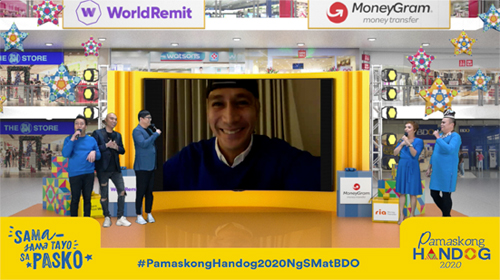
Even amid the new normal, BDO and SM Supermalls are finding ways to continue its annual tradition of paying tribute to overseas Filipinos (OFs) and their families during the Christmas season.

The companies said that this year, the much anticipated “Pamaskong Handog” will be held as a virtual event; online but still full of star-studded guests and performers and exciting activities that Pamaskong Handog has been known for all these years.

This announcement was made today at a media teleconference, which officially launched Pamaskong Handog 2020: Sama-Sama Tayo sa Pasko.

Among those who joined the announcement were BDO Unibank Senior Vice President Genie T. Gloria, BDO Unibank Senior Vice President Jamie Nasol, BDO Network Bank Senior Vice President Karen Cua, and SM Supermalls Senior Assistant Vice President for Marketing-South Luzon Ritchie Gonzales.

Ms. Gloria of BDO said this year’s Pamaskong Handog will be streamed through Facebook live on the BDO Kabayan Facebook page and will be simulcast on the BDO Unibank YouTube channel on December 13. The event will feature Piolo Pascual, Christian Antolin, Marcelito Pomoy, Beks Batallion, and Donekla.

“Our overseas Filipinos have been through a lot this year. We hope that by keeping the tradition of Pamaskong Handog alive, even under the rules of safety, we can still give a sense of optimism, that hope that we will get through this and we will all bounce back,” said Gloria.

Apart from the celebrities joining the event, viewers from all over the world will be treated to enjoy virtual games with many prizes.

Also participating as sponsors of the Pamaskong Handog event include World Remit, MoneyGram, Western Union, and Ria Money Transfer.

The event is one of the many initiatives of BDO, which has been actively engaging with OFs and their families, as many of them depend on the Bank for their financial-related transactions.

BDO Remit has become one of the nation’s lifeblood for years and during these trying times. It provides a safe, trusted, and reliable remittance channel for millions of Filipinos. Another service, BDO Cash Agad, provides bank services in remote locations of the archipelago.

Meanwhile, BDO Network Bank, the rural bank subsidiary of BDO, takes care of the underserved and unserved customers, including the remittance beneficiaries who live in far- flung areas.

The number of OFs is estimated to number 12.5 million across more than 150 countries and continents.

As more OFs and their family members are expected to include Christmas shopping as part of their activities, SM Supermalls assured its commitment to serve the public through a safe malling experience for their needs amid the pandemic.

“Everyone was really concerned when the country went on quarantine. And since people still have to go out for their basic needs, SM Supermalls has prioritized customer safety and satisfaction with #SafetyMallingAtSM,” said Gonzales.

“We continue this practice with the utmost care given the increased operation of our malls with the lifting of the lockdowns. We make sure that each and every mall strictly follows safety and sanitation protocols that comply with government regulation to keep our malls as safe spaces,” he added.

Damosa Land bags 9 awards at the Philippines Property Awards

Testifying to its excellence in agriculture-rooted real estate development in Mindanao, homegrown property developer Damosa Land, Inc. (DLI) won nine awards—including the sought-after title of Best Boutique Developer—at the 8th PropertyGuru Philippines Property Awards, the country’s leading real estate awards program spearheaded by Southeast Asian pioneering property technology company PropertyGuru.

DLI, the real estate development arm of the Anflo Group of Companies, also received Special Recognition in Sustainable Development, Special Recognition for Building Communities, and Special Recognition in CSR from the award-giving body this year.

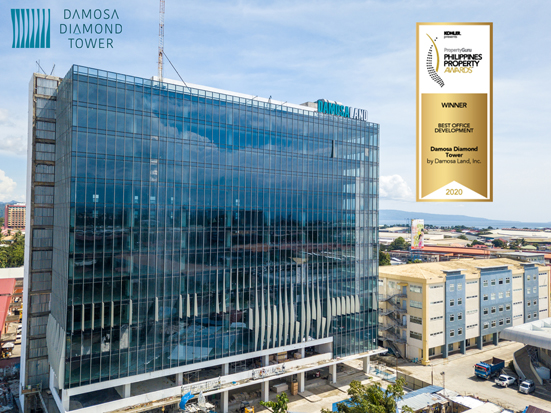
The developer also garnered awards for three of its biggest projects in the Davao region. DLI’s office development, the Damosa Diamond Tower, was awarded the Best Office Development. The Ameria housing development, meanwhile, was cited as the Best Housing Development in Metro Davao.


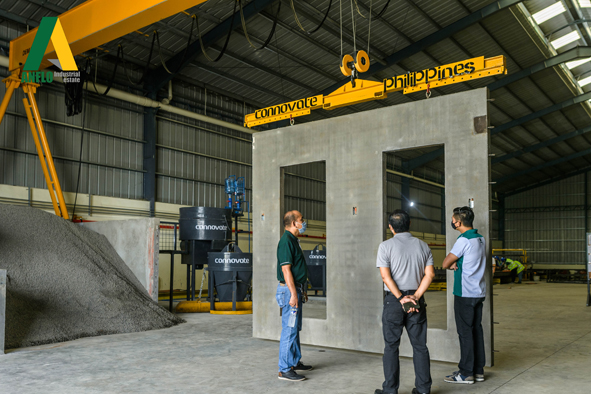
Township development Agriya, on the other hand, received two awards—Best Green Residential Development and Best Township Development. Anflo Industrial Estate, managed by DLI’s agro-industrial arm Anflo Industrial Estate Corporation, was awarded Best Industrial Development.

After almost four decades in car dealership, Damosa (Davao Motor Sales) turned its focus to real estate in 2004, starting in commercial and leasing businesses. The succeeding decades have seen the business expanding to residential projects, industrial parks, hotels, and offices—making DLI a reputable name in property development, especially in Mindanao.

A great distinction of DLI among fellow players in the sector is its rootedness in agriculture and connections to Mindanao culture, as reflected across its portfolio of innovative properties.

Among its commercial developments, “The Damosa District” enlivens DLI’s vision for Lanang, Davao City. One of the most recognized projects in the business district is the Damosa IT Park, the first PEZA-accredited industrial technology park, and the first fully operational IT park in Southern Mindanao. The IT park houses various IT firms, IT-enabled service providers, and corporate offices.

Within Damosa IT Park is the Damosa Diamond Tower, a 17-storey office building that features a host of sustainable technology such as LED lighting, solar panels, and eco-friendly insulation. In 2019, it won the Philippines Property Awards for Best Architectural Office Design.

Within DLI’s residential projects, Ameria, the first premier subdivision in agriculture-rich Davao del Norte, is characterized by generous lot offerings and wide-open spaces, encouraging residents to bring farming into their own backyards. Ameria is nestled in DLI’s integrated township Agriya.

Agriya, one of DLI’s hallmark mixed-use developments, introduces the concept of the modern agropolis (agriculture metropolis) in the Davao region and is billed to be the first agritourism city in Asia. Located in Brgy. Pandan, Panabo City, Agriya is an 88-hectare master-planned township development that has residential, commercial, institutional, and agritourism components. In fact, as part of its push for modern agropolis, it will host the UP Professional School for Agriculture and the Environment, an agricultural campus to be run by the University of the Philippines Los Baños.

Among its industrial developments, the Anflo Industrial Estate is regarded as the country’s premier agro-industrial hub. The 63-hectare industrial Special Economic Zone has complete facilities for manufacturing, cottage industries, warehousing, and agro-industrial operations. It is thus positioned and designed to further develop the vast potential of the agro-industry of the Davao Region and Mindanao by providing a ready market for the region’s agri-produce.

DLI is also behind the Seawind mid-rise condominium in Sasa, Davao City; Damosa Fairlane residences in Brgy. Angliongto, Davao City; the Bridgeport mixed-use project in the Island Garden City of Samal; Valley High commercial complex in General Santos City; Mc Pod commercial building in McArthur Highway in Matina, Davao City; and Damosa Depot, among others.

Palace sets conditions for AMLA bill

By Charmaine A. Tadalan, Reporter

THE SENATE approved on second reading a priority measure that will strengthen the country’s regulations to counter money laundering, even after senators questioned the conditions set by Malacañang in a new notice certifying the bill as urgent.

Senate Bill (SB) No. 1945 was approved on second reading via voice vote on Wednesday evening. The chamber was scheduled to adjourn for a month-long break until Jan. 17, 2021.

President Rodrigo R. Duterte already certified the measure, under SB No. 1412, as urgent in October, but had to send a new letter of certification as the committee report was enclosed in a different bill, SB No. 1945.

In the letter to Senate President Vicente C. Sotto III dated Dec. 15, Mr. Duterte said he certified the “necessity of the immediate enactment of SB No. 1945… in order to address the strategic deficiencies in our anti-money laundering and countering terrorism financing legal framework and avoid adverse findings against the country.”

Mr. Duterte said the certification is dependent on the Senate lowering the threshold for tax crimes to P20 million, from P50 million as seen in the Senate bill.  The version approved on second reading lowered the threshold to P25 million.

He also proposed that the prevailing threshold for real estate transactions be retained, instead of raising it to P5 million. The initial Senate version provided to cover real estate transactions involving at least P1 million.

Lastly, Mr. Duterte recommended that the Senate provide additional investigative powers for the Anti-Money Laundering Council (AMLC), as provided under House Bill 7904. The House version granted AMLC the power to issue subpoenas, which was not present in the Senate bill.

“I believe that these provisions are absolutely essential to achieving the objectives of this bill,” Mr. Duterte said.

For Mr. Sotto, the conditions set by Malacañang for the bill’s approval are a violation of the principle of separation of powers. 

“There are times when the Executive department would whisper their wishes on certain pieces of legislation, but never written down in black and white,” Mr. Sotto said.

“And I don’t think it will qualify as a letter of certification as far as the Senate is concerned because it violates the separation of powers.”

In light of this, Senator Grace S. Poe-Llamanzares, who sponsored the bill, said she will only accept the amendments that will be acceptable to the body.

“It basically tells us to pass that version alone, if we really want this bill to be qualified for that certification,” she said during the session.

“I will accept the amendments, which I feel our colleagues have decided to be what is fair, what is right and what will be effective.”

The certification was issued to allow the Senate to pass the bill on second and third reading on the same day.

The AMLC earlier emphasized the urgency in enacting the new law as the Philippines is at risk of being gray-listed by the Financial Action Task Force (FATF).

The proposed amendments to the AMLA are in line with the recommendations of the FATF, which sets the standards against money laundering and terrorist financing.

The Philippines was initially given until October this year to address deficiencies in the AMLA, but was extended to February 2021 due to the pandemic.

PHL should focus on closing digital gap, upskilling workers

By Arjay L. Balinbin, Senior Reporter

IN ORDER TO “build back better” from the impact of the coronavirus pandemic, the Philippines should focus on closing the digital gap, upgrading the education curricula, upskilling workers, and expanding investments in research and development, according to a new report by the World Economic Forum (WEF).

The WEF released a special edition of its annual Global Competitiveness Report, which assessed the recovery prospects of 37 countries and provided policy recommendations. The WEF suspended the Global Competitiveness Index rankings this year “due to extraordinary response measures taken by governments following the global pandemic outbreak and economic recession.”

The Makati Business Club said in a statement that the Philippines is not among the 37 countries assessed in the latest WEF report due to limited data.

In its report, the WEF said that while “no country is fully equipped for recovery and economic transformation, countries with advanced digital economies, robust social safety nets, and efficient healthcare systems fare better than others.”

“There are 11 emerging areas of priority for countries to address to achieve economic transformation: moving towards a full integration of social, environmental and institutional targets into their economic systems over the next 5 years approximately,” the WEF said, basing report on the performance of 37 economies amid the pandemic.

Governments should “prioritize closing the digital divide,” as well as improve the delivery of public services and prepare support measures for future public debt, the WEF said.

The WEF also proposed a “shift to more progressive taxation, rethinking how corporations, wealth and labor are taxed, nationally and in an international cooperative framework.”

Recognizing the importance of human capital, WEF recommended that world leaders “update the education curricula, develop holistic labor laws, scale-up reskilling and upskilling programs, and create safety nets to help drive recovery.”

Countries should review competition and antitrust frameworks to boost the current business environment, WEF said.

The WEF said countries should prepare for the “markets of tomorrow,” by pursuing public-private collaboration and providing incentives for investments in research, innovation and invention.

It also proposed to grant incentives for companies that “embrace diversity, equity and inclusion to enhance creativity.”

Sought for comment on the WEF’s policy recommendations, Federation of Philippine Industries (FPI) Chairman Jesus L. Arranza said the Philippine government should focus on saving the workers.

“I think the most important thing for us to do now is to be able to save the present workforce. To save them, you should have to support companies hit by the pandemic. They should be able to rehire their workers first,” he said in a phone interview.

Mr. Arranza agreed that the country should boost investments in innovation. “It is only through innovation that you can create a definite market. I think President Rodrigo R. Duterte has the balls to do it. Kailangan lang na ang mga departamento ay mag-initiate to develop,” he added.

American Chamber of Commerce Senior Advisor John Forbes said the 11 priorities identified in the WEF assessment are “important for Philippine advancement along the road to a high middle income economy.”

“All are relevant to achieving Ambisyon Natin 2040. And all must be done, but it will take a few more decades of hard effort,” Mr. Forbes said via e-mail.

“When the midterm Philippine Development Plan is approved, we can see how well the plan has already anticipated and included the World Economic Forum proposals to improve competitiveness,” he added.

In a separate e-mail, Infrawatch PH Convenor Terry L. Ridon said: “Bridging the digital divide provides us the opportunity to leverage technology to deliver public services and information to cover the widest swath of the population.”

He said current digital investments “should also allow the development of the country’s technology services industry, which has the potential to positively disrupt many aspects of the country’s economic life, not only in the consumer segment, but also in the business-to-business economic segments.”

“At the very best, our digital investments should create the conditions for new digital entrepreneurs and tech startups, and hopefully our own version of Silicon Valley,” Mr. Ridon added.

The Philippines fell eight notches to 64th out of 141 economies in last year’s Global Competitiveness Report, which based its assessment on 12 “pillars of competitiveness,” namely: institutions, infrastructure, ICT adoption, macroeconomic stability, health, skills, product market, labor market, financial system, market size, business dynamism, and innovation capability.

ADB to extend up to $9.4-B loans to PHL in next 3 years

THE ASIAN Development Bank (ADB) on Wednesday said it is looking to extend up to $9.4 billion in loans to the Philippines between 2021 and 2023 to support the economic recovery through infrastructure, health, and employment programs.

In a statement, ADB said more than half (52%) of the loans will support transportation projects including railways, roads and bridges, and 12% of the loans will finance the implementation of the Universal Health Care (UHC) Act.

“We have designed our new Country Operations Business Plan to help the Philippines overcome the socioeconomic impact of the pandemic. We are focusing on infrastructure projects that have large employment multipliers and support long-term economic growth through improved connectivity,” ADB Vice-President Ahmed M. Saeed said in a statement.

“Our programs for next year and the years after will be for helping investments for Filipinos. So we had quite a lot of social assistance programs this year, but we’re also continuing that, along with schools development for 221 to 2023,” ADB Country Director for the Philippines Kelly Bird said in an online briefing on Wednesday.

For 2021, the ADB has an indicative lending program worth $3.568 billion. About half (50.9%) or $1.75 billion is programmed for the first phase of the South Commuter Railway Project. The rest are expected to fund infrastructure projects such as the Metro Manila Bridges Project ($180 million), and the Davao Public Transport Modernization Project ($238 million).

The loans will also finance the sustainable tourism development of Coron and El Nido in Palawan ($100 million); a local governance reform program ($400 million); a youth-to-school transition project ($400 million); and a health sector loan to implement the UHC coverage program ($500 million).

The ADB also provided a breakdown of standby loan programs worth $800 million which is meant for infrastructure projects, education, and social enterprises.

By 2022, the largest chunk of the $2.92-billion lending program for the year will be for the second phase of the Malolos-Clark Railway ($1 billion). A $420-million loan is also programmed for business and employment recovery.

Projects for flood risk management, inclusive agriculture development, capital market generated infrastructure financing will each get $400 million in programmed loans. Meanwhile, the Mindanao irrigation development, technical and vocational education training programs, and the Mindanao agri-enterprise development projects will get a $100-million loan each.

A $1.5-billion standby loan is set for infrastructure projects in 2022 such as the Bataan-Cavite Bridge Project.

Another $2.95 billion worth of loans will be programmed for 2023. The biggest share will be for the second phase of the South Commuter Railway Project ($1.25 billion). The rest of the loan program will go to Metro Rail Transit Line 4 (Ortigas to Rizal) ($500 million), inclusive finance development ($300 million), social assistance ($500 million, and the implementation of the Universal Health Care program ($400 million).

The Philippines’ total borrowings from the ADB reached $4.2 billion in 2020, among the largest lending programs disbursed by the multilateral lender for the year, Mr. Bird said.

The ADB has also launched a $9-billion program called the Asia Pacific Vaccine Access Facility to help developing members in procurement.

“We’re in discussions with the government on tapping into the facility in financing vaccine procurement for 2021, that’s an ongoing discussion. But we are committed to supporting vaccine procurement,” Mr. Bird said. — L.W.T.Noble

Return to strict lockdowns to hurt recovery — Chua

THE GOVERNMENT will avoid reimposing strict quarantine measures even if the number of coronavirus disease 2019 (COVID-19) infections surge, in order to sustain economic recovery throughout 2021, Acting Socioeconomic Planning Secretary Karl Kendrick T. Chua said on Wednesday.

“There must be no reversal in quarantine because when we were already in GCQ (general community quarantine) in July tapos bumalik sa (and then we went back to) MECQ (modified enhanced community quarantine) in August, it created so much uncertainty,” Mr. Chua said in an online briefing on Wednesday.

“If cases do worsen, our suggestion is to do localized quarantines and enforce the minimum health standards better,” he added.

To recall, Metro Manila and nearby provinces returned to a MECQ for two weeks in August to heed medical frontliners’ call for a “timeout” amid a surge in COVID-19 cases.

Gross domestic product (GDP) contracted by 11.5% in the third quarter, worse than expected but better than the 16.9% contraction in the second quarter.

In September, net inflows of foreign direct investments slid 12.3% to $523 million year on year, which the central bank attributed to the MECQ that dampened investor sentiment.

The IHS Markit Philippines Manufacturing Purchasing Managers’ Index also dropped to 47.3 in August from 48.4 in July, below the 50-mark that separates growth from contraction. IHS Markit attributed the steeper decline to the heightened restriction measures which affected production.

“Those businesses who have started to open businesses, that have started to open the inventory and rehired workers, suddenly they were not allowed to operate, they were unsure then when they could return,” Mr. Chua said, referring to the two-week MECQ in August. 

As some Western economies are tightening restrictions to curb the surge in coronavirus infections, Mr. Chua said this is different from the situation in the Philippines.

The Philippines has 452,988 COVID-19 infections as of Wednesday, of which 24,873 are active cases. The number of active cases in the Philippines are lower than the over 500,000 and 351,000 active cases in Germany and Czech Republic, respectively. Germany will only keep essential shops open from Dec. 16 until Jan. 10, while Czech Republic is also shutting restaurants and hotels starting Dec. 18.

“Our recommendation is to treat it [lockdown] as a last resort… because it harms the economy, people’s jobs and income,” he said.

Mr. Chua said he expects the country’s GDP to grow starting the first quarter of next year given the policies of the government. He acknowledged, however, the need to “do more” given other Southeast Asian economies recorded single-digit contractions in the third quarter, as they managed to keep the coronavirus outbreak under control.

The government is expecting GDP to shrink by 8.5-9.5% this year before growing by 6.5-7.5% in 2021. — LWTN

Palace approves P3.5-B added budget for nat’l ID

MALACAÑANG on Wednesday said President Rodrigo R. Duterte has approved the P3.52-billion additional budget to register 20 million more Filipinos in the Philippine Identification System (PhilSys) by the end of 2021.

“We are hoping that by the end of 2021 all 20 million low-income families will have a bank account and that will be a major accomplishment,” Acting Socioeconomic Planning Secretary Karl Kendrick Chua said in an online briefing on Wednesday.

Mr. Chua said that 8.7 million already went through the first step of the registration process this month.

“Of the 8.7 million that we have registered for step 1, 89% have no bank accounts because they have no IDs that are sufficient or other requirements,” he said.

Step one for the national ID registration involves giving appointment slips to individuals, who will then visit registration centers where demographic data will be collected.

Step two, which entails gathering the biometric information of applicants, is expected to begin by January. The distribution of the national IDs, which are free, is targeted for February, Mr. Chua said.

“Land Bank [of the Philippines] will co-locate in the registration centers to immediately open a bank account,” Mr. Chua said, adding these accounts will make distribution of subsidies easier.

About five million adult Filipinos opened an account with a financial institution in 2019, bringing the banked population to 29% from 23% in 2017, data from the Bangko Sentral ng Pilipinas (BSP) showed. Despite this, 51.2 million out of 72 million Filipino adults remain unbanked.

Republic Act No. 11055 or the Philippine Identification System Act of 2018 provides for a single identification system for all Filipinos. It can be used as the sole ID for the know-your-customer process of banks.

The BSP targets to have 70% of the Filipino adults banked by 2023. — Luz Wendy T. Noble

ADVERTISEMENT
ADVERTISEMENT