

Home Blog Page 8695

Damosa Land bags 9 awards at the Philippines Property Awards

Testifying to its excellence in agriculture-rooted real estate development in Mindanao, homegrown property developer Damosa Land, Inc. (DLI) won nine awards—including the sought-after title of Best Boutique Developer—at the 8th PropertyGuru Philippines Property Awards, the country’s leading real estate awards program spearheaded by Southeast Asian pioneering property technology company PropertyGuru.

DLI, the real estate development arm of the Anflo Group of Companies, also received Special Recognition in Sustainable Development, Special Recognition for Building Communities, and Special Recognition in CSR from the award-giving body this year.

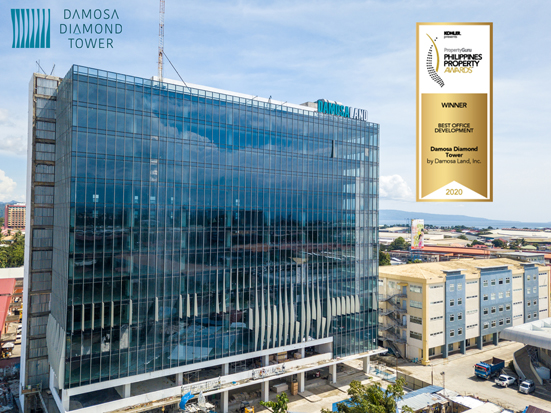
The developer also garnered awards for three of its biggest projects in the Davao region. DLI’s office development, the Damosa Diamond Tower, was awarded the Best Office Development. The Ameria housing development, meanwhile, was cited as the Best Housing Development in Metro Davao.

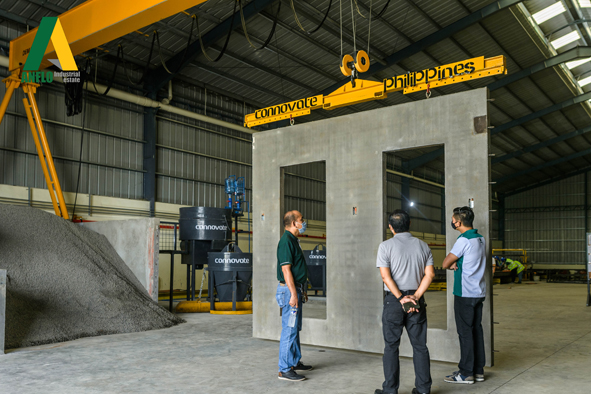
Township development Agriya, on the other hand, received two awards—Best Green Residential Development and Best Township Development. Anflo Industrial Estate, managed by DLI’s agro-industrial arm Anflo Industrial Estate Corporation, was awarded Best Industrial Development.

After almost four decades in car dealership, Damosa (Davao Motor Sales) turned its focus to real estate in 2004, starting in commercial and leasing businesses. The succeeding decades have seen the business expanding to residential projects, industrial parks, hotels, and offices—making DLI a reputable name in property development, especially in Mindanao.
A great distinction of DLI among fellow players in the sector is its rootedness in agriculture and connections to Mindanao culture, as reflected across its portfolio of innovative properties.

Among its commercial developments, “The Damosa District” enlivens DLI’s vision for Lanang, Davao City. One of the most recognized projects in the business district is the Damosa IT Park, the first PEZA-accredited industrial technology park, and the first fully operational IT park in Southern Mindanao. The IT park houses various IT firms, IT-enabled service providers, and corporate offices.

Within Damosa IT Park is the Damosa Diamond Tower, a 17-storey office building that features a host of sustainable technology such as LED lighting, solar panels, and eco-friendly insulation. In 2019, it won the Philippines Property Awards for Best Architectural Office Design.

Within DLI’s residential projects, Ameria, the first premier subdivision in agriculture-rich Davao del Norte, is characterized by generous lot offerings and wide-open spaces, encouraging residents to bring farming into their own backyards. Ameria is nestled in DLI’s integrated township Agriya.

Agriya, one of DLI’s hallmark mixed-use developments, introduces the concept of the modern agropolis (agriculture metropolis) in the Davao region and is billed to be the first agritourism city in Asia. Located in Brgy. Pandan, Panabo City, Agriya is an 88-hectare master-planned township development that has residential, commercial, institutional, and agritourism components. In fact, as part of its push for modern agropolis, it will host the UP Professional School for Agriculture and the Environment, an agricultural campus to be run by the University of the Philippines Los Baños.

Among its industrial developments, the Anflo Industrial Estate is regarded as the country’s premier agro-industrial hub. The 63-hectare industrial Special Economic Zone has complete facilities for manufacturing, cottage industries, warehousing, and agro-industrial operations. It is thus positioned and designed to further develop the vast potential of the agro-industry of the Davao Region and Mindanao by providing a ready market for the region’s agri-produce.

DLI is also behind the Seawind mid-rise condominium in Sasa, Davao City; Damosa Fairlane residences in Brgy. Angliongto, Davao City; the Bridgeport mixed-use project in the Island Garden City of Samal; Valley High commercial complex in General Santos City; Mc Pod commercial building in McArthur Highway in Matina, Davao City; and Damosa Depot, among others.

Palace sets conditions for AMLA bill

By Charmaine A. Tadalan, Reporter

THE SENATE approved on second reading a priority measure that will strengthen the country’s regulations to counter money laundering, even after senators questioned the conditions set by Malacañang in a new notice certifying the bill as urgent.

Senate Bill (SB) No. 1945 was approved on second reading via voice vote on Wednesday evening. The chamber was scheduled to adjourn for a month-long break until Jan. 17, 2021.

President Rodrigo R. Duterte already certified the measure, under SB No. 1412, as urgent in October, but had to send a new letter of certification as the committee report was enclosed in a different bill, SB No. 1945.

In the letter to Senate President Vicente C. Sotto III dated Dec. 15, Mr. Duterte said he certified the “necessity of the immediate enactment of SB No. 1945… in order to address the strategic deficiencies in our anti-money laundering and countering terrorism financing legal framework and avoid adverse findings against the country.”

Mr. Duterte said the certification is dependent on the Senate lowering the threshold for tax crimes to P20 million, from P50 million as seen in the Senate bill.  The version approved on second reading lowered the threshold to P25 million.

He also proposed that the prevailing threshold for real estate transactions be retained, instead of raising it to P5 million. The initial Senate version provided to cover real estate transactions involving at least P1 million.

Lastly, Mr. Duterte recommended that the Senate provide additional investigative powers for the Anti-Money Laundering Council (AMLC), as provided under House Bill 7904. The House version granted AMLC the power to issue subpoenas, which was not present in the Senate bill.

“I believe that these provisions are absolutely essential to achieving the objectives of this bill,” Mr. Duterte said.

For Mr. Sotto, the conditions set by Malacañang for the bill’s approval are a violation of the principle of separation of powers. 

“There are times when the Executive department would whisper their wishes on certain pieces of legislation, but never written down in black and white,” Mr. Sotto said.

“And I don’t think it will qualify as a letter of certification as far as the Senate is concerned because it violates the separation of powers.”

In light of this, Senator Grace S. Poe-Llamanzares, who sponsored the bill, said she will only accept the amendments that will be acceptable to the body.

“It basically tells us to pass that version alone, if we really want this bill to be qualified for that certification,” she said during the session.

“I will accept the amendments, which I feel our colleagues have decided to be what is fair, what is right and what will be effective.”

The certification was issued to allow the Senate to pass the bill on second and third reading on the same day.

The AMLC earlier emphasized the urgency in enacting the new law as the Philippines is at risk of being gray-listed by the Financial Action Task Force (FATF).

The proposed amendments to the AMLA are in line with the recommendations of the FATF, which sets the standards against money laundering and terrorist financing.

The Philippines was initially given until October this year to address deficiencies in the AMLA, but was extended to February 2021 due to the pandemic.

PHL should focus on closing digital gap, upskilling workers

By Arjay L. Balinbin, Senior Reporter

IN ORDER TO “build back better” from the impact of the coronavirus pandemic, the Philippines should focus on closing the digital gap, upgrading the education curricula, upskilling workers, and expanding investments in research and development, according to a new report by the World Economic Forum (WEF).

The WEF released a special edition of its annual Global Competitiveness Report, which assessed the recovery prospects of 37 countries and provided policy recommendations. The WEF suspended the Global Competitiveness Index rankings this year “due to extraordinary response measures taken by governments following the global pandemic outbreak and economic recession.”

The Makati Business Club said in a statement that the Philippines is not among the 37 countries assessed in the latest WEF report due to limited data.

In its report, the WEF said that while “no country is fully equipped for recovery and economic transformation, countries with advanced digital economies, robust social safety nets, and efficient healthcare systems fare better than others.”

“There are 11 emerging areas of priority for countries to address to achieve economic transformation: moving towards a full integration of social, environmental and institutional targets into their economic systems over the next 5 years approximately,” the WEF said, basing report on the performance of 37 economies amid the pandemic.

Governments should “prioritize closing the digital divide,” as well as improve the delivery of public services and prepare support measures for future public debt, the WEF said.

The WEF also proposed a “shift to more progressive taxation, rethinking how corporations, wealth and labor are taxed, nationally and in an international cooperative framework.”

Recognizing the importance of human capital, WEF recommended that world leaders “update the education curricula, develop holistic labor laws, scale-up reskilling and upskilling programs, and create safety nets to help drive recovery.”

Countries should review competition and antitrust frameworks to boost the current business environment, WEF said.

The WEF said countries should prepare for the “markets of tomorrow,” by pursuing public-private collaboration and providing incentives for investments in research, innovation and invention.

It also proposed to grant incentives for companies that “embrace diversity, equity and inclusion to enhance creativity.”

Sought for comment on the WEF’s policy recommendations, Federation of Philippine Industries (FPI) Chairman Jesus L. Arranza said the Philippine government should focus on saving the workers.

“I think the most important thing for us to do now is to be able to save the present workforce. To save them, you should have to support companies hit by the pandemic. They should be able to rehire their workers first,” he said in a phone interview.

Mr. Arranza agreed that the country should boost investments in innovation. “It is only through innovation that you can create a definite market. I think President Rodrigo R. Duterte has the balls to do it. Kailangan lang na ang mga departamento ay mag-initiate to develop,” he added.

American Chamber of Commerce Senior Advisor John Forbes said the 11 priorities identified in the WEF assessment are “important for Philippine advancement along the road to a high middle income economy.”

“All are relevant to achieving Ambisyon Natin 2040. And all must be done, but it will take a few more decades of hard effort,” Mr. Forbes said via e-mail.

“When the midterm Philippine Development Plan is approved, we can see how well the plan has already anticipated and included the World Economic Forum proposals to improve competitiveness,” he added.

In a separate e-mail, Infrawatch PH Convenor Terry L. Ridon said: “Bridging the digital divide provides us the opportunity to leverage technology to deliver public services and information to cover the widest swath of the population.”

He said current digital investments “should also allow the development of the country’s technology services industry, which has the potential to positively disrupt many aspects of the country’s economic life, not only in the consumer segment, but also in the business-to-business economic segments.”

“At the very best, our digital investments should create the conditions for new digital entrepreneurs and tech startups, and hopefully our own version of Silicon Valley,” Mr. Ridon added.

The Philippines fell eight notches to 64th out of 141 economies in last year’s Global Competitiveness Report, which based its assessment on 12 “pillars of competitiveness,” namely: institutions, infrastructure, ICT adoption, macroeconomic stability, health, skills, product market, labor market, financial system, market size, business dynamism, and innovation capability.

ADB to extend up to $9.4-B loans to PHL in next 3 years

THE ASIAN Development Bank (ADB) on Wednesday said it is looking to extend up to $9.4 billion in loans to the Philippines between 2021 and 2023 to support the economic recovery through infrastructure, health, and employment programs.

In a statement, ADB said more than half (52%) of the loans will support transportation projects including railways, roads and bridges, and 12% of the loans will finance the implementation of the Universal Health Care (UHC) Act.

“We have designed our new Country Operations Business Plan to help the Philippines overcome the socioeconomic impact of the pandemic. We are focusing on infrastructure projects that have large employment multipliers and support long-term economic growth through improved connectivity,” ADB Vice-President Ahmed M. Saeed said in a statement.

“Our programs for next year and the years after will be for helping investments for Filipinos. So we had quite a lot of social assistance programs this year, but we’re also continuing that, along with schools development for 221 to 2023,” ADB Country Director for the Philippines Kelly Bird said in an online briefing on Wednesday.

For 2021, the ADB has an indicative lending program worth $3.568 billion. About half (50.9%) or $1.75 billion is programmed for the first phase of the South Commuter Railway Project. The rest are expected to fund infrastructure projects such as the Metro Manila Bridges Project ($180 million), and the Davao Public Transport Modernization Project ($238 million).

The loans will also finance the sustainable tourism development of Coron and El Nido in Palawan ($100 million); a local governance reform program ($400 million); a youth-to-school transition project ($400 million); and a health sector loan to implement the UHC coverage program ($500 million).

The ADB also provided a breakdown of standby loan programs worth $800 million which is meant for infrastructure projects, education, and social enterprises.

By 2022, the largest chunk of the $2.92-billion lending program for the year will be for the second phase of the Malolos-Clark Railway ($1 billion). A $420-million loan is also programmed for business and employment recovery.

Projects for flood risk management, inclusive agriculture development, capital market generated infrastructure financing will each get $400 million in programmed loans. Meanwhile, the Mindanao irrigation development, technical and vocational education training programs, and the Mindanao agri-enterprise development projects will get a $100-million loan each.

A $1.5-billion standby loan is set for infrastructure projects in 2022 such as the Bataan-Cavite Bridge Project.

Another $2.95 billion worth of loans will be programmed for 2023. The biggest share will be for the second phase of the South Commuter Railway Project ($1.25 billion). The rest of the loan program will go to Metro Rail Transit Line 4 (Ortigas to Rizal) ($500 million), inclusive finance development ($300 million), social assistance ($500 million, and the implementation of the Universal Health Care program ($400 million).

The Philippines’ total borrowings from the ADB reached $4.2 billion in 2020, among the largest lending programs disbursed by the multilateral lender for the year, Mr. Bird said.

The ADB has also launched a $9-billion program called the Asia Pacific Vaccine Access Facility to help developing members in procurement.

“We’re in discussions with the government on tapping into the facility in financing vaccine procurement for 2021, that’s an ongoing discussion. But we are committed to supporting vaccine procurement,” Mr. Bird said. — L.W.T.Noble

Return to strict lockdowns to hurt recovery — Chua

THE GOVERNMENT will avoid reimposing strict quarantine measures even if the number of coronavirus disease 2019 (COVID-19) infections surge, in order to sustain economic recovery throughout 2021, Acting Socioeconomic Planning Secretary Karl Kendrick T. Chua said on Wednesday.

“There must be no reversal in quarantine because when we were already in GCQ (general community quarantine) in July tapos bumalik sa (and then we went back to) MECQ (modified enhanced community quarantine) in August, it created so much uncertainty,” Mr. Chua said in an online briefing on Wednesday.

“If cases do worsen, our suggestion is to do localized quarantines and enforce the minimum health standards better,” he added.

To recall, Metro Manila and nearby provinces returned to a MECQ for two weeks in August to heed medical frontliners’ call for a “timeout” amid a surge in COVID-19 cases.

Gross domestic product (GDP) contracted by 11.5% in the third quarter, worse than expected but better than the 16.9% contraction in the second quarter.

In September, net inflows of foreign direct investments slid 12.3% to $523 million year on year, which the central bank attributed to the MECQ that dampened investor sentiment.

The IHS Markit Philippines Manufacturing Purchasing Managers’ Index also dropped to 47.3 in August from 48.4 in July, below the 50-mark that separates growth from contraction. IHS Markit attributed the steeper decline to the heightened restriction measures which affected production.

“Those businesses who have started to open businesses, that have started to open the inventory and rehired workers, suddenly they were not allowed to operate, they were unsure then when they could return,” Mr. Chua said, referring to the two-week MECQ in August. 

As some Western economies are tightening restrictions to curb the surge in coronavirus infections, Mr. Chua said this is different from the situation in the Philippines.

The Philippines has 452,988 COVID-19 infections as of Wednesday, of which 24,873 are active cases. The number of active cases in the Philippines are lower than the over 500,000 and 351,000 active cases in Germany and Czech Republic, respectively. Germany will only keep essential shops open from Dec. 16 until Jan. 10, while Czech Republic is also shutting restaurants and hotels starting Dec. 18.

“Our recommendation is to treat it [lockdown] as a last resort… because it harms the economy, people’s jobs and income,” he said.

Mr. Chua said he expects the country’s GDP to grow starting the first quarter of next year given the policies of the government. He acknowledged, however, the need to “do more” given other Southeast Asian economies recorded single-digit contractions in the third quarter, as they managed to keep the coronavirus outbreak under control.

The government is expecting GDP to shrink by 8.5-9.5% this year before growing by 6.5-7.5% in 2021. — LWTN

Palace approves P3.5-B added budget for nat’l ID

MALACAÑANG on Wednesday said President Rodrigo R. Duterte has approved the P3.52-billion additional budget to register 20 million more Filipinos in the Philippine Identification System (PhilSys) by the end of 2021.

“We are hoping that by the end of 2021 all 20 million low-income families will have a bank account and that will be a major accomplishment,” Acting Socioeconomic Planning Secretary Karl Kendrick Chua said in an online briefing on Wednesday.

Mr. Chua said that 8.7 million already went through the first step of the registration process this month.

“Of the 8.7 million that we have registered for step 1, 89% have no bank accounts because they have no IDs that are sufficient or other requirements,” he said.

Step one for the national ID registration involves giving appointment slips to individuals, who will then visit registration centers where demographic data will be collected.

Step two, which entails gathering the biometric information of applicants, is expected to begin by January. The distribution of the national IDs, which are free, is targeted for February, Mr. Chua said.

“Land Bank [of the Philippines] will co-locate in the registration centers to immediately open a bank account,” Mr. Chua said, adding these accounts will make distribution of subsidies easier.

About five million adult Filipinos opened an account with a financial institution in 2019, bringing the banked population to 29% from 23% in 2017, data from the Bangko Sentral ng Pilipinas (BSP) showed. Despite this, 51.2 million out of 72 million Filipino adults remain unbanked.

Republic Act No. 11055 or the Philippine Identification System Act of 2018 provides for a single identification system for all Filipinos. It can be used as the sole ID for the know-your-customer process of banks.

The BSP targets to have 70% of the Filipino adults banked by 2023. — Luz Wendy T. Noble

Worries on personal data use seen to rise in 2021

CONCERNS on how data is stored, accessed, and used are seen to increase in 2021, as traveling will require people to share more personal data, according to Palo Alto Networks, Inc., an American multinational cybersecurity company.

The company announced its cybersecurity predictions for 2021 at a virtual press briefing on Wednesday.

“With this critical need to move data between government agencies and enterprises such as airlines, airports, and hotels, the debate around how data is stored, accessed, and used will only increase in 2021, particularly as individuals are now far more conscious of their personal data being shared,” the company said in an e-mailed statement.

The company also expects the availability of iPhone 12 to encourage mass adoption of 5G-enabled devices next year.

“This will undoubtedly encourage the acceleration of 5G network rollouts as telcos seek to deploy new services for consumers and governments tap digital opportunities for economic recovery in 2021,” it said.

Working from home is also seen to become easier next year.

“With the increased adoption of cloud tools, we could see a reduction in the need for pricier devices with more computing power as virtualized desktops become an increasingly popular solution,” it noted.

“Businesses could instead provide employees with simpler, connected devices that enable employees to access the programs and resources they need online, delivering the work to them directly — and in turn, protecting the company’s crown jewels,” Palo Alto added.

The company also said an added layer of identity and access management governance will be needed as companies “continue to scale their cloud presence.”

It said more companies will be shifting their IT focus “inward to look at getting the fundamentals right.” — Arjay L. Balinbin

SEC to require regulated firms to create information security group

THE Securities and Exchange Commission (SEC) is finalizing a memorandum circular that requires regulated entities to create an information security group.

The SEC requested all concerned entities to comment on the commission’s “guidance for regulated entities on establishing and maintaining a cybersecurity framework.”

In an unnumbered memorandum circular published on the SEC’s website on Wednesday, the commission said it recognizes “that cyber crime is currently the fastest rising economic crime, in line with the findings under the National Policy for 2017-2020.”

The information security group to be created by each regulated entity should be separate and distinct from its existing information technology group, the commission said.

“The primary focus of the information security team is to ensure the confidentiality, integrity, and availability of information in the process of the regulated entity,” it added.

The team will be headed by a chief information security officer, who will also oversee the entire cybersecurity framework of the regulated entity, SEC said.

Among the responsibilities of the team is drafting guidelines that will “dictate certain behavior within the organization pertaining to handling cybersecurity.”

The team will develop a “comprehensive strategy” to enhance the “readiness, capacity, training, recruitment, and retention of the cybersecurity workforce” of the regulated entity. — Arjay L. Balinbin

Valenzuela City mayor lifts suspension versus NLEX business permit

VALENZUELA CITY announced on Wednesday the lifting of the suspension order against the business permit of NLEX Corp., after both parties agreed to keep toll barriers up on all lanes for vehicles with radio-frequency identification (RFID) stickers.

Valenzuela City Mayor Rex T. Gatchalian said in a social media post that the “toll holiday” had ended at 12:01 p.m. on Wednesday.

He said both parties agreed to keep the toll barriers up on all RFID lanes in Valenzuela City from “5:00 a.m. to 10:00 p.m.” daily. 

The mayor said toll fees would still be collected during those hours.

For safety purposes, toll barriers will be down from 10:01 p.m. to 4:59 a.m., he added,

There would also be cash lanes in strategic locations at toll plazas.

Valenzuela City suspended the company’s business permit on Dec. 7, saying it should address issues on consumer, traffic, and RFID sticker installation and reloading.

SMC PLANS MORE RFID STATIONS
San Miguel Corp. (SMC) also announced on Wednesday its plan to operate a total of 156 RFID installation stations by year-end.

In an e-mailed statement, SMC said the installation stations would “make it easier for more motorists to migrate to the government-mandated electronic toll collection system.”

SMC operates South Luzon Expressway , Southern Tagalog Arterial Road, Skyway, NAIA Expressway, and the Tarlac-Pangasinan-La Union Expressway.

It said it had opened 42 new RFID installation stations “in the last two weeks, in addition to the 53 stations it had as of November.”

NLEX Corp. is under Metro Pacific Tollways Corp., a unit of Metro Pacific Investments Corp., which is one of the three Philippine units of Hong Kong-based First Pacific Co. Ltd. The two others are PLDT, Inc. and Philex Mining Corp. Hastings Holdings, Inc., a unit of PLDT Beneficial Trust Fund subsidiary MediaQuest Holdings, Inc., maintains interest in BusinessWorld through the Philippine Star Group, which it controls.

Yields on BSP’s term deposits drop ahead of policy meeting

YIELDS ON term deposits offered by the Bangko Sentral ng Pilipinas (BSP) on Wednesday dipped before the Monetary Board’s (MB) policy meeting as investors priced in a possible reduction in banks’ reserve requirements.

Total bids for the central bank’s term deposit facility (TDF) amounted to P570.33 billion on Wednesday, above the P510-billion offering but below the P644.806 billion in demand seen a week ago.

Broken down, demand for the one-week papers amounted to P235.871 billion, higher than the P170 billion up for grabs but failing to beat the P243.555 billion in bids logged in the previous auction.

Accepted yields for the one-week term deposits ranged from 1.65% to 1.7296%, a narrower margin than the 1.65% to 1.75% band logged a week ago. With this, the tenor’s average rate went down by 1.72 basis points (bps) to settle at 1.7046% from the 1.7218% seen on Dec. 9.

Meanwhile, the 13-day deposits attracted bids worth P334.459 billion, lower than the P340-billion offer volume as well as the P401.251 billion in tenders seen last week.

Banks sought rates ranging from 1.65% to 1.76%, also narrowing from the 1.65% to 1.7468% band logged in the previous auction. This brought the two-week paper’s average yield to 1.7163%, slipping by 0.28 bp from the 1.7191% recorded last week.

The central bank did not auction off 28-day term deposits for the 10th consecutive week. This follows the start of the BSP’s weekly offerings of its own bills with the same tenor.

The TDF and the BSP’s securities are part of tools used by the central bank to gather excess liquidity in the financial system and to better guide market interest rates.

“The results in Wednesday’s auction reflect market participant’s continued preference for the shorter tenor in view of the holidays. At the same time, financial system liquidity remains ample,” BSP Deputy Governor Francisco G. Dakila, Jr. said in a statement.

Meanwhile, Rizal Commercial Banking Corp. Chief Economist Michael L. Ricafort said yields on the term deposits declined ahead of the BSP Monetary Board’s final policy meeting for the year on Thursday, Dec. 17.

“[T]here is a possible cut in large banks’ RRR (reserve requirement ratio)…,” Mr. Ricafort said in a text message.

For this year thus far, the BSP has slashed the RRR of universal and commercial banks by 200 bps to 12%, while the reserve ratios of thrift and rural lenders were cut by 100 bps to three percent and two percent, respectively.

The MB is authorized to cut banks’ reserve ratios by up to 400 bps this year.

Meanwhile, the central bank will likely keep its key policy rates at their current record low levels as it considers the recent uptick in the country’s inflation rate, analysts said.

A BusinessWorld poll last week showed all 15 analysts do not expect the Monetary Board to go for another rate cut at its seventh and final policy meeting for the year.

The BSP unexpectedly slashed benchmark rates by 25 bps last month, bringing the yields on its overnight reverse repurchase, lending, and deposit facilities to record lows of 2%, 2.5%, and 1.5%.

The central bank has lowered borrowing costs by 200 bps this year. — Luz Wendy T. Noble

Seda Vertis North’s Misto buffet reopens

SEDA Vertis North’s Misto buffet is back, albeit with changes made to fit the new normal and ensure the safety of its diners.

While the hotel has offered la carte dining to serve its long-staying guests and those who crave the hotel’s specialties during the pandemic, the buffet has made a comeback, opening in late November to great success, according to Seda Vertis North’s director of sales and marketing.

“Since the launch it’s been… very well-received, which is why we are ramping up, not just for lunch on Thursdays to Sunday but we are going to launch this for dinner as well,” Cinty Yniguez, director of sales and marketing at Seda Vertis North, said in an online conference on Dec. 11 via Zoom.

The revamped “new normal” Misto buffet allows its diners to go to the buffet stations and see the spread — behind plexiglass. The restaurant’s culinary team then gets the food for them. Of course, the requisite thermal scanning is done the moment one enters the restaurant and the staff sanitizes their stations and wash their hands every 20 minutes.

The buffet stations are the grill station, the Japanese station (no raw fish, but they do serve tempura), the roast and carving station (which includes their famous roast beef and, for the holidays, their equally famous honey-glazed ham), a noodle station (with handmade noodles plus soups including laksa), a dessert station, and a bread and cheese station. In all, more than 30 dishes are served in the lunch buffet, including Filipino favorites such as kare-kare (meat stew in a thick peanut-based sauce), crispy pata (deep fried pig trotters), callos (beef tripe stew), and lengua (beef tongue). They also offer Brazilian barbecue meats (churrasco) served on skewers and sliced for the diners. The culinary team is led by its executive chef, Kerpartrik Boiser.

“We’ve [arranged] the spread like this is so that we can still showcase our buffet spread,” Ms. Yniquez explained.

Misto is the hotel’s all-day dining restaurant and with its buffet reopened, Ms. Yniguez observed that they have a lot of guests coming from the nearby villages and subdivisions in the area, the businesses nearby and government offices. Seda Vertis North is located in Quezon City, near Trinoma.

Both the lunch and dinner buffets are priced at P1,000+++ and the restaurant can only accommodate 90 people at a time. While reservations are recommended, Misto also allows walk-in guests.

And because the holidays are here and they are expecting an influx of diners, they will be having “two seatings for each meal period.” The rates for Christmas lunch and dinner are different from the regular lunch and dinner buffet prices.

For the holiday meals, Ms. Yniguez said they will be offering al fresco dining options since they have a considerable amount of outdoor space at Misto.

Ms. Yniguez said that their food and beverage is the hotel’s “bread and butter,” and “we manage [profits] by managing our costs very well… without compromising quality in the type of offerings we have on the buffet.”

Aside from the buffets, Ms. Yniguez said that the hotel has pivoted to offering food platters, delivery services, and grazing boxes as they recognize that people may still be unwilling to dine out but are still looking for hotel-quality meals.

“[The pandemic] has been an eye-opener of us… and I believe that [food platters, delivery services, and grazing boxes] are going to be a mainstay. This just opened a new world for us,” she said before adding that even after the pandemic is over, people “are still going to want to order and eat at the comfort of their homes or offices.”

Seda Vertis North is still not open for staycations, but they are “looking into that already” and hopefully they can open “by the coming year.”

For reservations, contact the hotel through 0917-833-9117 or e-mail dining.vertis@sedahotels.com. — Zsarlene B.Chua

Pangilinan donates to Wharton School scholarship grants, research laboratory

PLDT, Inc. Chairman Manuel V. Pangilinan has donated $1 million to The Wharton School of the University of Pennsylvania to establish an MBA fellowship fund and support a behavioral research laboratory, the company said in a statement.

“We are exceedingly grateful for MVP’s gifts to the school. Thank you for all your contributions,” said Dean Erika H. James of The Wharton School during an e-meet where representatives of the school expressed their gratitude to Mr. Pangilinan, himself a Wharton graduate.

His gift donation will be allocated equally between the fellowship fund and the Tangen Hall Mechatronics Laboratory.

The fund, which will be known as the MVP Fellowship Fund, will be created to provide financial support to Master of Business Administration (MBA) graduate students in Wharton.

The grant will give priority to students from the Philippines, followed by those from ASEAN countries, and subsequently, international students.

The Tangen Hall houses the Mechatronics Lab, which provides opportunities for students to conduct their research. The behavioral laboratory supports data collection for behavioral research on business-related topics.

Ms. James thanked Mr. Pangilinan for the “meaningful gift” and in recognition of his generosity, a plaque — Manny V. Pangilinan WG ’68 — will be placed outside the Mechatronics Lab.

Mr. Pangilinan, who is thankful for the opportunity to assist his alma mater and its students, said a lot of community spirit exists among Wharton graduates. He recounted that he was only 19 years old when he attended The Wharton School through a scholarship grant. He graduated in 1968 with a Master’s degree in Business Administration.

Principal donors’ names will be included on a newly constructed donor wall, to be installed in Steinberg Hall-Dietrich Hall.

“This wall will serve as an enduring reminder to the Wharton community that this world-class experience simply would not be possible without support from their greatest champions,” said Alissa Lurie, Wharton’s regional director for external affairs.

Mr. Pangilinan, who is also PLDT president and chief executive officer, has been helping schools and universities in the Philippines as well as teachers and students through the companies under his leadership.

For the past five years, he has funded 14 professorial chairs and four teaching and research grants at the University of the Philippines College of Engineering. He is also sponsoring a P4-million scholarship grant to students from San Beda University.

Guided by the principle of “no student, no learner is left behind,” Mr. Pangilinan is pouring support to the Department of Education and the country’s public schools through the various programs of his companies.

ADVERTISEMENT
ADVERTISEMENT