

Home Blog Page 8411

The Goal Diggers PH rallying behind sports community in return from pandemic

THE Goal Diggers PH, a special podcast that features conversations with distinguished sports personalities, is ramping up its efforts to continue to inspire and motivate people to move accordingly, especially during this time of picking up the pieces from the pandemic.

A brainchild of football stakeholders and marketing professionals, The Goal Diggers PH was born at the height of the coronavirus pandemic last year and has since spotlighted topics and issues that people, particularly those in the sports community, could take cue from as they weave their way back in the “new normal.”

“Year 2020 was really a time for us to reflect. And 2021 is our time to return to action. We should use this year to plan strategies on how to move forward and put that plan to action. Regardless of whether virtual or face-to-face, we have to make informed decisions before putting these strategies into action and which is why we’re doing the program and other activities,” said Robbie de Vera, founder and chief sports advocate of sports marketing organization XMPLR, at the online Philippine Sportswriters Association Forum on Tuesday.

“We want to reach as many people as possible and contribute to help uplift sports. This is a program for motivation and guidance to help create change,” he added of the mission and vision of The Goal Diggers PH.

In line with the group’s thrust, it will be holding online sessions for free on Sports Events Essentials 1 and 2 scheduled for March 13 and 20 starting at 11 a.m. on The Goal Diggers PH Facebook page.

Next month, The Goal Diggers PH will also launch a more in-depth sports management course with the goal of helping develop more sports leaders and impactful sports events.

Topics to be covered include sports marketing, events management, project management, safeguarding sports in the medical and legal aspects, digital marketing and crisis management.

“The best way to maximize this opportunity that we have now is by staying productive. We are encouraging our sports leaders, facilitators, directors, entrepreneurs, coaches and athletes to use our energy with the hope of raising the capability of our community to run better and more impactful sports events in the new normal,” said Mr. San Agustin in underscoring the needed mind-set to have to take on the challenges that present time presents.

The people behind The Goal Diggers PH said they are still planning more activities moving forward and will announce them in time.

Since kicking off in September, the podcast has featured sports celebrities like Olympic silver medalist Hidilyn Diaz, Azkals’ Nate Burkey and Anton del Rosario, volleyball’s Gretchen Ho, rugby’s Ada Milby, and champion Philippine Basketball Association coach Jong Uichico, who shared their experiences in the pandemic and how they are surviving it.

Set to grace the program this month are Alyssa Valdez (March 13) and Jude Turcuato of SMART Sports (March 20). — Michael Angelo S. Murillo

Most in Japan ‘interested in Olympics’ but don’t want them to happen

TOKYO — An overwhelming majority of Japanese said they were “interested in the Olympics,” although 58% said they did not want them to be held this year because of fears over COVID-19, a Yomiuri daily poll showed on Wednesday.

In the survey, conducted between Jan. 18 and Feb. 25, when much of the country remained in a coronavirus state of emergency, 30% of the respondents said they were “very interested” in the Summer Games and 40% said they were “somewhat interested,” for a combined 70%.

But concerns over the impact on coronavirus infections kept most opposed to holding the event this year, although the 58% in opposition is about 20 percentage points lower than earlier opinion polls.

If the Games were to go ahead as scheduled, 91% of respondents said spectators should be kept to a minimum or not allowed at all, the Yomiuri poll showed.

The Tokyo Olympic Games were postponed last year because of the pandemic and rescheduled to take place this year from July 23.

A survey by global consultancy Kekst CNC published on Wednesday showed similar rates of majority opposition in Japan, at 56%, as well as in Britain and Germany, at 55% and 52% respectively.

In France and Sweden, more people opposed than approved, while in the United States, respondents were split at one-third between those who agreed and disagreed that the Games should go ahead, according to the survey.

While coronavirus infection numbers are low in Japan compared with the United States and many European countries, the greater Tokyo metropolitan area remains in a state of emergency, with restrictions in place for spectator numbers for big sporting and cultural events, as well as closing times for bars and restaurants. The country remains closed to non-resident foreigners.

A Reuters poll published last month showed nearly two-thirds of Japanese companies also oppose holding the Games as planned, swinging from the previous survey showing most in favor.

Japan has so far confirmed 431,250 coronavirus cases and 7,931 deaths as of Monday. — Reuters

US faces $2.59T in infrastructure needs — report

WASHINGTON — The United States faces a $2.59 trillion shortfall in infrastructure needs that requires a massive jump in government spending to address crumbling roads, bridges and other programs, according to an assessment by an engineers group issued on Wednesday.

The 170-page report by the American Society of Civil Engineers (ASCE) comes as President Joseph R. Biden plans to seek a dramatic jump on infrastructure spending in the coming weeks — after his predecessors Donald Trump and Barack Obama failed to win approval for a major funding effort.

The report, published once every four years, gave the United States a “C-” overall — up from a D+ in 2017 —  and marked the first time in two decades the country received a “C” range grade — but found the country is spending just over half of what is required, labeling overall US infrastructure in “mediocre condition.”

The report urges the United States to increase investment from all levels of government and the private sector to 3.5% from 2.5% of US gross domestic product by 2025.

The study graded 17 categories of infrastructure, ranging from a “B” for rail to a “D-” for transit.

“We risk significant economic losses, higher costs to consumers, businesses and manufacturers —  and our quality of life — if we don’t act urgently,” said ASCE Executive Director Thomas Smith in a statement.

The biggest projected gap is in surface transportation, which faces $1.2 trillion in projected unmet needs over 10 years, while water systems face $434 billion and schools $380 billion in funding gaps.

In total, 11 of 17 categories reviewed merited “D” range grades — “aviation, dams, hazardous waste, inland waterways, levees, public parks, roads, schools, stormwater, transit, and wastewater.” The report cited incremental gains in aviation, drinking water, energy, inland waterways, and ports.

The infrastructure gap rose by $359 billion over 2017.

Mr. Biden plans to meet with lawmakers on Thursday to discuss infrastructure along with Transportation Secretary Pete Buttigieg, who said the report card documents “what Americans already know: failure to fully invest in our infrastructure over the years is now catching up to us. Consequences are appearing nationwide, in the form of dangerously degraded roads, bridges, and other assets.”

Mr. Biden wants a big jump in spending on US surface transportation, airports, transit systems, as well addressing high-speed broadband, electrical grids and water systems and boosting electric vehicles charging and high-speed rail.

Congress has not boosted the 18.4-cents-per-gallon federal gasoline tax since 1993, which is now worth 10.2 cents after adjusting for inflation. It remains unclear how Mr. Biden or Congress will fund new infrastructure spending. 

The report said that without a significant infrastructure hike, by 2039 the US economy will lose $10 trillion in growth, exports will decline by $2.4 trillion and 3 million jobs will be lost.

The report praised state and local governments for boosting infrastructure spending. Since 2010, 37 US states raised gas taxes to fund transportation and US voters approved 98% of local infrastructure ballot initiatives in November. — Reuters

Contagious Brazil COVID-19 variant evades immunity, scientists warn

LONDON — A highly transmissible COVID-19 variant that emerged in Brazil and has now been found in at least 20 countries can re-infect people who previously recovered from the disease, scientists said on Tuesday.

In a study of the mutant virus’s emergence and its spread in the Amazon jungle city of Manaus, the scientists said the variant — known as P.1 — has a “unique constellation of mutations” and had very rapidly become the dominant variant circulating there.

Out of 100 people in Manaus who had previously recovered from infection with the coronavirus, “somewhere between 25 and 61 of them are susceptible to re-infection with P.1,” said Nuno Faria, a virus expert at Imperial College London, who co-led the research which has not yet been peer reviewed.

The scientists estimated that P.1 was 1.4 to 2.2 times more transmissible than the initial form of the virus.

Speaking to a media briefing about the findings, Nuno said it was too early to say whether the variant’s ability to evade immunity from previous infections meant that vaccines also would offer reduced protection against it.

“There’s no concluding evidence really to suggest at this point that the current vaccines won’t work against P.1,” Mr. Faria said. “I think (the vaccines) will at least protect us against disease, and possibly also against infection.”

Scientists around the world are on guard against new mutated forms of the coronavirus that could spread more easily, or be harder to fend off with existing vaccines.

The research, conducted with scientists at Brazil’s São Paulo and Britain’s Oxford universities, suggested that the P.1 variant had probably emerged in Manaus in early November 2020.

The first infection with it was identified on Dec. 6, Mr. Faria said. “We then looked at how rapidly P.1 overtook other lineages, and we found that the proportion of P.1 grew from zero to 87% in about eight weeks.” — Reuters

German warship to cross S. China Sea

BERLIN — A German frigate will set sail for Asia in August and, on its return journey, become the first German warship to cross the South China Sea since 2002, senior government officials in Berlin said on Tuesday.

The ship will not pass within what officials called the “12-nautical-mile,” officials in the foreign and defense ministries added, in a reference to contested areas in the crowded sea.

China claims almost all the energy-rich waters of the South China Sea, where it has established military outposts on artificial islands.

The US Navy regularly conducts “freedom of navigation” in which their vessels pass close by to some of these islands, asserting freedom of access to international waterways.

The United States regularly accuses Beijing of militarizing the South China Sea and trying to intimidate Asian neighbors who might want to exploit its extensive oil and gas reserves. — Reuters

Sinovac eyes 2 billion doses in annual capacity of virus vaccine by June

BEIJING — Sinovac Biotech’s annual production capacity of COVID-19 vaccine can reach 2 billion doses by June, a company spokesman confirmed to Reuters on Wednesday.

The figure is double its previous yearly capacity of 1 billion doses in the form of bulk ingredient which the firm had said it could reach by February.

State media the Global Times had first reported the news, citing a comment from the firm’s chief executive.  Reuters

Beach and nature escapades top Filipinos’ bucket lists — Airbnb survey 

Boracay remains the top domestic travel destination for Filipinos, according to a 2021 Philippine Travel Trends survey by Airbnb. — PHILSTAR

Boracay remains the top domestic travel destination for Filipinos, followed by Palawan, Baguio, Siargao Island, and Tagaytay, according to a 2021 Philippine Travel Trends survey by Airbnb. 

“It’s not difficult to understand the brewing pent-up demand for travel. People are not able now to do something they took for granted in the past. That’s why Filipinos want to connect as soon as they can,” said Amanpreet S. Bajaj, general manager for Southeast Asia, India, Hong Kong, and Taiwan. “The need to connect is a very powerful emotion among the Filipino community.” 

“COVID-19 has been a global fork in the road for everyone,” added Mr. Bajaj. “The single biggest focus for all travel stakeholders is that we kickstart travel again. We are responding by promoting safe travel in domestic corridors and supporting government protocols.” 

TRAVEL TRENDS
The questions, according to a March 2 virtual roundtable organized by the travel platform, were framed in an aspirational manner, along the lines of how the respondents want to travel, and with whom. Among the specific trends the survey found were the following:

  • The pandemic has strengthened the ties of Filipino families due to the long lockdown: 88% of respondents said they felt more connected with their families during the pandemic.
  • Filipinos want to connect with their families once travel resumes: 60% of respondents plan on connecting with their immediate and extended families on their first trip.
  • Safety and affordability are top considerations in choosing lodging: 64% of respondents said they consider health and safety protocols in deciding for their accommodations in their next trip.
  • Filipinos are veering away from mass travel towards less crowded, more meaningful, and slower travel: 53% of respondents prefer traveling to less crowded, off-the-beaten-path destinations.
  • Filipinos are responsible tourists: 8 out of 10 Filipinos often consider the environment and sustainability in choosing their accommodation.
  • Filipinos want to reconnect with nature. Respondents most wanted to travel close to nature for their first trip after the pandemic, followed by a family member’s or friend’s home.
  • Beach and nature escapades top Filipinos’ bucket lists. Boracay remains the top domestic travel destination for Filipinos, followed by Palawan, Baguio, Siargao Island, and Tagaytay.

BOUNCING BACK
In response to the demands of the coronavirus disease 2019 (COVID-19) crisis, Airbnb expanded its global Frontline Stays initiative in April 2020 to provide housing to COVID-19 responders, in partnership with the Philippine Disaster Resilience Foundation (PDRF). 

A comprehensive cleaning program called the Enhanced Cleaning Protocol, in partnership with experts including the US Centers for Disease Control and Prevention and former US Surgeon General Dr. Vivek Murthy, was also set in place for all Airbnb listings. Its Extenuating Circumstances Policy additionally allows for guests to have cancellation and refund options, and for hosts to cancel without charge or impact to their Superhost status.

Airbnb has more than 4 million hosts globally, with more than 800 million guests arrivals worldwide since the company’s founding 11 years ago. Its Airbnb Experiences—activities that immerse guests in local culture—was shifted to Online Experiences in April 2020, allowing guests to experience new activities and hosts to earn an income, all in the safety of their homes.

According to the platform, the Philippines has over 39,000 listings as of 2019, directly and indirectly supporting 161, 300 jobs, and contributing $1 billion to the local economy.

“We all are very optimistic that travel as a sector is resilient,” Mr. Bajaj said at the virtual event. “The pandemic is still on and we need to be cognizant of the fact that there still is vulnerability, so to speak, but we are very optimistic that we will bounce back, if you look at travel history—purely because of our need to connect as human beings.” — Patricia B. Mirasol

Maezawa wants you: Japan billionaire seeks ‘crew’ for moon trip

TOKYO — Japanese billionaire Yusaku Maezawa on Wednesday launched a search for eight people to join him as the first private passenger on a trip around the moon with Elon Musk’s SpaceX.

He had originally planned to invite artists for the weeklong voyage slated for 2023.

The rejigged project will “give more people from around the globe the chance to join this journey. If you see yourself as an artist, then you are an artist,” Mr. Maezawa said.

The first stage of the application process runs to March 14.

The entrepreneur, who sold his online fashion business Zozo Inc. to SoftBank in 2019, is paying the entire cost of the voyage on SpaceX’s next-generation reusable launch vehicle, dubbed the Starship.

Two recent prototypes have exploded during testing, underscoring the risks for Mr. Maezawa, 45, and his fellow passengers, who must also contend with the strains of space travel in the first private journey beyond Earth’s orbit.

“This mission we expect people will go further than any human has ever gone from Planet Earth,” Musk said, days after SpaceX completed its latest $850 million fundraising, which has helped turn the businessman into one of the world’s richest people.

Mr. Maezawa is known for his art and supercar collections, and the cash giveaways that have made him Japan’s most-followed Twitter account.

Last year he launched a short-lived documentary search for a new girlfriend to join him on the trip before pulling out citing “mixed feelings.” — Sam Nussey/Reuters

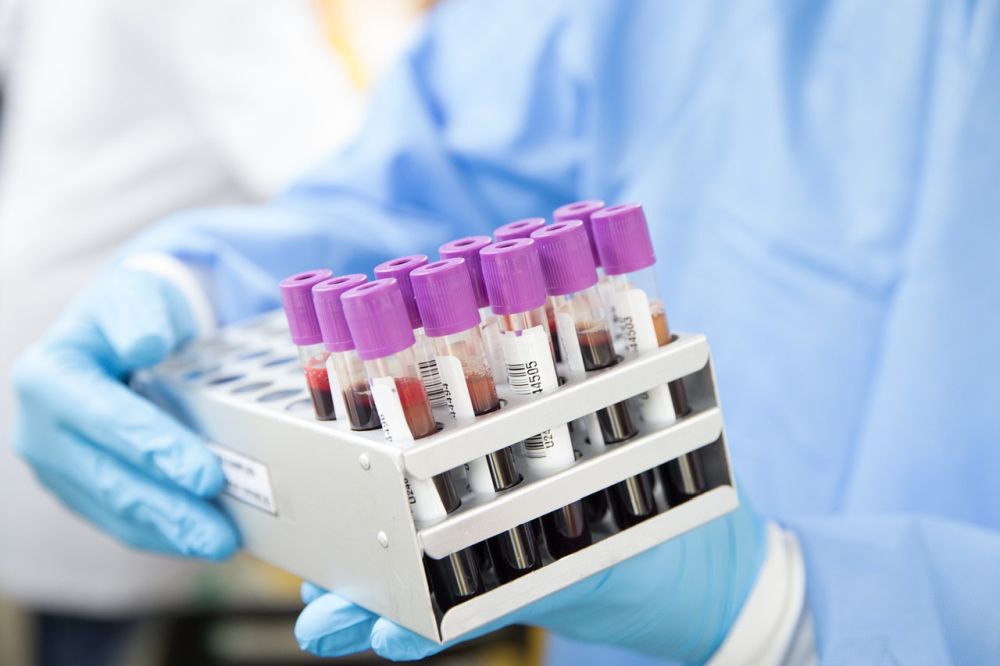
US trial of COVID-19 blood plasma halted after no benefit found

A recent analysis indicated no significant difference in the proportion of patients who needed emergency treatment, had to be hospitalized, or died within 15 days of entering the trial.

The US National Institutes of Health (NIH) said on Tuesday that it has halted a trial of convalescent blood plasma in the treatment of patients with mild-to-moderate coronavirus disease 2019 (COVID-19) symptoms as it was unlikely to benefit this group.

The NIH said its decision was based on the findings of an independent data monitoring board. 

The health agency’s move comes less than two months after an international trial of convalescent plasma was halted as no benefit was found. Other studies conducted in India and Argentina have also found no apparent benefit for those severely ill with the disease.

The US trial had enrolled 511 of 900 participants, who were either given blood plasma from recovered COVID-19 patients or a placebo.

A recent analysis indicated no significant difference in the proportion of patients who needed emergency treatment, had to be hospitalized, or died within 15 days of entering the trial, NIH said. — Reuters

Boeing cites risks in design of newest Airbus jet

PARIS — Boeing Co. has raised concerns over the design of arch-rival Airbus’ newest narrow-body jet, the A321XLR, saying a novel type of fuel tank could pose fire risks.

The US plane giant’s intervention is not without precedent in a global system that regularly allows manufacturers to chime in whenever safety rules are being interpreted in a way that might affect the rest of the industry.

But it comes at a pivotal moment as Boeing emerges from a two-year safety crisis over its competing 737 MAX, and Airbus faces its own crucial test of the tougher mood expected from regulators worldwide following the MAX’s 20-month grounding.

In a submission to the European Union Aviation Safety Agency (EASA), Boeing said the architecture of a fuel tank intended to increase the A321XLR’s range “presents many potential hazards.”

The debate surrounds the hot-selling A321XLR’s main marketing point—the longest range of any single-aisle jet.

In most jets, fuel is carried in wings and central tanks.

To meet demand for longer routes, Airbus has already added optional extra fuel tanks inside the cargo bay of some A321s.

For the A321XLR, Airbus plans to eke out more space for fuel by molding one tank directly into the fuselage, meaning its shape would follow the contours of the jet and carry more fuel.

The concept caught the attention of EASA which in January said it would impose special conditions to keep passengers safe.

“An integral fuselage fuel tank exposed to an external fire, if not adequately protected, may not provide enough time for the passengers to safely evacuate the aircraft,” it said.

In comments to EASA first reported by Flightglobal, Boeing cited risks if a jet veers off a runway or its wheels fail.

“Public consultation is part-and-parcel of an aircraft development program,” an Airbus spokesman said, adding any issues raised would be tackled together with regulators.

COMMERCIAL STAKES
Such technical exchanges rarely capture attention. But a battered aerospace industry is on edge after the MAX crisis, compounded by coronavirus disease 2019 (COVID-19), shook confidence in aviation.

Commercial stakes are also high.

One industry source familiar with the project warned any extended wrangle over certification could delay the A321XLR’s service entry from “late 2023” to 2024 or beyond.

Should that happen, sources say Boeing is expected to encourage airlines to wait a few years longer for a potential all-new model that insiders say would leapfrog the A321XLR.

While insisting they never compete on safety, Airbus and Boeing have a record of goading each other in the past over issues like novel flight computers on the Airbus A320 or European claims that four engines were safer than the 777’s two.

Fuel tanks have provoked particularly sharp disagreement.

In 2001, the US Federal Aviation Administration triggered changes to the design of fuel tanks worldwide, five years after a Boeing 747 exploded in mid-air.

Investigators said TWA 800 was brought down by a fuel-tank explosion in the presence of unwanted oxygen, but Airbus officials maintained their own jets were less at risk. — Tim Hepher/Reuters

India woos Tesla with offer of cheaper production costs than China

NEW DELHI — India is ready to offer incentives to ensure Tesla Inc.’s cost of production would be less than in China if the carmaker commits to making its electric vehicles in the south Asian country, transport minister Nitin Gadkari told Reuters.

Mr. Gadkari’s pitch comes weeks after billionaire Elon Musk’s Tesla registered a company in India in a step towards entering the country, possibly as soon as mid-2021. Sources familiar with the matter have said Tesla plans to start by importing and selling its Model 3 electric sedan in India.

“Rather than assembling (the cars) in India they should make the entire product in the country by hiring local vendors. Then we can give higher concessions,” Mr. Gadkari said in an interview, without giving details of what incentives would be on offer.

“The government will make sure the production cost for Tesla will be the lowest when compared with the world, even China, when they start manufacturing their cars in India. We will assure that,” he said.

India wants to boost local manufacturing of electric vehicles (EVs), batteries, and other components to cut costly imports and curb pollution in its major cities.

This comes amid a global race by carmakers to jump-start EV production as countries work towards cutting carbon emissions.

But India faces a big challenge to win a production commitment from Tesla, which did not immediately respond to an email requesting comment about its plans in the country.

India’s fledgling EV market accounted for just 5,000 out of a total 2.4 million cars sold in the country last year as negligible charging infrastructure and the high cost of EVs deterred buyers.

In contrast, China, where Tesla already makes cars, sold 1.25 million new energy passenger vehicles, including EVs, in 2020 out of total sales of 20 million, and accounted for more than a third of Tesla’s global sales.

India also doesn’t have a comprehensive EV policy like China, the world’s biggest auto market, which mandates companies to invest in the sector.

Mr. Gadkari said that as well as being a big market, India could be an export hub, especially with about 80% of components for lithium-ion batteries being made locally now.

“I think it’s a win-win situation for Tesla,” Mr. Gadkari said, adding he also wanted to engage with Tesla about building an ultra-high-speed hyperloop between Delhi and Mumbai.

India is drawing up a production-linked incentive scheme for auto and auto component makers as well as for setting up advanced battery manufacturing units, but the details are yet to be finalized.

Switching to cleaner sources of energy and reducing vehicle pollution are seen as essential for India to meet its Paris Accord climate commitments.

India last year introduced tougher emission rules for carmakers to bring them up to international standards. It is now looking at tightening fuel efficiency rules from April 2022, which industry executives say may compel some automakers to add electric or hybrid vehicles to their portfolios.

Battered by the coronavirus disease 2019 (COVID-19) pandemic, the industry says it needs longer to make the transition.

Mr. Gadkari said he was not directly responsible for making the decision on whether to delay, but was confident India would meet its Paris treaty commitments without disrupting economic growth.

“Development and environment will go hand in hand. We will take some time but we will soon reach the international standard norms,” he said. — Aftab Ahmed and Aditi Shah/Reuters

Pentagon concerned by UN report indicating possible North Korea nuclear reprocessing

The Biden administration is conducting a full review of North Korea policy following former President Donald J. Trump’s unprecedented engagement with North Korean leader Kim Jong Un, which failed to persuade Pyongyang to give up its nuclear weapons. — REUTERS

WASHINGTON — The Pentagon expressed concern on Tuesday about a United Nations (UN) report indicating possible reprocessing of nuclear fuel for bombs by North Korea, and said such activity could raise tensions with Pyongyang.

Rear Admiral Michael Studeman, head of intelligence for the US Indo-Pacific command, said North Korean activity highlighted this week by the International Atomic Energy Agency (IAEA) could be intended to get the attention of the Biden administration and as a bargaining chip to press for sanctions relief. The administration is currently reviewing US-North Korea policy.

“We have our eye on this. And it is deeply concerning where North Korea wants to go,” Mr. Studeman told a virtual event on technology and security.

In a statement to the IAEA Board of Governors on Monday, the United Nations body’s director-general, Rafael Mariano Grossi, made reference to activity at North Korea’s Yongbyong and Kangson nuclear facilities.

He said there had been recent indications of operation of a steam plant that serves a radiochemical laboratory. North Korea has used its radiochemical lab at Yongbyon to reprocess plutonium from a reactor there for nuclear bombs.

Mr. Grossi called North Korea’s continued nuclear activity a clear violation of UN sanctions and “deeply regrettable.”

Referring to Mr. Grossi’s statement, Mr. Studeman said: “the IAEA board of governors issued a notice that there had been evidence of the Koreans reprocessing perhaps nuclear fuel.

“If that is true, then that could put us into a different level of tension with Korea,” he said.

“This may be the start of something that’s designed to influence the Biden administration; it may be the first way of getting the new administration’s attention here, where perhaps (North Korea) would use this reprocessing development as a bargaining chip for sanctions relief of some sort.”

The administration of President Joseph R. Biden, Jr., which took office in January, is conducting a full review of North Korea policy following former President Donald J. Trump’s unprecedented engagement with North Korean leader Kim Jong Un, which failed to persuade Pyongyang to give up its nuclear weapons.

Mr. Biden’s Secretary of State Antony Blinken has said the approach to North Korea could involve more sanctions or unspecified diplomatic incentives.

A confidential UN report seen by Reuters last month said North Korea developed its nuclear and ballistic missile programs throughout 2020.

Jenny Town, deputy director of the Washington-based North Korea monitoring project 38 North, told Reuters satellite images it had received of Yongbyon from Feb. 17 and March 2 showed steam coming from the laboratory there, which had not been known to be in operation for about two years.

“It doesn’t necessarily mean that reprocessing has started, but it could be an indication of preparations for that,” she said.

North Korea uses both uranium and plutonium for nuclear weapons, but the latter allows for smaller, lighter bombs. — David Brunnstrom and Idrees Ali/Reuters

ADVERTISEMENT
ADVERTISEMENT