Home Blog Page 841

A tale of two fashion weeks


Back to back fashion spectacles in the city

THE CITY was treated to two back-to-back fashion spectacles this month: first came industry stalwart Philippine Fashion Week on Oct. 15, then BYS Fashion Week, now rebranded as Manila Fashion Week (its first showing with that name) just the day after.

Philippine Fashion Week had a one-day showing at the Ayala Museum, featuring designers Jaggy Glarino, Ram Silva, and Jerome Salaya Ang, and a collaboration with chocolate brand Toblerone. Manila Fashion Week, meanwhile, had a four-day showing (from Oct. 16 to 19) at several venues within SM Aura Premier with designers Andrea Tetangco, Don’t Blame The Kids (DBTK), Chris Nick, Viña Romero, OXGN, Íñigo, Randolf, and Viktor.

PHILIPPINE FASHION WEEK
The Oct. 15 Ayala Museum show featured a heist theme, promoting Toblerone’s new product, diamond-shaped Toblerone Truffles. It’s no surprise then that some of the clothes reminded one of chocolate: for example, Mr. Ang opened his show with a model in a rich brown velvet dress with a sweetheart neckline, all veiled in gold. There was a pleated brown dress draped gracefully over the bust, with a matching pleated cape (in an interview, he talked about mimicking the effect of melting chocolate).

We saw a sequined bra with a skirt, crystals, and hooks holding the dress at the hips, followed by a more meditative burgundy gown that reminded one of a monk’s habit. Another dress had black pleats forming a fichu, curving around the shoulders of a model like an ammonite.

Mr. Silva showed red and black dresses: the first one was impressively morose, with a black long-sleeved gown, with a high neck and a floor-length straight skirt, with a windblown cloud of tulle forming a veil. The red dresses, meanwhile, appeared like mirror images of their black counterparts, but with modifications (the red partner would be off-shoulder, or something else).

Mr. Glarino, meanwhile, showed sexy and cozy, utilizing chocolate-brown wool, such as in a dress with a golden ribbon running across the body (with the models holding boxes of Toblerone). Other brown outfits came out, such as a vest and baggy pants on a male model, and a sienna suit with a gold-beaded tank underneath it. There was little else to say, except a commendation for Mr. Glarino’s construction, evident in details like the boning on gowns.

Finally, models came out wearing the Toblerone truffles attached to jewelry to end the show (along with a kitschy skit showing a male model “security guard” eating a truffle to show he had stolen them).

MANILA FASHION WEEK
Due to scheduling conflicts, we only managed to attend one show of that season, Randolf, by designer Randolph Santos, on Oct. 19.

At a just-erected tent at SM Aura’s rooftop, a broken heart executed in velvet served as the backdrop for the show. “I wanted to explore the feeling of obsession: a one-way love; eventually losing yourself in the process. But I also wanted to end it on a positive note by realizing your self-worth,” he said in an interview backstage after the show.

Cupid’s arrows made several appearances on the runway, including in a bralette in green tulle, so richly done it looked like grass. The designer’s particular brand of irreverence was seen on the runway, including in tracksuits in iridescent teal and pink, featuring the messy embroidery he’s been known for. A girlish tutu was spread all over with creepy crawlers, and there was a short suit with cartoonish patterns, as well as a royal blue ribbed sweater with a huge tear in the shape of a heart.

Royal blue made an appearance in a parody of Pia Wurtzbach’s winning gown, with torn pageant sashes scattered all over it, and a giant version of one draped as a cape, embroidered with the words “Miss U.” There was a lot of whimsy on the runway, with several opportunities for online virality.

He closed the show with influencer Mimiyuuuh, wearing a trained bubble skirt with heart-shaped darts, with a gartered waist that reminded one of boxing (not boxer) shorts, and a sheer and tight top worn with nothing else underneath.

Mr. Santos did something quite unprecedented for a designer in this city: he came out on the runway with his team. “They were the ones who really made it. It’s their technique. It’s their craft. That’s what I really wanted to highlight in this collection: showcasing the techniques that we’ve built through the years,” he told BusinessWorld.

CHANGES
In an opening speech, executive director and Manila Fashion Week director John Lozano said that the DOST-PTRI (Department of Science and Technology – Philippine Textile Research Institute) supplied some of the textiles for use in the show; Mr. Santos himself used a piña blend in some of his show’s jackets. “Something Filipino doesn’t have to look traditional,” Mr. Lozano told us in an interview. “But if we inject Filipino elements, or at the very least, have it made by Filipinos, then it’s Filipino.”

In another segment of his speech, he said, “There’s really so much division in our country. Everyone seems to want to do their own thing. I don’t know if it’s because we’re an archipelago; we’re (in) islands, and people are just so used to being independent; used to being separated.

“We’re just so wired in such a way that we’re all independent thinkers. Or really, we’re just selfish,” he said. “I choose to believe the former, and not the latter.

“I think tonight’s show… is the perfect closing statement Manila Fashion Week wants to leave to everyone. That at the end of it all, all we really need is love. Love for one another, our country, and for ourselves,” he said. “With love, no one will try to outdo each other, deceive one another, or even steal from one another.”

In an interview, Mr. Lozano talked about the rebrand from BYS Fashion Week (which announced their allegiance to a cosmetics brand) to Manila Fashion Week. “I saw the need for a fashion week that can represent the country. It’s been decades. I’ve been waiting for something like this to happen. When we had the opportunity to do it, we thought, ‘Why not?’”

He also discussed the lineup: “I really wanted to highlight designers that look at themselves as brands,” he said. “Designers who have a unique identity and point-of-view.”

Earlier that week, we talked to Joey Espino, Philippine Fashion Week co-founder, about their lineup: “The past, the present, the future,” he said, without elaborating who was who.

Philippine Fashion Week makes a return on the runway after a hiatus of a few years during and before the pandemic. “We have to make sure that we strike it at the right time, with the right energy for everyone. It’s not just about us organizing. The designers should be ready, and that the market should be ready as well.”

The founders of the two separate fashion weeks talked to us about the back-to-back fashion shows this season.

Mr. Espino said, “We’re happy for them. We used to be very good friends — they’re still our friends. I’ve been telling them that it’s good for the Philippine market, so everything’s getting activated. We have 130 million Filipinos, and we have a lot of Filipino designers and brands as well. This is going to be good for everyone.”

Mr. Lozano said, “I’m happy that there are a lot of fashion weeks. For us, we can only take eight (designers) per season. There’s so much talent in the Philippines. The more people mount their own fashion weeks, the better. There’s more chances for people to show.

“This season, we started inviting international press,” he said, citing media guests from Vietnam, Singapore, and Thailand. “That’s really the goal: for the whole world to see that in the Philippines, in Manila, we have a thriving fashion scene.” — Joseph L. Garcia

Exhibit of antique shawls talks international trade

AYALA MUSEUM

MEZCLA: Interwoven Cultures and the Mantón de Manila, an exhibit at the Ayala Museum, shows off antique examples of mantóns dating from the 1800s. More than pretty shawls that you could imagine flouncing about in, each example shows the complex avenues of trade between the Spanish Empire, the Chinese Empire, and old Manila.

At the exhibit’s opening on Oct. 9, guests crowded around these examples of antique silk, painstakingly embroidered in China, brought to the Philippines, sent to Mexico, and then on to Spain. To this day, the shawls play some part in Spanish culture, seen in flamenco and jota dances, as well as at festivals.

Marinella Andrea Mina, curator and senior manager for research and publications at the Ayala Museum said that the collection is on loan from Verónica Durán Castello, who has been collecting them for the past 25 years and inherited some pieces. But due to some issues with permits regarding some of her heirloom pieces embedded with ivory, these were unfortunately not on display.

Not that anything truly felt missing: among those on view are one with Chinese motifs on a black background, a stunning one in aquamarine with bright red embroidery, while another favorite had a red background embroidered all over in white.

While the trade between empires is evident in how European motifs were adopted by some Chinese makers to appeal to their Western audience, aside from the Philippines as a pitstop, where do we appear in these?

Ms. Mina said that it was only after Mexico’s achievement of independence from Spain in 1821 that the shawls began to carry the capital city’s Manila name (“a post-Galleon phenomenon,” she calls it). As well, she says that there are indications that the fringes, another distinguishing mark of the mantóns, were always attached in Manila. According to her as well, there are some examples of openwork embroidery that might hint at Philippine participation in the making of the mantóns. She stood in front of a particular example: white silk with blue and red embroidery, which to her it appeared to have a resemblance to Southeast Asian themes seen in batik — which might hint of participation in their manufacture.

The exhibit is accompanied by the antique boxes in which these shawls, once a luxury product, were stored — and also by a couple of Juan Luna paintings depicting the shawls (Dos Buen Tipos and Chula; but not the more famous Mujer con mantón de Manila).

While we speak about the continued visibility of the mantón in Spain, Ms. Mina said, “The mantón exists in the peripheries of our studies of material culture in the Philippines.” There are those paintings, some depictions in film (e.g. Cherie Gil in Oro, Plata, Mata fleeing the fallen family’s home in a black mantón embroidered with roses), but Ms. Mina pointed out that they’re still present in our dances, such as the jota, of a different tempo than the Spanish jota, which also uses the shawls. “The mantón is there in our culture, but perhaps it’s not as prominent as you would find it in Spain,” she says.

Ms. Mina highlighted the importance of the exhibit: “It shows us the complexity of relationships, and also the evolution of culture: whether it is material culture or practice,” she said. “We are always richer by sharing our different traditions.”

The exhibition, a collaboration between the Ayala Museum, the Embassy of Spain, Instituto Cervantes, and the Spanish Agency for International Development Cooperation (AECID) runs until Feb. 22, 2026, Tuesdays to Sundays, from 11 a.m. to 7 p.m. — Joseph L. Garcia

Style (10/27/25)


COS does cashmere

FOR AUTUMN/WINTER 2025, COS revisits cashmere. The collection explores the fiber across a spectrum of gauges and styles. Brushed cashmere wraps the body in warmth, while lighter merino-cashmere blends provide a delicate touch for versatile styling. Each yarn is hand-selected and meticulously spun, retaining its soft texture. The palette balances inky darks and soft neutrals, enriched with espresso brown, deep aubergine, and dark navy. Signature COS essentials — cardigans, crewnecks, high necks and waistcoats — are designed to move with ease and adapt across the season. Light triangle scarves in cashmere offer customizable layers of warmth and comfort. These items are made in accordance with the Good Cashmere Standard by Aid by Trade Foundation (AbTF). The Autumn Winter 2025 cashmere collection is available online at cos.com throughout the season and at the COS Store in SM Aura Premier.


Uniqlo donates HeatTech items to refugees

GLOBAL apparel retailer Uniqlo launched “The Heart of LifeWear” initiative in Winter 2024, donating one million new items of HeatTech thermal clothing to refugees, children, disaster victims, and other people in difficult situations around the world as a support measure to make their lives a little more comfortable. For 2025, Uniqlo has decided to make an additional donation of one million items. Koji Yanai, senior group executive officer at Fast Retailing Co. Ltd, the parent company of Uniqlo, said, “There are people all around the world who suddenly find themselves in difficult situations due to conflict, persecution, or disasters. Uniqlo has been making donations of clothing for 24 years, ever since 2001, and this annual donation of more than one million items of HeatTech through The Heart of LifeWear program is one of the most extensive activities we have ever undertaken. We will continue to warm bodies and minds with HeatTech, a model example of LifeWear, and make a positive impact on people’s lives.” This year, they will donate a total of 100,000 HeatTech products throughout Japan to children’s homes, children living with illness and their families, disaster victims, and people with disabilities. Uniqlo, at the request of UNHCR, the UN Refugee Agency, with which it has a global partnership, is donating 500,000 items to returnees in Syria. According to the UNHCR, following the collapse of the Assad regime in December 2024, around 690,000 refugees returned to Syria, but their living situations are insecure, and clothing support for winter is urgently needed. Uniqlo will also deliver more than 500,000 items for projects around the world to help people in need, including disaster victims, the homeless, the poor, and children in socially disadvantaged situations.


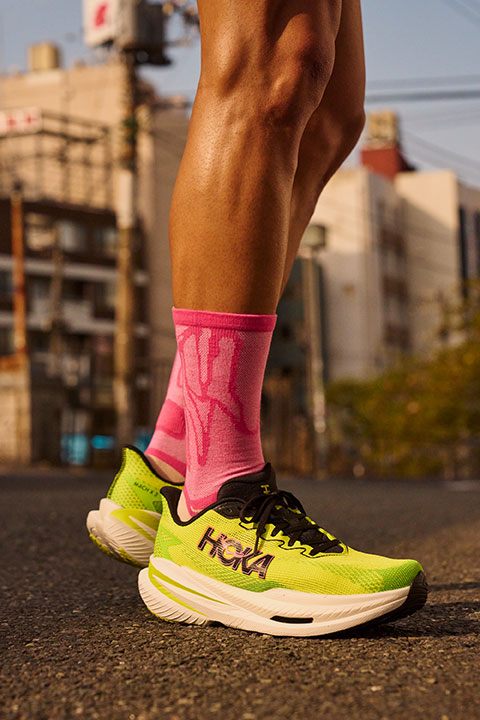
HOKA launches newtrainer Mach X 3

HOKA has officially launched in the Philippines the Mach X 3, the newest evolution of its speed trainer built to help runners accelerate their performance. From routine miles to tempo runs and active recovery, this model is made for runners who want to push beyond limits and move faster with confidence. The Mach X 3 brings together HOKA’s signature responsiveness and cushioning in one lightweight, performance-driven package. Its snappy Pebax plate delivers extra propulsion and support, while the highly resilient PEBA foam provides soft, high-rebound cushioning that keeps pace with every step. A sleek collar and woven upper complete the experience, offering breathable comfort and a secure fit that moves seamlessly with the runner. Engineered for both competitive athletes and everyday runners, the Mach X 3 is HOKA’s top pick for speed training within a well-rounded rotation. The HOKA Mach X 3 is now available at HOKA exclusive stores in One Ayala Mall, GH Mall, SM Aura, Ayala Malls Manila Bay, and the newly opened TriNoma branch. HOKA is also available at select branches of Foot Locker, Commonwealth, Sole Academy, Planet Sports, Runnr Stores, Toby’s Sports, Rev in Alabang Town Center, The SM Store at SM Mall of Asia and SM Megamall, and R.O.X. in Bonifacio High Street.

Gov’t decision on ComClark’s P32.6-B air traffic project expected by November

STOCK PHOTO | Image by Josue Isai Ramos Figueroa from Unsplash

INFORMATION and communications technology (ICT) provider ComClark Network and Technology Corp. said it is hoping that its unsolicited proposal to upgrade the country’s air traffic navigation and control systems will finally secure government approval next month, citing the urgent need to modernize the Philippines’ aging air navigation infrastructure.

“It is all about air traffic control — we need to upgrade our technology,” ComClark Network Chief Operations Officer Benedicto O. Bulatao told reporters last week.

The company resubmitted its P32.55-billion unsolicited proposal for the management of the country’s air navigation traffic and control system in June.

This time, the proposal was submitted by a consortium composed of ComClark Network, JG Summit Infrastructure Holdings, and Asia’s Emerging Dragon Corp.

Mr. Bulatao said the proposal is still under evaluation, which will be immediately followed by the negotiation phase, adding that the government is expected to decide on the project by November.

“The importance is, it is more like a concern of the government. We need to upgrade the system. It came to us because it is more like a telecom solution — air navigation is like telecom infrastructure. It is something that we do,” he said.

The Public-Private Partnership (PPP) Center earlier said the Air Traffic Services–Air Navigation Services project is also being evaluated as a potential solicited proposal.

The project involves the financing, design, construction, operation, and maintenance of the country’s air traffic and air navigation services, including those within Philippine airspace and international airspace under Philippine jurisdiction.

ComClark’s earlier P29.82-billion proposal was rejected and returned by the Department of Transportation (DoTr) in 2024.

Earlier this year, ComClark said it would submit additional documents, including technical materials to establish the track record and qualifications of its partners Enaire and Indra, both Spanish firms with expertise in air traffic management and providers of integrated solutions for the transport and aviation sectors.

ComClark, established in 1996 by entrepreneur Dennis Anthony H. Uy, began as a cable and internet service provider in Pampanga. The company has since expanded into a nationwide provider of telecommunications and ICT solutions. — Ashley Erika O. Jose

June Lockhart, actor in TV’s Lassie and Lost in Space, 100

June Lockhart (R) and Angela Cartwright in a scene from Lost in Space.

JUNE LOCKHART, who became the archetypal TV mom of the 1950s and 1960s with her roles on the campy sci-fi series Lost in Space and alongside a collie and a little boy on the family drama Lassie, died this week at age 100, her family announced on Saturday.

She died of natural causes at her home in Santa Monica, California, according to a spokesperson for the family.

Ms. Lockhart portrayed planet-hopping mom Maureen Robinson on producer Irwin Allen’s Lost in Space, which ran from 1965 to 1968 and was later very popular in syndication. From 1958 through 1964 she had played Ruth Martin, the mother of the young main character Timmy, on Lassie.

Lost in Space, which aired in the years leading to the first moon landing in 1969, adapted the castaway novel The Swiss Family Robinson to a space theme: a family is sent from Earth to colonize a distant planet but a stowaway sends the craft wildly off course.

Clad in a silvery space suit, Ms. Lockhart played the wife of the mission leader, portrayed by Guy Williams, whose three children, played by Billy Mumy, Angela Cartwright, and Marta Kristen, join in the journey.

The series started as a serious foray into science fiction but became sillier in the second and third seasons as it focused on Mumy’s youthful Will Robinson, buffoonish stowaway Dr. Smith (Jonathan Harris), and the show’s popular robot. At the first hint of trouble, the robot would exclaim, “Danger, Will Robinson!”

Ms. Lockhart fondly remembered the goofy 1968 episode titled “The Great Vegetable Rebellion” featuring a villainous carrot that plotted to turn the family into plants.

“The ‘Vegetable Rebellion’ is definitely my favorite because we laughed so very hard through all of the shooting,” Ms. Lockhart told the Chicago Sun-Times in 2004. “In fact, Guy and I laughed so much and so often that we had to do take after take, which did not sit well with Irwin. So as punishment he wrote us out of the next two episodes. We got paid but we weren’t in them.”

Ms. Lockhart was born in New York on June 25, 1925. Her parents were actors — her father Gene Lockhart is best remembered as the judge in the 1947 holiday classic Miracle on 34th Street — and she made her film debut at age 12 alongside them in a 1938 version of A Christmas Carol.

As a young actor, she played supporting roles in major films including the 1944 Judy Garland movie Meet Me in St. Louis, one of the leading musicals of that decade, and starring roles in B movies like She-Wolf of London (1946).

She won a Tony Award in 1948 for her performance in the Broadway play For Love or Money and later was twice nominated for Emmy awards.

TIMMY’S MOTHER
Ms. Lockhart replaced Cloris Leachman as the adoptive mother of Timmy, played by Jon Provost, in the fifth season of the long-running series Lassie.

After Lost in Space, she played a doctor for the final two seasons of the sitcom Petticoat Junction and had a recurring role on the soap opera General Hospital.

Ms. Lockhart also had a small role in the 1998 big-budget film version of Lost in Space.

Ms. Lockhart, a space aficionado who attended NASA space shuttle launches, learned that despite all the rubbery monsters and far-fetched plot lines, Lost in Space inspired future astronauts.

“I spend a lot of time at NASA with the astronauts,” she told the New Jersey newspaper The Record in 2002, “and to a man, or woman, they say that watching Lost in Space made them know what they wanted to do when they grew up. So when I’m down there, of course, they treat me like a duchess. It’s wonderful.”

After appearing on a quiz show in the 1950s with members of the White House press corps, she was given an open invitation to attend White House press briefings, and for many years did so.

During former actor Ronald Reagan’s presidency, she said he confessed to her his regret about a scene he played in a 1942 movie with her father in which Mr. Reagan’s character smashed a tomato filled with chocolate sauce into Gene Lockhart’s face.

“The president told me, ‘I felt bad I had to do that to your father because the idea of chocolate sauce and tomato sauce together is repulsive,’” she told the Chicago Tribune in 1987.

Ms. Lockhart married twice, with both marriages ending in divorce. — Reuters

Palawan’s first seaplane charter firm targets expansion amid ‘growing demand’

DIRK GROTHE | DIGROAERO.COM

By Ashley Erika O. Jose, Reporter

HORIZON SUN CHARTERS, founded by aviation entrepreneur Raymond Schwab and described as Palawan’s first seaplane charter company, is seeing a steady increase in demand for private charters as travelers seek greater flexibility and comfort.

“This is a niche market; it is not for everyone. But the market is improving. It is a slow slope, but there is an increase,” Mr. Schwab said in an interview with BusinessWorld.

Established in 2015, the sustainable seaplane company was born out of Mr. Schwab’s long-time passion for aviation.

“I decided to do that because I like seaplanes. I like the Philippines and I like aviation. I’ve been passionate about aviation for a very long time,” he said.

He noted that building trust and securing regulatory approvals were among the company’s early challenges.

“Trust is very important. It’s something that takes a long time to create with people, with authority. It took time to build, it was a challenge,” he said, adding that limited infrastructure also posed difficulties in getting the business off the ground.

Horizon Sun Charters operates flights to Balabac, Busuanga, Coron, El Nido, Port Barton, Puerto Princesa, Roxas, and Taytay in Palawan.

Its current fleet consists of a DHC-2 De Havilland Beaver aircraft designed for operations in remote and rugged island locations.

“We only have one seaplane this time. It’s an experience just to see it, to fly it. We are in the process of buying a second seaplane, a smaller one for training so we can train more pilots,” Mr. Schwab said.

The company has been seeing year-on-year growth in passenger numbers, most of whom are businessmen and foreign tourists visiting the country’s island destinations.

Mr. Schwab said Horizon Sun Charters is also exploring the possibility of expanding its services to other destinations such as Siargao, where tourist arrivals continue to rise.

“The Philippines has over 7,000 islands but it’s not many places where you actually can operate seaplanes because it’s open ocean. It’s not many places where it’s protected for landings, takeoffs. Palawan has many islands, and has a few places where it’s good for landing,” he said.

“That’s the thing — seaplanes are a good satellite base model. They don’t compete with airlines’ long-distance flights.”

BDO drives sustainable growth for the PH’s largest homegrown retail brand

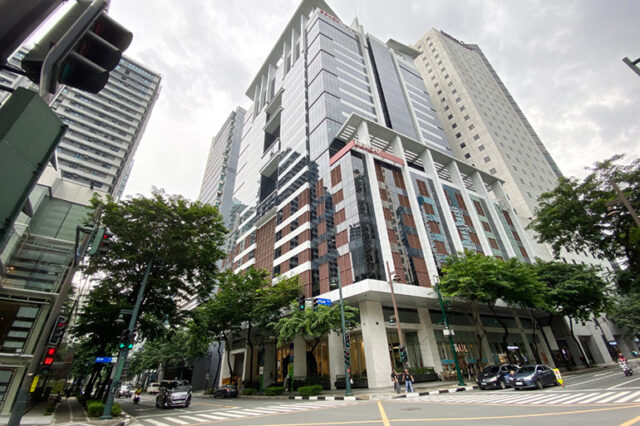
Bench Tower, Suyen Corp.’s 24-storey headquarters in Bonifacio Global City

“From the very start, we recognized that partnering with a trusted bank was fundamental to the success of our business,” said Virgilio Lim of Suyen Corp. “What began as a purely depository relationship with BDO has evolved into a comprehensive partnership, from credit lines and co-branded products to capital loans, that continues to support our growth today.”

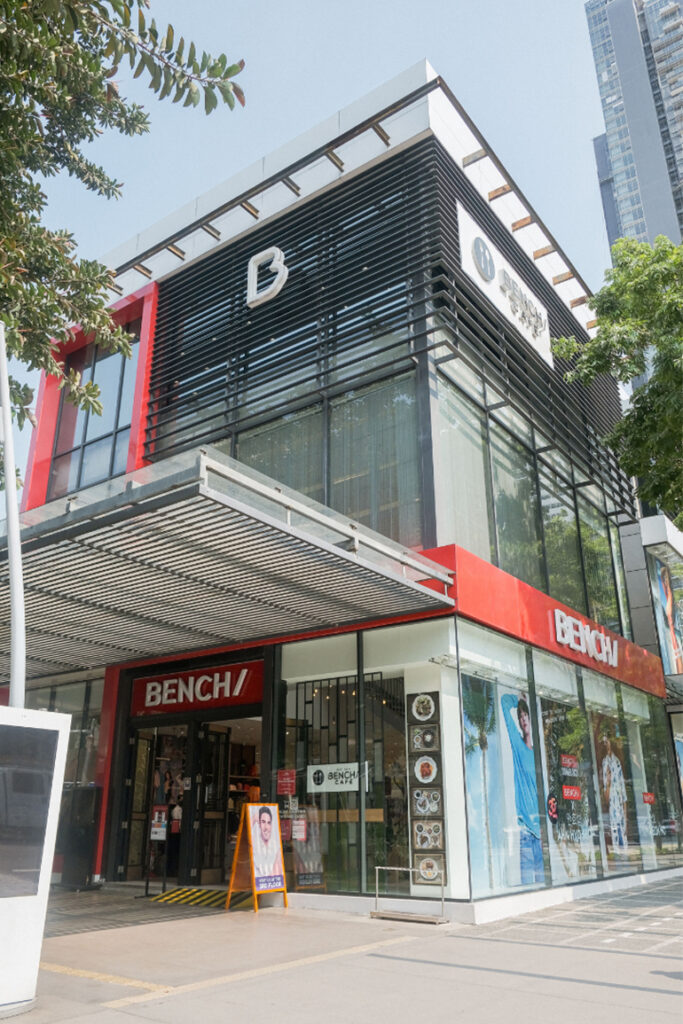
Suyen Corp.’s relationship with BDO began in 1987 and has grown alongside BENCH/ from a small T-shirt store to a global lifestyle brand with over 1,500 stores worldwide. Today, Suyen represents 18 homegrown brands and 42 international labels, including Aldo, Jo Malone, Charles & Keith, Paul Boulangerie and Marugame while continuing to expand its footprint in both traditional and emerging markets.

“BDO has been a reliable partner in various aspects of our operations,” said Bryan Lim of Suyen Corp. “They have supported construction projects, provided capital for expansion, and facilitated systems like our automatic credit arrangement that help us work more efficiently with suppliers and landlords.”

BDO’s Cash Management Services have played a vital role in ensuring smooth and efficient operations, whether through its payroll solutions, deposit pickup, or point-of-sale (POS) integration across all BENCH/ stores nationwide.

The company’s remarkable growth is now symbolized by Bench Tower, Suyen Corp.’s 24-storey headquarters in Bonifacio Global City. Designed to meet green mark and LEED Platinum standards, the landmark building reflects the firm’s commitment to sustainable development while giving its brands, led by BENCH/, the operational capacity to scale both locally and globally.

“Helping Filipino brands like Bench scale responsibly means more than business success. Bench Tower reflects a long-term vision that goes beyond retail, and we at BDO remain committed to support Suyen as it showcases the best of the Philippines to the world, generates livelihood, and fosters innovation,” said Charles Rodriguez, BDO Unibank’s executive vice-president and head of Institutional Banking Group.

Beyond commercial expansion, Suyen Corp. is a builder of brands and a contributor to the nation’s economic and cultural landscape — supporting over 9,000 jobs, collaborating with more than 700 local suppliers, and championing Filipino heritage through initiatives like Ternocon, in partnership with the Cultural Center of the Philippines, which reimagines the traditional Filipino Terno for modern times.

“Our relationship with BDO has remained strong from the beginning and continues to thrive today. For 38 years, they have made us feel truly valued. Their team is responsive, accommodating, and reliable in delivering consistent client service,” shared Ben Chan of Suyen Corp.

BDO’s long-standing partnership with Suyen Corp. demonstrates its dedication to empowering Philippine enterprises achieve lasting success, strengthening the nation’s position as a hub for world-class brands and fueling sustainable economic growth.


Spotlight is BusinessWorld’s sponsored section that allows advertisers to amplify their brand and connect with BusinessWorld’s audience by publishing their stories on the BusinessWorld Web site. For more information, send an email to online@bworldonline.com.

Join us on Viber at https://bit.ly/3hv6bLA to get more updates and subscribe to BusinessWorld’s titles and get exclusive content through www.bworld-x.com.


Netflix shuts down game studio behind Squid Game: Unleashed

PLAY.GOOGLE.COM

NETFLIX has shut down the studio behind its mobile game Squid Game: Unleashed, amid a shift in strategy for its video gaming unit.

The studio’s closure was confirmed by its co-founder and former chief executive officer (CEO), David Rippy, in a LinkedIn post on Thursday.

“Rough news, for sure, but I’m very grateful for the time we had at Netflix,” Mr. Rippy said.

The streaming giant, which has ventured into advertising and video games to diversify its revenue streams, acquired Boss Fight Entertainment in 2022 to broaden its offering.

“After 10+ great years working at Boss Fight, the last few as part of Netflix, the time has come for the studio to close down,” David Luehmann, a director of game development at the studio, said in another LinkedIn post.

Netflix did not immediately respond to a Reuters request for comment.

Boss Fight’s two games, Netflix Stories and Squid Game: Unleashed, will continue to be available on the streaming platform.

Netflix, which named Alain Tascan as president of games last year, has a new strategy that will focus on party, narrative, kids, and mainstream games.

Netflix Co-CEO Greg Peters touted Squid Game: Unleashed during its earnings call earlier this week as an example of the types of narrative games it would like to make based on its own shows. — Reuters

DoE moves to develop financing models for nuclear power dev’t

STOCK PHOTO | Image by Vwalakte from Freepik

THE Department of Energy (DoE) said it is stepping up efforts to identify financing models that could support the Philippines’ entry into nuclear power, as the government seeks to balance energy security, climate goals, and investor risk.

“This marks another important step in our continuing efforts to explore the potential of nuclear power as a viable option in achieving energy security, economic development, and a sustainable future for the Philippines,” Energy Undersecretary Giovanni Carlo J. Bacordo said in a statement on Sunday.

The DoE said discussions with experts from the International Atomic Energy Agency (IAEA), private sector representatives, and government agencies were held from Oct. 20 to 24 in Manila under a national workshop on nuclear power infrastructure and financing. The event was organized by the Nuclear Energy Program Inter-Agency Committee (NEP-IAC) led by the DoE — the first such financing workshop conducted with the IAEA.

Mr. Bacordo said the Philippines is “taking a leap forward with discussions on financing like public-private partnerships, green financing, and other viable models that could help shape the future of nuclear energy for the Filipinos.”

He said these discussions aim to help potential proponents address the high upfront capital costs and long development timelines associated with nuclear projects.

The DoE said these efforts are supported by Republic Act No. 12305, or the Philippine National Nuclear Energy Safety Act, which provides a comprehensive legal foundation for the nuclear energy program and establishes the Philippine Atomic Energy Regulatory Authority (PhilATOM) as an independent, quasi-judicial regulator with exclusive jurisdiction over nuclear energy matters.

Under the Philippine Energy Plan, the government targets to integrate nuclear energy into the power mix with at least 1,200 megawatts (MW) of capacity by 2032, increasing to 2,400 MW by 2045 and 4,800 MW by 2050.

The department said financing nuclear energy projects presents a “unique set of challenges and opportunities,” given their high capital costs, long lead times, and complex regulatory environments.

These must be addressed as the country works to integrate nuclear energy into the power mix and attract investment into large-scale and small modular reactor projects.

The IAEA shared its “Milestones” approach to strategic planning for nuclear technology, highlighting the importance of government involvement in project financing and risk management.

“While various financing models exist such as lending or borrowing money, strong involvement of the government is essential, particularly with respect to financing structure and risk management,” IAEA energy economist Brianna Lazerwitz said.

She noted that 416 nuclear reactors are currently in operation worldwide and 63 more are under construction, as 17 countries expand their programs and 32 newcomers explore nuclear technology.

For the fifth straight year, the IAEA has revised its global nuclear electric capacity projections for 2050 upward. In its high-case scenario, capacity is expected to rise by 160% to 992 gigawatts (GW), up from 377 GW at the end of 2024, while even in the low-case scenario, it is projected to increase by 50% to 561 GW.

The workshop also tackled the country’s nuclear energy perspectives, the regulatory framework, institutional roles of the regulator and operator, and possible financing and ownership models for both large reactors and small modular reactors, the DoE said. — Sheldeen Joy Talavera

Luxe and key

PHOTO BY KAP MACEDA AGUILA

BYD taps the premium people mover segment with the eMax 9 DM-i

FILIPINOS have a genuine affinity with people movers. As I’ve always maintained, we basically like to move in groups. The extended family units that we belong to – not to mention our network of friends – are support systems that provide us security, joy, and love.

That’s probably why it’s an important category for an automaker to be in. And BYD did just that – again. The brand is growing its multipurpose vehicle (or MPV) portfolio by adding a larger hybrid-powertrain model following the all-electric eMax 7 (which pioneered the BEV powertrain in the segment).

Called the BYD eMax 9 DM-i, the three-row seven seater, in BYD’s teaser, is said to boast three primary general attributes that should help it get traction in an already competitive domain: power, luxury, and space.

Relative to the eMax 7, the eMax 9 is longer at 5.145m versus 4.71m, wider at 1.97m versus 1.81m, and taller at 1.805m versus 1.69m.

POWER
Its motivational combo comprised of a  permanent magnet synchronous motor and 1.5-liter engine (the latter also serving to charge the motor’s battery) can yield a range of up to 1,000km. In a recent real-world, localized test done by BYD Cars with the Automobile Association Philippines, the eMax 9 went 1,261km sans hypermiling moves. That’s impressive.

You can also top up the lithium ion phosphate BYD Blade Battery using alternating current or direct current via any standard CCS Type 2 charge point. The front-wheel driven hybrid has 271ps and 315Nm on tap. Two battery capacities are available, depending on which variant you choose: Advanced gets you 20.4kWh; Premium receives 36.6kWh. This brings us back to range. You should get a maximum of 945km in the former, up to 1,000km (or, yes, try to beat 1,261km) in the latter. Both should get to 100kph in a little above eight seconds.

Each purchase of either variant comes with a portable charging cable, wall-mounted 7kW charger, and Vehicle-to-Load (or V2L) technology through a V2L adapter. V2L will allow you to power external appliances and such wherever you are. That means you can rely on the eMax 9 to be your partner in adventures even off the usual grid.

LUXURY
If you ask me, luxury is something you should be able to behold and experience even before boarding a vehicle. The eMax 9’s front fascia doesn’t disappoint in this regard. It communicates presence and authority with a sizeable grille utilizing a so-called Dragon Face design language, flanked by signature LED lighting (with DRLs) and air vents toward the sides of the bumper. The vehicle rolls on 18-inch alloy wheels, and gets rain-sensing front windshield wipers. On the side mirrors are turn signal repeaters.

To the side, it has body-color wheel arches and a silver strip that runs from the side of the front bumper through the panels and to the rear side bumper. This feature is mirrored on the upper portion of the vehicle, too, running from the A pillar to the D-pillar where it widens.

Meanwhile, the powered tailgate gets LED illumination as well, plus a high-mount brake lamp on the extended roof spoiler. A rear wiper is tucked away from view for better aesthetics.

Of course, luxury is best experienced in the cabin. The eMax 9 serves up accoutrements in spades. Leather-wrapped front seats are power-adjustable with lumbar support. Plenty of leather touches are deployed elsewhere, along with soft-touch materials for a more upmarket feel. A 12.3-inch digital instrument cluster and a large 15.6-inch infotainment display complete a decidedly digital experience. And, yes, you can use Wireless Apple CarPlay, Android Auto, USB, or even Bluetooth for hands-free calling or audio streaming.

I do wish though that air-conditioning controls had been kept outside the screen, with their own analog buttons. Having said that, the eMax 9 boasts a tri-zone auto-climate system plus a PM2.5 particulate filter for an even better, healthier in-cabin experience.

As for entertainment, your content will find expression through eight speakers in the case of the Advanced, and 12 speakers in the Premium. There’s also voice assistance, over-the-air updating capability, and other niceties. Look up and see the sunroof that sadly doesn’t extend beyond the front-row ceiling.

The second row, which houses the best two seats in the house, is arguably the place to be. In the Advanced, you get manual, six-way adjustable ones. The Premium, which I tested, receives power-adjust in four ways, plus lumbar support, a head rest with side wings, and power-adjustable leg rest. Second-row passengers can also deploy a couple of tables from the seatbacks of the first row. Premium also gets them (and the driver, actually) ventilation and massage function. Business Class, anyone?

There are also a total of 10 bottle/cup holders, three USB-A charge points, and three USB-C charge points scattered around to keep passengers hydrated, and their devices charged. Then there’s a 12V power socket and a wireless charger. A bonus for the Premium variant is a refrigerator that can accommodate up to six bottles.

The third row, which can power-stow/deploy with a push of a button in the case of the Premium, has decent space for two adults of average size or maybe three small kids. There’s an armrest on either side, along with a cupholder and charge point (USB-C on the left, USB-A on the right). Deploying the third row also opens up more under-floor space.

“The BYD eMax 9 DM-i represents the pinnacle of our electrified vehicle innovation, where technology and luxury move together in perfect harmony,” said BYD Cars Philippines Managing Director Bob Palanca. “It is an elegant statement of progress for Filipino families and professionals who seek sustainable mobility and value smart ownership.”

Added BYD Philippines Country Head Adam Hu, “The BYD eMax 9 DM-i redefines what luxurious electric mobility means for Filipino families. It embodies our mission to make world-class electric mobility accessible to Filipinos who aspire to drive beyond the ordinary.”

SAFE SPACE
I digress from BYD’s “power, luxury, and space,” main value set. Rather, I’d like to change the last attribute to “safe space.” With its cache of safety features, the eMax 9 really is that: a safe space. Complementing comfort through its DiSus-C suspension that electronically adjusts the vehicle’s dampers to enhance ride stability and put a stop to a jarring experience across terrains, is BYD’s DiPilot Advanced Driver Assistance System that “elevates driver confidence and peace of mind.”

Based from our limited drive time and through some short exercises at the Ayala Greenfield Estates in the foothills of Mt. Makiling, I found the vehicle stable even through rather abrupt turning maneuvers at speed, and surprisingly peppy when the accelerator is depressed. NVH is, of course, curtailed most nicely through its electrified nature.

It contains a slew of features including adaptive cruise control, automatic emergency braking, blind spot detection, and lane keeping assist. A crisp feed from the eMax 9’s 360-degree panoramic camera and rear cross-traffic alert work together to give the driver all the help he or she needs. Just in case, the vehicle can deploy eight airbags.

The BYD eMax 9 DM-i is priced at P2.678 million for the Advanced variant and P2.998 million for the Premium, with both available in Cosmos Black, Deep Sea Blue, and Aurora White exterior colors.

BYD boasts a comprehensive warranty for the model: eight years/160,000km for the Blade Battery, eight years/160,000km for the drive unit, and six years/150,000 km for the vehicle. The BYD eMax 9 DM-i will be at the EV Summit Tech Tour Display at Alabang Town Center from November 7 to 9.For more information  visit www.bydcarsphilippines.com.

The peso is overvalued

BW FILE PHOTO

That is, the peso is too strong relative to other currencies. This means that our exports are less price-competitive in the global market, and imports are cheaper and easier to come in. Yes, even at P58 to $1.

I rest my case on the following grounds:

1. US President Trump has imposed a tariff of 19% on Philippine exports to the US, similar to that imposed on other countries like Vietnam (20%), which is the fourth biggest exporter to the US, and whose trade surplus with the US reaches $123 billion. The peso has hardly weakened since then to compensate for the tariff barriers.

2. Tradables continue to suffer. Manufacturing as a share of GDP has continued to shrink due to the strong peso. Manufacturing share of GDP decreased from 16.2% in 2023 to 15.7%. More telling is that the Philippines’ manufacturing share of GDP is just slightly ahead of Brunei, Laos, and Mongolia, and far behind Cambodia (27.8%), Thailand (24.3%), and Indonesia (19.0%).

What’s worse, 55% of our exports are in manufactured electronics, which is highly import-intensive. Consequently, our biggest import is also electronics. The strong peso has continued to disincentivize backward integration.

The Philippines is deindustrializing, a phenomenon described by National Scientist Dr. Raul Fabella as “development progeria” or “premature ageing” where services dominate the economy, mainly due to a strong currency. The problem is that these services are low-end services, from retail to fast food, and not high-end services, like financial services, as in Singapore.

Moreover, high-paying entry-level jobs are in manufacturing. A shrinking manufacturing sector means fewer high-paying blue-collar jobs.

As the United States discovered during COVID, manufacturing matters for national security. Even such simple items as masks had to be imported from China. This is why US President Trump is imposing high tariffs on imported goods to force companies to locate their manufacturing within US shores.

3. As a further reflection of our loss of export competitiveness, the number of Philippine exporters has declined significantly, from about 6,000 firms to about 4,000 firms, according to a newspaper report. Trump tariffs and increasing labor costs will further decimate those numbers.

4. We have the worst tourism numbers in all of ASEAN. The January to August tourist arrivals for the Philippines numbered a paltry 3.96 million, compared to Vietnam at 13.9 million and Malaysia’s at 28.4 million. No, the paltry tourism number is not because of our West Philippine Sea dispute with China. The fact is, traveling to the Philippines is expensive. In dollar terms, the overall travel experience — food, hotel, transport, shopping, and services — is about 20% to 30% more expensive in the Philippines than in Vietnam and Thailand.

Does the exchange rate matter in the tourism industry? Just look at Japan. Since the Japanese yen weakened after the pandemic, Japan has seen surging tourism numbers, so much so that their citizens are complaining of “overtourism.” And no, it’s not just due to the safety, cleanliness, and culture in Japan that are attracting tourists. Those were present in previous decades, but the tourism boom happened only when the yen sharply depreciated.

5. Vietnam’s share of the banana market in Japan is surging at the expense of the Philippines. The volume of exports from Vietnam to Japan has increased fourteenfold from 2019 to 2024, mainly due to better price competitiveness. I spoke to a banana exporter, and he admitted that rising costs (mainly labor) and a strong peso make it harder to retain market share in Japan.

6. In 2010, the Philippine peso and Indian rupee were at par at 45 to $1. Today, the Philippine peso is at P57 to $1 while the Indian rupee is at 88 to $1. This has implications for the price competitiveness of our BPO sector. The Philippines can’t continue to rely on its workforce’s familiarity with American culture and lack of thick accent to carry its BPOs forward.

Furthermore, Philippine BPOs are facing geopolitical and technological headwinds. AI is threatening to displace a sizeable number of BPO jobs. The US Congress is threatening to punish US companies that outsource call center jobs. Philippine BPOs lack the margins to cope with these headwinds.

7. Philippine FDI remains low at $8.9 billion, despite the CREATE MORE* law and liberalization measures, such as the Public Service Act and the foreign ownership liberalization in Renewable Energy. Why? Because the dollar cost of doing business in the Philippines remains high. Lack of infrastructure, high power cost, high labor costs, and bureaucratic red tape and corruption are cited by investors in staying away. But there’s a more fundamental reason — these problems aren’t compensated by the dollar cost of doing business in the Philippines. Wages and logistics costs are high in dollar terms, given the strong peso. Therefore, why would investors come to the Philippines to produce for the foreign market when dollar costs are high and export prices aren’t competitive?

It has been argued that the Philippine exchange rate reflects the market rate and that inflation remains low enough so that the real exchange rate (exchange rate adjusted for inflation) is competitive. However, the flaw in that argument is that the exchange rate doesn’t reflect the high cost of doing business in the country. There’s a difference between the inflation rate and the high cost of doing business in the country.

Because of the country’s history of overvaluing its currency, it’s vulnerable to external shocks. According to the Bank of America, the Philippines’ external position is the weakest in Southeast Asia, with continuing deterioration of its current account deficit. Our trade deficit is huge at $57 billion. Service income from BPOs and OFW remittances finances the deficit. However, a sharp drop in BPO revenues or exports due to the Trump tariffs could prove destabilizing to the economy.

Because of its high forex reserves, the Philippines doesn’t face an imminent foreign exchange crisis. However, it’s still vulnerable to a shock, or painful adjustment, which could come in the form of sharply lower growth in the succeeding years (it’s already much lower at 5.5% p.a. than the government’s projected 6% p.a.) and higher foreign debt.

Another painful adjustment will come in the form of higher unemployment, especially among the college-educated. CHED Chairperson Shirley Agrupis said that the latest Labor Force survey already shows a growing number of unemployed among the college-educated. The problem could get worse if manufacturing continues to shrink and BPOs curtail hiring. Growing youth unemployment could prove to be a potent addition to the growing political restlessness due to public works corruption scandals.

In other countries, an appreciating currency is a cause of panic. Thailand’s monetary authorities are scrambling to halt an appreciating baht. In the US, the Trump administration is trying to weaken the dollar to reverse its trade deficit. This is why the Trump administration wants to control the US Fed. (The writings of Stephen Mirant, Trump’s chief economic adviser, manifest that a US goal is to depreciate its currency.) Here, hard money and a strong peso are celebrated.

In 1997, I and a few others — the late NEDA Secretary Cayetano Paderanga, Jr., National Scientist for Economics Raul Fabella, and Monetary Board Member Dr. Benjamin Diokno — were called “jukebox economists” for calling attention to the peso overvaluation before the Asian Financial Crisis. Am I experiencing déjà vu?

* Corporate Recovery and Tax Incentives for Enterprises to Maximize Opportunities for Reinvigorating the Economy


Calixto V. Chikiamco is a member of the board of IDEA (Institute for Development and Econometric Analysis).

totivchiki@yahoo.com

T-bills to fetch lower rates with Fed seen to extend easing cycle

BW FILE PHOTO

RATES of the Treasury bills (T-bills) to be offered this week could go down as softer-than-expected US consumer inflation data supported expectations of further monetary easing by the US Federal Reserve.

The Bureau of the Treasury (BTr) will auction off P22 billion in T-bills on Monday, or P7 billion in 91-day securities, and P7.5 billion each in 182- and 364-day papers.

The T-bills could fetch lower rates to track the week-on-week decline seen at the secondary market amid bets that the Fed would deliver a second straight rate cut this week following the release of soft September US consumer price index (CPI) data, Rizal Commercial Banking Corp. Chief Economist Michael L. Ricafort said in a Viber message.

With the US central bank also expected to continue its easing cycle, this would also support further rate cuts from the Bangko Sentral ng Pilipinas (BSP), he said.

At the secondary market on Friday, yields on the 91-, 182-, and 364-day T-bills went down by 4.45 basis points (bps), 4.03 bps, and 4.05 bps week on week to end at 4.9263%, 5.0977%, and 5.1626%, respectively based on PHP Bloomberg Valuation Service Reference Rates data as of Oct. 24 published on the Philippine Dealing System’s website.

US consumer prices increased slightly less than expected in September as a surge in the cost of gasoline was partially offset by a sharp moderation in rents, keeping the Federal Reserve on track to cut interest rates again this week, Reuters reported.

The report was published despite an economic data blackout caused by the US government shutdown in order to help the Social Security Administration calculate its 2026 cost-of-living adjustment for millions of retirees and other benefits recipients, who will get a 2.8% increase.

It was initially due on Oct. 15 and the White House warned October’s inflation report might not be published for the first time ever because the shutdown had halted data collection.

The consumer price index rose 0.3% last month after climbing 0.4% in August, the Labor Department’s Bureau of Labor Statistics (BLS) said. The BLS said CPI data collection was completed before the shutdown. Still, the statistical agency used imputations to fill in missing information, with the share rising to 40% from 36% in August. A 4.1% jump in the price of gasoline was the main driver of the rise in the CPI.

In the 12 months through September, the CPI increased 3% after advancing 2.9% in August. Economists polled by Reuters had forecast a monthly increase in the CPI of 0.4% and a 3.1% rise on a year-over-year basis.

Excluding the volatile food and energy components, the CPI gained 0.2% after rising 0.3% in August. Slowing rent inflation accounted for the moderation in the so-called core CPI.

Economists estimated consumers so far have absorbed about 20% of the import duties.

They said businesses have refrained from passing on the full costs of tariffs to consumers at the expense of hiring, now a focus of the US central bank, which is expected to lower its benchmark overnight interest rate by another 25 bps to the 3.75%-4% range this Wednesday.

The Fed tracks the personal consumption expenditures (PCE) price indexes for its 2% inflation target. Based on the CPI data, economists estimated core PCE inflation rose 0.2% in September, translating to a 2.9% year-on-year gain.

The ongoing shutdown will, however, delay the release of that data. The second-longest shutdown in history is raising worries over the quality of future inflation reports, given the suspension of collection efforts.

Consumer price data is collected throughout the month, the bulk of it physically, and the shutdown means more than two-thirds of the October data are already missing.

During the 2013 government shutdown, about 75% of the CPI data for the month of October was collected. The BLS is already dealing with resource constraints because of budget and staffing cuts that have led to the suspension of data collection for portions of the CPI basket in some areas across the country.

Meanwhile, the BSP this month lowered benchmark interest rates by 25 bps for a fourth straight time, bringing the policy rate to 4.75%. It has now slashed borrowing costs by a cumulative 175 bps since it began its rate cut cycle in August 2024.

BSP Governor Eli M. Remolona, Jr. said that more reductions are possible in the coming months to help stimulate the economy. The Monetary Board’s next policy meeting is scheduled for Dec. 11.

Last week, the BTr raised P22 billion as planned from the T-bills it auctioned off as the offering was more than four times oversubscribed, with total bids reaching P95.17 billion.

The Treasury awarded P7 billion in 91-day securities as bids reached P26.68 billion. The average yield for the tenor inched up by 0.4 bp to 4.884% from the previous auction, with accepted rates ranging from 4.82% to 4.93%.

It also raised P7.5 billion as programmed from the 182-day T-bills, which attracted P40.63 billion in bids. The six-month paper fetched an average rate of 5.058%, down by 1.4 bps from the previous week. Accepted yields were 5.01% to 5.088%.

Lastly, the government raised P7.5 billion as planned from the 364-day tenor, which drew P27.86 billion in tenders. The one-year bill’s average yield declined by 2.2 bps to 5.097%, with accepted rates at 5.05% to 5.145%.

The BTr is looking to raise P180 billion from the domestic market this month, or P110 billion via T-bills and P70 billion through Treasury bonds.

The government borrows from local and foreign sources to help fund its budget deficit, which is capped at P1.56 trillion or 5.5% of gross domestic product this year. — Aaron Michael C. Sy with Reuters