Home Blog Page 839

Real women represented in RAJO Store holiday collection


Rajo Laurel collaborates with his sisters

THE RAJO STORE has new designs for ready-to-wear pieces which were recently unveiled by Rajo Laurel along with his sisters Venisse Laurel-Hermano and Gela Laurel-Stehmeier, who helped the fashion designer keep things real.

The collection is meant to mark the 10th anniversary of the store. The pieces, first showcased in a fashion show for family, friends, and the press on Oct. 14, are now available at the store in Power Plant Mall, Rockwell Center, Makati.

Known as the 2025 holiday collection, the new pieces also mark the first time the three siblings have collaborated.

Mr. Laurel had previously worked with them in different capacities — Ms. Laurel-Hermano, who is his chief operations officer, and Ms. Laurel-Stehmeier, who is a famed makeup artist. This is the first time they all worked together on fashion design.

Notably, the collection consists of essential wardrobe pieces that are classic and contemporary. One example is an A-line black knit dress that flatters multiple body types.

At the show, the designs that turned heads included a crisp cotton button-down shirt accented with organza piping, and — a favorite of the sisters — a wide-leg cropped trousers elevated with sleek side panels.

Compared to previous RAJO Store designs, the new collection leans toward practicality and accessibility, accounting for a broader range of sizes and colors.

For Mr. Laurel, the collection is built on a philosophy of intentional design. It is meant to “create empowering pieces that encourage consumers to buy smarter.”

DESIGNED FOR REAL WOMEN
By drawing inspiration from the lives and perspectives of his sisters, the holiday collection is meant to be suited to modern lifestyles.

“It’s our 10th anniversary. Like with anything, it’s always nice to reinvent yourself and refresh,” Mr. Laurel told BusinessWorld at the store reopening before the fashion show. “The newest thing is that my sisters are involved in the design process. That’s why, in terms of collaboration, you’ll notice [the designs] all look more real.”

He explained that he tends to design with the fantasy that everyone is 5’10” and 100 pounds. “My sisters were telling me, ‘Rajo, not everyone is like that, you know!,’ and so that’s reflected in the designs.”

The process was more rigorous as a result. “Ideas were tested, decisions were questioned, but the direction became clearer with every step,” according to Mr. Laurel.

Meanwhile, Ms. Laurel-Hermano, who usually works behind-the-scenes in operations, added: “Rajo and I never crossed each other’s areas of work until now. The great thing about Rajo is that he’s adaptable. He listens. I’m a career mother, so fashion, to me, must be practical, versatile, and timeless.”

Ms. Laurel-Stehmeier added that, as the “creative at heart,” her role was to push the boundaries.

“I question everything… details, cuts, colors, fabrics. The beautiful thing about collaborating with family is we can be vulnerable and honest. We find creative solutions together,” she said.

REIMAGINED SPACE
The boutique space itself was reimagined to be aligned with the new collection, its architecture and layout more fluid. For Mr. Laurel, another notable thing is how the line is no longer “gender-controlled.”

“It’s for men, women, trans — everybody’s welcome. It used to be segregated into genders, but now it is completely for all genders,” he said.

He concluded that having his sisters’ creative voices in the dialogue fostered “a conversation of sorts … from a solo act now to a trio, a synergy of voices making it all complex and nuanced.”

“With this particular collection, my sisters are representing real women with real lives. They’re working mothers with full lives, and they need clothes. When they told me they wanted to do this because they lack things in their wardrobe, I said, ‘this is it; if you need it, other people will need it too,’” he said.

Mr. Laurel recommended the collection’s envelope pants and the convertible jacket that can be used for day and for night.

The Holiday 2025 Collection is available at The RAJO Store, 2nd Level Power Plant Mall, Makati City. — Brontë H. Lacsamana


Straw Innovations launches the Philippines’ first Rice Straw Bioenergy Hub to reuse farm waste

From left: Prof. Mirjam Roeder (Aston University), Hon. Karla Adajar-Lajara (LGU-Laguna), Craig Jamieson (Straw Innovations), Dr. Nur Azura binti Adam (SEARCA), Lloyd Cameron (British Embassy Manila), Marycris Ite (Department of Agriculture), and Alec Anderson (KoolMill Systems) during the ribbon-cutting ceremony of the Rice Straw Bioenergy Hub (RSBH) in Pila, Laguna

The Philippines’ first Rice Straw Bioenergy Hub was officially launched in Pila, Laguna on Oct. 7, bringing together national leaders, local officials, international partners, and farmers to showcase groundbreaking solutions that transform rice straw from waste into valuable products.

The event was attended by the Economic and Climate Counsellor Lloyd Cameron of the British Embassy Manila, Regional Executive Director of the Department of Agriculture (DA) Region IV-A Fidel L. Libao, Chair of the Committee on Agriculture for the Province of Laguna, Hon. Karla Adajar-Lajara, representatives from other DA agencies, institutional partners, farmer leaders, and local government officials from the province of Laguna.

The Hub demonstrates how rice straw, an abundant but often wasted by-product of rice farming, can be transformed into valuable products such as renewable energy, biochar, and soil amendments. This innovation offers solutions to some of the Philippines’ most pressing challenges in rice farming: open-field burning, greenhouse gas emissions, high production costs, and low farmer incomes.

The Hub, developed by Straw Innovations, Inc. with partners Aston University, Southeast Asian Regional Center for Graduate Study and Research in Agriculture (SEARCA), Koolmill Systems, Takachar, and Innovate UK, demonstrated how rice straw can be upcycled into biochar, renewable energy, soil amendments, and livestock bedding while also providing farmers with new business opportunities and reducing harmful methane emissions.

At the launch, participants witnessed live demonstrations of new technologies such as Straw Traktor, a world-first 3-in-1 machine capable of collecting rice straw even in wet conditions, while simultaneously spreading soil amendments and rotavating the land. Also featured was the Takavator, developed by Takachar, a portable system that converts rice straw into biochar — an innovation that enhances soil health and opens up opportunities for carbon credits.

The event also showcased Koolmill, a next-generation rice mill that consumes up to 90% less energy and minimizes grain breakage, allowing farmers and processors to increase their profits. In addition, a live demonstration on biogas production showed how low-quality rice straw can be repurposed to generate clean, renewable energy for rural communities.

Beyond technology, the Hub is designed to put farmers at the center of innovation. By making machinery financially accessible, local farmers and entrepreneurs can run profitable businesses offering harvesting and land preparation services. In pilot sites, some operators have already improved their livelihoods to the point of renovating their homes and supporting their families’ education.

Rice straw is also being piloted as deep-litter bedding for swine farmers, reducing waste management costs and producing compost as an additional income source. These early interventions demonstrate how straw management can support farming communities socially, economically, and environmentally.


SparkUp is BusinessWorld’s multimedia brand created to inform, inspire, and empower the Philippine startups; micro, small and medium enterprises (MSMEs); and future business leaders. This section will be published every other Monday. For pitches and releases about startups, e-mail to bmbeltran@bworldonline.com (cc: abconoza@bworldonline.com). Materials sent become BW property.

Collaborative efforts to solve the Philippines’ housing crisis

FREEPIK

Millions of people around the world live their lives in search of a place they can call home. After all, access to adequate shelter remains a challenge, particularly in areas affected by natural disasters, conflict, or rapid urban growth.

Homelessness charity Depaul International estimates 4.5 million people are experiencing homelessness in the Philippines, and about two-thirds of this number are in Metro Manila.

To combat this, both government initiatives and the efforts of private organizations and nongovernment organizations are addressing the housing crisis, which often becomes magnified during times of peril and uncertainty.

The main housing program of the administration of President Ferdinand R. Marcos, Jr. is the Pambansang Pabahay Para sa Pilipino (4PH) Program, which aims to build 6.5 million housing units through government-led housing initiatives and address the country’s current housing backlog by building one million housing units yearly until 2028.

Established under Executive Order No. 34, s. 2023, the government’s flagship program was conceptualized to address the country’s current housing needs and features an innovative framework that has eased the burden brought by two major bottlenecks in the housing sector: affordability and access to funds.

Headed by the Department of Human Settlements and Urban Development (DHSUD), the latest news on the project includes the launch of a website dedicated solely to the endeavor, offering information and services related to the government’s flagship program. Additionally, it has been reported that a total of 42 private developers have committed to deliver 251,846 socialized housing units under the administration.

In the same way, the National Grid Corporation of the Philippines (NGCP) has also helped the cause in recent years. Together with Gawad Kalinga, the NGCP turned over a housing project in 2020 to the City Government of Valenzuela, which cost over P82 million, and comprised of 22 three-storey low-rise buildings with 792 units.

As the power grid operator, the NGCP worked with the City of Valenzuela to relocate residents previously living within the transmission right-of-way corridor to prevent any accidents from happening due to their proximity to the high-voltage power lines. The housing project is located in Disiplina Village, Lingunan, Valenzuela City, and is a joint in-city housing project for informal settler families.

Several developers have also given back to communities through their corporate social responsibility. Among the big names providing housing assistance is the real estate arm of the Lucio Tan Group, Eton Properties, which has provided safe, dignified housing for underserved communities in Nueva Vizcaya, in partnership with the Tan Yan Kee Foundation.

Named the Eton Bahay Liwanag Project, the developer recently turned over four newly built homes in the area to carefully selected families based on their circumstances and resilience despite difficult living conditions in the hinterlands of Nueva Vizcaya. Launched in 2019, the Eton Bahay Liwanag Project has completed 12 homes in the province to date.

Similarly, DMCI Homes has been actively supporting social housing initiatives in partnership with Habitat for Humanity Philippines and local governments through its Kaakbay sa Pamayanan program.

The company’s efforts include a P4-million donation to help construct homes for poor families and teachers in the Bistekville I project in Quezon City, as well as sponsorship of 92 homes at a relocation site for informal settlers in Parañaque. Volunteers from DMCI Homes also contribute directly by painting and maintaining these houses, helping to provide safe, affordable shelter for disadvantaged communities.

Nongovernment organizations (NGOs) have also done their part in building homes for Filipinos. For example, Habitat for Humanity Philippines brings people together to build homes, communities, and hope, “seeking to put God’s love into action.”

In 2019, Habitat for Humanity joined forces with the Hilti Foundation to expand the use of disaster-resilient Cement Bamboo Frame Technology and help close the housing gap in Negros Occidental. Named the Negros Occidental Impact 2025 (NOI25), the initiative seeks to create sustainable communities where homes are safe, green, resilient to disasters, and supportive of families’ long-term security and well-being. Six years later, the NGO has built over 400 disaster-resilient homes and helped families live in sustainable communities.

Likewise, the Manny Pacquiao Foundation, named and founded on behalf of boxing legend Manny D. Pacquiao, has programs aimed at creating lasting change for communities and inspiring people to make a tangible difference in the world. Among the group’s programs is a housing project that has already constructed 300 homes in three locations for hundreds of families in need.

Addressing the housing crisis in the Philippines requires the combined efforts of government programs, private developers, and NGOs working to provide safe, affordable, and resilient homes. Through these partnerships, more families can gain the shelter that they need to thrive. — Jomarc Angelo M. Corpuz

It’s beginning to look a lot like Christmas: Rustan’s unveils holiday windows

JOSEPH L. GARCIA

AYALA AVENUE begins to look more festive a bit earlier this year, as Rustan’s Makati unveiled its Christmas window display.

VIPs gathered at the storefront on Oct. 17 as the windows — with the theme “A Christmas of Wonders” — were revealed. Holiday-themed fair rides spun and whizzed around, while the windows were framed in glowing orbs. Each window features scenes filled with motion, festive red and gold accents, and characters such as toy soldiers, ballerinas, and magical creatures. Oversized ornaments, twinkling marquees, and delicate metallic details evoke the splendor of a vintage fairground.

“It’s like a Christmas carnival,” Jackie Avecilla, head of marketing for Rustan Commercial Corp., told BusinessWorld. “Christmas is really for kids, and adults alike. We wanted the nostalgic feeling.”

“My parents would take me to a carnival, or some fair, or some Christmas bazaar,” she said. “That’s the kind of spirit we want to evoke for this year here at Rustan’s.”

VIP HOLIDAY SERVICES
Of course, Christmas is really celebrated at home, and Ms. Avecilla told BusinessWorld about VIP services they offer at the store to make customers’ homes holiday-ready.

“We have customers who actually don’t have that DIY talent. When they come here and they like a tree, they buy the entire tree,” she said. Even better: “We have (this) extra-personalized service. They can go to your home and decorate the tree for you.”

Another VIP service they offer is their team of personal shoppers, who become extra busy this holiday season. “Our guests have a long list of friends, family, maybe officemates; corporate gifts,” she said. “You can just give your list to a personal shopper, even if it’s 100 or 200 on your list.

“Everything will be wrapped and delivered to your home,” she said.

HOLIDAY SPECIALS
Rustan’s branches at Shangri-La, Alabang, Gateway, and Cebu, will each offer its own spin on “A Christmas of Wonders.” And throughout the season, Santa Claus will make appearances across all stores.

For those who love collectible holiday keepsakes, Rustan’s is bringing back its Rustan’s Christmas Bear, available from Oct. 17 to Nov. 16 with a minimum purchase of P20,000.

Meanwhile, from Nov. 15 to Dec. 31, Beauty Addict members who spend P5,000 or more at Rustan’s Beauty Source Makati can enjoy a complimentary latte or cappuccino with a croissant from My Happy Home Café, while selected stores will have “Sweet Wishes with Venchi” personalized Christmas cards with treats for members presenting their Frequent Shopper’s Program (FSP) card and receipt.

And from Oct. 18 to Nov. 2, customers can earn three times the FSP multipliers for every P5,000 purchase, both in-store and online, while those who prefer flexible payment options can enjoy 0% installment plans for up to 12 months with partner banks. — JL Garcia

No rival bids for San Miguel’s proposed Boracay bridge, says DPWH

PHILIPPINE STAR/WALTER BOLLOZOS

By Ashley Erika O. Jose, Reporter

SAN MIGUEL Holdings Corp. (SMHC), the infrastructure arm of San Miguel Corp. (SMC), is poised to secure the P8.01-billion contract for the Boracay bridge project after no competing bids were submitted, according to the Department of Public Works and Highways (DPWH).

“No other proposals came in by the deadline,” the DPWH communications team said in a Viber message to BusinessWorld over the weekend, citing information from the agency’s Office of Planning and Public-Private Partnership (PPP).

SMHC was granted original proponent status for the unsolicited project, which involves the financing, design, construction, operation, and maintenance of a 2.54-kilometer bridge system — including a 1.14-kilometer limited-access bridge — that will connect Caticlan in Malay, Aklan to Boracay Island.

The proposed bridge will feature public transport access, pedestrian lanes, bikeways, and provisions for utility lines such as power, telecommunications, water supply, and sewerage, according to the PPP Center.

Under PPP rules, potential challengers were given 240 calendar days from the issuance of the comparative challenge documents on Feb. 20 to submit counterproposals, or until Oct. 18.

“If no other comparative proposal is determined to be better than that of the original proponent, the PPP contract shall be awarded to the original proponent,” the agency said in its instruction to comparative proponents.

The government and SMHC concluded negotiations for the project on July 19, 2024, while the proposal was approved on Jan. 24, in line with Republic Act No. 11966 or the PPP Code of the Philippines.

The DPWH said the bridge aims to provide all-weather and safe access between Boracay and Caticlan, improve disaster and emergency response, address solid and liquid waste management issues, and support the island’s tourism-driven economy.

Nigel Paul C. Villarete, senior adviser on PPPs at Libra Konsult, Inc., said the bridge would improve access to the island but could alter its appeal to visitors.

“Building a bridge would make it closer and easier to reach, but it would diminish the ‘island excitement’ of the place,” he said in a Viber message. “Its separation from the mainland adds a sense of elegance and exclusivity.”

Separately, SMC is modernizing the Godofredo P. Ramos Airport in Caticlan through its unit Trans Aire Development Holdings Corp. Megawide Construction Corp. has been tapped to design and build the new passenger terminal building under the ongoing airport expansion.

Anne Curtis celebrates Christmas with Anko

ACTRESS Anne Curtis discussed collecting Christmas ornaments — and one special one in particular — as she brought a little bit of holiday cheer to Anko TriNoma, which was celebrating Christmas early with an event on Oct. 10.

Before greeting media guests and Anko Club members, Ms. Curtis led teachers Ferlina Villanueva and Kristian Valenzuela around the store to pick up their winnings (a P10,000 shopping spree) from a contest. Ms. Villanueva, nominated for the shopping spree contest by Mr. Valenzuela, has an annual outreach program with her fellow teachers to bring food, toiletries, and health essentials to a home for the aged.

On a more personal note, Ms. Curtis — the Fil-Aussie actress is Anko’s official Philippine endorser — told the media in a short press conference about her holiday preferences and wishes.

She talked about decor: “Our house is very neutral. When we celebrate, we like to have pops of red, pink, and a little bit of green.

“I like to collect Christmas decorations,” she said, adding that she collected espresso cups and Christmas ornaments from around the world. “I wrap them individually because they’re made of glass,” she said about storing decor after the holidays.

However, there’s one special ornament that always appears at home: one for her daughter. “When it was Dahlia’s first Christmas, we had a special Christmas decor just for her that had the year ‘2020’ [written] on it. It’s just a reminder every year during Christmas of that special moment we had with her.”

Ms. Curtis also talked about gifts and themes she’d like to have. While shooting in Australia for Anko, she spotted their candy cane decor: “I feel like that’s probably something that I will be adding to my tree.” She also mentioned the store’s candy cane pillows: “I think it’s great to put on your sofa.”

As for other gifts she’d like from the store, she said, “There’s a silk pillow that’s pink and red. It’s great for the hair, and you have that feeling in your room that it’s really that Christmas feeling.” She also pointed to the store’s collection of snow globes: “It does something about your inner child when you see that snow globe.”

Christmas dinner with her husband, James Beard awardee Erwan Heussaff, is a favorite tradition. “Noche Buena with Erwan is always the best. If we don’t finish everything, we have it for Christmas morning. It’s a lot of really, really good food, a mix of Filipino, and sometimes, a little bit of French.”

Her holiday non-negotiable, which also doubles as her Christmas wish? “That’s time with my family. No work.

“Unless meron kang (you have an) entry for the Metro Manila Film Festival,” she said of the yearly film fest which falls in the week between Christmas and New Year.

ANKO NEARS ANNIVERSARY
On matters of business, Rachel Turner, country manager of Anko Philippines, told BusinessWorld reasons they have to celebrate beyond the holidays.

Anko, which is Kmart Australia’s in-house home and lifestyle brand, arrived in the Philippines in November last year, through a joint venture with Ayala Corp.’s Ayala Malls. The brand currently has three stores: in Glorietta, TriNoma, and Alabang Town Center.

“Our stores have shown that accessibility and convenience matter deeply, which is why our upcoming locations at Ayala Malls Manila Bay and Ayala Malls Feliz will let us reach even more families in the south and east,” she said in a text message to BusinessWorld.

“This first year has taught us so much about the Filipino customer and the importance of being where families naturally spend time together,” she said. — JL Garcia

OnlyFounders launches ‘Founder for a Day’ model for startup incubation

Startup platform OnlyFounders has introduced OnlyFounders.fun, a new incubation model that allows aspiring entrepreneurs to experience being a “Founder for a Day” for Web3 projects. The initiative aims to democratize access to entrepreneurship and provide a more realistic testing ground for identifying and nurturing startup talent. 

Through the platform’s 60-day program, participants can validate their projects in real market conditions as they go live. This process enables OnlyFounders to identify promising founders and ideas for further support and investment. 

Founded in August 2024 by Mohammad “Moe” Iman, OnlyFounders has already drawn more than 220 committed founders and a waitlist of 28,000 people. The platform has also partnered with over 90 Web3 protocols and 40 industry leaders who provide mentorship and contribute to its learning ecosystem. 

OnlyFounders positions itself as an alternative to traditional startup accelerators, which are often competitive, time-intensive, and limited in capacity. Its two-tiered system begins with OnlyFounders.fun, a permissionless platform that lets users test entrepreneurial ideas and launch projects in minutes. The platform also supports tokenizing existing Web2 businesses seeking to transition to Web3. 

Designed to accommodate up to 100 founders per day, the platform integrates automation, gamified milestones, and public leaderboards to foster engagement. Over the course of the 60-day cycle, participants are expected to launch one to three projects, allowing them to gain hands-on experience in startup building and validation. 

“A founder’s potential is proven through action, not a pitch deck,” Mr. Iman said. “OnlyFounders.fun is a place where people can test themselves, while investors gain access to ongoing deal flow with visible traction. It forces the real question: do you like the idea of being a founder, or are you ready to be one?” 

Top-performing founders from OnlyFounders.fun are then offered a clear path to migrate to the next tier, OnlyFounders.xyz. This exclusive pre-raise platform is a structured, reputation-based environment for fund raising that uses AI to support and match founders with verified investors. Features include secure escrow smart contracts, AI-powered “Founder Agents” for pitch coaching and capital matching, and a comprehensive academy to prepare founders for raising capital. This layer focuses on “proof over pitch,” ensuring that founders with demonstrated traction and commitment get the attention and resources to move forward. 

The OnlyFounders model provides a continuous feedback loop that benefits all participants. Investors have access to a high-volume, low-cost “top-of-funnel” deal flow going beyond unvetted pitches, with founders building active projects, leading communities, and gaining real-world traction. The success of projects on the OnlyFounders.fun platform contributes to a warchest that supports founders who can go the distance.

Moving forward, OnlyFounders intends to expand capacity to 500 active daily founders on OnlyFounders.fun, and on-board more than 300,000 verified investors into OnlyFounders.xyz, and launch the full mainnet fund-raising engine by mid-2026. The team is also preparing strategic partnerships with leading accelerators and blockchain ecosystems to extend its reach globally over the next 8 months.


SparkUp is BusinessWorld’s multimedia brand created to inform, inspire, and empower the Philippine startups; micro, small and medium enterprises (MSMEs); and future business leaders. This section will be published every other Monday. For pitches and releases about startups, e-mail to bmbeltran@bworldonline.com (cc: abconoza@bworldonline.com). Materials sent become BW property.

Climate-safe features vital in resilient housing

rawpixel.com | FREEPIK

Natural disasters wreaking havoc in the Philippines have become an annual occurrence. While the current spotlight on the topic is on the controversial flood control projects, the taken-for-granted resilience of the Filipino people must be reciprocated with resilient housing in the face of climate and calamities. 

Climate-resilient housing is not necessarily just building houses that can withstand or adapt to the escalating impacts of climate change. Rather, it is also built based on the context of the local community and on the preferences of the homeowner. In its essence, it is housing that ensures that even the most vulnerable have safe, stable, and affordable places to live. 

As the frequency and intensity of climate-related disasters increase, the concept of resilient housing has emerged as a critical priority for communities in the country. According to the Climate Change Commission, while there was a noticeable decrease in the number of tropical cyclones entering the country in recent years, there has been an increase in their intensity. 

Furthermore, data from the Red Cross Climate Center show that over 60% of the Philippine population lives in coastal areas and will be forced to relocate due to the projected one-meter sea level rise caused by climate change. Based on this, more than 60 million Filipinos are anticipated to move from their current homes by 2100. 

To combat this, the need for resilient housing designed to endure and recover from natural disasters and climate impacts in proper locations is required. Unlike traditional construction, which often focuses solely on aesthetics or immediate functionality, resilient housing emphasizes durability, adaptability, and sustainability. 

Some of the more prominent features of resilient homes include structural strength to withstand extreme weather events, such as high winds, seismic activity, or flooding. Adaptability is also another factor. Resilient homes need to have room for improvements or expansion should there be more needs. In the theme of sustainability, these homes must also incorporate energy-efficient systems, water conservation measures, and sustainable materials to reduce environmental impact. Finally, these homes should be planned based on the community and should have access to local evacuation routes and emergency services. 

The Philippine government, for its part, has taken initiative and begun building these types of homes. Through the 4PH (Pambansang Pabahay Para sa Pilipino) Program, the administration is championing climate-resilient housing to address the dual challenges of housing needs and climate change. 

Headed by the Department of Human Settlements and Urban Development, the public sector has pledged to adopt resilient housing designs and launched initiatives to digitalize and streamline urban planning processes, with its key outcomes including safer communities, sustainable urban development, improved quality of life, economic growth, and enhanced resilience. 

Currently, 56 projects are in various stages of development under this program. In April 2025, 4PH projects in San Mateo, Rizal, City of San Fernando in Pampanga, Davao City, and Tagoloan in Misamis Oriental were reportedly being prepared for turnover to beneficiaries. Additionally, ongoing 4PH projects in Metro Manila are in Caloocan City, Manila, Quezon City, and San Juan City. 

Resilience among Filipinos can no longer be an excuse for substandard housing that leave households in peril during disasters. Investing in climate-resilient homes that are safe, adaptable, and community-centered ensures a future where people can thrive despite the occasional natural occurrences. — Jomarc Angelo M. Corpuz

Pangilinan hopes MPIC can reach 50 hospitals in five years

PHILSTAR FILE PHOTO

METRO PACIFIC Investments Corp. (MPIC) President and Chief Executive Officer Manuel V. Pangilinan said he hopes to expand the group’s hospital portfolio to as many as 50 facilities within the next five years.

“My personal target is 50. I don’t know when — we don’t control that; KKR has control over that. But I hope we could do that in five years or so,” he told reporters on Wednesday last week.

Metro Pacific Health Corp. (MPH), which currently operates 28 hospitals nationwide, recently added Metro Antipolo Hospital and Medical Center, Inc. to its portfolio.

Other major hospitals in the group include Makati Medical Center, Asian Hospital and Medical Center, Cardinal Santos Medical Center, Davao Doctors Hospital, and Riverside Medical Center.

MPIC is also looking to raise its ownership in Metro Pacific Health to 50% by acquiring an additional 30% stake from majority shareholders KKR & Co. and Singapore’s GIC Pte. Ltd., which jointly hold 80% of the hospital operator. MPIC currently owns the remaining 20%.

“The ball is in their court. MPIC is ready and willing to continue,” MPIC Executive Vice-President and Chief Finance, Risk, and Sustainability Officer June Cheryl Cabal-Revilla said when asked about the status of the KKR transaction.

She said the earlier sale of the stake to the private equity investors had enabled MPIC to expand other businesses in its portfolio, while the group continues to pursue integration between its healthcare assets.

She noted that MPIC’s digital health platform mWell, a fully owned subsidiary, is being integrated with MPH’s hospital systems to streamline patient services and records management.

“Once we apply the same processes used at the mWell Clinic to the hospitals, patients won’t need to fill out multiple forms. Doctors can access records with the patients’ consent, ensuring data privacy and accuracy,” she said.

She added that MPIC’s financial position remains strong, with debt levels “at their lowest” and all business segments contributing positively to growth.

“We continue our double-digit growth trend. Debt is already below P60 billion. All our verticals are doing well — Maynilad is preparing for an IPO (initial public offering), and the smaller businesses like Landco and mWell are now contributing,” she said.

MPIC recorded a 36% rise in reported net income for the first half to P17 billion, driven mainly by the sale of its oil storage subsidiary, Philippine Coastal Storage and Pipeline Corp.

The power business remained the main earnings contributor, accounting for 64% or P11.2 billion of net operating income. The water and toll road segments followed with P3.8 billion and P3.3 billion, respectively, making up a combined 41% of the total.

MPIC is one of the key Philippine units of Hong Kong-based First Pacific Co. Ltd., along with Philex Mining Corp. and PLDT Inc.

Hastings Holdings, Inc., a unit of the PLDT Beneficial Trust Fund subsidiary MediaQuest Holdings, Inc., holds a majority stake in BusinessWorld through the Philippine Star Group. — Alexandria Grace C. Magno

Style (10/20/25)


Chanel opens first spa in the Philippines

CHANEL unveiled Chanel Privé, an exclusive space inside its newly opened Fragrance and Beauty boutique at Greenbelt 5, Makati. At the heart of Chanel Privé are two private cabins where guests can experience Les Soins de Chanel, customized facial treatments that combine the power of Chanel skincare with Le Massage de Chanel. Guests can explore a menu of treatments, each designed to address specific skincare needs. The flagship treatment is Le Soin Sublimage (a toning treatment defined by Chanel Research for a comprehensive effect on the skin: hydration, comfort, wrinkles, structure, evenness, strength, radiance; P14,500). Other treatments range from P2,000 (for an eye and hand treatment) to P11,500 for Le Soin le Lift (for smoother, firmer skin). Appointments can be coursed through 0917-115-4840 and at the Chanel boutique at the ground floor of Greenbelt 5.


Muji to open 11th store in the country

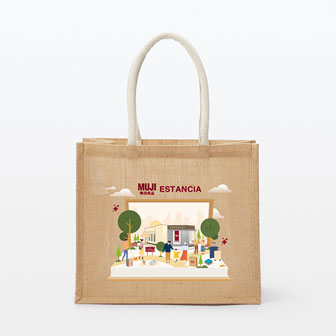
MUJI PHILIPPINES continues to grow with the opening of its newest store, its 11th nationwide and fourth for the year, at Estancia Mall East Wing, Pasig City, on Oct. 24. Spanning 1,284 square meters, the store will offer a wide range of garments, household essentials, stationery, and services such as Spare Parts Replacement, a Stamp Table, and Green Plants. Muji Estancia Mall will have promos and activities on its opening weekend from Oct. 24 to 26. The first 200 customers in line as soon as the store opens at 10 a.m. on each of the three days, will receive a free gift set (containing a Mini Ramen Kimchi, Watagashi, and Light Toning Water). A limited-edition jute bag, available only at Muji Estancia, can be claimed for free with a minimum single receipt of P1,500, or can be purchased separately for P125. The jute bag will be available while supplies last only. Muji Philippines continues to expand in the country with the most recent being at Greenhills Mall on Sept. 19. Muji Philippines now has stores at Glorietta 3, Festival Mall, Greenhills Mall, Estancia Mall, Greenbelt 3, SM North EDSA, SM Mall of Asia, Power Plant Mall (Rockwell), Shangri-La Plaza, Uptown Mall, and Central Square (BGC).


Milano & Design opens second store

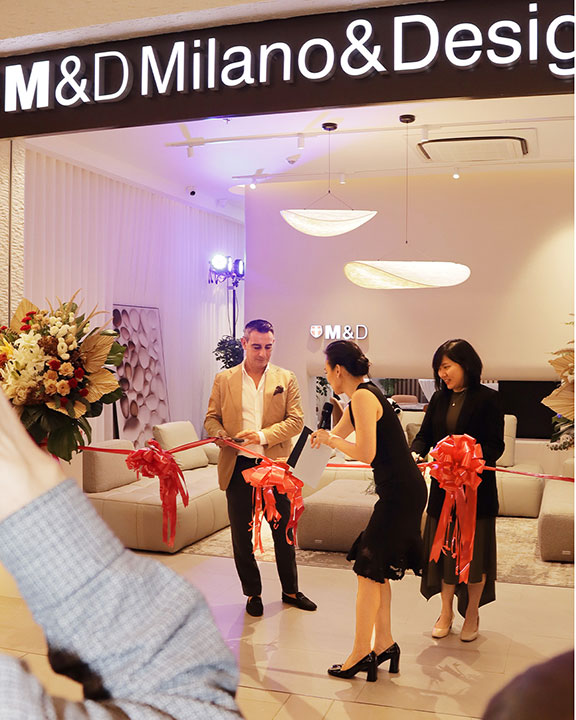
MILANO & DESIGN (M&D), with over 70 years of expertise in hand‑stitched Italian leatherwork, opened its second Philippine showroom at Uptown Mall, Bonifacio Global City, Taguig on Oct. 16. The BGC showroom follows M&D in Shangri-La Plaza. M&D combines premium Italian leather, impeccable stitching, and intricately crafted frames that can be seen in its leather sofas. To learn more about M&D’s latest offerings, existing creations, and exclusive updates, visit its official Instagram page (instagram.com/milanoanddesignphilippines/) or its website (http://www.mdmilanodesign.com/).

Debt yields seen mixed on BSP, Fed rate cut cues

BW FILE PHOTO

By Aaron Michael C. Sy, Reporter

RATES OF TREASURY BILLS (T-bills) and Treasury bonds (T-bonds) to be auctioned this week are expected to move mixed as investors weigh dovish signals from the Bangko Sentral ng Pilipinas (BSP) and the US Federal Reserve.

Debt yields might reflect the mixed movement in the secondary market amid dovish sentiment from both central banks, said Michael L. Ricafort, chief economist at Rizal Commercial Banking Corp.

“Expectations of further rate cuts by the BSP and the Fed could anchor yields, though profit taking may cap demand,” he said in a Viber message.

The Bureau of the Treasury (BTr) will sell P22 billion in T-bills on Monday — P7 billion in 91-day securities and P7.5 billion each in 182-day and 364-day debt. On Tuesday, it will sell P35 billion in reissued T-bonds across two tenors — P20 billion in 20-year debt with a remaining life of about seven years and P15 billion in 25-year bonds with 24 years and three months left to maturity.

BSP Governor Eli M. Remolona, Jr. earlier said the central bank’s “sweet spot” for its key rate could be closer to 4%, suggesting room for more cuts this year and in 2026.

The BSP has reduced policy rates by 175 basis points since it began its easing cycle in August 2024, including a surprise 25-bp cut earlier this month that brought the target repurchase rate to 4.75%, the lowest since September 2022.

On the secondary market on Oct. 17, yields on short-term securities moved unevenly. The 91-day T-bill rose marginally by 0.02 bp to 4.97%, while the 182- and 364-day tenors declined by 6 bps and 7.55 bps to 5.14% and 5.20%, based on PHP Bloomberg Valuation Service reference rates.

At the long end, the 20-year yield slipped by 0.36 bp to 6.41%, the 25-year by 0.13 bp to 6.4% and the seven-year, which approximates the remaining life of the reissued 20-year bond, fell by 3.84 bps to 5.81%.

A bond trader said the 20-year and 25-year debt could fetch average rates of 5.785%-5.815% and 6.45%-6.5%, respectively.

“Risk-off sentiment from the US could trigger more profit taking next week but should be met by bargain hunters amidst lack of bond supply and dovish sentiment,” the trader said.

Last week, the Treasury fully awarded P22 billion in T-bills amid strong demand, with total bids exceeding P97 billion — more than four times the offer.

The three-month paper fetched an average rate of 4.88%, down by 10.3 bps week on week. The six-month tenor was awarded at 5.072%, 5.6 bps lower, while the one-year bill eased by 10.9 bps to 5.119%.

Meanwhile, the 20-year bonds were last sold on Sept. 2 at an average rate of 5.939%, below the 6.75% coupon, while the 25-year securities were auctioned on Aug. 27 at an average of 6.374%, near their 6.375% coupon.

The BTr seeks to raise P180 billion from the domestic market this month — P110 billion via T-bills and P70 billion through Treasury bonds.

The government borrows from local and foreign sources to help fund its budget deficit, which is capped at P1.56 trillion or 5.5% of gross domestic product this year.

Meralco targets 1,500-km underground lines under capex plan

PHILIPPINE STAR/RYAN BALDEMOR

MANILA ELECTRIC CO. (Meralco) plans to install a 1,500-circuit-kilometer (km) underground cable system within its franchise area as part of its capital expenditure (capex) program through 2030 to improve power reliability and protect lines from weather-related disruptions.

The project will be implemented during the first regulatory period under the company’s multi-year capex program, Meralco First Vice-President and Head of Networks Froilan J. Savet told reporters last week.

The project will cover key areas such as financial districts, commercial centers, heritage sites, tourist destinations, and typhoon-prone zones.

At present, about 97% of Meralco’s cable network is still composed of overhead lines.

Existing underground lines are located in Bonifacio Global City in Taguig, SM Mall of Asia in Pasay, Rockwell Center in Makati, City Bridgetown on the Pasig-Quezon City border, Vertis North in Quezon City, and some parts of Pasay and Manila.

Mr. Savet noted that installing underground cables in brownfield areas is more complex due to existing structures and utilities.

“It can be done. It’s not impossible. But it’s a complex project. Doing it as a greenfield would really be better,” he said.

Underground lines are less prone to outages, although repairs can take longer when faults occur, he added.

Meralco is set to file its application for the first regulatory period covering 2027 to 2030 with the Energy Regulatory Commission by January next year.

The filing will include its forecast expenditures and proposed projects, which could result in rate adjustments.

Meralco’s controlling shareholder, Beacon Electric Asset Holdings, Inc., is partly owned by PLDT Inc. Hastings Holdings, Inc., a unit of PLDT Beneficial Trust Fund subsidiary MediaQuest Holdings, Inc., has an interest in BusinessWorld through the Philippine Star Group, which it controls. — Sheldeen Joy Talavera