Home Blog Page 8307

Road right-of-way order seen easing cell tower construction

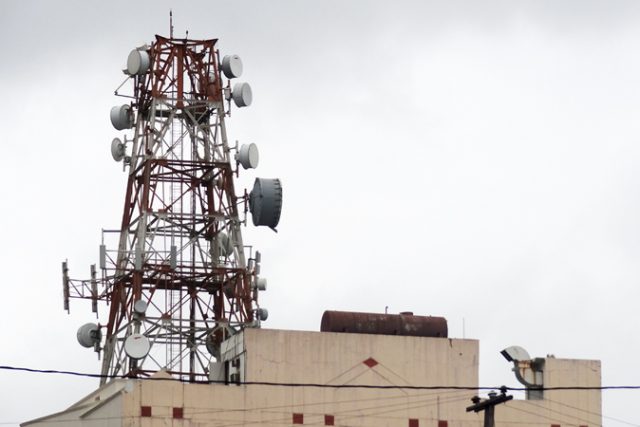
CELLULAR TOWER construction is expected to accelerate after the Department of Public Works and Highways (DPWH) issued a department order granting telecommunications firms use of the government’s right of way on national roads, Globe Telecom, Inc. said.

The order authorizes telcos “to construct and undertake excavations and/or restoration works” for information and communications technology infrastructure projects within the “allowable ROW (right of way) limits” of the national roads.

“With this, Globe sees faster network builds in the country after the government removed a major bottleneck that prevented telecom service providers from constructing crucial infrastructure projects along national roads,” the company said in a statement Wednesday.

Public Works Secretary Mark A. Villar issued Department Order No. 29 on March 23 “to facilitate the erection of infrastructure that will allow speedy expansion of telecommunication services and facilities while ensuring public safety, availability of government’s ROW, and the structural integrity of roads and bridges.”

The order lapses after three years.

According to Globe, the DPWH banned telcos in 2014 from erecting posts along national roads, citing the “imminent danger to lives and properties and hamper relief operations” during calamities.

“In October 2020, both the Department of Information and Communications Technology and the National Telecommunications Commission asked the DPWH to consider the proposed changes to the previous department order,” it added.

Globe said the restrictions “slowed down the rollout of critical telco infrastructure amid the rising demand for affordable, quality, and reliable” internet. — Arjay L. Balinbin

Economic team preparing to fund aid for prolonged lockdown

ECONOMIC MANAGERS are studying sources of funds for a fresh cash aid program in the event that the lockdown imposed on the capital region and nearby provinces is extended once more or expanded to more areas.

Budget Secretary Wendel E. Avisado confirmed that the economic team is studying funding for another round of cash aid if called on to do so in a third stimulus bill.

Budget Undersecretary Laura B. Pascua has said that the Development Budget Coordination Committee (DBCC) approved a new cash aid program but did not authorize a breach of the deficit cap, set at the equivalent of 8.9% of gross domestic product (GDP).

Mr. Avisado made the remarks at the Kapihan sa Manila Bay forum Wednesday.

Mr. Avisado said possible funding sources are realigned agency budgets, the early remittance of dividends from government-owned and -controlled corporations (GOCCs), and other sources that can be tapped by the Department of Finance (DoF).

The proceeds will support another stimulus bill following the passage of the Bayanihan I and II laws last year, but added that the size of the aid program will be subject to funding availability.

“What about the other regions who may yet to experience the same kind of reclassification later on (who were not given the P1,000 cash aid). That’s the thing we’re also preparing for and by then, we would be needing the assistance of Congress for an enabling law similar to Bayanihan I and II,” he said.

“We’re trying to really look at what would be the approximate amount the DoF can raise and those that we can also gather from available funds from various National Government agencies to help finance a Bayanihan III law,” he added.

GOCCs remitted a combined P21.44 billion worth of dividends to the Treasury in the first quarter as state-owned firms remitted their dividends ahead of schedule.

The DoF last week raised the equivalent of P24 billion from a three-year Samurai bond issue and is planning to tap the US bond market soon before rates rise.

Mr. Avisado said the economic team is also working on an Executive Order that will instruct agencies to reduce nonessential expenses, similar to instructions issued last year.

Much of the redirected funds are likely to come from budgets for maintenance and other operating expenses, including money for travel and seminars, as well as the cancellation of programs not yet implemented.

Mr. Avisado said funds for the flagship Build, Build, Build program will not be reduced because infrastructure projects are deemed important in driving the economic recovery. The government budgeted P1.2 trillion for infrastructure projects this year, out of an overall P4.5-trillion spending plan.

He said the overriding goal is to keep the sovereign credit rating in the middle of the pack in the region, in order to keep borrowing costs low.

“We are also very much concerned about our capability to ensure that our economy gets going. It cannot just be that we’re putting all our energies into health but (strike a balance) to ensure that our economy is still moving ahead,” Mr. Avisado said.

The lockdown in Metro Manila, Bulacan, Cavite, Laguna and Rizal was extended for another week to April 11 after daily coronavirus cases surged past the 10,000 level. A further extension of the enhanced community quarantine is unlikely and restrictions in these areas will likely be eased next week, the Palace has said.

Economic managers expect the two-week lockdown to have set back GDP growth by about 0.8 percentage points, to below the official projected range.

The DBCC has set a 6.5-7.5% growth target for this year and projected 8-10% growth in 2022. The economy contracted by a record 9.5% in 2020 as the Philippines implemented one of the world’s longest and strictest lockdowns. — Beatrice M. Laforga

Business solutions costs falling as digitization gains momentum

STOCK PHOTO

DIGITAL BUSINESS solutions are becoming cheaper in the so-called “new normal” as businesses continue to digitize their processes, a technology industry executive said.

“In general, if you wanted to invest in software 10 years ago, when we started the business, you really had to be ready with millions of pesos. It used to be very costly because you had to hire developers, ask them to customize software for you, purchase your own servers, and stuff like that,” said Maria Rosario Palabrica-Ilao, founder and chief executive officer of MobileOptima, Inc., the technology company behind Tarkie, an enterprise solution designed for field force automation.

“Technologies in general are now becoming more and more affordable,” she said at the BusinessWorld Insights online forum Wednesday.

With Tarkie, which is a SaaS or software as a service application, small businesses can start down the path of automation for as little as P1,500 per month, according to Ms. Ilao.

She noted that SaaS applications are becoming more popular these days because of low cost, ease of use, and can come off the shelf.

“They are plug and play, you can get started right away, and there’s no upfront cost as you don’t have to spend for software development, and you don’t have to purchase your own servers because typically all of these are already packaged in the monthly subscription,” Ms. Ilao explained.

Jerome Matthew Animos, field applications engineer at ASUS Philippines Commercial, said that pricing will depend on the technology needed.

“It’s going to be a different ball game if you compare it to Ms. Rio’s proposition. On our end, we ask first what the employees do and who are involved in the procurement process. So we need to ask them the right set of questions before we give them something in detail, because we don’t want our customers to get shocked with the pricing and everything,” he said.

“We give them a certain tier of devices that we actually offer to them to give them a better insight. In my presentation, normally, I show the good and better devices to give them an insight based on their workflow,” Mr. Animos added.

ASUS’s centralized information technology management system and personal computer-based management platform are two of the company’s digital solutions for businesses.

Mr. Animos expects that in the next decade, artificial intelligence of things or AIoT will become more widely used. AIoT, he said, is a combination of AI technologies with IoT that is intended to enhance human-machine interactions, data management, and analytics.

“Blockchain technology will become standard in day-to-day operations, from the simple time-in/time-out or even paying for your cup of coffee using cryptocurrency,” Mr. Animos added.

Ms. Ilao said, “I think it will only get better. I think the prospects are very promising. As we’ve mentioned, companies now in general have become more cognizant of the benefits of digitization. So definitely, more and more companies will embrace IT optimization and digital transformation in the next few years.”

“Gone are the days when big companies would prefer custom-built software. They would rather go for something that’s readily available, or something that’s plug and play. Small- and medium-sized enterprises in general are going to benefit from that,” Ms. Ilao added. — Arjay L. Balinbin

Overstaying cargo disposals generate over P138M in Q1

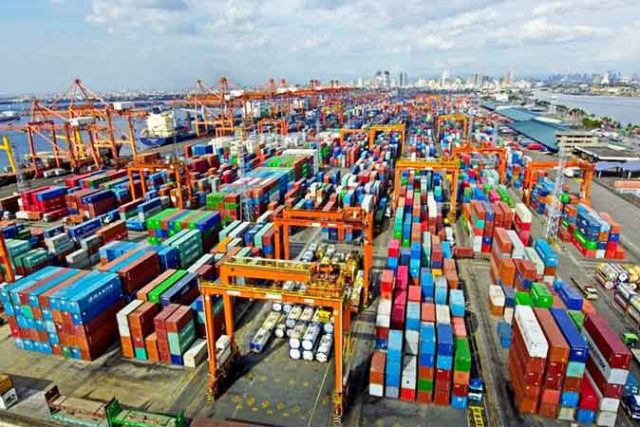
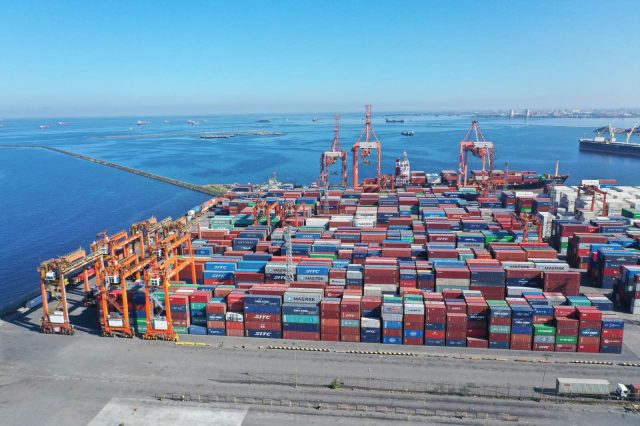
THE Bureau of Customs (BoC) said it generated P138.7 million from the disposal of 586 overstaying containers in the three months to March, part of an overall effort to decongest the ports.

In a statement Wednesday, the BoC said it sold 354 containers at auction while condemning 232 others.

“Significantly, these disposition activities are aimed at efficiently facilitating trade by eliminating port and yard congestion, thereby ensuring smooth flow of business within the agency,” the BoC said.

The agency issued Circular Memorandum Order No. 10-2020 in April 2020, declaring that cargo in ports and yards found to have overstayed more than 30 days from the date of discharge will be classified as abandoned.

Disposals helped make way for incoming shipments of critical goods, including food, medical items and personal protective equipment.

The BoC is authorized by law to donate, declare for official use, or sell at auction seized or abandoned items. Food, clothes, medicine and other goods that are suitable for shelter can also be donated to the Department of Social Welfare and Development.

Last year, the agency raised P1.077 billion by disposing of 3,514 overstaying containers. — Beatrice M. Laforga

Wellbeing programs increasingly highlighted in hiring process

GLOBAL ADVISORY firm Willis Tower Watson said over 80% of Philippine companies plan to use wellbeing programs to attract talent after identifying stress as a major employment issue during the coronavirus disease 2019 (COVID-19) pandemic.

In a statement Wednesday, Willis Towers Watson said the findings were contained in a study of 122 companies known as the Wellbeing Diagnostic Survey conducted between October and November. Of the survey participants, 85% said they will promote wellbeing programs in hiring.

“Five years ago, over half of the employers in the Philippines indicated that, while they offered various programs, they did not have a formally articulated wellbeing strategy. Today, not only do many employers have a strategy in place, 85% plan to use it as a differentiator to compete for talent in three years,” said Willis Towers Watson Head of Health & Benefits Philippines Susan La Chica in a statement Wednesday.

Ms. La Chica said the study found that 83% of employers view stress as a labor concern, after work pressures intensified due to the COVID-19 crisis.

Companies are also looking to upgrade programs to adjust to their employees’ rising stress levels. Willis Towers Watson Head of Business Development and Medical Director Demosthenes Villarin, Jr. said employers view their current programs to be no longer sufficient.

“The pandemic has taken its toll on employees, especially in terms of their physical and emotional wellbeing. In fact, the impact is so great that many employers expect these effects will continue in a post-vaccine environment. Fragmented programs that act as band aids for short-term concerns are no longer sufficient. Many employers are now acting with urgency as they look to take their wellbeing programs to the next level and also address the changing needs and demographics of today’s employees,” he said. — Gillian M. Cortez

Import ban partly lifted on Dutch deboned poultry meat

STOCK PHOTO

IMPORTS of mechanically deboned meat (MDM) from Dutch poultry have been allowed to resume if the region or origin in the Netherlands is free of highly pathogenic avian influenza (bird flu), the Department of Agriculture said.

Agriculture Secretary William D. Dar signed a memorandum order on April 6 that permitted the import of poultry MDM from bird flu-free Dutch regions as listed by the World Organisation for Animal Health (OIE).

Mr. Dar said the order grants the request of meat processors.

“Appeals have been made by the meat processing sector for the Department of Agriculture (DA) to reconsider the acceptance of (imports from bird flu-free regions), in order to address the shortage of affordable MDM,” Mr. Dar said in the memorandum order.

The DA had issued a memorandum order on Jan. 11 that suspended all poultry imports from the Netherlands due to outbreaks of the H5N8 bird flu strain in Utrecht, Friesland, and Zuid-Holland.

According to the new memorandum order, a team composed of representatives from the Bureau of Animal Industry (BAI) and the National Meat Inspection Service (NMIS) will be created to inspect domestic meat processing plants with thermal processing equipment on-site.

The DA said accredited meat processors that were inspected and found compliant will be allowed to import poultry MDM from bird flu-free zones in the Netherlands.

Each shipment will undergo review before the issuance of the sanitary and phytosanitary import clearance (SPSIC).

“The poultry meat shipment must be sourced from one meat establishment only. Multiple sources of meat establishments for each poultry shipment shall not be allowed,” according to the order.

Before the departure of the shipments, the DA said attestations should be included to confirm that the MDM imports were sourced from bird flu-free areas, slaughtered in an approved abattoir, produced in a bird flu-free zone, adhered to OIE guidelines, and tested negative for bird flu.

Meanwhile, the order also disclosed requirements from local meat importers and processors such as the identification of one DA-accredited cold storage warehouse to be used solely for storing poultry MDM imports from the Netherlands, and that MDM imports should only go to licensed meat processing plants that have thermal processing facilities, among others.

The DA said the issuance of SPSICs will be suspended if poultry MDM imports are found to have been sold online or in wet markets.

“Unannounced visits to meat processing plants may also be conducted by veterinary authorities to ensure compliance with government regulations and other food safety policies, while random sample collection of MDM shall be conducted by NMIS plant officers for detection of the presence of bird flu,” according to the order.

Jesus C. Cham, Meat Importers and Traders Association president, said in a mobile phone message that the easing of import restrictions is a step in the right direction.

“We hope it goes further. If products are certified and tested to be free of bird flu, why should there be any restrictions at all? OIE guidelines are to just ban the affected zones. Now we have added a layer of protection by product testing. So all poultry products, not just MDM should be allowed access to markets and consumers,” Mr. Cham said.

However, Mr. Cham said only a number of processors will be able to meet the requirements set by the DA such as the availability of thermal processing equipment.

“Only a few processors can manage. All of the small processors will be shut out unfortunately. These are the ones who serve mainly the lower C, D, and E segments,” Mr. Cham said.

Philippine Association of Meat Processors, Inc. Vice-President Jerome D. Ong welcomed the partial lifting of the import ban, noting that the easing in policy still complies with OIE and World Trade Organization principles.

“On the whole, the conditions are very stringent, so we will wait if exporters can ship even with additional cost, especially on the testing requirement that will surely drive up the price of MDM,” Mr. Ong said in a mobile phone message.

“Without lifting the countrywide bans on the UK and Germany, the reopening of Poland, and the accreditation of new plants in Hungary and Brazil, the supply of MDM will remain inadequate and hinder the processed meat industry from fully supplying the needs of the country at affordable prices,” he added.

According to the Bureau of Animal Industry (BAI), chicken MDM imports from the Netherlands amounted to 115.05 million kilograms in 2020, equivalent to 42% of the total imports. — Revin Mikhael D. Ochave

ASEAN seen remaining major player in global supply network

ASEAN COUNTRIES are well-positioned to attract investment following shifts in global value chains (GVCs) in the wake of the coronavirus pandemic, economists said, citing the region’s growing middle class.

At a webinar organized by the ASEAN+3 Macroeconomic Research Office (AMRO) Wednesday, Hoe Ee Khor, chief economist of AMRO, said: “Although we have seen some cross-border relocation of GVCs globally, the ASEAN+3 region will remain a highly attractive location for GVC investment in the post-pandemic world.”

“The region’s middle class is expanding rapidly and becoming more affluent. The large pool of labor is upskilling to the digital economy. Businesses are adopting new technologies and creating more commercial opportunities,” he added.

He said before the pandemic hit, ASEAN countries reported an increase in investment flows, particularly in the Philippines, Indonesia, Vietnam, Malaysia and Thailand.

The size of the GVC sector and trade relative to the global economy had been receding prior to the pandemic mainly due to rising protectionism and reshoring of outsourced businesses, Mr. Khor said.

He said that the pandemic has added to the slowdown due to disruptions like border closures.

AMRO said GVCs drive growth for the region and accounted for half of the regional and global trade volume of ASEAN+3, which includes the 10 members plus China including Hong Kong, Japan, and South Korea.

To better capture the opportunities from the pandemic, Deborah Elms, founder and executive director of the Asian Trade Centre, said ASEAN economies should strengthen trade integration within the region to create a stable and smooth flow of goods, services and investment and boost production.

“This is an opportunity for ASEAN to deliver on the promise of the economic community, which is we finally have ASEAN members create almost a seamless movement of goods, services and investment that has long been promised but has been short in reality,” Ms. Elms said during the webinar.

“It becomes more urgent for ASEAN to make sure that the policy landscape is supportive of continuing integration in the region itself, plus 3, (and with) global partners,” she added. — Luz Wendy T. Noble

MSME recovery to be complex, may boost chances by digitizing

STOCK PHOTO

SMALL BUSINESSES are expected to better deal with post-pandemic challenges if they embrace digitization, according to a study conducted by a microfinance non-profit.

Restart Micro-Enterprise, Inc. (RestartME) concluded in its study, which is supported by Bank of the Philippine Islands (BPI) Foundation and BPI Direct BanKo, that digital solutions carry the promise of helping small businesses navigate the complexity of the recovery, at a time when many small businesses are struggling and with banks reluctant to lend to the segment.

“The extent of financial tech adoption recently shows how a significant number of MSMEs are flexible enough to embrace innovation. But with institutional support, they can take these digital solutions even further,” RestartME Executive Director Jessica Marie G. Robredo said in a statement.

The study noted that MSMEs face a recovery path that is not as straightforward as in previous calamities.

As the pandemic is also a financial crisis, MSMEs and microfinance institutions are also facing funding difficulties as collection rates fall and portfolio risk exposure increases, it added.

Other challenges that impede reopening of small businesses identified in the study were the slow recovery of consumer demand due to shifts in consumer purchasing behavior and income; inadequate access to affordable capital for businesses seeking to reopen; lack of infrastructure and ability to use digital solutions; disruption of operations due to changing government policies; and low capacity for resiliency and risk management.

Despite the general adoption of digital transactions, most small retail stores and market stalls still prefer face-to-face engagement and have yet to fully adopt digital solutions.

The study suggested that the tech industry, particularly telecommunications, financial technology, e-commerce, and social media companies, could play a pivotal role in pushing MSMEs to adopt digital solutions.

“The immense capacity of the private sector and financial institutions per se in driving innovation put us in a strong position to create opportunities for the MSME sector and give them the wings to fly,” BPI Foundation Director Owen L. Cammayo said.

The central bank has provided regulatory relief for banks to boost lending to MSMEs, including making MSME loans eligible as alternative reserve compliance, and reducing the credit risk weight for loans extended to the sector. — Luz Wendy T. Noble

New RMO on Tax Treaty Relief: Intent vs Impact

While everybody was busy anticipating developments on CREATE and a possible extension of the tax filing deadline given the re-imposition of the Enhanced Community Quarantine, the Bureau of Internal Revenue (BIR) pulled a rabbit out of the hat and issued Revenue Memorandum Order (RMO) No. 14-2021, providing updated procedures for availing of tax treaty benefits for nonresident foreign income earners.

The RMO cited the Supreme Court’s (SC) decision in the case of Deutsche Bank vs. CIR that a tax treaty relief application (TTRA) merely confirms a taxpayer’s entitlement to treaty benefits. However, it also clarified that the BIR may still require the filing of a TTRA to confirm eligibility for the benefits, provided that it does not unduly deprive the taxpayers of the intended benefits.

Aiming to comply with the Ease of Doing Business Act, the updated guidelines define the roles of the parties; expand the list of supporting documents including those required for fiscally transparent entities; and allow the issuance of confirmatory certificates instead of the usual ruling. However, it also discontinues the Certificate of Residency for Tax Treaty Relief (CORTT) forms and imposes penalties for late filing.

PROCEDURES
The RMO repealed previous issuances on TTRAs. Thus, the simpler requirement of submitting CORTT forms for royalties, dividends and interest income will no longer apply.

Under the new rules, if the nonresident has furnished the withholding agent with the necessary documents and treaty relief has been applied, the withholding agent shall file a request for confirmation of the treaty availment with the International Tax Affairs Division (ITAD). The request must be filed at any time after the payment of the withholding tax but not later than the last day of the fourth month following the close of each taxable year.

On the other hand, if regular tax rates have been applied, the nonresident income earner may file a TTRA at any time after receipt of the payment to prove entitlement to the treaty benefit.

A certification confirming entitlement to the benefits will be issued in lieu of the usual BIR ruling.

DOCUMENTS AND ANNUAL UPDATE
Similar to the earlier rules, the request or TTRA should be supported by documents which include the application form and tax residency certificate issued by the foreign tax authority. New general requirements include proof of income payment and remittance of tax. Other specific documents are also required, depending on the transaction.

An application must be filed for every transaction. For long-term contracts (e.g., service and loan agreements, licensing contracts covering more than one year), annual updates are required until their termination. Thus, an updated application form and the supporting documents need to be filed within the prescribed period for each taxable year.

PROCESSING TIME
The TTRAs shall be processed within four months from submission of complete documents. This is, however, contingent on ITAD resolving its current backlog, hence may not materialize for a good while.

REFUND
Nonresidents subjected to the regular tax rates but have obtained confirmation of eligibility to the preferential rates may subsequently file a claim for refund with the proper BIR office within two years from payment.

DENIAL AND APPEAL
If treaty rates were applied and the BIR deems that regular rates should apply, a ruling will be issued discussing the factual and legal bases for the denial. The local payor will be assessed for deficiency withholding taxes including penalties.

Nevertheless, taxpayers may file an appeal with the Department of Finance within 30 days from receipt of the denial.

PENDING TTRAS & THREE-MONTH WINDOW
Taxpayers with pending TTRAs covering income earned in 2020 and prior years (including those with Notice of Archiving) are granted three months from receipt of the Final Notice to Submit Additional Documents or from effectivity of the RMO, whichever is later, to submit all lacking documents. Failure to do so will result in automatic denial of the TTRA.

On the other hand, previously filed CORTT forms will be forwarded to the district offices for compliance check.

INTENT VS IMPACT
RMO 14-2020 applies the classic “intent versus impact” principle. As to intention, the RMO is very clear — simpler and consistent procedures to confirm treaty benefits. As to impact, however, the new rules may result in more administrative burdens and leave taxpayers with more questions than answers.

For one, is the denial of treaty benefits for failure to strictly comply with filing and documentary requirements consistent with the principles articulated by the SC in the Deutsche case? Perhaps the BIR can consider not issuing denial rulings and instead just set aside incomplete applications. The onus is thus on the taxpayer to prove with valid and convincing evidence its entitlement to the benefits during an audit. The RMO admits to ITAD’s lack of manpower resources which also compounded the backlog. Perhaps it makes sense to spread the work by having the compliance check be done also through the normal tax audit process.

Based on experience, the request for additional documents not listed in the previous RMOs can come only years after the TTRA filing, and taxpayers face setbacks in securing archived and possibly lost documents. Considering that no similar parameter was provided in earlier rules, the three-month window under the new RMO would be prejudicial to taxpayers, especially during this time of quarantine.

The recurring filings for long-term contracts also unduly burden both taxpayers and the BIR with the additional requirements.

Given the options, withholding agents may be more inclined to apply the regular tax rates and pass the TTRA filing burden to the nonresidents. Apart from the TTRA filing, the foreign income earner will have to contend with overpaid taxes. Although the refund route is available, the process is time consuming and complicated and may end up costing more than the amount being recovered.

Moving into 2021, taxpayers had hoped for simpler requirements, even envisioned for CORTT-like procedures for all income payments. But RMO 14-2021 appears to provide no further relief. I hope that the BIR can put more trust in the good faith of taxpayers in their availment of treaty benefits and reconsider these updated guidelines. Again, I think the key might be to bank on revenue examiners to supplement the evaluation during the audit process by requesting specific but reasonable critical documents to prove a taxpayer’s eligibility for treaty relief. This shared responsibility would certainly help address the existing and future workload of ITAD and provide holistic relief to taxpayers.

The views or opinions expressed in this article are solely those of the author and do not necessarily represent those of Isla Lipana & Co. The content is for general information purposes only and should not be used as a substitute for specific advice.


Maria Jonas Yap is a Senior Manager at the Tax Services Department of Isla Lipana & Co., the Philippine member firm of PricewaterhouseCoopers global network.

maria.jonas.s.yap@pwc.com

Manila fires off another protest against China

WHITSUN REEF

THE PHILIPPINES has filed another diplomatic protest against China over the presence of fishing boats, suspected to be manned by Chinese maritime militia, at a Philippine-claimed reef in the South China Sea.

“Firing another diplomatic protest,” Foreign Affairs Secretary Teodoro L. Locsin, Jr., tweeted on Wednesday. “Everyday until the last one’s gone like it should be by now if it is really fishing,” he added.

President Rodrigo R. Duterte sees no need to use force against the Chinese vessels occupying Whitsun Reef, his spokesman said this week.

A national task force overseeing border disputes with China earlier said Beijing had refused to leave Whitsun Reef despite a diplomatic protest filed by Manila last month.

Mr. Duterte thinks the sea dispute could be resolved through peaceful means, Mr. Roque said. The Philippines would continue to assert its legal victory at an international tribunal in 2016, he added.

The Palace official earlier said more than 200 Chinese ships that were spotted at the reef, which the Philippines calls Julian Felipe, were fishing vessels seeking refuge from bad sea conditions.

The Philippine Department of Foreign Affairs on Monday renewed the call of the military for the Chinese vessels to leave. In a statement, it said it would file more diplomatic protests until the vessels leave the area.

The Philippines last month filed a diplomatic protest against China after the vessels were spotted moored at the reef. The Chinese Embassy said the reef is part of its territory and the vessels had taken shelter due to rough sea conditions.

Defense Secretary Delfin N. Lorenzana, who on Wednesday said he got the coronavirus, had urged the remaining 44 Chinese vessels to leave. He said the Chinese had no reason to stay there since the weather has been good.

The Chinese Embassy reiterated that the reef is part of China’s Nansha Island, adding that the waters around the reef had been “a traditional fishing ground for Chinese fishermen for many years.”

It also said it hopes authorities would make constructive efforts and avoid “unprofessional remarks which may further fan irrational emotions.”

Philippine senators have decried the presence of Chinese vessels at the reef.

Senator Panfilo M. Lacson accused China of taking advantage of the coronavirus pandemic to advance its interests.

Senator Maria Imelda Josefa R. Marcos said a “multilateral joint stand” with neighboring countries was needed.

Senator Risa N. Hontiveros-Baraquel said the Chinese vessels should leave immediately, adding that the Chinese can’t fish in the country’s exclusive economic zone without its consent.

Senators on Tuesday said the Philippines should talk to Southeast Asian countries and western allies about China’s continued incursions in the South China Sea.

Ms. Baraquel renewed her call to investigate the possible collusion and collaboration by Filipinos in the construction of China’s artificial islands in the disputed waterway.

The senator in September filed a resolution to investigate the possible involvement of Filipinos in China’s island-building activities after reports of continued dredging and reclamation around territories claimed by the Philippines.

“I am positive that the more we could look into this issue, the more that we would be able to know how to ultimately oblige China to pay for her shameless adventurism,” she said.

“If Filipinos have colluded to help in China’s brazen abuse, they too won’t escape,” the lawmaker said in Filipino. — Vann Marlo M. Villegas

CoronaVac approved for use by seniors amid supply issues

HEALTH authorities on Wednesday approved the use of CoronaVac, the vaccine made by China’s Sinovac Biotech Ltd., for the elderly amid global supply problems.

This as the Department of Health reported 6,414 coronavirus infections on Wednesday, bringing the total to 819,164. The death toll increased by 242 to 14,059, while recoveries increased by 163 to 646,404, it said in a bulletin.

There were 158,701 active cases, 97.5% of which were mild, 1.2% did not show symptoms, 0.5% were critical, 0.5% were severe and 0.3% moderate.

“After considering the recommendation of the experts and the current situation of high COVID-19 transmission and limited available vaccines, the Food and Drug Administration (FDA) is allowing the use of Sinovac on senior citizens,” FDA Director General Domingo said in a statement.

“Vaccination should be preceded by an evaluation of the person’s health status and exposure risk to assure that benefits of vaccination outweigh risks,” he added.

FDA and the Department of Health said the benefits of using the vaccine for seniors outweigh the risks. More scientific data on use for senior citizens may soon become available.

DoH and FDA issued the approval upon the recommendation of the Vaccine Expert Panel from the Science and Technology department.

“The Vaccine Expert Panel thoroughly discussed the matter amid the current vaccine supply in the country and we hope that this would address the present demand for vaccines,” presidential spokesman Herminio L. Roque, Jr. said in a statement on Wednesday.

The FDA earlier refused to recommend the use of CoronaVac for seniors supposedly due to a lack of concrete studies.

Nina G. Gloriani, chief of the Science and Technology department’s vaccine development panel, said the body had recommended the use of the drug for the elderly because it was safe to use.  

Citing clinical trials of CoronaVac in Brazil and China that included 400 and 422 senior citizens, respectively, Ms. Gloriani said the patients only exhibited mild to moderate side effects after taking the shot.

“It’s safety profile is good,” she told a televised news briefing in Filipino. “The side effects were mild to moderate,” she said, adding that patients only experienced pain in the injection area for two days, as well as headaches.

The vaccine was being used by China and Indonesia to inoculate their seniors, she said.

Ms. Gloriani said the panel made the recommendation amid a shortage in supply of vaccines made by British drug maker AstraZeneca Plc that were being used to vaccinate old people.

“We are in a pandemic and we can’t afford the delay because the vaccines that we ordered have not arrived,” she said. “We want to use whatever we have.”

Vaccine czar Carlito G. Galvez, Jr. on Tuesday said the Philippines would take delivery of about 1.5 million more doses of CoronaVac this month.

The Philippines initially expected to receive four million doses of vaccines this month but the target delivery was trimmed to just two million due to global supply problems.

He said the government was using diplomatic channels to ensure access to almost a million more doses from AstraZeneca.

Ms. Gloriani said the vaccine developed by Russia’s Gamaleya Institute could also be used on seniors. Sputnik V is 92% effective among the elderly, she said, citing an evaluation by the panel.

More than 854,000 Filipinos have been vaccinated against the coronavirus as of April 5, Mr. Galvez said. — Vann Marlo M. Villegas and Kyle Aristophere T. Atienza

Duterte skips weekly address given risk from virus infection

PHILIPPINE President Rodrigo R. Duterte will skip his public address this week amid a fresh surge in coronavirus infections, his spokesman said on Wednesday.

The President skipped his weekly address “in light of the rising number of active COVID-19 (coronavirus disease 2019) cases,” presidential spokesman Herminio L. Roque, Jr. said in a statement. “The physical safety of the President remains our utmost concern.”

His public address on Wednesday night was moved to next week, he said..

The palace postponed the event after several presidential guards tested positive for the coronavirus, Senator Christopher Lawrence T. Go, Mr. Duterte’s close friend, said in a Viber group message. He added that the President was in good health.

A number of the President’s security guards got vaccinated last year using an unregistered vaccine made by China’s Sinopharm Group Co., Ltd.

Meanwhile, Davao City Mayor Sara Z. Duterte-Carpio said she got a travel authority from the Interior and Local Government department so she could fly to Singapore.

She quietly flew to Singapore on Tuesday and was on a five-day leave for “personal health management.”

“All protocols for return to Davao City including RT-PCR testing and 14-day quarantine have all been pre-arranged,” she said in a statement.

The National Capital Region and nearby provinces are under a strict lockdown amid a fresh spike in coronavirus cases.

The Transportation department earlier said travelers who are not Metro Manila residents may still enter the region if they have outbound international flights from the international airport. — Kyle Aristophere T. Atienza