
How PSEi member stocks performed — October 17, 2025

Here’s a quick glance at how PSEi stocks fared on Friday, October 17, 2025.


Here’s a quick glance at how PSEi stocks fared on Friday, October 17, 2025.
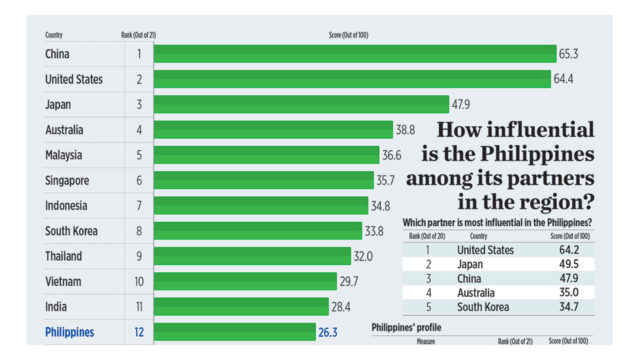
The Philippines was the 12th most influential partner in Southeast Asia, with an overall influence score of 26.3 out of 100, according to the latest data from the Lowy Institute’s Southeast Asia Influence Index. The country excelled in its defense networks but was moderate in economic relationships and cultural and diplomatic influence. The index measures the relative standing of external powers in the region based on four primary domains of bilateral influence: economic relationships, defense networks, cultural influence, and diplomatic influence.


By Alexandria Grace C. Magno
PHILIPPINE STOCKS might continue to trade sideways this week as investors weigh bargain-hunting opportunities against lingering macroeconomic and political risks, analysts said.
“For the last three weeks, the market has been moving sideways, reflecting investor indecision,” Japhet Louis O. Tantiangco, research manager at Philstocks Financial, Inc., said in a Viber message. While valuations are attractive, concerns over the Philippines’ tempered outlook, corruption issues and offshore headwinds pose risks, he added.
The benchmark Philippine Stock Exchange index (PSEi) shed 0.06% or 4.14 points to close at 6,089.53 on Friday, while the broader all-share index fell 0.19% to 3,665.08. Week on week, the PSEi rose 51.74 points as cautious optimism following recent rate cuts was tempered by the peso’s weakness against the dollar.
Online brokerage 2TradeAsia.com said activity remained “range-bound” amid a lack of strong catalysts. It added that sentiment could shift based on global policy cues, fiscal adjustments and corporate earnings results.
Mr. Tantiangco said the market might continue to track regional trends as it awaits “fresh leads” to establish a clear direction. A sustained recovery in the peso and lower local bond yields could help lift the market, he said.
The peso slipped 3.5 centavos to close at P58.16 a dollar on Friday, according to Bankers Association of the Philippines data posted on its website.
“Chart-wise, the local market managed to hold its position above its 10-day exponential moving average in last week’s trading, which is taken as a positive sign,” Mr. Tantiangco said. He sees immediate support at 6,000 and resistance at 6,150.
2TradeAsia.com said investors should remain cautious amid uncertainty in global monetary policy.
“Close monitoring of Fed communications and trade developments will be critical to adjusting allocations dynamically,” it said.
The brokerage placed the PSEi’s support at 6,000 and resistance at 6,200, adding that investors are likely to anchor decisions on 2026 earnings visibility as cash flow becomes increasingly relevant in a volatile rate environment.

PUBLIC APPROVAL and trust in government institutions plunged in the third quarter of 2025 as controversies over anomalous flood control projects continue to sap confidence in transparency and accountability, Publicus Asia, Inc said on Sunday.
The Department of Public Works and Highways (DPWH) saw the “steepest drop” after its approval rating fell to 12% from 33% in the second quarter and trust rating declined to 8% from 22%, according to a noncommissioned poll that surveyed 1,500 Filipinos from Sept. 27-30. It had an error margin of ±3 points.
The pollster said in a statement that this is largely due to the department’s “central role in the controversial flood control projects.”
Approval and trust in the House of Representatives likewise waned, with 10-point drops to 21% and to 11%, respectively. The Senate’s approval also slipped to 28% from 32%, while trust in the chamber declined to 16% from 22%.
“The declines in both legislative chambers are attributed to their involvement in the budget process, particularly amid allegations of illegal budget insertions and calls for greater transparency in national spending,” Publicus said.
The Philippines has been rocked by a multibillion-peso flood control scandal that has fueled street protests, exposed cracks in the government and clouded economic outlook.
The government has rolled out P545 billion worth of flood control projects since President Ferdinand R. Marcos, Jr. took office in July 2022. Of this, P100 billion worth of projects were cornered by only 15 contractors, Mr. Marcos said in August.
Investigations into the scandal have implicated politicians, government engineers and private contractors, all of which are accused of colluding to siphon off public funds meant for flood mitigation structures like dikes and flood walls in the disaster-prone country.
The Commission on Audit (CoA) also saw a sharp drop in its ratings, with approval dropping to 31% from 45% and trust to 21% from 33%, Publicus said. “The dip comes amid public concern over CoA’s role in auditing substandard or ‘ghost’ flood control projects.”
Approval and trust in the Budget department also slipped to 26% from 32% and to 18% from 23%, respectively, driven by allegations of “redundant allocations and questionable budget insertions.”
Fewer Filipinos also said they trust and approve of the Finance department in the third quarter, as its approval rating dipped to 30% from 35% and trust to 19% from 24%. This comes as concerns over rising debt and fiscal transparency weighed on public sentiment.
Last week, a separate poll showed trust ratings for Mr. Marcos and Vice-President Sara Duterte-Carpio fell in September.
The Social Weather Stations poll showed trust in Mr. Marcos fell to 43% from 48% in June, while Ms. Duterte’s rating dropped eight points to 53%, marking her sharpest decline this year.
Another survey, conducted by Pulse Asia, showed last week that nine of 10 Filipinos think there is collusion among politicians, contractors and other officials to defraud infrastructure funds, though opinions remain split on whether the government could be trusted to resolve the issue.
About 56% of respondents said they were uncertain whether they could trust the Independent Commission for Infrastructure (ICI) in solving the corruption scandal, according to the separate poll.
The Marcos administration has formed a fact-finding body to investigate anomalous flood control deals that has so far summoned key political figures including a former Speaker, senators, congressmen and the government’s Budget secretary.
The ICI, however, has opted to hold its hearings behind closed doors, compared with earlier televised congressional inquiries that brought the issue into limelight. — Kenneth Christiane L. Basilio

By Erika Mae P. Sinaking
PERSISTENT irregularities and slow fund recovery from anomalous flood control projects could continue to disrupt infrastructure programs and weaken investor confidence, analysts said at the weekend.
Such delays negatively impact investor and donor confidence as it gives the impression that donations will just be wasted or that funds may not be recovered, Nathaniel “Dinky” von Einsiedel, chairman and principal urban planner of Consultants for Comprehensive Environmental Planning Inc. said.
“It’s worse when the scam involves high-level government officials,” Mr. von Einsiedel told BusinessWorld via Viber chat. “Issues in infrastructure projects affect long-term urban and economic growth in several ways.”
These disrupt continuity in the implementation, which could lead to discontinued projects and wasted investments. He also noted that the insufficient upkeep of essential flood control mechanisms, such as flood gates, further undermines project effectiveness.
Investigations into the flood control scandal have revealed that of 8,000 inspected projects nationwide, at least 421 were classified as “ghost” projects, either nonexistent or poorly executed. The schemes reportedly involved inflated costs and kickbacks, implicating lawmakers, contractors, and government officials.
This prompted the ad hoc Independent Commission for Infrastructure (ICI) to convene an interagency meeting last Thursday to coordinate fund recovery and restitution for affected projects.
The Anti-Money Laundering Council (AMLC) has reportedly frozen between P4.6 billion and P5 billion across nearly 2,800 bank accounts tied to the investigations.
The Department of Health, briefing the ICI on Friday, said its probe into government-funded Super Health Centers (SHC) now spans 878 facilities, including 300 inactive ones.
Costs have ballooned in several cases, such as Marikina’s Concepcion Dos SHC (P21.5 million to P201 million) and Antipolo’s SHC (P11.4 million for construction, P7 million for equipment).
Mr. von Einsiedel added that these failures lead to a loss of confidence in government and increase in the perception that projects just foster corruption, “which discourages civic participation in development planning.”
Joy Aceron, convenor-director of Government Watch (G-Watch), said that such fund scandals could jeopardize the Philippines’ reputation with investors and development partners, which could have broader implications.
“Worse if we are not confronting the truth about the extent of corruption… it is crucial that accountability and justice are delivered and reforms are made — to arrest the likely negative effects of this plunder,” she said.
Ms. Aceron flagged systemic weaknesses in accountability despite reforms and government monitoring efforts.
“Infrastructure corruption persists because accountability measures — regulation and monitoring — are not effective,” Ms. Aceron said in a Facebook Messenger chat.
She explained that oversight is often weakened or compromised by powerful vested interests embedded in multilevel corruption and patronage networks, with insufficient resources and political support to enforce regulations effectively.
“In the case of this flood control plunder, there was an ecosystemic breakdown of state accountability,” she added.
G-Watch, a civil society organization focused on citizen monitoring and government accountability, called for stronger transparency, participation, and accountability in infrastructure by giving citizens access to project information, consultation, and feedback, while holding agencies and contractors accountable for compliance.
The organization also urged the creation of independent multisectoral monitoring bodies with clear mandates, sufficient budgets, and technical support to strengthen oversight, improve project outcomes, and curb mismanagement and plunder in infrastructure initiatives.
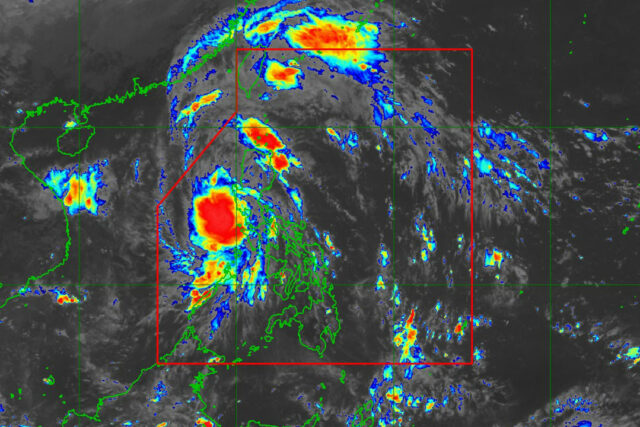
LARGE PARTS of Luzon are expected to experience heavy to torrential rainfall through Monday afternoon, the state weather bureau said on Sunday, as it expects Tropical Storm Ramil (international name: Fengshen) to exit the Philippine area of responsibility (PAR).
In a 5 p.m. advisory on Facebook, the Philippine Atmospheric, Geophysical and Astronomical Services Administration (PAGASA) said 100 to 200 millimeters of rain could fall over Zambales, Bataan, Pangasinan, Tarlac, Pampanga, and Batangas.
Another 50 to 100 millimeters is expected in Occidental Mindoro, Palawan, Antique, Cavite, Aurora, Isabela, Bulacan, La Union, Ilocos Sur, Ilocos Norte, Cagayan, Benguet, Quirino, Nueva Vizcaya, Nueva Ecija, Ifugao, Mountain Province, Kalinga, Abra, and Apayao.
In a 5 p.m. bulletin, PAGASA said “Ramil will continue moving west northwestward or northwestward over the West Philippine Sea.” It is expected to exit PAR on Monday morning.
PAGASA said it may intensify and reach severe tropical storm category outside PAR.
As of 4 p.m., the tropical storm was estimated 85 kilometers west northwest of Iba, Zambales.
It has maximum sustained winds of 65 km per hour (kph) near the center and gustiness of up to 80 kph. It is moving west northwestward at 35 kph.
This has prompted the state weather bureau to raise a tropical cyclone wind signal (TCWS) No. 2 over the central and southern portions of La Union, the western and central portions of Pangasinan, Zambales, Tarlac, the western portion of Pampanga, and the northern portion of Bataan.
PAGASA also placed Cagayan including Babuyan Islands, Isabela, Quirino, Nueva Vizcaya, Apayao, Abra, Kalinga, Mountain Province, Ifugao, Benguet, Ilocos Norte, Ilocos Sur, the rest of La Union, the rest of Pangasinan, Aurora, the rest of Bataan, the rest of Pampanga, Nueva Ecija, Bulacan, Metro Manila, Rizal, the northern and central portions of Quezon including Polillo Islands, Laguna, Cavite, Batangas, Occidental Mindoro including Lubang Islands, Oriental Mindoro, Marinduque, and the northern and western portions of Camarines Norte under TCWS no. 1.
Power distributor Manila Electric Co. (Meralco) said on Sunday that it is prepared to respond to any possible electricity service concern as Ramil continues to affect parts of Luzon.
In a statement, Meralco said that it continues to closely monitor the weather situation to be able to immediately respond amid tropical cycle wind signals raised in parts of its franchise area.
“Our crews and personnel are strategically positioned and remain on standby 24/7 to address any power-related issues. We urge our customers to prioritize safety and stay alert, especially in areas prone to flooding,” said Meralco Vice-President and Head of Corporate Communications Joe R. Zaldarriaga.
The power distributor has advised its customers to practice electrical safety measures, such as turning off the main power switch or circuit breaker, unplugging all appliances, and turning off permanently connected devices.
Meralco’s controlling stakeholder, Beacon Electric Asset Holdings, Inc., is partly owned by PLDT Inc. Hastings Holdings, Inc., a unit of PLDT Beneficial Trust Fund subsidiary MediaQuest Holdings, Inc., has an interest in BusinessWorld through the Philippine Star Group, which it controls.
Meanwhile, President Ferdinand R. Marcos, Jr. urged the public to remain vigilant and enhance disaster preparedness following a series of earthquakes in Cebu, Baguio, Surigao, Davao, Zambales, and Metro Manila.
“Because the Philippines lies along what is known as the Pacific Ring of Fire, the country is highly prone to disasters and natural calamities such as these,” he said in a video blog posted on Sunday in Filipino, citing the importance of family evacuation plans, maintaining emergency “go bags,” and verifying information only from official government sources such as PAGASA and Philippine Institute of Volcanology and Seismology.
He emphasized the need for compliance with building safety standards and local government coordination, noting that government agencies, including the Department of Social Welfare and Development, have prepositioned relief packs and emergency supplies.
The Pacific Ring of Fire is known for frequent earthquakes and volcanic eruptions caused by shifting tectonic plates.
As part of this region, the Philippines is highly vulnerable to seismic and volcanic hazards, making disaster preparedness essential. — Chloe Mari A. Hufana and Sheldeen Joy Talavera

By Kenneth Christiane L. Basilio, Reporter
THE OMBUDSMAN’S decision to open public access to government officials’ net worth statements drew cautious reactions over the weekend, with analysts warning the new memorandum remains silent on provisions that could still leave the public in the dark.
Ombudsman Jesus Crispin C. Remulla last week lifted restrictions on access to statements of assets, liabilities and net worth (SALN), reversing a policy that limited its disclosure since the Duterte administration.
“It’s too early to praise the Ombudsman,” FOI Youth Initiative convener Patrick C. Acupan said in a Facebook Messenger chat.
“Before we commend the Ombudsman, we urge the public to remain clear-eyed, critical, and to pay close attention to how these new rules are implemented,” he added.
He said the order lacks clear guidance on where to file SALN requests if the net worth statement is not held by the anti-graft body. “This lack of clarity could confuse requestors and lead to inconsistent access.”
Republic Act No. 6713, the Code of Conduct and Ethical Standards for Public Officials and Employees, assigns multiple custodians for SALNs across government branches and regions. The Ombudsman is the repository of net worth statements of the President, Vice-President and heads of Constitutional offices.
The Office of the President holds those of the Cabinet, presidential appointees and high-ranking military officials.
Senators and congressmen file their SALNs with their respective chambers, while judges and justices submit theirs to the Office of the Court Administrator and the Supreme Court’s Clerk of Court, respectively.
“For now, Congress and the Judiciary could just follow the lead of the Ombudsman and make the SALNs in their keep accessible to the public as well,” Michael Henry Ll. Yusingco, a senior research fellow at the Ateneo de Manila University Policy Center, said in a Facebook chat.
Speaker Faustino “Bojie” G. Dy III said last week the House of Representatives is reviewing its policy on net worth disclosures, while Senate President Vicente “Tito” C. Sotto III is consulting senators on their preferred approach to releasing SALNs.
Analysts have said designating the Ombudsman as the sole repository of net worth statements could streamline access but warned it may overwhelm the agency with requests and concentrate too much authority in a single office.
“Centralizing all requests with the Ombudsman might seem efficient, but it could also overwhelm the office and create an unintended bottleneck,” Mr. Acupan said. “More importantly, concentrating this function in a single institution gives them too much control.”
He said authorities should consider standardizing procedures for disclosing net worth statements to strengthen the public’s right to information.
“Enacting a law to require the Ombudsman to assume the role of sole keeper is ideal, but not necessary for now,” said Mr. Yusingco.
Instead of letting the anti-graft body handle all net worth disclosures, lawmakers should “seriously consider enacting a law to digitalize the submission of the SALN.”
“Making the Ombudsman the central keeper of the digital depository could be part of new law,” he said.
Mr. Acupan said Mr. Remulla’s memorandum is also mum on requiring officials to declare their business ties.
“This section requires officials to declare business interests, financial connections, and relatives in government, [and] the new memo is silent on this requirement, despite its increasing relevance now,” he said.
Government officials are required to declare their business interests and financial connections for every SALN submission, a Civil Service Commission document uploaded on its website showed.
“With growing overlaps among contractors, elected officials, and high-ranking senior government officials, these disclosures are more vital than ever,” said Mr. Acupan.
The Philippines is facing a widening corruption scandal involving billions of pesos lost to bogus flood control projects, with politicians, government engineers and private contractors under scrutiny.
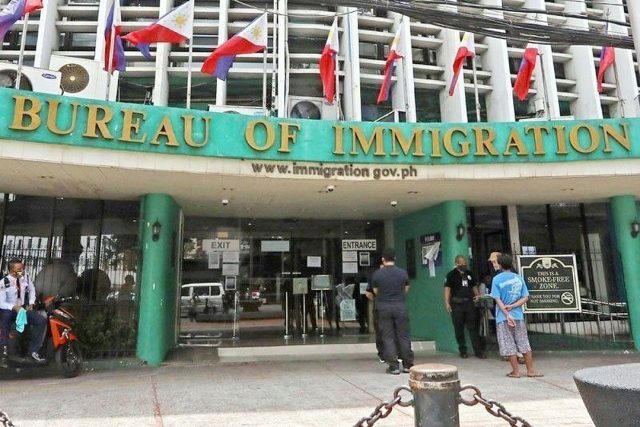
THE BUREAU of Immigration (BI) said on Sunday that it monitors over 70% of international flights using a digital passenger screening system that flags travelers listed under international alerts.
Immigration Commissioner Joel Anthony M. Viado said the Advance Passenger Information System (APIS), part of the agency’s ongoing modernization push, allows authorities to identify potential threats even before passengers land. “Technology is a vital tool in protecting our borders,” Mr. Viado said in a statement.
The BI’s APIS Operations Center (APOC) on Oct. 4 flagged a Canadian national listed under an Interpol alert for banking and financial fraud, while he was still airborne en route to Ninoy Aquino International Airport (NAIA).
He was denied entry upon arrival, while another unidentified foreign national, described by BI as a suspected terrorist, was also denied entry.
The United Nations goTravel APIS project, funded by the Australian Government through the United Nations Office of Counter-Terrorism, currently receives advance passenger information from 22 airlines, accounting for 70.84% of arrivals and departures across international airports throughout the Philippines.
Meanwhile, BI’s Fugitive Search Unit arrested seven South Korean nationals allegedly operating small-scale online gambling workstations in a condominium in Clark Freeport Zone, Pampanga, on Oct. 13. One of the suspects had been previously listed as wanted for overstaying after prior Philippine offshore gaming operators were shut down, indicating the persistence of illegal offshore gaming operations.
In Iloilo on Oct. 10, BI intercepted two Filipino passengers attempting to travel to the Kingdom of Tonga in the South Pacific for employment as store cashiers after they paid recruiters between P8,000 and P14,000 and initially misrepresented their travel purpose. Tonga is on the US State Department’s Tier 2 Watch List for human trafficking. — Erika Mae P. Sinaking

PRESIDENT Ferdinand R. Marcos, Jr. on Sunday led the launch of the Pasig Bigyang Buhay Muli (PBBM) project’s fourth phase, which forms part of his administration’s effort to transform the historic Pasig River into a vibrant urban corridor that integrates transport, tourism, and green development.
The initiative seeks to turn the Pasig River — long plagued by neglect and pollution — into a thriving destination characterized by safe walkways, bikeways, and green public spaces.
The Inter-Agency Council for the Pasig River Urban Development envisions the river as a hub that connects culture, commerce, and community, while advancing the government’s goals of sustainable urban development and intercity mobility.
Building on the progress of Phase 3 launched earlier this year, Phase 4 focuses on developing pedestrian walkways, bike lanes, commercial spaces, and new bridges.
The segment will link Phase 1A to the Light Rail Transit Authority property and extend all the way to Arroceros Park, completing a key stretch of the continuous riverfront redevelopment plan — Chloe Mari A. Hufana

BAGUIO CITY — More than 1,400 passed this year’s nationwide entrance examinations for the Philippine Military Academy (PMA), with young women claiming the top spots.
Leading the list of over 1,400 successful examinees is Amanda Isabel T. Guzman from the Philippine Science High School in Bicol Region.
Out of 33,640 online applicants, 24,671 who qualified took the exam between July and September 2025 in 48 testing centers across the country.
A total of 1,436 passed, giving a 5.82% passing rate — an increase from last year’s 5.02%. This rise reflects a growing interest among the youth to serve in the Armed Forces of the Philippines (AFP).
Also among the top three were Gwen Kyla P. Phalashol from the Philippine Science High School – Central Mindanao Campus and Aafia Khim Alzeynaah P. Lomondaya from Albert Einstein School Inc.
Their achievements highlight the increasing presence and excellence of young women in military leadership paths.
The successful examinees will now move on to a strict selection process that includes medical, physical, and psychological evaluations.
Those who will be accepted will belong to the PMA Class of 2030, which will begin training in May next year. — Artemio A. Dumlao

COTABATO CITY — Rescuers are searching for a couple in a tricycle that fell from a stretch of a highway on a high ground in Manuel Quezon, Bukidnon late on Saturday after a heavy downpour in the area.
Officials of the Manuel Quezon Municipal Disaster Risk Reduction and Management Office and the Bukidnon Provincial Police Office separately told reporters at noon on Sunday, that Ely S. Ubatay and his wife, Thelma B. Ubatay, were in their green tricycle, on their way home to Barangay Kahusayan in nearby Kitaotao town in Bukidnon, when a portion of the highway in the Overview Area in Barangay Palacapao suddenly collapsed.
The soil and rocks from the steep side of the highway fell, along with the tricycle of the Ubatays, into a lowland some 90 meters below.
Rescuers had found the damaged tricycle of the Ubatays partly covered by debris from the high side of the thoroughfare and were still searching for the two of them until Sunday afternoon.
Units of the Police Regional Office-10 and the Bureau of Fire Protection in Bukidnon have teams assisting in the search and rescue operation of the Manuel Quezon local government unit. — John Felix M. Unson

THE DEPARTMENT of Energy (DoE) is looking to grant incentives for pioneering waste-to-energy (WTE) projects, including exemptions from the competitive selection process (CSP) and priority dispatch on the spot market.
In a draft circular, the DoE is proposing that pioneer WTE projects be exempt from CSP regardless of capacity. The CSP policy requires distribution utilities to procure power through a transparent and competitive bidding process at a least-cost basis.
Pioneer WTE projects are also under consideration for priority dispatch in the Wholesale Electricity Spot Market (WESM), the trading floor where power distributors procure their supply when their long-term power supply deals are not sufficient to meet their requirements.
Under the proposal, a WTE developer may choose to incentives schemes under either the Renewable Energy Act, which provides sector-specific incentives, or under the CREATE MORE Act (Corporate Recovery and Tax Incentives for Enterprises to Maximize Opportunities for Reinvigorating the Economy Act), which provides broader and more flexible incentives.
The government is also tasked with ensuring that the pioneer WTE project with off-take arrangements under the Green Energy Auction Program has sufficient feedstock through deals with highly urbanized cities (HUCs), local government units, or other government entities.
The Energy Regulatory Commission will be tasked with formulating the price-setting scheme that will establish the tariff range for electricity generated from WTE facilities.
Meanwhile, the transmission network provider and system operator will have to coordinate with the developer in the course of planning, construction, grid connection, and operational integration.
“The integration of WTE in the power generation mix represents a strategic approach to addressing the dual challenges of growing energy demand and increasing solid waste generation,” the DoE said.
WTE is the process of converting non-recyclable waste materials into usable heat, electricity, or fuel using various technologies.
To be qualified as pioneer WTE projects, the facility must be constructed and installed not later than 2027.
Earlier this month, the DoE announced that it will conduct a special auction round in January designed for WTE projects that will source their waste feedstock within Metro Manila and HUCs.
There will also be a succeeding auction round for biomass and WTE technologies by the second quarter of 2026.
The DoE views WTE project development as one of the strategies to address solid waste management while also mitigating floods and providing a supply of “clean energy.” — Sheldeen Joy Talavera
