Home Blog Page 828

Agreement reached to avert Broadway actors’ strike, union says

TIM GREEN/FLICKR.COM

BROADWAY ACTORS have reached a tentative agreement to avert a strike that would have shut down 32 stage productions as theater attendance approaches its peak season, according to their union.

Actors’ Equity, a union that represents more than 51,000 actors and stage managers, said it reached a tentative, three-year agreement with The Broadway League, the trade association that represents theater owners, producers, and operators.

However, the producers have yet to reach an agreement with the American Federation of Musicians Local 802, which represents Broadway’s musicians, so a strike by that union is still possible. The actors union said it would put its full support behind the musicians union as it works to reach an agreement.

Al Vincent, Jr., executive director and lead negotiator for Actors’ Equity, said that the agreement “saves the Equity-League Health Fund while also making strides in our other priorities including scheduling and physical therapy access.”

The agreement for the contract has been sent to members for ratification, according to the union. The previous three-year contract ended on Sept. 28.

The union had earlier in September threatened to walk off the stage as it had not reached an agreement. A central issue in bargaining had been healthcare and the contribution the Broadway League makes to the union’s health care fund.

Other sectors of the entertainment industry have been roiled by labor unrest, with Hollywood actors and writers striking in 2023, as they fought for better compensation in the streaming TV era and curbs on the use of artificial intelligence.

Video game actors staged a nearly year-long walkout as they sought protections against the use of artificial intelligence, before reaching a tentative agreement with game studios in July. — Reuters

Digital swagger

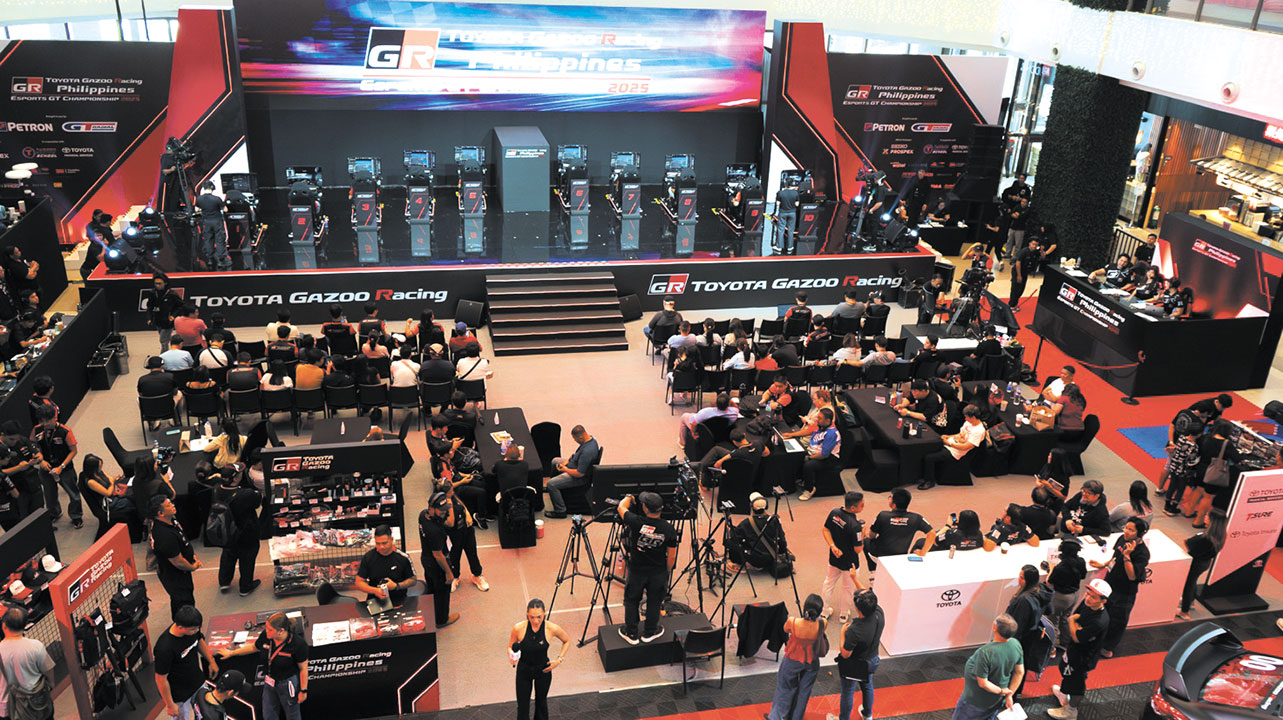
Podium placers at the Toyota Gazoo Racing Philippines eSports GT Championship, Victor Ancheta (champion), Enzo Ison (second), and Matthew Ang (third) are joined by Toyota Motor Philippines (TMP) Vice-President for Marketing Services Elvin Luciano (left) and TMP Senior Vice-President for Marketing Masahiro Haoka. — PHOTO BY KAP MACEDA AGUILA

Sim race podium finishers ready for regional tilt

By Joyce Reyes-Aguila

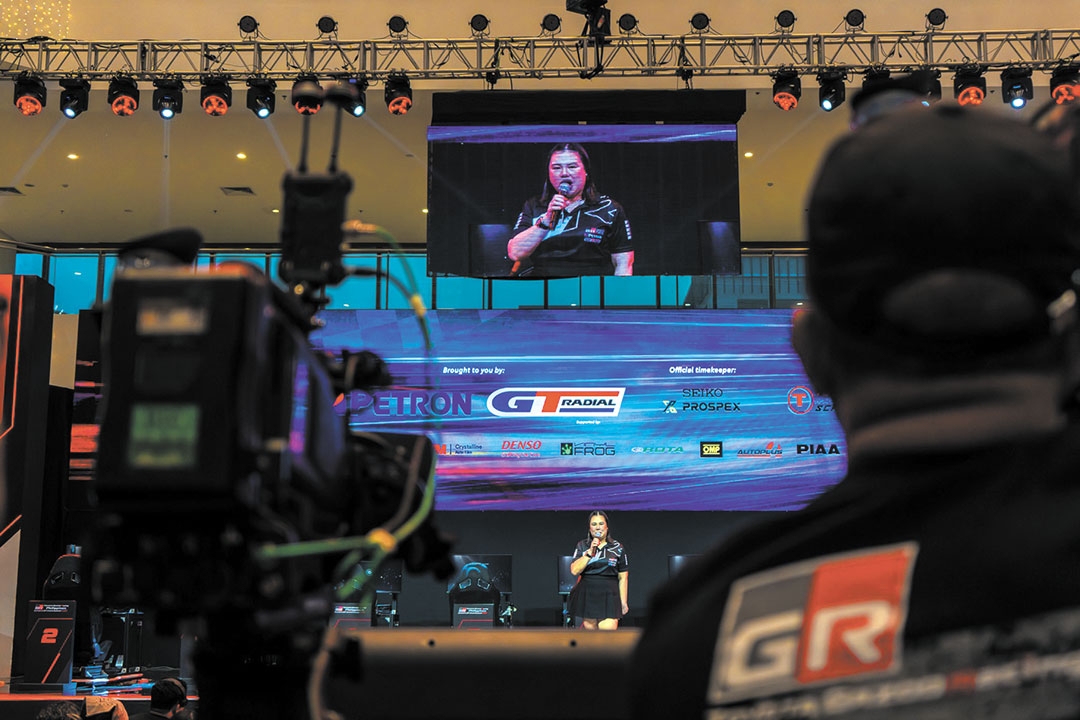
THREE FILIPINOS are out for international glory after emerging as victors in this year’s Toyota Gazoo Racing Philippines eSports GT Championship, a sim racing tournament staged by Toyota Motor Philippines (TMP). Victor Ancheta was declared national finals champion and will represent the country at the Asia Finals in Thailand, alongside other podium finishers Enzo Ison (second) and Matthew Ang (third).”

“(We have) always championed racing in the country, particularly through our one-make race series, the Toyota Gazoo Racing Philippine Cup,” TMP Vice-President for Marketing Services Elvin Luciano shared exclusively to “Velocity.” He continued, “It has always been our goal to help the local racing community grow. That is why we constantly evolve and expand our programs to open more venues for aspiring racers and car enthusiasts, and to provide platforms where racing talent can be discovered and honed. Esports is one entry point, and just like what we’ve proven in the previous editions of our sim racing tournament, it can open more possibilities to explore more racing tracks and disciplines.”

The Toyota Gazoo Racing Philippines eSports GT Championship commenced with national qualifiers from Aug. 9 to Sept. 14. Mr. Luciano said TMP opened some of their dealerships nationwide for aspiring racers to join the early rounds of the competition. The top 40 sim racers advanced to the quarterfinals that determined the 20 players who participated in the semifinals at the Ayala Malls Manila Bay last Oct. 11 and 12. The competitions were played on the PlayStation 5’s Gran Turismo 7 game. Messrs. Ancheta, Ison, and Ang will be representing the country in the TGR Asia eSports GT Championship in Thailand this year.

“TMP will be with the winners every step of the way until they compete at the Asia Finals, from the training sessions to their actual competition,” the executive added. “We are hoping our past eSports champions-turned-TGR Philippines racers Luis Moreno and Russel Reyes can also inspire and mentor them. The winners are representing Team Philippines now and we know how passionate Filipinos are when it comes to representation on the international stage, so the Asia Finals is something we should really prepare for. Beyond the international competition, we are also expecting to see them in our other TGR programs like the TGR Academy and, hopefully soon, in our actual TGR driving and racing events.”

Mr. Ancheta came away with the championship after amassing 72 points, followed by Mr. Ison (67.5), and Mr. Ang (61.5). Completing the Top 11 are Michael Vincent Velasquez, Jether Miole, Corwin Mercado, Jon Chua, Alonso Lacambra, James Patrick Lopez (who qualified via a wild-card round), James Michael Ortiz, and Russo Formoso.

During the virtual race weekend, spectators also had a chance to see TMP vehicles from the GR Performance line as well as the Vios and Tamaraw OMR (one-make race) cup cars up close. An original GR merchandise store and activities for Toyota fans of all ages were also available to the public.

In an interview last August during the Toyota Vios Cup race in Clark, Pampanga, Mr. Luciano emphasized to “Velocity” that Toyota Gazoo Racing has always been about community. “We are building racing communities, the car culture in the country,” he had said. “(We aspire) for TGR to be a venue, not just for Toyota fans or Toyota customers to enjoy, but also to gather like-minded people and to have that one venue for all the race enthusiasts in the country to feel that they belong.”

The World Wide Web was meant to unite us, but is tearing us apart instead. Is there another way?

STOCK PHOTO | Image by Lookstudio from Freepik

The hope of the World Wide Web, according to its creator Tim Berners-Lee, was that it would make communication easier, bring knowledge to all, and strengthen democracy and connection. Instead, it seems to be driving us apart into increasingly small and angry splinter groups. Why?

We have commonly blamed online echo chambers, digital spaces filled with people who largely share the same beliefs — or filter bubbles, the idea that algorithms tend to show us content we are likely to agree with.

However, these concepts have both been challenged by a number of studies. A 2022 study led by one of us (Dana), which tracked the social media behaviors of 10 respondents, found people often engage with content they disagree with — even going so far as to seek it out.

When an individual engages with a disagreeable post on social media — whether it’s “rage bait” or something else that offends you — it drives income for the platform. But on a societal scale, it drives antisocial outcomes.

One of the worst of these outcomes is “affective polarization,” where we like people who think similarly to us, and dislike or resent people who hold different views. Research and global surveys both show this form of polarization is growing across the world.

Changing the economics of social media platforms would likely reduce online polarization. But this won’t be possible without intervention from governments, and each of us.

HOW OUR VIEWS GET REINFORCED ONLINE
Social media use has been associated with growing affective polarization.

Online, we can be influenced by the opinions of people we agree or disagree with — even on topics we had previously been neutral towards. For instance, if there’s an influencer you admire, and they express a view on a new law you hadn’t thought much about, you’re more likely to adopt their viewpoint on it.

When this happens on a large scale, it gradually separates us into ideological tribes that disagree on multiple issues: a phenomenon known as “partisan sorting.”

Research shows our encounters on social media can lead to us developing new views on a topic. It also shows how any searches we do to get more insight can solidify these emerging views, as the results are likely to contain the same language as the original post that gave us the view in the first place.

For example, if you see a post that inaccurately claims taking paracetamol during pregnancy will give your baby autism, and you search for other posts using the key words “paracetamol pregnancy autism,” you will probably get more of the same.

Being in a heightened emotional state has been linked to higher susceptibility to believing false or “fake” content.

WHY ARE WE FED POLARIZING CONTENT?
This is where the economics of the internet come in. Divisive and emotionally laden posts are more likely to get engagement (such as likes, shares, and comments), especially from people who strongly agree or disagree, and from provocateurs. Platforms will then show these posts to more people, and the cycle of engagement continues.

Social media companies leverage our tendency towards divisive content to drive engagement, as this leads to more advertising money for them. According to a 2021 report from the Washington Post, Facebook’s ranking algorithm once treated emoji reactions (including anger) as five times more valuable than “likes.”

Simulation-based studies have also revealed how anger and division drive online engagement. One simulation (in a yet to be peer-reviewed paper) used bots to show that any platform measuring its success and income by engagement (currently all of them) would be most successful if it boosted divisive posts.

WHERE ARE WE HEADED?
That said, the current state of social media need not also be its future.

People are now spending less time on social media than they used to. According to a recent report from the Financial Times, time spent on social media peaked in 2022 and has since been declining. By the end of 2024, users aged 16 and older spent 10% less time on social platforms than they did in 2022.

Droves of users are also leaving bigger “mainstream” platforms for ones that reflect their own political leanings, such as the left-wing BlueSky, or the right-wing Truth Social. While this may not help with polarization, it signals many people are no longer satisfied with the social media status quo.

Internet-fueled polarization has also resulted in real costs to government, both in mental health and police spending. Consider recent events in Australia, where online hate and misinformation have played a role in neo-Nazi marches, and the cancellation of events run by the LGBTQIA+ community, due to threats.

For those of us who remain on social media platforms, we can individually work to change the status quo. Research shows greater tolerance for different views among online users can slow down polarization. We can also give social media companies less signals to work from, by not re-sharing or promoting content that’s likely to make others irate.

Fundamentally, though, this is a structural problem. Fixing it will mean reframing the economics of online activity to increase the potential for balanced and respectful conversations, and decrease the reward for producing and/or engaging with rage bait. And this will almost certainly require government intervention.

When other products have caused harm, governments have regulated them and taxed the companies responsible. Social media platforms can also be regulated and taxed. It may be hard, but not impossible. And it’s worth doing if we want a world where we’re not all one opinion away from becoming an outcast.


George Buchanan is the Deputy Dean at the School of Computing Technologies, at RMIT University. Dana McKay is the Associate Dean, Interaction, Technology and Information, at RMIT University. She has received funding from the Australian Research Council, the Australian Digital Health Agency, and Google (this last ruing her PhD).


Peso may move sideways ahead of Fed policy ruling

PHILIPPINE STAR/ MIGUEL DE GUZMAN

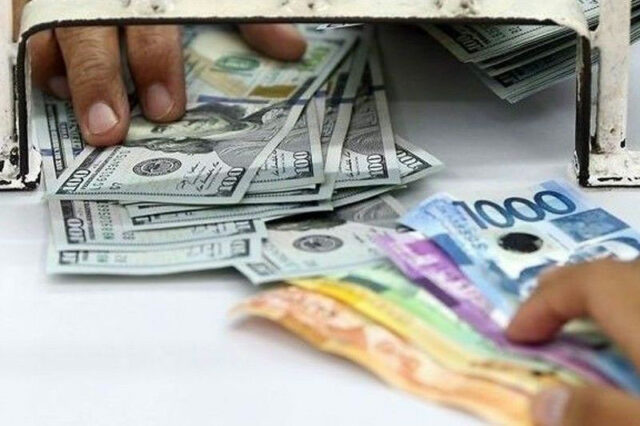
THE PHILIPPINE PESO is expected to trade narrowly against the dollar this week as investors await signals from the US Federal Reserve’s policy meeting.

“The dollar-peso closed a bit higher on Friday but was mostly sideways as players anticipate the Federal Open Market Committee (FOMC) meeting and lack of strong catalysts,” a trader said in a phone interview.

It closed at P58.16 a dollar on Friday, down 3.5 centavos from its P58.125 finish on Thursday, according to Bankers Association of the Philippines data posted on its website. Week on week, the peso weakened by 8 centavos from P58.24 on Oct. 10.

Michael L. Ricafort, chief economist at Rizal Commercial Banking Corp., said the peso was dragged by a stronger dollar as investors sought safe-haven assets amid rising US-China trade tensions.

This week, the local currency is expected to remain range-bound, with investors cautious ahead of a possible Fed rate cut.

The trader said the peso could move from P57.90 to P58.30 a dollar, while Mr. Ricafort expects a slightly wider band of P57.90 to P58.35. — AMCS

English winemakers counting on exports as warm weather improves growing conditions

JEFF SIEPMAN-UNSPLASH

WEST CHILTINGTON, England/OSLO — English winemakers are betting that surging exports can sustain their once novelty product after domestic sales growth slowed, hoping for a boost from Britain’s warmest summer on record this year as climate change optimized conditions.

Days before pickers started to harvest this year’s crop, sparkling wine from southern England beat french champagne to win one of the industry’s most prestigious awards, lifting its prospects in markets like Norway, Japan and China.

Foreign sales have become more important as a subdued economy at home weighs on demand for a premium product. International producers are snapping up the country’s increasingly attractive land to produce wine to sell home and abroad.

“Export is where the real growth is in the coming period,” said Brad Greatrix, senior winemaker at Nyetimber, the English company which became the first non-French winner of the International Wine Challenge sparkling wine award in September.

English wineries started to emerge in the 1990s as adventurous landowners took advantage of warmer summers. Now, on chalky slopes across southern England, vines are being planted on land once used for crops, apple orchards and golf courses.

Since 2000, English wine production has risen by an average 7% per year, and is set to keep growing after land dedicated to vines jumped by 30% between 2020 and 2024.

However, while British demand has driven growth so far, last year sparkling wine sales — which at 6.2-million bottles accounted for 70% of total wine sales — were flat, down from 11% growth the previous year. In September, Chapel Down, Britain’s biggest wine producer, cancelled plans to build a new winery.

Nicola Bates, chief executive officer of industry body WineGB, said steady sales were an achievement when restaurants and bars were struggling, and when champagne shipments to Britain fell 13% last year.

For many consumers English fizz is a luxury product, with the biggest brands Chapel Down and Nyetimber costing 30 pounds ($40) and 42 pounds respectively per bottle, similar to Champagnes.

With more vines being planted, Mr. Bates said, “we need to be growing sales at a faster pace for mid- to long-term health.”

Though some winemakers will not sell this year’s prized vintage for several years, exports are a bright spot they hope to build on. Export volumes grew 35% to account for 9% of total sales of English wine in 2024, and Bates said she was targeting doubling that figure by 2030.

Norway tops the list of buyers by volume. Its imports of English sparkling wine jumped to 111,639 liters last year from 451 liters in 2015, according to its wine monopoly, the single state body allowed to import wine and spirits.

That growth is far ahead of rises from other countries, said Arnt Egil Nordlien, the monopoly’s head of product.

Aleksander Iversen, a sommelier at Brasserie Coucou in Oslo, says Norwegians are open-minded and curious about wine. Some customers specifically request English wines while others discover it on recommendation.

“Most are surprised by the quality, they often remark that it rivals top Champagne, but with its own unique character,” he said.

This year, English vineyards have experienced “almost perfect growing season conditions,” said Alistair Nesbitt, chief executive at Vinescapes, a viticulture consultancy.

The average temperature in southern England during the spring to autumn grape growing season has increased by 1 to 1.5 degrees Celsius over the last 40 to 50 years, he said, but it’s not always straightforward.

Climate change means more unpredictable weather events and that is also affecting England. Persistent wet weather in 2024, for example, hit the grape harvest, cutting production by half compared to the previous year.

While climate change means more variability for wine producers globally, Mr. Nesbitt said cooler climates like England have the advantage over areas in southern Europe, which are being hit by more frequent droughts and heatwaves.

Wine producers from the US, France and Australia started buying English land around a decade ago, with french champagne house Taittinger acquiring a site in 2015 and California’s Jackson Family Wines establishing a presence in 2023.

“If you’re in a real climate-stressed area of the world, and you want to keep your wine production enterprise going, you look to cooler areas like the UK,” he said. — Reuters

Federal Land eyes multiple residential launches next year

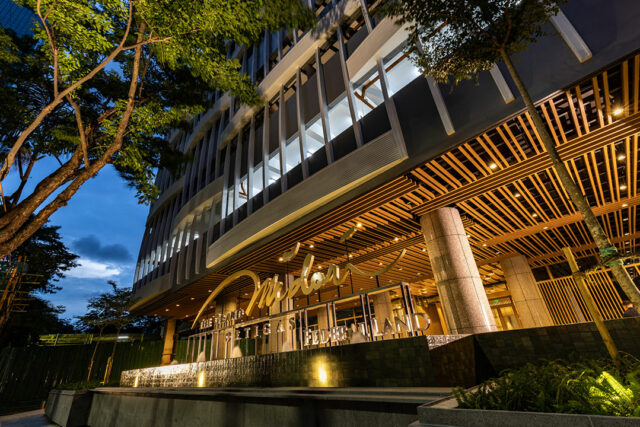
The Grand Midori Ortigas — FEDERALLAND.PH

FOLLOWING the inauguration of Grand Midori Ortigas Tower 1, Federal Land, Inc. (FLI) said the company plans several new residential projects in 2026, including a 21-hectare horizontal development in Biñan, Laguna, expanding its existing Meadowcrest community.

“This year, we’re done with project launches. But next year, we plan to launch the Biñan horizontal development, a sequel to Meadowcrest,” FLI President Jose Mari H. Banzon said on the sidelines of the Tower 1 opening on Friday last week.

Grand Midori Ortigas Tower 1, located in the heart of the Ortigas Central Business District along Exchange Road, stands 45 stories high with 482 units, over 80% of which are already sold.

The Japanese-themed development was designed with Tokyo-based Tange Associates and offers studio units (35.5-38 square meters [sq.m.]), one-bedroom (46-64 sq.m.), two-bedroom (70-107 sq.m.), and three-bedroom units (105-109 sq.m.).

Tower 2, still in pre-selling, is expected to be completed by late 2026 or early 2027, with additional amenities planned.

“Tower 1 offers nearly the same amenities as our Makati project, but with improvements. Our innovations have enhanced the living experience,” said Product Planning Senior Manager Coney Mirhan, highlighting features such as a fitness gym, lap pool, Jacuzzi, landscaped garden, and function rooms.

Federal Land also plans to launch the third phase of Grand Hyatt Residences in Bonifacio Global City next year, following the full sell-out of the first two phases.

A two-tower residential project near The Seasons Residences is also being prepared, while other potential projects in Marikina and the Bay Area remain on standby depending on market demand.

Federal Land is a subsidiary of GT Capital Holdings, Inc., a conglomerate with interests in automotive, banking, and real estate. — Alexandria Grace C. Magno

Picasso painting disappears en route to Granada exhibit

MADRID — A 1919 Pablo Picasso painting has disappeared in transit ahead of its display at a temporary exhibition in the southern Spanish city of Granada, prompting a police investigation, according to the foundation organizing the exhibit.

The CajaGranada Foundation said in a statement late on Thursday that the missing piece — a small framed gouache titled Still life with guitar — was part of a larger shipment of artworks moved from Madrid to the Andalusian city for the exhibition Still life. The eternity of the inert.

The foundation confirmed on Friday that the painting, owned by a private collector and measuring 13 x 10 centimeters (5 x 4 inches), was insured for an appraised value of €600,000 ($700,000).

The shipment was delivered to the CajaGranada cultural center on the morning of Oct. 3, a Friday.

The loss was not discovered until the following Monday, when the exhibit’s curator and the foundation’s head of exhibitions began unpacking the crates.

“As not all packages were properly numbered, it was not possible to carry out a thorough check without unpacking them,” the foundation added.

The CajaGranada Foundation said it had reviewed the security footage from that weekend and confirmed “no incident occurred” during that time.

After discovering the painting was missing, the foundation filed a complaint with Spain’s national police.

The organization said it has made all its resources available to investigators and expressed confidence in the authorities’ ability to resolve the case. — Reuters

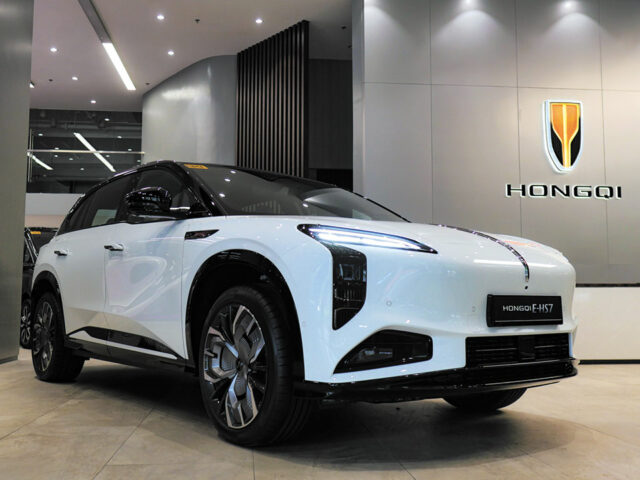
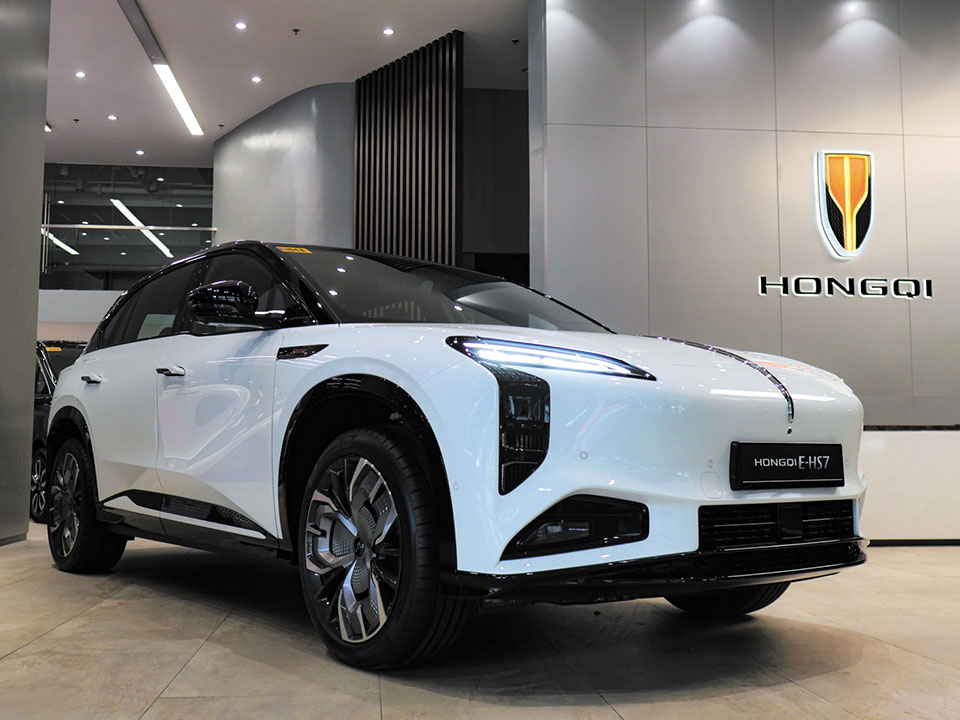
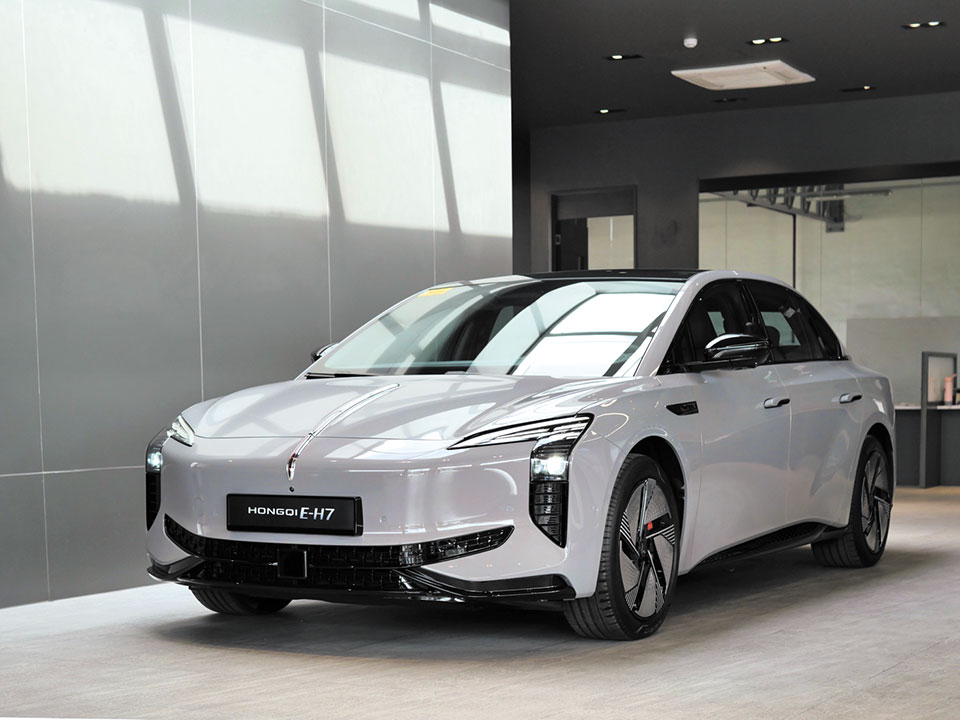
Hongqi E-HS7, E-H7 get five-star safety rating from Euro NCAP

Hongqi E-HS7 — PHOTO FROM HONGQI PHILIPPINES

CHANGCHUN, JILIN-HEADQUARTERED auto marque Hongqi recently received five-star safety ratings for its newest flagship electric models, the E-H7 and E-HS7. The models were recognized by Euro NCAP following their performance in its standardized safety test. These models join the E-HS9, which previously also received five stars from the Euro NCAP.

For models to secure the highest rating, they must undergo and pass several extreme tests. To name a few, vehicles are subjected to a water submersion test to determine how well they can perform amid flooding, and are tested for leaks. Other tests include smoke, explosion, and fire — all passed satisfactorily by the vehicles. Collisions were also simulated for the front and rear at speeds of up to 100kph, followed by dedicated side-impact assessments which were hurdled with no significant deformation of the cars’ pillars and with air bags deploying as designed. Finally, a compression simulated a massive object falling onto the vehicle, equivalent to nearly 7.8 tons on the panoramic glass roof. This final test left minimal deformation, leaving ample survival space for occupants.

“As faithful Hongqi owners know, the moment you step into a Hongqi vehicle, you immediately enter a world of luxury both inside and out. But feeling comfortable and looking great on the road mean nothing when a vehicle isn’t safe,” said Hongqi Philippines and EVOxTerra President and TDG Co-CEO Rashid Delgado. “That’s why our ultimate priority has always been the protection of all passengers, drivers, and even pedestrians, whenever someone takes the wheel of an E-H7 or E-HS7.”

The E-H7 sedan starts at P2.28 million, and boasts a range of 650km; the E-HS7 (P2.58 million) can go up to 540km between charging sessions.

Hongqi showrooms are in BGC, Alabang, Manila Bay, and Quezon City. For more information, visit www.hongqi.ph, or follow Hongqi Philippines on Facebook (hongqi.philippines) and Instagram (@hongqi_ph).

GSIS net income hits P100B at end-August

GSIS FACEBOOK PAGE

THE GOVERNMENT Service Insurance System (GSIS) had posted a net income of P100.02 billion as of end-August, driven largely by robust investment performance, the state pension fund said on Sunday.

“This means that GSIS is not only protecting our members’ contributions but also growing them through strategic and responsible investing,” GSIS President and General Manager Jose Arnulfo A. Veloso said in a statement.

About half of the fund’s income during the period came from investments, according to its August financial records. The GSIS said total assets rose to a record P1.92 trillion.

Mr. Veloso said the fund’s solid performance in the first eight months of the year would support its 1.7 million members and pensioners. — A.M.C. Sy

A united community against influenza-like illness

STOCK PHOTO | Image by Benzoix from Freepik

Last week, many public and private schools across the country suspended face-to-face classes and shifted to alternative learning modalities amid a rise in influenza-like illness (ILI) cases among both adults and children.

ILI refers to a respiratory infection caused by various bacteria and viruses. A person is suspected of having ILI when they develop a fever of 37.8°C or higher and a cough that began within the past 10 days.

“ILI cases occur throughout the year in the Philippines, typically peaking from June to January, coinciding with the rainy season,” said infectious disease specialist Dr. Rontgene Solante during a special edition of the Philippine College of Physicians (PCP) Health Forum titled “Fighting Flu Together: Protecting Us All.”

Citing Department of Health (DoH) data, Dr. Solante reported 121,716 ILI cases from Jan. 1 to Sept. 27. Most cases (27%) involved children aged 5 to 14 years. Almost half (45%) were caused by the influenza A virus, followed by rhinovirus (14%) and enterovirus (12%). COVID-19 accounted for only 1% of ILI cases.

He noted that 9,649 cases were reported from Aug. 31 to Sept. 13, 17% higher than the 8,261 cases reported two weeks earlier. “This increase follows the usual seasonal trend and remains within expected levels,” he explained.

“The weekly national average of 4,000 to 5,000 ILI cases has reached the alert threshold but is still below the epidemic threshold of over 6,000. The DoH continues to closely monitor the situation,” he added.

Regions I, II, Calabarzon, and Mimaropa have exceeded the epidemic threshold at least twice in the past four weeks, accounting for 28% (33,856) of total cases. Regions V, VII, and BARMM also recorded the highest increases compared to the same period last year.

According to Dr. Solante, population density, reduced mask use, and low vaccination coverage particularly among vulnerable groups may have contributed to these trends.

He warned that older adults are at greater risk of complications such as pneumonia, cardiovascular problems, and worsening of chronic respiratory diseases. DoH data from 2013-2023 showed that Filipinos aged 60 and above consistently have the highest ILI case fatality rates. Fortunately, these have remained below 1%, except in 2021 when rates rose to 1.22% due to the COVID-19 pandemic.

Dr. Solante urged all Filipinos aged six months and older to receive annual influenza vaccination, ideally in March or April to ensure protection before flu season peaks in August or September. He also recommended the pneumococcal vaccine for those aged 15 to 49 and adults 50 and older with comorbidities, as well as the respiratory syncytial virus (RSV) recombinant vaccine for individuals 50 to 74 with comorbidities and everyone 75 and above.

“The pneumococcal vaccine helps prevent Streptococcus pneumoniae infection, a common secondary bacterial infection in influenza that can cause severe pneumonia and death. Meanwhile, the RSV vaccine protects against severe illness, especially in infants and older adults,” he explained. “Vaccines not only prevent disease — they reduce the risk of severe illness, life-threatening complications, and costly hospitalizations.”

Beyond vaccination, the PCP reminds the public to take simple but effective precautions. Wear a facemask if you are sick, caring for someone with respiratory symptoms, or in crowded indoor spaces. Cover your mouth and nose with a tissue when coughing or sneezing, and discard it immediately. If unavailable, use your upper sleeve or elbow, and never your hands. Wash your hands frequently with soap and water, or use alcohol-based sanitizer if needed. Avoid touching your face with unwashed hands.

Ensure good ventilation by opening windows and doors or using fans and air cleaners. Consider postponing large gatherings while ILI transmission is high. If you experience fever, cough, sore throat, or other symptoms, stay home and wear a mask around others, especially the elderly or immunocompromised. Seek medical attention early if symptoms worsen.

Influenza-like illness is manageable when communities act together. Through vaccination, responsible behavior, and care for one another, we can protect our families, neighbors, and the most vulnerable among us, proving once more that public health is strongest when the community stands united.


Teodoro B. Padilla is the executive director of Pharmaceutical and Healthcare Association of the Philippines, which represents the biopharmaceutical medicines and vaccines industry in the country. Its members are at the forefront of developing, investing and delivering innovative medicines, vaccines, and diagnostics for Filipinos to live healthier and more productive lives.

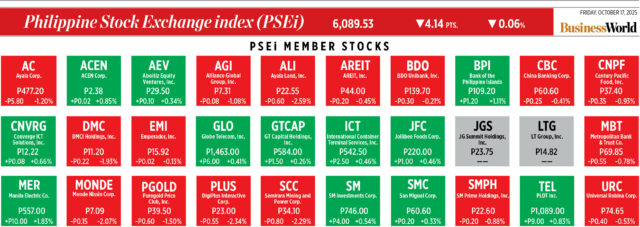
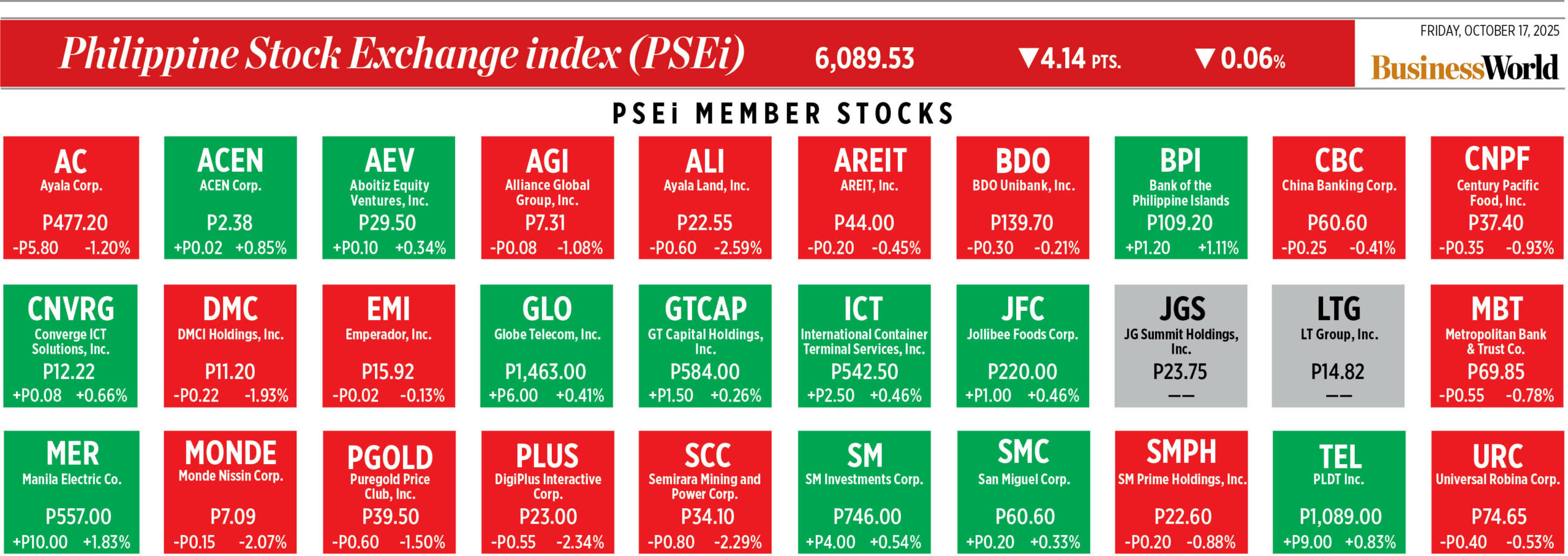
How PSEi member stocks performed — October 17, 2025

Here’s a quick glance at how PSEi stocks fared on Friday, October 17, 2025.


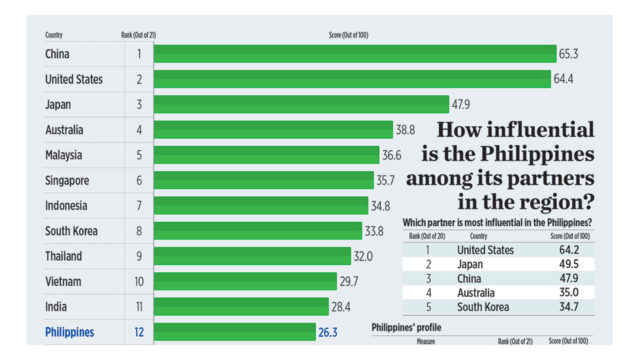
How influential is the Philippines among its partners in the region?

The Philippines was the 12th most influential partner in Southeast Asia, with an overall influence score of 26.3 out of 100, according to the latest data from the Lowy Institute’s Southeast Asia Influence Index. The country excelled in its defense networks but was moderate in economic relationships and cultural and diplomatic influence. The index measures the relative standing of external powers in the region based on four primary domains of bilateral influence: economic relationships, defense networks, cultural influence, and diplomatic influence.

How influential is the Philippines among its partners in the region?

ADVERTISEMENT
ADVERTISEMENT