Home Blog Page 8270

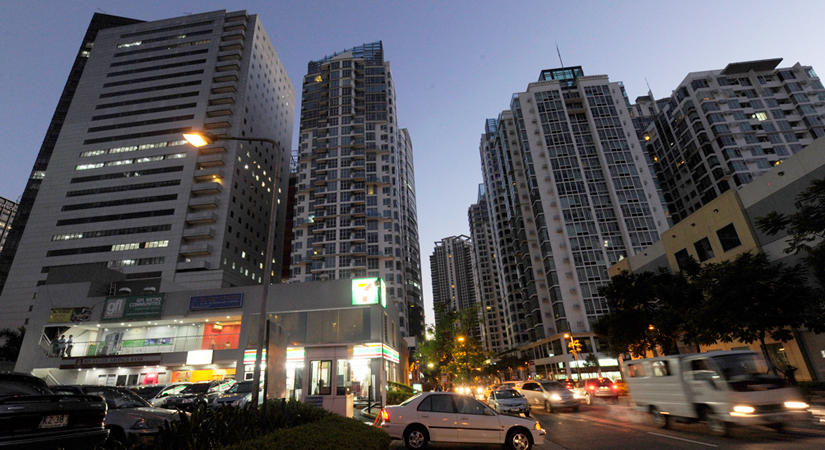
REITs ‘at the forefront’ of region’s real estate transformation

COMPANY HANDOUT

REAL ESTATE investment trusts (REITs) may be “at the forefront of the [real estate] industry’s transformation” as the pandemic shifts market demand, according to Asia Pacific Real Estate Association’s (APREA) market outlook 2021 report.

“Better buildings will, no doubt, form the core of the post-pandemic city. Asset owners and landlords will need to be proactive with measures to entice shoppers and office workers back into their multimillion-dollar investments,” APREA said in its report.

APREA said REITs provide hope for the real estate industry in Asia-Pacific, as these are “likely to be sustained by the region’s emerging markets.”

“We do expect the Asia-Pacific market to grow from the current $300-billion market cap to at least a trillion US dollars once China and India’s REIT markets are established,” APREA Chief Executive Officer Sigrid Zialcita said in an online briefing on Tuesday.

APREA also noted that the Philippines listed its first REIT “at the height of the pandemic last year,” with an additional listing added this year, with a couple more in the pipeline.

The country’s business process outsourcing (BPO) sector is seen as a catalyst for the industry.

“If you look at REITs, the first REIT was established in the Philippines and the portfolio is really on the office side just like many of the fast growing markets and if you look at the asset itself, the tendency is really consisting of the BPO sector,” Ms. Zialcita said. — Keren Concepcion G. Valmonte

Audio app Clubhouse floats payments feature for creators

AUDIO-CHAT app Clubhouse said on Monday it will launch a monetization feature for its creators on the platform and that it will not receive any payment from it.

Starting Monday, all users will be able to send payments through the platform, Clubhouse said. The feature to receive payments will initially be available only to a small test group, and later rolled out to other customers.

Users can send payment to Clubhouse creators who have the feature enabled, by tapping a “Send Money” option. The audio-based social network company said a small card processing fee will be charged by its payment processing partner, Stripe.

The San Francisco-based company, whose app lets people gather in audio chatrooms to discuss different topics, requires newcomers to be invited by existing users before they can join.

The app saw its global user numbers soar after Tesla Chief Executive Officer Elon Musk and Robinhood CEO Vlad Tenev held a surprise discussion on the platform.

In the year since it started, Clubhouse has faced criticism over reports of misogyny, anti-Semitism, and COVID-19 misinformation on the platform despite rules against racism, hate speech, abuse, and false information. — Reuters

PhilWeb earns P7M despite lower gaming revenues

PHILWEB Corp.’s net earnings reached P7 million for the fourth quarter of 2020, despite a decrease in per-site gaming revenues due to lockdown restrictions and health protocols implemented amid the pandemic.

“PhilWeb has been EBITDA positive since October 2020 and net income since November 2020 despite gaming venues generally averaging 60% daily revenues from pre-quarantine levels,” Edgar Brian K. Ng, president of PhilWeb, said in a statement on Monday.

Revenues for the quarter totaled P105 million, while the company generated an EBITDA (earnings before interest, tax, depreciation, and amortization) of P30 million. No comparative figures from the same period in the previous year were disclosed.

For 2020, PhilWeb and its subsidiaries trimmed their net loss attributable to the parent company by 30% to P59.51 million. Total revenues declined by 50.9% to P264.88 million from P539.86 million.

The company and its subsidiaries incurred losses before interest, tax, depreciation, and amortization worth P13.53 million, a reversal of its 2019 full-year EBITDA of P58.4 million.

The net loss of parent company PhilWeb ballooned to P542.47 million from P62.13 million the previous year.

However, Mr. Ng said: “The company is on stable ground and well positioned as we anticipate the return to economic activity in the second half of the year.”

“Our fourth-quarter 2020 results came before PhilWeb’s acquisition of 16 eBingo (electric bingo) venues and two accredited eBingo machine providers, as well as the revenue contribution of additional eGames sites incrementally converting back to our electronic gaming system at the start of 2021,” Mr. Ng said.

In March, the company said it acquired eBingo outlets and eBingo machine suppliers for P450 million and P280 million, respectively. The transaction was made to expand PhilWeb’s business, which now has a “two-fold footprint in the whole electronic gaming sector.”

Some 69 eGames (electronic games) outlets and 22 eBingo outlets of the company were said to be operational at the end of last year.

“As of today, there are 85 eGames locations utilizing PhilWeb’s electronic gaming system and 68 eBingo locations utilizing PhilWeb’s eBingo machines,” the company said.

PhilWeb is an accredited service provider of the Philippine Amusement and Gaming Corp. It recently secured approval to operate its remote gaming platform, which provides customers access to gaming products beyond its venues.

On Tuesday, PhilWeb shares at the exchange rose by 2.11% to close at P2.91 from P2.85 apiece. — Keren Concepcion G. Valmonte

UK’s Glastonbury Festival, cinemas, museums get gov’t cash to survive COVID

LONDON — Glastonbury Festival will join 2,700 museums, theaters, cinemas, and arts venues in receiving a share of 400 million pounds in grants and loans to help them survive the COVID-19 pandemic, the British government announced on Friday.

Entertainment venues across Britain were forced to close last March because of the coronavirus crisis and while some partially reopened last summer, many have remained shut since then.

Last July, the government unveiled a £1.57 billion ($2.2 billion) Culture Recovery Fund (CRF) package of grants and loans, and on Friday detailed where the latest tranche of funding would be spent.

Among the recipients is Glastonbury, the largest greenfield music festival in the world, which has been forced to cancel for two years running. It will receive £900,000.00 to help carry it through to 2022.

“This grant will make a huge difference in helping to secure our future,” founder Michael Eavis and daughter Emily said in a statement.

Tens of millions of pounds have been made available to theaters, while the English Heritage Trust, which looks after 420 historic monuments, buildings, and objects, will receive £23.4 million. The British Film Institute has also awarded 6.5 million to help independent cinemas.

The government says the CRF has helped protect more than 75,000 jobs and ensure thousands of organizations survive the COVID crisis. “Now we’re staying by their side as they prepare to welcome the public back through their doors,” culture minister Oliver Dowden said.

Under the government’s pandemic “roadmap,” it is hoped many venues will be able to reopen to live audiences from mid-May and the latest funding is designed to help theaters, museums and comedy clubs make necessary preparations.

The government was accused last month of being too slow to hand out CRF money to recipients, with parliament’s spending watchdog saying only £495 million of the first 1 billion pound tranche had been paid out by late February.

The culture department said nearly all the £1.57 billion had now been allocated. —  Reuters

APC Group incurs bigger net loss

APC GROUP, Inc. on Tuesday reported an attributable net loss of P5.87 billion last year, up 11% from a year ago, as the listed holding firm recorded a double-digit decrease in revenues.

“This decrease is mainly brought about by the lower interest income from cash and money market placements for 2020 given the also lower amount of cash,” APC told the stock exchange in a regulatory filing.

APC posted a 75% fall in total revenues to P1.27 million from P4.97 million the year before.

The firm also gave updates on the operations of its various units, which include Aragorn Power and Energy Corp. (APEC), APC Energy Resources, Inc., and PRC-Magma Energy Resources, Inc.

As of March 1, APEC remained in the exploration stages. APC Energy, APC Mining Corp., APC Cement Corp., and PRC Magma are in the pre-operating stages.

APEC in 2018 secured government certification for its geothermal project, which was named by the Department of Energy as an energy project of national significance. This means that the project, during its pre-development stage, qualifies for all the rights and privileges under Executive Order 30 series 2017, which created the Energy Investment Coordinating Council.

On Tuesday, shares in APC rose by 2.6% to close at P0.385 apiece. — Angelica Y. Yang

Gov’t makes full award of fresh 5-year bonds on strong demand

THE BUREAU of the Treasury fully awarded the five-year bonds it offered on Tuesday as demand for government securities remained strong.

THE GOVERNMENT made a full award of the fresh five-year Treasury bonds (T-bonds) it auctioned off on Tuesday amid strong demand.

The Bureau of the Treasury (BTr) borrowed P35 billion via the five-year T-bonds on Tuesday as the offering was over twice oversubscribed, with bids totaling P80.7 billion.

The notes fetched a coupon rate of 3.375%, lower than the 3.3534% quoted at the secondary market on Tuesday for the tenor, based on the PHL Bloomberg Valuation Reference Rates published on the Philippine Dealing System’s website.

The last time the BTr offered the five-year tenor was on May 27 last year, when it made a full P30-billion award of reissued T-bonds at a lower average rate of 2.676%.

National Treasurer Rosalia V. de Leon said the BTr fully awarded its offer of fresh five-year papers as the tenor fetched a low rate on the back of strong appetite for government bonds.

Meanwhile, a bond trader said the coupon rate fetched for the five-year bonds fell within market expectations but was at the higher end of the range, which reflects the government’s need for fresh funds amid the prolonged and worsening coronavirus outbreak.

“The auction saw a strong demand but at a price the market wanted, so basically, it shows that the government is really set to borrow despite higher rates. It also took them up to the 3.475% bids just to complete the P35 billion, meaning the rest of the “demand” wanted higher rates,” the trader said in a Viber message on Tuesday.

The government increased its borrowing program for the month and is set to tap the US debt market soon before rates spike to help fund an expected increase in spending for its pandemic response.

The hard lockdown enforced in Metro Manila and nearby four provinces was extended for another week until April 11 as coronavirus cases continue to spike. The Health department reported 8,355 new cases on Monday, bringing the total number of infections to 803,398.

The government has already given P23 billion to local government units for P1,000 in cash aid for low-income Filipinos in areas covered by the tighter lockdown.

The Treasury wants to raise P170 billion from the local bond market this month, broken down into P100 billion in Treasury bills to be offered weekly and P70 billion via fortnightly auctions of T-bonds.

The government is looking to borrow P3 trillion this year from domestic and external lenders to help fund its budget deficit seen to hit 8.9% of gross domestic product. — Beatrice M. Laforga

Kyoto’s earliest cherry blooms in 1,200 years point to climate change, says scientist

TOKYO — The famous pink cherry blossoms of Kyoto reached full bloom this year on March 26, the earliest date in the 12 centuries since records began, according to a Japanese university.

The earlier flowering indicates climate change, said Yasuyuki Aono, a professor of environmental science at Osaka Prefectural University, who has compiled a database of records of the full blooms over the centuries.

Global temperatures in 2020 were among the highest on record and rivaled 2016 as the hottest year ever, according to international data compiled by the World Meteorological Organization and released in January this year.

“As the temperatures rise the onset of flowering is earlier,” Mr. Aono told Reuters in a Zoom interview.

Osaka University records include court documents from Imperial Kyoto, the ancient capital of Japan, as well as medieval diaries.

Cherry blossoms have long historical and cultural roots in Japan, heralding spring and inspiring artists and poets through the centuries. In modern times, people gather under the cherry blooms every spring for hanami (blossom-viewing) parties that are often well lubricated with sake and can last for days.

With a state of emergency to curb coronavirus infections lifted across all areas of the country many people flocked to popular viewing locations last weekend, although the numbers were lower than in normal years.

Kyoto, no longer the Japanese capital but a beacon of Japanese culture and manners, has long been famous for its temples and blossoms, which have been a valuable tool for observing long-term changes in mean temperatures.

Scientists have often pointed to the earlier flowering times of species such as cherry blossoms as indicators of global warming. The Kyoto record is described in one study as “probably the longest annual record” of biological life cycles from anywhere in the world. —  Reuters

Pangilinan group to provide meals to gov’t hospitals in Metro Manila

METRO PACIFIC companies and foundations said they have expanded their daily distribution of meals for medical frontliners to government hospitals in Metro Manila.

“What started out as a simple treat day for Metro Pacific Hospital frontliners, transformed into a daily commitment to provide them with the needed sustenance to continue their fight to save the lives of Filipinos. The initiative expanded to include government hospitals within the Metro to further broaden the warranted gratitude for COVID frontliners,” the group said in an e-mailed statement.

On Sunday, companies and foundations under the “MVP Group of Companies,” distributed over 7,800 meals to nine Metro Pacific hospitals in Metro Manila.

Their beneficiaries also included government hospitals in Quezon City: East Avenue Medical Center, Philippine Children’s Medical Center, National Kidney and Transplant Institute, Lung Center of the Philippines, Philippine General Hospital, PNP General Hospital, Victoriano Luna General Hospital, and Rizal Medical Center.

“In these uncertain times, we hold on to what we can be thankful for — a prime example of which are our brave frontliners,” Metro Pacific Investments Corp. (MPIC) Chairman Manuel V. Pangilinan said.

“The daily battle they’re fighting is unimaginable and we take it upon ourselves to give them strength, both physically and mentally, as our way of expressing solidarity,” he added.

The group said it intends to carry out the initiative “for the month of April and will continue to do so as needed.”

It also plans to reach out to more hospitals and health-care facilities.

MPIC is one of three Philippine units of Hong Kong-based First Pacific Co. Ltd., the others being PLDT, Inc. and Philex Mining Corp. Hastings Holdings, Inc. — a unit of PLDT Beneficial Trust Fund subsidiary MediaQuest Holdings, Inc. — maintains interest in BusinessWorld through the Philippine Star Group, which it controls. — Arjay L. Balinbin

ABIC seals purchase of PNB’s nonlife arm

ALLIED BANKERS Insurance Corp. (ABIC) has completed its purchase of PNB General Insurers Co., Inc. (PBGen) as it settled the third and last tranche of its payment to the Philippine National Bank (PNB) ahead of the deadline, the listed lender said on Tuesday.

PNB said in a regulatory filing that it received P366.15 million from ABIC for the third and final installment payment for PNBGen on March 31, ahead of the June 21 deadline for the last tranche.

This completes ABIC’s P1.52-billion purchase of PNB’s entire 65.75% stake in PBGen and also marks the bank’s exit from the nonlife insurance space.

ABIC is the nonlife insurance arm of LT Group, Inc. The move to sell PBGen is part of LT Group’s efforts to consolidate its nonlife insurance businesses.

The share purchase agreement was signed on Dec. 29. The proceeds of the transaction will be used for general corporate purposes.

PBGen offers coverage for fire and allied perils, marine, motor car, aviation, surety, engineering, and accident insurance, among others.

PNB has said it will remain involved in the bancassurance business. The bank is also in the life industry via Allianz PNB Life Insurance, Inc., which is a joint venture with German firm Allianz SE.

“The bank will remain in the bancassurance space to support its strategic growth plans and at the same time eliminate insurance underwriting risk,” the lender added.

PNB saw its net income slump by 73% year on year to P2.6 billion in 2020 after increasing its loan loss reserves to P16.9 billion, five times higher than the year-ago level.

It said it allocated loan loss reserves for the worst-hit sectors during the pandemic, including real estate, transportation, wholesale and retail trade to manage risk exposures.

Shares in PNB went up by five centavos or 0.22% to close at P22.85 apiece on Tuesday. — BML

World Health Day 2021: By the numbers

Image via Jernej Furman/Flickr/CC BY 2.0

THE IMPACT of the global pandemic, according to the World Health Organization (WHO), “has been harshest on those communities which were already vulnerable, who are more exposed to the disease, less likely to have access to quality healthcare services and more likely to experience adverse consequences as a result of measures implemented to contain the pandemic.”

For World Health Day 2021 (celebrated today), WHO has chosen the theme “Building a fairer, healthier world” to highlight health inequities.

Here is a snapshot of the world’s health and the country’s, as told by numbers.

PRIMARY HEALTHCARE
3.6 billion — the number of people worldwide who still lack full coverage of essential health services, according to a fact sheet released by WHO this April

930 million — the number of people worldwide who are at risk of falling into poverty due to out-of-pocket health spending of 10% or more of their household budget (WHO, April 1)

1% — the additional percentage of Gross Domestic Product (GDP) that the WHO recommends every country allocate or reallocate to primary healthcare from government and external funding sources (WHO, April 1)

30,604,466 — the total number of members of the Philippine Health Insurance Corporation (PhilHealth) who are direct contributors (or members who pay the monthly premium contribution) as of June 30, 2020 (PhilHealth, 2020 Stats and Charts)

20,807,011 — the total number of members of PhilHealth who are indirect contributors (or members who are indigents and thus do not pay any contributions) as of June 30, 2020 (PhilHealth, 2020 Stats and Charts)

ECONOMIC REPERCUSSIONS
71 to 100 million — the estimated number of people that the COVID-19 crisis pushed into extreme poverty in 2020, effectively wiping out the progress made since 2017 (United Nations Office for Disaster Risk Reduction’s Asia Pacific COVID-19 brief, July 16, 2020)

More than 1 billion — the number of people living in informal settlements or slums who are facing increased challenges in preventing infection and transmission of COVID-19 (UN Department of Economic and Social Affairs, 2020)

$3.7 trillion — the equivalent amount of global income lost due to the pandemic, equivalent to 4.4% of the global GDP (UN International Labour Organization, Jan. 25)

10.3% — the annual unemployment rate in the Philippines in 2020, twice as high as the rate recorded in 2019. Four and a half million Filipinos do not have jobs but are looking for one (Philippine Statistics Authority’s Annual Labor and Employment Estimates, 2020)

COVID-19 CASES
131,716,054 — the total number of COVID-19 cases worldwide at the time of writing, according to the Johns Hopkins University Coronavirus Resource Center

2,860,100 — the number of people worldwide who died of COVID-19 worldwide at the time of writing, according to the Johns Hopkins University Coronavirus Resource Center

803,398 — the total number of COVID-19 cases in the Philippines as of April 6, according to the Department of Health COVID-19 Case Tracker

13,435 — the number of Filipinos who died of COVID-19 as of April 6, according to the Department of Health COVID-19 Case Tracker

116.79 — the total number of vaccination doses administered per 100 people as of April 4 in Israel, which leads all other countries in administered doses per 100 people, according to Our World in Data

0.67 — the total number of vaccination doses administered per 100 people in the Philippines as of April 4, according to Our World in Data

TOP KILLERS
16% — the percentage of deaths around the world due to ischemic heart diseases, or heart problems caused by narrowed heart arteries, making it the top cause of death in the world since the year 2000. Stroke and chronic obstructive pulmonary disease are the second and third leading causes of death, accounting for approximately 11% and 6% of total deaths respectively. (WHO, Dec. 9, 2020)

71% — the percentage of deaths globally attributed to noncommunicable diseases such as heart disease, cancer, and diabetes (Deloitte’s Global Health Care Outlook, 2021)

17.3% — the percentage of total deaths in the Philippines (or 99.7 thousand deaths) due to ischaemic heart diseases in 2020, making it the top cause of death in the country. Cancers came in at second with 62.3 thousand deaths (or 10.8% of the total) and cerebrovascular diseases came in at third with 59.7 thousand deaths (or (10.4% of the total), according to numbers released this March by the Philippine Statistics Authority (PSA)

NUTRITION GAPS
1 in every 9 — one in every nine people in the world is hungry (Access to Nutrition Initiative’s Global Access to Nutrition Index, 2021)

1 in 3 — one in every three people in the world is overweight or obese (Access to Nutrition Initiative’s Global Access to Nutrition Index, 2021)

1/4 — almost a quarter of all children under five years of age worldwide are stunted (Access to Nutrition Initiative’s Global Access to Nutrition Index, 2021)

350.6 million — the Food and Agriculture Organization’s most recent estimate of the number of undernourished people in the Asia Pacific region, amounting to about 51% of the global total of 687.8 million (Food and Agriculture Organization of the United Nations’s Asia Pacific Regional Overview of Food Security and Nutrition, 2021) 

1.9 billion — the number of people worldwide who are unable to afford a healthy diet even before the pandemic (World Health Organization, Jan. 20)

130 million — the additional number of people worldwide who are at risk of becoming acutely food insecure as a result of the pandemic, with up to 24 million in the Asia and Pacific region (Food and Agriculture Organization of the United Nations’s Asia Pacific Regional Overview of Food Security and Nutrition, 2021)

MENTAL WELLNESS
1 in 4 — the number of people who will be affected by a mental or neurological disorder at some point during their lifetime (Deloitte’s Global Health Care Outlook, 2021)

$16 trillion — the amount that could cost the global economy between 2010 to 2030 if a collective failure to respond to mental health disorders is not addressed. The pandemic has produced spikes in anxiety and similar challenges. Prolonged isolation and physical distancing measures are demonstrating how social connection contributes to physical, mental, and emotional well-being (Deloitte’s Global Health Care Outlook, 2021)

42% — the number of Filipino respondents in a 2021 Asia-wide report who said they experienced elevated stress, anxiety, and depression as a result of COVID-19 (PruLife’s Pulse of Asia: The Health of Asia Barometer, 2021)

DIGITAL SHIFT
80% — percentage of people worldwide who have used virtual visits and are likely to have another virtual visit even post-pandemic. Consumer adoption of virtual visits has been increasing since 2018. (Deloitte’s Global Health Care Outlook, 2021)

79% — percentage of Filipino respondents in a 2021 Asia-wide report who said that they already use digital health platforms and personal health technologies (PruLife’s Pulse of Asia: The Health of Asia Barometer, 2021) —  Patricia B. Mirasol

Sources: World Health Organization, the Department of Health, PhilHealth, the United Nations Office for Disaster Risk Reduction, Johns Hopkins University, Deloitte, Our World in Data, Worldometer, UN News, The University of Southern California’s Keck School of Medicine, Food and Agriculture Organization of the United Nations, Access to Nutrition Initiative, and Mercer ASEAN.


Paul Simon joins trend to monetize old song catalogs

PAUL SIMON — MATTHEW STRAUBMULLER (IMATTY35) / EN.WIKIPEDIA.ORG

LOS ANGELES — Paul Simon has sold his entire song catalog to Sony Music Publishing, joining a string of older musicians cashing in on their life’s work.

Sony Music Publishing said last Wednesday that the deal includes classic songs ranging from “Bridge Over Troubled Water,” to “Still Crazy After All These Years” that Simon wrote and recorded over his six-decade career.

The value of the deal was not disclosed.

Mr. Simon, 79, a 16-time Grammy winner who in 2018 announced he was retiring from touring, said in a statement he was “pleased to have Sony Music Publishing be the custodian of my songs for the coming decades.”

The sale is the latest in a string of catalog deals that includes the music of Bob Dylan, Stevie Nicks, Neil Young and Carole Bayer Sager in the past year.

Mr. Dylan sold his back catalog of more than 600 songs in December to Universal Music Group and the purchase price was widely reported as $300 million. Other songs have been snapped up by London-based Hipgnosis, which has attributed the deals to a surge in music streaming especially during the coronavirus pandemic when concerts and music festivals have been canceled.

Companies can reap royalties from licensing the songs they have acquired for use in movies, commercials, and branding deals. —  Reuters

Lockdown mental fatigue rapidly reversed by social contact, study finds

STOCK PHOTO

MANY OF US are looking forward to a summer of relative freedom, with road-mapped milestones that will grant us more opportunities to see our friends and family. But we’ll be carrying the effects of months of isolation into those meetings, including a sense that our social skills will need dusting off, and our wits will need sharpening.

The mental effects of lockdown have been profound. Social isolation has been shown to cause people’s mental health to deteriorate even if they have no history of previous psychological problems. Alongside this drop in mood, loneliness has been linked with a host of cognitive problems, including fatigue, stress, and problems with concentration.

In our recent study, we set out to understand how people recovered from last year’s period of social isolation, tracking their cognitive function as the UK transitioned from a full lockdown to reduced social restrictions in summer 2020. Promisingly, we found that people swiftly recovered from cognitive issues when given the chance to blow away the cobwebs by socializing once again.

Lockdowns have given psychologists a unique opportunity to study the effects of social isolation on the general population. Such effects are normally only studied in older adults, or in very special groups of people such as astronauts, desert trekkers, and polar explorers. But for over a year now, ordinary people of all ages have been experiencing prolonged periods with minimal social contact.

We know that humans derive many benefits from socializing. These range from preventing dementia and enhancing memory to improvements in concentration and the ability to think clearly. When our social lives shrank last March, we lost these cognitive payouts too.

To investigate what happens when these payouts return, we surveyed hundreds of Scottish adults between May and July 2020: a period when strict national lockdown restrictions were gradually eased. It was the perfect time to observe how the benefits of socializing might change how people think and feel.

Unsurprisingly, we found that people’s moods were lowest when we first approached them in May. Those who were shielding or living alone suffered the most and only began to feel better when the final restrictions were eased towards the end of our survey period in July. But our study was most interested in other psychological indicators: those that would show whether people’s cognitive abilities improved when they had more opportunities to socialize.

To measure this, we asked our survey participants to complete a series of online tests to assess changes in their attention, learning ability, working memory — and even their perception of time.

Attention, learning ability, and working memory are all essential for tasks we might perform at work or while studying. They’re indicators of how well we remember things we’ve learned, how long we can concentrate on a task, and how many tasks we can juggle in our heads at one time.

All of these indicators improved rapidly as lockdown restrictions eased, with clear week-on-week improvements each time we returned to our study participants for more data. This suggests that we’re likely to enjoy a similarly speedy boost in our ability to work when lockdown restrictions ease this time around.

We’ve all been experiencing varying degrees of loneliness and isolation, so it’s no wonder that we’re running low on the benefits that socializing can bring. Our findings offer concrete proof that lockdown makes us all a little more distracted, sluggish and fatigued — cognitive problems that may be affecting our performance at work and our social interactions outside of it.

But the speed at which we witnessed cognitive function improve once people began socializing again last summer shows that there’s hope. As days lengthen, the weather improves, and society reopens, our study suggests that renewed social contact will quickly and thoroughly reverse any cognitive decline we’ve experienced during the most recent lockdown.

Our findings extend beyond the unique circumstances brought about by the pandemic. While there’s no denying that humans are social creatures, psychologists are only now beginning to recognize just how integral social interaction is to every aspect of our wellbeing and mental ability — and how isolation, whether for elderly people or those with extreme vocations, can affect our mental health and aptitude across so many measures.


Christopher Hand is a lecturer in psychology at the Glasgow Caledonian University. Greg Maciejewski and Joanne Ingram are both lecturers in psychology at the University of the West of Scotland.

ADVERTISEMENT
ADVERTISEMENT