Home Blog Page 8242

The PNP needs a reboot

TARLAC POLICE wait for Philippine National Police Chief General Debold Sinas, Dec. 22. — PHILIPPINE STAR/ MICHAEL VARCAS

The cold blooded killing of Sonya Rufino Gregorio and her son Frank Gregorio should serve as a wake-up call for us all. It is a morbid reminder of how morality, decency, and humanity have eroded among the police. Once trusted members of society, the Philippine National Police (PNP) has become a grotesque personification of the seven deadly sins — pride, wrath, greed, lust, envy, sloth, and gluttony.

The double murder was committed by Sgt. Jonel Nuezca, a policeman on active duty with a rap sheet that includes grave misconduct, refusal to submit to a drug test, neglect of duty and homicide. As to why he was allowed to continue serving in the police force despite grave violations and obvious psychological incapacity speaks volumes about how low the standards at the PNP have sunk. It is indicative of the PNP’s proclivity for making exceptions for favored personalities.

The mother and son were killed without hesitation and for the most banal of reasons — a right of way dispute.

As if wounding the victims were not enough, Nuezca even took a second shot while the mother and son were down, just to finish them off.

All these took place while Nuezca’s daughter watched and recorded a video, as if to immortalize her father’s superiority over the neighbors. What is appalling is that the daughter did not even beg for mercy on behalf of the victims. In fact, the young girl did not even flinch when the father successively shot the victims. With her flared nose and piercing eyes (as seen on the video), the young girl appeared as enraged as her father even after the victims were shot. For her sake, the Department of Social Welfare and Development (DSWD) must intervene with therapy lest this young kid turn into a psychopath.

In an official statement, PNP Chief of Police General Debold Sinas claimed that this is an isolated case that does not reflect the values of the PNP. With all due respect, I say this argument does not hold water. Killing without impunity has been the standard mode of the PNP since the war on drugs began. In fact, according to the New York-based Human Rights Watch, some 5,856 low level drug dealers and suspected users have already been assassinated without due process since 2016. With such a ghastly record of violence against civilian society, the police have ceased to be our protectors and defenders but instead, our tormentors and killers. The Gregorio double murder is by no means an isolated case, rather, it is among the rare ones caught on video.

Subsequently, Mr. Sinas advised the public not to take videos of crimes as it could be “tricky.” This statement surprised many. It suggests that the PNP Chief himself would rather deprive the public of an actual account of a criminal act and instead have us all rely on the police’ interpretation of the incident. The statement bared to view Mr. Sinas’ apparent aversion for transparency.

Adding insult to injury was the statement of Police Captain Ariel Baruga of the municipality of Bato in Catanduanes who said the murder of the Gregorios should teach the public to respect cops. The statement reeks of arrogance, entitlement, and the delusion of grandeur which now afflicts many members of the PNP.

The police were not always the people’s tormentor and masters of rub-outs and cover ups. I remember a time when the they were revered, respected, and loved by the community. How did they become the nation’s symbol of abuse?

The war on drugs and the manner by which it is waged is to blame for this. Under orders from the PNP’s Commander in Chief, the police were instructed to enforce the law with a heavy, violent hand. They were promised protection even if they killed with impunity. They were allowed to carry firearms even when off duty and out of uniform. All these corrupted the PNP’s psyche and gave them a sense that they are above the law.

The PNP has seen how friends and allies of the administration are made exempt from the law, just as Senator Koko Pimentel and Mr. Sinas were for breaking IATF restrictions. In fact, the latter was even rewarded with a promotion. They witnessed how vicious revenge towards enemies is not only perpetuated, it is lustfully pursued. All these contributed to the rotting of values.

Although the PNP was never given explicit orders to overstep their code of conduct, the examples and actuations of their Commander in Chief lead them to become who they are today.

What should worry us all is that this sense of arrogance, heavy handedness, and entitlement will seep deeper into the PNP’s culture if it is not nipped in the bud. As we all know, the deeper one falls into a rabbit hole of bad behavior, the more difficult it is to change. A case in point is the culture of corruption instilled by Marcos.

Unfortunately, there is nothing we can do until there is a change in leadership. We cannot expect a zebra to change its stripes. We simply have to wait for 2022 when a new President is installed. When the time comes, let us hope that the PNP’s new Commander in Chief will reboot the entire police force and reset its culture towards honor, trustworthiness, credibility, and a respect for human rights. They need to get centered again on their true role in society, which is to protect and defend our people.

This is why our next President must be morally upright, decent, civilized, and committed to uphold human rights.

Without a reboot of the PNP, Gregorio-style murders will surely happen again with increasing frequency.


Andrew J. Masigan is an economist

andrew_rs6@yahoo.com

Twitter @aj_masigan

Europe rolls out vaccines in bid to leave the pandemic behind

EUROPE launches a cross-border vaccination program of unprecedented scale on Sunday as part of efforts to end a COVID-19 pandemic that has crippled economies and claimed more than 1.7 million lives around the world.

The region of 450 million people has secured contracts with a range of suppliers for over two billion vaccine doses and has set a goal for all adults to be inoculated during 2021.

While Europe has some of the best-resourced healthcare systems in the world, the sheer scale of the effort means that some countries are calling on retired medics to help out, while others have loosened rules for who is allowed to give the injections.

With surveys pointing to high levels of hesitancy towards the vaccine in countries from France to Poland, leaders of the 27-country European Union (EU) are promoting it as the best chance of getting back to something like normal life next year.

“We are starting to turn the page on a difficult year,” Ursula von der Leyen, president of the Brussels-based European Commission coordinating the program, said in a tweet.

“Vaccination is the lasting way out of the pandemic.”

After European governments were criticized for failing to work together to counter the spread of the virus in early 2020, the goal this time is to ensure that there is equal access to the vaccines across the entire region.

But even then, Hungary on Saturday jumped the gun on the official rollout by starting to administer shots of the vaccine developed by Pfizer and BioNTech to frontline workers at hospitals in the capital Budapest.

Countries including France, Germany, Italy, Austria, Portugal, and Spain are planning to begin mass vaccinations, starting with health workers on Sunday. Outside the EU, Britain, Switzerland, and Serbia have already started in recent weeks.

The distribution of the Pfizer-BioNTech shot presents tough challenges. The vaccine uses new mRNA technology and must be stored at ultra-low temperatures of around -80 degrees Celsius (-112°F).

France, which received its first shipment of the two-dose vaccine on Saturday, will start administering it in the greater Paris area and in the Bourgogne-Franche-Comté region.

Germany, meanwhile, said trucks were on their way to deliver the vaccine to care homes for the elderly, which are first in line to receive the vaccine on Sunday.

Beyond hospitals and care homes, sports halls and convention centers emptied by lockdown measures will become venues for mass inoculations.

In Italy, temporary solar-powered healthcare pavilions will spring up in town squares around the country, designed to look like five-petaled primrose flowers, a symbol of spring.

In Spain, doses are being delivered by air to its island territories and the North African enclaves of Ceuta and Melilla. Portugal is establishing separate cold storage units for its Atlantic archipelagos of Azores and Madeira.

“A window of hope has now opened, without forgetting that there is a very difficult fight ahead,” Portuguese Health Minister Marta Temido told reporters. — Reuters

Ancient snack bar unearthed in Pompeii

By Philip Pullella

ROME — Archaeologists in Pompeii, the city buried in a volcanic eruption in 79 AD, have made the extraordinary find of a frescoed hot food and drinks shop that served up the ancient equivalent of street food to Roman passersby.

Known as a thermopolium, Latin for hot drinks counter, the shop was discovered in the archaeological park’s Regio V site, which is not yet open the public, and unveiled on Saturday.

Traces of nearly 2,000-year-old food were found in some of the deep terra cotta jars containing hot food, which the shop keeper lowered into a counter with circular holes.

The front of the counter was decorated with brightly coloured frescoes, some depicting animals that were part of the ingredients in the food sold, such as a chicken and two ducks hanging upside down.

“This is an extraordinary find. It’s the first time we are excavating an entire thermopolium,” said Massimo Ossana, director of the Pompeii archaeological park.

Archaeologists also found a decorated bronze drinking bowl known as a patera, ceramic jars used for cooking stews and soups, wine flasks and amphora.

Pompeii, 23 kms (14 miles) southeast of Naples, was home to about 13,000 people when it was buried under ash, pumice pebbles, and dust as it endured the force of an eruption equivalent to many atomic bombs.

“Our preliminary analyses shows that the figures drawn on the front of the counter, represent, at least in part, the food and drink that were sold there,” said Valeria Amoretti, a site anthropologist.

Amoretti said traces of pork, fish, snails, and beef had been found in the containers, a discovery she called a “testimony to the great variety of animal products used to prepare dishes.”

About two-thirds of the 66-hectare (165-acre) ancient town has been uncovered. The ruins were not discovered until the 16th century and organized excavations began about 1750.

A rare documentation of Greco-Roman life, Pompeii is one of Italy’s most popular attractions and a UNESCO World Heritage Site. — Reuters

Sydney awaits verdict on New Year’s Eve festivities

MELBOURNE — Sydney’s coronavirus disease 2019 (COVID-19) outbreak continued on Sunday with more than a quarter million people in lockdown as Australia’s largest city awaited word on whether any public New Year’s Eve celebrations will be allowed.

Seven cases of the new coronavirus were reported in New South Wales state, six linked directly to the outbreak in Sydney’s northern beach suburbs, which are under a stay-at-home order until Wednesday. Infections stand at 122.

“I appreciate frustration levels are increasing as we get closer to New Year’s Eve and days we stay at home increase,” state Premier Gladys Berejiklian told a news conference.

“We hope to have some clear information for everybody tomorrow, or the latest the day after, on what the New Year’s Eve and the next weeks will look like.”

Public countdowns to New Year’s Day in big cities such as Sydney have, in the past, been an occasion for parties and gatherings at barbecues, urban parklands or on beaches in the Southern Hemisphere summer.

But the outbreak has thrown many plans into chaos as state authorities focus on measures to quell the resurgence.

Australia has fared better than most developed economies in the pandemic through swift border closures, lockdowns, widespre0ad testing, and social distancing. It has recorded just under 28,300 infections, the overwhelming majority in Victoria state, and 908 COVID-19 deaths.

Victoria, Australia’s second-most populous state, neighbours New South Wales. Its capital Melbourne, the nation’s previous hotspot, was in a harsh lockdown for months. On Sunday, it recorded its 58th consecutive day with no coronavirus community transmissions and no related deaths. — Reuters

Philippines evaluating emergency use for Pfizer’s COVID-19 vaccine

MANILA, Dec 26 (Reuters) – The Philippines is evaluating the emergency use of Pfizer Inc’s COVID-19 vaccine, the presidential spokesman said on Saturday.

Pfizer was the first company to seek the Philippine regulator’s approval for emergency use of its coronavirus vaccine, Harry Roque, spokesman of President Rodrigo R. Duterte, said in a statement.

It will take the food and drugs agency 21 days to evaluate and approve the vaccine, he said, adding that inoculation would start as soon as stocks become available.

The Philippines has the second highest number of COVID-19 infections and deaths in Southeast Asia, next to Indonesia.

Millions of Americans lose jobless benefits as Trump refuses to sign aid bill

PALM BEACH, Fla/WASHINGTON, Dec 26 (Reuters) – Millions of Americans saw their jobless benefits expire on Saturday after U.S. President Donald Trump refused to sign into law a $2.3 trillion pandemic aid and spending package, protesting that it did not do enough to help everyday people.

Mr. Trump stunned Republicans and Democrats alike when he said this week he was unhappy with the massive bill, which provides $892 billion in badly needed coronavirus relief, including extending special unemployment benefits expiring on Dec. 26, and $1.4 trillion for normal government spending.

Without Mr. Trump’s signature, about 14 million people could lose those extra benefits, according to Labor Department data. A partial government shutdown will begin on Tuesday unless Congress can agree a stop-gap government funding bill before then.

After months of wrangling, Republicans and Democrats agreed to the package last weekend, with the support of the White House. Trump, who hands over power to Democratic President-elect Joseph R. Biden, Jr. on Jan. 20, did not object to terms of the deal before Congress voted it through on Monday night.

But since then he has complained that the bill gives too much money to special interests, cultural projects and foreign aid, while its one-time $600 stimulus checks to millions of struggling Americans were too small. He has demanded that be raised to $2,000.

“Why would politicians not want to give people $2,000, rather than only $600?…Give our people the money!” the billionaire president tweeted on Christmas Day, much of which he spent golfing at his Mar-a-Lago resort in Palm Beach, Florida.

Many economists agree the bill’s aid is too low but say the immediate support is still welcome and necessary.

A source familiar with the situation said Mr. Trump’s objection to the bill caught many White House officials by surprise. While the outgoing president’s strategy for the bill remains unclear, he has not vetoed it and could still sign it in coming days.

On Saturday, he was scheduled to remain in Mar-a-Lago, where the bill has been sent and awaits his decision. Mr. Biden, whose Nov. 3 electoral victory Mr. Trump refuses to acknowledge, is spending the holiday in his home state of Delaware and had no public events scheduled for Saturday. — REUTERS

China to leapfrog US as world’s biggest economy by 2028 – think tank

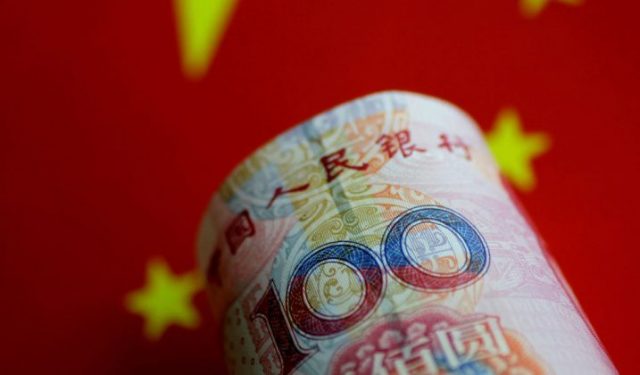
LONDON, Dec 26 (Reuters) – China will overtake the United States to become the world’s biggest economy in 2028, five years earlier than previously estimated due to the contrasting recoveries of the two countries from the COVID-19 pandemic, a think tank said.

“For some time, an overarching theme of global economics has been the economic and soft power struggle between the United States and China,” the Centre for Economics and Business Research said in an annual report published on Saturday.

“The COVID-19 pandemic and corresponding economic fallout have certainly tipped this rivalry in China’s favour.”

The CEBR said China’s “skilful management of the pandemic”, with its strict early lockdown, and hits to long-term growth in the West meant China’s relative economic performance had improved.

China looked set for average economic growth of 5.7% a year from 2021-25 before slowing to 4.5% a year from 2026-30.

While the United States was likely to have a strong post-pandemic rebound in 2021, its growth would slow to 1.9% a year between 2022 and 2024, and then to 1.6% after that.

Japan would remain the world’s third-biggest economy, in dollar terms, until the early 2030s when it would be overtaken by India, pushing Germany down from fourth to fifth.

The United Kingdom, currently the fifth-biggest economy by the CEBR’s measure, would slip to sixth place from 2024.

However, despite a hit in 2021 from its exit from the European Union’s single market, British GDP in dollars was forecast to be 23% higher than France’s by 2035, helped by Britain’s lead in the increasingly important digital economy.

Europe accounted for 19% of output in the top 10 global economies in 2020 but that will fall to 12% by 2035, or lower if there is an acrimonious split between the EU and Britain, the CEBR said.

It also said the pandemic’s impact on the global economy was likely to show up in higher inflation, not slower growth.

“We see an economic cycle with rising interest rates in the mid-2020s,” it said, posing a challenge for governments which have borrowed massively to fund their response to the COVID-19 crisis.

“But the underlying trends that have been accelerated by this point to a greener and more tech-based world as we move into the 2030s.” — REUTERS

Hong Kong imposes 21-day quarantine for visitors, adds South Africa to banned list

HONG KONG – Hong Kong extended a compulsory quarantine by an extra seven days to 21 days for all visitors outside China, effective Friday, in stepped-up efforts to prevent a new variant of the novel coronavirus from spreading.

Authorities also banned all people who have stayed in South Africa in the past 21 days from boarding for Hong Kong.

Hong Kong has already banned all flights arriving from the United Kingdom from Monday and the city said on Wednesday two students who returned from the UK were likely to be infected with the new super-virulent strain of COVID-19.

In a statement midnight on Friday, authorities said people who have stayed in places outside China during the 21 days before their arrival have to undergo 21 days of compulsory quarantine in designated quarantine hotels.

“Noting the drastic change of the global pandemic situation with the new virus variant found in more countries, there is a need for the government to introduce resolute measures immediately… to ensure that no case would slip through the net even under very exceptional cases where the incubation period of the virus is longer than 14 days,” a government spokesman said. — REUTERS

Denmark finds 33 cases of new variant of coronavirus

COPENHAGEN, Dec 24 (Reuters) – Denmark has identified 33 infections with the new variant of the coronavirus that has been spreading rapidly in parts of Britain, according to authorities.

The State Serum Institute (SSI), Denmark’s infectious disease authority, said in a report published on Wednesday that the cases had been found in COVID-19 tests carried out between Nov. 14 and Dec. 14.

Denmark, an international leader in genome sequencing, has so far analysed genetic material from 7,805 positive tests in that period, meaning the variant was found in about 0.4% of the infections.

Since just 13.5% of all the positive tests in the period have been analysed so far, the SSI said that variant percentage could change.

“The latest sequencing results indicate that there is societal infection in Denmark with the new English virus variant, albeit at a very low level,” the SSI said.

Denmark, like several other countries, has suspended flights from Britain, where the new variant of the virus – thought to be more transmissible than others circulating – has spread quickly in southern England, including London.

Preliminary information did not suggest the 33 people who contracted the variant had any connection to England or had been travelling in other countries, the SSI said. — REUTERS

China to suspend UK flights indefinitely -foreign ministry

BEIJING, Dec 24 (Reuters) – China will suspend direct flights to and from the United Kingdom indefinitely over fears of a new strain of the coronavirus, Wang Wenbin, a foreign ministry spokesman said on Thursday.

“After much consideration, China has decided to take reference from other countries and suspend flights to and from UK,” Wang told reporters at a daily briefing.

“China will closely monitor relevant developments and dynamically adjust control measures depending on the situation,” Wang said.

Countries across the globe are shutting their borders to Britain after the emergence of a highly infectious new coronavirus strain.

There are currently eight weekly flights between mainland China and the United Kingdom, according to aviation data provider Variflight, including one each by Air China , China Eastern Airlines and China Southern Airlines.

British Airways operates two flights a week from London to Shanghai. — REUTERS

What you need to know about the coronavirus right now

Dec 24 (Reuters) – Here’s what you need to know about the coronavirus right now:


Singapore confirms first case of new coronavirus variant

Singapore confirmed its first case of the new coronavirus variant found in the United Kingdom, while 11 other people who were already in quarantine returned preliminarily positive results for the new strain.

Singapore has been conducting viral genomic sequencing for recently arrived confirmed COVID-19 cases from Europe. The patient with the new variant came to Singapore from the UK on Dec. 6, had been quarantined on arrival and tested positive on Dec. 8.

All her close contacts had been placed in quarantine, and had tested negative at the end of their quarantine period. The health ministry said it had been able to ringfence the case so that there was no further transmission.


Early success leaves South Korea scrambling

After a summer of touting South Korea’s approach as a model for the world, officials acknowledge the success of earlier efforts helped fuel over-confidence that left them straining to contain a third wave and scrambling to defend a cautious vaccine timeline.

Frontline fighters in South Korea’s war against the virus outlined what they say were critical mistakes by the government, including not investing in enough manpower and training for the tracing programme, not mobilising private hospitals fast enough to free up more beds, indecisive social distancing policies, and adopting a slow approach to securing and rolling out vaccines.

Lim Seung-kwan, chief of Gyeonggi Province’s COVID-19 emergency response task force, said it was time to consider dropping mass tracing in favour of more targeted epidemiological surveys that seek to better understand specific patterns of the virus’ spread while freeing up trained medical personnel to provide patient care.


U.S. vaccine rollout slow, could hit snags

Millions of COVID-19 vaccines are sitting unused in U.S. hospitals and elsewhere a week into the massive inoculation campaign, putting the government’s target for 20 million vaccinations this month in doubt. That’s nine days to give out nearly 19 million shots or over 2 million people vaccinated a day including on Christmas Day.

Hospitals said the first COVID-19 vaccinations started slowly last Monday as they navigated preparing the previously frozen shots for use, finding employees to run the vaccination clinics, and ensuring proper social distancing both before and after vaccination. Some said they did only about 100 shots the first day.

Beginning in January or February, Americans employed in a range of industries will be eligible for inoculation, provided they are essential frontline workers. The absence of a plan to verify vaccine candidates’ jobs and confusion over who qualifies as essential raise the risks of fraud and disorganization.


COVID-19 death rates improving in U.S. hospitals

The U.S. health care system is getting better at caring for COVID-19 patients, according to a new study published in JAMA Internal Medicine on Tuesday.

When researchers analyzed insurance claims of COVID-19 patients in nearly 400 hospitals, they found the average death rate had fallen to 9.3% in the May-June period, from 16.6% in the January-April period.

“The strongest determinant of improvements in hospital-level outcome was a decline in community rates of infection,” the researchers wrote, adding that the association between community COVID-19 case loads and death rates “suggests hospitals do worse when they are burdened with cases and is consistent with imperatives to flatten the curve.” — REUTERS

(Compiled by Karishma Singh; editing by Richard Pullin)


BoI to miss P1-T investment pledge goal

INVESTMENT PLEDGES to the Board of Investments (BoI) are likely to fall short of the government’s P1-trillion target this year, according to the agency.

The BoI had received P905 billion of investment pledges as of Dec. 18, BoI Managing Head Ceferino S. Rodolfo told an online news briefing on Tuesday.

“I’m not sure if the target will be met,” he said in mixed English and Filipino. “Two or three weeks ago we were confident, but we’re still waiting for endorsements from other government agencies so I don’t know if those will be out.”

Investment projects awaiting endorsement account for another P68 billion, he said. If all these remaining projects are approved, the BoI would still fall short of the goal by P27 billion.

The agency last year approved a record P1.14 trillion in investment pledges, which it attributed to strong economic fundamentals and consumer confidence. The approved investments rose by a quarter from P915 billion in 2018.

The BoI accounts for the bulk of planned projects registered with investment promotion agencies.

The bulk of approved investments for 2020 came from infrastructure projects, including the P740-billion San Miguel Corp. subsidiary airport project in Bulacan, along with toll roads and telecommunication towers, Mr. Rodolfo said.

BoI-approved investments doubled in the first half of 2020 after domestic investments  jumped by 166% to P626.7 billion due to the San Miguel airport project. But foreign investments at the time plunged by almost three-quarters to P18.6 billion.

The BoI recently started an investment promotion campaign focusing on the car, aerospace, electronics, copper and nickel, and business process outsourcing sectors. The drive, in partnership with the United Kingdom, will use digital, social media, events and print marketing.

The Philippine Economic Zone Authority, another investment promotion agency, aims to approve more than P100 billion in investment pledges by year-end.

The agency posted P72.6 billion in investment pledges in the 10 months through October, more than a quarter lower than a year earlier. It approved P117.54 billion in investments last year. Jenina P. Ibañez