Home Blog Page 8234

Taiwan tells Biden emissaries it will counter China’s ‘adventurous maneuvers’ with US

REUTERS

TAIPEI — Taiwan President Tsai Ing-wen on Thursday told emissaries visiting at the request of US President Joseph R. Biden, Jr., that the island would work with the United States to deter threats from Chinese military activities.

Former senior US officials, including former US Senator Chris Dodd and former Deputy Secretaries of State Richard Armitage and James Steinberg, are visiting Taipei in a trip to signal Biden’s commitment to Taiwan and its democracy.

Ms. Tsai told the US delegation in a meeting at the Presidential Office that Chinese military activities in the region have threatened regional peace and stability.

“We are very willing to work with like-minded countries, including the United States, to jointly safeguard the peace and stability of the Indo-Pacific and deter adventurous maneuvers and provocations,” Ms. Tsai said.

She vowed to continue to cooperate with the United States to counter “cognitive warfare” and misinformation, but did not elaborate.

Mr. Dodd told Ms. Tsai the Biden administration would be Taiwan’s “reliable, trusted friend,” which will help the island expand its international space and support its investment in self-defense.

He added the US partnership with Taiwan is “stronger than ever” and that the visit was to reaffirm Mr. Biden’s commitment to the island.

Ms. Tsai also told the delegation that Taiwan looks forward to resuming trade talks with the United States as soon as possible. Taipei has long sought a free trade deal with Washington.

Dan Biers, director of the State Department’s Office of Taiwan Coordination, is also part of the delegation.

Taiwan is China’s most sensitive territorial issue and a major source of contention with Washington, which is required by US law to provide the island with the means to defend itself.

Taiwan has complained over the last few months about almost daily missions by China’s air force near its air defense identification zone (ADIZ). Twenty-five Chinese aircraft, including fighters and nuclear-capable bombers, entered Taiwan’s ADIZ on Monday in the largest reported incursion to date.

China announced on Wednesday it would begin five days of live-fire drills off a part of its coast facing Taiwan, which Taiwan’s Defense Minister Chiu Kuo-cheng told reporters the country would pay close attention to.

“There’s some psychological impact, but don’t get too worked up about this. Everyone should have confidence in the armed forces,” he said.

Mr. Chiu will meet with the visiting Americans, his deputy Chang Che-ping told lawmakers.

The unofficial US visit, which a White House official called a “personal signal” of the president’s commitment to Chinese-claimed Taiwan, is further straining Sino-U.S. relations.

China on Wednesday described its military exercises near Taiwan as “combat drills” and said the meeting of the US officials with Tsai “will only exacerbate the tense situation in the Taiwan Strait”. —  Yimou Lee/Reuters

Beijing’s top official in Hong Kong warns foreign powers not to interfere

Wikimedia Commons

HONG KONG — Beijing’s top representative in Hong Kong said on Thursday that any foreign powers that try to use the global financial center as a pawn will face countermeasures, amid escalating tensions between the city and Western governments.

Luo Huining, the director at China’s Hong Kong Liaison Office, was speaking at a ceremony to mark National Security Education Day, which authorities have organized to promote the sweeping legislation China imposed last year.

“We will give a lesson to all foreign forces which intend to use Hong Kong as a pawn,” Mr. Luo said.

The new law drew criticism from the West for curbing rights and freedoms in the former British colony, which was promised a high degree of autonomy upon its 1997 return to Chinese rule. Its supporters say it has restored order following mass anti-government and anti-China protests in 2019.

China, the United States, Britain, and the European Union have traded sanctions over the past year as the security law and measures taken to reduce democratic representation in the city’s institutions exacerbated tensions.

Earlier this week, a letter signed by more than 100 British politicians asked Boris Johnson’s government to expand a list of Chinese officials accused of “gross human rights abuses.”

National Security Education Day will be marked with school activities, games and shows, and a parade by police and other services performing the Chinese military’s “goose step” march.

In line with Beijing’s increased assertiveness, the Chinese routine, in which troops keep their legs rigidly straight when lifting them off the ground and arms swing at a 90-degree angle in front of the chest, will replace British-style foot drills at a parade of police and other forces.

Elsewhere, in schools and cultural centers, Hong Kongers were invited to build national security “mosaic walls” to instill, according to a government website, the idea that people should work together to protect their homeland.

Stickers and bookmarks reading “Uphold National Security, Safeguard our Home” have been delivered to schools and kindergartens.

In February, Hong Kong unveiled national security education guidelines that include teaching students as young as six about colluding with foreign forces, terrorism, secession, and subversion — the four main crimes in the new law. — Reuters

Philippines lifts nine-year-old moratorium on new mining projects

PRESIDENTIAL PHOTO/ KING RODRIGUEZ

MANILA – Philippine President Rodrigo Duterte has lifted a moratorium on new mineral agreements imposed in 2012, according to an executive order made public by the presidential palace on Thursday.

The executive order, which Duterte signed a day earlier, allows the government to enter into agreements for new mining projects and undertake a review of existing mining contracts and agreements for possible renegotiation of the terms, as it seeks to boost state revenues. — Reuters

BIR collection slips amid lockdown

PHILIPPINE STAR/KRIZ JOHN ROSALES

By Beatrice M. Laforga, Reporter

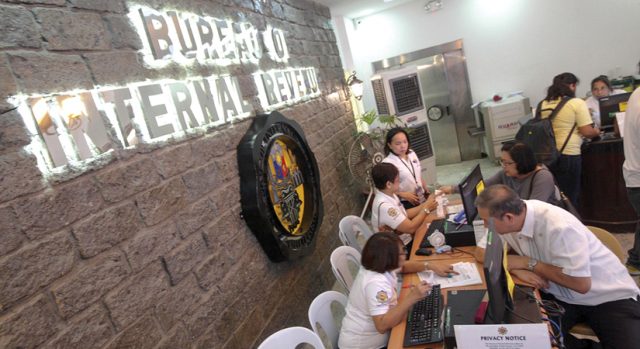
THE Bureau of Internal and Revenue (BIR) missed its collection target by 13% in March, as the government began tightening lockdown restrictions to curb the spike in coronavirus disease 2019 (COVID-19) infections.

Arnel SD. Guballa, BIR deputy commissioner for operations, on Wednesday said the agency collected P127.4 billion in taxes in March, 13% short of its P146.3-billion target for the month, citing preliminary data.

Last month’s collection was also 3.19% smaller than the P131.6 billion in March 2020, and 17.35% lower than the P154.14 billion in February.

In a Viber message, Mr. Guballa attributed the below-target tax collection to the impact of the stricter lockdown in Metro Manila, Bulacan, Cavite, Laguna and Rizal.

These areas were placed under a general community quarantine with more restrictions starting March 22, and later under an enhanced community quarantine starting March 29 until April 11. Restrictions were slightly eased until April 30.

Revenues in March brought the BIR’s first-quarter collection to P463.69 billion, 1% lower than the P468.79 billion it generated in the same period last year.

The BIR is targeting to collect P231.57 billion this month, mainly from annual income tax payments.

The deadline for filing and payment of annual income tax returns is on April 15 (Thursday).

Despite calls for an extension due to stricter quarantine measures and the delayed implementation of the law that cut the corporate income tax, the government announced it was keeping the April 15 deadline.

Republic Act 11534 or the Corporate Recovery and Tax Incentives for Enterprises Act was signed on March 26 and the implementing rules were only released last week.

Instead of a deadline extension, the BIR waived penalties for tax return amendments until May 15 and allowed taxpayers to file their ITRs even outside their registered district offices.

BIR Commissioner Caesar R. Dulay did not respond to queries as of press time when asked if a deadline extension is still possible.

The BIR is the largest tax-collecting agency, generating 70% of the state’s total revenues. The agency is tasked to collect P2.081 trillion this year.

Meanwhile, the Bureau of Customs exceeded its collection target for the third straight month in March. It raked in P54.5 billion last month, beating its P47.7-billion goal by 14%, and also up by 22% year on year.

Customs aims to generate P620 billion this year.

Lawmakers vow to rush Bank Secrecy Law amendments

AN EMPLOYEE checks dollar bills at a money changer in Manila in this file photo. — REUTERS

By Luz Wendy T. Noble, Reporter

EASING the Bank Secrecy Law will strengthen the case for the Philippines to avoid being “gray-listed” by the Financial Action Task Force (FATF), government officials said.

“The country now needs to demonstrate that our anti-money laundering and counter-terrorism financing (AML/CTF) legal and institutional framework is producing the expected results over a sustained period. Thus, at this point, all branches of government are contributing toward demonstrating tangible and positive progress, according to the roadmap set,” Anti-Money Laundering Council Executive Director Mel Georgie B. Racela said in a Viber message.

Mr. Racela made the statement after the International Monetary Fund (IMF) stressed the need for major reforms in the country’s efforts against money laundering and counter-terrorism financing.

In its the Financial System Stability Assessment for the Philippines, the IMF said the Philippines should amend the Bank Secrecy Law to strengthen the central bank’s supervision powers, boost the effectiveness of the country’s regulations against “dirty money” and terrorism financing, and further improve ties with foreign authorities. The IMF said that the country should address these gaps within the medium term.

“Without major reforms by June 2021, the country could again be included in the FATF list of jurisdictions with serious AML/CFT deficiencies and expose the financial system to significant risks,” the IMF said.

Quirino Rep. Junie E. Cua has filed House Bill (HB) 8991 which seeks to give the Bangko Sentral ng Pilipinas (BSP) the power to look into accounts of bank officials provided there is “reasonable ground” for fraud, serious irregularity, or unlawful activity committed by industry leaders. It has been approved by the House Committee on Banks and Financial Intermediaries.

The measure amending the bank secrecy law is not part of the list of priorities identified by the Legislative-Executive Development Advisory Council (LEDAC) for passage within the next few months.

Mr. Cua, chairman of the House Committee on Banks and Financial Intermediaries, said it is still “very possible” to approve the measure before 2022.

“I think by the time we resume session in May, it will not take long, we will be able to pass that on second and third reading, and the Senate still has several months to work on it,” Mr. Cua said in a phone call.

The measure can still be prioritized even if it is not endorsed by the LEDAC, according to Senate President Vicente C. Sotto III.

“We can consolidate the House bill with any filed in the Senate whether [the bill is] prioritized or not”, Mr. Sotto said in a WhatsApp message.

Senate Bill 1802 was filed by Senator Grace S. Poe-Llamanzares in September last year and is still pending at the committee level.

AMLC’s Mr. Racela said easing bank secrecy rules also means boosting regulatory powers of other agencies.

“The proposed amendments to the Bank Secrecy Law primarily aim to assist other supervisors and law enforcement agencies as the AMLC is already exempt from the effects of the bank secrecy law,” Mr. Racela said.

Meanwhile, the Chamber of Thrift Banks (CTB) expressed concern over the proposed amendments to the Bank Secrecy Law.

“We question the proposed amendment authorizing the BSP to examine and inquire into the deposits of a bank stock holder, owner, director, trustee, officer, or employee, citing the fact that present laws are already sufficient to enable to BSP and of course to examine the accounts, subject of course to existing requirements or limitations,” CTB President Cecilio Paul D. San Pedro said at their General Membership Meeting on Wednesday.

Bankers Association of the Philippines President Cezar P. Consing in February said the industry supports the amendments, saying it will making the Philippines less prone to “dirty money” flows.

However, he said there should be a safe harbor clause that will protect lenders from possible civil liability in relation to deposits examined by the BSP. This has already been addressed in the committee-approved version of HB 8991.

The IMF also recommended designating tax crimes as predicate money laundering offenses and establishing a comprehensive legal framework for targeted financial sanctions against proliferation financing. It also proposed boosting risk-based supervision by implementing sanctioning procedures for high risk sectors such as banks, casinos, and money value transfer services.

These recommendations have already been addressed by the Republic Act No. 11521 or the Anti-Money Laundering Act and the Republic Act No. 11479 or the Anti-Terror Act of 2020. Both laws were passed before a Feb. 1, 2021 deadline set by the FATF.

DBM releases 78% of P4.5-T budget in Q1

PHILIPPINE STAR/ MICHAEL VARCAS
Budget Secretary Wendel E. Avisado said last week that the agency is working on an executive order directing agencies to reduce nonessential expenses to free up more funds for the government’s pandemic response. — PHILIPPINE STAR/ MICHAEL VARCAS

THE Department of Budget and Management (DBM) has released P3.514 trillion to state offices and local government units (LGUs) as of end-March, and implemented cuts to the Agriculture and Education departments’ budgets, latest data from the agency showed.

The amount released so far accounts for 78% of the P4.5-trillion national budget this year. This leaves P991.596 billion left to be released for the next nine months.

Compared with the same period last year, the allocation rate was roughly similar, with the 78.4% recorded in the first quarter of 2020.

This was based on the allotment releases issued by the DBM to agencies and LGUs, allowing them to incur obligations to fund their programs, projects and activities for the year.

Several adjustments to the agencies’ budgets were made, amid the government’s plan to roll out belt-tightening measures amid the pandemic.

The Department of Agriculture had its budget slashed by P21.72 billion to P46.9 billion from P68.62 billion, originally. The budget for the Department of Education was also cut by P2.93 billion to P554.33 billion, from its initial allotment of P557.25 billion.

Subsidies to government-owned and -controlled corporations were also reduced by P712.26 million to P147.48 billion.

On the other hand, more funds were given to the Department of Public Works and Highways, which received an additional P15.358 billion to bring its total budget to P710 billion. An additional P10 billion was also added under the “special account in the general fund,” bringing the total to P31 billion.

Total allotment releases so far were broken down into P2.297 trillion for line departments, making up 87% of their budgets for the year. Around P1 trillion or 70% of the total was released under automatic appropriations, which includes the internal revenue allotment for LGUs.

The DBM also released P116 billion from special purpose funds, or 26.4% of the total budget.

As of end-March, P99.77 billion under the continuing appropriations from the extended 2020 budget has been released.

Budget Secretary Wendel E. Avisado said last week that the agency is working on an executive order directing agencies to reduce nonessential expenses to free up more funds for the government’s pandemic response. — Beatrice M. Laforga

Construction material prices in Metro Manila soar to 17-month high

PHILIPPINE STAR/ MICHAEL VARCAS
Construction material prices surged in March, as public and private infrastructure projects got underway. — PHILIPPINE STAR/ MICHAEL VARCAS

WHOLESALE PRICES of construction materials in Metro Manila posted their fastest growth in 17 months in March, the Philippine Statistics Authority (PSA) reported on Wednesday.

These prices, as measured by the construction materials wholesale price index (CMWPI) in the National Capital Region (NCR), rose 2.2% year on year in March versus the growth rates of 2% and 1.6% in March 2020.

The March outcome was the highest reading in 17 months or since the 2.6% logged in October 2019. Wholesale prices reflect bulk buying by large construction firms engaged in major projects.

For the year, the index has grown by 1.8%, slightly up from the 1.7% posted in last year’s comparable three months.

In a text message, Asian Institute of Management (AIM) economist John Paolo R. Rivera attributed the record growth in wholesale construction prices in NCR to the resumption of most construction activities that month which drove up demand.

“This resulted in an upward pressure on [prices of construction materials] given the persistent economic uncertainties that may compel supply constraints,” Mr. Rivera said.

The year-on-year pickup in March was driven mainly by prices of fuel and lubricants, which rose 6.8%, compared with a month earlier when prices of these products declined by 0.3%. This was followed by sand and gravel (4% from 3.5% in February); hardware (1.9% from 1.5%); electrical works (1.5% from 0.4%); plywood (1.2% from 0.4%); doors, jambs, and steel casement (1.2% from 0.5%); painting works (0.9% from 0.3%); and galvanized iron sheets (0.5% from 0.4%).

Meanwhile, year-on-year price growth was unchanged for glass and glass products (14.4%); reinforcing and structural steel (3.3%); lumber (2.8%); tileworks (2.2%); concrete products and cement (1.2%); and PVC pipes (0.6%).

Wholesale prices for asphalt and machinery and equipment rental were flat in March.

Bucking the trend was plumbing fixtures and accessories/waterworks, which saw their prices decline faster at 2.2% from the previous month’s annual contraction of 1.3%.

Asked on how stricter restrictions would affect the construction index in coming months, AIM’s Mr. Rivera said it would depend on whether the lockdown has resulted in the worsening of “supply constraints” currently faced by construction firms.

“If quarantine restrictions will affect supply of construction materials because of difficulty of production/importation/sourcing, then the CMWPI is likely to increase because construction projects are ongoing,” Mr. Rivera said.

“However, in the absence of supply constraints (assuming raw materials sourced domestically and internationally are available on time), there is less pressure for the CMWPI to increase…,” he added.

Metro Manila and the provinces of Bulacan, Cavite, Laguna, and Rizal were placed under enhanced community quarantine (ECQ) — the country’s strictest form of lockdown — from March 29 to April 11. The areas are now under a modified ECQ (MECQ) until April 30, allowing some construction firms to operate to at least 50% on-site capacity.

Earlier this month, Department of Public Works and Highways Secretary Mark A. Villar issued Department Order No. 30. This allows “all essential public and private construction projects” except “small-scale projects” in areas under ECQ and MECQ to operate at full operational capacity.

A look at the PSA’s national accounts shows that among subsectors, construction was the biggest contributor to the decline in the country’s gross domestic product in 2020. Of the 9.6% contraction last year, the sector contributed two percentage points. — Jobo E. Hernandez

Lockdown helps foodpanda take 70% market share

FACEBOOK.COM/ FOODPANDAPHILIPPINES

By Jenina P. Ibañez, Reporter

ONLINE delivery service foodpanda Philippines has reached an estimated 70% market share among food delivery mobile apps in the country after demand surged last year, a company official said.

“Suddenly, everyone was locked down, and no one could go out. If you wanted food, you only only really had two to three services you could choose from at the time,” Daniel Marogy, foodpanda managing director, said in an online interview.

The company’s user base grew by eight times from the figure in February last year, after the lockdown led to a surge in demand for delivery services. Its restaurant partners increased by five times and its order count went up by 12 times, Mr. Marogy added.

Bigger market share swung to foodpanda during the lockdown last year, he said, noting that its competitor held more than two-thirds of the pre-lockdown market.

“Because the demand coursing through the main incumbent at the time was so high, it became difficult for them to manage that volume, which caused a large spillover effect into their competitors, the largest of which was us,” he said.

foodpanda, he said, was able to retain the new customers as it had been improving delivery times and assortment of restaurants in the months preceding the lockdown.

App-based food delivery services in the Philippines are offered by companies like Grab Philippines and DBDOYC, Inc. (Angkas). Lalamove Philippines stopped its food delivery business in February.

Mr. Marogy said that market share in the delivery industry could change quickly.

“We’re very, very careful of not just relying on the same sort of approach and business model to sustain our growth into the future,” he said.

This year, foodpanda plans to expand its grocery delivery service, doubling its dozen small warehouses in Metro Manila in the second quarter, with potential further expansion in the second half.

Mr. Marogy said that the company’s grocery service is based on small warehouses close to customers, with around 3,000 to 4,000 goods compared to the 50,000 products in a supermarket.

“If you want a smaller selection but you want it on demand, then our model would be ideal,” he said. “Our focus will really be on the speed element, the quick commerce elements because that really complements our business and our assets, the main one of which is the rider fleet.”

He said that the company’s rider count increased by four times since the start of the lockdown, noting that he does not expect the headcount to shrink even after lockdown restrictions are eased and more people dine in.

“Despite the pandemic, [food delivery services] don’t take more than 12% of total food services, so in terms of the secular trend that will continue over many, many years, there’s an enormous amount of way to go,” he said.

“So I think if we were currently at 80% then suddenly the market opened up for dine in, sure I mean most likely you’d see that fall. But the fact that the penetration is so low at the moment, and there’s such a long way to go until the space is saturated, then I don’t see too much risk on that side,” he added.

foodpanda plans to increase its Philippine markets this year to 150 from just over 100. The Berlin-based company launched its services in the country in 2014.

Grab Philippines focusing on national expansion as health crisis continues

GRAB Philippines continues to expand its delivery and cashless payment services across the Philippines as small businesses fight for survival amid the public health crisis.

“Grab has been focusing on national expansion in the Philippines since January of 2021 when it introduced GrabFood, GrabExpress and GrabPay to Zamboanga,” the company said in an e-mailed statement on Wednesday.

“Services have since rolled out to Sta. Rosa, Laguna; Concepcion and Capas towns in Tarlac; General Santos City in South Cotabato; Legazpi, Albay; and Butuan, Agusan del Norte,” it added.

Grab plans to expand its services to Subic Bay Freeport Zone in Zambales this month.

“We’re committed to helping as many people as possible leverage our offerings to help them safely and easily purchase and pay for essential items, especially as they continue to face the challenges of the global pandemic,” Grab Cities and Expansion Head Cindy Toh said.

“At the same time, we can empower Filipinos who need to maintain their livelihood by giving them opportunities to earn supplemental wages by joining our community of driver- and delivery-partners,” she added. — Arjay L. Balinbin

Megaworld income drops 45% despite stable office leasing segment

MEGAWORLDCORP.COM

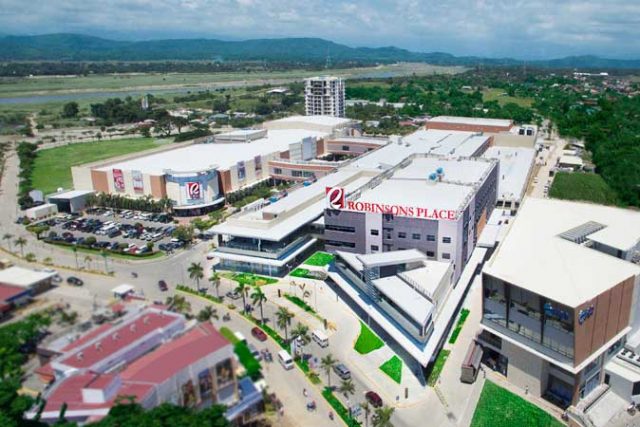
ANDREW L. Tan’s Megaworld Corp. reported a net income of P9.9 billion to parent firm equity holders for 2020, down by nearly 45% despite the uptick in the company’s office leasing business.

Revenues for the listed property developer slid to P43.5 billion, declining by 35% from P67.3 billion the previous year. Net income fell by 45% to P10.6 billion from P19.3 billion.

“Our office business is the most stable income generator in our company’s revenue stream with or without this health crisis, and we continue to focus on the expansion of this business in the years to come and further strengthen our leadership in the country’s office property sector,” Megaworld Chief Strategy Officer Kevin Andrew L. Tan said in a statement on Wednesday.

Megaworld Premier Offices posted P10.4 billion in revenues in 2020, inching down from P10.5 billion the previous year.

Some 135,000 square meters (sq.m.) of new office space inventory were rented out in the company’s Iloilo, Quezon City, and Fort Bonifacio townships. Around 145,000 sq.m. was also renewed by company tenants last year.

Megaworld said most of its renters are business process outsourcing companies, e-commerce firms, logistics companies, and finance institutions.

Existing office partners took up 78% of the new leases under Megaworld’s expansion programs. The rest were rented by new clients.

The company noted that office spaces in its Iloilo Business Park is one that piqued market interest.

“Approximately, 20% of new leases have been booked there and we even cemented our dominance in terms of market share in the Iloilo office market,” Mr. Tan said.

The company also completed the construction of an additional 87,000 sq.m. of office space, which includes the spaces being sold in Iloilo Business Park and Cavite’s Maple Grove. The construction bumped up Megaworld’s total leasable office inventory to 1.4 million sq.m. from 1.3 million sq.m.

In the last quarter of the year, the company reported that it saw recovery through Megaworld Lifestyle Malls, Megaworld Hotels, and its residential business as the government eased lockdown restrictions.

“Real estate sales grew 22% in the fourth quarter compared to the third quarter last year with reservation sales up 85% quarter on quarter, while Megaworld Lifestyle Malls and Megaworld Hotels also grew 24% and 25% quarter on quarter, respectively,” the company reported without disclosing specific figures.

Rental income declined to P12.9 billion, 23% lower than the P16.8 billion generated from a year ago. Meanwhile, real estate sales decreased by 42% to P24.9 billion from P42.6 billion.

Despite this, the company was able to launch new projects worth P7.8 billion, which includes those in The Upper East Bacolod, Iloilo Business Park, Capital Town Pampanga, and Hamptons Caliraya in Laguna.

Megaworld Hotels also reportedly generated P1.5 billion in 2020 despite the pandemic’s effects on the hospitality industry.

On Wednesday, shares of Megaworld at the exchange declined by 3.33% to finish at P3.48 from P3.60 each. — Keren Concepcion G. Valmonte

AyalaLand Logistics acquires cold storage facility Technofreeze

FACEBOOK.COM/INLANDCORPORATION

AYALALAND Logistics Holdings, Corp. has acquired Technofreeze, Inc., a cold storage facility located in Laguna Technopark, the listed holding firm disclosed to the stock exchange on Wednesday.

“Technofreeze is an established cold storage facility in Laguna with [a] proven track record of serving companies with diverse products such as processed meat products, dairy and ice cream, and adhesives,” the company said.

The firm will also acquire the land on which the facility stands, which spans 11,800 square meters. The acquisitions will amount to a total of P408.8 million, inclusive of value-added tax.

The cold chain facility is accredited by the Department of Agriculture, allowing it to store fruits, vegetables, meat, fisheries, and aquatic products.

The facility has 17 cold storage rooms capable of keeping temperatures up to -25 degrees Celsius with 4,000 pallet positions and three processing rooms with temperatures ranging from 0 to 25 degrees Celsius.

It also has four dry storage rooms with 1,600 pallet positions, two blast freezers with a combined 25-ton capacity, and several office spaces.

The facility will be operated under AyalaLand Logistics’ cold storage brand ALogis Artico, which is also based in the listed holding firm’s Laguna Technopark.

“This cold facility will complement the warehouse leasing business of the group,” AyalaLand Logistics said.

AyalaLand Logistics, a subsidiary of Ayala Land, Inc., specializes in logistics and warehouse business.

It said the transaction supports the company’s vision “to be the leading real estate logistics and industrial parks developer and operator in the Philippines.”

Shares of AyalaLand Logistics at the stock exchange went up by 8.22% or P0.25 on Wednesday to close at P3.29 apiece. — Keren Concepcion G. Valmonte

Altus income dips 66% as lockdown leads to mall closures

ALTUSPROPERTYVENTURES.COM.PH

ALTUS Property Ventures, Inc.’s net income last year declined by 66% to P21.95 million as its revenues were hit when the pandemic health protocols led to mall closures, the company disclosed to the exchange on Wednesday.

Rental revenues went down to P69.98 million, decreasing by 47.8% from P133.97 million.

“The decrease was due to the temporary and partial closure of mall areas during the community quarantine period, except for areas occupied by tenants that provided essential services such as [supermarkets], banks and pharmacies,” Altus said.

The company generated an EBITDA (earnings before interest, tax, depreciation, and amortization) of P54.8 million, dropping by 47.4% last year from P104.4 million.

Altus’ total comprehensive income fell by 66.4% to P21.67 million from P64.48 million.

Altus engages in selling, acquiring, and developing real estate properties. It debuted on the local bourse in June last year.

JG Summit Holdings, Inc. owns around 60.97% of its total outstanding capital stock. Altus serves as “a new avenue for growth” for future ventures and investments.

On Wednesday, Altus stocks at the exchange went up by 0.51% or P0.10 to close at P19.64 apiece. — Keren Concepcion G. Valmonte

ADVERTISEMENT
ADVERTISEMENT