THE Supreme Court (SC) recorded an 87.75% success rate in hearings held via videoconference from May 5, 2020 to April 9, 2021.
During that 11-month period, 234,540 videoconference hearings were conducted with an “87.75% success rate,” Court Administrator Jose Midas P. Marquez told reporters on Friday.
The remaining 22.25% were considered unsuccessful “due to technical and internet connection problems,” SC Chief Public Information Officer Brian Keith F. Hosaka explained.
Mr. Marquez also reported that 137,645 prisoners have been released as of April 9, including 53,297 whose cases were heard through videoconferencing amid restrictions due to the coronavirus pandemic.
Former Supreme Court Chief Justice Diosdado M. Peralta, who retired last March 27, ordered the conduct of online trials and hearings in all courts last year as part of response measures to the health crisis.
The Integrated Bar of the Philippines (IBP), under its “Justice Bilis” (Quick Justice) campaign, also pushed for the faster resolution of cases by improving the technology systems in courts. — Bianca Angelica D. Añago
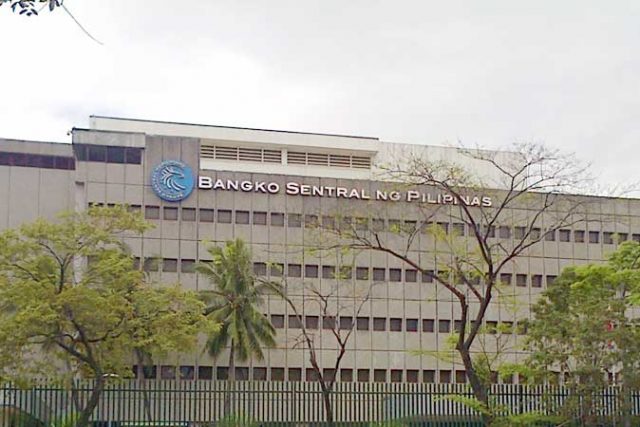
THE COUNTRY’S dollar reserves decreased to $104.82 billion as of March as the government serviced its maturing debt obligations, the Bangko Sentral ng Pilipinas (BSP) reported on Friday.
Gross international reserves (GIR) inched down by 0.32% as of March from the $105.161 billion seen at end-February, based on preliminary data released by the central bank on Friday. However, the end-March level was bigger by 18% than the $88.861 billion seen a year earlier.
“The month-on-month decrease in the GIR level reflected outflows mainly from the net withdrawal in the national government’s foreign currency deposits with the BSP, which were largely used for debt servicing, and a downward adjustment in the value of BSP’s gold holdings due to the decrease in the price of gold in the international market,” the BSP said in a statement.
Ample foreign exchange buffers protect the country from market volatility and ensure the country is capable of paying its debts in the event of an economic downturn. The country’s GIR reached a record $110.117 billion at end-2020.
“The March downward movement is not a cause of worry and the March GIR level is robust and healthy. The current print supports a strong peso, but still describes weak domestic demand compared to pre-pandemic levels,” UnionBank of the Philippines, Inc. Chief Economist Ruben Carlo O. Asuncion said.
The end-March GIR level was enough to cover the 12 months’ worth of the country’s imports of goods and payments of services and primary income. It was also equivalent to about 7.5 times the country’s short-term external debt based on original maturity and 5.3 times based on residual maturity.
The value of gold reserves dipped 0.6% to $9.113 billion as of March from $9.17 billion as of February, but was higher by 13.7% from the $8.015-billion level a year earlier.
Meanwhile, the country’s reserve position in the International Monetary Fund (IMF) also slipped 2.26% to $794.1 million from $812.5 million a month earlier. It however increased 37% from the $578.5 million a year ago.
Special drawing rights — or the amount the country can tap from the IMF — was maintained at $1.232 billion for the second straight month. It inched up by 5.57% from the $1.167 billion as of end-March 2020.
On the other hand, gains from the BSP’s investments abroad dipped 0.75% to $89.994 billion from $90.679 billion a month earlier, but was higher by 17.6% from $76.48 billion a year ago.
Foreign currency deposits meanwhile increased 12.8% to $3.685 billion from $3.266 billion as of February and by 40.7% from $2.619 billion a year ago.
The BSP expects the country’s GIR level to reach $114 billion this year and to hit $117 billion by 2022. — L.W.T. Noble
THE BANGKO SENTRAL ng Pilipinas (BSP) raised P90 billion as planned from its auction of short-term securities on Friday, as rates slipped, reflecting lower US benchmark yields.
The BSP made a full award of the 28-day bills as the offering was oversubscribed by 1.46 times, with demand hitting P131.976 billion. The total tenders also surpassed the P114.176 billion in bids seen in the previous auction.
Accepted rates for the one-month securities ranged from 1.8375% to 1.875%, lower than the 1.85% to 1.9050% band logged in the previous offering.
This caused the average rate for the 28-day bills to inch down by 2.33 basis points to 1.8562% from the 1.8795% quoted in the April 12 auction.
The central bank uses its short-term securities and term deposit facility to gather excess liquidity from the market and to guide short-term rates.
Rizal Commercial Banking Corp. Chief Economist Michael L. Ricafort said the lower yields for the BSP bills on Friday tracked the recent decline in rates of US bonds.
The 10-year US Treasuries yield dropped to 1.529%, a five-week low, on Thursday and last stood at 1.578%, off its 14-month high of 1.776% set at the end of March, Reuters reported.
Mr. Ricafort added that the Friday’s auction results “still manifested lingering excess liquidity in the financial system”. — L.W.T. Noble
THE PESO climbed against the greenback on Friday on the government’s decision to include frontliners from the financial services industry in the priority groups for the country’s vaccination drive.
The local unit closed at P48.38 per dollar on Friday, appreciating by six centavos from its P48.44 finish on Thursday, data from the Bankers Association of the Philippines showed.
It also strengthened by 16 centavos from its P48.54 close on April 8. The market was closed on April 9 in commemoration of the Day of Valor.
The peso opened Friday’s session at P48.45 a dollar, which was also its weakest showing. Meanwhile, its intraday best was at P48.35 against the greenback.
Dollars exchanged jumped to $950.11 million on Friday from $699.65 million on Thursday.
The peso gained following the announcement of a new priority group for vaccination which includes economic frontliners, Rizal Commercial Banking Corp. Chief Economist Michael L. Ricafort said in a text message.
Presidential Spokesperson Herminio “Harry” L. Roque on Friday said a fourth priority list for inoculation will include more essential workers, including media personnel, government workers, wet and dry market vendors, and frontline workers in delivery and grocery services, among others.
It will also include employees with lines of work related to tax collection, assessment of business for incentives, national ID, and data collection.
Meanwhile, a trader said the peso was backed by global optimism following the release of key US economic data, including reports on retail sales and initial jobless claims.
Data from the US Commerce Department showed retail sales rose 9.8% in March, the quickest pace since May 2020 and a turnaround from the 2.7% contraction in February, Reuters reported.
Meanwhile, the US Labor Department reported initial claims for state unemployment dropped by 193,000 to a seasonally adjusted 576,000 for the week ended April 10. This is the lowest since mid-March last year. — L.W.T. Noble with Reuters
Listed mining firm Global Ferronickel Holdings Inc. (FNI) reported a 43% rise in profit in 2020, thanks to higher nickel ore prices in the world market.
In a press release, FNI said its net income stood at P1.86 billion last year, driven by a 9.1% increase in revenues to P7.26 billion.
“Nickel ore shipments went down 4.5% to 5.625 million WMT (wet metric tons) in 2020 compared to 5.890 million WMT as a result of the temporary suspension of operations in April to combat the spread of the coronavirus,” FNI said in a statement.
The company was only able to ship 103 vessels last year, five vessels less than the number in 2019.
However, higher prices of nickel had a positive effect on the company’s top line last year.
“Despite the decrease in volume versus the previous year, the higher prices of nickel in 2020 had a positive impact on our top line and improved efficiency in our operations had contributed to our bottom line growth,” FNI President Dante R. Bravo was quoted as saying.
The average realized nickel ore price in 2020 hit $26.16 per WMT, which was 20% higher year on year.
FNI did not give its net income attributable to equity holders of the parent.
This year, FNI is targeting to ship 6 million WMT of nickel ore.
Shares of FNI inched up 0.37% or 1 centavo to finish at P2.72 apiece on Friday. — Angelica Y. Yang
DITO Telecommunity Corp. expanded its services to 21 more cities on Friday, adding the provinces of Laguna and Cavite to its network, the company said.
The country’s third telco player started commercial operations in 15 cities in Visayas and Mindanao on March 8, with plans to expand to nationwide availability by June.
The expansion includes 18 Luzon cities in Batangas, Bulacan, Cavite, Laguna, Tarlac, and Nueva Ecija.
SIM cards, DITO said in a press release on Friday, are now available in more than 300 partner-stores. SIM cards will also be sold in three DITO-owned stores in Cebu and Davao “very soon.”
DITO expanded to Compostela and Cordova in Cebu; Malvar, Tanauan, Santo Tomas and Lipa City in Batangas; Silang and Tagaytay City in Cavite; and Los Baños and Calamba in Laguna.
The company also introduced its services to General Santos City in South Cotabato; Palayan, Santa Rosa, Cabanatuan City, Talavera and Science City of Muñoz in Nueva Ecija; and Tarlac City, Capas, Concepcion and Gerona in Tarlac.
The Senate last month approved on third and final reading the measure granting franchise renewal to DITO for another 25 years, requiring the firm to offer 30% or more of its common stocks to Filipinos within five years.
DITO officials had said that the company has interconnection agreements with PLDT, Inc. and Globe Telecom, Inc.
DITO spent P150 billion in 2020, and it plans to spend another P26 billion this year.
Listed convenience store operator Philippine Seven Corp. (PSC) reported its net income dropped by 78% to P165.6 million in the fourth quarter, and ended the year with a P419.7 million net loss due to the impact of lockdown restrictions.
In a disclosure to the stock exchange, the operator of 7-Eleven stores in the Philippines said its fourth quarter income was a reversal of the P196.6-million loss incurred in the third quarter after sales improved.
Philippine Seven swung to a full year net loss of P419.7 million in 2020 from a P1.44 billion profit in 2019, as consumer demand suffered amid the lockdown implemented to curb the coronavirus pandemic.
For the October to December period, same-store sales jumped 14.3% versus the previous quarter as the government gradually eased restrictions on movement and allowed more businesses to operate. However, this was not enough to pull up the full-year same-store sales, which slumped by 18.4%.
System-wide sales declined by 23.4% in the fourth quarter to P12.03 billion, bringing the full-year total to P46.36 billion, down 17.7%.
The company said its stores saw a 41% reduction in average customer count per day in all of its stores.
Philippine Seven reported that it opened 174 new stores and closed 60 stores in 2020, ending the year with 2,978 7-Eleven convenience stores,
Philippine Seven said its plans of reaching its milestone of over 3,000 stores in early 2020 was disrupted by the pandemic.
“We put the brakes on expansion as early as April, continuing only where we had broken ground on construction, and in areas where competitors continued to expand, mostly the Greater Manila area,” Jose Victor P. Paterno, president and chief executive officer of Philippine Seven, said.
The company said the majority of the 7-Eleven stores are open 24/7, and the rest open during daytime. Less than 7%of the stores are temporarily closed.
Meanwhile, the company’s payments business accelerated amid the pandemic.
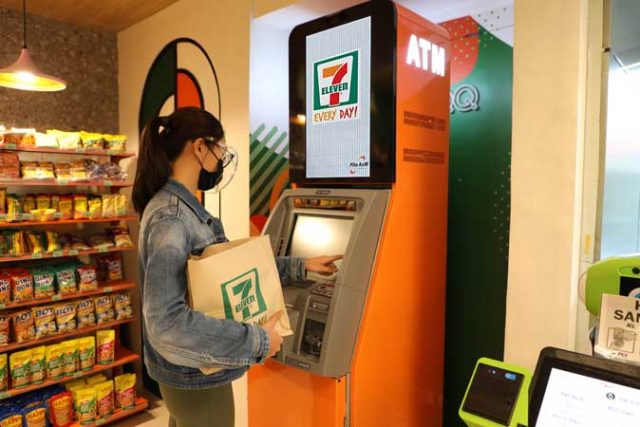
The 7-Eleven operator began installing cash-recycling ATMs in 7-Eleven stores in Metro Manila in February. A cash-recycling ATM can accept cash deposits and can dispense the same bills for withdrawals.
Philippine Seven plans on rolling out around 1,000 cash-recycling ATMs by the end of the year, hoping to make the system available in all of its stores “in the very near future.”
The company is also planning to expand its digital services after seeing growth in its online businesses compared to those offline during the period, especially in the payments business.
“Our financial performance has been abysmal, and when our profit and growth numbers will return depend on not just the pandemic and how the Philippines navigates its end, but on how quickly our online and offline pivots take root, if at all,” Mr. Paterno said.
On Friday, shares of Philippine Seven at the local bourse rose by 0.88% or P0.90 to close at P103 apiece. — K.C.G.Valmonte
Chelsea Group's MV Trans-Asia 21 is a brand-new vessel built in Japan. Courtesy of Chelsea Logistics and Infrastructure Holdings Corp.
Chelsea Logistics and Infrastructure Holdings Corp. is seeking “meaningful” profits from its new roll-on/roll-off passenger (RoPax) vessel that completed sea trials in Japan this week.
Davao-based businessman Dennis A. Uy’s Chelsea Logistics in a press release on Friday said that the MV Trans-Asia 21 vessel reached its top speed of 20.1 knots and hurdled all its safety tests.
Chelsea Group’s 12th and biggest new Japan-made RoPax will be delivered to the Philippines in the second quarter. The vessel is the most recent addition to the Chelsea Group’s 76-vessel fleet.
“MV Trans-Asia 21 was contracted for shipbuilding with a highly reputable Japanese shipyard several months prior to the onset of the pandemic, and is in partnership with one of the biggest private ship owners in Japan,” Chelsea Group President and Chief Executive Officer Chryss Alfonsus V. Damuy said.
“The shipping industry might have been badly hit by the COVID-19 (coronavirus disease 2019) pandemic but we are convinced that this investment will be a meaningful revenue and profit contributor to the Group.”
Chelsea last month said that it was selling its entire stake in 2GO Group, Inc. to SM Investments Corp.
The company is the shipping and logistics subsidiary of Mr. Uy’s holding company, Udenna Group.
Chelsea shares at the stock exchange went up 1.22% or four centavos to close at P3.33 apiece on Friday. — Jenina P. Ibañez
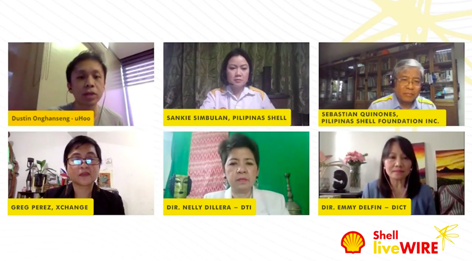
Shell boosts the country’s growing startup landscape through Shell LiveWIRE 2021
With the innovations and creative solutions they provide, startups are showing great potential, especially here in the Philippines. In fact, when the coronavirus disease 2019 (COVID-19) pandemic has struck the country, many startups have offered their solutions to meet the suddenly changing needs of consumers — from contactless payments, telemedicine, delivery services, to online learning.
Seeing that startups can bring fresh and timely solutions to the market and, in turn, provide livelihoods to many and greatly contribute to the economy, both the public and private sectors are giving support to these businesses.
The Department of Trade and Industry, for instance, has several programs aimed at developing the country’s startup ecosystem. These include the SMART (Strategic MSMLE & Startup) Link, which seeks to match Philippine startups offering commercial products with micro, small, medium and large enterprises; and Startup Acceleration and Incubation by DTI, or StartupAID, which provides specialized training and customized development programs to assist startups.
During the culminating event pitch
Another government agency, the Department of Science and Technology – Philippine Council for Industry, Energy and Emerging Technology Research and Development (DOST-PCIEERD), also provides support to startups through its Startup Grant Fund Program. The program is designed to help qualifying startups overcome research and development (R&D) roadblocks and refine business models to transform their early-stage tech into market-ready products.
On the public-private front, the QBO Innovation Hub gathers the startup community as it gives entrepreneurs various services such as mentorship, networking, incubation programs, and even a co-working space. Non-profit organization IdeaSpace Foundation, meanwhile, runs founder-focused programs for early-stage tech startup founders, ensuring founders get the boost they need at the critical phases of their businesses.
There are also several programs from the private sector which give support to promising startups, one of which comes from one of the world’s leading energy companies.
Shell LiveWIRE is Shell’s flagship enterprise development program which aims to strengthen local economies by promoting entrepreneurship and innovation. The program’s mission is to support local communities by funding their businesses and growing them with the goal of eventually housing them within the Shell business ecosystem.
The program was first launched at Scotland back in 1982, when one in eight people were found to be out of work in the United Kingdom. As a way of dealing with this emerging issue, Shell LiveWIRE was launched with an aim to address growing levels of youth unemployment through entrepreneurship.
For more than 30 years, Shell LiveWIRE makes a positive social impact on communities in countries such as France, Brazil, Pakistan, and Malaysia — contributing to local business development, job creation, and innovative social and economic solutions. In 2019, a total of 3,079 participants completed the program, which helped create 1,269 businesses and 1,399 jobs.
Shell’s global enterprise development program is also starting to make an impact here in the Philippines. Since it was launched here in 2020, Shell LiveWIRE has been energizing Filipino entrepreneurs from several tech startups and social and community enterprises.
These include uHoo, which develops a device that helps measure air quality; Ecobricks Macalajar Wharf Porters Association, which manufactures bricks out of recyclable materials, and MagzWheel, which creates furniture out of discarded tires.
This year, Shell LiveWIRE in the Philippines is looking for new startups to support and accelerate as it starts a nationwide search for startups that fall under the Energy, Environment & Circular Economy, and Local Prosperity tracks.
Mentors with Magno Gilbuela
Within the Energy track, Shell’s program is looking for enterprises that provide disruptive innovations that are related to the access, distribution, and optimization of energy and clean energy solutions.
At the Environment & Circular Economy track, startups that help shift the world to a circular economy, such as sustainable packaging, food waste, upcycling, and waste reduction solutions, are sought.
Within the Local Prosperity track, meanwhile, Shell is looking for enterprises that help power human progress and deliver positive social change and/or economic growth. In particular, startups whose solutions enable access to finance and education, job creation, health and safety, and diversity and inclusion, are sought.
Startups that will be included in the Shell LiveWIRE Acceleration Program will get access to mentorship and financial support for their team and product development. They also get a chance to win funding for their company and work in partnership with Shell Philippines.
As it supports more enterprises this year, Shell LiveWIRE opens another opportunity for Filipinos to refine their businesses and secure sustainable means of livelihood. Be part of Shell’s long-running global enterprise development program. Pre-register your business for Shell LiveWIRE 2021 and know more about the program at www.shell.com.ph.
Globe Telecom Inc. is planning to roll out a million fiber-to-the-home (FTTH) lines this year, as part of its P70 billion in capital expenditures for 2021.
In a statement on Friday, the company said that FTTH lines will be deployed to meet rising demand for faster internet services as people continue work from home during the lockdown. All of Globe’s remaining copper lines will be upgraded to fiber.
Fiber connection improves speed to 1 Gbps (Gigabits per second) compared to the copper line’s 15 Mbps (Megabits per second) maximum speed.
“Unlike traditional copper cables which suffer from huge data signal loss over long distances, fiber only registers slight data signal degradation,” Globe said.
The telco said that it has been reaching out to Globe At Home customers connected to old facilities and plans to upgrade their lines for free. Modems will also be upgraded.
“Having a high-speed and reliable internet connection is now a necessity given the pandemic’s impact on our daily lives, which is why we are working nonstop to upgrade existing connections to fiber,” Globe Vice President and Head of Broadband Business Darius Delgado said.
Philippine mobile network performance declined in March, with average download speed falling to 25.43 Mbps from 26.24 Mbps recorded a month earlier, the Speedtest Global Index compiled by US internet testing and analysis company Ookla said. — Jenina P. Ibañez
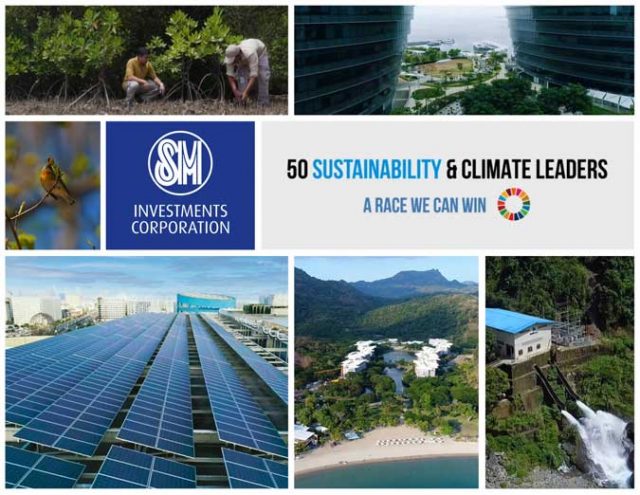
Listed SM Investments Corp. (SMIC) joined a group of businesses championing sustainability called the 50 Sustainability & Climate Leaders.
SMIC is the only Philippine company to join the campaign, alongside United States, Kenya, United Kingdom, Germany, Italy, Switzerland, and the Netherlands.
“We recognize our role and responsibilities in creating a more sustainable future. Our footprint today allows us to view our businesses through a larger lens of economic, social and environmental impact,” Frederic C. DyBuncio, president and chief executive officer of SMIC, said in a statement on Friday.
Led by TBD Media Group, the 50 Climate Leaders series is a multimedia campaign highlight effective leadership in the fields of: energy transition, climate finance and carbon pricing, industry transition, nature-based solutions, cities and local action, and resilience.
Featured documentaries showcase the importance of sustainable business for all stakeholders—from organizations, supply chains, and communities.
“For a business to be able to continue to grow and last for many years, it’s very important that it supports the community in a sustainable way. In the end, it’s the community and the environment that sustains the high growth of our businesses,” Mr. DyBuncio said.
SMIC has environmental efforts on disaster risk reduction and resilience, as well as climate adaptation. Disaster resilient features have been integrated in the design of the company’s various property projects.
SMIC shares at the stock exchange declined by 0.20% or P2 on Friday to close at P978. — K.C.G.Valmonte
To improve workplace inclusivity, the Microsoft Enabler Program provides cloud and artificial intelligence (AI) training for persons with disabilities (PWDs), accessibility education for employers, and inclusive hiring from non-profit organizations (NPOs) supporting PWDs.
“Accessibility education for employers is going beyond sensitization training. It’s having a knowledge base where the employees of the organization can access training and information that would help them in their decision-making process when it comes to accessibility, diversity, and inclusion at large,” said Ryan D. Gervasa, founder and president of Virtualahan, a non-profit social enterprise that has been a key partner in Microsoft’s local efforts to make the workplace more diverse.
Aside from providing inclusivity training for employers, Virtualahan pools potential candidates for vacancies within companies.
Offices with a limited budget, said Mr. Gervasa, can ensure the needs of its PWD staff are met by availing of government programs that give incentives to companies that employ talents with disabilities. According to Section 8 of the Magna Carta of Persons with Disability (RA 7277), private entities that employ disabled persons are entitled to tax breaks, including an additional deduction, from their gross income, equivalent to 25% of the total amount paid as salaries and wages to disabled persons.
“A culture of inclusion means creating the structure and mechanism in place to meet the needs of PWDs and other disadvantaged groups in your company,” Mr. Gervasa said. “It means putting resources for their welfare and development. It means putting your money where your mouth is.”
In the Philippines, the Microsoft Enabler Program has provided full-time employment for three individuals: Ritchell Anne B. de Loyola, whose chronic illness forced her to use a wheelchair, works at Microsoft as a program manager; Jefferson D. Cortez, who is hard-of-hearing, helps ensure that apps and solutions developed by IT company HCL Technologies are accessible to PWDs like himself; and Zeus Exequiel Seth M. Oliveros, who has an orthopedic condition that causes mobility dysfunctions, was hired by Cognizant Technology Solutions Philippines in 2020 as a data analyst.
“To be empowered, first of all, accept your condition and understand your limitations; then focus on your skills, abilities, and strengths to live up to your potential,” said Ms. de Loyola.
With more than a billion PWDs in the world, disability-inclusive employment can lead to a 1–7% rise in GDP in the Asia Pacific through increased economic productivity, according to a December 2016 report by the United Nations Economic and Social Commission for Asia and the Pacific. One in every six people in the region, or 650 million individuals, lives with a disability.
The Microsoft Enabler Program is in five markets — Korea, New Zealand, Philippines, Singapore, and Thailand — with plans to expand to the rest of the region by the end of 2020. Its eight commercial partners in the Philippines are Cognizant Technology Solutions, ePLDT, HCL Technologies, Nexus Tech, NTT Data, Wipro, Crayon, and DDLS Philippines. — Patricia B. Mirasol