Home Blog Page 8204

Diokno willing to grant more digital bank licenses
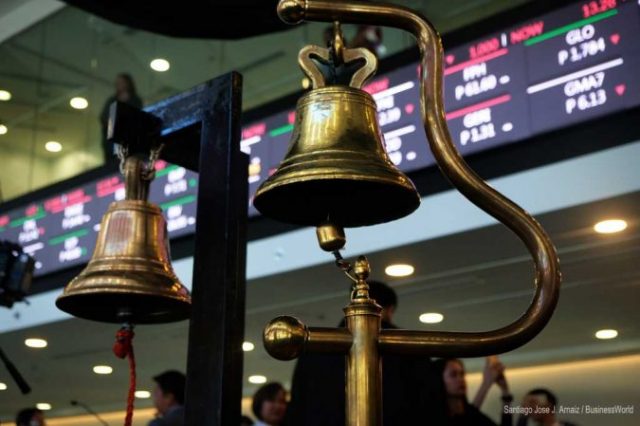
BW FILE PHOTO

THE central bank is willing to allow more digital banks to operate in the country, if it sees strong demand, Bangko Sentral ng Pilipinas (BSP) Governor Benjamin E. Diokno said.

“Our policy is to consider among the applicants the top five banks that we are willing to consider, and depending on our experience, we may expand the number of digital banks. We can have more if there’s a huge demand for it,” Mr. Diokno said in a webinar hosted by the Asian Development Bank Institute on Wednesday.

Under the framework approved by the Monetary Board, the number of digital bank licenses is currently capped at five.

Earlier this month, the BSP approved the digital bank license of the Overseas Filipino Bank, a subsidiary of the state-owned Land Bank of the Philippines.

“(OF Bank) will be very helpful for our over 10 million overseas Filipino workers,” he said, noting they are also assessing other applications for digital bank licenses.

BSP Deputy Governor Chuchi G. Fonacier told BusinessWorld last week that they have already received three formal applications for a digital banking license — all of which are partnerships between foreign and local entities.

Financial technology player Squidpay Technology, Inc. also said last week it is looking to acquire a 60% stake in Batangas-based Phil Star Development Bank and then seek a digital banking license.

In November last year, the central bank released the framework for digital banks, formally differentiating its license type from brick-and-mortar banks such as commercial, thrift, rural, and Islamic banks.

Digital banks are expected to offer products and services mostly through online platforms. These banks are required to have a minimum capital of P1 billion.

Some local and foreign lenders currently have all-online retail banking services through an app, such as CIMB Bank Philippines, Inc., ING Bank N.V. Manila, Tonik Digital Bank, Inc. (Philippines), East West Banking Corp.’s Komo and Rizal Commercial Banking Corp.’s Diskartech.

Mr. Diokno is hopeful that the rise of digital banks, together with other IT-related reforms could help them reach their goal to bring in more Filipinos into the formal financial system.

“We want to minimize the digital divide because we really want to make it [banking services] available to the lowliest families,” he said.

Executive Order 127 signed by President Rodrigo R. Duterte in March, allowing internet and value-added service providers access to satellite systems to build broadband facilities even without a congressional franchise. For its implementing rules and regulations, the central bank wants the government to allow banks to operate satellite broadband to help boost their operations and give their clients better access to financial services.

As of 2019, the country’s banked population stood at 29% of Filipino adults. The BSP wants to bring this to 70% by 2023. — Luz Wendy T. Noble
Philippines the 7th largest provider of ‘online labor’

Philippines the 7<sup>th</sup> largest provider of ‘online labor’

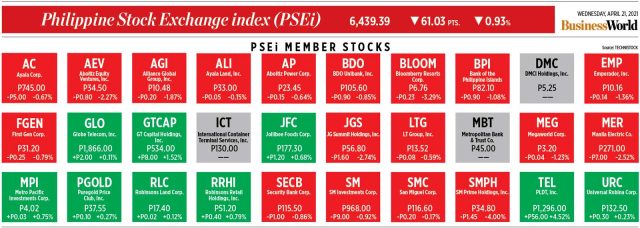
How PSEi member stocks performed — April 21, 2021

Here’s a quick glance at how PSEi stocks fared on Wednesday, April 21, 2021.


Peso retreats on stock market’s losses

BW FILE PHOTO

THE PESO weakened against the greenback on Wednesday on risk-off sentiment amid losses in the local stock market and the fresh surge in coronavirus cases here and abroad.

The local unit closed at P48.45 per dollar on Wednesday, depreciating by 13 centavos from its P48.32 finish on Tuesday, data from the Bankers Association of the Philippines showed.

The peso opened the session at P48.33 per dollar, which was also its intraday best. Meanwhile, its weakest was at P48.455 against the greenback.

Dollars exchanged increased to $797.4 million yesterday from $684.6 million on Tuesday.

The peso weakened following losses in the stock market, Rizal Commercial Banking Corp. Chief Economist Michael L. Ricafort said. 

The Philippine Stock Exchange index shed 61.03 points or 0.94% to close at 6,439.39 on Wednesday.

Meanwhile, a trader said the peso dropped due to rising coronavirus disease 2019 (COVID-19) cases in many countries.

In the Philippines, cases rose by 9,227 on Wednesday to bring the total to 962,307. Infections across the world stood beyond 143.6 million, with deaths reaching 3.059 million.

For today, Mr. Ricafort gave a forecast range of P48.40 to P48.50 per dollar while the trader expects the local unit to move within the 48.35 and 48.55 levels. — LWTN

PSEi drops as virus weighs on investor sentiment

BW FILE PHOTO

STOCKS declined on Wednesday as the coronavirus disease 2019 (COVID-19) situation here and abroad continued to affect market sentiment.

The Philippine Stock Exchange index (PSEi) went down by 61.03 points or 0.93% to close at 6,439.39 on Wednesday, while the all shares index declined by 24.49 points or 0.61% to end at 3,964.34.

“The PSEi swung back and ended lower again today due to losses in a couple of large-cap blue chips, mainly $SMPH (SM Prime Holdings, Inc.) and $SM (SM Investments Corp.),” AAA Southeast Equities, Inc. Research Head Christopher John J. Mangun said via e-mail.

“The increased selling pressure on blue chips may be a sign of frustration from investors due to the lack of concrete positive developments on the health crisis,” Mr. Mangun added. “Trading volumes still remain low. There may be some optimism because of the drop in new COVID-19 cases reported the day before, but overall, the sentiment remains cautious.”

Value turnover inched up to P5.37 billion on Wednesday with 3.46 billion shares switching hands, from the P5.52 billion seen on Tuesday with 5.84 billion shares.

Philstocks Financial, Inc. Research Associate Claire T. Alviar said concerns on rising COVID-19 cases around the world also affected market sentiment.

“In Asia, some parts of Japan may put on lockdown due to the new wave of COVID-19 infections and India sets new records for cases and deaths,” Ms. Alviar said in a Viber message on Wednesday. “Also, the restriction of the US on traveling to the Philippines weighs further on sentiment.”

“This continues to cause some anxiety for investors, as it may delay the current global economic growth projections,” Timson Securities, Inc. Trader Darren Blaine T. Pangan said in a separate Viber message.

The Health department on Wednesday reported 9,227 new COVID-19 infections, which brought the country’s tally to 962,307. Active cases are at 116,434.

Majority of the PSE’s sectoral indices ended the day in the red except services, which inched up by 12.19 points or 0.84% to finish at 1,451.40.

Meanwhile, property lost 67.14 points or 2.09% to end at 3,136.11; holding firms decreased by 67.26 points or 1.02% to 6,526.58; mining and oil declined by 69.83 points or 0.75% to close at 9,190.16; financials went down by 8.88 points or 0.63% to 1,391.60; and industrials gave up 13.53 points or 0.15% to finish at 8,690.36.

Advancers outperformed decliners, 108 against 92, while 52 names closed unchanged.

Net foreign selling climbed to P776.80 million on Wednesday from the P486.97 million in the previous trading day.

AAA Southeast Equities’ Mr. Mangun said the main index might “bounce back” in the next session, while Timson Securities’ Mr. Pangan said he expects the index to finish between the 6,400 to 7,300 range. — K.C.G. Valmonte

US issues travel advisory vs Philippines on COVID-19 surge

THE UNITED States has asked its citizens to avoid traveling to the Philippines, where there has been a surge in coronavirus infections since March.

“Do not travel to the Philippines due to COVID-19,” the US Department of State said in an advisory posted on its website. “Additionally, exercise increased caution due to crime, terrorism, civil unrest and kidnapping.”

The agency issued the April 20 notice after the Centers for Disease Control and Prevention (CDC) issued a Level 4 travel health notice for the Philippines which indicates a “very high level of COVID-19 (coronavirus disease 2019).”

The CDC said fully vaccinated travelers could also get infected and might spread coronavirus variants.

“If you must travel to the Philippines, get fully vaccinated before travel,” it said on its website. “All travelers should wear a mask, stay six feet from others, avoid crowds and wash their hands.”

The US also asked Americans not to travel to the Sulu Archipelago in and Marawi City in southern Philippines due to crime, terrorism, civil unrest and kidnapping. Travel to other areas of the Mindanao region should be reconsidered, it added.

The Department of Health (DoH) reported 9,227 coronavirus infections on Wednesday, bringing the total to 962,307.

The death toll rose by 124 to 16,265, while recoveries increased by 19,699 to 829,608, it said in a bulletin.

There were 116,434 active cases, 96.7% of which were mild, 1.3% did not show symptoms, 0.6% were critical, 0.8% were severe and 0.42% were moderate.

The Health department on April 2 reported the highest daily tally of 15,310 cases since the pandemic started last year.

The agency said 26 duplicates had been removed from the tally and 36 recovered cases were reclassified as deaths. One laboratory was closed on April 19, while eight laboratories failed to submit data.

About 10.6 million Filipinos have been tested for the coronavirus as of April 19, according to DoH’s tracker website.

The coronavirus has sickened about 143.6 million and killed 3.1 million people worldwide, according to the Worldometers website, citing various sources including data from the World Health Organization.

About 122 million people have recovered, it said. More than 1.4 million coronavirus vaccines have been given as of April 20, according to data from DoH. The agency said 209,456 Filipinos have been fully vaccinated, while about 1.4 million have received their first shot.

Meanwhile, Health Undersecretary Maria Rosario S. Vergeire said 84% of intensive care unit (ICU) beds in Metro Manila have been used.

The Cordillera Administrative Region ICU bed occupancy rate was at 73%, 88% in Cagayan Valley, 87% in Central Luzon and 83% in the Calabarzon region.

Healthcare use rate, which includes ICU, isolation and ward beds, in Metro Manila was at 67%, she said.

The DoH on April 2 reported the highest daily tally of 15,310 cases since the pandemic started last year. — Vann Marlo M. Villegas

FDA to lead drive vs illegal ivermectin, says Malacañang

PRESIDENT Rodrigo R. Duterte has ordered the country’s drug regulator to lead the government’s campaign against the illegal sale of the veterinary drug ivermectin, which is being repackaged in the Philippines as a treatment against the coronavirus.

The Food and Drug Administration (FDA) has been directed “to take the lead in determining the course of action against the illegal trading/dispensing of ivermectin” to ensure the safety of the public and avoid institutional conflicts, presidential spokesperson Herminio “Harry” L. Roque, Jr. said in a statement on Wednesday.

Mr. Roque said the police “cannot arbitrarily determine on their own which drugs should not be on the market.” “All operations to apprehend or seize goods must be done in coordination with the FDA,” he added.

“What is being ordered to stop is the sale/trade of ivermectin for veterinary use that has been repackaged as human grade, including those that have not been determined by competent authorities as safe to be used in humans,” Mr. Roque said.

He said the President is closely monitoring developments concerning Ivermectin.

Mr. Duterte has ordered his management staff to give him weekly updates on “Ivermectin studies and FDA-related clearance,” Mr. Roque said. Philippine authorities have said registered ivermectin drugs are only for veterinary use.

At least two hospitals in the country have been given a compassionate use permit to use the drug to treat coronavirus patients.

Science and Technology Secretary Fortunato T. de la Peña on Monday said the Philippines would hold trials to determine whether ivermectin could be used to treat coronavirus patients. The Department of Health and the FDA earlier said there is no evidence that ivermectin could reduce deaths among patients with mild to severe COVID-19 (coronavirus disease 2019) cases.

Ivermectin did not also significantly reduce the duration of hospitalization based on some studies, they said. Health authorities also said the rate of hospitalization discharge “did not differ significantly” between those that were given the drug and the placebo group.

There was also no evidence that ivermectin could prevent coronavirus infections, they said, citing the World Health Organization.

The agencies said ivermectin products registered in the country were for veterinary use and were only allowed to treat animals suffering from parasites and heartworm. — Kyle Aristophere T. Atienza

Japan PM cancels trip amid spike in COVID-19 infections

BLOOMBERG

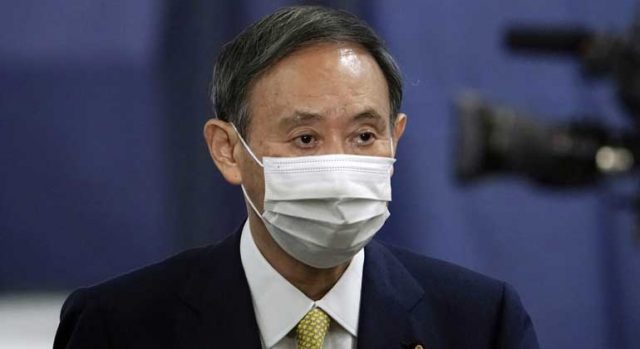
PRIME Minister (PM) of Japan Yoshihide Suga has canceled his planned visit to India and the Philippines amid a fresh surge in coronavirus infections in many parts of the world including Japan and the two countries.

Mr. Suga canceled the trips due to a resurgence of coronavirus cases in Japan, which has considered imposing a fresh state of emergency in Tokyo, Osaka and Hyogo prefectures, Japan Times reported on Wednesday, citing unnamed government sources.

India and the Philippines are also grappling with a new wave of infections, which may have played a part in the decision to cancel the trip, it said.

The Philippine presidential palace said it understands the decision.

“Defeating the COVID-19 (coronavirus disease 2019) pandemic is high on both the Philippines and Japan’s agenda and remains a key point of cooperation,” presidential spokesperson Herminio “Harry” L. Roque, Jr. said in a statement.

“The decision to postpone a planned official visit based on this ground, therefore, deserves support,” he added.

Mr. Roque said the strategic partnership between the Philippines and Japan would continue even as both countries struggle to work to address the COVID-19 pandemic. — Kyle Aristophere T. Atienza

BFAR told to probe Chinese overfishing near Zambales

A SENATOR on Wednesday called on the Bureau of Fisheries and Aquatic Resources (BFAR) to probe overfishing by Chinese vessels in the South China Sea after concerns over declining fish catch in Zambales province.

In a statement, Senator Risa N. Hontiveros-Baraquel said the agency should find out how much local fisherfolk are losing because of China’s activities in the disputed waterway.

“Protecting our rights in the West Philippine Sea is not just about our legal jurisdiction, but also about our country’s food security,” she said, referring to areas in the South China within the country’s exclusive economic zone.

“Government should be able to allow Filipino fishers to freely conduct their business: to catch fish,” she added.

Ms. Hontiveros said the agency should monitor the area and account for “what is being stolen from us.”

At least 20 Chinese vessels have been spotted 111 kilometers off San Antonio town in Zambales, she said, citing fishermen there.

One of the fishermen who raised alarm over the Chinese vessels said they could hear them “disturbing fishing grounds” at night.

The BFAR and the Department of National Defense should work together to defend the livelihood of Filipinos, she said.

The senator said China owes the Philippines more than P800 billion for “her years of exploiting the West Philippine Sea.”

“These figures were released even before the recent swarming of over 200 vessels, making it reasonable to presume that China’s debt to our country has ballooned in only the span of three months.”

The Philippines last week fired off another diplomatic protest against China after authorities spotted a swarm of Chinese vessels, including six war ships within its waters in the South China Sea. — Vann Marlo M. Villegas

DICT targets vaccine management system rollout by Q2

Residents of Quezon City in line for a coronavirus jab manually fill up information sheets in this March 31 photo. — PHILSTAR/MICHAEL VARCAS

THE DEPARTMENT of Information and Communications Technology (DICT) on Wednesday said it targets to rollout the government’s vaccine management system nationwide within this quarter (Q2).

The department is aiming to have the  Vaccine Information and Management System (VIMS) set up in the National Capital Region (NCR) by end-April and the rest of the country by end-May, DICT Assistant Secretary Emmanuel Rey R. Caintic said in a televised news briefing.

Mr. Caintic said the vaccine reporting system is expected to quicken the country’s inoculation drive against the coronavirus.

The system shall “track the supply and distribution of vaccines nationwide” as well as the doses delivered to the country, he said.

“The DICT shall ensure the security of the VIMS as it allows information and data exchange with other systems,” Mr. Caintic said.

He said the agency has been working with local governments, private groups and individuals to utilize the system’s “maximum capacity.”

“We are also working on having more granular level of reporting to come up with data-driven decisions at both national and local levels,” he said.

‘MEGA CENTERS’
Meanwhile, Secretary Carlito G. Galvez, Jr. said the government is partnering with the private sector to establish “mega vaccination centers” in shopping malls.

In a hearing conducted by the House of Representatives committees on health, and trade and industry, the government’s coronavirus disease 2019 (COVID-19) vaccine head said major malls and retailers have pledged their facilities for vaccination purposes in the Metro Manila area.

“Later on, all malls… will be designated as mega vaccine sites,” he said.

He also said the private sector has committed to mobilize five big hospitals for the vaccination drive.

“They (the private sector) were more than willing to provide spaces and also personnel, no charge to the government, and provide the services for the country, so that we can mobilize the inoculations,” he said.

With the private sector’s participation, Mr. Galvez said they are hoping to conduct one million jabs per week, which will require an additional personnel of up to 50,000.

Health Undersecretary Myrna C. Cabotaje, however, said in the same hearing that additional manpower for the inoculation program might be difficult to find.

The Health department currently has only 3,000 inoculators.

“The HRH (human resource for health) is the biggest challenge,” she said in Filipino.

Ms. Cabotaje also said apart from human resources, the availability of vaccine supply will determine the daily inoculation output. — Kyle Aristophere T. Atienza and Gillian M. Cortez

Malicious tagging on Facebook stopped — DoJ cybercrime office

PHILSTAR

THE PAGE behind the recent tagging of Facebook users in malicious videos that led to downloading malwares has been removed and its administrators have been sanctioned, the Department of Justice–Office of Cybercrime (DoJ-OOC) announced on Wednesday.

The cybercrime office said it has received confirmation from Facebook’s Asia-Pacific legal team that the page associated with the malicious tagging has been taken down and those behind it have been appropriately dealt with.

“We encourage everyone to report similar incidents in the future to DoJ-OOC for immediate and appropriate action,” the office said on its Facebook page.

Many of the Facebook users who were tagged flagged the anomaly on their own pages and warned their network of friends on the social media platform.

“Introduction or transmission of viruses, such as malwares, to and interference in the functioning of computer systems are prohibited acts under Republic Act No. 10175 or the Cybercrime Prevention Act of 2012,” DoJ-OOC said. — Bianca Angelica D. Añago

ARTA, PACC ink deal for joint investigations

WWW.FACEBOOK.COM/GRECOBELGICAFANPAGE

THE country’s red tape and corruption watchdogs on Wednesday signed a deal to work jointly on investigations.

The Anti-Red Tape Authority (ARTA) and the Presidential Anti-Corruption Commission (PACC) on Wednesday signed a memorandum of agreement to align their work on corruption-related complaints sent to either agency.

“We will be able to share investigations and valuable information that is allowed by law to bolster investigations, file cases, and submit reports to the President and recommend streamlining policies and systems,” PACC Chairman Greco B. Belgica said at a virtual briefing on Wednesday.

ARTA Director General Jeremiah B. Belgica, the PACC chairman’s brother, said the PACC has jurisdiction over presidential appointees, while ARTA works on easing government processing times.

“When ARTA investigates and there are related allegations of corruption… we refer these to the appropriate agencies like PACC,” he said in a mix of English and Filipino.

He also said that the two agencies’ legal teams will work together and fact-finding processes will be done jointly to speed up the process.

Cases investigated by ARTA can be automatically endorsed to the PACC, he added.

PACC, on the other hand, will also endorse red tape violations under Republic Act No. 11032 or the Ease of Doing Business and Efficient Government Service Delivery Act to ARTA.

The Philippines slipped two spots to 115th place out of 180 countries or territories in a global corruption index released in January by Transparency International. The organization said widespread corruption has weakened many countries’ response to the coronavirus disease 2019 (COVID-19) pandemic. — Jenina P. Ibañez

ADVERTISEMENT
ADVERTISEMENT