Home Blog Page 82

Dissident artist on trial in China for satirical Mao sculptures, says rights group

BEIJING — Chinese dissident artist Gao Zhen, famous for making provocative satirical sculptures of former leader Mao Zedong, was tried on Monday over accusations of “defaming national heroes and martyrs,” his wife and a rights group said.

Mr. Gao, 69, who was detained in 2024 during a visit from the US, faces a maximum three-year prison sentence, said his wife Zhao Yaliang and Shane Yi, a researcher at the Chinese Human Rights Defenders group which operates outside the country.

The closed-door, one-day trial took place at Sanhe City People’s Court in Hebei province next to the capital Beijing, and ended without a verdict, Ms. Zhao and Yi told Reuters, citing information from his lawyers.

Ms. Zhao said she was barred from entering the courtroom. Verdicts are often announced months later in such trials.

The Sanhe Public Security Bureau did not immediately respond to a request for comment on his case.

The New York-based artist was detained in August 2024 on a family visit to China even though since moving to the US in 2022, he had made multiple trips to China without issues, Yi added.

“This really shows the Chinese government’s logic, when they want to target someone, they can use anything in their power to do so,” she said.

“Gao Zhen is an artist. He has a right to artistic freedom, period.”

With his brother Gao Qiang, Mr. Gao produced several provocative sculptures of Mr. Mao that critiqued the 1966-1976 Cultural Revolution, a period of social turmoil and widespread political persecution in China that led to millions of deaths.

European Union diplomats tried to attend the trial but were blocked from entering, its China mission said in an official X post.

MOCKING MAO
Their most famous works include Miss Mao, featuring Mr. Mao with unsettling features like Pinocchio noses and breasts, and Mao’s Guilt, a bronze statue of the leader kneeling remorsefully.

Mr. Gao’s wife said she and their seven-year-old son, an American citizen, are under exit bans and cannot leave China.

“This is a huge blow to me,” Ms. Zhao told Reuters. “My son hasn’t seen his father since the year before last, and we have been barred from sending letters to him since last May. It’s had a significant impact on my son’s emotions and health.”

Mr. Gao is suffering from malnutrition and has lumbar spine disease, as well as chronic knee and eye conditions that need treatment, Yi said.

Mr. Gao was charged for works between 2005 and 2009, Yi said, while China’s “Law on the Protection of Heroes and Martyrs” was only established in 2018 and strengthened in 2021.

The law has previously been used to prosecute individuals accused of insulting servicemen and military members who died in the line of duty, as well as historical figures.

A stand-up comedian was censored, and his comedy firm fined $2 million for a joke that referenced a People’s Liberation Army slogan. — Reuters

PhilHealth aims to break even after 2025 net loss

PHILIPPINE Health Insurance Corp. is hoping to post a better financial performance this year, its top official said. — PHILIPPINE STAR FILE PHOTO

THE PHILIPPINE Health Insurance Corp. (PhilHealth) targets to break even this year as it received a subsidy under the 2026 budget that includes the P60 billion returned from the National Treasury as a result of a Supreme Court ruling that voided the fund transfer.

“So, as you know, we already were granted a substantial GAA (General Appropriations Act) subsidy to the tune of about P130 billion, which also includes the P60 billion that was ordered returned by the Supreme Court,” PhilHealth President and Chief Executive Officer Edwin M. Mercado told reporters last week.

“Moving forward, our objective is to break even or at least have some buffer,” he said.

The state health insurer received an allocation of P113.262 billion under the 2026 GAA, including a P53.262-billion subsidy sourced mainly from sin tax collections and the returned P60 billion in excess funds it earlier remitted to the Bureau of the Treasury.

The Supreme Court ruled in December last year that the 2024 GAA special provision and Department of Finance circular that enabled this transfer were void as both were carried out “with grave abuse of discretion amounting to lack or excess of jurisdiction.”

Under the special provision, government-owned or -controlled corporations were authorized to return their excess reserve funds to the Treasury to finance unprogrammed appropriations in the 2024 budget.

With the 2026 subsidy and the fund restoration, Mr. Mercado said he expects the state insurer to have a 5%-7% buffer between its projected benefit payments and collections from direct members by the end of this year.

“From P300-billion payments last year, our projection is about P378 billion this year. So, it’s another 25% growth.”

He said PhilHealth’s retained earnings declined in 2025 due to the lack of subsidies in last year’s budget even as it continued to expand benefits for its members.

“In terms of our net income, because we didn’t get any subsidy at that point, we already used up our retained earnings, which is the mandate given to PhilHealth.”

PhilHealth’s financial statement showed its retained earnings fell by 60.51% year on year to P59.06 billion in 2025 from P149.58 billion in 2024.

Meanwhile, benefit claims and expenses surged by 74.47% to P323.56 billion from P185.45 billion.

The state health insurer recorded a net loss of P103.06 billion last year, a reversal of its P64.3-billion profit in 2024.

The 2025 budget removed the entire P74.431-billion subsidy to PhilHealth that was proposed in the National Expenditure Program. Of this, P53.134 billion was supposed to fund insurance premiums for indirect contributors, P21.17 billion for benefit upgrades under the Universal Health Care law, and P121.17 million for community beneficiaries. PhilHealth kept these programs running by drawing from its reserves.

“I think that is the reason why the lawmakers moving forward were very supportive — because we showed that we have the absorptive capacity to roll out benefits and pay out faster,” Mr. Mercado said. — Aaron Michael C. Sy

The urgency of tackling the cost-of-living crisis

PHILIPPINE STAR/MIGUEL DE GUZMAN

In a survey conducted by Pulse Asia between Feb. 27 and March 2 this year, 59% of respondents said they considered inflation to be the most urgent national concern.

Notably, the survey coincided with the opening days of the Middle East war on Feb. 28. While the conflict had begun, its broader inflationary effects were only starting to register, reinforcing the finding that inflation anxieties were already deeply rooted even before war-related price shocks intensified.

Other issues that figured as the most urgent concern were: fighting graft and corruption in government (47%), increasing the pay of workers (36%), reducing the poverty of many Filipinos (21%), and creating more jobs (21%).

In the same survey, just 10% of Filipinos felt that the government was taking action.

More interesting is how the people perceived the government to be doing better in all other issues: stopping the destruction and abuse of the environment, reducing the amount of taxes paid, providing support to small entrepreneurs to restore their businesses, addressing the problem of involuntary hunger, fighting graft and corruption in government, reducing the poverty of many Filipinos, and fighting the widespread sale and use of illegal drugs.

This perception of the government’s inability to stem inflation appears to run contrary to government announcements. The Philippine Statistics Authority reported that February’s inflation rate was at 2.4%. And yet, in the Stratbase-commissioned Pulse Asia survey where respondents were asked to identify actions that government must do to address local community concerns, 41% of respondents cited having more affordable food prices such as those of rice, meat, and fish.

Other top community concerns that leaders must address, according to the survey, include lessening or eliminating corruption to provide better services to the community (26%), creating more jobs and livelihood opportunities (24%), and providing accessible education and healthcare services (10%).

It has been a month since the Middle East war began. Since then, the price of fuel has increased many times over. Transport groups have staged a strike in many places. Shortages in fuel supply are already being felt, heightened by the uncertainty about the length and extent of the conflict.

If the public was concerned about the prices of goods then, they are even more anxious today.

Aside from worries on the affordability of goods, Filipinos are also rightly concerned about the sustainability of their jobs. Many companies may find it difficult to cope with the rising prices of utilities and raw materials, such that they may even resort to slashing jobs to cut costs. If this happens, rising unemployment will add to the economic pressure, triggering even greater public anxiety.

The flood control scandal that erupted last year has revealed some of the most unconscionable acts by public officials and private individuals alike. Filipinos realized the magnitude of corruption that has not only unjustly enriched people who vowed to serve them, but put their lives in danger.

This is why concern over corruption remains a key issue at 26%, signaling that Filipinos expect stronger governance, especially during periods of rising prices and economic strain. Transparent and accountable government systems will lead to more efficient delivery of services, reduced leakages in public spending, and greater public trust — ensuring that economic interventions genuinely reach and benefit communities.

In the long term, and inevitably, stamping out corruption will yield economic benefits to the country. Governance is, after all, an economic issue, because it has to do with efficient and transparent use of resources. It is also a determinant of investor interest. Investors, who will bring jobs and potential for economic activity, are likely to cast their lots in a transparent system where rules are fair, predictable, and evenly applied, and where resources are used for their intended purpose.

Even so, economic concerns like the prices of goods and the assurance of a stable job amid uncertain times are immediate and urgent. These are issues that affect them today and may even determine the quality of their next meal, or even whether they would have a decent meal in the first place.

Thus, the government’s response must be immediate, targeted, and felt on the ground. Our leaders must exert all their efforts in stabilizing food and fuel prices, encouraging more investments, and accelerating job creation. These are essential to cushion vulnerable sectors and restore economic confidence.

Readiness for a crisis is achieved from the cumulative result of policies and actions across numerous administrations and in anticipation of multi-dimensional disruptions from external events over which we have no control. This needs a holistic mindset that understands the country’s risks amidst the global geopolitical and economic dynamics, for evidence-based contingency plans that would ensure the least disruption to local ecosystems and supply chains supporting an already struggling population.

These solutions will benefit Filipinos as we face the impact of the Middle East crisis, and after it, as we build a sustainable, inclusive economy that is able to give its people dignity of work, good quality of life, ability to contemplate a better future, and resilience amid challenging times.

The people will measure the outcome of these efforts based on what they see, feel, and live with every day.


Victor Andres “Dindo” C. Manhit is the president of the Stratbase ADR Institute.

PAL posts 6% profit growth on higher revenues

PHILIPPINE STAR/EDD GUMBAN

PHILIPPINE AIRLINES (PAL), operated by PAL Holdings, Inc., said its net income rose by 6% to $160 million in 2025, supported by higher revenues.

“Our 2025 results validate PAL’s successful transition from post-pandemic recovery to sustainable, long-term growth… Despite an industry-wide softening of passenger yields, we successfully defended our top line through disciplined revenue and network management,” PAL President Richard Nuttall said in a media release on Tuesday.

The airline said its revenues increased by 3% to $3.22 billion in 2025 from $3.13 billion in 2024.

Passenger revenue remained the main contributor, reaching $2.73 billion, as PAL carried 16.3 million passengers during the year.

PAL increased its total capacity, measured in available seat kilometers, by 3.3% to 46.19 billion from 44.74 billion in 2024.

Passenger load factor slipped to 78.7% in 2025 from 79.1% a year earlier.

Ancillary and cargo revenues reached $301.2 million and $165 million, respectively. The airline attributed the increase in ancillary revenues to higher volumes of seat upgrades, while cargo growth was driven by higher volumes.

Operating expenses rose by 6.3% to nearly $3 billion, reflecting an increase in flights, higher maintenance costs, and other operating expenses related to its Manila operations.

Last year, PAL advanced its fleet revitalization program by retrofitting three A321ceo aircraft and taking delivery of two additional A320-200s to strengthen its domestic network.

The airline is refurbishing 18 Airbus A321ceo aircraft, which are expected to operate across Asia by 2027, including routes to Tokyo (Haneda and Narita), Osaka, Jakarta, Bali, and Guam starting this year, and other Asian destinations by 2026-2027.

PAL plans to roll out three refurbished aircraft this year, nine in 2026, and six in 2027.

“These fleet investments and ongoing cabin reconfigurations reinforce PAL’s long-term growth strategy and position the airline to expand capacity, enhance passenger experience, and support network growth as it enters 2026,” it said.

PAL also said it is strengthening its regional position after being recognized by Cirium as the most punctual airline in Asia Pacific.

“To navigate significant cost pressures, we are aggressively driving internal efficiencies. Simultaneously, we are heavily investing across our end-to-end passenger journey, particularly in continuously improving our On-Time Performance (OTP), to deliver a reliable and seamless customer experience anchored on the world-class service and genuine care that define Philippine Airlines,” Mr. Nuttall said.

Shares in PAL Holdings rose by 16 centavos, or 4.72%, to close at P3.55 each. — Ashley Erika O. Jose

PasaHero turns jeepneys into QR ad platforms

PHILIPPINE STAR/MIGUEL DE GUZMAN

By Almira Louise S. Martinez, Reporter

PASAHERO PASSENGER, a commuter reward app, is helping jeepney drivers generate additional income through quick response (QR) code advertising as fuel prices continue to climb.

“We can’t control gas prices; the only thing we can control is whether we can help them earn additional revenue,” PasaHero founder Michael “Micray” Gonzalez told BusinessWorld.

The platform links advertisements to QR codes posted inside jeepneys, which commuters can scan during trips. Drivers, operators and cooperatives get as much as 20% of the ad revenue, Mr. Gonzalez said.

“We’re trying to connect modern technology with public transportation and help jeepney drivers earn more through advertising,” he said via Zoom.

The initiative comes as surging fuel costs due to the Iran war erode drivers’ earnings. Jeepney drivers are losing about P400 to P500 from an average daily income of P800 due to successive oil price increases, according to transport group Manibela.

Fuel prices rose further this week as oil companies announced a P12.50‑a‑liter hike in diesel and a P2.50 increase in gasoline, adding pressure on public transport operators amid the escalating conflict in the Middle East.

Under PasaHero’s model, drivers do not need to change their routes or routines to earn additional income.

“For this to work, the business model has to be simple,” Mr. Gonzalez said. “If the app is complicated, you lose the attention of drivers, operators and passengers.”

He said the platform has the potential to significantly supplement incomes. “With the right advertisers, we don’t see why a jeepney driver’s earnings can’t double or triple,” he added.

Commuters also benefit by earning points each time they scan a QR code. These points can be redeemed for rewards or discounts at partner establishments, including fastfood chains such as McDonald’s.

“It’s similar to frequent-flyer miles or credit card rewards,” Mr. Gonzalez said. “Commuters are willing to participate if it helps them reduce expenses.”

The app posted a 15% increase in users at the Market‑Market terminal in Taguig City following recent fuel hikes, as more workers shift to public transport to cut costs, he said.

PasaHero works with about 2,500 jeepney drivers in Makati, Taguig and Alabang in Muntinlupa, and is targeting 10,000 partnerships by mid-year. The company also plans to expand to Cebu City and Davao.

“If we can show that the ecosystem helps communities and drivers, adoption across the rest of the country will follow,” Mr. Gonzalez said.

Philippines’ net external liability narrows to $50.8 billion at end-2025

A bank employee counts US dollar notes in this file photo. — REUTERS

THE PHILIPPINES’ international investment position (IIP) narrowed at the end of 2025 as its external assets grew faster than its external liabilities, the Bangko Sentral ng Pilipinas (BSP) said.

The country’s IIP stood at a net liability of $50.829 billion at end-December, 2.47% narrower than the $52.114 billion logged as of September. It was also 0.67% smaller than the $51.173-billion net liability seen a year prior.

The IIP is a gauge of the economy’s external exposure. The net position refers to the difference between assets and liabilities and represents either a net claim on or a net liability to the rest of the world.

“The lower net liability position reflected a faster growth in external assets relative to the increase in external liabilities,” the BSP said in a statement on Tuesday.

Investments in foreign assets rose by 1% quarter on quarter to $264.1 billion, while foreign investments in Philippine assets climbed by 0.4% to $314.9 billion. It was also up by an annual 5.4% and 4.4%, respectively.

“The country’s stock of external financial assets rose as of end-December 2025, driven by increases across major asset components,” the BSP added.

Broken down, the country’s external financial assets grew year on year as residents’ investments in foreign-issued debt securities went up by 14.1% to $37.3 billion and reserve assets rose 4.3% to $110.8 billion.

This also came amid a 9.6% climb in residents’ equity capital investments in their foreign affiliates to $35.6 billion and the 15.7% increase in residents’ holdings of foreign equity securities to $7.6 billion.

Bulk of the country’s investments were held by the central bank with 43.5% or $114.9 billion. Deposit-taking corporations, excluding the BSP, had 15.7% or $41.4 billion, while other sectors accounted for 40.8% or $107.9 billion of the total.

By type of instrument, most of residents’ foreign investments were reserve assets amounting to $110.8 billion or 42% of the total, followed by debt instruments at $42 billion (15.9%) and debt securities at $37.3 billion (14.1%).

The rest were equity capital at $35.6 billion (13.5%), currency and deposits at $16.7 billion (6.3%), loans at $11.7 billion (4.4%) and equity securities at $7.6 billion (2.9%).

Meanwhile, the country’s external financial liabilities rose amid the increase in nonresidents’ investments in debt instruments to $75.3 billion, up 8.4% year on year, as well as the 7.6% climb in residents’ outstanding foreign loans to $81.6 billion and the 9.4% growth in nonresidents’ holdings of debt securities to $48.6 billion.

Of the total, 28.1% or $88.4 billion were held by the general government, 12.5% or $39.3 billion by deposit-taking corporations, excluding the BSP, 1.2% or $3.9 billion by the central bank, and 58.2% or $183.3 billion by other sectors.

Foreign loans made up 25.9% or $81.6 billion of foreign investments in Philippine assets during the period, followed by nonresidents’ investments in debt instruments with $75.3 billion (23.9%), equity capital with $59.3 billion (18.8%), debt securities with $48.6 billion (15.4%), equity securities with $35.2 billion (11.2%) and special drawing rights with $3.8 billion (1.2%).

At end-December, the country’s net liability position made up 10.4% of its gross domestic product, lower than the 10.8% share during the previous quarter, the BSP said. — Katherine K. Chan

Digital detox in the Age of AI

STOCK PHOTO | AI Generated Image from Freepik

For the past year, artificial intelligence (AI) has dominated nearly every business conversation. Boardrooms are discussing it. Schools are teaching it. Companies are investing in it. Employees are quietly worrying about it.

Every week brings another breakthrough. New AI agents promise to automate work. New platforms claim to make people more productive. Entire industries are being told to transform or risk being left behind.

The message is clear: learn AI, embrace technology, and move faster.

Ordinarily, I would agree. In many of my talks and columns, I have argued that AI is no longer optional. Those who do not understand it may soon find themselves overtaken by those who do. Executives, entrepreneurs, managers, and even students must learn how these tools work and how they can improve productivity, decision-making, and innovation.

In fact, the long Holy Week break may seem like the perfect time to catch up. Many professionals will likely spend the holidays watching AI tutorials, experimenting with new platforms, reading articles, or learning how to use the latest tools. There is certainly no shortage of material. Every day seems to bring another webinar, another app, another technology trend.

But perhaps this Holy Week, the more important lesson is not to spend more time online.

Perhaps the better lesson is to disconnect.

Holy Week remains one of the few periods in the year when the country slows down. Roads become quieter. Offices close. Meetings stop. For a brief moment, the usual noise of work, traffic, deadlines, and digital distraction fades.

Yet many of us no longer know how to slow down.

We bring our work with us on vacation. We reply to e-mails from the beach. We attend online meetings while supposedly spending time with family. Even during long weekends, we remain glued to our phones, endlessly scrolling through social media, reading the news, answering messages, and checking notifications.

Technology has made us constantly connected, but not necessarily closer.

It is now common to see families sitting together at a restaurant with every member looking at a different screen. Parents spend time with their children while still replying to work messages. Friends meet, but instead of talking, spend most of the time taking photos for social media.

We are always online, yet increasingly disconnected from the people physically around us.

The irony is that the more technology advances, the more valuable real human connection becomes.

AI can summarize documents, draft presentations, generate reports, and answer questions. It can make businesses faster and more efficient. But it cannot replace the warmth of a conversation, the comfort of family, the laughter around a dinner table, or the quiet reflection that often comes only when one steps away from the noise.

The danger today is not simply that people will fail to learn AI. The bigger danger is that in the race to keep up with technology, people may slowly lose the ability to be fully present.

There is now enormous pressure to be constantly productive. We feel guilty when we are resting. We feel anxious when we are offline. We fear missing out on the latest development, the latest trend, or the latest opportunity.

But not every moment has to be optimized.

Not every hour has to be productive.

Sometimes, the most important thing one can do is pause.

That may be the true value of Holy Week in the digital age. It offers something increasingly rare: permission to slow down.

This does not mean rejecting technology. AI will continue to transform the world after the holidays are over. The workplace will still need people who understand data, automation, and digital tools. Businesses will still need to adapt.

But people also need time to recharge.

After all, technology was supposed to improve life, not consume it. The promise of AI has always been that it can automate routine tasks and save time. Yet many people now feel busier than ever. They finish work faster, only to be given more of it. They become more efficient, but somehow less rested.

Instead of using technology to create more space in life, many have allowed it to occupy every available moment.

Holy Week is an opportunity to reclaim that space.

Spend time with family without checking your phone every few minutes. Have conversations that do not compete with notifications. Visit parents and grandparents. Listen to stories. Share meals. Spend time with children before they grow up too quickly.

Most importantly, be fully present.

There will always be another e-mail waiting. Another AI tool to learn. Another article to read. Another webinar to attend.

Those things can wait.

The moments that matter often cannot.

Many people say they are working hard for their families yet rarely spend meaningful time with them. They chase promotions, growth, success, and productivity, but forget the reason they wanted those things in the first place.

In the end, few people will look back and wish they had spent more time answering messages or scrolling through social media. More likely, they will wish they had spent more time with the people who mattered most.

Ironically, the age of AI may ultimately remind us of something very old and very simple.

The more machines can do, the more important it becomes for people to do the things that only humans can do.

To listen. To connect. To care. To reflect. To spend time with one another.

Technology will continue to move quickly after Holy Week. The race to understand AI will not stop. Businesses will still need to adapt to a rapidly changing world.

But before returning to that world, perhaps this is the moment to take a short step back.

To unplug.

To rest.

And to remember that in an increasingly digital world, the most important thing we must not lose is our humanity.


Dr. Donald Patrick Lim is the founding president of the Global AI Council Philippines and the Blockchain Council of the Philippines, and the founding chair of the Cybersecurity Council, whose mission is to advocate the right use of emerging technologies to propel business organizations forward. He is currently the president and COO of DITO CME Holdings Corp.


Puregold earnings up 8.8% on higher sales

PUREGOLD.COM.PH

LISTED retailer Puregold Price Club, Inc. said its consolidated net income rose by 8.8% to P11.3 billion in 2025 from P10.4 billion in 2024, driven by higher revenues and improved gross margins.

“Our record-breaking earnings underscore the resilience of our core businesses with the aim at providing our target customers the best value, even amid challenging market conditions,” Puregold Price Club, Inc. President Ferdinand Vincent Co said in a statement on Tuesday.

The company’s revenues grew by 10.6% to P242.45 billion from P219.17 billion in 2024.

Same-store sales also increased, with Puregold Stores up by 4.1%, mainly due to higher basket size, and S&R Warehouse Clubs up by 6.1%, driven by increased foot traffic, the company said.

“As we move into 2026, we remain focused on accelerating our store expansion in key provincial markets—broadening our reach, enhancing customer convenience, accessibility, and positioning the company for sustained long-term growth and value creation,” Mr. Co said.

As of end-December 2025, Puregold opened 28 new Puregold stores, three S&R Membership Shopping Warehouses, and nine S&R New York-style quick service restaurant outlets, and acquired 153 Puremart stores.

The company had a total of 784 stores nationwide, consisting of 680 Puregold stores, 33 S&R Membership Shopping Warehouses, and 71 S&R New York-style quick service restaurant outlets.

Shares in Puregold rose by 2.50% to close at P41 each on Tuesday. — Alexandria Grace C. Magno

Celine Dion announces comeback with 10 concerts in Paris this fall

REUTERS

PARIS — Canadian singer Celine Dion announced on Monday, her birthday, that she will return to the stage this fall with 10 concerts scheduled in Paris, spread out over September and October.

The much‑anticipated announcement followed an ad campaign in the streets of Paris that had fueled speculation that the French‑speaking Canadian star, best known for her powerful ballads, would stage her comeback in the French capital.

“This year, I will receive the best gift of my life. I will have the chance to come and see you and to sing for you again in Paris starting this autumn, in September,” Ms. Dion, who turned 58 on Monday, said on French TV station France 2.

The announcement was simultaneously advertised through a light show on the Eiffel Tower. Pre-sale tickets will go on sale on April 7, while the general sale will start April 10.

The performer rose to global stardom in the late 1990s with “My Heart Will Go On,” the theme song of the blockbuster film Titanic.

She put her career on hold in 2022 for medical reasons, saying at the time that she had been diagnosed with a rare neurological disorder called Stiff‑Person Syndrome, which causes severe muscle spasms. It left her unable to sing.

The diagnosis led her to postpone, then cancel, her Courage World Tour.

One of the world’s all-time top earners from combined album sales and concert revenue, Ms. Dion performed two residencies in Las Vegas from 2003 to 2007 and from 2011 to 2019. At the time, these were considered the most profitable gigs ever.

She made a first reappearance after two years of silence during the 2024 Olympic Games opening ceremony with a version of Edith Piaf’s “Hymne a l’amour.”

Her performance then led to speculation that she might one day return to major stages around the world. — Reuters

Bangsamoro, Negros power surge in 2025 mom-and-pop store activity

BW FILE PHOTO

MOM-AND-POP stores in the countryside outperformed their Metro Manila counterparts in sales and transaction activity last year, driven by rising digital adoption and improving connectivity outside the Philippine capital, according to a study by Philippine tech startup Packworks.

In a report released on Tuesday, Packworks said 213,051 mom-and-pop stores in its network actively transacted through its mobile platform in 2025, up 21% from a year earlier.

Stores in the Bangsamoro Autonomous Region in Muslim Mindanao posted the strongest gains. Transactions there more than doubled, while gross merchandise value or store sales climbed 2.2 times. App usage in the region surged 77%, Packworks said.

The company attributed this growth to improved internet access following the rollout of regional connectivity projects, which allowed more store owners to adopt digital tools for inventory, ordering and customer engagement.

The Negros Island Region also posted strong performance. Store sales jumped 2.3 times last year, while the number of active stores grew 58%. Transactions and app usage more than doubled, according to the study.

In contrast, mom-and-pop stores in Metro Manila posted more modest gains. Transaction volumes rose 37% year on year, while sales increased 31%. App usage grew 15% in the capital region.

The findings suggest that regional economies are becoming more active growth drivers for the country’s small retail sector, Packworks Chief Data Officer Andres Montiel said.

“We are seeing a trend where regional economies are becoming the new centers of growth for the sari-sari (mom-and-pop) store sector,” he said in a statement.

Regional store owners are adopting digital tools faster to expand their customer reach and improve operations, he pointed out.

The study also highlighted resilience among regional stores despite natural disasters that disrupted parts of the country last year.

Central Visayas recorded a 7% increase in gross merchandise value (GMV) in 2025 despite a magnitude‑6.9 earthquake that struck the region in September.

Meanwhile, stores in Central Luzon posted a 15% increase in GMV.

However, growth was uneven across regions. App usage in the Caraga Region, northeastern Mindanao, declined 15%, which Packworks linked to lower internet penetration and connectivity challenges.

The results underscore the evolving role of mom-and-pop stores as contributors to regional economic activity, Packworks co‑founder Hubert Yap said.

Sari‑sari stores are no longer just neighborhood fixtures,” he said in the statement. “They are evolving businesses capable of driving regional economic momentum.”

Mom-and-pop stores are typically classified as micro, small and medium enterprises, which account for more than 99% of businesses in the Philippines and contribute roughly 40% to gross domestic product, making them a key pillar of economic growth. — B.M.D. Cruz

Metrobank campaign seeks to help Filipinos navigate economic turbulence

METROPOLITAN BANK & TRUST CO.

METROPOLITAN Bank & Trust Co. (Metrobank) has launched a financial education campaign that aims to help Filipinos safeguard their funds amid these challenging economic times.

“Filipinos should not fear or panic in times like these. What matters is knowing that there are practical steps they can take to stay in control. H.A.N.D.S. is Metrobank’s way of helping people to take that step, with guidance that is simple, relevant, and immediately useful during these uncertain times,” Metrobank Chief Marketing Officer Digs A. Dimagiba said in a statement on Tuesday.

H.A.N.D.S. is a financial guide developed by the bank that highlights five actions that Filipinos can follow to stay in control of their money, especially in uncertain times. These are: Have a plan and take control of their finances; Act intentionally to avoid overspending; Nurture income sources; Defend against scams and the unexpected; and Spot opportunities for growth.

Tracking personal income, expenses, and debt will help identify pressure points for more effective resource allocation, Metrobank said.

Filipinos must identify their financial priorities, take advantage of cashback or rebate offers when spending, and explore ways to sustain or grow sources of funds so that they can keep on building their savings to give them flexibility amid uncertain times, it said.

They should also remain vigilant and informed about different fraud schemes and financial protection products to safeguard their hard-earned money.

Consumers must also continue expanding their financial knowledge to guide their decisions, Metrobank added.

“In periods of stability, it is easy to overlook the fundamentals. In periods of uncertainty, they become essential. The ability to plan, exercise discipline, protect assets, and remain alert to opportunities can determine how well individuals and businesses navigate changing conditions,” Mr. Dimagiba said.

He said that a clear set of actions can help give consumers a sense of control as unpredictability is likely to persist. — A.M.C. Sy

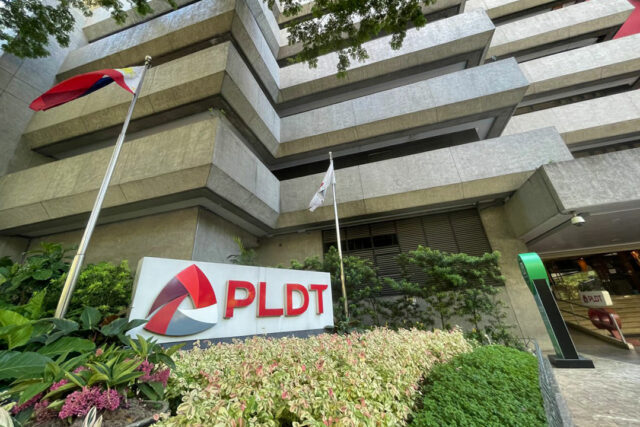
PLDT, Smart ready to limit access to Roblox

PLDT

PLDT Inc. and its unit Smart Communications, Inc. said they are ready to restrict access to Roblox in line with the government’s efforts to reduce online risks to children.

This came after reports that the National Telecommunications Commission (NTC), Department of Information and Communications Technology (DICT), and the Cybercrime Investigation and Coordinating Center (CICC) had convened over safety concerns of the platform.

“We appreciate the readiness of internet service providers to support government measures that aim to keep children safe online… The NTC (National Telecommunications Commission) continues to work closely with industry partners as we assess appropriate actions, including potential access restrictions, to address emerging risks on digital platforms,” NTC Commissioner Ella Blanca T. Lopez said in a media release on Tuesday.

The government is monitoring Roblox following complaints that its open, user-generated setup has been exploited, exposing children to potential abuse, including violent extremism.

“We recognize that children are among our most important stakeholders, and we fully support efforts to create a safer digital environment for them,” said PLDT Chief Legal Counsel and Head of Regulatory Strategic Affairs  Joan de Venecia-Fabul.

Roblox is an online gaming platform that allows users to interact within a virtual universe, engaging with other Roblox players.

Hastings Holdings, Inc., a unit of the PLDT Beneficial Trust Fund subsidiary MediaQuest Holdings, Inc., holds a majority stake in BusinessWorld through the Philippine Star Group, which it controls. — Ashley Erika O. Jose

ADVERTISEMENT
ADVERTISEMENT