Home Blog Page 8151

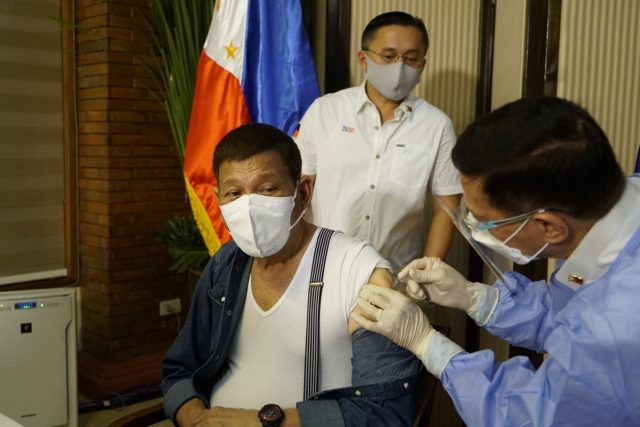
Duterte gets vaccinated vs coronavirus

@BONGGOPAGE

Philippine President Rodrigo R. Duterte got vaccinated against the coronavirus on Monday night, according to a senator who is his long-time friend.

The President, 76, got the shot made by China’s Sinopharm Group Co. Ltd., Senator Christopher Lawrence T. Go said in a Facebook post.

The lawmaker, who was with Mr. Duterte, also posted a video showing Health Secretary Francisco T. Duque III giving the shot.

The President got vaccinated not only to protect himself from the virus but also to encourage Filipinos to get vaccinated, Mr. Go said.

Mr. Duterte, a senior citizen, belongs to a priority group for the coronavirus vaccine.

Sinopharm had not received an emergency use authorization for its vaccine. The local Food and Drug Administration, however, has allowed the compassionate use of 10,000 doses of its vaccine for presidential guards.Kyle Aristophere T. Atienza

Commission says 3 wage hike petitions pending

THE National Wages and Productivity Commission (NWPC) said there are three active regional wage hike petitions as of Monday.

In a briefing, NWPC Executive Director Maria Criselda R. Sy said the petitions are from Region II (Cagayan Valley), National Capital Region (NCR), and Region XI (Davao Region). All three were filed with their respective Regional Tripartite Wages and Productivity Boards (RTWPBs).

Ms. Sy said the Region II petition filed by the Unyon ng mga Manggagawa sa Agrikultura is for a “P100 emergency wage relief across the board.”

Ms. Sy added the NCR petition was filed in 2019, with the NCR wage board “still continuing its evaluation. The board will make a decision at an appropriate time.” The NCR petition was filed by Unity for Wage Increase.

The Davao Region wage hike petition, Ms. Sy said, involves a P100 increase in the minimum wage for agricultural and non-agricultural workers.

In a mobile message to reporters Monday, Ms. Sy also said the Davao Region wage petition was refiled by the Association of Democratic Labor Organizations-Kilusang Mayo Uno on April 20 after the initial petition was found non-compliant.

Daily minimum wages in the regions are P500 to P537 for the NCR; P345 to P370 in the Cagayan Valley; and P381 to P396 in Davao Region.

Ms. Sy said at the briefing that the wage petition filed by the Federation of Free Workers (FFW) with the RTWPB of Region IV-A (Calabarzon, or Cavite, Laguna, Batangas, Rizal, and Quezon) was not included in the list of active petitions because the wage board decided to defer its decision for the meantime. The FFW petitioned in 2019 for an P50.91 to P70.92 increase in the minimum wage, currently at P303 to P400 in Calabarzon. — Gillian M. Cortez

Ban on imports of auto parts not compliant with Euro 4 deferred

REUTERS

THE RULE banning imported auto parts that are not compliant with Euro 4 emissions standards has once again been deferred, the Department of Trade and Industry (DTI) said.

The rule will not apply during the public health emergency and up to a year after the emergency has been lifted, the DTI said in a statement Monday.

A department order initially set to take effect in 2019 prohibited the entry of truck engines and auto parts that do not meet European emissions standards. But the provision was deferred due to a shortage of skilled technicians and limited Euro 4 training at the time.

Accredited truck rebuilders will continue to be granted certificates allowing them to import parts for assembly that are not compliant with the standard, according to a DTI circular signed in March.

This second deferral was granted “in consideration of the disruptions brought about by the pandemic, and the challenges of implementing a face-to-face training program in light of the strict observance of health protocols throughout the country.”

The extension can be cut short if the department finds that enough personnel have been trained.

European vehicle emission standards are set by the European Union, with Euro 4 directives implemented in 2005.

President Rodrigo R. Duterte in March 2020 declared a public health emergency due to the coronavirus disease 2019 (COVID-19) pandemic. — Jenina P. Ibañez

Taxpayers are in for another bumpy ride

This year has been one of the most challenging filing seasons ever, particularly for accountants. On top of implementing recovery measures to mitigate the impact of the COVID-19 pandemic and addressing employee health concerns, companies also have to deal with demanding tax deadlines. This year, no extension was granted for the filing of Annual lncome Tax Returns (AITR). Also, a new required attachment to the AITR has been introduced. While the BIR allowed taxpayers to file provisional AITRs and amend these on or before May 15 without interest, surcharges, and penalties, beating the April 15 deadline was still a challenge.

Last year, the BIR issued Revenue Regulations (RR) No. 19-2020, as amended by RR No. 34-2020, which requires the submission of BIR Form No. 1709 (Related Party Transactions Form or RPT Form) and the preparation of Transfer Pricing Documentation (TPD) for qualified taxpayers. A lot of taxpayers, however, remain baffled by the rules and information needed to be disclosed in the RPT Form and TPD despite the number of revenue issuances that the Bureau has released.

To enlighten taxpayers, here are the consolidated guidelines and additional clarifications by the BIR on the filing of the RPT form and preparation of TPD as provided under Revenue Memorandum Circular (RMC) No. 54-2021.

TAXPAYERS REQUIRED TO FILE RPT FORM
All three conditions below should be present before a taxpayer is required to file an RPT Form:

(1) the taxpayer is required to file an AITR;

(2) it has transactions with a domestic or foreign related party during the concerned taxable period; and

(3) it falls under any of the following categories as set forth in Section 2 of RR No. 34-2020:

(a) large taxpayers;

(b) taxpayers enjoying tax incentives;

(c) taxpayers reporting net operating losses for the current taxable year and the immediately preceding two (2) consecutive taxable years; or

(d) a related party that has transactions with (a), (b) or (c).

Taxpayers enjoying tax incentives include Board of Investments (Bol)-registered enterprises, economic zone enterprises, and entities enjoying Income Tax Holidays (ITH) or entities subject to preferential income tax rates. Entities subject to preferential income tax rates include proprietary educational institutions and hospitals, and regional operating headquarters, among others.

To satisfy the “net operating losses” condition, on the other hand, taxpayers must take note that net operating losses should be based on the annual income tax instead of the amount per audited financial statements (AFS).

MANNER OF FILING
As to the manner of filing, the taxpayer has the option to file the RPT Form manually in the RDO where the taxpayer is registered, or to file it electronically through the Electronic Audited Financial Statements (eAFS) System pursuant to RMCs Nos. 43 and 44-2021.

For taxpayers with tax years ending on Dec. 31, 2020 who filed a provisional AITR electronically on or before April 15, 2021, but have not yet submitted other required attachments including the RPT Form, the BIR clarified in an advisory that the submission of the attachment to the amended AITR is on or before May 30.

It should also be noted the TPD and other supporting documents no longer need to be attached to the RPT Form but must be made available during audit.

TAXPAYERS NOT REQUIRED TO FILE RPT FORM
The enumeration under Section 2 or RR No. 34-2020 is exclusive such that all taxpayers not included are not required to file the RPT Form. Taxpayers not required to file a RPT Form shall include, but shall not be limited to, the following:

(1) those who did not meet the conditions set forth in the previous section of this article, as provided in Section 2 of RR No. 34-2020;

(2) those subject to regular corporate income tax as a whole but have transactions subject to preferential tax rate under tax treaties or the Tax Code, as amended;

(3) taxpayers operating within the economic zone but subject to regular corporate income tax;

(4) international carriers if they are either subject to tax based on their Gross Philippine Billings or gross revenue;

(5) international carriers exempt from tax under a tax treaty or on the basis of reciprocity;

(6) taxpayers exempt from income tax under Section 30 or similar provisions of the Tax Code or special laws;

(7) regional or area headquarters and representative offices of foreign corporations that are not allowed by law to derive income from the Philippines;

(8) post-employment benefit plans if related party transactions consist only of contributions from sponsor employers; and

(9) those required to file a short period return as originally required by law or existing revenue issuances due for filing in 2020, even if the deadline for filing was extended to 2021.

For items (2) and (3), such taxpayers are not required to file the RPT Form if they do not fall under Section 2(a), (c) and (d) of RR No. 34-2020.

Additional disclosures in the Notes to the Financial Statements are required and must state that they are not covered by the requirements and procedures for related party transactions provided under RR No. 34-2020. This requirement only applies, however, to the AFS that are required to be submitted after the effectivity of the said RR. Those with AFS finalized prior to the effectivity of the RR are not expected to comply with the additional disclosure requirement.

PREPARATION OF A TPD
Sections 2 and 3 of RR No. 34-2020 are interrelated, such that if the taxpayer is not required to file the RPT Form, then it is not also required to prepare a TPD. However, if the taxpayer has met any of conditions in Section 2, any of the following materiality thresholds must also be met for it to be mandated to prepare a TPD:

(1) annual gross sales/revenue for the subject taxable period exceeding P150,000,000, irrespective of the source and identity of the other party to the transaction (i.e., related or otherwise), and the total amount of related party transactions with foreign and domestic related parties exceeds P90,000,000;

(2) sale of tangible goods involving the same related party exceeding P60,000,000 within the taxable year; or

(3) service transactions, payment of interest, utilization of intangible goods or other related party transactions involving the same related party exceeding P15,000,000 within the taxable year.

Even if the taxpayer is not required to prepare a TPD, it is still advisable to prepare such TPD since there is still a need to reasonably assess and prove whether its dealings with related parties adhere to the arm’s length principle, in case of BIR audits.

RPTs TO BE DISCLOSED IN THE RPT FORM
The list of RPTs in RR No. 19-2020 is not exclusive as clarified in RMC No. 76-2020. The RPT shall include within the term all transactions between related parties that result in the transfer of resources, services or obligations, irrespective of their arrangement (with cost-recovery/cost-sharing/recharging) and amount, and regardless of whether a price is charged.

RPTs NOT REQUIRED TO BE DISCLOSED IN THE RPT FORM
The list of RPTs below need not be disclosed in the RPT Form:

(1) Compensation paid to key management personnel;

(2) Dividends, including share in net income from associate or joint ventures;

(3) Branch profit remittances;

(4) RPT covered by an Advance Pricing Agreement (APA) as duly approved and accepted by the BIR;

(5) Contribution of the sponsor employer to the post employment benefit plan.

MANNER OF REPORTING OF AMOUNTS IN THE RPT FORM AND TPD
In accomplishing the RPT Form and in preparing a TPD, both the foreign currency and its equivalent local currency must be used. If it is impractical to disclose both currencies because several foreign currencies were used for the RPT, their equivalent in the local currency should be disclosed instead. In translating the amounts to local currency, the exchange rate to be used should be the rate at the transaction date.

Taxpayers using an internal corporate rate in translating their foreign currency transactions and books of account to local currency and vice versa should evaluate the impact of using such rate instead of following the manner of translation of foreign currencies as prescribed by the BIR. This must be done to be consistent with the requirement of the BIR that the amount of related party transactions to be reported should be based on the actual amount of the transactions, not just based on reasonable estimates.

Moreover, similar transactions with the same related party must be aggregated instead of reporting them on a per-transaction basis, if possible.

As the end of the filing season draws near, we hope that taxpayers are able to see the light at the end of the tunnel. Cheers to my fellow accountants who survived what we can describe as one of the most stressful tax filing seasons!

 Let’s Talk Tax is a weekly newspaper column of P&A Grant Thornton that aims to keep the public informed of various developments in taxation. This article is not intended to be a substitute for competent professional advice.


Christian Derick D. Villafranca is a senior in charge from the Tax Advisory & Compliance division of P&A Grant Thornton, the Philippine member firm of Grant Thornton International Ltd.

pagrantthornton@ph.gt.com

3.6M kilos of fish lost due to Chinese vessels in West Philippine Sea

PHILIPPINE STAR/ MICHAEL VARCAS

By Revin Mikhael D. Ochave, Reporter

THE PHILIPPINES has lost 3.6 million kilograms of fish due to the presence of Chinese fishing vessels in the West Philippine Sea, according to estimates from food security advocacy group Tugon Kabuhayan.

This volume is higher than the 240,000 kilos previously estimated by the National Task Force on West Philippine Sea in April, Tugon Kabuhayan convenor Asis G. Perez said in a virtual briefing on Monday.

Mr. Perez said the country stands to further lose 7.2 million kilograms of fish for each month that the Chinese vessels are allowed to stay in the area.

“If we look at even half the market price of this commodity today, then we are bound to lose P720 million a month,” he said.

Mr. Perez asked the government not to downplay the importance of fish products sourced from the West Philippine Sea.

He said that if the area is managed well and limited to Filipino use, it can provide more than the government’s current estimate of 7% volume catch equivalent to P19.1 billion.

Mr. Perez also raised concerns on the destruction of coral reef ecosystems in the Spratly Islands caused by China’s reclamation and dredging activities.

“Studies have shown that the area’s coral reef ecosystem plays an important role as spawning and nursery grounds, egg and larval dispersal of economically important species not only for the West Philippine Sea area but the entire South China Sea and even Pacific Ocean,” he said.

“Clearly, the illegal Chinese activities in the area are detrimental not only for Filipino fishermen. Their actions affect the food security of the entire South China Sea Region. It is just and proper for all citizens to voice out their concern about the current situation,” he added.

The Philippines has filed several diplomatic protests against China after Chinese vessels including six warships were seen within its waters in the South China Sea.

An international tribunal issued a ruling in July 2016 that rejected China’s claim over the West Philippine Sea. However, reports have shown increasing Chinese maritime presence in the area, including the construction of artificial islands.

Tourism frontline staff now part of priority workers for vaccination

DOT
TOURISM Secretary Bernadette Romulo-Puyat gets a body temperature check from a hotel front desk staff during an ocular visit in this Oct. 2020 photo. — DOT PHOTO RELEASE

FRONTLINERS in the tourism industry such as hotel reception staff are now part of the cluster of essential workers who are next in line as priority for coronavirus vaccination.

Tourism Secretary Bernadette Romulo-Puyat, who has been lobbying for the inoculation of the sectors’ workers, said 1,510 frontliners from accredited accommodations, mainly those being used as quarantine or isolation facilities, have been vaccinated as of April 30.

“I am  pleased to announce that the vaccination of those in the A4 Priority Group, which includes tourism frontline workers, has begun,” she said in a statement on Monday.

In a separate Viber message, Ms. Puyat said most of the initial inoculations were administered using vaccine allocation to local government units (LGUs) that have already covered their other priority groups.

“Some LGUs have started na since they’re done with A1 to A3,” she said.

The A1 to A3 groups cover medical workers, senior citizens, and persons with comorbidities.

OTHER TOURISM FRONTLINERS
Apart from accommodation front desk staff, workers assigned at airports, airlines and other transportation services are also included in the A4 priority list.

Ms. Puyat said their vaccination “is a testimony of the government’s firm resolve to ensure that the Philippine tourism industry will continue to survive this pandemic and thrive after it.”

The Department of Tourism has been in coordination with industry groups like the Philippine Hotel Owners Association, the Hotel Sales and Marketing Association, and the Hotel and Restaurant Association of the Philippines for identifying those who will be included in the vaccination list.

“Tourism has always played a major part in uplifting the economy before the pandemic, and it is only by ensuring the good health and safety of our tourism workers through their inoculation can we be assured that they will be ready once the industry fully restarts,” she said.

The government is aiming to vaccinate those in the A1-A4 lists within the first half of the year, according to the national task force handling the coronavirus response. — Marifi S. Jara and Jenina P. Ibañez

Palace says unused calamity funds on standby for future disasters 

PHILSTAR

THE PALACE on Monday said portions of the calamity fund under the 2020 national budget were unused to give the country reserves to respond to future disasters.

“Siyempre po hindi gagastusin lahat dahil kinakailangang mag-save ng pondo para sa darating na (Of course not all of it will be used because we need to have reserves for a future) calamity,” Presidential Spokesperson Harry L. Roque Jr. told a televised news briefing on Monday.

“Huwag po kayong mag-alala, magagastos po lahat iyan (Don’t worry, that will all be spent),” he added.

Data from the Budget department showed that a total of P25.14 billion in calamity funds under the 2020 and 2021 national budgets remain unutilized as of end-March.

Mr. Roque, citing the department’s policy, said funds for calamities and natural disasters are only disbursed “when the need arises.”

He explained that such funds are released when there is a request filed “or in response to a particular disaster or natural calamity.”

In a tweet on Sunday, former Socioeconomic Planning secretary Ernesto M. Pernia said the government’s lack of sense of urgency “has clearly shone in responding to and managing the pandemic.”

He said the health system hardly improved, adding that the country’s pandemic response spending is the lowest in Southeast Asia.

Mr. Roque defended that those in the administration could not be said to lack a sense of urgency because everyone wants “to spare as many of our family and friends from this vicious virus.” — Kyle Aristophere T. Atienza

Probe underway on alleged data breach at SolGen’s office

THE OFFICE of the Solicitor General (OSG) is now looking into the alleged data breach of its confidential documents, including thousands of court cases, Justice Secretary Menardo I. Guevarra told reporters on Monday.

“I will appreciate it very much if the OSG will inform the DoJ (Department of Justice) of its findings, considering the big number of DoJ cases being handled by the OSG,” Mr. Guevarra said.

The OSG is one of the agencies under the Justice department.

“The OSG handles thousands of cases in the Court of Appeals and in the Supreme Court in representation of the government in general, and of the DoJ in particular. The DoJ therefore has substantial interest in finding out the cause of this alleged data breach and any prejudice to the interest of the government that such breach, if true, may have unduly caused,” he added.

London-based cyber security firm TurgenSec said in a statement on April 30 that it came across “a publicly accessible data store which belonged to the Solicitor General of the Philippines.”

It said the store appears to contain 345,000 files and documents “ranging from documents generated in the day to day running of ‘The Solicitor General of the Philippines,’ to staff training documents, internal passwords and policies, staffing payment information, information on financial processes, and activities including audits, and several hundred files titled with presumably sensitive keywords such as ‘Private, Confidential, Witness and Password.’”

The firm said it sent e-mails to the OSG and the Philippine government about the data store on March 1 and 24, but has yet to receive a reply.

The OSG said on Monday it is still verifying the “accuracy and veracity” of TurgenSec’s report, and will “respond appropriately only after a proper verification.”— Bianca Angelica D. Añago

Lawmaker calls for special audit on spent COVID-19 fund

A SENATOR on Monday filed a resolution seeking an early audit of around P570 billion spent so far for coronavirus pandemic response.

Senator Risa N. Hontiveros-Baraquel filed Senate Resolution No. 710 urging the Commission on Audit (CoA) to conduct a special audit on disbursed funds under the two laws specifically passed for the coronavirus crisis before the deliberations for the 2022 national budget, in light of the surge in cases and unemployment.

“The current situation of the country — health care workers lamenting the delay in hazard pay, indigent Filipinos not receiving ayuda (assistance), overextended health facilities — highlights the urgency of transparency in the use of public funds,” the resolution read.

She said more than P568 billion had been released for the country’s coronavirus disease 2019 (COVID-19) response, including the social amelioration program and other health-related programs to stop the spread of the virus, citing the Department of Budget and Management.

The ineffective response led to the surge in cases last month, the senator said in the resolution.

She also said that the President must update Congress on the status of the funds every first Monday of the month in Bayanihan II, noting that the last public submission of report was in January.

“Considering that Congress is set to deliberate on the 2022 budget and must exercise prudence in spending during this crisis, the audit findings would help identify bottlenecks or inefficiencies to guide legislators in their exercise of the power of the purse,” the resolution said.

Several senators including Ms. Hontiveros filed in July last year a resolution for the CoA to audit COVID-19-related government spending which is still pending at the Committee level. — Vann Marlo M. Villegas

On World Press Freedom Day, Duterte commits to protect journalists

PRESIDENT Rodrigo R. Duterte gave assurance of the government’s commitment to protect journalists on Monday with the observance of World Press Freedom Day.

“This year’s celebration affirms the Philippines’ commitment to protect press freedom as a public good and as an indispensable requirement with vibrant democracy,” he said in a taped message.

The President said press freedom is “a public good” and “an indispensable requirement with vibrant democracy.”

“Let me assure everyone that this administration should remain committed in promoting press freedom as a vital component and indicator of progress anywhere in the world,” he said.

Mr. Duterte also appealed to media practitioners to “uphold truth, fairness, accuracy, and transparency.”

At least 19 journalists have been killed under the administration of Mr. Duterte, according to the Center for Media Freedom and Responsibility.

The Philippines slipped two notches in the World Press Freedom Index released by Reporters Without Borders, ranking 138th among 180 countries this year.

Mr. Roque earlier said the government disputes the ranking because the Paris-based media organization considered as affronts to press freedom the issues faced by Rappler and ABS-CBN.

Evaluating the level of freedom given to the Philippine press, the report said the government of Mr. Duterte led a “grotesque judicial harassment campaign” against online news outfit Rappler, Inc. It also cited Congress’ denial of a new franchise for broadcast giant ABS-CBN Corp.

Communist-tagging and online harassment of journalists were also carried out by “troll armies” supporting the government, the report said. — Kyle Aristophere T. Atienza

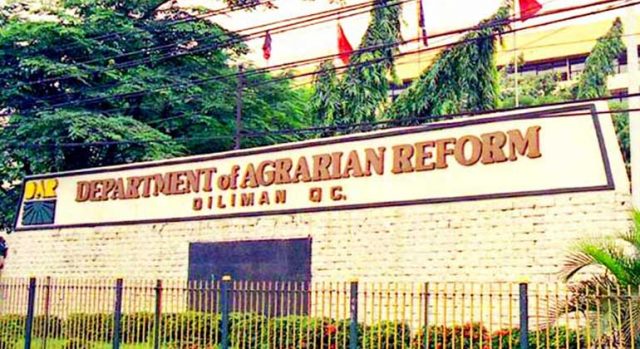
DAR finds 2,007 undistributed land titles in Cebu, set to file charges vs involved officials

THE DEPARTMENT of Agrarian Reform (DAR) said it has discovered 2,007 land certificates dating as far back as 1987 that were stored in sacks and left undistributed by its regional office in Cebu.

Agrarian Reform Secretary John R. Castriciones said in a virtual briefing on Monday that the certificates of land ownership covering 1,636.7 hectares were not given out to the supposed beneficiaries.

“We were able to discover 2,007 CLOAs which were placed in two sacks and were set aside and not distributed to our farmers,” Mr. Castriciones said.

The documents were stored inside the Land Transfer and Implementation Division office in DAR’s Cebu provincial office.

“When we tried to peruse the dates of these CLOAs (Certificate of Land Ownership Awards), many of these dated back as early as 1987, 1990, and 1991 onwards. They have not been distributed for the past years. This is quite unfair to our farmers,” he said.

DAR will file administrative and criminal charges against 13 officials who are suspected to be liable in the failure to distribute the land titles.

“The DAR provincial office in Cebu has no right to withhold the distribution of titles the moment that it is released to the DAR by the Registry of Deeds, which means that it is all set and ready for distribution to beneficiaries anytime,” Mr. Castriciones said.

“The fact that they are unable to distribute the CLOAs makes them liable,” he added.

According to DAR, the CLOAs found are authentic as determined by the security features and its corresponding serial numbers.

Mr. Castriciones declined to disclose the names of the DAR officials who will be slapped with charges.

Meanwhile, the agrarian reform head said he has ordered all regional directors to submit an inventory of undistributed CLOAs in their respective areas for transparency.

“Based on initial reports from regional directors, there are undistributed CLOAs at around 254,000 hectares. This includes collective CLOAs and those to be distributed for 2021,” Mr. Castriciones said. — Revin Mikhael D. Ochave

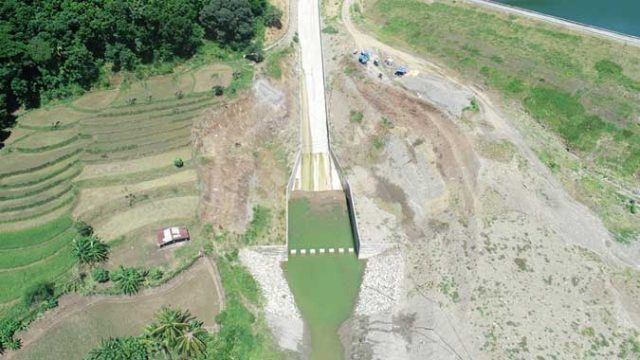
NIA finishes P631-million irrigation project in Ilocos Sur

NATIONAL IRRIGATION ADMINISTRATION PHOTO RELEASE

THE NATIONAL Irrigation Administration (NIA) reported on Monday the completion of the P631-million Barbar Small Reservoir Irrigation Project in San Juan, Ilocos Sur.

NIA said in a statement the project, to be inaugurated on May 6, is estimated to benefit 1,156 farmers in 11 villages in the neighboring towns of San Juan and Magsingal.

The project has a service area of 846 hectares and includes the establishment of an earthfill dam that has a storage capacity of 861,000 cubic meters. The dam is situated across the Bical River.

“Access roads were constructed simultaneously with the lateral canals having the same length with the latter, providing mobility and accessibility for farmers and their farms inputs and products,” NIA said.

The agency said the structure will also help address flooding in the area since it is capable of storing typhoon water that can be used for irrigation. — Revin Mikhael D. Ochave

ADVERTISEMENT
ADVERTISEMENT