Home Blog Page 8102

Artist Maya Lin’s Ghost Forest rises in New York

Installation view, Maya Lin: “Ghost Forest,” Madison Square Park, New York — © MAYA LIN STUDIO /PACEGALLERY.COM

NEW YORK — In the center of New York City’s spring greenery, artist Maya Lin has installed the barren, brown trunks of 49 dead Atlantic White Cedar trees in a Manhattan park as a Ghost Forest to warn of the danger of climate change and the threat of rising sea water. “This is a grove of Atlantic Cedars… victims of saltwater inundation from rising seas due to climate change,’ said Ms. Lin, designer of the Vietnam Veterans Memorial in Washington, DC. “They’re called ‘Ghost Forests,’ so I wanted to bring a ghost forest to raise awareness about this phenomenon,” she added, noting that more than 50% of Atlantic Cedars on the US Eastern Seaboard have been lost. The trees, some of them 80 years old, are from the Atlantic Pine Barrens of New Jersey, which is about 100 miles (160 km) from downtown Manhattan. The exhibit in Madison Square Park, in the shadow of the Empire State Building, will be displayed until Nov. 14. — Reuters

PBB net profit drops by 59.4%

BW FILE PHOTO
PHILIPPINE Business Bank booked lower net earnings in the first quarter as the coronavirus pandemic affected its trading gains. — BW FILE PHOTO

PHILIPPINE BUSINESS Bank (PBB) saw its net income drop by 59.38% in the first quarter due to trading losses amid the volatile economic environment caused by the coronavirus pandemic.

The lender’s net income fell to P160.2 million in the first three months of the year from P394.4 million in the same period in 2020, PBB said in a filing on Tuesday.

The bank’s first-quarter profit translated into annualized return on equity and return on assets of 4.64% and 0.54%, respectively.

“The trading activities this year was affected by inflation concerns that pushed yields higher both for peso and dollar-denominated instruments,” PBB Vice Chairman, Chief Executive Officer and President Roland R. Avante was quoted as saying in the statement.

The bank’s net interest income slipped 2.9% to P1.365 billion from P1.405 billion a year ago due to lower interest earnings from loans and receivables and trading.

Meanwhile, its core income rose 4.55% to P725.2 million in the first quarter from P693.6 million, supported by lower non-interest expenses.

PBB’s loans and receivables inched up by 2.6% to P87.9 billion in the period from P85.641 billion the year prior. Its nonperforming loan ratio stood at 3.73% as of March, improving from the 4.07% recorded at end-2020.

It set aside P75 million in loan loss provisions in the first quarter.

Meanwhile, deposits with the bank stood at P99.892 billion, inching higher from the P90.104 billion seen a year earlier. PBB’s deposit portfolio’s current account, savings account deposits to time deposits ratio improved to 53:47 as of March from 47:53 a year ago.

On the other hand, the bank’s operating expenses dropped 13.5% to P750.6 million.

“As economic conditions stabilize in the next few quarters, the bank’s profit levels should show an improvement. PBB continues to push cost efficiency and productivity,” Mr. Avante noted.

PBB’s capital adequacy ratio improved to 14.33% as of March from 13.96% a year prior.

Its assets inched down to P119.16 billion at end-March from P119.8 billion as of December 2020. Equity also dropped to P13.77 billion from P13.88 billion in the same period.

Mr. Avante said the bank is eyeing to build up its equity capital so it has enough buffers against the uncertainties caused by the pandemic.

“The business environment continues to remain challenging given the effects of the pandemic. Nevertheless, PBB continues to strengthen its core business while managing its risk assets… In line with the bank’s growth aspirations, PBB will be looking to raise P2-3 billion in equity capital to fund general corporate requirements and expand risk assets. Raising capital today will position PBB to exploit market opportunities as the economic recovery unfolds and help cushion the bank from the uncertainty of the pandemic,” he said.

PBB’s shares closed unchanged at P9.60 apiece on Tuesday. — LWTN

SMC unit earmarks P124B for power plants, energy storage

SMC Global Power Holdings Corp. has allotted nearly P124.18 billion to build more power plants and battery energy storage systems that are set to be completed beyond 2021, its parent firm said.

San Miguel Corp. (SMC) clarified to the local bourse on Tuesday that its unit’s projects are going on, and that the amount allotted for them does not represent the entire capital expenditure budget for this year.

SMC was citing its quarterly report, which it recently submitted to the corporate regulator and Philippine Dealing and Exchange Corp.

“[This is] in line with the expansion projects needed for the pursuit of the business plans of SMC Global Power. However, completion of such projects is expected to be after 2021,” SMC said.

It added that funds would be sourced from available cash and proceeds of long-term loans, bonds and senior perpetual capital securities.

In its first-quarter report, SMC said the P124.18-billion budget for the projects had been authorized but had not yet been disbursed.

In a separate statement on Tuesday, SMC said Ramon S. Ang, its president and chief operating officer, had tapped architect Felino A. Palafox, Jr. to help in developing the master plan of its Bulacan-based “airport city.”

He will also integrate sustainability features into the firm’s Pasig River Expressway as well as its upcoming infrastructure projects.

Mr. Palafox, the founder and head of architectural firm Palafox Associates, will also help SMC in retrofitting the company’s existing roads to meet social, economic and environmental needs.

“From the beginning, we made it very clear that for both the airport and airport city projects, we will make sure that that they are designed with sustainability in mind, ensuring protection and enhancement of the environment, and positive social impacts,” Mr. Ang said.

Shares in SMC at the local bourse inched down by 0.17% or 20 centavos to close at P117.30 apiece on Tuesday. — Angelica Y. Yang

After virtual Berlin Film Festival, movies to be shown outdoors

BERLIN —  The Berlin Film Festival, which took place online earlier this year, will show most of the movies that were part of the competition at outdoor cinemas across the German capital next month, taking advantage of falling coronavirus disease 2019 (COVID-19) infection numbers. The summer special offered by the festival, also known as the Berlinale, will take place from June 9 to 20 at 16 venues including a specially created open-air cinema at Museum Island in the heart of the city, organisers said on Monday. “Audiences will be getting a very special, collective festival experience —  something we’ve all been missing for such a long time,” directors Mariette Rissenbeek and Carlo Chatrian said in a joint statement. They said they were looking forward to welcoming filmmakers and jury members from across the world who could hopefully make the journey to Berlin next month despite ongoing travel restrictions. The program will be available online from May 20 (www.berlinale.de) and tickets will go on sale from May 27. During the online version of the festival, which took place in March, the Golden Bear was awarded to Bad Luck Banging or Loony Porn by the Romanian director Radu Jude. The sexually explicit dark comedy depicts the everyday aggressions experienced by a teacher in contemporary Bucharest. — Reuters

PBCom’s net profit nearly halved in Q1

BW FILE PHOTO

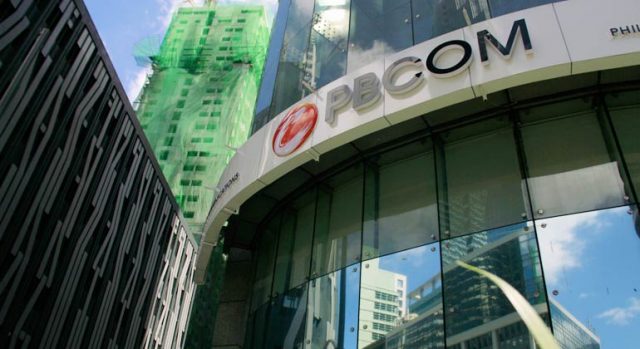
PHILIPPINE BANK of Communications’ (PBCom) net income dropped by 42% in the first quarter on lower earnings from its core business and net losses from trading activities.

PBCom said in a regulatory filing on Tuesday that its net income last quarter dropped to P259.136 million from P448.662 million in the same period in 2020, mainly due to the 24% decline in its operating income.

The bank saw its overall operating income fall to P1.146 billion last quarter from P1.515 billion a year ago.

Its net interest income dropped by 24% to P994 million from P1.02 billion as its loan book and investment yields declined.

Meanwhile, PBCom posted a net loss of P144.5 million from its trading activities, a turnaround from the P158.7-million gain it logged in the same quarter a year ago.

Its net profit margin went down to 22.61% from 29.61% in the first quarter of 2020.

The bank’s total loans and other receivables was almost steady at P57.43 billion against the P57.624 billion a year ago. Its non-performing loans made up 5.79% of its portfolio at end-March from 3.63% in the same period last year.

Meanwhile, PBCom’s operating expenses fell 23% year on year to P761.1 million from P993.7 million.

“Total operating expenses went down mainly because of lower provisions for losses recognized in the current period. Lower compensation costs from lower headcount and decline in taxes and licenses from lower GRT (gross receipts tax) also contributed to the drop in operating expenses,” the bank said.

On the funding side, PBCom posted P81.25 billion in deposit liabilities last quarter, down by three percent from P83.78 billion the year prior.

The bank’s risk-based capital adequacy ratio stood at 18.5% in the first quarter, higher than the 16.81% a year ago. It recorded a return on equity of 2.07%, down from 3.91%.

“The bank has experienced an increase in past due levels in loans due to the outbreak of COVID-19. This necessitated an increase in loan provisions. However, a gradual pick up in business activity is expected as the government gradually relaxes the quarantine measures,” PBCom said.

Shares in PBCom went down by 1.14% or 25 centavos to P21.75 each on Tuesday. — Beatrice M. Laforga

[EXPLAINER] What we know about the Indian variant as coronavirus sweeps South Asia

A MAN is consoled by his relative as he sees the body of his father, who died from the coronavirus disease 2019 (COVID-19), before his burial at a graveyard in New Delhi, India, April 16. — REUTERS

THE PHILIPPINES has detected its first two cases of a coronavirus variant first identified in India, the Department of Health (DoH) said on Tuesday. 

The variant, known as B.1.617, had been confirmed in two Filipino workers who returned in April from the United Arab Emirates and Oman, Alethea De Guzman, director of the DoH epidemiology bureau, told a news conference, adding they had been in isolation since coming back. 

In a bid to prevent the entry of variants, the Philippines has temporarily barred travelers coming from India, Pakistan, Sri Lanka, Nepal and Bangladesh from entering the country. 

India has recorded the world’s sharpest spike in coronavirus infections this month, with political and financial capitals New Delhi and Mumbai running out of hospital beds, oxygen and medicines. 

Scientists are studying what led to the unexpected surge, and particularly whether a variant of the novel coronavirus first detected in India is to blame. The variant, named B.1.617, has been reported in 17 countries, raising global concern. Here are the basics: 

WHAT IS THE INDIAN VARIANT?
The B.1.617 variant contains two key mutations to the outer “spike” portion of the virus that attaches to human cells, said senior Indian virologist Shahid Jameel. 

The World Health Organization (WHO) said the predominant lineage of B.1.617 was first identified in India last December, although an earlier version was spotted in October 2020. 

On May 10, the WHO classified it as a “variant of concern,” which also includes variants first detected in Britain, Brazil, and South Africa. Some initial studies showed the Indian variant spreads more easily. 

“There is increased transmissibility demonstrated by some preliminary studies,” Maria Van Kerkhove, WHO’s technical lead on coronavirus disease 2019 (COVID-19), said, adding it needs more information about the Indian variant to understand how much of it is circulating. 

ARE VARIANTS DRIVING THE SURGE IN CASES?
It’s hard to say. 

Laboratory-based studies of limited sample size suggest potential increased transmissibility, according to the WHO. 

The picture is complicated because the highly transmissible B.117 variant first detected in the UK is behind spikes in some parts of India. In New Delhi, UK variant cases almost doubled during the second half of March, according to Sujeet Kumar Singh, director of the National Centre for Disease Control. The Indian variant, though, is widely present in Maharashtra, the country’s hardest-hit state, Mr. Singh said. 

Prominent US disease modeler Chris Murray, from the University of Washington, said the sheer magnitude of infections in India in a short period of time suggests an “escape variant” may be overpowering any prior immunity from natural infections in those populations. 

“That makes it most likely that it’s B.1.617,” he said. But Mr. Murray cautioned that gene sequencing data on the coronavirus in India is sparse, and that many cases are also being driven by the UK and South African variants. 

Carlo Federico Perno, Head of Microbiology and Immunology Diagnostics at Rome’s Bambino Gesù Hospital, said the Indian variant couldn’t alone be the reason for India’s huge surge, pointing instead to large social gatherings. 

Prime Minister Narendra Modi has been criticized for allowing massive political rallies and religious festivals which have been super-spreader events in recent weeks. 

DO VACCINES STOP IT?
One bright spot is that vaccines may be protective. White House chief medical adviser Anthony Fauci said that preliminary evidence from lab studies suggest Covaxin, a vaccine developed in India, appears capable of neutralizing the variant. 

Public Health England said it was working with international partners but that there is currently no evidence that the Indian variant and two related variants cause more severe disease or render the vaccines currently deployed less effective. 

“We don’t have anything to suggest that our diagnostics, our therapeutics and our vaccines don’t work. This is important,” said Ms. Van Kerkhove at WHO. — Reuters 

Fort Pilar Energy plans ‘modern’ facility for Malaya plant site

FORT Pilar Energy, Inc. plans to build a “modern” energy facility in Pililla, Rizal where the Malaya thermal power plant is located, its top official said after the firm offered to buy the state asset for P3.12 billion.

“The Malaya plant further bolsters the growing energy asset portfolio of Fort Pilar Energy. Similar to our earlier investments, we envision a modern energy facility in the site to strengthen the power situation in Luzon,” the Chief Executive Officer of Fort Pilar Energy Joseph Omar A. Castillo said in a statement shared with reporters on Tuesday.

On Friday, state-led Power Sector Assets and Liabilities Corp. (PSALM) declared the company as the winner in the negotiated sale of the 650-megawatt (MW) plant.

Mr. Castillo said that the power plant is strategically located “since it lies at the heart of the Luzon grid.” His company’s offer for it exceeded the P1.84-billion minimum price set by PSALM.

Separately on Tuesday, PSALM said in a statement e-mailed to BusinessWorld that its technical working group is set to hold an evaluation of the winning negotiating party this week.

The group targets to present the post-qualification results to the privatization bids and awards committee by next week, PSALM said.

The sale of the Malaya plant was on an “as-is where is” basis, which included the 300-MW unit 1 and the 350-MW unit 2 as well as the underlying land.

PSALM said the results of the negotiation must undergo a post-qualification process to ensure that the winning bidder has met the financial and legal requirements.

In a past report, the Department of Energy said it costs around P1.2 billion a year to maintain the plant, prompting PSALM to pursue the negotiated sale. PSALM is mandated to sell state energy assets to settle maturing obligations it assumed from the National Power Corp. — Angelica Y. Yang

Lady Gaga, Glenn Close join Prince Harry and Oprah for mental health TV series

APPLE.COM

LONDON — Britain’s Prince Harry and US chat show queen Oprah Winfrey will premiere their television documentary series on mental health issues later this month, with singer Lady Gaga and actress Glenn Close among those contributing. The Me You Can’t See series, co-created and produced by Prince Harry and Ms. Winfrey, will feature stories from high-profile guests and others across the world about mental health and emotional well-being issues, Apple TV+, the streaming service which will air the programs from May 21, said on Monday. Ms. Winfrey said the series aimed to spark a global conversation, and replace the shame surrounding mental health with wisdom and compassion. Among those participating will also be basketball players DeMar DeRozan from the San Antonio Spurs and Langston Galloway from the Phoenix Suns, Apple said. —  Reuters

SB Finance to launch digital platform as it seeks to expand customer base

SB FINANCE CO., Inc., the joint venture consumer lending firm of Security Bank Corp. and Thailand’s Bank of Ayudhya (Krungsri), is set to beef up its digital capabilities as it seeks to attract more borrowers.

The company is awaiting regulatory approval for a capital infusion worth P3 billion, which will be used to boost its operations.

“That investment will be used to finance our expansion, strengthen internal capabilities. At least for this year, we are allocating 15% of that for our digital investments,” SB Finance Chief Financial Officer Joy V. Supan said at an online briefing on Tuesday.

“We are just waiting for regulatory approvals. We’re expecting the first half to come in hopefully this month and the second half in June or July, depending on how soon we can get regulatory approvals,” Ms. Supan said.

SB Finance Chief Executive Officer Abigail Marie D. Casanova said they will be launching a digital platform “soon” for customers and would-be borrowers.

“We have about more than 30,000 clients at the moment, and these are legacy clients from the time SB Finance was a full-time subsidiary of Security Bank,” she said.

Ms. Casanova said while the consumer finance industry experienced a challenging year in 2020 “as expected” due to the crisis, they have already started seeing an improvement in asset quality.

Security Bank, SB Finance’s local parent, saw its income drop by 26.7% to P7.4 billion in 2020 from P10.1 billion in 2019 as it beefed up loan loss provisions in view of the crisis.

The listed lender’s shares closed at P115.40 apiece on Tuesday, up by 40 centavos or by 0.35% from its previous finish. — L.W.T. Noble

Novo Nordisk launches diabetes drug that also reduces cardiovascular risk

DANISH multinational pharmaceutical company Novo Nordisk recently launched a once-weekly injectable treatment for Type 2 diabetes that stimulates insulin (a hormone that regulates the amount of sugar in the blood), suppresses glucagon (a hormone that causes the release of sugar in the blood), and decreases appetite and food intake.

The drug is delivered using the shortest and thinnest needle — about as thin as two human hairs — available from Novo Nordisk.

“This is welcome news,” said Dr. Michael L. Villa, president of the Philippine Society of Endocrinology, Diabetes and Metabolism, in a May 6 webinar organized by the pharmaceutical company. “Patients will have less pain and better compliance. Once a week is a very convenient form of delivery for medication.” (Some people with Type 2 diabetes have to inject insulin every day.)

The new drug belongs to a class of antidiabetic medications that mimic the actions of glucagon-like peptide 1 (GLP-1), a naturally occurring hormone produced in the gut that enhances insulin secretion. According to Dr. Villa, these medications, called GLP-1 receptor agonists, have a unique mechanism that affects different organ systems: apart from improving blood sugar levels, they also reduce cardiovascular risk by modifying the progression of atherosclerosis (the build-up of fatty deposits in the arteries) and reducing blood pressure and body weight.

Diabetes is a disease that occurs when the body’s blood glucose is too high. Over time, high blood sugar can lead to problems such as heart disease, kidney disease, and nerve damage. More than 32% of those with Type 2 diabetes — or the type where cells don’t respond normally to insulin — have cardiovascular complications.

“Type 2 makes up for about 85% of the patient population with diabetes,” Dr. Villa said in a press statement. “These are mostly adult patients with multiple risk factors. Some are smokers, some are hypertensive, some have cholesterol problems. This is exactly why we are raising concerns with these types of patients.”

RISK FOR HEART DISEASE
Diabetes spells heart attack (or a myocardial infarction, to use the medical term) for cardiologists like Dr. Gilbert C. Vilela, vice-president of the Philippine Heart Association. “You know how they say that cardiovascular disease is a traitor? They’re correct,” he said, explaining that patients with diabetes are more likely to have high levels of bad cholesterol. “This leads to low-grade inflammation, which silently but persistently hardens the blood vessels.”

Approximately four million adults in the Philippines were diagnosed with diabetes in 2020, according to the International Diabetes Federation. According to the Philippine Statistics Authority, it was the fourth leading cause of death among Filipinos last year, accounting for approximately 37,300 thousand deaths. — Patricia B. Mirasol
    

International units boost Emperador’s net income

EMPERADOR, Inc. recorded a 43% increase in its net income to owners at P2.1 billion for the first quarter due to the strong performance of its international units.

The listed company said in a stock exchange disclosure on Tuesday that its revenues improved 13% to P12.1 billion after its global business posted growth during the period.

“The first quarter of 2021 saw a continued robust performance of Emperador’s global business. Sales in most markets are returning. Leading the growth is the Americas, United Kingdom and the rest of Europe, and Asia, particularly China,” the company said in the disclosure.

“With Emperador’s global footprint across over 100 countries in six continents, iconic and well-diversified brandy and whisky portfolio, and strong managements all over the world, the company has constantly been able to navigate through the ongoing challenges brought about by the pandemic,” it added.

Emperador President Winston S. Co said the company’s business is recording growth on multiple levels, adding that it has managed to adjust and improve with consumer and economic movements.

“Both brandy and whisky segments have seen continuous robust growth. The current environment has shifted consumer behavior differently in various markets,” he said in the disclosure.

Moving forward, Mr. Co said the company is optimistic that the gains it attained will result to a new phase of growth.

“We expect the situation to improve and return to some level of normalcy towards the end of the year,” he said.

On Tuesday, shares of Emperador at the stock exchange rose 0.11% or one centavo to end at P9.51 apiece. — Revin Mikhael D. Ochave

NBC drops 2022 Golden Globes; Tom Cruise returns trophies

LOS ANGELES — US television network NBC on Monday dropped its broadcast of the Golden Globes ceremony in 2022 after a Hollywood backlash over the ethics of the group that hands out the annual awards for film and television and its lack of diversity. Tom Cruise joined a revolt led by streaming platforms and studios, returning the three Golden Globe statuettes he won for his roles in Jerry Maguire, Magnolia, and Born on the Fourth of July, Variety and Deadline Hollywood reported. NBC’s decision came even after the Hollywood Foreign Press Association (HFPA), which hands out the awards, agreed to recruit more Black members and make other changes over the next 18 months. The network had initially welcomed the plan but later said it would wait to see if the reforms worked. HFPA members have also been accused of making sexist and racist remarks and soliciting favors from celebrities and studios. “Change of this magnitude takes time and work, and we feel strongly that the HFPA needs time to do it right. As such, NBC will not air the 2022 Golden Globes,” NBC said in a statement. “Assuming the organization executes on its plan, we are hopeful we will be in a position to air the show in Jan. 2023,” NBC added. After NBC’s announcement, the HFPA said implementing “transformational change” remained an urgent priority “regardless of the next air date of the Golden Globes.” In a statement, the HFPA reiterated its planned reforms and gave a detailed timetable. It said that by Aug. 2021, it would hire a new chief executive, add 20 new members, approve a new code of conduct and provide diversity and sexual harassment training among other steps. —  Reuters