CPHR Philippines, in partnership with Circa Logica Group, will host the 3rd Philippine HR Assembly, the biggest online assembly of HR leaders and professionals across industries, with the theme “HUMANIZE: Reinventing the Future of HR” on May 19-20, 2021 from 10 a.m. to 4 p.m.
1 of 3
As we continuously navigate through this time of uncertainty, one thing is for certain, the HR Profession is at the forefront and being relied upon to lead organizations through these unprecedented times. HR Professionals are being called on to provide expertise and advice with little to no time to plan given the continual changes to employment standards and government and health care expectations. Leading us to the right pathway are Chartered Professionals in Human Resources together with our guest speakers: Francis Kong, one of the most respected business speakers in the Philippines, Dr. Ma. Teresita S. Cucueco of the Department of Labor and Employment, and Atty. Joan Therese Medalla of the National Privacy Commission.
This two-day online event will not only help participants accelerate the workplace transformation but will also improve agility via digitalization, gain a competitive edge, and transcend the business disruptions into breakthrough innovations.
This event is co-presented by JobStreet Philippines, Pocket Mentor, Puritan’s Pride Philippines, ZENVAREX Business Consultancy Services, COCA-COLA Beverages Philippines, Trainovate™, Globe myBusiness, El Puerto Marina Beach Resort, Zip HR, and Talentprobe.
Staying true to our commitment to empowering the HR Profession, attendance at the Philippine HR Assembly is a free-for-all.
Gas stations from Florida to Virginia began running dry and prices at the pump rose on Tuesday, as the shutdown of the biggest US fuel pipeline by hackers extended into a fifth day and sparked panic buying by motorists.
The administration of US President Joseph R. Biden, Jr., projected that the Colonial Pipeline, source of nearly half the fuel supply on the US East Coast, would restart in a few days and urged drivers not to top up their tanks.
“We are asking people not to hoard,” US Energy Secretary Jennifer Granholm told reporters at the White House. “Things will be back to normal soon.”
Colonial was shut on Friday after hackers launched a ransomware attack — effectively locking up its computer systems and demanding payment to release them.
The company said it is making progress and hopes to restart a substantial portion of operations by week’s end. The company said it has taken delivery of an additional 2 million barrels from refineries for deployment upon restart.
“Markets experiencing supply constraints and/or not serviced by other fuel delivery systems are being prioritized,” Colonial said in a statement.
The outage, which has underscored the vulnerability of vital US infrastructure to cyberattacks, has already started to hurt.
In metro Atlanta, 30% of gas stations are without gasoline, tracking firm GasBuddy said. In Raleigh, North Carolina, 31% of gas stations had no fuel on Tuesday. Unleaded gas prices, meanwhile, hit an average $2.99 a gallon, its highest price since November 2014, the American Automobile Association said.
Colonial said it made recent deliveries to parts of Georgia, South Carolina, North Carolina, Maryland, and New Jersey.
In an effort to ease the strain on consumers, Georgia suspended sales tax on gas until Saturday, and North Carolina declared an emergency. The federal government, meanwhile, has loosened rules to make it easier for suppliers to refill storage, including lifting seasonal anti-smog requirements for gasoline and allowing fuel truckers to work longer hours.
Ms. Granholm said there is not a shortage but a gasoline supply “crunch” in North Carolina, South Carolina, Tennessee, Georgia, and Southern Virginia, regions that typically rely on Colonial for fuel.
Driver Caroline Richardson said she was paying 15 cents more per gallon than a week ago as she refueled at a gas station in Sumter, South Carolina. “I know some friends who decided not to go out of town this weekend to save gas,” she said.
DARKSIDE HACK
The strike on Colonial “is potentially the most substantial and damaging attack on US critical infrastructure ever,” Ohio Senator Rob Portman told a Senate hearing on cybersecurity threats on Tuesday.
The Federal Bureau of Investigation (FBI) has accused a shadowy criminal gang called DarkSide of the ransomware attack. DarkSide is believed to be based in Russia or Eastern Europe and avoids targeting computers that use languages from former Soviet republics, cyber experts say.
Russia’s embassy in the United States rejected speculation that Moscow was behind the attack. Mr. Biden a day earlier said there was no evidence so far that Russia was responsible.
A statement issued in DarkSide’s name on Monday said: “Our goal is to make money, and not creating problems for society.”
It is unknown how much money the hackers are seeking, and Colonial has not commented on whether it would pay.
“Cyber attacks on our nation’s infrastructure are growing more sophisticated, frequent and aggressive,” Brandon Wales, acting director of the Cybersecurity and Infrastructure Security Agency (CISA), said on Tuesday at a Senate hearing on the SolarWinds hack that hit companies and government agencies.
GOVERNMENT STEPS IN
The Environmental Protection Agency issued a waiver on Tuesday that allows distributors to continue supplying winter fuel blends through May 18 in three Mid-Atlantic states to help ease supplies.
North Carolina and the US Department of Transportation, meanwhile, relaxed fuel-driver rules, allowing truckers hauling gasoline to work longer hours. North Carolina, Virginia, and Florida have declared a state of emergency.
The US has also started the work needed to enable temporary waivers of Jones Act vessels in response to the cyberattack— something that would allow foreign flagged fuel carriers to move from one US port to another, the Transportation Department said.
There are growing concerns that the pipeline outage could lead to further price spikes ahead of the Memorial Day weekend at the end of this month. The weekend is the traditional start of the busy summer driving season.
Gulf Coast refiners that rely on Colonial’s pipeline to move their products have cut processing. Total SE trimmed gasoline production at its Port Arthur, Texas, refinery and Citgo Petroleum pared back at its Lake Charles, Louisiana, plant, sources told Reuters. Citgo said it is moving products from its Lake Charles refinery and is “exploring alternate supply methods into other impacted markets.”
Marathon Petroleum is “making adjustments” to its operations due to the pipeline shutdown, a spokesman said without providing details.
While the pipeline outage is having big short-term consequences in some regions, some experts believe the longer–term impact will be small.
“Markets will go crazy, but two weeks later no one knows it happened,” said Chuck Watson, director of research at ENKI, which studies the economic effects of natural and other disasters. — Laura Sanicola and Devika Krishna Kumar/Reuters
Food-related ventures, which thrive during the Covid-19 pandemic, have been helping for the sustenance of many Filipinos rendered jobless due to this global health crisis, said Senator Cynthia A.Villar as Las Pinas celebrates its 7th Food Festival & Urban Gardening Competition.
She congratulated the winners in the twin competitions who got their corresponding cash prizes.
Cooking contest champion from Brgy. TalonCooking contest 1st runner-up from Brgy. Pulang LupaCooking contest 2nd runner-up from Brgy. Almanza
Quarantine cooking increases during the pandemic
Meanwhile, while on quarantine and lockdown, Villar said many Filipinos, who lost their jobs especially those in the tourism and travel industry, embarked on online business related to foods and urban gardening.
Villar, the chairperson of the Senate Committee on Agriculture and Food, said many Filipinos have turned into food sellers, using all forms of social media platform to sell their products. She stressed many have learned to cook and bake while others have honed their cooking skills.
She said the so-called “quarantreats” or foods oftentimes prepared by Filipinos became popular. “We have the Dalgona coffee and the ube-cheese pandesal, among others.”
Due to this, she said Filipinos have been earning money even on quarantine and lockdown that help provide for their daily expenses despite losing their jobs.
Urban Gardening trends during lockdown
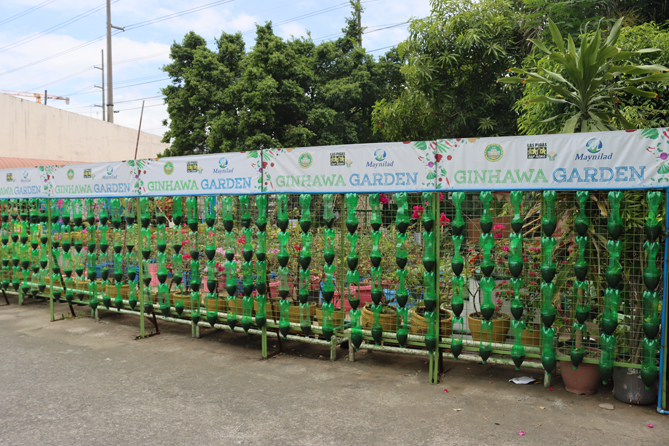
Another popular activity in this time of crisis, Villar said, is urban gardening or farming wherein people plant vegetables even in small spaces due to limited supply and access to food.
“Even before the pandemic, I have been promoting vegetable gardening,” said Villar. At the start, some netizens put negative sight as she gave out seedlings or vegetable seeds to encourage residents to plant their own vegetables.
“Some people were saying that what they need are food and money and that they have no time to plant and wait for the harvest,” recalled the senator.
And yet, Villar pointed out that in the latter part of the pandemic, many Filipinos appreciated the value, wisdom, and convenience of growing their own food in the comfort of their homes.
“And every organization has jumped into the urban gardening bandwagon. Ang vegetable ay cash crop, sa 1 1/2 buwan ay maka harvest na. Lahat halos ngayon ay namimigay na ng mga seeds,” happily noted Villar, adding that growing one’s food is really a sustainable solution.
Acknowledging the popularity of community pantries nowadays, Villar said these can be complemented by community gardens, which are more sustainable and cost-effective in the long run.
More than anything, she asserted that urban gardening or farming will solve food poverty since it provides easy access to food for every household.
” It’s already a bonus that it can also be a source of livelihood. Urban dwellers like us should be more food self-sufficient by growing our own food. As more and more us become more food self-sufficient, hunger and food poverty will be solved also. That is the ultimate goal. So, let’s keep on planting and growing our own food,” she added.
“And we here in Las Pinas have already been practicing it. The participants here are the best examples of how a community-based garden can provide food to residents,” further stated. Villar.
Philippine Institute of Volcanology and Seismology (PHIVOLCS), Public domain, via Wikimedia Commons
MANILA – An earthquake with a magnitude of 5.8 struck south of the Philippine capital early on Wednesday, the Philippine Institute of Volcanology and Seismology (Phivolcs) said.
The agency said aftershocks could be expected, but the earthquake, which struck at a depth of 112 km (69.6 miles), was unlikely to cause damage.
“Because this is deep, a large area experienced the quake,” Renato Solidum, head of Phivolcs, told DZMM radio station, adding there was no threat of a tsunami. The earthquake’s epicentre was in Mindoro province and it was felt in the capital, Manila.
The Southeast Asian country is on the geologically active Pacific Ring of Fire and experiences frequent earthquakes, particularly in the south. — Reuters
These days, he is more popularly known as Boss Martin to the half a million followers of the Tangere Pinoy Survey with Prizes Community on Facebook where he regularly goes live to announce the winners of the weekly raffle draws.
From Consultancies to Start-ups. But in his previous life, Martin Peñaflor served for over a decade as an internationally certified business process consultant to small, medium, and large companies based in Europe and in the Philippines, during which he earned numerous accolades from clients and peers for his project contributions and leadership.
However, the information technology landscape in the Philippines was evolving, and changing fast, creating room for him to shift his view from being a consultant advising clients to immerse himself in a tech start-up and becoming an entrepreneur.
Innovating for Social Good. In 2018, he put up Tangere together with friends from the Market Research and Data Analytics industries. As its CEO and Chief Architect, he leads this emerging start-up company that leverages on mobile application technology and social media engagement to conduct surveys that gather the sentiments of Filipinos from all walks of life all over the country which are then used to generate timely and actionable insights for data-driven decision making.
Tangere, however, goes beyond just big data analytics. In the 2020 Ginebra Ako Awards, Martin was recognized under the Pilipino Ako Category which highlights the value of unity, for the use of the Tangere app to assess help needed by local communities severely affected by calamities such as what happened during the Taal Volcano eruption, the lockdown during the COVID-19 pandemic, and the typhoons that regularly hit the country.
Data from the app identified what each community needed which was then matched with what was being donated. It also provided a platform for fisherfolk, farmers, and other daily wage earners to get assistance while the lockdown prevented them from working on their regular jobs.
Tangere is to Touch. Tangere is the Latin word for touch, but for most Filipinos, it is more popularly associated with the title of Dr. Jose Rizal’s first novel, Noli me Tangere (touch me not). It is an apt choice for the name of the application that Martin and his team developed as, under his watch, Tangere has been able to go beyond simple data gathering for business purposes to include touching lives while serving a social good.
By expanding its app user base to reach the farthest points of the archipelago where internet and cellular signals exist, Boss Martin, as he is fondly called by the Tangere community, is able to touch the lives of many of our fellow Filipinos.
Being able to participate in surveys conducted through the app has given Filipinos a platform for their voices to be heard on matters both big and small. At present, Tangere has given away prizes in the form of cash, phones, and tablets to more than 12,000 winners to encourage active participation on the app.
A Leader and Mentor at Heart. Martin belongs to that rare breed of business innovators who are not just leaders but also mentors at heart. His willingness to share his knowledge and expertise has led Go Negosyo founder, Joey Concepcion, and the Department of Trade and Industry to select him as a mentor for emerging entrepreneurs in the IT sector to help make their vision come to life. He is also a proud member of JCI Manila and is its commissioner for Training and Leadership.
Under his watch, Tangere has participated as an official Philippine delegate to the ASEAN-Korea Summit 2020 in Seoul, Korea, and the Web Start-up Summit 2020 in Lisbon, Portugal.
He led the company to win the CNN Season 4 Final Pitch competition in 2019, earning 8 million pesos in seed-funding from Mega Global Corporation, and was the only Filipino to win in the recently concluded 2020 ASEAN Start-up Awards as the People’s Choice winner with over 20,000 votes.
He was also recognized as a finalist in the Start-up of the Year: Asia Leaders Awards 2019 and Philippines Seed Star for 2020.
Eyes to the Future. Even as the pandemic continues to rage across the country, men of clear vision like Martin Peñaflor have their eyes already set on their next goal – to reach a million app users in 2021, for time stops for no one and during times like these when uncertainty is high and physical boundaries abound, digital data is king. And that’s exactly what Martin and his team are working on – to grow the Tangere platform and be the voice for the Filipino.
Tangere Pinoy Survey with Prizes is available for download for free in the Google Playstore and the Apple Appstore.
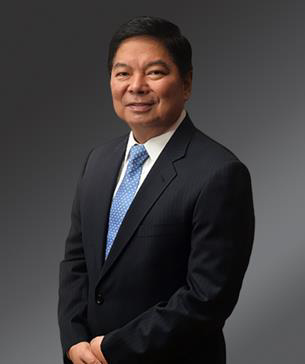
Former Bangko Sentral ng Pilipinas (BSP) Governor Amando M. Tetangco Jr.
Pilipinas Shell Petroleum Corporation (PSPC) is pleased to announce the election of former Bangko Sentral ng Pilipinas (BSP) Governor Amando M. Tetangco Jr. as a new independent member of PSPC’s Board of Directors effective May 11, 2021.
Mr Tetangco’s board election increased the number of PSPC independent directors to four joining the distinguished roster of Cesar A. Buenaventura, Fernando Zobel de Ayala, and Lydia B. Echauz.
Tetangco is the only person so far to have served two six-year terms as BSP governor from 2005 to 2017.
He joined the BSP as a statistician in 1974, marking the start of a distinguished central banking career for over four decades that saw the country go through tough challenges.
As director of the International Economic Research Department, he was involved in crafting a debt restructuring package in the 1980s to enable the country to postpone payments due to low foreign exchange reserves.
Tetangco was also integral as managing director for economic research and treasury in implementing measures that re-stabilized the foreign exchange market and the financial system during the 1997 Asian Financial Crisis.
By the end of his term, BSP was described in an S&P report dated May 14, 2017 as having “a record of supporting sustainable economic growth and responding appropriately to changing economic circumstances. Its ability to maintain macroeconomic and price stability through an economic cycle has been tested, including a period of exogenous shocks.”
Tetangco was conferred the Order of Lakandula with the Rank of Bayani by the President of the Philippines in 2009 and the Order of the Rising Sun, Gold and Silver Star by the Emperor of Japan in 2019. He has been recognized multiple times as one of the world’s top central bankers by the Global Finance magazine of New York, consistently receiving an “A” rating in the Central Bank Report Cards.
The 2015 MAP Management Man of the Year currently sits on the board of private corporations in the health care, auto, hotel, leisure, and tourism development, telecommunications, and credit information sectors. He is also a trustee in foundations involved in education, health services, and social welfare.
Tetangco graduated cum laude with an Economics degree from the Ateneo de Manila University and earned his Master’s in Public Policy and Administration with concentration in Development Economics at the University of Wisconsin-Madison, USA as a Central Bank scholar. He also attended training programs in prestigious institutions that include the Harvard Business School and the New York Institute of Finance.
The Philippines’ gross domestic product (GDP) fell by an annual 4.2% in the first quarter. — PHILIPPINE STAR/ MICHAEL VARCAS
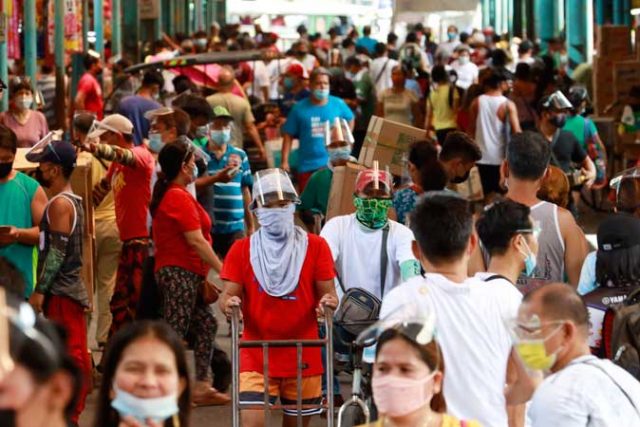
THE PHILIPPINE economy contracted more than expected in the first quarter, extending therecession to five straight quarters as the pandemic dragged on, data from the Philippine Statistics Authority (PSA) showed on Tuesday.
The country’s gross domestic product (GDP) fell by an annual 4.2% in the quarter ending March, worse than the median decline of 2.6% in a BusinessWorld poll last week.
This marked five consecutive quarters of GDP decline, marking the longest recession since the Marcos era when economic output shrank for nine consecutive quarters from the fourth quarter of 1983 to the fourth quarter of 1985.
However, first-quarter GDP appeared to show signs of a slow recovery, as it grew 0.3% on a seasonally adjusted basis from the fourth quarter of 2020.
By expenditure share, government spending was the sole component that managed to post an annual growth rate in the first quarter with 16.1% — the fastest since the 21.8% growth in the second quarter of 2020. The latest reading was faster than the 5.1% and 7% logged in the previous quarter and the same period last year.
Household spending — which accounts for around three-fourths of GDP — dropped at a slower pace of 4.8% compared with the 7.3% fall in the fourth quarter of 2020. Still, it was a reversal from the 0.2% seen the first quarter of 2020.
The investment component, which is represented in the data as capital formation, continued to slide in the first quarter with 18.3%. While faster than the 12.1% slump in the same period in 2020, it was slower compared with the declines in last year’s second quarter (-51.5%), third quarter (-39.5%), and fourth quarter (-32.2%).
A similar trend is observed in trade during the period as exports of goods and services went down by 9% versus the contractions of 10.2% and 4.4% in the fourth quarter of 2020 and first quarter of 2020, respectively. Meanwhile, imports slippedby 8.3% versus the 20.2% plunge in the previous three-month period and the 7.4% fall in the same period last year.
Agriculture, forestry, and fishing — which make up around a tenth of the country’s GDP — recorded the smallest annual decline in the first quarter with 1.2%. This was slower than the 2.5% decrease in the fourth quarter of 2020, but faster than the 0.3% dip in January-March 2020.
Services, which contribute around 60% of economic output, dropped by 4.4% in the first quarter. While this was slower compared with the 8% fall in the preceding quarter, this was a reversal of the 0.1% seen in the same period last year.
In a joint statement, Socioeconomic Planning Secretary Karl Kendrick T. Chua, Finance Secretary Carlos G. Dominguez III, and Budget and Management Secretary Wendel E. Avisado said the economy’s performance in the first quarter is “consistent with the recovery in the labor market.”
“The relaxation of quarantine restrictions while adhering to the minimum health standards enabled millions to regain their jobs and income sources in the first quarter. As of March 2021, we surpassed [pre-pandemic] employment by 2.8 million jobs, as the labor force participation rate improved to 65% and the unemployment rate fell to 7.1%, the lowest since the height of the pandemic,” the economic managers said.
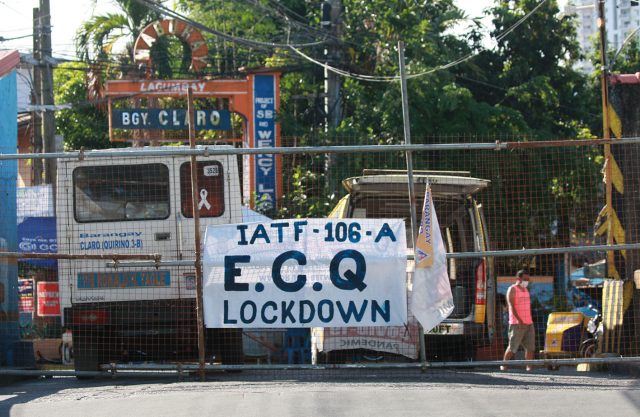
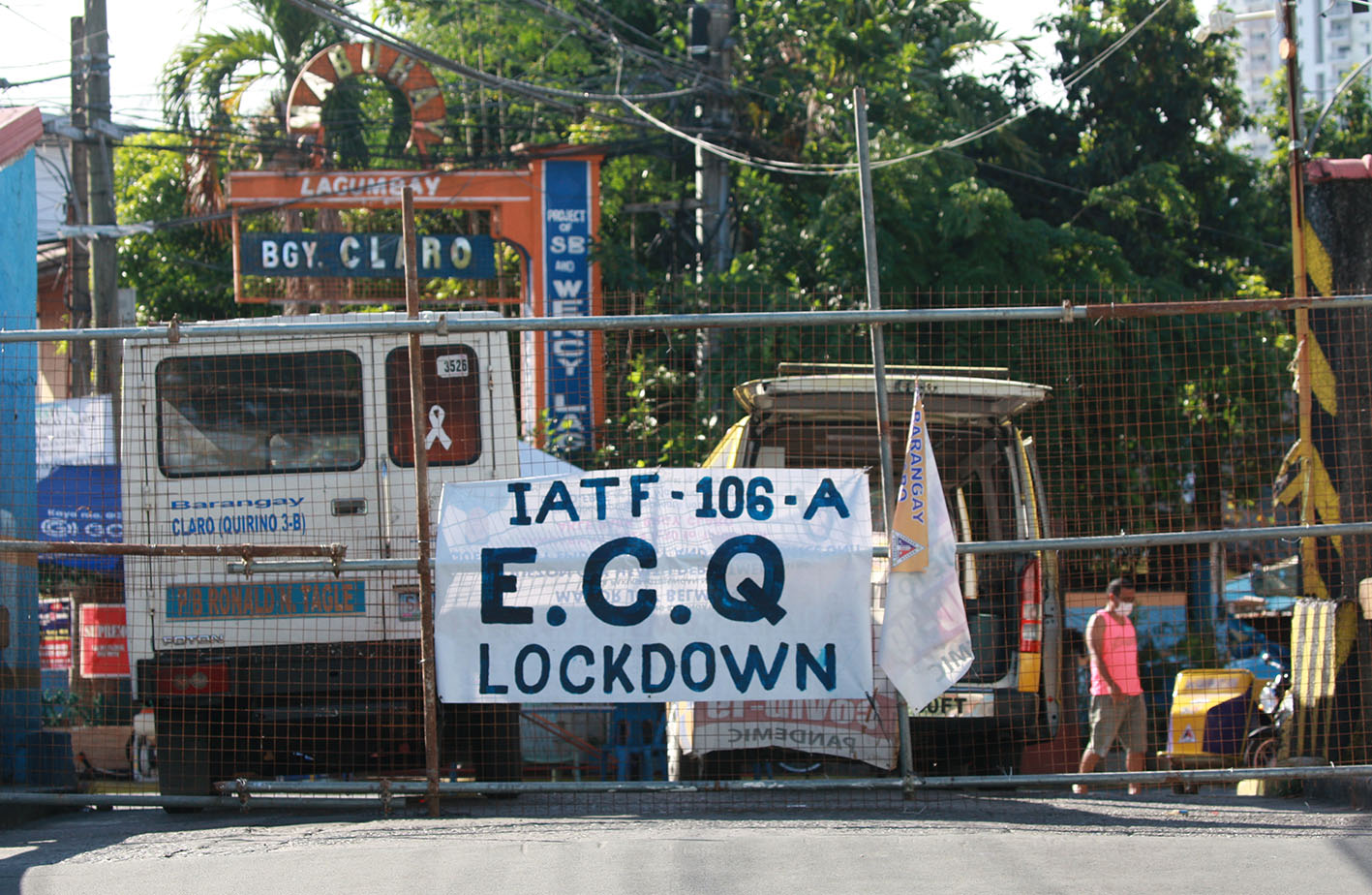
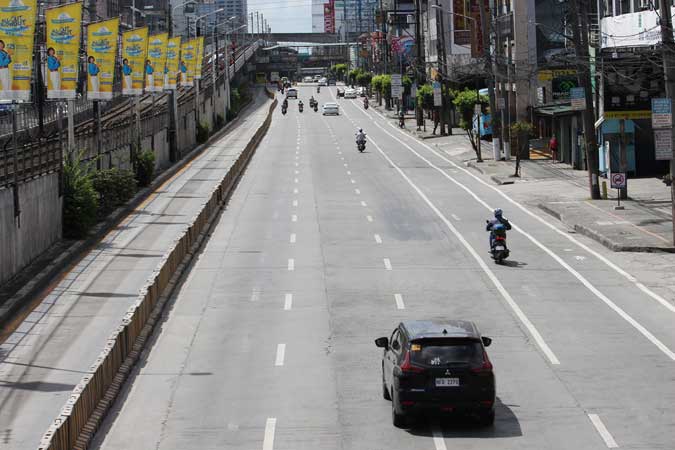
As coronavirus infections spiked in March, the government once again placed Metro Manila and the provinces of Bulacan, Cavite, Laguna, and Rizal under an enhanced community quarantine (ECQ) from March 29 to April 11. The areas are currently under a less restrictive modified ECQ until May 14.
Gross national income — the sum of the nation’s GDP and net income received from overseas — fell by 10.9% in the first quarter compared with a 1.6% contraction in 2020’s comparable three months.
OUTLOOK The economic managers said the “improving economic data” in recent months, coupled with the country’s “strong economic position” prior to the pandemic “point to an economy that is on the mend.”
“While the past seven weeks of ECQ and MECQ in [Metro Manila and surrounding provinces] will pose downside risk to growth, our actions in the next eight months can reverse these initial losses,” they said.
They added the economy’s growth prospects is “underpinned by three important policy actions” which include the reopening of the economy; the full implementation of the government’s recovery package such as 2020 and 2021 General Appropriations Act, the Bayanihan to Recover as One Act (Republic Act 11494 or Bayanihan II), and the social amelioration program during the recent ECQ; and the acceleration of the mass vaccination program.
Economists are not as optimistic.
“Although we continue to expect [second-quarter] GDP to post growth on a [year-on-year] basis, we may have to trim our expectations especially if partial lockdowns are extended through May,” ING Bank N.V. Manila Senior Economist Nicholas Antonio T. Mapa said in a statement to reporters.
“Attention now shifts to the Bangko Sentral ng Pilipinas (BSP) policy meeting [tomorrow] with the central bank widely expected to hold policy rates unchanged,” he added.
A separate BusinessWorld poll held last week showed 15 out of 17 analysts expect the BSP to maintain its overnight reverse repurchase rate or the key policy rate at a record low of 2%. Analysts said the scope for interest rate adjustment is limited as inflation continued to exceed the annual target and supply issues persist.
For UnionBank of the Philippines, Inc. Chief Economist Ruben Carlo O. Asuncion, economic recovery is going to be an “upward climb, but… not entirely impossible.”
“If and when the inoculation plans happen better-than-expected and consumer and business sentiments dramatically improve, a 6% economic growth is achievable,” he said in an e-mail.
Security Bank Corp. Chief Economist Robert Dan J. Roces expects a “gradual recovery” this year, albeit “fraught with uncertainties” as momentum may have been sapped due to rising COVID-19 cases and the resulting lockdowns.
“Using updated estimates, the Philippines may only return to pre-pandemic GDP levels in [second-half 2022] at the earliest,” Mr. Roces said in a Viber message.
Alex Holmes, economist at Capital Economics, said while new coronavirus cases seemed to have leveled off, the situation “remains dire.”
“Due to… [the] weaker-than-expected outturn and the continued spread of the virus, we are cutting our 2021 growth forecast from 7.5% to 6%. That would leave the economy nearly 13% below its pre-crisis trend by the end of the year,” he said in a statement.
“The weakness of the recovery means the [BSP] is likely to cut rates again later this year if, as we expect, inflation falls back within target,” he added.
ANZ Research Chief Economist for Southeast Asia and India Sanjay Mathur and economist Rini Sen noted clear policy implications from the latest GDP report. “Monetary accommodation albeit without further cuts will continue through the remainder of the year,” they said. — Ana Olivia A. Tirona
Socioeconomic Planning Secretary Karl Kendrick T. Chua earlier on Tuesday said the seven-week long lockdown in Metro Manila and adjacent provinces pose a downside risk to the government’s growth targets for 2021. — PHILIPPINE STAR/ MICHAEL VARCAS
By Beatrice M. Laforga, Reporter
THE Philippine economy may have to grow by at least 10.1% in the remaining three quarters to reach the lower end of the 6.5-7.5% full-year target, the National Economic and Development Authority (NEDA) chief said after gross domestic product (GDP) shrank in the first quarter.
For private economists, this is a “challenging” scenario as the government continues to implement quarantine restrictions to curb the rise in coronavirus infections.
“The economy will need to grow by 10.1% over the next 3 quarters to reach the 6.5% growth for 2021,” NEDA Undersecretary Rosemarie G. Edillon told BusinessWorld in a Viber message on Tuesday.
Socioeconomic Planning Secretary Karl Kendrick T. Chua earlier on Tuesday said the seven-week long lockdown in Metro Manila and adjacent provinces pose a downside risk to the government’s growth targets for 2021, even as the overall impact was likely less as restrictions were slightly eased compared with last year.
“We have eight months to catch up. The Development Budget Coordination Committee (DBCC) will be meeting to re-assess how the first few months of this year’s experience and our program for the rest of the year can support our GDP growth target,” he said during a virtual briefing.
Gross domestic product (GDP) contracted by a bigger-than-expected 4.2% in the first quarter, the fifth straight quarter of decline amid the coronavirus pandemic. This is also the longest recession since the Marcos regime when GDP shrank for nine consecutive quarters from the fourth quarter of 1983 to the fourth quarter of 1985.
The DBCC, which is set to meet later this month, will likely slash growth forecasts for the year because the two-week ECQ at the start of the second quarter alone could shave 0.8 percentage point off the full-year GDP, Mr. Chua previously said.
Mr. Chua said the economic losses from the recent lockdowns could still be recouped in the remaining months of the year if the economy will be safely reopened, ongoing relief programs to be fully implemented and the mass vaccination program fast-tracked.
Despite delays in the arrival of vaccine supplies, the NEDA chief insisted the pace of the vaccination program was consistent with the DBCC’s assumption it will only gain traction by the second half of 2021.
A 10.1% growth rate for the next three quarters will be a “challenge,” according to UnionBank of the Philippines, Inc. Chief Economist Ruben Carlo O. Asuncion. Even a no-lockdown scenario and an efficient vaccination program moving forward could only lift the full-year GDP to 6% growth this year, he said.
“Also, more than the forecasts, consumer and business confidence return should be the focus. If not, it will be difficult to achieve even just the lower end of the government’s target,” Mr. Asuncion said in a Viber message on Tuesday.
Security Bank Corp. Chief Economist Robert Dan J. Roces said “a lot will ride on the second half of this year, but gradual recovery is seen for 2021 fraught with uncertainties and downside risks.”
“Momentum may have been sapped with rising cases and resulting lockdowns thus, the challenge right now is to restore business and consumer confidence, and these are functions of a wider vaccination rollout among others,” Mr. Roces added.
PRESIDENT Rodrigo R. Duterte placed the Philippines under a state of calamity for one year due to the spread of African Swine Fever. — PHILIPPINE STAR/ MICHAEL VARCAS
By Kyle Aristophere T. Atienza and Revin Mikhael D. Ochave, Reporters
PRESIDENT Rodrigo R. Duterte has approved measures seeking to boost the supply of pork in the country as the domestic hog industry struggles amid the African Swine Fever (ASF) outbreak.
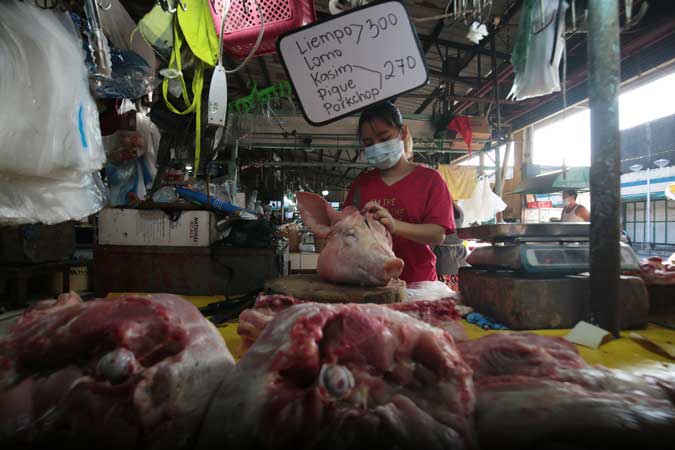
Mr. Duterte placed the Philippines under a state of calamity for one year due to the spread of ASF, Presidential Spokesperson Herminio “Harry” L. Roque, Jr. told a televised news briefing.
In Proclamation No. 1143 signed on May 10, Mr. Duterte said the hog disease has spread to 2,571 barangays in 46 provinces across 12 regions since its presence was first reported in the country in 2019, with new cases being reported despite government’s efforts.
He said the state of calamity may be lifted earlier or extended “as circumstances may warrant.”
“The ASF is responsible for the significant reduction in the country’s swine population by around three million hogs, resulting in more than P100 billion in losses to the local hog sector and allied industries, and leading to increased retail prices of pork products,” the President said.
The proclamation, made on the advice of a disaster council, will allow the National Government and local government units to utilize their quick response funds and other appropriate budgets to contain the spread of ASF and restore normalcy in affected areas.
“All government agencies and LGUs are enjoined to render full assistance to and cooperation with each other, and mobilize the necessary resources to undertake critical, urgent and appropriate measures in a timely manner to curtail the further spread of ASF, address the supply deficit in pork products, reduce retail prices, and jumpstart the rehabilitation of the local hog industry,” Mr. Duterte said.
The country’s agricultural output shrank by an annual 3.3% in the first quarter, as livestock production slumped due to the prolonged ASF outbreak. Hogs, a major contributor to the livestock subsector, saw output decline by 25.8%.
At the same time, Mr. Duterte signed an executive order increasing the minimum access volume (MAV) for pork imports to 254,210 metric tons (MT) from the previous 54,210 MT.
“Iyan po ay bahagi po ng kompromiso sa panig ng ehekutibo at Senado pagdating sa usaping MAV (This is part of the compromise between the Executive and Senate on the MAV issue),” Mr. Roque said.
In Executive Order (EO) No. 133, the President said the shortage of pork for this year is estimated at around 388,790 MT, citing the Agriculture department.
The MAV Management Committee was ordered to “ensure that the allocation of the volume importation is fair and open to all qualified importers of pork meat.”
Mr. Duterte noted Congress has “not acted” on his request to increase the quantity of pork imports.
“It is imperative to immediately address the current supply gap in pork meat, to provide consumers with adequate and affordable food, and to lower inflation,” he said.
The Senate last month adopted a resolution asking the President to revoke his order temporarily reducing the tariff rates on imported pork products for one year, arguing that the surge in imports could kill the hog industry.
INDUSTRY REACTION Rosendo O. So, Samahang Industriya ng Agrikultura (SINAG) chairman, said in a statement on Tuesday that the issuance of EO 133 and Proclamation No. 1143 is “moral victory for the local hog industry.”
“We request the Senate to continue its vigilance by ensuring that those affected by ASF be compensated and the funds to be realigned will go to the rehabilitation of the industry and not spent on purchasing freezers for the importers,” Mr. So said.
“The Bureau of Customs must be alerted immediately on this compromise and be guided on the tariffs that should be collected once these imports arrive,” he added.
Edwin G. Chen, Pork Producers Federation of the Philippines, Inc. President, said in a mobile phone message that the declaration of a state of calamity due to ASF is “long overdue.”
“We are okay with one year. Although it is long overdue, we still welcome the decision. We hope the calamity fund will be given to the affected pork producers and that the process will be transparent. Now the Department of Agriculture (DA) and local government units can use the calamity fund to provide indemnification for affected pork producers,” Mr. Chen said.
Senator Francis N. Pangilinan said the one-year period should be enough to help the hog industry recover.
“The critical thing here is hog repopulation. We should move fast so that the industry can recover… I wish the declaration was earlier. But I am still thankful since there is now basis for the National Government to spend money and provide support for the local hog raisers,” Mr. Pangilinan said at a virtual briefing.
The Philippine Association of Meat Processors, Inc. (PAMPI) said in a separate statement on Tuesday that the state of calamity declaration puts on hold the proposed adjustments in the group’s selling prices due to the higher prices of imported raw material.
“Meat products are major contributors to overall inflation. Thus, we deem it to the best interest of our industry, our consumers and the economy in general to keep prices of our products stable for as long as possible,” Jerome D. Ong, PAMPI vice-president and CEO of CDO Foodsphere, said.
Meat Importers and Traders Association (MITA) President Jesus C. Cham said he is hoping the increased MAV allocation will be enough to augment hog supply.
“The ASF fire has not been put out and is still burning. The country is still losing production capacity. Should additional MAV be necessary, we hope that the Senate will go along,” Mr. Cham said in a mobile phone message.
“On the reduced minimum access volume for pork, market forces will eventually decide whether or not the volume of 254,210 MT is adequate enough to address the pork shortage,” PAMPI’s Mr. Ong said.
Agriculture Spokesperson Noel O. Reyes confirmed at a virtual briefing on Tuesday that the DA will soon release further details regarding the implementation of the state of calamity.
“The DA will not only be the one shelling out funds for this state of calamity declaration. Funds will also be released by the respective local government units,” Mr. Reyes said.
Car sales were affected by the reimposition of stricter lockdown measures in Metro Manila and adjacent provinces. — PHILIPPINE STAR/ MICHAEL VARCAS
VEHICLE SALES surged in April from the extremely low base a year ago when Luzon was placed under the strictest form of lockdown, according to industry data.
A joint report from the Chamber of Automotive Manufacturers of the Philippines, Inc. (CAMPI) and Truck Manufacturers Association (TMA) showed 17,843 vehicles were sold in April, 13,315% higher than the 133 sold during the same month in 2020.
In a statement, CAMPI President Rommel R. Gutierrez said this was a “record year-on-year sales increase” since the coronavirus pandemic began last year.
To recall, auto sales plunged to a record low level in April 2020 as nearly all economic activity was halted during the imposition of an enhanced community quarantine (ECQ) in Luzon.
However, April sales were still 13.8% lower than the 20,702 units sold in March, which Mr. Gutierrez said was mainly due to the reimposition of tighter quarantine measures.
Since late March, Metro Manila and adjacent provinces have been under a modified ECQ (MECQ) to curb a spike in coronavirus disease 2019 (COVID-19) infections. MECQ is scheduled to be lifted on May 14.
“Additionally, tighter bank lending continues to dampen the demand for consumer spending especially for big-ticket items like auto amid the pandemic. The additional deposit due to safeguard measure is burdensome in itself to consumers and industry alike,” Mr. Gutierrez said.
Car companies have started collecting deposits from buyers of imported cars, after the Department of Trade and Industry (DTI) imposed provisional safeguard duties in order to protect local jobs. The DTI had found a link between a decline in local industry employment and an import surge, based on a petition from an auto parts labor group.
All vehicle categories recorded significantly higher year-on-year sales in April, but were expectedly lower than March sales.
Sales of commercial vehicles surged to 12,273 in April, from 107 sold a year ago but 12.6% down from March’s 14,041.
Passenger car sales stood at 5,570 last month, significantly higher than the 26 sold in April 2020. However, April sales of passenger cars slipped by 16.38% from 6,661 units sold in March.
Despite the disruption caused by the reimposition of MECQ in the capital region, the auto industry’s year-to-date sales appear to show signs of improvement.
In the first four months of 2021, CAMPI and TMA members sold 88,155 units, 36.3% higher than 64,675 sold during the same period in 2020.
Year to date, commercial vehicle sales increased by 29.6% to 60,730, while passenger car sales went up 54% to 27,425.
So far this year, Toyota Motors Philippines Corp. (TMP) continued to have the largest market share at 47.35%, with 41,737 units sold.
Mitsubishi Motors Corp. followed with a market share of 15.54% with sales of 13,696 in the first four months of 2021.
Ford Motor Co. Philippines, Inc.’s market share stood at 7.44%, after selling 6,562 units so far this year. Suzuki Philippines and Nissan Philippines followed with market shares of 7.25% and 7.06%, respectively.
Mr. Gutierrez earlier this year said that he expects the car industry to reach pre-pandemic sales levels as late as 2023. Recovery would be achievable if there are certainties in the market, consistent government policies, and widespread inoculation against COVID-19, he said.
The best-case scenario for the industry in 2021 is a 30-35% sales growth, Mr. Gutierrez said, but added that provisional duties could lower growth to 20-25% compared with last year’s figure. — A.L.Balinbin
DMCI Holdings, Inc. reported on Tuesday a consolidated core net income of P4.1 billion in the first quarter, or more than four times the level a year ago, with the “exceptional” performance of its real estate and mining units.
“We had a better-than-expected Q1 (first quarter) because of higher construction accomplishments and better coal sales. With the exception of Maynilad, all of our businesses also did very well,” DMCI Holdings Chairman and President Isidro A. Consunji said in a statement.
Fo the diversified conglomerate, the quarter’s core income excluded a non-recurring loss of P414 million incurred from sales cancelations on a DMCI Homes project last year, a non-recurring gain of P167 million for deferred tax re-measurements on Maynilad Water Services, Inc.’s concession asset, and a P12 million-gain on DMCI Homes’ land sale this year.
In the statement, DMCI Holdings said that its first-quarter earnings rose by nearly seven times to P4.3 billion from P616 million previously.
Mr. Consunji said the firm’s performance in the next quarters would mainly depend on the prices of coal, nickel, and electricity.
“We also expect some operational headwinds for SMPC (Semirara Mining and Power Corp.) given the abnormal water seepages at Molave North Block 7 and the forced plant outages,” he added.
DMCI Homes, the conglomerate’s property brand under DMCI Property Developers, Inc., recorded a core net income of P1.6 billion in the first quarter, swinging from a net loss of P197 million year on year, on the back of higher construction accomplishments and recognition of down payment from new accounts.
Meanwhile, net income contributions from SMPC doubled to P1.3 billion as its coal business along with energy unit Southwest Luzon Power Generation Corp. recorded higher demand and better average selling prices for coal and electricity.
The holding firm described DMCI Homes and SMPC to have “delivered exceptional performances during the period.”
DMCI Mining Corp. recorded income contributions of P415 million, around 16 times higher than the P26 million value year on year as it benefited from higher production, shipment, nickel grade and the average selling price.
Contributions from D.M. Consunji, Inc. were twice higher, ending at P342 million, due to higher construction accomplishments and minimal expenses related to the pandemic.
However, travel restrictions weakened billed volume average effective tariff for water concessionaire Maynilad, which recorded a 24% decline in core net income contributions to P287 million.
DMCI Power Corp. contributed P118 million, an upswing from its previous P97-million losses on the back of higher electricity sales and lower fuel costs due to the operations of its 15-megawatt Masbate thermal plant.
Meanwhile, income from the parent firm and other income sources recovered to P13 million, reversing a net loss of P68 million, due to the absence of expenses related to the global health emergency.
DMCI shares at the local bourse inched up 0.37% or 2 centavos to finish at P5.42 apiece on Tuesday. — Angelica Y. Yang












-page-001.jpg)