Home Blog Page 8099

DAR starts releasing undistributed land titles in Cebu 

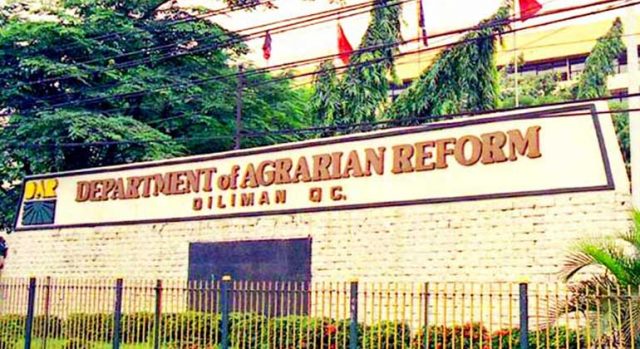
THE Department of Agrarian Reform (DAR) has started the distribution of 2,034 land certificates in Cebu, including the 2,007 that were recently discovered in two sacks gathering dust at the agency’s local office. DAR, in a statement on Thursday, said around 1,709 of the titles equivalent to 1,320 hectares of land can be immediately released, while 325 have been excluded as the beneficiaries could not be located. About 200 have so far been distributed. “We are doubling our efforts to finish this task and as much as we can, we would distribute them on a daily basis because the agrarian reform beneficiaries land titles should have been distributed a long time ago,” DAR Central Visayas Regional Director Resty C. Osias said. Some of the certificates of land ownership date as far back as 1987. DAR is preparing to file administrative and criminal charges against 13 officials in DAR-Cebu liable for the failure to distribute the titles. — Revin Mikhael D. Ochave 

Red tide warning up in three more Western Samar bays

THE BUREAU of Fisheries and Aquatic Resources (BFAR) warned consumers from eating shellfish harvested in three bays in Western Samar after these areas tested positive for paralytic shellfish poison or red tide.  BFAR said in its 15th shellfish bulletin that warnings are up in Irong-irong Bay, Maqueda Bay, and San Pedro Bay. Meanwhile, red tide contamination continues in Western Samar’s Daram Island, Zumarraga, Cambatutay Bay, and Villareal Bay; Puerto Princesa Bay, Palawan; Dauis and Tagbilaran CIty, Bohol; Tambobo Bay, Negros Oriental; the town of Leyte, Calubian, Carigara Bay, Ormoc Bay, and Cancabato Bay, Leyte. Red tide warnings are also still in effect at Biliran Islands; Balite Bay, Davao Oriental; Murcielagos Bay, Zamboanga del Norte; and Lianga Bay, Bislig Bay, and Hinatuan, Surigao del Sur. All types of shellfish and Acetes sp. or alamang harvested in red tide areas are unsafe for human consumption. However, other marine species from the contaminated waters can still be eaten with proper handling. Red tide happens due to a result of high concentrations of algae in the water. Human consumption of contaminated shellfish may result in paralytic shellfish poisoning, which affects the nervous system. — Revin Mikhael D. Ochave

DoTr’s Tugade calls for law setting 30-year transport plan

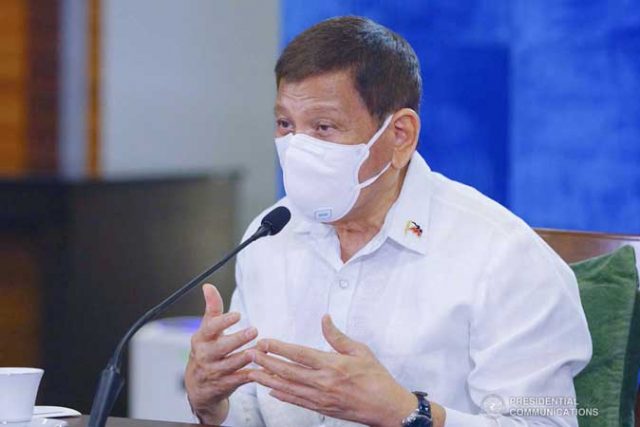
DEPARTMENT of Transportation (DoTr) Secretary Arthur P. Tugade — PRESIDENTIAL PHOTO

THE Department of Transportation (DoTr) said it will seek legislation establishing a 30-year transportation sector roadmap to minimize the impact of changing priorities set by new administrations.

“I have designed and formulated a 30-year roadmap purely on transportation, a roadmap to cover five presidents,” Transportation Secretary Arthur P. Tugade said at an online forum on May 11 organized by the Management Association of the Philippines (MAP).

He added: “Itong roadmap na ito will be legislated. The funding source will be legislated… kaya lang dapat tinutulak ko na this year ‘yan, pero nagkaroon ng pandemya (The plan needs to be legislated and its funding set in law… I had been planning to push for it this year but the pandemic got in the way).”

President Rodrigo R. Duterte signed Executive Order (EO) No. 05 in October 2016 approving and adopting a 25-year long-term plan known as “Ambisyon Natin 2040.”

Mr. Tugade said he is willing to work with the private sector on the matter.

“I am willing to sit down with you, na kung hindi man umusad sa Kongreso ‘to, iiwan ko sa inyo ang hard papers (If Congress does not act, I will leave the plan to you),” Mr. Tugade told the MAP executives.

“I wanted that to be my legacy, the 30-year transportation roadmap,” he added.

Mr. Duterte’s EO set out an objective of “tripl(ing) real capita incomes and eradicat(ing) hunger and poverty by 2040, if not sooner.”

The EO also called for “all plans of government departments, offices and instrumentalities, including government-owned or -controlled corporations and local government units, (to be) consistent with Ambisyon Natin 2040.” — Arjay L. Balinbin

Senate lists priority amendments when session resumes

PHILSTAR

THE SENATE will prioritize the priority measures such as the amendments to the Public Service Act, Retail Trade Liberal Act and the formation of the Department of Overseas Filipinos, among other measures, when it resumes session Monday, Senate President Vicente C. Sotto III said.

“Priorities will be Public Service Act, Retail Trade Act, Dep’t of OFW and a few others,” he told reporters in a phone message on Thursday.

The measures were among the those identified by the Legislative-Executive Development Advisory Council as priority measures in March.

The amendments to the Public Service Act and to the Retail Trade Liberalization Act were targeted by the LEDAC for passage by June, while the creation of a Department of Overseas Filipinos is expected to pass by December.

Mr. Sotto also said in the statement that he proposes to conduct sessions on Thursdays.

“I will propose to have sessions on Thursdays which we had in the Old Congress so we can have 12 days instead of 9,” he said in the statement, adding that he will caucus on Monday.

Senate Pro Tempore Ralph G. Recto supported Mr. Sotto’s proposal.

“There is a need for everyone to try to be more productive. Extending session days will definitely help,” he said in a text message.

Congress sessions, held from Monday to Wednesday, will resume on May 17 after an almost two-month break.

The second regular session will adjourn from June 5 to July 25.

The bills to amend the Retail Trade Liberalization Act and the Public Service Act were pending at second reading in the Senate, while the bill for the creation of the Department of Overseas Filipinos is pending at the committee level. The three measures were approved by the House of Representatives in third and final reading.

President Rodrigo R. Duterte in April certified as urgent the bills amending the Public Service Act, Retail Trade Liberalization Act, and Foreign Investments Act. — Vann Marlo M. Villegas

BPO workers call for higher place in vaccine priority list

BW FILE PHOTO

A BUSINESS process outsourcing (BPO) workers group said the industry’s workers need to be bumped up the vaccine priority list, noting that its workers remain excluded from the A4 category, which is entitled to inoculation starting next month.

The BPO Industry Employees Network (BIEN) said that workers in the outsourcing sector remain at risk for contracting the virus because many works on site. Essential workers in the A4 vaccination priority group could have access to vaccines by June, the Health department said.

“BPO workers do not work face to face with our clients but it doesn’t mean we are immune from the virus especially those who are working onsite. Not all clients and accounts (allow) work at home arrangements,” BIEN Vice-President for Externals Sarah Prestoza said in a statement Thursday.

BIEN has been asking the government to include outsourcing workers in the A4 category, noting that the sector continued some on site operations during the strictest phase of the lockdown.

“The government must speed up its distribution and inoculation so vaccines don’t go to waste. There are sectors like us that are waiting in vain to be vaccinated while BPO workers and the industry strive to keep the economy afloat,” Ms. Prestoza added.

“Seemingly, there are sufficient doses of vaccines to inoculate the 1.3 million BPO workers in the whole country. It’s just a matter of formulating the right policy and then executing the vaccination and distribution plan with a sense of urgency.”

The group noted COVID-19 (coronavirus disease 2019) outbreaks in various outsourcing hubs, including 255 cases in Baguio and 105 cases in Iloilo, since January.

BIEN has written to the Health department to appeal for inclusion in the A4 list but has not yet received a response.

A hundred outsourcing firms are expecting COVID-19 vaccine deliveries for employees starting this quarter after signing agreements involving the National Government and private sector groups, the Information Technology and Business Process Association of the Philippines (IBPAP) said last week.

IBPAP partnered with the International Container Terminal Services, Inc. Foundation to procure a million doses of the Moderna vaccine for employees and their dependents.

The government cut its inoculation target to 50 million individuals by the end of this year from the previous goal of up to 70 million due to global supply constraints. — Jenina P. Ibañez

Perpetual Help Cavite campus declared an economic zone for science and technology

UNIVERSITY OF PERPETUAL HELP MOLINO LIBRARY FB PAGE

THE Philippine Economic Zone Authority (PEZA) has declared a Cavite-based university a special economic zone for science and technology.

PEZA Director General Charito B. Plaza signed an agreement with the University of Perpetual Help System (UPHS) in Molino, Cavite officially recognizing the campus as a Knowledge, Innovation, Science and Technology (KIST) special economic zone institute.

The university is the first private higher education institution to be recognized as a KIST ecozone, PEZA said in a statement Wednesday. KIST parks and institutes provide training that address industry workforce requirements.

UPHS is building an AltaHub innovation institute, which will work on health, business, and technology programs.

“AltaHub shall become the bridge between the educational institution and the needs of various industries in the country as they will serve as a research and development facility not only for the University but also for the neighboring towns and areas,” PEZA said. 

The investment promotion agency plans to build training centers in public ecozones or KIST parks in every region.

“The Philippine Economic Zone Authority made the best choice in tapping UPHS as its partner for the promotion and creation of Philippine startup ecozones that support organizations aiming to develop an innovative product, process or business including startup enablers,” Bacoor City Mayor Lani M. Revilla said.

PEZA said last year that it plans to develop a skills training and research institute at its first university special economic zone park at Batangas State University.

As a KIST Park, the university plans to partner with foreign schools to offer programs training the workforce. — Jenina P. Ibañez

NCR building material bulk prices hit 18-month high

PHILIPPINE STAR/ MICHAEL VARCAS

BULK PRICES of construction materials in Metro Manila grew at the fastest rate in 18 months in April, the Philippine Statistics Authority (PSA) said Thursday.

The construction materials wholesale price index rose 2.4% in April, against growth of 2.2% in March and 1.5% in April 2020.

The index gains were also the highest in 18 months, or since the 2.6% increase in October 2019.

The PSA said the April outcome was most influenced by the following commodity groups: fuels and lubricants (22.3% from 6.8% in March); PVC pipes (2.6% from 0.6%); electrical works (2.5% from 1.5%); concrete products and cement (1.6% from 1.2%); and doors, jambs, and steel casements (1.4% from 1.2%).

Meanwhile, slowdowns were noted in the price growth of hardware (1.7% from 1.9%) and lumber (1.3% from 2.8%).

Compared with the previous month, growth in wholesale prices was unchanged for glass and glass products (14.4%); reinforcing and structural steel (3.3%); tileworks (2.2%); plywood (1.2%); painting works (0.9%); and galvanized iron sheets (0.5%).

Wholesale prices for asphalt and machinery and equipment rental were flat in April.

Plumbing fixtures and accessories saw their wholesale prices decline by 2.2%, a rate of decline unchanged from the month before.

Wholesale prices of these materials reflect bulk buying by large construction firms engaged in major projects. The PSA’s national accounts indicate that among subsectors, construction was the biggest contributor to the decline of gross domestic product in the first quarter of 2021. Of the 4.2% contraction during the period, the sector accounted for 1.6 percentage points.

Farmers call for balance of interests between producers, consumers

PHILIPPINE STAR/ MICHAEL VARCAS

THE GOVERNMENT needs to better balance the interests of consumers and producers to ensure food security, a farm organization said.

Danilo V. Fausto, Philippine Chamber of Agriculture and Food, Inc. president, added at a virtual briefing Thursday that producers need a level playing field to better compete with imports.

“Our government should provide (preference to) local production in order to ensure in the long run enough food (for) our increasing population,” Mr. Fausto said.

“Little priority is given resulting in lack of resources and (funding) to the agriculture sector,” he added.  

Meanwhile, Mr. Fausto also called for the mandatory allocation of 10% of local government units’ (LGUs) internal revenue allotment (IRA) for food security programs. Under the Supreme Court’s Mandanas-Garcia ruling to be implemented in 2022, LGUs are set to receive a larger IRA allocation from the national budget.

As a result, Mr. Fausto sought the issuance of an executive order (EO) that will direct LGUs to set aside a part of their IRA allocation for food security in order to mitigate the potential impact of the ruling on the Department of Agriculture (DA) budget.

He noted that in 2021, the DA only has a 1.5% share of the budget of P4.51 trillion and speculated that some national agencies will need to be defunded to create fiscal space for the ruling.

“We think that the DA is one of the government agencies that will have its budget reduced. With an EO, I think it is possible. We do not need legislation from Congress because it will take too long. The ruling will be implemented next year which means that we should anticipate it,” Mr. Fausto said.  

“This will mitigate the effects of any reduction in the resources of the DA and help develop the agriculture sector. It should be the task of the LGUs in coordination with the DA, to provide farm extension services to trickle down efficient production techniques and technology in food production and diversification,” he added. — Revin Mikhael D. Ochave 

DoE outlines requirements for power distribution development plans

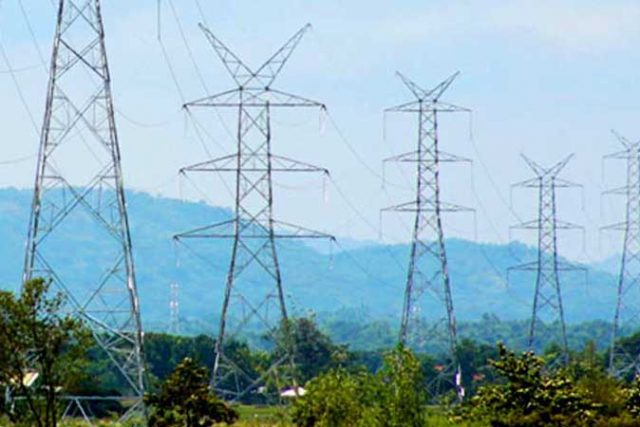
THE Department of Energy (DoE) has released the guidelines for members of the power industry preparing distribution development plans (DDP), according to a department circular published in BusinessWorld’s Thursday issue.

Distribution utilities (DUs) are required to submit their DDPs to the DoE, while electric cooperatives are required to turn in their plans to the National Electrification Administration. A DDP guides companies in planning for the power requirements of their respective franchise areas in the context of the area’s economic development.

In the circular, which was signed by Energy Secretary Alfonso G. Cusi on March 2, the DDP must contain: general information about the firm, energy and demand requirements for its supply mix, network and non-network assets, power supply contracts, a power supply procurement plan, electrification activities, and strategies to comply with renewable portfolio standards (RPS) requirements.

The RPS program requires DUs to source an agreed portion of their supply from eligible renewable energy facilities.

“The DU and other mandated entity must fill up the distribution development plan form… attached in this circular. The crafting of the DDP must take into account all applicable provisions prescribed in the Philippine Distribution Code,” according to the circular.

Along with the completed DDP form, firms must include their demand and energy level forecasts, capital expenditure program targets, details of power supply agreements, updates on capacity based on competitive selection processes, and updates on total electrification in their submissions.

The Energy department said the guidelines ensure that the planning of the DUs and other mandated entities are “responsive to developments in the power industry.”

The DoE, in its circular, said companies must submit electronic copies of their DDPs by Jan. 25 of each year. The DUs and other entities are also required to turn in electronic versions of their final annual 10-year DDPs to the DoE not later than March 15 of each year.

“Non-compliance by the DUs and other mandated entities with the provisions of this Circular serve as basis, among others, for the DoE’s review and recommendation for the renewal or revocation of the DU’s and other mandated entity’s franchise or privileges,” the energy department said.

The DoE added that it will ask the Energy Regulatory Commission to issue a show-cause order to firms that do not comply with the requirements.

The circular will take effect 15 days upon its publication in at least two newspapers of general circulation. — Angelica Y. Yang

House bill calls for P40-billion airline bailout

REUTERS

A House legislator filed a measure Thursday that will allocate P40 billion to assist the air transport industry affected by the pandemic.

AAMBIS-OWA Party-list Rep. Sharon S. Garin filed House Bill 9324 or the proposed “Air Carriers Relief Act” which will provide a relief package to the air transport sector following the damage done to travel by the coronavirus disease 2019 (COVID-19) crisis.

The bill calls for “extend(ed) loan payments, interest-free loans, loan guarantees, and regulatory relief” for the industry.

The P40-billion package will consist of P10 billion in interest-free loans to be provided by the Development Bank of the Philippines (DBP); P10 billion in guarantees from the special fund of the Philippine Guarantee Corporation; P10 billion in relief from regulatory fees; and a P10 billion provision for rapid COVID-19 testing.

The bill sets out a DBP loan ceiling of P2 billion per domestic air carrier, payable between five and 10 years.

The proposed law will also expand the government guarantee program by increasing the maximum loan guarantee coverage per borrower.

Banks and other non-bank financial institutions regulated by the government will also be required to extend their commercial loan agreements and terms to domestic air carriers “for a period of three (3) years, and may be further extended for another two (2) years with an interest rate as may be set by the BSP (Bangko Sentral ng Pilipinas).”

The bill will also allow air carriers the option to seek relief from customer refunds, allowing them to issue vouchers for future travel. — Gillian M. Cortez

Imminent existential threat, or outright fiscal meltdown?

PHILIPPINE STAR/KRIZ JOHN ROSALES

The guardians of the Republic consist of the Armed Forces of the Philippines, the Philippine National Police, the Philippine Coast Guard, the Bureau of Fire Protection, the Bureau of Jail Management and Penology, the Bureau of Corrections, and the hydrography branch of the National Mapping and Resource Information Agency. Officially, they are the military and uniformed personnel or MUPs.

When they retire from public service, they get their pension. The big problem is that these MUPs do not make mandatory contributions to their retirement. They are different from their counterparts in the civil service whose salaries are deducted monthly by the Government Service and Insurance System (GSIS). Instead, the government sources the funding from the national budget.

This monstrosity descended from the AFP-Retirement and Separation Benefits System (AFP-RSBS) during martial law. Established on Dec. 30, 1973 pursuant to Presidential Decree (PD) 361, with subsequent amendments, AFP-RSBS failed to be a self-sustaining pension system. It was subsequently deactivated on Dec. 31, 2006 through Executive Order 590. Since then, with more pensioners and higher benefits, the annual allocation from the national budget has ballooned and incurred ever expanding arrears.

The budgetary allocation is not minuscule.

MUPs’ pension was budgeted P90.9 billion in 2018; P87.6 billion in 2019; and last year, P81.2 billion. For 2021, no less than P129.7 billion has been earmarked.

Life as MUPs could not be happier because as such, they receive pensions that are indexed to the salaries of active personnel. This is like having a bottomless pit of benefits. After serving for 20 years, MUPs are entitled to a retirement pension even before they reach the retirement age of 56.

How many MUPs are entitled to this kind of retirement benefits?

As of December 2019, there were 402,086 active MUPs; 196,004 regular pensioners; and 93,172 survivorship pensioners, the beneficiaries of deceased personnel.

The fiscal burden became so much more onerous when the government, through Congress in a Joint Resolution in 2018, doubled the monthly base pay for a private in the AFP and the lowest ranking police officer from P14,834 to P29,668 effective January 2018. Overall, the salaries of MUPs rose by an average of nearly 59% for all ranks.

Congress’ generosity also allowed a second base pay schedule to be implemented beginning the following year. All in, the average adjustment amounted to more than 72%. The Department of Budget and Management (DBM), through National Budget Circular 574, funded it from the budgets of the agencies of the MUPs and if short of what was required, from the Miscellaneous Personnel Benefits Fund (MPBF). This singular show of generosity cost the Bureau of the Treasury (BTr) some P64 billion.

What was the rationale for that congressional move?

Congress justified the adjustment as necessary “in order to make it more commensurate with their critical role in maintaining national security and peace and order.” It’s like saying what Publilius Syrus said that anyone can truly hold the helm when the sea is calm. Of course, the resolution also kept the indexation feature. We can understand where our legislators were coming from, but due diligence dictates there must be a source of this generosity.

Sourcing the funds for a non-contributory pension system from the budget means curtailment of other equally pressing demands of public welfare including those for food, medicine, infrastructure, and even digital transformation.

The result is nothing but incongruous.

Without contributing to their pension, MUPs receive an average regular pension of P39,520, or about the same as the average salary of P39,687. In turn, this amount is nine times the average pension of private sector retirees under the Social Security System and three times the average GSIS pension.

If this state of affairs is allowed to continue, the MUP pension system would likely incur a P9.6 trillion unfunded reserve deficit, the difference between the required and the current funding levels. Congress is now afraid that the State will fail to meet the impossible funding requirements.

It is for this reason that the indefatigable Albay Rep. Joey Salceda filed House Bill 9271 to reform the MUP pension system by creating a sustainable framework for their separation, retirement and pension benefits. Making it contributory this time is how to do it.

Given that the MUP pension amount has exceeded the maintenance and other equipment expenses of the uniformed services, Rep. Salceda correctly argued that “we are now spending more to support retired personnel than we are spending to support the operations of active personnel.”

To him, the pension system is facing “an imminent existential threat.” It draws us to question whether this system makes sense at this time that we are spending billions of pesos to manage the health pandemic, support those who are vulnerable in society, and prepare for economic recovery. We need to spend more on vaccines to save lives and on infrastructure to sustain growth instead of supporting an unfair pension system nobody ever paid a centavo to.

Given the GSIS’ actuarial estimate that we need P9.6 trillion to keep it going without reforms, I would also call it a threat of a meltdown.

It is good that the Department of Finance and the BTr are throwing their support behind Rep. Salceda. This must be a difficult crusade because the military has been enjoying these benefits for years. Reforming the policy framework risks losing the support of the military especially at this time when the political leadership appears to be losing mass support for its failure to deliver on several campaign promises. This should not be the thinking of the military personnel, active or retired. A pension program is only as viable as its funding source. Without contributing to the system, nobody can claim that sense of entitlement with only 20 years of service as uniformed personnel. Many civilian service personnel chalk up as many as 40 years of dedicated public service and their pension comes nowhere close.

Both congressmen and senators should rally behind Rep. Salceda’s proposed reform of the MUPs’ pension system. His proposals squarely address the serious weaknesses of the current system.

First, there shall henceforth be mandatory contribution on the part of the MUPs. To achieve a smooth transition, the employees’ share will be increased by phases with the government counterpart fund.

Second, there shall be no more automatic indexation of pension benefits to those of the incumbents. Subsequent changes will be subject to review but only up to a maximum of 1.5% each year.

Third, the fiscal burden shall also be reduced by disallowing promotion to a higher rank upon retirement. Automatic adjustment to a higher rank is not done in the civil service.

Fourth, while not exactly comparable to those in the civil service, the military’s compulsory retirement age shall be raised from 56 to 60 years old. This buys time to accumulate enough funds for retiring military personnel.

Fifth, the pensionable age shall be fixed at 56 years old or the accumulation of a minimum of 20 years of active service. One could still improve this proposal by prescribing a minimum number of years of service before one gets his pension upon reaching the mandatory retirement age.

Sixth, unlike the current system of direct budgetary funding of the pension, all contributions to the Fund shall be pooled into an MUP Trust Fund to be managed by the GSIS. This will enable the pool to grow together with other additional sources of funding, making the pension system more sustainable.

Seventh, the pension system shall be tax-exempt to maximize its funding for after all, providing such retirement benefits to qualified MUPs is a governmental function in itself.

Last, the Secretary of Finance shall be the fiscal risk manager of the MUP pension system covering policy formulation and risk management.

If these reforms are carried through Congress, the unfunded future liabilities of P9.6 trillion to both active members and current pensioners shall be reduced by P6.7 trillion, leaving a balance of P2.9 trillion, a hefty 69% reduction.

This is the long and the short of Rep. Salceda’s house bill. If support falls short, Rep. Salceda’s existential threat would certainly morph into an outright fiscal meltdown.


Diwa C. Guinigundo is the former Deputy Governor for the Monetary and Economics Sector, the Bangko Sentral ng Pilipinas (BSP). He served the BSP for 41 years. In 2001-2003, he was Alternate Executive Director at the International Monetary Fund in Washington, DC. He is the senior pastor of the Fullness of Christ International Ministries in Mandaluyong.


Pieces of paper

PRESIDENTIAL PHOTO/ JOEY DALUMPINES

President Rodrigo Duterte’s spokesperson’s insistence that no one should take seriously what the current occupant of Malacañang says during “informal” occasions again provokes the question of when an occasion qualifies as “formal” — and if his claims, declarations, threats, and other issuances even matter at all. But the reality is that, whoever he or she may be, what the President of the Republic says, whatever the place, time, or occasion, does matter once uttered in the public sphere.

In Mr. Duterte’s particular case, what he says matters most to the corrupt bureaucracy, the police, the military, the regime’s print and broadcast media hacks, and its keyboard trolls, who in fact hang on to his every word to guide them in such daily enterprises as looting the public treasury, violating human rights, spreading false information, and demonizing dissenters and regime critics.

It therefore matters as well to the rest of the population, which has had to contend with the consequences — the extrajudicial killings, the arbitrary arrests, the massacres, and the unaccountable abuse of power by the pettiest bureaucrat — of his “informal” utterances.

Mr. Duterte does contradict himself often; he says one thing and does another, and even denies having said what is already on record. But there is also the obvious fact that he has been fairly consistent not only in his inconsistencies but also on such issues as the immunity from prosecution — the impunity — of the police and military, and on human rights, the drug problem, the pandemic, and China.

In his persistent but futile attempts to defend his policy of cozying up to that country at the expense of Philippine sovereignty and interests, he was in fact again saying last week that only war — “guerra lang” — could stop Chinese aggression in the West Philippine Sea (WPS). It has done far worse over the past five years, but the most recent sign of China’s continuing assault on the country is the occupation of the WPS by 200 Chinese sea craft since March 20.

In reaction to citizen outrage and criticism, Mr. Duterte again dragged out his usual excuses for not doing anything about it. He blamed the past administration that had secured the 2016 UN Arbitral Tribunal ruling rather than China for the latter’s occupation of Philippine territorial waters; claimed that the country owes so much to China for its donation of some 600,000-plus doses of Sinovac vaccine; threatened to punch former Foreign Affairs Secretary Albert del Rosario; and challenged former Supreme Court Associate Justice Antonio Carpio to a debate on the issue. Although it was evident even as he said it that he was bluffing, it became even more obvious the next day: he backed off when Justice Carpio accepted the challenge, and the Philippine Bar Association volunteered to host the occasion.

However, his saying that the UN Arbitral Tribunal ruling on the WPS in favor of the Philippines is “just a piece of paper” seemed to some observers to be a departure from his past utterances. But it was also consistent with his five-year policy of appeasement and surrender, and was even more tellingly supportive of China’s own views and policies and its occupation of the WPS. It also suggested that the 78 protests against Chinese intrusions the current Secretary of the Department of Foreign Affairs (DFA) has filed, and whatever else it will do, are similar gestures of meaninglessness and futility.

At one and the same time he denied what he had previously said while defending the indefensible, he thus also undermined the efforts of an agency of his own administration that has been trying to assure the citizenry that it is doing something to address the problem.

Like his other ramblings, the “piece of paper” dictum is as old as much of human history. It dismisses the value of any compact, agreement, or code without force or the threat of its use behind it. It recalls “his” police and “his” military’s dismissing as of no consequence objections that arbitrary arrests, red-tagging, and violently dispersing peaceful gatherings are illegal and unconstitutional, because such protests are based on mere “scraps of paper.”

It resonates most among the cynical, who think might and violence the only arbiters of human behavior, and that only the strongest have the right and capacity to rule. The more knowledgeable among them could, of course, always point out that only by defeating King John’s armies in the Battle of Runnymede did the English barons compel him in the 13th century to sign the Magna Carta that recognized their rights and those of the Church’s. France’s 1789 Declaration of the Rights of Man and of the Citizen was made possible only by the triumph in arms of the French Revolution. Almost all the former colonies of the Western powers in Asia, Africa, and Latin America gained and declared their independence during the end of the colonial era only through victorious wars of national liberation.

But it is precisely to correct the dominance of force in human affairs and to protect the weak that the international community has since put together the many pacts, codes, declarations, treaties and other agreements that can protect the helpless from violence.

Among the characteristics that most distinguish the second half of the 20th century from past ages was the consensus among the many countries that had suffered the devastating consequences of the centuries-long rule of force that measures have to be put in place to create a global order premised on the civilizing power of reason. The time was long past for the world to transition to the rule of law and rationality from the reign of violence and madness exemplified by the Nazi and fascist contagion that had killed 50 million men, women, and children in Europe alone.

As part of that process, the United Nations Organization was founded in the aftermath of the Second World War to make sense rather than violence govern the relations not only between nations but also between the State and its citizens. It sanctions the use of force in the resolution of international disputes only when all other options fail, and when, in the eyes of the world community, its object is unwilling to negotiate and has become a threat to others. Its Arbitral Tribunal is one of the institutional expressions of the primary UN commitment to the peaceful conclusion of the contention over territory, resources, technology, or whatever else between nations.

The Philippine Constitution protects the weak from the strong. That much should be evident in the Bill of Rights’ guaranteeing the rights to free speech, free expression, press freedom, and freedom of assembly, and in its many other provisions that protect the individual citizen from the State’s arbitrary denial of his or her rights to life and liberty.

To dismiss the UN Arbitral Tribunal’s decision recognizing Philippine rights to the West Philippine Sea solely on the basis of the Stone Age view that only violence can enforce it is to say the same thing about international law, and the pacts, agreements, and other documents that uphold the rights of the weaker countries from the intimidation and violence of the more powerful. It is also to suggest that only the coercive powers of the State rather than reason can enforce the provisions of the Philippine Constitution, and that not the Charter, but their control over the police and the military, that empowers government officials. That mindset explains why the current regime denies the rest of the citizenry its protection.


Luis V. Teodoro is on Facebook and Twitter (@luisteodoro).

www.luisteodoro.com

ADVERTISEMENT
ADVERTISEMENT