Home Blog Page 8048

New Zealand to advise on modernizing Customs, SSS

PHILIPPINE STAR

THE PHILIPPINES has tapped New Zealand to assist in the modernization of the Bureau of Customs (BoC) and the Social Security System (SSS), the Department of Finance (DoF) said.

The DoF said in a statement Sunday that the arrangement arose out of discussions between Finance Secretary Carlos G. Dominguez III and New Zealand Ambassador to the Philippines Peter Kell in a recent online meeting.

Mr. Kell said New Zealand can advise on the ongoing Customs modernization project. He added that his government can provide training and make available experts to help the BoC improve with trade facilitation and border protection.

The modernization program aims to digitize the BoC’s processes and bring its systems in line with international standards. The P5-billion project also aims to reduce trade costs.

For SSS, Mr. Kell said the government of New Zealand is in the final stages of completing a program of financial assistance for state-run funds to enhance claim approvals for pensions and other benefits.

Meanwhile, the two sides have also reached “significant progress” on a project that will sustain New Zealand’s support to the agriculture sector and agribusiness in Mindanao.

New Zealand has extended $2.69 million to support Mindanao agriculture livelihoods through the United Nations International Organization for Migration (IOM).

New Zealand, along with the IOM, provided a combined P64.25 million in financial assistance to help the Philippines respond to the pandemic, especially in Mindanao.

Also donated were 35 cold storage units to ensure that vaccines are distributed with no spoilage. — Beatrice M. Laforga

PPA seeking bidders for Marawi port works

THE Philippine Ports Authority (PPA) said it is soliciting bids for civil works at the port of Marawi City on Lake Lanao.

“The Philippine Ports Authority, through the General Appropriations Act for 2021, intends to apply the sum of P242,750,191.04 being the approved budget for the contract to payments under the contract for the civil works (of) the Port of Marawi (Most Affected Area — Sector 8), Marawi City, Lanao del Sur,” the PPA said in a bid invitation posted on its website.

The format of the auction will be open competitive bidding using non-discretionary “pass/fail” criteria, the agency said.

The project covers the construction of a back-up area with stair landing, a passenger terminal building, a fishport shed, and a berth and ramp for fast craft.

Interested firms may obtain more information from the PPA Bids and Awards Committee.

The committee will accept manually-submitted bids on or before 9 a.m. on June 8.

Bidders need to have completed, within five years from the date of submission and receipt of bids, a contract similar to the project.

The agency requires completion of the works within 360 days from the receipt of the notice to proceed.

Housing Secretary Eduardo D. del Rosario, who chairs the Task Force Bangon Marawi, recently said the rehabilitation of the city was halfway complete as of March.

Mr. Del Rosario said he considers the road network project as the most important.

“We are on target, actually we are over the targets by 3% so matatapos natin talaga itong road network on time (the road network will be completed on time),” he was quoted as saying in a news release posted on March 26 on the website of the Department of Human Settlements and Urban Development.

“All the other projects will be completed in different months, and all ongoing projects will be completed by December of 2021,” he added. — Arjay L. Balinbin

DoE targets June launch for new WESM setup

THE Department of Energy (DoE) hopes to launch by June 26 various rule changes to the wholesale electricity spot market (WESM), which will reduce the time between scheduling and dispatch of power, among others, according to an advisory posted last week on the department’s website.

According to the advisory, before receiving DoE clearance to launch the enhanced WESM design and operations (EWDO), the Philippine Electricity Market Corp. (PEMC) must attest to the market readiness of the three major island groups, the DoE said.

Other proposed changes to WESM operations include automatic pricing corrections and one-part settlements of energy trading amounts, the Independent Electricity Market Operator of the Philippines (IEMOP) said in January.

In an advisory signed by Secretary Alfonso G. Cusi on May 21, the DoE said the PEMC’s certification of market readiness of the Luzon, Visayas and Mindanao grids must come “at least one month” before June 26.

“Upon receipt of the certificate, the DoE shall determine its acceptability and sufficiency… if the DoE finds it meritorious, it shall issue another advisory declaring the actual commercial operation date,” the DoE said.

If the department does not accept the certificate of market readiness, the PEMC and other stakeholders must work to rectify the deficiency. Once the DoE approves the changes, it will choose a new date for the EWDO.

IEMOP has said it also plans to launch WESM in Mindanao on June 26.

Once EWDO takes effect, pricing and schedules for the Mindanao grid will be separate from those of Luzon and the Visayas, according to the advisory.

“The Luzon and Visayas grids shall be considered as one settlement region and the Mindanao grid another settlement region,” the DoE said.

Once the Mindanao-Visayas Interconnection Project (MVIP) goes ahead, a market dispatch optimization model will be in force to determine the prices and schedules for the grids across the three island groups. When this happens, the grids will become a single settlement region.

The National Grid Corp. of the Philippines has said that delays in Mindanao-Visayas power grid link may push back its target completion date, originally announced as the end of 2021. In February, the grid operator discovered that portions of the MVIP’s fiber optic submarine cables have been severed.

The MVIP project will connect the grids of Mindanao and the Visayas, allowing excess power from both areas to be channeled where needed. — Angelica Y. Yang

Industry lobby bats for ‘clean coal’ role in achieving net zero

REUTERS

GOVERNMENTS must consider all available technologies, including advances in “clean coal,” in their strategies for achieving net-zero emissions, a UK-based coal industry group said last week.

“Our focus has to be on… deploying the best-available clean technologies, whatever they might be, including clean coal technologies, so that they can actually play their part in (reaching) our overall global community goal of net zero,” World Coal Association (WCA) Chief Executive Officer Michelle M. Manook told BusinessWorld in a video call on May 17.

“It shouldn’t be that we dismiss coal outright. We need to look at coal in terms of, how it can actually position itself for the next generation of clean, efficient plants,” she added.

The WCA defines “clean coal” as a new technology that reduces carbon dioxide emissions from the use of the fuel. The association positions emissions-reduction technology as an energy option that will allow sustainable economic development.

Ms. Manook said her group was advocating for the “phasing in of new technologies, and not the phasing out of the fuel.”

She added that the WCA supports renewable energy (RE), as well as diversity of fuels in the service of a country’s economic and environmental goals. She said full transition to renewables is not yet possible for many emerging economies.

“There’s been some really great work done in battery storage, but we’re still not going to be able to fully replace large-scale systems with 100% renewables…There will be a requirement in large systems for really reliable baseload and for many developing countries, that’s going to be coal,” Ms. Manook said, citing the intermittency of RE.

National Renewable Energy Board (NREB) member Alberto R. Dalusung III, on the other hand, contends that Philippines can be powered solely by renewables.

“We just need a grid that has the ability to have all of these technologies dispatched properly. Intermittency is not a problem at all assuming you’ve got a properly designed grid with flexibility,” he was quoted as saying in a statement issued by The Climate Reality Project Philippines over the weekend.

Mr. Dalusung said the shift to renewables would mean harnessing various RE sources and using technologies that ensure reliable power.

In the statement, Climate Reality Leader and former NREB Chairman Pedro H. Maniego, Jr. said the shift to flexible, distributed and decentralized RE generation can address stability and supply concerns. He also noted the declining costs of battery storage, which could address variability concerns.

COAL MORATORIUM
Asked to comment about the Philippines’ recent moratorium on new coal-fired plants, the WCA’s Ms. Manook said that it is still too soon to determine the impact of such bans on funding for coal overall.

“It’s probably too early to say… We are aware of the reports that some coal investors are withdrawing their funding, but we have to take a pragmatic view that many people will also replace that funding,” she said.

Ms. Manook said there will be “many new types of investors,” including those looking to the UN Sustainable Development Goals to guide their funding.

In November, the Institute for Energy Economics and Financial Analysis said that the Department of Energy’s ban on new coal-fired projects is estimated to bring in P1.45 trillion or $30 billion worth of investment in RE by 2030. — Angelica Y. Yang

Corporate Banking Circa 2030: 7 hypotheses

First of two parts

Despite the disruption and challenges caused by the pandemic, the banking industry is more poised than ever for a fundamental transformation. The speed of technological advancements and the means by which banks harness emerging technologies such as artificial intelligence (AI), blockchain, intelligent automation and machine learning only accelerated over the past half-decade. However, though innovation has become more a common capability than an aspirational buzzword, there’s still much transformational work to be done. Banks in the past five years have only seen incremental investments in this direction, adopted emerging technology in a siloed fashion, and focused mostly on cost optimization.

Organizations continue to become more global, with electronic marketplaces facilitating more international activity among SMEs and with multiple micro-sized supply chains spanning across different countries. Due to a combination of disruptive technologies, dynamic markets, and easily accessible capital, small and medium-sized firms find the path to becoming substantial commercial accounts — and in turn, huge corporate banking clients — significantly easier.

An EY study released in November 2020, How will banks transform to build the next generation of businesses, shares seven hypotheses that reflect how the trends of today reshape the current market, and how they play out in the next 10 years. These hypotheses describe how corporate, commercial and small and medium-sized enterprise (CCSB) banks can rise above the challenges of 2020 and leverage opportunities for growth in 2030.

These seven hypotheses discuss 1) how the expansion of banking services from large platforms and tech giants will shrink market share across CCSB segments, 2) how banks can redefine client-centricity in a segment-less world, 3) how they can evolve to become trusted advisors by leveraging data to shape client business strategies, 4) how the subscription model can revolutionize commercial banking, 5) how banks can leverage ecosystems to organize integrated networks, 6) how banks can expand services beyond banking to help clients focus on their core activities, and 7) how banks can provide leadership on critical societal issues to strengthen trust with the next generation of clients.

This two-part article will focus on the last three hypotheses, highlighting the importance of transforming banks to better capitalize upon the future of the banking industry. In this first part, we discuss how banks can leverage ecosystems to organize integrated networks and how they can expand services beyond banking to help clients focus on their core activities.

ORGANIZING INTEGRATED NETWORKS IN THE AGE OF ECOSYSTEMS
Today’s businesses maintain relationships with different banking providers, because there are no single banks that offer a truly comprehensive range of services nor an integrated platform. The convenience of a single interface offering a unified experience for all banking needs will become a baseline in the future, with regulations such as open banking now nudging the development of ecosystems to serve clients better. Because multiple providers will drive this ecosystem for clients to access an expanded menu of products and ancillary services, tomorrow’s leading banks will be simultaneously integrated, open and secure.

Top-performing banks will still own client relationships but will also create their own ecosystems curated with products and services from third party partners through integrated platforms. This gives them an edge by focusing and excelling at their core competencies, innovating through open banking technologies, application programming interfaces (API), and attracting preferred third-party partners through niche offerings. Banks can utilize this advantage by developing macro and micro ecosystems to cater to client demand and major geographical markets.

Banks can take another path to market leadership in three ways: by capitalizing on their scale; providing profitable niche services to multiple ecosystems; or specializing in products and services for specific industries. Other banks may even capitalize on their technological capability, experience with complex payments services, risk management experience and scale to provide ecosystem connectivity. The services these ecosystems can provide could also include for instance real-time payments and instant lending to SMEs.

Banks need to thoroughly assess their strengths and weaknesses and embrace design thinking and agile working strategies. Plans must be made to heavily invest in cybersecurity, vendor management and strategies to build trust across their own ecosystems. Ecosystems are just one of the many new models that open banking regulation has paved the way for. Integrated partnerships provide the means to move forward, as proven by collaborations between banks and third parties such as FinTechs — and even with other banks and organizations that cater to niche markets, such as microfinance. This would mean determining which partnerships will be necessary to develop and scale integrated ecosystems and operationalizing said relationships.

ENABLING BUSINESSES BEYOND BANKING
With company success driven by focusing on core activities, more companies will need help with non-core activities, particularly those relative to key growth milestones. Banking providers can further deliver value by allowing their clients — especially SMEs — to focus on their businesses, strengthening client relationships by bringing in advisory, risk management, legal and other financial management capabilities in an accessible manner.

Harnessing the power of ecosystems allows banks to launch integrated services, such as Chief Financial Officer in a box, corporate treasurer, financial risk and asset-liability manager, on-demand tax and legal advisor, payment and electronic invoicing utility, and model platforms. These would be particularly useful for firms planning mergers or acquisitions, geographic and cross-border trade expansion, supply chain restructuring, IPOs or funding rounds, or even insolvency and liquidation. Ecosystems will also allow banks to carve out niches in specific areas such as healthcare, connectivity, and infrastructure project finance. Offerings will no longer be limited to banking services but can even include the entire financial operating system to manage the business. For example, healthcare providers can engage banks to manage insurance, liquidity, billing and payments, in addition to traditional financing services and investment advisory. A more complex example for banks would be on the emerging case of cities, companies and communities embarking on sustainable and smart city strategies that would require innovative financing and investment structures as well as development strategies aided by integrated and logical frameworks, citizen and community engagement and geo-spatial location intelligence.

Banks must be capable of deep integration into client corporations, institutional clients, supply chains and value networks to survive and flourish, as large corporations and institutions with established service providers will expect an integrated experience and seamless collaboration among banks, suppliers and vendors.

In the second part of this article, we discuss how banks can provide leadership on critical societal issues to strengthen trust with the next generation of clients.

This article is for general information only and is not a substitute for professional advice where the facts and circumstances warrant. The views and opinions expressed above are those of the author and do not necessarily represent the views of SGV & Co.


Christian G. Lauron is a Financial Services Partner of SGV & Co. He also leads the Firm’s Government & Public Sector.

The fear of vaccine and the role of media

PHILIPPINE STAR/ MICHAEL VARCAS

Still thinking of what to write for the column on the eve of submission, I received a text message from an old friend, Doc Rogie Tangco. Rogie said he was perplexed by the media’s negative slant on vaccines.

Rogie’s message gave me a topic to write about. I do listen to Rogie for both personal and professional reasons. On a personal level, he is our family doctor. Upon hearing of my wife Mae’s death, he was the first to visit her at the hospital. On a professional level, Rogie is one of the country’s leading cardiologists. More, he is very involved among the health professionals in the fight against COVID-19.

The first part of Rogie’s message was a question: “What is the bigger problem?” Is it the supply of vaccines and their rollout or the hesitation of the majority of Filipinos to get the vaccine?

As of April 27, the Philippine Daily Inquirer (PDI) computed that those fully vaccinated constituted 0.22% of the Philippine population. Since then, based on official data, the total number of doses administered has more than doubled, from 1,809,801 doses (from PDI, as of April 27) to 3,718,308 doses (from Reuters, as of May 21).

The supply, however, has begun to pick up. The Philippines recently obtained 193,050 doses of Pfizer from the World Health Organization’s COVAX facility. This is but the initial batch of the 1.3 million Pfizer doses coming from the COVAX facility. In addition, more than two million doses of AstraZeneca arrived in early May, likewise coming from the COVAX facility. On top of this, four million doses of Sinovac and Gamaleya vaccines are expected to arrive this May.

The saddening news relates to public acceptance of vaccination. The latest Social Weather Stations (SWS) survey (April 28 to May 2) reported that 32% of adult Filipinos would like to be vaccinated. Almost the same number (33%) of Filipinos said they were unwilling to be vaccinated, and the remaining 35% said they were uncertain.

Pulse Asia’s March 2021 survey showed that only 16% of adult Filipinos wanted to be vaccinated. Moreover, 61% would not like to get vaccinated, and 23% said they could not say whether to take the vaccine.

One may notice an improvement in the number of those willing to be vaccinated based on the latest survey. But note that the SWS and Pulse Asia surveys use different survey methods and instruments. The bottom line: The majority of the people are either unwilling or reluctant to be vaccinated. That does not bode well for the country achieving herd immunity.

Rogie and I thus think the bigger problem is not the supply but the vaccine hesitation. Even if we solve the supply problem, vaccination would suffer, given low demand.

In this light, Rogie asked: “Why is there a plethora of news about the side effects… and not on the statistics that the higher the vaccination rate, the lower the infection, hospitalization, and death rates?”

Side effects occur, but in most cases they are minor. As Rogie pointed out, the serious side effects are rare. His point is that exaggerating bad news, like the serious side effects of vaccines, only aggravates the situation of vaccine hesitancy. Do note that the main reason behind vaccine hesitancy has something to do with the side effects of vaccination.

Rogie asked further: Is this because bad news sells? It is perhaps the nature of the beast for media to sensationalize the news in the internet age. Click baiting is the name of the game. But this is dangerous, especially when the whole of society is facing an unprecedented crisis like a pandemic.

Before receiving Rogie’s text, I likewise received a forwarded Viber message regarding the death of a Makati Medical Center doctor “within about a week” after receiving his second dose of Sinovac vaccine. This was fake news that was circulating, which an office colleague innocently sent to our Viber group.

In fairness to the media, they called out the fake malicious story. One newspaper published the story wherein the Makati Medical Center director refuted reports that that his colleague “died after completing his two doses of Sinovac vaccine.” But here’s the rub. This crucial sentence was buried in the news story.

Worse, the title of the story was: “Inoculated doctor dies of COVID-19” (Philstar, April 22, 2021). That can be misconstrued as saying that the doctor’s inoculation was pertinent to his death. A responsible writer or editor would have chosen a factual title: “Doctor dies of COVID-19.” That, however, would make the story no longer newsworthy.

Moreover, to uphold truth, the writer or editor should have titled the story: “Makati Medical Center counters fake news on doctor’s death.”

Here’s another example. The title of the front-page story of The Philippine Star on April 24, 2021 can mislead: “FDA reports 24 deaths following vaccination.” To have perspective, 24 people out of more than a million who got vaccinated died, and 19 of the 24 deaths were coincidental, or unrelated to vaccination.

The two examples are not isolated cases. Doc Rogie has observed a “plethora” of stories that tend to undermine the vaccination program.

This trend compelled the Department of Health and the Department of Science and Technology to issue a statement (April 16) calling out “media institutions continuing to publish disinformation on COVID-19 vaccines.”

Doc Rogie and I thus appeal to the media — both traditional and social — to exercise caution in spreading inaccurate news or misinformation. Further, we must expose and shame those who peddle fake news on vaccination. They are health saboteurs.

Vaccine disinformation is most harmful, all the more when our people are reluctant from getting vaccinated. We need to reassure our people about the safety and efficacy of all vaccines that have been granted emergency use authorization. As experts like Doc Rogie would say, “the best vaccine is the one that reaches my arm first.”


Filomeno S. Sta. Ana III coordinates the Action for Economic Reforms.

www.aer.ph

Resilience and East Asia: Did other regions waffle and miss the trolley?

FREEPIK

The Bloomberg COVID Resilience Ranking that came out on April 26 had seven East Asian countries among the top 12 performers. None of the big Western economies made the magic 12. Meanwhile, China’s COVID deaths per million in the seven days before April 19 was zero. The record of other East Asian countries for the same seven days is also impressive: Vietnam’s was zero, Singapore’s zero, South Korea’s 0.5, Malaysia’s 1.4, Japan’s 1.72, Indonesia’s 2.06, Thailand’s 0.06, and Indonesia’s 2.84. Despite the recent hiccups of infection in Taiwan, the morning of the post-pandemic era has broken in East Asia. By contrast, Western stalwarts fared worse in deaths per million for the same period: the USA’s 139, Germany’s 15.11, France’s 23, the UK’s was 10, Italy’s 38.3, Sweden’s 16.2, Austria’s 21.6, and the Netherlands’s was six deaths per million, although Australia and New Zealand seem to fare better. (Statista.com).

Meanwhile, The Philippines ranked 45th of the 53 countries in the Bloomberg COVID Resilience Ranking. And the Philippines, at 7.5 deaths per million in that week, remains the exception that proves the rule of East Asian exceptionalism. How the government media platforms will, upon recent instructions, spin these facts to make the Philippines look better bears watching. One easy out: focus on India.

What seems to spring out of the data which is proving robust is that East Asia is once again proving exceptional (Ma, Wang and Wu, March 2021). Has East Asian exceptionalism, which once nurtured the East Asian miracle economies, once again reared its head as resilience against the COVID-19 pandemic?

Resilience has been thrust among the upper echelons of ideas in the post-pandemic economic recovery discourse (see, e.g., Folke, April 29, 2021, PDI; World Bank, Spring 2021). How do we build greater resilience into our future? Resilience, simply put, is the capacity to bounce back from a misfortune or a stressful situation. There is more to it. In every stable system, there is enough built-in flexibility to survive minor disruptions. The human brain is endowed with a surprising amount of plasticity to maintain functions when some substrate becomes compromised. Bruneau et al (2003) called this feature “robustness,” a largely engineering feature. Bridges are equipped with redundancies or retrofitted to withstand wobbles from wind and traffic. I say “largely engineering” because robustness has a behavioral component as well: redundancies are costly and require a human decision as to when and how much additional capital to deploy. More costly double-hulled ships were known but did not become the norm before the single-hulled Titanic’s disastrous encounter with an iceberg in the North Atlantic. Capitalists and insurers decided then that the time was now right to commit the extra investment.

But resilience is also the capacity to mend the damage quickly when the built-in robustness fails. Bruneau et al. calls this “resourcefulness” which determines how rapid the system recovers some form of sustained normality, not necessarily the original one. Ecological resilience to Holling’s (1973) is the capacity to absorb and survive catastrophes even when the old steady state is gone for good (“new normal” in current parlance). The Warpspeed vaccine program exemplifies Rose and Krausemann’s (2013) definition of dynamic economic resilience: the capacity to hasten the recovery by redeploying human and non-human resources towards repair and/or innovation. It is likely that resourcefulness allowed homo sapiens to survive disruptions that wiped out other hominids, Neanderthals and Denisovans. Yuval Harari (2012) singles out the capacity to cooperate in large numbers as the special adaptation that allowed homo sapiens to survive adversities of and eventually dominate the biosphere. Resourcefulness is behavioral and cultural rather than engineering in nature.

Were East Asians more resilient during the pandemic? The observable outcome of less damage and quicker recovery suggests “yes.” Was it due to greater robustness or greater resourcefulness? Conclude Ma, Wang and Wu: “Our analysis shows that East Asia’s success, compared with the six selected Western societies, can be attributed to stronger and more prompt government responses, as well as better civic cooperation” (italics mine). These attributes lean towards greater resourcefulness coming after the outbreak. While Western liberal democracies waffled on whether to deploy lockdowns — that inevitably imply curtailments of individual freedoms — and how stringent they should be, most East Asian governments plunged into draconian measures on the firm belief that their publics would abide. Such boldness will, however, go begging if the government is not in tune with its public.

Why were East Asian publics more in tune with their governments, at least on the response to the pandemic? There are at least two possible sources: the first is experiential — in the last two decades, the most important pandemics were hosted by, and did most damage in, East Asia. What was merely vicarious to outsiders was a direct experience to East Asians. Gino, Argote, Miron-Spector and Todorova (2010) showed that direct experience with tasks persists longer in the mind and spurs more creative responses than mere vicarious experience. K Arrow’s “learning by doing” and F. Nietzsche’s “What does not kill you…” are well-known canons in the social science.

The second is cultural: the cult of the individual has become much more dominant in western liberal democracies than in East Asia. This is exemplified by the more intense debate on privacy in the West than in East Asia. Everywhere in Western societies one finds the Kantian view that every individual is an end in itself and should not be used as a means towards ends however collectively beneficial. It echoes the rigid Pareto ethic: a social state that makes many others strictly better off but leaves at least one member worse off is not to be preferred to the state where all stay put even in misery. The concept group has meaning only as ancillary to the individual.

In East Asia, however, the idea that the group and the individual are inextricably bound together remains a strong undercurrent; the welfare of the many cannot be held hostage to the welfare of some. The old, if now discarded, Japanese farming tradition of Ubasute illustrates this: When another child is born to a struggling farm family, the Uba (grandma) is carried by her son to the forest in winter and there left to die. No rancor, just sadness born with grim resignation. This intense loyalty the group to the point of self-immolation is sometimes associated with Confucianism, of respect for authority and of the self as undefined apart from the group; the individual has meaning only if integrated. The latter is the oft-alluded to explanation for suicides in East Asia: one’s failure brings shame to and dis-integrates one from one’s group; suicide puts finis to the un-definition. The same explains why ostracism in Eastern Asian societies falls like a death sentence on the victims. De Tocqueville (1835) rightly worried that this cult of the group is a step towards the “tyranny of the majority,” a mother to wars and pogroms.

When rubber of the famous “fat man and trolley paradox” met the road of the COVID-19 pandemic, East Asian governments did not think twice about, as it were, pushing the fat man under the trolley to save the 10 people down the line; western governments by contrast became catatonic for a split second and missed the trolley. Did the Philippines also miss the trolley on the same hesitancy?


Raul V. Fabella is an Honorary Professor of the Asian Institute of Management (AIM), a member of the National Academy of Science and Technology (NAST) and a retired professor of the University of the Philippines. He gets his dopamine fix from hitting tennis balls with wife Teena and bicycling.

Hyperbole, braggadocio and joke-only

We should be talking about the deepest recession since the Marcos dictatorship 35 years ago. That is not hyperbole — it is the fifth consecutive quarter that the country has registered negative GDP growth due to the pandemic. On Tuesday, May 11, the Philippine Statistics Authority (PSA) announced that the country’s gross domestic product shrank 4.2% in the first quarter of 2021, confirming that the economy is in the ICU (Intensive Care Unit) and will recover even slower than earlier diagnosed.

But at the start of the year, Bangko Sentral Governor Benjamin Diokno was all braggadocious about the economy. At the 24th Membership Meeting of the Rotary Club of Manila on Jan. 6, Diokno said, “While the real domestic GDP could contract by 8.5% to 9.5% in 2020 amid the community quarantines, economic activity in the country is projected to recover and expand by 6.5% to 7.5% in 2021 and by 8% to 10% in 2022, as global and domestic economies gradually re-open.” (Reported in bis.org/review). The PSA confirmed at end January that for the full year 2020, GDP plunged 9.5% — the steepest economic contraction in Philippine history since the PSA began collecting annual data in 1947 (BusinessWorld, Jan. 29, 2021).

“How can this be?” one might rhetorically ask of the trusty Angel Gabriel like the Blessed Virgin Mary asked at the Annunciation. The jump of GDP growth from minus 9.5% in 2020 to positive 6.5% to 7.5% at end-2021, after a foreboding minus 4.2% in Q1/2021 would be a miracle. Oops — that is hyperbole, of course!

Perhaps there is not much focus on the status of the economy (a macro issue) while the COVID pandemic still grasps people’s faces to look eye to eye with sickness and death (a personal, basic issue). Health before wealth. After an initial hesitancy of most to be vaccinated under an “Emergency Use Authority” (EUA) of the only two vaccines earliest available — Sinovac’s CoronaVac, commonly referred to as simply Sinovac, and the Oxford-AstraZeneca COVID-19 vaccine, commonly referred to as AstraZeneca — people in the Priority Groups A1 (healthcare workers and other frontliners), A2 (Seniors), and A3 (those with comorbidities) agreed to be vaccinated. AstraZeneca was preferred but vaccinees had no choice but had to accept what was available in their municipality. The AstraZeneca supply soon ran out and Sinovac, a Chinese brand 6.5 times more available than the former, was jabbed into most A1 and A2. As of May 18, 2,512,942 people were vaccinated or 2.3% of the population, with only 786,528 (0.7% of population) of those vaccinated having received both first and second doses.

In April, Vaccine Czar Carlito Galvez, Jr. boasted that 70 million people will be vaccinated by the end of this year. Braggadocio? How can this be, former Health Secretary Manuel Dayrit said to Rappler (April 27, 2021)? “To reach 70 million full vaccinations this year, the government needs to go from 44,000 injections a day to 500,000 a day starting in June, when the promised other more preferred vaccines will start coming. LGUs are used to vaccination levels of only two million a year for children,” Dayrit said. He thinks the vaccination program will extend to 2022 or even beyond. He added that there’s the problem of a big chunk of Filipinos, “as high as 30% to 40%,” refusing to get shots. Fact or hyperbole?

Yet, on TV News last Thursday, ABS-CBN anchors Tony Velasquez and Danny Buenaflor showed LGU centers with hordes of walk-ins who insistently wanted to get vaccinated, even without the prerequisite scheduling of the Mayor’s Office. On Friday, GMA News was still reporting the hordes that came for AstraZeneca and Pfizer vaccines. How can this be? The answer came from on-site interviewees who plainly and honestly said that they wanted to be jabbed with the Pfizer-brand vaccine which just came in, or with AstraZeneca, now that it is available again, instead of the abundant no-choice-but Sinovac seen as pushed by government. Could there be more faith in US-made vs. made in China? Or a collective doubt about anything Chinese?

How strange that it would take the hesitancy towards a Chinese-made vaccine to draw out some maybe-unspoken doubts about Chinese-Philippine relations! The common consciousness about Chinese aggression in the West Philippine Sea (a.k.a. South China Sea) surfaced when, on March 7, over 200 Chinese militia ships were spotted in the Julian Felipe Reef around 175 nautical miles west of Bataraza, Palawan, within the country’s 200-mile Exclusive Economic Zone (EEZ). It was Defense Secretary Delfin Lorenzana who first publicly protested on April 3 (almost a month later) about the intrusion. “They (the Chinese militia ships) sought shelter from inclement weather,” the Chinese embassy explained (as recounted by Tony Lopez in BizNews Asia, May 10, 2021). It only revealed the differences of opinion even at the Cabinet level vis-à-vis President Duterte on China. Duterte has since issued the gag rule, barring his Cabinet from publicly discussing the South China Sea dispute (The Diplomat, May 19, 2021).

Former Supreme Court Associate Justice Antonio Carpio led the public outcry at the delayed and mixed reaction of government against the intrusion of China. He has been “the voice of one crying out in the wilderness” (like John the Baptist) for the Philippines to claim its territorial and maritime rights in the South China Sea as confirmed by the arbitration case awarded in July 2016 against the People’s Republic of China (PRC) under Annex VII to the United Nations Convention on the Law of the Sea (UNCLOS). Justice Carpio and then-Foreign Affairs Secretary Albert del Rosario worked since the filing of the arbitration case in 2013 against the insistence of China on its own “nine-dash-line” of revised boundaries that infringed on Philippine sovereignty and rights (12 nautical miles) and jurisdiction over its EEZ (beyond the 12 nautical miles up to 200 nautical miles).

“We must fight this battle with China. We must preserve our sovereign rights in the West Philippine Sea through the rule of law,” Justice Carpio declared in print, mass media, and social media. For this, Carpio got threats of fisticuffs and collaring from Duterte. Perhaps it was unrealistic for Carpio to expect that Duterte would retract his lurid reactions to Carpio’s protest. “Launched through the Change.org platform, the petition urged Duterte to retract his statement that the arbitral ruling in favor of the Philippines is a scrap of paper meant to be thrown in the wastebasket. Carpio said the President should also take back his earlier statements that China is in possession of the West Philippine Sea and that Chinese nationals can fish there” (GMA News, May 14, 2021).

Carpio said Duterte’s statements could be considered betrayal of public trust, which is an impeachable offense. However, the retired justice admitted that impeaching a president who enjoys wide support in Congress will be an exercise in futility. Duterte lashed back, calling Carpio “stupid” on national television, and challenged Carpio to a debate on the West Philippine Sea. But the President backed down upon the advice of some Cabinet members.

Duterte admitted his statements in the debate could be construed as policy. “It’s not because I’m afraid of debates,” he said in his weekly talk to the nation on COVID-19 response and other issues.

At least the Filipino people gained something good from the morality play that was the latest Chinese intrusion in the West Philippine Sea: perhaps President Duterte now realizes (for the moment) that what he says in public is policy, and not retractable loose talk or “joke only.” While a president is president, his mind and heart are inseparably and indistinguishably for, and only for, the Filipino people.

Duterte, in the lead-up to the 2016 polls, said he would ride a jet ski to the Spratley’s in the West Philippine Sea, plant the Philippine flag in a Chinese airport on reclaimed land there, and tell Beijing, “This is ours.” (ABS-CBN News, May 10, 2019).

“That was campaign period and that joke, we call it bravado. My bravado was a pure campaign joke, and if the other side believes that, maybe even Carpio did, I would say you’re stupid,” Duterte said on national television (Ibid., ABS-CBN).

Enough of hyperbole, braggadocio, and “joke only.”


Amelia H. C. Ylagan is a Doctor of Business Administration from the University of the Philippines.

ahcylagan@yahoo.com

Israel’s Gaza challenge: Stopping metal tubes turning into rockets

THE ISRAEL-HAMAS conflict that ended with a cease-fire on Friday showed the Palestinian group’s ability to build an arsenal of home-made rockets largely with civilian materials and Iranian expertise, analysts and officials said, a feat it could likely replicate.

The low cost of such arms and the need to rebuild Gaza leaves Israel and the international community with a quandary of how to meet Gazans’ basic needs yet keep ordinary items such as pipes, sugar and concrete from being put to military uses.

Current and former officials see no easy answers, saying it is all but impossible to seal off even a relatively small area such as Gaza and to prevent goods for reconstruction from being turned into locally made rockets.

Hamas and fellow militant group Palestine Islamic Jihad, both deemed foreign terrorist organizations by Washington, have boosted the quantity and quality of their rockets since the last Gaza conflict with Israel in 2014.

“We were extremely surprised by Hamas’ capacities this time around. They had long-distance rockets they didn’t have before. That is all down to Iran,” said a senior European official on condition of anonymity.

Israel said Hamas, Islamic Jihad and other militant groups fired about 4,360 rockets from Gaza during the conflict, of which around 680 fell short into the Gaza Strip. Israel’s Iron Dome interceptors, activated against rockets that threatened its population centers, had a successful shoot-down rate of about 90%, the military said.

It said 60 or 70 rockets still struck population centers, implying an accuracy rate of about 15%. Others fell in open areas, nonetheless triggering panic and sending Israelis scrambling for shelters as they flew overhead.

The majority of the rockets, analysts said, were short-range, unsophisticated and homemade.

They’re extremely simple to fabricate and they use metal tubing, metal pipes. They often, believe it or not, will use detritus from Israeli missiles,” said Daniel Benjamin, a former US State Department coordinator for counterterrorism.

“It’s just virtually impossible to make a place completely airtight,” said Mr. Benjamin, now president of the American Academy in Berlin.

The latest Israel-Hamas hostilities were triggered on May 10 in part by Israeli police raids on the Al-Aqsa compound, one of Islam’s holiest sites, and clashes with Palestinians during the Muslim holy month of Ramadan.

ROCKET FACTORIES
A Hamas official, Sami Abu Zuhri, said the group had developed its own expertise producing rockets and needed no help.

“Therefore, any attempt to tighten the blockade on Gaza to limit the abilities of the resistance will be worthless,” he told Reuters by phone from Mauritania, where he is visiting.

Palestinian militant groups have used rockets for years. Before Israel’s unilateral withdrawal from Gaza in 2005, its Gaza settlements were frequent targets for short-range mortar and rocket fire from nearby Palestinian towns.

Rockets only became the go-to weapon for Hamas after the military barrier that Israel began building around and through the occupied West Bank in 2003 made it harder for suicide bombers and gunmen to cross into Israel and carry out attacks.

Hamas and Islamic Jihad smuggled in factory-grade missiles via the Egyptian Sinai until the 2013 ouster of Islamist Mohammed Mursi, Egypt’s first democratically elected president. After he was replaced by Egypt’s current president, Abdel Fattah al-Sisi, Cairo largely choked off that route by destroying tunnels into Gaza.

Egypt’s crackdown triggered what one Israeli official called a strategic shift by Hamas to develop local rocket fabrication capabilities with Iranian assistance, provided both by Iranians visiting Gaza and Gazans traveling abroad.

Now, Israeli and Palestinian sources say, the guerrillas use Iranian funding and instruction to make rockets inside Gaza that have ranges of 200 km (125 miles) or more, some with warheads carrying hundreds of kilograms of TNT and shrapnel.

One Iranian security official said Hamas now had at least three underground factories to produce rockets in Gaza.

In the conflict’s final days, Islamic Jihad leader Ziad Al-Nakhala boasted about his group’s ability to improvise weapons from everyday materials.

“The silent world should know that our weapons, by which we face the most advanced arsenal produced by American industry, are water pipes that engineers of the resistance turned into the rockets that you see,” he said on Wednesday.

‘SUITCASES OF MONEY’
Money, in many ways, is not the issue.

Qatar, with Israeli acquiescence, has provided substantial funding to Hamas in recent years, by some tallies, millions of dollars a month, chiefly to pay administrative salaries, some of which can then be siphoned off.

“It’s not rocket science, so to speak. A guy from Qatar comes every month with his suitcases of money accompanied by Israeli soldiers to pay Hamas administrative staff. That then disappears,” said the senior European official.

An Iranian diplomat in the region said millions of dollars were handed over to Hamas representatives almost every month, either carried into Gaza or neighboring countries.

“It does not mean money always came from inside Iran. We have businesses (in the region) that funded Hamas and it’s not a secret,” the diplomat said, speaking on condition of anonymity.

A western official who follows Hamas activities closely said the group was able to tap investment portfolios worth hundreds of millions of dollars in companies across the Middle East.

“It controls about 40 companies in Turkey, UAE, Sudan, Saudi Arabia and Algeria which deal mainly in real estate and infrastructure,” the official said.

A second official said the group was also able to obtain resources from charities sympathetic to its cause across Europe.

US President Joseph R. Biden said on Thursday aid would be sent quickly to Gaza, but coordinated with the Palestinian Authority — Hamas’ Western-backed rival in the occupied West Bank — “in a manner that does not permit Hamas to simply restock its military arsenal.”

That is easier said than done.

It would likely require on-the-ground monitoring, and it is not obvious whether Hamas would permit that or who might do it.

Dennis Ross, Washington’s former lead diplomat on Israeli-Palestinian peace, said someone, possibly the Egyptians and others, would need to have a physical presence in Gaza to inspect imported goods and monitor their use.

“If Hamas says ‘no’ then you put the spotlight on them,” he said, adding that one could pressure the militants by saying, “We’d like to be providing material to Gaza, but Hamas won’t permit it.”

An Israeli official was blunt about the challenge.

“Someone has to find a better way to monitor what’s going in, how it’s supervised and what it’s used for,” he said. — Reuters


Indians turn to illegal clinics as coronavirus spreads to rural areas

SHUBHANGEE VYAS /UNSPLASH
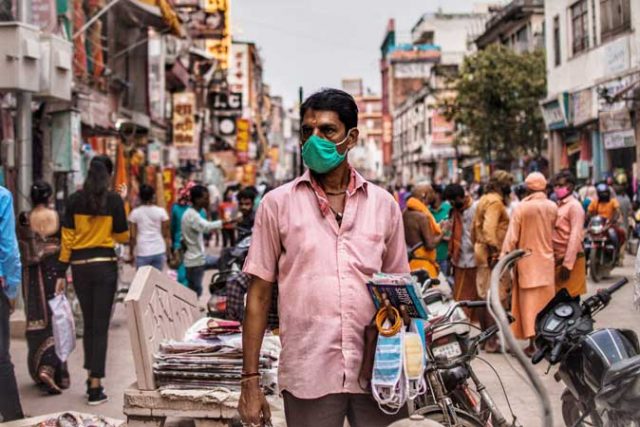
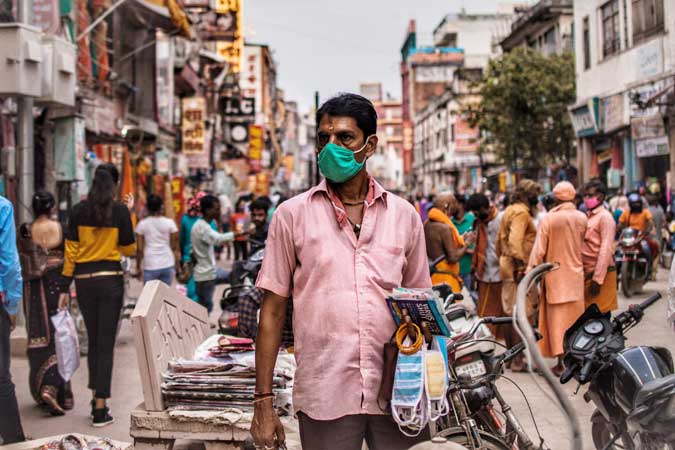
A MAN selling masks in the busy street of Varanasi during the pandemic — SHUBHANGEE VYAS /UNSPLASH

AN INDIAN former hospital worker with no medical education is running a small unlicensed clinic, tending to patients with breathing difficulties and checking their oxygen levels as they lie on cots on the mud floor.

India has been hard hit by a second wave of coronavirus infections that has overwhelmed its health system, even in big cities.

In the countryside, medical facilities are dilapidated and doctors and nurses are few on the ground, meaning many clinics are run by people who don’t have training.

The poor health infrastructure and lack of testing means many patients do not know if they are infected with coronavirus disease 2019 (COVID-19) or just have a cold.

In Parsaul village, about 60 kms (40 miles) from the capital New Delhi, villager Ashok said people in his area were afraid to step out of their houses. He suspects that coronavirus had killed around 15 people nearby in recent days.

Mr. Ashok has come with a patient who had fever to the clinic run by a 52-year-old former hospital assistant who moves from one cot to another to check IV levels. Empty intravenous drips lie piled up under a brick-walled staircase.

“Patients with fever and breathing problems have increased in the last two months,” said the former assistant, who said he had been helping patients at his clinic since 1993 but did not wish to be identified as he feared a backlash from authorities.

“The people from nearby six or seven villages know me personally and trust me.”

Some patients wore face masks lying on cots, while others had their faces covered with clothing.

Bubli, 30, visited the clinic to get treatment for fever.

“No, she doesn’t have COVID, it’s just a fever,” Ms. Bubli’s husband told Reuters. “ “We are scared of COVID, but going out to a big hospital is more dangerous.”

Total infections in the country stood at 26.3 million on Saturday, the second highest in the world after the United States, while the country’s total death toll was 295,525. — Reuters

vivo-ZEISS partnership enhances mobile photography through new vivo X60

Proficiency in looking for visual elements is apparently an essential tool to capture subjects or scenes and turn them into creative images. But along one’s vision, the kind of photography gear would also matter to polish those images with high-quality, amazing details.

Whether you are creating a photograph of a magnificent landscape or merely preserving a happy occurrence, a good and handy camera can picture every moment possible. Enabling improved photography of any spectacular views or memorable experiences, leading smartphone brand vivo works with ZEISS, a world-renowned maker of lenses, to produce the vivo X60.

A flagship smartphone, the vivo X60 is the first-ever innovation of the vivo-ZEISS partnership. Such collaboration takes mobile photography to a new level in terms of night, motion, and portrait photography. Aside from its first-in-smartphone photography features, it also has a stunning design and powerful performance.

Users can practice photography even in dark settings and still look forward to wonderful images at night through the X60’s Extreme Night Vision 2.0. This allows users to produce high-quality low-light shots with artificial intelligence (AI) noise reduction algorithm, an innovation that was previously available only on advanced lenses in professional cameras.

The X60 also improves the experience of capturing events in motion. It utilizes a VIS 5-axis video stabilization technology to generate clear and ultra-HD quality shots of moving subjects.

Another groundbreaking motion photography feature in X60 is the ProSports, which also captures moving objects with a well-defined accuracy and is one of the instant scene modes ready for users to choose from its camera.

More scene modes that can enrich photos in X60 are HDR Super Night Portrait, Ultra-Wide Night Mode, Super Pano, Kids Snapshot, Multi-Style Portrait, Long Exposure Mode, and Super Moon, among others.

Above all, the principal tool that gives the X60 its superior photography capacities is the vivo-ZEISS co-engineered system. The X60 is made up of three rear cameras, which include a 48-megapixel main camera, 13-megapixel macro camera, and a 13-megapixel bokeh camera. And on its front, there is a 32-megapixel camera.

These groundbreaking abilities for photography practice show its best with the assistance of the Qualcomm® Snapdragon™ 870 processor, which assures daily user experience. The X60 also comes with the UFS 3.1 ultrafast flash memory to step up its speed and meet the demands for run time and storage.

To guarantee smooth scrolling and viewing, the X60 contains a 120Hz refresh rate. It also has a 240Hz response rate, which stimulates an ultra-responsive touch screen to optimize user performance for gaming or occupational capacities.

Furthermore, the X60 series has been awarded certifications like HDR10+ for better vibrancy and clarity in its display that leads to rich and immersive visuals.

Also attesting the exceptional quality of X60 is the ZEISS logo embellished on the lens and the ZEISS Vario-Tessar trademark carved under the cameras.

The X60 comes in colors of Midnight Black and Shimmer Blue, finished with a slim and sleek design.

Experience these brilliant photography features and excellent performance of vivo X60, now available in vivo stores nationwide and also on Lazada and Shopee for P34,999. For more information on this new smartphone, visit https://www.vivoglobal.ph/phone/vivo-X60/ or visit vivo Philippines on Facebook, Twitter, and Instagram.

Philippines adds 6,285 COVID-19 cases

PHILIPPINE STAR/ MICHAEL VARCAS

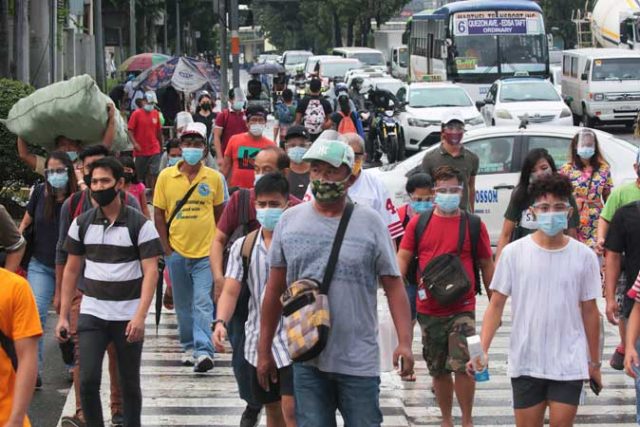
The Department of Health (DoH) reported 6,285 coronavirus infections on Friday, bringing the total to 1.17 million. 

The death toll rose by 141 to 19,763, while recoveries increased by 2,586 to 1.1 million, it said in a bulletin. 

There were 55,531 active cases,  1.4% of which were critical, 93.5% were mild, 2% did not show symptoms, 1.8% were severe and 1.22% were moderate. 

It said 10 duplicates had been removed from the tally, five of which were tagged as recoveries. Seventy-four recoveries were reclassified as deaths, while 19 deaths were reclassified as recoveries. Five laboratories failed to submit data on May 19. 

About 12.1 million Filipinos have been tested for the coronavirus as of May 19, according to DoH’s tracker website. 

The coronavirus has sickened about 165.9 million and killed 3.4 million people worldwide, according to the Worldometers website, citing various sources including data from the World Health Organization. 

About 146.6 million people have recovered, it said. 

Meanwhile, the Health department on Friday opposed a proposal to let people aged 66 years and above who have been vaccinated go out. Only people aged 18 to 65 are allowed outside. 

Health Undersecretary Maria Rosario S. Vergeire told an online briefing there is no guarantee that vaccinated people won’t get infected. She also reminded local governments to follow the priority for vaccination especially involving drugs under a global initiative for equal access. 

She said the vaccines had been provided under specific condition that these will be given to healthcare workers, senior citizens and seriously ill people. 

The Philippines has received 2.5 million doses of the AstraZeneca vaccine and about 193,000 doses of the Pfizer, Inc. vaccine under the facility for equal access. 

Meanwhile, the government would also prioritize athletes competing in the Olympics and Southeast Asian games for vaccines, presidential spokesman Herminio L. Roque, Jr. said. 

He added that an inter-agency task force had approved the proposal of Metro Manila  mayors to allow 30% capacity for religious events. — Vann Marlo M. Villegas 

ADVERTISEMENT
ADVERTISEMENT