

BoP swings to $2.6-B surplus in April

THE COUNTRY’S balance of payments (BoP) position swung to a surplus in April, due to inflows mainly from the bond issuances of the Bureau of the Treasury.
The BoP stood at a surfeit of $2.614 billion in April, bigger by 57% than the $1.666-billion surplus a year earlier and a turnaround from the $73-million deficit in March, data released by the Bangko Sentral ng Pilipinas (BSP) on Wednesday showed.
April’s BoP surplus ended three consecutive months of deficit.
“The BoP surplus in April 2021 was attributed to inflows arising mainly from the proceeds of the National Government’s (NG) ROP (Republic of the Philippines) global and samurai bond issuances, which were deposited with the BSP,” the central bank said in a statement.
The Treasury sold P24.2 billion (¥55 billion) in yen-denominated bonds with a three-year tenor in late March. In late April, the government raised another P122.4 billion (€2.1 billion) through its triple-tranche offering of euro-denominated bonds.
In the first four months of the year, the BoP position remained in a $231-million deficit, albeit narrower than the $1.598-billion gap in the same period of 2020.
The BoP shows a glimpse of the country’s transactions with the rest of the world. A deficit means more funds fled the country, while a surplus show that more money came in.
At its end-April position, the BoP reflects gross international reserves level of $107.71 billion, inching up by 3% from the $104.48 billion as of end-March.
This dollar reserves level is enough to cover 12.3 months of imports of payments and services and primary income. It is also about 7.4 times the country’s short-term external debt based on original maturity and 5.1 times based on residual maturity.
Meanwhile, Asian Institute of Management economist John Paolo R. Rivera said a BoP surplus in the midst of a recession is “somewhat expected.”
“Consumer spending declined because people are only buying essentials given lower purchasing power. Therefore, expenditures on imported products will also decline,” he said in a Viber message.
The Philippine economy remained in a recession in the first quarter, after shrinking by 4.2%.
The central bank projects a BoP surplus of $6.2 billion this year, equivalent to 1.6% of the economy. — Luz Wendy T. Noble
Bayanihan III nears final House approval
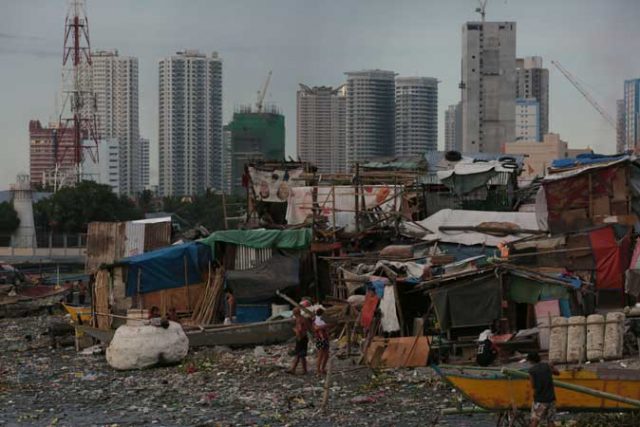
THE HOUSE of Representatives on Tuesday evening approved on second reading the proposed P401-billion economic stimulus measure, which seeks to drive recovery with additional support for pandemic-hit businesses and families.
House Bill No. 9411 or the Bayanihan to Arise as One Act (Bayanihan III) was passed by lawmakers via viva voce voting.
AMBIS-OWA Party-list Rep. Sharon Garin told reporters on Wednesday that there is a rush to pass the third stimulus bill on final reading before Congress’ sine die adjournment on June 4.
“Yesterday we did some…amendments by substitution… Rightfully so, maa-approve siya (the bill will be approved) before we adjourn next week,” she added.
Since it is not certified by Malacañang as urgent, Bayanihan III can only be approved on third and final reading next week. Under the Congress’ rules, a bill can only be passed on third reading three session days after it was approved on second reading.
As of Wednesday, there are 297 members of the House who signed to be the authors of the measure.
Ms. Garin said the stimulus fund’s amount was adjusted to P401 billion from P405.6 billion, to reflect the priority programs.
However, Bayanihan III still lacks a certification from the Treasury that funds are available for its implementation. This is a requirement for special appropriations bills on Section 25 of the 1987 Constitution.
While the Senate and the Executive department are hesitant to support the stimulus measure, Ms. Garin said their concern over funding sources can be further discussed.
“We continue our dialogue with (National Treasurer Rosalia V. de Leon), to (Finance) Secretary (Carlos G. Dominguez III)… we continue. The communication is regular…kahit hindi pa tapos ’yan (even if we are still not finished with the talks) we are in the opinion that we do need this now and we are passing this kasi kailangan talaga natin (because we really need it),” she said.
Lawmakers earlier identified the bill’s potential funding sources such as the realignment of the 2019 and 2020 national budgets; expanding the minimum required remittances of government-owned and -controlled corporations (GOCCs); and giving the President the authority to withdraw capital from overcapitalized GOCCs, among others.
The main feature of Bayanihan III is the “Ayuda (aid) for All” which will provide P2,000 for all Filipinos regardless of social status, given out in two tranches.
“We decided to prioritize ayuda for all… and additional ayuda according to need,” Marikina Representative and the bill’s primary author Stella Luz A. Quimbo said.
Bayanihan III will also provide assistance for workers and businesses affected by the lockdowns; areas affected by disasters; fund pensions of military personnel; and other critical sectors affected by the ongoing crisis. It also includes additional allocations for cooperatives and higher education.
The Philippines remains in a recession, after gross domestic product (GDP) fell by an annual 4.2% in the first quarter of 2021.
The worse-than-expected first-quarter GDP, coupled with the spike in COVID-19 cases and lockdown restrictions in late March to April, prompted the government to slash its growth targets to 6-7% from 6.5-7.5% penciled in last December 2020.
However, this was still an improvement from the record 9.6% contraction in 2020. — GMC
Local airlines seeking simplified travel rules for fully vaccinated people
By Arjay L. Balinbin, Senior Reporter
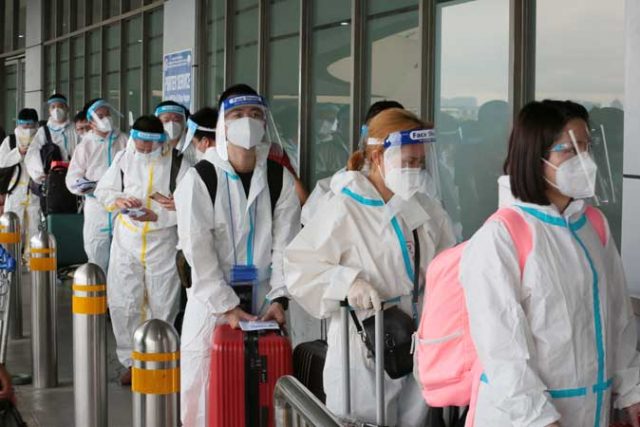
THE AIRLINE and tourism industries are seeking simplified travel guidelines for individuals who have been fully vaccinated against the coronavirus disease 2019 (COVID-19), in order to hasten the recovery of the pandemic-battered sectors.
Incentivizing fully vaccinated customers, which is already being done by some airlines in the United States, is also seen as a strategy to encourage air travel and promote vaccination among Filipinos.
Low-cost carrier Philippines AirAsia, Inc. said in a statement on Tuesday that it is “currently looking at providing incentives for fully vaccinated individuals not only to stir the demand for safe air travel but also to encourage everyone to take the shot.”
Cebu Pacific, operated by Cebu Air, Inc., said the best way to provide incentive is by making the process simpler for passengers.
“Our recent passenger surveys show that people want to travel, but their main concerns are travel requirements and restrictions. If processes were standardized across the industry, then domestic travel will become easier for all,” Candice A. Iyog, Cebu Pacific vice-president for marketing and customer service, told BusinessWorld in a phone message on Wednesday.
She noted that the budget airline has continuously provided low fares throughout the pandemic, including its trademark “piso fares.”
Roberto C.O. Lim, executive director and vice-chairman of the Air Carriers Association of the Philippines, Inc. (ACAP), said a green lane for fully vaccinated tourists being pushed by the Tourism department is a “good initiative to safely open the country to foreign travelers.”
“This has to be accompanied by proper protocols on the ground upon arrival of the vaccinated passengers. If you will subject them to queue, then it will dampen their interest to travel to the Philippines,” Mr. Lim told BusinessWorld in a phone message on Tuesday.
Philippine Airlines (PAL) Gilbert F. Santa Maria said the flag carrier is looking forward to welcoming more travelers from the United States and other countries when arrival protocols for vaccinated passengers are put in place.
“A good number of our passengers flying in from the US have completed their full vaccine doses. We could welcome more travelers from the US and other countries with favorable epidemiological situations, such as Singapore, Australia, Israel and Korea,” he said in a statement.
Philippines AirAsia Spokesperson Steve F. Dailisan said a green lane will encourage leisure travelers who are concerned over the different requirements.
“This will be further reinforced by the implementation of uniform travel requirements through a digital travel pass,” he added.
The Tourism department said that some countries have eased border restrictions and opened up major tourist destinations to fully vaccinated foreign visitors.
“We must keep pace with our neighbors and the rest of the world in slowly reopening our tourist destinations,” Tourism Secretary Bernadette Romulo-Puyat said in a phone message on Tuesday.
Tourism Congress of the Philippines President Jose C. Clemente III said green lanes should be opened in a safe and secure manner.
“Even if the travelers are vaccinated, we have to ensure that the frontliners in their destinations are also vaccinated because vaccinated travelers are still possible virus carriers,” he said.
Transport expert Rene S. Santiago, however, noted that efforts to promote tourism amid an on-going pandemic would be useless if “unscientific” government restrictions remain in place.
Mr. Santiago criticized the 2,000 passengers per day limit at the Ninoy Aquino International Airport. “They impose restrictions based solely on the numbers they picked up from the sky,” he said.
He noted that local airlines can follow the example of US carriers that provide incentives for vaccinated customers.
ACAP’s Mr. Lim suggested that vaccinated passengers should be excluded from the 2,000 daily passenger arrival quota.
“The Philippines should also adopt green lanes for Filipinos by importing internationally accepted systems of another country with its own green lanes, so we also benefit when traveling abroad,” he said.
“In domestic travel, you also need to adopt green lanes between two domestic points. Local government units must cooperate,” Mr. Lim added.
Tourism Congress’ Mr. Clemente said there should be continued efforts to promote tourist destinations to the international market to keep the Philippines in the consciousness of foreign travelers.
“It is working. We are now receiving more inquiries for next year. Travelers from Europe and the United States are really itching to travel,” he said. “The increase has been 20%, as of May, from where we were a year ago.”
“A lot of them want to come in by the first quarter of 2022, but they are being realistic. They said they could be flexible depending on the situation that prevails in the country at the time,” Mr. Clemente added.
Mr. Santiago said airlines, hotels, and travel companies should agree to offer a “lockdown” tourism package.
“The idea is like you are locked down in a resort for 10 days, which is equivalent to a quarantine,” he said.
With the pace of vaccination in the country, local and domestic leisure travels may go back to pre-pandemic levels by 2024, Mr. Santiago noted.
“You are vaccinating 60,000 to 65,000 people a day. They said they can raise it 200,000; but with that, you will still need two to three years,” he said.
PHL’s fiscal reputation among the best — report

THE PHILIPPINE government’s adherence to its fiscal targets over the past 10 years was seen to be among the best across 64 emerging markets, think tank Oxford Economics said.
In a report on Wednesday, Oxford Economics’ fiscal reputation index showed the country posted a score of 5.2 in the past decade, making it the sixth best performer among 28 select emerging economies studied.
If frontier markets were included, the country placed 16th out of 64 economies.
The scores of economies, based on the degree to which they met fiscal targets, were measured on a scale of 1 to 10, with 10 indicating the lowest adherence to fiscal plans.
Overall, Oxford Economics said emerging markets posted a “decent record” of sticking to their fiscal targets in the past decade. Investors gauged governments’ commitments to fiscal plans to see which can be trusted so they can base their actions when their fiscal news arises, it said.
Russia (4.3), Serbia (4.8), Croatia (5), Poland (4.8), and Hungary (5.7) recorded the best fiscal reputation based on adherence to projections from 2010 to 2020, Oxford Economics said. On the other hand, Egypt (6.6), Uruguay (5.9), South Africa (6), Turkey (5.5), and United Arab Emirates (UAE) have the worst fiscal reputation.
The Philippines saw its score improve to 4.9 in 2020 from 7.6 and 7.2 in the preceding two years. The index showed the country was able to stay within its targets well in the earlier years, reporting 5.3 score in 2017, 5 in 2016 and 3.9 in 2015.
From 2012 to 2014, the country practiced greater fiscal prudence with its fiscal reputation index at 3.3%, 3.4%, and 2.8%, respectively.
Data from the national Treasury showed the country’s budget deficit reached 7.63% of gross domestic product (GDP) last year, matching its program for 2020. In 2019, however, the government exceeded its fiscal gap ceiling of 3.2% with a 3.55% deficit-to-GDP ratio.
“An alarming, but still tentative, result for policymakers and markets is that many emerging markets with weak institutions are relatively effective at sticking to fiscal targets,” the think tank said.
It said they saw a negative correlation between fiscal reputation and institutional strength, and almost zero connection between the adherence to fiscal targets and other measures of governance such as political risk, corruption and business environment.
Oxford Economics noted that stronger institutions should be related with more reliable fiscal performance given the expectations of greater transparency.
“Conversely, it’s also plausible that more autocratic regimes are less sensitive to popular opinion and better able to make tough fiscal decisions and resist excessive spending to reach targets. A recent paper has attributed this to shorter time horizons of elected politicians,” it added.
Meanwhile, the report saw positive correlation between the strength of fiscal reputation and measures of sovereign risk, or the risk of governments’ capacity to service debt, across all emerging markets.
Measuring the excess sovereign spreads relative to fiscal strength, the Philippines were among the countries labeled with strong fiscal credibility and low risk premia, along with Indonesia, Kuwait, Colombia and Hungary.
“Investors inclined to place trust in sovereigns with a track record of sticking to fiscal targets now have the opportunity to invest and disinvest in identified outliers, after considering other factors that affect sovereign pricing,” the report said.
The economic team has capped its budget deficit at 9.4% of GDP this year. Over the near term, they expect this to slowly go down to 7.7% in 2022, 6.4% in 2023 and 5.4% in 2024. — Beatrice M. Laforga

Digital technology key to driving PHL recovery

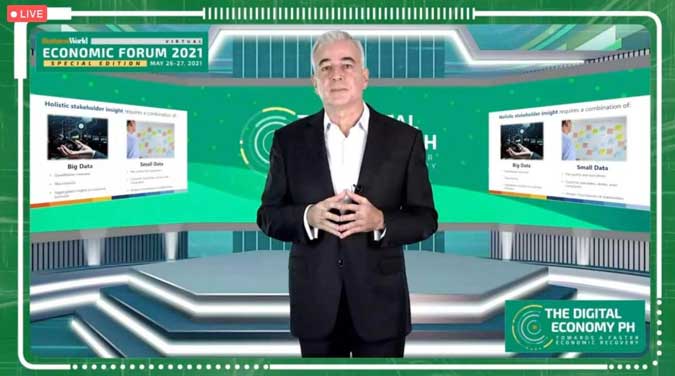


THE PHILIPPINES should continue to develop digital infrastructure in order to drive economic recovery, as the coronavirus disease 2019 (COVID-19) pandemic helped accelerate digital transformation initiatives for both the public and private sector.
“COVID-19 did more for digital transformation than executives did for their organizations,” Ayala Corp. President and Chief Executive Officer Fernando Zobel de Ayala said in a keynote speech at the BusinessWorld Economic Forum on Wednesday. “Organizations should digitally transform themselves to remain relevant.”
Mr. Zobel noted the Philippines’ “persistent challenge” is to make sure there is widespread and equitable access to digital infrastructure and the internet, adding that only 67% of the population has internet access as of January 2021.
“It is, thus, imperative for us to continue expanding our digital infrastructure to some of the densest parts of the country, while adopting more of these impactful technologies,” Mr. Zobel said, noting this will complement the establishment of the National ID system.
 “Digital transformation, which combines technology and a firm understanding of stakeholder needs, is indeed the way forward towards a more resilient, progressive, and equitable country. As we build a digital economy, founded on reliable infrastructure, digital identity and access to services, and airtight cybersecurity, we all have much to contribute,” he added.
Martha Sazon, president and chief executive officer of Mynt — the operator of GCash, said the pandemic highlighted the need for safe and convenient access to digital payments. GCash currently has over 40 million registered users as of April 2021, up from 33 million as of end-2020.
“Because of the change in the conditions that we’ve seen, people are forced to reimagine the business in a way that will service the customers, in a way that will reach the customers even better,” Ms. Sazon said.
This was echoed by Boston Consulting Group Managing Director and Senior Partner Anthony Oundjian, who said that digital transformation, in the first place, does not start with technology.
“I would say it starts with the consumer pain-points and the design of simple solutions to address these pain-points,” Mr. Oundjian said.
BusinessWorld President and CEO Miguel G. Belmonte said digital transformation is “an urgent component in accelerating the country’s recovery and [to] create a stronger and more resilient and sustainable economy.”
The need for easier and more convenient transactions became more pronounced during the lockdown, but not all businesses are able to cope with the sudden need to accelerate digitalization.
“What I find the biggest challenge for a lot would be translating their historical activities to these existing channels,” Miko B. David, president and co-founder of David & Golyat, said. “The options that they should utilize for their executions on digital is not always translating as well.”
As more firms go digital, this highlighted the need for faster decision making to keep pace with the playing field, here and abroad.
“It’s important that in this digital age that we should be mindful of all the types of disruptions out there. It’s important to know what the trends are whether locally and globally,” Ms. Sazon said, adding that GCash is looking into allowing cryptocurrency.
Proper regulations are needed to make sure consumers remain protected under these new digital systems.
“This pandemic has shown all the different fissures or gaps that consumers have experienced,” Mr. David said. “There’s still going to be a lot more improvement that will happen.”
DIGITAL GAP
The rise in electronic payments in the Philippines during the pandemic could be an indicator that the digital divide in the country has narrowed, a World Bank economist said.
“The digital divide may have narrowed in the Philippines, as seen in increase in digital payments, but there is a lot of catching up by aggressively breaking the barriers and through greater participation and investment,” World Bank Senior Economist Kevin C. Chua said at the BusinessWorld Virtual Economic Forum.
Mr. Chua said stakeholders should “make efforts to make tools and connections more available and affordable and support the young and working age population.”
Microsoft Philippines Country General Manager Andres Ortola said at the same forum that addressing the digital divide means “building coalitions, partnerships, and initiatives.”
“The technology is here, but the challenge is to drive innovation pervasively. We should make use of what we have,” he noted.
PayMaya President Shailesh Baidwan said digital payment platforms are enabling businesses, including the small ones, to create more jobs despite the public health crisis.
“By promoting digital payments, we get to promote financial services and realize financial inclusion… The opportunity to include more Filipinos into the financial system is here and now. There’s an opportunity to narrow and break the digital divide with financial solutions,” Mr. Baidwan added.
RESTRICTIONS
Meanwhile, National Economic and Development Authority Undersecretary Rosemarie G. Edillon said the Philippines should loosen up its restrictions to foreign players in the telecommunications industry and make it easier for investors to do business to help the digital sector grow faster.
Fostering competition in telecommunications sector could boost internet connectivity and lower costs, Ms. Edillon said, which will give Filipinos more access to the internet.
“The policies we have now actually restrict entry into the sector that’s why for the longest time, we only have two players. So, we want to come up with this institutional reform so that we were able to bring in more players. After that, you address all these regulatory barriers, so many permits that they need to get just to pull up a sell-side,” she said.
The NEDA has been pushing Congress to pass amendments to the Foreign Investments Act, the Public Service Act and the Retail Trade Liberalization, which would ease barriers to the entry of foreign investors.
The country is suffering from a digital divide with only 17.7% of Filipino households having their own internet access at home, and less than a quarter having communal cellphones and computers, based on the 2019 National Information and Communications Technology Household survey.
For the next year’s survey, Ms. Edillon said they expect improvements after more digital infrastructure was built and regulatory processes streamlined.
“We also want to find out how this is affecting the rest of the economy as well, with respect to the forward and backward linkages, because we want a dynamic economy still. We want this digital economy to be situated alongside all the other aspects of the economy so that we have that nice, dynamic economic activity happening,” she added. — Keren Concepcion G. Valmonte, Beatrice M. Laforga and Arjay L. Balinbin
Monde Nissin: IPO multiple times oversubscribed
MONDE Nissin Corp. said its initial public offering (IPO) of 3.6 billion common shares with an overallotment option of 540 million common shares saw “overwhelming interest” from investors at home and abroad, “resulting in an international and domestic book building process that was multiple times oversubscribed.”
“The extraordinary level of interest that we received from a broad range of international and domestic investors is a testament to the world-class company that we have built and the significant growth opportunities that lie ahead,” Monde Nissin Chief Executive Officer Henry Soesanto said in a statement on Wednesday.
His statement comes a week after the company announced that it had secured 11 long-term global cornerstone investors, namely: AIA Investment Management Private Ltd., Avanda Investment Management Pte. Ltd., Eastspring Investments (Singapore) Ltd., FIL Investment Management (Hong Kong) Ltd., GIC Private Ltd., Goldman Sachs Asset Management (Singapore) Pte. Ltd., M&G Investment Management Ltd., NS Partners Ltd., RWC Asset Advisors (US) LLC, Stichting Depositary APG Emerging Markets Equity Pool, and The Capital Group Funds.
With shares priced at P13.50 apiece, Monde Nissin expects to generate P55.9 billion from its IPO. The company aims to use the proceeds from the primary offer to finance its capital expenditures, the redemption of the Arran Convertible Note, and to pay for bank loans.
The Lucky! Me noodles manufacturer said it aims to further develop its food products.
“We intend to stay ahead of consumer demands through innovation and investment in technology to provide healthier and more delicious food,” Mr. Soesanto said.
“Our Quorn and Asia-Pacific branded food and beverage businesses are a powerful combination to advance our mission of food safety and food security,” he added.
Shares in Monde Nissin will be listed under the ticker symbol “MONDE” at the Philippine Stock Exchange and is expected to begin trading on June 1. — Keren Concepcion G. Valmonte
First Gen unit borrows $308 million to pay debts

A SUBSIDIARY of First Gen Corp. has secured $308 million, or around P14.82 billion, through six-year term loan facilities with local and foreign banks to repay its existing debt, its parent firm said on Wednesday.
FGP Corp., which owns and operates the 500-megawatt (MW) San Lorenzo natural gas-fired combined cycle plant in Batangas City, borrowed the amount from Bank of the Philippine Islands, BDO Unibank, Inc., Philippine National Bank and Sumitomo Mitsui Banking Corp.-Singapore Branch.
“The proceeds from the initial drawdown on the loans will be primarily used to repay the amounts due on FGP’s existing debt of approximately $164 million,” First Gen said in a regulatory filing.
The firm added that the wholly owned unit plans to draw on the balance of the loan in the next 12 months to pay its upcoming projects in advance.
First Gen President and Chief Operating Officer Francis Giles B. Puno said in a statement that the combined debt facilities “is a testimony to the strong support and continuing confidence of our lenders in First Gen’s natural-gas business.”
“We are honored and grateful that our lenders continue to be supportive of our endeavors to deliver clean and cost-efficient power to Filipinos,” he added.
Mr. Puno said the firm is working hard to build the Philippines’ first interim offshore liquified natural gas (LNG) terminal, and more natural gas plants. At present, the company’s natural gas portfolio stands at 2,017 MW.
The Lopez-led firm has 3,495 MW of installed capacity in its portfolio, accounting for 19% of the country’s gross generation.
First Gen earlier said that it was allotting $530 million as capital expenditures this year, with some $120 million going to its planned offshore LNG terminal, which will be built in Batangas.
It previously reported an attributable net income to its parent firm of P4.01 billion ($84 million) in the first quarter, 29% higher year on year, on the back of higher recurring earnings from its natural gas and renewable energy portfolios.
Shares in First Gen at the local bourse went down by 0.34% or 10 centavos to finish at P29.40 apiece on Wednesday. — Angelica Y. Yang
Vista Land subsidiary adds $50M to senior guaranteed notes due 2027

VISTA Land & Lifescapes, Inc. on Wednesday said its subsidiary VLL International, Inc. has topped its senior guaranteed notes with another issuance of $50 million through a private placement.
In a regulatory filing, the company said this is pursuant to VLL International’s $2-billion medium-term note program.
“The new notes, upon issue, will be consolidated and form a single series with the US$370,000,000 7.25% Senior Guaranteed Notes Due 2027, and take the total issuance size of the series to US$420,000,000,” Vista Land said.
Proceeds from the notes issue will be funding existing debt, the purchase, development, construction, or for the improvement of assets, property, or equipment, and general corporate purposes.
VLL International has a subscription agreement with managers DBS Bank Ltd. and HSBC for the offer, sale, and issuance of the notes.
The notes are guaranteed by the company and subsidiaries Brittany Corp., Crown Asia Properties, Inc., Camella Homes, Inc., Communities Philippines, Inc., and Vista Residences, Inc.
On Wednesday, shares of Vista Land at the stock market improved by 2.82% or 10 centavos to close at P3.64 each. — Keren Concepcion G. Valmonte
San Miguel assures enough supply of hotdogs, luncheon meat

SAN MIGUEL Corp. (SMC) has assured that there is no shortage of products such as hotdogs and luncheon meat amid supply concerns raised by some groups due to higher meat material prices and import restrictions.
SMC President Ramon S. Ang said in a statement on Wednesday that the products of its food unit, San Miguel Foods, such as refrigerated meats and canned products will remain available in supermarket shelves and other retail outlets.
“Since the start of the coronavirus disease 2019 (COVID-19) pandemic, our food business has strived to make our supply chains more agile and resilient. As a result, we have expanded our raw material supply sources, and have also increased our flexibility in terms of production,” Mr. Ang said.
According to SMC, San Miguel Foods is not only one of the largest local producers of poultry and pork but is also a major importer of meat materials, using around 100,000 metric tons (MT) per year.
The company said its supply of raw materials was also affected by price hikes, tight supply, and import restrictions due to the pandemic, African Swine Fever, and avian influenza (bird flu).
However, SMC said that with quick adjustments in its production and anticipation of global trends, it can ensure the availability of its products for consumers.
“When you have enough meat and packaging materials, along with ample manufacturing capacity, you can ensure continuous supply. As we have done throughout the period of this pandemic, we can continue to provide for the needs of our consumers despite the present challenges,” Mr. Ang said.
Further, Mr. Ang said SMC’s strategy is focused on its integrated value chain, which allowed the company to use more of its internal raw material sources for value added meat production.
“Food security is always one of our top priorities. With our consumers’ needs always top of mind, we want to assure everyone that they can continue to enjoy their hotdogs, luncheon meat, chicken nuggets, bacon, and corned beef,” Mr. Ang said.
Sought for comment, Philippine Association of Meat Processors Inc. (PAMPI) Vice-President Jerome D. Ong said in a mobile phone message that the price of imported mechanically deboned meat (MDM) of chicken used in processed meat products has increased.
“The price used to be $0.50-0.60 per kilogram up to third quarter last year, but it is now more than $1.50 per kilogram and increasing further,” said Mr. Ong said, who is also president of CDO Foodsphere, Inc.
As a result, he said the retail prices of processed meats sold in local markets might increase by 20%.
“With supplies severely curtailed as a result of bird flu related bans, prices from the few remaining sources have really skyrocketed,” he added.
“But because of competition, [the increase] will be gradual, and barely enough to cover the impact of higher material costs. At the moment, the only thing that can be done to avert price increases and product shortage is for supply of major raw materials, particularly MDM, to ease,” he added. — Revin Mikhael D. Ochave