Home Blog Page 8017

Holcim Philippines to fast-track product, digital platform development

0
Holcim Philippines to fast-track product, digital platform development
EN.WIKIPEDIA.ORG

Listed Holcim Philippines, Inc. said the company will expedite the rollout of its new building products and its e-commerce platforms as the construction industry is seen to play a key role in economic recovery.  

The company aims to beef up its product line, which includes infrastructure cement Holcim Solido, masonry product Holcim Wallright, and water repellent cement Holcim Aqua X.   

 “We have also accelerated our commercial digitalization with Easybuild, E-Konekta, and Lead Retail, improving our services and relationships with our customers despite the challenges of the pandemic,” Horia Ciprian Adrian said.   

“I am excited to continue driving these innovations and confident that we have what it takes to succeeds,” Mr. Adrian added.  

Holcim Philippines closed the first quarter with P908.92 million in net attributable profit, 81% higher than the P501.31 million generated in the same period last year.   

The company will also strengthen its cost disciplinary measures and operational efficiencies, as well as maintain its focus on health and safety.  

It added that it is committed to using natural resources more efficiently and reducing its carbon emissions as the cement industry “has a key role in meeting the global climate targets.”   

Holcim Philippines said it will also work on creating a sustainable waste management solution.   

On Friday, shares of Holcim Philippines at the stock market improved by 5.94% to close at P6.24 each. — Keren Concepcion G. Valmonte 

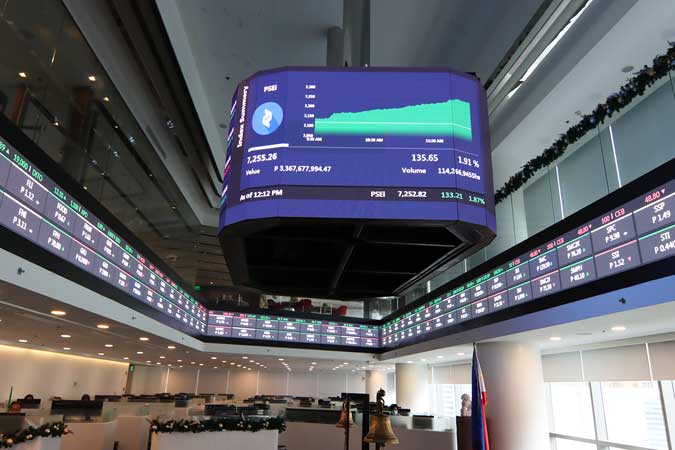
PSEi climbs on rating action, improved economic outlook

0
PSEi climbs on rating action, improved economic outlook
COURTESY OF PHILIPPINE STOCK EXCHANGE, INC.

PHILIPPINE SHARES closed the week in the green as sentiment was boosted by S&P Global Ratings’ affirmation of the country’s credit rating on strong recovery prospects. 

The benchmark Philippine Stock Exchange index (PSEi) went up by 9.37 points or 0.14% to close at 6,674.51 on Friday, while the broader all shares index climbed by 12.56 points or 0.31% to 4,047.48.  

“The market inched up a few points on the last trading day of the week as participants took positively the S&P’s credit rating for the country, as well as its outlook for the Philippine economy,” Timson Securities, Inc. Trader Darren Blaine T. Pangan said in a Viber message on Friday.   

S&P on Thursday kept its “BBB+” rating on the Philippines and assigned a “stable” outlook on expectations of a “healthy” economic recovery, which will help improve the country’s fiscal standing that has weakened because of the coronavirus crisis. 

The current “BBB+” sovereign rating is a notch away from the “A”-level grade targeted by the government, while a “stable” outlook means the rating is likely to be maintained in the next six months to two years. 

S&P also maintained its A-2 short-term credit rating for the Philippines, while the outlook on long-term rating is still stable. 

The debt watcher last affirmed its credit rating for the country in May 2020 with the same “stable” outlook. 

“Investors may have also welcomed the DTI’s (Department of Trade and Industry) statement that they see the manufacturing sector recovering this year,” Mr. Pangan added. “It may have helped that foreigners have once again turned net buyers after 10 days of being net sellers in the local market.”  

Trade Secretary Ramon M. Lopez said essential businesses such as food, pharmaceuticals, and consumer firms are expected to boost the manufacturing sector this year.  

Foreigners logged net purchases worth P917.26 million on Friday, a turnaround from the P889.04 million in net outflows seen on Thursday.  

Meanwhile, Philstocks Financial, Inc. Research Associate Claire T. Alviar said the index went up on anticipation of eased quarantine restrictions and bargain hunting of “battered stocks in the index…due to the effect of MSCI rebalancing.”  

“We see conviction in the market,” Ms. Alviar adds, saying the market’s value turnover on Friday was stronger than the month-to-date average.   

Value turnover declined to P12.41 billion with 1.67 billion shares switching hands on Friday from the P23.81 billion with 2.29 billion issues traded on the previous trading day.  

Majority of sectoral indices posted gains except for holding firms, which lost 101.4 points or 1.48% to end at 6,728.41.  

Meanwhile, services improved by 28.66 points or 1.93% to close at 1,510.84; property went up by 34.48 points or 1.06% to 3,273.72; financials gained 12.15 points or 0.86% to 1,417.63; industrials climbed 65.75 points or 0.73% to finish at 8,989.64; and mining and oil gained 21.75 points or 0.23% to finish at 9,416.64.  

Advancers outnumbered decliners, 119 against 69, while 66 names closed unchanged. — K.C.G. Valmonte 

ERC sets modified feed in tariff rates for ROR hydro and biomass

0
ERC sets modified feed in tariff rates for ROR hydro and biomass

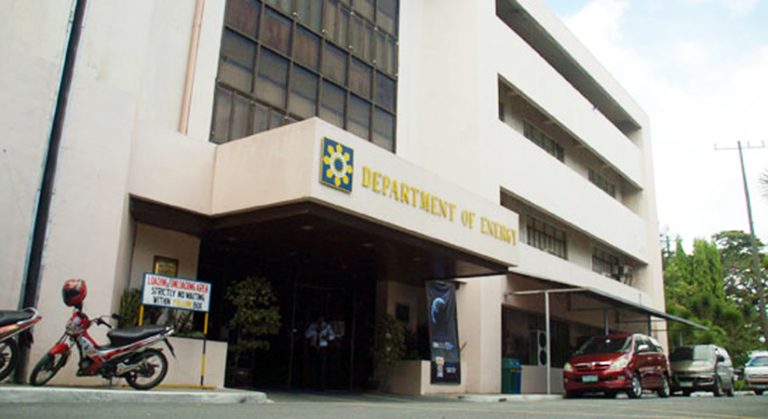
THE ENERGY Regulatory Commission (ERC) has set the modified feed-in-tariff (FiT 2) rates of run-of-river (ROR) hydro and biomass projects at P5.8705 per kilowatt-hour (kWh) and P6.19/kWh, respectively, according to a decision posted on its website. 

The revised rates will cover the period of Jan. 1, 2018 to Dec. 31, 2019. 

The ruling dated Nov. 23 detailed the regulator’s computations of the FiT 2, taking into consideration technical, operating, economic and tax assumptions, among others. 

The FiT is a fixed subsidy paid by the government to RE developers to partially offset the risks in taking on new technology. The tariff comes from the FiT-Allowance, a uniform charge billed to on-grid customers. The collections are remitted to the National Transmissions Company, which will then distribute it to developers participating in the FiT system. 

The decision, which was signed by ERC Chairperson and Chief Executive Officer Agnes VST Devanadera and four commissioners, comes as a response to the National Renewable Energy Board’s (NREB) proposal for a modified FiT rate for ROR hydro at P5.8705/kWh. The NREB also asked to retain the digressed FiT for biomass projects at P6.596/kWh. 

“As of Oct. 15, 2020, the subscription for biomass has reached 257.045 MW, which represents an oversubscription of 7.045 MW of (the) installation target. This is in contrast to the situation of ROR Hydro, the installation target of which remains to be fully subscribed,” the ERC said. 

Last month, Energy Secretary Alfonso G. Cusi described the FiT scheme as unaffordable for the Philippines. 

“With regard to the FiT, tinigil na po natin iyan dahil talaga pong mali iyan (we stopped it because it is wrong). That is robbing the consumers. As a developing country, we cannot afford to be giving FiT or subsidies para po dun sa mga bagong (for the new) technologies that are being introduced,” Mr. Cusi earlier said at a Joint Congressional Energy Commission hearing held on April 27. — A.Y. Yang 

DoE fails to sell 18 geothermal and hydro projects in competitive bidding

0
DoE fails to sell 18 geothermal and hydro projects in competitive bidding
PHILSTAR FILE PHOTO

THE THIRD ROUND of the Department of Energy’s (DoE) open and competitive selection process (OCSP3) was unsuccessful as firms did not bid for 18 geothermal and hydropower projects in pre-determined areas (PDA), according to an advisory posted on the department’s website on Friday. 

Two geothermal and eight hydropower PDAs did not receive any bid applications. These were the geothermal projects in Itogon and Maricaban island, and the hydro projects in the east, middle west and upper west tributaries of Aklan River; the Vera Falls, Palali, Coyaoyao (upper cascade), Dapnan and Balintingon. 

Meanwhile, eight PDAs received applications that were disqualified because the bidders did not submit the required documents. These were plants A and C of Amlan; the upper and lower cascade of the Hilabangan; the upper and lower cascade of the Maninila; Tibiao; and middle cascade of the Sibalom. 

“Pursuant to…the OCSP3 guidelines, the OCSP, with respect to the foregoing PDAs, is declared a failure,” the DoE said in an advisory signed by Secretary Alfonso G. Cusi. 

The PDAs are now open for direct applications which may be submitted to the department. 

The OCSP3 opened up a total of 22 PDAs for bidders. However, in its advisory, the DoE did not give updates on the status of the Daklan, Puting Lupa and Mt. Labo geothermal projects, and the Dalanas hydro project. 

The OCSP3 allowed for full foreign ownership of large-scale geothermal projects including Daklan, Puting Lupa and Mt. Labo, which had a total potential capacity of 74 megawatts, DoE Renewable Energy Management Bureau Director Mylene C. Capongcol earlier said. — A.Y. Yang 

Senators file resolution to address PCA registration concerns

0
Senators file resolution to address PCA registration concerns
PHILSTAR

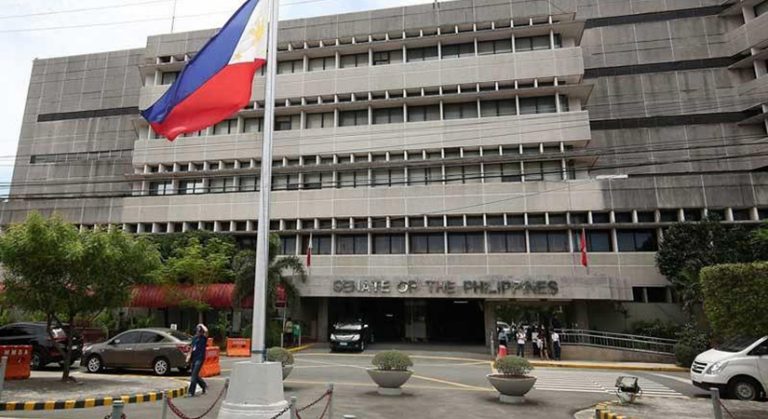
SENATORS have filed a resolution to ensure coconut farmers would benefit from coco levy funds and assets with two weeks left for them to be listed in the Philippine Coconut Authority’s registry. 

Senators Francis Pancratius N. Pangilinan and Risa N. Hontiveros-Baraquel filed Resolution No. 736, which calls for an inquiry into the status of the registration of some 3.5 million coconut farmers in the country who are supposed to benefit from Republic Act No. 11524 or the Coconut Farmers and Industry Trust Fund Act.  

President Rodrigo R. Duterte signed the law in February which lets poor coconut farmers benefit from taxes collected from them decades ago, now worth about P100 billion.  

In a joint statement, the two senators said over a million coconut farmers are likely not yet registered under the National Coconut Farmers Registry System. 

They said farmers might be facing barriers to registering, such as “various barangay certifications, with landowners allegedly barring the farmers from acquiring the needed documentation.”  

Citing the PCA’s website, the minority senators said as of Jan. 7, 2019, only about 2.4 million of the 3.5 million coconut farmers and workers nationwide were registered for the program.  

Mr. Pangilinan earlier asked PCA administrator Benjamin R. Madrigal Jr., to give updates on the status of the registry, the gaps and issues in the registration process, and actions being taken by the agency to address various concerns regarding the law’s implementation. — K.A.T. Atienza 

BSP fully awards 28-day bills

0
BSP fully awards 28-day bills

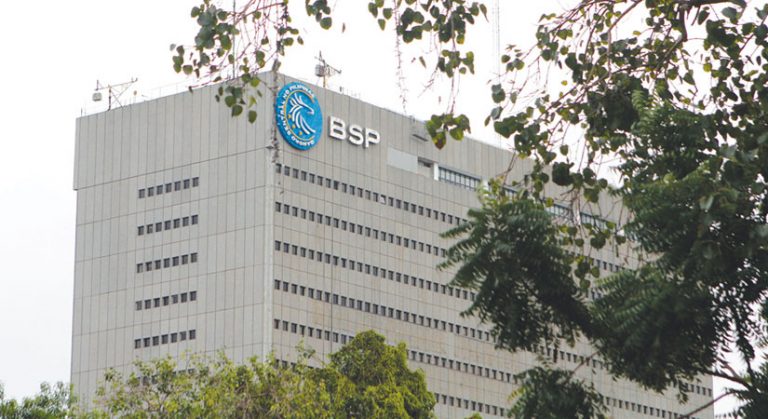
THE CENTRAL BANK has raised P100 billion as planned from its auction of short-term debt papers on Friday.  

The Bangko Sentral ng Pilipinas (BSP) fully awarded the 28-day debt it offered on Friday as bids reached P152.1 billion, higher than the P135.1 billion in bids seen at last week’s auction.   

The bills fetched an average rate of 1.7704%, down marginally from 1.7746% previously. Banks asked for yields ranging from 1.75% to 1.78%, a slightly lower band compare to the 1.7525% to 1.79% margin seen last week. 

The central bank uses its short-term bills and term deposit facility to mop up excess liquidity in the system and guide short-term interest rates.   

“The results of the BSP bill auction continue to reflect normal market conditions amid sustained ample liquidity in the financial system, BSP Deputy Governor Francisco G. Dakila, Jr. said in a statement. 

“Looking ahead, the BSP’s monetary operations will remain guided by its assessment of the latest liquidity conditions and market developments,” Mr. Dakila said.  

Meanwhile, easing inflation expectations and S&P Global Ratings’ move to maintain the Philippines’ current sovereign credit rating may have caused the yield on the BSP bills to drop, said Michael L. Ricafort, chief economist at Rizal Commercial Banking Corp.  

Mr. Ricafort said inflation could slow due to the “temporary reduction in pork and rice import tariffs.” 

President Rodrigo R. Duterte earlier this month approved the recommendation of his economic managers to temporarily adjust tariffs on imported rice and pork products for a year. 

Under Executive Order (EO) No. 135, the President cut the tariff rates for rice to 35% for one year, from from 40% in-quota volume and 50% out-quota volume. 

Under EO No. 134, the tariff rates for pork products will be at 10% for three months under the current minimum access volume and 20% outside the quota for the first three months. The tariffs will be at 15% for in-quota and 25% for out-quota pork imports from the fourth to 12th month. 

Headline inflation was unchanged at 4.5% in April after the increase in food prices slowed. The central bank aims to keep inflation within 2-4% annually until 2024.  

Meanwhile, S&P on Thursday kept its “BBB+” rating on the Philippines and assigned a “stable” outlook on expectations of a “healthy” economic recovery, which will help improve the country’s fiscal standing that has weakened because of the coronavirus crisis. 

The current “BBB+” sovereign rating is a notch away from the “A”-level grade targeted by the government, while a “stable” outlook means the rating is likely to be maintained in the next six months to two years. 

S&P also maintained its A-2 short-term credit rating for the Philippines, while the outlook on long-term rating is still stable. 

The debt watcher last affirmed its credit rating for the country in May 2020 with the same “stable” outlook. 

Mr. Ricafort added that developments in the government’s coronavirus disease 2019 (COVID-19) vaccination drive also affected market sentiment. 

The government had initially set a target of 70 million vaccinated Filipinos by this year to achieve herd immunity, but due to global supply issues, the goal has since been refocused based on available resources. It now aims to inoculate just 50% to 60% of Filipinos against COVID-19 versus the previous target of 75% to 80%. — IBC 

Peso rises as S&P affirms PHL credit rating

0
Peso rises as S&P affirms PHL credit rating
BW FILE PHOTO

THE PESO continued to climb against the dollar on Friday after S&P Global Ratings affirmed its “BBB+” rating for the Philippines on expectations that the economy would rebound from the coronavirus pandemic’s impact. 

The local unit closed at P47.80 versus the dollar on Friday, strengthening by 18.5 centavos from Thursday’s finish of P47.985, data from the Bankers Association of the Philippines’ website showed.  

Week on week, the peso also rose from its P47.945 close on May 21.   

The peso opened Friday’s session stronger at P47.97 against the dollar. It dropped to as low as P47.98, while its intraday high was at P47.777 versus the greenback. 

Dollars traded went down $1.056 billion on Friday from the $1.089 billion seen on Thursday.  

“The peso continued to appreciate after the latest affirmation of the Philippine credit rating by S&P for the second straight year despite the pandemic,” Rizal Commercial Banking Corp. (RCBC) Chief Economist Michael L. Ricafort said in a text message. 

This “would also help support international investor and creditor sentiment in the Philippines in terms of more international investment inflows into the country and more lending/credit for the country at much lower cost and at better terms largely due to the relatively favorable credit rating developments recently,” Mr. Ricafort added. 

S&P on Thursday kept its “BBB+” rating on the Philippines and assigned a “stable” outlook on expectations of a “healthy” economic recovery, which will help improve the country’s fiscal standing that has weakened because of the coronavirus crisis. 

The current “BBB+” sovereign rating is a notch away from the “A”-level grade targeted by the government, while a “stable” outlook means the rating is likely to be maintained in the next six months to two years. 

S&P also maintained its A-2 short-term credit rating for the Philippines, while the outlook on long-term rating is still stable. 

The debt watcher last affirmed its credit rating for the country in May 2020 with the same “stable” outlook. — IBC 

Malaysian volunteer undertakers struggle to cope as COVID cases surge

0
Malaysian volunteer undertakers struggle to cope as COVID cases surge
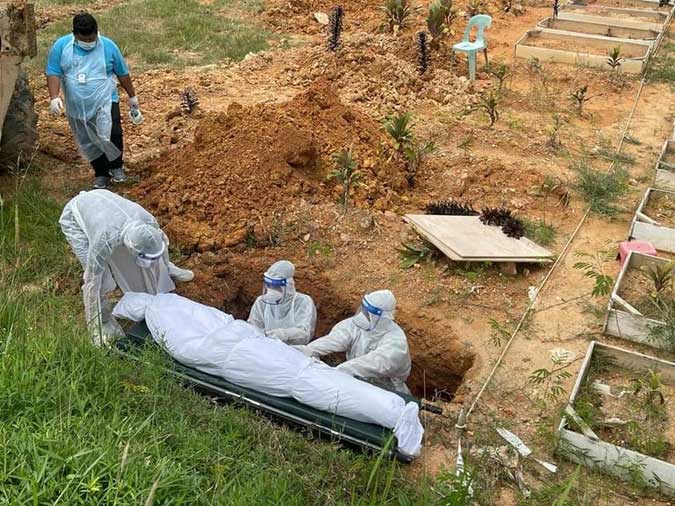
Image via Skuad Pengurusan Jenazah (Malaysian Funeral Management Squad)/Facebook

KUALA LUMPUR  Malaysian volunteers, who help to give virus victims a Muslim burial, say they are being stretched like never before, as the Southeast Asian country struggles to cope with its worst coronavirus disease 2019 (COVID-19) outbreak since the start of the pandemic. 

Dressed in full protective gear, the Malaysian Funeral Management Squad is usually called in by hospitals to help families to pay their last respects in a safe way. 

Muhammad Rafieudin Zainal Rasid, a religious leader who heads the nationwide volunteer team, has become known as the cleric undertaker. He said the volunteers were currently handling nearly 30 times more bodies than they did last year. 

The volunteer team has grown in size to more than 2,000 members, but Muhammad Rafieudin said they are struggling to keep up. 

Before this, it was about one to three cases per month, but now we are managing up to two to three cases a day, he said, referring to just one team in the district of Kuala Lumpur where he is based. 

The volunteers go from the hospital to the morgue to prepare the bodies for burial and also perform Muslim prayers at the cemetery, sometimes joined by family members who are also given full protective gear. 

But as the number of deaths from the virus increases in the Muslim-majority country, it is sometimes hard to bury the body within 24 hours as is typical under Islam. 

If there are more than 10 cases today at the same cemetery, it might take two to three (days) to wrap everything up, he said. 

Malaysia on Thursday reported 7,857 new coronavirus cases, the third straight day of record infections and 59 deaths. 

While its overall caseload is far lower than some neighbors, its ratio of infections to population, at more than 16,000 per million, is Southeast Asias highest, public data shows. 

We are worried that the risk will be more dangerous for all of us who are exposed since we are handling the bodies, said Muhammad Rafieudin.  Ebrahim Harris/Reuters 

Globe-powered ISDApp to keep 300 fisherfolks in Dingalan, Aurora safe at sea

0
Globe-powered ISDApp to keep 300 fisherfolks in Dingalan, Aurora safe at sea
Dingalan Mayor Shierwin Taay

Three hundred fisherfolks in Dingalan, Aurora will soon be able to properly monitor weather conditions for safe sailing, especially during the typhoon season as ISDApp launches in their coastal community this May.

ISDApp was developed by iNON IT Solutions and is powered by Globe, in partnership with the National Fisheries Research and Development Institute (NFRDI) and the Bureau of Fisheries and Aquatic Resources (BFAR). It was designed to improve fishermen’s understanding of the environment they work in.

“The ISDApp is an effective way to share weather forecasts with fisherfolk to improve fishing safety. It will serve as an early warning system so that our fisherfolk can conduct weather self-monitoring before making the decision whether or not they will continue with their fishing activities for the day,” said Wilfredo Cruz, BFAR regional director.

The app converts collected localized weather data into simplified weather forecasts and sends them to the registered mobile numbers of fisherfolks. Since it uses text messaging, fishermen can receive timely weather alerts even without a smartphone. This will help them decide whether or not to set sail and take the necessary precautions.

“This launching is part of the commitment of the Institute to scale up the project and transfer technologies to more coastal communities in the country, particularly in Dingalan where fishing is considered as one primary source of living. Moreover, equal access to information is more crucial than ever, especially in times of crisis,” said Dr. Lilian C. Garcia, CESO V, NFRDI acting executive director.

ISDApp was first launched in Sariaya, Quezon in January this year. Its success prompted the proponents to expand the service to Dingalan given the high typhoon incidence in the province. Aurora has a shoreline of 45 kilometers, facing the Pacific Ocean with fishing as its secondary means of livelihood next to farming.

“Our fishermen are among the most hardworking citizens of our nation. As they sail in rough seas for a living, we at iNON IT Solutions aim to support their livelihood by providing them with the latest weather information with ISDApp. Thanks to Globe, more and more fisherfolks can now use ISDApp for their safety,” said Jeddah Legaspi, iNON co-founder.

Dingalan fisherfolk eager to start training on ISDApp use

The initiative will cover three coastal barangays in Dingalan, namely: Brgy. Aplaya, Brgy. Butas na Bato, and Brgy. Paltic. iNON has already conducted the training of the local government unit (LGU) on the use of the app in collaboration with the municipal government headed by Mayor Shierwin H. Taay and the Municipal Agriculture Office.

“Today’s weather is unpredictable and rapidly changing. Particularly in our small community, where fishing is the main source of income. Before sailing, fishermen need to be able to predict a solid weather forecast. This Globe-powered application is simple, inexpensive, helpful, and extremely beneficial to many fishermen,” said Dingalan Mayor Shierwin Taay.

The fisherfolk community leaders will also be trained on how to subscribe to daily advisories. They will work closely with the LGU and will be instrumental in ensuring all targeted fishermen are onboarded for the initiative. In the coming weeks, the NFRDI also intends to equip the fisherfolks of Dingalan with mobile phones to help them safely navigate seas. 100 mobile phones will be distributed in a separate ceremonial activity that will be complemented by load support from Globe.

“Technology can be a great partner to keep our fisherfolks safe. We are aware that in some communities, access to information and resources may be limited. This is why ISDApp was made as simple as possible so that alerts can reach those people who continue to use low-end phones,” said Yoly Crisanto, Globe chief sustainability officer and SVP for Corporate Communications.

Globe supports the United Nations Sustainable Development Goals (UN SDG), specifically UN SDG No. 9 and UN SDG No. 11, which emphasize the importance of fostering innovation and building sustainable cities and communities. Globe is committed to upholding the 10 United Nations Global Compact principles and 10 UN SDGs.

To know more about Globe’s sustainability efforts, visit https://www.globe.com.ph/about-us/sustainability.html#gref.

Syria’s Assad wins 4th term with 95% of vote, in election the West calls fraudulent

0
Syria’s Assad wins 4th term with 95% of vote, in election the West calls fraudulent

BEIRUT  Syrian President Bashar al-Assad won a fourth term in office with 95.1% of the votes in an election that will extend his rule over a country ruined by war but which opponents and the West say was marked by fraud. 

Mr. Assads government says the election on Wednesday shows Syria is functioning normally despite  

the decade-old conflict, which has killed hundreds of thousands of people and driven 11 million people  about half the population  from their homes. 

Head of parliament Hammouda Sabbagh announced the results at a news conference on Thursday, saying voter turnout was around 78%, with more than 14 million Syrians taking part. 

The election went ahead despite a United Nationsled peace process that had called for voting under international supervision that would help pave the way for a new constitution and a political settlement. 

The foreign ministers of France, Germany, Italy, Britain, and the United States said in a statement criticizing Mr. Assad ahead of the election that the vote would not be free or fair. Turkey, an Assad adversary, has also said the election was illegitimate. 

The win delivers Mr. Assad, 55, seven more years in power and lengthens his familys rule to nearly six decades. His father, Hafez al-Assad, led Syria for 30 years until his death in 2000. 

Mr. Assads years as president have been defined by the conflict that began in 2011 with peaceful protests before spiraling into a multi-sided conflict that has fractured the Middle Eastern country and drawn in foreign friends and enemies. 

Thank you to all Syrians for their high sense of nationalism and their notable participation. … For the future of Syrias children and its youth, lets start from tomorrow our campaign of work to build hope and build Syria, Mr. Assad wrote on his campaigns Facebook page. 

Mr. Assads biggest challenge, now that he has regained control of around 70% of the country, will be an economy in decline. 

Tightening US sanctions, neighboring Lebanons financial collapse, the coronavirus disease 2019 (COVID-19) pandemic hitting remittances from Syrians abroad and the inability of allies Russia and Iran to provide enough relief, mean prospects for recovery look poor. 

Rallies with thousands of people waving Syrian flags and holding pictures of Mr. Assad while singing and dancing took place all day Thursday in celebration of the election. 

Officials have told Reuters privately that authorities organized the large rallies in recent days to encourage voting, and the security apparatus that underpins Assad’s Alawite minority-dominated rule had instructed state employees to vote. 

The vote was boycotted by the US-backed Kurdish-led forces who administer an autonomous oil-rich region in the northeast and in northwestern Idlib region, the last existing rebel enclave, where people denounced the election in large demonstrations on Wednesday. 

Mr. Assad was running against two obscure candidates, former deputy Cabinet minister Abdallah Saloum Abdallah and Mahmoud Ahmed Marei, head of a small, officially sanctioned opposition party. 

Mr. Marei got 3.3% of the vote, while Mr. Saloum received 1.5%, Mr. Sabbagh said. — Reuters 

Expat say thanks to their bank heroes

0

Lives would be more stressful, difficult, inconvenient, and less secure if not for Filipino frontliners’ commitment to their duties as we all struggle with the pandemic. These include bank employees who help clients access cash for their basic needs.

From Korea with Love

Sangsik Shim of Daelim Philippines

Sangsik Shim of Daelim Philippines is happy that even during the strictest periods of the Enhanced Community Quarantine his bank, BDO, was able to fulfill his company’s needs.

Mr. Shim appreciates that his bank has a dedicated Korean Desk staffed by Filipinos who are knowledgeable about Korean culture and even speak the language. “BDO knows how Koreans handle businesses, and for that, we’re lucky. Since then, Daelim has had short-term loans with BDO to fund our business operations. It also has been very easy to get credit lines from them because they know and support our company’s plan,” said Mr. Shim.

“We always want our partners to respond quickly, so thankfully, that’s how BDO has been so far. My company and also my own experience with BDO strengthened my trust in the bank. They continue to prove that even in good times when our business needed funding, and in the bad times when there are unexpected events, we can rely on them.”

Mr. Shim was impressed at how quickly BDO responded to his needs during the pandemic. When he received a call that his credit card was about to expire, ECQ was declared. He was expecting that it would take a long time to transact for renewal due to the lockdown but BDO processed fast and had his new card delivered.

Human solution

Stefan Schmitz, Antrak Logistics CEO

2020 was also a challenging year for Stefan Schmitz, CEO of Antrak Logistics. Fortunately, Mr. Schmitz’ line of business is considered an essential one: it was subject to lesser restrictions in terms of mobility. Nevertheless, with quarantine affecting services along the supply chain, there was still the risk of disruption in its operations.

According to Mr. Schmitz, he is lucky to have a bank that makes sure transactions went as smoothly as possible. “I applaud BDO because they are always reachable for every transaction even with the lockdown restrictions. Also, we were able to push our clients to transact online so they can pay their employees even with the work-from-home set-up. Other than that, BDO assisted us in our business expansion through their loans even during the pandemic. We looked for efficiency, and we found it in BDO,” he said.

While many problems required a technological solution, Mr. Schmitz said that BDO provides the best solution of all: the human factor that assures him that everything will be all right.

“Nowadays, with so much reliance on technology, it’s very hard to keep the personal connection but BDO always has that human touch that I admire. I think BDO has done a great job there especially in my business because there is always somebody you can rely on. All I have to do is make a phone call and I am able to reach a person who can assist me. It enables us to make better decisions with less stress and difficulty.”

Keeping “business as usual”

As a global management consultancy, Roedl Philippines, Inc. is mainly concerned with helping international clients set up and run their businesses in the Philippines. It also extends the same service to Philippine companies based overseas, particularly in Germany. Roedl& Partner has 109 offices in 49 countries. With a tight-knit grid of intentional offices and global connected clients, the company needs to operate as efficiently and as effectively as possible locally and cross-boarder.

When the quarantine and lockdown were declared in Manila, Roedl Philippinesneeded a banking partner that could assist the company and its clients to complete particularly their international transactions—since despite the local lockdown and travel restrictions the global business never stopped.

“We have a set of requirements for any business partner we work with. First of all, we look for entrepreneurial spirit. This means seeing challenges as opportunities. It goes without saying that we expect from our staff and business partners to bring in an alert mind, commitment, and professionalism,” said Dr. Marian Norbert Majer, Executive Director and Consultant of Roedl Philippines, Inc.

“What is also of utmost importance to us, is business integrity.  I would define integrity as the ability to gain trust and respect. Both trust and respect can only be gained through time, through consistent and reliable performance.  I can attest that BDO fulfills all of these requirements. It was proven over a longer period of time but particularly during the pandemic.”

For those reasons, Roedl continues a strong business relationship with BDO all these years. According to Dr. Majer, BDO was able to consistently provide service and assistance throughout the ECQ  period. “We highly appreciate that despite limitations due to the ECQ, we always had someone from BDO who was directly and constantly available to take care of our requirements. This means not only our requirements but particularly the requirements of our clients.”

The pandemic underscored the importance of reliability and trust during times of crisis. For these expats, they chose BDO because the bank continues to find ways amid difficult challenges.

Nature funding must triple by 2030 to protect land, wildlife, and climate 

0
Nature funding must triple by 2030 to protect land, wildlife, and climate 

Global annual spending to protect and restore nature needs to triple this decade to about $350 billion by 2030 and rise to $536 billion by 2050, a United Nations (UN) report said on Thursday, urging a shift in mindset among financiers, businesses and governments. 

The inaugural State of Finance for Nature report looked at how to tackle the planet’s climate, biodiversity and land degradation crises, estimating about $8 trillion in investment would be needed by mid-century to safeguard natural systems. 

Inger Andersen, executive director of the United Nations Environment Programme (UNEP), said the amounts required may sound large but “it’s peanuts when we are frankly talking about securing the planet and our very own future.” 

“Our health, the quality of our lives, our jobs, temperature regulation, the housing we build and of course the food we eat, the water we drink” all depend on well-functioning natural systems, she said. 

Report co-author Ivo Mulder, who heads UNEP’s climate finance unit, said financial flows should work with nature rather than against it. 

“It is more an opportunity to see how can you continue to do business, how can governments continue to grow economically  but do so in a way that is more equitable and sustainable. It is not impossible,” he told the Thomson Reuters Foundation. 

Annual investment in nature, excluding money pledged but not yet delivered, totaled $133 billion in 2020, said the report, with public funds making up 86% and private finance the rest. 

Government spending was mainly for biodiversity protection, forest and peatland restoration, regenerative agriculture and water conservation, added the report by UNEP, the World Economic Forum, and the Economics of Land Degradation Initiative. 

A failure to ramp up investments in nature would threaten the goals of the Paris Agreement on climate change, Mr. Mulder warned, while more animal and plant species would be lost. 

Better conservation and management of natural areas, such as parks, forests and wildernesses, is seen as a key tool for nations to protect ecosystems and meet emissions reduction targets. 

Cutting down forests has major implications for global goals to curb climate change, as trees absorb about a third of the planet-warming carbon emissions produced worldwide. 

Forests also provide food and livelihoods, are habitat for wildlife and support tropical rainfall. 

Ms. Andersen said protecting natural stores of carbon like forests, peatland and the ocean “is not a substitute for decarbonization” of the global economy but rather “part of a long-term solution” to safeguard the Earth and its climate. 

BUILD BACK GREENER 

The report called on governments to include biodiversity and climate measures in their pandemic stimulus packages, noting that nature accounts for just 2.5% of projected coronavirus disease 2019 (COVID-19) economic recovery spending worldwide. 

Governments must also ensure development aid contains conditions and targets to help cut climate-heating emissions, protect forests and limit land degradation, Mr. Mulder said. 

The report recommended reforming taxes and redirecting subsidies for fossil fuels and agricultural chemicals, which amount to hundreds of billions of dollars per year, to encourage greener farming and other activities that nurture nature. 

Businesses should invest more in making their supply chains sustainable, while new revenue streams created by forest carbon markets and nature-based projects could help companies meet their net-zero emissions goals, it added. 

Banks will also need to take into account the negative impacts of their lending on nature and the climate, Mr. Mulder said. 

Firms linked to destruction of nature risk their reputations, and more extreme weather including droughts and floods  often worse in degraded ecosystems  can increase business costs, he added. 

Ms. Andersen said there was a business case for investing in nature but “we need to make it stronger and clearer.” 

A separate report released last year estimated $722 billion$967 billion would be needed annually to halt the global decline in biodiversity by 2030. 

Mr. Mulder said the estimate in the new UN report was lower as it analyzed only land-related funding and did not include oceans. He called it a “starting point” for tracking nature-based investments. 

It comes as a coalition of about 60 countries pushes to protect at least 30% of land and oceans by 2030, ahead of a key UN biodiversity summit in Kunming, China, set for October.  Michael Taylor/Thomson Reuters Foundation