Home Blog Page 8

BSP seen to hike by 50 bps this year
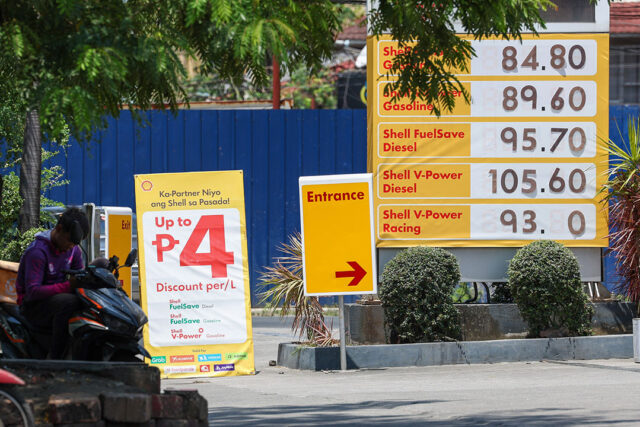
An ad board shows a P4-per-liter fuel discount for motorcycle taxi and delivery riders is displayed at a gasoline station along Quirino Avenue on April 25, 2026. — PHILIPPINE STAR/NOEL B. PABALATE

THE BANGKO Sentral ng Pilipinas (BSP) could raise benchmark borrowing costs by up to 50 basis points (bps) this year as the oil price shock from the Iran war worsens inflation expectations.

Last week, the central bank ended its easing cycle as it hiked the key policy rate by 25 bps to 4.5% and signaled more rate hikes could follow to safeguard spiraling prices due to the Iran war.

“We think BSP is likely to continue with its monetary policy tightening, and would choose to act sooner rather than later, especially as it had already forecast above-target inflation for two years over 2026 to 2027,” Deutsche Bank Research said in a note. 

Deutsche Bank Research said it sees the BSP hiking rates by 25 bps at its June 18 and Aug. 27 meetings to bring the policy rate to 5%.

ANZ Research said it also expects the BSP to deliver two more 25-bp rate hikes at its next two meetings.

“With BSP’s nominal policy rate now at 4.5% and inflation in April likely to be higher, the real policy rate has come down sharply closer to zero from its elevated levels earlier this year. As inflation surpasses 5% year on year in the coming months, the real policy rate is set

to turn negative. This will allow for an accommodative monetary policy which can support growth despite rate hikes,” ANZ Research said.

In March, headline inflation rose to a near two-year high of 4.1%, faster than the BSP’s 3.1%-3.9% forecast and 2%-4% target for the year.

The central bank now expects inflation to average 6.3% this year and 4.3% next year, both above its 4% ceiling, before returning to its tolerance range in 2028.

In an April 23 note, ING Think Asia Pacific Regional Head of Research Deepali Bhargava said the BSP is set to tighten further in a “front loaded but measured manner” following the revision in its inflation forecasts.

“Fast but measured rate hikes are likely ahead. With inflation projected to average 6.3% in 2026, the BSP is unlikely to be done tightening,” Ms. Bhargava said.

“We now expect an additional 50 bps of hikes in 2026, assuming material de-escalation in the US-Iran conflict by the end of the second quarter. However, should disruptions persist, and Brent prices remain above $100/bbl for most of 2026, a deeper and more aggressive hiking cycle would likely follow,” she added.

BSP Governor Eli M. Remolona, Jr. said on Friday that the central bank is prepared to do whatever necessary to contain inflation, leaving the door wide open to more rate hikes.

“The market needs to understand that we will do what is necessary to contain inflation,” he said in an interview with Bloomberg TV. “At the moment, that seems like a succession of modest rate hikes.”

Citibank said in its base case scenario, the BSP will have a follow-up hike of 25 bps in June before a pause.

“We think BSP will aim to keep real policy rates in accommodative territory given the weak starting point of GDP growth going into the energy shock… Our June policy rate forecast of 4.75% would be around 45 bps above BSP’s existing 2027 inflation rate forecast of 4.3%, and we think BSP will stop there,” Citibank said.

However, Citibank said the balance of risks is higher for an additional 25-bp hike in August, compared to a pause in June.

“A follow-up 25-bp hike in August could materialize, e.g., if BSP’s 2027 inflation forecast moves higher in the coming months, or if BSP’s attention on exchange rate pass-through increases. So far, we sense that BSP is not overly concerned on the inflation impact of recent exchange rate movements,” it said.

Citibank said an additional hike in August would still leave real policy rates negative for the year.

“This suggests that even two more hikes could keep policy appropriately accommodative, in line with the negative output gap and supply-driven nature of the shock,” it added.

For its part, BMI sees one more 25-bp rate hike in June to help re-anchor inflation expectations, before pausing amid risks to growth.

‘ONE AND DONE’
Meanwhile, Pantheon Macroeconomics Chief Emerging Asia Economist Miguel Chanco said the BSP’s latest hike will be “one and done.”

Mr. Chanco said they have also hiked its inflation forecasts to “only” 4.6% this year from 4.2% previously, and 3.5% in 2027 from 3.1% previously.

“If our more modest outlook is right, then the April hike probably will be just ‘one and done,’ with the BSP’s next move likely to be a cut this time next year, when the current supply shock starts to drop out of the year-over-year inflation picture,” he said. — AMCS
Philippine business confidence weakest in over 25 years in March

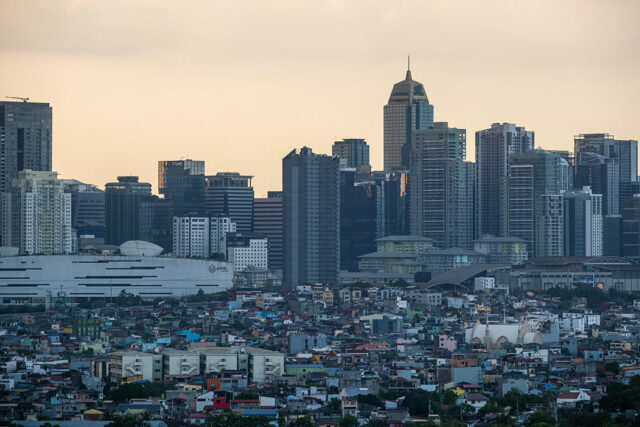
HIGH-RISE OFFICE and residential buildings dominate the skyline of the central business district in Taguig. — PHILIPPINE STAR/RYAN BALDEMOR

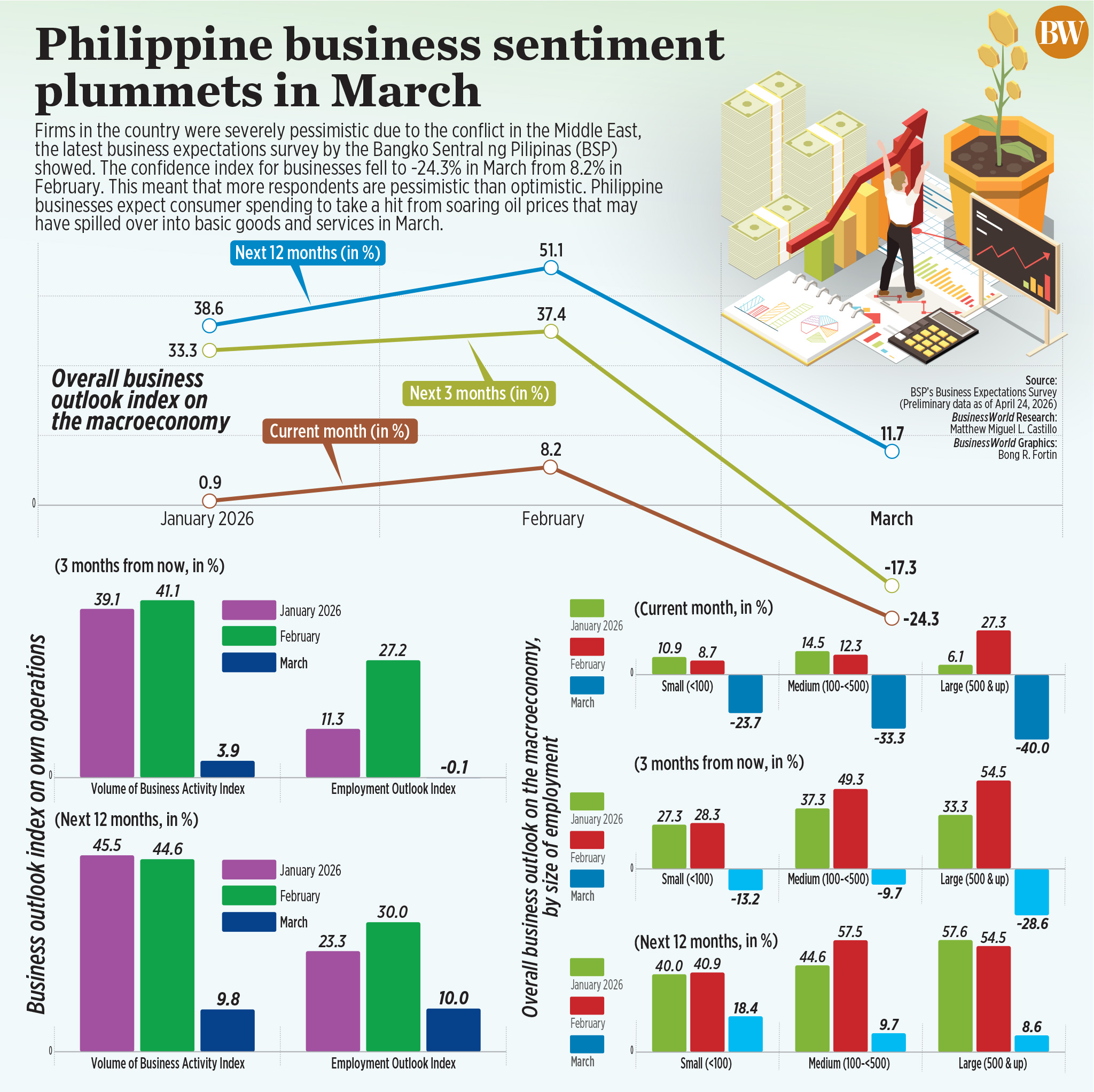
BUSINESS CONFIDENCE fell to its weakest in more than 25 years in March as firms turned pessimistic on expectations that higher fuel costs from the Middle East conflict would curb consumer spending, a central bank survey showed.

Results of the Bangko Sentral ng Pilipinas’ (BSP) monthly business expectations survey (BES) showed the current-month confidence index (CI) plunged to -24.3% from 8.2% in February.

A negative CI shows that more respondents are pessimistic than optimistic.

The March CI was the weakest in more than 25 years or since the -32.6% recorded in the fourth quarter of 2001.

“Firms attributed their pessimism in March 2026 to the ongoing Middle East conflict, which had led to a sharp increase in domestic pump prices. Businesses consequently expect consumer spending to slow, as higher fuel costs are seen to feed into the prices of other basic goods and services,” the BSP said.

The business outlook for the second quarter also turned pessimistic, while firms grew less optimistic for the rest of the year.

According to the survey, the three-month ahead CI declined to -17.3% from 37.4% previously. On the other hand, the year-ahead CI slid to 11.7% from 51.1%.

“Respondents’ outlook for both periods weakened on expectations that the adverse economic impact of the ongoing Middle East conflict may persist,” the BSP said.

Iran effectively closed the Strait of Hormuz after the US-Israeli war with Iran began on Feb. 28. This disrupted global energy markets, sending crude prices soaring and impacting import-reliant economies such as the Philippines.

The BSP survey showed firms expect tighter cash position and credit access, as the financial condition index turned more negative to -24.9% in March from -15.2% in February. The credit access index also turned negative to -7.1% from 4% in the previous month.

Financial condition refers to a firm’s general cash position considering the level of cash and other cash items and repayment terms on loans, while credit access refers to the environment external to the firm, such as the availability of credit in the banking system and other financial institutions.

Meanwhile, businesses in the industry and construction sectors reported higher average capacity utilization at 73.1% in March from 67.2% in February.

Firms in the electricity, gas, and water subsector also saw an uptick in activity at the start of the summer season.

“Businesses cited stiff domestic competition, insufficient demand, and high interest rates as major constraints to their business activities. They also cited the impact of oil price hikes, stemming from the ongoing Middle East conflict, as an emerging business constraint due to higher production cost,” the BSP said.

The survey also showed firms’ employment outlook indices turned negative to -0.1% for June from 27.2% previously. For the year ahead, the hiring outlook fell to 10% from 30% previously.

However, businesses still see room for expansion as the share of industry firms with expansion plans for June and the next 12 months increased.

“Despite prevailing uncertainties, some companies indicated that they would proceed with their expansion plans, as these were already in the pipeline even before the Middle East conflict started,” the BSP said.

Firms also expect the peso to depreciate in the second quarter and over the next 12 months. Respondents anticipated the local unit to average P59.60 in June, and P60 over the next 12 months.

On Friday, the local unit closed at P60.70 against the dollar, weakening by 22 centavos from its P60.48 finish on Thursday, Bankers Association of the Philippines data showed.

Businesses also expect peso borrowing rates to increase moving forward, while business inflation expectations rose.

More businesses expected inflation to average 2.8% in March, and anticipate inflation to average 3.1% in June and 3.3% in the next 12 months.

In March, headline inflation rose to a near two-year high of 4.1%.

The central bank now expects inflation to average 6.3% this year and 4.3% next year, both above its 4% ceiling, before returning to its tolerance range in 2028.

The BSP’s March BES covered 515 firms and was conducted from March 5 to 31.

Q1 CONSUMER CONFIDENCE
Meanwhile, consumer confidence improved in the first quarter, “reflecting conditions prior to the onset of the Middle East conflict,” the BSP said.

The BSP said the first quarter consumer expectation survey  was conducted from Jan. 22 to Feb. 5, before the US-Israeli war on Iran started.

The survey showed that the current-quarter CI turned less negative to -15.8% in the first quarter, from -22.2% in the fourth quarter of 2025. This means there was a bigger drop in the share of pessimistic respondents than in the share of optimistic respondents.

“Respondents were less pessimistic in Q1 2026 as they expect: higher earnings, stable jobs, new income sources, and more family members joining the workforce,” it said.

For the quarter ahead, the CI slipped to 1.8% from 3.6% previously. For the year ahead, the CI also dropped to 9.6% in the first quarter from 11.8% previously.

“The less upbeat outlook of consumers for both periods reflected concerns over graft and corruption in the government, higher inflation, and ineffective government policies and programs,” the BSP said.

Consumer confidence also improved across different income groups.

For the April-to-June period, the outlook was still pessimistic among the low-income group but softened among the middle-income and high-income groups.

However, the outlook for the next 12 months became less optimistic among the low-income and middle-income groups. — Aaron Michael C. Sy

Water firms ramp up efforts ahead of El Niño

Residents queue for water from a fire truck after a burst pipe causes a water interruption in Quiapo, Manila, March 29, 2026. — PHILIPPINE STAR/RYAN BALDEMOR

By Sheldeen Joy Talavera, Reporter

WATER PROVIDERS in Metro Manila and nearby areas are stepping up preparations to secure supply after the weather bureau warned of a possible El Niño developing by midyear.

Patrick James B. Dizon, department manager at MWSS Corporate Office, said the agency has directed the two concessionaires, Maynilad Water Services, Inc. and Manila Water Co., Inc., to continue implementing approved augmentation measures.

These include reopening of deepwells, optimizing treatment plant operations, reducing water losses, and deploying water tankers and static tanks, among others, to ensure they can be swiftly reactivated should water allocations from Angat Dam be reduced.

“Since the end quarter of last year, we have been continuously coordinating, not just to our concessionaires but also, to the stakeholders of Angat Dam,” Mr. Dizon told BusinessWorld.

Last week, the Philippine Atmospheric, Geophysical and Astronomical Services Administration (PAGASA) raised its warning status to El Niño Alert from El Niño Watch, following the high likelihood of its development in the coming months.

PAGASA said that there is a 79% chance of an El Niño event emerging between July and August, with the weather pattern likely persisting until early 2027.

El Niño is a climate phenomenon that raises the likelihood of drier-than-normal conditions in some parts of the country, potentially triggering droughts and dry spells, while also bringing fewer but possibly stronger tropical cyclones.

The 2023-2024 El Niño was “one of the five strongest on record,” according to the World Meteorological Organization.

“As we expect that the El Niño will come this summer, the MWSS requested the NWRB (National Water Revenue Bureau) to increase the year-end elevation of Angat Dam,” Mr. Dizon said.

Angat Dam is the main source of water for Metro Manila, accounting for about 90% of the capital’s potable water.

Manila Water, which serves over 7.8 million customers in the east zone concession area, said it is pursuing strategies to reduce its reliance on Angat Dam by developing and continuously operating alternative water sources.

These include treatment facilities drawing from Laguna Lake such as the Cardona Water Treatment Plant and the East Bay Water Treatment Plant, as well as the Wawa-Calawis Water Supply System in Rizal Province.

“The recent full stewardship of the Upper Wawa Dam further strengthens supply reliability and builds long-term climate resilience for the East Zone,” Manila Water said in a statement to BusinessWorld.

The Upper Wawa Dam is a major infrastructure development designed to strengthen water security, which has the capacity to deliver up to 710 million liters of water per day.

“As climate risks intensify, Manila Water remains committed to investing in sustainable, diversified, and climate-resilient water sources, while working closely with national agencies to manage limited resources prudently,” it said.

Maynilad, which provides water and wastewater services to 10.5 million people in the west zone concession, said it is implementing a range of system optimization and supply augmentation measures to help ensure reliable water service during periods of higher demand.

These include pressure management across its distribution network, maximizing the output of treatment facilities, and continuing non-revenue water reduction efforts to recover additional water for customers.

“Preparing for the dry season is part of our regular operational planning, and we continuously refine these measures to improve system resilience,” Maynilad told BusinessWorld.

Among the key infrastructure projects under development to improve system resilience include of a 200-million-liter (ML) raw water reservoir at the La Mesa Compound and a 40-ML treated water reservoir in Valenzuela, which are designed to boost buffer storage to help stabilize supply and support more consistent water service.

“Our priority is to ensure that our customers continue to receive reliable water service, especially during periods of high demand,” Maynilad said in a separate statement. “We continuously implement and enhance our operational and infrastructure measures to strengthen the resilience of our system.”

While securing water supply is crucial, both Manila Water and Maynilad said that practicing responsible and efficient water use remains one of the most effective ways to help ensure adequate supply.

Metro Pacific Investments Corp., Maynilad’s majority shareholder, is one of three Philippine subsidiaries of First Pacific Co. Ltd., alongside Philex Mining Corp. and PLDT Inc.

Hastings Holdings, Inc., a unit of PLDT Beneficial Trust Fund subsidiary MediaQuest Holdings, Inc., has an interest in BusinessWorld through the Philippine Star Group, which it controls.

Gov’t agencies told to cut spending amid oil crisis

Department of Budget and Management (DBM) Secretary Rolando U. Toledo. — PHILIPPINE STAR/MIGUEL DE GUZMAN

THE DEPARTMENT of Budget and Management (DBM) has ordered government agencies to cut spending and defer selected projects to free up funds to cushion the impact of the Middle East conflict.

In National Budget Circular No. 602, issued on April 23, the DBM directed state entities to adopt “economy measures” following the declaration of a national energy emergency in March.

The Philippines has been under a one-year state of national energy emergency since late March amid rising oil prices and dwindling fuel reserves.

The DBM circular covers all departments, agencies, and operating units of the National Government, including state universities and colleges, as well as government-owned and -controlled corporations receiving appropriations under the 2026 General Appropriations Act.

Offices with autonomy — including the legislative and judicial branches, the constitutional commissions, and local government units — were urged to implement similar measures.

“Through such cooperation, the collective efforts of the entire government will help ensure the efficient and effective promotion and protection of the interests of all Filipinos for the common good in this time of emergency,” the DBM said.

The circular outlines steps to generate funding sources that can be redirected to the programs, activities, and projects aimed at mitigating the economic and social impact of the crisis.

Agencies are required to cut at least 20% from selected maintenance and other operating expenses (MOOE), including travel, training and scholarships, supplies and materials, utilities and representation expenses.

“If there are some items from the foregoing enumeration that are deemed essential to the agency, the 20% cost reduction can be effected on the other non-essential or non-priority MOOE items,” it said.

The DBM also ordered the deferral of non-critical capital outlays, including the purchase of any motor vehicles that are not critical to health, uniformed services and disaster risk preparedness and response and the construction of new government facilities that are not yet ready for implementation.

Agencies were instructed to evaluate their unobligated allotments under the 2026 budget and identify programs, activities, and projects that may be offered as savings, provided these do not disrupt operations or affect service delivery.

All agencies covered by the circular should submit their proposed savings not later than May 15.

The DBM will submit a report on the programs offered as savings to fund mitigating measures related to the energy emergency.

Upon the approval of the President, the DBM will issue negative special allotment release orders (SARO) corresponding to the savings declared and SARO for memo entries to effect the use of savings and augmentation from the source to recipient agencies.

It will also issue SAROS to fund identified deficient programs related to the implementation of the Unified Package for Livelihoods, Industry, Food, and Transport framework.

Philippine Institute for Development Studies Senior Research Fellow John Paolo R. Rivera said the DBM directive is a “prudent short-term fiscal measure” designed to create space for targeted interventions without widening the budget deficit.

“It signals a shift toward spending reprioritization rather than additional borrowing, which helps preserve fiscal sustainability amid external shocks,” he said in a Viber message.

However, Mr. Rivera said that its effectiveness depends on execution, with agencies being tasked to ensure that the cuts will not affect critical services and project delivery.

“If done well, this can free up resources for more urgent needs while maintaining overall fiscal discipline,” he added.

The National Government’s budget deficit widened by almost 2% in March to P342.9 billion.

For the January-to-March period, the budget gap narrowed by 20.3% year on year to P355.5 billion amid double-digit growth in overall collections and muted spending. — Justine Irish D. Tabile

CTA upholds SMB P1-B refund; SMGP allots P4.49B for RE

SANMIGUEL.COM.PH

THE Court of Tax Appeals (CTA) En Banc has upheld a tax refund exceeding P1 billion in favor of San Miguel Brewery, Inc. (SMB), the beer unit of San Miguel Corp. (SMC), in connection with excise tax collections for 2020.

In a 17-page decision dated April 14, the CTA En Banc denied the petition for review filed by the Commissioner of Internal Revenue.

“The petition lacks merit,” the court said in the decision penned by Associate Justice Maria Rowena G. Modesto-San Pedro, upholding a previous Division ruling in favor of the beer giant.

SMB, which manufactures and distributes fermented malt-based beverages, had challenged the Bureau of Internal Revenue’s (BIR) implementation of certain excise tax rules.

The court said that some administrative issuances, including Revenue Memorandum Circular No. 90-2012, went beyond the authority granted under Republic Act (RA) No. 10351.

It also said the BIR’s “no downgrading” rule was inconsistent with the law’s requirement to classify products based on net retail prices.

The CTA said higher tax rates under Republic Act No. 11467 took effect only on Feb. 10, 2020, after publication in the Official Gazette, rather than the earlier January 2020 dates cited by the BIR through website posting. The court said printed publication is a due process requirement to notify affected taxpayers.

SMB is set to receive a refund totaling P1,068,775,829.04 for excise taxes collected during early 2020.

RENEWABLE ENERGY
In a separate development, San Miguel Global Power Holdings Corp. (SMGP), the power generation arm of SMC, has allocated about P4.49 billion for renewable energy (RE) investments after raising funds from the debt market.

In a regulatory filing on Friday, SMGP said it disbursed part of the net proceeds from its bond issuance to hydropower and solar projects.

The company raised up to P30 billion in fixed-rate bonds on April 17, with proceeds also earmarked for payments to suppliers, service providers, and contractors, as well as for withholding taxes and customs duties.

SMGP has also set aside P6.9 billion to refinance debt obligations, leaving a remaining balance of P18.56 billion.

The bond offer, issued through the Philippine Dealing & Exchange Corp., included three series maturing in 2031, 2033, and 2036. The offer covered P20 billion in fixed-rate bonds, with an oversubscription option of up to P10 billion.

SMGP tapped Bank of Commerce, BDO Capital & Investment Corp., and China Bank Capital Corp. as joint issue managers. They are joined by Land Bank of the Philippines, Philippine Commercial Capital, Inc., PNB Capital and Investment Corp., and Security Bank Capital Investment Corp. as joint lead underwriters and bookrunners.

“The proceeds come at a critical time. As electricity demand continues to grow and the power sector faces supply tightness and volatile global fuel markets, these funds will support our efforts to ensure reliable and stable power supply for the country while advancing our investments in renewable and cleaner energy sources,” said SMGP General Manager Elenita Go.

SMGP is among the country’s largest power companies, with a diversified portfolio that includes natural gas, coal, and renewable energy such as hydroelectric power and battery energy storage systems. It also operates in retail electricity supply and has investments in distribution services. — Erika Mae P. Sinaking and Sheldeen Joy Talavera

STT GDC explores more PHL sites for expansion

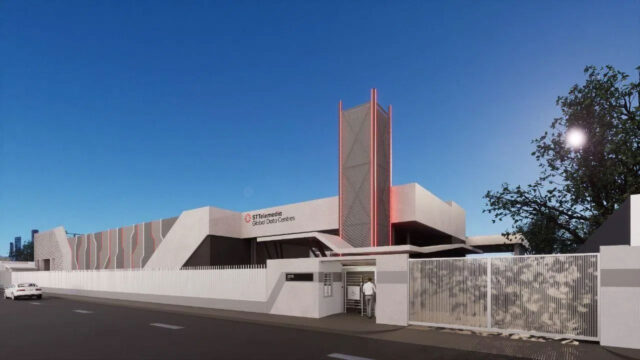
STT Makati — STTELEMEDIAGDC.COM

ST TELEMEDIA Global Data Centres (STT GDC) Philippines said it is exploring potential sites for data center expansion as it sees growing demand, including from artificial intelligence (AI)-related workloads.

“We’re always looking. So, we have one in Davao, we already have a site in Mindanao. And again, as we start seeing expansion and with AI we are continuing to explore where else would the demand look like and where would they want to be located,” STT GDC Philippines President and Chief Executive Officer Carlomagno E. Malana told reporters on the sidelines of a briefing last week.

He said the company is weighing possible locations for expansion in the Visayas as it maps out its next phase of growth, adding that it is assessing developments particularly in metropolitan areas.

STT GDC Philippines is a joint venture among Globe Telecom, Inc., Ayala Corp. and ST Telemedia Global Data Centres. It operates seven data centers in the Philippines with a combined information technology load of nearly 150 megawatts (MW).

The Department of Information and Communications Technology (DICT) said the country’s data center capacity could reach about 1.5 gigawatts by 2028 as new capacity comes online from existing and new operators. At present, the capacity is below 200 MW.

Mr. Malana said demand for data centers is increasingly driven by global and regional requirements for power and data storage, as well as AI-related workloads as more companies adopt AI.

Last week, STT GDC said it plans to expand the capacity of its Fairview data center by about 4 MW by yearend, bringing total capacity at the facility to 32 MW from the current 28 MW.

The Fairview data center is designed to scale up to 124 MW, with development to be carried out in phases to align with customer demand, Mr. Malana said. — Ashley Erika O. Jose

Ayala Corp. sees ‘resilience’ across units amid headwinds

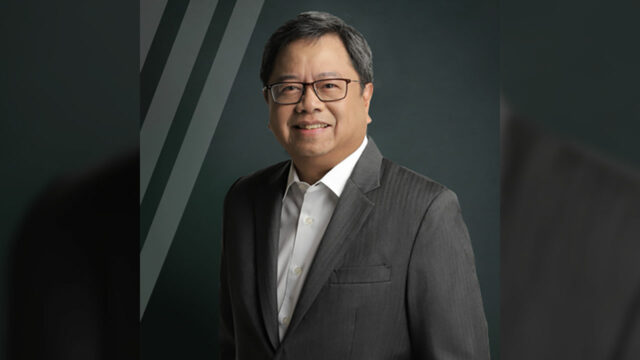
CEZAR P. CONSING — GLOBE.COM.PH

AYALA CORP. said it expects overall stability across its business units this year, although performance may vary by segment depending on market conditions.

“All our businesses will be resilient. All of them. With no exception. You might have one or two businesses not being able to make the same profits or might register losses, but they will be resilient,” Ayala Corp. President and Chief Executive Officer Cezar P. Consing said during the company’s media briefing on Friday last week.

He said the real estate segment may face pressure from higher interest rates following the Bangko Sentral ng Pilipinas’ decision last week to raise its key policy rate by 25 basis points to 4.5%, ending an easing cycle.

He added that leasing and other recurring income streams may partly offset the impact.

Ayala Corp.’s core net income, excluding one-off items, rose 7% to P48.3 billion last year, supported by stronger results from Bank of the Philippine Islands and Ayala Land, Inc. (ALI), as well as recoveries in non-core units that offset declines at Globe Telecom, Inc. and AC Energy & Infrastructure.

ALI reported consolidated net income of P39.1 billion for 2025, up 38.7% from P28.2 billion in 2024, driven by leasing and hospitality and gains from portfolio management.

During its annual stockholders’ meeting on Thursday last week, ALI said it is maintaining a solid financial position while expanding its recurring income businesses, particularly leasing and hospitality.

The company said it continues to manage its portfolio as part of its long-term capital strategy, including reviewing assets for possible reinvestment into higher-return opportunities.

“Capital recycling has become one of our key levers… we continuously unlock value while retaining exposure to quality income streams. This active portfolio management means we are not passively holding assets,” ALI Chief Finance Officer and Treasurer Jed Quimpo said.

ALI reported a net debt-to-equity ratio of 0.8x and an interest coverage ratio of more than four times, indicating moderate leverage and capacity to service debt. Total debt stood at about P300 billion, supported by an asset base of roughly P1 trillion.

About P25 billion in debt is set to mature in 2026, with the company expected to tap existing funding sources, including the bond market, to meet these obligations.

ALI is expanding its leasing and hospitality portfolio to increase recurring income.

The company plans to add about 270,000 square meters of new mall and office space this year, along with the reopening of the Mandarin Oriental hotel.

Over the next five years, it aims to expand its leasing footprint by more than 1 million square meters to balance earnings between property development and recurring income.

In its residential segment, ALI said demand remains steady, supported by selective project launches across key estates. It is targeting the delivery of about 13,000 units this year, including about P124 billion in premium segment turnovers.

Mr. Consing said Ayala Corp. is reviewing its capital expenditures for 2026 and expects spending to be broadly in line with last year’s P180-billion level, below the earlier target of P220 billion to P230 billion.

“When we were entering this year, we said P220-230 billion. At that point, this was before the oil crisis, so we were really thinking of ramping up. Now we are reviewing that number again because we might have to calibrate that down,” he said.

Ayala Corp. is the holding company of the Ayala Group, with businesses spanning real estate, banking and financial services, telecommunications, power generation, healthcare, logistics, infrastructure, industrial manufacturing, education, and technology services. — Alexandria Grace C. Magno

A safe space for a haircut

FACEBOOK.COM/BARBIERROBARBERSHOP

COCO CHANEL once said: “A woman who cuts her hair is about to change her life.” But what if the person getting that haircut doesn’t identify as a woman, or does, despite their assigned sex at birth?

We met up with Paul Sumayao, who co-founded Barbierro with his life partner Jedi Directo, on April 23 in the Biñan, Laguna branch. Barbierro is billed as the country’s first “queer” barbershop.

Here’s the thing, though: with all the stereotypes about gay men doing hair, doesn’t that mean that all hair spaces are automatically queer? Not quite.

Kung babae ka (if you are a woman) or feminine ka, you go to the salon? Pero ’pag macho-machohan ka (but if you are macho), you go to the barbershop. But what if you just want a decent haircut?” said Mr. Sumayao.

He gives examples of microaggressions that queer people can encounter in the gendered spaces of barbershops versus hair salons. “Why is there a dichotomy?” he asked. A queer woman with short hair, for example, can be told that her hair would be better longer, and rebonded and styled. Queer men, in barbershops, would get conversations about sports, women, or other things that they’re boxed out of. Actually, that’s how the kernel of the business started: growing up, he was the one tasked to bring his siblings to the barbershop to get their haircuts. Labeled and treated as a “softie” by the staff, he said he felt uncomfortable in those spaces.

“It’s claiming safe spaces and queer spaces in areas that were traditionally masculine. If nobody else is claiming it… and no one else is doing anything about microaggressions sa mga (at the) barbershops and salons, bakit hindi namin gawin? (why shouldn’t we be the ones to do it?)”

The staff at Barbierro undergo SOGIE (Sexual Orientation, Gender Identity, and Expression) training twice a year, and the barbershop itself is a member of the Philippine LGBT Chamber of Commerce, and is recognized by Strands for Trans, a global network of salons identified as safe spaces for trans people. They also practice gender-neutral pricing: he noticed that in salons and barbershops, women automatically get higher pricing (regardless of length and complexity). In Barbierro, haircuts are priced according to length and the time it takes to cut it (from P220 to P330, depending on the seniority of the stylist). “We want to eliminate that barrier,” he said.

Founded in 2022, he remembers that they had a hard time hiring staff at first because the barbers simply didn’t get the idea. Furthermore, some refused because they thought cutting women’s hair impinged on their masculinity. Mr. Sumayao said, “Hindi naman kasi kami naga-advocate ng kabaklaan (we’re not advocating for queerness). It’s more really just advocating for a safe space for everyone.”

Right now, they have two company-owned branches: this one in Biñan and another in Camarines Sur (where he hails from). There will be another soon in Quezon City. They do have a branch opened through a queer-led franchise partner in Sampaloc, Manila, and a forthcoming one in Taft. It’s not that he discriminates, but he prefers queer-led businesses as franchise partners, because otherwise, “Alam ko naman na mahihirapan rin sila (I know non-queer partners will have a hard time) to navigate the whole thing. Especially if they’re not coming from our own native story.”

Asked why the branches are located outside the country’s capital, when queer life is so much richer in the city (at least, that’s what it seems like), he replied: “I’ve always felt like an outsider, and I’ve always felt like Manila is not the center. If there are queer spaces in Manila, or in Cebu, in Davao — kung saan man iyong sentro (wherever the centers are) — I feel like badings (queer people) in towns, probinsyas (provinces), they also deserve a safe space.”

He campaigned for former vice-president and presidential candidate Leni Robredo down the street in Biñan where the barbershop is now located.

In Barbierro’s Instagram account, he once posted that hair is political. “It’s the easiest part of our body (to use) to make a statement,” he said. “It’s the most obvious. It’s what people see first.

“The possibilities are endless. Ang buhok, wala talagang kasarian (hair really has no gender).”

Asked how they measure their success, he said, “I would say we succeeded if marami nang gumaya sa amin na barbershop rin (if many barbershops copy us too). We don’t want to be alone forever. The only time that an advocacy succeeds is when we’re no longer needed — when everything and everywhere is already a safe space.”

In Biñan, Laguna, Barbierro is in Unit 1D, Bldg. 1, RJ Titus Building, Brgy. San Francisco, Biñan City, Laguna (Flying V Gas Station). In Sampaloc, Barbierro is in 2157 Laong Laan Road, Sampaloc, Manila (across Bulaluhan sa Laong Laan). In Camarines Sur, it’s across the Pili Municipal Hall, Altamarino Bldg., Arejola St., Pili, Camarines Sur. For more details, visit instagram.com/barbierrobarbershop. — Joseph L. Garcia

Maharlika assigns $10-M loan to Kiri unit

MAHARLIKA Investment Corp. (MIC) said it has assigned its $10-million bridge loan to Makilala Mining Co., Inc. (MMCI) to a unit of India’s Kiri Industries Ltd., transferring its rights as lender.

In a statement sent over the weekend, MIC said it executed an assignment agreement covering its loan position under the omnibus loan and security agreement (OLSA) with MMCI in favor of Equinaire Holdings Ltd.

Equinaire is a wholly owned subsidiary of Kiri Industries, an India-listed manufacturer of dyes, intermediates and basic chemicals.

“The transaction involves the transfer by MIC of its rights, title and interests as lender under the OLSA,” MIC said.

MIC had extended the $10-million bridge loan facility to support MMCI’s front-end engineering design (FEED) and feasibility study for the Maalinao-Caigutan-Biyog (MCB) copper-gold project.

MMCI retains its contractual right to prepay the outstanding loan in full within 15 business days from receipt of notice.

“In the absence of full repayment within this period and the satisfaction of customary closing conditions, the assignment will take effect in favor of Equinaire,” it said.

MIC said the transaction is expected to deliver gross annualized returns exceeding the loan’s stated interest rate of 12.5% per annum.

“This transaction underscores MIC’s role as a catalytic investor, deploying capital to unlock value in strategic sectors and creating pathways for long-term private investment,” said MIC President and Chief Executive Officer Rafael D. Consing, Jr.

“The bridge financing enabled critical early-stage work for the MCB Project, and this assignment allows MIC to realize its returns while bringing in a capable international partner to support the project’s next phase of development,” he added.

MIC said the deal forms part of its strategy to actively manage its portfolio, recycle capital and support the mobilization of foreign investment into priority sectors of the Philippine economy.

It added that the completion of the engineering and feasibility work has helped reduce project risks and facilitate the entry of a new strategic investor.

“Kiri Industries has commenced construction of a greenfield copper smelting plant in India. Its participation reflects increasing international investor confidence in the Philippines’ mineral development sector,” MIC said. — Justine Irish D. Tabile

Adapting to new paradigms in global trade

Freepik/Macrovector

Globalization was built on the quiet assumption of frictionless trade — the idea that, due to technological advancements in logistics, freight, and shipping, geography had become somewhat of a solved problem. The emergence of the digital economy made the global village even smaller and accelerated the world to an era of unprecedented economic prosperity powered by hyper-fast commerce.

This decade — starting with the COVID-19 pandemic, the Russia-Ukraine war, the United States’ erratic tariff changes, and now the conflict around the Strait of Hormuz — has put the stability of that era into question.

The International Monetary Fund (IMF) reports that about 25% to 30% of global oil and 20% of liquefied natural gas pass through the Strait of Hormuz. The resulting disruption has seen parts of Asia, Europe, and Africa struggle with accessing the daily necessities for modern life, even at inflated prices.

“Parts of the Middle East, Africa, Asia-Pacific, and Latin America face the added strain of higher food and fertilizer prices, and tighter financial conditions. Low-income countries are especially at risk of food insecurity; some may need more external support — even as such assistance has been declining,” the IMF said.

The situation offers no acceptable alternatives. With the Gulf blocked, freight must sail around the Cape of Good Hope. For a standard Asia-to-Europe voyage, this rerouting adds as many as 14 days of transit and as much as 40% increase in fuel consumption.

In the organization’s World Economic Outlook published this April, the IMF projected global headline inflation to rise “modestly” in 2026 before resuming its decline in 2027, assuming the current conflict remains constrained in scope and duration.

“Slowdown in growth and increase in inflation are expected to be particularly pronounced in emerging market and developing economies,” the report said. “Downside risks dominate the outlook.”

The International Energy Agency (IEA) characterized the current situation as the “largest supply disruption in the history of the global oil market.” Brent crude, which began the year at a stable $65, skyrocketed to around $120 in March and has settled around $100 to $110 per barrel.

This has created acute pressure in energy-dependent industries and markets unheard of in recent history. For instance, refined fuel markets like jet fuel have seen prices decoupled from crude. In Singapore, jet fuel has jumped 140% to about $230 per barrel, while European jet fuel traded at nearly double the price of crude, reflecting severe supply shortages.

Manufacturing is also being heavily impacted, as the crisis has constrained the supply of helium, an element crucial for semiconductor manufacturing. According to an article published by the World Economic Forum, the war has already taken roughly one-third of the world’s helium supply off the market, following a disruption at the massive Ras Laffan energy hub.

Yet, one of the biggest shocks resulting from the crisis is that experienced by the agriculture sector. The Gulf is a global supplier of ammonia and urea, and as much as 30% of the world’s fertilizers pass through the Strait of Hormuz, according to the UN Food and Agriculture Organization. Prices for urea have already increased by more than 30%.

A Strategic Reset for Businesses

Emerging economies like the Philippines are disproportionately at risk. Many countries in Asia rely on the Middle East for its crude imports, fertilizer, and manufacturing components.

“People in low-income developing countries are most at risk when prices rise because food accounts for about 43% of consumption on average, compared with 25% in emerging market economies and 12% in advanced economies,” the IMF said. “That makes any spike in fertilizer and food prices not just an economic problem but a socio-political one, especially where fiscal resources to cushion the blow are limited.”

For Philippine companies and regional players, this moment demands a reevaluation of former strategies to create new ones that reprioritize risk management while sustaining growth amid uncertainty.

For many corporate boardrooms, the “Just-in-Time” philosophy of trade logistics — the hallmark of 20th-century efficiency — has been discarded as a dangerous liability. Thomson Reuters Institute found in their 2026 Global Trade Report that 68% of trade professionals now rank supply chain reliability as their top strategic priority, almost double from 35% just a year ago.

Companies are now aggressively building stock of critical components by as much as three to six months in advance in warehouses, as opposed to keeping their inventory moving. Guaranteed availability is becoming more appealing than lower storage costs.

Because the volatility of fuel and war-risk insurance for transits near high-risk areas, the traditional annual freight contracts have also become obsolete. In its place, companies have developed a system of dynamic indexing, recalculating freight rates every 15 days, tied to real-time bunker fuel indices and artificial intelligence-driven risk assessments.

Meanwhile, the reliance on long, vulnerable maritime routes has led to a massive geographic reallocation of capital. Companies are now explicitly accepting a 15%-20% increase in unit costs in exchange for the security premium of “near-shoring” or “friendshoring” in a politically aligned, geographically accessible neighbor like Mexico, Vietnam, and Poland.

For the best possible results, however, the IMF advised both public and private sectors work together to find solutions to the current crisis.

“Such complex spillovers confront us at a time when many economies have limited room to absorb shocks. Many countries were already facing record-high debt levels, raising concerns about fiscal sustainability,” the organization said.

“To manage the shock and maintain resilience, it is therefore more important than ever that countries adopt appropriate policies. Measures need to be carefully calibrated to country-specific needs. Countries with limited reserves and little fiscal room to maneuver should be especially cautious.”

The world is rapidly undergoing a geopolitical and economic reconfiguration, the likes of which has not been seen since the Cold War. Such a transformation will be painful, expensive, and chaotic. But for the resilient, it offers a chance to build a more robust, if more expensive, world. — Bjorn Biel M. Beltran

Queen Elizabeth II: Her Life in Style — an unwavering sense of self expressed through fashion

FACEBOOK.COM/ROYALCOLLECTIONTRUST

By Hannah Rumball-Croft

AS BRITAIN’S longest reigning monarch, and one rarely out of the public eye since childhood, Queen Elizabeth II left behind a wardrobe so extensive and meticulously archived that the curators at the Royal Collection Trust have had an embarrassment of riches to draw upon for a new exhibition at the King’s Gallery in Buckingham Palace.

Queen Elizabeth II: Her Life in Style bills itself as the largest exhibition of the late monarch’s wardrobe ever mounted, and the scale alone is arresting. More than 300 items, many on public display for the first time, attempt a sartorial biography spanning every decade of a life that lasted almost a century.

The result is a masterclass in what the Royal Palaces do best: celebrations of the British monarchy — their pomp, pageantry, and performativity — delivered through the medium of clothes. It also underscores why Her Life in Style, rather than in fashion, is such an apt title.

Queen Elizabeth II valued constancy, a deliberate contrast to the restless churn of high fashion. As a figure who embodied Britishness while standing on a global stage, her appearance had to resonate widely, and what read as high style in Britain could easily have seemed out of place in parts of the Commonwealth. In such a negotiation, subtlety trumped bravura.

The Queen’s wardrobe reads like a roll call of British heritage makers: Molyneaux, Burberry, Hawes and Curtis, Kinloch Anderson, Bernard Weatherill Ltd., Philip Somerville, and Gieves Ltd. Norman Hartnell, and Hardy Amies appear with predictable regularity, which will come as no surprise to anyone familiar with the Queen’s sartorial loyalties. But the exhibition also highlights the quieter and long-enduring relationships with tailors, dressmakers, and milliners who helped craft her public image.

For example, her dresser Angela Kelly created a style for the Queen which she favored in her later years. As an assistant dresser, then dresser, and finally called designer, Kelly was intimately familiar with the Queen as a woman long before her sartorial interventions. But the exhibition seems to reveal more about the designers, who saw the dress as the main event, than about someone like Kelly, for whom the Queen herself was always the focus.

What emerges most strongly is the centrality of collaboration in the crafting of her style. The Queen was not a mannequin at the mercy of designers, but a woman who presided over her wardrobe with clear autonomy and a keen understanding of the symbolism her clothes carried.

PUBLIC SERVICE, PERSONAL STYLE
The exhibition opens with a brisk chronological sweep from infancy to early adulthood. The transition from baby clothes to the military ensembles worn during her late teenage years make plain how abruptly she was thrust into public service.

Here, however, as is the case throughout, the curators favor the makers over the meaning. The garments are beautifully displayed, but the interpretive text often stops short of probing the “why” behind stylistic shifts and choices. For instance, the Queen’s later life preference for a straighter silhouette is asserted but not explored, a missed opportunity given the exhibition’s ambition to chart a life through her style.

The exhibition curation borrows liberally from recent V&A fashion blockbusters to great success. Most notably the doubledecker display technique used to kaleidoscopic effect in Gabrielle Chanel: Fashion Manifesto and the circular and tiered arrangements of Dior: Designer of Dreams. In Queen Elizabeth II: Her Life in Style, a double-stacked rainbow wall of colorblocked coats and suits is visually striking but also underscores the sameness that defined the Queen’s wardrobe.

That said, individual garments indicate occasional moments when she embraced stylistic choices that felt markedly more daring, such as a First Nations jacket that she wore with an evening dress in 1970. The exhibition makes clear, however, that once her style was set in the 1950s, evolution was subtle and nuanced rather than flamboyant or bold.

Her sartorial consistency seems to have become a kind of representation of national reassurance: a stability of taste, of choice of makers, and silhouette across a near century of life defined by political and social change.

The contributions by Erdem Moralıoğlu, Richard Quinn, and Christopher Kane, who have produced contemporary reimaginings of the Queen’s style, are well executed but ultimately redundant. Her fashionable legacy speaks loudly enough without reinterpretation.

Meanwhile navigation through the exhibition can be challenging. The King’s Gallery becomes a rabbit warren of narrow corridors and bottlenecks, exacerbated by the otherwise informative audio guide that slows foot traffic to a crawl. Still, the text panels are excellent — clear, concise, and often illuminating — and the overall display is both attractive and thoughtfully arranged.

The final room is a crescendo of encrusted and bejewelled gowns, which almost, but not quite, overwhelm the coronation dress. It is a fittingly theatrical conclusion, a reminder of the Queen’s ceremonial presence and the role fashion played in projecting it.

Even in death, she seems to transcend mortality here. Despite the diminutive stature of the mannequins proxying the royal body, her physical and ceremonial presence evoked through her luxurious couture gowns feels mighty.

The exhibition has arrived at a moment when an evocation of her popularity and a celebration of the British royals is needed for their brand now more than ever. Public appetite to celebrate the woman who represented an untarnished royalty — which now seems more remote than ever — is clearly voracious judging by the queue outside the exhibition. In this setting, even as the nation moves on, her reputation has settled into a rich and celebratory one.

Ultimately, the exhibition succeeds not simply because it dazzles, but because it reveals Queen Elizabeth’s harnessing of the soft power of clothing in shaping a public life. Through tweeds and tiaras, coats and coronation gowns, the exhibition charts a life defined by duty, diplomacy, and an unwavering sense of self, expressed always through fashion. — The Conversation via Reuters Connect


Hannah Rumball-Croft is a Lecturer in Cultural Studies and Fashion Design, School of Arts at the University of Westminster.

SEC warns vs impersonation in loan schemes

SEC.GOV.PH

THE Securities and Exchange Commission (SEC) has warned the public against individuals and online platforms impersonating registered companies to offer unauthorized loan products.

In separate advisories, the corporate regulator identified entities falsely claiming affiliation with Micropinnacle Technology Corp., Project Duo Integrated Communications Corp., and Carmen Credit 888 Corp. to carry out unauthorized lending activities.

Based on reports received, the SEC said some individuals have been using the name of Carmen Credit 888 Corp., along with fake logos, social media accounts, and unauthorized online platforms, to promote lending schemes involving advance-fee payments.

The SEC clarified that these actors are not affiliated with the company and are not authorized to offer loan services. It also noted that Carmen Credit 888 Corp. does not require advance payments for loan releases.

The regulator also flagged a website that claims affiliation with Project Duo Integrated Communications Corp. and offers loan products and financial services. The SEC said the site is not owned, operated, or connected to the company, and that its claims are false and misleading.

Meanwhile, the SEC warned the public against unregistered online lending platforms “Peso Maya” and “Pesolending,” which have been using the name of Micropinnacle Technology Corp. The company denied any connection to these platforms, saying it neither owns, operates, nor authorizes them.

The SEC said these platforms are unregistered and may pose risks to the public, advising individuals not to transact with them or share personal data, and to report suspicious activity to authorities.

In a statement on Friday, the Commission reminded the public to verify lending companies before engaging with them, avoid sending payments or personal information to unregistered or suspicious entities, and report complaints through its hotline or the SEC iMessage Portal. — Alexandria Grace C. Magno