Home Blog Page 7977

Exotic leathers: why fashion products are more sustainable than some research suggests
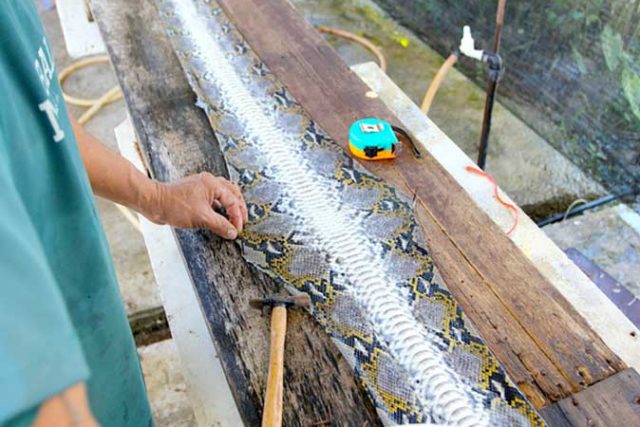
In Indonesia, the sustainable and regulated harvest of wild pythons for food and leather provides a livelihood for thousands of families. — DANIEL NATUSCH

THE FASHION industry tries to do the right thing when it comes to sustainability — after all, its profits increasingly depend on it. But it needs help, and this is where science comes in. Yet even issues that attract strong scientific consensus can sometimes arouse deep skepticism.

In the fashion industry, nowhere is that conflict more apparent than in the use of animal products versus synthetic alternatives. Animal rights activists and the fashion industry have long clashed over natural materials such as animal furs, wool, feathers, and leathers.

The industry, with scientific backing, argues that using wildlife products is sometimes a better option than synthetics. Animal rights activists nonetheless protest such uses, and have every right to do so because free speech and public debate are critical forums for advancing knowledge and society as a whole.

Yet a disturbing trend has emerged: respectable scientific journals publishing apparently scientific assessments of the wildlife trade that purport to reveal major problems, but seem at least partly to reflect a philosophical opposition to animal use by the authors. This can negatively impact both ecosystems and the people who depend on this trade.

In a paper in the journal Conservation Biology, we cite a number of examples of what we argue are flawed studies and highlight how they can undermine science and sustainability. We also examine a case study of wildlife use by the fashion industry: a piece of work published in early 2020 by the scientific journal EcoHealth.

The authors of that paper analyzed statistics about fashion items made with wildlife products seized by US Customs between 2003 and 2013. Many of them were well known brands and most items were derived from reptiles. The authors concluded that breaches of regulation were common and increasing — and hence that illegal trade is rife, increasing, and (by implication) harmful to wild populations. As a result, the authors of that paper called for the trade to be regulated far more rigorously and, ideally, stopped entirely.

The authors’ philosophical opposition to commercial use of wildlife products is clear, for example, in phrases like, “If species are beautiful enough to carry as a handbag, they should be beautiful enough to let live sustainably and fulfil their ecological roles in the wild.” We don’t doubt the authors’ sincere passion for animals, but believe that sadly that perspective has led them to conclusions that are counter to the information that is available.

Our re-analysis of their evidence shows that rates of seizure of wildlife goods by US Customs were exceptionally low, at 0.4% of shipments (or 253 out of 56,930), and decreasing rather than increasing. For comparison, US universities, museums, and government agencies importing reptile specimens for scientific and other non-commercial purposes over the same time period had a seizure rate of 2.5%.

Nonetheless, does this mean that the fashion industry and reputable US institutions are involved in illegal wildlife trade? Of course not. These seizures mostly reflect paperwork errors rather than evidence of poaching or criminal activity.

For example, if a store worker in the exporting country accidentally misplaces the permits meant to accompany the shipment, that shipment will be seized on arrival. Or if one of the leathers used in a product (a lizard skin handle for a snake skin handbag, say) has not been written into the documentation, then the product will be seized even if valid permits cover other leathers used in that same product.

In some instances, a customs official may merely confiscate items and give the importer the opportunity to clarify the error. However, paperwork errors are indeed a violation, no matter how innocent or accidental — and whether the importer is a fashion brand or a reputable US institution — and most often the items are seized.

Nevertheless, the flaws in the EcoHealth article have already done their damage. Reputable media outlets like National Geographic, The Business of Fashion, and Vogue reported the authors’ conclusions, further confusing fashion’s decision-makers and misguiding consumers, many of whom are desperate to make the right choice. Since then, Tommy Hilfiger and Calvin Klein have officially dropped exotic leathers from their product lines, joining other major brands like Hugo Boss, Victoria Beckham, and Vivienne Westwood.

You might be wondering whether this matters. Even if scientific papers like the one in EcoHealth are misleading as we argue, surely killing wild animals to make luxury handbags is still unacceptable and unsustainable?

No, the exact opposite is true. Detailed scientific studies over many years have shown that the trade in exotic leathers — like those of pythons, lizards, and alligators — can be entirely sustainable. Not only that, the industry also directly finances robust conservation programs, with benefits for indigenous communities and rural livelihoods. It is the essence of a nature-based solution to a nexus of growing global challenges.

Closing down the trade in wildlife-based luxury goods can create significant economic and social problems for people in biodiverse countries like Indonesia and Malaysia. Ironically, it may even increase poaching of genuinely threatened species.

So, we have a choice. Do we want to maintain a sustainable industry, and help people and biodiversity co-exist, or do we want to ban exotic animal products altogether? We can’t have it both ways. Well-intentioned people will form widely opposed views on this matter, and that’s OK, but it is critical that the information to support those views is factual and reliable.

Climate-change deniers and anti-vaccination conspiracy theories have taught us that misinformation and ideology can be deadly. Flawed science on the wildlife trade poses the same risk for biodiverse ecosystems and the communities who depend on them.

We invited the authors of the EcoHealth paper to respond to the above analysis of their work. One of the authors, Monique Sosnowski, a Lecturer at John Jay College of Criminal Justice at The City University of New York, said:

We are currently in the process of publishing a formal response to the paper in question. While we cannot share all the details of that paper, given that it is currently under peer review, it is false to suggest that we have an anti-trade philosophical bias. As seen across our previous work, we neither petition for nor against the trade in wildlife. Rather, we acknowledge that there are rules and regulations guiding what can legally be imported into the United States, for example, and examine the available data on wildlife goods that have been seized upon legal violations.

We further would like to clarify claims made that the wildlife seizure data we analyzed were the result of “paperwork problems,” “errors in documentation,” or other mistakes or omissions. This is untrue. Each individual seizure analyzed was tied to one or multiple violations of federal regulations. These “seizures” vary distinctly from “confiscations,” which are more temporary holds possibly explained due to the aforementioned errors.


Patrick Aust is a Research Associate at the Department of Zoology, University of Oxford. Daniel Natusch is an Honorary Research Fellow, Macquarie University, while Rick Shine is a Professor in Evolutionary Biology, Macquarie University.


Farm mechanization training brought to countryside via radio

IRRI

THE Philippine Center for Postharvest Development and Mechanization (PhilMech) said it has commissioned radio programs to prepare farmers for the mechanization of rice cultivation, including post-harvest processing.

PhilMech said over the weekend that 11,682 farmer-beneficiaries affiliated with 892 cooperatives and associations are enrolled in the “Radyo Eskwela” program, created to support the mechanization component of the P10-billion Rice Competitiveness Enhancement Fund (RCEF), which was created by Republic Act No. 11203 or the Rice Tariffication Law.  

It added that enrollees go through six modules, with three to four lessons per module, on topics such as farm mechanization principles and machinery know-how.

Baldwin G. Jallorina, PhilMech executive director, said the program aims to help farmers who have received machinery to use and maintain their units effectively.

“There is a need to further educate and train farmers using various avenues like radio and social media to complement hands-on training,” Mr. Jallorina said.

“Eventually, those who finish the series can influence more farmers to be open… about farm mechanization,” he added.  

According to PhilMech, the lessons are simultaneously aired in Tagalog, Hiligaynon, Cebuano, Waray, Chavacano, Bicolano, and Iloco by radio anchors and PhilMech technical experts in the field.

The radio program airs 5 a.m. to 6 a.m. every Wednesday and Saturday across 27 AM stations and six FM stations of the Radio Mindanao Network. Farmers can also access the program via its Facebook page and YouTube channel.

“Those who are not from the farmers’ cooperatives and associations can also listen to Radyo Eskwela by accessing its online platform,” PhilMech said. — Revin Mikhael D. Ochave

Market debut drives Monde Nissin stock

By Ana Olivia A. Tirona, Researcher

MONDE NISSIN Corp. ended up as the most actively traded stock in the Philippine Stock Exchange (PSE) last week following its market debut on Tuesday.

A total of P6.40-billion worth of 477.94 million Monde Nissin shares exchanged hands on the trading floor from June 1 to 4, PSE data showed.

Monde Nissin shares closed at P13.40 per share on Friday. This was down by 0.59% from its initial public offering (IPO) price of P13.50.

“Investors were cautiously optimistic on the new IPO as it was a food manufacturer of highly recognized brands that are in a majority of Filipino homes… There were some concerns though about the size of the offering as it was the biggest IPO in the PSE’s history and also the timing of the offering,” AAA Southeast Equities, Inc. Research Head Christopher John J. Mangun said in an e-mail.

“Price movement was stable in the first few trading sessions although volatility picked up which sent the price substantially lower, down about 6% from the IPO price at one point before recovering. The recovery is a sign that investors were quick to scoop up Monde Nissin shares at a slight discount,” he added.

In a separate e-mail, Globalinks Securities and Stocks, Inc. Head of Sales Trading Toby Allan C. Arce noted the stock had been trading below its IPO price on relatively low volatility and was expected of any large-cap issue making its debut in the local bourse.

“However, there seems to be confidence in the company — bouncing back after hitting a low of P12.68 per share [last Thursday]. Investors may yet still consider [Monde Nissin] a good addition to their investment portfolios,” Mr. Arce said.

The food manufacturer offered 3.6 billion shares to the public at P13.50 each. Excluding underwriting commission and listing expenses, the company said it raised P48.6 billion, or around $1 billion from its maiden offering.

Based on its prospectus, the company is planning to spend around 57.2% of its IPO proceeds to fund its capital expenditures (capex), while around 28.8% and 14% will be used for the redemption of convertible notes and repayment of loans, respectively.

“A big chunk of the [IPO] funds will go towards paying its liabilities which eliminates future interest costs. Some of it will go towards the expansion of facilities, although it will not translate into increased production for at least another two years,” Mr. Mangun said.

For this year, the company will allot P8 billion in capex. It also earmarked P9 billion in capital spending in 2022 and P10 billion in 2023.

For its branded food and beverage business in the Asia-Pacific region, Monde Nissin will finance key projects, which include the completion of its facility in Malvar, Batangas, and the production of healthier noodle lines.

Financial statements attached to the company prospectus show Monde Nissin booked a consolidated net income of P8.07 billion in 2020, up 21.3% from a year ago. During the same period, net sales grew by 3.8% to P67.9 billion.

“Better profit margins and lower interest expenses will sustain its net income growth from last year, which is between 15-20%. This translates to P9-10 billion for 2021 which is our rough estimate,” AAA Southeast Equities’ Mr. Mangun said.

For Globalinks’ Mr. Arce, lower interest expenses and the higher foreign exchange gain last year enabled Monde Nissin to increase its profits by a substantial amount.

“This year, assuming the repayment of loans will cut interest expenses by 60% given same sales growth of 3.8%, Monde Nissin’s net income should increase by 19.4% to P9.6 billion,” he said.

“But this growth in earnings will come as a result of financial deleveraging rather than organic growth. Earnings growth after 2021 will more or less mirror the company’s average sales growth of less than 5%,” he added.

Mr. Arce further noted the company’s earnings growth over the long term will depend on the success of its meat alternative business, which has been losing in the past two years.

The company has said it will use some of its IPO proceeds to expand in the United States through its Quorn Foods brand, which offers consumers healthier alternatives to meat.

Mr. Arce placed Monde Nissin’s stock support and resistance at P13.10 and P13.56, respectively, noting investors will still be assessing the company’s performance in the next few weeks.

For AAA Southeast Equities’ Mr. Mangun: “The current low of P12.68 is the immediate support with the high of P13.56 as the resistance, although it will take several weeks before we can determine the trend,” he said.

The Philippines-based manufacturer provides most of Filipino household staples such as Lucky Me!, Skyflakes, and M.Y. San Grahams.

Letter to the Editor (06/07/21)

June 2, 2021
Mr. J.ALBERT GAMBOA
BUSINESSWORLD

Dear Mr. Gamboa,

We hope that everything is well with you today.

We read your column (https://www.bworldonline.com/vax-populi/) about the high billing concern of Ms. Aurora Pijuan last year.  Allow us to relay what transpired at that time.

It was in March 2020 when the Enhanced Community Quarantine (ECQ) was declared that also covered the areas served by Meralco.  For safety and to avoid further spread of the virus, meter reading activities were halted because of the community lockdown.  This resulted to the bill estimations that was based on the past 3 months’ average daily consumption following the Distribution Services and Open Access Rules (DSOAR) issued by the Energy Regulatory Commission (ERC).

In the case of Ms. Pijuan, her scheduled meter reading date is every 7th day of the month.  Since the community quarantine started on March 15, 2020, we were still able to read her meter on March 7.  Hence, the March bill was based on the actual meter reading and was read prior to the declaration of ECQ. This was not the same for her April 2020 bill.  With the lockdown at that time, the bill estimation was applied to her April 2020 bill and was computed using the average of January, February and March 2020.

The period from January to March was relatively cooler. Since the basis was the average of the cooler months, this yielded an estimated electricity consumption that may have not matched Ms. Pijuan’s actual usage for her billing period of March 7 to April 7.  Had there been an actual meter reading, it would have been immediately reflected.  However, due to the lockdown in April, this was not possible at that time.

We resumed our meter reading activities on May 6, following safety protocols for the meter readers to perform their duties.  With this, we were able to read the meter of Ms. Pijuan on May 7, as well as the other customers in the area.

With the actual meter reading on May 7, this was deducted from the last actual meter reading on March 7.  The difference is the actual electricity consumption of Ms.Pijuan for the 2 months.  From this, the estimated consumption in April was deducted from the total May kWh consumption, resulting to the May 2020 bill rendered that is Ms. Pijuan’s cause of concern. 

It was on May 25, 2020, when we received the concern of Ms. Pijuan.  We dispatched our crew on June 1, 2020 to check the meter reading.  As the meter registration progresses, the reading obtained on June 1 validated the May 7 meter reading.  With this validation, it can be concluded that the April bill was under-estimated, and the unregistered electricity consumption was carried to the May bill.

Electricity consumption is derived from the present meter reading less the previous meter reading.  It is a straightforward approach done monthly.  The same is true for the succeeding and continuous meter readings of Ms. Pijuan’s electric meter.  From this process, the electricity bills are rendered.

The electric meter being the tool used to register electricity consumption, we offered to have the meter tested in her presence or even accompanied with a trusted representative, to validate the accuracy of the meter.  However, the past 2 attempts to have the meter tested did not push through as Ms. Pijuan declined, stating that the meter has no defect.  She mentioned that the meter was registering correctly but on the other hand, pointed out that her electric consumption should not be that high in May.

With this statement, we presented a comparison of the 2020 and 2019 April and May bills.  The sum of the 2 months’ consumption compared year on year, showed that the trend of her electricity consumption is approximately the same.  This comparative analysis is to show that it is possible for Ms. Pijuan to reach the electricity consumption and bill in question.  It was the under-estimation of the kWh consumption rendered for the April bill that was carried over to the May bill when an actual meter reading was taken.    

The electric meter being the fundamental instrument by which we derive the kWh consumption and for the bill to be computed, we would like to show in good faith and transparency the accuracy of the meter by conducting a meter test.  We have also reached out several times to explain and have paid attention to Ms. Pijuan’s concern.

At present, this case is being reviewed by the ERC and will await the due process to take its course.  We will respect the outcome and decision of ERC for this case.

Thank you very much for hearing our side on this.

Respectfully,
Margarita B. David.
Head, Home and Microbiz – Central Business Area
Meralco

Isuzu PHL, Pilipinas Shell extend partnership to 2023

IMAGE FROM ISUZU PHILIPPINES

Isuzu Philippines Corp. (IPC) recently forged a two-year agreement with Pilipinas Shell Petroleum Corp. (PSPC) — a partnership that ultimately “signifies a joint commitment to help Filipinos safely adapt to the new normal on and off the road.”

In a release, IPC President Hajime Koso said, “We are very pleased to again be working side by side with Pilipinas Shell in fulfilling our mission to become responsible partners in service of Filipino motorists. At IPC, we value progressive thinking and engineering when it comes to our commercial and light commercial vehicles, so we are glad to be working closely with them who are considered industry pioneers when it comes to sustainability and modernization.”

For his part, PSPC Vice-President and General Manager for Mobility Randy Del Valle said, “With the renewal of the partnership of IPC and Shell that has started since 2018, we would be able to continue to give value to new Isuzu drivers by providing access to quality fuels, lubricants and convenience retail items through the Shell Go+ Platform. We believe that this partnership is mutually beneficial for both Shell and IPC as both are in the forefront of innovation in their respective fields.”

In the past, the two brands have staged co-branded events such as the Isuzu 4×4 Xtreme Xperience, Isuzu Eco Run and Isuzu caravan displays at select Shell outlets. New initiatives on mobility and technology will take place once the situation permits.

Every buyer of a brand-new Isuzu vehicle or truck gets a “welcome kit” with a Shell Go+ card with an initial balance of P500. This enables customers to be part of a loyalty program, and earn and redeem reward points in fuels, convenience retail products at Select/Deli2Go, and lubricants. Members may also avail of 24/7 free roadside assistance by Ibero Asistencia, and 10% off on Motolite batteries.

Style (06/07/21)

UNIQLO collaborates with print designer Cassie Byrnes

GLOBAL apparel retailer UNIQLO will launch a collection with Cassie Byrnes on June 7. This will be the first collaboration with the Australia-based print designer known for her abstract exploration of native flora and fauna in vivid primary colors. Ms. Byrnes’ artworks begin with traditional media such as collage, paint and loose ink mark making before blending it with digital practices that amplify the artworks’ original integrity and handwriting. This UT collection features brand-new patterns specially designed for UNIQLO as well as her signature patterns, applying them on to women’s T-shirts and shorts. The range also features girl’s dresses, making it easy to coordinate looks between mothers and daughters. The collection, full of vivid and dynamic prints, will be available in all UNIQLO stores nationwide and from UNIQLO.com/ph.

Michael Kors releases Pride collection

MICHAEL Kors has released the #MKPride capsule features a range of rainbow-adorned women’s, men’s, and gender-neutral pieces. There are shorts and sweatshirts with rainbow heart patches, along with accessories and outerwear in an all-over rainbow striped design. The capsule also includes a special-edition Pride T-shirt, available in both white and heather gray, featuring a distinctive rainbow Michael Kors logo patch. All profits from the sale of the special-edition T-shirt benefit OutRight Action International, a leading global human rights organization fighting for the rights of LGBTIQ+ people around the world. The collection is being pushed through Michael Kors’ Pride 2021 campaign, created in partnership with Paper. The digitally led campaign stars four queer TikTok content creators wearing pieces from the brand’s #MKPride capsule. In the campaign, LGBTQ+ TikTok stars Tyshon Lawrence, Ve’ondre Mitchell, Mad Tsai and Soph Mosca show us their take on the popular transformation videos that have taken over social media, using the #MKPride product capsule as a catalyst for their “glow up” transformations.  In the Philippines, Michael Kors is exclusively distributed by Stores Specialists, Inc., and is located at Central Square in Bonifacio High Street Central, Greenbelt 5, Newport Mall, Power Plant Mall, Rustan’s Makati, and Shangri-La Plaza Mall and online at Trunc.ph and Rustans.com.

harlan + holden launches ‘Therapy’ collection

HOMEGROWN clothing brand harlan + holden is introducing a new collection to reflect the way we want to dress today. Now headquartered in Seoul, South Korea and with over 20 retail stores across Asia, harlan + holden has launched its newest capsule collection “Therapy” designed for work-from-home individuals and go-getters, designed by Alessandra Facchinetti, Fashion Designer & Creative Director of harlan + holden.The collection includes Therapy shoes, available in four colorways for men and women (black, dark green, white, and nude), which balances its form between leisure activities. Lightness, breathability, and versatility define it as much as the stamped “Therapy” logo does on its sole. The insole is made from double-layer Therapy Lite memory foam for extra comfort all day. The same approach and philosophy is what built the men’s and women’s capsule collection. With the past year defining a new way of living in, rather than out, and our homes becoming both intimate and professional spaces, our desire for clothes that are comfortable, hardworking and distinctive only grows. One step dressing is a key promise of harlan + holden, and with new elasticated details on everything from T-shirts, dresses, shorts, trouser waists, and jacket back panels. New short sleeve shirts double up as light cover-ups and are versatile for any kind of day. The men’s collection has a mix between leisurewear and new uniform separates, with bermuda shorts a key style which add much comfort and freedom of movement as wanted. For women, the Crop Cuts Tank cotton bra, elastic waisted shorts and stretch viscose leggings are three key pieces easy to mix into existing wardrobes, versatile in their layering qualities as well as offering a sporty attitude. The Crop Cuts Tank, made from crisp cotton poplin for a light but structured silhouette, features a flattering scoop neckline and exposed cut details. A perfect match for the Crop Cuts Tank is either a pair of Wide Poplin Shorts or a Poplin Kilt Skirt that is ultra-comfy from hip to hem. Calm tones of baby blues, dusty pinks, soft yellow, mint green, and cappuccino nudes keep the collection fresh and airy, perfect for relaxing in or giving a feeling of dressing up for an intimate dinner or the next Zoom meeting. Light cottons, a key fabric for the collection, keep the collection seasonless and globally relevant. For more information, visit harlan + holden’s website and Instagram account at https://harlanholden.ph/ and https://www.instagram.com/harlanholden/.

UNIQLO reopens Evia Lifestyle Center branch

JAPANESE global apparel retailer, UNIQLO, will be re-opening a bigger and brand new store at the Evia Lifestyle Center on June 18. The new store will increase its selling space from 600 square meters to 1,878 square meters. The expansion means shoppers can now select from the complete LifeWear collection for men, women, and kids and babies. The store is located at the ground level of the Evia Lifestyle Center, along Daang Hari Road in Las Pinas, Metro Manila. To celebrate the re-opening, the following special offers will be available during opening week: Men’s and Women’s DRY-EX Crew Neck Short Sleeve T-Shirt for P590 from the regular price of P790; Men’s and Women’s U Crew Neck Short Sleeve T-Shirt for P390 from P590; Women’s Cotton Relax Ankle Pants for P590 from P790; Ultra Stretch Skinny Fit Color Jeans for P990 from P1,490; and Kids’ Easy Shorts for P390 from P590. UNIQLO will also treat Evia shoppers with one special edition thermal flask for every single-receipt purchase, with a minimum spend of P3,000. Customers will also receive one coupon with special offers from community partners, including Coffee Project, Fully Booked, All Bikes, Green Centrale and Bonjour Baby. The purchase must be made from June 18 to June 20.

More deforestation, less rain threaten Brazil agribusiness

REUTERS

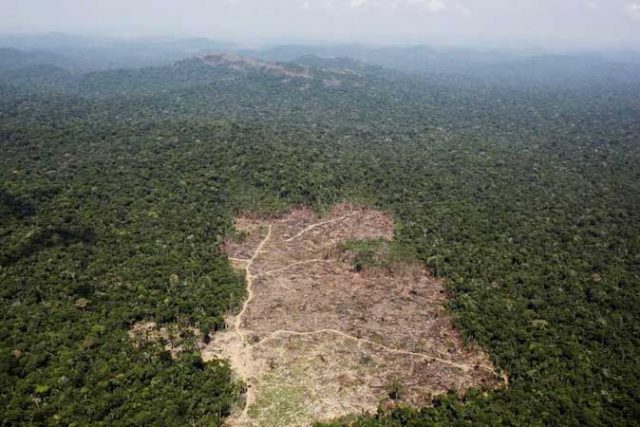
BRASILIA — Brazilian agribusiness is losing up to $1 billion a year as rising deforestation cuts rainfall in the southern Amazon — a problem set to expand if forest loss continues, a group of Brazilian and German researchers have warned.

In a study published in the journal Nature Communications in May, they found that smaller-scale forest losses can enhance rainfall on adjoining agricultural land — but once losses pass 55-60%, rainfall plunges.

Losses of tree cover in particular seem to delay the start and shorten the length of the rainy season, they found.

As Brazilian Amazon forest destruction continues, drier conditions could put a massive strain on the region’s mainly rainfed agricultural industry, the authors said.

Brazil is the world’s top soybean producer, and its second largest producer of beef, as well as the globe’s biggest beef exporter.

In parts of the country, Brazil’s farmers are already battling unusually dry weather this year, with government agencies warning in late May of drought threats as the country faces its worst dry spell in 91 years.

In the southern Amazonian state of Mato Grosso, Brazil’s main soy producer, irregular rainfall is reducing potential harvests, according to the Mato Grosso Institute of Agricultural Economics.

Aprosoja Brasil, the country’s main soy production association, similarly said farmers faced drought while planting last October and November, followed by excessively heavy rain at harvest time this year, lowering the expected harvest.

The new study looked at rainfall changes between 1999 and 2019 in the southern Brazilian Amazon, a 1.9 million sq. km. area that has so far lost about a third of its forests, as a model for future rainfall shifts.

Researchers predicted what might happen through 2050 under continued weakening of Brazil’s conservation policies and strong political support for agricultural expansion compared to effective enforcement of forest protection laws.

Co-author Britaldo Soares told the Thomson Reuters Foundation that the difference was stark.

Unless Brazil’s government quickly shifts its pro-development policies, which favor economic growth over conservation, agribusinesses could become victims of the measures many of them support.

The effect would be like “shooting yourself in the foot,” said Soares, who is project coordinator for the Centre for Remote Sensing at the Federal University of Minas Gerais (UFMG).

Environmentalists say President Jair Bolsonaro’s policies have weakened conservation efforts and his rhetoric has emboldened illegal ranchers, loggers and land speculators to cut down the Amazon forest to expand their business.

Bolsonaro’s office did not respond to a request for comment.

MORE FOREST LOSS
Amazon forest losses have soared to a 12-year high since Bolsonaro took office in 2019, with deforestation rising 43% in April compared to the same month a year ago, according to government data published in May.

Removing trees to plant crops and raise cattle reduces the forest’s ability to trap and store planet-heating carbon dioxide in the atmosphere, and can contribute to emissions if forests are burned.

But more fragmented forest, as losses grow, also is less able to produce the same volume of water vapor that rises to become rain, and can make the forest drier and more vulnerable to burning.

Less rainfall can mean lower yields and force farmers in the southern Amazon and beyond to adapt by moving to new areas or growing more drought-resistant crops, the study noted.

It did not discuss prospects for irrigating crops in the region.

Farmers in the Amazon also commonly profit from double-cropping, or growing at least two crops per year.

But that could become more difficult or impossible if continuing tree losses cause rainy seasons to become delayed and shorter, the study noted.

Researchers said that if Brazil’s government fails to act against deforestation, international responses — including potential sanctions and exclusion of Brazil from international treaties — could also result in lost revenue for Brazil’s farm-related businesses.

Stopping forest loss in the Amazon is vital not only to protect biodiversity and the global climate but to protect agribusiness itself, they said.

NEW MODEL?
As part of their study, the researchers used mathematical modeling to predict the economic losses that southern Amazonian agribusiness is expected to suffer if current policies continue and rainfall in the Amazon keeps dropping.

By 2050, the beef industry could lose more than $180 billion and the soy industry up to $5.6 billion in total due to the effects of decreased rainfall, the study found.

Soares said for long-term economic prosperity the Amazon region needed to find a more sustainable economic model not reliant on land-hungry commodities such as soy and beef whose expansion were leading to major forest loss.

A study he and other researchers carried out in 2018 found landowners could potentially earn more than $700 per hectare each year in international payments to keep climate-stabilizing forests standing as well as by created processed products from forest species such as Brazil nuts.

Cattle ranching on deforested land, by comparison, earns a landowner about $40 per hectare each year, it noted.

Brazil also needs better enforcement of its forest protection laws to preserve conservation zones and indigenous territories, he said.

As well, other nations need to put more pressure on the current Brazilian government to boost forest conservation, said Paulo Barreto, a researcher who has studied the Amazon for three decades and works at the nonprofit research institute Imazon.

That should include “immediate and concrete measures” such as refusing to purchase beef, soy or other products from deforested land, he said.

Argemiro Teixeira, one of the study’s co-authors and an environmental systems modeler, said profitable agriculture and forest protection in the Amazon did not have to be at odds.

Agribusiness can be profitable without continued expansion at the expense of the forest, he noted, calling it “possible and necessary to improve the industry while preserving the environment.” — Thomson Reuters Foundation

Food, Beverages, and Transport Chip in the Most to Inflation (Recreational Activities Still Negative)

Food, Beverages, and Transport Chip in the most to Inflation (Recreational Activities Still Negative)

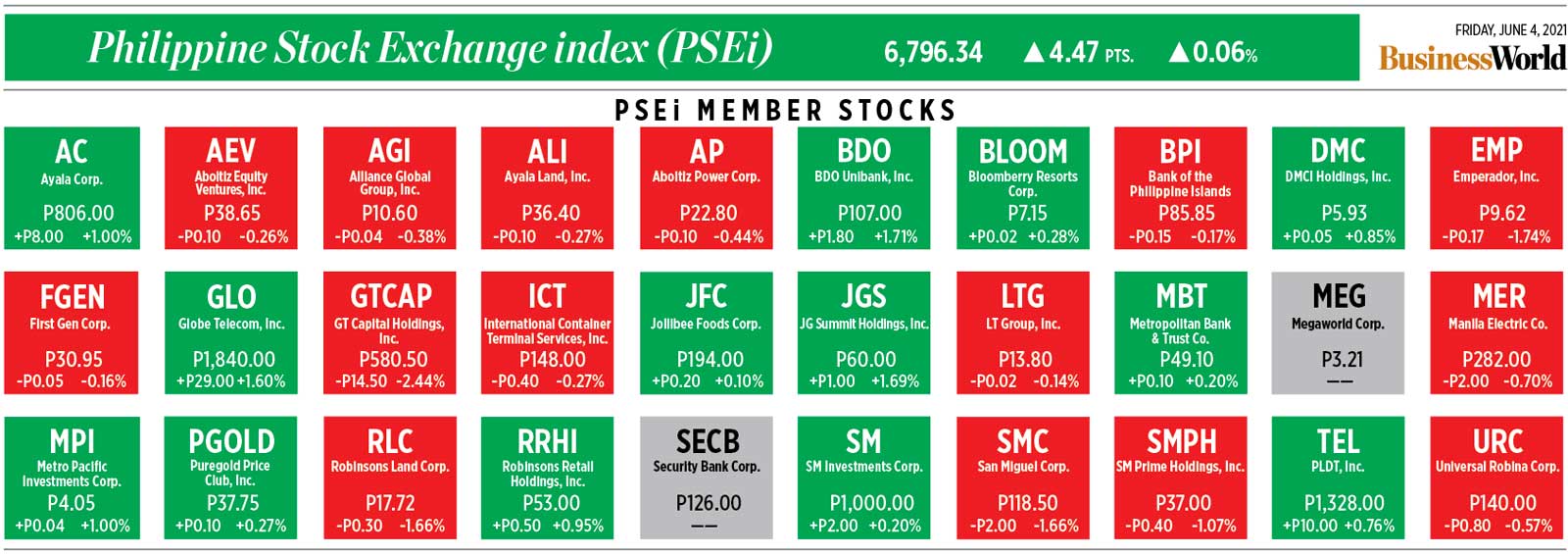
How PSEi member stocks performed — June 4, 2021

Here’s a quick glance at how PSEi stocks fared on Friday, June 4, 2021.


Peso may rise further as government continues COVID-19 vaccine rollout

BW FILE PHOTO

THE PESO could rise further versus the dollar this week as the government continues its coronavirus disease 2019 (COVID-19) vaccine rollout and as cases in Metro Manila showed a declining trend.

The local unit closed at P47.75 per dollar on Friday, gaining 7.5 centavos from its P47.825 finish on Thursday, based on data from the Bankers Association of the Philippines.

The local unit also strengthened by five centavos from its P47.80-per-dollar close on May 28.

Data showing steady inflation in May boosted the peso on Friday, Rizal Commercial Banking Corp. Chief Economist Michael L. Ricafort said.

Headline inflation was steady for the third straight month at 4.5% in May, the Philippine Statistics Authority reported on Friday, matching market expectations.

The figure was within the 4-4.8% estimate by the BSP for that month and also matched the median estimate in a BusinessWorld poll.

Year to date, inflation was 4.4%, higher than the 2-4% target of the central bank and its revised forecast of 3.9% for the year. May was the fifth month in a row that inflation went beyond target.

Meanwhile, a trader said the elevated global oil prices also affected peso-dollar trading last week.

For this week, Mr. Ricafort said the market will watch out for the release of April unemployment data on Tuesday, as well as trade data due to come out on Wednesday.

He added that the declining trend in new COVID-19 cases as well as progress in the government’s inoculation program could help drive market sentiment this week.

The Health department reported 6,955 new coronavirus cases on Saturday, which brought the country’s tally to over 1.26 million.

The department Mindanao accounted for 25% of the new cases reported last week.

Meanwhile, the trader said the market could take its cue from the US jobs data released last week, which was weaker than expected.

The dollar fell on Friday after US nonfarm payrolls data showed hiring increased in May as the pandemic eased, but not as much as expected, tempering expectations the Federal Reserve will tighten monetary policy sooner, rather than later, Reuters reported.

Nonfarm payrolls increased by a solid 559,000 jobs last month, helped by higher COVID-19 vaccination rates, but that was below the consensus forecast for 650,000 jobs added in May.

The softer-than-expected report means there is no urgency for the Fed to begin tapering its monthly purchase of $120 billion in bonds to support the economy.

At 3 p.m. ET on Friday, the dollar index was down 0.38% at 90.135, dropping from a three-week high earlier in the session.

The dollar had rallied on Thursday, notching up its biggest daily gain in a month, after weekly US jobless claims fell below 400,000 for the first time since the pandemic started more than a year ago and private payrolls increased by significantly more than expected.

For this week, Mr. Ricafort gave a forecast range of P47.90 to P48 per dollar, while the trader expects the local unit to move within the P47.70 to P48 levels. — IBC with Reuters

Stocks to move sideways on steady May inflation

PHILIPPINE STAR/KRIZ JOHN ROSALES

PHILIPPINE shares are expected to trade within a narrow range this week with an upward bias following the release of May inflation data, which showed that the average rise in prices was steady for a third straight month.

The Philippine Stock Exchange index (PSEi) went up by 4.47 points or 0.06% to close at 6,796.34 on Friday, while the broader all shares index increased by 4.57 points or 0.11% to 4,108.59.

Week on week, the benchmark index gained 121.83 points from its 6,674.51 finish on May 28.

“It’s been a sharp rally for the [last] this week that took off from a much oversold level, highlighting tactical opportunities for investors,” First Metro Investment Corp. (FMIC) Head of Research Cristina S. Ulang said in a Viber message on Friday.

Rizal Commercial Banking Corp. (RCBC) Chief Economist Michael L. Ricafort attributed the market’s gains last week to the progress on economic reform bills at the House of Representatives.

“Markets have already been pricing in developments/expectations related to the 2022 presidential elections (if this would create new excitement),” Mr. Ricafort said in an e-mail on Friday.

For this week, the analysts said the PSE index will move sideways due to May inflation data as ahead of the release of other economic reports, which, along with developments in the coronavirus disease 2019 (COVID-19) situation in the country, could dictate the pace of the economy’s reopening.

“[This] week, the PSEi will trade at a narrow range with an upward bias, propped by supportive inflation and dovish talk by the BSP (Bangko Sentral ng Pilipinas) governor,” FMIC’s Ms. Ulang said.

Inflation was steady for the third straight month at 4.5% in May, the Philippine Statistics Authority reported on Friday, matching market expectations.

The figure was within the 4-4.8% estimate by the BSP for that month and also matched the median estimate in a BusinessWorld poll.

Year to date, inflation was 4.4%, higher than the 2-4% target of the central bank and its revised forecast of 3.9% for the year. May was the fifth month in a row that inflation went beyond target.

“The BSP remains watchful over the evolving economic conditions and challenges brought about by the pandemic to ensure that the monetary policy stance remains consistent with its price and financial stability objectives,” BSP Governor Benjamin E. Diokno said in a statement on Friday.

Meanwhile, RCBC’s Mr. Ricafort said he expects the index to close between 6,300 to 6,900 this week ahead of the release of trade and unemployment data. Investors will also watch out for COVID-19 developments, particularly the trend in cases as well as the continued rollout of vaccines, he added.

“The expected increase in COVID-19 vaccine arrivals… could help further reduce new COVID-19 cases in a more meaningful manner, justify further reopening of the economy, including some hard-hit industries/sectors, thereby improve confidence by consumers and businesses, and provide greater support to the overall economic recovery prospects,” Mr. Ricafort said. — KCGV

1M more CoronaVac doses arrive from China

@PNAGOVPH

A MILLION more doses of CoronaVac from China arrived in Manila on Sunday, in a boost to the government’s vaccination drive.

The vaccines would be given out in areas experiencing a fresh surge in coronavirus infections including Metro Manila, Zamboanga, Cagayan de Oro, Butuan and provinces in Western Visayas, vaccine czar Carlito G. Galvez, Jr. told reporters on Sunday.

This brought the total CoronaVac doses made by Sinovac Biotech Ltd. that have arrived to 6.5 million, including a million doses donated by the Chinese government, the task force tweeted.

Sunday’s shipment is the first shipment of CoronaVac shots that arrived in the country after the World Health Organization (WHO) included the vaccine in its list of drugs approved for emergency use.

The WHO validated CoronaVac for emergency use after reviewing the latest clinical data on the vaccine’s safety as well as the company’s manufacturing practice.

It said the vaccine prevented symptomatic disease in 51% of those vaccinated and prevented severe COVID-19 and hospitalization in 100% of the studied population.

A WHO emergency listing allows CoronaVac to be distributed under a global initiative for equal access.

China has approved the emergency use of CoronaVac by people aged three to 17 years, Reuters reported at the weekend, citing Sinovac chairman Yin Weidong.

China had given out more than 720 million doses of vaccines to people aged 18 and above as of June 3.

Preliminary results from Phase I and II clinical trials showed the vaccine could trigger immune response in three to 17 year-old participants, and most adverse reactions were mild, Reuters said.

The presidential palace earlier said the WHO approval would boost vaccine confidence in the Philippines.

The Department of Health (DoH) reported 7,228 coronavirus infections on Sunday, bringing the total to 1.27 million.

The death toll rose by 166 to 21,898, while recoveries increased by 7,372 to 1.19 million, it said in a bulletin.

There were 59,337 active cases, 1.3% of which were critical, 93.5% were mild, 2.4% did not show symptoms, 1.7% were severe and 1.15% were moderate.

It said 23 duplicates had been removed from the tally, 18 of which were tagged as recoveries. A total of 109 recoveries were reclassified as deaths. Three laboratories failed to submit data on June 4, the agency said.

About 12.8 million Filipinos have been tested for the coronavirus as of June 4, according to DoH’s tracker website.

The coronavirus has sickened about 173.7 million and killed 3.7 million people worldwide, according to the Worldometers website, citing various sources including data from the World Health Organization.

About 156.6 million people have recovered, it said. The government is expected to take delivery of about 10 million vaccine doses from different brands this month. 

Last week, it took delivery of about 50,000 more doses of Sputnik V coronavirus vaccines from Russia on Sunday night, bringing the total to 80,000 shots.

The palace earlier said about 1.3 million doses of the vaccine made by Pfizer, Inc. and 900,000 doses of the shot made by AstraZeneca Plc would arrive by the second week of June.

The government is expecting about 200,000 doses of the vaccine made by Moderna, Inc.

About 5.38 million vaccines have been given out as of June 2. About 1.29 million people have completed their doses.

Meanwhile, foreign retirees with a special resident retiree’s visa may now enter the Philippines without an entry exemption document, according to the Immigration bureau. In a statement on Sunday, Immigration Commissioner Jaime H. Morente said the new rule is pursuant to an inter-agency task force order as recommended by the Tourism department.

He said those holding tourist visas must first get an entry exemption document from the Philippines’ foreign service posts overseas before they can enter the country.

A special resident retiree’s visa is given to foreign nationals who would like to make the Philippines their second home or investment destination, according to the Philippine Retirement Authority’s website.

The body is attached to the Department of Tourism and is in-charge of issuing such visas.

Immigration Port Operations Division chief Carlos B. Capulong said passengers arriving in the country must still present their 10-day quarantine hotel or facility booking, or a seven-day booking for those who have been fully vaccinated.

He added that passengers coming from seven countries with travel bans — India, Pakistan, Nepal, Sri Lanka, Bangladesh, Oman and the United Arab Emirates — are barred from entering the Philippines until June 15. — Kyle Aristophere T. Atienza and Bianca Angelica D. Añago

ADVERTISEMENT
ADVERTISEMENT