Sunshine Classics will finally be back this June 20 at the exclusive YouTube channel of Sunshine Place: Senior Recreation Center. Interested viewers will get a private link to the concert upon ticket purchase. The viewing of each concerto will be available for viewing throughout the year. With one purchase and click, ticket holders will have access to the concert videos as many times as they want.
Premiering this month is the second of the five-part series entitled Singing in Sunshine, a voice and piano concerto featuring a soprano who “possesses a voice with remarkable flexibility and a truly commanding musical presence”, Stefanie Quintin – Avila. Joining her is tenor Ivan Nery, “an artist who possesses a beautiful voice that is smooth and clear and with a wide range of coloring plus unsullied musicality”, 1st prize in the Jovita Fuentes Vocal Competition and Aliw Award nominee for best actor in a musical (Noli Me Tangere the opera) and best classical performer. To accompany the singers, will be Mariel Ilusorio, renowned Filipina Pianist, who pursued her musical studies in the Juilliard School, Oberlin Conservatory, and the State Academy of Music and Theater Hannover, Germany.
Singing in Sunshine will feature an all-French program, with songs like Ange Adorable (Charles Gounod, from Romeo & Juliet), L’heureExquise (Reynaldo Hahn, from Chanson’s Arises), Vainement Ma Bien Aimée (Edouard Lalo, from the King of Y’s), Elle a fui la Tourterelle (Jacques Offenbach, fom Tales of Hoffmann), and La Vie en Rose (Edith Piaf) to name a few. This makes it a performance you wouldn’t want to miss.
This series is made possible through the generosity of individual sponsors, as well as 98.7 DZFE and Clark Trading Freeport Trading Resources, Inc.
Package ticket rates are available for all 5 concerts, choose 4, choose 3 or solo concert.
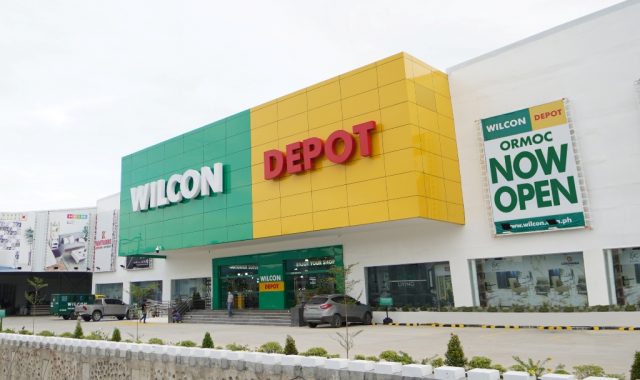
Wilcon Depot, the Philippines’ leading home improvement and construction supplies retailer, launched its newest provincial store located in Ormoc City, Leyte on June 11, 2021.
Situated at Sitio Haubon, Brgy. Tambulilid, Ormoc City, Leyte, Wilcon Depot Ormoc serves as the second store in the province of Leyte, after opening Wilcon Depot Tacloban in April 2018.
Wilcon Depot Ormoc is an exceptional haven for homeowners and builders alike—offering a wide variety of home improvement and construction supplies. Everything you need for your home is at Wilcon Depot. Valued Wilcon customers can experience the satisfaction of shopping at Wilcon Depot Ormoc daily from 8:00 AM-7:00 PM.
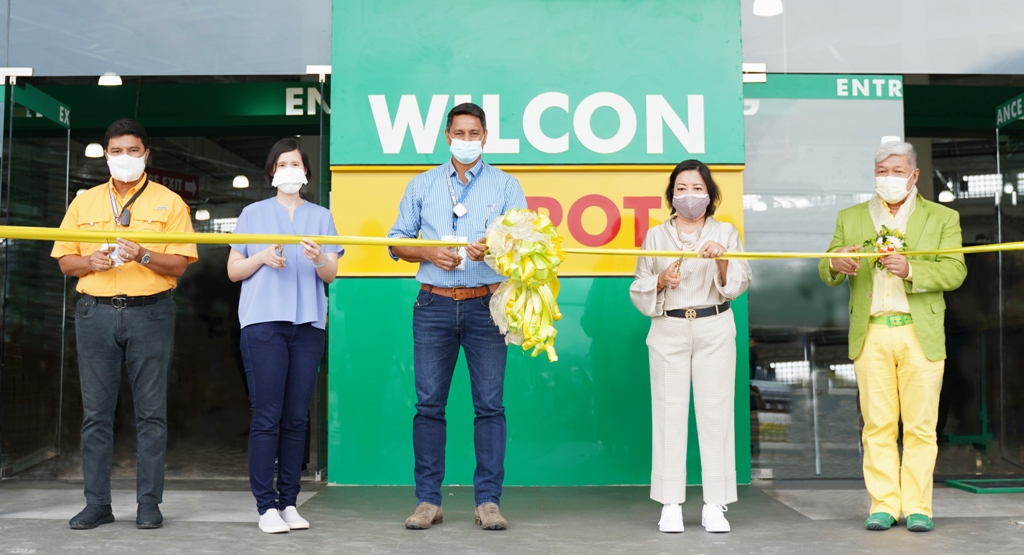
The successful opening of its 66th store nationwide was celebrated with the presence of Wilcon Depot President and CEO Lorraine Belo-Cincochan and SEVP-COO Rosemarie Bosch-Ong and was graced together with Ormoc City Mayor Richard Gomez, City Councilor Vincent Rama, and Eco Architect and Interior Designer James Jao.
IMAGE SHOWS FROM LEFT, Ormoc City Councilor Vincent Rama, Wilcon Depot President and CEO Lorraine Belo-Cincochan, Ormoc City Mayor Richard Gomez, Wilcon Depot SEVP-COO Rosemarie Bosch, and Eco Architect and Interior Designer James Jao
“Wilcon Depot Ormoc is the third store to open this 2021. All homeowners and builders across the country can expect more store openings to be announced this year in fulfillment of our #FlyingHighto100 store expansion campaign, wherein we aim to have 100 stores nationwide by 2025, barring any unexpected external factors,” said Wilcon Depot President and CEO Lorraine Belo-Cincochan.
Ormoc City is a highly urbanized coastal port, which serves as the center for commerce and industry of Western Leyte. With the local government’s numerous infrastructure development projects, the inauguration of the Wilcon Depot Ormoc was very timely and helpful. The new depot store will serve as the Ormocanons partner in their home building and improvement projects.
Ormocanons can now explore their new and favorite home shopping destination and shop through the expansive store carrying a wide array of product selections ranging from Tiles, Sanitarywares, Plumbing, Furniture, Home Interior, Building Materials, Hardware, Electrical, Appliances, and other DIY items.
Wilcon Depot Ormoc offers an endless aisle of home products and solutions. You’ll never run out of options as it provides everything you need for your home. Discover the various in-house and exclusive brands like GROHE and KOHLER Sanitarywares, FRANKE Kitchen Systems, POZZI Bathroom Solutions, Sanitarywares, Whirlpool Bathtubs, Ceramics, and Shower Enclosures, ARISTON Water Heaters, GEBERIT Monolith Puro, MACROAIR HVLS Fans, BULL Outdoor Products, RUBI Tile Cutter, and REHAU Premium PPR pipes.
Premium quality Italian tile brands such as NOVABELL, ENERGIE KER, GARDENIA, IMOLA, HERBERIA, OPERA, CASTELVETRO, KERADOM, NAXOS, DOM, and VERSACE alongside with Spanish tile brands ALCALAGRES, GRESPANIA, ROCERSA, CIFRE, EMIGRES, KEROS, TESANY, ONIX, OSET, VITACER, GRUPO HALCON, MYR, ECO CERAMICA, and ETILES are showcased in their Tile Studio.
Asian tile brands are also available like ARTE, SOL, LOLA, HUANQIU, VERONA, PICASSO MOSAIC, ROMAN, MULIA, KIA, CHINA NATURAL GRANITE, BASEL, SAIGRES, and GEMMA.
HERITAGE Furniture and HEIM Home Interior, Furniture and Decor are exhibited at the Home Living Showroom. HAMDEN Kitchen Appliances, KAZE Ceiling Fans and Air-conditioners, and ALPHALUX Lighting Solutions are displayed in the Appliance, Kitchen, Lighting section. HOMEBASICS and INTERDESIGN Housewares, BIRKE faucets and Bathroom Accessories, SEFA Specialty Bathroom Faucets, Bathroom Accessories, Shower Heads, and Kitchen Organizers, SUNCRUST BBQ Grills, LANDJACK Bicycles, CROWN and PRUSSIA Kitchen Sink QUARTEX Quartz Kitchen Sink, ELECTRON Generators, DIRECT HARDWARE, TRUPER Tools, P.TECH Builder’s Aid and Quartz Stone, FOREST Wood Products, IGLOO and RUBBERMAID Coolers, UNITED SOLUTIONS Outdoor trash bins, and SOLUTHERM PPR pipes and 304 stainless Steel Pipe Fittings are displayed in the DIY Section of the store.
In creating an excellent shopping journey throughout the store, which is the heart of their brand, Wilcon Depot gives the utmost customer satisfaction with their Design Hub, Home Living Showroom, Tile Studio, and Architects, Builders, Contractors, Designers, and Engineers (ABCDE) Lounge including their value-added services such as ample free parking spaces, reliable delivery service, and tile cutting service.
“Alongside with the recent success of our Wilcon Online Store launch, the opening of Wilcon Depot Ormoc is one remarkable step towards fulfilling our aspiration to be the top-of-mind home improvement retailer with the strong presence of our physical stores and online store as we continuously bring our high-quality products and excellent customer experience closer than ever to our customers,” Wilcon Depot SEVP-Chief Operating Officer Rosemarie Bosch-Ong stated.
For a bigger and better home shopping experience, valued customers nationwide can now shop online at Wilcon by visiting shop.wilcon.com.ph. Shop for all your all-around home needs and have your items delivered right at your doorsteps or choose to pick-up in store. Customers can conveniently pay with their credit card, debit card, BancNet, and GCash.
Online home shopping-lovers can now add to cart and check out Wilcon products at Wilcon Flagship Store on LazMall by clicking here: https://bit.ly/WilconDepotLazMall
Customers can also enjoy the Browse, Call, and Collect or Deliver and Wilcon Virtual Tour, and these shopping options give you a safe and convenient shopping journey. Wilcon also provides contactless payment options like bank transfers, GCash, PayMaya, Instapay, PesoNet, WeChat, and Alipay for customers’ convenience.
With adherence to health and safety protocols to fight against COVID-19, the company continuously implements necessary precautionary measures in all of its stores to ensure their employees’ safety, health, and well-being a priority, same as with their valued customers.
Start building big ideas for your home and experience more of what Wilcon has to offer. Shop now and visit their newest store in Sitio Haubon, Brgy. Tambulilid, Ormoc City, Leyte.
Wilcon makes loyalty more rewarding for their valued customers with its loyalty program that offers exclusive perks and discounts. The Wilcon Loyalty Mobile App allows customers to earn and check their points, as well as convert their purchases to rewards after they sign up. The Wilcon Loyalty Mobile App is available for download at the Google Play Store and App Store for free.
Two families behind the best-selling Lucky Me! instant noodles are sitting on a fortune worth billions of dollars after a record IPO in the Philippines, the latest example of the vast wealth being created in Asia as companies go public.
The families from Indonesia and the Philippines own almost 70% of the Monde Nissin Corp., which started trading last week after raising more than $1 billion in its initial public offering. Together, they’re worth about $3.6 billion, according to the Bloomberg Billionaires Index.
Indonesian Hartono Kweefanus, the chairman of the board, is the largest shareholder with a 23% stake. His brother Hoediono, the vice chairman, owns 5.3%. And Hoediono’s wife Betty Ang from the Philippines, the president, has 18%.
Southeast Asia is increasingly minting fortunes as more companies list their shares in the fast-growing region. Singapore-based Grab Holdings Inc. announced plans to go public this year through a merger with a special purpose acquisition company, which is set to be one the world’s largest-ever SPAC deals.
Monde Nissin’s brands have been household names in the Philippines for more than four decades, but the company has thrived during the pandemic as lockdowns forced people to stay at home.
It’s actually been “a good time,” said Stephen CuUnjieng, a senior adviser to investment bank Evercore Inc., which works with Monde Nissin. “Healthy, packaged processed food” took the place of dining out during lockdowns, he said.
Monde Nissin started as a biscuit manufacturer in 1979, according to its IPO prospectus. A company spokesman said the Kweefanuses’ father, Hidayat Darmono, founded the firm. Incorporation records show Ang as a director and the largest shareholder at the time. The spokesman didn’t comment on the families’ net worth.
About a decade later, Monde Nissin branched out into instant noodles, launching the Lucky Me! line. Perhaps every Filipino grew up with this brand and keeps coming back to it, the company said on its website.
Today, Lucky Me! are the best-selling instant noodles in the Philippines, accounting for 68% of the market, according to the IPO prospectus. They made up half of Monde’s P68 billion ($1.4 billion) in sales last year.
The food giant, which also sells SkyFlakes crackers and Quorn alternative meat, has a presence in more than 30 countries and posted a 26% jump in profit last year.
Monde still has room for growth, said Arielle Santos, a consumer analyst at brokerage Regina Capital Development Corp. “Noodle consumption here in the Philippines hasn’t reached its saturation level yet.
”
The firm will use some of the IPO proceeds to expand its alternative meat business, Monde Chief Executive Officer Henry Soesanto, an extended family member who also sold shares in the IPO, said last week. This area should “grow exponentially,” he said in an interview on Bloomberg Television.
The company acquired Britain’s meat-substitute maker Quorn Foods Ltd. for 550 million pounds ($780 million) in 2015. Monde’s prospectus cites a Barclays Plc estimate that the global meat-alternatives market will expand to as much as $140 billion by 2029.
Monde wanted to have the money ready to use “immediately for our capacity expansion,” Soesanto said. “We’re seeing it as a good time to pursue this IPO.”
Evercore’s CuUnjieng, who’s from the Philippines, says the company’s Lucky Me! noodles are a favorite for many in the country. He recalled how his son always asked his mom to bring them home when the family was living in the U.S.
“They are innovators,” he said of Monde. “They’ve been very good at knowing what their customers want.” — Bloomberg
CARBIS BAY, England – British Prime Minister Boris Johnson expects the Group of Seven to agree to donate 1 billion COVID-19 vaccine doses to poorer countries during its summit starting on Friday, and help inoculate the world by the end of next year.
Just hours after U.S. President Joe Biden vowed to supercharge the battle against the coronavirus with a donation of 500 million Pfizer shots, Johnson said Britain would give at least 100 million surplus vaccines to the poorest nations.
Johnson has already called on G7 leaders to commit to vaccinate the entire world by the end of 2022 and the group is expected to pledge 1 billion doses during its three-day summit in the English seaside resort of Carbis Bay.
Some campaign groups condemned the plan as a drop in the ocean, with Oxfam estimating that nearly 4 billion people will depend for vaccines on COVAX, the programme that distributes COVID-19 shots to low and middle income countries.
“As a result of the success of the UK’s vaccine programme we are now in a position to share some of our surplus doses with those who need them,” Johnson will say on Friday, according to excerpts of the announcement released by his office.
“In doing so we will take a massive step towards beating this pandemic for good.”
COVID-19 has killed around 3.9 million people and ripped through the global economy, with infections reported in more than 210 countries and territories since the first cases were identified in China in December 2019.
GLOBAL EFFORT
While scientists have brought vaccines to market at breakneck speeds – Britain has given a first dose to 77% of its adult population and the United States 64% – they say the pandemic will only end once all countries have been vaccinated.
With a global population nearing 8 billion and most people needing two doses, if not booster shots to tackle variants as well, campaigners said the commitments marked a start but that world leaders needed to go much further, and much faster.
“If the best G7 leaders can manage is to donate 1 billion vaccine doses then this summit will have been a failure,” Oxfam’s health policy manager Anna Marriott said, adding that the world would need 11 billion doses to end the pandemic.
Oxfam also called on G7 leaders to support a waiver on the intellectual property behind the vaccines.
“The lives of millions of people in developing countries should never be dependent on the goodwill of rich nations and profit-hungry pharmaceutical corporations,” Marriott said.
Of the 100 million British shots, 80 million will go to the COVAX programme led by the World Health Organization (WHO) and the rest will be shared bilaterally with countries in need.
Johnson echoed Biden in calling on his fellow leaders to make similar pledges and for pharmaceutical companies to adopt the Oxford-AstraZeneca model of providing vaccines at cost for the duration of the pandemic.
Leaving poorer countries to deal with the pandemic alone risks allowing the virus to further mutate and evade vaccines. Charities have also said that logistical support will be needed to help administer large numbers of vaccines in poorer countries.
The British doses will be drawn from the stock it has already procured for its domestic programme, and will come from suppliers Oxford-AstraZeneca, Pfizer-BioNTech, Janssen, Moderna and others. — Reuters
The demand for logistics and courier services has risen significantly during the COVID-19 pandemic, especially now that many Filipinos rely on these services for their essentials and errands. These services remained operational during the pandemic, and it is imperative for them to innovate to keep their customers and rider fleet safe and secure.
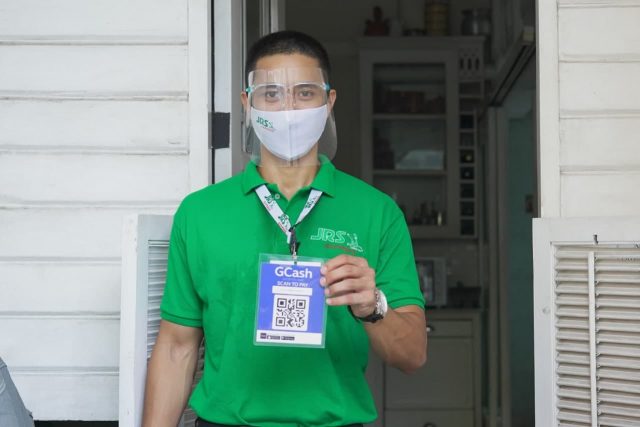
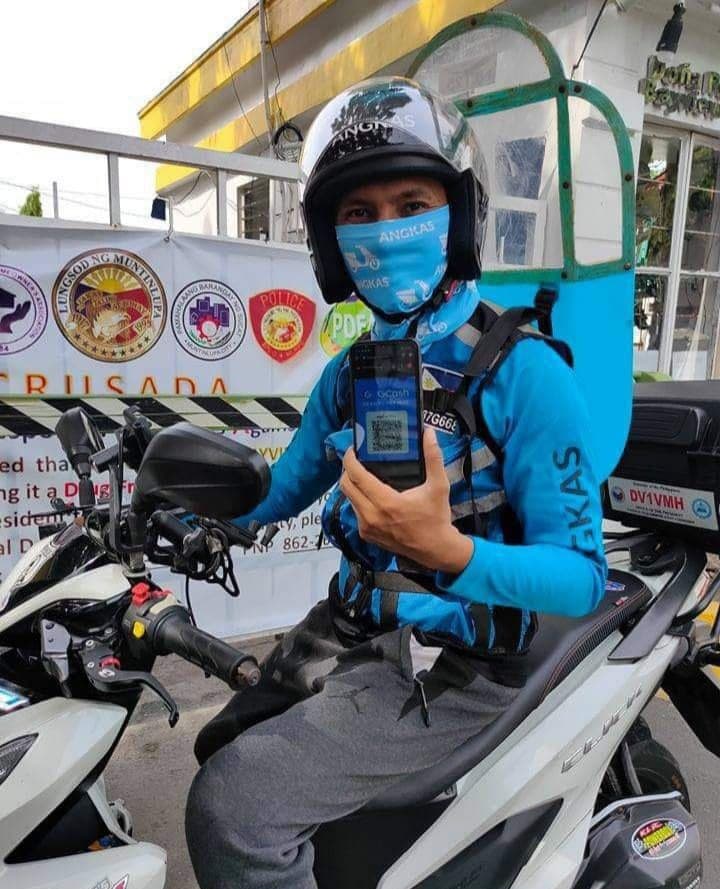
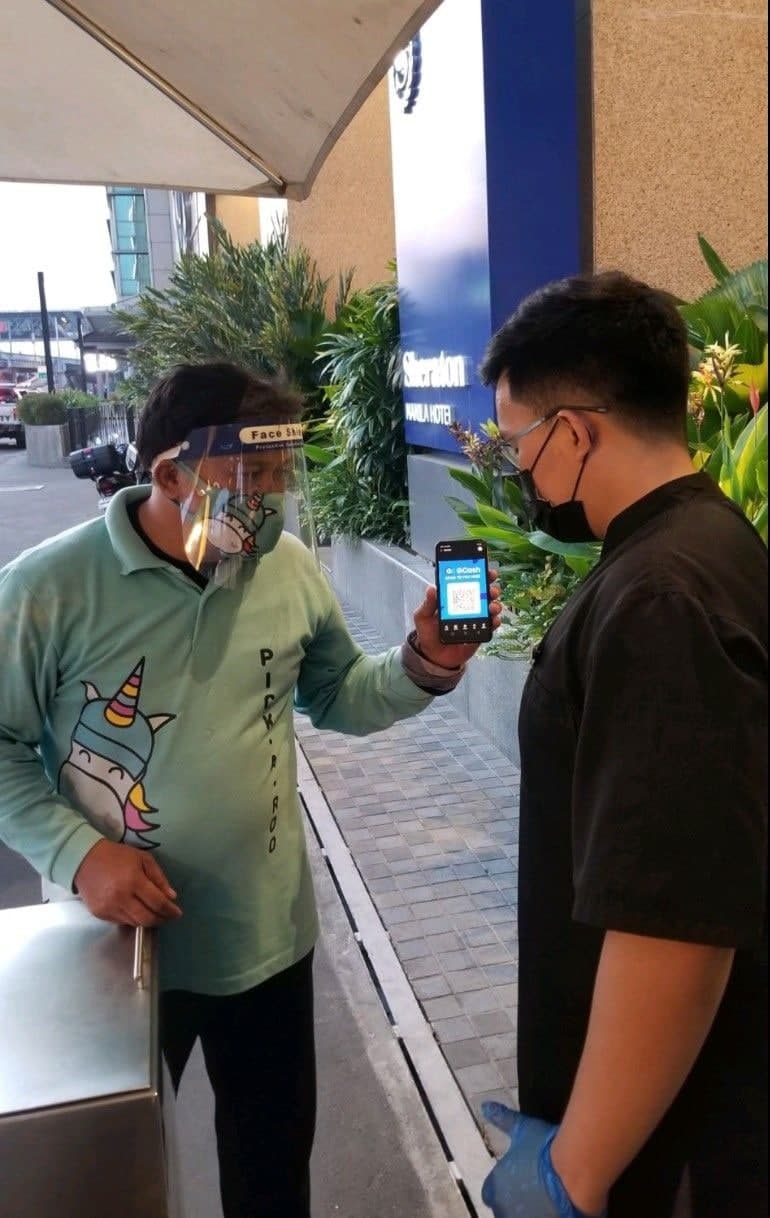
In this regard, GCash, the leading mobile wallet in the Philippines, has partnered with key logistics and delivery service firms to provide safe and secure payment solutions for both their customers and riders via its GCash QR code service.
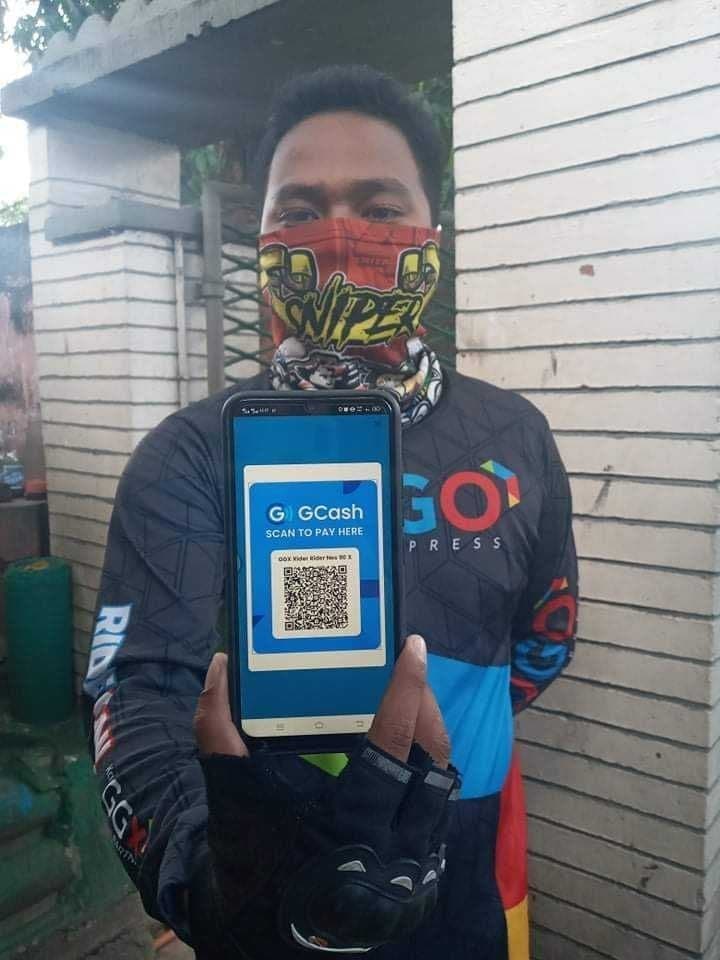
GCash on Delivery via the QR code provides customers with GCash accounts the option to scan-to-pay a rider’s QR code to settle delivery and item fees — no need to pay in cash or worry about change! Riders meanwhile will receive an SMS from GCash confirming the transaction payment. This confirmation happens in real-time, so transactions reflect immediately, and give riders and logistics firms the peace of mind that their money is secured.
“GCash’s innovations are here to help businesses find solutions and thrive even during the pandemic. The surge in adoption in digital payments by consumers, even by local governments and national agencies, are a testament on the effectiveness and efficiency of a cashless economy,” said Martha Sazon, president and CEO of GCash. “Logistics, transport, and delivery services are all classified as essential services during the pandemic. It would be very challenging to the national economy if they’re unable to operate,” she added.
The GCash QR code is a popular and convenient option for many customers, and various logistics firms have already utilized it for their businesses. These include leading companies like Angkas, Pick.A.Roo, Gogo Xpress, Entrego, and JRS Express, to name a few. Aside from generating more sales by expanding their accepted payment methods, they are keeping their consumers safe amidst the pandemic by providing a contactless way to pay.
Over 13,000 riders from various logistics services nationwide are accepting GCash QR as a payment method, and it is massively gaining adoption. The uber-popular ride-hailing app Angkas for example, has enabled its riders to accept GCash QR. Its riders are equipped with a digital QR code, where customers can simply scan-to-pay at their convenience.
Close to half the Filipino population have GCash.
“Navigating the new normal is challenging for all of us, and we in GCash, are using our industry expertise to equip our partners to thrive and take control as we enable them with our business solutions,” added Macky Limgenco II, GCash’s Distribution and CICO head.
Launched in 2017, GCash QR was the first-ever QR-based payment solution in the Philippines. It has been adopted by multiple retail establishments and malls nationwide and is even enabling MSMEs and transportation vehicles, such as tricycle drivers and sari-sari stores, to accept payments digitally. To date, there are over 1.7 million businesses and service providers that accept GCash nationwide.
nanoe™ X Technology: The Added Protection You Need in the Global Pandemic
Read on to learn how to keep your family cared for and protected 24/7!
Cleanliness is one of every family’s top priorities–especially in this new normal. Aside from having clean hands, clean gadgets, and clean home, we also need to be sure that the air we breathe is clean and healthy. By maintaining a safe environment in our own spaces, we also contribute to the prevention of the novel coronavirus from spreading.
According to the World Health Organization (WHO), poor air quality puts people with underlying medical conditions at a higher risk of developing severe diseases from COVID infection.[1]Hence, we see the importance of clean air for our health and well-being, especially during the current global health crisis.
Building a COVID-Free Home with Panasonic nanoe™ X Technology
More than a year into this pandemic and the world is still trying to search for more ways to keep everyone safe from contracting the disease. Both the public and private sectors are always on the lookout for more ways to protect our families. Panasonic, a trusted brand that provides #JapanQuality products, dug even deeper to find more solutions that would cater to people in the next and better normal.
Panasonic helps you protect yourself and your family through nanoe™ X Technology, which are nano-sized atomized water particles released by Panasonic products, such as its Premium Inverter Split Type and Deluxe Inverter Split Type Air Conditioners. nanoe™ X has been certified by Texcell, a French global contract research organization, to inhibit 99.7% of the novel coronavirus in a 6.7m3 space in just 24 hours.[2]It deodorizes foul odors, inhibits the growth of bacteria and viruses, provides moisture to the skin and hair, and is effective in eliminating dust, allergens, and pollens for a fresher, cleaner indoor environment—keeping your living space fresh and clean for you and your family.
Keeping the Family Safe and Worry-Free
In need of 24-hour superior virus protection to-go? Panasonic Portable nanoe™ X Generator helps you stay protected anywhere. Lightweight and compact, it is the perfect must-have for outdoor errands and activities such as a trip to the grocery store or when you go to the bank. Whether inside your car or in your working space at home or in the office, you can ensure that viruses and bacteria are eliminated.
The portable device is powered by the same nanoe™ X Technology in Panasonic Air Conditioners that is certified by Texcell to inhibit the novel coronavirus by 99.7% in a 6.7m3 space in just 24 hours.[3]
Create a safer environment at home and make sure your family breathes clean air with the help of Panasonic nanoe™ X Technology. Get your Panasonic Air Conditioner with nanoe™ X and Panasonic Portable nanoe™ X Generator now and start building a COVID-free home—for fresher and cleaner days ahead.
BusinessWorld Insights, Eastern Communications hold webinar on SMEs in the Now Normal
Being the backbone of the Philippine economy, micro, small, and medium enterprises (MSMEs) are vital as the country steps onto the recovery stage.
According to a statement from the United Nations in 2020, MSMEs consists of 99.5% of the business establishments and employ approximately 63% of the workforce in the Philippines; and in the past years, they contributed 40% of the country’s gross domestic product.
But since the coronavirus disease 2019 (COVID-19) affected many MSMEs, they need tools for their maintenance and recuperation. Experts sought to help MSMEs by sharing details about those resources online, during a recent session of BusinessWorld Insights, in partnership with Eastern Communications, with the theme “Ready to Thrive: SMEs in the Now Normal”.
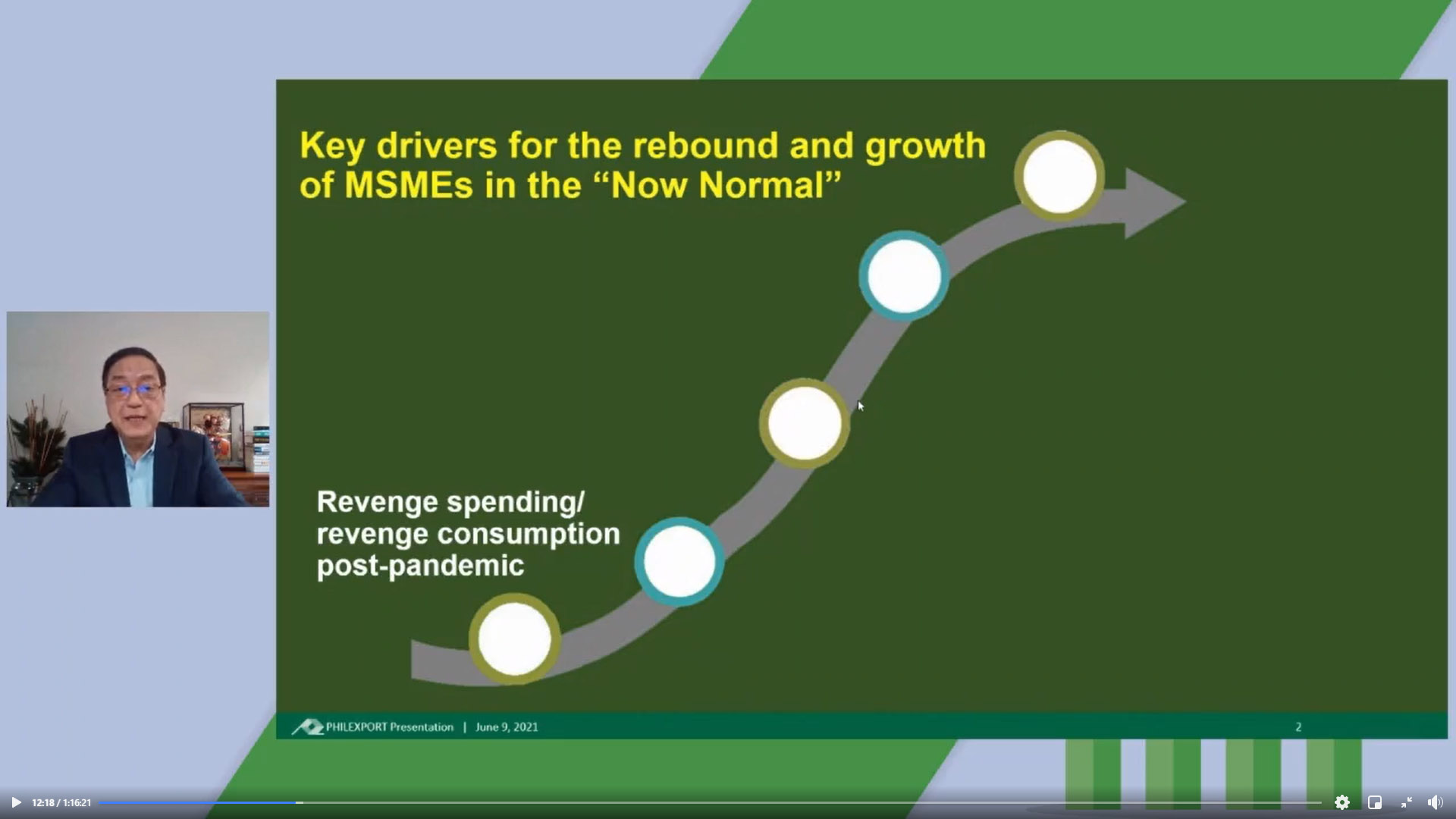
Starting off the discussion, Senen Perlada, executive vice-president and chief operating officer of Philippine Exporters Confederation, Inc., described the now normal track for MSMEs in the country.
“There is a powerful inclination among businesses, including MSMEs, [that] want the future to look much like the recent past,” Mr. Perlada said. “But this pandemic has wreaked havoc on forecasts and pro forma plans that were made simply by extrapolating recent experience into the near and distant future.”
He continued, “Many of the assumptions, tendencies, and habits that long proved to be reliable have suddenly lost much of their relevance unexpectedly. This has been more pronounced for MSMEs.”
Mr. Perlada specified that MSMEs face major challenges such as customer acquisition, conversion, and retention; hyper-competition; supply chain issues; bureaucratic opacity; lack of finance and resources; lack of digital infrastructure; connectivity issues; and digital talent acquisition and retention.
Nevertheless, he said there are key drivers for MSMEs to rebound and grow in the now normal. These are revenge spending; information and insight on “platformification”; accelerated digital transformation; greater global connections; and new opportunities for “phygital” business models.
Mr. Perlada also recognized MSMEs’ crucial contribution to job creation and the economy. “So for MSMEs, there is an urgent imperative to adjust to the new realities now to survive and eventually thrive on to the next normal,” he said.
Electronic guides for entrepreneurs
Innovative and useful resources are available online to guide MSMEs for their survival and recovery, as shared by Butch Meily, president of the Philippine Disaster Resilience Foundation (PDRF).
“One of our most important initiatives is helping MSMEs, both in being prepared for disasters and helping them recover,” Mr. Meily said.
He first talked about PDRF’s MSME guidebook. “It’s meant to be the primary reference material for small businesses to learn how to do business continuity plan, and to make them aware why it’s important,” he said.
MSMEs can also receive online mentoring with specific problems and other information about business recovery through a one-stop, digital hub called SIKAP. Another free online resource is QBO, which is established by a partnership between public and private sectors. The idea behind QBO is to help in priming startups, said Mr. Meily.
He also mentioned the iADAPT platform at PDRF’s website, where several courses are available.
Meanwhile, MSMEs may find inspiration from the comic book, Dimatinag. This creative guide features a superhero named Tina, whose journey encompasses trials as an MSME owner during the pandemic.
“Tina, while going through her struggles with her [small business], finds a gift to help her recover and prepare for disasters. And this is a Katatagan in a Box, a mobile app that everyone can make use of and download,” Mr. Meily explained.
The app shows “how to come up with a business continuity plan, prepare your small business for a crisis, and how to recover,” he added.
Cloud-based solutions for work
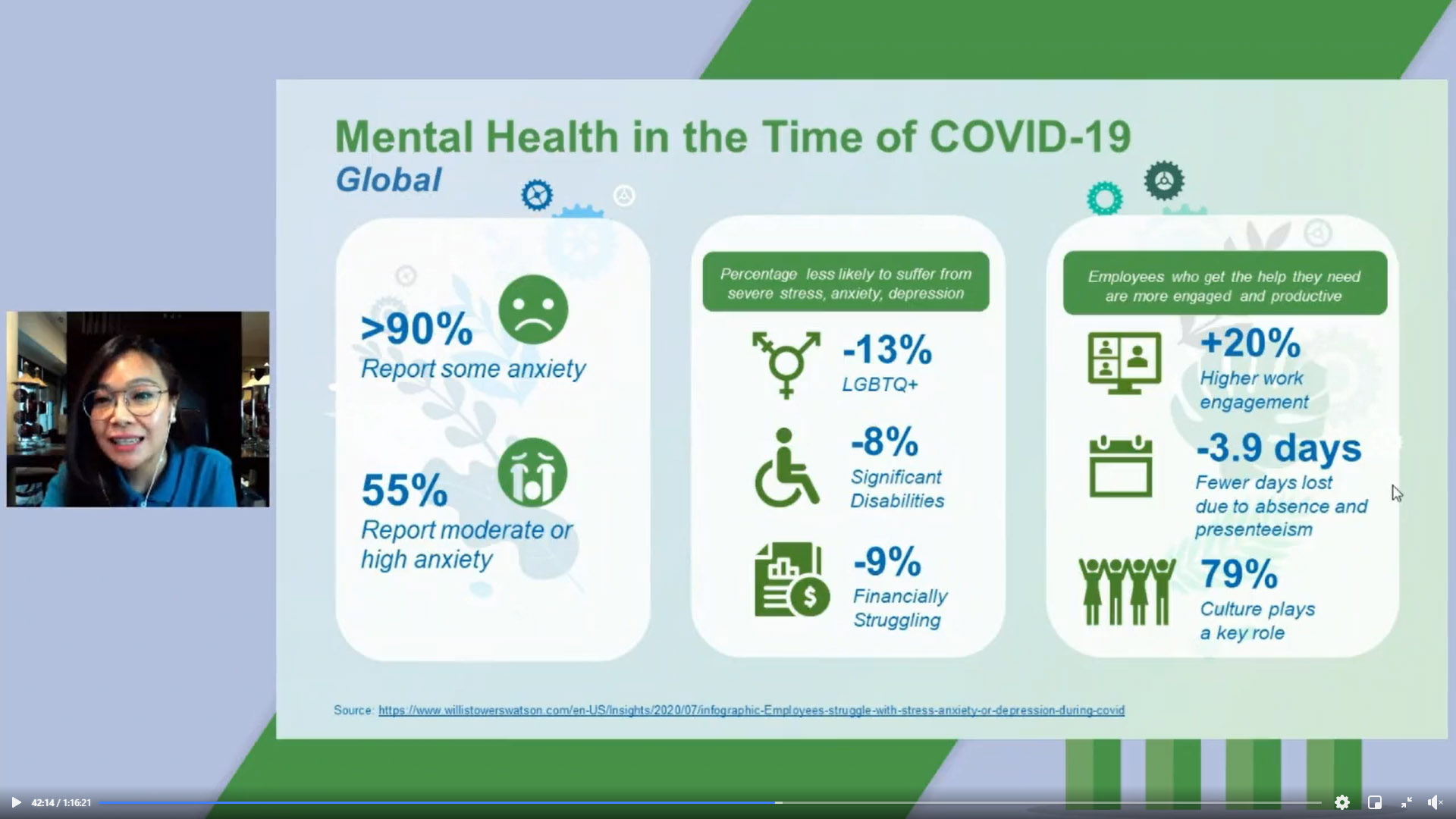
Addressing the concerns in remote work such as collaboration and communication difficulties, loneliness, and unable to unplug, Diana Crizel Montes, strategic segment marketing manager of Eastern Communications, shared how cloud-based solutions help in the effectiveness and well-being of the workforce.
“[There are] cloud-based applications that can allow for smooth, secure communication and collaboration even if you’re at different places,” Ms. Montes shared.
She explained how an app helps in their video call experience and allows them to work on reports or files together.
Meanwhile, to monitor a project or design a workflow, they use a project management tool.
“Given these tools, even we don’t see each other physically, we get to work as a team productively and effectively,” Ms. Montes said.
Eastern Communications also maximizes the use of these collaboration apps by staying connected even in activities not related to work, shared Ms. Montes.
“We have participated in physical and mental wellness activities such as yoga and other social events. These activities get to give us a sense of comfort, camaraderie, fun, and entertainment,” she said.
Ms. Montes also shared that she received reports on her amount of time using collaboration tools, which give her an idea of when to take on more work or slow down.
“So what [MSMEs] can do is to access and be informed of resources like activity and collaboration tools that can be made available to you to evolve and digitalize your business,” Ms. Montes advised. “And in the process, let’s not forget our employees and team members’ well-being. [They] remain to be one of our best resources.”
Rewatch the latest BusinessWorld Insights with the topic, “Ready to thrive: SMEs in the New Normal.”
Filipino Alex Eala and Russian doubles partner Oksana Selekhmeteva are through to the semifinals of the 2021 French Open girls’ doubles tournament. (Alex Eala Facebook page)
Filipino tennis ace Alex Eala and Russian doubles partner Oksana Selekhmeteva are through to the semifinals of the 2021 French Open girls’ doubles tournament.
The duo survived the tough challenge put up by the pair of Croatia’s Petra Marcinko and Hungary’s Natalia Szabanin in their quarterfinal joust, holding on to win, 7-6, 7-6, on Thursday (Manila time) at the Stade Roland-Garros in Paris, France.
Misses Eala and Selekhmeteva, who are the tournament’s top seeds, needed to regroup late in the opening set after their opponents rallied from a 2-5 deficit and took the upper hand, 6-5. They dug deep to level the count in the 12th game before completing the first-set salvage job.
In the second set, the Filipino-Russian duo got off to another strong start, racing to a 3-0 lead. But Misses Marcinko and Szabanin charged back anew to level the count at 6-6 and force a tiebreaker. Like what they did in the opener, however, the Eala- Selekhmeteva team held steady to wrap up the set and claim the match that sent it to the semifinals.
In the semis, Misses Eala and Selekhmeteva take on the Italian duo of Lisa Pigato and Eleonora Alvisi in a match set for later on Friday.
In the 2021 French Open girls’ doubles tournament, Ms. Eala, a Rafa Nadal Academy scholar and long-time Globe ambassador, is looking to win her second doubles title in a Grand Slam event. She and Indonesian partner Priska Nugroho won the 2020 Australian Open title. — Michael Angelo S. Murillo
The Philippines holds many stories of striving for freedom — before and even after the public reading of the “Act of the Proclamation of Independence of the Filipino People” on June 12, 1898.
In fact, July 4 was once the date recognized by Filipinos as the country’s Independence Day, which was granted by the United States after almost 50 years of colonization. But in 1962, former Philippine President Diosdado Macapagal officially moved the country’s Independence Day to June 12, through Proclamation No. 28 and confirmed through the Republic Act No. 4166.
“The irrefutable claim of June 12 as our day of freedom is bolstered by the fact that it is the culmination of many acts of patriotism and nationalism beginning with Lapu-Lapu’s defiance of the Spanish conquistador, Ferdinand Magellan, who died in battle in Mactan in 1521,” Mr. Macapagal said during his address at Luneta on June 12, 1962.
He recounted several instances when Filipinos battled, protested, or revolted against the colonial rule. Among others, he recognized Rajah Soliman’s heroism in 1571; the Pampanga revolt in 1660; the bravery of Diego and Gabriela Silang during the 1700s; the deaths of Fathers Mariano Gomez, Jose Burgos, and Jacinto Zamora in 1872; and finally on 1898, the freedom of the Philippines as formally declared by General Emilio Aguinaldo.
Such proclamation of independence, according to Mr. Macapagal, was “the first successful national revolution in Asia since the coming of the West, and the Republic to which it gave birth was the first democractic Republic outside of the Western hemisphere.”
“June 12, 1898 is pregnant with meaning not only for our people as the birthday of their sovereign nation but also for the world, since it was our Filipino patriots and leaders [Jose] Rizal, [Emilio] Aguinaldo, and [Andres] Bonifacio who led the nations of Asia in breaking the chains of colonialism in order that they may breathe the fresh air of individual liberty and national dignity,” he said.
“A nation is born into freedom on the day when such a people, molded into a nation by a process of cultural evolution and a sense of oneness born of common struggle and suffering, announces to the world that it asserts its natural right to liberty and is ready to defend it with blood, life, and honor,” Mr. Macapagal explained why he moved the date of the Philippine independence.
However, as mentioned, after General Aguinaldo’s declaration of the country’s freedom from Spain, the Philippines became an American colony, hence the commemoration of independence on July 4, 1946.
The initiative to acknowledge June 12 as the Philippine Independence Day originated from Gabriel F. Fabella, a historian and academician from the University of the Philippines (UP).
According to an article from UP’s Philippine Social Sciences Review, Mr. Fabella submitted a resolution at the Philippine Historical Commission in 1959, also sharing his four arguments to change the date of independence.
He stated that the Philippines could imitate how the United States claimed its own independence on July 4, 1776 instead of September 3, 1783 which was recognized by Britain. Commemorating July 4 as the day of Philippine independence, moreover, might be overshadowed by the celebration of United States from the world’s view.
It would also be timely if the Philippines’ insistence of its sovereignty and freedom as a nation would correspond to the moment it chose its own day of independence. Furthermore, celebrating the same date of independence might result to a negative outlook that the Philippines was still part or not truly free from the United States.
In this initiative, Mr. Fabella soon received support from prominent individuals like Alejandro Roces who was then the Secretary of Department of Education, and even General Aguinaldo himself. He finally attained his objective when Mr. Macapagal signed a proclamation on May 12, 1962, followed by its legislation on August 4, 1964.
Afterwards, Mr. Fabella is dubbed as the “Father of June 12”, the date now recognized as the Philippine Independence Day.
At present, 123 years after the reading of “Act of the Proclamation of Independence of the Filipino People” in 1898, the Philippines continues to honor June 12 as its day of freedom, remembering the long, difficult fight of Filipinos against oppression before and after the first day of Philippine independence.
Leading the celebration this year, the National Historical Commission of the Philippines themed the 123rd anniversary of the country’s Independence Day with “Spirit of Freedom in Unity and National Healing.” — Chelsey Keith P. Ignacio
FOREIGN DIRECT investments (FDI) to the Philippines surged in March, largely due to the low base effect from last year’s slump as well as an improvement in investor sentiment.
Data from the Bangko Sentral ng Pilipinas (BSP) showed FDI inflows in March more than doubled to $808 million from $337 million in the same month last year.
March FDI inflows were also a third bigger than the $608 million in February, but 16% smaller than the $961 million in January.
This helped fuel a 45% rise in first-quarter FDI inflows to $2.377 billion, from $1.638 billion in the same period of 2020.
“March 2021 FDI increased on account of improved investor sentiment amid the gradual resumption of domestic activities, while adhering to the minimum health standards, and government efforts to accelerate the vaccination program,” the central bank said.
FDIs infuse additional capital into the economy, which create more jobs and spur business activity.
Analysts attributed the significant improvement to the low base effect, after FDI inflows in March 2020 were affected by the strict lockdown implemented in Luzon at the onset of the pandemic.
“We all know that same time last year, all economic activity stopped as the world dealt with the spread of the coronavirus. Fast forward to this year, one will notice that somehow businesses and consumers have adjusted to the new normal,” UnionBank of the Philippines, Inc. Chief Economist Ruben Carlo O. Asuncion said in an e-mail.
Asian Institute of Management economist John Paolo R. Rivera said the FDI inflows in March reflect an improvement in investor sentiment as authorities appear to have more options to deal with the health crisis.
“This 2021, stakeholders have a better understanding of what is going on and how to respond to the best of their resources and abilities,” Mr. Rivera said.
The BSP attributed the higher FDI net inflows to the surge in investments in debt instruments or inter-company borrowings to $380 million in March, from $45 million in the same month last year.
Equity inflows jumped 52.8% to $349 million, as placements rose 35.9% to $377 million and withdrawals fell 42.6% to $28 million.
Equity capital placements were mainly sourced from Singapore, Japan, the United States, and the Netherlands, the central bank said.
The funds were mainly invested into industries such as electricity, gas, steam, and air-conditioning; financial and insurance; and manufacturing.
Reinvested earnings, or funds which foreign businesses chose to keep here to fuel business expansions, went up 23.3% to $79 million in March.
OUTLOOK Analysts said FDI outlook in the coming months will depend on the extent of the reopening of key economies as more people get vaccinated against the coronavirus disease 2019.
Mr. Asuncion said more vaccinations in the second half, especially in advanced economies and trading partners, will support FDI inflows in the Philippines.
For his part, Mr. Rivera said investors will look for signs of herd immunity to gauge economic recovery.
Several think tanks have noted the Philippines’ COVID-19 vaccination campaign is one of the laggards in Asia, which may hurt economic recovery prospects.
Moody’s Analytics last week said the country is likely to fully vaccinate 65% of its population only by 2023. Based on data from Johns Hopkins University, only 1.48% of the local population have received two vaccine doses.
This year, the central bank projects FDI inflows to the Philippines will reach $7.8 billion. Inflows in 2020 slumped to a five-year low of $6.542 billion, down by 24.6% from the 2019 level. — L.W.T. Noble
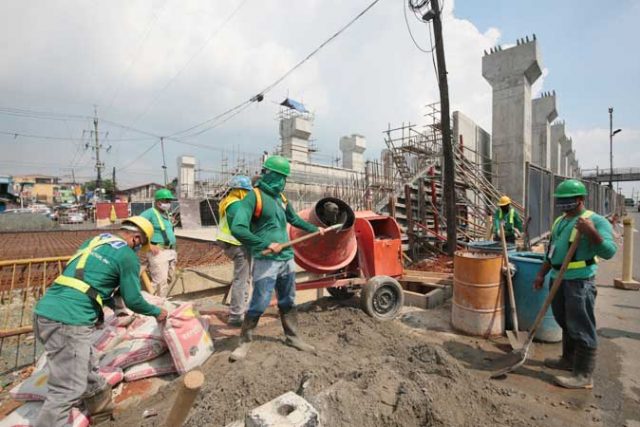
STATE SPENDING on infrastructure grew by 45% in April, on low base effect and the rollout of projects amid tightened restrictions.
Data from the Department of Budget and Management (DBM) showed infrastructure and other capital outlays rose to P58.2 billion in April from P40.1 billion in April 2020. Month on month, spending on infrastructure declined by 34% from P87.8 billion in March.
“Infrastructure spending was bolstered largely by the implementation of various infrastructure projects of the (Department of Public Works and Highways) nationwide, such as the construction and rehabilitation of access, by-pass and diversion roads, bridges, flood mitigation activities, such as slope/river bank protection and dredging works, design and building of off-site modular hospitals, and construction of linear parks and other government administrative buildings,” the DBM said.
Metro Manila and its adjacent provinces were placed under a stricter lockdown in April, although construction work both in public and private sectors were allowed to continue.
Infrastructure spending reached P253.4 billion in the four months to April, up by 29% from P196.2 billion in the same period last year.
The Budget department said completion and continuation of projects by the DPWH, especially its road infrastructure program, contributed to higher spending in the first four months of the year.
The higher expenditures were also attributed to the construction of big-ticket projects under the Transportation department, such as the first segment of the Metro Manila Subway Project and the North-South Commuter Railway Project.
ING Bank N.V. Manila Senior Economist Nicholas Antonio T. Mapa noted that the low base effect pushed infrastructure spending up this year as construction works were halted during the height of the lockdown in 2020.
While higher infrastructure spending is good news for the economy, Mr. Mapa said the performance failed to meet expectations, especially since the government has given top priority to its “Build, Build, Build” program.
“We were hoping for a more substantial surge in infrastructure spending given the government’s current focus on ‘Build, Build, Build’ as a stimulus measure,” he said.
“One thing that may have capped the gains in April would be the reimposition of the tighter mobility curbs in April 2021. Although less stringent than the (enhanced community quarantine) version in 2020, the renewed guidelines may have sapped some of the construction activity momentum,” he added.
Emmanuel J. Lopez, dean at the Graduate School division of Colegio de San Juan de Letran, said higher spending on infrastructure is expected to continue as the President promised to usher in the country’s “golden age of infrastructure.”
“The ‘Build, Build, Build’ program of the government, as early as 2017, has already been earmarked for spending. Hopefully, this should be given top priority by the next administration to sustain economic growth,” he said via e-mail.
The two economists believe increased infrastructure spending in April will help boost second-quarter gross domestic product (GDP).
However, Mr. Mapa cautioned that spending may slow down in the second half based on the quarterly expenditure program of the government.
Of this year’s P1.02-trillion spending plan for infrastructure, expenditures are set to peak in the second quarter at P324.974 billion, following the P243 billion spent in the first three months, based on the targets set by the Development Budget Coordination Committee (DBCC).
Spending is expected to soften to P229.54 billion in the third quarter and further down to P221.6 billion in the last three months of the year.
“This could mean that the strong growth posted in 1Q and possibly 2Q for public construction will decelerate by yearend with the economy likely missing the contribution from this sector as it continues to dig itself out of the economic slump of last year,” Mr. Mapa said. — Beatrice M. Laforga
Many Filipinos are falling victim to investment scams amid the pandemic. The Securities and Exchange Commission published 127 warnings against investment scams last year, nearly double the number in 2019. — PHILIPPINE STAR/ MICHAEL VARCAS
By Keren Concepcion G. Valmonte
CHRISTIA CARRYLE R. GAMBOA, 17, lost P43,000 ($900) after she was enticed to invest in a money-making scheme that promised to double her money in less than two weeks.
“I was excited,” she said in a Facebook Messenger chat in Filipino. “My initial investment had more than doubled to P500 by the second week.”
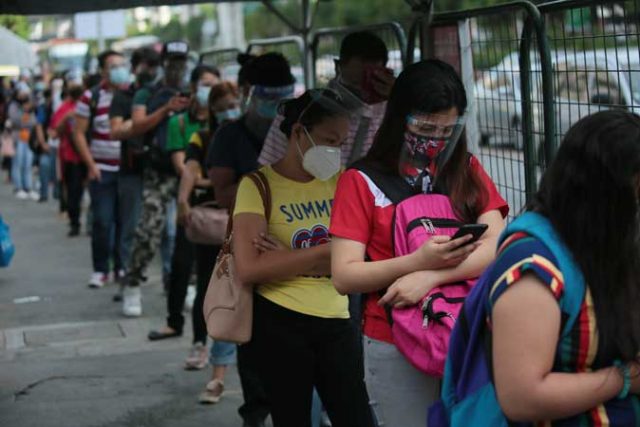
Like most people looking for easy money amid hardships caused by the coronavirus pandemic — Ms. Gamboa’s parents were jobless after their mom-and-pop store was shut — she knew she had to bet more.
Ms. Gamboa, who was recruited by her cousin, managed to convince her parents to invest in Wonka Cash as well. By the time the corporate regulator stopped the Ponzi scheme in April, her relatives had lost P230,000.
Financial fraud was big business even before the pandemic, costing victims around the world $5.13 trillion a year. It has worsened in new and unforeseen ways.
The Securities and Exchange Commission (SEC) in the Philippines published 127 warnings against investment scams last year, nearly double the number in 2019.
It has put out 40 advisories this year, more than a quarter of which were issued in April alone. That such scams would proliferate amid a pandemic was hardly a surprise to investigators.
“With or without the pandemic, consumer fraud and investment scams will always be here,” said Yellowbelle del Mundo Duaqui, an assistant professorial lecturer of sociology at De La Salle University in Manila.
“It is flourishing now because many, including scammers, are cash-strapped,” she said in an e-mail.
President Rodrigo R. Duterte locked down the entire Luzon island — one of the tightest and longest lockdowns in the world — in mid-March last year to contain the coronavirus, forcing people to stay home and businesses to shut down.
Philippine unemployment rose to a record 10.3% last year, equivalent to 4.5 million jobless Filipinos, according to the Philippine Statistics Authority.
Joblessness rose to 8.7% in April, when the government tightened the lockdown in Metro Manila and nearby provinces to curb a fresh surge in coronavirus infections. The rate was 7.1% in March.
More than 4 million Filipinos were jobless, higher than 3.4 million a month earlier.
‘MODUS OPERANDI’ “The scheme employed by Wonka Cash shows a possible Ponzi scheme where monies from new investors are used in paying fake profits to prior investors,” the SEC said in an April 13 advisory.
The scheme was “designed mainly to favor its top recruiters,” the regulator said, noting that investors in the bottom of the pyramid were likely to lose their money.
The Ponzi scheme is among the three most widely used scams in the country after pyramid scams and boiler room operations, the SEC Enforcement and Investor Protection Department said in an e-mail.
After immigrating to the US in 1903, Carlo Ponzi devised a low-tech but high-payoff fraud. It involved buying discounted US postal reply coupons overseas and then selling these at face value at Boston post offices.
But he was really using the money from new investors to pay interest to previous investors. Mr. Ponzi promised to give investors $150 for every $100 they loaned him within 45 days. His caper didn’t end well.
Mr. Ponzi took half a dozen Boston banks down with him, and served prison terms in Massachusetts, Florida, and Georgia. He was deported back to his native Italy in 1937. Twelve years later, he died blind, partially paralyzed and penniless at a charity hospital in Brazil at 66 years old.
“When it becomes difficult to recruit new investors or when a large number of investors ask to cash out, the Ponzi scheme collapses as the inflow of funds is not enough to support the promised return,” the SEC said.
Under the pyramid scheme, which shields its operations by sometimes using legitimate products, investors earn from recruitment fees. Some multi-level marketing plans have been classified as pyramid scams.
Meanwhile, a boiler room operation — usually a call center — uses high-pressure salespeople to call so-called sucker lists or potential investors to peddle speculative, sometimes fraudulent stocks.
Aside from the three, scammers also use foreign exchange trading and cryptocurrency mining as a front for their illegal activities.
“Fraudsters have taken advantage of the fast-evolving investment landscape by masking their modus operandi with relatively new and complex concepts such as cryptocurrencies and other digital assets,” the commission said.
MORAL BREAKDOWN Josef Diy Singson, a portfolio manager at Buhawi Investment Management, said the rise in scams related to cryptocurrencies is driven by ignorance.
“It’s new, not many people know about it and unfortunately, we don’t have a good degree of financial literacy,” he said in a Zoom Cloud Meetings app interview.
Sometimes, investment scams are disguised as donation drives.
“The pandemic has given scammers the right logistic opportunity and the emotional appeals to pity, karma, religion and poverty,” Ms. Duaqui said.
People with disposable income are looking for ways to diversify during the health crisis due to the physical limits of traditional investment options, she said.
“On the other hand, you have investment predators lurking around.”
Ms. Duaqui noted that crises such as wars, economic depression and pandemics usually lead to a moral breakdown — “values are blurred, goodness is exploited and criminal or deviant acts are escalated.”
People should remain vigilant, she said, adding that the government should boost consumer protection against fraud and investment scams.
Buhawi Investment’s Mr. Singson said research materials from the right sources are key, whether you’re thinking about putting your money in cryptocurrencies or the stock market.
“Do your own research, do your due diligence. Assess where you’re getting the information.”
Ms. Duaqui said the state and civil society should promote financial literacy, apart from ensuring legal accountability.
“Criminal liability should be the main jurisdiction of the government to make sure that cases of fraud and the criminals are punished.”
Ms. Gamboa, the teenager from Nueva Ecija, is now part of a Facebook group called Wonka Cash Scammed which has 1,400 members.
Some victims of the Ponzi scheme have reached out to the corporate regulator and National Bureau of Investigation, while others have reported the fraud to their local governments.
“You have to seriously think about where your money is going,” she said. “Even if you’re not losing a lot, what you lose could be enough to get you through another day. Times are hard.”



















 The Philippines holds many stories of striving for freedom — before and even after the public reading of the “Act of the Proclamation of Independence of the Filipino People” on June 12, 1898.
 Ms. Gamboa, who was recruited by her cousin, managed to convince her parents to invest in Wonka Cash as well. By the time the corporate regulator stopped the Ponzi scheme in April, her relatives had lost P230,000.