Home Blog Page 7925

Peso up on trade data

THE PESO strengthened against the greenback on Thursday following the release of trade data, which showed a continued slump in imports in February.

The local unit closed at P48.54 per dollar on Thursday, gaining 4.5 centavos from its P48.585 finish the day prior, data from the Bankers Association of the Philippines showed.

Week on week, however, it depreciated by a centavo from its P48.53 close on March 31.

The market is closed on Friday in observance of the Day of Valor.

The peso opened the session at P48.64 per dollar. Its weakest showing was at P48.66, while its intraday best was at P48.50 against the greenback.

Dollars exchanged rose to $659.28 million from $581.8 million on Wednesday.

Rizal Commercial Banking Corp. Chief Economist Michael L. Ricafort attributed the peso’s gains continued signs of weakness in imports.

The country’s imports dropped 5.6% to $16 billion in the first two months of 2021 from $16.96 billion a year earlier, data released by the Philippine Statistics Authority on Thursday showed. For February alone, merchandise imports grew 2.9% to P7.6 billion.

Meanwhile, UnionBank of the Philippines, Inc. Chief Economist Ruben Carlo O. Asuncion said the peso was affected by the optimistic global economic outlook of the International Monetary Fund (IMF).

The IMF on Tuesday said it expects the global economy to bounce back this year with a growth of 6.5% from the previous 5.5% estimate on additional fiscal stimulus in large economies and an anticipated vaccine-induced recovery in the second half of the year.

The multilateral lender likewise upgraded its growth forecast for the Philippines to 6.9% from 6.5% amid base effects from the record 9.5% economic contraction logged last year. It however warned that the virus surge and the lockdown are “substantial” threats to recovery. — L.W.T. Noble

SM Foundation Mobile Clinic: Bringing basic healthcare services closer to grassroot communities

SM Foundation, through its Health and Wellness programs, offers a wide array of efforts for its stakeholders when it comes to giving access to basic healthcare services. One of these social good efforts is the roaming SMFI mobile clinics – which provide medical services to grassroots communities, especially in areas where SM operates.

Currently, SMFI has five state-of-the-art mobile clinics which are equipped to conduct diagnostic services such as x-ray, ECG, glucose test, uric acid test, ultrasound, and many more. These five mobile clinics are deployed across the country mainly to complement the medical mission activities of SM Foundation. More so, these medical laboratories on wheels are also used to provide immediate healthcare in areas devastated by calamities and other emergencies.

“Our SM Mobile Clinics were deployed to support our “Gamot Para sa Kapwa” Medical Missions. The mobile health facility intends to provide diagnostic and laboratory services to those who cannot afford laboratory services and in areas where no such services are available,” SMFI Executive Director for Health and Medical Programs Connie Angeles said.

“These mobile clinics are also available and ready in cases of emergencies and calamities – like the recent earthquake in Porac, Pampanga, the Taal Volcano eruption, and aftermath of strong typhoons like the Yolanda,” she further added.

Angeles mentioned that as part of their operations, SMFI coordinates with national and local partners before the conduct of SMFI’s health caravans, “The team is composed of a doctor, a radiologist, and some of our health and wellness officers. We also ensure that the coordination with project partners such as the Municipal Health Departments, AFP Military Medical Team, Philippine Red Cross, and other medical organizations are done to address the unique health challenges of the area, service more beneficiaries, and to ensure the smooth flow of the activity.”

Mobile Clinics as Mobile Swabbing Stations

During these challenging times and with limited medical missions, our SM mobile clinics are serving another purpose. “Three of the five mobile clinics are in the National Capital Region (NCR) and are being utilized as a Swabbing Stations for SM employees and other personnel who in one way or another are connected to the SM Group of Companies,” Angeles disclosed.

During the onset of the pandemic, Dr. Bless Bertos, a doctor of the SM Foundation was sent to the Philippine General Hospital (PGH) to undergo a two-month training on the preparation and procedure of swabbing. After her training, one of the Mobile Clinics was turned into a Swabbing Center for SM companies & its affiliates, employees including family members.

According to Dr. Bertos, the Center started with an average of 20 patients daily – but with the current pandemic challenge, the facility currently serves an average of 70 patients a day.  She says the highest so far is 180 /day with a combination of Antigen testing & RT PCR.

Dr. Bertos says that SMFI ensures the safety of the health and wellness team manning the mobile stations. Part of their everyday OOTD includes wearing PPE, face masks, face shields & gloves during their deployment.  Physical distancing is required of patients availing of the services aside from the use of face masks & face shields.  Foot-pumped alcohols are also stationed at the entrance and exit of the mobile clinic.

“The mobile health facility is cleaned with a disinfectant spray after every patient is served.  Also, every Thursday, a professional disinfecting team also does sanitation services for the clinic. Infectious wastes are properly disposed & stored in a special container for collection of DENR-accredited Infectious Waste Disposal team. These precautionary measures are done to protect the spread of the virus,” she added.

SM Foundation, through its Health and Medical Program, upgrades public health centers in its host communities, complemented by its medical caravans across the country. To date, it has renovated more than 160 health and wellness centers and served more than 1 million patients during its medical missions.

DDB Group Philippines and clients’ campaigns recognized at 18th Philippine Quill Awards

DDB Group Philippines, one of the country’s leading integrated marketing communications groups, and its client partners garnered numerous awards for their campaigns in the recently concluded 18th Philippine Quill Awards organized by the International Association of Business Communicators (IABC) Philippines.

Johnson & Johnson’s “Choose Gentle” rebranding campaign for its Johnson’s Baby franchise mainly done in partnership with DDB Philippines (DDB PHL) won a Quill Excellence award under the Communication Management Division’s Marketing, Advertising, and Brand Communications category.

A component of the said Johnson’s Baby rebranding campaign, the #ChooseGentle “Ugly Babies” Interactive Art and Videos conceptualized and executed by the brand with DDB PHL as part of the brand’s gentle parenting advocacy also won for Johnson & Johnson a Quill Merit award under the Communication Skills Division’s Social Media Programs category.

PepsiCo’s “Gatorade #NothingBeatsGirls” campaign conceptualized and executed by the brand with DDB MNLwon a Quill Excellence award under the Communication Skills Division’s Social Media Programs category. Serving as Gatorade’s Women Month’s tribute last year, #NothingBeatsGirls’ exceptional digital video cheered on young women to keep going, a timely message, especially during this pandemic.

Jollibee’s “Best Twirl Ever” blockbuster media event with Miss Universe Catriona Gray handled by Ripple8, DDB Group’s integrated PR solutions firm, won a Quill Excellence award under the Communication Management Division’s Media Relations category.

Another Ripple8 entry, the Light Rail Manila Corporation’sikotMNL Mobile App Campaign, which was launched to promote the rediscovery of Manila’s historical spots and enhance the LRT-1 experience by empowering commuters with access to information, won a Quill Merit award under the Communication Management Division’s Customer Relations category.

Mang Inasal campaigns, “Gawad Pilipinoy” and “Solb ang Pinoy,” in partnership with DDB PHLwon aQuill Merit award each under the Communication Management Division’s Corporate Social Responsibility category, while the Mang Inasal’s “Buwan ng Wika” campaign won a Quill Merit award under the Communication Management Division’s Marketing, Advertising and Brand Communications category.

Last but not the least, the COVID-19 Dashboardof DDB Group’s data analytics firm Agile Intelligence (AI) also won a Quill Merit award under the Communication Skills Division’s Communication for the Web category. A brainchild of AgiIe Intelligence’s Chewy Chua and Tribal Worldwide’s Ian Ong, the COVID tracker has impressively organized data sets and charts on the country’s COVID-19 history and performance.

Notably, DDB Group Philippines’ long-time client partners under the MVP Group of Companies – leading telecommunications companies PLDT, Inc. and Smart Communications, Inc., and the country’s largest power distribution utility Manila Electric Company (Meralco)–won the top awards at the prestigious competition. Some of their campaigns are in partnership with Ripple8, Tribal Worldwide, and other DDB Group companies.

PLDT won as “Company of the Year,” winning the greatest number of Excellence awards in this 18th edition of the Quill Awards. Smart placed first runner-up as Quill’s Company of the Year and won the Top Division Award for Communication Management, while Meralco placed 2nd runner-up and won the Top Division Award for COVID Communications.

Notably, another DDB Group valued client, NutriAsia, the country’s largest condiments manufacturer, also won several awards for their campaigns.

DDB Group Philippines Group Chairman and CEO Gil G. Chua expressed his sincerest congratulations to all the DDB agency teams and client teams whose campaigns won awards at the latest sequel of the Quill Awards.

“Our client’s success is our success. Congratulations to all the award-winning campaigns which serve as bright spots during this pandemic. It just shows how truly committed we are in our role as communicators, doing what we do best in times when Filipinos need us the most,” Chua said.

Part of DDB Worldwide, DDB Group Philippines’ companies that offer their varied expertise in the field of marketing communications include creative agencies DDB PHL and DDB MNL; digitally centric agency Tribal Worldwide Philippines; integrated PR solutions firm Ripple8; media agencies Touch XDA and Optimax; data analytics firm Agile Intelligence; and content firm Bent & Buzz.

AstraZeneca use for people below 60 stopped

By Kyle Aristophere T. Atienza and Vann Marlo M. Villegas, Reporters

THE PHILIPPINES has suspended the use of AstraZeneca, Plc’s coronavirus vaccines for people below 60 years after European regulators found possible links between the shot and rare cases of blood clots.

“We are aware of the recommendation of the European Medicines Agency (EMA) to list blood clots as very rare side effects of the AstraZeneca vaccine,” the Department of Health (DOH) said in a statement on Thursday.

The agency adopted the recommendation of the local Food and Drug Administration (FDA), which said 16 out of about 200 million people vaccinated with the AstraZeneca drug had reduced platelet counts.

The findings mostly applied to females aged 60 years old and below, FDA Director-General Enrique D. Domingo said. Filipinos who got the vaccine have yet to report the side effect, he added.

Vaccine czar Carlito G. Galvez, Jr. earlier said the country would take delivery of almost a million more doses of AstraZeneca vaccines this month. But the shipment was postponed due to global supply problems.

Manila was using diplomatic channels to get the doses as soon as possible, he added.

The delay gives the country more time to scrutinize the vaccine’s side effects, Mr. Domingo said.

“The next batch of AstraZeneca vaccines is expected to be delivered a month from now,” he said. “That will give us the time to study the evidence and come up with new guidelines.”

The Philippines initially received 525,600 doses of the AstraZeneca vaccine, which it had used together with Chinese-made CoronaVac since it started vaccinating Filipinos on March 1.

The vaccine is 70% effective after the first dose, according to the FDA.

CASE TALLY
DoH reported 9,216 coronavirus cases on Thursday, bringing the total 828,366. The death toll rose by 60 to 14,119, while recoveries increased by 598 to 646,968, it said in a bulletin.

There were 167,279 active cases, 97.6% of which were mild, 1.2% did not show symptoms, 0.5% were critical, 0.5% were severe and were 0.29% moderate.

The agency on April 2 reported the highest daily tally of 15,310 cases since the pandemic started last year.

DoH said 14 duplicates had been removed from the tally and 28 recovered cases were reclassified as deaths. Five laboratories failed to submit data on April 5.

About 9.9 million Filipinos have been tested for the coronavirus as of April 6, according to DoH’s tracker website.

The coronavirus has sickened about 133.8 million and killed 2.9 million people worldwide, according to the Worldometers website, citing various sources including data from the World Health Organization.

About 107.9 million people have recovered, it said.

Meanwhile, Senator Francis N. Pangilinan urged the World Health Organization (WHO) to prioritize the Philippines for vaccine delivery under a global initiative for equal access.

He cited the WHO concern over increasing cases, limited hospital beds and the potential for the healthcare system to collapse.

“To avert this, we are appealing and urging the WHO to put the Philippines in front of the list of vaccine recipients and beneficiaries,” he told an online news briefing. The government should “aggressively and vigorously pursue” negotiations with the WHO, he added.

Takeshi Kasai, regional director of WHO Western Pacific on Wednesday said they were concerned about the situation in the Philippines.

“We’re concerned because the surge is really continuing and moving towards the so-called red line, where the number of cases exceed or surpass the capacity of health care,” he told an online news briefing.

“Once we cross that red line, we put healthcare workers in a very difficult situation,” he added.

Mr. Kasai traced the surge to the spread of more contagious variants, lack of compliance with health measures and infected people aged 20 to 40 years who show no symptoms and who unknowingly spread the disease.

“It may not apply to the Philippines but in other  countries, we have also observed a vaccine optimism that is coming from the availability of vaccines,” he added.

President Rodrigo R. Duterte placed Metro Manila, Bulacan, Cavite, Rizal and Laguna under a strict lockdown for two weeks until April 11 to curb a fresh surge in coronavirus infections.

Bed occupancy in Metro Manila was at 66%, while 79% of intensive care unit beds had been occupied as of April 6, according to DoH’s tracker website.

The Health department last month said quarantine facilities in Rizal Memorial Coliseum, which has 97 beds, and the Ninoy Aquino Stadium, which has 127 beds, had been reopened.

Duterte remains fit, healthy, Palace says after events canceled

PHILIPPINE President Rodrigo R. Duterte remains fit and healthy for his age, the presidential palace said on Thursday, a day after the 76-year-old leader canceled his events this week event amid a fresh surge in coronavirus infections.

“We thank the Filipino people for voicing their concern and wishing the chief executive’s strength and good health during this time of COVID-19 pandemic as he continues to discharge his functions as head of the government,” his spokesman Herminio L. Roque, Jr. said in a statement.

Mr. Duterte’s regular address was canceled twice this week “in light of the rising number of active coronavirus cases.”

The President tested negative for the coronavirus during Holy Week, his close friend Senator Lawrence Christopher T. Go told reporters in a Viber group message.

The President last appeared in public during his address on March 29, when he was joined by Cabinet officials including Defense Secretary Delfin N. Lorenzana, who got the coronavirus this week.

“The President is critical for communicating what’s happening, especially with our political culture that is so personality-oriented,” Ibon Foundation Executive Director Sonny A. Africa said in a Facebook Messenger chat.

“Showing leadership to a beleaguered and anxious population is the least he can do,” he said. “There had been a leadership vacuum from the very beginning.”

“It is only natural for his prolonged absence to bring uncertainty in our minds,” Michael Henry Ll. Yusingco, a senior research fellow at the Ateneo de Manila University Policy Center, said in a Messenger chat.

He added that Filipinos want to be assured that the country’s top leader is “still competent and capable” of leading the country during the pandemic.

“Citizens are suffering so much these days that they want to know if this administration still has the wherewithal to bring the country out of this terrible crisis,” he added.

Mr. Yusingco said people want to see that the President is still at the helm of the government’s pandemic response. “Whether we like it or not, without him visibly in charge can undermine the entire government effort.”

John Paolo R. Rivera, an economist at the Asian Institute of Management, said effective economic planning requires coordination “under a unifying leader from an institutionalized command center.”

“In good times, visibility is necessary but not sufficient. But in bad times like this, we cannot afford any vacuum,” he said.

Mr. Rivera said government response during the pandemic need not be affected by the President’s absence “if systems are in place.”

“It should move as initially planned. However, if the system is not in place, then it will be problematic.”

Meanwhile, Mr. Roque said a poll showing Mr. Duterte’s 65% approval rating sends “a clear message that our people are generally happy with the leadership and performance of the President.”

Mr. Duterte’s approval rating slipped 5 points in March from 70% in December, according to a poll by Publicus Asia, Inc.. The President also got a trust rating of 55%, lower than his 62% score in December.

“This strong public confidence would certainly motivate and inspire the President, along with the members of the Cabinet, to work harder to serve the people, especially during this time of global health crisis,” Mr. Roque said. — Kyle Aristophere T. Atienza

Nationwide round-up (04/08/21)

Hospital claims fast-tracked

THE PHILIPPINE Health Insurance Corp. has created a debit-credit payment method to facilitate the settlement of accounts payable to healthcare facilities amid a coronavirus pandemic, the presidential palace said on Thursday.

This after President Rodrigo R. Duterte ordered it to fast-track the payment of hospital claims in relation to the health crisis.

“Through this measure, we are confident there would be continuous delivery of healthcare services, especially in identified areas of concern, amid the rising number of coronavirus active cases,” presidential spokesman Herminio L. Roque, Jr. said in a statement.

The facilities must be in regions identified by an inter-agency task force such as the National Capital Region, Batangas, Bulacan, Cavite, Laguna, Pampanga and Rizal, he said.

The healthcare facilities must be attending to COVID-19 patients or providing the SARS-COV-2 testing package and their accreditation is not suspended during the period, Mr. Roque said. — Kyle Aristophere T. Atienza

Hundreds of graft complaints filed

AN ANTI-CORRUPTION task force of the Justice department has received as many as 240 complaints, Justice Undersecretary Emmeline Aglipay-Villar told reporters on Thursday.

The complaints were trimmed to 180 because a number of these covered the same subjects, she said.

Of the 180 complaints, two have been endorsed to the Office of the Ombudsman, Ms. Villar said. One involved irregularities in the purchase of land by a municipality and another dealt with allegations that some congressmen had been favored in certain public work contracts.

“The cases have just been referred to the Ombudsman and we have not received any update on whether they have commenced the investigation,” she said.

One complaint involving engineers at the Public Works department had also been forwarded to the National Prosecution Service for preliminary investigation.

The other complaints were still being evaluated. Some of the cases require more information from concerned government agencies.

“Some major complaints are quietly being investigated by the National Bureau of Investigation for case build-up,” Justice Secretary Menardo I. Guevarra said. — Bianca Angelica D. Añago

Cities urged to honor data privacy

THE NATIONAL Privacy Commission (NPC) wants local governments to refrain from disclosing sensitive personal information on beneficiaries of government aid on social media amid a coronavirus pandemic.

The agency has received six reports about local government units publishing sensitive information about the beneficiaries online, including their home addresses, ages and disabilities.

“Local government units (LGUs) must determine the types of personal data that they will disclose, particularly when the original list of social amelioration program beneficiaries contains sensitive personal information,” the commission said in a statement on Thursday.

Low-income families in Manila, the capital and nearby cities and provinces have been getting a new round of state aid after these were placed under a strict lockdown amid a fresh surge in COVID-19 infections.

The commission had asked the local governments to take down the posts, spokesperson Roren Marie Chin told reporters in a Viber group message.

The Data Privacy Act does not bar the government from disclosing information for transparency, the agency said.

“Nevertheless, LGUs should be mindful of its concomitant responsibilities as personal information controllers,” it added.

The law provides that disclosed data should be “adequate, relevant, suitable, necessary and not excessive in relation to a declared and specified purpose.”

“The LGUs, barangays and other authorities must be able to justify the need to disclose such personal data,” Ms. Chin said. — Jenina P. Ibañez

Bikers need not wear face shields

THE DEPARTMENT of Health (DoH) on Thursday said bikers and other active transport users need not wear face shields given safety risks.

“With increasing reports of cyclists and other active transport users being arrested for not wearing face shields, DoH reiterates that active transport users are not required to use face shields due to their potential safety risks,” it said in a statement.

The agency cited a memo issued last year that said some vehicles were exempted from wearing face shields along with those engaged in “strenuous activities/work” and “fine workmanship.”

The same memo provides for exemptions because face shields could cause vision impairment.

Face shields must be worn before and after cycling or other similar activities, according to a joint administrative order issued by various government agencies last year.

“DoH further reminds active transport users that the use of face masks and the observance of physical distancing, respiratory hygiene practices, and other appropriate health interventions must continue to be practiced while cycling or engaging in other forms of active transport,” it said. — Vann Marlo M. Villegas

Associate justice post opened

THE JUDICIAL Bar Council (JBC) has opened the application period for the Supreme Court associate justice post vacated by Alexander G. Gesmundo, who was promoted chief justice.

Applicants may apply online until May 10, the council said in a statement. Required documents may be mailed or sent electronically.

The position of associate justice was opened after President Rodrigo R. Duterte named Mr. Gesmundo the new chief justice. His predecessor Diosdado M. Peralta retired on March 27. — Bianca Angelica D. Añago

Lawmakers seek bigger aid

A group of congressmen on Thursday sought the passage of a bill that seeks to give poor families in the capital region another round of cash aid worth P10,000 amid a strict lockdown.

“The call of the Makabayan bloc is that it should be P10,000,” Party-list Rep. Ferdinand R. Gaite told an online news briefing, adding that the P1,000 being distributed now was not enough.

“They have started to give out P1,000 aid in some parts of the National Capital Region Plus but this is not enough for the poor and low-income families who are still mired in the crisis brought by the pandemic,” Party-list Rep. Arlene D. Brosas said in Filipino.

Ms. Brosas said the government should realign its budgets for other programs such as on infrastructure so people can get more cash aid. Intelligence funds worth P8.5 billion and contingent funds worth P13 billion could also be used, she said. — Gillian M. Cortez

Scrutiny of China policy sought

A COALITION of opposition forces on Thursday vowed to judge candidates in next year’s elections based on their foreign policy stance on China.

“We in 1Sambayan will ensure that anyone who seeks the presidency in May 2022 must have the fortitude to defend our sovereign territory and sovereign rights against foreign aggressors.

They cited how “brave Filipinos, even in the face of superior forces, defended Bataan and the rest of our country in World War II,” as the country marks the 79th anniversary of Bataan Day or the Day of Valor.

A national task force overseeing border disputes with Beijing earlier reported that more than 200 Chinese militia ships had moored at a Philippine-claimed reef in the South China Sea.

The presidential palace said the ships were fishing vessels merely “seeking refuge” from bad sea conditions.

Presidential spokesman Herminio L. Roque, Jr. this week said President Rodrigo R. Duterte sees no need to use force against the Chinese vessels occupying Whitsun Reef, which the Philippine calls Juan Felipe.

Mr. Roque said the issue could be resolved through peaceful means. Mr. Duterte would continue to assert Manila’s 2016 legal victory at an international tribunal,” he said.

Foreign Affairs Secretary Teodoro L. Locsin, Jr. on Wednesday said he would file another diplomatic protest against China.

“We strongly support the protest of Defense Secretary Delfin N. Lorenzana, DFA Secretary Teodoro Locsin, Jr. and members of the Senate and the House of Representatives against this latest violation of our sovereign territory,” 1Sambayan said.

The coalition said the protests would be weakened without a similar action from the country’s top leader himself.

It asked Mr. Duterte to abandon the country’s pivot to China and chart a truly independent foreign policy “that gives primacy to safeguarding our sovereign territory and sovereign rights.” — Kyle Aristophere T. Atienza


Regional Updates (04/08/21)

More vehicles may be allowed

THE LAND Transportation Franchising and Regulatory Board (LTFRB) on Thursday said it might open 250 more routes and allow 4,400 more public vehicles to operate in Metro Manila next week.

It would be up to local government units whether to let the buses enter Manila, the capital and nearby cities, LTFRB Director Zona Russet M. Tamayo told an online news briefing.

The transport regulator may allow 1,800 more traditional jeepneys and 2,600 provincial buses to operate in the capital region.

Currently, there are 53,441 public vehicles allowed to operate in Metro Manila, including city buses, point-to-point buses, modern jeepneys, traditional jeepneys, modern and traditional UV Express, and provincial buses.

The LTFRB also intends to open 250 more routes in Metro Manila next week — 60 for traditional jeepneys and 190 for provincial buses. Public vehicles are allowed to operate in 745 Metro Manila routes.

“As of March 2021, 76% of pre-pandemic data for public transportation in Metro Manila have already been allowed to resume operations during the general community quarantine,” Ms. Tamayo said.

Also on Thursday, the Transportation department said it was increasing the surveillance of unregistered vehicles after reports that these were being used to transport people who have not been tested for the coronavirus into the capital region amid a strict lockdown. — Arjay L. Balinbin

SME loan applications lower than expected

THE NUMBER of small businesses applying for loans from the government remains low at about 1,000 a week, though the current average represents a significant improvement from initial numbers, the Department of Trade and Industry (DTI) said.

Trade Secretary Ramon M. Lopez said in a Viber message: “The loan take up has improved, from about 200 applications a week at the start, to 1,000 a week.  But we were expecting more applications than these numbers.”

The DTI’s Small Business Corp. (SB Corp.) was allocated P10 billion to lend to micro-, small-, and medium-sized enterprises by Republic Act No. 11494, the second stimulus package known as Bayanihan II, to assist businesses affected by the pandemic.

So far, the program has released loans worth P2.78 billion to 23,141 borrowers.

The department, Mr. Lopez said, has increased its processing capacity to around 4,000 applications per week.

Mr. Lopez has said that business confidence remains weak and may have dampened interest in taking on loans.

“This (program) also covers the tourism sector, kaya lang ang take up nung loan medyo mabagal din (Our take-up there has also been slow). Ang tingin natin, dahil nga limited din operation nila, wala rin humihiram in the meantime (Because their operations are limited, they are not borrowing),” he told ONE News on Thursday.

“‘Pag humiram sila at hindi maka-operate, mas delikadowala silang pambayad din dun sa hihiramin nila (It’s dangerous to borrow while you’re not operating because there are no funds to pay back the loan.”

Less than 10% of applications have come from the tourism sector, one of the industries most affected by the lockdown.

Mr. Lopez said that the government is looking at gradually easing restrictions to allow more “low-risk” businesses to operate. Metro Manila and nearby regions are on the strictest form of lockdown to arrest the surge in coronavirus disease 2019 (COVID-19) cases. — Jenina P. Ibañez

Power spot price nearly doubles in March

BW FILE PHOTO

THE Independent Electricity Market Operator of the Philippines (IEMOP) said Thursday that the average spot market price in March hit P4.16 per kilowatt-hour (kWh) or nearly double the February level of P2.22 per kWh due to an increase in unplanned generator outages and higher demand.

The price data are from the wholesale electricity spot market (WESM).

In a briefing, IEMOP Manager for Pricing Validation and Analysis John Paul S. Grayda said that “there were several generators on emergency shutdown due to unplanned outages.” He said this caused supply to drop last month.

“The high prices are caused by the increase in demand and unplanned outages,” Mr. Grayda said.

IEMOP Head of Corporate Strategy and Communications Isidro E. Cacho, Jr. said that “changes in spot prices only had impacts on quantities which were bought from the market.”

Last month, three generators experienced unplanned outages, according to IEMOP data. These include the 382-megawatt (MW) Pagbilao Unit 2, the 647-MW Sual Unit 1, and the 316-MW GN Power Unit 2.

Meanwhile, three plants were on extended outages, while six others had outages for maintenance.

IEMOP said in a statement that coal plants accounted for 75.44% of the capacity in outage status last month.

Power generation from coal and geothermal plants fell to 53.9% and 10.5% respectively compared to their February levels. However, output from natural gas plants increased to 23.5% from 22.3% month on month.

At the briefing, Mr. Grayda also noted system peak demand of 12,582 MW on March 18.

After the government implemented the strictest form of lockdown in Metro Manila and nearby provinces on March 29, system peak demand fell by around 470 MW, according to Mr. Grayda.

Aside from operating the WESM, the IEMOP is also in charge of the central registration body for the retail electricity market. — Angelica Y. Yang

Bids solicited for contract to build tunnel linking rail lines

SUBWAY BORING MACHINE — DOTR

THE TRANSPORTATION department has started seeking bidders for the tunneling works contract connecting the South Commuter Railway Project to the Metro Manila Subway Project via a station in Taguig City.

In its bid invitation published Thursday, the department said the contract package of the South Commuter Railway Project covers civil engineering, tunnel and building works for approximately 6.1 kilometers of railway, including 4.7 kilometers of underground railway.

The package covers the construction of South Commuter Railway’s FTI Station in Taguig and tunneling works to connect the project to the Senate Station, which is also in Taguig, of the Metro Manila Subway Project.

The South Commuter Railway project is financed by the Asian Development Bank.

The department said the deadline for submission of bids is on July 8 at 10 a.m.

Bidders must have an average annual turnover of over $200 million and have substantially completed at least one project of over $390 million in the past 10 years.

Bidders should also be able to furnish a bank security of $14 million and demonstrate that they have adequate equipment to meet the Transportation department’s quality and safety requirements and the project timelines.

They must have completed two projects for tunneling works, each including a bored tunnel by shield TBM (tunnel boring machine) method; and at least one project that includes a shield tunnel of inner diameter exceeding 4.5 meters.

“Bidders must demonstrate they have experience of at least one detailed design (project) for underground tunnels and underground stations according to regulations of the National Fire Protection Association 130 or equivalent international standards,” the department said.

Interested parties are required to pay a non-refundable fee of P75,000 for the bidding documents. — Arjay L. Balinbin

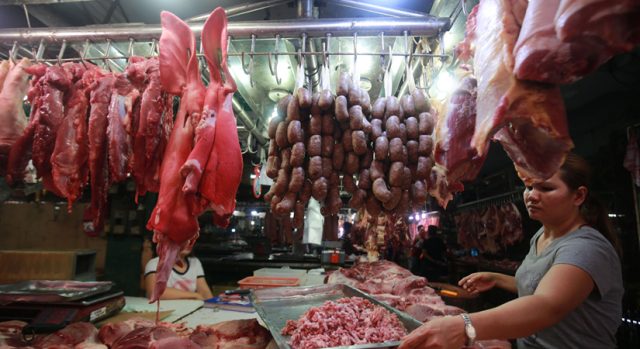
Lower pork tariffs seen creating winners, losers

A LOWERING of pork tariffs is expected to highlight the diverging interests of meat processors and importers on the one hand, who support the reduction, while exposing hog farmers to increased foreign competition that will harm the industry.

Rosendo O. So, Samahang Industriya ng Agrikultura chairman, said in a statement Thursday that farmers’ appeals not to lower tariffs have been ignored, and that he expects many hog-raising businesses to close.

“There are no words to express the outrage and betrayal to the millions of hog raisers and workers dependent on the hog industry,” Mr. So said.

According to Mr. So, the current pork supply shortfall can be imported at higher tariffs and still leave importers with profits of between P200 and P250 per kilogram.

“Reducing tariffs will also deprive the government of much-needed revenue amounting to P12 to P14 billion annually, an amount that could be utilized to finance government programs aimed at helping the livestock industry recover faster from the African Swine Fever (ASF) outbreak,” he added.

On April 7, President Rodrigo R. Duterte issued Executive Order (EO) No. 128 that temporarily reduced the Most Favored Nation tariff rates on imported pork to boost supply, bring down pork prices, and contain inflation.

Under EO 128, pork imports within the minimum access volume (MAV) quota will be charged a 5% tariff in the first three months, increasing to 10% over the next nine months.

The tariff for out-of-quota pork imports has been set at 15% for the first three months, rising to 20% in the subsequent nine months.

Previously, pork imports inside MAV paid a tariff of 30%, while out-of-quota pork was charged 40%.

MAV is the scheme allowing for certain volumes of agricultural commodities to be imported at lower tariffs under the World Trade Organization system.

“The government recognizes the need to immediately address the current shortage in swine meat, and endeavors to strengthen the food supply to ensure that Filipinos have equitable access to food, particularly meat,” according to the EO.

The EO will be effective for one year after its publication in the Official Gazette or a general-circulation newspaper.

The Department of Agriculture (DA) has announced that it will not extend the price controls on pork and chicken products, which ended Thursday, and will implement a suggested retail price (SRP) for imported pork instead.

Agriculture Secretary William D. Dar said Wednesday that the SRP of imported pork shoulder (kasim) will be set at P270 per kilogram, while that for imported pork belly (liempo) is at P350 per kilogram. He added that there will be no SRP for domestic pork.

The directive replaced EO No. 124 implemented on Feb. 8 that capped the prices of kasim at P270 per kilogram, liempo at P300 per kilogram, and whole chicken at P160 per kilogram.

Nicanor M. Briones, Pork Producers Federation of the Philippines, Inc. vice-president for Luzon, said in a television interview Thursday that the hog industry will be discouraged from growing its herd, with hog raisers expected to stop operating due to competition from imports.

According to Mr. Briones, the decision to lower pork tariffs will adversely affect both commercial and backyard hog raisers.

He added that once Mr. Duterte issues another EO increasing the MAV quota allocation for pork imports by 350,000 metric tons (MT) after lowering pork tariffs, the pork supply problems will continue to next year.

Recently, Mr. Duterte recommended that Congress increase the in-quota allocation of pork imports by 350,000 MT, which will be added to the current allocation of 54,210 MT.

The DA projected a pork supply deficit of 400,000 MT for the year due to the ASF outbreak.

“The number of hog raisers will continue to decline as a result of this decision to lower pork tariffs. Next year, the country will experience double or triple the problem in terms of local pork supply, and will surely result in higher pork prices,” Mr. Briones said.

“Mr. Dar should resign… He should be ashamed of what he is doing to farmers. He is giving the wrong advice to the President,” he added.

BENEFICIAL TO CONSUMERS
Philippine Association of Meat Processors, Inc. (PAMPI) President Felix O. Tiukinhoy, Jr. said in a statement Thursday that the decision to lower pork tariffs allows meat processors and legitimate meat importers to deliver affordable value-added pork products to the market.

“We consider it a victory for the millions of Filipino consumers who have been suffering from the shortage of pork, thus pushing prices to levels beyond their reach,” Mr. Tiukinhoy said.

PAMPI’s Mr. Tiukinhoy encouraged hog raisers to benefit from lower tariffs to engage in importing while their herds have not yet recovered from ASF.

“We commiserate with them as they continue to battle ASF, which has wiped out a huge portion of the hog population. If they import themselves, they would be able to recover part of their losses and at the same time enable them to serve their network of pork dealers and ultimately benefit consumers,” Mr. Tiukinhoy said.

Jesus C. Cham, Meat Importers and Traders Association president, said in a mobile message that the order to lower the tariff on pork imports is a big win for the economy and consumers.

“Processors and hospitality and catering sectors will also benefit greatly,” Mr. Cham said.

“We have to discuss and agree with the other (members of the value chain) to accept decent margins in exchange for regular business… to benefit consumers,” he added.

In a virtual briefing Thursday, Agriculture Undersecretary Ariel T. Cayanan reiterated that a P45-million grant will be allocated to provide chest freezers to selected meat vendors that do not have storage equipment, to maintain food safety and quality for consumers.

Mr. Cayanan said the lowering of pork tariffs is ultimately designed to augment the pork supply.

“The country has been affected by the ASF outbreak which affected production and supply. The DA has four policies to address the issue: supporting the industry; (ensuring) continuous mobility of surplus hogs (to) deficit areas; diversification; and augmenting supply through imports,” Mr. Cayanan said. — Revin Mikhael D. Ochave

House panel approves consolidated bill on creative industry dev’t

A HOUSE panel approved Thursday consolidated legislation that will set up programs to develop the creative industries.

At a hearing, the Special Committee on Creative Industry and Performing Arts approved the committee report on the substitute bill consolidating House Bills (HB) 4692, 6476 and 8101.

In 2019 the Department of Trade and Industry (DTI) laid out a goal to make the Philippines the leading creative economy in the Association of Southeast Asian Nations by 2030. The Creative Economy Council of the Philippines also created a road map to guide the creative sector to boost its contribution to the economy.

“Without the fundamental legislative reform that rationalizes government support to the creative industry, there is little to no chance that the road map as charted by the DTI and the Council could succeed,” the panel’s chairman, Representative Christopher V.P. de Venecia, said in his explanatory note for HB 8101.

The proposed law will establish a council responsible for promoting the development of creative content and protecting the works from intellectual property rights encroachment.

Creative industries produce cultural, artistic, and innovative goods, products, and services.

The following creative industries are covered: traditional cultural expressions; music and the performing arts; architecture and interior services; animation and digitized creative content; audio-visual, broadcast and interactive media; cultural sites; visual arts; and others as may be determined by the council. — Gillian M. Cortez