Home Blog Page 785

SSS joins Maharlika fund in ruling out investments in online gambling firms

BW FILE PHOTO

THE Social Security System (SSS) said it holds no shares of online gambling firms and has no plans to add such shares going forward.

“SSS has no investments in the online gaming industry and has no plan of investing in it,” the pension fund said in a statement on Tuesday, adding it is on board with the Department of Finance’s proposal to ban government investment in the industry.

Finance Secretary Ralph G. Recto said the government is considering a formal ban on such investments. Mr. Recto is the ex-officio chairman of the SSS.

The SSS said the online gambling industry “is not part of its investment plans.”

The SSS joins Maharlika Investment Corp. (MIC) in ruling out investing in the online gambling industry.

MIC President and Chief Executive Officer Rafael D. Consing, Jr. reiterated the sovereign wealth fund’s stance against investing in online gambling-related businesses.

“The Maharlika Investment Fund has a firm policy of not investing in businesses related to online gambling. This is not an arbitrary decision but is clearly defined in our board-approved Investment Policy and Risk Management Framework,” Mr. Consing told BusinessWorld on Tuesday.

The other major government pension fund, the Government Service Insurance System (GSIS), has faced questions about its investment in DigiPlus Interactive Corp.

A preventive suspension was imposed on GSIS President and General Manager Jose Arnulfo A. Veloso following questions about whether the DigiPlus investment bypassed the fund’s internal approval process.

Maharlika’s major investments so far include a binding term sheet to provide a $76.4-million bridge loan facility to Makilala Mining Co., Inc., which will fund the early-stage development of the company’s copper-gold project.

Other MIC investments include a 20% stake in listed Synergy Grid & Development Phils., Inc.

“I maintain that each GOCC (government-owned and -controlled corporations) must operate based on the investment guidelines and risk parameters set by its own distinct mandate,” Mr. Consing said, when asked if he’s on board with the investment ban.

“GOCCs are created for different purposes, and their investment strategies should naturally reflect their unique objectives.”

Ateneo Center for Economic Research and Development Director Ser Percival K. Peña-Reyes urged the formal imposition of an investment ban for government firms.

“It would be hypocritical for the government to promote financial literacy and inclusion while having a stake in the gambling business,” Mr. Peña-Reyes told BusinessWorld.

Foundation for Economic Freedom President Calixto V. Chikiamco said the proposed measure is “a reasonable policy but a bit belated.”

The government has so far chosen to seek ways to tax and regulate the industry rather than ban its operations, with Mr. Recto floating a new levy and a requirement that companies list in the Philippine Stock Exchange, Inc. — Aubrey Rose A. Inosante
PEZA to exempt admin workers from WFH cap

THE Philippine Economic Zone Authority (PEZA) said it plans to exempt administrative workers from the cap on work-from-home (WFH) jobs in economic zones (ecozones).

“Those with non-sensitive positions, like those in finance and administration, can do remote work,” PEZA Director General Tereso O. Panga said on the sidelines of the PEZA Water Forum 2025 on Tuesday.

“We will relax it so that the threshold can actually be increased more than the 50% because we will exclude from the threshold the administration and finance people,” he added.

Production workers at manufacturing plants and contact center agents were among those to be counted in the WFH cap.

“We pre-cleared that already with the FIRB to be safe about it. So we will issue guidelines on this,” he said, referring to the Fiscal Incentives Review Board (FIRB).

The FIRB regulates incentives granted by entities like PEZA. WFH arrangements emerged as an issue because ecozone locators benefiting from incentives are required by law to perform a certain percentage of work onsite.

Mr. Panga said the implementing rules and regulations (IRR) of the WFH policy could be released as early as this month.

“We are done with the consultations, but we are waiting for the inputs from the Information Technology and Business Process Association of the Philippines (IBPAP),” he said.

“We will try to release it within the month or early next month. It’s within the policy-making powers of the board. So, the general rule is not to exceed the 50% limit, but we have policy considerations,” he added.

Under the Corporate Recovery and Tax Incentives for Enterprises to Maximize Opportunities for Reinvigorating the Economy (CREATE MORE) Act, registered business enterprises are allowed to implement WFH arrangements for up to 50% of the workforce and still receive incentives.

According to Mr. Panga, the CREATE MORE IRR allows even manufacturers to adopt WFH arrangements.

“It will now benefit not just information technology (IT) locators but also manufacturing companies. Because in the early stages of the CREATE law, it was exclusive only to IT,” he said. — Justine Irish D. Tabile

DA pushing for rice tariffication law amendment before March harvest

Farmers inspect rice crops affected by floods in La Union in this Oct. 12, 2021 file photo. — PHILIPPINE STAR/MICHAEL VARCAS

THE Department of Agriculture (DA) said it would like the Rice Tariffication Law to be amended by the harvest in March, and is hoping President Ferdinand R. Marcos, Jr. certifies the amendments as urgent.

Agriculture Secretary Francisco P. Tiu Laurel, Jr. communicated his plans in a recent meeting with Senator Francis Pancratius N. Pangilinan, who chairs the chamber’s agriculture committee.

“Our fighting target is to get these proposed amendments enacted before the start of the harvest, which begins March next year,” Mr. Laurel  was quoted as telling Mr. Pangilinan in a statement issued by the DA.

“lf we could convince President Marcos to certify a bill that includes all these amendments as urgent, then we should get this passed sooner,” he added.

The DA said it obtained Mr. Pangilinan’s support for the proposed amendments to the law, which came into force in 2019. The law allowed private importers to ship in their own rice if they paid a tariff, initially set at 35% on grain from Southeast Asia and since reduced to 15%. The tariffs go into the Rice Competitiveness Enhancement Fund (RCEF), which supports the rice industry’s modernization.

At the same time, the 2019 law removed the National Food Authority’s power to import rice and sell the commodity directly to consumers. 

The law was amended last year to increase the allocation for the RCEF to P30 billion from P10 billion initially.

Mr. Laurel has supported giving the NFA the power to intervene in the rice market to stabilize prices. He has also floated the idea of a support price for palay, or unmilled rice.

The NFA’s current role is limited to procuring palay from farmers to build up the government’s rice reserve, which is released during calamities to keep rice prices under control.

The DA noted that House Bill No. 1 — the so-called RICE Act — filed by Speaker Martin G. Romualdez “essentially encapsulates the revisions sought by the DA.”

“We need to fix a lot of things in the current law, as well as improve the provision of direct support and extension services for farmers and fisherfolk, down to the grassroots level,” Mr. Pangilinan told Mr. Laurel.

The senator also cited the need to boost cooperatives to improve farm productivity and increase yields. — Kyle Aristophere T. Atienza

India state visit yields 18 business agreements

PHILIPPINE STAR/NOEL B PABALATE

THE Department of Trade and Industry (DTI) said 18 agreements were signed at a business forum in India last week, involving the Bases Conversion and Development Authority (BCDA) and the Philippine Economic Zone Authority (PEZA), among others.

The deals were unveiled at the Philippines-India Business Forum on Aug. 7, which was co-organized by the DTI and the Federation of Indian Chambers of Commerce and Industry (FICCI).

According to the DTI, the agreements range across information technology and business process management (IT-BPM), renewable energy, healthcare, manufacturing, mineral processing, real estate, and defense.

“These agreements underscore the shared commitment to deepen trade and investment partnerships between the two nations,” the DTI said.

The parties to the agreements included Global Heavy Equipment and Construction Corp., ATD Waste-To-Energy Corp., Uttamenergy Ltd., Capgemini, Carelon Global Solutions Philippines, Inc., Genpact Services LLC, Veer-O-Metals, CostPlus, Inc., and Hinduja Global Solutions;

Infosys BPM, iSON Tower Ltd., Inc., Kiri Industries Ltd., Makilala Mining Co., Dr. Lloyd Balajadia, DRA Group, CheQ Digital, Fyn Mobility, NephroPlus Philippines, Shearwater CPO, Asia Defense Firepower Corp. in collaboration with SMPP Ltd., Sutherland Global Services, Tata Consultancy Services and NOW Corp.

Trade Secretary Ma. Cristina A. Roque touted the Philippines as an investment destination for Indian enterprises seeking strategic growth.

“The Philippines remains one of Southeast Asia’s most dynamic economies. This is fueled by our young, tech-savvy population, a growing consumer base, and a digital economy projected to exceed $40 billion by 2030,” she said. 

“We lead the region in services exports, digital transformation, and inclusive innovation,” she added.

She noted the strong energy between India’s information technology industry and Philippine IT-BPM and Global Capability Centers.

The business forum also featured presentations from the officials from the departments of Finance (DoF), Information and Communications Technology (DICT), Health (DoH), PEZA, and IT and Business Processing Association of the Philippines.

“Their briefings highlighted the Philippines’ competitive advantages, investor-friendly policies, and its readiness to welcome Indian companies seeking to expand in Southeast Asia,” the DTI said.

The forum was also attended by Philippine President Ferdinand R. Marcos, Jr.

“The Philippines is ready to begin formal discussions on a Philippines-India Preferential Trade Agreement, a crucial tool that can significantly enhance two-way trade, encourage product diversification, and support modern supply chain integration,” Mr. Marcos said. 

“Trade policy is not just a facilitative mechanism — it is a clear signal of trust. We are prepared to move forward with India on that basis, with confidence and a shared vision for prosperity,” he added. — Justine Irish D. Tabile

Value of gold, copper, nickel, chromite reserves rises 4.6%

PHILSTAR FILE PHOTO

CLASS A gold, copper, nickel, and chromite reserves  were valued at P481.45 billion in 2024, up 4.6%, the Philippine Statistics Authority (PSA) said in a report.

Class A reserves are commercially recoverable mineral resources confirmed to be economically viable by a defined development project or operation.

The value of Class A gold reserves rose 22.7% to P213.74 billion in 2024, it said.

The value of Class A copper reserves increased 13.7% to P60.38 billion.

The PSA said the value of Class A chromite reserves more than doubled in 2024 to P1.35 billion from P645.90 million a year earlier. 

It said the value of Class A nickel reserves fell 11.3% to P205.97 billion.

The total resource rent of the four mineral resources was P56.86 billion, equivalent to 0.22% of gross domestic product.

The PSA said by volume, Philippine Class A gold reserves fell 6.6% to 357.11 thousand kilograms (kg) in 2024.

Gold extracted decreased 8% to 20.11 thousand kg.

The volume of Class A copper reserves rose 21.8% to 4.02 million metric tons (MT).

The PSA said extracted copper fell 14.2% in 2024 to 53.18 thousand MT.

Class A nickel reserves rose 28.6% to 612.98 million dry metric tons (DMT) in 2024.

Nickel extracted fell 0.7% to 32.13 million DMT.

The volume of Class A chromite reserves rose 1.2% to 66.34 million MT in 2024.

Chromite extracted more than doubled in 2024 to 63.02 thousand MT from 23.82 thousand MT previously. — Kyle Aristophere T. Atienza

PPP Center outlines rules for seeking opinions on PPP Code

PPP.GOV.PH

THE Public-Private Partnership (PPP) Center said it set guidelines for seeking the regulator’s opinion regarding the proper interpretation of the PPP Code.

The so-called non-policy matter (NPM) opinions will be issued upon request in the event of issues encountered in the course of participating in projects governed by the PPP Code.

In a statement on Tuesday, the PPP Center said the guidelines, published on Aug. 9, require parties seeking opinions to submit a letter signed by an authorized signatory, addressed to PPP Center Executive Director Ma. Cynthia C. Hernandez.

The letter should be sent to legalservice@ppp.gov.ph, together with relevant supporting documents and a certification agreeing to the terms and conditions.

The NPM category covers the center’s interpretation of the applicability of the PPP Code and its implementing rules and regulation, issuances, policies, or guidelines, the PPP said in a Memorandum Circular released on Aug. 5.

“Requests for NPM opinions may cover matters such as whether a project falls under the PPP framework, potential overlaps with other infrastructure projects, the need for government undertakings or availability payments funded by the General Appropriations Act, and contribution to joint ventures that exceed 50% of an implementing agency’s assets, among others,” the PPP Center said.

Under Section 7.1 of the 2024 Amended PPP Governing Board Protocols (PPPGBP), the PPP Center is authorized to issue NPM opinions on project-specific concerns involving legal and/or regulatory interpretation. — Aubrey Rose A. Inosante

LTFRB reviewing P2 PUJ fare hike petition 

PHILIPPINE STAR/MIGUEL DE GUZMAN

THE Land Transportation Franchising and Regulatory Board (LTFRB) said it is currently studying a petition seeking a P2 provisional fare increase for public utility jeepneys (PUJs).

“We are studying the petition in detail to ensure that any fare adjustment is fair, reasonable, and based on solid justification. Our goal is to balance the needs of the riding public and the sustainability of public transport operations,” LTFRB Chairman Teofilo E. Guadiz III said in a statement on Tuesday.

The LTFRB said the petitioners are Pasang Masda, the Alliance of Transport Operators and Drivers Association of the Philippines (ALTODAP), and the Alliance of Concerned Transport Organizations (ACTO). The petition covers fare adjustments for both traditional and modern PUJs.

This petition consolidates filings submitted between August 2023 and March 2025, LTFRB said, noting that the proposals range from base fare hikes to rate adjustments per succeeding kilometer.

According to the LTFRB, the petition wants an earlier P1 provisional fare hike granted in October 2023 declared permanent, and applied for an additional P2 provisional increase. This would bring the base fare to P15 from P13 for traditional PUJs and to P19 from P14 for modern PUJs. 

“We will listen to all sides before making a decision. This is part of our mandate to ensure transparent and participatory fare-setting,” Mr. Guadiz said. — Ashley Erika O. Jose

Bargain hunting, US-China truce lift PHL shares

BW FILE PHOTO

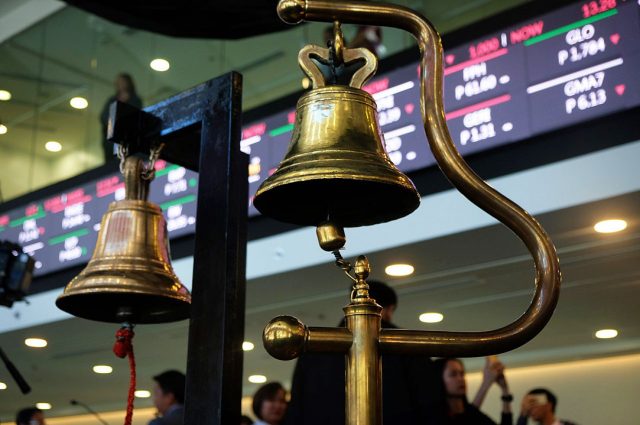
PHILIPPINE STOCKS inched up on Tuesday to snap their three-day losing streak as investors searched for bargains and amid the 90-day extension of the tariff truce between the United States and China. 

The benchmark Philippine Stock Exchange index (PSEi) rose by 0.56% or 35.49 points to close at 6,289.85, while the broader all shares index went up by 0.42% or 16.02 points to 3,751.27.

“The local market bounced back this Tuesday as investors hunted for bargains following three straight days of decline. The local bourse also joined many of its regional peers in cheering the extended tariff truce between the US and China,” Philstocks Financial Inc. Research Manager Japhet Louis O. Tantiangco said in a Viber message.

The United States and China have extended a tariff truce for another 90 days, staving off triple-digit duties on each other’s goods as US retailers get ready to ramp up inventories ahead of the critical end-of-year holiday season, Reuters reported.

The new order prevents US tariffs on Chinese goods from shooting up to 145%, while Chinese tariffs on US goods were set to hit 125% — rates that would have resulted in a virtual trade embargo between the two countries. It locks in place — at least for now — a 30% tariff on Chinese imports, with Chinese duties on US imports at 10%.

“The prospect of two more policy rate cuts from the Bangko Sentral ng Pilipinas (BSP) for this year helped in lifting sentiment,” Mr. Tantiangco added.

BSP Governor Eli M. Remolona, Jr. reiterated on Monday his outlook for two more reductions this year, with the first one likely to be announced at the Monetary Board’s Aug. 28 meeting. The policy rate is currently at 5.25%.

“The PSEi closed at 6,289.85, up by 0.56%, as today’s market was driven by bargain hunting as investors took advantage of recent days of decline, positioning ahead of potential catalysts,” Regina Capital Development Corp. Head of Sales Luis A. Limlingan said in a Viber message.

“Market participants remain on the lookout for fresh developments that could sustain momentum in the coming sessions, with sentiment still cautious amid lingering US economic and Philippine corporate updates.”

Almost all sectoral indices closed higher. Holding firms went up by 1.14% or 59.70 points to 5,259.27; mining and oil jumped by 0.9% or 83.41 points to 9,347.03; property increased by 0.83% or 20.21 points to 2,428.51; services climbed by 0.76% or 17.63 points to 2,337.17; and industrials rose by 0.04% or 3.89 points to 8,915.79. Meanwhile, financials slipped by 0.28% or 5.97 points to 2,126.24. 

Value turnover increased to P13.73 billion on Tuesday with 756.75 million shares traded from the P7.1 billion with 908.82 million shares exchanged on Monday. 

Advancers beat decliners, 105 versus 84, while 53 names were unchanged.

Net foreign buying decreased to P239.51 million on Tuesday from P421.37 million on Monday. — Revin Mikhael D. Ochave with Reuters

Meta 2 Tbps allocation seen boosting connectivity of remote communities

Meta

THE Bases Conversion and Development Authority (BCDA) and the Department of Information and Communications Technology (DICT) said they expect the bandwidth allocation from Meta Platforms, Inc. to bring more remote communities online while enabling plans to build smart cities.

In a statement on Tuesday, BCDA said that it plans to harness the two terabit-per-second (Tbps) bandwidth allocation from Meta.

“Now that we have physical infrastructure in place, it’s time to activate its full potential,” BCDA President and Chief Executive Officer Joshua M. Bingcang said.

“The 2 Tbps bandwidth capacity presents a game-changing opportunity to bridge the digital divide, especially in far-flung areas and future smart cities like New Clark City,” he added.

According to the BCDA, the allocation from Meta builds on the 240-kilometer Luzon Bypass Infrastructure, which was constructed by the BCDA and overseen by DICT.

Currently, the DICT is utilizing 100 gigabits per second (Gbps) of capacity from the first phase of the National Fiber Backbone project.

“The planned activation of the full 2 Tbps represents a 20-fold increase in capacity, enabling nationwide, high-speed connectivity at an unprecedented scale,” the BCDA said.

In particular, Mr. Bingcang said the additional capacity will allow the government to “support millions of simultaneous high-speed connections, expand internet access across the country, and power the smart cities and digital industries of the future.”

The allocation from Meta is expected to accelerate the rollout of high-capacity internet to more government offices, schools, economic zones, and unserved and underserved communities.

“The allocation will form the backbone of the national broadband network, complementing other major subsea cable projects and local fiber deployments,” the BCDA said.

“The BCDA and DICT are currently finalizing technical arrangements, implementation timelines, and the long-term integration of the utilization of the 2 Tbps bandwidth into the country’s broadband strategy,” it added. — Justine Irish D. Tabile

NCR building materials prices retreat in July

PHILIPPINE STAR/ RUSSEL PALMA

THE wholesale price of construction materials in Metro Manila contracted to a nearly 16-year low in July, with concrete products driving the decline, the Philippine Statistics Authority (PSA) said in a report.

Citing preliminary data, the construction materials wholesale price index (CMWPI) in the National Capital Region (NCR) declined 0.3% year on year in July, reversing the 0.2% rise in June and the 0.5% expansion a year earlier.

The July reading was the weakest since the 1.8% contraction posted in October 2009.

Demand is weakening, inflation is easing and interest rates remain high, dampening construction activity, according to Jonathan L. Ravelas, senior adviser at Reyes Tacandong & Co.

“Builders are holding back, and prices of key materials like reinforcing steel and fuels have dropped,” he said via Viber.

In the seven months to July, Metro Manila’s CMWPI rose 0.2%, slowing from the 0.7% growth posted a year earlier.

“The downtrend in the annual growth rate of the CMWPI in the NCR was mainly caused by the annual drop of the heavily weighted index of concrete products at 0.6% in July 2025 from the 0.4% annual increase in the previous month,” the PSA said.

Similarly, tileworks prices eased 1.2% in July from 1.7% in June, followed by doors, jambs, and steel casement (0.5% from 0.6%), electrical works (0.3% from 0.5%) and plumbing fixtures and accessories/waterworks (0.5% from 0.6%).

Meanwhile, slower declines were logged in the following commodity groups: cement (-1.2% from -1.5%), reinforcing steel (-0.7% from -0.9%), structural steel (-1.9% from -2.2%), and fuels and lubricants (-3% from-3.4%).

Mr. Ravelas expects prices to stay soft unless demand picks up in the remainder of the year.

“If interest rates fall further and construction permits rise, we could see a rebound. But for now, it’s a buyer’s market for materials.”

In June, the Monetary Board lowered borrowing costs by 25 basis points  (bps) to bring the benchmark rate to 5.25%.

The Bangko Sentral ng Pilipinas slashed borrowing costs by a total of 125 bps since it began its easing cycle in August last year. — Heather Caitlin P. Mañago

Philippine military to plan next move after latest flare-up in Scarborough

SCREENSHOT of a China Coast Guard ship chasing Philippine boats carrying out a Kadiwa operation for Filipino vessels in Scarborough Shoal on Aug. 12. — PHILIPPINE COAST GUARD/JAY TARRIELA

By Kenneth Christiane L. Basilio and Adrian H. Halili, Reporters

THE PHILIPPINE military will hold a strategic conference to plan its next moves in the South China Sea, after a Chinese coast guard vessel and navy warship attempted to ram a Philippine boat near Scarborough Shoal, Manila’s top general said on Tuesday.

Talks would likely include the possible deployment of warships or holding joint sails alongside allies to the South China Sea as response to China’s increasing assertiveness in the disputed waters, Philippine military chief General Romeo S. Brawner, Jr. said.

“We will be holding a conference within our ranks in the Armed Forces of the Philippines, together with the Philippine Coast Guard (PCG), and of course, we will also seek guidance from our President,” he told reporters in Filipino.

“We will discuss the possible steps we can take and our future tactics to counter what China is doing to prevent us from approaching Bajo de Masinloc,” he added, referring to Scarborough by its Filipino name.

Chinese ships have repeatedly barred Filipino fishermen from accessing Scarborough Shoal, which lies within Manila’s 200-nautical mile (370 kilometers) exclusive economic zone. The atoll is a vast fishing lagoon near major shipping lanes that China seized in 2012 after a standoff with Philippine troops.

The shoal is 240 kilometers west of the main Philippine island of Luzon and is nearly 900 kilometers from Hainan, the nearest major Chinese landmass.

A Chinese navy ship collided with a smaller China Coast Guard (CCG) vessel on Monday as the latter was chasing a PCG ship, carrying out a mission to buy fish directly from Filipino fishers at the shoal.

The incident was the latest flare-up in the long-standing dispute between the Philippines and China in the South China Sea, a key global trade route that is believed to be rich in minerals and oil deposits.

The CCG argued it was taking “necessary measures — including tracking, monitoring and blocking — to expel the Philippine vessels,” according to an Aug. 11 article published by Chinese news outlet Xinhua. China asserts a sweeping claim over the South China Sea based on its so-called nine-dash line, which overlaps with the exclusive economic zones of countries like the Philippines, Vietnam, and Malaysia.

A 2016 ruling by a United Nations-backed tribunal in The Hague voided Beijing’s claim, but China has rejected the decision and maintains significant naval presence in contested areas, including the Spratly Islands and Scarborough Shoal.

“We can see that China’s tactics are changing,” said Mr. Brawner. “They are now deploying their People’s Liberation Army — Navy ships, which is a symbol of China’s growing aggressiveness.”

He said the Philippine government has contingency plans in case a Filipino sailor gets hurt or killed by the Chinese navy. “We have actions that we will do.”

Meanwhile, Philippine Rear Admiral Roy Vincent T. Trinidad, navy spokesman for the South China Sea, said the military is prepared to respond “if needed and when needed.”

“We are prepared for any eventuality.”

The military is not authorized to use force except for “self-defense situations” when patrolling the South China Sea, said Mr. Trinidad.

He said similar incidents like what happened on Monday could happen again if China continued to conduct what he called as “illegal, coercive, aggressive and deceptive.”

President Ferdinand R. Marcos, Jr. on Monday said that he will not instruct Philippine vessels to back out as the Philippine government “does not withdraw from battles.”

The Department of Foreign Affairs (DFA) on Tuesday condemned the dangerous and unlawful maneuvers by the two Chinese vessels that disrupted a humanitarian mission for Filipino fisherfolk in the South China Sea.

“Their actions not only posed a grave danger to Philippine personnel and vessels, but also resulted in the unfortunate collision between the two Chinese vessels,” the DFA said in a statement.

The DFA has also stressed the need to follow international maritime rules like the 1972 International Regulations for Preventing Collisions at Sea (COLREGS) and the 1974 Safety of Life at Sea Convention (SOLAS).

“The Philippines has repeatedly emphasized the importance of maritime safety, and is prepared to work with relevant parties to draw lessons from this incident,” the agency said.

It added that the Philippines will continue to utilize diplomatic avenues for dispute resolution ongoing the South China Sea.

“The Philippines remains keen in utilizing diplomacy and dialogue to address differences and produce positive outcomes, in line with the President’s instruction to manage the situation in the (South China Sea) constructively and settle disputes peacefully,” the DFA said.

The agency added that the Philippines will maintain its presence in the disputed waterways to “unstintingly assert and protect its sovereignty, sovereign rights, and jurisdiction in accordance with international law.”

The DFA had also commended the actions of the PCG personnel, who offered assistance to the two Chinese vessels after the collision.

“Conscious of its obligations to render assistance in times of distress at sea and its mandate under its jurisdiction, the Philippines without hesitation offered medical aid and other relevant support to the Chinese side, including towing the damaged China Coast Guard vessel out of the area to ensure the safety of navigation for other vessels,” it added.

Gov’t urged to rein in spending, stick to fiscal plan amid debt concerns

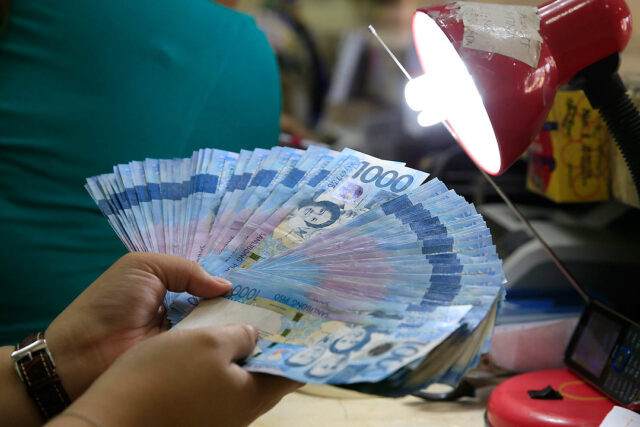
A worker inspects peso bills inside a money changer in Manila. — REUTERS

THE PHILIPPINE government should stick to its fiscal consolidation plan and temper spending to ease fiscal strain, a congressional think tank said, warning that the country is “borrowing its way to growth.”

In an August report, the Congressional Policy and Budget Research Department (CPBRD) said the government risks diverting more funds to debt servicing at the expense of public programs in the future if current spending levels persist.

The government’s debt service program for this year is set at P2.051 trillion, based on the 2025 Budget of Expenditures and Sources of Financing.

“The Philippines is not outgrowing its debt,” the CPBRD said in a 24-page report by David Joseph Emmanuel Barua Yap, Jr., Jhoanne E. Aquino, and Rutcher M. Lacaza. “It appears to be borrowing its way to growth.”

“For every new peso of economic output, the government has added a proportional amount of debt, preventing the critical debt-to-GDP (gross domestic product) ratio from improving,” it added.

The CPBRD said that years since the Philippines moved past the coronavirus-related lockdowns, the government has retained its “pandemic-era” borrowing and spending patterns.

The Philippines’ debt-to-GDP ratio rose to 63.1% as of end-June, the highest since 2005, government data showed. This is above the 60% threshold considered by multilateral lenders to be manageable for developing economies.

The government aims to bring the debt ratio to 60.4% by yearend, and 56.9% by 2028.

Outstanding debt hit a record P17.27 trillion, as of end-June.
The Philippine economy expanded by 5.5% from April to June 2025, up from 5.4% in the first quarter, but was slower than the 6.5% growth in the same period last year.

Government resources were poured into health services during the coronavirus pandemic, with economic revival efforts later focused on massive infrastructure spending, leading to debt as a share of GDP ballooning to the current level from 39.6% in 2019.

Instead of creating new taxes or raising existing ones, the government should “live within its means” and moderate spending to ease its debt burden, the congressional think tank said.

“Burdening the private sector with a greater tax burden may prove counterproductive as it would constrain economic activity and hamstring economic growth,” it said. “It bears repeating that the Philippine economy is largely driven by demand — and taxes almost invariably reduce demand.”

FISCAL GUARDRAILS
Policymakers should impose fiscal guardrails to curb overspending, the CPBRD said, recommending that the national budget should not exceed 150% of revenue collections for three straight years, or that deficit spending be capped below a fixed threshold.

The Executive is set to submit to Congress on Aug. 13 the proposed P6.793-trillion spending plan for 2026, which is 7.4% higher than this year’s allocation and equivalent to 22% of the GDP.

“The magnitude of the proposed 2026 budget, and the accompanying budget deficit further reinforces concerns regarding the deficit-to-GDP ratio,” the CPBRD said.

From January to June, the government’s budget deficit widened 24.69% to P765.5 billion.

Still, the think tank sees the Philippines bringing its debt-to-GDP ratio below 60% by 2027, below the internationally accepted threshold provided economic growth holds, inflation stays contained and fiscal discipline is improved.

In its low-end scenario, the CPBRD sees debt falling to 61.1% of GDP by end-2025, then gradually easing to 60.6% in 2026, 59.6% in 2027, and 58.2% in 2028.

Meanwhile, its high-end scenario estimates the debt-to-GDP ratio dropping to 61.4% by yearend, 60.9% in 2026, 59.9% in 2027 and 58.5% in 2028.

“These projections are predicated on high economic growth, brisk revenue expansion, favorable macroeconomic conditions and the moderation of deficit spending as well as borrowing,” the think tank said. — Kenneth Christiane L. Basilio