Home Blog Page 7847

Ban on poultry from part of Australia lifted

THE Department of Agriculture (DA) said it has lifted a ban on imports of poultry products from Lethebridge in the Australian state of Victoria.

Agriculture Secretary William D. Dar signed Memorandum Order No. 40 on July 2 which permitted the entry of such imports after a DA analysis indicated a negligible risk of contamination.

“(I) hereby lift the temporary ban on the importation of domestic and wild birds and their products including poultry meat, day old chicks, eggs, and semen originating from Lethebridge, Victoria, Australia,” Mr. Dar said in the memorandum order.

Mr. Dar said the ban was lifted after the World Organisation for Animal Health declared that Lethebridge was free from highly pathogenic avian influenza or bird flu.

The DA issued Memorandum Order No. 59 on Nov. 6 which allowed imports of poultry products from the rest of Australia.

However, Lethebridge products remained banned because of reports that H7N7 bird flu was still present in the area.

Asked to comment, Meat Importers and Traders Association President Jesus C. Cham said in a phone message that the memorandum order will have a “very small” effect on the overall supply situation, particularly in the mechanically deboned meat (MDM) segment.

MDM is used by processors in low-priced canned goods and other products such as hotdogs and chicken nuggets.

“The effect is very small. The country, particularly the DA, needs to institute zonal bans instead and also accredit new sources. Examples of those new sources include Poland, Hungary, and Turkey,” Mr. Cham said.

In 2020, the Bureau of Animal Industry estimated that chicken imports from Australia amounted to 1,174.55 metric tons (MT), accounting for 0.3% of the country’s chicken imports. Some 83.7% of the Australian imports were in the form of MDM.

The Philippines also sourced 16.41 MT of duck imports from Australia in 2020, or about 16.8% of all duck imports. — Revin Mikhael D. Ochave

Decoding the questions in availing of tax treaty benefits

Considering the recent developments in the taxation landscape and the Philippines’ wide network of bilateral tax treaties for transactions with foreign entities, it has become apparent that one of the government’s objectives is to improve efficiency and services to taxpayers. In fact, on June 25, the Bureau of Internal Revenue (BIR) issued Revenue Memorandum Circular (RMC) No. 77-2021, which clarifies the revised guidelines and procedures for availing of tax treaty benefits provided under Revenue Memorandum Order (RMO) No. 14-2021.

RMO No. 14-2021 earlier provided that a request for confirmation (RFC) or tax treaty relief application (TTRA) applies to all income derived by nonresidents from Philippine sources that may be entitled to relief from double taxation under relevant tax treaties. Taxpayers are to discontinue submitting the Certificate of Residence for Tax Treaty Relief (CORTT) Form for dividends, interest, and royalties effective immediately after the issuance of RMO No. 14-2021 on March 31. These revised guidelines superseded those that were issued in 2017 (RMO 8-2017), 2010 (RMO 72-2010), and 2002 (RMO 20-2001).

Who may avail of the treaty benefits?

Only persons, natural or juridical, who are residents of one or both contracting states may avail of treaty benefits. To establish the fact of residency in a contracting state, the nonresident income recipient should submit a Tax Residency Certificate (TRC) duly issued by the tax authority of the country of residence. The best proof of residency is the TRC duly issued by competent authority of the treaty partner. Failure to submit the same would result in the denial of the nonresident’s claim.

ITAD IS THE PROPER OFFICE
Rulings involving the application and interpretation of tax treaties should originate from the International Tax Affairs Division (ITAD) of the BIR. Therefore, the RFC of the income payor and TTRA of the nonresident or an authorized representative with a Special Power of Attorney is to be filed with the ITAD.

Applications with incomplete documents will no longer be accepted. In case an application with incomplete documents was inadvertently accepted, the filer is to be duly notified of the result of the evaluation and the docket fee returned immediately.

GENERAL RULE
RMC No. 77-2021 clarifies that the nonresident taxpayer is to submit to the income payor its TRC and the appropriate BIR Form No. 0901 prior to income payment if it intends to avail of tax treaty benefits. Otherwise, the income payor as the withholding agent is to subject income payments to regular tax rates imposed under the Tax Code, as amended.

RFC
The withholding agent/income payor is to file with the ITAD an RFC for both instances:

a. When treaty rates have been applied by the withholding agent on the income earned by the nonresident; and

b. When the income of the nonresident was not subjected to tax in the Philippines.

Nonresidents are not required to resubmit a TRC to the income payor every time the former earns an income. Only one original and authenticated TRC is to be submitted yearly. Alternatively, a certified true copy of the original may be submitted to other income payors, provided that a notation as to whom the original document was previously submitted is reflected.

The same rule also applies to the proof of establishment or incorporation, Certificate of Non-Registration or License to Do Business in the Philippines duly issued by the SEC (Securities and Exchange Commission), and Certificate of Business Registration/Presence duly issued by the Department of Trade and Industry (DTI).

FILING FOR RFC
The revised prescribed dates within which to file the RFC, with complete documentary requirements, are as follows:

a. Capital Gains: At any time after the transaction but not be later than the last day of the fourth month following the close of the taxable year when the income is paid or when the transaction is consummated.

b. Other types of Income: At any time after the close of the taxable year but not later than the last day of the fourth month following the close of such taxable year when the income is paid or becomes payable, or when the expense/asset is accrued or recorded in the books, whichever comes first.

Only one consolidated RFC per nonresident income recipient, regardless of the number and type of income payments made during the year, is to be filed. The RMC further clarified that there will be no automatic denial for failure to file the RFC or TTRA within the prescribed period. However, a penalty for late filing will be imposed.

TAX TREATY RELIEF APPLICATION
On the other hand, a TTRA is to be filed by the nonresident taxpayer or its authorized representative when a treaty rate is not applied and the regular rates have been imposed on an income. A claim for refund at any time after the payment of the withholding tax if the regular rate under the Tax Code was applied is also to be filed.

UPDATING OF LONG-TERM CONTRACTS
Annual updating is not necessary for long-term contracts involving the payment of interests and royalties and other types of income where the condition for entitlement to treaty benefits is not dependent on time threshold. In the case of long-term contract of services where the existence of a permanent establishment (PE) in the Philippines is dependent on time threshold, annual updating is mandatory.

The withholding agent should ensure that the nonresident continues to be a resident of the same country for the duration of the contract by requiring the nonresident to have an updated TRC. In case of audit, the withholding agent is required to prove that the facts and circumstances did not change at any time after the issuance of the Certificate of Entitlement (CoE).

2020 AND PRIOR YEARS TRANSACTIONS
A withholding agent may still file an RFC until the last working day this year for nonresident taxpayer’s income in 2020 and transactions made in prior years that were subjected to treaty rates but with no TTRA or a CORTT Form application. Failure to file within the prescribed deadline triggers administrative penalties under Sections 250 and 255 of the Tax Code. Moreover, a penalty of P1,000 per failure to file a CORTT Form for dividends, interests, and royalties paid after the effectivity of RMO No. 8-2017 until December 31, 2020 is to be imposed.

TRANSITORY PERIOD
All taxpayers with pending TTRAs before the effectivity of RMO 14-2021 are given three months from receiving a “Final Notice to Submit Additional Documents” to comply; otherwise, the TTRAs are deemed automatically denied. Unlike RMO 14, 2021, RMC No. 77-2021 provides that those who have been notified that their application has been archived will no longer receive a final notice. However, they are obliged to submit the required documents indicated in the previous notices within four months from the effectivity of the new RMO.

TRANSFER PRICING DOCUMENTATION ON INTEREST RATE
The transfer pricing documentation (TPD) is considered the best proof of arm’s length transfer prices for interest imposed on a loan or debt-claims between related parties. In case the full TPD is not available, the nonresident may prove, through its Transfer Pricing Policy for Intercompany Loans or any equivalent transfer pricing study, that the interest rate imposed on the loan or debt-claim is arm’s length.

OTHER MATTERS CLARIFIED
For capital gains, an audited interim financial statement (FS) is to be used to compute the real property interest of the issuing domestic corporation at the time of the transaction. Alternatively, the following may be submitted: 1) unaudited interim FS and 2) lapsing schedule as of the date of transfer or alienation of property.

In meritorious cases, the nonresident or withholding agent may be granted an extension within which to submit the required documents but in no case may it exceed 30 days.

If the RFC or TTRA is approved, the BIR will issue a CoE instead of the usual BIR Ruling. The CoE will still contain the material facts of the case and a ruling confirming the nonresident’s entitlement to treaty benefits. However, an RFC needs to be filed again by the withholding agent if there are material changes in the facts or circumstances upon which the previous ruling was based in the succeeding year.

With the issuance of RMC No. 77-2021, it is important that taxpayers continuously familiarize themselves with what is new and what the superseded policies and guidelines are. A sufficient understanding of the application of the provisions of tax treaties definitely provides an advantage in availing of the preferential tax rates on income payments.

Let’s Talk Tax is a weekly newspaper column of P&A Grant Thornton that aims to keep the public informed of various developments in taxation. This article is not intended to be a substitute for competent professional advice.


Paul Vinces C. Leorna is a senior in-charge of Tax Advisory & Compliance division of P&A Grant Thornton, the Philippine member firm of Grant Thornton International Ltd.

pagrantthornton@ph.gt.com

Wait for PBA start continues

PBA IMAGES
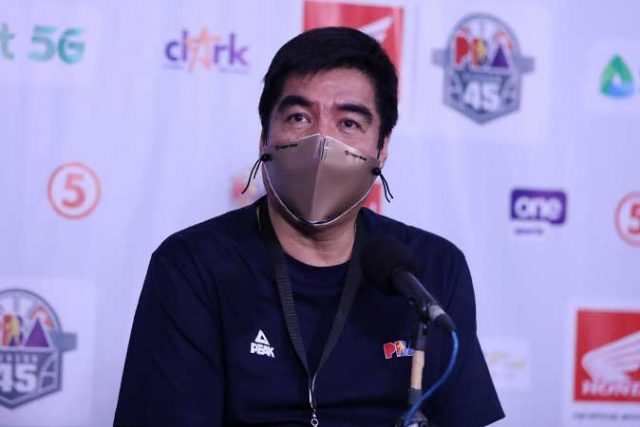
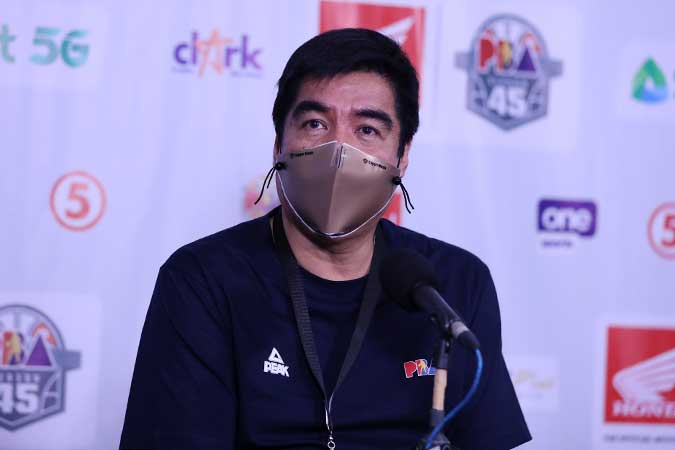
PBA Commissioner Willie Marcial said the league remains hopeful and committed to have its Season 46 start before the month ends. — PBA IMAGES

By Michael Angelo S. Murillo, Senior Reporter

THE Philippine Basketball Association’s (PBA) hopes of starting its new season in the first half of July took a hit as its request to start has yet to be approved by authorities.

While the National Capital Region (NCR) is now under a General Community Quarantine setup with some restrictions, under the guidelines released by the government recently, competition for team sports like basketball, volleyball and football are still not allowed to be held in the area, leaving the PBA with no choice but to wait and continue to make its case.

Training of the teams inside NCR, however, is already allowed, provided it is done in a “bubble” setup.

The PBA is looking to hold two conferences for its Season 46 to give fans more basketball action after being left to settle for only one tournament last year because of the pandemic.

The league plans to hold games at the Ynares Center in Antipolo City and the Ynares Sports Arena in Pasig City under a closed-circuit setup where participants’ movements are confined to home-gym-home.

A bubble setup, similar to that employed in the lone tournament in 2020 at Clark City, Pampanga, is not a top priority for the league at the moment because of the high cost it entails.

PBA Commissioner Willie Marcial shared that while their push for the season start hit another speed bump, they remain hopeful and committed to get basketball action going at the soonest possible time.

The league chief said he is set to meet with the Inter-Agency Task Force for the Management of Emerging Infectious Diseases (IATF-EID) this week to make a presentation and for them to be allowed to proceed with the start of the season before the month ends.

Mr. Marcial said in making their case to the IATF they will be banking on their successful holding of the bubble last year, which was adapted for use by FIBA for the recent Asia Cup Qualifiers in Clark, as well as the smooth flow of the training of the 12 teams in areas outside of Metro Manila.

He will also share the progress of the league’s vaccination program, which Mr. Marcial said is progressing well with almost 95% of the PBA family already vaccinated.

The league’s health and safety protocols will be shared and discussed as well with the IATF, Mr. Marcial said.

Over the weekend, Mr. Marcial met with Metropolitan Manila Development Authority Chairman Benhur Abalos to discuss ways to forge a stronger coordination and cooperation between the two groups during this time of the pandemic.

Mr. Abalos vowed to help the league in its push to start its new season and work with the PBA once given the green light to resume play in Metro Manila.

Philippine Swimming, Inc. excited for Olympic-debuting Gebbie and Rule

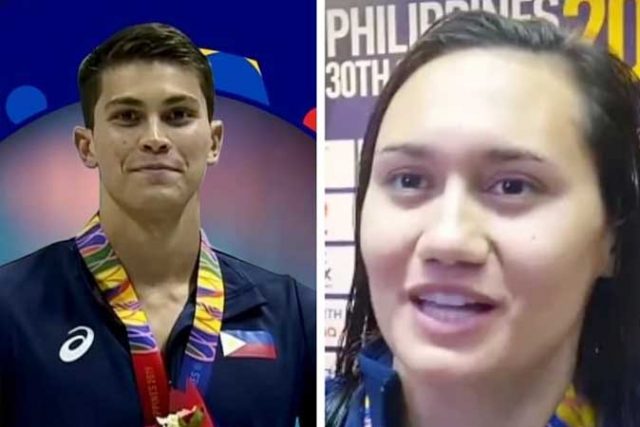
LUKE GEBBIE (left) and Remedy Rule will be representing the Philippines in the swimming competition in the Olympic Games in Tokyo.

SWIMMERS Luke Gebbie and Remedy Rule will be making their Olympic debut this year which has their federation excited.

The two will be adding their name in the steady list of Philippine swimmers who have carried the country’s banner in the Summer Games, happening this time around in Tokyo, Japan.

Both Mr. Gebbie and Ms. Rule earned qualification after being awarded universality places by the International Swimming Federation (FINA) based on the points they garnered from taking part in Olympic qualifying competitions.

Mr. Gebbie earned 828 FINA points in 100m freestyle while Ms. Rule had 830 points in 200m butterfly.

Unlike in previous Olympics though, where universality qualifiers were only allowed to compete in one event, in Tokyo they are allowed to see action in two, hence, Mr. Gebbie will also compete in the 50m freestyle and Ms. Rule in the 200m freestyle.

The Philippine Swimming, Inc. (PSI) said it is proud of what its swimmers have achieved, more so during this time of the pandemic where they had to grapple with various limitations.

“We congratulate the two swimmers for making it to the Philippine Olympic team! We thank them for their continuing dedication and sacrifice to serve our country well,” said the PSI, through President Lani Velasco, in a statement.

“We also wish to commend all our other swimmers who gave their best to qualify for the Games, despite the recent circumstances. We hope you can all continue working towards achieving that Olympic dream in the coming years,” it added.

Australia-based Gebbie was a silver and bronze medalist in the 2019 Southeast Asian Games while Ms. Rule won two silver and two bronze medals.

The addition of the two takes the number of Filipino athletes who have qualified for the Olympics to 19.

The other athletes are pole-vaulter EJ Obiena, gymnast Caloy Yulo, boxers Eumir Felix Marcial, Irish Magno, Nesthy Petecio and Carlo Paalam, weightlifters Hidlyn Diaz and Erleen Ann Ando, rower Cris Nievarez, taekwondo jin Kurt Barbosa, skateboarder Margielyn Didal, shooter Jayson Valdez, golfers Juvic Pagunsan, Yuka Saso and Bianca Pagdanganan, judoka Kiyomi Watanabe and trackster Kristina Knott.

The Olympic swimming competition is scheduled from July 24 to Aug. 1 at the Tokyo Aquatic Centre. — Michael Angelo S. Murillo

Phoenix Suns installed as NBA Finals early betting favorites over Milwaukee Bucks

THE Phoenix Suns are the early betting favorites to defeat the Milwaukee Bucks and win the National Basketball Association (NBA) Finals.

The Suns opened at -175 at Caesars Sportsbook by William Hill, with the Bucks at +150. PointsBet (-180), DraftKings (-177) and BetMGM (-165) all concurred that Phoenix should be installed as the favorite.

In an NBA postseason characterized by injuries to one of nearly every team’s top players, the Suns have reached the Finals relatively unscathed, save for two games that Chris Paul missed due to COVID-19 protocols.

The Suns’ status as favorites can be seen at least in part as a reflection of the uncertainty surrounding Bucks star Giannis Antetokounmpo, who missed Games 5 and 6 of the Eastern Conference finals with a hyperextended left knee suffered in Game 4.

The two-time league MVP watched from the sideline as Khris Middleton, Jrue Holliday and Brook Lopez led Milwaukee to a 4-2 series win over the Atlanta Hawks.

The Bucks are playing in their first NBA Finals since 1974 and seek the franchise’s second NBA title after winning in 1971. The Suns, led by Paul, Devin Booker and Deandre Ayton, are in search of their first title in franchise history; it’s their first appearance in the Finals since 1993.

The series tips off in Phoenix on Tuesday, with Antetokounmpo’s status still unknown. — Reuters

Italy, Germany and Slovenia clinch three of last 4 Tokyo Olympic basketball berths

ITALY beats Serbia, 102-95, in the finals of the FIBA Olympic Qualifying Tournament in Belgrade on Monday to book its spot in the Tokyo Olympics. — FIBA

BELGRADE — Italy, Slovenia and Germany took three of the last four available spots in the men’s Olympic basketball tournament at the July 23-Aug. 8 games in Tokyo after winning their respective qualifying events on Sunday.

The Italians stunned 2016 silver medalists Serbia (102-95), European champions Slovenia beat Lithuania (96-85), and Germany overpowered Brazil (75-64). Greece and the Czech Republic clash later on Sunday to decide the last available berth.

Serbia was without the NBA regular season’s most valuable player Nikola Jokić, who pulled out of the six-team qualifying tournament due to fatigue — and the home side sorely missed the Denver Nuggets center.

The Italians carved out a 25-point lead midway through the third quarter after nailing nine three-pointers in the first half and then held off a late Serbia rally to reach their first Olympics since Athens 2004, when they won the silver medal.

Guard Nicolo Mannion led the Italians with 24 points, Achille Polonara added 22, and Simone Fontecchio chipped in with 21 as Serbia’s porous defense failed to deal with their rivals’ long-range shooting and offensive rebounds.

Having won the European title in 2017, Slovenia advanced to the Olympics for the first time as an independent nation on the back of an effervescent performance from Dallas Mavericks guard Luka Dončić, who racked up 31 points, 13 assists and 11 rebounds.

After a balanced first half, Slovenia pulled away in the second and silenced the home Lithuanian fans in Kaunas as 22-year-old Dončić pulled all the strings to win the tournament’s most valuable player award.

“I don’t care about the MVP award because what matters is that we won the tournament and reached the Olympics for the first time,” a delighted Dončić said in a courtside interview.

“Like every child in Slovenia, I too dreamed all my life of being in the Olympic games. We are a small nation, but we have a lot of potential and we’ve made history here.”

Germany knocked out hosts Croatia in Split on Saturday and followed up with a superb defensive performance against Brazil as they led throughout the low-scoring contest.

Moritz Wagner stood out with a game-high 28 points for the Germans, while Brazil guard Vitor Benite scored only nine at the other end after he was confined to making a mere three of 18 shots from the field.

The Czechs, who edged hosts Canada (103-101) in Saturday’s thrilling semifinal, take on Greece in Victoria at 2305 GMT for the last available berth.

Holders the United States, France, Iran, Australia, Nigeria, Argentina and Spain all qualified earlier along with hosts Japan, who were given an automatic berth. — Reuters

Teenagers Coco Gauff and Emma Raducanu to light up Wimbledon’s last Manic Monday

BRITAIN’S Emma Raducanu in action during a practice session. — REUTERS

LONDON — Some intriguing last-16 clashes in the women’s singles promise to make Wimbledon’s last-ever Manic Monday a memorable one with teenagers Coco Gauff and Emma Raducanu topping the bill.

Seventeen-year-old American Gauff’s progress to the fourth round is no surprise, seeing that two years ago she made a sensational debut, reaching the same stage as a qualifier.

Her return as 20th seed has been impressive with three straight-sets victories setting up a clash of the generations against the 33-year-old 2018 champion Angelique Kerber.

The pair have never played against each other but the impressively-mature Gauff said that will not be a problem.

“I’m just so early in my career that pretty much everyone I play is a first-timer,” Gauff told reporters.

“You don’t know how they’re going to play you. How they play someone else may be different on how they play you. You just kind of have to feel it out in the match.”

Second Monday at Wimbledon is always one of the most eagerly-anticipated as its is unique amongst the slams with all the men’s and women’s fourth round singles taking place.

The decision from next year to scrap the middle Sunday rest day will mean the schedule will change — a decision that has not been universally popular with fans.

But the last one should at least be a bit special with the emergence of new home star Raducanu.

Like Gauff, 18-year-old wild card Raducanu, ranked 338, has not dropped a set and is the unlikely last British player standing in the singles draws.

She will be third match on No. 1 Court against experienced Australian Ajla Tomljanović when she will be guaranteed staunch home support from the crowd who have taken her to their hearts.

“I’m just trying to stay here as long as possible. I’m just having such a blast,” Raducanu, the youngest British woman to reach the last 16 at Wimbledon in the professional era, told reporters after her stunning win over Romanian Sorana Cîrstea.

In another intriguing last-16 showdown, top seed Ash Barty will take on the Czech Republic’s Barbora Krejčíková in a battle between the 2019 and 2021 French Open champions.

Barty has looked solid so far if not firing on all cylinders but will need to be tuned in against Krejčíková who is enjoying a stupendous run, racking up 15 successive singles wins and winning the French despite a reputation as a doubles specialist.

“I have played her plenty of times in the doubles court. Never on the singles court,” Barty said. “I’m looking forward to that challenge. I’m looking forward to trying to figure out her game, kind of piece together the puzzle that she presents.”

Poland’s Iga Świątek will also need to do some puzzle-solving against Ons Jabeur, the first Arab woman to reach the last-16 at Wimbledon after stunning Garbine Muguruza on Friday.

Men’s top seed Novak Djokovic has enjoyed a gentle route to the last 16 as he chases a record-equaling 20th Grand Slam title and he will be a big favorite to beat Chile’s Cristian Garin in Monday’s Centre Court opener.

Claycourter Garin, the 17th seed, is something of a surprise name in the fourth round having suffered first-round exits at his previous three Wimbledons.

Second Monday would not feel authentic without eight-time champion Roger Federer and the Swiss maestro, approaching his 40th birthday, has clicked smoothly onto gear after a torrid opening match against Adrian Mannarino.

Federer will face 23rd seed Lorenzo Sonego, one of two Italians in the last 16. The other one, dark horse Matteo Berrettini, has looked supremely confident so far, and should have too much firepower for Belarussian Ilya Ivashka.

Three Russian men have also reached the last 16 — a first in Wimbledon history — with second seed Daniil Medvedev up against Poland’s Hubert Hurkacz, Andrey Rublev playing Hungary’s Márton Fucsovics and Karen Khachanov facing American Sebastian Korda, who is enjoying a superb Wimbledon debut. — Reuters

Jin Young Ko captures Volunteers of America

JIN Young Ko made a two-foot par putt on the 18th hole to seal a one-shot victory over Matilda Castren on Sunday at the Volunteers of America Classic at The Colony, Texas.

Ko, from South Korea, shot a final-round 2-under 69 to finish with a 16-under 268 while recording her eighth career victory.

The win came in Ko’s first tournament since dropping to No. 2 behind Nelly Korda in the world rankings.

Ko said she wasn’t motivated by her drop out of the No. 1 spot. But she did allow her final round that consisted of four birdies and two bogeys at Old American Golf Course was a bit of a fight. — Reuters

Luka Dončić leads Slovenia to first Olympic basketball berth

DALLAS Mavericks star Luka Dončić scored 31 points Sunday to lead Slovenia to a 96-85 win over Lithuania, propelling his home nation to its first-ever Olympics basketball tournament.

Dončić, 22, also had 11 rebounds and 13 assists to register a triple-double. He was named the MVP of the Olympic Qualifying Tournament, held in Kaunas, Lithuania.

Because Slovenia didn’t qualify for the 2019 FIBA World Cup, the country had to enter the last-chance tournament to earn a berth in the 2020 Tokyo Games, which will begin later this month.

Dončić’s boss, Mavericks owner Mark Cuban, was among the first people to congratulate him and all of Slovenia on the “great win.”

Slovenia’s win had to be a stunner in Lithuania. The national team has been an international power since the country split from the Soviet Union and first competed as an independent nation in the Barcelona Games in 1992.

The nearly 30-year streak in the Olympics for Lithuania was the longest of any European nation. Lithuania joined the United States as the only men’s basketball teams to reach the quarterfinals of the Olympics since Barcelona.

Team Lithuania won the bronze medal in 1992, its first of three-place finishes in a row.

The Lithuanian roster included Dončić’s NBA peers Domantas Sabonis and Jonas Valančiūnas. — Reuters

Stereotypes fade with mixed styles of Euro 2020’s final four

MANCHESTER, England — Four teams head to London for the final week of Euro 2020 and as well as promising close battles, the two semifinals present a fascinating clash of football styles and tactical approaches.

While football has its ideologues, who insist that a particular approach is the right way to play the game, the ‘final four’ are proof that there really is no single formula to success.

The quartet also illustrate, in differing ways, how national teams can escape from their typecasting, the stereotypes that linger around them and reappear in commentary around major tournaments.

Italy have evolved under Roberto Mancini into a team that play high-energy, pressing football, looking to attack in numbers as soon as they win the ball.

Lazy cliches about ‘catenaccio’, which refer back to a defensive style from over half a century ago, have long been out of date, but really are completely irrelevant when looking at Mancini’s team.

The Italian relish for defending is still displayed in the performances of Giorgio Chiellini and Leonardo Bonucci but the system is built around a high-energy approach with over-lapping fullbacks and clever use of the inside channels, where Lorenzo Insigne and Federico Chiesa connect so well with center forward Ciro Immobile.

It is a fast, positive and entertaining brand of football and it has been helped by Italy’s players looking the freshest and fittest in the tournament.

In contrast, Tuesday’s opponent Spain is closer to their trademark national style, established during the tiki-taka era when they won the Euros in 2008 and 2012 with their 2010 World Cup success sandwiched in between.

But while possession remains at the core of their philosophy, their manner of play has changed significantly under Luis Enrique.

His Spain still monopolize the ball, including posting a tournament record 917 passes against Sweden while keeping 85% possession, but his side are more intense than their predecessors and quicker going forward, with the coach often talking of the need for ‘verticilidad’, direct attacks.

He plays with the same 4-3-3 formation he used when in charge of Barcelona and favors a more attacking setup than former boss Vicente del Bosque, who famously played without a striker for most of Euro 2012.

Energetic, hard-working forwards, stretching defences, are key to Luis Enrique’s approach, which explains his persistence with the often wasteful Alvaro Morata.

CREATIVE FOOTBALL
On the continent, the stereotype of English football has always focused on commitment and work-rate and a direct, physical style, but that view is also well out of date.

Indeed, the Three Lions went into this tournament with an array of skilful attacking midfielders and wide players and the potential to play high-speed, flowing, creative football.

Manager Gareth Southgate has, for the most part, been cautious and pragmatic, playing with two holding midfielders in Declan Rice and Kalvin Phillips behind a three-pronged attack with Raheem Sterling on the left, Harry Kane in the middle and a rotating cast on the right wing.

The 4-0 win over Ukraine in Sunday’s quarterfinal in Rome, saw England play with freedom and panache once they had established a two-goal lead and it will be interesting to see if they carry that approach over into Wednesday’s semi with Denmark or if they revert to the careful control they showed against Germany in the previous round.

England’s style is perhaps best described as the fusion of a solid defensive structure, a priority on possession with the creativity largely left to the front three.

The Danes have always produced more progressive football than their more rudimentary Scandinavian neighbors and Kasper Hjulmand’s team owe much of their success to their front three.

Martin Braithwaite creates the spaces which Mikkel Damsgaard and Kasper Dolberg have exploited well and wing backs Jens Stryger Larsen and Joakim Maehle get forward to add width.

As with England, there is a solid two in central midfield with Pierre-Emile Hojbjerg and Thomas Delaney providing the anchor.

Whoever emerges on top in next Sunday’s final, be wary of anyone declaring that the outcome shows a particular style of football is now the way to follow.

Euro 2020 has already shown that there is no dominant tactical model for success. — Reuters

Czechs show they are a team on the rise after deep Euro 2020 run

PRAGUE — The Czech Republic showed they are team ready to compete with the heavyweights of European football after a run to the quarterfinals at Euro 2020 that ended in a 2-1 defeat to an exciting Denmark side.

Boosted by a core of the Slavia Prague team that reached the Europa League quarterfinals, knocking out Leicester City and Scottish champions Rangers on the way, the Czechs used an energetic high press to create turnovers and launch quick counter-attacks.

These tactics were on display in a 2-0 win over the Netherlands in a last-16 match in which a well-organised Czech squad stymied the Dutch attack before capitalizing on a red card to upset their more-fancied opponents.

Yet the determined Danes, who scored two first-half goals, proved too strong for the Czechs, ending their hopes of reaching a first European Championship semi-final since 2004 and a first final since 1996.

Midfielder Antonin Barak said their run at Euro 2020 gave them something to build on as the team eye the next World Cup and sent a message that smaller countries like the Czech Republic, Denmark and Switzerland could make their mark at big tournaments.

“We have to try to get there, it will be another very important step,” Barak said. “The team has great individual quality and can be worked with well. And everything can happen in the tournament, look at us, the Danes or the Swiss.”

Under coach Jaroslav Silhavy, the Czechs regrouped after failing to qualify for the 2018 World Cup and began to rely on younger players such as Bayer Leverkusen forward Patrik Schick, whose stunning effort from near the halfway line in their opening 2-0 win over Scotland is perhaps the goal of the tournament so far.

Schick also netted against the Danes to give the Czechs a glimmer of hope and ended the tournament as the team’s leading scorer with five goals.

The Czechs made a solid start to the tournament, with the victory over Scotland and a 1-1 draw with Croatia, but failed to produce a similar performance in a 1-0 loss to eventual group winners England at Wembley.

They were tactically superb in their last-16 win over the Netherlands to set up the encounter with Denmark.

Since 1996, the Czechs have qualified for every European Championship and progressed past the group phase four times, but have not made much of an impact on the international stage since reaching the last eight at Euro 2012.

That began to change under the guidance of former defender Silhavy, who has forged a team with a core of Slavia Prague’s current and former players, including West Ham United duo Tomas Soucek and Vladimir Coufal.

During qualifying the Czechs beat England 2-1 at home yet still doubts lingered as to whether the squad had what it took to emerge from a group that also included 2018 World Cup runners up Croatia and a Scotland side playing at home.

In doing so, the Czechs showed they will be a team to watch in the future and, with their mix of experience and youth — including 18-year-old Sparta Prague forward Adam Hlozek who earned valuable tournament experience — they will be a tough opponent for whoever they face.

“I am proud of the team, as well as all the people around me,” said goalkeeper Tomas Vaclik. “After such a tournament and this second half, we can leave with our heads held high and a clear conscience that we have done our best.” — Reuters

Proven safe and effective

PIKISUPERSTAR-FREEPIK

COVID-19 vaccine acceptance has been a critical concern over the past few months. To address hesitancy and to encourage uptake, FDA-approved vaccines have repeatedly been described to be safe and effective. Some understand “safety” in this context as a guarantee that no vaccine shot would cause death in a recipient while others have set greater expectations that often pertain to the avoidance of certain adverse effects. Despite variances in the desired outcomes, the communicated standard for safety from the authorities is clear: you will not die from vaccination alone. However, such a standard for effectiveness has not been clearly established.

In management, “effectiveness” is defined as the degree to which something succeeds in producing a desired result. This is in stark contrast with perceiving effectiveness merely as the presence of causal effects. From a managerial standpoint, defining the desired results is a necessary step in evaluating the effectiveness of a product or endeavor. When it comes to vaccines, the desired results may vary greatly from person to person. Given the vast amounts of knowledge on the various vaccines that have been generated so far, we have several bases for defining our desired outcomes and for guiding our vaccination-related decisions. For instance, some would prioritize avoiding specific adverse effects that occur frequently for some vaccines. Others would consider their medical histories and other vulnerabilities including but not limited to past allergic reactions, immunodeficiencies, and mental health considerations. Some would consider non-medical factors such as potential work and travel implications, while others would just want to get the vaccination over with by using any vaccine brand that is already available. With such a wide variety of factors to consider and with clear differences in the actual effects of the different options, it is easy to appreciate that effectiveness should not simply be dictated to us by the authorities. Rather, we ourselves need to assess effectiveness based on our own desired results.

No matter which factors we choose to value for our own assessments of effectiveness, authorities should have communicated a minimum standard clearly and consistently from the start: that an approved vaccine will not by itself kill you and will decrease your chances of infection, transmission, hospitalization, and death. Sadly, one of the many factors that have affected vaccine acceptance is the inability of authorities to stay consistent with their communication. Instead of presenting a consistent set of reasonable expectations, they took a reactive approach and dealt with each unfavorable event as it happened.

Many people started with the expectation that vaccines would allow us to go back to the way things used to be. When persons who got one shot either tested positive or died, authorities emphasized that a second shot was needed. When persons who got two shots still tested positive, authorities emphasized that full protection only comes two to three weeks after the second shot, and that although infection can still occur, hospitalization and death could be avoided. Recently, several fully vaccinated persons died of COVID-19. All these outcomes should have been expected, and we should realistically expect more of such outcomes because no vaccine is 100% effective in preventing infection, transmission, hospitalization, and death. Instead, a series of broken expectations resulted in the incremental degradation of the perceived value of some vaccines. Such degradation could have been avoided through clear, consistent, and honest communication, which authorities should work towards moving forward.

Today, my 91-year-old grandmother will get her second vaccine shot. Tomorrow, I will get mine. In a few weeks, we will be among less than 3 million fully vaccinated people in the Philippines, which is sadly less than 4% of the 70 million target population for herd immunity. My desired vaccination result of minimizing our risks of infection, transmission, hospitalization, and death, and the path leading towards it has always been clear to me no matter how little control I have over it.

Can I still get infected by COVID-19, transmit it, and get hospitalized or die due to it after getting fully vaccinated? The answer is still “yes.” However, the chances of each of those undesirable events occurring should be significantly reduced after my second shot, enabling me to protect myself and the people around me. Due to decisions made based on my desired results, vaccine effectiveness will have been achieved.


Rafael Gerardo S. Tensuan, an engineer, is a lecturer at the Management and Organization Department of the Ramon V. Del Rosario College of Business of De La Salle University.

rstensuan@gmail.com

ADVERTISEMENT
ADVERTISEMENT