Home Blog Page 7835

Philippine national volleyball team receives welcome news

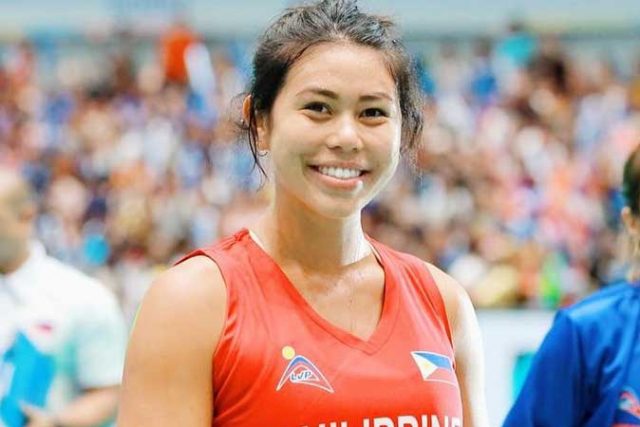
FILIPINO-AMERICAN volleyball player Kalei Mau has been allowed by the FIVB to represent the Philippines in international competitions. — KALEI MAU-PRO VOLLEY FB PAGE

THE Philippine national volleyball team received good news on Wednesday as it continues its buildup for international tournaments.

Ramon Suzara, president of the Philippine National Volleyball Federation (PNVF), said Brazilian coach Jorge Edson Souza de Brito finally secured his visa to come over here to help the nationals’ preparation, and that noted Filipino-American player Kalei Mau got the International Volleyball Federation’s (FIVB) approval on her eligibility to play for the country.

The twin news is seen to boost the country’s volleyball program and bid abroad.

“These are a couple of good news for Philippine volleyball. With Coach Jorge flying in soon and Mau already available to play for the country, we can now go on full throttle for the women’s national team training,” Mr. Suzara said in a statement.

Coach Jorge is being brought over to work alongside national women’s team coach Odjie Mamon for the next two years.

The Philippine team looks to learn from the experience of the Brazilian coach, who has won a number of titles in leagues in Brazil, Turkey and Japan.

The PNVF also said it has secured an exemption from the temporary suspension of visa issuance for Thai coach Anusorn “Tai” Bundit, who will be one of Mr. Souza de Brito’s assistants.

Ms. Mau, born to a Filipino mother, meanwhile, finally gets to play for the Philippines.

She was to suit up for the country in the 2019 Southeast Asian Games held here but was not allowed to for her affiliation with USA Volleyball.

The PNVF said FIVB has communicated to USA Volleyball, informing the latter that the 6’2” Mau can now don the Philippine colors in international competitions.

Twenty-six-year-old is currently playing in the Puerto Rico league as import for Changas de Naranjito. She played for the University of Arizona in US NCAA Division I and has seen action in the Philippine SuperLiga with United Volleyball Club and F2 Logistics.

In a Tweet, Ms. Mau shared the news as well.

“I am officially a Philippine National volleyball player,” she wrote.

The Philippine team is training right now in a “bubble” in Laoag City, Ilocos Norte, in preparation for the 21st Asian Seniors Women’s Volleyball Championship in August here, and the 31st SEA Games in Hanoi in November. — Michael Angelo S. Murillo

Spanish striker Marañon given Filipino citizenship 

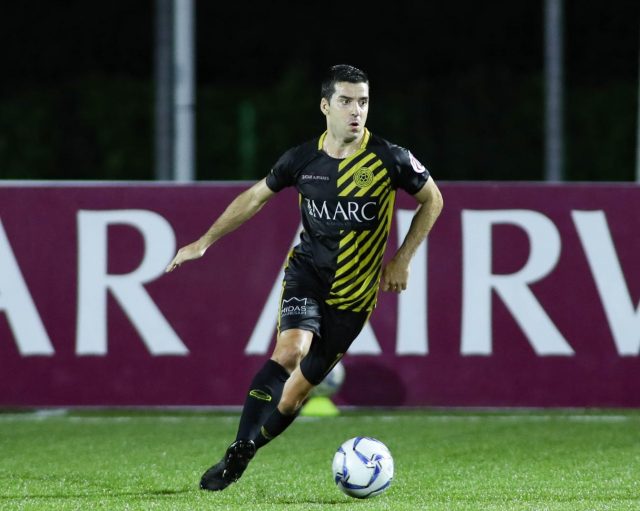
Spanish striker Benvenido Marañon can now play for the Philippine Azkals in international competitions after he was officially given a Filipino citizenship. (PFL Facebook page)    

By Michael Angelo S. Murillo, Senior Reporter

Spanish striker Bienvenido Marañon can play for the Philippine national men’s football team in international competitions after his Filipino citizenship was made official. 

On Wednesday it was announced that President Rodrigo R. Duterte had signed Republic Act 11570 granting Philippine citizenship to Mr. Marañon, 35, paving the way for him to don the country’s colors as a naturalized player. 

Mr. Maranon has been playing in the local professional league since 2015 and has steadily built his standing as a solid scorer, earning the interest of the Philippine Azkals. 

The striker’s naturalization papers were submitted around the same as that of now-Gilas Pilipinas player Angelo Koaume of Ivory Coast. But unlike that of the latter, Mr. Marañon’s took a while to be approved and signed pending completion of some requirements. 

The delay made Mr. Marañon miss the Azkals’ campaign in the jFIFA World Cup qualifiers in June. 

Now granted citizenship, Mr. Marañon is now expected to be part of the Azkals’ pool in their upcoming tournaments, including the next round of the 2023 AFC Asian Cup qualifiers, apart from playing for Philippines Football League champion United City Football Club. 

Mr. Marañon is currently with United City in Uzbekistan, playing in the AFC Champions League.

Pilipinas VisMin Super Cup Mindanao leg finally takes off

THE MINDANAO leg of the Pilipinas VisMin Super Cup finally took off on Wednesday in Zamboanga Sibugay.

AFTER an extended wait, the Mindanao leg of the Pilipinas VisMin Super Cup finally took off on Wednesday in Zamboanga Sibugay.

Initially penciled for June, the league had to reconsider its original tournament calendar as it awaited the approval to start from the Inter-Agency Task Force for the Management of Emerging Infectious Diseases (IATF-EID).

The nod came on Tuesday, following the league’s submission of regulatory requirements, including health screening, drug testing, and other related documents.

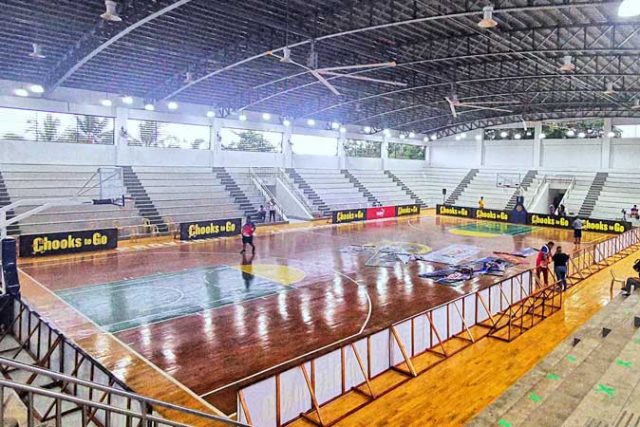
The VisMin Super Cup Mindanao leg, which is presented by Chooks-to-Go, kicked off with a double-header.

ALZA Alayon Zamboanga Del Sur and Basilan Peace Riders got the action going at 1:00 p.m. at the Ipil Provincial Gym in Ipil Heights, followed by the clash between the Kapatagan Buffalo Braves and the Iligan City Archangels at 3 p.m.

The Mindanao leg got the green light to start since Zamboanga Sibugay is under General Community Quarantine where it is now allowed under existing guidelines but under a strict “bubble” setup with no live audience.

Participants are required to limit their movement to home-venue-home throughout the duration of the tournament. All teams and officials are billeted in Pagadian City — a three-hour ride to Ipil.

Organizers, however, plan to move the competition to Plaza Luz in Pagadian City if quarantine restrictions are further eased by July 15.

Games in Ipil will take place on July 7, 8, 9, 11, and 13.

Other teams competing in the Mindanao Leg are the Roxas Vanguards, the Pagadian Explorers, the Clarin Sto. Nino, the MisOr Brew Authoritea, and the Zamboanga City JPS.

“We are just happy that Ipil, Zamboanga Sibugay accepted us without hesitation as we tip off our Mindanao leg,” said Pilipinas VisMin Super Cup Chief Operating Officer Rocky Chan in a statement.

The VisMin Super Cup Mindanao Leg comes after the Visayas part of the tournament which was completed in May. — Michael Angelo S. Murillo

Sabalenka outguns Jabeur to reach Wimbledon semis

LONDON — Power trumped panache as second seed Aryna Sabalenka blasted past Tunisian Ons Jabeur into the Wimbledon semifinals with a (6-4, 6-3) victory under the Centre Court roof on Tuesday.

In a classic clash of styles the 23-year-old Belarusian had too many destructive weapons for Jabeur as she set up a clash with fellow big-hitter Czech Karolina Pliskova.

Playing in her first Grand Slam quarterfinal, Sabalenka kept the intensity and decibel levels turned up to 10 throughout, allowing 21st seed Jabeur few chances to settle.

It was never completely comfortable and Jabeur, making history as the first Arab woman to reach the Wimbledon quarterfinals, did produce flashes of the mercurial game that has made her a favourite with the crowds this week.

But Sabalenka was relentless and closed out the win with her 27th winner of a match played mainly on her terms.

“Guys, you make this place special, thanks so much for your support. The atmosphere was unbelievable today,” Sabalenka said of the 15,000 crowd on Centre Court — the first day of the tournament that 100% capacity was allowed.

“It looks like everything is working for me. It’s really tricky, shots on the grass. It fits my game and I’m really enjoying my time on the court.”

MATCH WINS
Jabeur had beaten three Grand Slam champions — Venus Williams, Garbine Muguruza and Iga Świątek — en route to the last eighth and topped the list of match wins on Tour this season with Sabalenka, both having 33 to their name.

She had a break point in the opening game but could not convert it and from them on the pattern of the match was set, with three or four-stroke rallies the norm.

That suited Sabalenka and after the first nine games all went with serve Jabeur was the first to wobble at 4-5.

Jabeur showed great dexterity to fend off three set points but she buckled on the fourth as Sabalenka crunched another ferocious groundstroke close to the baseline.

Cranking up the pace on her heavyweight serve, Sabalenka went 2-0 up in the second set but Jabeur replied to break back with a trademark dropshot and then hold for 2-2.

But the Tunisian looked flustered by the depth and power of her opponent and her challenge faded away.

Jabeur had a break point when Sabalenka served for the match at 5-3 but could not convert and the Belarusian finished it off with a screaming backhand down the line. — Reuters

Italy reaches Euro final to continue storming comeback from World Cup failure

LONDON — Italy reached the Euro 2020 final after edging Spain 4-2 on penalties following a compelling 1-1 draw after extra time on Tuesday, completing a remarkable revival after failing to qualify for the last World Cup.

Jorginho coolly rolled the decisive kick past Spain keeper Unai Simon in the semifinal at Wembley after Alvaro Morata had been thwarted by a fine save from Italy’s Gianluigi Donnarumma and Dani Olmo had blasted his effort over the bar.

Italy’s substitutes and coaching staff poured on to the pitch celebrate in front of their jubilant supporters behind the goal after Jorginho’s kick booked their place in Sunday’s final against either England or Denmark.

Roberto Mancini’s side took the lead on the hour through a sensational curler from Federico Chiesa to complete a sweeping counter-attack which began with keeper Donnarumma catching a Spain cross and rolling the ball out.

Morata, who had been dropped from the starting lineup after beginning all Spain’s previous games, equalized with 10 minutes left, calmly slotting into the bottom corner after bursting forward and exchanging a one-two with Olmo.

The goal was the latest twist in an eventful few weeks for Morata, who has been booed and even faced death threats from Spain supporters after a couple of poor showings, before redeeming himself with a crucial goal in the 5-3 win over Croatia.

But his tournament ended in dismay as his tame spotkick allowed Jorginho to clinch the win for Italy, continuing their sensational run, having earned a clean sweep of victories in the group stage and knocked out top-ranked Belgium in the quarterfinals.

“Spain were great, they have star players but we fought until the end and we did it,” said Italy’s Chiesa.

“When (Manuel) Locatelli missed the first penalty, everyone was calm saying we can do it and at the end our group helped us in the moment.”

Mancini’s side are looking to win the European Championship for the first time since 1968 and secure their first major trophy since winning the 2006 World Cup.

Italy avenged their shootout defeat to Spain in the Euro 2008 quarterfinals and their resounding defeat in the Euro 2012 final, and completed a second straight European Championship victory over the Spaniards after their 2-0 win in the last 16 at Euro 2016.

Spain coach Luis Enrique could take nothing away from his side.

“They only wanted to get to penalties in extra time but we could have played for half an hour more. We can be happy and proud with what we’ve seen. We kept trying to play our way,” he said.

“Everyone can feel proud of this team, we have many young players who have done things you couldn’t imagine at their age and we were a team from start to finish.”

SCORCHING ATMOSPHERE
Wembley’s capacity was expanded to 60,000 and although coronavirus restrictions prevented fans from travelling abroad, the two countries’ expatriate communities turned out to pack each end behind the goal and generate a scorching atmosphere, which heightened the sense of occasion between two titans of international football.

Italy made an intense start but Spain went on to dominate the first half, although Mancini’s side came closest to scoring when Emerson clipped the bar right before half time.

The second half was even more intense as gaps opened up at either end and Spain captain Sergio Busquets missed a great chance when he sent a shot just over the crossbar.

Chiesa then broke the deadlock by pouncing on a loose ball after a last-ditch tackle by Aymeric Laporte and curling into the net to score his second goal in the tournament after also netting at Wembley against Austria.

Italy could have put the game to bed, but Simon saved twice from Domenico Berardi and Morata made them pay.

Spain looked more likely to find a winner in the remaining minutes and in extra time but could not manage a second shootout victory after prevailing against Switzerland in the quarterfinals.

Once again, Morata was a crucial part of the story, but not in the way he would have wanted. — Reuters

Men’s quarters has fresh look, but Djokovic and Federer loom large

LONDON — Novak Djokovic and Roger Federer are part of the Centre Court furniture on quarterfinals day at Wimbledon but this year’s last-eight lineup has a refreshingly new look.

World number one Djokovic has cruised into the quarterfinals for the 12th time as he seeks the sixth Wimbledon title that would equal Federer and Rafa Nadal’s 20 Grand Slam titles.

Swiss maestro Federer, nearing his 40th birthday, has reached this stage for the 18th time.

Few would bet against them continuing their compelling rivalry with a 51st career clash in Sunday’s final, having contested three others, including two years ago when Djokovic saved match points to beat Federer in a cliffhanger.

Six of Wednesday’s cast have reached the quarterfinals at Wimbledon for the first time, matching the record of 1991 and 2002. And the way Italian powerhouse Matteo Berrettini and Canadian duo Denis Shapovalov and Felix Auger-Aliassime have arrived there suggests they are not ready to stop now.

The 34-year-old Djokovic will face unseeded Marton Fucsovics in the opening match on Centre Court, followed by eight-time champion Federer’s clash with Poland’s Hubert Hurkacz.

Fucsovics is the first Hungarian to reach a Wimbledon singles quarterfinal since Zsuzsa Kormoczy reached the women’s semifinals in 1958 but now faces one of the toughest challenges in sport — trying to knock Djokovic off his stride.

The world number 48 has lost both his previous meetings against Djokovic, but says he enjoys playing against the Serb who is bidding to reach his 41st Grand Slam semifinal.

“Maybe, his game is not so entertaining like Federer’s or when Nadal is hitting the ball so hard,” Fucsovics said after his win over Andrey Rublev on Monday.

“Actually, I like to play against him. I can rally with him. He beat me, but I like the way he plays. I think we play the same kind of tennis. We like to play long rallies.”

‘SOMETHING SPECIAL’
Federer, despite doubts about his form and match sharpness coming in after minimal time on court in the past 18 months, has gradually built up momentum, although he will be wary of 14th seed Hurkacz who beat world number two Daniil Medvedev on Tuesday, a match held over from the previous day by rain.

Should Federer prevail it would be his 106th match win at Wimbledon, surpassing Nadal’s record 105 at Roland Garros.

“Obviously, playing Roger on a huge, huge arena, it’s something special,” Hurkacz, bidding to become only the second Polish man to reach a Grand Slam semifinal, said.

Berrettini has scythed his way through the draw in impressive fashion and, having warmed up by winning the Queen’s Club title, the 25-year-old will be hugely-confident as he takes on 20-year-old Auger-Aliassime, the youngest of the eight survivors.

“I feel like I’m not using a lot of energy because I won most of the matches in three sets,” Berrettini, who has a tournament-leading 67 aces so far, said.

“Obviously, the tournament is not done yet. I’m really looking forward to achieving even more.”

Berrettini is bidding to become only the second Italian man to reach the semifinals at Wimbledon after Nicola Pietrangeli.

And with Auger-Aliassime joined in the last eight by Shapovalov, it is the first time in history that more than one Canadian man has reached the quarterfinals at a Grand Slam.

The 22-year-old left-hander is beginning to deliver on his spectacular talent and will take on Russian Karen Khachanov with the prize a likely first Grand Slam semifinal against Djokovic.

“I think, just mentally, physically, tennis-wise, I’m just a different person than I was two years ago. It’s really not comparable,” the 10th seed said after his sensational straight-sets win against Roberto Bautista Agut on Monday. — Reuters

Steph Curry rookie card nets record price

THE most expensive trading card in existence belongs to the Golden State Warriors’ Stephen Curry.

Well, it belongs to alternative investment firm Alt, technically, but it has Curry’s likeness on it.

The record-setting card recently fetched the price of $5.9 million, breaking the previous record of a LeBron James card that went for $5.2 million, to Alt as well.

“Steph is a generational player,” Alt’s founder Leore Avidar told NBC Sports. “Our data shows that Steph’s cards have increased 35% in value YTD — compare that to the S&P and you can see the outsized return potential.”

In the All-Star point guard’s return to the NBA in 2020-21 following a broken left hand sidelining him for the majority of 2019-20, the 33-year-old Curry scored a career-high 32 points per game in 63 games, once again shooting over 40 percent from behind the arc (42.1).

The Warriors finished 39-33, good for ninth in the Western Conference, losing in overtime to Memphis (117-112) in a play-in game. — Reuters

Twitter clarifies account verification process

Twitter is gradually rolling out its account verification approval process worldwide and the social media company is prepared to handle the high volume of applications, said Brennen “B” Byrne, Twitter’s director of product management, in a July 7 Twitter Spaces talk. 

Users with notable profiles can now apply to have their accounts verified with a blue check mark in their account settings, after the social networking site relaunched its approval process for better transparency, credibility, and clarity.  

(After halting verifications in 2017, the social media company announced this May that it would start accepting submissions  only to hit pause again a week after.) 

A blue check mark indicates that an account is authentic (has a verified identity), notable (represents or is otherwise associated with a prominently recognized brand), and active (has a record of adherence to Twitter rules).  

The San Francisco-based company said these blue badges help people determine the trustworthiness of who they’re interacting with, which leads to healthier, more informed conversations.  

“It’s always impossible to know how a community would use a feature [initially],” said Mr. Byrne. “We need to give people access first and then learn how they would use it… The process we will be rolling out will be a better process for those who will use it [as compared to] those who used our previous process.” 

At the same Twitter Spaces talk, trust and safety project Sarah Husain said that those who wish to qualify for verification must fit one of six categories: government; companies, brands, and organizations; news organizations and journalists; entertainment; sports and gaming; and activists, organizers, and other influential individuals.  

“We want to make sure people are applying to the right category,” she said. “Non-governmental organizations, for example, can apply under Companies, Brands and Organizations. The Activists category, [meanwhile], is for individuals, not organizers.”  

Accounts must also be active within the last six months, plus have a profile name, a profile image, and either a confirmed e-mail address or phone number. All applications are reviewed by a human, and users may reapply 30 days after their applications have been denied.  

“Those who use pseudonyms can use other avenues such as an official e-mail address or an official website to verify their account,” added Ms. Husain. 

Ryan Collado, Twitter’s senior product manager, said that Twitter updated its e-mail templates to include context around rejected verification requests. “Moving forward, we would like to have additional context put upfront in the application flow, which will allow customers to have a better understanding of why they do or do not qualify for verification,” he said.  

The platform may remove the verified status of an account at any time and without notice, in accordance with its terms of service, said Mr. Collado. Among the reasons for revocation are if the user is no longer in the position they initially verified for, or if the account is flagged for violations such as impersonation. Repeated violations that include hateful conduct and abusive behavior are also assessed on a case-to-case basis.  

Twitter had 199 million monetizable daily active users worldwide as of the first quarter of 2021, according to Statista, a market and consumer data provider. The countries with the greatest number of users are the US, Japan, and India, respectively. 

Among the most followed celebrities in the platform are former US president Barack Obama, and singers Justin Bieber and Katy Perry. This March, actress Anne Curtis became the first Filipino to reach 14 million followers on Twitter. 

Migration and financial stability: A model on how to get there

MACROVECTOR-FREEPIK

I now conclude this series on a mini-research project I had conducted on OFWs in Paris, exploring different dimensions — including trying to understand the financial strategies of the poor, dissecting the economic reasons for migration, and finally uncovering whether and how (if so) migrants and the families they left behind really do end up better off.

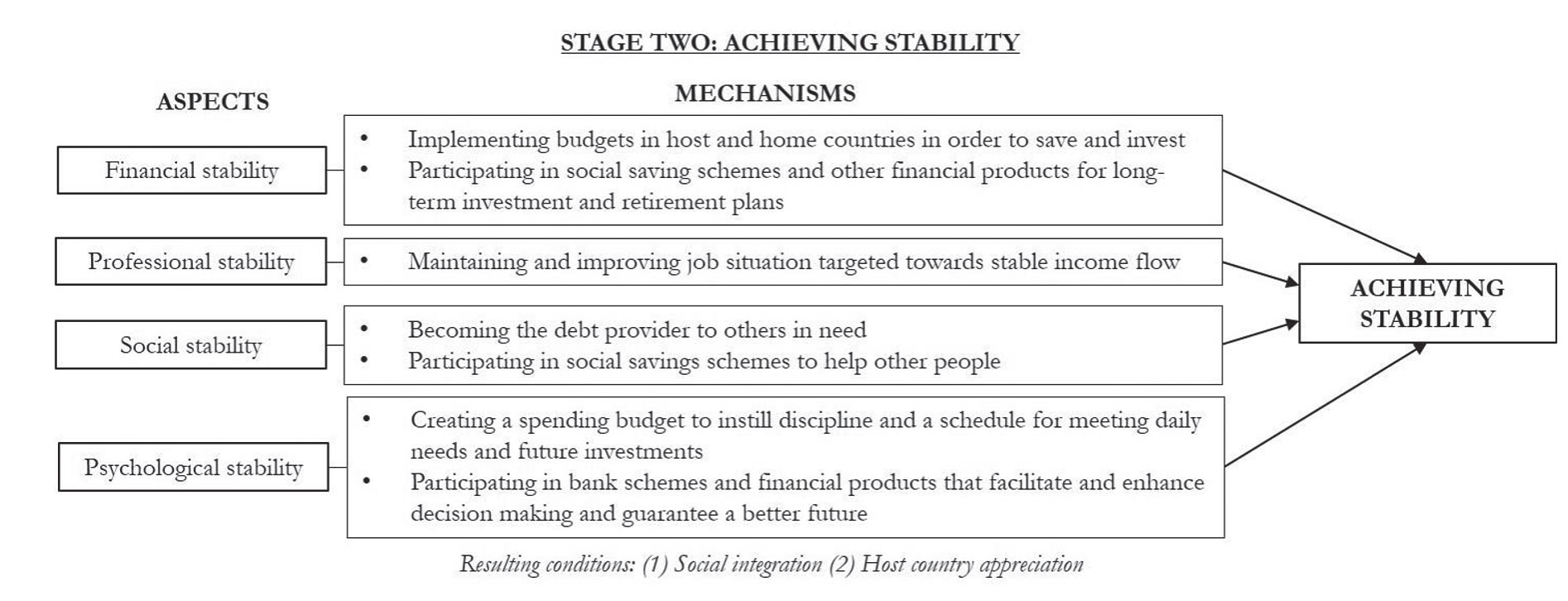
Last week, I presented a model of a migrant’s road to financial stability, which is composed of two stages: Achieving Independence and Achieving Stability. All of this is based on two precipitating conditions: an indebted road to migration and a home bias for investing. I explained how achieving independence not only depends on financial freedom, which comes from higher and more stable income, but also on professional freedom (the possibility to change employers and situation freely), social freedom (repairing relationships that may have suffered due to indebtedness), and, finally, psychological freedom (learning to be motivated again once they feel a sense of security).

However, all these achievements remain fragile at Stage 1. Whenever a bad situation arises or due to the cultural need to help others in need, migrants not only get stuck in this stage, without the ability to move forward and accumulate more wealth, but they often end up back where they began. I highlighted how it was accessibility to financial products and financial literacy education which were catalysts for them to break above this Stage 1 level and onto Stage 2: Achieving Stability.

Once they have overcome these hurdles, the use of their incomes dramatically changes. Migrants shift from freedom-based objectives to stability-based objectives and enter a second stage in Migrant Finance, characterized by the items below.

Financial stability. Migrants began to move from acting with the objective to be free from debt to using the money they accumulated for savings and investments to assure their futures and those of their loved ones. They would implement budgets that had a savings and investments component both in their host and home countries. They would also participate in the paluwagan (a group savings scheme with friends) not for debt repayment purposes but instead for long-term investment and retirement plans.

Professional stability. The effects of financial stability for migrants extend much more than just being able to lift their families out of poverty or provide an education for their children, though these are important things. Financial stability also introduced confidence in their professional lives. They no longer needed to accept abusive jobs or engage in very risky activities.

“After four years, I managed to build a house. So, I began fighting them back, my co-worker and my employer. I said, ‘if you don’t need me, I will go.’” (Evelyn)

Social stability. Similarly, because they had cut the cord with those on whom they were financially dependent, they again felt accepted in their social circles. They also began themselves becoming the debt provider to others in need and continued to participate in social savings schemes, now with the additional objective of helping other people.

Psychological stability. Finally, migrants were also eventually able to achieve psychological stability and the feeling that they were happy where they were. To facilitate this, they began to create spending budgets that would instill discipline and a schedule for meeting daily needs and future investments. They participated in bank schemes and financial products that facilitate and enhance decision making and guarantee a better future. They could now also send money used as “mothering money” to make them feel closer to their loved ones, which aided both sides in the situation of separation.

“Yes, the daily talks, those don’t go away, and then each time I send money, even just a small amount — it’s not in the amount — as long as I can make them feel that I am taking care of them.” (Eduardo)

RESULTING CONDITIONS: (1) SOCIAL INTEGRATION (2) HOST COUNTRY APPRECIATION
Once the migrant had achieved stability, I found that this resulted in two key conditions: Social Integration in the host country and appreciation for the host country. Although migrants began with a home bias and had the intention to go back, this timeframe continued to extend. In fact, 60% of survey respondents said that they had surpassed their initial timeframe, with a majority stating that the reason was that they were happy with their lives in the host country and did not want to go home yet, as opposed to only a minority who stated that they had not returned because they were unable to save enough.

“Yes, I am happy. At the beginning I was disappointed but, in the process, when I managed to put myself in a stable place, that’s where I felt that I was okay here, I was happy already, as long as I continued the positive things I was doing, not deviate from what I should be doing, just be stable.” (Jenalyn)

“I have some words to leave. So, for me, one’s success is not measurable by living in a big condominium, a big house, by buying a car, buying expensive things. Success of a person is really measured by whether you are financially stable and whether you are ready in the event that you really need it (…) when there is an emergency, you can really manage. At least you are not afraid of what could happen to you. That’s where you will see a stable person.” (Jenalyn)


Daniela “Danie” Luz Laurel is a business journalist and anchor-producer of BusinessWorld Live on One News, formerly Bloomberg TV Philippines. Prior to this, she was a permanent professor of Finance at IÉSEG School of Management in Paris and maintains teaching affiliations at IÉSEG and the Ateneo School of Government. She has also worked as an investment banker in The Netherlands. Ms. Laurel holds a Ph.D. in Management Engineering with concentrations in Finance and Accounting from the Politecnico di Milano in Italy and an MBA from the Universidad Carlos III de Madrid.

Safety not only for cyclists but for all

PCH.VECTOR-FREEPIK

The Senate approved recently a bill requiring safe pathways on public roads nationwide for non-motorists. These lanes will reportedly be exclusive to those who walk, bike, or use non-motorized transport to get around. Certain streets can also be designated as exclusive to cyclists and pedestrians, while parking spaces must be constructed for bicycles and other non-motorized vehicles.

In early 2019, a year before the COVID-19 pandemic started, I wrote that our future would involve some form of pedaling, noting that there are more to bicycles than just personal transport. After all, one can pedal a bicycle to also pump water, generate electricity, mill or grind grain, or sharpen knives — it is a simple machine that has countless applications.

But I also advocated for national rules to cover electric and non-motorized or mechanically propelled transport, even those pedaled by humans, that are to be used on public roads. And this was based on the premise that anyone using the road is expected to be familiar with and to abide by the rules of the road, and anything used on the road is expected to be roadworthy.

The just-approved Senate bill is a step in the right direction. By mandating the designation of safe pathways nationwide for non-cars and non-motorcycles, then we can presumably have better order on roads and better safety for all road users. What the Senate bill lacks, however, is a vision towards regulating users and their personal mobility transport or devices.

Cars are tested for safety prior to registration. Insurance is required of all car owners. Drivers are tested and licensed before being allowed on roads. Registration, insurance, and license are renewed periodically. Neither registration and safety check and insurance, nor testing and licensing, currently apply to owners and/or users of personal mobility devices like bicycles and scooters, and their electric motor versions.

By international convention and national law, bicycles can legally “share” the road. Now, with the Senate bill, they also get their own designated lanes on public thoroughfares. Yet, bicycles are not subject to any form of road users’ tax. Nor are registration or licensing required. In my opinion, anything that runs on an electric motor or any other type of motor, or a combination of pedal and motor, and used on public roads should be registered, and its user licensed. To do so, requires a national law.

For anything that is pedaled and runs only on human power, we should also consider some rules to apply, with corresponding penalties for user violations. We should have some national guide regarding the use on public roads of all “modes of transport” other than cars or motorcycles, electric or otherwise, even those drawn by animals or pedaled by humans. The main consideration is public safety.

Consider what other countries have at present, and pick up what we may deem best practices. In Japan, for instance, bicycles are registered when purchased, primarily as a protection against theft. The retailer puts a police registration sticker on the bicycle and gives the buyer the registration card.

In Switzerland, children under seven years old can use bicycles on roads only if accompanied or supervised by a person of at least 16 years of age. Also, personal liability insurance can cover damage caused to third parties in an accident involving a bicycle. Bicycles can also be covered by household insurance. But a pedal-assisted electric bicycle or e-bike requires a motor-assisted bicycle registration plate. And this registration is renewed yearly. Licenses are also issued to those who use motorized bicycles, which can use only specially designated cycle lanes. Safety helmets are also required for e-bike users.

In Denmark, a bicycle is required to have one white light in front and one red light at the back; reflectors on wheels, pedals, and on the frame; a functioning bike bell mounted on the handlebar; and, functioning brakes on both wheels. And bicycles are subject to the same traffic rules as cars. Cyclists cannot carry another person on a one-person bike, unless it’s a child in a child seat; cannot use a mobile phone while cycling; and, must use hand signals. Violations are fined.

Denmark does not license cyclists, but a Vehicle Identification Number (VIN) system has been in place in Demark since 1942, which provided all bicycles in Denmark with a unique code composed of a combination of letters and digits embedded into the bicycle frame and consists of a manufacturer code, a serial number, and construction year code. Since 1948, it has been illegal to sell bicycle frames in Denmark without an embedded VIN.

As for road use rules, the present national rule is “one vehicle-one lane,” which means no splitting lanes. And this applies to all types of vehicles, including motorcycles. The same must apply to bicycles. Motorcycles, bicycles, and scooters should not be in between lanes, in between cars, and in between cars and sidewalks or curbs. They shouldn’t be on sidewalks either. More important, they should never counter flow.

Any motorist or pedestrian will tell you that these rules are practiced more in breach. However, by just designating safe pathways, bike lanes, and exclusive lanes, such misbehavior will not be curbed. More than safe pathways, we also need national regulation to counter and penalize misbehavior, and to ensure safety on our roads for all, and not just for cyclists.

Such regulations cannot just be local, anymore. There are now thousands of bicycles and scooters, electric or otherwise, on our streets — used for delivery, for going to work, for making short trips from home — and all these are unlicensed, unregulated. We even see children on bicycles and scooters, and skateboards, on sidewalks and public roads. There is no national law regulating them.

And this is where I lend my support to House Bill 8156, which proposes a framework for a national law for bicycle use. And, as I am unclear which laws or rules cover the use of motorized bicycles, motorized and non-motorized scooters, and skateboards on public roads, I hope the bill can eventually be expanded to cover all types of personal mobility devices. There should be a unified national code for all types of land transportation.


Marvin Tort is a former managing editor of BusinessWorld, and a former chairman of the Philippine Press Council

matort@yahoo.com

US-Philippine relations: Warming up to each other

A few days ago, Philippine ambassador to the United States, Jose Manuel Romualdez, agreed to speak live from Washington, DC at the third Archer Talks forum. Archer Talks is a bi-monthly Zoom webinar organized by members of De La Salle University Manila high school 1965 and college 1970 classes.

Romualdez, himself a member of the college class of 1970, readily consented to speak before the class and, more importantly, before others from different sectors. Certainly, everyone would benefit from Romualdez’s insights that he had formed in his four-year stint in one of the most critical posts in Philippine diplomacy.

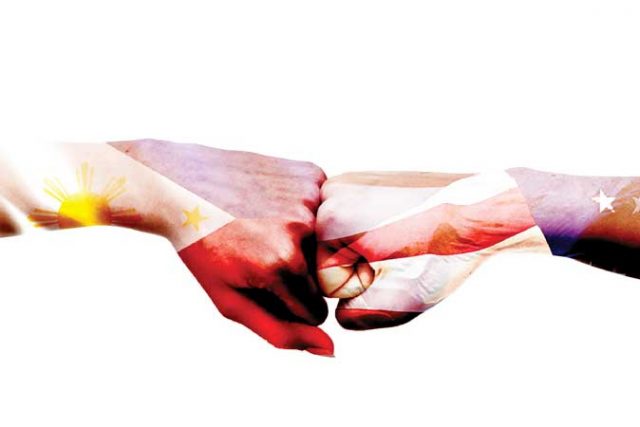
Romualdez said that US-Philippine relations “has not always been without its highs and lows. Although the pandemic may have marginally affected the way diplomacy is done, through it all, what has remained constant is our two countries’ commitment (to each other). (This commitment) was further reinforced by President Biden when he wrote President Duterte on the occasion of the (then two upcoming milestones). These milestones were the 75th anniversary of Philippine-American Friendship Day and of the establishment of diplomatic relations between the two countries. The other is the 70th anniversary of the signing of the Mutual Defense Treaty (MDT).

“In his letter, President Biden also assured that the United States will stand shoulder-to-shoulder with the Philippines to ensure both our nations’ security.”

In what appeared to be a justifiable proud moment of claiming at least some credit for the vastly improved relations between the two nations in such a short period during the Trump-Biden transition, Romualdez said, “I can say that in all the years that I have dealt with the United States, this has been the strongest statement that emanated from the White House on the US commitment to come to our defense especially in the context of the West Philippine Sea. The US has both rejected China’s maritime claims in the West Philippine Sea and reaffirmed the applicability of the Mutual Defense Treaty in case of an attack against us in that part of the globe.”

The desire to forge closer and warmer relations between the two countries is a natural reaction by the US to Chinese attempts to solidify its influence firmly in ASEAN on one hand, and an expression of its willingness to compete with China for influence in the Indo Pacific area, on the other. The conclusion that one makes is that if China did not create the trouble it is now making in the world stage, especially in the West Philippine Sea, the US would have probably depended on Pacific allies like Australia, Japan, and India to keep China in check.

The present struggle between the two superpowers has enhanced the strategic importance of the Philippines for both the US and China. The US wants to prove that it is still number one in all aspects of human activity, including and especially in terms of military might and reach. On the other hand, the communist Chinese party wants to make good its boast and propaganda taught in all Chinese schools that the boundaries of China go beyond Hunan, its southernmost tip. For China, the Philippines is a trophy which has tons of propaganda value. As far as China is concerned, the Philippines is “America right at its maritime borders” and acquiring and occupying these territories under their nine-dash-line is a victory worth savoring by all Chinese. By getting these territories and those claimed by Vietnam, Indonesia, and other ASEAN nations, they can say they have won the race against the US and have the West Philippine Sea in its huge trophy room. China has willing partners within the Philippines.

If we play our cards right in this battle for influence, this race should only serve to benefit the Philippines which wants to have its cake and eat it too. As a pragmatist in international affairs, we find absolutely nothing wrong with that above all, for the bottom line is protection of the country’s self-interest. And this exactly what countries like the US, the Philippines, and European Union do.

Like what all diplomats do, Romualdez did proclaim the country’s partnership with the US while sticking to the Duterte line of forging the closest relationship with China. To reassure our giant neighbor, Romualdez stated, “the Philippines will always work with its allies like the United States and other partners like China on shared concerns.” In what was a graphic way of dealing with the US-Philippines-China dynamics, Romualdez added, “We, the embassy, the consulates, and the Philippine government, will navigate the diplomatic scene to ensure that opportunities are maximized, and for the balance to be in favor of the Filipino people.”

Romualdez continued his presentation with a report on what the US has done to augment Philippine defenses, albeit another subtle message to the Chinese that minuscule it may be, our military is starting to strengthen itself with help from a longtime friend. “But more than coming to our aid, the US also helps us prepare to defend ourselves by beefing up our defense capabilities. In fact, we have received an offer from the US government to transfer five cyclone-class vessels that will help the Philippine navy patrol our maritime territory, particularly in disputed areas.”

In keeping with the upbeat tone of his report, Romualdez announced that after months of persistent and sustained efforts to bring US-manufactured vaccines to the Philippines, two million doses of AstraZeneca and 1.3 million doses of the Pfizer vaccines were delivered to Manila last May through the COVAX facility. The United States is the largest contributor to COVAX. He also reported that the country received its first Moderna vaccines “over the weekend.”

Romualdez talked of a variety of other aspects of US-Philippine relations like the tremendous contributions of Filipino frontliners during the pandemic; possible US investment in agriculture, infrastructure, technology, and other fields; Asian hate crimes, and immigration.

Aside from being very instructive and informative to many who joined the forum, Romualdez’s presentation showed a stark contrast between the sober and mature approach of Joseph Biden to diplomacy compared with his predecessor. While these differences in governance and leadership styles, directly impact Americans, the Philippines and the rest of the world will surely be able to use a period of sobriety and peace during this pandemic and be assured of the US commitment to help us deal with a violator of international law.


Philip Ella Juico’s areas of interest include the protection and promotion of democracy, free markets, sustainable development, social responsibility and sports as a tool for social development. He obtained his doctorate in business at De La Salle University. Dr. Juico served as Secretary of Agrarian Reform during the Corazon C. Aquino administration.

Socially distant

ISMAIL HAMZAH-UNSPLASH

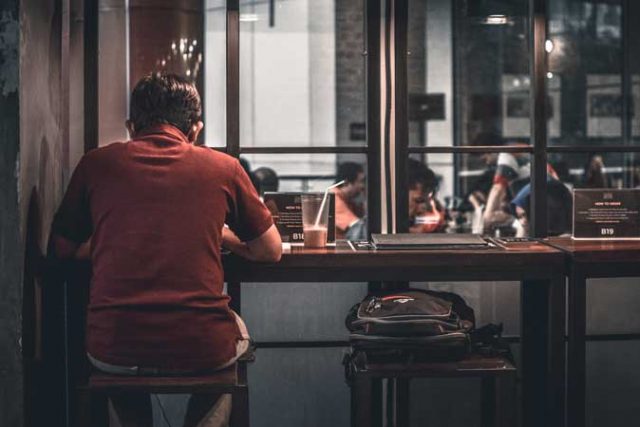
AT THIS TIME, what can be more in keeping with social distancing than eating by oneself in a dine-in restaurant?

Solo meals when traveling (before the imposition of quarantines and the new normal) invited no social stigma. Meals taken abroad are often hurried affairs squeezed in between local tours, taken in fast food outlets, or even more quickly by a sidewalk stand selling pickled herring. There is no need to request for a table for one in a restaurant with the likelihood of getting seated in a dimly lit corner near the washroom, figuring out the cultural intricacies of what to order and how much to tip.

In our culture, eating is a social experience entailing relationships, bonding moments and celebrations, with only a semblance of fulfilling a nutritional function. In fact, social meals are characterized by unhealthy eating loaded with carbs and cholesterol. A proper diet can require eating alone.

Still, the solo diner gets defensive about being alone. When greeted by a passing friend who chances upon him chewing his chef salad in front of an empty chair, the soloist feels obliged to make up stories on his not-so-temporary state — She just stepped out to park the car.

The solo diner feels compelled to hide his discomfort. He tries to lower his profile and blend with the sparse crowd. He chooses a food court for his meal to be lost in the anonymous mass of customers sharing tables, providing a ready cast with whom he can carry on a conversation — where’d you get that cheap dessert?

Maybe, a prop is employed. Fiddling with one’s phone while having lunch can be cumbersome when needing two hands for the fried chicken wing not to drop into the soup. Perhaps, one is checking his stock portfolio and marking his losses to market? Or, is he checking his slides for a Zoom meeting later?

The man with an open computer on the table and a half-eaten sandwich on a plate beside it is not considered a social leper. Even with company, he is engaged in his self-absorbed pursuit. If he is having lunch alone, he is not seen as pathetic, merely busy. He is the Master of the Universe tracking his net worth.

There are some advantages in dining alone.

The bill is cheaper, though not eligible for reimbursement. (You were entertaining yourself?) Even when splitting the bill with other lunch mates in a non-business setting, the individual’s share is usually higher than a solo meal. The usual practice of “Dutch Treat” is to divide the total bill among the number of diners. This is not always fair as some may not have ordered soup or have removed dessert from their diet but they pay the same amount as the wine drinker. The “Manhattan Treat” is the fairest way of sharing the bill. However, it is too cumbersome to implement requiring each diner to ask for a separate check depending on what he ordered. What if somebody shared your dessert? The “Business Treat” has only one person getting the reimbursable bill — Can I have your senior card?

When eating solo, there is no lag time waiting for others to arrive or place their orders. (Sir, the paella valenciana will take another 30 minutes.) The solo diner quickly places his order, eats his meal, and pays his bill. He can, of course, also take his time with his iced cappuccino, savoring the dregs at the bottom of the cup if that is what he feels like doing. Nobody is rushing him.

One can find many soloists at open-air cafes taking their refreshments slowly and watching the passing scene behind sunglasses. Is that a smile behind the face mask?

Maybe, the solo coffee drinker is meditating on the difference between Chronos and Kairos in the matter of perceived time and idleness. He becomes a passive observer of random happenings in front of them, eavesdropping on conversations of quarrelling lovers about to split up, secure in the feeling of not being part of that conversation — life is beautiful.

Accepting solitude, whether dining alone or just being in the moment, is a way of emptying the mind and imagining parallel universes. Solitude can be comforting until it gets… well, boring.


Tony Samson is Chairman and CEO of TOUCH xda

ar.samson@yahoo.com

ADVERTISEMENT
ADVERTISEMENT