Three billionaire entrepreneurs — Jeff Bezos, Elon Musk, and Richard Branson — are each vying to usher in a new era of private commercial space travel.
Here is how their rival ventures compare in the race to open up space travel.
TICKETS
Messrs. Bezos, Branson, and Musk have been investing billions of dollars in their space startups, each promising to ferry paying customers on rides to space — and it will cost a pretty penny to be part of it.
Mr. Branson’s Virgin Galactic is reported to have more than 600 ticket reservations already, priced around $250,000. It expects to begin a full commercial service in 2022 and eventually hopes to slash the ticket price to around $40,000.
Reuters reported in 2018 that Mr. Bezos’ Blue Origin was planning to charge passengers at least $200,000 for the ride, based on an appraisal of Mr. Branson’s rival plans and other considerations, though its thinking may have changed. Blue has not divulged its long-term pricing plans.
An as-yet unidentified person secured one of the seats on Blue’s first suborbital mission, slated for July 20, with a $28 million auction bid.
Mr. Musk’s SpaceX has already taken a crew to the International Space Station, and the company has plans to send an all-civilian crew into orbit in September. Mr. Musk has also said SpaceX will fly Japanese billionaire Yusaku Maezawa around the moon with its forthcoming Starship rocket in 2023.
DESIGN
Virgin Galactic’s reusable SpaceShipTwo system will see its VSS Unity spaceplane lifted to altitude by a large carrier aircraft called VMS Eve before separating.
Blue Origin’s New Shepard rocket-and-capsule combo shoots into suborbital space before separating. The rocket section returns to the launchpad, with the pressurized capsule falls back to earth under parachutes. It features six observation windows — the largest ever used in space.
The SpaceX Dragon capsule sits atop a reusable Falcon rocket which it uses to reach space.
CREW AND PASSENGERS
Virgin Galactic’s spaceplane can hold six passengers: two crew and four passengers.
Blue Origin’s craft can take six passengers and flies autonomously.
The SpaceX Dragon capsule is capable of carrying up to seven people.
ITINERARY
Virgin Galactic boasts a flight time of around 90 minutes from take-off to landing, including several minutes of weightlessness.
Blue Origin’s capsule suborbital flight is around 10 minutes after separation. Again, those on board experience a few minutes of weightlessness and see the curvature of the planet before returning to Earth.
The SpaceX missions are expected to last three to four days from launch to splashdown.
FUNDING
Typical of Mr. Branson’s ventures, Virgin Galactic is publicly funded. Its shares peaked at almost $60 following FAA approval in June 2021.
Blue Origin is privately owned, with Amazon.com Inc. founder Jeff Bezos previously indicating he would sell around $1 billion in Amazon stock annually to fund the venture.
SpaceX is also privately owned and has raised billions of dollars in successive funding rounds. Key investors include Alphabet and Fidelity. Mr. Musk says fees charged for SpaceX’s charter flights will go toward missions to the moon and eventually Mars.
ZURICH — The World Health Organization (WHO) on Tuesday recommended using arthritis drugs Actemra from Roche and Kevzara from Sanofi with corticosteroids for coronavirus disease 2019 (COVID-19) patients after data from some 11,000 patients showed they cut the risk of death.
A WHO group evaluating therapies concluded treating severe and critical COVID patients with these so-called interleukin-6 antagonists that block inflammation “reduces the risk of death and the need for mechanical ventilation.”
According to the WHO analysis, the risk of dying within 28 days for patients getting one of the arthritis drugs with corticosteroids such as dexamethasone is 21%, compared with an assumed 25% risk among those who got standard care. For every 100 such patients, four more will survive, the WHO said.
Moreover, the risk of progressing to mechanical ventilation or death was 26% for those getting the drugs and corticosteroids, compared with 33% in those getting standard care. The WHO said that meant for every 100 such patients, seven more will survive without mechanical ventilation.
“We have updated our clinical care treatment guidance to reflect this latest development,” WHO Health Emergencies official Janet Diaz said.
The analysis covered 10,930 patients, of whom 6,449 got one of the drugs and 4,481 got standard care or a placebo. It was done with King’s College London, University of Bristol, University College London and Guy’s and St Thomas’ NHS Foundation Trust and published on Tuesday in the Journal of the American Medical Association.
The US Food and Drug Administration last week issued emergency use approval for Actemra for COVID-19. That’s after its off-label use in the pandemic drove up sales by around a third to some $3 billion in 2020.
Kevzara sales rose 30% last year, Sanofi reported.
Still, testing Actemra and Kevzara for COVID-19 patients involved trial and error, as several failures emerged as the companies tried out the medicines on different patient groups.
The WHO also called for more to be done to boost access to such medicines in the lowest-income countries now facing surging COVID-19 cases and virus variants, coupled with inadequate vaccine supplies.
“Those are the people these drugs need to reach,” Ms. Diaz said. — John Miller/Reuters
Emperador Inc., the Philippines’ biggest liquor company, is exploring a second listing in Singapore that could raise as much as S$1 billion ($742 million), people with knowledge of the matter said.
The Manila-listed company is working with advisers on the potential offering, said the people, who asked not to be identified as the process is private. A listing in the city-state could take place as soon as the end of this year, the people said.
Emperador could be joining companies like Malaysia’s Top Glove Corp., Hongkong Land Holdings Ltd. and Japanese real estate firm Tosei Corp. in having a second listing in Singapore. Any deal would give a boost to the first-time share sales in the city-state, which hosted only three deals totaling $242 million so far this year, according to data compiled by Bloomberg. Second listings accounted for about 27% of total market capitalization in the country’s bourse in May, Singapore Exchange Ltd. data show.
Emperador is controlled by billionaire Andrew Tan’s Alliance Global Group Inc. Its distilled spirits and other alcoholic beverages are available in 55 countries across Asia, Europe, North America and South America, according to Alliance Global’s website. The company acquired Whyte and Mackay and Bodegas Fundador in 2014 and 2015, respectively.
Shares in Emperador have risen about 20% so far this year in Manila, giving the brandy maker a market value of around P190 billion ($3.8 billion).
Deliberations are at an early stage and details such as timeline and size of the offering could change, the people said. Representatives for Alliance Global and Emperador didn’t immediately respond to requests for comment. — Bloomberg
MANILA – The Philippines will allow a 42-day interval between doses of Russia’s Sputnik V COVID-19 vaccine, the head of its Food and Drug Administration (FDA) said on Wednesday, though still below the 90-day interval recommended by the vaccine manufacturer.
FDA Chief Rolando Enrique Domingo told Reuters the Gamaleya Institute’s request to widen the time interval between two vaccine doses to 90 days from 21 would have to be “re-evaluated” as the Russian vaccine maker submitted more data to support it.
“Our vaccine experts recommended a maximum dose interval of 42 days. No problem in delaying the second dose, but if we give it within 42 days we have reason to believe that the results are going to be very good,” Domingo told a separate briefing.
In making the request, Gamaleya “submitted studies showing immunogenicity beyond the 21-day interval,” Domingo said.
The Southeast Asian country is due to receive 170,000 doses of Sputnik V on Wednesday, taking initial supplies to 235,000 shots of the vaccine.
The Philippines has so far granted emergency use authorization (EUA) to eight COVID-19 vaccine brands, with Pfizer/Biotech shots the only one allowed so far to be given to children as young as 12.
Domingo said China’s Sinovac Biotech requested on Tuesday the FDA have its EUA amended to include children aged three to 17.
The Philippines has so far given 9.05 million people a first dose of a vaccine and 2.92 million a second dose, still a long way from its goal of fully immunising 70 million of its 110 million people this year.
The number of daily coronavirus infections in the Philippines, which is battling one of the worst outbreaks in Asia, totalled 1.44 million as of July 6, while the number of deaths has reached more than 25,000. — Reuters
The MVP Group begins its pilot vaccination of non-medical employees at the Meralco compound. Present are MVP Group Chairman Manuel V. Panglinan with Pasig City Administrator Atty. Jeron Manzanero, center. With them are, from left, PLDT and Smart Chief Procurement Officer and Vaccine Task Force Procurement Lead Mary Rose Dela Paz, Meralco President and CEO Atty. Ray Espinosa, MPHHI Chief Operating Officer and Vaccine Task Force co-chair Dr. Jeff Staples, and PLDT and Smart Chief People Officer and Vaccine Task Force co-chair Gina Ordoñez.
Economy gets a shot in the arm
The conglomerate chaired by business leader Manuel V. Pangilinan kicked off today its inoculation of 60,000 employees rendering essential work during the pandemic.
Led by the MVP Group Vaccine Task Force, the first tranche of company-procured Moderna doses were administered to the Group’s first batch of employees at Meralco Compound in Pasig.
The launch site is one of several facilities the Group has identified in administering all the vaccinations in National Capital Region+. Among those to be activated by the second week of July include PLDT Sta. Ana in Manila, Smart Tower in Makati, Maynilad Balara in Quezon City, and NLEX Sta Rita in Bulacan.
“Our vaccines, through the essential services we offer groupwide – from hospitals, telecommunications, and digital services, electricity, water, tollways, and road infrastructure, media, and more — have been and will continue to be the key source of stability as the Philippines emerges from this global crisis,” Pangilinan says.
Each pilot site, to be manned mainly by frontliners from the Group’s own Metro Pacific Hospitals Holdings Inc. (MPHHI), is expected to vaccinate an average of 700 and up to 1,350 individuals per day.
For areas outside NCR+, the Vaccine Task Force will use a combination of MPHHI’s Philippines-largest private healthcare network, other Group-wide facilities, and selected malls across the country.
The Group previously announced that the MVP Group Vaccine Task Force ordered vaccines from Moderna and Astra Zeneca enough for more than 300,000 employees, dependents and household members, and the Group’s extended workforce. “Any talk about ending this pandemic begins with a fundamental imperative: the successful rollout of ethically-procured, safe, and effective vaccines to a significant majority of our people,” Pangilinan adds.
“Inoculating the population from the virus does not just reduce the number of infections and deaths—but minimizes the possibility of new mutations and variants, taking us a step closer towards the paramount goal of herd immunity,” he explains.
Prior to the pilot vaccination, the Group also launched a group-wide immunization education campaign to encourage employees to get inoculated.
The MVP Group Vaccination Program reinforces the conglomerate’s support for the government’s national vaccination rollout. Earlier this year, the Group helped ramp up LGU vaccinations by offering the expertise and available capacity of its largest NCR hospitals, which reached worker vaccination rates of up to 98% as early as March 2021.
Earlier this year, the Group helped ramp up LGU vaccinations by offering the expertise and available capacity of its largest NCR hospitals, where up to 98% of frontliners were vaccinated as early as March 2021.
The Group also showed solidarity with the national government and other members of the private sector with the ceremonial start of the vaccination rollout for the A4 sector last month. This was in partnership with the National Task Force Against COVID-19, Taskforce T3 (Test, Trace and Treat), and the Department of Health (DOH).
THOUGH CHILDREN are unlikely to be a major source of community transmission of coronavirus disease 2019 (COVID-19), resuming face-to-face classes will have to occur in phases starting in low-risk areas, according to pediatricians who participated in a webinar organized by the University of the Philippines (UP).
“There are so many things to consider (but) there are many advantages of starting schooling because of the mental effect that the prolonged lack of (physical) schooling has caused our children,” said Dr. Ma. Liza Antoinette M. Gonzales, a pediatric infectious disease specialist and associate dean at the UP College of Medicine, at the virtual event titled “COVID-19 in Children.”
“If we are able to open our malls and business establishments, we also have to consider opening our schools (at some point).”
The Department of Heatlh (DoH) case bulletin recorded 1,441,746 COVID-19 cases as of July 5. Around 148,000 cases (approximately 10.6%) are patients below 20 years old, while 6.5% represent those below 15 years old.
“Death rates are low in younger age groups and increase with age,” said Dr. Joselyn A. Eusebio, president of the Philippine Pediatric Society, emphasizing that this was consistent with reports around the world where children comprise 1–10% of the diagnosed COVID-19 cases.
‘GENERALLY MILD IN CHILDREN’
“COVID-19 is generally mild in children, with better outcome compared to adults,” said Dr. Gonzales, citing a February 2021 study reviewing 10,251 pediatric patients across 31 countries that found fever (63.3%) and cough (33.7%) as the most common symptoms among children.
Severe cases of COVID-19 in children, she added, are usually due to existing medical conditions and comorbidities.
In an online registry focused on COVID-19 in children, the Pediatric Infectious Disease Society of the Philippines recorded 972 cases in the country from July 3, 2020, to May 31, 2021, 38% of which were mild; 25%, moderate; and 20%, asymptomatic. Critical cases accounted for 10%; severe cases, 7%.
“Due to lack of more systematic testing of children, including children with mild symptoms as part of contact tracing, the true burden of infection in children is unclear,” said Dr. Gonzales.
BACK TO SCHOOL?
Commenting on President Rodrigo R. Duterte’s decision to turn down proposals of resuming in-person classes, Education Undersecretary Dr. Diosdado M. San Antonio said: “We understand from the presentation of Dr. Gonzales that, indeed, kids may not be so prone to getting infected, but we also respect the decision of the President in putting premium on the health and safety of children and Filipinos.”
DoH, for its part, is looking into a phased implementation of face-to-face classes after holding conversations with educators and stakeholders.
“There were a lot of recommendations set and presented by the body, but we have to start with maybe piloting it initially in certain areas of low risk and make sure that the school will have provisions for all the safety measures that need to be followed,” Dr. Eusebio said.
Dr. Gonzales agreed that caution and care need to be exercised when choosing the pilot areas. “Before we reopen schools, we have to consider: Is there ongoing community transmission? Are the teachers vaccinated? Are the schools’ infrastructure prepared, with enough ventilation and enough space to ensure that children have appropriate physical space?” she said. — Brontë H. Lacsamana
As more enterprises run on the digital space, cybersecurity further becomes critical and needs to be strengthened. Because along the rise of online business activities during the coronavirus disease 2019 (COVID-19) pandemic came the rampant threats from cyber criminals.
Global cybercrime could cost US$10.5 trillion by 2025, as projected by Cybersecurity Ventures. Such a crime can hit organizations regardless of their size, industry, or geographical location, warned the International Chamber of Commerce (ICC) on their cybersecurity policy primer.
Since cyber threats can happen to any business at any time, companies must have materials and habits to prepare and protect themselves.
Cybersecurity, however, cannot be “boiled down into a 1-2-3 step process” according to HubSpot’s cybersecurity guide. Organizations must dedicate time and resources to protect their data, including those of their customers.
HubSpot listed defensive cybersecurity system and software recommendations that every enterprise should invest. It also suggests combining these solutions to encompass the entire digital bases of the organization.
Companies are likely familiar with the antivirus software. “The digital equivalent of taking that vitamin C boost during flu season,” as HubSpot called it, is a vital preventive measure that monitors for bugs.
Aside from detecting and removing viruses from computers, this solution also alerts the user of web pages and software that may be harmful.
Another efficient security device for organizations is the firewall, which utilizes a filter to examine the safety and legitimacy of everything that seek to access one’s computer. As a digital wall, it blocks malicious users and software.
Meanwhile, to further secure login processes of business users, companies can also invest in Single Sign-On (SSO) and Two-Factor Authentication (2FA).
SSO serves as a centralized authentication that some enterprises use for employees to access internal applications containing propriety data. 2FA, whereas, is a process that involves the confirmation of a user’s identity by requiring username or pin number and access to an external device or account.
Organizations can also look into virtual private network (VPN) to encrypt and protect their data. While it prevents spyware, VPNs cannot defend computers from viruses. If companies want to use VPNs for their operations, they should combine it with other defensive security measures.
As these systems and software function to protect the business, the people within the organization must also work for a good cybersecurity.
Authorized business users must regularly download patches and updates of software employed in the organization. This is to maintain the safety of one’s software as vendors release such updates to address and fix vulnerabilities.
Leaders of the company also need to require strong credentials for their employees and if applicable, for their users as well. Aside from implementing passwords that are more complex, they must also require users to regularly change the passwords.
Monitoring employee activity is also essential for the business’ cybersecurity. Access to important data should only be given to employees who need it for their jobs. Managers should also prohibit sharing of data outside the organization and require permission for external software downloads.
Moreover, as Internet of Things (IoT) becomes prevalent, companies need to know their network further for their security.
“Make sure you have visibility into all the IoT devices on your network. Everything on your corporate network should be identified, properly categorized, and controlled. By knowing what devices are on your network, controlling how they connect to it, and monitoring them for suspicious activities, you’ll drastically reduce the landscape attackers are playing on,” said Nick Duda, HubSpot’s principal security officer.
Organizations also need to make it easy for employees to raise issues. HubSpot suggests setting up a system that will gather these concerns by dedicating an inbox to these notifications or creating a form that users can fill out. In this way, companies can promptly identify issues and address them.
To further train the organization for an excellent cybersecurity, HubSpot suggested resources where leaders and their teams can learn more about this matter.
Companies can learn from the Center for Internet Security (CIS), which is a global, nonprofit security resource and IT community used and trusted by the field experts. CIS’ mission is to “make the connected world a safer place by developing, validating, and promoting timely best practice solutions that help people, businesses, and governments protect themselves against pervasive cyber threats.”
Another learning tool for companies is Cybrary. This online cybersecurity education resource offers some free, full-length educational videos, certifications, and more. It helps an organization’s team to uncover skill gaps and equip them with cybersecurity skills, and eventually making them ahead of emerging threats, trends, and technologies.
Such resources and actions are merely among the ways to at least protect the organization against threats in the digital space. A business that handles data with care, according to HubSpot, makes it more “more trustworthy and transparent — and [the] customers more loyal.”
“Cyber attacks may be intimidating, but cybersecurity as a topic doesn’t have to be. It’s imperative to be prepared and armed,” HubSpot said. — Chelsey Keith P. Ignacio
Queuing to pay for our purchases or bills using cash can be quite a hassle and considerably unsafe these days. With a lockdown imposed last year forcing businesses to close, paying at a bank or store counter made it difficult for consumers. While the strict quarantine measures were slowly eased in the past few months, people and businesses are still required to take steps to practice physical distancing. This has led to Filipinos embracing digital alternatives which reduce the spread of the virus that could otherwise be passed on through paper bills and coins.
Due to the ongoing pandemic, the Bangko Sentral ng Pilipinas (BSP) reported a huge spike in the use of e-payments. To cater to this shift in the digital landscape, M Lhuillier introduced the ML Wallet App. The ML Wallet App is M Lhuillier’s official mobile application launched in 2017. It allows users to send money, buy load, buy items in the ML Shop, and pay bills on time in the safety of our homes. The App was designed to serve as the online bridge or tulay for Filipinos who do not have access to banks and other financial institutions particularly in the rural communities of the country.
In 2020, a new and improved version of the ML Wallet App with a refreshed look, organized interface, faster registration, and hassle-free verification. It’s contactless, quick, and easy.
Why download the ML Wallet App?
Pay Bills Quickly
With over 400 partners nationwide ranging from utilities, insurance, loans, and more, avoid late fees when you use your ML Wallet App to pay your bills anytime, anywhere.
Send Money
Conveniently perform any of ML Wallet’s Send Money options: Wallet to Wallet, Kwarta Padala, or Wallet to Bank* anytime, anywhere.
Buy ELoad
Easily buy or send load to your friends and family with just a few taps on your smartphone.
Add Money
Cash in by visiting the nearest M Lhuillier branch or add money through ML Wallet’s partner banks.
Receive Money
No time to visit an M Lhuillier branch to get your Kwarta Padala? Receive up to PHP 50,000.00** per transaction through your ML Wallet. Simply type the required Receive Money details after logging in.
Withdraw Money
Withdraw up to PHP 40,000** per day from any of the 2,500 M Lhuillier branches nationwide. Find the nearest ML branch by clicking the Branch Locator in the App!
Buy Items
Find the best prices and shop pre-loved jewelry, mobile phone accessories, and other pawnable items in the ML Shop!
Aside from these services, you can track your finances with ML Wallet’s upgraded Transaction History feature, find the nearest M Lhuillier branch with an in-App Branch Locator and check the latest Kwarta Padala rates anytime, anywhere.
The ML Wallet App is available for free in Google Play Store, Apple App Store, and Huawei App Gallery. Avoid the long lines. Skip the cash and experience the convenience with just a few taps. Register for FREE: http://onelink.to/x2rcze
M Lhuillier, the Philippines’ largest and most respected non-bank financial institution, continues to uphold its promise of being the Bridge and Tulay ng PaMLyang Pilipino with more than 3,000 serviceable locations nationwide. It continuously seeks better and innovative ways to serve its community by providing fast, easy, and reliable financial services such as Kwarta Padala, Quick Cash Loan, Bills Payment, Insurance Plan, Money Exchange, Jewelry, ML Wallet, ML Express, ML Logistics, and Telco and online TV Loading.
Follow M Lhuillier Financial Services, Inc. on Facebook, or visit mlhuillier.com for more information. For inquiries, contact Customer Care through its toll-free number 1-800-1-0572-3252 or email customercare@mlhuillier.com.
In bringing efficient, secure digital solutions, TELUS International Philippines banks on empowering people
As it forced many organizations to work remotely, the COVID-19 pandemic stressed the need to adapt to digital transformation while ensuring the security of data and information within organizations.
However, as many had to quickly put solutions in place to remain connected to the business, their customers, and to one another, shifting to a digital environment has not been smooth and fully secure for all organizations.
As TELUS International Philippines’ Vice-President for Digital Solutions Nalakumar “Nala” Rs observed, such a rush for business continuity led many to make difficult trade-offs, especially with expediency more prioritized over cybersecurity.
Some organizations were observed to have resorted to unencrypted videoconferencing technologies and personal devices with unsecured logins, unapproved apps and file-sharing tools, while risk policies were relaxed or ignored under the extenuating circumstances.
“That’s how you end up with a very poor long-term design and an equally rushed, unmanageable short-term solution. In short, you get into the band-aid business,” Nala added.
Understanding this accelerated need for digitalization businesses were forced into, TELUS International Philippines, a leader in providing customer experience (CX) and digital solutions, empowers its clients to ride the digital shift efficiently yet securely through its timely, digitally-enabled CX and business solutions.
With a wide and highly recognized presence globally, the company provides its services to industries such as technology and games, communications and media, e-commerce and fintech, travel and hospitality, and healthcare, among others.
These services are backed by the company’s highly skilled workforce, coupled with its efforts to incorporate cybersecurity and data security in all aspects of the employee experience and the customers’ journey.
Aside from amplifying its infrastructure to accommodate remote workforces and ensuring employees are safely working from their homes through secure devices and networks, TELUS International Philippines is focused on building what the company calls a ‘human firewall’ by expanding the digital enablement skills of team members.
“It is essential for a company to recognize that their team members should be the greatest human firewall that they invest in,” Nala said. “That includes efforts in doubling down on security awareness training and keeping them informed about evolving threats. They’re the frontline and the best line of defense for the company and for our clients.”
He added that educating the ‘human firewall’ within organizations — running phishing simulations to measure at-home performance against in-office performance, for instance — is the first step in building out a longstanding blueprint for secure remote work.
For its part, TELUS International Philippines is boosting its workforce through training and upskilling, making sure they are not caught flat-footed in the face of more sophisticated technologies and platforms.
“Just as it’s more efficient and cost-effective to retain existing customers than to acquire new ones, retaining your team members is an equally important approach — especially when specialized skills are so hard to come by,” Nala said.
Particularly, the digital solutions provider creates a culture of learning within its workforce by making skills development accessible and a part of regular performance discussions.
“By integrating the development of skills like coding and empathy into individual employee goals and enhancement programs, companies can support the prioritization of skill development,” Nala noted.
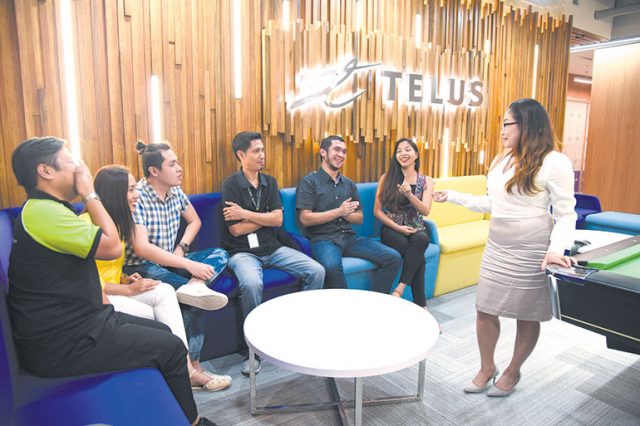
A part of creating this learning culture is encouraging peer-to-peer education, where employees within their virtual or physical workspaces get to learn from each other.
“Internal workshops and seminars taught by peers serve valuable purposes, including team-building and skill-sharing,” Nala shared. “This is a time for workers to share knowledge and best practices, which in turn can boost collaboration and build engagement across the organization.”
With learning-by-doing considered vital in the digital CX industry, skill trials such as hackathons and innovation labs are also a vital part of learning at TELUS International Philippines.
“Conducted in the spirit of education and innovation, these types of events can really boost collaboration and create a sense of belonging,” Nala added. “Since there are no real-world consequences if a mistake is made and the activities are designed to bring out their talent for creative innovation, team members will feel more secure about putting their new knowledge into practice.”
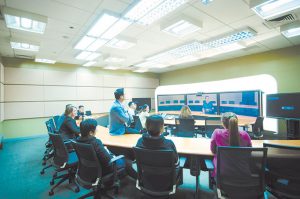
With seven dynamically designed CX and IT delivery centers across the country, TELUS International Philippines is dedicated to engaging its people in serving global clients by creating sound and inspiring work environments.
The company’s workspaces, located in accessible points in the country’s metropolitan areas, are integrated with amenities and themed rooms that promote work-life balance and enable engagement among team members. This is coupled with special interest groups that conduct workshops, competitions, and other activities where employees can further enjoy experiences that complement the brand’s fun and vibrant culture.
TELUS International Philippines team member working from home
With this defining work culture, along with competitive salaries and benefits, TELUS International Philippines continues to welcome talented individuals who can contribute to delivering efficient and secure IT and CX solutions.
The latest career opportunities at TELUS International Philippines for CX professionals and IT-tech experts can be explored by visiting telusinternational.avature.net/careers.
Digital transformation, a process that has been decades in the making, has accelerated at an unprecedented pace in the wake of the COVID-19 pandemic. Schools and universities began offering remote learning curricula, companies big and small started adopting new work-from-home models for their employees, and many have transitioned to digital businesses to keep revenue flow.
Yet with new developments come new challenges. The Organisation for Economic Co-operation and Development notes that while on the one hand, digital transformation offers immense potential throughout various aspects of society, on the other, it can also accentuate gaps and issues present in the current system.
“It is unlikely that economies and societies will return to ‘pre-COVID’ patterns; the crisis has vividly demonstrated the potential of digital technologies and some changes may now be too deep to reverse,” the organization had stated in its Digital Economy Outlook 2020.
“Faced with a future where jobs, education, health, government services, and even social interactions may be more dependent on digital technologies than ever before, failing to ensure widespread and trustworthy digital access and effective use risks deepening inequalities, and may hinder countries’ efforts to emerge stronger from the pandemic.”
Cybersecurity and data privacy are concerns that are increasingly becoming critical in a new digitally-enabled world. Addressing such issues while simultaneously navigating the constantly-evolving needs of society is a challenge that many organizations, both in the public and private sectors, face.
The case is no different in the Philippines, where many organizations are attempting their first foray into the digital world.
“It is important to note that how companies transform or pivot to digital is not a one-size-fits-all approach. Every industry and individual business will have specific needs to assess, different resources to allocate, and distinct challenges to overcome. Nevertheless, there are some universal concepts that we have witnessed across successful transformations: an ability to recognize new opportunities; the agility to capitalize on them; and the optimal culture to best support the requisite changes. When executed in harmony, they represent the art of pivot,” said TELUS International Philippines.
Accomplishing these goals depends on a number of factors, not least of all smart applications of technology. TELUS International Philippines, a firm that specializes in delivering integrated DX and CX solutions, notes that thoughtful application of technology needs to go hand in hand with continuous digital enablement initiatives to educate and upskill the team members who will ultimately be the ones utilizing these innovations to deliver better services to customers.
The benefits
Pivoting to digital is a monumental endeavor for any company, both in an operational sense and a financial one. This is also partly the reason why many businesses fail in their digital transformation, as many lack the capital and the resources to see the process through.
Yet, that leaves many companies unable to keep up with the demands of the times, which are increasingly reliant on digital platforms and technologies. Many companies keep legacy systems based on outdated technologies, keeping them from the benefits of a modernized IT infrastructure, which TELUS International Philippines points out, is no longer a luxury or an option.
“It is becoming necessary for day-to-day operations, business continuity, and data security. Additionally, as the customer journey has increasingly moved from in-person to digital transactions, updating a company’s tech infrastructure is now also directly linked to a company’s ability to provide the seamless, omnichannel customer experiences that are in-demand by today’s consumers. Overall, having a strategy to update IT infrastructure will result in increased agility and efficiency while reducing risk and better securing data on a sustainable basis,” the company said.
Businesses aiming to thrive today should recognize how IT modernization aligns a company with omnichannel needs and better positions the brand to meet its business goals. Investing in IT may even directly lead to financial benefits due to enhanced customer experience that can generate increased consumer loyalty and spending, as legacy technology often struggles with the demands of the personalized, seamless, cross-channel customer engagement that is expected today.
The challenges
Security has long been used as a reason companies have hesitated to permit remote working. But amid the pandemic, there was very little choice in the matter. Remote working, a new workplace model enabled by today’s hyperconnected society, has given companies a method of keeping some of their day-to-day operations unaffected by the pandemic without affecting their bottom line.
Yet as more employees have spread out, security risks have risen exponentially.
“That’s why it is absolutely critical to set up proper user controls and ensure employee devices — whether those are company-owned assets or the employees’ own devices — are regularly patched and updated,” TELUS International Philippines said.
“At the same time, we also firmly believe that making your employees partners in ensuring data security and cybersecurity starts with educating them regularly. Helping them understand and appreciate the ‘whys’ behind the safety protocols and procedures we implement can make a big difference in how they approach these remote work processes and guidelines.”
Such measures are necessary, but often overlooked, steps in the digital transformation process. TELUS International Philippines added that because of the immediate need for digitalization at the onset of the pandemic, many organizations had to quickly put solutions in place that kept them connected to the business, their customers and one another. Due to the unprecedented rate at which they were forced to adapt, there were difficult trade-offs that had to be made in the short-term to accommodate immediate business needs. Perhaps most notably, cybersecurity was oftentimes deprioritized in favor of expediency.
“That’s the way you end up with a very, very poor long-term design and a very panicked, rushed, unmanageable short-term solution,” the company said. “You’re in the band-aid business.”
With remote workforces likely becoming a permanent part of business moving forward, it’s critical for organizations to develop better solutions for data security. One such solution is to create a company culture that is suited for future-proofing the business.
“Culture is the foundation for long-term success. When you see an extremely agile company, it typically follows that there is something very special about its people and its culture, because, in addition to speed and responsiveness, agility also requires an element of stability,” TELUS International Philippines said.
“The importance of investing in culture cannot be overstated. A strong corporate culture fostered over time that places people and a shared set of values at the forefront of what it does equates to the ability to innovate, achieve higher customer satisfaction, and ultimately deliver stronger financial performance. Without it guiding the organization and driving decision-making, all other elements can be in place, and yet companies will see few benefits,” it added.
Inflation slipped to the lowest level in six months in June. — PHILIPPINE STAR/ MICHAEL VARCAS
PHILIPPINE INFLATION eased to a six-month low in June following three straight months of steady price increases, the Philippine Statistics Authority (PSA) said on Tuesday.
Preliminary data from the PSA showed headline inflation at 4.1% in June, slowing from the year-on-year rate of 4.5% in May. However, this was still above the 2.5% recorded in June last year.
The latest headline figure is lower than the 4.3% median in a BusinessWorld poll conducted late last week. Nevertheless, it fell within the 3.9%-4.7% estimate given by the Bangko Sentral ng Pilipinas (BSP) for June.
The June print was also the slowest in six months, or since the 3.5% annual rate recorded in December 2020. Prior to the June result, year on year inflation remained unchanged for three straight months at 4.5%.
Year-to-date inflation settled at 4.4%, still above the BSP’s 2%-4% target this year and above the forecast of 4% for the entire year.
Core inflation, which discounted volatile prices of food and energy items, stood at 3%. This was slower than the 3.3% recorded in the previous month, but was steady from the rate recorded in the same month last year. Core inflation averaged 3.3% so far this year.
The PSA attributed the slowdown in June primarily to the lower annual rate of increase in the transport index at 9.6% from 16.5% in May. Other commodities that saw slower price increases include alcoholic beverages and tobacco at 11.2% from 11.8% in May, clothing and footwear at 1.6% from 1.7%, health at 2.9% from 3.2%, and communication at 0.2% from 0.3%.
The heavily weighted food and non-alcoholic beverages inched up to 4.7% in June from 4.6%.
Similar to the headline inflation result, the inflation rate for the bottom 30% of income households eased to 4.3% in June from 4.5% the previous month. This was still, however, faster than the 3% print in June 2020.
The inflation rate for the bottom 30% takes into account the spending patterns of this income segment. Thus, its consumer price index differs from that of the average household with the former assigning heavier weights on necessities.
In a statement, the National Economic and Development Authority (NEDA) attributed the easing inflation in June to government policies enacted to drive food prices down, particularly that of meat.
Food inflation stood at 4.9%, unchanged from May, but still higher than the 2.7% posted in June last year.
The annual price increases for meat and milk, cheese, and eggs slowed to 19.2% and 1%, respectively, from 22.1% and 1.4% in May.
Meanwhile, annual declines were observed in rice (-1.1% in June from -0.8% in May), fruits (-0.6% from -1.1%), and vegetables (-2.7% from -6.6%).
Bucking the trend slightly were faster price increases in fish (8.7% from 7.8%); corn (5.3% from 5.1%); oils and fats (4.2% from 4%); sugar, jam, honey, chocolate and confectionery (1% from 0.9%), and food products “not elsewhere classified” (1.4% from 1.2%).
“The declining meat inflation points to the positive effects of Executive Orders (EO) 133 and 134. These are expected to further bring down meat prices during the second half of the year,” Socioeconomic Planning Secretary Karl Kendrick T. Chua was quoted in the NEDA statement as saying.
President Rodrigo R. Duterte signed EOs 133 and 134 that increased the quota of pork imports and modified the tariff rates on imported pork products, respectively.
NEDA also cited other government interventions such as hog repopulation programs, the zoning and vaccine development amid the African Swine Fever (ASF), and the signing of EO 135 which lowered the tariff on rice imports to 35% from 40% for a year.
To recall, Mr. Duterte declared a one-year state of calamity on May 10 due to the ASF outbreak.
NEDA also noted the downtrend in transport inflation, but said the costs of transport services “remain elevated” due to physical distancing measures and the recovery of global oil prices.
“This is expected to partially decrease in the near term with the government’s accelerated vaccination program,” NEDA said.
OUTLOOK Economists expect inflation to be on the downtrend in the next few months, but flagged risks to the outlook such as elevated global oil prices and the peso’s depreciation that will contribute to inflationary pressures due to the rise in import prices.
Bank of the Philippine Islands Lead Economist Emilio S. Neri, Jr. said their full-year inflation forecast was lowered to 4.3% from 4.5% despite the “upside risks” that may keep inflation above 4% in the coming months.
“Despite the reduction in pork tariffs, the price of pork has not shown a substantial decline. Moreover, oil companies have announced several oil price hikes in recent weeks and could translate to less favorable base effects for transport,” Mr. Neri said in an e-mail.
“Aside from inflation, another factor that could challenge the BSP’s ability to keep interest rates steady is the hawkish tilt of the Federal Reserve. The US central bank recently provided a timeline on when it could possibly hike its interest rates, hinting that it could happen in 2023. This means there is a chance that the Fed could start tapering its bond purchases in 2022,” he added.
Mr. Neri also pointed to the possibility of “monetary adjustments” in the coming months as the peso reached the P49-per-dollar level — its weakest in nearly a year.
Rizal Commercial Banking Corp. Chief Economist Michael L. Ricafort also pointed to the peso as an “offsetting risk factor for inflation” as it “would gradually lead to some pick up in import prices and overall inflation,” he said in a text message.
Nevertheless, Mr. Ricafort expects monetary policy to remain accommodative in terms of keeping the key interest rate at the record low 2% “as long as necessary, with a possible cut in large banks’ reserve requirement ratio from the current 12%…”
In a statement, ING Bank N.V. Manila Senior Economist Nicholas Antonio T. Mapa said the probability of inflation hitting 5% this year “has diminished considerably” with BSP expected to “only consider adjusting policy by mid-2022.”
“With price pressures fading, we expect inflation to decelerate in the second half of the year as meat prices normalize with authorities allowing higher import volume for the commodity. Meanwhile, base effects tied to social distancing guidelines for transport and other services are also likely to fade in the coming months, offsetting a projected acceleration in utility and fuel costs given the surge in global oil prices,” Mr. Mapa said.
In an e-mail, UnionBank of the Philippines, Inc. Chief Economist Ruben Carlo O. Asuncion said inflation will likely be “slightly over” the BSP’s 2%-4% target range for this year with further easing to occur next year.
“Expect upward pressure on price levels due to oil price increases, but we maintain our view that subdued demand due to limited reopening of the local economy. This may counter the expected rise in fuel prices overall,” he said. — B. T. M. Gadon
THE CENTRAL BANK will only withdraw monetary support once it sees “indisputable” signs of economic recovery, its governor said on Tuesday.
Bangko Sentral ng Pilipinas (BSP) Governor Benjamin E. Diokno said the timing for the unwinding of its support measures is crucial, adding the central bank will “carry out a disengagement strategy in a way that avoids risks associated with early or late implementation.”
“The BSP will withdraw monetary support only when there are indisputable signs of solid economic recovery amid manageable inflation environment as well as sustained downtrend in community transmission of the virus,” he said at an economic briefing hosted by foreign chambers of commerce.
The Philippine economy has been battered by the pandemic, with gross domestic product (GDP) shrinking by a record 9.6% in 2020.In the first quarter, GDP contracted by 4.2%.
Despite the gradual easing of lockdown restrictions, the outlook remains uncertain due to the slow pace of the vaccine rollout and the threat of another wave of infections as variants emerge.
“We recognize that economic recovery is still in its nascent phase. As such, we will keep our monetary policy supportive of growth and allow previous monetary easing to work its way through the economy,” Mr. Diokno said.
Mr. Diokno had earlier said they will only consider rate adjustments when economic recovery becomes more sustainable, which he expects to happen around the second half of 2022.
The central bank on June 24 kept the key policy rate at a record low of 2%, citing the need to keep an accommodative policy as the coronavirus continues to be a risk to economic recovery.
“When it comes to exit strategy, the BSP recognizes the necessity of carefully balancing the need to ensure sustainability of recovery and the need to guard against risks to the BSP’s price and financial stability objectives,” Mr. Diokno said.
He said that while the BSP has purchased government securities in the secondary market to boost market confidence, the activity “has been scaled down as the economy recovers.”
Meanwhile, Fitch Solutions Country Risk & Industry Research Head of Asia Country Risk Anwita Basu warned that rising oil prices will be a concern for countries like the Philippines and India, which are also seeing inflation beyond target. This could “reduce room” to maintain an accommodative policy, she said.
“They [Philippines and India] are also net oil importers which means that as global oil prices rise, inflation in these countries will also rise further. This will cause more policy makers to reconsider their accommodative stances,” Ms. Basu said at a separate online briefing on Tuesday.
The Philippine Statistics Authority on Monday reported that headline inflation in June rose 4.1%, still above the central bank’s 2-4% target although slower than the 4.5% in May. This brought inflation in the first five months of the year to average 4.4%.
The central bank in June had raised its inflation forecast for 2021 to 4% from 3.9%, citing the impact of higher oil prices and more favorable global economic outlook. — Luz Wendy T. Noble










 With a wide and highly recognized presence globally, the company provides its services to industries such as technology and games, communications and media, e-commerce and fintech, travel and hospitality, and healthcare, among others.
 For its part, TELUS International Philippines is boosting its workforce through training and upskilling, making sure they are not caught flat-footed in the face of more sophisticated technologies and platforms.
 “Internal workshops and seminars taught by peers serve valuable purposes, including team-building and skill-sharing,” Nala shared. “This is a time for workers to share knowledge and best practices, which in turn can boost collaboration and build engagement across the organization.”