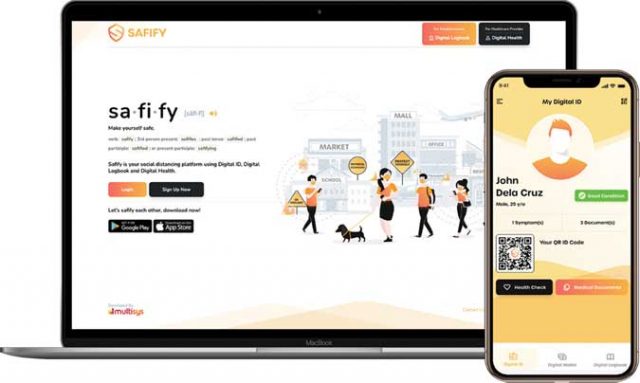
Leading software solutions company Multisys Technologies Corporation debuts the newest addition to its 24 existing digital platforms, Safify, a digital health platform.
With the guidance and expertise of Metro Pacific Hospital Holdings Inc. (MPHHI) in the development of the platform, MultiSys seeks to provide an end-to-end digital tool that allows employers to digitally manage and administer their respective vaccination programs for the workplace—from the supply chain, inventory, and vaccine administration.
MPHHI, the largest private hospital operator in the Philippines among whose hospitals include Makati Medical Center, Cardinal Santos Medical Center, Asian Hospital and Medical Center, Riverside Hospital in Bacolod, and Davao Doctors Hospital, is rolling out the platform to all eighteen (18) of its hospitals primarily in support of the MVP Group’s vaccination program and other corporate clients.
MPHHI President & CEO Augusto Palisoc Jr. says, “Healthcare is so crucial to keep our country running and to ensure public safety. The current Covid health crisis has limited us in many ways. Against all odds, the industry must adapt and see to it that healthcare remains steadfast and accessible. We, at MPHHI, recognize the importance of digital tools to speed up the delivery of vaccination services crucial to our country’s return to normalcy, which is why we have closely collaborated with MultiSys to co-develop an excellent vaccination platform, Safify.”
Safify is powered by comprehensive backend analytics that enable companies to monitor and track their company-wide inoculation initiatives, among others. Further, it is ready for third-party system integrations.
MultiSys CEO and founder David Almirol shares, “Healthcare will always be a vital and necessary component of any society. We will not be able to move forward without it. Unfortunately, the pandemic still restricts us in this aspect to a large extent. This is why we built Safify—to be able to support businesses and medical frontliners so that their vaccination initiatives will be easier, more efficient and convenient. Thanks to MPHHI for the guidance in ensuring that the platform will be as efficient and practical as possible.”
Safify fortifies MultiSys’ foray into the digital healthcare landscape. The company is the developer of HealthBox, a simplified healthcare business administration platform.
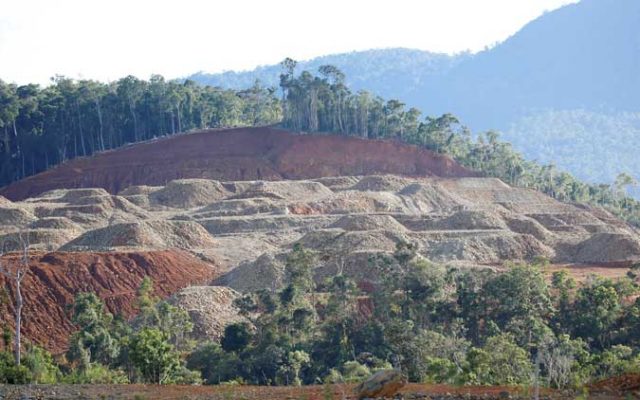
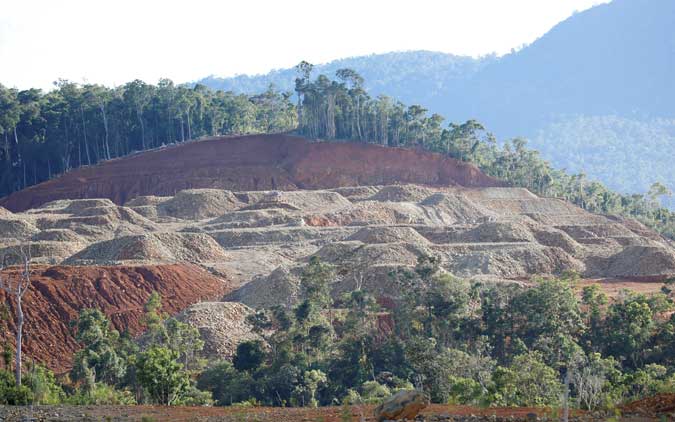
A view of nickel ore stockpiles at a mine in Sta Cruz, Zambales, Feb. 7, 2017. — REUTERS/ERIK DE CASTRO
THE MINING INDUSTRY is pushing for key policy changes that will boost the sector’s growth and help the economy recover faster from the coronavirus disease 2019 (COVID-19) pandemic.
Eulalio B. Austin, Jr., Philex Mining Corp. president and chief executive officer, said the government should harmonize all national laws and local government units’ (LGU) ordinances on mining.
“While the national law allows mining, there are LGUs that issue resolutions saying no to mining in their respective areas,” Mr. Austin said during a BusinessWorld Insights forum on Wednesday.
The Philex Mining official said there is a need to lift the foreign ownership restrictions on mining under the 1987 Constitution. Foreign investors are only allowed to own up to 40% of the capital of mining firms operating in the Philippines.
“Because we are opening big capital projects, the provision is needed so that more investors would come in the country,” Mr. Austin said.
Mr. Austin announced in a recent stockholders’ meeting that Philex Mining is seeking investors for its Silangan copper and gold project in Surigao del Norte, which requires a $758-million capital investment.
The Silangan project is seen as one of the big-ticket mining projects that can help the Philippine economy’s recovery, after Malacañang lifted the ban on new mineral agreements in April.
Mr. Austin also said there is a need to develop the downstream mining industry.
“There is a need to develop the downstream industries of copper so that we could maximize or create value on the copper that we will be mining in the future,” he said.
Dante R. Bravo, Global Ferronickel Holdings, Inc. president, said the government should also consider providing “stable” incentives for major mining projects.
“We have to be open in giving incentives to big investments. The incentive has to be stable and cannot be changed midway since it is going to affect the viability of the project,” Mr. Bravo said during the same forum.
“I think the current tax regime is almost prohibitive to the industry. We are already heavily taxed. If there are more taxes to be imposed, it would attract less investments into the country,” he added.
The mining industry has to pay various fees, taxes and royalties imposed by the Mines and Geosciences Bureau (MGB), Bureau of Internal Revenue, LGUs and other government agencies. The MGB recently proposed imposing royalties on miners operating outside designated mineral reservation areas. At present, only those operating within mineral reservations currently pay mineral royalties of 5%.
Meanwhile, Chamber of Mines of the Philippines (COMP) Executive Director Ronald S. Recidoro, said the Philippines should extract its mineral resources “responsibly.”
“If the minerals stay underground, it has very little value. It is better if we extract it responsibly and use the benefits and revenues of mining to move our economy forward,” Mr. Recidoro said.
“It is really up to us now to have that conviction and political will to do the same. Our mineral wealth will go to waste if we do not use it,” he added.
Based on an MGB report, the value of metallic mineral output rose 14.1% to P28.91 billion during the first quarter as a result of higher metal prices.
The mining sector contributed P102.3 billion, equivalent to 0.6% of gross domestic product (GDP) growth in 2020.
Philex Mining is one of three Philippine units of Hong Kong-based First Pacific Co. Ltd., the others being Metro Pacific Investments Corp. and PLDT, Inc. Hastings Holdings, Inc., a unit of PLDT Beneficial Trust Fund subsidiary MediaQuest Holdings, Inc., has interest in BusinessWorld through the Philippine Star Group, which it controls. — R.M.D.Ochave
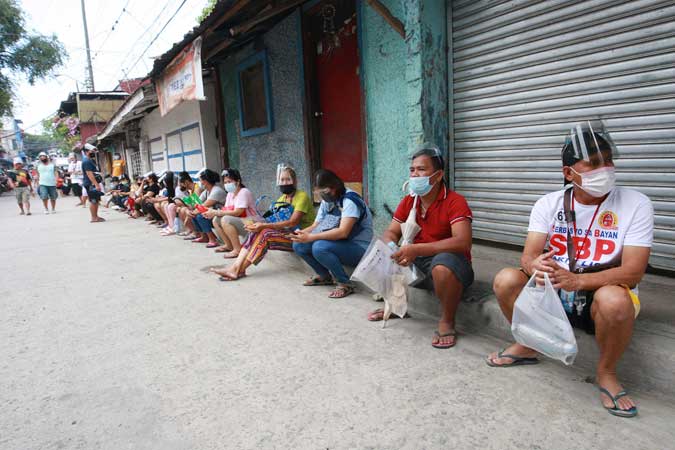
About 3.7 million Filipinos were jobless in May, or an unemployment rate of 7.7% from 8.7% a month earlier, according to the local statistics agency. — PHILIPPINE STAR/ MICHAEL VARCAS
By Revin Mikhael D. Ochave, Reporter
PRINCE ALLAN L. CABAUATAN, 24, lost his job as a flight attendant at Air Philippines Corp. in September amid a coronavirus pandemic.
He started a business building and selling personal computers to financially keep up.
“It was the smart thing to do because the demand for computers went up as more people worked from home,” he said in a Facebook Messenger chat.
His monthly income rose by as much as five times to P200,000 assembling PCs.
The global health crisis has left few people, if any, unaffected. The coronavirus brought many governments around the world to their knees as lockdowns forced companies to shut down.
Since the start of the coronavirus pandemic, more than 70% of startups have had to terminate contracts of full-time employees, according to the World Economic Forum.
Small- and medium-sized enterprises including the self-employed account for 90% of businesses globally and provide 70% of employment worldwide, according to King’s Business School in London.
The pandemic has also forced countries including the Philippines to simplify the business application process.
Business registrations in the first quarter reached 432,962, nearly half the full-year 2020 total of 916,163, according to the Trade department. Many Filipinos have adapted to the challenging times through entrepreneurship, it said.
Business registrations hit 637,580 in 2019.
The Anti-Red Tape Authority has vowed to continue reforms to ease doing business and cut red tape at all agencies. For one, it seeks to streamline processes in business registration through a Central Business Portal started early this year.
“This reduced the length of days for registering a business from 33 days and 13 steps to only three days,” it said in a statement last week.
One of those who may benefit from this is 31-year-old Kathleen D. Macabuhay, who started trading stocks and set up her own footwear business after losing her job as an event executive at the Makati Shangri-La Hotel.
“People were expecting the Makati Shangri-La Hotel to close because the hospitality industry had taken a hit due to the pandemic,” she said by telephone. “I was thinking ahead and I had to look for other means to earn.”
Ms. Macabuhay said her footwear business, which she started with co-workers at the hotel using their separation pay, is doing well. They sell women’s footwear through Facebook, Instagram and a Shopee virtual store.
“We knew our separation pay would not last long. Might as well invest it in something,” she added.
Ms. Macabuhay also works for a website based in the United States where virtual events such as promotions and tradeshows can take place.
“The salary at my new job is similar to what I was earning back when I was with Makati Shangri-La,” she said. “Now, I don’t have to spend time and money traveling to work. I just have to work from home from 9 p.m. to 5 a.m. since our clients are in the US.”
‘NECESSITY’ About 3.7 million Filipinos were jobless in May, or an unemployment rate of 7.7% from 8.7% a month earlier, according to the local statistics agency.
About 5.49 million Filipinos were also underemployed — people already working but still looking for more work or longer working hours — or an underemployment rate of 12.3%.
Rene E. Ofreneo, former dean of the University of the Philippines School of Labor and Industrial Relations (SOLAIR), said a number of Filipinos started a business during the pandemic out of necessity.
“Despite the pandemic and massive displacement and disruption, there are others who are surviving — not only do they survive, but also live well, he said by telephone.
The government should boost business-related subjects in senior high school to drive students to become entrepreneurs instead of taking 9-5 jobs, Mr. Ofreneo said.
He said there are opportunities in agribusiness. The state should particularly help small farmers to improve productivity and profit. Local entrepreneurs could also start a business to meet community needs.
There’s also freelancing, which lets one work independently rather than for a certain company or institution, he said.
“A good thing about freelancing and the digital revolution at the grassroots is that the economic base being built is mass-based and inclusive,” Mr. Ofreneo said. “Once the situation normalizes, the country will already have a strong base.”
He also said the country can no longer go back to normal after the pandemic. “We have a digitalization phenomenon, you need to accept that,” Mr. Ofreneo said, noting that less than half of factory workers had managed to go back to work.
“We should return to the concept that employment begins with small businesses and not the big corporations. It should be at the grassroots level,” he added.
The pandemic had forced many companies including small ones to adopt digitization and go online, King’s Business School said in a study published in March.
“Our analyses of the opportunities that entrepreneurs newly recognized in the pandemic revealed digitalization — in all its facets — as a key trend,” it said. It cited an upswing in online sales and e-commerce and greater use of technology to increase their business productivity.
Entrepreneurs had also noticed the increased readiness in society to accept technology, it said.
“For the economy, accelerated digitalization has important benefits,” according to the study. “Aside from reducing cost and increasing efficiency and productivity, it has the potential to make businesses and the economy more inclusive.”
Remote jobs let more people work and live in less expensive areas, which may help bolster their well-being. Accelerated digitalization can also support the development toward a greener economy by reducing transport and pollution.
“The new behaviors produced by the pandemic will likely persist even if herd immunity is reached,” Calixto V. Chikiamco, president of the Foundation for Economic Freedom, said in a Viber message. “The high demand for health products and services are here to stay.”
The health crisis had also forced some entrepreneurs to adapt, said Jaime Noel J. Santos, president at business school Thames International in Quezon City near the Philippine capital.
One of their students converted their uniform manufacturing business into one that makes personal protective equipment to meet demand, he said in a Viber message.
“Many micro-warehouse companies got started to serve the needs of e-commerce entrepreneurs,” he said. “They know that this is not a fad but a growing requirement since e-commerce is the new business normal.”
Ms. Macabuhay, the footwear entrepreneur, said she still plans to work in the hotel industry after the pandemic because it gives her a stable income source. But only so she could earn enough to start another business.
“I can only do that if I earn enough from a regular job. Once I save up enough, then I can open another business.”
Mr. Cabauatan, the PC builder, does not plan to go back to being a worker and wants to focus on his computer business. “It was a blessing in disguise since I would not be doing this had I not lost my job. I plan to make this my long-term business.”
MORE THAN A DOZEN business groups are pressing Congress to pass 17 priority reform bills in its third and final session which opens later this month.
Fifteen business groups representing various industries and foreign chambers wrote a letter to President Rodrigo R. Duterte advocating for the passage of 17 measures, which they say will help the economy recover from the coronavirus disease 2019 (COVID-19) pandemic.
“With one year left in the current Congress, we believe the 17 measures are achievable reforms that will generate substantial impact in achieving our shared vision of inclusive growth through job generation, poverty reduction, and global competitiveness,” the groups said in a statement on Wednesday.
“These reforms will also support economic recovery and higher GDP growth in 2022 and beyond in the wake of the COVID-19 pandemic.”
The business groups said that Congress should pass pending amendments to the Foreign Investments Act, Public Service Act, and Retail Trade Liberalization Act as these would open up the economy to more foreign investment.
They also support the creation of the Department of Disaster Resilience and Department of Water Resources Management.
They also backed the passage of the government’s remaining tax reform packages, namely the Property Valuation and Assessment Reform Act and Passive Income and Financial Intermediary Taxation Act.
The former would broaden the property-related taxes of the government and generate more revenue for local government units “without increasing the existing tax rates or devising new tax impositions,” while the latter aims to simplify the tax structure for financial instruments.
Mr. Duterte last month asked Congress to pass these last two tax reform bills, both of which are still pending at the Senate.
The business groups also supported measures on Ease of Paying Taxes, Electric Vehicles and Charging Stations, Freedom of Information, National Land Use and Management, Open Access in Data Transmission, Philippine Creative Industries, Promotion of Digital Payments, Public Private Partnership, Rural Agricultural and Fisheries Development Financing System, and Secrecy of Bank Deposits Law amendments.
“Most of these bills have reached advanced stages in Congress and require counterpart action in the House or Senate,” the groups said.
Senate President Vicente C. Sotto III said the same, noting in a mobile message that “most of these bills are in the advance stages in the Senate plenary.”
The groups said that they sent the letter in anticipation of the President’s final State of the Nation Address and Congress opening its third regular session on July 26. Separate letters were also sent to Mr. Sotto and to House Speaker Lord Allan Jay Q. Velasco.
The business groups include Alyansa Agrikultura, Bankers Association of the Philippines, Financial Executives Institute of the Philippines, Foundation for Economic Freedom, IT and Business Process Association of the Philippines, Makati Business Club, Management Association of the Philippines, Philippine Association of Multinational Companies Regional Headquarters, Inc., and the Semiconductor and Electronics Industries in the Philippines Foundation, Inc.
Foreign chambers that have signed the position paper include the American, Australian-New Zealand, Canadian, European, Japanese, and Korean business groups. — Jenina P. Ibañez
Voters’ registration for the 2022 elections is ongoing until Sept. 30. — PHILIPPINE STAR/ MICHAEL VARCAS
THE PHILIPPINE ECONOMY may face risks to its outlook due to the upcoming 2022 elections and “pandemic fatigue,” Fitch Solutions Country Risk & Industry Research said.
“We flag risks to political stability not only due to the pandemic, but also as countries face major elections over the coming years,” Fitch Solutions Head of Asia Country Risk Anwita Basu said in a webinar.
Ms. Basu noted there may be heightened “political risks” arising from the upcoming elections in the Philippines, as well as South Korea, Australia and Japan.
The Philippines is scheduled to hold national elections on May 9, 2022. President Rodrigo R. Duterte is set to step down from office on June 30, 2022, although he has hinted at the possibility of running for vice-president.
Also, Ms. Basu said the significant rise in income inequality in the Asia-Pacific region due to the pandemic poses downside risks to stability.
“Moreover, as governments have taken on more authoritarian stances to curb the viral outbreak, anti-establishment sentiment is likely to be on the rise,” she said.
Ms. Basu said Myanmar is a “sad reminder” of how sentiment can turn against an authoritarian state and may pose a threat to the economy.
In May, Fitch Solutions lowered its growth forecast for the Philippines to 5.3% from an earlier estimate of 5.8%. This is also below the 6-7% target of the government for the year after the record 9.6% contraction in 2020.
The delay in coronavirus disease 2019 (COVID-19) vaccine shipments to the region has also affected the growth outlook.
“This has resulted in delays to vaccination programs for countries worldwide that are reliant on the COVAX scheme for vaccine supply. This will impact emerging markets including Vietnam, Cambodia, Laos, Myanmar, Bangladesh, Sri Lanka, Indonesia, Philippines, and Malaysia,” Ms. Basu said.
The government has administered 11.71 million doses of coronavirus vaccines from March 1 to July 4, of which 8.84 million were first doses. So far, 2.869 million Filipinos or less than 3% of the population have been fully vaccinated.
The government targets to vaccinate 500,000 people daily in Metro Manila, Rizal, Bulacan, Cavite, Laguna, Metro Cebu and Metro Davao to achieve herd immunity in these high-risk areas by end-November. — L.W.T.Noble
THE TOTAL number of Filipinos swelled to 109.04 million as of May 2020, up from 100.98 million when the census was last conducted in 2015, according to the Philippines’ latest Census of Population.
The latest figures placed annual population growth for the period 2015-2020 at an average of 1.63%, slowing from the 1.72% average recorded in 2010-2015.
Of the 17 regions, six had growth rates that were roughly equal or higher than the national average: Bangsamoro Autonomous Region in Muslim Mindanao (BARMM, 3.26%), Calabarzon (2.48%), Central Luzon (2.17%), Central Visayas (1.88%), Mimaropa Region (1.82%), and Caraga (1.63%).
Meanwhile, Eastern Visayas posted lowest annual population growth for the five-year period at 0.5%, followed by Cordillera Administrative Region at 0.91%, and the National Capital Region (NCR) at 0.97%.
In absolute terms, Calabarzon gained the most in population with an additional 1.78 million in 2020 from 2015. Other regions that saw significant increments were Central Luzon (1.20 million), Central Visayas (685,090), BARMM (622,901), and NCR (607,209).
Calabarzon remained the most populous region with 16.20 million people, followed by neighboring NCR at 13.48 million and Central Luzon with 12.42 million. These three regions make up 38.6% of the country’s population.
The three most populous provinces were Cavite (4.34 million), Bulacan (3.71 million), and Laguna (3.38 million).
The least populous were the islands of Batanes (18,831), Camiguin (92,808), and Siquijor (103,395).
Among highly urbanized cities, Quezon City had the greatest number of warm bodies with 2.96 million people, followed by the cities of Manila (1.85 million), and Davao (1.78 million).
Among the localities in Metro Manila, Valenzuela posted the highest growth rate at 3.03% to 714,978 people. Trailing second and third are the cities of Mandaluyong and Taguig with 2.07% (to 425,758) and 2.06% (to 886,722), respectively.
Meanwhile, Quezon City recorded the slowest growth among NCR localities at 0.17% with Marikina City (0.25% to 456,059) and the municipality of Pateros (0.45% to 65,227) coming in at second and third, respectively. On the other hand, the city of Navotas posted a 0.16% decline in its population to 247,543 people. — B.T.M. Gadon
THE Securities and Exchange Commission (SEC) has flagged three unlicensed entities for offering unauthorized investments to the public.
In separate advisories, the regulator warned against Cloud Network/Cloud Network Marketing or www.cloudnetworkmarketing.com, Lendvest International, and Earn Cash Quarantine Lending Consultancy Services.
Cloud Network’s investment program promises investors a five percent daily payout for 44 days, on top of an earning opportunity through direct referrals.
It is not registered as a corporation or as a partnership and lacks the required license to collect investments from the public.
The SEC said the scheme of Cloud Network “shows indication of a possible Ponzi scheme, where monies from new investors are used in paying ‘fake profits’ to prior investors.”
Lendvest is also not registered with the SEC and does not have the secondary license to offer, collect, and distribute investments or securities to the investing public.
“Based on the information gathered by the commission, Lendvest entices the public to invest by offering investment packages from P1,000 up to P1,000,000 with a return of up to P23,298,090 for one year,” the regulator said in an advisory dated July 6.
Lendvest has a variety of investment packages, with programs ranging from a month’s worth of investments, three months, six months, and a year.
Meanwhile, Earn Cash is said to be headed by a certain John Mitchell Mapaye Alcantara. BusinessWorld sought comment from Mr. Alcantara via Facebook Messenger, but he has yet to respond as of writing.
The public may invest through Earn Cash for as low as P2,000. Its investment plans guarantee returns of 40% in 12 days, 50% in 25 days, 100% in 30 days, and 300% in 75 days. Investors may also earn via direct and indirect referrals.
However, the SEC flagged Earn Cash for offering investment programs without being registered with the commission. It is also not authorized to collect investments from the public as it lacks the necessary license to do so.
The corporate regulator is advising the public to stop investing in Cloud Network, Lendvest, and Earn Cash. It is also calling on those who can provide information on the three entities’ operations to reach out to the SEC.
Meanwhile, the commission is warning those who act as salesmen, brokers, or those who represent these entities by offering their programs to the investing public that they may be prosecuted and held criminally liable under the Securities Regulation Code. They may be penalized with a fee of up to P5 million and/or face 21 years of imprisonment. — Keren Concepcion G. Valmonte
FRENCH shipbuilding company OCEA plans to invest P1.5 billion to build a shipyard in the Philippines, the Department of Trade and Industry (DTI) said.
OCEA Chief Executive Officer Roland Joassard revealed the plan during a joint economic committee meeting between the two countries last week, DTI said in a press release on Wednesday.
The project will create 500 to 600 direct and indirect jobs. OCEA has not yet responded to inquiries about the site of the project or the construction timeline.
The announcement is the latest international investment in Philippine shipyards, amid ongoing talks of the potential takeover of the shipyard left behind by the collapsed Hanjin Heavy Industries and Construction-Philippines, Inc.
Representatives from both France and the Philippines during the economic meeting also discussed potential bilateral cooperation in areas like agriculture, aviation, aeronautics, creative industries, electronics, energy and green technology, transportation, and shipbuilding.
Both countries agreed to work on integrated circuit design projects through partnerships between their electronics industry groups.
French Minister for Foreign Trade and Economic Attractiveness Franck Riester also confirmed financial support for Philippine government transportation projects and support for a training boat contract for the Philippine Merchant Marine Academy.
“Both countries also identified specific projects on dairy development, geographical indications, and control and eradication of African Swine Fever (ASF) in the agriculture sector, and areas for market access as the Philippines and France prepare for a future bilateral agriculture meeting,” DTI said.
The joint economic committee with France is the longest-running high-level economic dialogue between the Philippines and a European country. Representatives from both economies plan to meet next year in Paris. — Jenina P. Ibañez
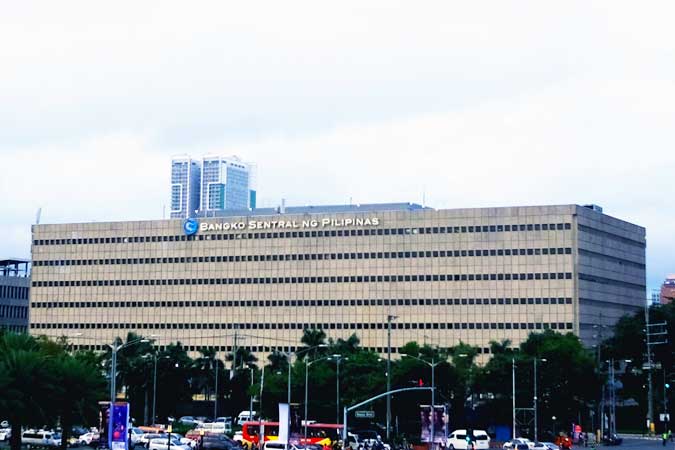
THE CENTRAL BANK’S term deposits fetched lower yields on Wednesday. — BW FILE PHOTO
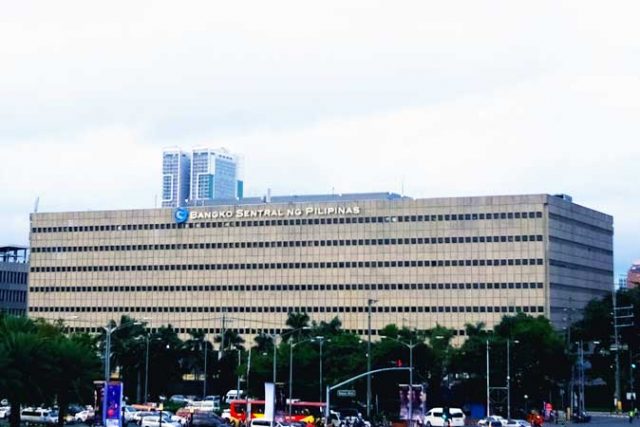
YIELDS ON THE central bank’s term deposits slipped on Wednesday as inflation came in slower than expected in June.
Demand for the term deposit facility (TDF) of the Bangko Sentral ng Pilipinas (BSP) amounted to P771.292 billion on Wednesday, surpassing the P540 billion on offer and the P652.901 billion in tenders seen a week ago.
Broken down, bids for the seven-day term deposits reached P216.209 billion, higher than the P150 billion auctioned off by the BSP and the P208.413 billion in tenders logged for the previous week’s offering.
Accepted rates for the tenor ranged from 1.7% to 1.729%, a thinner band compared with the 1.7% to 1.7345% seen a week earlier. This caused the average rate of the papers to inch down by 0.85 basis point (bp) to 1.7176% from 1.7261% previously.
Meanwhile, the 14-day papers fetched bids amounting to P555.083 billion, well above the BSP’s P390-billion offer and also beating the P444.488 billion in tenders received last week.
Banks asked for yields ranging from 1.75% to 1.8144%, a narrower margin versus the 1.75% to 1.83% band recorded a week ago. With this, the average rate of the two-week term deposits slipped by 1 bp to 1.8014% from 1.8114% on June 30.
The BSP did not offer the 28-day term deposits for the 37th straight week to give way to its weekly offerings of bills with the same tenor.
The TDF and the short-term BSP bills are used by the central bank to mop up excess liquidity in the financial system and to better guide market rates.
The lower yields on the BSP’s term deposits came a day after the release of the consumer price index (CPI) report, which showed that headline inflation eased last month, Rizal Commercial Banking Corp. Chief Economist Michael L. Ricafort said in a text message.
Inflation eased to a six-month low in June, the Philippine Statistics Authority (PSA) reported on Tuesday.
Preliminary data from the PSA showed headline inflation stood at 4.1% in June, easing from the 4.5% logged in May and the slowest rate in six months or since the 3.5% recorded in December 2020. However, this was above the 2.5% recorded in June last year.
The latest headline figure was lower than the 4.3% median in a BusinessWorld poll conducted late last week. It likewise fell within the 3.9%-4.7% estimate given by the Bangko Sentral ng Pilipinas (BSP) for June, but was still higher than the central bank’s 2-4% target for the year.
For the first half, headline inflation averaged 4.4%, also above the BSP’s target band and its 4% forecast for 2021. — L.W.T. Noble
LISTED holdings firm Synergy Grid & Development Phils., Inc. said on Wednesday that its management had greenlit a follow-on offering of up to P1.09 billion, subject to clearance from the corporate regulator and the stock exchange.
“The board approved the conduct of a follow-on offering of up to 1,087,634,000 common shares with a par value of P1 per share,” Synergy Grid told the local bourse in a regulatory filing.
The firm said that the offer is contingent on the registration requirements of the Securities and Exchange Commission and listing qualifications of the Philippine Stock Exchange.
Synergy Grid said the offer also hinges on the approval of its capital stock hike to P5.30 billion, from the previous P5.05 billion.
Last week, the company’s board of directors approved to raise its capital stock so Synergy Grid can conduct a follow-on offering in line with achieving the firm’s target public float of 20%.
The Sy-led firm’s first-quarter attributable net income to its parent stood at P79,476, higher by 18% than the comparative year-on-year figure as the economy started to show signs of recovery.
Last year, Synergy Grid reported a net loss of P1.99 million, swinging from its P1.95-million income in 2019, after incurring losses from operations amid the pandemic. — Angelica Y. Yang
PHILIPPINE National Bank (PNB) is looking to convert its holding company into a digital lender and will seek the necessary license from the central bank, it said on Wednesday.
“The PNB Board of Directors approved and confirmed the conversion of Allied Integrated Holdings, Inc. (formerly PNB Savings Bank) into a digital bank, subject to regulatory and other necessary approvals,” the Tan-led bank said in a filing on result of their board meeting on Wednesday.
PNB last month said its board of directors approved a plan to create a digital bank during their June 25 meeting.
Sought for comment, Bangko Sentral ng Pilipinas (BSP) Deputy Governor Chuchi G. Fonacier said PNB has “not yet” communicated with the regulator on its plan.
“In case they will file an application for a digital bank, it will be considered as a new application for a digital bank. The BSP will follow the usual licensing process,” Ms. Fonacier said in a Viber message.
BSP Circular 1105 released in December last year set apart digital banks from other types such as universal, commercial, thrift, rural, cooperative and Islamic lenders.
Digital banks offer financial services, including taking loans and deposits, through online platforms instead of the brick-and-mortar model of conventional lenders.
These online-only banks are required to have a minimum capital of P1 billion.
The Monetary Board earlier capped the licenses it will issue under the new digital banking framework to five, but BSP Governor Benjamin E. Diokno said they could allow more lenders to operate if there is strong demand.
The BSP has so far granted digital bank licenses to the Overseas Filipino Bank, Tonik Digital Bank, Inc. (Philippines), and UNOBANK.
Among local commercial lenders, only UnionBank of the Philippines, Inc. has filed an application for a digital bank license, which is still pending with the BSP.
Rizal Commercial Banking Corp. has also expressed interest in securing a digital bank license. The bank launched its Diskartech app last year where users can create accounts, make deposits, and apply for loans.
PNB’s net profit increased 34% to P1.791 billion in the first quarter from P1.337 billion a year earlier, with lower expenses offsetting the decline in its total operating income.
The Tan-led bank’s shares closed at P22.90 apiece on Wednesday, down by 20 centavos or by 0.87% from the previous day’s finish. — LWTN
THE number of firms compliant with Islamic guidelines has bumped up to 60 for the period ending June 25, higher than last quarter’s list comprised of 57 securities.
According to a circular published by the Philippine Stock Exchange (PSE) on Tuesday, eight new companies were tagged as Shari’ah-compliant firms.
Century Peak Holdings, Corp., Concrete Aggregates Corp. “A,” Concrete Aggregates Corp. “B,” DDMP REIT, Inc., iPeople, Inc., Nickel Asia Corp., The Philodrill Corp., and PXP Energy Corp. passed the screening for the latest quarter.
Meanwhile, five firms were removed from list, namely: Da Vinci Capital Holdings, Inc., Forum Pacific, Inc., Kepwealth Property Phils., Inc., LMG Corp., and Philippine Infradev Holdings, Inc.
As part of the PSE’s Shari’ah stock market program, the local bourse screens listed companies every quarter to identify which are compliant with Shari’ah laws with the help of IdealRatings, Inc. The program aims to make investing in the PSE inclusive to Muslim investors.
Listed firms are checked for their compliance with standards under the Accounting and Auditing Organization for Islamic Finance Institutions.
Shari’ah compliance involves a business and a financial ratios screening.
Businesses in adult entertainment, alcohol, cinema, defense and weapons, financial services such as insurance and conventional banking, gambling, gold and silver hedging, interest-bearing investments, music, pork, and tobacco must only account for less than five percent of a company’s earnings.
Additionally, firms must ensure that its cash or interest-bearing deposits or investments and interest-bearing debt do not exceed 30% of its market capitalization. — Keren Concepcion G. Valmonte


 The Philex Mining official said there is a need to lift the foreign ownership restrictions on mining under the 1987 Constitution. Foreign investors are only allowed to own up to 40% of the capital of mining firms operating in the Philippines.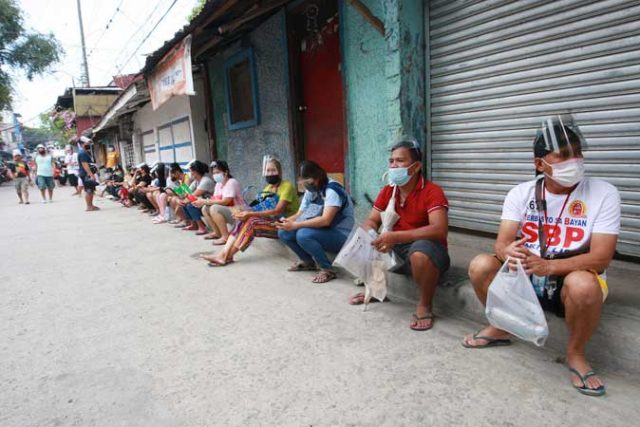
 His monthly income rose by as much as five times to P200,000 assembling PCs.