Home Blog Page 7761

Philippines to bar travel from Malaysia, Thailand to curb Delta’s spread

PHILIPPINE STAR/ RUDY SANSTOS

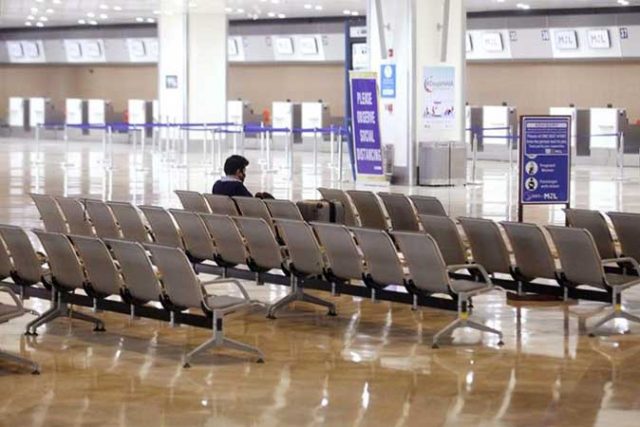
MANILA – The Philippines will ban travellers coming from Malaysia and Thailand, as well as tighten restrictions in the Manila area, in a bid to prevent the spread of the contagious Delta variant of the coronavirus, the presidential spokesperson said on Friday.

The travel restriction will take effect from Sunday and run to the end of July, presidential spokesman Harry Roque said in a national address.

“This action is undertaken to prevent the further spread and community transmission of COVID-19 variants in the Philippines,” Roque said.

The Philippines has previously banned travellers from eight countries including Indonesia and India.

To try and prevent further domestic transmission of the Delta variant, President Rodrigo Duterte has placed the capital region, an urban sprawl of 16 cities that is home to more than 13 million people, and four provinces under stricter coronavirus curbs until the end of July.

Indoor sports and conference venues, indoor tourist attractions and gyms are not allowed to do business, while the operating capacity of indoor and al fresco dining has been cut.

In addition, children between the ages of five and 17 will not be allowed to leave their homes.

The Philippines has recorded 47 cases of the Delta variant, eight of which are active, and three deaths.

With more than 1.53 million infections and nearly 27,000 deaths, the Philippines has the second-highest number of coronavirus cases and casualties in Southeast Asia, next to Indonesia. – Reuters

CEO optimism up amid pandemic

PHILIPPINE STAR/ MIGUEL DE GUZMAN
A SURVEY showed that 63% of CEOs are confident about their organization’s revenue growth for the next 12 months. —

By Jenina P. Ibañez, Reporter

MORE THAN THREE-FIFTHS of Philippine chief executive officers (CEOs) are confident about their revenue growth prospects over the next year, a slight improvement from last year’s business outlook that was clouded by the coronavirus pandemic, a survey conducted by PwC Philippines-Management Association of the Philippines (MAP) showed.   

Results of the survey of 131 CEOs in April and May showed that 63% are confident about their organization’s revenue growth for the next 12 months, although only 23% are “very confident” and 40% are “somewhat confident.”

This year’s midyear survey was released on Thursday, instead of September as in previous years. Last year, 59% of 161 CEO respondents were confident that their company will see revenue growth in the next 12 months, but this was significantly lower than the 88% in 2019.

CEO confidence could be attributed to business adjustments towards the end of last year, PwC Philippines Deals and Corporate Finance Managing Partner Jade Roxas-Divinagracia said during the virtual launch.

“I think in the middle of last year, amidst all the uncertainties, CEOs took a more conservative position, providing for possible losses and really anticipating the worst. But towards the end of last year, businesses who were able to adjust their strategies and operations much quicker were actually realizing that things are not as bad as they initially thought,” she said.

But Ms. Roxas-Divinagracia also noted that most of the CEOs that responded to the survey represent well-capitalized large corporations that have longer cash runways.

Majority of Philippine firms are micro-, small-, and medium-sized enterprises.

More than 62% of survey respondents represent large firms, with respondents from the financial services, manufacturing, transport and logistics, real estate, professional services, and technology sectors.

CEOs are more positive about growth in the succeeding years, with 85% responding that they are confident about revenue growth over the next three years.

Around 70% said they are optimistic about the recovery of the Philippine economy within the next three years, with 28% saying that recovery will happen within two years.

Philippine gross domestic product contracted by a record 9.6% last year amid long lockdowns declared to arrest the spread of the coronavirus disease 2019 (COVID-19).

Around 42% of surveyed CEOs believe the economy will grow by at least 3% this year. This is well-below the government’s 6-7% GDP growth target for 2021.

Industry growth confidence varied across sectors. While 100% of food and beverage firm CEOs are “very confident” about the sector’s revenue growth over the next 12 months, just half of telecommunications CEOs are “somewhat confident” while the other half are not confident at all.

In the consumer and retail sector, 67% are “somewhat confident,” while 83% of CEOs in the financial services sector are confident.

Many firms said they saw losses due to the pandemic, with 73% saying that they still expect revenue losses in 2021. Less than 10% of the firms surveyed expect up to 10% in revenue losses, while 18% expect 10-20% in losses. A quarter expect more than 20% in revenue losses.

Major factors that contributed to losses in 2020 include lower sales as customers were badly affected by the pandemic, store closures, and supply chain concerns.

Up to 84% of the CEOs said their employees were infected with COVID-19. Almost 70% expect their workforce to be fully vaccinated against COVID-19 this year.

Looking forward, more than half of the business leaders plan to set up more sustainable practices and launch more products and services in the next 12 months. Almost half plan to explore new market channels.

Around 70% of the CEOs have no fundraising plans, while just 15% are considering bank loans or financing.

“This is despite the fact that many of the CEOs — more than 50% of them — say that their cash runway is only up to six months, and a few of them have cash runways of more than 12 months. But they are not looking at raising finance… what is really happening now is they are looking for partners, and there’s a lot of action now happening in the M&A (mergers and acquisitions) space,” PwC Philippines Chairman and Senior Partner Alexander B. Cabrera said.

After businesses shifted to work-from-home operations during the lockdown, 67% of CEOs said they will retain remote work policies even after the pandemic. Among them, 51% said that up to a quarter of their workforce can work from home permanently.

To assist industry recovery, 79% said that the government should have an effective and equitable vaccination program, while 45% said the government should introduce tax incentives.

CONSUMERS TURN OPTIMISTIC
Meanwhile, a separate survey conducted by market research firm IPSOS last June showed a huge improvement in the economic outlook among Filipinos.

In the IPSOS survey, around 51% of Filipino respondents described the current economic situation to be either “somewhat good” or “very good.” This was 25 percentage points higher than the 26% recorded in a survey conducted in February, as well as the biggest increase among the six Southeast Asian economies included in the report.   

The positive view among Filipinos on the current state of the economy outmatched those of citizens in Thailand (20%), Malaysia (30%), and Indonesia (41%). Only Singapore (63%) and Vietnam (62%) saw higher positive responses.

Moreover, the survey reported similar results among Filipino respondents when asked on their economic outlook. Of these, 62% said they expect the country’s economic situation to be “somewhat stronger” or “much stronger” in the next six months — up from the 49% recorded in the survey in February. Only Indonesia (68%) posted a higher level of optimism.

IPSOS noted the Philippines and Vietnam as being the most positive about the future of their economies, while others “remain cautiously optimistic.”

The market research firm also asked respondents to pick the three most important areas for businesses to address. The following areas tallied the highest responses among Filipinos: keeping employees/customers safe from the coronavirus pandemic (51%), paying fair wages to employees (44%), controlling prices of products and services (43%), contributing to local economy through creation of jobs (43%), and supporting local economy by buying from local sellers (30%).   

IPSOS said the survey looks to understand “evolving consumer opinions and behaviors” in the six Southeast Asian markets amid the ongoing coronavirus pandemic. A tracking survey, it was first conducted in May 2020 and is currently on its fourth round in June.

“This study enables organizations and businesses to look ahead beyond the pandemic — anticipating future consumer behavior, patterns and opinions while each market in the region goes through various phases of crisis management, recovery, and vaccination rollouts,” IPSOS said.

The survey has 3,000 respondents aged 18 years and older with 500 representing each country. – with Bernadette Therese M. Gadon

Railway project gets ‘record’ bids from 17 foreign, 6 PHL firms

THE RAILWAY PROJECT that will connect Tondo, Manila to Calamba, Laguna attracted a record 34 bids from 17 international and six Philippine companies, the Transportation department said on Thursday.

In a joint statement, the Department of Transportation and Philippine National Railways (PNR) said the foreign and local companies submitted 34 bids for six contract packages for the construction of the PNR Calamba project. This involves a combined 40.5 kilometers of viaduct structures, including 13 elevated stations and a 22-hectare train depot.

Some of the firms submitted bids for more than one contract package, while other firms offered bids as part of joint ventures. The bids were submitted and opened on July 14 and 15.

Among the 17 international companies that submitted bids, seven were from South Korea, namely DL Engineering & Construction Co. Ltd.; Dong-ah Geological Engineering Co. Ltd.; GS Engineering & Construction Corp.; Hyundai Engineering & Construction Co. Ltd.; Lotte Engineering and Construction Co. Ltd.; POSCO Engineering & Construction; and Samsung Construction & Trading Corp.

Three firms from Indonesia also participated in the bidding — PT Adhi Karya (Persero) Tbk; PT PP (Persero) Tbk; and PT Wijaya Karya (Persero) Tbk.

Other international companies that showed interest in the project included Japan’s Sumitomo Mitsui Construction Co. Ltd.; China Construction First Group Corp. Ltd.; Spain’s Acciona, S.A.; Turkey’s Gülermak Ağır Sanayi İnşaat ve Taahhüt A.Ş.; Italian-Thai Development Public Co. Ltd.; Chun Wo Construction (Hong Kong); and Leighton Contractors (Asia) Ltd. (Hong Kong).

The six Philippine companies that offered bids for the PNR-Calamba project were D.M. Consunji, Inc.; EEI Corp.; First Balfour, Inc.; Megawide Construction Corp.; Prime Metro BMD Corp.; and Santa Clara International Corp.

“For the six contract packages that had bid submission and opening last week, the total (cost) is P151.69 billion,” the government agencies said.

The total cost of the PNR Calamba project is P344.6 billion.

“This record-breaking turnout of bidders is yet again an indication of the trust and confidence of both the local and international infrastructure sectors on the Duterte Administration’s ‘Build, Build, Build’ Program, which champions a transparent, fair, and efficient bidding process,” Transportation Secretary Arthur P. Tugade said in a statement.

Five more contract packages for the PNR Calamba project, including civil works packages, construction of at-grade and viaduct structures with five stations, underground tunnel works and the construction of a station to be integrated with the Metro Manila Subway Project, will be bid out within the third quarter.

“The opening of bids for contract packages involving the project’s electromechanical systems and airport express train cars are [also] expected by Q3 2021,” the agencies said.

The PNR Calamba project is part of the 147-kilometer North-South Commuter Railway (NSCR) System, which is supported by the official development assistance from the Asian Development Bank and the Japan International Cooperation Agency.

Running from Clark, Pampanga to Calamba, Laguna, the NSCR will have 37 stations and 464 train cars or 58 trains sets, including seven Airport Express train sets.

Construction is currently “at full-swing” for the northern segment of the NSCR, the Transportation department and the PNR said. — Arjay L. Balinbin

Loose monetary policy appropriate — BSP

BW FILE PHOTO

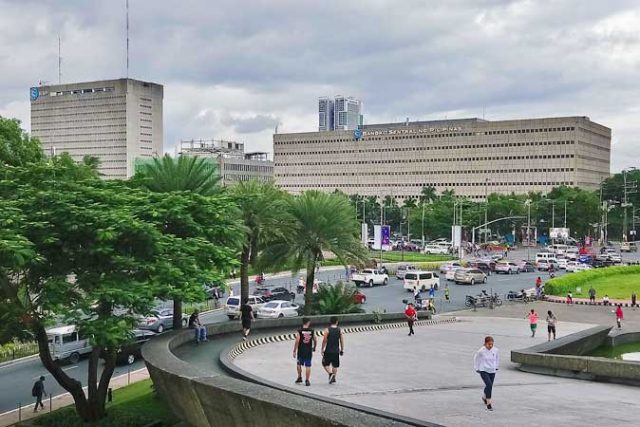
KEEPING an accommodative policy is still appropriate as inflation is expected to ease due to improving supply conditions, central bank officials said.

The Bangko Sentral ng Pilipinas (BSP) is expecting inflation to be within the annual 2-4% target range, although most likely at the upper end due to the rising global oil prices.

“We believe that the prevailing monetary policy stance remains appropriate especially as price pressures are expected to dissipate further with the continued implementation of non-monetary supply-side measures by the government,” BSP Governor Benjamin E. Diokno said at an online briefing.

The Monetary Board has kept the policy rate at a record low of 2% in its last policy review in June, citing the need to retain support as the new coronavirus variants pose risks to economic recovery.

Headline inflation in June slowed to a six-month low of 4.1% on easing transport prices and slower increase in the food price index, although it marked the sixth consecutive month of inflation beyond the 2-4% target.

Average inflation forecast for 2021 and 2022 are at 4% and 3%, respectively.

“Keeping an accommodative stance shall also help us counter risk aversion among banks which continue to temper credit activity despite liquidity in the financial system,” Mr. Diokno said.

Bank lending declined for the sixth straight month in May by 4.5%, as banks and borrowers remain cautious amid the crisis.

The BSP will have its next policy-setting meeting on Aug. 12.

Meanwhile, the central bank also noted that early signs of demand recovery were seen in the second quarter.

BSP Department of Economic Research Senior Director Zeno R. Abenoja noted the improvement in the manufacturing sector seen through the Purchasing Managers’ Index of IHS Markit as well as higher energy and vehicle sales.

“This shows a partial restoration of economic activity in both the manufacturing and services sector. This is a welcome development to our consumption-driven economy,” Mr. Abenoja said.

He noted the fast-spreading Delta variant is a key risk to the growth recovery outlook, as this may lead to a return to quarantine restrictions. — L.W.T.Noble

Global supply chain woes disrupt supermarket inventories

GLOBAL SUPPLY CHAIN delays have caused some shortages in supermarket inventory and price spikes, the head of an industry group said.

“There are some products missing on the shelves which are imported. Every now and then, saka lang nagkakaroon (the products are back in stock),” Philippine Amalgamated Supermarkets Association (Pagasa) President Steven T. Cua said in a phone interview on Monday.

Deliveries come in fits and starts, he said. The products when made available again in Philippine supermarkets are priced slightly higher, he added, noting that he suspects some locally produced goods could have also increased prices due to raw material import issues.

Various industries globally are reporting supply chain constraints and shortages as economies bounce back from the pandemic. Local exporters said logistics issues such as vessel space and container shortages cause freight rate surges and shipment delays, and some industries report struggling with higher import costs.   

Mr. Cua said that supermarkets have different percentages of imported products in their inventories, with stores catering to wealthier markets selling more high-quality imported items.

Some imported items, however, are sold in most stores.

Mr. Cua said that exports of canned meat from the United States are now offered in fewer varieties, with importers only bringing in the most in-demand flavors.

Hormel Foods Corp., which produces Spam, has been noting supply chain and production issues since last year as demand for its products surged. — Jenina P. Ibañez

Work-from-home future fades in Asia as offices seek more space

AS THE PANDEMIC rages in Asia, offices are making a comeback.

More companies based in the region expect they will need to increase office space in the near future, according to a survey conducted by CBRE Group, Inc.

The study found that 66% of Asia-based firms expect to add space in the next three years, up from only 28% in October. By contrast, only 35% of multinational companies see their office portfolios growing over the period.

The divergence suggests that once the pandemic fades, more Asian companies are likely to maintain traditional working arrangements than their European and US-based peers, many of which are prepared to make working from home a permanent aspect of employment to cut real estate costs.

“Western companies are aligned with their global headquarters,” which are still adopting home office arrangements, said Ada Choi, CBRE’s Asia-Pacific head of occupier research. Asian companies “are relatively traditional and conservative,” she said.

The firm surveyed 109 companies across the region from industries including real estate, technology and finance between May and June.

The study also found that almost half of the Asian companies prefer dedicated seats for their staff, rather than sharing in what’s known as “hot-desking,” since most of them don’t intend to adopt hybrid work. While more than 60% of the respondents said the staff-to-desk sharing ratio will increase over the coming couple of years, most of them were Western companies. That means an office desk will serve more employees in the future.

Some office markets in the region are already seeing signs of improvement as economies begin to recover from the pandemic.

Leasing volume in Hong Kong’s Central district recorded a 69% increase in the second quarter from a year earlier, according to Jones Lang LaSalle. Office rents in the area may gradually rebound in the second half from a six-year low as vacancy rates peak, Bloomberg Intelligence analyst Patrick Wong wrote in a note this week.

Singapore’s grade A office rents in the central business district rose 1.2% in the second quarter from the previous three months, JLL data show. — Bloomberg

A plague’s origin story

JUN JI-HYUN in Kingdom: Ashin of the North

AFTER two successful seasons telling the story of a community affected by a mysterious plague, the Korean drama series Kingdom of Joseon returns with a 92-minute special episode of the origin of the resurrection plant that led to the tragic events surrounding the plague.

Adapted from the webcomic series The Kingdom of the Gods, Kingdom of Joseon is a fictional story set during Korea’s Joseon Dynasty,  and follows a Crown Prince who investigates the source of a mysterious plague that resurrects the dead.

The special episode, Kingdom: Ashin of the North takes place before the spread of the plague. It tells of the tension between different groups in the northern region near the Amnok River. It is a tale of vengeance, tragedy, and betrayal focusing on the heir of the Northern Yeojin tribe village, Ashin.

“I was curious about abandoned outposts in the north and thought about how the resurrection plant could have grown somewhere like that,” series writer Kim Eun-hee said in a statement.

During an online press conference with Asian media on July 20 via Zoom, Ms. Kim talked about the complexity of the show’s main character Ashin, and the background of the special episode.

“When you look at the story behind Ashin, it is a very long and complex story…,” Ms. Kim said in Korean which was translated into English.

“I felt that rather than to incorporate her story into the third season, it would be more audience-friendly, and also something that would be conducive to higher quality content if we were to provide it in a special episode,” Ms. Kim said.

Gianna Jun plays the brave and strong archer Ashin who was introduced in the final episode of Kingdom season 2. She talked about her experience with the Korean concept of “han” or anguish.

“I tried to focus mostly on how to interpret the personal anguish and hurt which we in Korea referred to as ‘han,’ how to interpret that emotion into wanting to avenge the whole land of Joseon,” Ms. Jun said.

Another actor reprising his role is Park Byung-eun who plays the leader of the Royal Commandery Min Chi-rok.

“In this special episode I try to focus more on the relationship between him and Ashin and also the relationship with the resurrection plant, and how all of that ends up unfolding into this outbreak of zombies of this disease,” Mr. Park said.

“When you compare it to similar works in the genre, the Kingdom story in the series incorporates human history, the hunger, the greed for power as well as the concept of ‘han’ or anguish or sadness,” director Kim Seong-hun said. “I believe that it truly creates a wonderful harmony that leads to a type of unique chemical reaction that I think was the key to why it was loved by so many fans around the world.”

Kingdom: Ashin of the North premieres on Netflix (netflix.com/KingdomAshinOfT) on July 23, 3 p.m. (Philippine time). — Michelle Anne P. Soliman

Satan is back (again) — the Devil in 5 dark details

YOUTUBE.COM/WARNERBROSONLINE

HIS title is the Devil, but he goes by a number of names — Satan, Lucifer, Beliar, Beelzebul or Beelzebub.

He was big in 1970s pop culture (The Exorcist, The Devils) and continues to feature on screen today. A sixth season of the TV show Lucifer is in production and new film The Conjuring 3: The Devil Made Me Do It is showing in cinemas.

Conservative Christianity has a long commitment to the idea of a personal devil. Our Pentecostal Prime Minister Scott Morrison believes the misuse of social media is the work of the Devil. Pope Francis, meanwhile, maintains Satan still exists.

The Devil’s modern resurgence might explain a reported increase in apparent demonic possessions in both conservative Catholic and Protestant churches. The rise has fueled the growth of church ministries that claim to drive out demons. And the conspiracy theorists of QAnon have notoriously created baseless moral panic about the imagined sexual abuse of children in Satanic cults.

Given the amount of publicity the Devil is currently attracting, it’s worth reviewing his history. Here are five things worth knowing.

After the Divine Trinity itself (the Father, Son and Holy Spirit — three identities in one God), the Devil plays the most important role in the Christian story.

He is there before the beginning of the world and he survives its end. He is first and chief among the angels. He is the first to disobey God and, along with his fellow fallen angels, to be expelled from Heaven.

From this moment on, religious history records the conflict between God and his angelic forces and the Devil and his demonic army.

Within the Christian tradition, it was the Devil — in the form of a serpent after his own fall from heaven — who brought about the Fall of humanity in the Garden of Eden. Christ’s death and resurrection signaled the victory over Satan and death.

Yet this story is deeply paradoxical. For in spite of Christ’s apparent win, the Devil remains for Christians a real and present source of cosmic evil and human suffering. “We should not think of the devil as a myth, a representation, a symbol, a figure of speech or an idea,” declared Pope Francis in 2018, lest we “let our guard down.”

On the one hand, the Devil is God’s most implacable enemy, granted the freedom to rebel against him. Thus, Saint Paul advised the Ephesians “to put on the whole armor of God so that you may be able to stand against the wiles of the Devil” (Ephesians 6.11).

But on the other hand, the Devil is also God’s faithful servant who acts only at God’s command, or at least with his endorsement. So, God sends Satan to kill Job’s animals, servants, and children and to afflict Job with “loathsome sores” in order to test his faith in God (Job 1-2).

Within the Christian tradition, Satan was a master of illusion. Unlike God, he could not perform miracles because he was bound by natural laws.

Satan was seen as a master of magic. In early Christianity, magic was reprehensible because demons were at the heart of it. For Saint Augustine (354-430), the demonic was present within all magic and superstitious practices in other religions.

For Isidore, bishop of Seville (c.569–636), “the foolery of the magic arts held sway over the entire world for many centuries through the instructions of evil angels […] all of these things are to be avoided by a Christian and entirely repudiated and condemned.”

Thus, witches, magicians, and sorcerers (whether acting benevolently or malevolently) were seen as in league with the Devil.

Thus “demonology,” which developed from the middle of the 13th century, was the “science” of determining the powers of the Devil within nature. From the middle of the 15th century, their research was written up in text books for demon hunters — Demonologies.

Modern conservative Christianity still views magical practices along with a range of popular occult practices — tea leaf reading, horoscopes, seances, tarot cards, and ouija boards — as dangerous dabbling with the Devil.

The Devil has been imagined (and pictured) in many forms. In the television series Lucifer he is a handsome, well-built man.

This tradition goes back to John Milton’s depiction of him as a handsome man in the poem Paradise Lost: “From his lips/Not words alone pleased her.” Poet and painter William Blake depicted the devil as a chiseled Greek god.

In the medieval period, however, because he dwelt on the boundaries between the human and the bestial, he was often depicted in animal form. In Dante’s Inferno (1265-1321) he was imagined like a dragon with “two mighty wings, such as befitting were so great a bird, sails of the sea I never saw so large. No feathers had they, but as of a bat.”

He was often imagined as goat-like and depicted with animal features: cloven hooves, talons, horns, tail, webbed hands.

In demonological literature he was portrayed as a spiritual being without any bodily form. A master of illusion, he was a shape shifter. It was believed he could change gender and assume a male (incubus) or a female body (succubus).

As a spiritual being, the Devil was unable to create children. But he could assume a female form, steal semen from a man and then, in a male form, deposit it in a woman.

According to that most famous of all the Demonologies, Malleus Maleficarum (1486), the pleasure to be gained by a woman from sex with the Devil was equivalent or better to that with a man.

But the Devil and his angels gained no such pleasure. For them, it was just part of the job of inciting people to evil. Demons transformed themselves, Malleus authors declared, “not for the sake of pleasure, since a spirit does not have flesh or bones,” but “that humans will become more inclined to all faults.”

As a spiritual being, it was believed the Devil could enter into human beings and possess them. Demonologist Henri Boguet (circa 1550–1619) told of a nun who, in eating a lettuce, swallowed the Devil hidden within it.

Indeed, the Devil most often entered through the mouth. But he could apparently also gain access through other bodily openings or wounds.

Demonologist Francesco Guazzo listed 47 signs of possession in his Compendium Maleficarum (1608). There were natural signs, like crying, gnashing the teeth, foaming at the mouth, extraordinary strength, and violence to the self and others.

There were also supernatural signs — clairvoyance, knowledge of strange languages, levitation, vomiting of strange objects, speaking without moving the mouth in different tones from the normal and the inability to feel pain when pricked.

In the “golden age” of demonic possession, from 1500–1700, experts arose within Catholicism and Protestantism who could cast out demons.

By the year 1600, do-it-yourself exorcism manuals were available. The most successful collection of these, the Thesaurus Exorcismorum (1608) promises “evil spirits, demons and all evil spells are driven from obsessed human bodies as if expelled by whips and clubs.”

According to the Christian understanding of history, the Devil, his son the Antichrist and his army of demons will be finally defeated on Judgement Day and sent to hell.

But within the confines of hell, the Demonic paradox continues.

The Devil and his evil angels will be tormented eternally for their rebellion against God. But they still remain God’s enforcers. There is no Biblical source for the idea of Satan and his demons torturing the damned in hell. But from the 4th century, Satan was believed to be the ruler of the underworld, as told in stories of Christ’s descent into Hell before his resurrection.

The role of Satan and his demons punishing the damned in hell was to become a common image in medieval art.

English philosopher Henry More (1614-87) wrote of gratuitous torture, with demons looking to “satiate their lascivient cruelty with all manner of abuses and torments they can imagine.”

But by the end of the 19th century, this demonic story had lost its central role in Western intellectual life. The Devil had largely become a figure of myth.

Ironically, the marginalization of the Christian story of the Devil in the modern West and in liberal Christianity allowed for a proliferation of devils and demons in popular culture — from The Devil’s Advocate to Rosemary’s Baby to The Witches of Eastwick.

The Devil is metaphorically, if not literally, the “evil” within all of us. As a result, the Devil has new domains, new territories, and new borders in which he “walks about, as a roaring lion, seeking whom he may devour” (1 Peter 5.8).


Philip C. Almond is Emeritus Professor in the History of Religious Thought, The University of Queensland.


Million users seen to switch network providers

Telco industry set for initial stage of mobile number portability

By Arjay L. Balinbin, Senior Reporter

TELECOMMUNICATIONS Connectivity, Inc. (TCI), the company put up by the country’s dominant mobile network operators to facilitate mobile number portability, expects “a million” subscribers to switch network providers during the initial phase of the implementation.

“Initially, we are projecting a million. But in other countries, 30% of the subscribers are porting out, so we will prepare for it. But initially, we’re setting it at about a million at the initial stage,” TCI General Manager Melanie A. Manuel said at an online briefing.

She said the mobile number portability is “something that will encourage the competitors to expand their network, improve customer experience, and improve their products and services.”

“Of course, you don’t want people to port out, right? So, it is a challenge for all of them,” Ms. Manuel noted.

The commercial launch of the mobile number portability is on Sept. 30. Ms. Manuel said the process is free of charge.

To port within networks, customers should be able to meet the following requirements: an active SIM and the requestor is the assignee of the mobile number to be ported, no remaining balance from previous bill (for postpaid), no existing court prohibitions, and no pending transfer of ownership.

Ms. Manuel said Smart Communications, Inc., Globe Telecom, Inc., and DITO Telecommunity Corp. had invested P120 million in the project. They chose Florida-based Syniverse to be the mobile number portability service provider.

“The entire telco industry and the Philippine government are pushing forward with the same goal of providing Filipinos with better telco services. Aside from encouraging healthier competition amongst the players, MNP (mobile number portability) also grants Filipinos the freedom to switch to their preferred mobile service provider seamlessly and conveniently,” DITO Chief Administrative Officer and TCI Treasurer Adel A. Tamano said at the briefing.

For his part, Vicente Froilan M. Castelo, Globe general counsel and TCI chairman, said: “Mobile Number Portability is a complex process not only do we need to adopt it into our system, but we need to integrate it with the networks of our competitors. MNP involves close coordination with the other telcos to build the system and how the system will react to provide that good customer service. It took us 22 months to build MNP, upgrade the system, integrate with the MNP service provider, and do testing with the other telcos.”

Mario G. Tamayo, TCI president and senior vice-president and head of technology at PLDT and Smart, said: “We want to make sure that we can give the best solutions and services to the Filipino people. Gusto natin pagaanin ang buhay at pasimplehan ang proseso para sa bawat (We want to ease the burden and simplify the process of each) telco subscriber by giving them the power of choice. Through mobile number portability, we are empowering our customers to pursue their passions and purpose.”

Hastings Holdings, Inc., a unit of PLDT Beneficial Trust Fund subsidiary MediaQuest Holdings, Inc., has a majority stake in BusinessWorld through the Philippine Star Group, which it controls.

Weinstein pleads not guilty ahead of rape trial

REUTERS

LOS ANGELES —  Former Hollywood producer Harvey Weinstein pleaded not guilty on Wednesday to charges of rape and sexual assault involving five women in Los Angeles ahead of a second trial. Mr. Weinstein, 69, arrived at Los Angeles Superior Court for his first appearance there in a wheelchair, wearing a brown jail uniform, after being extradited from New York on Tuesday where he was serving 23 years in prison for rape and other sexual offenses. Mr. Weinstein has denied having nonconsensual sex with anyone and is appealing his 2020 New York conviction and sentence. In Los Angeles, he faces 11 charges of attacking five women between 2004 to 2013. They include forcible rape, forcible oral copulation, sexual battery by restraint, and sexual penetration by use of force. If convicted, Mr. Weinstein could spend the rest of his life in prison. Mr. Weinstein’s lawyer Mark Werksman said he was seeking dismissal of three charges relating to 2004 and 2005 on the grounds that the 10-year statute of limitations in California has expired. Mr. Weinstein, once one of the most powerful men in Hollywood, is accused of raping two women at hotels in Beverly Hills on separate occasions, and with sexually assaulting three other women in the Beverly Hills or Los Angeles areas, according to the charges. — Reuters

PLDT, Cavite partner for ‘Smart City’

PLDT, Inc. said Thursday that it partnered with the Cavite local government through its business arm PLDT Enterprise and wireless unit Smart Communications, Inc. for the rollout of a fiber network for the province’s digital roadmap towards becoming a “Smart City.”

“The PLDT Group is extending its support in laying the groundwork for Cavite’s vision of becoming a Smart City. We are delighted to commence this advancement which is a massive move for the development of Cavite,” PLDT Chairman Manuel V. Pangilinan said in a statement.

The provincial government of Cavite and the PLDT group will activate the Cavite Managed Broadband Network Service, an end-to-end solution that will enable internet to the province’s 23 cities and municipalities, PLDT said.

“The project will connect over 2,504 locations and 4,894 installed access points, through the PLDT’s fiber network supported by ePLDT’s VITRO Data Center which are strategically provisioned all over Cavite using the Smart WiFi platform,” it added.

Cavite Governor Juanito Victor “Jonvic” C. Remulla, Jr. said he is confident that through the PLDT group, the province will be able to achieve its goal of becoming a Smart City.

The project includes the provision of a fully underground fiber optic cable backbone. It will provide free internet access to more than 23 cities and municipalities, 129 public elementary and secondary schools, and 42 public places.

The Department of Information and Communications Technology (DICT) announced recently that eight cities and one town in different parts of the country had launched their five-year digital city roadmaps.

These are the cities of Balanga, Batangas, General Santos, Iligan, Legazpi, Puerto Princesa, Tuguegarao, and Zamboanga; and the first-class municipality of Taytay in Rizal.

The digital city roadmaps aim to bridge the progress gap in the countryside.

The DICT, Information Technology and Business Process Association of the Philippines, and Leechiu Property Consultants, Inc. launched the “Digital Cities 2025” program last year, covering 25 locations and 31 cities.

These areas are expected to attract an estimated P70 billion in investments from business process outsourcing companies in the next few years.

Within the five-year program, the identified cities will be prioritized for internet connectivity and digital education for the talent pool.

Hastings Holdings, Inc., a unit of PLDT Beneficial Trust Fund subsidiary MediaQuest Holdings, Inc., has a majority stake in BusinessWorld through the Philippine Star Group, which it controls. — Arjay L. Balinbin

Kanye West teases new music ahead of album release

RENAN FACCIOLO/ EN.WIKIPEDIA.ORG/

KANYE West will release his 10th solo studio album Donda on Friday, teasing his new music in an advert during the NBA Finals featuring US sprinter Sha’Carri Richardson, who missed out on the Olympics after being suspended for a positive cannabis test. The 44-year-old rapper will premiere the record on Thursday at a listening event in Atlanta, which will be streamed live. West previewed new song “No Child Left Behind” in an ad airing during Game Six of the NBA Finals. The commercial, scored and edited by West, shows Ms. Richardson, who had been expected to be one of the biggest draws at Tokyo 2020, at a track at night. The 21-year-old has said she used the cannabis to deal with the death of her mother. Mr. West shared a clip of the ad on his Instagram page. The album, named after Mr. West’s late mother Donda West, follows 2019’s Grammy Award winning Jesus is King. Reuters

ADVERTISEMENT
ADVERTISEMENT