Home Blog Page 7739

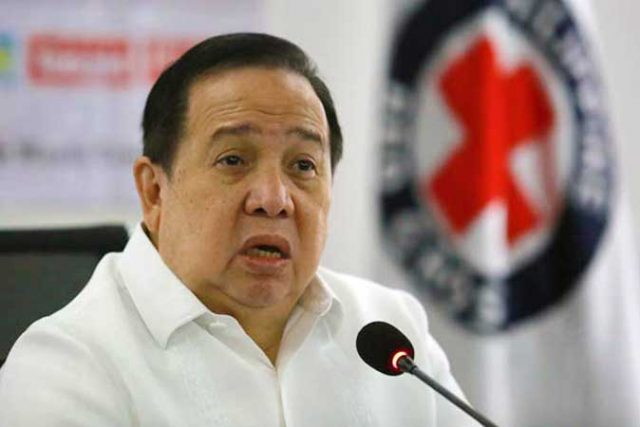
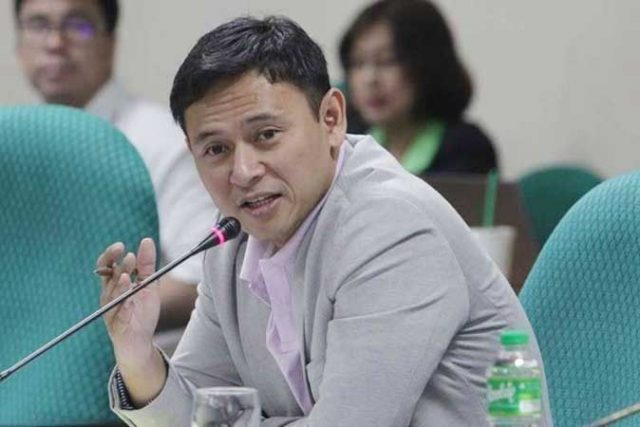
Gordon says he has coronavirus, close contacts being traced

SENATOR RICHARD J. GORDON — PHILSTAR/MICHAEL VARCAS

SENATOR Richard J. Gordon has tested positive for the coronavirus, he said in a statement on Wednesday.

The lawmaker, who had been vaccinated and showed no symptoms, said the tracing process for people he had contact with in the past week had begun. His doctor recommended rest and isolation.

Mr. Gordon said he was unlikely to get seriously ill, get hospitalized or die because his body had produced antibodies against the virus.

He urged Filipinos to get vaccinated with any vaccines. He also called on the government, private sector, humanitarian and civic organizations to work together to bring more vaccines into the country.

The government had taken delivery of 31 million vaccine doeses as of Tuesday, Senator Juan Miguel F. Zubiri said at a hearing on Wednesday, citing data from the Health department.

He said 11.3 million Filipinos have taken their first vaccine dose, while 6.84 million people have been fully vaccinated. — Alyssa Nicole O. Tan

‘We will act and not merely react’ — BARMM minister on SONA

BW FILE PHOTO/ TSBASMAN

INTERIOR and Local Government Minister Naguib G. Sinarimbo of the Bangsamoro region shrugged off President Rodrigo R. Duterte’s last State of the Nation Address (SONA) on Monday, where two pending bills vital to the new autonomous area were not mentioned.

“We will act and not merely react. This has been the story of our struggle,” said Mr. Sinarimbo, also the spokesperson of the Bangsamoro Autonomous Region in Muslim Mindanao (BARMM) government.

He said achieving sustainable peace and economic development in the BARMM does not rest on one person alone and they will simply have to carry on with the work.

“Some people would come along the way and help us move the struggle to a new phase and milestone. And we will forever be grateful to them. And at times they will not continue along the path of our struggle and would simply stop,” he said in a statement on his Facebook page, noting the media’s “barrage of questions” on his SONA reaction.

The two pending proposed laws are the extension of the Bangsamoro Transition Authority to 2025 by postponing the supposed 2022 parliamentary elections in the region, and the compensation bill for Marawi residents affected by the 2017 siege.

In a forum last week organized to drum up support for the extension, Mr. Sinarimbo cited at least eight factors why the transition team needs more time.

Nonetheless, he said the new region’s draft election code has already been reviewed by the Commission on Elections and is expected to be submitted to the BARMM Parliament by August.

He also said the normalization activities for the peace process are continuously being undertaken.

“Everything that can be possibly done, we are doing,” he said in Filipino.

On the compensation bill, several groups expressed disappointment that Mr. Duterte simply called on the task force to ensure the completion of the “necessary work to rehabilitate the war-torn city and bring back its (displaced) families back home.”

“This is a rebuke to the hundreds of thousands of Maranao who continue to suffer just because they were caught in the middle of a war not of their own making,” said the local network Marawi Reconstruction Conflict Watch.

Secretary Eduardo D. Del Rosario, who heads the task force, gave assurance on the completion of the rehabilitation projects, which cover public infrastructures and houses for those who will be relocated but not the rebuilding of destroyed homes and commercial properties.

“On behalf of Task Force Bangon Marawi and our 56 implementing agencies, I would like to assure our President… and our Maranao brothers and sisters that we will complete the rehabilitation of all major infrastructures in Marawi City within his administration,” he said in a statement on Tuesday. — MSJ

Agricultural damage from Fabian, monsoon climbs to P533.5M

DRRM
DA-DRRM

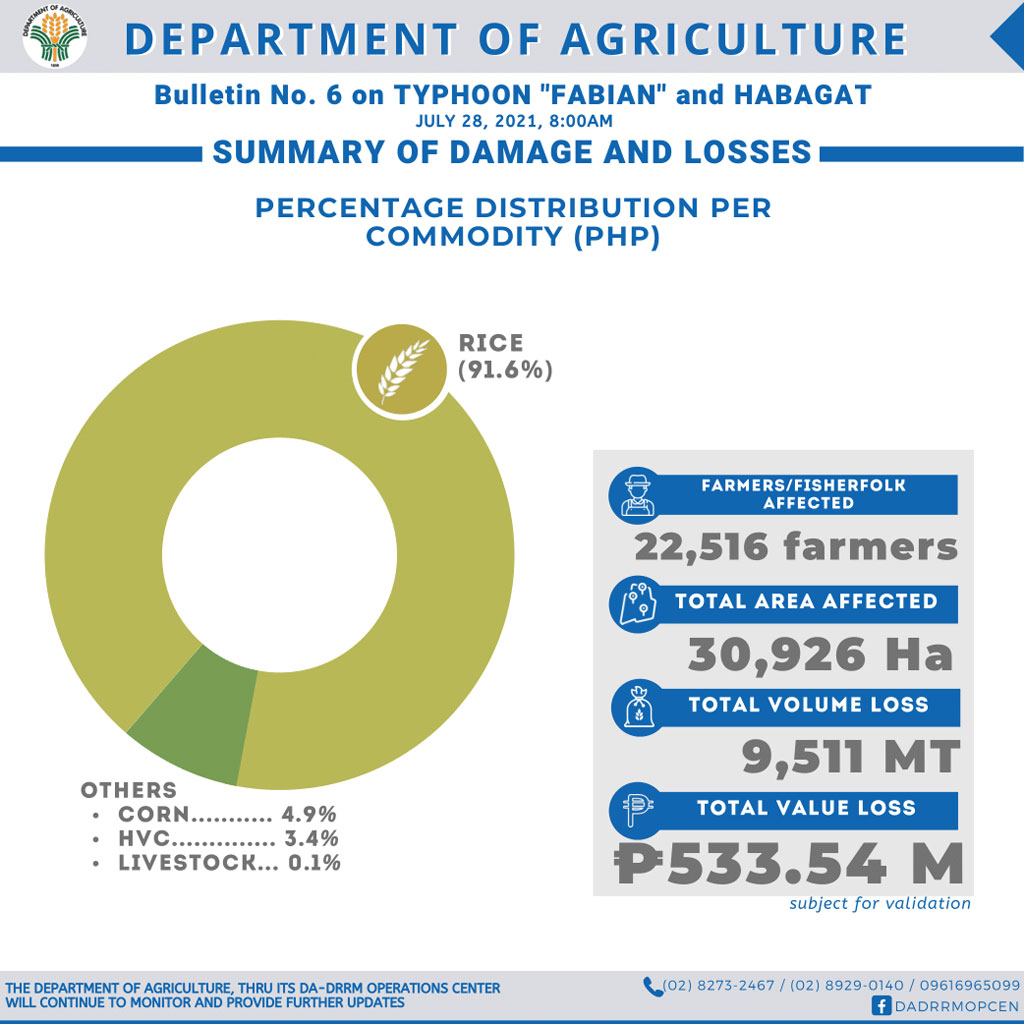
DAMAGE to agricultural production resulting from the southwest monsoon enhanced by typhoon Fabian (international name: In-Fa) has increased to P533.54 million from the previous estimate of P285.73 million, the Department of Agriculture (DA) said on Wednesday.

The DA’s Disaster Risk Reduction and Management Operations Center said the volume of production loss is currently estimated at 9,511 metric tons (MT).

The rains also affected 22,516 farmers and 30,926 hectares of agricultural areas across the Cordillera Administrative Region, Ilocos Region, Central Luzon, Calabarzon (Cavite, Laguna, Batangas, Rizal, and Quezon) Mimaropa (Mindoro, Marinduque, Romblon, and Palawan), Bicol Region, and Western Visayas.

“Affected commodities include rice, corn, high value crops and livestock. These values are still subject to validation,” the DA said in the bulletin.

Losses for rice reached P489.03 million, with 7,890 MT of production volume lost and 29,206 hectares of agricultural lands affected.

Damage to corn was valued at P26.06 million. Production volume loss reached 986 MT while 468 hectares of farmlands were affected.

Losses to high-value crops amounted to P18.16 million. A total of 635 MT of production volume were lost while 1,252 hectares of agricultural areas were damaged.

Livestock and poultry losses reached P287,610. Production volume loss included 97 heads consisting of swine, duck, and chicken.

Meanwhile, the DA announced that the movement of agricultural produce remains uninterrupted as there were no reported damage to road networks and bridges in affected regions.

“The DA, through its regional field offices, is conducting further assessment and validation of damage and losses brought by the southwest monsoon enhanced by Typhoon Fabian in the agri-fisheries sector,” the bulletin said.

“Moreover, the DA is in close coordination with concerned national government agencies, local government units and other concerned offices for the impact of the southwest monsoon, as well as available resources for interventions and assistance,” it added. — Revin Mikhael D. Ochave

Estrella-Pantaleon Bridge to open this week

DPWH

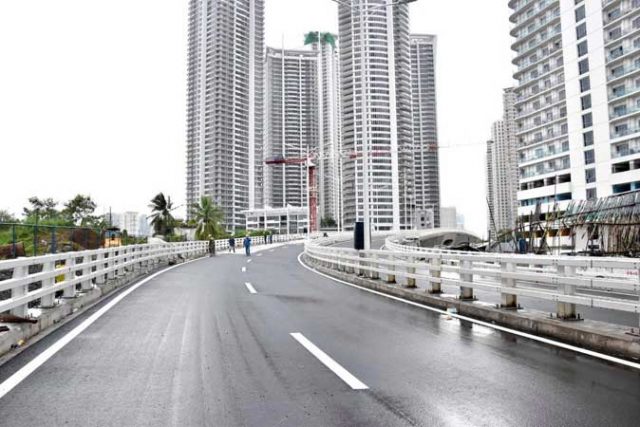
THE DEPARTMENT of Public Works and Highways (DWPH) said Wednesday the China-funded Estrella-Pantaleon Bridge project, which connects the cities of Makati and Mandaluyong, will be opened to motorists this week.

“Despite the challenges, DPWH delivered its commitment for the July opening of the modern Estrella Pantaleon Bridge,” the department said in a statement.

The P1.46-billion project is expected to help decongest traffic on the Epifanio delos Santos Avenue (EDSA).

It is one of two grant bridges — the other one is Bonifacio Global City’s Lawton-Sta. Monica Bridge — from China implemented by the department.

The bridge is expected to accommodate about 50,000 vehicles daily.

It is also among the 14 agreements signed during Chinese Premier Li Keqiang’s state visit to Manila in November 2017.

“The four-lane bridge project has 50.5 meters approach road on Estrella Street, 66 meters Makati approach bridge, 146 meters main bridge and 243.96 meters approach road at Barangka Drive connected to Pantaleon Street in Mandaluyong City for a total length of 506.46 meters,” the department said. — Arjay L. Balinbin

NIA launches two solar-powered pump irrigation projects in Nueva Ecija

NIA

THE NATIONAL Irrigation Administration (NIA) inaugurated two solar-powered pump irrigation projects worth P38.24 million in Nueva Ecija on July 27.

One of the two is worth P20.46 million, installed in the town of Peñaranda. It will serve 228.88 hectares of farms in several communities in Peñaranda as well as in Gapan City.

The other is the P17.78-million San Isidro solar powered pump project, which will irrigate 323.28 hectares of agricultural areas.

Rosalinda B. Bote, Upper Pampanga River Integrated Irrigation System (UPRIIS) department manager, said the installation of solar-powered pumps is part of NIA’s efforts to improve its service.

“The use of innovative solar pumps helps reduce cost inputs in farms as it implores cost effective alternative power source. It therefore promotes poverty alleviation and income increase among our partner irrigators associations,” Ms. Bote said.

For his part, NIA Administrator Ricardo R. Visaya said the agency is targeting to allocate a P1-billion budget for solar-powered pump projects in 2022.

“Modernizing the existing use of diesel-powered pumps or generators into solar-powered pumps will significantly benefit the farmers in the long-run because aside from its cost effectiveness and efficiency, these projects ensure year-round irrigation supply that may result to an increase in farm produce allowing third cropping season,” Mr. Visaya said. — Revin Mikhael D. Ochave

Supreme Court tells special commercial courts to act fast on cases

THE SUPREME COURT “strongly reminded” special commercial courts to act fast on cases, citing the one-year maximum period for deciding on rehabilitation plans after Finance Secretary Carlos G. Dominguez sent a letter of concern.

In a circular dated July 27 and sent to the media on Wednesday, Court Administrator Jose Midas P. Marquez said “all judges of the Special Commercial Courts and those handling commercial cases are hereby strongly reminded that pursuant to Sec. 72, Republic Act No. 10142, courts ‘shall have a maximum period of one year from the date of the filing of the petition to confirm a Rehabilitation Plan.’”

Ms. Midas further noted that failure to meet the deadline “constitutes gross inefficiency and warrants the imposition of administrative sanctions against the erring magistrate.”

There are currently 147 designated special commercial courts in the country.

The Finance chief, in his letter, urged the court administrator to “ensure that courts comply with their mandate” as there is a delay in the “resolution of various commercial cases filed in courts such as rehabilitation, insolvency, and liquidation cases, among others.”

Mr. Domiguez cited the case of state-owned LANDBANK of the Philippines, “a creditor-party in numerous rehabilitation and insolvency proceedings” where there is a “questionable trend of unwarranted delay and/or circumvention of court proceedings.”

Mr. Dominguez further said that some cases may have been purposely delayed and have remained pending for more than a year. — Bianca Angelica D. Añago

Lawmaker pushes for Department of Sports following historic Olympic wins

PHILIPPINE STAR/ MICHAEL VARCAS

THE AUTHOR of a bill seeking the creation of a Department of Sports, filed in 2018, is now pushing for the law’s passage following the gold medal win of weightlifter Hidilyn F. Diaz and guaranteed medal for boxer Nesthy A. Petecio at the ongoing 2020 Tokyo Olympics.

“With the creation of the Department of Sports, there will be a dedicated function and budget to put as many infrastructures as possible because, if you look at it, our athletes need to train outside of the Philippines because we don’t have any infrastructure,” Deputy Speaker Michael Odylon L. Romero, author of House Bill 920, said in a press conference Wednesday.

Mr. Romero said that to create “elite” athletes, the national government would need at least P10 billion annually, with P9 billion to be spent on building training centers while P1 billion will be used to fund local athletes.

Malacañang has acknowledged that government funding for local athletes has been insufficient, with Presidential Spokesperson Herminio L. Roque Jr. saying that national athlete’s allowance is equivalent to “minimum wage.”

Mr. Romero is also planning to file a resolution, together with Deputy Speaker Bienvenido M. Abante, Jr., to make the incentives given to athletes who competed at the 2020 Tokyo Olympics tax-free.

Albay Rep. Jose Maria Clemente S. Salceda is filing a similar bill to institutionalize tax-free incentives for athletes.

The still unnumbered bill will amend Republic Act 10699 or the National Athletes and Coaches Benefits and Incentives Act signed in 2015. — Russell Louis C. Ku

Angara says budget must reflect pandemic recovery plan

PHILIPPINE STAR

SENATOR JUAN Edgardo E. Angara, chair of the ways and means committee, said on Wednesday that the 2022 budget must reflect the government’s concrete plans for the country’s recovery from the coronavirus pandemic.

In a statement, he said the 2022 expenditure plan serves as “the major downpayment we will be making for our hard and long road to recovery.”

He said President Rodrigo R. Duterte’s last budget request should “capture the urgency and the dimensions” of the recovery that he laid out during his final State of the Nation Address on Monday.

“The budget puts the money where the rhetoric is,” Mr. Angara said.

Mr. Duterte, in his more than 14,500-word address, did not lay out specific steps on how his administration, on its last year, aims to get the country out of recession.

“But the good thing is that the foundations for that recovery have been laid out through laws and programs that promote economic growth with social equity,” Mr. Angara said, citing the Universal Health Care Act and other laws passed addressing social services improvement.

Nonetheless, the lawmaker stressed the need to fast-track all programs “because the window to make the turnaround won’t stay open for long.” — Alyssa Nicole O. Tan

BI personnel in airport scam back to work; investigations not done yet

JUSTICE SECRETARY MENARDO I. GUEVARRA — PCOO.GOV.PH

MORE than 80 immigration personnel involved in the airport bribery scam in Feb. 2020 are again reporting for duty as their six-month suspension has ended, but their cases are still pending in the Office of the Ombudsman.

Justice Secretary Menardo I. Guevarra, in a group message on Wednesday, said “the 6-month preventive suspension of BI (Bureau of Immigration) personnel allegedly involved in the so-called ‘pastillas’ scheme has already lapsed.”

“However, the preliminary investigation being conducted by the OMB (Ombudsman) is still going on; so is the administrative proceedings being conducted by the DoJ (Department of Justice),” he added.

Dana Krizia M. Sandoval, spokesperson of the DoJ-led bureau, said they are assigned in “back-end and non-sensitive positions,” until their cases are resolved.

Ms. Sandoval, in a separate group message on Wednesday, said 84 of the 86 BI personnel charged resumed work, one has retired, and one is the whistleblower.

Mr. Guevarra explained that under civil service rules, the DoJ and the Ombudsman may dismiss government employees from service for dishonesty and other major administrative offenses only “after giving the respondents their day in court.”

The personnel still have pending cases with the DoJ, Ombudsman, and the National Bureau of Investigation.

In Feb. 2020, Senator Ana Theresia N. Hontiveros-Baraquel exposed the scheme wherein Chinese citizens who want to work in the Philippines, particularly in Philippine Offshore Gaming Operators, and other foreigners who have been blacklisted in the country, gain speedy entry by paying off immigration officials. — Bianca Angelica D. Añago

Valuing sustainability without financializing: Evidence of best practice

OUR TEAM-FREEPIK

How can economic actors, who care about increasing shareholder value, truly engage in sustainable practices without oversimplifying it into numbers? In this article, I share results of a qualitative longitudinal study that my co-authors and I conducted on a sustainability reporting and assessment framework of a group of asset management companies that had signed to the United Nations’ Principles for Responsible Investment (PRI).

This framework was created in response to criticism that asset managers were “greenwashing” or merely claiming to be sustainable, without real evidence on whether their practices truly had an impact on society. Launched in 2013, the framework is an annual survey which PRI signatories are required to complete by answering a set of questions related to the following: How do you govern and implement responsible investment? It sounds simple but, in a situation wherein the definitions of sustainability were fuzzy and contested, and where asset managers had been programmed to financialize everything, it was difficult to commit to reporting on indicators which themselves had not been defined. This document was to be filled in online and consisted of 220 indicators across 12 modules tailored for each asset class. Each module contained a mix of mandatory and voluntary indicators. The creation and implementation process of the framework, which spanned more than three years, was the most extensive consultation in responsible investment and possibly sustainability history. It emerged through a lengthy consultation across more than 400 signatories, numerous deliberation meetings, calls and workshops, and pilot tests.

The move towards the structuration of reporting through the framework as well as the imposition of its public disclosure was meant to address the greenwashing critique. In order to achieve this, the signatories of the PRI engaged in a unique valuation process through which they collectively agreed upon why sustainability should be valued (i.e., for societal reasons, not only for financial ones) and how to report on it (i.e., through non-prescriptive evaluation criteria), thereby enabling the presence of a plurality of values in RI practices. Since the valuation of sustainability that took place was chosen by the signatories themselves and ratified by a corresponding accounting device (i.e., the framework), an assessment of RI practices judged legitimate by the signatories could be done by the PRI, potentially leading to the delisting of signatories if their practices did not align with the way their peers valued sustainability. Doing so reinforced the collective identity of the movement and provided signatories with a safe space within which learning could occur.

The generally successful process in which this heterogeneous, multivocal tool was created, accepted, and disseminated in an industry so concerned with numbers is testament to the fact that criteria can be created for sustainability without financializing it. Signatories opted to accommodate the diversity of motives and practices associated with RI. They did so by creating a framework that encouraged asset management professionals to describe their processes and purposes, rather than complying with a set of prescriptive criteria, which might not be applicable to all organizations. Such an approach enabled them to explain whether and how they were pursuing sustainability, without preconceived ideas about how they should be doing this — thus enabling the expression of a plurality of values in the reporting system itself.

Once almost all signatories embarked on the project, the framework started to “perform” the reality it envisioned of valuing sustainability for its societal benefits and not just for its financial ones. In accordance with the non-prescriptiveness of the metrics in-use in the framework, the PRI did not use quantitative figures to assess signatories based on their reporting. It introduced innovative and alternative means of measurement such as the use of stars, relative positioning versus peers, and summary of progress relative to themselves. These rankings — though they could not be put in a financial figure — nevertheless became the new aspiration and evaluation system of RI practices that are separate from the pursuit of financial profit. Signatories took pride in being well ranked, but evaluation was most useful as a learning tool to collectively progress and push the entire RI movement.

Ultimately, we show that economic actors do not necessarily look for what could appear as legitimate in conventional economic practices (i.e., financial metrics). Instead, they might embrace the diversity and multivocality of sustainability and favor an ongoing and collective search through which each organization could envision and practice sustainability in its own way.

“It doesn’t have to be so complicated. It’s just about using it.” (Reporting and Assessment Senior Manager, PRI)

Note: This article is based on a working paper entitled “Valuing Sustainability Without Financializing? The Case of the Reporting and Assessment Framework of the United Nations Principles for Responsible Investment (Un-Pri)” written by the author with Diane-Laure Arjalies of Ivey Business School, Western University (Canada) and Nicolas Mottis of the Ecole Polytechnique Paris. References are available upon request.


Daniela “Danie” Luz Laurel is a business journalist and anchor-producer of BusinessWorld Live on One News, formerly Bloomberg TV Philippines. Prior to this, she was a permanent professor of Finance at IÉSEG School of Management in Paris and maintains teaching affiliations at IÉSEG and the Ateneo School of Government. She has also worked as an investment banker in The Netherlands. Ms. Laurel holds a Ph.D. in Management Engineering with concentrations in Finance and Accounting from the Politecnico di Milano in Italy and an MBA from the Universidad Carlos III de Madrid.

Interrupting life, again

PHILIPPINE STAR/ MIGUEL DE GUZMAN

With the National Capital Region experiencing another surge in COVID-19 cases, probably due to the more contagious Delta variant, it remains uncertain whether Metro Manila and nearby provinces will again be locked down for 15 days or longer. I am already anticipating localized lockdowns, at the very least, starting this week.

In a report in yesterday’s BusinessWorld, OCTA Research Group was quoted on the need for “circuit-breaker” lockdown for two weeks to contain the pandemic. OCTA researchers from the University or the Philippines said about 1,000 cases were now being reported daily in Metro Manila, where the coronavirus reproduction number had risen to 1.33 from 0.6 last month.

In his State of the Nation Address three days ago, President Rodrigo R. Duterte called on people to get vaccinated, noting that the economy could no longer afford more lockdowns. However, I believe it is not beyond the National Government to pull the ECQ lever yet again, like in March 2020 and in March 2021, especially if the rise in hospital cases becomes unmanageable.

Going through national figures as of July 27, the situation appears to be worsening: over 7,000 new cases daily, and over 56,000 active cases nationwide. In this line, I am already expecting localized containment measures in the next few days, and possibly a return to Modified ECQ — if not ECQ (with some adjustments) — by Aug. 1.

In Makati City where I live, during the March-April 2021 “surge,” the number of active cases climbed from 435 on March 1 to peak at 1,544 by April 22. This was despite imposing ECQ starting March 29, and then shifting to MECQ by April 16. From April 23, cases began to slide, hitting a low of 419 by July 11. At that point, the March-April 2021 surge could be deemed over.

Since July 12, however, cases have been climbing again. In a span of just 16 days, Makati City reported that active COVID cases in the city have climbed from 437 on July 12 to 665 as of July 27. Cases surged by over 50% during the period, and the drastic rise is expected to continue unless something changes by way of local or national “intervention.” It cannot be Business-As-Usual from hereon.

As I noted previously, our healthcare system barely coped when we hit 7,000 daily cases in August 2020. Healthcare workers had to call for a timeout, and the government responded by reimposing stricter quarantine measures for two weeks. Then we hit an average of about 15,000 cases daily in April 2021, overwhelming our hospitals. Are we going to hit 15,000 daily — or more — this time around?

Whether by coincidence or not, the creation of the NCR+ Bubble and the imposition of ECQ from March 29 to April 15, and MECQ from April 16 to May 15, seemed to have helped address the March-April 2021 surge. Question is, will the same measures prove to be similarly helpful now, given the strong possibility that the highly contagious Delta variant is fueling the surge in cases?

I support the OCTA call for a two-week hard lockdown for Metro Manila, perhaps for the period Aug. 1-15, and possibly its extension until Aug. 30. This is a hard choice to make, knowing its negative impact on the economy and on people’s lives. But, unless we actually do something new that can effectively contain the surge, we may not have a choice.

OCTA, in the past, called the ECQ a “one-time, big-time” measure. By now, however, the ECQ lever has been pulled once too many times, that it has become a fact of life. Yes, people’s lives will be interrupted and disrupted yet again. Poverty will worsen. But there are no new interventions in the horizon. So, it appears we should expect lockdowns to remain a regular feature of COVID interventions until the pandemic finally ends.

I prefer that people go on ECQ by choice: those who can afford to keep still should opt to keep still. No one wants a return to ECQ, given its dire implications on lives and the economy, but I don’t think we have a choice. And to wait beyond Aug. 1 for an ECQ declaration may be too late. Vaccination and compliance with health protocols will not be enough to beat Delta.

Much like in March and April, we may need a 15-day ECQ to cover Metro Manila and Cavite, Laguna, Rizal, and Bulacan. Add Batangas to the mix. Localized or granular lockdowns should also be considered, but there should be better coordination among LGUs particularly in the movement and transportation of food, food products, farm produce, and livestock.

This August, and perhaps all the way to December, we may yet see the worst stage of the pandemic. With a Delta-fueled surge now, the March-September 2020 as well as the March-April 2021 surges may pale in comparison. We should prepare for the worst possibilities. Containing the spread starts with those in a position to self-quarantine in the next 15-30 days.

Those who are lucky enough to go about our lives — work and school — from within the confines of our home should do so, immediately. This personal choice to limit movement for two to four weeks — to self-quarantine — can go a long way in battling the surge. Employers can also opt to stagger work-hours yet again and to opt anew for longer work-from-home arrangements.

We urgently need to free up indoor spaces and avoid congestion particularly inside offices and workplaces and public transportation. Curfew hours can be kept as long as there is better dispersal of workers and more people can avoid commuting by staggering working hours and pushing work-from-home arrangements where and when possible.

The sad reality is that even the most efficient vaccination program cannot beat COVID-19’s present reproduction rate. And unless we have new interventions that can be more effective in helping manage the COVID surge, then the tough decision of locking down yet again may have to be made soon.


Marvin Tort is a former managing editor of BusinessWorld, and a former chairman of the Philippine Press Council

matort@yahoo.com

Hidilyn answered the question… emphatically

WWW.FACEBOOK.COM/HIDILYNWEIGHTLIFTER

With a new Olympic record lift, three-time Olympian Hidilyn Diaz won the country’s first gold medal since its Olympics debut in 1924 at the Paris Olympics, the first in the modern era.

Hidilyn’s gold medal performance once again highlighted the significant role women continue to play in any aspect of economic and human development. Aside from the record- breaking performance, Hidilyn beat the best of the best in her weightlifting class, including perennial rival China.

That last nuance did not go unnoticed among some observers.

The victory also answered the question, “Can the Philippines win an Olympic gold medal?,” which was the title of a recent virtual webinar organized by the Archer Talks and the Benita and Catalino Yap Foundation. Although that question was answered, there was a second one: “How do we get it done?”

Before we answer that relevant query, it may be worthwhile to be reminded and be mindful of the principles of Olympism as espoused by Baron Pierre de Coubertin, founder of the modern Olympics and re-emphasized by Juan Antonio Samaranch. Samaranch is the Spaniard who headed the International Olympic Committee (IOC) from 1980 to 2001:

“Olympism is a philosophy which by blending sport with culture seeks to create a way of life based on the joy found in effort, the educational value of a good example and respect for universal ethical principles.”

In answering these questions, including the first which has been resolved by Hidilyn, we must establish the fact that sports development is a constitutional mandate. Section 19 of the Constitution states, “the state shall promote physical education and encourage sports programs, league competitions and amateur sports including training for international competitions, to foster self-discipline, teamwork and excellence for the development of a healthy and alert citizenry.”

Having addressed the legal basis for the commitment of government resources to sports and physical education, it is time to respond to the second. Incidentally, another reason why the state must devote resources for physical education and sports is the Philippines is committed to the International Charter of Physical Education, Physical Activity and Sport.

The charter “is a rights-based reference that orients and supports policy- and decision-making in sports.” This particular formulation is at the heart of the question “What needs to be done.” In essence, the charter says any person has the right to play the sport of his choice. In short, “sports is for all, regardless of age, talent, gender, capability, religion, race, ethnicity or creed.”

The second question is a bit tricky since a sensible answer will cover a lot of territory. First there is an actual and ideal framework of Philippine sports and an actual and ideal way of breathing life into the framework.

Breathing life into the framework will require a thorough understanding of the logic of the sports sector. To begin with, at opposite ends of the spectrum are mass-based sports and elite or high-performance sports. Mass-based sports start, obviously, at the grassroots, the barangays and municipalities and rural areas. This sector is supposed to provide the extraordinarily talented for elite sports such as the SEA Games, Asian Games, the Olympics, and world and regional/continental championships.

These raw talents at the grassroots are identified ideally through the physical education system in schools and intramurals. Kids who are identified as more talented than the others get to compete in barangay, municipal, city, district, provincial, regional meets and ultimately at the Palarong Pambansa, collegiate leagues, the Philippine National Games (the Philippine Olympics) and the national championship.

Imagine a pyramidal structure with the barangays and out-of-school youth at the base of the pyramid and elite sports and sports for entertainment at the apex.

The other participants in the framework are the different sectors of the body politic. For a truly comprehensive and inclusive approach to a solid elite athlete development program, that program must be anchored on an equally comprehensive and inclusive mass-based plan of action. As the saying goes, “it’s easier to choose 100 elite athletes from 100,000 than from 1,000.” To have a wider base of selection, sectors like farmers, fisherfolk, drivers and conductors, laborers, OFWs, etc., need to be mobilized. These sectors, when consolidated, provide talent for competitions and programs that serve as a feeder to the national training pool and eventually for the national team. Our population is still our biggest resource.

At the middle of all these is the Philippine Sports Commission (PSC) that funds the training of elite athletes and provides policy direction and guidelines for sports development. Ideally, the PSC should be engaging all other line departments in the executive branch especially the Department of Education and Commission on Higher Education for school sports and complementation and synergy with the physical education program. The PSC cooperates with the Philippine Olympic Committee for participation of the Philippines in the highest levels of international competitions.

The PSC is in the middle of all these to represent government. Government involvement is, at this stage of our economic development, crucial. Government, in consultation with the citizenry, has to make basic policy decisions on budgets for mass-based and elite sports, physical education, the role of the private sector and how to encourage it to take part in sports development. The development of software and hardware require enormous amounts of money. It is government that can mandate the allotment of government funds for these purposes.

Inasmuch as the Olympics are the apex of elite sports development, a calculation of the cost of training and preparing an athlete over a four-year period is presented as part of the answer to the question “What is needed to make it happen?” The estimate is based on our own experience over the years as chairman of the PSC and as president of a National Sports Association. The figures do not include all earlier expenses prior to training specifically for the Olympics.

Our most recent estimates, based on actual costs and some assumed outlays, indicate that at least P40 million is needed over four years to make the athlete “battle ready and prepared” to compete at the Olympics. The basic assumptions are the athletes is training either at the United States or Europe, competing in at least 12 high level outdoor and indoor events per year, quartered and training full time at modern facilities, with availability of top-level skills and strength and conditioning coaches, therapist, osteopath and other professionals.

The expenses can be divided as follows: training allowance 8%; professional fees 38%; training camp 24%; competitions 13%; airfare 5%; other expenses 6%; contingency 5%.

To be sure, as the country is able to provide more resources for elite sports and as the PE program is given much, much more than what it is getting, we will have more athletes in proper training venues and in more high-level competitions. Being exposed to high level competitions is essential if all the training one undergoes is to be maximized. Modern training facilities by themselves are not enough.

In spite of the cost, we will continue to participate in all Olympics and in Olympic-type sports events. Participation is part of the cost of being a member of the international community, and participation in the Olympics is part of diplomacy. To participate in the Olympics is to make a statement which countries need to make periodically.


Philip Ella Juico’s areas of interest include the protection and promotion of democracy, free markets, sustainable development, social responsibility and sports as a tool for social development. He obtained his doctorate in business at De La Salle University. Dr. Juico served as Secretary of Agrarian Reform during the Corazon C. Aquino administration.


ADVERTISEMENT
ADVERTISEMENT