Home Blog Page 7728

PSE eyes REITs from smaller property firms
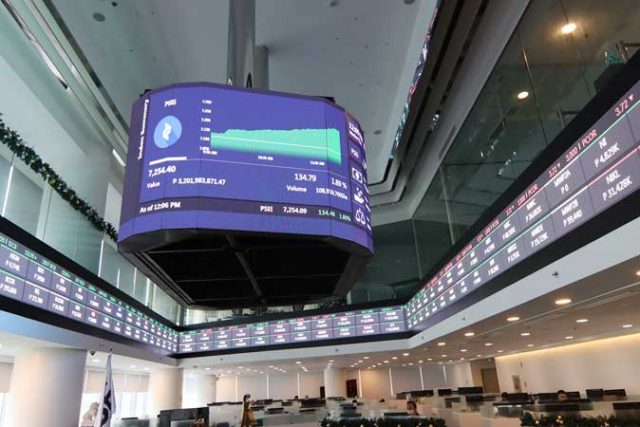
BW FILE PHOTO

THE PHILIPPINE Stock Exchange (PSE) is hoping that more property developers, even small- and medium-sized firms, will consider entering the real estate investment trust (REIT) market.

“We are pushing for this REIT product not only for the big real estate developers, but we wanted to target the medium and even the small property developers so that they could recycle their capital and invest,” PSE President and Chief Executive Officer Ramon S. Monzon said at a virtual forum on Thursday.

The local bourse maintains a “robust” pipeline for the second half of the year.

“So far, applications have been filed with the PSE for capital-raising activities amounting to P141.8 billion or $2.8 billion,” Mr. Monzon said. 

Three REIT companies, namely Filinvest REIT Corp., RL Commercial REIT, Inc., and MREIT, Inc., are planning to launch initial public offerings (IPO) this year.

Meanwhile, Del Monte Philippines, Inc. is planning to conduct an IPO worth P44 billion, while Jollibee Foods Corp. and Sta. Lucia Land, Inc. are also preparing follow-on offerings.

Capital raised at the local bourse in the first six months of the year amounted to P122.46 billion, already exceeding the capital raised for the whole of 2020 at P103.76 billion.

The PSE is also looking to introduce new products and services in the second half of the year, such as short selling and developing two new indices, to boost market liquidity.

“We’re trying to still follow-up the approval [from our regulators for] our short selling product, which I believe will be key to attracting foreign investors back to our market,” Mr. Monzon said. 

The PSE is waiting for the Bureau of Internal Revenue to approve the Global Master Securities Lending Agreement.

The PSE is also waiting for the Securities and Exchange Commission to approve the offshore collateral request of foreign investors, and the Philippine Depository & Trust Corp.’s application as securities lending agent. 

“We will also be increasing our sector classification to comply more with global benchmarks, we shall also be developing two additional indices,” Mr. Monzon.

It aims to launch is the mid-cap index and a high-dividend index. Meanwhile, an environment, social, and governance (ESG) sub-index is planned for 2022. — K.C.G. Valmonte


VAT on exporters’ local inputs formally deferred

REUTERS
THE Bureau of Internal Revenue has suspended its recent order that imposed a 12% value-added tax on previously exempt raw materials sold by local manufacturers to exporters. — REUTERS

THE BUREAU of Internal Revenue (BIR) suspended its recent order that imposed a 12% value-added tax (VAT) on previously exempt raw materials sold by local manufacturers to exporters, after outcry from the export industry.

BIR Commissioner Caesar R. Dulay issued Revenue Regulation (RR) No. 15-2021 on Wednesday deferring the effectivity of RR 9-2021 until the issuance of a new amendatory regulation, as a form of relief for exporters struggling amid the pandemic.

“We thank Sec. Sonny (Finance Secretary Carlos G. Dominguez III) for his intercession. It’s a ton off the shoulders of both direct and indirect exporters plus the MSMEs (micro, small and medium enterprises) supply chain,” George T. Barcelon, chairman of the Philippine Exporters Confederation, Inc. (Philexport) said in a Viber message on Thursday.

Mr. Dominguez said earlier this month that the regulation was being reviewed to align the conflicting provisions under Corporate Recovery and Tax Incentives for Enterprises (CREATE) law and Tax Reform for Acceleration and Inclusion (TRAIN) law.

CREATE, which was enacted in April retained the zero-tax rate for exporters while the Tax Reform for Acceleration and Inclusion (TRAIN) law in 2018 mandates the BIR to impose the VAT on these previously zero-rated transactions once the 90-day refund system is in place.

The BIR issued the RR, which took effect on June 27, to comply with the TRAIN law’s provision.

Various exporters’ groups and foreign chambers had asked the BIR to repeal the RR, saying this could cripple the industry and hamper investments.

Mr. Barcelon had said imposing a 12% VAT on locally sourced inputs could force companies to source their raw materials offshore instead where they can enjoy lower taxes. — B.M.Laforga

Fed chief sees progress on taper conditions

REUTERS
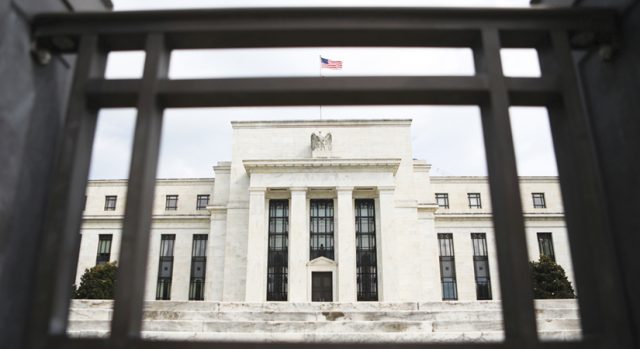
THE Federal Reserve Board building is pictured in Washington, US, March 19, 2019. — REUTERS

FEDERAL RESERVE officials are moving closer to when they can start reducing massive support for the US economy, though chief Jerome Powell said there was still some way to go.

“We’re not there. And we see ourselves as having some ground to cover to get there,” he told a press conference Wednesday after the Federal Open Market Committee (FOMC) held interest rates in a range near zero and maintained asset purchases at $120 billion a month until “substantial further progress” was made on employment and inflation.

“The economy has made progress toward these goals, and the committee will continue to assess progress in coming meetings,” the FOMC said in its policy statement. The vote was unanimous.

Mr. Powell said officials had taken a “first deep dive” during their two-day meeting on how to go about scaling back bond buying when the time came — but no decision on taper timing had been made.

“We’re making progress. We expect further progress and if things go well, we will reach that goal,” he said.

Stocks pared losses, the dollar lost ground and 10-year Treasury yields initially advanced as investors digested the somewhat hawkish tone of the statement, but declined as he spoke.

“The chairman tried to walk that back a little bit in the press conference, making it seem like it’s more of a continuous process rather than just a big discrete move,” said Stephen Stanley, chief economist at Amherst Pierpont Securities LLC.

The FOMC also repeated language that inflation had risen “largely reflecting transitory factors,” and that risks to the economic outlook remain.

“The sectors most adversely affected by the pandemic have shown improvement but have not fully recovered,” the statement said.

DELTA VARIANT
Consumer prices are rising at the fastest pace since 2008 as the economy reopens and Americans renew spending after a year of lockdown. At the same time, the spreading Delta variant has jolted investors who worry it could threaten the economic recovery.

“As long as COVID is running loose out there, as long as there is time and space for the development of new strains, no one is finally safe,” Mr. Powell said.

“The Fed is starting the clock on tapering. It is not happening now or even in September, but expect the pace of asset buying to slowdown late this year or early next,” said Neil Dutta, head of US economics at Renaissance Macro Research

Fed officials held their benchmark interest rate in a zero to 0.25% range and Mr. Powell said “we’re clearly a ways away” from liftoff. Fed forecasts published last month showed rates on hold through next year. The quarterly projections will be updated in September.

Since last September, the Fed has set the amount of its monthly purchases of Treasuries at $80 billion and mortgage-backed securities (MBS) at $40 billion to help the economy heal from COVID-19.

Mr. Powell said officials had discussed the mechanics of scaling back bond buying when the time came, including the pace and composition of any changes, and promised plenty of advance warning before any decision.

Some officials have said they would like to begin the taper sooner rather than later, citing financial stability concerns including the steep rise in home prices. They’ve also argued the Fed should reduce its MBS purchases at a faster pace than Treasuries because the housing market no longer needs central bank support.

The July meeting comes a month ahead of the Kansas City Fed’s annual policy retreat in Jackson Hole, Wyoming. Fed chairs, including Mr. Powell, have sometimes used the venue to signal policy shifts. Mr. Powell confirmed he will speak at the Aug. 26-28 conference. The next gathering of the FOMC is Sept. 21-22.

Employment has made significant strides in the past few months, with the unemployment rate falling below 6% as more jobs are added and more workers rejoin the labor force. But the gains haven’t been equal for all Americans — the Black unemployment rate stood at 9.2% and the Hispanic rate at 7.4% in June.

While inflation is running well above the Fed’s 2% target, officials have said that price spikes are likely temporary and are being driven by categories related to the economic reopening. Used vehicles accounted for a more one-third of the gain the June consumer price index. Hotels, airfares and clothing also drove the 5.4% year-over-year jump.

In addition, economists say the increased spread of the delta variant, which is now the dominant strain of coronavirus in the US, may weigh on growth in the second half of this year.

Variants have surpassed inflation as the biggest risk to market stability, according to Deutsche Bank AG’s monthly survey of market participants. — Bloomberg

Aboitiz group profit more than doubles to P4.9B

ABOITIZ GROUP

ABOITIZ Equity Ventures, Inc. (AEV) posted a 159% year-on-year increase in its consolidated net income for the second quarter to P4.9 billion on the back of its business segments’ robust contribution.

AEV said in a stock exchange disclosure on Thursday that it recognized one-times gains of P49 million during the period, against P242 million a year earlier, for the revaluation of dollar-denominated assets.

“Without these one-off gains, the company’s core net income for the second quarter of 2021 was P4.9 billion, a 194% increase year on year,” it said.

Consolidated earnings before interest, tax, depreciation, and amortization (EBITDA) rose 29% to P14.3 billion.

In the first half, AEV’s net income rose 243% to P13.5 billion against P3.9 billion in the same period last year. It recognized nonrecurring losses of P169 million for the period, up from P20 million last year, as a result of the goodwill write-off related to City Savings Bank, Inc.

Sabin M. Aboitiz, AEV president and chief executive officer, said the group’s first-half performance “is a solid foundation for optimism” that the country is heading towards economic recovery.

“However, we know the coronavirus disease 2019 (COVID-19) Delta variant remains a very real threat, so we have to be cautious in our next steps,” he said in the disclosure.

AEV said that without the one-off losses for the period, its core net income for the first half was P13.6 billion, a 246% increase year on year. It also said that consolidated EBITDA rose 43% to P32.8 billion.

Among its business units, Aboitiz Power Corp. made up 53% of the total income contributions, followed by financial services at 28%, infrastructure at 9%, food at 7%, and real estate at 3%.

In a separate disclosure on Thursday, AboitizPower said it posted a 136% increase in its consolidated net income for the second quarter to P4 billion. The company recognized nonrecurring gains of P34 million, down from P251 million in the same period a year earlier.

Without the one-off gains, core net income for the second quarter was P3.9 billion, 175% higher year on year.

“This was due to commissioning revenue from the company’s new facility, GNPower Dinginin Unit 1, as well as higher water inflow, higher demand, and higher Wholesale Electricity Spot Market (WESM) dispatch in compliance with the must offer rule,” AboitizPower said.

For the first six months of the year, AboitizPower recorded a P171% increase in its net income to P10.1 billion.

The company recognized nonrecurring gains of P5 million, lower than P224 million previously, due to net foreign exchange gains on the revaluation of dollar-denominated liabilities.

Emmanuel V. Rubio, AboitizPower president and chief executive officer, said higher energy demand due to the easing of pandemic-related restrictions helped the company’s financial performance.

“Later this year, GNPower Dinginin Unit 1 will begin commercial operations and deliver the much-needed additional capacity to the Luzon grid. In the next 10 years, our focus will be to grow our Cleanergy portfolio to 4,600 megawatts (MW),” Mr. Rubio said.

“The significant growth of Cleanergy will bring our overall capacity to 9,200 MW by 2030, with a 50:50 balance between renewables and thermal,” he added.

Meanwhile, UnionBank of the Philippines’ income contribution to AEV for the first six months reached P4.2 billion, up 92% from the P2.2 billion. Its net revenues also rose 16% to P25.5 billion.

The combined first-half income contribution of AEV’s non-listed food subsidiaries such as Pilmico Foods Corp., Pilmico Animal Nutrition Corp., Pilmico International Pte. Ltd., and Gold Coin Management Holdings Pte. Ltd. improved 35% to P1.1 billion from P795 million in 2020.

Aboitiz Land, Inc. posted a consolidated net income of P385 million for the first semester, a turnaround from the P39-million net loss incurred last year.

Republic Cement & Building Materials Inc.’s income contribution to AEV reached P1.3 billion, recovering from the P10-million net loss a year earlier due to stronger market demand carried by the residential and infrastructure segments.

On Thursday, shares of AEV fell 1.25% or 50 centavos to P39.50 apiece, while stocks of AbotizPower rose 0.84% or 20 centavos to P24 each. — Revin Mikhael D. Ochave

PetroEnergy plans ‘transition’ towards power generation

PETROENERGY Resources Corp. said on Thursday that it will be focusing more on the power generation business as it hopes to grow into one of the most profitable listed energy companies in the Philippines.

“These are exciting times for our company as we transition more and more into the power generation business. We have a lot on our plate, which we aim to put ‘onscreen’ as we have done with the other projects now in our portfolio,” PetroEnergy President Milagros V. Reyes said during the company’s virtual annual stockholders meeting.

“This is to fulfill our mission to provide optimum value to our shareholders who are keeping our focus on our vision to grow into one of the most profitable publicly listed energy companies in our country,” she added.

PetroEnergy has three projects “ready for takeoff” and two offshore wind service contracts, Ms. Reyes said.

The projects are the 25-megawatt (MW) direct current solar power plant in Bohol; the 10-MW wind hybrid project in San Vicente, Palawan; and the 14-MW Nabas-2 wind power project in Aklan.

“We have also successfully been awarded two offshore wind service contracts which we shall pursue in earnest,” Ms. Reyes said, referring to sites in Northern Luzon (Ilocos region) and Northern Mindoro where wind energy projects will be built.

During the annual meeting, she said PetroEnergy’s power generation ventures were not greatly affected by the pandemic because these renewable energy sources have fixed power rates under the feed-in-tariff (FiT) scheme or under long-term bilateral agreements.

However, the company’s upstream petroleum ventures were hard-hit as crude oil prices fell.

“The global crude oil market was in turmoil due to these uncertainties [and the] deep dive in prices would not be compensated by higher production volumes, which we attempted from our newer wells,” Ms. Reyes said.

PetroEnergy is engaged in petroleum production through the Etame consortium in the African country of Gabon; and in renewable energy at home through its subsidiary PetroGreen Energy Corp.

The Yuchengcos’ listed energy and petroleum exploration company is chaired by Helen Y. Dee, with Yvonne S. Yuchengco as treasurer.

The firm previously registered an attributable net income to its parent of P106.30 million in the three months ending March, lower by 16% compared with the P126.04 million recorded in the same period last year.

Last year, it reported an attributable net income of P319 million, 9% higher due to increased revenues from its 20-MW Tarlac-2 solar plant amid the prolonged summer season and FiT rate adjustments.

PetroEnergy’s shares at the local bourse shed 2.96% or 12 centavos to finish at P3.93 apiece on Thursday. — Angelica Y. Yang

From dresses and skorts to hijabs, badminton’s women wear what they like

P.V. SINDHU of India in action during the Women’s Singles Badminton match against Mia Blichfeldt of Denmark on July 29, at the Tokyo 2020 Olympics. — REUTERS/LEONHARD FOEGER

TOKYO —  Female athletes have fought long and hard for the right to choose what they wear when they compete at the Olympics, and at the Tokyo Games more and more athletes and fans are speaking out and taking action.

Of the more than 30 women who played badminton on Wednesday, including India’s PV Sindhu and Taiwan’s Tai Tzu Ying, about two-thirds wore shorts, while others were clad in skorts, dresses and skirts, and one wore a hijab.

“I’m lucky that we can wear whatever we want,” said Ms. Sindhu, the Rio Olympics women’s singles silver medalist who wore one of her blue dresses when she defeated Hong Kong’s Cheung Ngan Yi 21-9, 21-16.

Iran’s Soraya Aghaei Hajiagha, along with her coach, wore a dress, leggings and a hijab in her match with China’s He Bing Jiao. Skirts and skorts — loose-fitting shorts that look like skirts from the front —  were also a popular choice among players including Belgium’s Lianne Tan and Japan’s Nozomi Okuhara.

On Sunday, the German women’s gymnastics team wore full-body suits in qualifications, hoping to promote freedom of choice and encourage women to wear what makes them feel comfortable.

But the Norwegian women’s beach handball team were fined 1,500 euros last week for wearing shorts rather than bikini bottoms and jeopardizing “the ideal presentation of the sport,” according to the European Handball Federation and the International Handball Federation.

Rules state that the bikini bottoms must be a maximum width of 10 centimeters and have a “close fit and cut on an upward angle.”

About a decade ago, ahead of the 2012 London Olympics, some officials at the Badminton World Federation (BWF) drew fire because of similar rule saying women had to wear skirts to make the sport more “feminine” and “attractive” to fans and sponsors. That rule was scrapped prior to the Games, however.

“In hindsight, we went around the wrong way, but we’ve learned from that and so have our manufacturers,” said Nora Perry, two-time world champion and a council member of the BWF, whose suppliers include Adidas and Yonex.

“Yonex have embraced it because there are a lot of Koreans and Chinese girls who don’t want to wear skirts.”

Ms. Perry, who has over 75 international titles in individual competition, said that when she played in the 1980s, the fashion was to wear skirts and dresses with “frilly things underneath.”

“It was nice that the women’s voices were heard on that,” British player Kirsty Gilmour said, “I personally don’t feel comfortable in a skirt so I like the choice of short shorts, long shorts; Tai Tzu Ying likes her tops sleeveless.

“We’re lucky we don’t feel pressure on how we should look.” — Reuters

China Bank’s net income up 39% in first semester

CHINA BANKING CORP. (China Bank) saw its net income climb 39% in the first half on the back of the strong performance of its core businesses.

The bank booked a net profit of P7.3 billion in the first semester, climbing from the P5.2 billion posted in the same period last year, it said in a disclosure to the local bourse on Thursday.

This translated to a return on assets of 1.4%, up from 1.1% last year, while return on equity also rose to 13.4% from 10.6%.

Net interest income rose 14% to P18.6 billion from P16.2 billion a year earlier as the decline in its interest earnings was offset by a steeper drop in its expenses.

Interest income fell 8% to P22.4 billion in the first half from P24.2 billion the previous year. Meanwhile, interest expense dropped 52% to P3.8 billion from P8 billion, which led to an improved net interest margin of 4.2% as of June from 3.8% last year.

“Lower funding cost and improved margins boosted our net interest income,” China Bank Chief Finance Officer Patrick D. Cheng was quoted as saying.

Meanwhile, fee-based income increased 32% to P6.3 billion in the period from P4.7 billion a year earlier. Mr. Whang attributed this improvement to securities and foreign exchange gains and  higher revenues from bancassurance, as well as from other fees and commissions.

With this, the bank’s net revenues climbed 18% to P24.8 billion from P21 billion.

Meanwhile, operating expenses increased 7% to P11.1 billion in the first semester from P10.4 billion a year earlier. Cost-to-income ratio improved to 45% from 50% the year prior.

China Bank said it remained profitable even as it continued to beef up its provisions for credit losses to P5.4 billion from the P4.8 billion seen a year ago for a consolidated non-performing loan (NPL) cover of 99%. The corresponding coverage ratio for the parent bank was at 114% as of end-June.

The bank’s gross loans as of end-June stood at P596 billion due to lower demand from the businesses due to the uncertain operating environment. On the other hand, retail loans, which made up a fifth of its lending portfolio, rose by 7%.

Its NPL ratio stood at 3.5% as of June. This was higher than the 1.6% logged in the same period last year.

On the funding side, total deposits increased 7% to P827 billion, driven by the 27% growth in its current account, savings account (CASA) deposits to P517 billion. This led to an improved CASA ratio of 63% from 53%.

Time deposits dropped 15% to P310 billion.

China Bank’s assets increased 5% to P1.027 trillion at end-June from P982 million a year prior, while total equity climbed 12% to P110 billion.

The lender’s capital adequacy ratio stood at 15.1%, up from 13.8% in the same period last year, while its common equity Tier 1 ratio was at 14.2%, also higher than the 12.8% recorded as of June 2020. Both were likewise beyond the minimum regulatory requirements.

“The strong execution of our strategies enabled us to rally through the challenges. We are continuously adapting and improving our services and operations to support our customers and the overall economy, and to remain well-positioned for sustainable future growth,” China Bank President William C. Whang said.

China Bank currently has 636 branches and 1,038 automated teller machines (ATM). These include the 160 branches and 167 ATMs of its thrift unit China Bank Savings, Inc.

The listed Sy-led lender’s shares closed at P24.80 apiece on Thursday, up by 80 centavos or 3.33% from its previous finish. — L.W.T. Noble

Jollibee subsidiary inks deal to set up shop in West Malaysia

A WHOLLY owned subsidiary of Jollibee Foods Corp. (JFC) has agreed to form a joint venture company that will own and set up at least 120 Jollibee stores in West Malaysia for the next 10 years beginning 2022.

West Malaysia covers the country’s capital, Kuala Lumpur.

Singapore-based JFC unit Golden Plate Pte. Ltd. and Beeworks Investment Pte. Ltd. have committed an initial investment of $8 million to the joint venture, up to $2.4 million of which will be contributed by Golden Plate.

Around 30% if the company will be owned by Golden Plate, while 70% will be owned by Beeworks Investment.

Beeworks Investment is majority-owned by Patrick Chong, who is also the franchisee of Jollibee East Malaysia, which is where Kota Kinabalu is.

“He has been a longstanding investor in Malaysia through his company, The Luxasia Group, an omnichannel leader in luxury beauty and lifestyle brands,” JFC said in a statement.

Excluding its stores in the Philippines, JFC currently has 885 stores in Southeast Asia. The company’s brands are present in Vietnam, Singapore, Malaysia and Indonesia, which accounted for 6.7% of its global system wide sales.

“The creation of the joint venture for Jollibee West Malaysia will accelerate even more this growth and will help make Southeast Asia a more significant business for the JFC group,” Jollibee said.

Globally, JFC operates 17 brands in 33 countries through 5,816 stores.

JFC shares at the stock market rose 3.41% or P6.50 on Thursday to close at P197.00 apiece. — Keren Concepcion G. Valmonte

Better Call Saul star Bob Odenkirk hospitalized after ‘heart-related incident’

BOB ODENKIRK and Rhea Seehorn in Better Call Saul (2015) — IMDB.COM/

LOS ANGELES —  US screen actor Bob Odenkirk remained hospitalized in New Mexico on Wednesday with an unspecified heart ailment after falling ill on the set of his television show Better Call Saul, according to publicists and his former Breaking Bad co-star, Bryan Cranston.

Mr. Odenkirk, 58, collapsed during production of his darkly humorous AMC crime drama, which was shooting its sixth and final 13-episode season, and was taken to a nearby hospital, two sources close to the actor confirmed to Reuters on Tuesday night, on condition of anonymity.

Representatives for the actor issued a brief statement on Wednesday saying the performer was listed in stable condition “after experiencing a heart-related incident.”

“He and his family would like to express gratitude for the incredible doctors and nurses looking after him, as well as his cast, crew and producers who have stayed by his side,” the statement said.

His 22-year-old son, aspiring actor Nate Odenkirk, posted a message on Twitter saying: “He’s going to be okay.”

According to show business trade publication The Hollywood Reporter, the elder Odenkirk suffered a heart attack, but that could not be independently verified.

Better Call Saul is a prequel spinoff of the hit AMC crime drama Breaking Bad, which introduced Odenkirk as Saul Goodman, the shrewd, sharp-witted criminal defense lawyer for that show’s protagonist, high school teacher-turned-methamphetamine chemist Walter White, played by Mr. Cranston.

In an Instagram post on Wednesday, Mr. Cranston said he was “anxious all morning” after waking up to news of Mr. Odenkirk’s collapse.

“He is in the hospital in Albuquerque and receiving the medical attention he needs,” Mr. Cranston wrote. “Please take a moment in your day today to think about him and send positive thoughts and prayers his way.”

Another friend and former co-star, David Cross, who appeared with Mr. Odenkirk in the 1990s HBO sketch comedy series Mr. Show with Bob and David, tweeted, “Bob is one of the strongest people I know both physically and spiritually.”

Mr. Cross added: “He WILL get through this.”

Mr. Odenkirk’s publicists and management team declined to comment on the situation. AMC and Sony Pictures Television, which produces Better Call Saul, did not immediately respond to requests for a statement.

Better Call Saul traces the transformation of Mr. Odenkirk’s character from a onetime two-bit scam artist and struggling public defender named Jimmy McGill into the morally conflicted attorney Saul Goodman, who ultimately makes a career representing drug traffickers and underworld figures.

The show has earned Mr. Odenkirk four Primetime Emmy Award nominations. His motion picture credits include supporting roles in such films as Nebraska, The Post, and Little Women. More recently he starred in the big-screen action thriller Nobody. —Reuters

ABS-CBN sees global market as major growth opportunity

PHILIPPINE STAR/ BOY SANTOS

ABS-CBN Corp. said on Thursday that it aspires to expand its content viewership worldwide, citing the global market as a major growth opportunity for the media company that was denied a broadcast franchise.

ABS-CBN President and Chief Executive Officer Carlo L. Katigbak said at the company’s annual stockholders’ meeting that before the pandemic, international revenues, excluding subscriptions, were about $20 million a year.

“It has gone down recently because of the loss of our global theatrical business. But we believe that the global market is a huge growth opportunity for ABS-CBN, and we also believe that Filipino creative performing talent is among the best in the world, and that will allow us to be recognized as players in the international arena,” he said.

He also said ABS-CBN is already licensing its content to global digital platforms like Netflix and iflix.

“We’ve exported our TV programs to many countries around the world, most notably Asia, Europe and Africa. We have co-produced a series that aired on US television networks… We have been recording music that’s been released and promoted globally,” Mr. Katigbak said.

The company is still hoping to work with its former artists. “Our goal is to make ABS-CBN the home of best creative, performing, production and journalistic talent. Unfortunately, we were not able to retain all the great talent that we used to work with because of the loss of our franchise,” the company’s CEO said.

The National Telecommunications Commission issued a cease-and-desist order against ABS-CBN’s broadcast operations on May 5, 2020. On July 10 of the same year, the House Committee on Legislative Franchises adopted a resolution denying the media company’s franchise application.

Voting 70 to 11, the House committee rejected the application for a franchise renewal of ABS-CBN — a media company critical of President Rodrigo R. Duterte — saying the broadcaster was “undeserving” of the privilege.

“We understand that those we have not been able to give work to have had to look for livelihood elsewhere. But we still keep the hope that we will be able to, one day, take back the people we were forced to let go of, but still want to work with ABS-CBN,” Mr. Katigbak said.

The company’s attributable net loss for the first quarter of 2021 widened to P1.95 billion from P763.30 million in the same period last year.

Consolidated revenues decreased 54.6% to P3.92 billion from P8.64 billion previously.

ABS-CBN shares closed 0.36% higher at P11.18 apiece on Thursday. — Arjay L. Balinbin

Sustainable finance crucial as climate crisis worsens, BSP says

BW FILE PHOTO
THE CENTRAL BANK said ramping up sustainable financing is important as the climate crisis worsens. — BW FILE PHOTO

THE BANGKO SENTRAL ng Pilipinas (BSP) stressed the need to boost sustainable financing amid growing concerns on the impact of climate change on banks’ operations. 

“What this means is that the climate crisis is not an event that will happen in the distant future. It is right here, right now. That’s how crucial sustainable finance is,” BSP Governor Benjamin E. Diokno said at a briefing on Thursday.

He cited recent massive floods in the Philippines, Germany, Japan, China, the United States, as well as the forest fires experienced in the US, Canada, parts of Europe and Russia.

The central bank invested another $200 million into the green bond fund of the Bank for International Settlements “earlier this year”, bringing the BSP’s green bond investments to $550 million, he said.

With its commitment as a member of the Network for Greening the Financial System, the BSP will continue to seek opportunities to increase its green bond holdings to promote sustainable financing, he added.

“There is no explicit target levels or proportion for the bank’s exposure to green investments. As of June 2020, the BSP’s exposure to green bond investments is below 1% of its gross international reserves,” Mr. Diokno said.

In April 2020, the BSP released its sustainable finance framework which directed banks to adopt sustainability principles through environmental and social risk management systems as well as in their governance frameworks, strategies and operations. Banks were given a three-year transition period for its adoption.

BSP Managing Director for Policy and Specialized Supervision Lyn I. Javier said the framework reminds banks of the financial losses they could incur due to climate change-related factors.

“It’s like managing any ordinary risk that they have. For instance, the frequent and more serious typhoons that we are experiencing could affect their credit and operational risks,” Ms. Javier said.

“We will evaluate the effectiveness of their risk management systems and their capacity to identify the impact of climate change on our financial position or their balance sheets and see whether we need to impose additional capital considering this factor,” she added.

“The framework provides opportunities for banks to design sustainable finance instruments in order to mobilize funds towards green or sustainable projects,” Mr. Diokno said.

“To further take advantage of this market opportunity, banks can innovate and offer other sustainable finance instruments like green deposits, green and social loans, and sustainability-linked bonds,” he added.

Moving forward, Mr. Diokno said they are eyeing granting incentives to banks to accelerate the process of adopting sustainable principles.

He said the BSP, with the help of the World Wide Fund for Nature Philippines and the World Bank, will conduct vulnerability assessments and stress testing exercises to build on the existing risk management systems of banks in relation to climate change. — L.W.T. Noble

POEA backs more health worker deployments

POEA FB PAGE

THE PHILIPPINE Overseas Employment Administration (POEA) said it will recommend increasing the annual deployment quota for healthcare workers, with more countries now seeking to employ them.

In a statement Thursday, POEA Administrator Bernard P. Olalia said the agency will meet “with the Inter-Agency Task Force for the Management of Emerging Infectious Diseases (IATF) to recommend the increase of the deployment cap, as urged by medical groups.”

Mr. Olalia said, however, that the Philippines has not yet filled its 6,500 ceiling on healthcare worker deployments this year, but “more countries are opening their doors for Filipino (healthcare workers).”

The deployment cap was imposed by the government to ensure the availability of healthcare workers during the pandemic.

As of Wednesday, the POEA reported that the Philippines has sent 48 caregivers to Israel out of the 377 overseas Filipino workers (OFWs) who were supposed to be deployed last year but were delayed due to the coronavirus disease 2019 (COVID-19) pandemic. 

The deployment of the OFWs to Israel is pursuant to the Bilateral Labor Agreement signed by Labor Secretary Silvestre H. Bello III and Israeli Interior Minister Aryeh Machluf in 2018. 

Mr. Olalia said the POEA is currently processing the documents of qualified applicants for the second round of recruitment.

“(W)e are looking at more than 1,000 OFWs who will undergo the usual process of selection, hiring and matching with their respective employers in Israel,” Mr. Olalia said.

The Israeli government did not require the OFWs to be vaccinated, but they will be tested for COVID-19 and will have to undergo the mandatory quarantine protocols upon their arrival in Israel, Mr. Olalia added.

Aside from the demand for health workers such as caregivers, household service workers, and nurses, the Israeli government is also trying to fill technology, services, hospitality, and manufacturing jobs. — Bianca Angelica D. Añago

ADVERTISEMENT
ADVERTISEMENT