Home Blog Page 771

Driving excellence in the Cebu property market

Johndorf Ventures wins big for Johndorf Tower, Plumera Mactan

For decades, Metro Manila stood at the center of the country’s economic gravity. It exerted an outsized pull on the country’s production, trade and commerce, and cultural development much to the expense of other regions.

But today, a quiet shift is underway. Through national initiatives like the current ‘Build Better More’ infrastructure program, the government is investing heavily in the development of regional growth hubs, especially in the Visayas and Mindanao.

The goal: to decentralize opportunity, reduce congestion in the capital, and empower local economies to thrive.

In this emerging landscape, homegrown developers are playing a pivotal role, creating globally competitive urban spaces that uplift the lives of Filipinos outside Metro Manila’s sphere.

Johndorf Ventures Corp. is one such example. The company made a strong debut at the 13th PropertyGuru Philippines Property Awards, taking home five trophies and two citations for Johndorf Tower and Plumera Mactan.

Johndorf Tower, the company’s first foray into premium office real estate in Cebu Business Park, was named Best CBD Development and Best Office Development.

It also received highly commended citations for Best BPO Office Development and Best Green Commercial Development during the ceremonies at the Shangri-La The Fort in Bonifacio Global City.

Johndorf Tower stands as a benchmark for sustainable and future-ready office development in the Visayas. Rising 21 stories in Cebu Business Park, the LEED Gold-certified tower offers over 16,000 square meters of prime workspace tailored for BPM firms and multinational corporations.

With high floor-to-ceiling clearance, five programmable high-speed elevators, 100% backup power, and advanced safety features, it was designed for both operational efficiency and tenant comfort.

Its strategic location across Ayala Center Cebu provides tenants with easy access to commercial establishments, restaurants, and transportation hubs.

The building also features podium parking, green decks, and flexible commercial spaces, positioning it as a complete mixed-use environment. It is also Johndorf Ventures’ new corporate headquarters and home to tenants like AXA, Ascendion, Booth & Partners, and ASA Professionals Cebu Corp. Leechiu Property Consultants spearheads the leasing requirements.

“Johndorf Tower stands as a symbol of our growth and enduring legacy, reinforcing our commitment in contributing to Cebu’s vibrant economy,” said Abigail Frances “Abi” Lim, Johndorf’s Assistant Vice-President for Business Development.

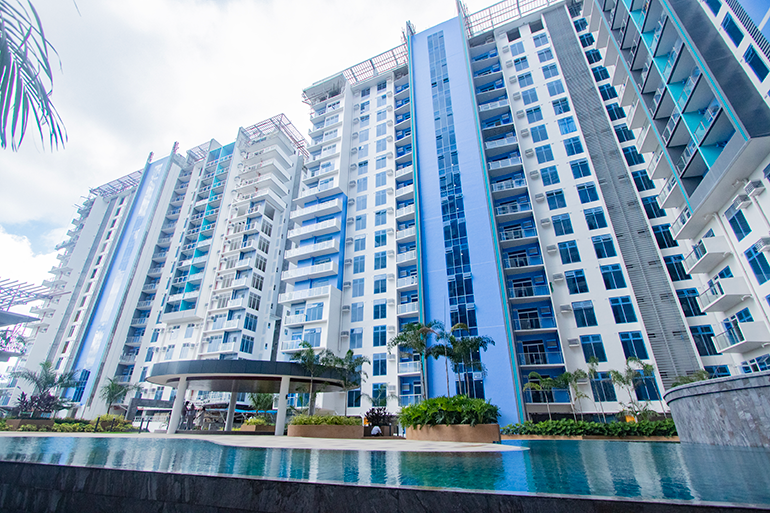
Plumera Mactan building facade

Plumera Mactan, meanwhile, earned the recognition for Best Connectivity Condo Development and Best Affordable Condo Architectural Design, along with the title of Best Affordable Condo Development in Metro Cebu.

Located in Cagodoy, Basak, Lapu-Lapu City in Mactan Island, Plumera is positioned as the prime location for starting families, OFWs, professionals, entrepreneurs, executives, expats in nearby export processing zones and resorts, and retirees.

Plumera Mactan is conveniently located nearby schools, resorts, and hospitals, while also being a mere 15-minute drive from the Mactan Cebu International Airport. Plumera has 22 buildings and 96 units in each building with each unit giving 24 square meters of living space.

The development also features amenities like Plumera’s multi-purpose clubhouse with function rooms for wedding receptions, birthday parties, and other events, as well as recreational facilities like a swimming pool, basketball, and badminton courts.

Chief Executive Officer Richard Lim said the recognition affirms the company’s commitment to creating developments that respond to Cebu’s evolving urban landscape.

“Johndorf has always believed that Cebu deserves developments that combine functionality, sustainability, and accessibility,” he said.

“These awards are a validation of our vision to contribute to the growth of Cebu as a global hub while staying true to our roots as a homegrown developer,” he added.

Receiving the awards alongside her father, AVP Abi Lim said the honors inspire the next generation of Johndorf leaders to push further.

“Plumera Mactan and Johndorf Tower represent how we are broadening our portfolio while keeping the values of quality and affordability,” she said.

Plumera Mactan clubhouse facade

“These recognitions challenge us to continue innovating for both the business community and Filipino families seeking better living spaces,” she pointed out.

The 13th PropertyGuru Philippines Property Awards ceremony gathered top developers, architects, and real estate leaders from across the country as well as from Southeast Asia and the Far East.

Celebrating 40 years of excellence, Johndorf Ventures has evolved from developing affordable housing to creating mixed-use communities.

The company has established 50 communities across Davao, Cagayan de Oro, Iligan, Butuan, and Cebu, contributing to regional development and enhancing the quality of life for thousands of residents.

Since its foundation in the early 80s, the company aims to provide diversified and superior property ventures with a portfolio of residential projects from housing to condominiums and even townships containing both residential and commercial developments.

Solidifying its presence across key cities in the Visayas and Mindanao, the firm has become one of the key players in the local property industry with a dream to expand its reach across the Philippines in the years to come.

More information about Johndorf Ventures at https://johndorfventures.com/.


Spotlight is BusinessWorld’s sponsored section that allows advertisers to amplify their brand and connect with BusinessWorld’s audience by publishing their stories on the BusinessWorld Web site. For more information, send an email to online@bworldonline.com.

Join us on Viber at https://bit.ly/3hv6bLA to get more updates and subscribe to BusinessWorld’s titles and get exclusive content through www.bworld-x.com.

CLI reports strong H1 2025 growth, nets prestigious accolades

From left: Emerito Purisima, AVP for Investor Relations; Clarissa Cabalda, AVP for Corporate Finance; Ar. Francis Rodriguez, AVP for Technical Planning; Sylvan Monzon, First VP for Business Development; Franco Soberano, SEVP & COO; Alana Soberano; Grant Cheng, EVP & CFO; Atty. James Abadia, VP for Business Development; Demi Merin, Senior Manager for Business Development; and Eric Tan, VP for Business Development

Cebu Landmasters, Inc. (CLI), VisMin’s leading real estate developer, delivered a robust first half of 2025, with consolidated net income rising 13% year-on-year to P2.49 billion, up from P2.21 billion in the same period last year.

This growth reflects sustained sales momentum, improved revenue recognition, faster project completions across the region, and disciplined execution of its growth strategy, positioning CLI as a resilient and high-performing leader in the region.

CLI’s market leadership was recently reaffirmed at the 13th PropertyGuru Philippines Property Awards, where it earned Best Housing Developer, Best Developer in Mindanao, and Best Developer in the Visayas (second time). Project-specific honors included Best Condo Development in Metro Davao for Casa Mira Towers LPU Davao, Best Housing Development in Visayas for Velmiro Plains Bacolod, and Best Mid-End Condo Development in Metro Cebu for Mivela Garden Residences. CLI also recently received an ACES award for its green innovations and Stevie awards recognizing the company’s corporate social responsibility and innovation in its annual report.

Casa Mira Towers LPU Davao Front View

During the PropertyGuru awarding ceremony at Shangri-La The Fort, Senior Executive Vice-President and Chief Operating Officer Franco Soberano said, “We in CLI love housing. We’ve done more than 40,000 homes but we want to do more, and we all as developers need to chip in to address the housing backlog.”

Notably, nearly half of the country’s estimated 6.7 million-unit housing backlog is concentrated in the Visayas and Mindanao.

Executive Vice-President and Chief Operating Officer Grant Cheng added, “We are over 95% sold out across our projects, we have P87 billion of contracts to serve in the next years, a delinquency rate of less than 3%, a cancellation rate of less than 1%. And amid all our success, we want to keep our feet on the ground because there is a backlog of 6 million houses.”

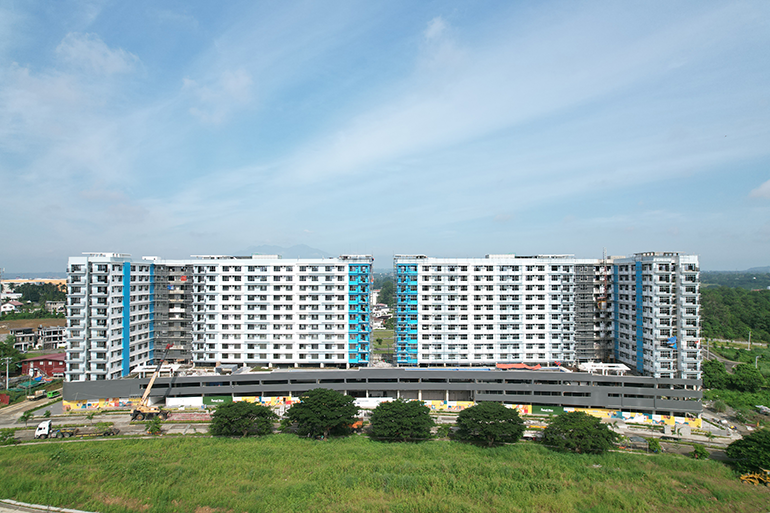
Mivela Garden Residences Facade

Mr. Cheng also encouraged fellow developers to continue building more homes for Filipino families to help address the country’s housing backlog.

CLI’s residential projects continue to perform strongly. During the first half of the year, reservation and estate sales reached P14.3 billion, a 3% increase from the previous year. Flagship economic housing brand Casa Mira, along with the best-selling mid-market Garden Series, drove performance, achieving a 90% sell-out rate. One Manresa Place, launched earlier this year, sold over 90% of its units, generating more than P5 billion in just two weeks, while Casa Mira Homes Gensan, launched in June, has already reached an 85% sell-out rate. These results underscore robust demand and strong buyer confidence in CLI’s offerings.

By June 2025, CLI’s total assets stood at P125 billion, supported by ongoing development and strategic land acquisitions.

Velmiro Plains Bacolod Clubhouse

Building on its strong momentum, CLI is gearing up for a busy second half of 2025, with 12 new projects worth P29 billion in the pipeline, spanning residential, mixed-use, and hotel developments in key areas such as Cebu, Davao, General Santos, Ormoc, and Palawan.

In the next three months, CLI will launch seven new projects in rapidly urbanizing areas, including Metro Cebu, Palawan, the Davao Region, and South Mindanao. These developments are strategically designed to meet growing demand for quality housing in high-growth communities.

The company will close out the year with five additional residential projects across Metro Cebu, Northern Cebu, and Eastern Visayas, further deepening its footprint in VisMin while expanding into underserved but high-potential areas.


Spotlight is BusinessWorld’s sponsored section that allows advertisers to amplify their brand and connect with BusinessWorld’s audience by publishing their stories on the BusinessWorld Web site. For more information, send an email to online@bworldonline.com.

Join us on Viber at https://bit.ly/3hv6bLA to get more updates and subscribe to BusinessWorld’s titles and get exclusive content through www.bworld-x.com.
Clara Benin puts a new spin on two-year-old album

CLARA BENIN’S album, befriending my tears (and then some), on display at Backspacer Records — BRONTË H. LACSAMANA

Vinyl edition released through Backspacer Records 

THE deluxe version of Filipino singer-songwriter Clara Benin’s second full-length album, befriending my tears (and then some), is now available at indie vinyl record shop Backspacer Records in Pasig City.

First released digitally in 2023 under Sony Music label OFFMUTE, the album boasts emotionally resonant songwriting and intimate production. Having a vinyl edition will make it more “timeless and classic,” according to Ms. Benin.

As a fan of vinyl records, she said at the launch on Aug. 18 at Backspacer Records that the collaboration with the indie retailer began when she messaged them on Instagram to inquire about a Novo Amor record.

“They didn’t have it, but then they asked if I wanted to produce my music in vinyl with them,” she recalled. “I said yes!”

Ms. Benin highlighted the album’s themes of vulnerability, self-acceptance, and emotional healing. “It’s about learning to love yourself, and to befriend yourself.”

For the indie folk artist, collaborating is difficult, as she describes herself as “shy and reserved,” though this album was different due to her friends Sam and Tim Marquez of One Click Straight, Gabba Santiago, and Francis Lorenzo.

“They’ve been really good friends of mine. They know me, and they understand the heart behind my music,” she said.

The vinyl edition features an expanded tracklist, including remixes, early demos, and live recordings. Three bonus tracks are exclusive to the physical format, plus full-color artwork and detailed liner notes.

Among the standout tracks is “blink,” which won Best Engineered Recording at the 2022 Awit Awards, alongside fan favorites such as “imposter syndrome.”

Ms. Benin cited “blink” as the song that renewed her songwriting spark over two years ago. “There was something really magical and special about it,” she explained. “This was during the pandemic and I was feeling burnt out. After that song, I felt I could make an album.”

Meanwhile, “imposter syndrome” was the song she could relate to more and more over time. “The more I sing it, the more I can relate,” she said.

WHAT’S NEXT
At the launch, Ms. Benin welcomed fans who pre-ordered the vinyl edition and performed a few songs for them. 

The heartfelt set, supported by creative collaborator, life partner, and post-rock musician Gabba Santiago, showcased her sense of introspection and understated stage presence.

Among the well-received hits performed were “affable dork,” the lyrics coming to life with an endearing intimacy, and “small town,” its melodies getting the crowd to quietly bop along.

As someone who has been in the indie OPM scene and doing gigs since she was 18, Ms. Benin told the press, “I’m very grateful I get to be a part of it. My biggest realization is showing up for your art and for yourself every day.”

She will mark the 10th anniversary of her debut album and early EPs this October, through a two-night concert at the Manila Metropolitan Theater on Oct. 3 and 4. 

Aside from that, more music is in the works. “I’m working on new songs. That’s all I can say for now,” she told BusinessWorld.

Clara Benin’s befriending my tears (and then some) vinyl record, with layout designed by Mia Claravall-Reyes, can be purchased exclusively via Backspacer Records’ official website and its physical store, located at the 2nd floor of D’Ace Plaza in Kapitolyo, Pasig City. — Brontë H. Lacsamana

Manila ranks 5th globally in Q2 luxury home price growth

STOCK PHOTO | Image by Avi Werde from Unsplash

By Beatriz Marie D. Cruz, Reporter

PRIME RESIDENTIAL prices in Manila rose by 9.1% year on year in the second quarter, ranking the Philippine capital fifth among global cities for price growth, according to the latest edition of Knight Frank’s Prime Global Cities Index (PGCI).

This represents a slowdown from the 26% year-on-year surge recorded in the same period last year, when Manila topped the global rankings.

The PGCI is a valuation-based index that monitors prime residential price movements in 46 cities worldwide, using data from Knight Frank’s global research network. It measures nominal prices in local currency.

Manila ranks fifth in Prime Global Cities index in Q2

Year on year, Manila’s prime residential price growth trailed only Seoul (25.2%), Tokyo (16.3%), Dubai (15.8%), and Bengaluru (10.2%), but outperformed Mumbai (8.7%), Bangkok (7.1%), Madrid (6.4%), Nairobi (5.6%), and Zurich (5.4%).

Manila’s prime residential prices grew faster in April-June than the 1.6% decline recorded in the first quarter.

Over the past five years, Manila ranked among the top markets in terms of real estate price growth at 77.5%, behind only Tokyo (120%), Dubai (107%), Seoul (80.9%), and Miami (80.3%).

Manila’s five-year price growth also outpaced that of Los Angeles (56%), Christchurch (43.9%), Gold Coast (34.2%), Shanghai (32.8%), and San Francisco (32.6%).

“Emerging hotspots like Manila and Christchurch highlight increasing investor appetite in secondary cities,” Knight Frank said.

“Asian cities continue to lead the rankings, but with less vigor than in previous quarters,” it added.

Manila’s prime residential prices also outpaced the 2.3% global price growth in the second quarter.

“We’re seeing a more fragmented market, with some European cities showing surprising strength while former high-flyers in Asia begin to level off,” Liam Bailey, global head of research at Knight Frank, was quoted as saying in the report.

Another analyst commenting on the report, Joey Roi H. Bondoc, director and head of research at Colliers Philippines, said strong demand for units amid limited supply may be helping support Manila’s prime residential market.

“The upper luxury, ultra-luxury segments continue to outperform other market segments, especially the mid-income segment, because the latter is very sensitive to mortgage rates,” he said in a phone interview.

“On the other hand, luxury buyers are awash with cash. If they don’t have the cash right now, probably they sell one or two of their units and then buy another luxury unit.”

The luxury residential segment — typically valued at P20 million and above — has only 3% remaining inventory of ready-for-occupancy units, far below the 32% inventory recorded in the lower middle-income segment, Colliers said in its Second Quarter Property Market Report.

“By prime residential prices, they may be referring to newly launched luxury condominiums in the Core Central Business Districts of Makati, BGC (Bonifacio Global City) and Ortigas. These constitute a very small percentage of the total condominium supply in the market, but are the highest priced units,” Roy Amado L. Golez, Jr., director of research and consultancy at Leechiu Property Consultants, said in an e-mail.

In the coming months, Mr. Bondoc expects more property developers to pivot toward the luxury residential segment.

“More developers will become more prudent when it comes to their launches, but they will cater to the luxury market… so, the share of luxury in the total new launches in Metro Manila will continue to increase,” he added.

“I would tend to think that inflation, interest rates and other factors such as financing and the sourcing of high-end luxury materials will continue to nudge pricing upwards,” Mr. Golez also said.

Ateneo Art Awards 2025 shortlist released

VIEN VALENCIA’S installation Totems. — ATENEO ART GALLERY

THE SHORTLIST of artists and writers for the 2025 Ateneo Art Awards has been released by the Ateneo Art Gallery (AAG).

Since the program became biennial due to the pandemic, it covers exhibits shown during the two-year period between May 2023 and May 2025.

The AAG received 158 nominations from museums, galleries, artists, and art educators for the Fernando Zóbel Prizes for Visual Art (FZA) category, which recognizes young and upcoming Filipino visual artists under the age of 36 whose works were exhibited within the two-year period.

“We saw new venues among the shortlisted exhibitions this year, like Tarzeer Pictures and Kalawakan Spacetime,” said Ateneo Art Gallery director and chief curator Boots Herrera at the announcement at Shangri-La Plaza on Aug. 19. “Then we have West Gallery which hosted three of the shortlisted exhibitions.”

She noted that 10 out of 12 of the artists on the list are women. “What’s interesting is we didn’t see that while selecting. It just came out like that, showing that a lot of women artists are active,” Ms. Herrera said.

Twelve artists and exhibitions made the FZA shortlist. They are: Lesley-Anne Cao for the exhibit If time is an arrow, what is its target (held during December 2023 at Underground); Uri de Ger for Beauty is in the Eye of the Colonizer (Oct. to Nov. 2024, Kalawakan Spacetime); Lui Gonzales for A Tree Is A Seed As It Falls (March 2025, Kaida Contemporary); Silke Lapina for Bakit Pa (March 2025, Edoweird); Celline Marge Mercado for Between the Lines (June 2024, Royal Melbourne Institute of Technology School of Art, Melbourne, Australia); Hannah Reyes Morales for Home Holds Still (November 2025 to January 2025, Tarzeer Pictures); Veronica Peralejo for A Tiny Ball of Mud (March 2024, West Gallery); Issay Rodriguez for gathering, collecting, ongoingness (April to May 2023, MO_Space); Eunice Sanchez for Sa Ilog Nagtatagpo (September to October 2023, West Gallery); Jel Suarez for As I Lift One Stone (November 2024, Blanc Gallery); Vien Valencia for Totems (July to August 2024, West Gallery); and Jezzel Wee for to weigh seeds, pulling through (July 2023, Gravity Art Space).

A jury will choose four artists from the shortlist to receive the FZA. The winners will be eligible for local and foreign residency grants funded by the AAG, in partnership with artist communities and residency partners.

One shortlisted artist will also be the recipient of the Ateneo Art Awards-Embassy of Italy Purchase Prize. The award is a partnership between AAG and the Embassy of Italy which seeks to help the Embassy compile a collection of Philippine contemporary art.

Meanwhile, 10 writers were identified for the shortlist of the other half of the Ateneo Art Awards, the Purita Kalaw-Ledesma Prizes in Art Criticism (PKL). These were chosen from entries accepted under the theme “flight.”

In the English Category the writers are: Bea Belen-Ferrer for the essay “In Between Flight and Fallout: What Would Postwar Modernists Do?”; Abigail Buendia for “When the City Catches Fire: In Defense of Carla Gamalinda’s Open City”; Pie Tiausas for “The internet is a space for the lonely”; Tyra Maria Trono for “Wings for 99 Pesos: On the Sentimental Weight of Dollar-Store Objects and the Imagination of Flight”; and Denzel Yorong for “Martino Abellana and the myth of legacy.”

The shortlisted writers in the Filipino Category are: Mavs Alviar for “Through the Fire: Kung masasaksihan mo lang ang mundo at ang ningning ng mga alipato mula sa ilalim ng mga basket at banig”; Emersan Baldemor for “Hindi Lahat ng Umaangat ay Naaalala: Si Tandang Ano at ang Politikang Estetiko ng Paglimot”; Eric Jhon Bituin for “Mga Paang Namumugto: Sining, Pandemya, at ang Lumalakad sa Gilid ng Daan”; Josh Paradeza for “Ang Tuloy-tuloy na Pagpapalagay sa Winala, Nawawala, Nawalan ni Ides Macapanpan”; and MJ Rafal for “Ang Lipad at Liyab sa A Sea on Fire II ni Joar Songcuya.” 

Two winners will be selected from the English category by The Philippine Star and ArtAsiaPacific. One winner will be selected from the Filipino category by Katipunan Journal.

Winning writers will be contributing to the publications’ respective platforms and will be eligible for month-long residencies with Orange Project Naranja Residency in Bacolod, Negros Occidental; The White House in San Antonio, Zambales; and new residency partner Indeks in Bandung, Indonesia.

The winners of the 2025 Ateneo Art Awards will be announced on Oct. 5, 2 p.m., at the AAG. A preview of the exhibition of shortlisted artists runs until Aug. 25 at the Grand Atrium of Shangri-La Plaza in Mandaluyong. The full exhibition will be on view at the third floor galleries of the AAG in Quezon City from Sept. 5 to Dec. 7.

Visitors may cast a vote for their favorite exhibition through the People’s Choice Poll through the entire run of the exhibition, with the top pick artist to be announced after the show closes. — Brontë H. Lacsamana

SM Prime delays REIT IPO to beyond 2026

SUSANA HEIGHTS ESTATE ENTRANCE — SM PRIME HOLDINGS, INC.

SY-LED property developer SM Prime Holdings, Inc. is deferring the initial public offering (IPO) of its planned real estate investment trust (REIT) to beyond 2026, citing unfavorable market conditions.

“Instead of coming up with a REIT in 2026, we may have to defer it a bit and we have to take into account market conditions as well as liquidity in the market,” SM Prime Chief Finance Officer John Nai Peng C. Ong said during an investor relations event hosted by the Philippine Stock Exchange (PSE) on Wednesday.

“While the view on REIT is still there, the timing may have to be deferred beyond the year 2025 and I think personally even beyond 2026,” he added.

SM Prime’s REIT is among the big-ticket IPOs currently deferring their planned listings due to unfavorable market conditions.

The PSE is aiming to record six IPOs this year, but only one has gone public so far, with Cebu-based fuel retailer and distributor Top Line Business Development Corp. in April.

In relation to this, Mr. Ong said that SM Prime is studying the use of green financing as part of the company’s fundraising initiatives.

“We have been studying to consider also sustainability-linked instruments and green bonds. As of today, we have yet to tap green or sustainability-linked instruments. We are open to it. That is why we have been studying to see if it is worth pursuing,” he said.

Meanwhile, Mr. Ong said SM Prime expects to continue its growth momentum in the second half, led by improving economic data.

“Looking ahead, we remain optimistic as macro tailwinds continue to support demand across our portfolio. Our consumer-facing businesses are benefiting from resilient gross domestic product growth and strong household spending,” he said.

“In hospitality, the recovery in tourism and MICE (meetings, incentives, conferences, and exhibitions) activity is gaining traction. Meanwhile, improved business confidence and a flight to quality are driving momentum in commercial leasing. Taken together, these trends provide strong visibility for sustainable growth and reinforce our confidence in delivering solid results across all business segments,” he added.

For the first half, SM Prime posted an 11% increase in net income to P24.5 billion as consolidated revenue grew by 5% to P68 billion on higher rental income, real estate sales, and ancillary revenues.

Philippine inflation slowed to a near six-year low of 0.9% last month due to easing utilities and food costs.

SM Prime shares were last traded on Wednesday, unchanged at P23.60 per share. — Revin Mikhael D. Ochave

Stuff to Do (08/22/25)


Get a bargain

STARTING Aug. 19, Ikea is permanently reducing the prices on 400 popular items by up to 20%. Among the items whose prices have been reduced is the Ikea Malm single bed which now comes at P9,999 from P11,990, a 17% price reduction; the Utespelare gaming desk, now P7,999 from P8,990, a reduction of 10%; the Variera pot lid organizer in stainless steel, whose price has been reduced by 10%, P399 from P450; the Hornavan trolley, which has had a 20% price reduction, P699 from P890; the classic Poang armchair, which has had a 10% price reduction, P3,555 from P4,000; the Linanas sofa, a 5% price reduction, P13,999 from P14,990; and the Brimness chest, a 22% price reduction, P6,999 from P8,990. To find these bargains, visit Ikea Philippines in MOA, Pasay City, and IKEA.ph.


Go to the ballet

INTERNATIONAL BALLET stars from Russia’s Mariinsky Ballet will be bringing fresh fire to the home stage of Ballet Manila for a restaging of the energetic Don Quixote. The three-night affair, set for Aug. 22 to 24 at the Aliw Theater, will be headlined by Renata Shakirova and Kimin Kim, who have danced Don Quixote together at the Mariinsky countless times. Don Quixote runs for three performances: Aug. 22 at 8 p.m., and Aug. 23 and 24 at 5 p.m. All performances will be staged at Aliw Theater at Star City, CCP Complex, Pasay City. For tickets, visit www.ticketworld.com.ph.


Try your hand at digital painting at Y Space

THE Y Space at the Yuchengco Museum will hold back-to-back workshops this week, both led by visual artist Benedicto Modesto. On Aug. 22, he will teach digital painting that merges classic painting techniques with digital tools, while on Aug. 23, he will talk about becoming a multidisciplinary artist. Each workshop is priced at P1,350. Slots can be reserved via yuchengcomuseum.org.


Attend a choir concert

THE 6th Andrea O. Veneracion International Choral Festival is ongoing at Areté and other venues within the Ateneo de Manila University in Quezon City until Aug. 24. Thirty-five choirs from the Philippines and around the world are part of a biennial tribute to National Artist for Music Andrea O. Veneracion, the legendary founder of the world-renowned Philippine Madrigal Singers. The festival keeps its opening and closing ceremonies open and free to the public while tickets for the competition proper are priced at P500. The grand Festival Finale Concert featuring the Philippine Madrigal Singers will be held on Aug. 24, 3 p.m., at the Hyundai Hall, with orchestra seats at P2,000 and balcony seats at P1,500.


Watch Pinter’s Betrayal in Filipino

THE play Kaliwaan, which is an adaptation of Betrayal by Harold Pinter, freely translated into Filipino by Guelan Varela-Luarca, will be presented by Stages Production Specialists, Inc. and co-presented by MusicArtes, Inc. It is directed by Loy Arcenas and stars Missy Maramara, Nor Domingo, and Ron Capinding. The limited, two-weekend run will be from Aug. 22 to 31. For the full schedule and to buy tickets, visit https://bit.ly/KaliwaanMNL2025. Tickets range in price from P800 to P1,250. It will be staged at The Mirror Studio Theater, SJG Bldg., 8463 Kalayaan Ave., Makati City.


Last chance to catch Side Show: The Musical

DUE TO INSISTENT public demand, The Sandbox Collective has announced the final extension of Side Show: The Musical on Aug. 24 with two shows at 3 and 7:30 p.m. The afternoon show cast will feature Krystal Kane, Molly Langley, CJ Navato, Tim Pavino, and Joshua Cabiladas, while the evening show will feature Tanya Manalang, Marynor Madamesila, Reb Atadero, Vien King, and Marvin Ong. Tickets to the final extension are now available online through ticket2me.net/sandboxsideshow. It runs at the Power Mac Center Spotlight Black Box Theater, Circuit Makati.


Visit a collectibles and antiques show

THE Filipinas Collectibles and Antiques Society, in partnership with the J. Amado Araneta Foundation, will hold the FCAS Convention 2025, the biggest gathering of collectors, history enthusiasts, and cultural advocates, on Aug. 23 and 24 at the Quantum Skyview, Gateway Mall 2, in Cubao, Quezon City. The Convention will feature curated exhibits of heritage collections, meteorites, and rare artifacts, interactive displays, and cultural showcases. A wide range of collectibles and memorabilia, coins, and artworks will be on display. There will be expert-led talks and book launches.


Play a game of chess or Scrabble

THE Chess and Scrabble Club is offering free tutorials for anyone interested in learning or improving their skills on Aug. 23 and 24, noon to 6 p.m., at the Upper Ground Floor of Farmers Plaza, in Cubao, Quezon City. Open to all levels, the sessions provide a fun and supportive space to explore both games.


Go for a run

LACE UP your shoes, grab your water bottles, and tag along with your friends and your pets with the aRUNeta Run Club on Aug. 24, 5 to 9 a.m., at the Green Gate of the Smart Araneta Coliseum, in Cubao, Quezon City. It’s the perfect chance to run side by side, break a sweat together, and even score some prizes along the way.


Lace up your running shoes for the Spartan Run Club

TO MARK National Heroes Day, Shangri-La Plaza is holding a running clinic on Aug. 25 with the Spartan Run Club. The session, led by 2023 SEA Games silver medalist Jeffrey Reginio, aims to take one’s running skills to the next level. The clinic is open to runners of all ages and levels. The race day will be held at Streetscape in Shangri-La Plaza, starting with a warm-up at 5 a.m. followed by the running clinic at 7 a.m., and concluding with a coffee party at 9 a.m. Slots can be reserved via the Spartan Race Philippines Facebook page, with a registration fee of P100.

That bridge is stupid, but it is there

PHOTO PROVIDED BY THE AUTHOR

It was more than a personal embarrassment for us at the Bangko Sentral ng Pilipinas (BSP) to host the governor of the Bank of Thailand and his staff over two decades ago, only for them to discover what many in Bohol had dubbed the “bridge to nowhere.” On social media, it’s called the “monument to stupidity,” while historian Ambeth Ocampo named it “bridge of folly.” Or simply, the “stupid bridge.”

At first, our Thai guests were captivated. The Loboc River cruise, with its indulgent buffet, showcased lush tropical vegetation and the exceptional Loboc Children’s Choir. The Busay waterfalls offered an almost endless feast for the senses. But enchantment turned to disbelief when we reached the infamous bridge — a concrete span over the Loboc River that abruptly ended before the centuries-old San Pedro Apostol Parish Church.

The church, of course, is not to blame. Built in 1602, replaced 35 years later, under the stewardship of the Jesuits and Recollects, the Loboc Church is the second oldest in Bohol, next only to Baclayon. It is both a National Historical Landmark and a National Cultural Treasure. Had the Department of Public Works and Highways (DPWH) persisted with its plans, the bridge would have desecrated the church, obliterated the plaza, and severed the bell tower.

Fortunately, a public outcry halted the travesty. Unfortunately, not before public funds had been wasted on an incomplete, purposeless structure. Today, it stands as a grotesque promenade — a visual testament to waste and corruption.

What distinguishes this stupid bridge from the flood control projects now under scrutiny is that the bridge, at least, exists. It’s a visible scar. The flood control projects, on the other hand, are in a league of their own — sui generis. Some exist but are poorly planned and executed; others don’t exist at all.

Last week, Senator Ping Lacson laid bare the scale of this rot.

From 2011 to 2025, roughly P1.9 trillion, or P127 billion a year, was poured into flood control. In the last three years alone, over P1 trillion. Yet reports show that flooding has worsened in many areas. Some blame climate change, and that’s not untrue. Warmer temperatures mean heavier rainfall; sea levels are rising. But even without typhoons or monsoons, these projects have failed to deliver.

Instead, we see the fruits of greed: luxury cars, multiple SUVs, even yachts and helicopters — symbols of plunder purchased with taxpayers’ money.

It’s no wonder Lacson ended his exposé with this stinging observation: “More than flood control, what the Filipino people badly need to see is greed control.”

Let’s do the math. After deducting VAT (5%), withholding tax (2%), bonds and insurance (1%), and materials testing (1%), contractors keep about 8-10% profit. This should leave enough for quality infrastructure.

But corruption takes a heavier toll. In Lacson’s “corruptionary,” the budget is carved up like lechon. The DPWH reportedly gets 8-10% — with district engineers pocketing up to 6%. Contractors grant reseta (excess profits) of 2-3% also to district engineers; the Bids and Awards Committee, 5-6%; and the Commission on Audit (CoA), 0.5-1%. Then there’s the “parking fee” or “royalty” of 5-6% for the sponsoring politician. And, most significantly, 20-25% goes to the “funder” — again, the politician.

What’s left for actual project implementation? Often just 40% of the allocated funds. No wonder flood defenses crumble.

Even worse, some politicians are also contractors. This dual role allows them to rake in both the contractor’s profit and the funder’s share — up to 35% combined. If it’s a project in their own district, add another 5-6% in “royalty.”

That’s over 40% for themselves. For a P100-million project, this means P40 million in their pocket.

Senator Lacson could have added that politicians cover their tracks well. Politicians can sponsor each other’s district projects, minimizing traceability. Even when project descriptions are identical — same costs, same scope — they are labeled “distinct.” This is so, so the politicians can claim: “akin ito” (this is mine).

President Ferdinand “Bongbong” Marcos, Jr. has all the reasons to be disappointed and angry. In Barangay Piel, Baliwag, Bulacan, a P55.7-million flood control project exists only on paper. No work was ever done — zero progress from February to October 2025 — yet the project was fully paid for, complete with receipts. Worse, flooding persists right where the supposed flood protection was built.

This is Bulacan’s second major flood control fiasco. In Calumpit, a dike — costing P96.4 million — broke barely three years after completion. Both cases reek of corruption and incompetence. The President’s threat to charge Syms Construction Trading with economic sabotage is warranted. But accountability must extend to DPWH officials, the Bids and Awards Committee, CoA, and the politicians involved.

To Marcos’ credit, P60 billion in infrastructure funds from the proposed 2025 national budget have been frozen due to inconsistencies with the Philippine Development Plan 2023–2028. Many of these projects were congressional insertions. In fact, 6,021 flood control projects since 2022 have suffered from technical deficiencies. Alarmingly, many cost exactly P150 million — a clear red flag for collusion.

Unsurprisingly, Bulacan tops the list for anomalous projects. A few DPWH district engineers have gained infamy for their avarice. Oriental Mindoro isn’t far behind; a congressman was reported to have funded projects with unprogrammed funds and claimed them as personal achievements.

How did all of this escape the scrutiny of the DPWH, the Department of Budget and Management, Malacañang, Congress, the Bids and Awards Committee, and CoA?

To place this in context, a 2022 study by Richard Martin E. Rinen and Norio Maki titled “Flood Control Projects in the Philippines: A Historical Overview” offers perspective. Published in MUHON: A Journal of Architecture, Landscape and the Designed Environment, the paper chronicles the Philippines’ long history of grappling with floods.

Flooding, the authors argue, is a natural consequence of living near bodies of water. Historically, communities used risk avoidance strategies — building on higher ground, designing structures to withstand water, and planning towns accordingly. These were low-cost, high-ingenuity approaches.

But over time, priorities shifted toward risk reduction — expensive structural solutions like dams, levees, and floodways. These require significant capital and long-term maintenance, both fertile ground for rent-seeking.

Today, without political will or good governance, even relocating informal settlers becomes politically fraught. Meanwhile, structural approaches open the door to corruption. It’s a cycle where incompetence and greed work hand-in-hand to subvert public goods.

They can result in a stupid bridge, or no bridge at all.


Diwa C. Guinigundo is the former deputy governor for the Monetary and Economics Sector, the Bangko Sentral ng Pilipinas (BSP). He served the BSP for 41 years. In 2001-2003, he was alternate executive director at the International Monetary Fund in Washington, DC. He is the senior pastor of the Fullness of Christ International Ministries in Mandaluyong.

EastWest Bank optimistic on income prospects

PHILSTAR FILE PHOTO

EAST WEST Banking Corp. (EastWest Bank) is optimistic that it can post another record net income this year, backed by “healthy” asset and margin growth as its consumer business remains strong.

“We continue to sustain our net income trajectory, likely to beat last year’s for another strong performance. Hopefully more,” EastWest Bank Chief Executive Officer Jerry G. Ngo said in a presentation during the Philippine Stock Exchange’s Investor Day held virtually on Wednesday.

“We have enough room to leverage on our existing balance sheet while maintaining above regulatory capital levels. Our profitable trajectory is on track, and with a measured approach in terms of growth of business that will optimize our returns and capital accretion,” he said.

EastWest Bank’s net income grew by 25% year on year to an all-time high of P7.6 billion in 2024.

It booked attributable net earnings of P2.3 billion in the second quarter, bringing its first-semester profit to P4.13 billion, rising from P3.49 billion in the comparable year-ago period.

Mr. Ngo said EastWest Bank is “well-placed to thrive in a sustained consumption-led economy that is benefiting from the demographic dividends of the Philippines,” noting that it is “the most consumer-centric” among universal banks in the country.

The bank’s consumer loans grew by 15% year on year in the first half to P298 billion, making up 84% of its total loan portfolio.

“Going consumer is not an easy thing. It takes a long maturity process… Year on year, our consumer loans grew by 15%, and that for me is a good number. I think 12-15% asset growth is probably optimal over a long period of time,” Mr. Ngo said.

“We have largely balanced our consumer loan mix between secured loans of auto, mortgage loans, as well as the unsecured portfolio of credit cards and personal loans. Meanwhile, we also have this third category, which is called salary loans to government teachers. We’re one of the largest in the market… This carries a relatively lower risk profile. And this combination is very supportive of a high-performance loan mix.”

EastWest Bank’s negatively-gapped loan book allows for margin growth even as the central bank’s easing cycle continues, Mr. Ngo said.

He added that their consumer loan portfolio’s asset quality remains healthy compared to the rest of the industry, which he attributed to improved credit underwriting and collection initiatives.

The bank also has adequate buffers for loan losses, with its provisioning amounting to P6.1 billion in the first semester, which is equivalent to a credit cost of around 3.5%, Mr. Ngo said.

“This is brought about by a predominantly consumer portfolio that has grown rapidly in the last three years… This level of provisioning is appropriate for us right now at this stage of our growth. Our expected credit loss models prescribe higher provisioning early in the life of the loan, and that’s really just from conservatism. But this declines as the customer’s payment behavior is established,” he said.

“We expect credit cost to be sustained at its current levels as we continue to expand our consumer lending portfolio. This may improve further as we continue to season our existing portfolio while balancing our portfolio loan mix.”

EastWest Bank’s consumer lending strength is also backed by a stable funding base of mostly low-cost current and savings account deposits, Mr. Ngo added.

The bank is rationalizing its expenses following massive spending on technology, customer acquisition, and workforce expansion to build scale, he said, adding that these investments allow for “flexible and scalable” business models.

“This integrated approach not only enhances our ability to deliver personalized, seamless experiences to our customers, but also leverages data-driven insights, AI-driven automation to unlock new revenue streams and operational efficiencies…,” Mr. Ngo said.

“We have a very focused phygital approach, which is the physical and the digital combined together, augmenting the capabilities of our relationship managers so that they become very effective in meeting and serving the needs of their clients… Our belief is that banking, at the end of the day, will continue to be a person-to-person relationship. It might be augmented with physical and digital, and that whole ecosystem, that whole customer journey, needs to be enhanced. But we really need to make sure that we have the right people, the right capabilities, and obviously, more importantly, the right culture to serve and continue to serve and support our clients.”

EastWest Bank shares went down by 12 centavos or 0.98% to close at P12.16 apiece on Wednesday. — BVR with a report from K.K. Chan

SEC fines Villar Land, 11 officials for unsubmitted financial statements

BW FILE PHOTO

By Revin Mikhael D. Ochave, Reporter

LISTED Villar Land Holdings Corp. and its top officials were fined a total of P12 million by the Securities and Exchange Commission (SEC) for failing to submit its 2024 annual report and first-quarter report for 2025.

In an order dated Aug. 18, the SEC Markets and Securities Regulation Department (MSRD) issued the maximum P1-million administrative fine each against Villar Land and 11 officials, totaling P12 million, in lieu of suspending the company’s registration statement and permit to offer and sell securities.

The order applies to Villar Land’s senior executives, including Chairman Manuel B. Villar, Jr.; President Cynthia J. Javarez; directors and incumbent Senators Mark A. Villar and Camille A. Villar; and director Manuel Paolo A. Villar.

Other officials named are independent directors Ana Marie V. Pagsibigan and Garth F. Castaneda; chief financial officer, chief information officer, treasurer, and investor relations officer Estrellita S. Tan; corporate secretary Gemma M. Santos; assistant corporate secretary Ma. Nalen S.J. Rosero; and compliance officer Kate D. Cator.

The MSRD also imposed a P2,000 administrative fine each for every day of delay starting July 1 until Villar Land, formerly known as Golden MV Holdings, Inc., submits its 2024 annual report and first-quarter report.

“The timely submission of annual and quarterly reports is mandatory and non-negotiable under the Securities Regulation Code (SRC) and its implementing rules and regulations. These reports are critical for regulatory oversight, market integrity, and protection of investor interests,” the order said.

The MSRD denied Villar Land’s request for an extension to submit the reports by Aug. 31.

“The company has been afforded a significant period, from Jan. 1, 2025 to the original due date of April 15, 2025, the extended deadline of April 30, 2025, and the additional extension granted by the commission until June 30, 2025, to complete the preparation and submission of the 2024 audited financial statement (AFS),” the order said.

According to the order, Villar Land was unable to file its annual and quarterly reports while reviewing the valuation of previously acquired companies holding land in the 3,500-hectare Villar City development.

On Sept. 30 last year, Villar Land purchased Althorp Land Holdings, Inc., Chalgrove Properties, Inc., and Los Valores Corp., which collectively own 366 hectares of land, under a P5.2-billion deal.

The order noted that the delays followed requests from Villar Land’s external auditor, Punongbayan & Araullo (P&A), to review the fair value of the acquired properties.

Villar Land initially tapped SEC-accredited asset valuer E-Value Phils, Inc. to prepare an appraisal report, which resulted in a P1.33-trillion value gain. P&A then requested Crown Property Appraisal Corp. to serve as an independent expert to review the properties, which generated a lower gain of P8.63 billion.

“In light of the protracted process that the company was constrained to take in order to meet the requirements of its external auditor, and in order to ensure that the company would be able to finalize and issue its 2024 AFS at the earliest possible time, the company agreed with P&A that it will accept the most conservative valuation for the assets…,” the order showed.

“This delay could have been avoided through earlier engagement with auditors, and more efficient management of the valuation issues,” it added.

In a statement, Villar Land said it will respond to the SEC’s order in due course and welcomed the opportunity to provide its explanation regarding the issues raised.

“We wish to clarify that the delay in the filing of the annual report and the first-quarter 2025 quarterly report of Villar Land is not due to the refusal of its external auditor to sign the 2024 AFS. The delay was caused by the auditor’s varying requests for additional audit procedures in the course of their review of the valuation of the Villar City properties that were acquired by Villar Land in 2024,” it said.

“We also want to highlight the fact that while the company firmly believes that it is the fair value of the Villar City properties that should be reflected in its financial statements, in the interest of securing the immediate release of the 2024 Audited Financial Statements, it had reluctantly proposed to the external auditors the use of cost basis in recording the value of the same properties,” it added.

Villar Land announced on March 28 that its 2024 net income rose to P999.72 billion from P1.46 billion the prior year, on fair value gains on investment properties that increased to P1.33 trillion from P59 million in 2023.

The MSRD noted that the figures in the March 28 disclosure, which were later reported to be subject to audit, “could very well mislead the investing public.”

Villar Land was directed to show cause why it should not be held liable for violations of Sections 26.3 and 54.1(c) of the SRC; violation of Section 8(c) of the Financial Products and Services Consumer Protection Act; and violation of Section 30, in relation to Section 158, of the Revised Corporation Code.

Trading of Villar Land shares has been suspended since May 16 for failing to file its financial reports. The suspension remains in effect as of writing.

Villar Land postponed its annual stockholders’ meeting to Oct. 20 from the original schedule of Sept. 3.

Villar Land shares were unchanged at P2,296 per share as of May 15.

Empowering LGUs: The key to unlocking regional growth in the Philippines

STOCK PHOTO | Image by Yanalya from Freepik

By Ildrim Valley and  Kevin Cruz

The Philippines has made steady economic progress since 2010, doubling its GDP, reducing unemployment, and creating millions of jobs. Much of this growth was driven by spatial convergence, with poorer regions growing faster than richer ones. From 2009 to 2022, labor productivity in low-income regions grew by 3.2% annually, outpacing Metro Manila’s 1.5% growth.

This helped narrow regional gaps, but disparities remain large. Not all Filipinos enjoy the same standard of living. Poverty incidence is the lowest in Metro Manila (NCR), as it continues to dominate the national economy, contributing over 30% of the country’s income. The Bangsamoro Autonomous Region in Muslim Mindanao (BARMM) has experienced significant progress over the past decade but continues to lag far behind. Its average worker earns just one-sixth of what a worker in Metro Manila does, with the overall income levels comparable to some of the world’s poorest countries.

Bridging this gap is not only a matter of fairness; sustaining spatial convergence is essential for sustaining fast growth. At the heart of this challenge lies a powerful but underutilized force: the country’s Local Government Units (LGUs).

WHY LGUs MATTER FOR GROWTH
LGUs are not just administrative units. They are the boots on the ground, the first responders to community needs, and the architects of local progress. Under the 1991 Local Government Code, LGUs were granted significant autonomy. This means they directly influence trade, investment, and access to core services like health. Their proximity to communities positions them uniquely to tailor development strategies to local needs, making them essential players in driving inclusive growth.

Experiences from other countries reinforce the importance of strong local governance. In India, the state of Kerala’s decentralized planning helped achieve some of the country’s best health outcomes. In Brazil, cities like Porto Alegre used participatory budgeting to improve public trust and service delivery. Meanwhile, complementing a comprehensive industrial strategy South Korea’s local governments played a key role in supporting small and medium enterprises, helping drive the country’s rapid industrialization. These examples show that when local governments are empowered and accountable, they can be powerful engines for growth.

In Philippines, many services have been devolved to LGUs, but there is room to improve capacity and governance as well as creating incentives for better execution and delivery.

MONEY MATTERS BUT ISN’T EVERYTHING
The 2019 Mandanas ruling further strengthened the LGUs’ role by increasing their share of national tax revenues, thus increasing their budgets. In 2022, LGUs received 4.4% of GDP in transfers, up from 2.9% in previous years. This increase in LGU budgets pushed subnational spending to 6% of GDP, comparable to what we see in upper-middle-income countries. This opens new opportunities for LGUs to lead in local development through more and better-quality services in infrastructure, education, and health investments.

Despite the boost in funding, many LGUs struggle to turn budgets into results. In the recently published World Bank Growth and Jobs report we show that local governments consistently under execute their budgets by over 20%. When it came to money set aside for big projects like infrastructure, only a little over half was used, meaning much of the funding remained untouched. That means half of the funds meant for infrastructure and development projects go unspent.

Why does this happen? Limited technical expertise, bureaucratic bottlenecks, and uneven governance all contribute. Wealthier LGUs tend to perform better, while poorer ones face more severe capacity and funding constraints. Without targeted support, these disparities risk becoming entrenched — undermining development where it is needed most.

First, many LGUs lack technical expertise, systems, and staffing needed to plan and implement complex projects. Without the right people and tools in place, even well-funded programs can stall. This challenge is especially acute in smaller or poorer LGUs, where attracting and retaining skilled personnel is difficult.

Second, there are few incentives for LGUs to improve performance. Funding is typically allocated based on formulas, not results. Whether a project is completed or left unfinished, the money still comes in. This weak link between funding and outcomes makes it harder to hold local governments accountable or encourage them to improve.

Third, most LGUs rely heavily on transfers from the National Government, underpinned by weak own-source revenue generation. While these transfers are essential, they can limit local autonomy and responsiveness. This dependence and lack of local revenue generation also weaken accountability, when resources come from the center, local officials may feel less pressure to answer their constituents.

GOOD GOVERNANCE = GOOD JOBS
Here’s the good news: when LGUs are well run, they deliver. The quality of local governance has a direct impact on economic outcomes. Regions with higher scores that measure governance efficiency and business friendliness show higher labor productivity and more formal employment.

Better governance means better services and human capital, more transparent regulations, and a more attractive environment for investors including smoother and transparent licensing and local regulations. In short, it means better jobs and better lives.

Improving governance at the local level is therefore essential. Streamlining permitting processes, like business licenses and construction permits, enhancing transparency, and aligning local regulations with national standards can make LGUs more attractive to investors and more responsive to citizens’ needs.

To unlock the full potential of LGUs, several reforms are needed:

Strengthen local capacity; people and systems: Many LGUs face challenges in planning and delivering services because they lack the right skills and tools. Investing in training and mentoring for local staff can help improve how projects are designed and implemented. But it’s not just about people, LGUs also need better systems for budgeting, tracking progress, and managing resources. Stronger teams supported by reliable systems can help LGUs make better use of public funds and deliver services that truly meet community needs.

Consider performance-based transfers: While LGUs now receive a larger share of national revenues, the effectiveness of spending varies widely. Linking funding to measurable outcomes, such as infrastructure completion rates, improved management of public funds, a regulatory environment, or service delivery outcomes, can incentivize better governance and ensure that resources translate into results.

Enhance fiscal autonomy: Local governments often depend heavily on national transfers, which can limit their ability to respond to local priorities. Giving LGUs more control over how resources are managed, such as allowing them to exert more control over the taxes and fees already assigned to them and strengthening systems over service-based fees and property taxes, can help align spending with community needs. These approaches link payments to services consumed and encourage more accountable and responsive local governance.

These reforms can empower LGUs to become engines of growth, capable of driving spatial convergence and reducing inequality across regions.

The Philippines’ journey toward a middle-class, poverty-free society by 2040 hinges not just on national policies but on local action. LGUs are uniquely positioned to deliver inclusive development, if they are given the tools, resources, and autonomy to do so. By investing in LGU capacity and governance, the country can unlock growth in every corner of the archipelago and ensure that prosperity is shared by all.


Ildrim Valley is a public sector specialist based in Manila, with over a decade of experience in policy advisory, operations, and research across regions and countries of varying income levels. His work focuses on subnational governance, fiscal management, and tax reforms.

Kevin Cruz is the country economist for the Macroeconomics, Trade, and Investment Global Practice. He currently leads the macroeconomic monitoring program of the World Bank Philippines and is working on fiscal policy issues for the Philippines. Prior to joining the Bank, he worked in various research institutes in the University of the Philippines Diliman.

BMI expects further BSP rate cuts

BW FILE PHOTO

EASING INFLATION will allow the Bangko Sentral ng Pilipinas (BSP) to slash benchmark borrowing costs further this year to support a slowing economy, Fitch Solutions’ unit BMI said.

“We expect the Bangko Sentral ng Pilipinas to maintain a pro-growth policy stance in the second half of 2025 amid growing economic uncertainty,” BMI said in an Aug. 20 note.

“Against this backdrop, we expect the BSP to cut its policy rate by a further 50 bps (basis points) to 4.75% by end-2025.”

Philippine gross domestic product (GDP) grew by 5.5% in the second quarter, slightly faster than the 5.4% print in the first quarter.

For the first half, GDP expansion averaged 5.4%, slower than the 6.2% a year ago. This is a tad below the government’s 5.5-6.5% growth target for the year.

“We believe this underperformance will continue into the coming quarters, given mounting signs of softening domestic activity and the winding down of exports frontloading,” BMI said.

The Philippines’ trade-in-goods deficit narrowed to $3.95 billion in June as exports jumped by 26.1% to $7.02 billion, driven by frontloading in anticipation of higher US tariffs.

For the first semester, the trade gap narrowed to $23.97 billion from the $25.06-billion deficit a year ago.

BMI said the BSP has the policy room to continue its easing cycle as inflation remains benign. Headline inflation eased to a near six-year low of 0.9% in July, which brought the seven-month average of 1.7%, slightly higher than the BSP’s 1.6% forecast for the year but below its 2-4% annual target.

“With geopolitical risks, particularly surrounding the Israel-Iran conflict, now largely de-escalated, energy-related price pressures are expected to remain contained,” BMI said.

It added that it now expects inflation to average just 1.6% this year, down from its previous forecast of 2.2%.

The BSP has lowered benchmark interest rates by a cumulative 125 bps since August 2024, with the policy rate now at 5.25%.

BSP Governor Eli M. Remolona, Jr. earlier said that another rate cut is “quite likely” at the Monetary Board’s Aug. 28 meeting, adding that the central bank could deliver only two more reductions this year, including the one they could implement next week.

After the Aug. 28 review, the Monetary Board’s remaining meetings for this year are scheduled for Oct. 9 and Dec. 11.

BMI’s forecasts showed that it also expects another 25-bp cut in 2026 that would bring the policy rate to 4.5%. It sees the BSP bringing down its benchmark rate to 3.5% by 2027 to mark the end of its current easing cycle, backed by its expectation that the consumer price index will remain within the 2-4% target in the next two years.

“Despite rate cuts by the BSP, the peso will strengthen slightly from current levels as the evolving situation in the US weighs on the dollar,” BMI added.

It expects the peso to trade from P55.20 to P59.20 against the dollar this semester. supported by a healthy interest rate differential between the US and the Philippines as the Federal Reserve is also expected to cut its own target rate by 50 bps in the second half.

The Fed has kept its target rate at the 4.25%-4.5% range since December 2024. Markets widely expect the US central bank to bring down benchmark borrowing costs next month.

“The Fed is facing growing political pressure from President Donald J. Trump, who has publicly and repeatedly called for looser monetary policy. In turn, markets could interpret any rate cuts as politically driven, raising doubts about the Fed’s independence especially if rate cuts coincide with fiscal slippage or policy uncertainty,” it said.

“This would support risk appetite for EM (emerging market) currencies such as the peso.”

On Wednesday, the peso closed at P56.96 versus the dollar, climbing by 14 centavos from Tuesday’s finish of P57.10.

Year to date, the local unit is up by 1.55% from its end-2024 close of P57.845. — BVR