Home Blog Page 7707

Ready on Day One

COMPANIES, especially those in a startup mode, say a new player in a capital-intensive industry like a public utility, want to get a CEO who is ready to take charge as soon as the appointment papers are signed. For a newly listed company, there is instant credibility in putting an experienced person on top, especially if he came from the market leader’s ranks. A non-compete provision in his early retirement? No problem.

A parachuted executive “hitting the ground running” has an instant grasp of his new job, competence in setting strategies, and can even bring along a team with the needed skills. No time is wasted with learning the ropes.

Runners don’t like to get slowed down trying to find diplomatic expressions for their difficult messages of zero-based budgeting, faster turnaround times, data-extraction (Why are customers leaving?) and longer hours. When incumbents cannot deliver the performance expected of them, there is little time for circumlocution in expressing disappointment — Hey, this is not acceptable.

Let the natives get restless, says his recruiter and number-one supporter. There’s a need to shake up the place, rattle the cage, wake up the sleepy heads and similar expressions to put the incumbents on the defensive.

Still, while there is no learning curve in terms of understanding the vocabulary and knowing how goals can be achieved, there is still a big adjustment needed for the new leader. He may not get the resources and the ecosystem of the corporate culture, tech support systems, and, most of all, resources that he was used to in his old job. (What? There’s no automated billing system?)

The unforeseen gaps in a company can slow down the hoped-for instant results expected. The recruiters start having doubts about the premium they paid for this leader who’s supposed to hit the ground running.

There are heightened expectations when bringing in the supposedly day-one-ready CEO. He is afterwards seen as making too many demands. (The technical support group needs to be upgraded.) Do these demands begin to sound like excuses for not getting the job done?

Consultants also possess skills that can be parachuted into client territory. They are hired precisely for their vast experience in the industry. They trot out “best practices” and ratios and performance standards as reference points to measure the scope of work needed. Of course, the subject company is found to be lagging in all indices, except perhaps in the “happiness index.” (Your people are too laid back.) There is a lot of work needed just to get to normal levels.

Unlike the high-level recruit, consultants are not expected to stay through the Christmas party. They have a limited engagement period. They practice the “seagull theory” of management — they fly in, drop their poop, and then fly off to other ships at sea, never to be heard from again.

Should politics too require a leader who is ready on Day One?

Unfortunately, for the top position, there is no previous experience comparable to running a country. Even the number two position in government leadership may be found inadequate when the occupant has been relegated to a fringe status, with no formal designation in the government organization. Involvement in parallel activities with zero recognition and marginal media coverage can turn even the dedicated deputy into a carping off-stage role.

Is this a good preparation for the top job? Maybe, in understanding how the political dynamics work, or don’t work, it is a big step forward.

What about the one in charge at the top sliding into the deputy position? Will he be ready on Day One? Does he really understand the role of a spare tire and the possibility of being left in the fringes? There’s not much expected anyway. And that may be the way he likes it. (Wake me when there’s a nice movie on TV.)

Evaluating readiness for the top political job can be elusive. Never mind the competence and relevant experience needed by the winner to deliver results in the first 100 days. Too late will the employer (the nation, in this case) find out what kind of work ethic, supporting cast, and values the newbie will bring to the top job.

It’s always a long wait getting the right replacement… from the available list of applicants.


Tony Samson is Chairman and CEO of TOUCH xda
ar.samson@yahoo.com

Singapore’s Lee urges China, US to stem deteriorating ties

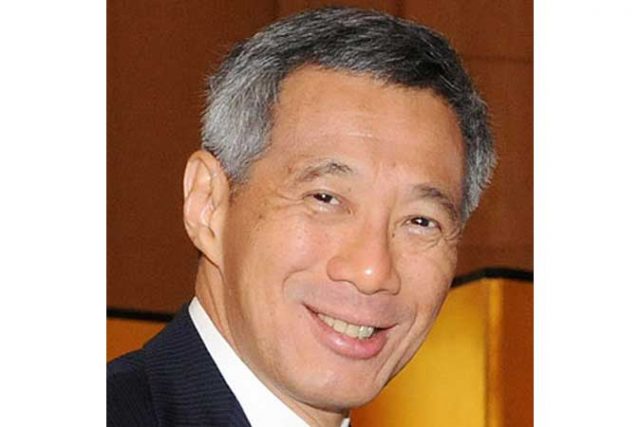
Singapore Prime Minister Lee Hsien Loong — WIKIMEDIA.ORG

SINGAPORE Prime Minister Lee Hsien Loong again warned the US and China to deescalate tensions, saying both powers presumed incorrectly they would win in any conflict.

“The reality is, neither side can put the other one down,” Mr. Lee said on Tuesday, speaking by video link to the Aspen Security Forum. “I think that is a possible misunderstanding on both sides.”

The US is not in terminal decline, as some in Beijing believe, Mr. Lee said. Equally, “China is not going to disappear. This is not the Soviet Union.”

“I don’t know whether Americans realize what a formidable adversary they would be taking on if they decide that China is an enemy.”

Over the years, Mr. Lee has been vocal in calling for the world’s biggest economies to avoid a destructive clash that could force smaller countries like Singapore — with its open, trade-reliant economy — to choose sides. After the election of President Joseph R. Biden last year, he said the US should form an “overall constructive relationship” with China under a framework that would allow the countries to develop areas of common interest and “constrain the areas of disagreement.”

Lee told the forum that views had hardened in both the US and China, and that the Biden administration was also constrained as a result, even as it brought a more “reliable and predictable” approach to foreign policy than the presidency of Donald Trump.

“I think it will be hard to reverse the present trend toward more troubled relations but many countries still hope that the deterioration in the relationship can be checked,” Mr. Lee said.

“Many US friends and allies wish to preserve their extensive ties with both powers. No good outcome can arise from a conflict. It’s vital for the US and China to strive to engage each other to head off a clash which would be disastrous for both sides and the world.”

Lee said the US under Mr. Biden wanted competition with China, but for that competition to be fair. “It is a very fine line between that to treating a competitor as the opponent or the adversary.

At the least, it means greater bifurcation on things like technology, he said. That’s as the US continues to press other countries to keep Huawei Technologies Co. out of their 5-G telecommunication networks.

The remarks come as the Biden administration seeks to bolster its presence in Asia. Last month, the White House’s top official for the region said the US’s position in Asia had “slipped,” losing ground to China as the two nations disagree on everything from the South China Sea to technology and human rights.

The US has donated millions of COVID vaccine shots to countries across Southeast Asia amid a surge in virus cases and last week sent Defense Secretary Lloyd Austin to Singapore, Vietnam and the Philippines to reassure leaders of its commitment to engagement in the region. He also vowed to challenge what he called China’s aggression. The US plans to follow up with a visit from Vice President Kamala Harris to the region later this month.

Mr. Lee told the forum that US allies were now feeling a “palpable sense of relief” and looking for long-term foreign policy consistency. “They hope for a reliable and predictable US which will provide a stable anchor for the international order.”

On Taiwan, Lee said he didn’t believe China would make a unilateral strike against the island, but warned the situation could “quite easily” become dangerous due to a miscalculation.

“I think that they are going to constrain Taiwan’s international space as much as they can, but I do not think that they will make a unilateral, unprovoked move,” he said. “It’s high risk and even if it works the victory would be Pyrrhic because what to do with 20 something million people on an island who are not willing citizens.”

Beijing views Taiwan as its territory, even though it has never controlled the island. Taiwan’s democratically elected government rejects the claim, asserting it’s a de facto separate country awaiting wider international recognition.

China has repeatedly warned the US to stay out of Taiwan affairs, even as the Biden administration criticizes its increased military assertiveness in the Taiwan Strait. Japan, for years cautious about causing friction with China, its biggest trading partner, has also recently become more vocal in public expressions of concern about pressure from Beijing on Taiwan.

“For the Chinese, Taiwan is the mother of all core interests,” Mr. Lee said. “It is the most important national subject for them and Taiwan independence is an absolute bright red line.” — Bloomberg

Delta’s spread seen pushing herd immunity threshold above 80%

THE SPREAD of the Delta coronavirus variant has pushed the threshold for herd immunity to well over 80% and potentially approaching 90%, according to an Infectious Diseases Society of America briefing on Tuesday.

That represents a “much higher” bar than previous estimates of 60% to 70%, because delta is twice as transmissible, said Richard Franco, an assistant professor at the University of Alabama at Birmingham.

“It is becoming clear that this is a very dangerous, way more dangerous virus than the original one,” Mr. Franco said.

Herd immunity is based on the idea that when a certain percentage of the population has been vaccinated against the virus or gains immunity by a previous infection, it helps protect the broader population and reduce transmission.

Nearly 60% of Americans have received at least one dose of a coronavirus vaccine, and about 50% have been fully vaccinated, representing about 165 million individuals, according to CDC data. Some 35 million people in the US, meanwhile, have tested positive for the virus over the course of the pandemic. — Bloomberg

Consumer cynicism rises, as does meaningfulness of tech brands — report

SOLEN FEYISSA-UNSPLASH

A report found that consumers around the world have become more cynical, as 70% of 395,000 respondents said that they have little faith in brands delivering on their promise. 

The Meaningful Brands report, recently released by global communications network Havas Group, recommends that brands veer away from “CSR (corporate social responsibility) washing” and understand what their consumers are going through to be meaningful to them.  

“Brands should also take note of the deeper, more meaningful question as to what their consumers hold to be important and true, that is, their values and their long-standing beliefs,” said Griffey D. De Guzman, creative director of Havas Ortega, a Manila-based media agency. 

While trends should be considered, values are more resonant when it comes to brand-building, he added. “To be a meaningful brand, therefore, is a careful balancing act of what is relevant to the consumers now and what is and will always be deeply important to them,” Mr. De Guzman said. 

GOOGLE TOPS LIST
According to the study, the most meaningful brands globally are Google, with a meaningfulness score of 75 (out of 100), PayPal (72.9), WhatsApp (72.1), YouTube (71.8), and Microsoft and Samsung (both at 71.7).  

Despite facing several lawsuits, Google found itself on top of the list because the search giant allows consumers to connect with others and access timely COVID-19 information.  

That most of the meaningful brands are from the technology is not surprising, said Phil V. Tiongson, Havas Ortega’s head of media experiences and head of data analytics, as these brands have made inroads into the minds of consumers due to the shock of the pandemic and lockdown orders.   

“What is interesting to note is that these tech brands, and other meaningful brands, are also making inroads into the hearts of consumers, which make them meaningful,” he added.  

The Meaningful Brands report found that 73% of consumers say brands must act now for the good of society and the planet. Sixty-four percent also say that they prefer to buy from companies with a reputation for purpose as well as profit — a jump of 10 percentage points since 2019.  

This past year has also brought an increase in consumer expectations in the areas of connection, care for the planet, and monetary savings and growth. 

Brands that are involved with social causes but are unable to communicate authenticity in their CSR campaigns create an expectation gap. And undelivered promises lead to a trust deficit, exacerbating cynicism among consumers.  

Consumers know when brands are inauthentic and call them out when they jump on social causes, such as Pride Month, solely for marketing purposes. “Commitments to social issues should not just be for the sake of press releases and looking good,” said Mr. Tiongson. “[They] should be done by brands because it is the right thing to do.”  

A February prosumer report by Red Havas, the public relations arm of Havas Ortega, also noted a trend towards brand authenticity and transparency among Filipino prosumers, or today’s leading influencers and market drivers. — Patricia B. Mirasol 

New York becomes first US city to order COVID vaccines for restaurants, gyms 

Image via Elvert Barnes/CC BY-SA 2.0/Flickr

NEW YORK — New York City will become the first major US city to require proof of coronavirus disease 2019 (COVID-19) vaccination at restaurants, gyms, and other businesses, Mayor Bill de Blasio said on Tuesday, as the nation grapples with the rapidly spreading Delta variant.  

With vaccines widely available, political leaders were combating the latest surge in infections with shots and masks rather than ordering businesses to close and Americans to stay home as they did last year.  

The US Centers for Disease Control and Prevention on Tuesday issued a new 60-day moratorium on residential evictions in areas with high levels of COVID-19 cases, despite a Supreme Court ruling in June suggesting that such a move would require Congress to pass new legislation.  

The US government and several states, along with some hospitals and universities, already require employees to get inoculated. Tyson Foods on Tuesday became one of the largest private employers to require workers to be immunized to combat the virus that has killed over 600,000 in the country.  

New York City’s policy requires proof of at least one dose and will be enforced starting Sept. 13. Like mask mandates and last year’s stay-at-home orders, the plan will likely meet stiff resistance.  

In France, government imposition of a nationwide health passport proving vaccination has touched off large protests, often dispersed by police using tear gas.  

Government vaccine passports are controversial among Americans as well, especially conservatives.  

“It is time for people to see vaccination as literally necessary to living a good and full and healthy life,” Mr. de Blasio, a Democrat, told a news conference.  

The US Food and Drug Administration is aiming to give full approval for the Pfizer COVID vaccine by early September, the New York Times reported on Tuesday, citing people involved in the effort.  

Roughly 60% of all New Yorkers have received at least one dose of the COVID-19 vaccine, according to city data. But certain areas, largely poor communities and communities of color, have much lower vaccination rates.  

The city’s announcement comes as cases surge nationwide. Florida and Louisiana have emerged as the latest hot spots, straining hospitals.  

Florida and Louisiana are both reporting record numbers of hospitalized COVID patients, as one doctor warned of the “darkest days” yet.  

More than 11,300 patients were hospitalized in Florida as of Tuesday, with COVID patients filling 22% of the state’s hospital beds, according to data from the US Department of Health and Human Services  

In highly vaccinated Vermont, 0.4% of its hospital beds are occupied by coronavirus patients.  

LA COUNTY SEES SURGE 
Louisiana was also dealing with one of the worst outbreaks in the nation, prompting Governor John Bel Edwards, a Democrat, to order residents to wear masks again indoors.  

COVID-19 hospitalizations in Los Angeles County have nearly quadrupled in the last four weeks to 1,096 on Monday, the department of public health said. The percentage of tests coming back positive for the virus also climbed to 6.2%, up from 1.3% a month ago, according to department data.  

To fight the spread in California, political leaders in eight San Francisco Bay Area counties this week reinstated mandatory indoor mask orders. Governor Gavin Newsom, a Democrat, late last month mandated all state employees to get vaccinated starting Aug. 2 or undergo COVID-19 testing at least once a week.  

Florida Governor Ron DeSantis, a Republican, has taken the opposite stance. He issued an executive order last week barring schools from requiring face coverings, saying parents should make that decision for their children.  

The Sunshine State claimed another grim record with the highest number of pediatric COVID-19 hospitalizations — 138 as of Tuesday, more than those recorded in Texas despite its larger population.  

Mr. DeSantis defended the state’s approach at a news conference on Tuesday.  

“We’re not shutting down. We’re going to have schools open. We’re protecting every Floridian’s job in this state. We’re protecting people’s small businesses,” Mr. DeSantis said  

In Arkansas, another state where hospitalizations for COVID-19 have spiked, Republican Governor Asa Hutchinson said he will ask state legislators on Wednesday to provide an exception to a law that prohibits state and local governments, including school boards, from mandating masks.  

The private sector, including many large US companies, have also taken some steps in response to the Delta variant threat.  

Detroit’s Big Three automakers and the United Auto Workers (UAW) union said on Tuesday they will reinstate requirements to wear masks at all US plants, offices and warehouses beginning on Wednesday but are not requiring workers to be vaccinated.  

Big Tech companies like Alphabet’s Google and Facebook have said all US employees must get vaccinated to step into offices. — Maria Caspani and Dan Whitcomb/Reuters 

Harris to push back on China’s South China Sea claims during Asia trip 

Official White House photo by Lawrence Jackson

WASHINGTON — Vice President Kamala D. Harris will focus on defending international rules in the South China Sea, strengthening US regional leadership and expanding security cooperation during her trip to Vietnam and Singapore this month, a senior White House official told Reuters.  

Ms. Harris will be the first US vice president to visit Vietnam as Washington seeks to bolster international support to counter China’s growing global influence.  

The US official said Washington saw both countries as critical partners given their locations, the size of their economies, trade ties and security partnerships on issues such as the South China Sea, which China claims almost in its entirety.  

Former US foe Vietnam has been a vocal opponent of China’s South China Sea claims. Countries in the region largely welcome the US military presence there in the face of China’s militarization of the waterway and its vast coast guard and fishing fleet.  

“We do not want to see any country dominate that region or take advantage of the power situation to compromise the sovereignty of others,” the White House official said.  

“The Vice President is going to underscore that there should be free passage for trade, throughout the South China Sea, and no single country should disrespect the right of others.”  

The US Navy has maintained a steady pattern of freedom of navigation operations in the South China Sea and near Taiwan but these appear to have done little to discourage Beijing.  

Ms. Harris’ trip will follow one by Defense Secretary Lloyd Austin last week to Hanoi, where he sought to nudge forward steadily deepening security ties.  

It will also follow high-level talks between US Deputy Secretary of State Wendy Sherman and senior Chinese diplomats last month that did little to ease deeply strained ties.  

This week, Secretary of State Antony Blinken will seek to reinforce the US message that it is serious about engaging with Southeast Asia to push back against China by joining a series of regional meetings held virtually.  

Addressing a virtual session of the Aspen Security Forum on Tuesday, Singaporean Prime Minister Lee Hsien Loong said high-level US visits were “greatly valued” as they showed Washington knew it had substantial interests to protect and advance in the region.  

However, he expressed concern about deteriorating US-China relations and said many countries hoped to see this checked “because many US friends and allies wish to preserve their extensive ties with both powers.”  

“It’s vital for the US and China to strive to engage each other to head off a clash, which would be disastrous for both sides, and the world,” he said.  

The White House official said the COVID-19 pandemic, vaccinations and quality of vaccines would also be a top priority for Harris.  

Last month, Washington shipped 3 million doses of the Moderna COVID-19 vaccine to Vietnam, bringing total donations to Hanoi to 5 million.  

Ms. Harris is due in Singapore on Aug. 22. She arrives in Vietnam on Aug. 24 and departs on Aug. 26. — Nandita Bose/Reuters 

Chilean study shows variations in success of COVID-19 vaccines

SANTIAGO — Sinovac’s coronavirus disease 2019 (COVID-19) vaccine was 58.5% effective in preventing symptomatic illness among millions of Chileans who received it between February and July, the Chilean health authorities said on Tuesday, while Pfizer’s COVID-19 shot was 87.7% effective and AstraZeneca’s was 68.7% effective. 

The data came in the latest “real world” data published by the Chilean authorities into the effectiveness among its population of a raft of COVID-19 vaccines.  

Chile began one of the world’s fastest inoculation campaigns against COVID-19 in December, having now fully vaccinated more than 60% of its population, predominantly with Sinovac’s CoronaVac. 

That vaccine was 86% effective in preventing hospitalization, 89.7% effective in preventing admission to intensive care units and 86% effective in preventing deaths within the population between February and July, health official Dr. Rafael Araos said in a press conference on Tuesday. 

In April, the same study found that CoronaVac was 67% effective in preventing symptomatic illness, 85% effective in preventing hospitalizations and 80% effective in preventing deaths, suggesting its capacity to prevent the more serious impacts of the virus has strengthened, while its capacity to stop symptomatic illness diminished. 

Dr. Araos said a reduction in protection from vaccines was inevitable over time, particularly with the arrival and growing prevalence of more virulent strains such as the Delta variant.  

“If Delta becomes more prevalent and the vaccine has a weaker response, we could observe a faster fall [in effectiveness],” he said, adding his voice to calls for a third, booster dose to be issued. 

The government also published data on the effectiveness of other vaccines administered in Chile, made by Pfizer BioNTech and AstraZeneca. 

Pfizer’s vaccine was 87.7% effective in preventing symptomatic COVID-19 in the same period, 98% effective in preventing intensive care admission and 100% effective in preventing death, Dr. Araos said. 

AstraZeneca’s was 68.7% effective in preventing symptomatic COVID-19 in the same period, 98% effective in preventing intensive care admissions and 100% effective in preventing death, Dr. Araos said. 

Chile’s study examined the vaccines’ effectiveness among different cohorts of people who either received two doses of the specified vaccine, partial doses of the vaccine or no vaccine at all. 

The CoronaVac part of the study examined a group of 8.6 million people, the Pfizer BioNTech part studied a group of 4.5 million people and the AstraZeneca part looked at a group of 2.3 million people. — Aislinn Laing and Fabian Cambero/Reuters 

US, Indonesia commit to South China Sea defense in ‘strategic dialogue’

US NAVY/HANDOUT VIA REUTERS/FILE PHOTO

WASHINGTON — US Secretary of State Antony Blinken announced on Tuesday the launch of a “strategic dialogue” with Indonesia, and Washington said the two countries committed to working together on issues that include defending freedom of navigation in the South China Sea.  

Meeting in Washington, Mr. Blinken and Indonesian Foreign Minister Retno Marsudi also committed to work together against coronavirus disease 2019 (COVID-19) and the climate crisis and to boost bilateral trade and economic ties, the State Department said.  

Indonesia is the largest country and economy in the 10-member Association of Southeast Asian Nations (ASEAN), a bloc Washington sees as key to its efforts to stand up to China’s growing influence in Asia.  

The two sides agreed to establish a “strategic partnership” in 2015, but Mr. Blinken told reporters while standing alongside Ms. Marsudi that the dialogue was only now actually being initiated.  

“Indonesia is a strong democratic partner to the United States; we are working together on so many different fronts,” he said, adding that Washington appreciated Jakarta’s strong voice within ASEAN.  

Ms. Marsudi told Mr. Blinken a strong partnership with Indonesia would be “a key asset for your increasing engagement in the region.”  

She said the United States was one of the important partners for ASEAN in implementing its Indo-Pacific outlook.  

“It is my hope, and the Indonesian government’s, to advance the bilateral relationship with the US, from health to SDGs, from education, to economy, and beyond,” she said, using the acronym for sustainable development goals.  

A State Department statement on the meeting said the two discussed steps for pandemic recovery. Mr. Blinken noted Washington had donated 8 million vaccine doses to Indonesia, and the countries were also working together on oxygen and therapeutics.  

Ms. Marsudi and Mr. Blinken also “expressed shared views on maritime security” and committed to “defending freedom of navigation in the South China Sea, and continuing collaboration in cybersecurity and preventing cybercrime,” the statement said.  

It said Mr. Blinken commended Indonesia’s efforts to support Afghanistan’s peace negotiations and stressed the importance of restoring ASEAN member Myanmar to the path to democracy.  

On climate, the two sides “discussed opportunities for Indonesia to raise its climate ambition,” it said, without elaborating.  

The talks came before Mr. Blinken was to participate in a virtual meeting with ASEAN, several members of which have competing claims in the South China Sea to those of China. Beijing sees nearly all the strategic waterway as its own and has built up its forces there.  

Mr. Blinken is joining a week of meetings with regional counterparts, part of a US effort to show it is serious about engaging with Southeast Asia to push back against China.  

Murray Hiebert, a Southeast Asia expert at Washington’s Center for Strategic and International Studies, said there had been little time to develop the strategic partnership agreement reached under the Obama administration before former President Donald J. Trump took office.  

“Agreements like this weren’t a priority for his administration,” he said of a deal stretching into multiple domains, including defense, energy and broader economic ties.  

“Hammering out details in all these areas will take some time and require considerable focus by senior foreign policy, defense and economic officials.” — Doyinsola Oladipo and David Brunnstrom/Reuters 

Southeast Asia’s factory powerhouses hit by vaccination woes, Delta

Filipinos work at an electronics factory in Malvar, Batangas, Aug. 10, 2018. — REUTERS/ERIK DE CASTRO

BANGKOK/KUALA LUMPUR — Fresh outbreaks of the Delta coronavirus variant in Southeast Asia have crippled its factory sector, disrupting global supplies of goods such as rubber gloves, semiconductors, and sport utility vehicles (SUVs) and threatening the $3 trillion region’s recovery.  

A series of factory surveys this week showed business activity across most Southeast Asian economies fell sharply in July, a contrast to more resilient manufacturing economies in Northeast Asia and the West, where business growth has slowed but remained in expansion.  

The economic disruptions in Southeast Asia caused by the virus have been made worse by slow progress in vaccinations in the region of 600 million people. Governments have struggled to secure doses and have imposed costly lockdowns that have left many factories without workers.  

The setbacks threaten the growth of one of the world’s more resilient emerging market blocs, which has withstood various global crises in recent decades thanks to broad robust economic reforms and its proximity to China.  

HSBC economists warn the low inoculation rates in Indonesia, Vietnam, the Philippines and Thailand, as well as the uncertain efficacy of their vaccines, put their economies at risk.  

“This means that populations in these countries could remain vulnerable not only to the current outbreak, but any future mutations that may develop,” HSBC said. “Touch-and-go restrictions are likely to continue, weighing on the near-term growth outlook.”  

For Southeast Asia’s manufacturers, which are competitive largely because of low-cost labor and access to raw materials, the impact of new outbreaks on labor supply has been a major production bottleneck.  

In Thailand, Asia’s fourth-largest auto exporter and a production base for major global car brands, Toyota Motor Corp. suspended production at three of its plants in July due to parts shortages caused by the pandemic.  

HIGH DEMAND, LOW PRODUCTION  

Siam Agro-Food Industry, a Thai processed fruit exporter, is heavily reliant on migrant labour and has only been able to fill 400 of the 550 roles as workers return to their countries and are unable to return due to closed borders.  

“There are 350 tonnes of fruit per day but now we can take only 250 tonnes because of not enough workers to process,” said Ghanyapad Tantipipatpong, president of Siam Agro-Food Industry.  

“There is strong demand from export markets, such as the United States, our main market. The problem now is with the production.”  

In Vietnam, which hosts facilities belonging to global companies such as Samsung, Foxconn and Nike, companies in the country’s south have been forced to keep workers isolated at their production sites at night.  

Industrial output in several southern cities and provinces where strict movement curbs were imposed from July, has fallen sharply, the government’s statistics office said last week.  

In Malaysia, which supplies about 67% of the global rubber glove market, lockdown restrictions forced many glove makers to suspend operations in June and July.  

Eased restrictions since then have allowed 60% of the work force to return after the country’s glove-making association pleaded with the government for the industry to resume, citing concerns from global buyers. The association is now calling for a full return.  

Already, disruptions in Southeast Asia are causing pain elsewhere with German chipmaker Infineon Technologies expecting a hit in the tens of millions of dollars from shutdowns at its Malaysia plant. The slowdown will in turn affect Infineon’s automotive clients.  

Daniel Bernbeck, chief executive officer of the Malaysian-German Chamber of Commerce and Industry, said Malaysia’s strict quarantine rules have also made it difficult for higher-end manufacturers such as chipmakers to bring it the technical expertise needed.  

Analysts warn the risks go beyond just the hit to production.  

Moody’s Investors Service said Asia-Pacific economies with “concentrated economic structures” and weak institutions would be hit hardest.  

“These are economies with lower-middle incomes, with deep scarring likely to increase social risks,” Moody’s said. “In some of these economies, high debt burdens are limiting governments’ fiscal space to withstand the pandemic.” — Orathai Sriring and Liz Lee/Reuters 

When the chips are down: global shortage to keep crimping carmakers

Image via BMW Group

LONDON — BMW and Stellantis became the latest major carmakers to warn on Tuesday that the global semiconductor chip shortage that has bedeviled the industry this year will drag on throughout 2021 and beyond, hitting production and sales.  

Carmakers, forced by the coronavirus disease 2019 (COVID-19) pandemic to shut down plants last year, face stiff competition from the sprawling consumer electronics industry for chip deliveries, hit by a series of supply chain disruptions during the pandemic.  

Automobiles have become increasingly dependent on chips — for everything from computer management of engines for better fuel economy to driver-assistance features such as emergency braking.  

Starved of chips, carmakers have focused production on higher-margin models, and have benefited from higher vehicle prices amid low inventories for consumers.  

Stellantis chief financial officer Richard Palmer said on Tuesday the world’s fourth largest carmaker did not expect chip supply to improve before the fourth quarter, with a total projected production loss of around 1.4 million vehicles in 2021. Chief Executive Carlos Tavares described the shortage as “the big gorilla in the room.”  

BMW, which has so far been less affected by the chip shortage than some of its peers because of strong relations with its suppliers, also said the second half will be more challenging for the German luxury carmaker.  

“The longer the supply bottlenecks last, the more tense the situation is likely to become,” BMW chief financial officer Nicolas Peter said in a statement. “We expect production restrictions to continue in the second half of the year and hence a corresponding impact on sales volumes.”  

SPEED BUMP  

Other carmakers from Tesla to Ford Motor Co. have warned that for the foreseeable future, a lack of chips is the main speed bump.  

“While we’re making cars at full speed, the global chip shortage situation remains quite serious,” Tesla Chief Executive Officer (CEO) Elon Musk said last week.  

On Tuesday, General Motors Co. shut down several North American plants because of the shortage, including three next week that make its highly profitable full-size pickup trucks. The No. 1 US automaker called the situation “complex and very fluid.”  

German chipmaker Infineon Technologies also painted a grim picture on Tuesday, saying it was battling extreme tightness in its markets as the latest wave of COVID-19 disrupts production in Asia and inventories hit all-time lows.  

“The rebound of global car markets continues to be hampered by acute supply limitations across the entire value chain,” Infineon CEO Reinhard Ploss told analysts. “All in all, it will take time to get back to a supply-demand equilibrium.”  

“In our view, this will take until well into 2022,” Mr. Ploss added.  

The Ifo economic research institute said on Tuesday that the German car industry and its suppliers faced the worst chip supply shortage in 30 years. A poll showed that 83% of companies were affected, up from 65% in April.  

“This is leading to production stoppages,” Ifo researcher Oliver Falck said. “The shortages of semiconductors will persist for some time to come.”  

On Sunday, French car lobby group CCFA-PFA said the global chip shortage and an upsurge in coronavirus infections would reduce the prospects of a strong rebound by the French car market. — Nick Carey/Reuters

House clears Manila Water, Maynilad franchise bills

Patrizhialreyes, CC BY-SA 4.0 , via Wikimedia Commons

The House of Representatives approved on Tuesday measures to grant the franchises of Manila Water Co., Inc. and Maynilad Water Services, Inc. on third and final reading.

Voting 206-7-0 for both bills, lawmakers approved on third and final reading House Bills 9422 and 9423, which grant separate 25-year congressional franchises to the two companies.

If enacted, these will extend the authority of the water concessionaires to establish, maintain waterworks and sewerage systems in Metro Manila and nearby provinces.

The approval comes after Manila Water and Maynilad signed their revised water concession contracts with the government through the Metropolitan Waterworks and Sewerage System (MWSS) on March 31, 2021 and May 18, 2021, respectively.

Bayan Muna Party-list Rep. Carlos Isagani T. Zarate criticized the approval of the bills, noting the speedy process by the the House Committee on Legislative Franchises without scrutinizing and debating on the provisions of the new concession agreements.

“In fact, even the MWSS-Corporate Office itself has expressed issues with the franchise proposals. Moreover, consumers were not consulted [on the proposals],” he said.

He expressed concern over the charges that have been imposed on consumers such as environmental charges, rate rebasing, and unrelated company expenses such as donations and flowers.

Cagayan de Oro City Rep. Rufus B. Rodriguez also urged the House leadership on Wednesday to recall the approval of the measures. He added that he would have debated on whether concessionaires are required to install sewerage system and plants along with the matter on “systems loss.”

“Why should we pay for water or electricity that is pilfered or stolen, that is lost due to leaks, negligence, inefficiency, and other causes beyond the control of the consumer? Like electricity, is wasted water subjected to the 12-percent value added tax,” Mr. Rodriguez said.

Metro Pacific Investments Corp., which has a majority stake in Maynilad, is one of three Philippine units of Hong Kong-based First Pacific Co. Ltd., the others being Philex Mining Corp. and PLDT Inc.

Hastings Holdings, Inc., a unit of PLDT Beneficial Trust Fund subsidiary MediaQuest Holdings, Inc., has interest in BusinessWorld through the Philippine Star Group, which it controls. — Russell Louis C. Ku

Jobless Filipinos reach 3.76 million in June

PHILIPPINE STAR/ MICHAEL VARCAS
Preliminary results of Philippine Statistics Authority’s latest Labor Force Survey showed there were around 3.764 million unemployed Filipinos in June, inching up from 3.730 million in May. — PHILIPPINE STAR/ MICHAEL VARCAS

THE RANKS of jobless Filipinos and those employed but wanting more work increased in June, government data showed on Tuesday, reflecting the impact of ongoing quarantine restrictions amid the pandemic.

Preliminary results of Philippine Statistics Authority’s latest Labor Force Survey showed there were around 3.764 million unemployed Filipinos in June, inching up from 3.730 million in May.

Unemployment rate was steady at 7.7% in June, unchanged from the previous month. The rise in unemployment despite a steady jobless rate can be explained by the increase in the participation rate, which indicates more Filipinos have entered the labor force.

Philippine labor force situation (as of June 2021)

Meanwhile, the underemployment rate — the proportion of those already working but still looking for more work or longer working hours — worsened to 14.2% in June from 12.3% in May. This translated to 6.409 million underemployed Filipinos, up from 5.492 million in the preceding survey round.

The size of the labor force was approximately 48.840 million in June, up from 48.446 million in May. This brought the labor force participation rate to 65% of the country’s working-age population in June from 64.6% the previous month.

The employment rate remained unchanged at 92.3% in June. In absolute terms, however, the number of employed Filipinos went up to 45.075 million in June from 44.716 million previously.

The service sector made up 57.6% of total employment in June, slightly down from the 57.8% cited in May. The industry sector likewise saw its employment rate go down to 18.1% during the period from 18.4%.

Meanwhile, agriculture had an employment rate of 24.3%, up from 23.8%.

“The labor force survey results for June 2021 show the limits of job creation without major relaxations in quarantine restrictions, especially in the National Capital Region,” Socioeconomic Planning Secretary Karl Kendrick T. Chua, Department of Finance Secretary Carlos G. Dominguez III and Department of Budget and Management Officer-in-Charge Tina Rose Marie L. Canda said in a joint statement.

They noted there were around 400,000 jobs created on a net basis between May and June.

“Since January 2020, net job creation has totaled 2.5 million, indicating that the economy has exceeded the pre-pandemic employment level after losing 8.7 million jobs during the height of the quarantines in April 2020,” the economic managers said.

Despite the increase in underemployment rate from May, they noted that June was still “much lower” than the figures posted in the first four months of the year. These figures ranged from as low as 16% in January to as high as 18.2% in February.

“With the emergence of the COVID-19 (coronavirus disease 2019) Delta variant, the government has prioritized arresting the spread of this more contagious virus through more proactive quarantines in high-risk areas and an accelerated vaccination program. These actions are crucial in ensuring that economic gains in recent months will resume once we have addressed this current threat,” they added, referring to the more infectious variant of COVID-19.

Metro Manila and its nearby provinces will once again be placed under an enhanced community quarantine (ECQ) from Aug. 6-20 to help curb a possible Delta-driven surge in COVID-19 cases.

In an e-mail, University of the Philippines Professor Emeritus Rene E. Ofreneo said any concrete assessment of the changing labor market conditions is difficult due to the rolling lockdown and relaxation programs across the country.

Nevertheless, he pointed to the increase in the proportion of unpaid family workers to total employed at 8.8% in June versus the 5.9% in January, as well as the decline in those employed in private establishments to 46.9% from 49% during the same period. He attributed these results to “limited jobs in the flattened formal labor market [and the] limited income and livelihood opportunities in the large informal sector.”

MORE JOB LOSSES
Economists expect the job market to incur losses in the coming months given the spread of the Delta variant.

“We expect both unemployment and underemployment figures to trend higher in August with the ECQ, and uncertainties will still provide some degree of caution in terms of stability in the labor market,” Security Bank Corp. Chief Economist Robert Dan J. Roces said in an e-mail.

“However, with the pace of vaccinations picking up, including those of workers in essential industries (A4 sector) in Metro Manila and eight other areas, there is a higher chance of a fast recovery in the labor figures. Compared with the start of the year, overall employment has gone up by 9.3% [in June],” he added. 

ING Bank N.V. Manila Senior Economist Nicholas Antonio T. Mapa said it might take a while for the economy’s job figures to return to pre-pandemic levels.

“The continued downtrend in the jobs market coincided with authorities moving hurriedly to relax conditions and trim restrictions with little impact on the numbers. This suggests that previous suggestions from NEDA (National Economic and Development Authority) that the unemployment rate will remain elevated at 7-9% for the next two years will likely hold true,” Mr. Mapa said in a statement to reporters.

“We’ve heard several times that the economy can fix itself by simply relaxing restrictions and we know now that this may not be the case,” he added.

Meanwhile, the economic managers said that although the reimposition of ECQ may temporarily impact employment outcomes in August, the government looks to maximize this period to accelerate inoculation in high-risk areas.

The country has administered 20.9 million doses of COVID-19 vaccines as of Aug. 1, with around 10 million of those carried out in July.

“With this rapid progress in the rate of inoculation and the expected arrival of 132.7 million doses in the next six months, we are confident that we can vaccinate 70 million Filipinos or the entire adult population by the end of 2021,” they said. — Bernadette Therese M. Gadon with inputs from Beatrice M. Laforga and Luz Wendy T. Noble

ADVERTISEMENT
ADVERTISEMENT