Home Blog Page 768

New York Jets get first win in wild fashion, shock Cincinnati Bengals

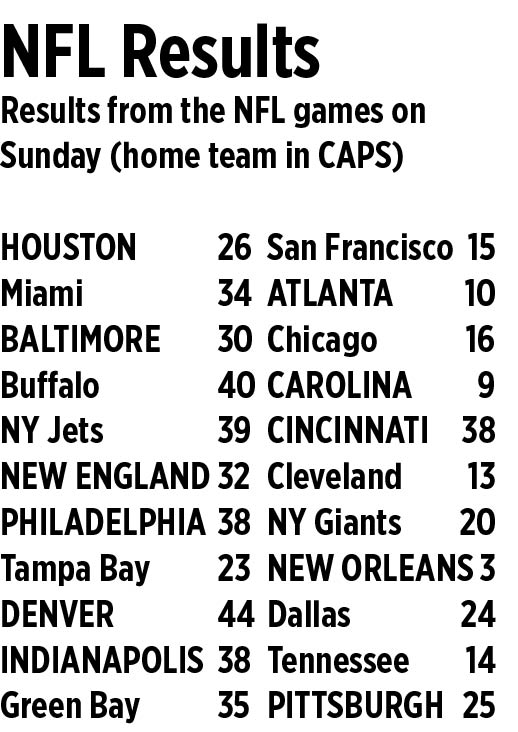
CINCINNATI — Breece Hall rushed for 133 yards and two touchdowns and also tossed the go-ahead 4-yard scoring pass to Mason Taylor with 1:54 left to lift the New York Jets to their first win of the season, 39-38, over the shocked Cincinnati Bengals on Sunday.

The Jets (1-7) ran up 502 yards of total offense in becoming the last NFL team to register a win this season.

Chase Brown ran for a score and caught a touchdown pass while Samaje Perine added 94 yards on nine carries for the Bengals (3-5), who blew a 38-24 lead with 10:21 left in the game. Ja’Marr Chase had 12 receptions for 91 yards.

Brown finished with 73 yards on 12 carries as the Bengals (3-5) had their biggest game on the ground this season. Making his third start, Joe Flacco finished 21-of-34 for 223 yards for the Bengals.

After a week of wondering if he would be the starting quarterback, Justin Fields played a nearly perfect first half, completing his first six pass attempts for 72 yards and a touchdown. Fields, who started after Tyrod Taylor was ruled out with a knee injury, finished the game 21-of-32 passing for 244 yards.

New York moved within 38-32 on Hall’s 27-yard touchdown run and an ensuing two-point conversion pass to Isaiah Davis with 7:52 remaining.

The Jets forced a three-and-out and drove 58 yards, and just after the two-minute warning, Hall took a pitch from Fields and tossed the ball 4 yards to Taylor in the back corner of the end zone for the go-ahead score.

The Jets played without leading receivers Garrett Wilson (knee) and Josh Reynolds (hip) and top corner Sauce Gardner (concussion).

The Bengals lost defensive end Trey Hendrickson to a hip injury just before halftime. Hendrickson, who returned on Sunday after missing the Thursday night win over Pittsburgh with the same injury, did not return in the second half.

The Bengals opened the game with a promising drive, highlighted by a 22-yard run from Brown that set them up at Jets’ 12-yard line. But the drive stalled from there, with a 4-yard run and two incompletions over the middle. The Bengals settled for a 26-yard field goal from Evan McPherson and a 3-0 lead.

Flacco scored on a 1-yard sneak and threw touchdown passes to Tee Higgins and Brown to build a 24-13 Cincinnati halftime lead.

At halftime, the Bengals honored their 11th and 12th inductees to the Ring of Honor. Former offensive lineman Dave Lapham and former defensive back and star punt returner Lemar Parrish saw their names and numbers go up on the east facade of Paycor Stadium while receiving their Ring of Honor jackets.

Before the game, the Jets received word that former center and team Hall of Famer Nick Mangold died at the age of 41, after a battle with kidney illness. — Reuters

Austin Reaves’ career-best 51 points boost Lakers past Kings

AUSTIN REAVES exploded for a career-high 51 points, Deandre Ayton complemented 22 points with a game-high 15 rebounds and the Los Angeles Lakers, playing without injured stars Luka Doncic and LeBron James, downed the host Sacramento Kings 127-120 on Sunday night.

Taking the leading role after Doncic was a late scratch due to finger and lower-leg injuries, Reaves surpassed his previous NBA best of 45 points set last February against the Indiana Pacers.

He also found time for 11 rebounds and nine assists, missing what could have been his fourth career triple-double by a single assist.

Reaves drilled six 3-pointers, including three during a fourth-quarter run that allowed the Lakers to flip a four-point deficit into an 11-point lead.

Seeking a second straight win after a season-opening loss to Golden State, the Lakers trailed 101-97 after a Domantas Sabonis 3-pointer with 9:50 remaining before scoring 20 of the game’s next 25 points to extend into a 117-106 advantage at the 4:18 mark.

Reaves triggered the uprising with consecutive 3-pointers, then added a third following an Ayton hoop to complete an 11-0 burst that produced a 108-101 lead.

Rui Hachimura added two hoops, Ayton another and Jake LaRavia a 3-pointer to finish off the flurry, which created a deficit from which the Kings never fully recovered.

Zach LaVine’s 3-pointer got the hosts as close as 122-119 with still 1:30 to play, but Reaves kept the Kings at arm’s length with four late free throws that capped a 21-for-22 night at the line.

Getting 28 more opportunities, the Lakers outscored the Kings 41-12 from the stripe.

Hachimura finished with 18 points, while LaRavia and Marcus Smart chipped in with 11 apiece for the Lakers, who played a third straight game without James, out with a back issue.

LaVine paced Sacramento with 32 points, while Sabonis (10 points, 14 rebounds) and Dennis Schroder (18 points, 12 assists) posted double-doubles.

DeMar DeRozan added 21 points, Russell Westbrook 18 and Malik Monk 15 for the Kings, who lost despite outscoring the visitors 54-24 from beyond the arc. — Reuters

Time to take profit on gold, says Philippine central banker

STOCK PHOTO | Image from Freepik

The Philippine central bank should sell some of its “excessive” gold holdings with the precious metal set to retreat further from record highs as safe-haven demand eases, according to a policymaker.

Gold accounts for about 13% of the Bangko Sentral ng Pilipinas’ (BSP) gross international reserves, Monetary Board member Benjamin E. Diokno said in an interview on Monday in Kuala Lumpur. That’s already more than other central banks in the region, he said on the sidelines of the Bloomberg Business Summit at ASEAN.

“Our holdings of gold are already excessive,” said Mr. Diokno, a former BSP governor. Ideally, he said the precious metal should be anywhere between 8%-12% of the central bank’s reserves, which stood at about $109 billion as of September 2025, the most in almost a year.

With the BSP having bought gold at around $2,000 an ounce, and bullion hitting a record high at nearly $4,400, “shouldn’t you sell already?” Mr. Diokno said. “What will happen if the price goes down?”

Gold fell to near $4,053 an ounce on Monday as progress on a US-China trade deal sapped demand for safe-haven assets. While gold’s blistering rally to just above $4,380 has tapered amid signs it has become overbought, bullion is still up 55% this year, with central-bank buying helping provide support.

Mr. Diokno, who is currently a member of the BSP’s rate-setting body, said there was still debate at the BSP on whether it should accumulate more gold or if it was time to take profit.

Earlier this year, BSP Governor Eli Remolona said the central bank doesn’t bet on gold price movements, pointing out that it’s a very poor investment. “It’s risky and the average return is negative,” Mr. Remolona said in March. But as part of a large portfolio, holding gold provides a good hedge, he said then.

In 2024, the BSP sold gold which later rallied, triggering criticism from the public over what some say was opportunity cost. The BSP responded, saying the move was part of its active management of the country’s gold reserves.

Mr. Diokno said the BSP has started to spread out where it keeps its gold holdings. The central bank recently shifted a small portion to France while the bulk remains in London.

The BSP is also looking to diversify currencies in its foreign exchange reserves. While most of its war chest is still denominated in US dollars, Mr. Diokno said they could explore having euros too. It also previously held Japanese yen and Australian dollars. — Bloomberg

Limited-edition all-electric Maserati GranTurismo Folgore, now officially in PHL 

ED GERONIA

Modena Motorsports Inc., Maserati’s official distributor in the Philippines marked the car maker’s 110 years with the local introduction of the GranTurismo 110 Anniversario series of sports coupes last the October 23.  

Two models were unveiled at Maserati’s showroom in Primex Tower in San Juan City. Limited to 110 units worldwide (55 per variant), the all-electric Maserati GranTurismo Folgore comes in two variants: the Rame Folgore and the Blu Inchiostro.  

To make the celebration more memorable, Maserati introduced artworks made in collaboration with two Filipino artists, Ramon Orlina, known as the father of Philippine glass sculpture and Jinggoy Buensuceso, an internationally known visual artist and sculptor.  

Mr. Orlina, who is also an avid car collector, created two glass pieces titled “Lyrical Motion” and “Where Mountains Meet the Sky” that are evocative of the dynamic nature of shapes and fluid motion. Mr. Buensuceso’s creation, “Cosmic Flora” is a hybrid art piece that combines a large flowing metal sculpture with a digital art installation made by digital artist Isaiah Cacnio. 

With a triple-motor, all-wheel-drive setup, the all-electric GranTurismo Folgore sports car has a top speed of 325 kilometers per hour (km/h) with a 0-100 km/h time of 2.7 seconds. Charging time is 20 to 80% in 18 minutes (DC fast charging) with an estimated range of 450 km per full charge. Ed G. Geronia Jr.

Robot dogs and AI drone swarms: How China could use DeepSeek for an era of war

STOCK PHOTO | Image by Rawpixel.Com from Freepik

BEIJING/SINGAPORE — China’s state-owned defense giant Norinco in February unveiled a military vehicle capable of autonomously conducting combat-support operations at 50 kilometers per hour. It was powered by DeepSeek, the company whose artificial intelligence (AI) model is the pride of China’s tech sector.

The Norinco P60’s release was touted by Communist Party officials in press statements as an early showcase of how Beijing is using DeepSeek and AI to catch up in its arms race with the United States, at a time when leaders in both countries have urged their militaries to prepare for conflict.

A Reuters review of hundreds of research papers, patents and procurement records gives a snapshot of the systematic effort by Beijing to harness AI for military advantage.

Specifics of how the systems behind China’s next-generation weapons work and the extent to which it has deployed them are a state secret, but procurement records and patents offer clues into Beijing’s progress toward capabilities like autonomous target recognition and real-time battlefield decision support in a way that mirrors US efforts.

Reuters couldn’t establish if all the products had been built and patents don’t necessarily indicate operational technology.

The People’s Liberation Army (PLA) and affiliates continue to use and look for Nvidia chips, including models under US export controls, according to the papers, tenders and patents.

Reuters could not determine if those chips were stockpiled before Washington imposed restrictions as the documents do not detail when the hardware used was exported. Patents filed as recently as June show their use by military-linked research institutes. In September 2022, the US Commerce Department banned exports to China of Nvidia’s popular A100 and H100 chips.

Nvidia spokesman John Rizzo said in a statement to Reuters that while the firm can’t track individual resales of previously sold products, “recycling small quantities of old, second-hand products doesn’t enable anything new or raise any national security concern. Using restricted products for military applications would be a nonstarter, without support, software, or maintenance.”

The US Treasury and Commerce Department did not respond to questions about Reuters’ findings.

The Chinese military has also in 2025 increased its use of contractors that claim to exclusively use domestically-made hardware like Huawei AI chips, said Sunny Cheung, a fellow at the Washington-based Jamestown Foundation defense policy think-tank, who analyzed several hundred tenders issued from the PLA Procurement Network over six months this year.

Reuters couldn’t independently confirm his assertion, but the shift would coincide with a public pressure campaign by Beijing on domestic firms to use China-made technology.

The news agency’s review of procurement notices and patents filed to China’s patent office found demand for and use of Huawei chips by PLA affiliates, but it was not able to verify all the tenders seen by Jamestown, which is releasing a report this week that it provided early to Reuters.

Huawei declined to comment when asked about military deployment of its chips. The Chinese defense ministry, DeepSeek, and Norinco did not return requests for comment about their use of AI for military applications. The universities and defense firms that filed the patents and research papers seen by Reuters also did not respond to similar questions.

DEEPSEEK DEPENDENCE
Usage of DeepSeek models was indicated in a dozen tenders from PLA entities filed this year and seen by Reuters, while just one referenced Alibaba’s Qwen, a major domestic rival.

Alibaba didn’t return a request for comment about military use of Qwen.

DeepSeek-related procurement notices have accelerated throughout 2025, with new military applications appearing regularly on the PLA network, according to Jamestown.

DeepSeek’s popularity with the PLA also reflects China’s pursuit of what Beijing calls “algorithmic sovereignty” — reducing dependence on Western technology while strengthening control over critical digital infrastructure.

The US Department of Defense declined to comment on the PLA’s use of AI.

A State Department spokesperson said in response to Reuters’ questions that “DeepSeek has willingly provided, and will likely continue to provide, support to China’s military and intelligence operations.”

Washington will “pursue a bold, inclusive strategy to American AI technology with trusted foreign countries around the world, while keeping the technology out of the hands of our adversaries,” the spokesperson added.

AI-POWERED PLANNING AND APPLICATIONS
China is looking at AI-powered robot dogs that scout in packs and drone swarms that autonomously track targets, as well as visually immersive command centers and advanced war game simulations, according to the documents.

In November 2024, the PLA issued a sci-fi-esque tender for AI-powered robot dogs that would scout together for threats and clear explosive hazards.

Reuters couldn’t identify if the tender was fulfilled. China has previously deployed armed robot dogs from AI robotics manufacturer Unitree in military drills, according to images released in state media.

Unitree didn’t respond to queries about its PLA work.

The review of patents, tenders and research papers published in the past two years shows how PLA and affiliated entities are looking to AI to improve military planning, including developing technology to quickly analyze images taken by satellites and drones.

Researchers at Landship Information Technology, a Chinese company that integrates AI systems into military vehicles including Norinco’s, said in a February white paper released to promote their services that its technology built on Huawei chips can rapidly identify targets from satellite imagery, while coordinating with radars and aircraft to execute operations.

The time taken for military planners to shift from finding and identifying a target to executing an operation has also been shortened by AI, according to Xi’an Technological University.

Researchers at that institute said in a summary of their findings released in May that their DeepSeek-powered system was able to assess 10,000 battlefield scenarios — each with different variables, terrain, and force deployments — in 48 seconds.

Such a task would have taken a conventional team of military planners 48 hours to complete, they said.

Reuters could not independently verify the researchers’ claims.

AUTONOMOUS WEAPONS
Chinese military entities are investing in increasingly autonomous battlefield technology, the documents suggest.

Two dozen of the tenders and patents seen by Reuters show the military attempting to integrate AI into drones so they can recognize and track targets, as well as work together in formations with little human intervention.

Beihang University, known for its military aviation research, is using DeepSeek to improve drone swarm decision-making when targeting “low, slow, small” threats — military shorthand for drones and light aircraft — according to a patent filing this year.

Chinese defense leaders have publicly committed to maintaining human control over weapons systems amid growing concern that a conflict between Beijing and Washington could lead to the unchecked deployment of AI-powered munitions.

The US military, which is also investing in AI, is aiming to deploy thousands of autonomous drones by the end of 2025 in what officials say is an attempt to counter China’s numerical advantage in unmanned aerial vehicles.

US CHIPS, CHINESE MODELS
Chinese defense contractors like Shanxi 100 Trust Information Technology have touted in marketing materials their reliance on domestically produced components like Huawei’s Ascend chips, which allow AI models to operate.

The firm didn’t respond to questions about its relationship with Huawei and the PLA.

Despite the move to domestic processors, Nvidia hardware continues to be frequently cited in research by military-affiliated academics, according to a review of patent filings from the past two years.

Reuters identified 35 applications referencing use of Nvidia’s A100 chips by academics at the PLA’s National University of Defense Technology (NUDT) and at the “Seven Sons” — a group of Chinese universities under US sanctions and with a history of conducting defense-related research for Beijing.

Those entities in the same time period, filed 15 patents related to AI applications that cited Huawei Ascend hardware, which was designed as a substitute for Nvidia chips.

As recently as June, the PLA Rocket Force University of Engineering separately filed a patent for a remote-sensing target detection system, which it said used A100 chips for model training.

Senior Col. Zhu Qichao, who leads a NUDT research center, told Reuters last year that US restrictions have impacted their AI research “to some degree,” though they are determined to narrow the technological gap.

Nvidia’s Mr. Rizzo played down PLA demand for Nvidia’s hardware, saying that China “has more than enough domestic chips for all of its military applications.” — Reuters


More than 8,000 US flights delayed as air traffic control absences persist

STOCK PHOTO | Image by L.Filipe C.Sousa from Unsplash

WASHINGTON — More than 8,000 flights were delayed across the US on Sunday as air traffic controller absences continued to disrupt travel, and a federal government shutdown reached its 26th day.

US Transportation Secretary Sean Duffy said the Federal Aviation Administration (FAA) experienced air traffic control staffing issues at 22 locations on Saturday, and added additional shortages were expected to lead to more flight delays and cancellations in the days ahead.

According to FlightAware, a flight-tracking website, there were more than 8,000 US flight delays by 11 p.m. ET on Sunday (0400 GMT on Monday), an increase from about 5,300 on Saturday. Delays have often been above average since the government shutdown began on Oct. 1.

Southwest Airlines had 45%, or 2,000 flights delayed on Sunday, while American Airlines had nearly 1,200, or a third of its flights delayed, according to FlightAware. United Airlines had 24%, or 739 flights, delayed and Delta Air Lines had 610 flights, or 17%, delayed.

Some 13,000 air traffic controllers and about 50,000 Transportation Security Administration (TSA) officers must work even though they are not being paid during the shutdown.

Increased air travel delays and cancellations are being closely watched as observers look for indications that the shutdown is making life harder for Americans. That, in turn, could pressure lawmakers to break the budget deadlock that led to the shutdown.

The FAA on Saturday had 22 “triggers” that indicated shortages of air traffic controllers, Mr. Duffy told the Fox News Sunday Morning Futures program. He said the figure was “one of the highest that we’ve seen in the system” since Oct. 1.

“That’s a sign that the controllers are wearing thin,” Mr. Duffy said.

The FAA said ground delay programs had been issued because of staffing shortages on Sunday at Chicago’s O’Hare Airport, Washington’s Reagan National Airport and Newark Liberty International Airport. An earlier ground stop was issued at Los Angeles International Airport, but that was later withdrawn.

The Trump administration has warned that flight disruptions will increase as controllers miss their first full paycheck on Tuesday.

Air traffic controllers received a paycheck two weeks ago at 90% of their regular pay. But Tuesday’s payday would have been for their first pay period solely for work in October.

Controllers facing the prospect of missing a federal paycheck are looking for other sources of income, Mr. Duffy said.

“They’re taking second jobs, they’re out there looking,” he said.

The FAA has about 3,500 air traffic controllers short of targeted staffing levels and many had been working mandatory overtime and six-day weeks even before the shutdown.

In 2019, during a 35-day shutdown, the number of absences by controllers and TSA officers rose as workers missed paychecks, extending wait times at some airport checkpoints. Authorities were forced to slow air traffic in New York and Washington.

Mr. Duffy and other Republicans have criticized Democrats for opposing a “clean” short-term funding bill with no strings attached. Democrats have criticized President Donald Trump and Republicans for refusing to negotiate over healthcare subsidies that expire at the end of the year. — Reuters

IRENA chief expects sustainable biofuels as key COP30 theme

STOCK PHOTO | Image Evening_tao from Freepik

SINGAPORE — Targets for sustainable biofuels use and social aspects of the energy transition will be in focus at this year’s United Nations climate summit, Conference of the Parties (COP30), said Francesco La Camera, Director-General at the International Renewable Energy Agency (IRENA).

COP30 will be held on Nov. 10-21 in Belem, Brazil, where countries are due to present updated national climate commitments and assess progress on renewable energy targets agreed at previous summits.

Mr. La Camera said he anticipates a biofuel pledge that could become a target in the final declaration, potentially calling for quadrupled production by 2035 or setting a share target for sustainable aviation fuel in the energy mix.

“I think there will be more focus on the social aspect of the transition and also on the sustainable use of biomass,” Mr. La Camera said on the sidelines of the Singapore International Energy Week event.

IRENA has prepared a biofuel report for the conference and launched an agreement with the International Civil Aviation Organization to promote biofuel manufacturing, he said.

Mr. La Camera said the conference will address how communities can participate in renewable energy projects.

IRENA now expects a smaller shortfall in renewable energy installations by 2030 due to the accelerating pace of new additions, Mr. La Camera said.

Global renewable capacity is now projected to fall 0.9 terawatts short of the COP28 target of 11.2 terawatt for 2030, an improvement from the 1.49-terawatt shortfall projected last year, he said.

More than 100 countries at the COP28 climate summit in Dubai in 2023 agreed to triple renewable energy capacity by 2030 as part of efforts to meet global climate targets. Meeting the target by 2030 will require annual growth of 16.6% from 2025-2030, IRENA said in a report this month. — Reuters

China, Australia keen on stable ties despite tensions, rivalry

PHILEMBASSY.NO

BEIJING — China and Australia on Monday sought to keep ties on an even keel despite tensions over military encounters in the South China Sea and rivalry in the Asia-Pacific region, with Prime Minister Anthony Albanese describing both sides as “friends.”

China is ready to build a more stable and strategic partnership with Australia, Premier Li Qiang told Prime Minister Anthony Albanese on the sidelines of a Southeast Asian summit in Malaysia, according to China’s official Xinhua news agency.

Mr. Albanese visited China in July to mend ties that had been strained to near breaking point under the previous Australian administration, vowing to keep communication channels open and look for areas of cooperation while guarding against “misunderstanding.”

China-Australia relations at present are showing a positive trend, Mr. Li told Mr. Albanese in their meeting in Kuala Lumpur, Xinhua reported.

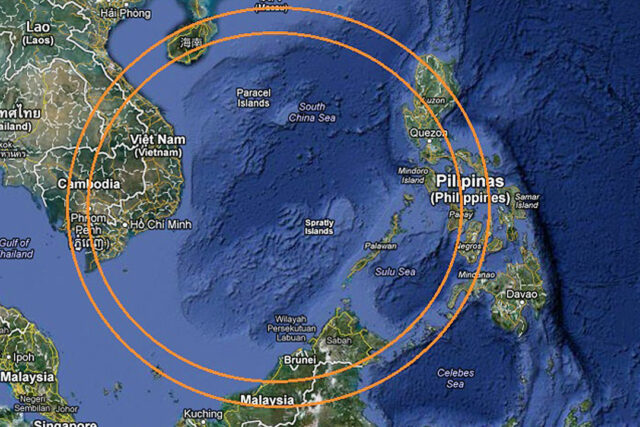
Last week, both sides traded barbs over an encounter between their militaries in the South China Sea, most of which is claimed by Beijing as part of its territory.

Australia said a Chinese fighter jet dropped flares near one of its patrol planes, prompting Beijing to complain that Canberra was trying to cover up an “intrusion” into Chinese airspace.

“I made the position directly clear that this was an incident of concern for Australia,” Mr. Albanese told reporters after his meeting with Mr. Li.

Australia, in February, also criticized the actions of a Chinese fighter jet as “unsafe and unprofessional,” saying it had dropped flares within 30 m (100 ft) of a maritime patrol plane, also in the South China Sea.

‘FRIENDS’
In the Asia-Pacific region, China has been deepening its influence over Pacific Island nations through trade and diplomacy.

In 2022, Beijing inked a security deal with the Solomon Islands, and a year later it signed a policing agreement.

This month, Australia signed a defense cooperation deal with Papua New Guinea that observers say is aimed at countering China’s growing security presence in the broader region.

Despite the rivalry and military incidents, economic ties have remained stable, with both countries repeatedly calling for free trade and further dialogue.

China is willing to work with Australia in the green economy, high-tech industries and the digital sector, Mr. Li told Mr. Albanese, according to the Xinhua report.

Mr. Albanese said his seventh meeting with Mr. Li showed Australia and China, its largest trading partner, could manage differences through dialogue.

“We have disagreements and friends are able to discuss issues frankly — I did that,” he said. — Reuters

Pioneer champions a people-first approach to insurance

Pioneer Group Head Lorenzo Chan, Jr. (2nd from left) joins panelists from the 5th Asia Finance Forum: Positioning for the Future. From L-R: International Cooperative Mutual Insurers Federation (ICMIF) CEO and Managing Director Sabbir Patel, Financial Regulatory Commission (FRC) of Mongolia Head of Policy and Planning Division Tserendejid Purevjav, ADB Principal Financial Sector Specialist Arup Chatterjee, Ibiza Network Co-Founder and CEO Maria Mateo, and Igloo Co-Founder and CEO Raunak Mehta

Pioneer Insurance is reshaping how insurance works for underserved Filipinos by focusing on accessibility, trust, compassion, and efficient claims settlement.

Speaking at two separate occasions, Lorenzo Chan, Jr., Group Head of the Pioneer Group of Companies, shared Pioneer’s secrets to success in microinsurance. At the Asian Development Bank’s panel discussion on microinsurance and inclusive finance, Mr. Chan cited the important role of regulators and an enabling framework to make insurance more accessible to low-income sectors.

“For this market, accessible and affordable insurance cushions the blow and helps absorb the shock that comes after tragedies. This is the impact and empowerment that inclusion brings,” Mr. Chan said.

He emphasized that while trust remains the foundation of microinsurance, the secret ingredient to earning it is paying claims as soon as possible.

Pioneer’s field operations have been tested in major disasters such as Typhoon Haiyan, where the company deployed teams to affected areas, verified claims with local officials, and distributed cash payouts on the spot, foregoing the usual paperwork delays.

“We pay legitimate claims in days, not weeks. That’s how you build trust,” he said.

Pioneer Group Head Lorenzo Chan, Jr. (2nd from left) joins a panel of international finance experts at the Programme on Regulation and Supervision (PROGRES) Seminar 2025 in Singapore. From L-R: South African Reserve Bank Head of Macrofinancial Vulnerability Division Vafa Anvari; Bank Negara Malaysia Director of Islamic Finance Department Nurul Izza Idris; Grab Director of Public Affairs & Policy Jamie Ko; and Geneva Association Director for Financial Inclusion Kai-Uwi Schanz as the session’s moderator

In another speaking event at the Geneva Association’s 2025 Programme on Regulation and Supervision (PROGRES) Seminar in Singapore, Mr. Chan once again reiterates that every claim moment is a trust-building experience.

Addressing an audience of finance experts and stakeholders, Mr. Chan shared that the company’s approach centers on simplified requirements and prompt claims settlement, building long-term credibility among customers who often view insurance with skepticism.

“Pay claims, build trust, and the rest will follow,” Mr. Chan said. “Insurance is all about showing up when people need you most.”

In 2024, Pioneer recorded over 30 million enrollments and paid over P1.3-billion claims.


Spotlight is BusinessWorld’s sponsored section that allows advertisers to amplify their brand and connect with BusinessWorld’s audience by publishing their stories on the BusinessWorld Web site. For more information, send an email to online@bworldonline.com.

Join us on Viber at https://bit.ly/3hv6bLA to get more updates and subscribe to BusinessWorld’s titles and get exclusive content through www.bworld-x.com.

Implementing AI policies for education

Crafting an artificial intelligence (AI) policy for schools should be a priority to maximize its benefits in the education sector, according to Majah-Leah V. Ravago, director of INNOTECH Centre.

“When I go around the media, I usually get a negative perception on AI,” she told BusinessWorld in an interview.

“It’s also important to recognize the potential benefits and how we can make AI a tool, especially for teachers,” she added.

The Department of Science and Technology launched on October 13 the first National Artificial Intelligence Strategy (NAIS Ph), outlining the country’s vision for an AI-driven future.

Interview by Almira Martinez
Video editing by Jayson Mariñas

Bacolod City, DOST ink partnership to establish community flood warning systems 

Delegates at the HANDA Pilipinas – Visayas Leg in Bacolod City. — EDG ADRIAN A. EVA

The local government of Bacolod City and the Department of Science and Technology (DOST) signed a partnership on Monday to establish a Community-Based Flood Early Warning System (CBFEWS) in the city. 

The agreement was formalized through a memorandum of understanding (MOU) signed by City Mayor Greg G. Gasataya and DOST Secretary Renato U. Solidum Jr. during this year’s HANDA Pilipinas— Visayas leg held in Bacolod City. 

“Usually, LGU (local government unit) pagkukuha tayo ng data either from Cebu or from Manila [Usually, LGUs get their data either from Cebu or from Manila],” Mr. Gasataya, said during the event. 

“In urban areas like Bacolod, time is very, very important in determining and making solid, data-based, and science-driven decisions.” 

CBFEWS is a cost-effective, easy-to-install, and people-centered mechanism that empowers communities and local governments to monitor flood risks.
It uses real-time data from rain and river levels, collected through monitoring stations placed in flood-prone areas such as river systems and coastal barangays, to send early alerts and give residents ample time to prepare.Edg Adrian A. Eva

GCash finds no evidence of data breach, assures users

Following reports of user data being sold on the dark web posted by a user on the Deep Web Konek online forum on October 26, GCash Has released an official statement today assuring users that their e-wallet funds and user information were not compromised and continue to be safe and secure.

Based on an internal investigation by the company’s cybersecurity experts, GCash has declared that the alleged exposed dataset does not match the data on their internal systems.

Earlier today, the National Privacy Commission (NPC) released a statement on their website stating that they are launching an investigation on the alleged breach. The NPC has advised users to monitor their accounts and practice cybersecurity measures such as regularly changing their MPIN, passwords, and enabling additional security measures.

“We continue to work closely with the BSP, NPC, and CICC to monitor and validate information from all possible sources and ensure that our systems remain protected,” GCash has added in its statement.
The GCash advisory in full:

NO EVIDENCE OF DATA BREACH
Your funds and information are safe and secure.

GCash is aware of an online post alleging that user information is being sold on the dark web.

There is no evidence of any breach in GCash systems. All customer accounts and funds remain secure.

Upon swift investigation of our cybersecurity experts, the alleged dataset does not match data from GCash systems. Additionally, many entries are incomplete, invalid, or do not belong to GCash users.

These findings strongly indicate that the data being circulated did not originate from GCash.

We continue to work closely with the BSP, NPC, and CICC to monitor and validate information from all possible sources and ensure that our systems remain protected.

GCash remains fully committed to safeguarding customer data, strengthening our defenses, and upholding the trust of millions of Filipinos. – EGG