Home Blog Page 7663

Villar SIPAG home gardening program champions food security, nutrition and income

Senator Cynthia A. Villar pioneered the distribution of vegetable seed packets and compost to encourage people to grow their own food, to be able to save money, acquired nutrients and source of income.

Villar Social Institute for Poverty Alleviation & Governance (Villar Sipag), is a non-stock, non-profit organization established in 1995, which aims to support projects geared toward helping our less fortunate countrymen break free from the clutches of poverty. It is anchored on “SIPAG” or hard work coupled with perseverance (Tiyaga), which are core values that the Villar family holds in high regard in themselves and in other people as well. The Foundation also works for environment protection, assistance to overseas Filipino Workers, (OFWs), entrepreneurship, livelihood generation, and job creation. Other programs are tree planting, development of culture and arts, health social services, entrepreneurship as well as other poverty-reduction projects.


The Program

Even before the coronavirus pandemic, which has afforded people to spend more time in the comforts of their homes, Senator Cynthia A. Villar has been leading the campaign on vegetable gardening, distributing seeds and organic fertilizers all over the country, while enticing people to grow their own food thru their Villar Social Institute for Poverty Alleviation and Governance (Villar Sipag).

The senator, the current chairperson of the Senate Committee on Agriculture and Food, is on the frontline of pushing gardening and composting – turning kitchen and garden wastes into organic fertilizers.

“I’ve always advocated home gardening as a strategy for food security and for the alleviation of nutrient deficiency. It is a big help for families to have direct access to healthier food and fresh vegetables. They don’t have to buy them in the market. They can even earn from it” Villar says.

Aside from seedlings, the senator has been distributing organic fertilizer, also for free, all over the country. It is the product of composting of kitchen and garden wastes. Villar Sipag has 108 composting facilities, 68 in Las Pinas and Bacoor, and 50 through the Vistaland communities all over the Philippines.


The Beneficiaries

Seeds, compost, and brochures on how to do home gardening were distributed to LGUs, congressional districts, private individuals, homeowners’ associations and organizations, to private and public schools, farmers thru their cooperatives and associations. The following  cities and provinces per region received the seed packs from Villar Sipag: National Capital Region (Las Pinas, Pasig, Pasay, Muntinlupa, Marikina, Quezon City, San Juan, Manila, Paranaque and Taguig), Region I (Pangasinan, La Union, Ilocos Norte, Ilocos Sur), Region II (Nueva Vizcaya, Isabela and Quirino), Region III (Bulacan,  Pampanga, Nueva Ecija, Tarlac, Zambales and Bataan), Region IV A (Cavite, Batangas, Rizal, Quezon), Region IV B (Palawan, Marinduque Oriental Mindoro and Occidental Mindoro), Region V (Albay, Masbate, Cam Sur and Catanduanes), Region VI Western Visayas (Iloilo, Guimaras, Antique, Aklan, Negros Occidental and Capiz), Region VII Central Visayas (Negros Oriental, Bohol, Cebu, Siquijor), Region VIII  Eastern Visayas (Biliran, Southern Leyte, Leyte, Eastern Samar and Samar), Region IX (Zamboanga City, Zamboanga del Norte, Zamboanga Del Sur),Region X (Misamis Oriental, Misamis Occidental, Bukidnon, Lanao Del Norte), Region XI (Davao Del Sur, Davao Oriental, Davao De Oro, Davao Del Norte, Davao City),Region XII (Sarangani,North Cotabato, South Cotabato)  Region XIII ( Agusan Del Norte, Agusan Del Sur, Surigao Del Sur, Surigao Del Norte, and lastly, Bangsamoro Autonomous Region in Muslim Mindanao (Maguindanao). The seed packs that were distributed across the Philippines amounted to 31,207 as of July 2021 and still counting.

Villar SIPAG distributed vegetable seed packets and compost to the following nationwide:

  • 35   Congressional Districts
  • 33   Provinces
  • 304  Cities and Municipalities
  • 53  Cooperative and Farmers Associations
  • 29  Schools
  • 50  Non-Government Organizations
  • 3,795 Individuals

Furthermore, Villar SIPAG has farm schools that were established to give free training in Agri crops production, rice farming, native animal production, and aquaculture. The two farm schools in 2020 produced a total of 2,000 plus graduate trainees a year. It stopped its operation in March 2020 due to quarantine restrictions but in October 2020, Villar SIPAG Farm School in Las Pinas-Bacoor and San Jose del Monte City re-opened and resumed their training programs for Agri crops production again conducted by East-West Seeds Foundation. The quarantine restrictions did not stop Villar Sipag from imparting knowledge and training to the Filipino farmers as they erected two additional farm schools. The existing health protocols during that time compelled them to have shortened sessions to four full days a week with 25 participants per batch. The participants have to undergo Covid testing and practice social distancing, hand washing, foot bath, wearing of mask and face shield.

By giving away vegetable seeds and teaching people how to farm, the people who lost their jobs, including those who can’t buy their own food in the market – started cultivating their land. These families received food packages from different organizations and chose not to depend on these alone by growing their own garden.  Home gardening is essential because of its contribution to food security and self-provision – a buffer against high food prices. Villar Sipag continues to promote urban and home gardens because they believe that by teaching the people how to grow their own food, they will have easy access to healthy and nutritious food.

The Result
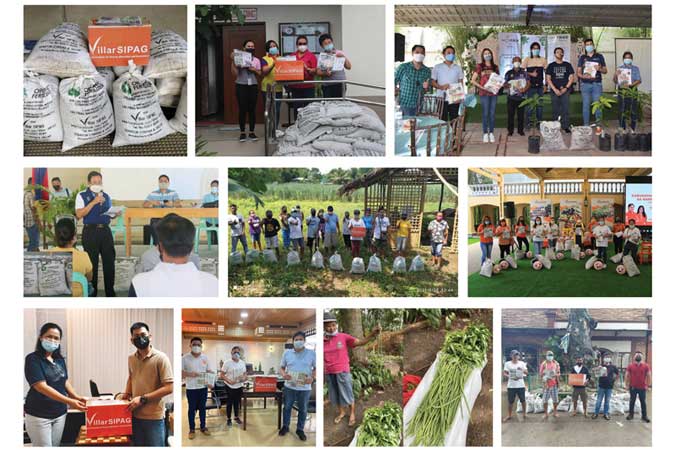
The outcome of Villar Sipag’s actions ultimately unfolds when lockdown restrictions in the Philippines continue even to this day. In less than a few months since May 2020, the people who received the vegetable seeds were able to grow their own food. They were able to cut down their food expenses and most especially, had more nutritious meals. Villar Sipag farm schools boost the income of the farmers as well. Trainees were able to apply the knowledge they received to their own farm, however, it did not end there, these farmers that were trained by Villar Sipag as a trainer shared their knowledge to their community as well,  thereby impacting the lives of many Filipino farmers. It contributed to the country’s food security during the pandemic and further develop the agriculture sector in the Philippines.

“Maraming salamat po Senator Villar sa iyong programa.Ito ay sagot lalo na ngayong panahon ng pandemya. Malaking tulong upang maging malusog at masigla ang pamayanan,lalo na sa mahihirap nating kababayan sa bayan ng Hinoba-an,” Mayor Ernesto A. Estrao of Hinoba-an, Negros Occidental said in appreciation to the senator’s initiative.

Samsung unveils new foldable Galaxy Z phones, wearables

SAMSUNG Electronics Co. Ltd. on Wednesday unveiled its new flagship foldable Galaxy Z smartphones and updates to its wearable devices.

The company launched its third-generation foldable phones, the Galazy Z Fold3 5G and the Galaxy Z Flip3 5G, improving on previous models’ designs and features to cater to consumers’ evolving needs and preferences.

The new Fold’s cover and main displays will have a 120Hz refresh rate. Its main screen is a 7.6-inch Infinity Flex display, which will feature the first ever under display camera on a Galaxy smartphone. Meanwhile, its main cameras will continue to have the triple 12-megapixel (MP) setup with wide, ultra-wide and telephoto lenses.

The smartphone will be powered by Snapdragon 888 and will support fifth generation (5G). It will also support the S Pen and feature stereo speakers that support Dolby Atmos.

The new Fold will likewise have an optimized UX so users can enjoy its large screen. They will be able to customize the size of the menus and optimize apps to use multiple windows for multitasking.

It will also be slimmer and lighter than previous models.

The phone’s finish is matte and will have three colors: phantom black, phantom silver and phantom green.

Meanwhile, the Galazy Z Flip3 has a 6.7-inch Infinity Flex internal display with a 120Hz refresh rate. It features a redesigned 1.9-inch cover screen which will support selected widgets, among others.

The phone’s two main cameras on the cover are 12MP wide and ultra-wide lenses, while its front camera is 10MP.

The Flip3 will also run on Qualcomm Snapdragon 888. Its colors are cream, phantom black, green and lavender.

The two new foldables have an IPx8 rating for water resistance and use Gorilla Glass Victus. Their frames and hinges were built using armor aluminum and will come with a new protective film that is 80% more durable than those in previous models.

The Galaxy Z Fold3 will be priced at P87,990 for the 256GB model and at P95,990 for the 512GB model. For the Flip3, the 128GB model will cost P52,990, while the 256GB one is priced at P56,990. Preorders for both smartphones will run from Aug. 19 to Sept. 21.

WEARABLES
Samsung on Wednesday also launched updated versions of its Galaxy Watch and Galaxy Buds.

The Galaxy Watch4 and Watch4 Classic will have several features to allow users to track their health such as a body composition analysis tool, a sleep management tool, and tracking for fitness activities, among others.

They will run on a unified platform with Google, the One UI Watch. This will allow users to sync important settings and even automatically install watch-compatible apps.

The Galaxy Watch4 series have higher resolution display and will be powered by a 5-nanometer processor Exynos W920, which will increase CPU performance by 20%.

Color choices for the Galaxy Watch4 and Watch4 Classic — which has a rotating bezel — include black and silver, while the Watch4 will also come in online-exclusive colors pink and gold. Preorders start on Aug. 19.

Meanwhile, the Galaxy Buds2 are in-ear buds with dynamic two-way speakers. They are lighter and more compact than the Buds Pro.

The Buds2 have active noise canceling and also feature ambient sound control.

The earphones will come in four colors — olive, white, graphite and lavender — but its case will be white. The Buds2 are available in the country starting Sept. 22. — BVR

DoF sees 7.4% GDP growth in 2022

PHILIPPINE STAR/MICHAEL VARCAS
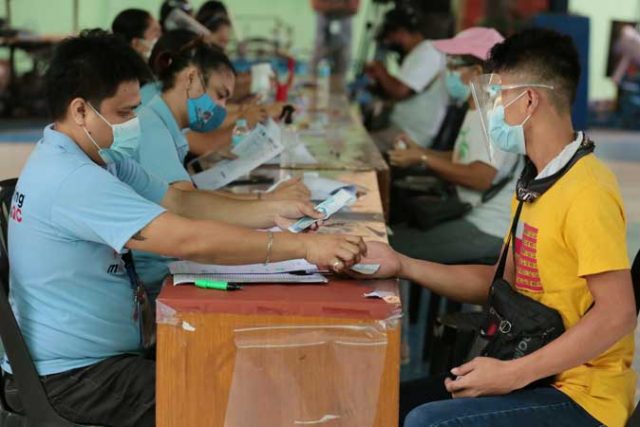
RESIDENTS of Quezon City receive cash aid on Wednesday, Aug 11. — PHILIPPINE STAR/MICHAEL VARCAS

THE GOVERNMENT is expecting the economy to grow by at least 7.4% under a “no-lockdown” scenario in 2022, but unemployment and poverty rates will likely remain high, the Finance department said.

“With the resurgence of domestic economic activity, the country’s real GDP (gross domestic product) may return to pre-COVID-19 (coronavirus disease 2019) levels by 2022. In the base case scenario, it is expected that real GDP will grow by 7.4 percent in 2022,” the Department of Finance (DoF) said in an economic bulletin.

The government set a 7-9% GDP growth target for 2022, which the Department of Finance (DoF) said will be achieved “with proper management of risks brought about by the COVID-19 pandemic and a calibrated gradual reopening of the economy but with strict adherence to the minimum public health standards.”

Even with a generally positive outlook on economic growth, the DoF said unemployment and poverty remain to be major challenges next year.

The unemployment rate will likely remain high at around 6.7-7.6% next year. This is lower than the all-time high jobless rate of 10% in 2020 but still above 2019’s 5.1%.

“Poverty incidence may gradually improve but further measures are needed to reach the original target of 14% by 2022 which include transfers to the bottom 50% of the population,” the DoF said.

While acknowledging the need to extend cash aid to the poor, the DoF stressed the need to deliver the “delicate balancing act to support the economy without going broke.”

“Furthermore, there will be limits to what a stimulus could do given that there are still so many unknowns about the virus and the nimbleness of its mutations,” it added.

Data showed the country’s unemployment rate hit 7.7% in June, with 3.764 million Filipinos unable to find work. The underemployment rate, or the number of those employed but wanting more work, worsened to 14.2% in June from 12.3% in the prior month.

The government released P665.7 billion so far since last year as part of its response to the pandemic, which includes the higher budget for the Health sector, P205 billion worth of cash handouts and the P50-billion wage subsidy program last year, as well as the P160-billion second stimulus package.

There have been calls for a third stimulus package worth up to P400 billion to further support the economy’s recovery and to minimize the long-term impact of the pandemic, as strict lockdowns are reimposed to curb the spread of more infectious COVID-19 variants.

Private investments are seen to be a major growth driver next year, with the DoF estimating a 35.4% increase, under the base case scenario that the government will no longer impose community quarantines in 2022.

Despite the strong rebound in capital formation, the DoF said expansion in household and government spending will be muted next year.

Personal consumption — which accounts for 70% of GDP — is seen picking up by 1.5% this year and inch up further to 2% in 2022, while growth in government spending will likely slow down to 1% next year from the expected 23.8% rise this year.

For the three major economic sectors, the DoF said the industry sector is likely to rise by 7.8% in 2021 and by 11.1% in 2022. Manufacturing is expected to grow by 7% and 5% this year and next year, respectively.

The services sector is seen to increase by 3.8% in 2021 and by 6.3% next year, while the agriculture sector’s growth will inch up by 1.8% this year followed by a 2.7% uptick in 2022.

Latest official data showed the economy grew by 11.8% in the second quarter, ending five consecutive quarters of decline. This was a turnaround from the 3.9% contraction in the first quarter and the record 17% slump in the second quarter of 2020.

The second-quarter GDP growth was largely supported by the 75.5% surge in investments, 27% rise in trade and the 7.2% increase in household spending. However, this was tempered by the 4.9% drop in government spending.

The Philippine economy has to grow by at least 8.2% in the second half to reach the low end of the government’s 6-7% target for the year. — B.M.Laforga

Coronavirus takes its toll on mental health as Filipinos battle stress, anxiety

More Filipinos reported being anxious and depressed amid the coronavirus pandemic. — PHILIPPINE STAR/ MICHAEL VARCAS

JAMES B. SANTOS (not his real name), 24, was diagnosed with a general anxiety disorder in December amid a coronavirus pandemic.

“Seeing so many of my friends getting sick from the coronavirus was scary,” he said in an e-mail. “The lockdown made me feel tired and anxious about what’s going to happen to me. I’m now taking medication to control my condition.”

At least 3.6 million Filipinos suffer from one kind of mental, neurological and substance use disorder, the Health department has said, citing a study by the World Health Organization (WHO).

The mental health impact of the pandemic will be “long-term and far-reaching,” the WHO said in a statement last month, as experts and leaders sought action on pandemic-linked anxiety and stress. “Everyone is affected in one way or another.”
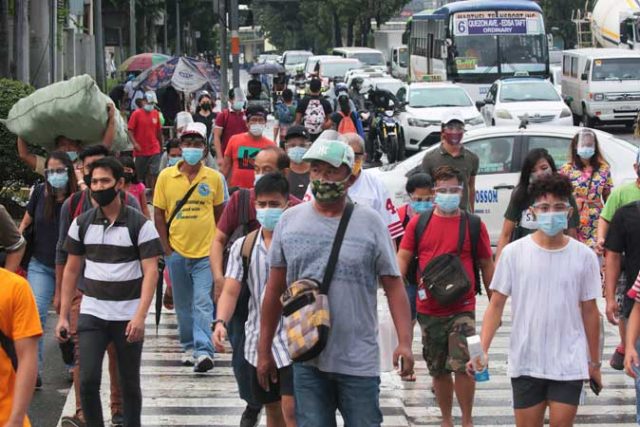

Patients with mental health disorders are two times as likely to die from COVID-19, according to a study published in JAMA Psychiatry last month.

Bernard B. Argamosa, program director at the National Center for Mental Health, said they have been receiving more distressed calls at their hotline during the pandemic that has infected 1.65 million and killed almost 30,000 people in the Philippines.

When the hotline started in May 2019, the average callers in the first six months hit as many as 400. During the first few months of the lockdown that started in March last year, the number of callers doubled to as many as 700 a month, he said.

This further increased by five times in the third quarter of last year, with about 1,400 calls a month, Mr. Argamosa said. It peaked at 1,600 calls in March.

“During the third quarter of 2020, we noticed that the primary reasons for calling were anxiety and depression, which were exacerbated by the pandemic,” he said in a Zoom Cloud Meetings interview.

“The uncertainty of it, the job losses, the lockdown — those are the primary reasons why they’re calling,” he added.

Suicide-related calls also accounted for a third of the calls this year, up from 10% when the hotline started.

A study by mental health firm MindNation released in June found that 53% of Filipino workers had experienced mental health challenges during the global health crisis.

These include fears about getting infected with the coronavirus, financial pressures, personal problems, work pressure, and trying to juggle work and family matters.

“Now that the boundaries between personal life and work are blurred with people working from home, employees are working more than they did pre-pandemic when they were onsite with colleagues,” according to the report. It added that almost half of employees feel they have too much workload.

MindNation, which conducted the study in September 2020 to April 2021, found that workers were lacking focus and concentration and felt they no longer enjoyed things that made them happy in the past. They also had low self-confidence and had a hard time sleeping.

The study also found that 13% of workers took a leave of absence due to mental health problems, while 35% had productivity issues, losing an average of two hours daily. A quarter of those polled said they were thinking about quitting their jobs.

It also said these mental health and well-being challenges cost companies P7 million a year for 10,000 employees.

‘ABNORMAL CONDITIONS’
Cornelio G. Banaag, vice-president of the Mental Health Association of the Philippines, Inc., said the requests for appointments during the lockdown increased, mostly concerns about depression, anxiety, suicidal behavior, difficulties in school, lack of motivation and parents getting upset.

“It’s increasing, it’s not getting less,” he said. “It’s very difficult to adjust. We’re trying to be normal under very abnormal conditions. These conditions are very abnormal for all human beings, especially for Filipinos who love connections.”

Mr. Banaag traced most mental health problems to uncertainty and social isolation. Many Filipinos have had to endure being away from their families, relatives and friends once they get infected with the virus.

“Uncertainty has removed our sense of control over our lives,” he said. “We don’t know when this is going to end.”

Mr. Argamosa said people should not forget to go back to the basics, including following health protocols and cultivating relationships with family and friends. “We can be physically distant, but it is important to maintain our social connectedness.”

He said Filipinos are known to be resilient, and hope would help them cope during the health crisis. Spirituality could also help them survive the pandemic.

The speedy rollout of vaccines could ease the anxiety of people, he said. “What is distressing for all of us is the uncertainty and the fear that this might continue for years. If we start to believe that things will get better, it will be a big help.”

To cope with the pandemic, people should take care of their physical well-being, which is the foundation of good mental health. Aside from getting at least six hours of sleep and eating healthy food, creating new routines — which were taken away from them during the lockdown — would help them deal with stress.

“It helps us predict that at a certain time this is what we will do, which restores some amount of predictability and control in our lives,” Mr. Banaag said.

He also said “the mind is our best ally, but it can also be our worst enemy.” People should avoid negative thoughts and feed the mind with positive thinking.

“Let’s not be too hard on ourselves. We have to accept that these times have imposed limitations on the things that we can do. We are trying our best to live as normal as we can under abnormal circumstances and therefore, there will be mistakes,” he said.

Mr. Santos, mentioned at the outset, said he tries to deal with the anxiety by getting behind the wheel and taking a time off. He also practices breathing exercises, avoids overthinking, and takes things “one step at a time.”

But when help is needed, one should seek help, professional or otherwise, he said.

“Don’t be worried about the stigma of consulting a shrink,” he said. “Your mental health and well-being should always be the priority. You should seek help from people around you.” — VMMV

COVID variants likely to dent PHL recovery

PHILIPPINE STAR/ MICHAEL VARCAS

THE PHILIPPINES is facing a stuttering economic recovery due to the sluggish pace of its vaccination campaign and the emergence of more infectious coronavirus disease 2019 (COVID-19) variants, Fitch Solutions Country Risk and Industry Research said.

In a note sent on Wednesday, Fitch Solutions said it cut its 2021 gross domestic product (GDP) growth forecast for the Philippines to 4.2% from the 5.3% penciled in last May, citing the reimposition of a hard lockdown in Metro Manila and the spread of the Delta variant.

The revised forecast is lower than the government’s 6-7% GDP growth target this year.

The think tank’s downgraded forecast came a day after the statistics agency reported the Philippine economy exited recession after GDP grew by 11.8% in the second quarter.

“The economy will face continued disruptions from the COVID-19 pandemic given its slow pace of vaccinations and difficulties  containing outbreaks,” it said in a note.

Fully vaccinated individuals only make up 10.74% or 11.614 million of the population, based on data from Johns Hopkins University. This is still far from the government’s target to vaccinate 70 million or the entire adult population by end of this year to achieve herd immunity.

Fitch Solutions noted that the Philippines “remains a long way off from reaching herd immunity such that it can ease preventative measures more significantly.”

Metro Manila and nearby provinces are under an enhanced community quarantine (ECQ) until Aug. 20, as the government tries to curb the spread of the more infectious Delta variant.

The Health department on Wednesday reported 12,021 new COVID-19 cases, bringing the active cases to 81,399.

Fitch Solutions warned that the latest lockdown will likely weaken household consumption growth.

“We have lowered our forecast for household consumption growth to come in at 3.5% in 2021 (from 4.0% previously), following a contraction of 7.9% in 2020, given subdued retail activity,” it said.

While retail activity was already weak before the lockdown, Fitch Solutions said the new surge in cases will dampen the improved consumer sentiment in the second quarter.

The think tank said the recovery in remittance inflows may be reflected through higher savings or used by families to offset lost income, instead of boosting consumption.

Even with the new lockdown, Fitch Solutions does not see significant fiscal stimulus in the second half, noting the government “balances debt concerns with supporting growth.”

“However, the government is also conscious of weakening foreign investor sentiment towards its bonds and is wary of increasing spending further. We expect the lockdown measures to hurt government revenues but also delay expenditure plans, with budgeted expenses not fully utilized by yearend. As such, we have revised down government consumption growth from 7.0% to 5.0%,” the think tank said.

Fitch Solutions estimates the fiscal deficit to reach 7.8% of the GDP this year, which is slimmer than the 9.3% budget gap projected by economic managers.

In the first half of 2021, fiscal deficit was at P716.1 billion, 30% lower than the P1.018 trillion programmed for the period. Overall government spending reached P2.206 trillion, 9.56% short of its P2.44-trillion target for the first half.

For 2022, Fitch Solutions expects the economy to grow by 6.8%, lower than the previous estimate of 6.9%.

It noted the rebound next year will most likely be backed by base effects when restriction measures are relaxed.

“We temper our outlook on two factors; firstly, we now expect fiscal support to be reigned in more aggressively once the economy is on a more sustained recovery path, so that the government can begin reducing its public debt load,” Fitch Solutions said.

“Secondly, we believe the rebound in household consumption could be tempered by deleveraging and weakened household balance sheets,” it added. — L.W.T.Noble

Business groups call for urgent climate change response

PHILIPPINE STAR/ MICHAEL VARCAS

AT LEAST a dozen business and advocacy groups have called on the Philippine government to regulate vehicles and expand clean energy use in response to a United Nations (UN) warning about the irreversible effects of climate change.

The UN called the Intergovernmental Panel on Climate Change (IPCC) report, which warned that the planet could pass the critical global warming limit of 1.5°C within two decades, as a “code red for humanity.”

“Our country is one of the most affected by climate change with more record-breaking intense heat and drought during the dry months; unrelenting rains and stronger typhoons during the monsoon season with widespread flooding in and outside cities, and rising sea level causing many coastal areas in our country to disappear,” Green EDSA movement said in a statement.

The Green EDSA movement, supported by several business groups, is calling on government to strictly implement a national transportation policy that would prioritize people mobility over vehicle mobility.

“We call on President Rodrigo Duterte to issue an executive order to all relevant agencies to abide by and implement the 2017 National Transportation Policy of NEDA and direct the Climate Change Commission to coordinate and ensure the implementation of the above climate change mitigating measures,” the group said.

It also urged the government to regulate private vehicle volume on the roads to reduce air pollution and traffic congestion.

The group said that the Philippines must join a global shift to clean-energy vehicles, increase the use of green electricity generating plants, and expand a public park system.

Metro Manila and other highly urbanized areas should also be decongested by moving National Government offices to the new Clark Green City, it added.

Business organizations that have signed the statement include the Bankers Association of the Philippines, Employers Confederation of the Philippines, Financial Executives Institute of the Philippines, Makati Business Club, Management Association of the Philippines, the Philippine Chamber of Commerce and Industry, and the Philippine Retailers Association, among others.

The Green EDSA Movement also made recommendations for specific government agencies, asking that the Metro Manila Development Authority to widen sidewalks and bike lanes, charge congestion fees on cars with too few passengers, and intensity efforts against smoke-belching vehicles.

The Department of Transportation is being urged to shift high-capacity commuter buses and expedite improved commuter connectivity between trains and buses. It also said the Department of Public Works and Highways should remove “obstructing structures” that create traffic chokepoints.

The Green EDSA Movement added that the Energy department should increase green electric power generating plant use, while the Environment department should be stricter when approving permits to cut trees for road widening.

“The bountiful natural endowments of our country are being despoiled by uncontrolled human developments. For instance, Manila lost its scenic bay shore Roxas Boulevard that could have extended beyond Baclaran to Cavite because of land reclamation development,” the group said.

The UN asked nations to join the net-zero emissions coalition and prevent the creation of new coal plants after this year.

“The alarm bells are deafening, and the evidence is irrefutable: greenhouse‑gas emissions from fossil-fuel burning and deforestation are choking our planet and putting billions of people at immediate risk,” UN Secretary-General António Guterres said in an earlier statement. — J.P.Ibañez

Jollibee swings to profitability as sales surge

Restaurant operator plans to fully acquire Tim Ho Wan

By Keren Concepcion G. Valmonte, Reporter

JOLLIBEE Foods Corp. (JFC) and its subsidiaries swung to profit in the second quarter, the listed restaurant operator reported on Tuesday, when it also announced plans to fully own the Tim Ho Wan brand to further expand its business in serving Chinese cuisine.

JFC reported a P976 million in net income attributable to parent company equity holders in the quarter ending June, a reversal of the P10.29-billion loss incurred in the same period last year that included a P6.2-billion expense provision for business transformation.

Compared with its second-quarter performance in 2019, the latest figure is a 6.2% decline from the P1.04 billion it generated pre-pandemic.

Meanwhile, the company’s revenues grew by 57.2% to P36.69 billion in the second quarter from P23.34 billion year on year.

“Same store sales in the Philippine business increased by 48% in the second quarter of 2021 compared to the same quarter last year, while the international business grew by 28.4%,” Jollibee said.

The company said it was able to achieve a worldwide same store sales growth of 38.4% compared with its second quarter 2020 performance. China-based stores grew by 48% while stores in North America improved by 27.7%.

Meanwhile, stores in Europe, the Middle East, and other parts of Asia grew by 21.2% and The Coffee Bean & Tea Leaf (CBTL) improved by 27.9%. However, Superfoods, which is mostly in Vietnam, declined by 8.1%.

System-wide sales from both company-owned and franchised stores surged by 64.7% to P50.52 billion from P30.68 billion year on year.

“The impact of the pandemic on JFC’s business around the world in the second quarter was mixed,” the company said.

“Off-premise sales, which include those from delivery, takeout, and drive-through channels continued to help drive sales growth in both the Philippines and international markets,” it added.

JFC’s operating income amounted to P1.38 billion in the second quarter from last year’s P5.4-billion operating loss, which was incurred when the company temporarily shuttered stores and as sales declined in the remaining open stores due to lockdown restrictions.

Meanwhile, the company generated an EBITDA (earnings before interest expense, taxes, depreciation and amortization) of P5.52 billion, swinging from a P7.23-billion loss incurred in the previous year. Its EBITDA for the quarter is a 13.4% improvement from 2019’s P4.87 billion.

“All regions achieved significant profit and operating cash flow improvement versus year ago levels,” the company said.

For the first semester, the company generated P1.13 billion in net attributable income, swinging from the P11.96-billion loss incurred in the same period last year. Revenues rose by 13.7% to P71.37 billion from P62.76 billion.

System-wide sales for the first half increased by 14.5% to P98.3 billion from P85.83 billion.

The listed restaurant operator opened 164 new stores in the January-to-June period, 19 of which were launched in the Philippines, 38 in China, 15 in North America, and 9 in the EMEAA (Europe, Middle East, Africa, and Australia).

Superfoods launched 26 branches and CBTL opened 47 stores.

The company permanently shuttered 172 stores in the first semester, majority or 54 branches were closed in the Philippines and 118 abroad.

BUYS OUT PARTNERS IN TIM HO WAN
JFC also announced on Wednesday that it is planning to buy shares owned by the remaining partners in the fund that owns the Tim Ho Wan (THW) brand.

The company’s wholly owned unit Jollibee Worldwide Pte. Ltd. (JWPL) already has an 85% stake in Titan Dining LP, the private equity fund that owns the THW brand and company-owned THW stores. JFC now plans to pay SGD71.56 million to buy the remaining 15% interests of other investors.

JFC invested SGD45 million in the fund in 2018 for a 45% participating interest in Titan Dining, which was then the “master franchisee” of THW in the Asia-Pacific region. The capital commitment of JFC’s JWPL increased to SGD120 million or 60% in 2019 just as Titan Dining acquired the THW brand and its trademarks.

“JFC plans to aggressively expand Tim Ho Wan in mainland China with a target of reaching 100 restaurant outlets within the next four years,” Jollibee said.

The first Tim Ho Wan restaurant in mainland China’s Shanghai was launched in September 2020. As of July this year, it now has three stores in Shanghai.

It currently operates 53 outlets in Asia, most of which are franchised stores. Its largest concentration is in the following: 12 in Singapore, 12 in Taiwan, seven in the Philippines, and six in Hong Kong.

The company said the full acquisition aims to “build as an important part of its portfolio a significant business serving Chinese cuisine in different parts of the world.” It currently has five brands under its belt, namely: Chowking, Yonghe King, Hong Zhuang Yuan, Panda Express, and Tim Ho Wan.

Overall, JFC has 17 brands operating 5,816 stores across 33 countries.

JFC shares at the stock exchange declined by 0.47% or 90 centavos on Wednesday, closing at P191.60 apiece.

AboitizPower eyes 1,000-MW gas-fired plant

By Angelica Y. Yang, Reporter

ABOITIZ Power Corp. is considering putting up a 1,000-megawatt (MW) gas-fired power plant within the next decade to provide baseload capacity for the electricity grid, its top executive said on Wednesday.

“For baseload, we are shifting our focus to gas. We have early feasibility studies and within the next 10 years, we’re open to an option of building one gas plant with a capacity of at least 1,000 megawatts, unless a cleaner technology [proves] to be [a] more viable option,” AboitizPower Chief Executive Officer and President Emmanuel V. Rubio said on Wednesday.

He made the statement during an online forum organized by the Economic Journalists Association of the Philippines and Aboitiz Equity Ventures, Inc.

He noted that gas technology remains the “only visible cost-competitive technology” at the moment.

“I don’t think coal or new coal [plants] will be built, given all the pressures on the environment and the lack of financing. We’re not closing our doors on any alternative technology that will be able to provide the same capacity factor on a cost-competitive [basis],” Mr. Rubio added.

AboitizPower’s plan comes around four months after he said that the company was considering gas-related projects in Luzon. He had said that a team in the firm was conducting early feasibility studies on building gas plants in “at least two locations.”

During the event, he also provided an update on the timeline of the commissioning of the power firm’s 1,336-MW supercritical coal-fired power plant under GNPower Dinginin Ltd. Co. in Mariveles, Bataan.

The plant’s schedule was further pushed back due to construction delays caused by travel restrictions.

Mr. Rubio expects the plant’s unit 1 to be synchronized with the grid between Aug. 16 to 19.

“Hopefully, [it will be there] to alleviate the supply situation when Malampaya [natural gas facility] goes on outage in October, and we can go straight to what we’re expecting to be the issuance of a CoC (certificate of compliance) from ERC (Energy Regulatory Commission) by around third week of September,” he said.

He added that unit 2 of GNPower Dinginin is targeted to be ready for commissioning by March of next year.

Last week, the Aboitiz-led energy firm announced that it will be spending P190 billion to build new renewable energy (RE) projects over the next decade. The development of these projects is in line with its goal to reach a 50-50 power generation mix from its renewable and thermal capacities.

AboitizPower is the holding company for the Aboitiz group’s investments in power generation, distribution, and retail electricity services. It describes itself as the largest owner and operator of RE based on installed capacity.

Shares in AboitizPower shed 0.42% or 10 centavos to close at P23.70 apiece at the stock exchange on Wednesday.

Shakey’s trims losses to below P15M as revenues rise by 37%

SHAKEYSPIZZA.PH

SHAKEY’S Pizza Asia Ventures, Inc. (SPAVI) trimmed its net loss to P14.71 million in the second quarter as it recorded higher revenues.

SPAVI said in a stock exchange disclosure on Wednesday that its total comprehensive loss for the April-to-June period is an improvement from the P403.54-million total comprehensive loss posted a year ago.

Revenues of the company during the quarter rose 36.9% to P1.27 billion. Of the total, net sales amounted to P1.21 billion while royalty and franchise fees contributed P61.89 million.

SPAVI’s system-wide sales for the quarter rose 43% to P1.63 billion, while costs of sales also increased 13.1% to P1.02 billion.

For the first half of the year, SPAVI recorded a P14-million net income, a reversal of the P289.96-million net loss it had in the same period last year.

Revenues of the company for the January-to-June period fell 7.6% to P2.55 billion from P2.76 billion. Of the total, net sales accounted for P2.43 billion while the remaining P116.25 million came from royalty and franchise fees.

SPAVI said its system-wide sales during the first half reached P3.3 billion, 4% lower than the P3.45 billion it had in 2020. Costs of sales also dropped 13% to P1.98 billion.

“Earnings before interest, tax, depreciation, and amortization (EBITDA) for the first six months of the year stood at P404 million. EBITDA margins reverted to a double-digit level of 15.9%, a significant improvement from last year’s 6.5%,” SPAVI said.

Vicente L. Gregorio, SPAVI President and Chief Executive Officer, said the company’s first-half performance shows the resilience and relevance of its brands amid the pandemic.

“We were able to leverage our industry-leading margins and operating capabilities to strategically pivot our growth plans and cost structures. The efforts, prudence, and discipline built amidst extreme challenges helped us weather through the past 15 months,” Mr. Gregorio said.

“We are still very much in uncertain times; thus, we remain cautiously optimistic, anticipating uncertainties that may potentially delay the path to recovery,” he added.

SPAVI opened 16 new outlets in the first half, which brought its total store network count to 295 stores. The new stores have smaller footprints and lower investment requirements ensuring short payback period and high capital returns.

Amid the return of some areas to stricter lockdown protocols, Mr. Gregorio expects the impact to be partially cushioned by the sustained growth in the company’s off-premise business.

“More importantly, we are encouraged that the vaccination rollout in the country has been ramping up in the past few months. We hope this will increase mobility and boost consumer confidence to fuel our recovery,” Mr. Gregorio said.

“In these tough times, we strive to keep Shakey’s standing as a trusted chain of top-of-mind food brands. Central to this is the expansion of our store network, value creation for our guests, and investments in our off-premise presence,” he added.

On Wednesday, shares of SPAVI at the stock exchange ended flat at P7.90 each. — Revin Mikhael D. Ochave

Converge more ready for lockdowns this year, says chief strategist

LISTED fiber broadband provider Converge ICT Solutions, Inc. said it is better prepared for this year’s stricter lockdowns than it was last year, with some policies in place to ensure the uninterrupted rollout of its network.

“Now, I think we’re much better prepared. We [now] know how to talk to homeowners’ associations (and) LGUs (local government units) to get permits,” Converge Chief Strategy Officer Benjamin Rex E. Azada said at an online forum on Wednesday organized by the Economic Journalists Association of the Philippines.

“In some places, it’s much better. In some places, there are still challenges,” he added.

Mr. Azada recalled that Converge’s installation and repair activities were hampered by the implementation of stricter community quarantine rules last year.

In July, the Anti-Red Tape Authority said it was considering proposing new rules that would speed up the issuance of permits for telecommunications underground works.

The agency said that a draft joint memorandum circular could streamline permits for the installation of poles, excavation to lay down underground fiber ducts, and the attachment of aerial and underground broadband cables on physical infrastructure.

As for Converge’s growth, Mr. Azada said: “We believe that the trajectory [or] the momentum for our business continues to be there, especially in the residential area.”

“We continue to believe that the market for telecommunications services, particularly fixed broadband [or] high-speed reliable broadband is highly underserved,” he noted.

“As of last year, fiber penetration was just a bit more than 10%, so it’s a wide space for Converge and other players. There’s massive… demand, and all the players really need [is] to do their best.”

Converge saw its attributable net income for the first three months of the year nearly tripled to P1.55 billion from P573.60 million in the same period last year.

Total revenues, which include contributions from residential and enterprise segments, increased 83.2% to P5.55 billion in the first quarter from P3.03 billion in the same period in 2020.

Converge ICT shares closed 1.86% higher at P27.35 apiece on Wednesday. — Arjay L. Balinbin

AC Energy’s maiden solar farms in India go online

AYALA-LED AC Energy Corp. said on Wednesday that its two maiden solar farms with an aggregate capacity of 210 megawatts peak (MWp) have begun commercial operations in India.

The two facilities are the 140-MWp Sitara Solar plant in the Jodhpur district of the Rajasthan state, and the 70-MWp Paryapt Solar project in the Amreli district of the Gujarat state.

In a statement on Wednesday, AC Energy said that it had invested $100 million to develop the two solar farms along with its partner UPC Solar Asia-Pacific (UPC-AC).

AC Energy and UPC-AC built the plants through joint venture firm UPC-AC Energy Solar, a firm that focuses on the development and operations of solar projects in the Asia-Pacific region.

The two solar farms are made up of over 466,000 solar panels that can produce 358 gigawatt-hours annually, while avoiding an estimated 323,990 metric tons of carbon dioxide equivalent.

“The milestone was no small feat given the worsening pandemic situation in India, where the COVID-19 (coronavirus disease) variant caused mass devastation, slowed the economy, and disrupted supply chains,” AC Energy said.

In July last year, UPC-AC Energy Solar broke ground for Sitara Solar, which aims to supply power to Solar Energy Corp. of India. The joint venture company embarked on the construction of Paryapt Solar in Gujarat, known as one of the first states to generate power from solar in India.

“We are pleased to commission these two projects on time and within the construction budget despite many challenges due to COVID-19 pandemic delays and rising material costs… With our initial successes on hand, we are aiming to have about 1 GW (gigawatt) (of) operating solar asset in India by 2023,” said UPC-AC Energy Solar Chief Executive Officer Pranab Kumar Sarmah.

For AC Energy International Chief Operating Officer Patrice R. Clausse, the venture marks a major milestone that “strengthens the firm’s position” in India’s renewable energy (RE) space.

“As we expand our renewables footprint in the region, we remain fully committed in helping India achieve their sustainable energy goals, and aid in the country’s socio-economic progress, especially during these challenging times,” he said.

According to AC Energy, UPC-AC Energy Solar is preparing to build 420 MWp more of solar assets in the country within the year.

The listed energy platform of the Ayala group has an attributable capacity of around 2,600 MW in the Philippines, Vietnam, Indonesia, India and Australia.

The company hopes to become the largest listed renewables platform in Southeast Asia, as it moves towards its goal to hit 5,000 MW of RE capacity by 2025.

On Wednesday, shares in AC Energy improved by 1.65% or 15 centavos to finish at P9.22 apiece at the stock exchange. — Angelica Y. Yang

D&L Industries scores 134% profit growth as units recover

D&L Industries, Inc.’s net income for the second quarter grew by 134% to P671 million from last year’s 287 million as all of its business segments “posted significant recovery,” it said on Wednesday.

It is also one percent higher than its P665-million net income in the same period in 2019.

“Our strong earnings recovery in the second quarter suggests that things are much better compared to last year,” D&L President and Chief Executive Officer Alvin D. Lao said in a statement.

“It also demonstrates the essential nature and the resiliency of our underlying businesses,” he added.

D&L manufactures customized food ingredients, specialty raw materials for plastics, and oleochemicals for personal and home-care use.

The company saw a 53% growth in net sales in the second quarter to P6.90 billion from P4.50 billion year on year. Meanwhile, its gross profit went up by 63% to P1.14 billion from P703 million.

In the first six months, D&L’s net income grew by 74% to P1.4 billion from last year’s P802 million. Sales amounted to P13.91 billion, 37% more than the P10.17 billion logged in the same period in 2020.

D&L’s food ingredients segment income in the second quarter grew by 672% year on year and is said to already be at par with its income level in 2019. For the first half, it grew by 141% compared with the same period last year.

“Near to medium-term outlook for the food ingredients business is encouraging as it stands to benefit directly from higher consumer spending during Christmas and election season,” the company said.

Meanwhile, income from its specialty plastics business improved by 52% in the first semester due to higher volume for polymers, colorants, and additives. It finished the period with a 41% growth in total segment volume.

“The company expects steady and consistent demand moving forward given the crucial role that plastics play during the current pandemic — from various medical applications to packaging for parcel delivery,” D&L said.

Total volume for its consumer products, which was previously referred to as Aerosols, grew by 60% as net income for the segment went up by 39% in the first half. Meanwhile, the Chemrez segment saw a 37% growth in earnings as volumes also grew by 30%.

The company said it sees its export business as a “bright spot,” with revenues for the segment up by 70% in the first half to P4.5 billion from P2.7 billion. Coconut-based products were said to be main drivers of its export growth.

“For the rest of the year, if things can be managed well [with COVID, the Delta variant, etc.], then we should see second-half performance be at around the same levels as the first half,” Mr. Lao said in an e-mailed response to BusinessWorld.

“The pandemic showed us that it doesn’t hurt to continue to be careful and conservative as a business. We are still willing to take risks, but these have to be well-planned and thought out as much as possible,” Mr. Lao said.

On Wednesday, D&L shares inched down by 0.36% or three centavos to close at P8.32 each at the local bourse. — Keren Concepcion G. Valmonte

ADVERTISEMENT
ADVERTISEMENT