Home Blog Page 7616

Aspiring for high-income status

MACROVECTOR-FREEPIK

(Part 1)

Arecent Leader (Editorial) in the prestigious economic weekly publication The Economist (July 31) provokes some very important questions about our long-term economic future. Is the Philippines among the emerging markets who are doomed to fail in attaining high-income status in the coming decades? Have our failed responses to the pandemic sealed our fate of forever being a lower or even upper-middle income country? Are we among those developing economies to which the opening paragraph of the Leader refers: “At the start of the century, developing economies were a source of unbounded optimism and fierce ambition. Today South Africa is reeling from an insurrection, Colombia has suffered violent protests and Tunisia faces a constitutional crisis. Illiberal government is in fashion. Peru has just sworn in a Marxist as its president and independent institutions are under attack in Brazil, India and Mexico.”

The optimism about the emerging markets was especially aroused at the beginning of the Third Millennium by a thesis proposed by Jim O’Neill, global economist at Goldman Sachs. He coined the acronym BRIC (Brazil, Russia, India, and China) as he forecasted that these four large countries could be the most dominant economies by the year 2050. In 2003, these countries encompassed over 25% of the world’s land coverage and 40% of the world’s population, holding a combined GDP (in Purchasing Power Parity terms) of some $20 trillion. At the beginning of the 21st century, these four countries were among the biggest and fastest-growing emerging markets.

The acronym BRIC became a by-word among economists and business people. All four had changed their political systems to embrace market-oriented policies and global capitalism. Goldman Sachs predicted that China and India, respectively, would become the dominant global suppliers of manufactured goods and services, while Brazil and Russia would become similarly dominant as suppliers of raw materials. The euphoria about emerging markets spilled over to other smaller countries. Goldman Sachs added another 11 emerging markets (called the Next 11) to the list of highly promising economies that can possibly make the leap to at least upper-middle incomes, if not high-income, economies. These were Bangladesh, Egypt, Indonesia, Iran, Mexico, Nigeria, Pakistan, the Philippines, South Korea, Turkey, and Vietnam. All these, except South Korea that is already a high-income economy, are today still middle-income countries. The $60-question is whether or not they will ever graduate to high-income status or will they fall into the so-called middle-income trap which we shall discuss later in this series of articles.

It may be noted that among these 11, only Vietnam, Indonesia, and the Philippines (VIP) are included from among the 10 ASEAN countries. A common denominator among these three is their large populations, a distinctive advantage as incomes rise because the domestic market can be the main engine of growth in contrast with small economies that are overly dependent on exports, such as Singapore and Hong Kong. In fact, a major reason why the Philippines will be able to sustain 6-7% growth annually for many years after we recover from the pandemic is that our main engine of growth is the domestic market of 110 million (and rising) consumers whose expenditures account for more than 70% of our GDP. It may also be pointed out that China’s growth today is mainly propelled by domestic consumption rather than by exports.

In 2009, the leaders of the BRIC nations held their first summit and in 2010 BRIC became a formal institution. South Africa began efforts to join the BRIC grouping and, on Dec. 24, 2010, in a meeting in China, it was invited to join BRICS. With the addition of South Africa, BRICS evolved into a political organization as its inclusion was clearly for political correctness. Jim O’Neill, the originator of the BRIC concept, actually did not agree with the inclusion of South Africa because he rightly perceived that South Africa, at a population of under 50 million, was just too small as an economy to join the BRIC ranks. Countries like Mexico, Pakistan, or Indonesia would have been more worthy candidates.

What is happening now, as lamented by the editorial of The Economist cited above, is not the first time that the hopes about emerging markets are being dashed. The dream about BRIC did not last long. Somewhere along the way, Russia and Brazil mismanaged their finances and today are no longer touted as attractive emerging markets. The Russian financial crisis of 2014-2016 was especially severe. It was mainly the result of a sharp devaluation of the Russian ruble beginning in the second half of 2014. The crisis adversely affected the Russian economy, both consumers and business enterprises, as well as the regional financial markets. The Russian stock market, in particular, experienced large declines, with a 30% drop in the RTS index from the beginning of December through Dec. 16, 2014.

During the financial crisis, the Russian State turned once again to socialistic practices by taking over the ownership of private enterprises, with 60% of productive assets ending up in the hands of the government. Something very similar has happened in Brazil. That is why Goldman Sachs, the originator of the BRIC concept, has since quietly closed down its BRIC fund after losing 88% of its asset value since 2010. Now, the Bank is channeling the fund into other emerging markets, especially in Asia. As pointed out by the head of emerging markets for Morgan Stanley Investment Management, Ruchir Sharma, in his book Breakout Nations, it is hard to sustain rapid growth for more than a decade. Can the Philippines return to its trajectory of growing at 6-7% in GDP, a feat it was able to accomplish during close to a decade before the pandemic struck?

From 2010 to 2019, the Philippine GDP was growing at an annual average of 6-7%. Such above-average performance merited for the Philippine economy kudos from a good number of international think tanks, financial institutions, and multilateral organizations. In fact, the World Bank summarized these complimentary assessments by noting in a Report on the Philippines in June 2020 that the Philippines before the pandemic was one of the most dynamic economies of the East Asia Pacific region, having sustained an average annual growth in GDP of 6.4% for a decade before the pandemic.

Will the post-pandemic world be a repeat of the first two decades of this present century when promising emerging markets like Russia, Brazil, and South Africa went from boom to bust? Will the following assessment of The Economist apply to the Philippine economy (despite our special mention as a success story): “This golden age now looks as if it has come to a premature end. In the 2010s the share of countries catching up fell to 59% (from 82%). China has defied many doomsayers and there have been quieter Asian success stories such as Vietnam, the Philippines and Malaysia. But Brazil and Russia have let down the BRICS and, as a whole, Latin America, the Middle East and sub-Saharan Africa are falling further behind the rich world. Even emerging Asia is catching up more slowly than it was.”

As the Philippine economy recovers its 6-7% annual growth of GDP in 2022 and beyond, it will surely graduate from lower-middle income to upper-middle income category. But there is the well-known phenomenon of the “middle income trap.” Is it inevitable that because of our weaknesses, we will fall into this trap and, like all Latin American countries that attained middle-income status in the last century, be forever caught in this trap and fail to transition to a high-income economy as South Korea and the other tiger economies of East Asia did in the last century? We shall try to answer these questions in the future parts of this series.

To be continued.


Bernardo M. Villegas has a Ph.D. in Economics from Harvard, is Professor Emeritus at the University of Asia and the Pacific, and a Visiting Professor at the IESE Business School in Barcelona, Spain. He was a member of the 1986 Constitutional Commission.


bernardo.villegas@uap.asia

A legacy of far-reaching initiatives

FREEPIK

As the COVID-19 pandemic continues to ravage societies and economies, Philippine society is currently confronted by an information crisis characterized by widespread disinformation and misinformation. The political and economic predicaments borne by these conditions reinforce the democratic decline being experienced by established, developing, and fledgling democracies.

The countervailing factor a decade ago, however, points to the philosophy of “Daang Matuwid” (Straight Path), that was espoused by the Aquino Administration. As I have argued, this guiding principle was able to set the appropriate political, economic, and social environment for the promotion of information integrity and democratic values.

It is in this spirit that the Stratbase Albert del Rosario Institute, in collaboration with the Aquino Foundation, hosted the virtual town hall discussion “Looking Back to Build Forward: Lessons from Aquino’s Reforms” on Aug. 20.

Four major and notable arguments were raised in the webinar. For one, principled leadership and good governance redounds to economic success, wherein the Philippines was able to earn the status of a resurgent economy.

A good case in point is the “Good Governance Reform and Anti-Corruption Program.” According to former Secretary Rogelio “Babes” Singson of the Department of Public Works and Highways (DPWH), they adopted a management mantra that is comprised of 3Rs — Right Projects, Right Cost, Right Quality. After presenting it to President Aquino, two more Rs were added: Right on Time, and Implemented by the Right People. The whole initiative effected an organizational change in the DPWH and in the implementation of its operations.

Another exemplar of principled leadership was the philosophy of “Walang mahirap kung walang corrupt” (There are no poor when there is no corruption). Former Cabinet Secretary and Secretary of Energy Jose Rene Gregory Almendras expressed that this motto was not a mere campaign slogan. According to him, President Benigno Aquino, from the get-go, “wanted to make a dent in people’s lives and, as he said, ‘I hope to leave a better situation than what I inherited.’”

Referring to job generation, Almendras further emphasized that “The drive to address poverty was not about dreams or talks up there, very macro, no… This was all part of balancing the challenge of where you put the money… we prepared a plan that said wherever you put the money in, it always resulted in human development, poverty reduction, economic development, and national development.”

The second argument refers to the important role of infrastructure. By using key result areas, roadmaps, systems analysis, and integration of data in planning, infrastructure projects were undertaken with clear implementational standards.

As conveyed by Singson, they were able to painstakingly develop the infrastructure budget. According to him, “when we started with 2011, we’re practically scraping [the bottom of] the barrel and we just started with P146 billion for the infrastructure for the whole government which accounted only for 1.8% of GDP. But, by the time we left in 2016, we were able to ramp this up to as much as 5% of GDP and the budget for infrastructure was already at P759 billion. All told during the six years, we spent P2.4 trillion.”

Seeing as the gaps in our national roads were being caused by partisan party politics and resulted in what was described as “our national roads were broken up into political dynasties or political areas,” Singson said they had to “upgrade to higher standards and safer roads. By the time, as of Dec. 31, we already had paved almost 100% of almost all primary national roads, 90% of secondary roads, and tertiary at 80%.”

Needless to say, projects under the High Standard Highway infrastructure plan that they conceived, such as the NAIA expressway, Tarlac-Pangasinan-La Union expressway, NLEX Harbor Link, Skyway 3, and the Plaridel Bypass, have always been there, Singson added. An important addition was the Mindanao Logistics Infrastructure Network.

Still on infrastructure, Almendras also explained why the Public-Private Partnership (PPP) became an option: “Because President Aquino decided we would be better off spending our money in social services rather than building all these other infrastructure projects which clearly the private sector could do. And that was the basis for the massive push to try to get the private sector to do infrastructure, so that the money we did not need to spend on that infra, we could spend on the social services.”

With regard to budgeting, former Secretary of Budget and Management Florencio “Butch” Abad, said that President Aquino had one clear message: “do away with incremental low-priority, poorly designed projects and programs.” With transparency, accountability, and budget and anti-corruption reforms in his administration, “we created fiscal spaces that allowed the government to make huge, dramatic increases in the budget allocation of key sectors and programs.”

A third essential argument is going beyond political divisions. Rather than distributing projects nationwide based on political accommodation or concession, a much better and more effective way of delineating project implementation is to get across patronage politics. In this manner, an impartial and principled system is established.

Fourth is the stand for “the rule of law.” As contended by Ambassador Albert del Rosario, Chair of the Stratbase ADR Institute and former Secretary of Foreign Affairs, “one of the greatest legacies of President Aquino is the Award on the South China Sea Arbitration rendered on July 12, 2016, by the Tribunal constituted under the United Nations Convention on the Law of the Sea.”

President Aquino believed that those who think “might makes right” have it backwards. It is exactly the opposite, in that right makes might, he added.


Victor Andres “Dindo” C. Manhit is the President of the Stratbase ADR Institute.

Resilience in a riskier world

BEDNEYIMAGES-FREEPIK

OVER the past two decades, the Asia-Pacific region has made remarkable progress in managing disaster risk. But countries can never let down their guard. The COVID-19 pandemic, with its epicenter now in Asia, and all its tragic consequences, has exposed the frailties of human societies in the face of powerful natural forces. As of mid-August 2021, Asian and Pacific countries had reported 65 million confirmed coronavirus cases and more than 1 million deaths. This is compounded by the extreme climate events which are affecting the entire world. Despite the varying contexts across geographic zones, the climate change connection is evident as floods swept across parts of China, India, and Western Europe, while heatwaves and fires raged in parts of North America, Southern Europe, and Asia.

The human and economic impacts of disasters, including biological ones, and climate change are documented in our 2021 Asia-Pacific Disaster Report. It demonstrates that climate change is increasing the risk of extreme events like heatwaves, heavy rain and flooding, drought, tropical cyclones and wildfires. Heatwaves and related biological hazards in particular are expected to increase in East and North-East Asia while South and South-West Asia will encounter intensifying floods and related diseases. However, over recent decades, fewer people have been dying as a result of other natural hazards such as cyclones or floods. This is partly a consequence of more robust early warning systems and of responsive protection but also because governments have started to appreciate the importance of dealing with disaster risk in an integrated fashion rather than just responding on a hazard-by-hazard basis.

Nevertheless, there is still much more to be done. As the COVID-19 pandemic has demonstrated, most countries are still ill-prepared for multiple overlapping crises — which often cascade, with one triggering another. Tropical cyclones, for example, can lead to floods, which lead to disease, which exacerbates poverty. In five hotspots around the region where people are at greatest risk, the human and economic devastation as these shocks intersect and interact highlights the dangers of the poor living in several of the region’s extensive river basins.

Disasters threaten not just human lives but also livelihoods. And they are likely to be even more costly in future as their impacts are exacerbated by climate change. Annual losses from both natural and biological hazards across Asia and the Pacific are estimated at around $780 billion. In a worst-case climate change scenario, the annual economic losses arising from these cascading risks could rise to $1.3 trillion — equivalent to 4.2% of regional GDP.

Rather than regarding the human and economic costs as inevitable, countries would do far better to ensure that their populations and their infrastructure were more resilient. This would involve strengthening infrastructure such as bridges and roads, as well as schools and other buildings that provide shelter and support at times of crisis. Above all, governments should invest in more robust health infrastructure. This would need substantial resources. The annual cost of adaptation for natural and other biological hazards under the worst-case climate change scenario is estimated at $270 billion. Nevertheless, at only one-fifth of estimated annualized losses — or 0.85% of the Asia-Pacific GDP, it’s affordable.

Where can additional funds come from? Some could come from normal fiscal revenues. Governments can also look to new, innovative sources of finance, such as climate resilience bonds, debt-for-resilience swaps and debt relief initiatives.

COVID-19 has demonstrated yet again how all disaster risks interconnect — how a public health crisis can rapidly trigger an economic disaster and societal upheaval. This is what is meant by “systemic risk,” and this is the kind of risk that policymakers now need to address if they are to protect their poorest people.

This does not simply mean responding rapidly with relief packages but anticipating emergencies and creating robust systems of social protection that will make vulnerable communities safer and more resilient. Fortunately, as the Report illustrates, new technology, often exploiting the ubiquity of mobile phones, is presenting more opportunities to connect people and communities with financial and other forms of support. To better identify, understand, and interrupt the transmission mechanisms of COVID-19, countries have turned to “frontier technologies” such as artificial intelligence and the manipulation of big data. They have also used advanced modelling techniques for early detection, rapid diagnosis and containment.

Asia and the Pacific is an immense and diverse region. The disaster risks in the steppes of Central Asia are very different from those of the small island states in the Pacific. What all countries should have in common, however, are sound principles for managing disaster risks in a more coherent and systematic way — principles that are applied with political commitment and strong regional and subregional collaboration.


Armida Salsiah Alisjahbana is the United Nations Under-Secretary-General and Executive Secretary of the United Nations Economic and Social Commission for Asia and the Pacific (ESCAP).

Suspension of the imposition of VAT on local purchases of RBEs

RAWPIXEL.COM-FREEPIK

When Revenue Regulations (RR) No. 9-2021 was issued, the enterprises registered with the Philippine Economic Zone Authority (PEZA) became concerned as their once value-added tax (VAT) zero-rated local purchases would be subject to 12% VAT starting on June 27, 2021.

Due to this, PEZA sought a clarification from the Department of Finance (DoF) and asked for the deferment of RR No. 9-2021 while the conflict between RR No. 9-2021 and the Corporate Recovery and Tax Incentives for Enterprises Act (CREATE) remains unresolved.

Prior to the amendments introduced to the Tax Code by the Tax Reform for Acceleration and Inclusion Law (TRAIN Law) in 2018 and the CREATE this year, the sale of raw materials, packaging materials, and services to export-oriented enterprises and those considered as export sales under the Omnibus Investments Code and other special laws were subject to 0% VAT.

Under the TRAIN Law, these transactions, including the domestic sale to PEZA-registered entities, previously subject to 0% VAT will now be subject to the 12% VAT upon satisfaction of certain conditions: 1.) the establishment and implementation of an enhanced VAT refund system, and, 2.) that all pending VAT refund claims as of Dec. 31, 2017, shall be fully paid in cash by Dec. 31, 2019.

This year, CREATE was passed into law. Under CREATE, Section 294(E) of the Tax Code provides that registered projects or activities are entitled to zero-rated VAT local purchases. Further, Section 295(D) of the Tax Code, as amended by CREATE, states that the VAT zero-rating on local purchases shall only apply to goods and services directly and exclusively used in the registered project or activity of a registered business enterprise (RBE).

Despite the amendments introduced in Sections 294(E) and 295(D) of the Tax Code, the Bureau of Internal Revenue (BIR) still issued RR No. 9-2021 to establish that the conditions set forth under the TRAIN Law have already been satisfied; hence, 12% VAT shall already be imposed on local purchases of RBEs even if these purchases are directly related to their registered activities which, under CREATE, should still be subject to 0% VAT. Naturally, this caused outright confusion and negative reactions especially from export enterprises. Further, the implementing rules and regulations (IRR) on Title XIII — Tax Incentives of CREATE adopted Section 295(D) that the local purchases of goods and services which are directly and exclusively used in the registered project of activity of export enterprises shall be subject to 0% VAT but qualified that the transactions covered under RR No. 9-2021 shall be subject to 12% VAT. The said IRR clarified that direct and exclusive use in the registered project or activity refers to raw materials, inventories, supplies, equipment, goods, services, and other expenditures necessary for the registered project or activity without which the registered project or activity cannot be carried out.

In its Letter to the DoF, the PEZA pointed out that RR No. 9-2021 is contrary to the CREATE; it utterly disregards the separate customs territory principle under Section 8 of the PEZA Law; and violates the cross-border doctrine as recognized and established by jurisprudence. Considering, however, that there is still no resolution yet from the DoF and the BIR, the PEZA was forced to direct the imposition of the 12% VAT on the local purchases of PEZA RBEs.

PEZA, together with various export enterprises, reached out to the DoF and the BIR to have a dialogue on this matter. And on July 21 this year, the DoF and the BIR issued RR No. 15-2021 to defer the implementation of RR No. 9-2021 until the issuance of amendatory regulations. This means that the imposition of 12% VAT on the covered transactions under the TRAIN Law, which is dependent on the satisfaction of certain conditions, is suspended. Hence, until there are clear regulations on such, the covered transactions should still be subject to 0% VAT, including the local purchases of PEZA RBEs, which are directly used and related to their registered activities.

In implementing the TRAIN Law and the CREATE, regulators must keep in mind that the purpose of these laws is not only to generate much needed revenues for the government, but also to boost the economy by supporting local businesses with a more responsive and globally competitive incentives regime. It must be noted that these export enterprises may opt to purchase cheaper raw materials through importation rather than from local producers if VAT will be imposed. Hence, instead of boosting the economy and, in effect, generating more revenues for the government, the improper implementation of tax laws could lead to long-term adverse consequences. As of date, amendatory regulations are yet to be issued to clarify RR No. 9-2021.

The views and opinions expressed in this article are those of the author. This article is for general information and educational purposes, and not offered as, and does not constitute, legal advice or legal opinion.


Fatima Faye E. Cordova is a Senior Associate at the Tax Department of the Angara Abello Concepcion Regala & Cruz Law Offices.

(632) 8830-8000

fecordova@accralaw.com

Harris says China intimidates to back South China Sea claims

REUTERS/CAROLINE CHIA

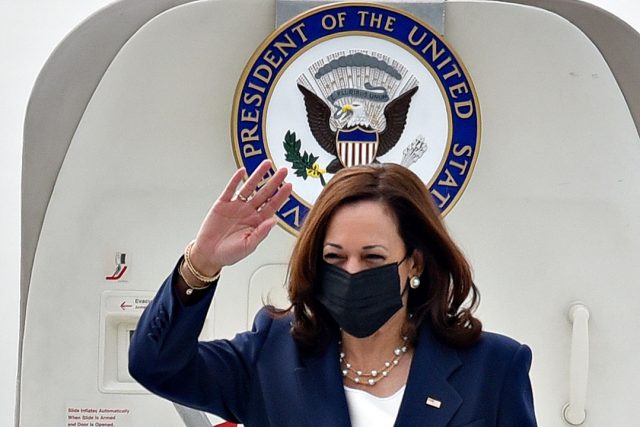
SINGAPORE — US  Vice President Kamala Harris on Tuesday accused China of coercion and intimidation to back unlawful claims in the South China Sea, in her most pointed comments on China on a visit to Southeast Asia, a region she said was critical to US  security.

Ms. Harris’s seven-day trip to Singapore and Vietnam is aimed at standing up to China’s growing security and economic influence globally and addressing concerns about China’s claims to disputed parts of the South China Sea.

Diverting attention and resources to the region has become a centerpiece of President Joseph Biden’s administration, as it turns away from old security preoccupations with the withdrawal of US  forces from Afghanistan.

The US  administration has called rivalry with China “the biggest geopolitical test” of the century and Southeast Asia has seen a series of high-profile visits by top administration officials, including Secretary of Defense Lloyd Austin.

“We know that Beijing continues to coerce, to intimidate and to make claims to the vast majority of the South China Sea,” Ms. Harris said in a speech in Singapore.

“These unlawful claims have been rejected by the 2016 arbitral tribunal decision, and Beijing’s actions continue to undermine the rules-based order and threaten the sovereignty of nations,” she said, referring to an international tribunal’s ruling over China’s claims in The Hague.

China rejected the ruling and has stood by its claim to most of the waters within a so-called Nine Dash Line on its maps, parts of which Brunei, Malaysia, the Philippines and Vietnam also claim.

China has established military outposts on artificial islands in the waters, which are crossed by vital shipping lanes and also contain gas fields and rich fishing grounds.

The US  Navy regularly conducts “freedom of navigation” operations through the disputed waters, which China objects to, saying they do not help promote peace or stability.

On board the USS Tulsa, a US  combat ship at the Changi Naval base in Singapore on Monday, Ms. Harris told US  sailors “a big part of the history of the 21st century will be written about this very region” and their work defending it was pivotal.

On Monday, Harris began her trip by meeting Singapore’s Prime Minister Lee Hsien Loong.

They discussed the importance of upholding a rules-based international order and freedom of navigation in the Indo-Pacific region, expanded cybersecurity cooperation and efforts to shore up critical supply chains between their countries. “Our partnerships in Singapore, in Southeast Asia and throughout the Indo-Pacific are a top priority for the United States,” Ms. Harris said on Tuesday, adding the region was “critically important to our nation’s security and prosperity.”

A top Chinese diplomat last month accused the United States of creating an “imaginary enemy” to divert attention from domestic problems and to suppress China.

Part of her task during the trip will be convincing leaders in the region that the US  commitment to Southeast Asia is firm and not a parallel to Afghanistan.

President Biden has faced criticism over his handling of the withdrawal of US  forces and the chaotic evacuation after the lightning takeover of Afghanistan by the Taliban.

Ms. Harris said the United States was “laser focused” on the task of “safely evacuating American citizens, international partners, Afghans who worked side by side with us, and other Afghans at risk.”

She also said that the United States had put itself forward to host a meeting of the Asia-Pacific trade group APEC in 2023, which includes the United States, China and Japan. — Reuters

Taliban rule presents aid agencies with moral dilemma

WASHINGTON — As foreign governments, aid institutions and companies scramble to evacuate staff from Afghanistan, a crucial question is emerging: should they engage with the ruling Taliban or abandon years of investment in the country and 38 million Afghans?

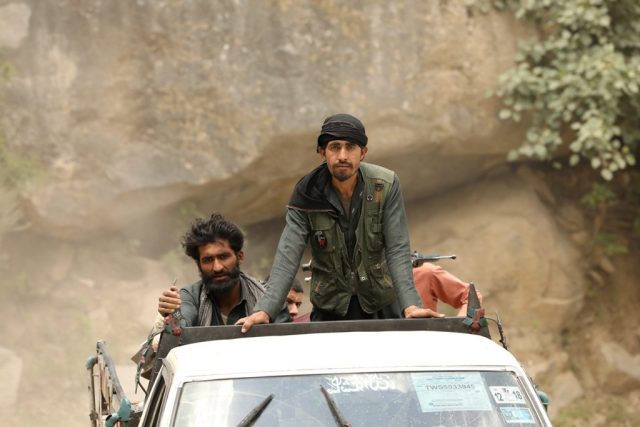
The Taliban in the past week has pledged peaceful relations with other countries, women’s rights and independent media but some former diplomats and academics said the Islamist militant group, while more media and internet savvy than the Taliban of the 1990s, is just as brutal.

The Taliban barred women from work, girls from school and killed or disfigured dissenters in public. It also harbored al Qaeda, which plotted the Sept. 11, 2001, hijacked plane attacks on New York and Washington that prompted a US-led invasion.

For foreign aid agencies the situation presents “a paradox,” said Robert Crews, a Stanford University history professor and author of the 2015 book Afghan Modern: The History of a Global Nation.

“If you are an aid worker at a state hospital, you are serving a regime whose legitimacy is in the balance,” he said. “But if everybody goes home, will the state collapse?”

Afghanistan’s government budget is 70% to 80% funded by international donors, including the US Agency for International Development (USAID), said Michael McKinley, who served as ambassador to Afghanistan in 2015 and 2016.

The country faces economic collapse without that aid.

“The Taliban is going to require substantial outside funding, unless they retreat to what they did from 1996 to 2001, which was essentially run the government to minimalist levels,” said Mr. McKinley, now with the Cohen Group consultancy. “Living off the narcotics trade did not provide them a path towards staying in power.”

International failure to engage with the Taliban could set up an even larger crisis, some warn. “There will be enormous temptation to just pull the plug and walk away, but we did that in 1989 and 9/11 happened 12 years later,” Daniel Runde, a development expert at the Center for Strategic and International Studies in Washington.

BILLIONS INVESTED
While foreign governments and aid groups evacuate thousands of people, they’re leaving billions of dollars in projects hanging in the balance, much of it through the Afghanistan Reconstruction Trust Fund.

The United States has allocated $145 billion towards Afghan reconstruction since 2002, a July 30 report from the Special Inspector General for Afghan Reconstruction shows.

The World Bank is contributing more than $2 billion to fund 27 active projects in Afghanistan, from horticulture to automated payment systems, part of more than $5.3 billion the development lender has spent on development and reconstruction of the country.

On Friday a flight from Kabul landed in Islamabad with 350 evacuees, including employees from the World Bank Group and other international institutions. A World Bank internal memo viewed by Reuters confirmed that its Kabul-based staff, including Afghan employees, had been evacuated with their immediate families.

“Our work in Afghanistan has been critical for development across the region. I am hopeful we will be able to have a positive impact once the situation stabilizes,” president David Malpass wrote.

The Asian Development Bank, also with extensive operations in Afghanistan, remains “committed to supporting Afghanistan’s economic and social development,” the group said in a statement.

Myanmar, upended by a military coup last year, provides some parallels. In February the World Bank and the International Monetary Fund (IMF)suspended all disbursements and projects there, a freeze that continues despite a worsening spread of COVID-19 in the country. Both organizations said they are guided by their membership when dealing with such abrupt changes of government and the United States holds dominant shares in both.

Citing a lack of clarity over its members’ recognition of the Afghan government, the IMF suspended Afghanistan’s access to Fund resources, including some $440 million in new monetary reserves that the IMF allocated on Monday.

Companies, including the US’s big social media firms and natural resources groups are split in how to deal with the Taliban, a microcosm of wider inconsistencies in how the international community classifies the group.

“We ought to take at some level of face value the statements that are coming out of Taliban leadership,” Mr. Runde, of CSIS argues. “They’re going to have to prove they’re serious about this.”

Ryan Crocker, who served as ambassador to Afghanistan in 2011-2012, and who has sharply criticized the US military exit from the country, said trusting the Taliban should not be an option.

“The Taliban are back in control, and they will bring their al-Qaeda allies with them,” Crocker said in a blog post on the Carnegie Endowment for International Peace website. “This is not a hypothetical security threat. These are the groups that brought about 9/11, and they have not become kinder and gentler in the interim.” — Reuters

Germany drops incidence levels as key COVID yardstick

BERLIN — Germany has decided to stop using the coronavirus infection rate as its yardstick for deciding if restrictions should be in force to contain the spread of the virus, Chancellor Angela Merkel said on Monday.

The seven-day incidence rate was a key measure in determining whether restrictions could be imposed or lifted, with infection thresholds of 35, 50 and 100 per 100,000 people triggering the opening or closure of different parts of society.

But as the number of people who are fully vaccinated rises, calls have grown for the incidence rate to be dropped as a measure to determine whether lockdowns are necessary.

“We decided today that we no longer need comprehensive protective measures when the number of cases or incidence is 50, because a large proportion of the people are vaccinated,” Ms. Merkel said.

The government and federal states will instead monitor hospitalizations as a key indicator for whether the health system is becoming overburdened, Ms. Merkel said.

Ms. Merkel added Berlin would discuss how to define the new measure in talks in the coming weeks with the 16 state premiers, who are in charge of health policies.

Germany reported 3,668 new coronavirus infections on Monday and a seven-day incidence rate of 56.4, according to the Robert Koch Institute for infectious diseases.

Some 59% of the population are full-vaccinated with around 64% having received at least one dose.

Ms. Merkel said more Germans should get vaccinated now to protect the health system from being overwhelmed during a possible fourth wave of infections later in the year.

“Our vaccination rate is not high enough yet,” the chancellor said. — Reuters

New Zealand has highest jump in COVID-19 cases since April 2020

WELLINGTON – New Zealand on Tuesday recorded its highest increase in COVID19 cases since April 2020, but authorities said the numbers were not rising exponentially and the majority of the cases were still in centred in Auckland where the recent outbreak started.

The South Pacific nation’s virus-free run since February ended last week after an outbreak of the highly contagious Delta variant of the coronavirus erupted in Auckland, New Zealand‘s largest city, and quickly spread to the capital Wellington.

Authorities reported 41 new COVID19 cases on Tuesday, taking the total number of infections in the country to 148, the Director General of Health Chief Ashley Bloomfield said at a news conference. That is the most new cases since April 2020, according to a graphic on the Ministry of Health website.

Of the new cases, 38 are in Auckland and three are in Wellington.

“It is reassuring that we are not seeing an exponential increase,” Bloomfield said, adding that with most cases being reported in Auckland, it indicated infections were not widespread.

However, the health ministry said in a statement later on Tuesday that it would not be unexpected to see a rise in daily case numbers at this stage of the outbreak and at its peak last year New Zealand had a daily total of 89 new cases.

Prime Minister Jacinda Ardern has garnered global praise for stamping out COVID19 in the country.

But, her reliance on strict border controls and snap lockdowns that have impacted the economy has been called into question amid the latest outbreak, which has occurred while few people have been vaccinated.

On Monday, Ms. Ardern extended the strict level 4 national lockdown by three days until midnight on Aug. 27 while Auckland will have restrictions in place at least until Aug. 31.

Finance Minister Grant Robertson said the government has enough funds to tackle the latest outbreak and the economy has been “incredibly resilient”.

“A strong public health response is still the best economic response,” he said in the news conference. – Reuters

Australia pandemic panel backs reopening targets despite Sydney outbreak

SYDNEY Australia can proceed with its reopening plans when the country reaches 70%-80% vaccination levels, the government’s pandemic modelling adviser said, even as some states hinted they may not ease border curbs if Sydney fails to control its Delta outbreak.

The Melbourne-based Doherty Institute said the country’s focus must shift to limiting the number of COVID-19 deaths and hospitalisations, from its current zero-cases strategy, when at least 70% of the country’s population above age 16 is fully vaccinated.

“This level of vaccination will make it easier to live with the virus, as we do with other viruses such as the flu,” it said in a statement late on Monday. “Once we reach 70% vaccine coverage, opening up at tens or hundreds of cases nationally per day is possible.”

Currently, 30% of Australia‘s adult population has been fully vaccinated while 53% have had at least one dose.

Australia in July unveiled a four-stage plan back to greater freedoms with higher vaccination rates. But Queensland and Western Australia states flagged they may not stick with the agreement as it was framed when case numbers in Sydney were much lower.

Prime Minister Scott Morrison acknowledged the concerns of some states from the Sydney outbreak but said “forever lockdowns” will do more harm than good to the country.

“It doesn’t matter whether it’s 30 cases or 800 cases, the conclusions are the same, and that’s what the Doherty Institute said … we can do this safely and we do need to do it,” Morrison told Nine News on Tuesday.


VACCINE PIVOT

Australia has suffered less from the coronavirus pandemic than many other developed countries with about 44,600 cases and 984 deaths. But a third wave of infections from the Delta variant has plunged Sydney and Melbourne, its largest cities, and capital Canberra into a weeks-long lockdown.

Sydney, the worst-affected, has reported rapid growth in new case numbers as state officials pivot to a faster vaccine rollout strategy as more than two months of stay-at-home orders have failed to stop the spread of Delta.

“Let us focus on the vaccine rates because that is what will determine how we can live moving forward,” New South Wales (NSW) state Premier Gladys Berejiklian said.

Berejiklian, who had promised more freedoms for the fully-vaccinated once total doses topped 6 million, said the state has crossed that milestone and changes will be announced later this week. Some 59% of people in NSW have had at least one dose, while 31% are fully vaccinated, slightly above the national numbers.

A total of 753 cases were reported in NSW, down from 818 on Monday, although daily infections continue to linger near record levels. Seventy-four deaths have been reported from the latest outbreak, although the rate of deaths has slowed from last year.

Neighbouring Victoria, struggling to contain its outbreak, expanded access to the Pfizer shots from Wednesday to anyone over the age of 16 to help reach a goal of a million doses over five weeks. Fifty new locally acquired cases were detected in the state on Tuesday, down from 71 a day earlier. – Reuters

Nestlé expands R&D center, invites food startups in Southeast Asia

Nestlé

Food technology startups in Southeast Asia can access Nestlé’s upgraded research-and-development (R&D) center in Singapore through the food company’s new R&D Accelerator program.  

The center’s state-of-the-facilities can be used to tweak food products to fit local consumer preferences, taste, and nutritional requirements of markets in Southeast Asia, including the Philippines. 

“If you want to be successful in our business, you need a good understanding of the flavors people love, the dishes they want to serve to their families, the food trends they want to try,” said Chris Johnson, chief executive officer of Nestlé’s Asia, Oceania, and Sub-Saharan Africa (AOA) division, at the center’s virtual launch. “That’s why it’s so important to have an R&D team in Singapore, here in the heart of Southeast Asia, a center of excellence driving innovation and product development in Asia, for Asia.”  

The R&D Accelerator will give startups, students, and employees access to new labs, experimental kitchens, testing facilities, sensory evaluation rooms, open working spaces, and research hubs. There, they can develop their concepts for up to six months.  

There’s been a rise in demand for healthy, natural, and sustainable products in the region, according to Mr. Johnson, who shared that the facilities have been used by Nestlé scientists to develop innovations like non-dairy Nescafé mixes and Milo powdered beverages as well as plant-based meat alternatives.  

At the Milo facility, for example, researchers developed soy-based and almond-based products that retain the chocolate malt beverage’s signature taste, said Thomas Hauser, head of Nestlé’s global product and technology development.  

“We have 1.6 billion Swiss francs invested in R&D, wherever there is a need,” he said, on the importance of developing more product lines to cater to every market, whether in Asia or elsewhere. “The entire center has 300 researchers that work there.”  

Other sustainable products that come out of the center include Nescafé Gold non-dairy lattes and Starbucks’ Silky Soy and Toasted Oat Lattes. The R&D Center is also working on meat alternatives and plant-based burger patties, schnitzels, and meat mince, which are then produced in Malaysia.  

Nestlé’s Harvest Gourmet brand incorporates these plant-based innovations in Asian cuisine such as dumplings and katsudon. These are developed from the R&D Center’s test kitchens, which separate halal from non-halal products.  

“More and more consumers are interested firstly, in health; secondly, in sustainability for the planet; and thirdly, in animal welfare,” said Mr. Johnson, Nestlé’s AOA chief. 

In the Philippines, Nestlé promotes regenerative agriculture and sustainable coffee production through partnerships with Mindanao-based Robusta coffee farmers — an example of sustainable initiatives that Nestlé expects to come out of the R&D Accelerator.  

“We look for bright ideas and innovators from universities in Singapore or within the region, and we’re open to undergraduate or graduate students who want to pilot initiatives with us. Same is valid for early startups who want to bring an idea to market but may not have the know-how,” said Guglielmo Bonora, managing director of Nestlé’s R&D Center in Singapore. 

Added Mr. Hauser: “They can tap into our expertise in food science, food safety, and regulatory, managing, and packaging purposes, and test products in real market conditions.” — Brontë H. Lacsamana

Philippines’ Duterte accepts endorsement to run as vice president in 2022

PRESIDENT RODRIGO R. DUTERTE — PHILIPPINE STAR/ MICHAEL VARCAS

MANILA – Philippine President Rodrigo Duterte has agreed to be the ruling political party’s candidate for vice president in next year’s elections, a senior official of the PDP-Laban party said in a statement.

In accepting the endorsement, Duterte is making “the sacrifice” and heeding “the clamour of the people,” said Karlo Nograles, executive vice president of the ruling PDP-Laban party. – Reuters

Biden expected to decide within 24 hours on Afghan evacuation deadline

KABUL/WASHINGTON – With thousands of desperate Afghans and foreigners massed at Kabul’s airport in the hope of fleeing Afghanistan’s new Taliban rulers, U.S. President Joe Biden is expected to decide as soon as Tuesday on whether to extend an Aug. 31 deadline to airlift Americans and their allies to safety.

Biden warned on Sunday that the evacuation was going to be “hard and painful” and much could still go wrong. U.S. troops might stay beyond an Aug. 31 deadline to oversee the evacuation, he said.

On Monday, an administration official told Reuters that Biden would decide within 24 hours whether to extend the timeline to give the Pentagon time to prepare.

Beyond the need to remove thousands of Americans, citizens of allied countries and Afghans who worked with U.S. forces, Department of Defense officials said it would still take days to fly out the 6,000 troops deployed to secure and run the airlift.

Some Biden advisers were arguing against extending the self-imposed deadline for security reasons. Biden could signal his intentions at a virtual meeting of the Group of Seven wealthy nations on Tuesday.

Two U.S. officials had said the expectation was that the United States would continue evacuations past Aug. 31. A senior State Department official told reporters the country’s commitment to at-risk Afghans “doesn’t end on Aug. 31.”

Later on Monday, Democratic U.S. Representative Adam Schiff, chairman of the House of Representatives Intelligence Committee, told reporters after a briefing on Afghanistan by intelligence officials that he did not believe the evacuation could be completed in the eight remaining days.

“I think it’s possible but I think it’s very unlikely given the number of Americans who still need to be evacuated,” Schiff said.

A Taliban official said foreign forces had not sought an extension and it would not be granted if they had. Washington said negotiations were continuing.

White House national security adviser Jake Sullivan said the United States was in daily talks with the Taliban and making “enormous progress” in evacuating Americans and others.

Between 3 a.m. and 3 p.m. local time on Monday, some 10,900 people were evacuated from Kabul, meaning the United States had facilitated the removal of 48,000 people since Aug. 14.

U.S. defense officials had told Reuters that almost everything would have to go perfectly to extricate every American citizen by Aug. 31, given concerns about reaching the airport, terrorist attacks and complicated processing times.

State Department spokesman Ned Price told reporters the United States had discussed future control of the airport with the Taliban, as well as with U.S. partners and allies.


‘DOES IT STILL HURT? YES’

The Taliban’s swift takeover and ensuing chaos in Afghanistan have roiled U.S. politics, with opposition Republicans piling criticism on Biden for the withdrawal, which was initiated by his Republican predecessor, Donald Trump. Biden‘s opinion poll numbers have slipped.

Biden‘s fellow Democrats who control Congress have promised to investigate what went wrong in Afghanistan within the past weeks and throughout the 20-year conflict, America’s longest war.

For its part, the powerful U.S. military has been grappling with the collapse of U.S.-backed Afghan forces after 20 years of training. “Was it worth it? Yes. Does it still hurt? Yes,” General David Berger, the commandant of the Marine Corps, wrote in a memo to Marines.

The difficulties at the airport were underlined on Monday with a firefight between Afghan guards and unidentified gunmen. German and U.S. forces were also involved, the Germany military said.

A local Taliban militant, speaking to a large crowd in Kabul, urged Afghans to remain.

“Where has our honor gone to? Where has our dignity gone to?” the unidentified militant said. “We will not let the Americans continue to be here. They will have to leave this place. Whether it is a gun or a pen, we will fight to our last breath.”


WORKING WITH ALLIES

The Taliban seized power last week as the United States and its allies withdrew troops after the war launched after the Sept. 11, 2001, attacks. Panicked Afghans and foreigners have thronged the airport since, clamoring to catch any flight out. Many fear reprisals and a return to a harsh version of Islamic law the Taliban enforced while in power from 1996 to 2001.

Twenty people have been killed, most in shootings and stampedes, as international forces try to bring order. One member of the Afghan forces was killed and several wounded in Monday’s clash, the U.S. military said.

A British government spokesperson said British evacuations could not continue once U.S. troops leave. French Foreign Minister Jean-Yves Le Drian also said more time was needed.

German Foreign Minister Heiko Maas said the virtual G7 summit must agree on whether to extend the deadline and how to improve access to the airport.

The airport chaos also disrupted aid shipments. The World Health Organization said tons of medical supplies were stuck because Kabul airport was closed to commercial flights.

Leaders of the Taliban, who have sought to show a more moderate face since capturing Kabul, have begun talks on forming a government, while their forces focus on the last pockets of opposition.

ADVERTISEMENT
ADVERTISEMENT