Home Blog Page 7595

Transpacific Broadband profit up nearly 85%

LISTED Transpacific Broadband Group Int’l, Inc. saw its net income for the second quarter grow 84.6% as service income climbed despite the pandemic crisis.

The company’s second-quarter net income after tax increased to about P1.4 million from P752,039, its report for the previous quarter showed.

Second-quarter revenues, which include service income and other income, rose 43.9% to P14.1 million from P9.8 million in the same period a year ago.

Expenses for the quarter increased 44.8% to P12.6 million from P8.7 million in the previous year.

For the first half, net income after tax leaped 466.7% to P6.8 million from P1.2 million in the same period in 2020.

Total revenues for the first half went up 50.8% to P29.1 million from P19.3 million last year.

Expenses for the period increased 25.1% to P21.9 million from P17.5 million previously.

“There is no seasonal effect that had material [impact] on the financial condition or results of operation except for the potential impact of the coronavirus disease 2019 (COVID-19) pandemic,” the company said. — Arjay L. Balinbin

PDIC fully covers 96.7% of deposit accounts as of March 

THE Philippine Deposit Insurance Corp. (PDIC) fully covered 96.7% or 78.2 million out of 80.9 million accounts as of the first quarter of 2021, it said in a statement on Thursday. 

This was 6.8% higher compared to the 73.3 million deposit accounts that were fully covered by the PDIC in the same period of 2020. 

“We are optimistic that the depositing public will continue trusting banks and for bank deposits to sustain their steady growth to help fuel the economy. The PDIC, as a financial safety net, will always remain committed to its pursuit of depositor protection and in promoting financial stability in the country through responsive and effective services,” PDIC President and CEO Roberto B. Tan said in the statement.  

In terms of value, total insured deposits rose 5.9% to P3 trillion at end-March from P2.9 trillion a year earlier. More than half (55.8%) or P1.7 trillion of these funds were fully covered. Meanwhile, 44.2% or P1.3 trillion were partially insured of up to the maximum deposit insurance of P500,000.  

Fully insured and partially insured deposits deposits made up 11.3% and 9% of the total deposits, respectively, which grew 7.8% to P15 trillion as of March 2021 from P13.9 trillion a year earlier. The increase in deposits came on the back of a 6.8% growth in the number of deposit accounts to 80.9 million from 75.8 million. 

Broken down, deposit accounts with balances between P100,000 to P500,000 climbed by 7.1% to 5.1 million from 4.8 million last year.  

Meanwhile, deposits valued at P100,000 and below rose 6.8% to 73.2 million from 68.5 million accounts. 

Deposits that were beyond the maximum deposit insurance of P500,000 increased by 6.6% to 2.7 million from 2.5 million accounts a year earlier. 

Data showed savings and demand deposit accounts made up 77.3% of total domestic deposits at P7.3 trillion and P4.3 trillion, respectively. Time deposits and long-term negotiable certificates of deposit (LTNCD) accounted for 22.7% at P3.4 trillion.  

The PDIC noted that the economic impact of the crisis showed how liquidity became a priority for many depositors. 

“This is evident in the 11.3% year-on-year contraction in the total time deposit and LTNCD balances, and in the growth rates for savings and demand/now deposits at 15.3% and 14.9%, respectively,” it said. — LWTN 

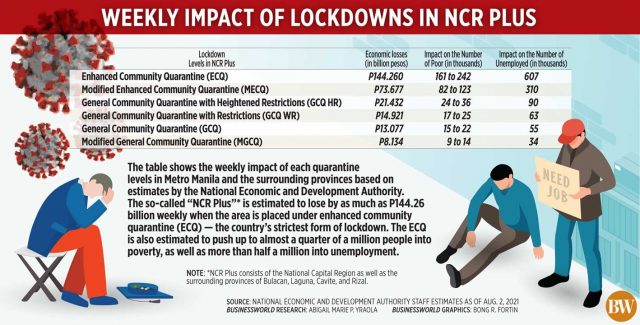
Weekly impact of lockdowns in NCR plus

THE NATIONAL Economic and Development Authority (NEDA) is expecting the economy to return to its pre-pandemic level by end of 2022 or early 2023, as quarantine restrictions continued to hamper growth. Read the full story.

Weekly impact of lockdowns in NCR plus

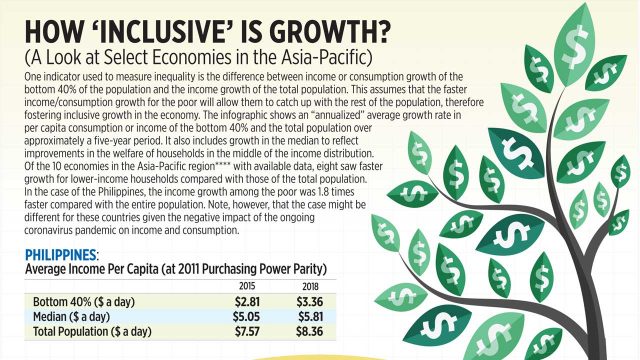
How ‘inclusive’ is growth?

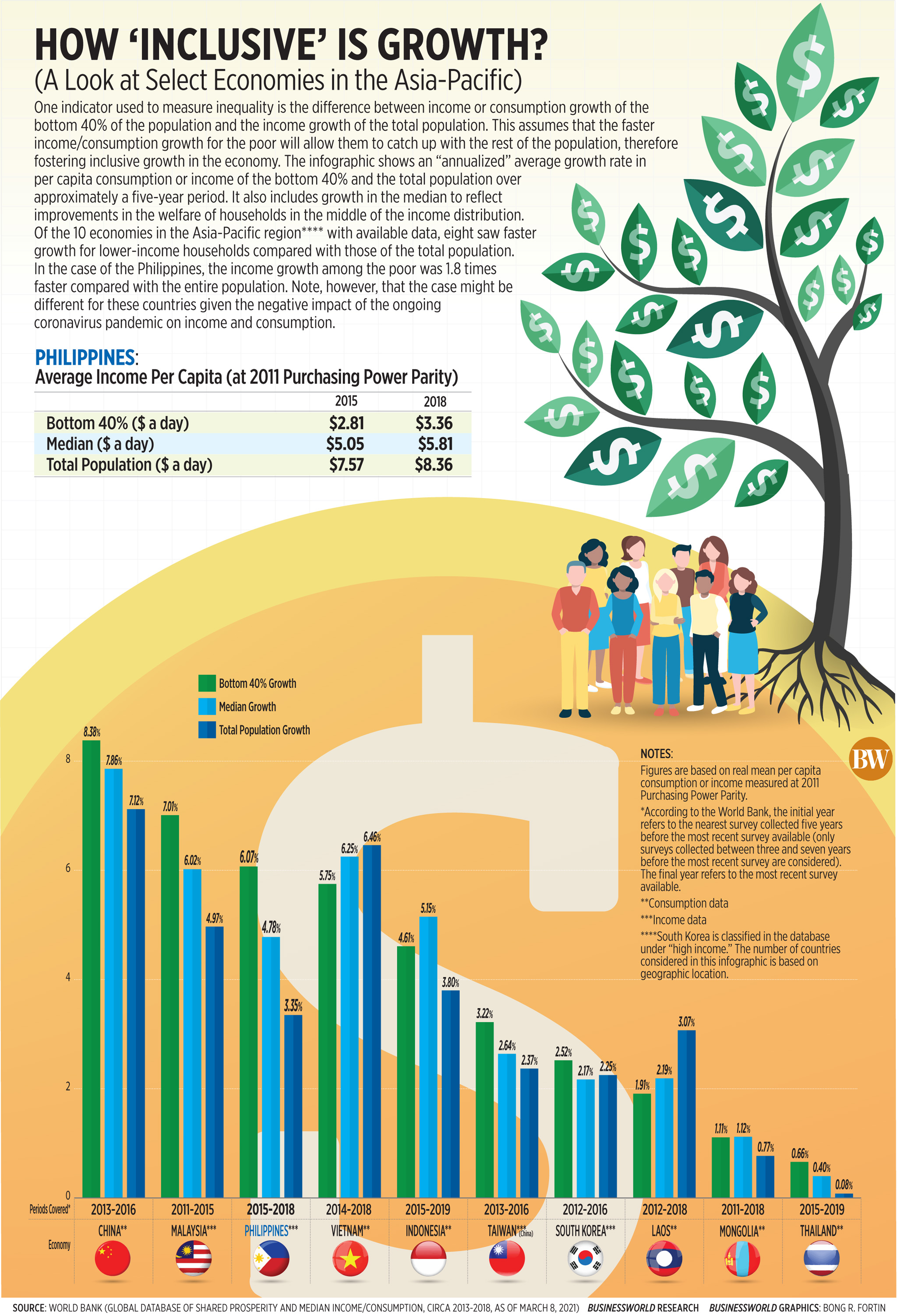
How ‘inclusive’ is growth?

How PSEi member stocks performed — August 26, 2021

Here’s a quick glance at how PSEi stocks fared on Thursday, August 26, 2021.

Infections may peak in coming weeks, says DoH

PHILIPPINE STAR/ MICHAEL VARCAS

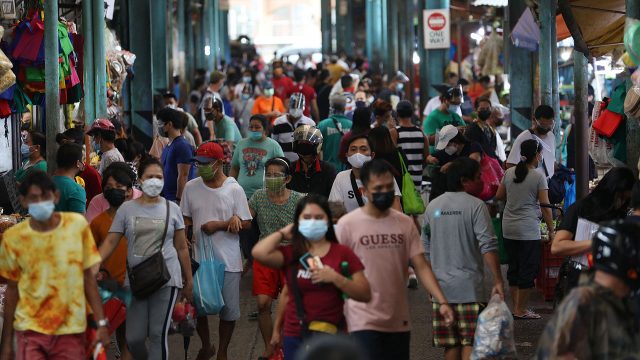
CORONAVIRUS infections are expected to peak in the coming weeks, Health authorities said on Thursday, a week after the capital region was placed under a strict lockdown to contain a more contagious Delta variant.

“In the next days and weeks, we’ll probably be seeing additional peaks,” Alethea De Guzman, director of the Health department’s Epidemiology Bureau said at a virtual forum.

The new peak from Aug. 19 to 25 had surpassed the previous peak experienced from Aug. 12 to 20, she said.

The Department of Health (DoH) reported 16,313 coronavirus infections on Thursday, bringing the total to 1.9 million.

The death toll rose to 32,728 after 236 more patients died, while recoveries increased by 9,659 to 1.74 million, it said in a bulletin.

There were 131,921 active cases, 96.1% of which were mild, 1.1% did not show symptoms, 1.2% were severe, 1.03% were moderate and 0.6% were critical.

The agency said 201 duplicates had been removed from the tally, 201 of which were tagged as recoveries, while 125 recoveries were reclassified as deaths. Five laboratories failed to submit data on Aug. 24.

The country had a daily average of 15,537 cases from Aug. 19 to 25, Ms. de Guzman said, higher than the 12,897 cases reported daily from Aug. 12 to 20.

She noted that the increase in coronavirus cases earlier this year started in late February but only peaked in the first week of April.

Ms. de Guzman said the country had not felt the full effect of the recent enhanced community quarantine, but “there is really a probability that we will still see additional cases.”

She said all regions and local government units in Metro Manila either have Alpha or Beta coronavirus variants. The Delta variant first detected in India was now present in 16 of 18 Philippine regions.

Ms. De Guzman said the death toll from the coronavirus had also been increasing. “The lowest was last July at 94. We are now logging 109 deaths per day.”

The country remained under the high-risk classification, with most regions at moderate to high-risk health use rate, Ms. de Guzman said.

These regions include Metro Manila, Southern Tagalog, Central Luzon, Cagayan Valley, Northern Mindanao, the Cordillera Administrative Region, Central Mindanao, Ilocos, Davao and Western Visayas.

All areas in Metro Manila were either at high or critical risk, Ms. de Guzman said.

More than 100 provinces, highly urbanized cities and independent component cities were under critical alert levels for the coronavirus, she said, adding that 70% of beds and intensive care units in most of these areas had been used.

Meanwhile, health workers will proceed with a plan to go on strike on Aug. 31 after the Health department failed to commit to pay their benefits.

“It is clear from the Senate hearing on Wednesday that the Department of Health (DoH) only wants to pay health workers special risk allowance” Robert Mendoza, president of the Alliance of Health Workers said by telephone on Thursday.

Health frontliners have been seeking their allowance for meals, transportation and active duty hazard pay, among other things he pointed out.

Mr. Mendoza said health workers could resign en masse if the government refuses to give what is due them.

President Rodrigo R. Duterte on Aug. 21 gave DoH and the Budget department 10 days to use whatever money the government has to pay health workers.

Mr. Mendoza said DoH, health workers and senators agreed at a hearing on Aug. 16 that health workers who don’t care for coronavirus patients would also get their special risk allowance. “But what happened now? It seems that they are too focused on the special risk allowance for health workers who are directly exposed to the coronavirus.”

Health Secretary Francisco T. Duque III told lawmakers at a House public account committee hearing on Thursday DoH had asked the Commission on Audit and Justice department to clarify whether all health workers are eligible to the special allowance.

The Health department on Thursday said it would ask the Budget department to provide the funds for health workers’ meal, accommodation and transportation allowance.

In a statement, the agency said the special allotment release order for P311 million worth of special risk allowance had transferred to its Centers for Health Development. The amount would benefit 20,208 more health workers, it added.

The money will be released to local government units and private health facilities in the next few days.

Meanwhile, Health Undersecretary Leopold J. Vega urged the Philippine Health Insurance Corp. (PhilHealth) to prioritize the payment of claims from private hospitals, which have threatened to cut ties with the state insurer.

Private hospitals find it hard to generate revenue since they have focused on coronavirus patients, he told ABS-CBN Teleradyo.

Some hospitals have threatened to cut ties with PhilHealth after it suspended payment to healthcare providers whose claims are under investigation. — Kyle Aristophere T. Atienza


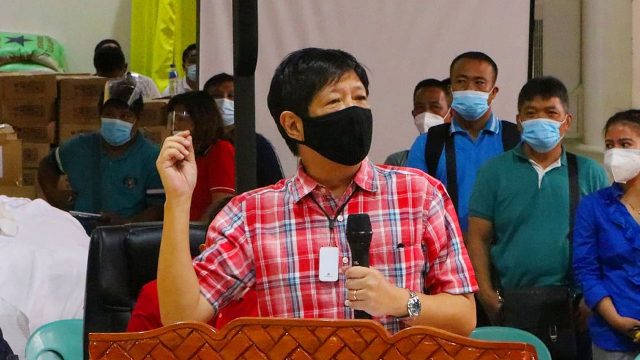
Dictator’s son may run for President in 2022, his sister says

BONGBONG MARCOS FB PAGE

FERDINAND “Bongbong” R. Marcos, Jr. might run for President next year, but is also open to the vice presidential post if he could find a running mate, his sister Senator María Imelda Josefa “Imee” R. Marcos said on Thursday.

“For all intents and purposes, he has his own setup, and he is running for President at the present time, but not officially declared,” the lawmaker told the ABS-CBN News Channel. 

Mr. Marcos, son of the late dictator Ferdinand E. Marcos, did not immediately reply to an e-mail seeking comment.

Ms. Marcos said her brother would be honored to be the vice-president of President Rodrigo R. Duterte’s daughter, Davao City Mayor Sara Duterte-Carpio. The tandem would be a “marriage made in heaven.”

“The most obvious thing is if the Dutertes have the solid south, we’re assumed to have the solid north,” she added. “It looks like a really solid tandem.”

“My brother is a fairly easy going fellow, and I believe that he is happy to talk to everyone,” Ms. Marcos said.

The senator said she supports a tandem between her brother and Ms. Duterte, but also does not mind if the presidential daughter chooses to work with Senator Christopher Lawrence T. Go instead.

Mr. Go, Mr. Duterte’s former aide, on Thursday said there were no issues between him and Ms. Duterte. “The degree of my love for the father is the same as my love for the child,” he said in a statement. — Alyssa Nicole O. Tan

Court convicts cop for murder of mother and son in Tarlac province

A REGIONAL trial court in Tarlac on Thursday convicted a former policeman for the murder of a mother and her son last year.

The court sentenced ex-Staff Sergeant Jonel Nuezca to a jail term of 40 years for each count of murder. It also ordered the convict to pay the heirs of Sonya and Frank Anthony R. Gregorio P952,560 in damages.

“A ‘shoot first, think later’ disposition occupies no decent place in a civilized society,” Judge Stella Marie Q. Gandia-Asuncion said in an 18-page decision dated Aug. 26. “Never has homicide or murder been a function of law enforcement.”

The judge said the attack on the victims, whom the former cop shot and killed over an argument, was “treacherous” because it was “so swift and sudden that the victims were not able to defend themselves.”

The shooting that took place in Paniqui, Tarlac in December was recorded on video and posted on social media. The video became viral and people criticized the police for it.

The video showed the ex-policeman and his daughter in a heated argument with Ms. Gregorio and her son over their fireworks.

The policeman was seen with his young daughter in a heated discussion with Frank Anthony, whose mother was holding him back.

The ex-cop’s daughter shouted “My father is a policeman,” and the ex-cop was heard threatening to kill them. He then shot and killed the mother in the head, then proceeded to shoot Frank Anthony twice, before firing at Sonya once again while she was already on the ground.

Mr. Nuezca was fired from his job, and it was later found out that he had been demoted in October for robbery and extortion in 2014. — Bianca Angelica D. Añago

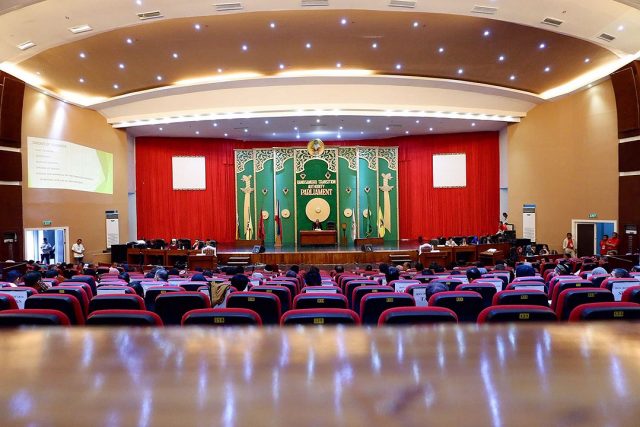
Postponement of Bangsamoro parliamentary election hurdles House 2nd reading 

BW FILE PHOTO/ TSBASMAN

THE PROPOSED three-year postponement of the 2022 election for 80 parliament members in the Bangsamoro region was approved on second reading at the House of Representatives on Thursday, a day after a counterpart bill was similarly passed by the Senate.   

With 39 ‘yes’ votes, 4 ‘no’, and 0 abstention, three House committees — Suffrage and Electoral Reforms, Muslim Affairs, and Peace, Reconciliation and Unity — jointly approved moving the parliamentary elections to 2025.   

Similar to the Senate version, the House bill also maintains the term of the current members of the Bangsamoro Transition Authority (BTA) to June 30, 2022 or until the new Philippine president who will be elected in May next year appoints the new set of members.   

The current BTA, whose members were appointed by President Rodrigo R. Duterte, serve as parliament members under the transition period of the new region.  

Maguindanao Representative Datu Roonie Q. Sinsuat, Sr. emphasized during the joint committee deliberations the urgency of the bill as the election period nears.  

“The main issue is the postponement of elections,” he said, adding that all other “peripheral issues” such as the normalization stage of the peace process could be tackled through other venues.   

The Senate voted on the bill 18-1-2, with Senator Panfilo M. Lacson, Sr. the only one giving a ‘no’ vote, while Senate President Pro Tempore Ralph G. Recto and Senator María Imelda Josefa “Imee” R. Marcos abstained.  

Senator Francis N. Tolentino, chair of the Senate Committee on Local Government and the principal sponsor of the bill, said in a statement that the approval will ensure the swift implementation of the political and normalization tracks that were agreed upon during the peace talks between the national government and the Moro Islamic Liberation Front. — Marifi S. Jara and Alyssa Nicole O. Tan 

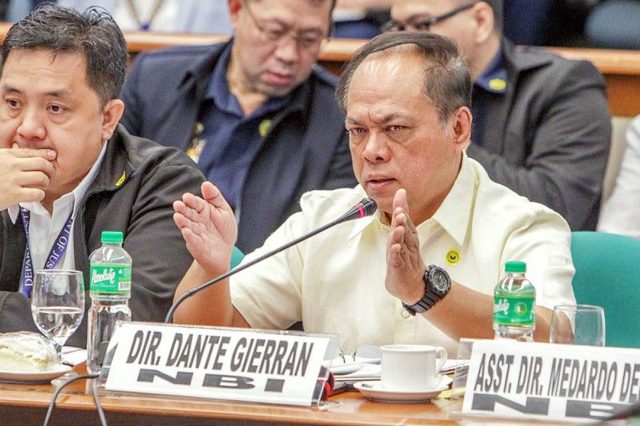
PhilHealth president vows to release 60% of private hospitals’ unpaid claims next week  

PHILSTAR

By Bianca Angelica D. Añago Reporter 
and Russell Louis C. Ku 

PHILIPPINE HEALTH Insurance Corp. (PhilHealth) President and Chief Executive Officer Dante A. Gierran has pledged to release funds for 60% of the unpaid claims of private hospitals by the end of next week.   

In a House hearing on Thursday, Mr. Gierran said PhilHealth owes private hospitals a total of P21.1 billion as of Aug. 24.  

“P17 billion is already in the pipeline, we’re just waiting for the documentations,” he said.  

Mr. Gierran also clarified that the delay in the release of claims was due to “miscommunication” with the private hospitals, primarily due to problems in their information and communications technology.   

Private hospitals have threatened to cut ties with the state insurer, citing the impact of payment delays to their operations, especially amid the coronavirus pandemic.    

PhilHealth’s Senior Vice President Emily B. Roque also said that “there is a delay in coronavirus disease 2019 (COVID-19) payments because PhilHealth has policies that need to be amended to improve the processing of COVID claims.”  

In a news briefing on Aug. 23, Presidential Spokesperson Herminio L. Roque, Jr. urged PhilHealth to immediately pay private hospitals so as not to further burden the country’s healthcare system.   

This was after PhilHealth announced that it will temporarily suspend the payment of claims to healthcare providers that are “subject of investigations pertaining to fraudulent” claims.   

PhilHealth said that from January to Aug. 2021, there were 5,872 fraudulent claims filed by the corporation’s prosecution department to its adjudication department.  

Health groups, however, said PhilHealth “aims to suspend the payment of hospital claims on the ground of apparent or probable cause, or on a mere suspicion.”      

Anti-Red Tape Authority Secretary Director General Jeremiah B. Belgica has recommended that PhilHealth release the payment for claims “within three days, evaluate diagnosis within 20 days, then release full payment afterwards.”  

He added that PhilHealth must follow their mandate that claims should be released within a maximum of 60 days.  

PRIVATIZATION
Meanwhile, a House representative who authored a bill last year that would open Philhealth to the private sector said on Thursday that privatization will help the embattled state insurer hire manpower that can investigate possible fraudulent claims.    

“It doesn’t mean that privatizing Philhealth is that we will sell PhilHealth. What I’m saying is let’s outsource certain functions from the private sectors,” Marikina Rep. Stella Luz A. Quimbo said in a One News interview.  

House Bill 7429, also known as the Social Health Insurance Crisis Act of 2020, would grant power to the President to privatize any or all segments of PhilHealth and can abolish or create offices, transfer functions, and do drastic cost-cutting to carry out the move.  

It would introduce the creation of an Executive-Legislative Commission to craft policy framework and carry out necessary steps to reorganize the state insurer, including the designation of a transition team that will assume management until its reorganization is completed within two years. 

Ms. Quimbo said the circular on withholding payments is not the best way to prevent fraud in PhilHealth, and suggested that the state insurer should instead increase legal capacity and use information technology to detect malpractices.

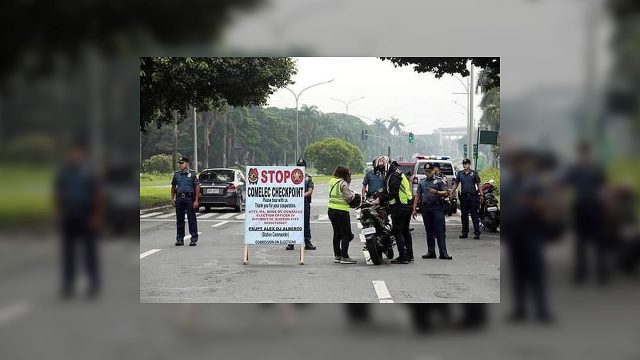
Police chief orders early security preparation for 2022 elections  

PHILSTAR

NATIONAL POLICE chief Guillermo T. Eleazar directed all units and area commanders on Thursday to start planning security measures for the May 2022 polls to ensure the safety and integrity of the electoral process.   

“Along with the heated discussion on next year’s elections, I have instructed all our area commanders to begin preparations to ensure clean and orderly elections in our country,” Mr. Eleazar said in Filipino in a news release. 

Among the measures to be taken are monitoring the presence of loose firearms, track guns with expired licenses, and be on alert for the formation of private armed groups.   

In a press statement in June, Interior and Local Government Secretary Eduardo M. Año warned that private armed groups usually emerge during the campaign period for fund-raising or threaten political rivals.    

“We have to make sure that they would be denied of this illegal activity, so it is really important that we start early to study and anticipate any threat to the elections next year,” Mr. Eleazar said.   

According to Mr. Año, the military is currently addressing seven private armed groups in the western part of Mindanao and monitoring the possible emergence of around 126 armed groups in northern Luzon, and the eastern and western Visayas. — Bianca Angelica D. Añago  

DepEd to distribute 40,000 laptops to teachers, personnel 

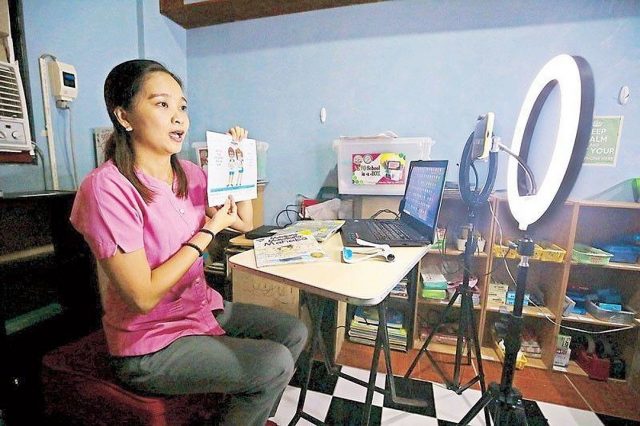
A TEACHER holds an online class in this August 2021 photo. — THE PHILIPPINE STAR/MICHAEL VARCAS

THE DEPARTMENT of Education (DepEd) on Thursday said it is set to deliver this month some 40,000 laptops to teachers and other personnel nationwide to boost the country’s distance learning program.  

“This would go a long way in our continued implementation of our Basic Education-Learning Continuity Plan and in providing technical support to our field offices nationwide,” Education Secretary Leonor M. Briones said in a press release.  

DepEd said its regional supply office still needs to finalize the list of recipients.  

“Our direction is to provide laptops for each teacher and our DepEd offices,” Undersecretary for Administration Alain Del B. Pascua was quoted as saying.   

The laptops were procured through the Department of Budget and Management-Procurement Service with funding from the Bayanihan to Recover As One Act (Bayanihan II).  

More than half of Filipino teachers used their personal money for gadgets and internet connectivity in the implementation of distance learning, according to the National Research Council of the Philippines. — Kyle Aristophere T. Atienza 

ADVERTISEMENT
ADVERTISEMENT