Home Blog Page 7575

Bank lending slips for 8th straight month in July

BW FILE PHOTO

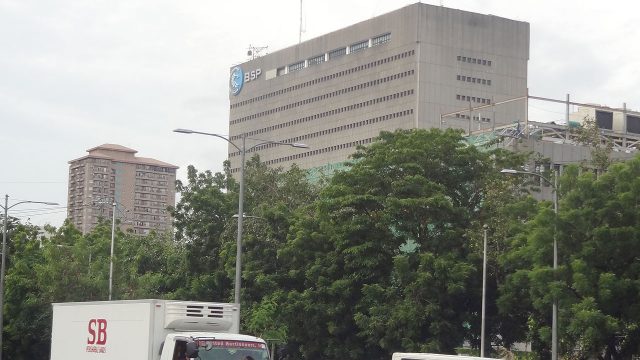
BANK LENDING slipped for an eighth consecutive month in July, although at a softer pace as borrowings for production activities increased amid looser quarantine restrictions.

Outstanding loans issued by big banks dipped 0.7% year on year to P9.137 trillion in July, based on preliminary data from the Bangko Sentral ng Pilipinas (BSP) released Tuesday evening.

The decline in July is softer than the 2% contraction in June, and matched the drop seen in December 2020. To recall, December saw bank lending fall for the first time since September 2006.

Inclusive of reverse repurchase agreements, outstanding loans disbursed by big banks slid by 0.5%.

Bank lending rose by 0.5% on a seasonally adjusted basis month on month, as July saw a further relaxation of restrictions in the capital region.

“Looking ahead, the BSP will continue to prioritize monetary policy support in order to ensure the continued momentum of economic recovery,” the central bank said in a statement.

“At the same time, the National Government’s targeted fiscal initiatives and health interventions will be crucial in boosting domestic demand and strengthening the recovery.”

The softer decline in bank lending reflects the lag in the effect of monetary policy, ING Bank N.V. Manila Senior Economist Nicholas Antonio T. Mapa said.

Policy rates are currently at a record low after the Monetary Board cut policy rates by a total of 200 basis points in 2020.

“BSP’s last follow-through rate cut in November appears to be finally helping lift lending somewhat with August bank lending expected to post a modest gain on a year-on-year basis,” Mr. Mapa said in an e-mail.

In July, lending for production activities rose 0.8%, a turnaround from the 0.6% contraction in June. The BSP attributed this to the higher borrowings for real estate activities (5.9%); information and communication (14%); electricity, gas steam and air-conditioning supply (2.1%); and transportation and storage (7%).

On the other hand, bank loans for other commercial activities dropped, including those for wholesale and retail trade and repair of motor vehicles and motorcycles (-4.5 %) and manufacturing (-2.6%).

Retail loans contracted by 8.2% in July, although softer than the 8.7% fall in June. Consumer loan segments continued to decline, led by motor vehicle loans (-15.4%), salary-based loans (-5.8%), and credit cards (-1.6%).

Even after a two-week strict lockdown was implemented in August, analysts are hopeful that credit growth will pick up in the coming months.

“I am expecting that the enhanced community quarantine (ECQ) of 2020 is not the same with the ECQ of 2021, and that the latter a lighter version of the other, in terms of the magnitude of restrictions. With this, I am hoping for a softer negative impact than that of 2020,” UnionBank of the Philippines, Inc. Chief Economist Ruben Carlo O. Asuncion said in an e-mail.

Banks’ risk appetite could improve once economic activities pick up in the next few months depending on the country’s pandemic management, Mr. Mapa said.

“We’ve noted the likely normalization of business activity if the country is better able to contain the virus and authorities must do all they can on the public health front to ensure an eventual smooth transition back to business operations,” he added.

M3 GROWTH SLOWS
The eighth straight month of lending decline coincided with continued growth in money supply, although slower than what was seen in June.

M3 — which is considered as the broadest measure of liquidity in an economy — rose by 5.9% in July, slower than the 6.5% growth in June, based on preliminary BSP data also released on Tuesday evening.

It rose by 0.1% month on month.

The slower M3 growth was likely due to base effect given the aggressive liquidity infusion measures done last year at the onset of the pandemic, Rizal Commercial Banking Corp. Chief Economist Michael L. Ricafort said.

Domestic claims increased 4.5%, easing from the 5.3% expansion in June. The BSP attributed this to the increase in net claims on the central government as well as the slight improvement in bank lending to the private sector.

“Going forward, the BSP will ensure that domestic liquidity remains adequate to support domestic economic activity, in line with the BSP’s price and financial stability objectives,” the central bank said.

The central bank has provided liquidity to the financial system through various easing measures. It has released some P2.2 trillion into the financial system, which is equivalent to about 12.1% of gross domestic product.

Despite this liquidity boost, banks remained risk-averse amid increased uncertainty as the pandemic continued.

In August, BSP Governor Benjamin E. Diokno said the central bank is not keen on raising rates or cutting banks’ reserve requirement ratio (RRR) while the country is still at the early stages of recovery.

He said there is still a lot of liquidity in the system, adding they might consider the need for further reduction in the RRR when there is strong loan demand.

The BSP kept the key policy rate unchanged at 2% in its Aug. 12 meeting. The Monetary Board will have its next policy-setting meeting on Sept. 23. — Luz Wendy T. Noble


Philippines’ ODA portfolio hits $30B

JAPAN INTERNATIONAL COOPERATION AGENCY
JAPAN remained the country’s top source of official development assistance (ODA) in 2020. The rehabilitation of the Porac-Gumain River Irrigation System is one of the projects funded by Japan ODA. — JAPAN INTERNATIONAL COOPERATION AGENCY

THE COUNTRY’S active official development assistance (ODA) portfolio jumped by 42% to $30.39 billion (P1.52 trillion) in 2020 as the government tapped more quick-disbursing loans to fund its pandemic response, the National Economic and Development Authority (NEDA) reported.

Preliminary data from NEDA obtained by BusinessWorld showed the foreign aid portfolio consisted of $29.004 billion in loans from development partners and $1.688 billion in grants.

The number of programs and projects supported by ODA went up 1.4% to 357 in 2020, comprised of 106 active loan agreements and 251 active grants.

The Philippines has ramped up its foreign borrowings to finance its pandemic response.

“The unprecedented challenges brought by the pandemic prompted a shift in sourcing and utilizing ODA financing in the new normal, from project-specific to quick-disbursing program loans,” NEDA said on Tuesday.

ODAs are concessional financing that multilateral banks and other institutions provide to poorer countries to promote economic development.

Japan remained the country’s top source of ODA in 2020, with a total portfolio of $11.18 billion, up 31% from the $8.5 billion as of end-2019. This comprised of $11.11 billion in loans and $74.67 million in grants.

Japan ODA accounted for 36.44% of the Philippines’ total foreign aid portfolio, but a tad lower than its 39.4% share in 2019.

The second-biggest lender was still the Asian Development Bank (ADB), after extending $8.75 billion in ODA in 2020, up 53.5% from $5.7 billion in 2019. This accounted for 28.5% of the total portfolio, improving from its 26.4% share previously.

The World Bank extended $6.44 billion in foreign aid, up 49% from its $4.31 billion total in 2019.

China-backed Asian Infrastructure Investment Bank (AIIB) jumped to fourth spot in 2020 from ninth place in 2019, after extending a $750-million loan for the government’s pandemic response.

AIIB’s total ODA more than quadrupled to $957.6 million in 2020 from $207.6 million in 2019.

South Korea extended $809.9 million in loans and grants, while China gave $620.7 million worth of foreign aid.

The United States was the seventh-biggest provider of ODA with $555.8 million in 2020, followed by France ($452.8 million); United Nations ($362.43 million); European Union ($233.7 million); and Australia ($176.8 million).

NEDA reported the government’s utilization of ODAs — or actual spending relative to target — went up to 66.69% in 2020 from 64.28% in 2019.

Total number of ongoing project loans also increased to 76 in 2020 from 67 the year before. — Beatrice M. Laforga

Customs beats collection goal in August

THE BUREAU of Customs (BoC) on Wednesday said it surpassed its collection target anew in August after generating P54.05 billion in duties and taxes on better valuation and higher volume of imports.

In a statement, BoC said it exceeded the P53.06-billion goal set for the month by 1.86%.

The BoC’s August collection fell by 7% month on month, but still 21.8% bigger than the P44.38-billion haul in August 2020.

The agency has been constantly beating its monthly collection targets since January.

In the first eight months of the year, Customs revenues grew by 19% to P412.96 billion from P347.29 billion a year ago.

The eight-month tally made up 67% of its P616.75-billion target for the entire year.

“The BoC’s positive revenue collection performance is attributed to the improved valuation and volume of importations, and the intensified collective efforts of all the ports to prevent revenue leakages and collect all lawful revenues,” Customs said in a statement.

The BoC has a P671.7-billion collection target for 2022, 9% higher than this year’s goal. — BML

SEC clears shares offer of hospital, sugar miller

THE Securities and Exchange Commission (SEC) cleared the maiden public offerings of Allied Care Experts (ACE) Medical Center-Cagayan de Oro, Inc. (CDO) and Central Azucarera de San Antonio, Inc. (CASA).

“In its meeting on Aug. 31, the commission en banc resolved to render effective the registration statements of ACE Medical Center-CDO and CASA covering 240,000 common shares and 1,850,000 common shares, respectively, subject to the companies’ compliance with certain remaining requirements,” the regulator said in a statement on Wednesday.

ACE Medical Center-CDO will be offering 3,600 blocks sold for P200,000 to P400,000 each, which will consist of 10 shares apiece.

The company expects to net P996,696,895 in proceeds for the offer, which will be used for the estimated P778.4-million construction expenses of its Cagayan de Oro hospital, to finance the acquisition of medical equipment, partial payment for a loan, and the hospital’s working capital requirement.

ACE Medical Center–CDO is building an eight-story healthcare facility that can accommodate 176 beds, spanning 21,198 square meters in Barangay Lapasan, Cagayan de Oro City.

The initial public offering (IPO) will be traded over the counter through the hospital’s internal staff, with medical practitioners, their relatives, and the public as their market.

Physicians and medical specialists who will avail of at least one block or 10 shares from the offer will be allowed to practice in the company’s hospital. They may be subjected to restrictions, limitations, and obligations that may be imposed by the company.

Those who wish to practice at ACE Medical Center–CDO are required to subscribe to the offer shares. Physicians who want to hold clinic at the hospital must have fully paid one block or 10 common shares and must have gone through the screening process and minimum requirements prescribed by the hospital.

Subscribers to ACE Medical Center–CDO’s IPO may also avail of benefits such as discounts on medical and dental services, which the stockholder and his dependents may avail of in other medical facilities with ACE Group of Hospitals affiliations.

CENTRAL AZUCARERA DE SAN ANTONIO
Meanwhile, CASA will be offering 277,500 common shares to the public, 214,551 of which will be sold by way of a primary offer and 62,949 will be offered by a selling shareholder.

Shares will be sold for up to P2,012.52 each and will be traded over the counter.

The company may net up to P422,043,000 from the primary offer, which will be used to upgrade its cogeneration facility, motor pool, and sugar factory. It will also be used for land acquisitions and farm mechanization, the SEC said.

Meanwhile, the company will not receive proceeds from the sale of secondary shares, which is expected to amount to P115,428,500.

The Chan-owned company primarily operates via its sugar milling business. However, it also dabbles in power generation through a biomass co-generation plant, which has an initial installed generation capacity of 15 megawatts.

CASA’s IPO is being conducted to comply with Republic Act No. 9136 or the Electric Power Industry Reform Act of 2001, which mandates power generation companies not publicly listed to offer and sell at least 15% of their common shares to the public within five years from the effectivity of the Energy Regulatory Commission Resolution No. 4-2019. — Keren Concepcion G. Valmonte

Regulator warns vs. entities posing as paramilitary groups

THE Securities and Exchange Commission (SEC) is warning the public of entities posing as paramilitary or pseudo-law enforcement and civic-oriented organizations or associations.

Some of these entities were “flaunting their SEC registration as a nonstock corporation to lend a color of legitimacy to their operations,” while some were not registered at all.

The SEC said it will not “tolerate the use of the corporate vehicle in proliferating these kinds of paramilitary activities/scheme.”

Without specific names, the regulator said these entities use names of the Philippine National Police (PNP), Armed Forces of the Philippines (AFP), Philippine Center on Transnational Crime – INTERPOL National Central Bureau Manila, the United Nations (UN), and other government agencies or international bodies to operate.

“Based on the investigation conducted by the department, these individuals or entities appear to have been using military affiliations/positions and appropriating military ranks to engage in activities or undertakings pertaining to the functions/mandates of the PNP, AFP, INTERPOL, the [UN] and its affiliates,” the commission said in an advisory, which also took note of the logos and emblems these entities used.

The commission said a certificate of registration as a corporation does not come with a license or authority to conduct paramilitary activities.

“These activities or functions are outside the scope that can be conferred by the Revised Corporation of the Philippines or by the Commission, nor can their paramilitary/law-enforcement activities be considered as incidental to or part of their express powers as corporations,” the SEC said.

The certificate issued by the commission also cannot give these entities rights or authority to use the names and logos of the United Nations, INTERPOL, and other international organizations.

As the act “blatantly constitutes misrepresentation” and may be used to promote fraudulent activities or “can be reasonably expected” to cause danger to public safety and welfare.

“The commission shall not hesitate to impose corresponding penalties under the Revised Corporation Code for violations committed by these corporations, without prejudice to liabilities individuals representing these corporations/entities may face for violations of the Revised Penal Code of the Philippines,” the SEC said. — Keren Concepcion G. Valmonte

SMC’s MRT-7 train cars to start arriving next week

COURTESY OF SMC

SAN Miguel Corp. (SMC) announced on Wednesday that the first batch of train cars for the Metro Rail Transit (MRT) Line-7 project, which is targeted for completion next year, will arrive in the Philippines next week.

“The trains, which consist of six cars, or two train sets procured from South Korea’s Hyundai ROTEM, have cleared inspections and factory acceptance testing,” the conglomerate said in an e-mailed statement.

“More trains are set to arrive in the following months up to next year… until all 108 cars or 36 train sets the company acquired are delivered,” it added.

The project, however, remains at “over 54%” completion rate.

In June, San Miguel Holdings Corp. Chief Finance Officer Raoul Eduardo C. Romulo said at an online forum: “As of April 2021, the MRT-7 project is halfway finished, with a total completion rate of 54.87%.”

ANG EXPLAINS PROJECT DELAY
“There are many causes of delay, from necessary pandemic restrictions to ROW (right-of-way) issues, but as with all SMC projects, we apply 110% effort to all the areas we can work on, so as to minimize delays,” SMC President Ramon S. Ang said.

“As we said before, the MRT-7 project is in many ways more difficult and complex than even our recently competed Skyway Stage 3, which in itself is an engineering feat. This is because MRT-7 has added complexities such as electric power systems, computer and communications systems, signaling systems, and automatic fare systems, among others,” he also said.

SMC said the first test run of the MRT-7 project is set for December next year.

The P63-billion project has three major components: a 24.7-kilometer mass rail transit system from North Avenue, Quezon City to San Jose del Monte, Bulacan, which is composed of 14 stations; an intermodal transportation terminal that will serve as a transportation hub catering to other types of public transportation; and a 19-kilometer highway from San Jose del Monte to Bocaue, Bulacan.

It is expected to accommodate up to 850,000 passengers daily and cut travel time between Quezon City and Bulacan from four hours to 34 minutes. — Arjay L. Balinbin

Coffee expo goes online

COFFEE makes the world go round (if you ask a caffeine fiend) — even if it is virtual. Coffee Expo Manila is taking the drink online, serving as the country’s first virtual coffee expo, in light of physical restrictions due to the pandemic.

According to Victoria Martinez-Esquivias, Lead Organizer for the event, the expo was slated to run in the summer as a physical event, but constraints from the ongoing COVID-19 pandemic required moving the event online. The expo will now run from Sept. 3-5 via www.coffeeexpomanila.com. Registration is free at https://coffeeexpomanila.com/visitor-registration-form/. The event was organized by the Junior Chamber International–Alabang (JCI-Alabang) in collaboration with Philippine Young Entrepreneurs Association (PYEA) and Collabox.

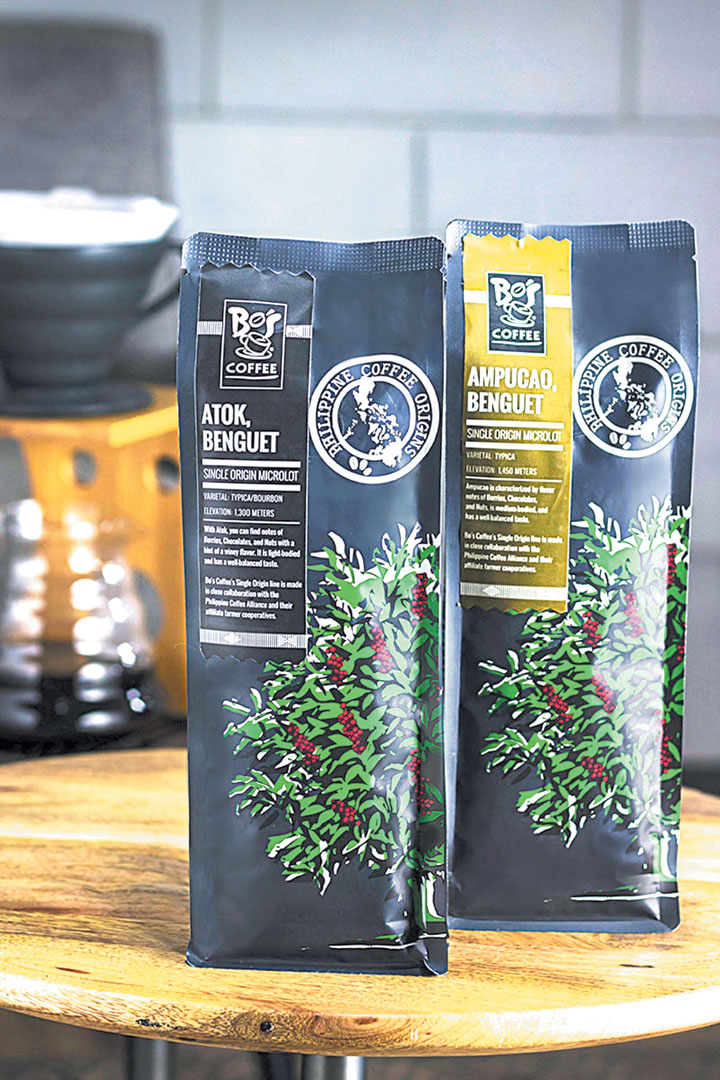
The three-day event presents 20 speakers from the coffee industry, and other related fields. These include Steve Benitez, Founder & CEO of Bo’s Coffee; Pacita “Chit” Juan, President of the Philippine Coffee Board; Joji Pantoja, CEO of Coffee for Peace; and Michael Harris Conlin, 2019 National Champion Barista. There will be talks by Philippine Franchise guru Butz Bartolome, and educational talks on topics ranging from coffee roasting to founding a social enterprise.

Ms. Martinez-Esquivias, during an online press conference on Aug. 28, said about the exhibitors: “They have to be coffee-based, or at least related to the industry.” She noted that there are participants who come from the fields of energy, logistics, and construction. Over 30 local and international distributors will also be joining, including representatives from Colombia and Nepal.

Updates about the event are posted on facebook.com/coffeeexpomanila and on Instagram @coffeeexpomanila. — J.L. Garcia

Local printer market almost triples

THE Philippine printer market almost tripled in the second quarter compared to the same period last year after factory production capacity improved.

The Philippine hardcopy peripherals (HCP) market, including inkjet, laser, and SDM or serial dot matrix printers, went up 195.7% year on year, the International Data Corp. (IDC) said in a press release on Wednesday.

“The improvement in the supply and production capacity of factories and demand slowdown that were affected by lockdowns last year, resulted to overall growth of the market,” IDC said.

The market grew just 19.4% compared to the preceding quarter.

IDC Philippines Market Analyst Lilibeth Agudo said the strict lockdown in the second quarter in 2020 affected overall printer shipment and demand, but there was a spike in demand for printers for home use for the rest of last year.

“Now over a year into pandemic, 2021Q2 (second quarter of 2021) presented a positive outlook across all segments as more industries were allowed to operate due to more relaxed quarantine restrictions and vaccine availability,” she said.

“Postponed spending was revisited for both government and commercial segments, continuous demand from the consumer segment gave brands opportunity to bring in more shipments.”

Epson Philippines was the market leader in the second quarter of 2021 with 66.1% market share as shipments have normalized, driven by demand from consumer and education segments.

Brother International Philippines Corp. followed with 11% share, while Canon Philippines held the third spot at 10.4% market share. The inkjet market had dropped due to shipment delays after Canon’s factory was impacted by the Vietnam lockdown.

“As Philippines economy has started to see a sign of recovery, shipments are expected to show recovery in the coming quarters and next year, provided vendors are able to fulfill the shipment demand,” IDC Asia Pacific Senior Research Manager Mohit Raizada said.

“Growth in the SMB (small and midsize business) segment will be the key, as they were badly impacted by series of restrictions in the country since the beginning of the pandemic.” — Jenina P. Ibañez

Keeping things sweet

Orange Fox Sandwich Bento

PHL a top 10 market for Aussie oranges

WHEN your country is already among the top 10 markets for a fruit, it makes sense to help things along with recipe suggestions.

The Australian navel orange is back in season, and Hort Innovation hosted a press conference under the Taste Australia banner last week to highlight recipes people can make with the fruit.

The Philippines is “well and truly inside our top 10 markets globally,” said David Daniels, General Manager, Citrus Australia. He said that last year, they broke the 10,000-ton mark in exporting oranges to the Philippines. “We always say that 10,000 tons is a good market.”

“Australian citrus arguably has the best kind of flavor and sweetness of any citrus in the world, there’s no disputing that. And it’s purely our unique climate that gives us that advantage,” said Mr. Daniels during the press conference. “In Australia, we grow citrus in places where we have very hot, dry summers. We also have very cold winters. These extreme conditions actually give us fruit that is quite exceptional. As a result of these extremities, the trees are in constant stress, which means they put all their energy into reproduction.

“There really isn’t a place in the world, perhaps with the exception of California, that has such ideal growing conditions,” he noted, citing similarities in the oranges produced in the two places. Picked fresh from only the highest quality crops, Australian oranges are in peak season until October.

With so many oranges available, Taste Australia enlisted the help of local influencers to come up with recipes using the fruit beyond just eating them fresh or juiced.

Bento Mommas presented a way of adding oranges to sandwiches by shaping the orange into a fox; while chef Luigi Muhlach (son of actors Aga Muhlach and Janice de Belen) presented his recipe Crispy Shrimp Poppers with Honey-Orange Glaze. He noted that “These oranges are actually sweeter than other oranges.”

Fruits and vegetables are a great way to improve one’s immune system, a vital weapon in this battle against COVID. Brei Montgomery, Head of International Trade, Hort Innovation, noted the nutritional properties of Australian navel oranges. “We absolutely know through data that Australian navel oranges are high in energy-dense properties. They’re packed with antioxidants, fiber, folate, and potassium.” She also noted that they help maintain healthy blood pressure levels and a healthy heart. “Famously known for their health benefits and soaring Vitamin C content, oranges contain natural flu-fighting properties, which might help in fending off nasty colds away,” she said. — J.L. Garcia


Crispy Shrimp Poppers with Honey-Orange Glaze

CRISPY Shrimp Poppers with Honey-Orange Glaze

INGREDIENTS:
4 Australian navel oranges (juiced)

1 kg shrimps (remove head, skin and tail; deveined, cut into one-inch pieces

50 gm white onions (minced)

25 gm garlic (minced)

25 gm butter (unsalted)

1/4 cup honey

1 tbsp soy sauce

4 tbsp cornstarch slurry

3 tbsp mayonnaise

Oil for frying

Batter

1 cup flour

1 cup cornstarch

1 tsp smoked paprika

1 tsp black pepper

1 tsp salt

3 whole eggs (beaten)

Garnish: chopped spring onions and white or black sesame seeds

PROCEDURE:
Honey Orange Sauce

1. In a hot pan, saute onions and garlic in butter until it softens.

2. Add juice from Australian navel oranges.

3. Add honey and soy sauce. Stir and let it simmer for 2 mins.

4. Add slurry and stir until the sauce thickens.

5. Add mayonnaise and stir again. Remove from fire and set aside.

Batter

1. Mix corn starch, flour and all dry ingredients together.

2. In a separate bowl beat eggs.

Frying Procedure

1. Heat oil.

2. Dip sliced shrimp in the eggs. Then dip in flour.

3. Fry until golden in color. Repeat until all the shrimps have been fried.

4. Place in a rack with paper towel.

5. Place fried shrimp popcorn in a mixing bowl and add in the honey orange sauce. Toss it until all the shrimp popcorns are coated with the honey orange sauce.

6. Garnish with spring onions and sesame seeds and serve.

There are other recipes using Australian oranges at http://www.oranges.com.au/recipes/.

PLDT expects domestic network capacity to more than triple by yearend

BW FILE PHOTO

PLDT, Inc. on Wednesday said it expects its domestic network capacity to more than triple to 92 Terabits per second (Tbps) by the end of 2021 from the previous year’s 30 Tbps, which means better internet experience for its subscribers.

“PLDT is expanding its domestic network capacity to 92 Terabits per second (Tbps) by the end of the year, ensuring the seamless delivery of more data-driven services in the country ahead of demand,” PLDT said in an e-mailed statement.

“PLDT will almost double its existing total capacity of 55 Tbps to 92 Tbps by yearend, or more than triple its capacity from 30 Tbps last year,” it added.

The company saw a 17% increase in mobile traffic to 1,579 Petabytes in the first six months of the year, compared to the same period a year ago.

“Monthly data usage in the second quarter averaged 267 Petabytes, an 11% increase from last year’s monthly average consumed data on mobile,” PLDT noted.

As for the PLDT Home segment, the company said it expects to connect one million new users this year.

“PLDT Home led the market in the second quarter with net adds for fiber subscriptions at 267,000, ahead by 54% versus the nearest competitor,” it said.

The company said it expanded its fiber footprint to more than 524,000 kilometers as of June and grown the number of homes passed to over 11 million.

PLDT’s second-half attributable net income grew 4.8% to P12.9 billion from P12.3 billion previously. Its service revenues increased 9.7% to P91.6 billion from P83.5 billion a year ago.

“Sustained demand for data and broadband reinforced total service revenues across the company’s three customer segments,” the company said in a disclosure to the stock exchange.

Hastings Holdings, Inc., a unit of PLDT Beneficial Trust Fund subsidiary MediaQuest Holdings, Inc., has a majority stake in BusinessWorld through the Philippine Star Group, which it controls. — Arjay L. Balinbin

Ex-host Mike Richards out as executive producer of Jeopardy!

LOS ANGELES —  Mike Richards, who earlier this month stepped down as the new host of Jeopardy! after a backlash over past offensive comments, will no longer serve as executive producer of the long-running quiz show, Sony Pictures Television said on Tuesday. Mr. Richards also has given up producing duties at game show Wheel of Fortune, Sony Executive Vice-President Suzanne Prete said in a memo released by the company.

“We had hoped that when Mike stepped down from the host position at Jeopardy! it would have minimized the disruption and internal difficulties we have all experienced these last few weeks,” Ms. Prete said. “That clearly has not happened.” Mr. Richards had been appointed to replace legendary host Alex Trebek, who died in 2020 after more than three decades on the show. He stepped down from that role after online publication The Ringer reported on disparaging and sexist comments he made on a podcast. Mr. Richards apologized at the time for the negative attention brought to Jeopardy!.

Michael Davies, executive producer of game show Who Wants to Be a Millionaire?, has stepped in as interim producer of Jeopardy!, Ms. Prete said in her memo.

The Big Bang Theory star Mayim Bialik is serving as guest host of daily Jeopardy! while Sony searches for a permanent replacement. She also was tapped to host Jeopardy! special events including its college tournament. — Reuters

Yields on term deposits mixed on lockdowns, Powell remarks

BW FILE PHOTO

YIELDS ON THE central bank’s term deposits were mixed on Wednesday as the government proposed to put parts of the country under granular lockdowns and following dovish comments from the US Federal Reserve chief last week.

Total bids for the term deposit facility (TDF) of the Bangko Sentral ng Pilipinas (BSP) amounted to P618.294 billion on Wednesday, above the P570 billion on offer as well as the P593.589 billion in tenders recorded at last week’s auction.

Broken down, demand for the seven-day term deposits reached P232.835 billion, higher than the P150 billion auctioned off by the BSP and also beating the P169.137 billion in tenders last week.

Accepted rates for the tenor ranged from 1.675% to 1.7393%, slimmer than the 1.675% to 2.012% band in the previous week’s auction. This caused the average rate of the paper to slip by 0.86 basis point (bp) to 1.7121% from 1.7207% previously.

Meanwhile, the 14-day deposits fetched bids amounting to P385.459 billion, below the P420 billion on the auction block as well as the P424.452 billion in tenders logged in the previous week’s offering.

Lenders asked for yields ranging from 1.7% to 2.21%, picking up from the 1.6995% to 1.75% margin seen last week. With this, the average rate of the two-week deposits inched up by 2.14 bps to 1.7381% from 1.7167% in the previous auction.

The BSP did not offer 28-day term deposits for the 45th consecutive auction to give way to its weekly offerings of bills with the same tenor.

The term deposits and the 28-day bills are used by the BSP to gather excess liquidity in the financial system and to better guide market rates.

Yields on the term deposits were mixed on Wednesday as the government said it could impose granular lockdowns instead of city- and province-wide quarantine measures amid the continued surge in coronavirus disease 2019 (COVID-19) infections, Rizal Commercial Banking Corp. Chief Economist Michael L. Ricafort said.

Interior Undersecretary Jonathan E. Malaya told a televised briefing on Wednesday that the shift to two-week granular lockdowns in high-risk areas is up “for final approval” of the government’s interagency task force for the pandemic. These lockdowns will be limited to a building, street or barangay that record rising cases, officials earlier said.

Local government officials of Antipolo and Muntinlupa have already imposed granular lockdowns in their areas to curb the spread of the virus. Meanwhile, Metro Manila is under modified enhanced community quarantine until Sept. 7.

The highly infectious Delta variant is now the dominant variant of COVID-19 in the country, the World Health Organization said on Tuesday.

COVID-19 infections rose by 13,827 on Tuesday to bring active cases to 145,562.

Meanwhile, Mr. Ricafort added that dovish signals from the Fed during its Jackson Hole symposium last week also continued to affect market sentiment.

Fed Chairman Jerome Powell on Friday signaled that they are not in a hurry to hike interest rates. He also did not hint on a specific timing for their plan to taper asset purchases, although he said they could start by this year. — L.W.T. Noble