Home Blog Page 7557

From survival to growth: The BusinessWorld pandemic story
By Wilfredo G. Reyes, Editor-in-Chief

“Any advertising that would tend to draw crowds is to be refrained from,” a notice read, advising business owners to “(a)void crowding your store” and to “(k)eep all clean and sanitary,” while another noted that those “who generally throng the shops at this season of the year are staying home; but, on the other hand, a much bigger business is being done in delivery orders.”(1)

Such advisories and observations should be pretty familiar to anyone by now — except that these were published more than a century ago at the height of the 1918 Spanish flu pandemic.

As with individuals, businesses have been scrambling for lessons from the past that could guide their response to COVID-19, only to find very few parallels and that a playbook to survive and emerge stronger is a work in progress.

OUR STORY
BusinessWorld is no exception.

My stint at the helm of the editorial team began in January last year by, among others, reviewing SOPs for operations continuity, with disasters like massive floods of Ondoy’s magnitude and disruptive political events like coups d’etat in mind. True, the World Economic Forum’s Global Risks Report 2020, released on Jan. 15 that year, had counted “infectious diseases” as the 10th biggest risk in terms of impact, noting that “gathering pressures are straining health systems on many fronts” (reports of an outbreak of a strange strain of pneumonia began trickling out of China at the end of December 2019). Still, that was before the World Health Organization declared a pandemic in mid-March, so I suspect that risk was nowhere on the radar screens of most other companies at that time either. The Forum’s 2021 report, of course, listed infectious diseases and “livelihood crises” as the top two “clear and present dangers” for the next two years.(2)

It soon became clear to us that, unlike previous disruptions, this one would require more than just checking for casualties and those otherwise affected among staff, identifying those who can deliver the product and reviewing the day’s targets.

It was also clear, as the government first announced a lockdown in mid-March last year, that paralysis was not an option — especially not for an organization whose core mission has been to provide timely information to its public.

BusinessWorld’s story since then probably reflects what has been going on elsewhere. As the company stabilized operations (i.e., plugging productivity shortcomings we were blind to before) and health protocols in the wake of the initial jolt from a hard economic lockdown in March, a small team sprang to action and explored the potential of maximizing digital channels for delivering content.

Within three months from the March 2020 lockdown, BusinessWorld held its first of several online interview series with top corporate leaders here and abroad. The company has also held two two-day economic fora since then within a span of six months and will be holding another soon. Those are besides weekly BusinessWorld B-Side podcasts based on leads taken from reporters’ daily coverage (but which could not be expounded on in spot news reports) and virtual roundtables with experts on various issues (many suggested by readers) under the BusinessWorld Insights brand.

During annual strategic planning sessions since the early 2000s, those leading the company had pondered the right time to go headlong into digital space and the answer — especially from 2015 onward — had invariably been: “Not yet, but let’s prepare everyone to stand on the springboard to take that plunge.”

Well, as with most everyone else, the pandemic-driven economic crisis has advanced this digitalization timetable — by about two years by my estimate. And that is one of the very few silver linings our company counts amid all the dilemmas and tragedies this emergency has spawned.

The ramping up of digital initiatives while doing what it takes to maximize the traditional print medium reminds me of that age-old military strategy of strengthening the fort while sending out patrols to foray into uncharted territory. The beauty of digital is that it allows one to aggressively tap opportunities as they open, learn from both successes and failures, and adjust accordingly as you go along.

I identify with those executives who were surprised by just how nimble their organizations and staff turned out to be amid all this disruption.(3) Of course, there was the inevitable resistance to doing things differently and tossing out routines that no longer work; hence, it was imperative that clear signals emanated from the top that we are doing this and it is here to stay.

The digital platform not only enabled BusinessWorld to reach its audience immediately amid the disruption the pandemic and the economic lockdown caused, but it also unlocked previously hidden value by opening opportunities for more products and unearthing hidden talent among staff.

It is also a more sustainable way of ramping up content production and connecting with a much bigger crowd.

Physical distancing fostered closer digital interaction among departments and staff, and the constant push and pull of ideas led to improvements in existing procedures and products, as well as new ones. One editor has taken the initiative to enhance the knowledge of reporters by tackling key issues in monthly online discussions.

NO TURNING BACK
Companies and organizations are now at a crossroads in determining the way forward into a post-pandemic arena.

A scan of thought pieces of some of the world’s leading consultancies yields a sampling of insights on this point.

One is “we cannot snap back to old ways of working,” and this means finding ways to preserve and foster the environment that encouraged fresh, workable ideas. The pandemic is “a dress rehearsal for a new, more turbulent world,” said James Allen of Bain & Co., who emphasized the need to determine how one’s organization can become more resilient. “And so the resiliency question really is a conversation… about, where do you need to add buffer capacity to make sure the decisions we make can last through various crises?”(4)

For Boston Consulting Group (BCG), companies now need to stay on point in their long-term agenda, build “resilience to unexpected shocks and harness imagination to create new offerings or business models that could drive future growth.” Resilience, according to BCG, has six traits, namely:

• prudence, or developing early warning signals to detect potential threats and preparing for plausible negative scenarios;

• redundancy, which involves building buffers for critical supplies or capacities to limit the potential impact of a shock;

• diversity, which involves having a variety of capabilities or products;

• modularity, which requires separating business components in order to prevent failures of parts from affecting the whole;

• adaptability, or having the ability to rapidly adjust to new circumstances by experimenting, identifying appropriate responses and cascading them throughout the organization;

• embeddedness, which means aligning the business’s goals with those of partners and communities, facilitating external cooperation and support in a crisis.(5)

The pandemic has also highlighted the workforce as a key resource for weathering future crises, and not just a cost.

The World Business Council for Sustainable Development (WBCSD) and BCG cited the need to “retain flexible working practices beyond the crisis,”(5) while McKinsey & Co. said “remote work and virtual meetings are likely to continue, albeit less intensely than at the pandemic’s peak” and that most employees prefer a more flexible working model after experiencing work away from the office during the pandemic.(6)

WBCSD and BCG also cited the need to upskill, reskill and even redeploy employees “to enable them to succeed in the workplace of the future,” while Diane Brady said in The McKinsey Podcast that there is a need to hire and train for adaptability. “Look for people who demonstrate an ability to learn new things, who demonstrate learning agility, who demonstrate openness and ability to flex in different directions,” she said. “We’re all asked to do things that were not necessarily in our job description when we were hired. You can look for those types of skills in people, in addition to maybe the hard skills or the specific skills you’re looking for from a business need. But you can also train those skills.”(7)

Employee value is not lost on businesses in the Philippines, according to global advisory Willis Towers Watson, whose 2021 Employee Experience Survey in April found 95% of 91 employer-respondents saying enhancing employee experience will be a priority in the next three years compared with just 65% in a pre-pandemic poll. In the latest survey, most respondents cited positive employee experience as key to engagement (89%), productivity (88%), overall business performance (88%) and employee wellbeing (87%), while 76% said changing leadership competencies over the next three years is a priority in order to improve such experience.

BusinessWorld focused this anniversary issue on the stories of industries, companies and sectors as they chart their recovery, in hopes of contributing to this growing literature on crisis lessons.

Because the saga continues for all of us.


(1) “A look back at Butte during 1918 Spanish flu pandemic,” Montana Standard, March 29, 2020 (https://mtstandard.com/news/local/a-look-back-at-butte-during-1918-spanish-flu-pandemic/article_97f57c42-5a7d-533a-89c2-97680c94bf7f.html) and “Shop Trade Hit,” The Sun, Feb. 6, 1919, as uploaded on http://nla.gov.au/nla.news-article222644593.

(2) https://www.weforum.org/reports/the-global-risks-report-2020

https://www.weforum.org/reports/the-global-risks-report-2021

(3) For discussions on “A strategy for embracing uncertainty,” access https://www.bain.com/insights/a-strategy-for-embracing-uncertainty, Bain & Co., July 20, 2021.

(4) “Roadmap for a post-pandemic world,” Bain & Co., April 7, 2021 (https://www.bain.com/insights/roadmap-for-a-post-pandemic-world-video).

(5) “Winning the ’20s in an accelerated post-COVID world,” Boston Consulting Group (BCG), April 30, 2021 (https://www.bcg.com/publications/2021/how-pandemic-accelerated-business-leader-agenda).

“Back to the future: resuming the long-term agenda for business,” BCG, April 6, 2021 (https://www.bcg.com/publications/2021/three-pivotal-themes-for-the-long-term-business-agenda).

“COVID-19 Business Recovery: A guidance framework for a sustainable & inclusive ‘new normal,’” World Business Council for Sustainable Development and BCG, July 2020.

(6) “It’s time for leaders to get real about hybrid,” McKinsey & Co., July 9, 2021 (https://www.mckinsey.com/business-functions/organization/our-insights/its-time-for-leaders-to-get-real-about-hybrid)

“The future of work after COVID-19,” McKinsey & Co., Feb. 18, 2021 (https://www.mckinsey.com/featured-insights/future-of-work/the-future-of-work-after-covid-19).

(7) “Building a learning culture that drives business forward,” McKinsey & Co., April 16, 2021 (https://www.mckinsey.com/business-functions/mckinsey-accelerate/our-insights/building-a-learning-culture-that-drives-business-forward).


Gross borrowings hit P2.27 trillion as of end-July

GOVERNMENT BORROWINGS increased by 22% in the seven months to July from a year earlier, as the budget deficit continues to widen. 

Data from the Bureau of the Treasury (BTr) showed gross borrowings increased to P2.27 trillion as of end-July, from the P1.857 trillion logged in the same period of 2020.

For July alone, the government borrowed P337.149 billion, 150% higher than the P134.532 billion logged a year earlier.

The government borrows from local and foreign creditors to plug the budget deficit that has ballooned since 2020, as tax collections plunged amid the economic slowdown. Economic managers expect the budget deficit to widen to 9.3% of the gross domestic product this year.

The budget shortfall stood at P121 billion in July.

More than half (53.4%) of the gross borrowings in July came from local sources while the rest came from external sources.

Domestic borrowings in July amounted to P180.36 billion, surging by 170% from the P66.837 billion in July 2020. Local debt during the month was sourced from fixed-rate Treasury bonds (T-bonds) worth P208.86 billion.

External gross borrowings more than doubled to P156.789 billion in July from P67.695 billion a year earlier. This includes P10.617 billion from project loans and P146.172 billion raised from global bonds.

Year to date, gross borrowings accounted for 75.6% of the P3 trillion the government is seeking to raise for 2021.

The P2.27-trillion borrowings consisted of 81% local debt, while the rest were from external sources.

The government raised P1.828 trillion from local lenders in the January to July period, rising by a third from the P1.375 trillion logged a year earlier.

These were made up of P463.322 billion in retail T-bonds, P779.86 billion in fixed-rate T-bonds, and P540 billion in short-term financing from the Bangko Sentral ng Pilipinas.

Excluding P53.108 in billion debt repaid and those that were settled via the Bond Sinking Fund, the government’s net borrowings in the first seven months stood at P1.775 trillion.

Borrowings from external creditors for the first seven months of the year fell by 8.2% to P441.736 billion from P481.152 billion in the same period of 2020.

About P146.172 billion was raised through global bonds in July. In April, the Treasury raised P121.967 billion via euro-denominated bonds and P24.188 billion through Samurai bonds. Meanwhile, project loans stood at P54.327 billion, while P95.082 billion came from program loans.

The BTr repaid P161.534 billion worth of foreign loans from January to July, reducing its net foreign borrowings to P280.202 billion.

This was comprised of P54.327 billion in project loans; P95.082 billion in program loans; P121.967 billion in euro-denominated bonds; P146.172 billion in global bonds; and P24.188 billion in Samurai bonds.

The higher gross borrowings as of end-July was no surprise given the need to support the economy during the crisis, Colegio de San Juan de Letran Graduate School Dean Emmanuel J. Lopez said.

“This is seen coming due to the lingering effect of the pandemic resulting into the shortage of funds to finance the expenditure meant to control the pandemic, not to mention the need to stimulate economic activities,” he said in an e-mail.

Mr. Lopez is hopeful that the higher gross borrowings “will be a good avenue to bring back the growth experienced during the pre-pandemic era.”

The country’s debt stock hit P11.166 trillion as of end-July. — Luz Wendy T. Noble

Trying to get a read on the unpredictable post-pandemic economy

STOCK IMAGE | FREEPIK

By Beatrice M. Laforga, Reporter

IT’S BEEN about a year and a half since the first hard lockdown was declared in March 2020, and everyone has spent the past months basically winging it, with no firm roadmap emerging as yet for how the coronavirus disease 2019 (COVID-19) has reordered the world, or for how it may be about to reorder it some more before everything is done.

The losses to the economy have been estimated at about P2 trillion 2020 — the equivalent of between 40% and half of recent national budgets, so a proper read on the pace of the recovery is job one for many businesses trying to time their full-on return to the market.

“It will take some time before we’re able to go back even to 2019 per capita GDP (gross domestic product) levels, especially for hard-hit industries like the services sector,” Philip Arnold P. Tuaño, chairman of Ateneo de Manila University’s Department of Economics, said in a Zoom interview.

“Maybe in a few years we will be able to return back to some sort of normality.”

The economy slumped by a record 9.6% in 2020 due to the COVID-19 pandemic. While the government is aiming for a 4-5% rebound this year, economic managers have said that the economy will return to pre-crisis GDP level by 2022.

International development organizations like the Asian Development Bank, the International Monetary Fund (IMF) and the World Bank consider the economic recovery to be fragile, with growth this year likely to disappoint those who had been counting on a quick rebound.

The multilateral banks’ forecasts for Philippine GDP growth in 2021 are at 4.5%, 5.4%, and 4.7%, respectively, based on estimates issued in August.

While it may take time, there are some opportunities to be had for an economy where the new rules of the game have yet to be written, many of them to do with boosting long-term competitiveness and diversifying its sources of growth. Mr. Tuaño sees promise in boosting value chains, going into customization of services and diving deeper into sustainability.

There is no reason the Philippines can’t be a pioneer again, having joined the early Asian industrializers like Japan in the early 1900s in the so-called 5% industrial growth club. A United Nations in the Philippines policy brief issued in August (“Diversification, Jobs and the COVID-19 Recovery”) provides a helpful recap of the wrong turns taken by the economy since the 1980s. “The Philippines has missed several waves of industrial catch-up in the last century,” it said. “(The economy featured) weak industrial competitiveness and lack of productive employment, combined with the quiescence trap that keeps investment and demand for skills low.”

Mr. Tuaño said the areas of opportunity may lie in emerging sectors that have not yet been fully explored.

“The emerging economy will just accelerate some of the trends that we’ve had even before the pandemic, so one thing we have had was accelerating towards industry 4.0, like the increasing use of smart devices and digital finance. The pandemic has accelerated this because we’re forced now to go digital,” he said.

Conventional sources of growth like business process outsourcing (BPOs), retail and food processing have been successes for established conglomerates in the past, but sticking to these industries is no longer ideal as the pandemic drives massive change, Mr. Tuaño said.

“How do they ensure long-run growth even if all of the traditional sources of ’90s, 2000s economic growth become less and less important?” he said.

Stay-at-home orders, quarantine restrictions and fear of contracting the virus during the pandemic helped drive change by encouraging — even compelling — the use of electronic commerce and digital payments.

In the area of customization of services, companies can explore big data offerings optimized for various business models, according to Mr. Tuaño.

Developing local value chains by ramping up production of goods domestically is also another opportunity to invest in, especially after the pandemic exposed the vulnerability of economies when global trade flows are disrupted.

The Philippines can also go big on renewables where the market remains unsaturated but the resource potential is strong, he said.

The country is ripe for diversification, being a consumption-driven economy, in which household spending accounts for 70% of total GDP each year, while government spending amounts to around 20%.

BUSINESSES NEED TO GO WHERE THE GROWTH IS
The moves businesses make now will go a long way towards establishing their long-term viability, according to Benedicto V. Yujuico, president of the Philippine Chamber of Commerce and Industry.

“Going forward, they must learn how to innovate to remain competitive and profitable. Pandemic or not, businesses must use technology to implement digital transformation to stay ahead of the game,” he said.

The economy had been projected to become the 18th largest economy in the world by 2050, with an estimated GDP of $4.86 trillion, leapfrogging its ranking in 2019 of 30th, according to a report by Capital Economics issued in February.

What is the view from industries on the cutting edge? The need of the moment is having a vision of the future, responding quickly to the needs of the emerging environment, and taking calculated risk, according to Angelito M. Villanueva, the founding chairman of the industry group Fintech Alliance.ph and the chief innovation and inclusion officer for Rizal Commercial Banking Corp.

“To survive and thrive in this current situation… You really have to stay two to three steps ahead of everyone in the field and be able to understand the landscape, knowing what’s emerging and what the future holds,” he said. “It’s how you create the future now that will make you competitive.”

Mr. Villanueva, who was named “Chief Innovation Officer of 2021” by The Banker, said his industry has always anchored its innovations on the need and appetite of consumers, ensuring that any new products are supported by solid potential demand.

“That’s why innovation is not just a process of just-for-the-heck-of-it innovating; you have to be able to have a grasp of your environment or your ecosystem; otherwise, it will just be a shot in the dark. Pushing for any innovation has to be a calculated risk,” he said.

To help businesses thrive, the government will also play a key role in providing an enabling environment for innovation to flourish and allow the private sector to diversify into improving the quality of its goods and services.

Mr. Villanueva said some of the reforms he considers key are Republic Act No. 11293 or the Philippine Innovation Act, which supports and incentivizes innovations, and Executive Order No. 127, which promoted the use of satellite broadband nationwide, especially in far-flung areas.

However, he said digital infrastructure remains uneven especially in remote towns, hampering the digital sector’s potential growth.

Mr. Tuaño, the Ateneo economist, warns that much still needs to be done to close the widening income gap and support the vulnerable middle class in a prolonged public health crisis.

“The post-pandemic world will also show that the crisis has also exposed the socioeconomic disaggregation in society,” he said.

“I’m cautiously hopeful that we will still be able to compete with the rest of the region… because there’s a next generation of young professionals who are really interested in these areas; we see young entrepreneurs thinking of how services can be provided more to the rest of the society,” he added.

BusinessWorld’s 34th Anniversary Report: Bouncing back better

By Timothy Roy C. Medina, Associate Editor

THE DIFFICULT YEAR that coincided with BusinessWorld’s 34th anniversary saw the newspaper, like many organizations, having to evolve. At the same time, it had to deliver a day-to-day news product that met the usual high standards expected of the Philippines’ leading business newspaper, and introduce innovations to adapt to the “new normal.”

The pandemic might someday be remembered as the time when the newspaper became fully digital, not just in the way it delivered the news but also in ethos, with value-added products like podcasts, livestreamed BusinessWorld Insights sessions with industry experts, as well as one-on-one CEO conversations with senior editors. BusinessWorld was also in the process of becoming something of an events company even before the pandemic, organizing economic forums that were forced online starting in 2020 to keep participants safe.

For all that, we tried our best not to let the pandemic erode our core strengths. The BusinessWorld Anniversary issue is traditionally the venue for our journalists to practice the dying art of long-form writing, and our reporters went all-out to try to make sense of a confusing present and a clouded future. We are rightly proud of our extended stories, with the expectation that they consult the best-informed and widest range of sources possible.

This issue is ultimately a long and deep reflection on the economic recovery — when it might come and what form it may take, how to recognize the signs of its imminent arrival, how to reconfigure companies to face new realities. While we cannot possibly claim to tell experienced business leaders what the best course of action is in order to come out of this crisis with flying colors, what we can do is present a carefully curated selection of stories that might plant the seed of an idea in our readers. These are the lessons of transformation we found most relevant in the past year; we lived some of these lessons ourselves, and we hope you also find these stories a source of useful insight as your businesses evolve to meet the challenges ahead.

BusinessWorld’s 34th Anniversary Report can be found in Sections 3-12 and online (bit.ly/BouncingBackBetter). Scan QR code to be directed to the microsite.

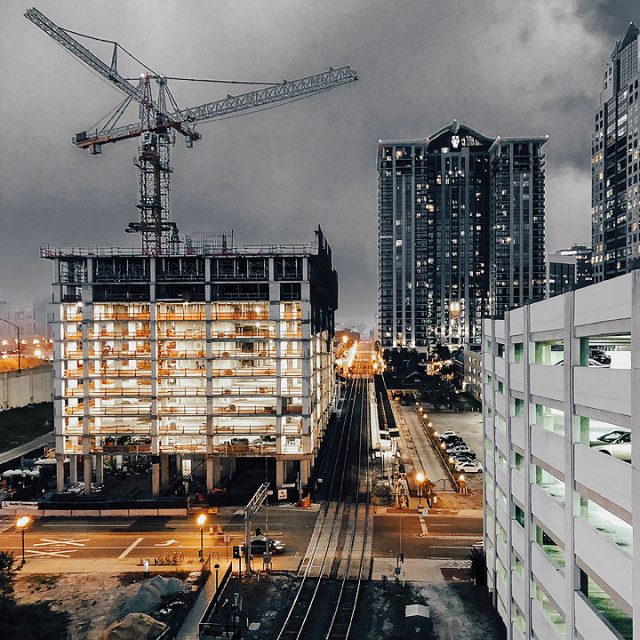
Infrastructure companies looking for the next big thing as the pandemic drags on

NATHAN WATERS-UNSPLASH

By Arjay L. Balinbin, Senior Reporter

INFRASTRUCTURE COMPANIES are focused on finding new opportunities as they contend with pandemic disruptions to their operations as some construction markets dry up, while juggling an imminent full-scale migration to innovative building methods and data-driven processes.

During the dry months, the industry was working rapidly to maximize the good weather needed to pour concrete, and was not immune to the headaches posed by quarantines and labor shortages. Builders posted a growth rate of 25.7% in the second quarter, helping drive a gross domestic product gain of 11.8% for the period, the National Economic and Development Authority said.

Trade Secretary Ramon M. Lopez said the growth is a result of the government’s efforts to balance lives and livelihood as it takes “calculated and calibrated” measures to mitigate the risks that comes with reopening the economy.

The government’s pandemic-related restrictions are focused “on the less essential activities while allowing the rest of the economy, especially the essential and labor-intensive sectors… to operate, so as to save jobs and income,” he said in a statement.

Megawide Construction Corp. said that, as a result of the pandemic, there is greater pressure in terms of project delivery, taking into consideration the shortage in manpower and rising cost of materials due to limited production.

“Understandably, clients (are) more exacting in terms of meeting costs and timelines during the pandemic, which we (understand) as an experienced contractor,” Megawide Chairman and Chief Executive Officer Edgar B. Saavedra said in an e-mail interview.

“The entire industry had to quickly adjust to new safety considerations as well as government directives, apart from supply chain issues and the like. Fortunately, our vertical integration and earlier investments in engineering technologies such as precast enabled us to adapt quickly to both client and regulatory standards,” he added.

Aboitiz Construction Executive Director Antonio Peñalver said customer behavior remains the same, but the company is now more cautious in its decision making.

“(The company has) adapted to the new way of doing business, which is through virtual contacts,” he said in an e-mailed reply to questions.

“The awareness and concerns of our customers about health standards have heightened (to the point) that they would expect an equivalent level of safety or health assurance,” said Roberto V. Bontia, the president and general manager of MPT South Corp. and its two main expressway companies to the south of the capital — Cavitex Infrastructure Corp. and MPCALA Holdings Corp.

Mr. Saavedra said Megawide’s precast business, which started expanding prior to the pandemic, has given the company more opportunities.

“We are minimally affected by the labor shortage as precast installation requires minimal manpower compared to typical construction methods. It also enables us to practice physical distancing in line with government protocols. Finally, we were also able to catch up to project timelines because of the higher speed and standardization offered by the precast process,” he said.

NEW OPPORTUNITIES
Aboitiz Construction said the pandemic helped birth a “big shift” strategy.

“This a comprehensive business pivot that will enable the company to navigate the changing market dynamics, refocus priorities, implement changes, fuel recovery, and find new business value,” Mr. Peñalver noted.

To spur business growth, Aboitiz Construction is pursuing traditional industrial projects this year.

The company is “thriving further from transport and water-related infrastructures, marine works, and transmission lines and substations,” Mr. Peñalver said.

As for Megawide, Mr. Saavedra said the company intends to maximize the gains it has achieved, reorganize, and continue to pivot and look for new opportunities.

“We will focus more on infrastructure projects in lieu of residential and commercial projects; and continue maintaining a diversified order book, sustaining EPC (engineering, procurement, and construction) revenue growth momentum onwards from Q3 (third quarter of) 2020,” he added.

MPT South saw the importance of accelerating its pursuit of digital transformation and the systematic application and use of data it generates.

“These initiatives will drastically improve our key processes and most importantly the delivery of service to our customers, our motorists,” Mr. Bontia said.

Aboitiz Construction is also implementing an innovation program to improve the company’s practices, processes, and systems in support of its “big shift” strategy.

“To adapt (to) the impacts of the pandemic, our aim is to digitize and simplify our processes to harness execution excellence. With innovation, we want to address the issues and gaps in various areas of work in Aboitiz Construction. Our team members have a lot of ideas to improve our processes and we want these ideas to translate into real solutions that would create long-term value for our stakeholders and contribute to our business growth,” Mr. Peñalver said.

Megawide’s Mr. Saavedra said: “We will… continue improving and automating our processes, including engineering, procurement, human resources management and financial management initiatives and build on our five-year roadmap of core businesses, namely EPC, airport, and landport.”

POST-PANDEMIC MARKET
Aboitiz Construction believes the market will bounce back strongly after the pandemic crisis.

“A lot of projects that are on hold… and there will be massive demand for resources from construction companies,” Mr. Peñalver said. “Those who are ready for this surge in demand will surely benefit.”

“At Aboitiz Construction, we are making adjustments by preparing our people through training and studying new technologies that will promote efficiency. We are also strengthening our organization by hiring new talents to anticipate the requirements in the future,” he added.

Megawide expects a boom in infrastructure projects, particularly railways and utilities. As a result, the company’s precast technology “can be utilized to its full competitive advantage,” Mr. Saavedra said.

“Precast is less reliant on manual labor and enables faster completion and higher standardization with building components pre-manufactured off-site,” he said.

“Additionally, there are so many opportunities for railway infrastructure that will boost our order book to unprecedented levels, with a burn rate extended from 2-3 years to 4-5 years.”

Megawide also anticipates real estate or housing development along the railway alignment to follow such infrastructure developments.

MPT South expects the adoption of cashless payment systems to increase.

“To this end, we are already undertaking studies and projects for implementation by which we could improve our existing systems both at the front and backroom of our operations and processes, enabling a better, more efficient cashless setup,” Mr. Bontia said.

“The travel patterns of our customers in all likelihood would continue to adjust given the widespread adoption of work-from-home arrangements, as well as the shift in viewing health as a ‘common concern for the good of all,’” he added.

MPT South also expects to extract valuable insights as it gains traction on its digitalization and data analytics initiatives.

“They will be relevant in navigating the post-pandemic market dynamics and realities,” Mr. Bontia noted.

MPT South is a unit of Metro Pacific Investments Corp., one of three Philippine units of Hong Kong-based First Pacific Co. Ltd., the others being PLDT, Inc. and Philex Mining Corp.

Hastings Holdings, Inc., a unit of PLDT Beneficial Trust Fund subsidiary MediaQuest Holdings, Inc., has an interest in BusinessWorld through the Philippine Star Group.

Satellite solutions: Filling in Mindanao’s digital gaps

By Marifi S. Jara, Mindanao Bureau Chief
and Arjay L. Balinbin, Senior Reporter

THE PANDEMIC highlighted digital connectivity as a need and not a want, on par with basics like food, water and electricity.

“That was the time when we shifted towards online, online everything,”

Rogel Mari Sese, chair of the Ateneo de Davao University’s (AdDU) Department of Aerospace Engineering, said in a virtual interview.

He took on that post in March 2020, the same month that the Philippines started implementing restrictions to mitigate coronavirus transmission, including the abandonment of face-to-face classes.

By June that year, AdDU was one of the first academic institutions in the country ready to go fully online with its academic programs.

“Our infrastructure, our system was prepared (to) easily shift towards online education,” he said.

“However, we looked at it also as an issue that we might have a good level of connectivity here in the campus, but the same cannot be said for our students in their homes, in their provinces; some are even from outside Mindanao.”

The Jesuit-run school launched a program providing WiFi access and soft loans to buy devices to students who needed assistance. But even with the tools available, getting online at stable and minimum speeds was a more fundamental problem in many areas.

The university’s leadership also knew that telecommunication companies could not possibly expand the country’s cable and cellular mobile networks in the time required.

The government’s National Broadband Plan released in 2017 acknowledges the lamentable state of the Philippines’ data network system.

“Despite the notable progress in the country’s overall internet performance, the Philippines lags behind its peers in terms of affordability, availability and speed of internet access,” states the plan prepared by the Department of Information and Communications Technology (DICT), then just a year old as an agency headed by a Cabinet-level minister.

It cites several international reports — including from the World Economic Forum and the International Telecommunication Union, as well as the Global Information Technology Report, among others — pointing to the country’s low ranking in terms of internet services.

The 2019 National ICT Household Survey, the first national baseline report conducted by the DICT and the Philippine Statistical Research and Training Institute, indicates that only about 50% of communities have telecommunication operators in their area, only 30% of the country’s more than 42,000 barangays have fiber-optic cables installed, only about 13% have free public WiFi in their communities, and only 15.7% of households have internet access.

These percentages are even lower in Mindanao, more so in the Bangsamoro provinces where, for example, the number of households with internet access was only 5.1%.

ACCESS MINDANAO
Mr. Sese, one of the country’s three astrophysicists and the former focal person of the Philippine Space Science Education Program, knew of a solution in his line of expertise that could immediately address the digital gap.

“I told Father Joel (E. Tabora, AdDU president), that it’s very easy. Instead of waiting for the telcos to lay the groundwork, the infrastructure, we utilize the technology that’s available, and has been available for almost 60 years, and that’s using satellites.”

And thus ACCESS Mindanao (AdDU Community Connectivity Empowered by Satellite Service for Mindanao) was born.

Launched in October 2020, the program that aims to establish a network of schools, hospitals, businesses, and communities that are linked to the internet through satellites now has 11 sites across Mindanao. The 12th — to be located in the island province of Dinagat — is set for installation in September.

Most of the locations are far-flung such as Tawi-Tawi, the country’s southernmost islands; or secluded like Barangay Demoloc in Malita, Davao Occidental; or are best with peace and security challenges.

Several others, which now form part of the project’s second phase, have been lined up in partnership with the Ateneo de Davao Academy of Life-Long Learning and the Commission on Higher Education for areas in Maguindanao, and local governments that put forward requests.

Ownership of the small-aperture antennas is immediately turned over to the beneficiary community, along with training on their maintenance and operation. Subscriptions to satellite services are partly subsidized by the ACCESS Mindanao program for a year.   

Mr. Sese said it costs an average of P350,000 to set up each site, including equipment, training, and logistics.

The AdDU-led project is supported by the DICT’s Mindanao clusters, Catholic church units, the Davao Medical School Foundation, the Mindanao Development Authority, and the host local governments.

The project’s ultimate goal is to see the launch of a national telecommunications satellite that will cover the whole archipelago, providing access to distance education, telemedicine, financial technology, e-commerce, government services, and disaster management and response.

“We’re not saying that this is something that can replace fiber optic or ground-based infrastructure,” Mr. Sese said. “We see it more as a complementary technology that can provide connectivity to the last-mile locations… and in any system, we always want redundancy… something to back it up (the ground network) as well.”

ON THE GROUND
The country’s major telecommunication providers are currently focused on their respective cable network expansions, but do recognize the potential role of satellite technology in achieving a truly inclusive digital Philippines.

They welcomed Executive Order 127, issued in March this year, that liberalized access to satellite technology for internet services.

“We believe that liberalizing access to satellite services will pave the way for a more robust digital infrastructure for the country and achieve our shared dream of nationwide connectivity,” said Converge ICT Solutions, Inc. Chief Executive Officer Dennis Anthony Uy in an e-mail interview. 

He added that the company is also open to “the possibility of harnessing satellite technology” in “some areas unreachable by fixed broadband,” citing mining locations and island resorts among the potential markets.    

Globe Telecom, Inc.’s Emmanuel Estrada, senior vice-president for Technology Strategy & Service Integration, said the company has been using satellite “as backhaul for its remote rural cell sites as well as (to provide) connectivity for some enterprise customers in remote locations.”

And it welcomes the opening of satellite access to other internet service providers saying, “it is very timely in the light of new satellite technologies and the need to provide inclusive connectivity to still unconnected areas in the country as it continues its journey towards the new digital economy.”

PLDT, Inc., the oldest of the big providers, now has its business strategy centered on “wired or wireless” networks “as these provide better quality (lower latency) and more affordable prices.”

“We used to have investments in three satellite companies because in the past, we used satellites to provide service. Owing, however, to the increasing demand for better-quality of service and at more affordable prices, we have slowly shifted clients using our satellite-based services into wired or wireless,” PLDT said in a statement.

The ACCESS Mindanao communities are currently using their new connectivity mainly for education — distance learning and teacher training programs, and health services. The Miarayon site, an upland community in Bukidnon, is looking into how farmers can tap the service for online market linkages.

Mr. Sese, who played a key role in the drafting and passage of Republic Act 11363 or the Philippine Space Act 2019, stressed that space technology such as satellites is “something that is not far off from our day-to-day lives.”

There are currently at least 15 telecommunications satellites with footprints in the Philippines, all foreign-owned.

He is hopeful that through a public-private partnership, the country will again have its own satellite that will initially require between P6 to P10 billion in investment.

“It makes sense for a country such as the Philippines where you have more than 7,600 islands to have one satellite that can connect everyone, no matter how isolated you are,” he said.

He drives home the point by quoting the National Space Act, “The Philippines will focus on space applications that can preserve and enhance the country’s national security and promote development that is beneficial to all Filipinos.”

Hastings Holdings, Inc., a unit of PLDT Beneficial Trust Fund subsidiary MediaQuest Holdings, Inc., has a majority stake in BusinessWorld through the Philippine Star Group, which it controls.

Goodbye office, hello hometown: Will remote work open up the countryside?

JCOMP-FREEPIK

By Luz Wendy T. Noble, Reporter

AFTER HIS MOTHER was diagnosed as terminally ill with cancer, it was time for Kenneth Tirado to come home. With the pandemic leaving many industries no choice but to work from home, he flew to Iloilo in March and from there was able to continue what he had been doing in Quezon City.

“This has been the longest time I’ve been home in a while,” Mr. Tirado said in a Zoom interview. He left in 1995 to study at the University of the Philippines Diliman and stayed in the city as he built his career. Since then, he has been coming home only for the holidays or reunions.

When the lockdown was announced in March last year, initially expected to last only a month, Lyanna Jeanelle M. Isip, who was then working in Makati, immediately sought permission to work offsite to avoid the stressful bus commute. What she thought would last for a week at most working out of Lubao, Pampanga turned out to be her life for more than a year.

“I was only able to move out of my place in Mandaluyong five months after because my housemates and I decided not to renew our contract. It was the practical thing to do, considering that we paid rent even for the months that we weren’t able to stay there,” Ms. Isip, a senior business development associate at P&A Grant Thornton, said in a Facebook message. 

Pre-pandemic, the word “epicenter” was associated more with earthquakes, but soon enough it became employed in the context of disease concentrations. Metro Manila used to be the place to stay for the ambitious and career-minded, starting with a move from the countryside to a leading university in the capital and often extending into work life. But the COVID generation is beginning to discover that careers can work even far from the city.

Virus-stricken as it is now, Metro Manila is still where much of the action is, but businesses and employees are increasingly confronting a decision to look at work beyond the physical constraints of the office — wherever that working space may be.

“There’s this segment of the population that still prefers Metro Manila as it is the economic capital. What changed was more of the way we do work now more than the image of Manila,” Asian Institute of Management (AIM) Economist John Paulo R. Rivera said in a Zoom interview.

Mr. Tirado and Ms. Isip are among the many with jobs in Metro Manila that decided to rethink the importance of place, a decision that often results in a move to the provinces as remote work becomes the norm for many companies.

“Doing work has changed. It has to be accompanied by the change in mindset that (careers don’t) have to be concentrated in the NCR (National Capital Region),” Mr. Rivera said.

This raises the prospect of an economic awakening in the countryside as many highly-skilled and well-paid workers escape the city and pursue their careers in more bucolic surroundings — while inadvertently helping achieve the city planner’s long-frustrated dream of decongesting the capital, he said.

“We already have enterprise zones outside of Metro Manila. It’s been the objective to reduce the population density of Metro Manila,” he added.

But moving back to the provinces was not all about being surrounded by lush greenery and fresh air.

Mr. Tirado and Ms. Isip had to make their fair share of adjustments in working far from the city. Both experienced problems with internet connectivity and power disruptions.

“I only had mobile data when I got here and it was really weak. I tried finding DSL, Fiber; there was none,” Mr. Tirado said. It took a month before he finally found a service provider.

The data connectivity challenge highlights the infrastructure gap in the provinces, Eliseo M. Rio, Jr., former acting secretary of the Department of Information and Communication Technology, said.

“Our major telcos are predominantly mobile network operators, whose networks are mostly for mobile subscribers. Unfortunately, they lack the necessary cell sites to provide adequate services to their subscribers,” Mr. Rio said in a Viber message.

He compared the Philippines, which has less than 30,000 cell sites for its population of about 110 million, to Vietnam where there are more than 70,000 cell sites for 98 million people. While companies have been investing in towers over the past two years, Mr. Rio said at least five years will be needed to reach Vietnam’s level of infrastructure development. Until that happens, levels of service here will lag.

“Filipinos mostly get their internet access from these cell sites, but because there are still not enough sites, they get congested, making our internet services slow and expensive,” Mr. Rio said.

Meanwhile, Ms. Isip said her work has been disrupted by rotational brownouts during the dry season. Mr. Tirado complained about power issues as well.

“You’re unlucky if it happens while you are in a meeting. We get brownouts whenever there’s a typhoon too,” he said.

While he has embraced his current work setup, Mr. Tirado said coming back to his hometown meant it was harder to access things that came easy in the city — including going to government offices and riding public transportation. He also had to adjust to early closing times for shops after he got accustomed to patronizing always-open convenience stores in Quezon City.

“The alternatives here are more difficult in terms of access to services because most are concentrated in the city,” he said.

A corresponding shift in the balance of opportunities and challenges has also arisen for businesses.

For the real estate sector, remote working arrangements meant greater demand for homes situated on their own lots, as well as lot-only properties outside the city, according to Joey Roi H. Bondoc, associate director for research at Colliers International Philippines. He said Cavite, Laguna, Batangas, Pampanga, and Tarlac are where they see the highest demand for such properties.

“We were already seeing a rise (in demand) even before the pandemic. The work-from-home schemes and the pandemic have only raised demand for these properties,” he said by phone.

Mr. Bondoc said there were also more inquiries from affluent clients for beachfront properties.

On the other hand, Mr. Rivera said the remote work trend is a bane for the transport sector, as people commuting to work have thinned out significantly. He said even forms of transport used by workers in Metro Manila to travel to their provinces have had to offer reduced frequencies as many decide to stay in the countryside at least for the time being.

IS TELECOMMUTING FOR EVERYONE?
Ms. Isip said her company has given its workers assistance in adjusting to the remote work setup which allowed her to establish a home office.

Living with her family meant she had fewer expenses compared to staying in Manila, so she was able to save money to enroll and pay for graduate school. She embodies how some professionals have opted to take up further studies via online learning, which has become more doable now that commuting from work to night school has been removed from the equation.

Even in education, connectivity issues are a hurdle which needs to be addressed by the government, according to Cristian T. Duque, a Business Development Officer at IT firm Nephila Web Technology, Inc., which provides services to educational institutions.

“We need to make sure schools, universities and other educational institutions have the ability and confidence to adapt their programs. Ideally, new legislation could provide clarity in this matter,” Mr. Duque said.

With people going to online learning, Mr. Duque said students may benefit from IT infrastructure and capacity building at educational institutions.

“This includes improving teacher skills but also providing them access to expert IT support, advice on digital pedagogy, data science training and professional communities of practice,” he said.

But Mr. Rivera also stressed that being able to work away from the office is not for everyone.

A study by the International Monetary Fund (IMF) found that workers in food and accommodation, and wholesale and retail trade have the least “teleworkable” jobs. Meanwhile, an assessment by the International Labor Organization indicated that a service economy like the Philippines lost 13.6% of the working hours that would have been worked had there been no crisis, the highest such losses in Southeast Asia.

“(Because) they have no flexibility to work from home and still do face-to-face work, they have to be declared essential. They have to be provided with at least a hike in their salaries, because they are essential,” AIM’s Mr. Rivera said.

With telecommuting possibly here to stay as the pandemic changes our idea of work, industries will have to adapt and support those that have chosen to work from their home towns or elsewhere outside the cities.

“If this is a pretty long-term issue, then one thing either the local government and National Government can do together is to improve social services, education, health, and child care, among other things. Overall, you need infrastructure to help people become more productive while they are in their provinces,” IMF Representative to the Philippines Yongzheng Yang said in a forum.

Colliers’ Mr. Bondoc believe that many companies will retain offices, although some businesses may adopt a “hub-and-spoke” model which will be smaller but nearer their employees. He said some companies may also opt to occupy flexible or co-working spaces.

“If you look at the profile of companies that still occupy offices — these are traditional, professional-service companies, business process outsourcing,” he said, noting the exit of Philippine Offshore Gaming Operators was also the biggest contributor to Metro Manila’s office vacancies.

Workers who moved to the countryside may be staying permanently or returning to their life in the city depending on the direction of the pandemic. Ms. Isip is leaning towards the latter.

“I have solid plans of going back to the NCR once things get back to normal. The years I spent away from home were the years that made me know myself better, and I’d like to know myself more,” she said.

On the other hand, Mr. Tirado, who works in Educator, a San Juan City-based social enterprise, is keen to stay in Cabatuan, a municipality north of Iloilo City, where he has grown accustomed to more family time even after his mother passed away. He said he will retain his role with Educator but will remain in Iloilo to help his family establish and manage businesses on their properties. 

“My family has been asking me to come home for a long time and I know that I will be able to balance my responsibilities here and in Manila. I think this will be the start of my telecommuting career,” he said, adding he may come to Manila when work requires him to do so.

Mr. Tirado’s case points to a wave of permanent provincial migration. Experts believe this presents an opportunity and a responsibility for both the public and private sectors.

“This is a call for the private sector to continuously diversify their portfolios because of the movement of people. It is high time that we invest in the provinces,” Mr. Rivera said.

Meanwhile, Mr. Rio noted how only 37% of homes in the Philippines have wired connections at home, noting obstacles such as delays in laying down cable “because of so many right-of-way issues, pole agreements, digging permits, etc.”

“The solution is for the government to encourage building more telecommunication infrastructure and facilitating local government unit permits for the infrastructure to be built,” he said.

Mr. Rivera highlighted the government’s role in making things easier for economic activity to flourish in the countryside.

“Make it easier for (companies) to establish businesses in the process. Who knows, even foreign investors when the pandemic is over will not just invest in Manila but also in the provinces because the government was able to facilitate ease of doing business and allow foreign investment to flourish across the country,” Mr. Rivera said.

How businesses can bounce back better post-pandemic

RAWPIXEL.COM-FREEPIK

How can businesses bounce back better after the pandemic?

1. REALIZE THE WORLD HAS CHANGED.
For better or for worse, the pandemic has changed the world. Its effects may linger for some time, especially if COVID becomes endemic, just like the flu.

Its biggest effect will probably on human behavior, and that has deep implications for business, especially for high-contact businesses, because consumption depends on human behavior. Businesses will have to figure out how much human behavior has or has not changed due to the pandemic. Will social distancing become the norm? Will employees prefer work-from-home arrangements to have a better work-life balance? In the US, some firms are having a difficult time coaxing young employees to go back to the office physically.

There are many ways that human behavior has been impacted because of the pandemic and businesses will have to figure them out. There will probably be greater health consciousness. That will impact business from the kind of health insurance they give out as an employee benefit to greater demand for cleanliness and ventilation in the workplace, malls, hotels, or just about anywhere people congregate. Digital devices and services that minimize physical contact will probably become more widespread. Financial services, for example, will shift faster from going to the bank to make a deposit to apps that consumers can use to deposit, transfer money, or invest.

Businesses will probably have to rethink business travel because the new world will be one where destinations will require proofs of vaccination, travel health insurance coverage, and perhaps, some enduring health protocols. Business conferences may also need a rethink, and the business of event planners will change.

Consumption goods that can boast of anti-bacterial or anti-viral properties are enjoying a boom now, and that will probably endure. For example, there has been a shift toward coconut oil, especially extra virgin coconut oil, because of the perception that it helps in fighting COVID.

For sure, business opportunities will multiply in the health sector, from vitamin formulation to the provisioning of masks and other infection-control products. Globally, even before the pandemic, because of the ageing of populations in advanced countries, there was already an increased demand for healthcare workers. The pandemic has ignited probably an explosion of demand for them, as countries try to increase their respective healthcare capacities in preparation for another pandemic. There will be increased pressure to produce more nurses, doctors, medical technologists, and physical therapists so schools with these courses will probably enjoy a sustained boom.

2. FIGURE OUT THE NEW WORLD AND YOUR PLACE IN IT.
The world has changed during this time of lockdown, and not just because of the pandemic.

On the economy, for example, the world is experiencing much larger fiscal deficits, record low interest rates, and disruptions in global trade. What does this new environment mean? Economists are divided. There’s a group of economists, such as Harvard Professor Larry Summers, who believe that rising fiscal deficits and very loose money will cause inflation. On the other hand, there are some who think that rising prices, if any, are temporary and are the result of the short-term disruptions in the supply chain. Whether the future will be one of high inflation and higher interest rates or of low inflation and low interest rates will certainly affect how businesses are run.

To some, the high fiscal deficits and inflation are welcome developments because of structural stagnation, the idea that the economies of advanced countries are suffering from depressed demand due to demographic decline and other factors. In much of the developed world — China, Japan, the US and Europe — there’s a worrying trend of demographic decline — people are ageing, and birthrates are low. This would mean fewer younger people who consume and an older workforce.

Also, during this time of lockdown, the effects of climate change have accelerated. Record heat waves and forest fires in the United States and Europe have shown that climate change is real. The Philippines is one of those most vulnerable to climate change, from more severe storms to rising sea levels. Businesses must plan for these types of climate-induced natural disasters, as much as they must plan for the next pandemic.

3. DO INTENSE SELF-EXAMINATION.
After this pandemic, businesses must examine themselves and ask: have we built resilience into our businesses? Are we diversified enough in terms of markets, products, or location so that in case a natural disaster descends upon us, we won’t get wiped out? Are our balance sheets strong enough to cope with periodic setbacks due to natural disasters or are we too leveraged and therefore must still pay fixed interest charges resulting in grave losses?

Are we digital enough? How much of our business is digitized and therefore can cope with physical disruption? Are we going back to the office physically and if so, how? How do we redesign our offices so that they are healthier and safer places to work? Do we have to change our employee health plans?

How do we update our disaster resilience plans? Do we have to build our business in the cloud, rather than on our inhouse servers, which could be disrupted by earthquakes, fires, or other types of natural disaster?

The world indeed will be different post-pandemic. In fact, the virus may be here to stay, and life won’t go back to pre-pandemic days. What businesses should do is to draw rich lessons while the lockdowns and mobility restrictions were in force and evolve to adjust to the changed environment.

Businesses may be poorer because of the pandemic, but they should be richer in wisdom and lessons learned. This is how to bounce back better after the pandemic.


Calixto V. Chikiamco is a member of the board of IDEA (Institute of Development and Econometric Analysis).

totivchiki@yahoo.com

The future of the office is up for negotiation

By Bianca Angelica D. Añago

March 15, 2020 will be long remembered as the date people living in the lockdown zone lost their freedom of movement. But when the fallout from the pandemic clears and with the perspective afforded by time and ample reflection, it may also be viewed as a turning point for how people live, play, study, travel, consume — and perhaps most salient of all, work.

Exactly what the office will look like when that comes around is yet to be determined — the outcome of many little individual negotiations between employees and their bosses in every company. Future decisions made regarding where to work, how to communicate with colleagues, what new benefit structures and incentives will look like, what companies will need to spend to make the new set-up happen, are very likely being planned out today, ready for rollout when the time is right.

The analyst consensus is that hybrid work arrangements are likely to stay, with more employees taking advantage of the benefits of remote work, such as the elimination of commuting stress.

Calixto V. Chikiamco, board member of the Institute for Development and Econometric Analysis, said “some who do remote work now will probably choose a hybrid arrangement, where part of the time employees work from home and part of the time they report in person.”

Mr. Chikiamco added that it is difficult to resist the impulse to “go back to pre-pandemic normal life as much as possible.”

He does not expect face masks and physical distancing to continue once the pandemic is controlled, but companies will likely implement changes to ventilation or enclosed spaces like conference rooms, which could be moved to open-air locations.

Mr. Chikiamco said such effort and investment could ultimately pay off — if the changes have a positive effect on productivity, thereby benefiting the economy.

“However, the biggest concern of employees is not their physical health but their financial health — recovering the incomes they lost during the pandemic,” Mr. Chikiamco added.

Rene E. Ofreneo, professor emeritus of the School of Labor and Industrial Relations at the University of the Philippines, said: “office workers whose physical presence is not needed are likely to negotiate to maintain such arrangements.”

Mr. Ofreneo said the challenge to employers, however, is to identify and justify which roles can be performed successfully from home.

The benefits of hybrid work arrangements will be viewed differently by employers and employees, Mr. Ofreneo and Mr. Chikiamco said.

Employers, Mr. Ofreneo said, can save on utilities and rent, while employees will no longer need to spend on transport.

Mr. Chikiamco added that one of the benefits is the possibility of achieving work-life balance.

On the other hand, the loss of in-person work might mean that the company loses out on “social interaction and more productive gatherings,” he added.

He noted that the financial capacity of most companies was weakened by the pandemic, and doubted whether companies can afford major spending items such as upgraded health coverage.

“It will really be up to the government to implement an effective universal health insurance system that will cover the medical costs of citizens, especially in cases of catastrophic illness,” he said.

Mr. Ofreneo expects endless labor issues to arise from hybrid work arrangements, such as the “existence of employer-employee relationships, compensation standards for those who work from home, allowances for internet subscriptions,” among others.

Arguably the most sobering byproduct of the pandemic is how many people lost their jobs or had to endure reduced incomes, and how many may still do so as the pandemic rages on in its second year. The Philippine Statistics Authority estimates that the unemployment rate in 2020 more than doubled to 10.3% from 5.1% a year earlier, the equivalent of about 4.5 million jobless and seeking employment. The previous recent high for unemployment was April 2005, when the rate was 8.3%, equivalent to 2.9 million unemployed.

With about a year and a half of pandemic living under our belts, how has the crisis permanently changed the world of work?

NEW WORK ARRANGEMENTS
Faced with those prospects, there has been some resistance to going full WFH, and not just from bosses, but from workers as well.

A survey conducted by real estate consultancy Jones Lang LaSalle Philippines in March found that only 37% of the 3,300 surveyed believe they are more productive working from home than in the office.

“Over 75%… have missed being in the office physically at least part of the time and prefer to work remotely 1.5 days a week,” it added.

BusinessWorld also interviewed five senior decision-makers, either company executives or heads of human resource departments, and found a mixed bag — only two are open to hybrid work arrangements after the pandemic, for instance. The policies they expect to implement are all over the place. The common thread in their thinking appears to be that much will depend on the employee’s exact role or the nature of the industry.

“We are open to (work-from-home arrangements), especially when it’s possible,” Ronnie D. Traballo, chief executive officer of landscape construction firm Cypress Bomanite, Inc., said.

“As a construction company, though, most of the frontline workers need to be in the field; we get to utilize the WFH arrangement for back-end support,” Mr. Traballo added.

Jesusa A. Tanglao, human resources and administrative manager at ClearWater Resort and Country Club, said she backs a work-from-home (WFH) setup even after the pandemic, which she believes will “make employees more disciplined in terms of time management and work ethic.”

The other senior executives, who were opposed to indefinite WFH arrangements, cited the improved communication that comes with gathering in a physical office.

“I’m more used to working face to face (for a) better understanding of the person you’re talking to and for better communication,” John Ralph B. De Vera, corporate secretary at travel agency Global Connect Travel, Inc.

“It is sometimes difficult to work from home because you often do not understand each other” on tasks or deadlines, Mr. De Vera added.

Ryan S. Chua, president of gaming retailer Gameline, said, “Our team’s pretty small and lean; we work in a fast-paced industry, and most of our teammates find it less productive when they work from home.”

“It’s also easier to collaborate with each other considering that things can be very ad hoc in our industry,” Mr. Chua added.

Ronette M. Espiritu, co-manager and administrative head of the Sinag Kapihan coffee shop, said: “Work from home is not applicable to this type of job” as it would be difficult for café operations to run smoothly when even just one employee is working remotely.

NEW PHYSICAL SETUP
Despite the resistance, some degree of change is in the air, in the form of safety rules and digitalization of at least some processes and transactions.

In February, Reynaldo C. Lugtu, Jr., chairman of the Information and Communications Technology Committee of the Financial Executives Institute of the Philippines (FINEX), wrote that Alibaba Cloud found in a survey that 94% of Philippine businesses consider cloud or online storage-based technology solutions to be a critical for mitigating the impacts of the COVID-19 pandemic.

Some 51% of businesses also reported adopting more cloud-based technology solutions.

Mr. De Vera of Global Connect Travel, Inc. ruled out going the full digitization route and maintained that his main priority remains workplace safety. He is preoccupied with the installation of adequate sanitation amenities, even when all workers have been fully vaccinated. He also intends to enforce physical distancing, “just to be safe that there is no virus transmission” in the office.

Mr. De Vera said his company is “used to working in physical space,” as in with meetings, speaking to clients, and conducting other transactions.

Mr. Chua of Gameline said digital adaptations to the pandemic are already in place at his company such as “e-commerce and productivity tools that can help our team work efficiently.”

“We’ve already adopted cloud solutions in order for our team to be more flexible,” he added.

Mr. Chua said his workplace will likely continue the practice of wearing face masks, sanitizing, and regular disinfection even after the pandemic ends.   

“We’ll continue to evolve in order to serve our customers better,” he said.

Ms. Espiritu of Sinag Kapihan said “proper hygiene and healthy living” will be key to workplace safety after the pandemic because “the virus is always there.”

The café plans to continue using temperature scanners, alcohol dispensers, foot baths, and face masks and face shields even after the pandemic.

Ms. Espiritu added that the café’s approach focuses on shifting to mobile wallets like GCash for payments, and to list menus on social media to minimize contact with frequently-handled surfaces.

The two executives most open to WFH, Mr. Traballo of Cypress Bomanite and Ms. Tanglao of ClearWater, are also aggressive in pushing for digitization.

Mr. Traballo said Cypress Bomanite has been using as many digital tools as possible, such as video conferencing applications; chat groups for team communication; sales force and customer relationship management software; and various business productivity tools on mobile devices.

Traballo hopes, however, that it will be possible someday to do away with masks.

Meanwhile, Ms. Tanglao said her company “will continue to implement our current physical work set-up which complies with the required physical distancing.”

“Our employees’ work stations are distant from each other, (and) they are still required to wear face masks, sanitize their respective stations, and observe the required health and safety protocols,” she added.

She said workers will maximize the use of Zoom or other video conferencing applications when possible.

IMPROVED HEALTH BENEFITS
Insurance company Manulife Financial Corp. found in a February survey that almost all of the 519 respondents in the Philippines said they have taken action to better protect themselves against the virus.

Of the 69% said they are now exercising regularly, while 61% said they improved their diet.

The executives who spoke to BusinessWorld also noted a shift in priorities with regard to employee health.

Mr. Traballo of Cypress Bomanite said aside from the regular benefits such as life and accident insurance, the company has also started focusing on employees’ mental health.

Mr. Chua of Gameline, Mr. De Vera of Global Connect Travel, Ms. Tanglao of ClearWater, and Ms. Espiritu of Sinag Kapihan named workplace health as their top priority.

Mr. Chua said he provided regular COVID-19 tests for his employees and facilitated vaccinations with the local government. Mr. De Vera said employees have individual health cards and that the company covers their employees’ hospital bills.

The future of work and workers

Of late, there have been numerous articles appearing in both domestic and international media about the “future of work.”  Understandably, most of them focus on such topics as working from home; closing the future skills gap in the digital sector; achieving more productive, efficient and meaningful interactions through innovative workplace technologies; and similar trends that have been intensified by the COVID-19 pandemic.  Without underestimating the importance of the digital sector to the Philippine economy, let us have a reality check about the nature of the Philippine labor force for many more years, even decades, to come.  As I discussed in a series of articles in this paper, the Philippines is straddling four industrial revolutions, i.e., the mechanical, the electrical, the electronic and the digital ones.  This can be discerned very clearly from data about our labor force.

As of May 2021, Filipinos and Filipinas who are 15 to 65 years old and are looking for work (the labor force) number 48.45 million.  Of these, 44.7 million are employed; 3.73 million are unemployed (7.7%) and 5.49 million are underemployed (12.3% have jobs but are looking for more work because of below-subsistence incomes). Of those employed, 57.8% are in services; 23.8% in agriculture and 18.4% in industry (manufacturing, mining, public utility and construction). In terms of sectors, there are 10.24 million working in wholesale, retail, repair of motors and motorcycles; 9.49 million are in agriculture and forestry; 4.40 million in construction; 3.53 million in manufacturing and 2.91 million in transport and storage (logistics).  Considering the types of occupations, 7.8% are managers; 5.9% are professionals; 3.5% are technicians and associate professionals; 5.9% are clerical workers and superintendents; 20.6% are service and sales workers; 11.5% are skilled agricultural, forestry, and fisheries workers; 6.9% are in crafts and related trades; 7% are plant and machine operators and assemblers; 29.9% are in elementary occupations; and 0.3% are in the armed forces.

Finally, the classes of workers are as follows:  61.8% are wage and salary workers who are classified further as follows:  4.3% are working for private households; 47.4% for private enterprises; 9.7% for government; and 0.4% for their own family businesses.  Those who are self-employed with paid employees are 28.5%; those employed in their own family-operated farm or business constitute 1.7% and unpaid family workers represent 8.0%.

It is obvious that those who can be in the digital sector or have the choice to work at home are a small minority of the Philippine labor force.  Some 76.2% or more than three-fourths of the workers are in occupations such as services and sales; agriculture, forestry and fisheries; crafts and related trades; plant and machine operators and assemblers; elementary occupations; and the armed forces.  These have very limited possibilities to work at home and are not part of Industrial Revolution 4.0 which mainly refers to Artificial Intelligence, Robotization, the Internet of Things, Big Data and related technology.  A rough estimate of those who are in the digital sector can be gleaned from figures arrived at by Frost and Sullivan for the IT & Business Process Association of the Philippines (IBPAP) in a study known as Accelerate PH (Future Ready) Roadmap 2022.  According to this study, the number of people employed in the IT-BPM sector is estimated at 1.15 million full-time equivalents in 2016 or 2.9% of Philippine employment. By 2022, it is expected that the number of full-time equivalents in the IT-BPM sector will grow to 1.8 million or about 4.1% of the total Philippine workforce. The pandemic might have slightly affected this forecast but in my opinion, the figure for 2022 may even be an underestimate. As the developed world follows the US in a strong economic recovery once the pandemic is put under reasonable control, the Philippines may actually become even a more preferred site for BPO-IT services as compared to its number one competitor, India, that has suffered a great deal more from the pandemic.  If we add to these 1.8 million workers in the IT-BPM or BPO-IT sector those working in the industrial, commercial and financial sectors who are in IT-related jobs, we may arrive at 2 million people who are directly involved in Industrial Revolution 4.0, still a small portion of the total Philippine labor force of close to 50 million.

The acceleration in the digitalization of many sectors of the economy will not necessarily lead to the loss of the traditional jobs, especially in the services industry which account for almost 60% of the labor force. Take, for example, the big jump in e-commerce made necessary by the many lockdowns during the pandemic. There might have been a big drop in the demand for waiters in restaurants but there has been an equally big increase in the demand, not only for those working in the kitchens of restaurants to prepare the food in the take-out market but also in the thousands of delivery people working for Foodpanda, Grab, Lalamove and similar delivery services, not to mention the increase in the demand for motorcycles, bicycles and even foot carriages. The same can be said of the drop of demand in sales clerks in the malls that have lost a great deal of their business because of the many lockdowns. The shift to e-commerce has led to a big increase in workers in the transport and logistics sector. The future of work is bright for those workers involved in transport and logistics as long as we can address the issue of how to provide these delivery workers with the same job security and workers’ benefits enjoyed by those in the formal sectors such as manufacturing and financial services.

In the banking sector, will there be a massive disappearance of demand for bank tellers because of the increased shift to digital payments being espoused by the Bangko Sentral ng Pilipinas? Because of the huge number of unbanked people in the Philippines, estimated to be 70% of the population, none other than Governor Benjamin E. Diokno of the BSP, is strongly advocating the move towards digital payments in the whole economy.  In a recent webinar sponsored by Megaworld International, he enthusiastically reported the phenomenal increase in the business of such digital payments platforms as Instapay, Pesonet, GCash and PayMaya from just 1% of total payments in 2017 to 5% in 2018 and 14% in 2019. Latest figures show 125 million transactions amounting to P1.7 trillion pesos in digital payments.  Will this trend lead to massive unemployment in the existing banks?  The answer can be found in a book, Thank You for Being Late by prominent US journalist and author Thomas Friedman. The short answer, which will be fully explained in my column “The Human Side of Economics,” is that there may actually be an increase in the number of bank tellers. The reason is that when you automate a job that has largely been done manually, you make it hugely more productive. When that happens prices go down and demand goes up for the product.  As the 70% unbanked people begin to have access to banking services, the volume of business will surely expand and the result could very well be an increase in the number of bank tellers who will be upskilled and reskilled to perform additional functions. This can be summarized in a dictum suggested by Friedman that Artificial Intelligence can actually lead an increase in the demand for Intelligent Assistants. As long as our society is ready to provide opportunities for our millennials and centennials for lifetime education, there will always be work for those willing never to stop learning.


Bernardo M. Villegas has a Ph.D. in Economics from Harvard, is Professor Emeritus at the University of Asia and the Pacific, and a Visiting Professor at the IESE Business School in Barcelona, Spain. He was a  member of the 1986 Constitutional Commission.

bernardo.villegas@uap.asia

In navigating e-commerce, new online sellers need help too

BW FILE PHOTO

By Keren Concepcion G. Valmonte, Reporter

WITH mall shopping now a distant memory for many, how has the process of enticing customers to buy your wares changed in the e-commerce age?

“You have to really be able to know how people are using the different digital channels and being relevant there,” Roshan Ramesh Nandwani, chief strategy officer of advertising agency BBDO Guerrero, told BusinessWorld.

And while literally billions of pesos are riding on understanding consumer behavior when much of their spending has shifted online, perhaps the least understood aspect of this equation is how small businesses that are new to online selling can hit the ground running under pressure from an unprecedented economic crisis.

According to the 2020 e-Conomy SEA (Southeast Asia) report issued by Google, Temasek and Bain & Co., at least 37% of the Philippines’ digital service consumers were new to online services when the pandemic hit. The Philippine total is just above the 36% average for Southeast Asia. The e-Conomy report also found that 95% of the new digital consumers expected to continue using online channels post-pandemic. How might this new reality change the landscape for retail?

“There is a consumer behavior reset that is driving consumption patterns,” NielsenIQ Philippines, Vietnam, and Myanmar Managing Director John Patrick Cua told BusinessWorld.

One of the new consumption patterns that emerged during the pandemic is what NielsenIQ calls the “homebody reset” — a shift in spending favoring purchases made at home, rather than “discretionary out-of-home expenses.”

In response to these shifts, more companies, brands, and retailers have started to look for ways to get their products out on digital shopping platforms

“Over 300,000 sellers onboarded with Lazada Philippines since the start of 2021, and the number is growing steadily,” Lazada Philippines Chief Operating Officer Carlos Otermin Barrera told BusinessWorld, adding that the response of consumers has been “quite encouraging.”

But what sells?

MINDFUL CONSUMPTION
With the pandemic forcing consumers to rethink their priorities, purchases have come with more thought behind them, with an eye towards preserving cash possibly for the long haul.

NielsenIQ said it identified two new consumer categories that emerged during the pandemic. The first is what it calls the “cautious insulated,” who have not been affected financially by the crisis “but are watching what they spend much more.”

The second category is the “newly constrained,” who have experienced financial difficulty and are watching their spending accordingly.

Preliminary results from the June round of the Philippine Statistics Authority’s Labor Force Survey place the number of unemployed at around 3.764 million, up from the 3.730 million logged in May.

The June unemployment rate remained unchanged from May at 7.7%.

Meanwhile, the underemployment rate rose to 14.2% from 12.3%, equivalent to 6.409 million employed persons who are looking for more work or are seeking longer hours.

“Consumers prioritize essentials, stretching their money for old and new needs, while still embracing online and convenience,” Mr. Cua said. “Pre-COVID, we were spending more time out of the house, and eating out became the norm. The pandemic (saw a shift to) convenience, which took the form of home delivery and online shopping.”

Lazada said it saw a “huge uptick” in sales of essential goods during the pandemic. Groceries, household goods, and cleaning supplies saw growth of up to 15 times their pre-pandemic levels, while sales of masks and other personal protective equipment grew 10 times.

“(It’s) a perfectly natural phenomenon as more individuals were looking to sanitize living spaces and acquire the right equipment to protect themselves during the pandemic,” Mr. Otermin Barrera said.

Work-from-home also boosted Lazada’s laptop sales, which grew five times from pre-crisis levels, he said.

“Similarly, the lockdown created the unintended effect where some people had more time to pursue personal hobbies, and this was reflected by an uplift (by six times) in the sales of bakeware and supplies, along with increased interest in gardening supplies and home exercise equipment,” Mr. Otermin Barrera said.

Some opted to go for pre-loved items during the pandemic.

“With COVID and the general weak market outlook, we see our users turning into buying and selling second-hand,” Carousell Philippines General Manager Raffy Montemayor said. 

Buyers are getting the products they want for less, taking advantage of the decluttering trend among sellers, who also raise cash in the process.

“As online selling becomes a bigger revenue channel for brands and sellers, e-commerce platforms need to implement innovative retail strategies,” Martin Yu, director at Shopee Philippines, told BusinessWorld.

REACHING YOUR MARKET
“(With digital) it’s much faster… so quicker turnarounds, quicker response to what the culture is talking about, and much more rawness of content creation. It’s not as tailored as it was before,” BBDO Guerrero’s Ms. Nandwani said.

That trend is in part responsible for a widespread shift to digitalizing sales channels, though much work needs to be done to convince small businesses to jump in.

“There are various reasons why (small businesses) are reluctant to go online,” Martin Yu, director at Shopee Philippines, said. “Some are unfamiliar with the digital landscape, some are intimidated by cost implications, while some are not too familiar with how they can maximize their presence online.”

Small-business owner Sophia Stuart del Rosario started her business when the pandemic hit last year by selling her pre-loved items as well as starting her own makeup brand. 

The 18-year-old entrepreneur was nervous when she started selling her items over at Shopee since she did not have a significant following, so she went to a space she was more familiar with — social media.

“I decided to promote on Tiktok,” the youth-oriented short video platform, she said.

“It’s free and random people can see your videos. After I promoted on Tiktok, I gained followers, likes, and reviews, and sold items,” she said.

Shopee also helps small businesses in reaching a wider customer base through Google Ads with Shopee. It offers marketing support for brands, customizing their content according to what consumers are looking for.

“Shopee would give me analytics,” Ms. del Rosario said. “They also provide data on how many visited your store and how many users have added your items to their cart.”

Shopee also launched Shopee Thursdays in partnership with the Department of Trade and Industry (DTI) to provide “masterclass sessions” to teach current and aspiring entrepreneurs how to maximize e-commerce.

“To give visibility to local sellers in our platform, we launched the #TatakPinoy Virtual Trade Fair and National Food Fair to allow local entrepreneurs and food sellers to grow their brand presence online,” Mr. Yu said.

At Carousell, the platform organizes monthly community webinars.

“(We conduct) direct-to-consumer online activities to get feedback from sellers and share with them insider tips on Carousell trends to help them sell faster,” Mr. Montemayor said.

Carousell prepares a “Daily Picks” reel, curating items for users according to their browsing history, and a “Deals Near You” log, which matches buyers and sellers in the same area. 

“In the app, we also highlight what buyers are looking for to help sellers list more of those items,” Mr. Montemayor said.

Lazada’s flagship LazMall in the Philippines carries over 8,000 local and international brands. It helps sellers by offering a more personalized experience for their shoppers via algorithm-driven artificial intelligence (AI).

“At Lazada, we offer brands and sellers access to our proprietary operating data dashboard, which provides them with real-time, actionable, and cost-effective insights on buyers’ preferences,” Mr. Otermin Barrera said.

He said data insights are useful for sellers in mapping out consumer journeys — from providing product recommendations as well as “optimizing the delivery process.”

For consumers who are careful about what they buy online, the pandemic has taken away the experience of trying out the goods before purchase. Both Lazada and Shopee have branched out to provide programs that let sellers interact with their customers aside from chat. 

Lazada’s LazLive gives potential customers product demonstrations via livestream. Meanwhile, Shopee Live also allows sellers to interact with their customers.

It’s the closest consumers can get for now, at least.

“Our live streaming feature has enabled brands and sellers to better reach and engage Shopee users across the region,” Mr. Yu said. At Shopee’s yearend “12.12” birthday sale in 2020, Shopee Live logged 450 million views.

Lazada, on the other hand, launched LazTalent, in which individuals join Lazada’s content creation platform. The program provides individuals training to familiarize them with the basics of launching a brand and how to use the tools on Lazada.

“The initiative has led to a new job category — professional live streamers, especially at a time where the new digital economy is rapidly developing in local markets,” Mr. Otermin Barrera said. 

“This also enables us to localize our outreach to consumers in our key markets, creating a more personalized shopping experience for all,” he added.

BUILDING COMMUNITIES
Online platforms are trying to build communities as well. Carousell has “Carousell Groups,” in which buyers and sellers can meet those with similar interests.

“We have over 30,000 members in our Korean Fashion group, over 50,000 members in Book Lovers, and over 42,000 in our Mommies & Babies group,” Mr. Montemayor said.

Shopee has a similar interaction channel called Shopee Feed.

“Through Shopee Feed, we allow users to share content on what they are listing, buying, and selling with the larger Shopee community,” Mr. Yu said.

These online groups — whether as an in-app feature or as another group on a social media platform — have been found to be helpful in driving sales.

The caveat is that brands and companies need to remember to be “more authentic” as they are now speaking to communities, BBDO Guerrero’s Ms. Nandwani said.

“When you go into the sanctuary of these people, you need to make sure that you are able to deliver a message that is relevant to them, that is authentic to them because as soon as you don’t, they kick you out. And when they kick you out, it gets worse for you,” she said. 

Being “present online” via community groups is seen as a form of availability, breaking barriers to allow customers and potential consumers to be more connected to your product.

“Digital marketing allows smaller brands the opportunity to connect directly to target consumers based on what they search, what media they consume and who they are connected with,” NielsenIQ’s Mr. Cua said.

“Shopee is helpful in gaining sales since its more convenient for people,” Ms. del Rosario, the make-up seller, said, adding that her customers like availing vouchers and free shipping promos from Shopee.

“I use Instagram for promoting and adding creative pictures that can help to persuade the customers,” she added.

HERE TO STAY?
Consumers will continue to look for convenience moving forward. The benefits of having everything within reach through mobile phones is expected to stick even post-pandemic.

“Consumers will continue to be connected online. Online activity will grow together with increasing internet penetration and as more online services become widely available,” Mr. Cua said. 

Shopee expects investment in logistics to continue as a priority, and perhaps take on a greater importance, after the pandemic.

“Logistics will only grow in importance as consumers continue to go on e-commerce platforms for their daily needs and essentials, and as more brands and businesses continue to employ an omnichannel strategy to growth opportunities,” Mr. Yu said.

Shopee reported 8.5 times growth in shipped items, specifically food products, from its warehouse.

“With a large percentage of our constrained consumers, value for money will be important,” NielsenIQ’s Mr. Cua said.

Carousell is hoping that more people turn to buying second-hand items goods sellers no longer need.

“We think it makes a lot of sense — people save money, make money, and even create possibilities for someone else in the process,” Mr. Montemayor said.

“Companies must constantly stay in touch with the consumer and adjust their communication and product offerings,” Mr. Cua said.

Malls try to get a grip on the shifting retail environment

By Michelle Anne P. Soliman

FOR the time being, shopping in malls for leisure is a thing of the past, thanks to the coronavirus disease 2019 (COVID-19) pandemic. If and when we do enter a mall, it is for quick in-and-out transactions for essentials, not pleasure. This does not mean that wants have taken a back seat. Walks in the mall have been replaced in the meantime by long swipes of the finger or clicks of the mouse down e-commerce platforms, each scroll replacing the once-normal ritual of browsing.

SM Prime Holdings, Inc., the country’s biggest mall operator with over 70 locations, said the adjustments the business has had to make have been more or less fundamental.

“What the lockdowns essentially did was to change the rhythm of people’s everyday lives. Spending more time at home changed when and how often people patronize malls and other retail establishments. Curfews conditioned people to go home earlier. Restrictions taught people to adjust their visits to the mall,” according to Steven T. Tan, President of SM Supermalls and John Nai Peng C. Ong, Chief Finance Officer of SM Prime Holdings, Inc., in a joint e-mail to BusinessWorld. “Today, instead of going out together as a family on weekends, one family member has been assigned to go out and shop for other family members’ needs. Or instead of spending an entire afternoon in the mall, customers go on purposeful visits of one hour or less.”

Robinsons Retail Holdings, Inc. (RRHI), the second-largest multi-format retailer in the Philippines, notes that changes in consumer behavior have also reflected changing priorities. “The lockdown resulted in panic buying for essential goods which benefitted our grocery and drug store businesses. The non-essential formats, however, were greatly affected as the stores were not allowed to operate at the height of the lockdown,” said Gina Roa-Dipaling, Vice President of Corporate Planning and Investor Relations Officer for RRHI. She did note that “Sales performance of the non-essential formats, however, started to pick up in the fourth quarter (2020),” owing perhaps to a relative loosening of restrictions in that period.

The same pattern is evident even in the country’s leading luxury retailer, Stores Specialists, Inc., which distributes some of the world’s most coveted brands in the country, but also has a portfolio of food stores that might be deemed “essential.” Anton T. Huang, SSI Group, Inc. President, said in an email: “Sales of our more premium brands, including our home and food brands such as Shake Shack and SaladStop, have outperformed our broader portfolio.”

“These results point towards the resilience of SSI’s core customer base, and also make clear that customers’ shopping needs are of course driven by their current circumstances. For example, with many customers working from home, we’ve seen an increase in purchases of fashion, accessory and home items that would be considered investment or luxury pieces, while also seeing lower sales for categories such as footwear and cosmetics.”

Messrs. Ong and Tan of SM Prime note that the items that have continued to be strong sellers during the pandemic were comfort food, health and wellness products, athleisure and streetwear, pet care items, home improvement items and decor, and electronic games. “Gaming was one of the most popular ways to stay entertained and relieve stress amidst the pandemic and increased time at home,” they noted.

Roberto S. Claudio, Vice Chairman of the Philippine Retailers Association (PRA), summed up the pandemic shopping mindset: “Consumer priorities definitely focus on essential needs (food, medicines & some health/fitness needs… consumers will remain partly locked down so online purchasing will be the main purchase activity.”

Two of the e-commerce, leaders, Lazada and Shopee, are enjoying a newfound prominence in a mall-obsessed country. Lazada CEO Ray Alimurung said in an email: “As the lockdowns ensued in March of last year, we saw more and more Filipinos pivot online to source their essentials. As a digital platform, we utilized our capabilities to prioritize providing the Filipino community easy and convenient access to their everyday essentials. As a result, we saw a 15x increase in sales of essential goods as people went online to source their food staples, cleaning supplies and household needs.”

Martin Yu, Director of Shopee Philippines, in an e-mail to BusinessWorld, noted a similar shift: “At the onset of the pandemic, we saw a surge in demand for daily essentials.” The company had some adjusting to do to accommodate demand: “We introduced the 5.5 Shopee Mart Sale, to provide our shoppers with convenient access to personal and household items as well as great cost savings.”

Other sales by Shopee (usually on selected day-month promotional periods) also experienced such an uptick: “During 9.9., over 12 million items were sold in the first hour across the region and 700,000 items sold in a single minute at the peak. Another milestone for Shopee is during 11.11, we saw 200 million items sold in 24 hours regionally,” Mr. Yu said.

He added: “People went from casually shopping for leisure items to buying their groceries, clothing, and home products from online platforms like Shopee. During the last month of 2020, Shopee broke records on 12.12, selling 12 million items in the first 24 minutes.”

Both parties also discern a shift to an increasingly cashless future. Mr. Alimurung says, “We saw two-times increase in cashless payments made on the platform, as well as five times increase in digital bills payments. We ramped up our partnerships with financial institutions to enable Filipino consumers to have access to more safe and secure payment options fit for their needs and lifestyles.” These included the launch of credit and debit cards branded Lazada x UnionBank (which enabled consumers to earn rewards with every purchase in the form of Lazada Wallet credits), an expansion of a partnership with online banking service GCash, and deals and discounts with customers under partner banks.

“Shopee saw a four-times uplift in the total number of orders completed by mobile wallets across the region,” said Mr. Yu. “Shopee also saw an 18-times increase in orders paid for via ShopeePay, Shopee’s mobile e-wallet, during the 12.12 Big Christmas Sale last year.”

The rise of online shopping for both necessities and luxuries prompted leading retailers to adopt their own e-commerce platforms. While this is of course driven by consumer demand, the closure of some physical stores also necessitated the change.

“Given the various forms of lockdown implemented over the last 16 months to control the COVID pandemic, with our brick-and-mortar store network having to close down during ECQ (Enhanced Community Quarantine) periods, and given lower foot traffic in malls, the Group’s total revenue in 2020 was below 2019 levels,” said Mr. Huang. In response to this, the SSI Group “accelerated the ecommerce expansion of the SSI Group, and we saw e-commerce sales increase by 350% in 2020.”

In 2020, SSI opened marksandspencer.ph and trunc.ph, a multi-brand platform which offers items from a diverse collection of brands, from Gap to Gucci. Mr. Huang also noted the launch of an at-home concierge service (The Specialist) which allowed customers to shop SSI brands with the help of a personal shopper.

Messrs. Ong and Tan of SM Prime report the same uptick, saying: “The pandemic accelerated the take-up of online platforms. Our tenants have seen the share of their sales from online platforms increase from 5-10% of their business pre-pandemic to 15-20% of their business today. In some categories, this share is as much as 30-35%.  Our retail affiliates’ own online platforms have seen rapid growth similar to that of our tenants. Our eCommerce platform SM Malls Online has grown quickly in its first six months of operations, with four straight months of double-digit sales growth in 2021 and on track to hit a nine-digit 2021 sales target.”

RRHI’s adjustments included “aggressively pursuing e-commerce to serve more online shoppers, (and strengthening) essentials formats at the height of the lockdowns, where discretionary stores were temporarily closed and faced challenges to their operations,” according to Ms. Roa-Dipaling, noting the launch of the Robinson’s e-commerce platform, GoRobinsons.

“Those that could not jump to online transactions simply closed shop during ECQ & MECQ (Modified ECQ) quarantine,” said Mr. Claudio, noting that shopping traffic levels in physical spaces dropped 50-70%, when compared to pre-pandemic levels. These traffic levels, he said, are aggregate retail industry average figures and not specific to stores or malls.

All parties reported the pivots they have had to make in order to adjust to the new shopping landscape. “We have also expanded the number of third-party logistics providers that we work with in order to ensure faster delivery times, wider delivery coverage, and to enable the delivery of larger items, including larger home items such as couches and tables. We have also focused on ensuring that our e-commerce sites provide a seamless shopping experience, from the merchandise selection we have made available online, to the ease with which customers can return or exchange products,” said Mr. Huang. “We are the first retailer in the country to make luxury products available online and we have put a lot of work into ensuring that our logistics chain can safely and reliably deliver higher-value items to our customers.”

Ms. Roa-Dipaling added, “The business is evolving its merchandise mix to address shifting market preferences, such as introducing more diverse essential options in convenience stores and minimarts that are close to neighborhoods and increasing gourmet selections in premium stores. We are also expanding our order and delivery services by onboarding additional formats in GoRobinsons, our group-wide e-commerce platform. We are also strengthening our customer loyalty programs and partnerships.” She noted: “We are currently adjusting to the new dynamic of online retail and addressing inherent challenges in logistics, merchandise availability, and customer satisfaction. We are strategically strengthening our IT and analytics foundations to inform operational decisions across our formats.”

Messrs. Ong and Tan noted their own difficulties in their efforts to pivot operations. “The biggest logistical challenge for a mall is that a mall has hundreds of different stores to consolidate, unlike most e-commerce retailers that are focused on one store or one warehouse. This difference means that the back-end operations and logistics — from payments to inventory management to packing orders to delivery — are much more complex than your typical eCommerce retailer. Because of this difference, we had to create a unique operating model for our eCommerce platform, SM Malls Online.”

Even the success of Lazada and Shopee necessitated their own adjustments, mainly to serve greater demand. Mr. Yu said, “In 2020, Shopee Xpress, Shopee’s express delivery service, expanded its geographical coverage to reach even more users, including those in rural areas. Shopee also saw more brands tapping its logistics infrastructure with a three-times increase in brand items shipped from its warehouses in 2020.”

Mr. Alimurung said, “We ramped up our seller onboarding and saw three times more sellers onboarded daily (vs. the pre-COVID period). In addition to getting more local MSMEs online, we also ramped up our partnerships with local and international brands, onboarding over 2,000 (brands) on LazMall since the start of the pandemic.”

For all the adjustments, Mr. Claudio’s outlook was somewhat pessimistic: “Given the renewed lockdown in the second quarter, we are not confident of any growth this year.” The organization’s best estimates posit flat revenue compared with 2020.

“While a majority of instore retailers have mobilized to jump onto the online bandwagon, it is not enough to compensate for our lost revenue in our store operations. We see 2022 as the year that the retail industry might again experience growth. By that time, we will be in the new normal… (and ready for a) new retail omnichannel experience. By then, we will be able serve the customer in whatever way (they) prefer. If they want to be served at home, we will expedite delivery. If they want to go to the store, we will give them the best experience.”

Mr. Huang concurs. “E-commerce will continue to be an essential part of retail moving forward. Even more importantly, omni-channel retailing, or the ability to provide a unified digital and brick and mortar customer experience, will be one of the primary drivers of retail moving forward.” He notes, however, that “omni-channel retailing is only possible with both a strong digital and real-world presence. As such, we will continue to focus on maintaining an efficient, compelling and accessible brick and mortar store network; with our brick-and-mortar shops underpinning the Group’s ability to reach its customers, but also providing the basis for an omni-channel, or integrated approach to specialty retailing.”

Most of our respondents remain confident that the mall — and all its accompanying shopping rituals — will still hold a special place in the Filipino psyche when the pandemic ends. “We continue to be bullish about the future of malls. Malls in the Philippines function as a community venue for leisure and socialization, which is a fundamental human need that will endure even in a post-pandemic world. Given this, malls will continue to be a key venue for Filipinos because of their proximity to communities across the country,” said Messrs. Ong and Tan. — with Joseph L. Garcia

ADVERTISEMENT
ADVERTISEMENT